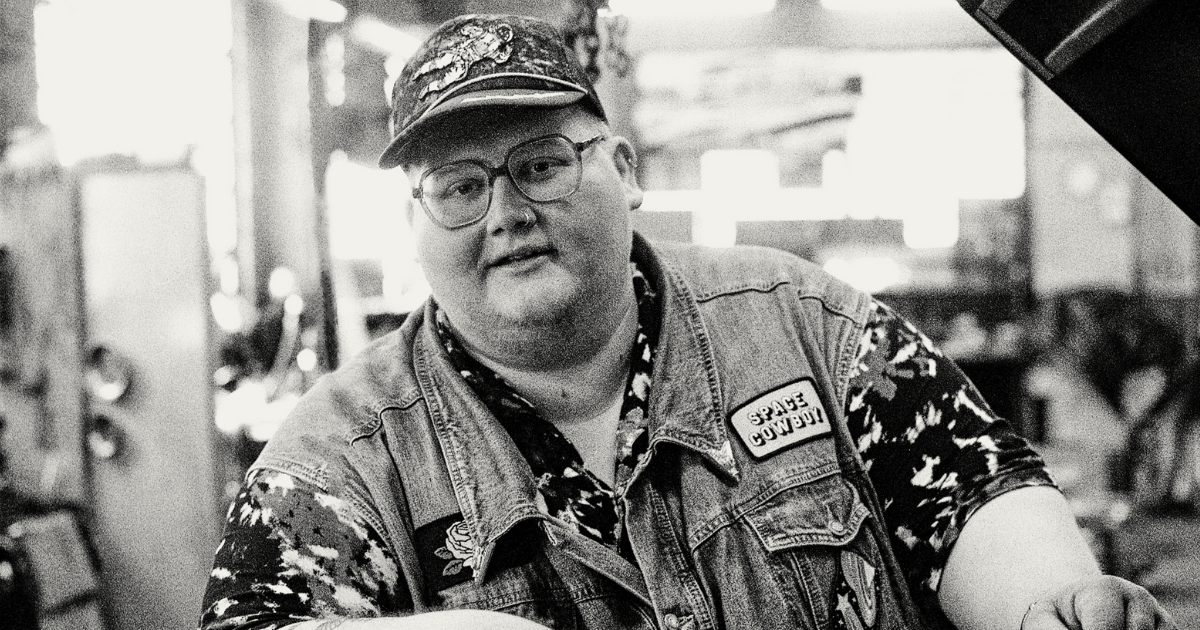
Joshua Ray Walker Has Got the Stuff

When Joshua Ray Walker received a cancer diagnosis in early 2024, he thought he only had months to live. This led him to contemplate not only his life and what he’s done with it, but his possessions and what would happen to them if he were to perish.

His latest album, Stuff, is the culmination of that pondering. Across 10 songs, the Dallas-based singer breathes life into a variety of inanimate objects ranging from a brick to the scent of perfume on sheets, bowling balls striving for perfect games, and even Barbie dolls eyeing everlasting love. Despite its deeply personal nature, the record leans into universal themes of grief and mourning since we’re all ultimately destined to suffer the same fate.

“We’ve all had someone in our lives die,” he says. “That’s why love and death are go-to topics for most songwriters – they’re two of our most universal concepts.”

With his future uncertain, Walker threw the rule book out for recording Stuff. Teaming up with longtime producer John Pedigo inside his home studio, the duo laid down everything on their own in a week – even instruments like the synth and melodica that Walker had never tinkered with before. The result is the “Sexy After Dark” singer’s most personal, dark, experimental, and hopeful album all rolled into one.

“Growing up everyone wanted to make records in their bedroom, but I never knew anyone with nice enough equipment to actually do it,” says Walker, who’s now stacked up a year’s worth of clean CT scans. “In junior high and high school I remember recording vocals in my friend’s laundry room or sneaking into a friend’s house whose mom had a piano and recording parts on it on the fly. There’s just always been something really fun about trying to make something sound the way we wanted from a sound people wouldn’t expect.”

Ahead of Stuff’s release, Walker spoke with Good Country from inside his van stacked to the gills with merch ahead of a run supporting Molly Tuttle. Our conversation covered his health struggles, the healing nature of writing these songs, experimenting in the studio, and more.

How’d the idea for this album come about?

Joshua Ray Walker: Before I even got sick I had thought about writing a song or album from the perspective of inanimate objects. Once I fell ill, I made a plan with my best friend and producer, John Pedigo, to write a song every week so that at the end of my year [at] home doing treatment I could have 50 new songs. When you’re planning to write that much, it’s easier if you pick a theme.

At the time, I was also starting to do estate planning for myself due to the nature of my advanced cancer. Even though I had multiple family members die where I was the main person who had to deal with their belongings after they passed, it was an eye-opening experience. So somewhere between the inanimate object song idea and thinking about where all my personal belongings would go if I died, I came up with the idea to write a whole album of songs from the perspective of stuff that was left over at an estate sale.

Subconsciously I was feeling like a burden to people. Anytime you’re sick, it’s a lot of effort that your loved ones have to put in, and even though they reassure you that you’re not a burden, it doesn’t stop you from thinking that way. [On this album] I was trying to think about that while projecting onto these items how leftover stuff can be a burden even after its owner is dead and gone.

Were any of the songs on Stuff more difficult to bring to life than others?

There were around 30 different ideas for the actual items, so the ones that got made were the ones that came the quickest since we were in a time crunch to make the record. If it was difficult it just didn’t end up getting written.

That being said, there was definitely some unexpected stuff. Like on “Brick” – I wasn’t necessarily expecting a brick to make it on the record, but it actually ended up being one of my favorites. I’ve always been very nostalgic for physical items as well, which only made it easier to connect with these objects. It made for a fun challenge writing from these perspectives and trying to get people to relate to it or have some emotional response. I’m known for being able to write from a character’s perspective and have been fascinated by how fictional characters can conjure up real emotions. It made me wonder if I could take things a step further and get people to feel something for these fictional objects.

Well, I’d say mission accomplished!

In addition to the concept and lyrical depth of these songs I also adore the sonic direction as well, which pulls from your previous material at times while navigating into pop, electronic, and other territory elsewhere. What motivated you to take that approach?

Because of where I was at with my health when we were conceptualizing the record, I really just wanted to explore some sounds that I’ve always loved and been influenced by, but didn’t make sense for the projects I worked on previously. Since I wasn’t sure how many more records I would be able to make I wanted to have as few limitations on what I was making as possible. If you put yourself in a box it forces you to be pretty creative. The rules were that John and I had to play all the instruments and we could only use ones we already had inside his home studio. It forced us to stretch a bit from our normal production style and was a lot of fun to make. We did it all in a week, locking ourselves in the studio for as many as 14 hours a day to get it all done.

Were there any instruments you played that you hadn’t tinkered with much before, if at all?

I played a lot of the keys, which I’d never really done before.I’d never played synths or melodica before, either. There were also just a lot of weird ambient sounds on the record. At one point we even had a sponge tucked under the bridge of a guitar as I was playing the strings with drumsticks, giving it a dulcimer-esque sound. We also utilized paper clips on ukulele strings to make them rattle, the pull string from a lamp on a cymbal so it would sizzle and random cups and pillows as percussion on the song “Stuff” – we wanted to turn non-instruments into instruments.

One of the songs I love most on Stuff is “Barbie,” a song about playing with dollhouses that contains some of the best one-liners on the whole record like, “…Do you want to play house with me and practice making babies?” Tell me about how it came to be?

Like you said, it’s a song about kids playing house put onto the characters of Barbie and G.I. Joe. It’s Barbie looking out her window and seeing G.I. Joe get played with in the sandbox and pining for this love connection. For one reason or another, G.I. Joe makes it into the house one day and they have the chance to run off in her Jeep and canoodle. When you’re a kid you don’t even really know what that means, but if you watch kids play with dolls at some point they’re going to make them kiss. They know people fall in love, but they don’t understand how or why – they’re just acting out what they see their parents doing. Such a big part of childhood is trying to figure out what all that means, so I thought it’d be funny to have Barbie trying to work that out for herself in this song.

Sounds like it has the potential to lead to a lot of conversations about the birds and the bees between parents and their kids. [Laughs]

Another song I want to ask you about is “Bowling Ball,” which features by far your lowest vocal register on the entire album. Tell me about your decision with that along with what made you want to bring a bowling ball of all things to life?

I don’t bowl much anymore, but used to be in a league when I was a kid. There’s a local bowling alley in my neighborhood called Jupiter Lanes that I’ve been very nostalgic for since I had a birthday party there and won a Johnny Bravo bowling ball when I was eight. [John Pedigo] is also a good bowler who grew up with a mom who worked at a bowling alley. We both know more about bowling than the average person, which allowed us to write a song from the ball’s perspective pretty well.

It’s got the best beginning, middle, and end to any song on the record, because it’s one short story about someone getting ready to finally bowl a perfect game. Only a frame away they throw too hard and pick up a chip or crack in the ball return, leading to a “put me in coach” or Rudy moment. They’re contemplating whether to walk over to the pro shop to get a new ball to finish out their first perfect game or continue on with ole faithful that got you there.

In terms of the vocal delivery, that’s pitch-shifted down with a Whammy pedal – I simply don’t have that kind of range on my own. That’s also something you’re just not allowed to do on a typical country record, which is another rule I guess we broke.

I gotta know more about this Johnny Bravo bowling ball!

I got it from that bowling league I mentioned, which was sponsored by Cartoon Network. At the end of the league, if you placed in the top three you were able to pick out a custom ball with whatever Cartoon Network character you wanted on it. The color was called galaxy, which is this purple kind of nebula-like color with Johnny Bravo etched into the side. It was awesome!

I remember choosing between him and Dexter, but I wound up choosing Johnny because of my dad, who would jokingly do an impression of Johnny Bravo’s voice that I loved. I also just related to that character and had a blonde pompadour haircut of my own.

You mentioned the song being about the journey to bowling a perfect game. Have you ever tossed one?

Definitely not. [Laughs] The best I’ve ever done is in the 220 range. I peaked at bowling when I was around nine years old. If I were to go bowling right now I would not do well at all.

With how much you’ve stepped outside your comfort zone on Tropicana and Stuff, what direction do you see taking next, musically?

I have a lot of projects, but only thought I’d have a couple years to make them, so I focused on jotting all of them down since I tend to see records as entire concepts, not just collections of songs. I have an autobiographical project I’m wrapping up now, but I also have a western trilogy on my mind along with a bluegrass record and even something a bit heavier.

Hopefully I’ll get to keep making records and all of these projects will come to light. Even though my music sounds different record to record they’re all still country in my mind. I’m always trying to make country music, whether it sounds like that or not.

What has Stuff and everything you’ve experienced the last couple of years taught you about yourself?

I hold onto things a lot less now than I used to. But in general, I just want to spend more time doing things I like with people that I like. This health scare has taught me to make music however I feel like making it and to do it as much as I can while I still can.


Lead image courtesy of the artist.
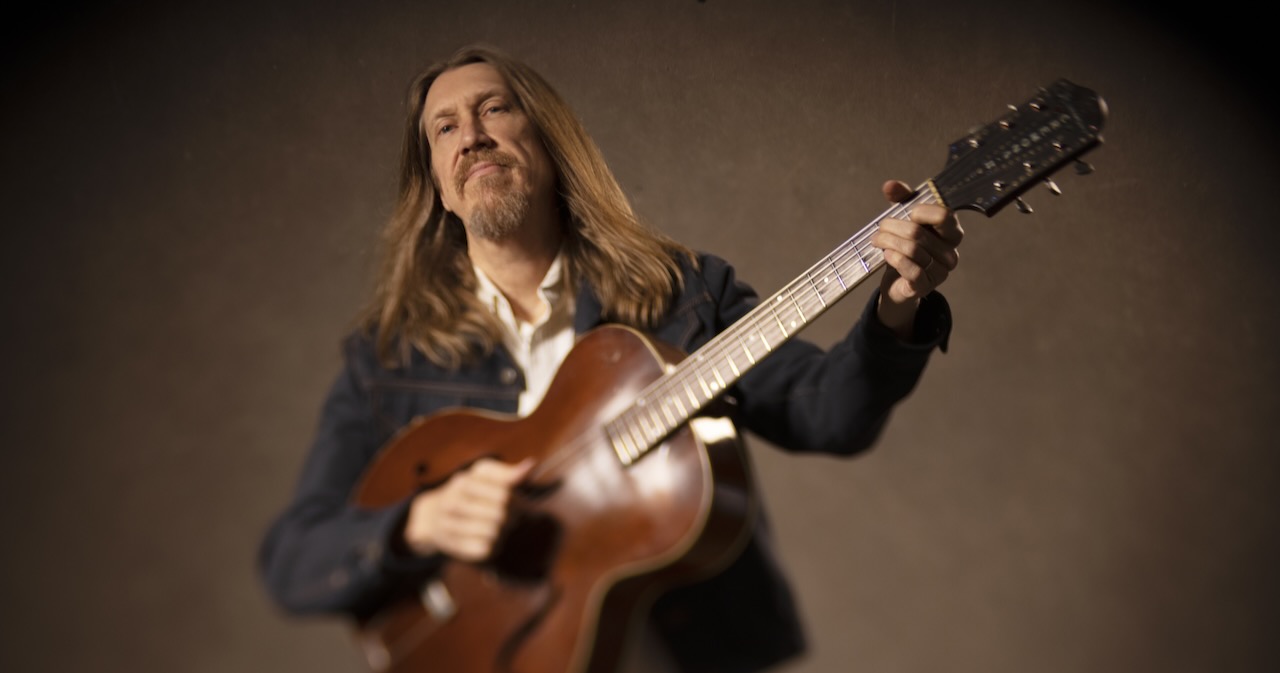
Oliver Wood Gets “Weird” On Second Solo Album, ‘Fat Cat Silhouette’

As the frontman/guitarist of The Wood Brothers, Oliver Wood is well versed in the art of roots experimentalism, but even that genre-blurring trio can’t satisfy all of his curiosity. With his second solo album, Fat Cat Silhouette (out now), the singer-songwriter set out to reach a new creative plane of existence.

Featuring nine playful, untethered tracks exploring pure sonic adventurism, the set became a case study in songwriting for songwriting’s sake; it’s a joyful mix of folk, jazz and free form pop. Recorded analog to tape by Wood Brothers percussion polymath Jano Rix, it features guest appearances by Katie Pruitt and Los Lobos saxophonist Steve Berlin, and some of the most irreverent, open-minded musical journeys ever taken. Each day, Wood would wake up, grab a coffee and sit down in a comfy chair, looking out the window to write whatever crossed his mind. The result was musical mood-shift, just a refreshing as it is insightful.

Ahead of another Wood Brothers tour, BGS talked with the artist about clearing his creative mind and getting “weird.”

It seems like you were purposely expanding your horizons on this second solo record, right? Why did you want to open up the floodgates?

Oliver Wood: I don’t know, it just felt like time to do that and time to experiment. … The Wood Brothers, we put out an album last spring and when we were done, I guess I was just still writing tunes. But also, I’ve always just liked in the last few years to make it a point to collaborate with some people outside of the band. And then production-wise, I felt like we’ve just done this album with The Wood Brothers a certain way, and a lot of times we react as artists and as writers. You sort of react to what you did before, and you try to be different, even though there’s not necessarily an exact sound in mind. It’s like, “What can we do that’s weirder?”

I love that idea of being a little weird, because why not, right? But the funny thing is that as a band, The Wood Brothers does not exactly seem limiting in terms of creativity.

No not at all.

So was there just still more in you, that had to get out creatively, or what?

I think so, yeah. And I’m sure there’s a subconscious part of me that wants to figure out what is my musical identity. I know what it is within The Wood Brothers. That’s sort of our bread and butter, but when I do my own thing, I feel like I can do whatever I want. … Maybe nobody will even hear it, so why don’t I just do get as weird as I want to get?

In the album bio, you talk about practicing songwriting without self-judgment and I think that’s a cool idea. Can you explain what that is to you and how you go about getting there?

Yeah. I think that is, first of all, almost impossible. However, maybe putting myself in a frame of mind that I was under less pressure to make something that people would like helps get there. It’s all subconscious, but when we’re with The Wood Brothers, even though we’re not trying to please anybody but ourselves, we do have to make our living, so in the back of our heads it’s like, “Oh, this song will sound good at Red Rocks or the Ryman Auditorium.” In other words, “People are going to love this.” I can’t help but think that in the back of my mind probably. But as far as writing without judgment and what that looks like? I think it looks like trust. I think it looks trusting that oftentimes your first instincts are right.

You don’t have to fix something or change something. You can trust that your soul and realness is going to come out if you just let it, and you write something down or play something, rather than going over it and editing it. I feel like I did that a lot with lyrics on this record. I wrote some things and I was like, “That doesn’t make any sense.” I caught myself thinking that, and then I was like, “Screw it. I trust that that’s what my subconscious told me to write. And it’s real.” I don’t think you really have to try to do that. In fact, the more you try, the less authentic it might be.

What came out is these nine tracks that to me are really playful and enthusiastic. What do you like about where the sound went? You definitely took some leaps.

Well, I talked with [album producer and fellow Wood Brothers member] Jano a lot about maybe being a little bit less on the drum set side, a little more on the percussion side. He is my favorite drummer ever, but sometimes I get tired of drum sets. I mean I love classic rock ‘n’ roll and R&B drums, all that stuff. But sometimes when you think about it, it sounds like everything else. So it was like “What if we didn’t have that?” There was one point where it’s like, “Jano, why don’t you do that percussion part vocally?” With the song “Whom I Adore,” not only did he play the Sitar and the tambourine, but he also did this weird shaker part with his mouth. Sometimes when you avoid one thing, you have to innovate to replace it with something else. And that was kind of the idea.

I use this really dull, rubber-bridge guitar on a lot of the songs, so there’s some more atypical guitar sounds. And of course, Steve Berlin and the bari-sax was a really cool thing. There was one section where we were wishing we had a horn section and instead Jano and I just sang all the parts. That was for “Star In the Corner,” and we just sang them like idiots – like fake opera singers! It’s kind of silly, but it was like, “That’s cool. And we haven’t done that before.”

That to me was the way to go to be non-judgmental, to be like you called it, playful. Sometimes you feel like you can control something and make it just perfect. But the opposite of that is letting go and trusting that if you try something, it may or may not turn you on, but when it works, it’ll surprise you and delight you. And that’s so much more fun than trying to control something and never quite being happy.

Tell me about the track “Little Worries.” This contains the album title, Fat Cat Silhouette, which is so fun. How does that song speak to the project overall?

Some of the themes, I feel like bloomed from that song. I have a ritual where I’ll go downstairs in the morning and have a cup of coffee in this armchair, which is right by a window facing my front yard. And I usually go down there and I write and sometimes I just write in a notebook, just sort of freeform. Sometimes it’s working on a song, but it’s wide open and several of these songs kind of started that way.

The idea of the Fat Cat Silhouette was really just an actual thing. I’m sitting there in that chair with my cup of coffee and I have these semi-transparent sheer curtains, and there’s a cat sitting there looking out the window. Sometimes for me – and I’m pretty sure for a lot of other songwriters – you don’t know what you’re going to write about, but you may see something that gets you started. And so the beginning of that song is literally me describing sitting in the chair with my cup of coffee and there’s a fat cat silhouette in the window.

That sort of observation, oftentimes if you write it down, can lead to a story. The first song on the album, “Light and Sweet,” happened the same way, sitting in the same spot looking out the window and there’s a sparrow. I started the song and then I started fantasizing. He’s on the phone with his lawyer talking about his divorce with his soon to be ex-wife.

[Laughs] You don’t hear many songs about bird law.

Exactly! But with the “Little Worries” song, I think writing that song and writing in general every morning is a good way for me to deal with anxieties and overthinking things. And that kind of turned out to be what that song was about.

How about “Yo I Surrender.” This is another track about giving up control, but also I think the most fun on the record. I love how you said it has the worst guitar sound ever. Why does that work for you?

That’s one that Jano and me and [bassist] Ted [Pecchio] were warming up one day, and we just started playing that groove. We just had fun playing that groove and I saved it on my phone, and then Steve Berlin from Los Lobos was in town with his bari-sax, and we invited him to come into the studio, help us finish writing that song. So the four of us sort of arranged the music and parallel to that, I was starting to think about the lyrics. I was also reading some cool books that were giving me some cool vocabulary words that I was like, “I just want to use that word. I don’t even care if it fits. I don’t even care if it makes sense.” It was definitely one of those things where it was musically such a group effort, and then lyrically one of those things – let it be weird, let it be ambiguous. I think some of my favorite songs that I’ve heard over the years are always a little bit ambiguous.


Photo Credit: Alysse Gafkjen

WATCH: Gangstagrass, “The Only Way Out Is Through” (feat. Jerry Douglas)

Artist: Gangstagrass
Hometown: All over the USA! Rench: Brooklyn with Oklahoma roots; Dolio the Sleuth: Pensacola, Florida; R-SON the Voice of Reason: Philly; Danjo: Washington, D.C.; Farrow: Omaha; Sleevs: Baltimore.
Song: “The Only Way Out Is Through”
Release Date: February 7, 2024 (video); February 2, 2024 (single)
Label: Rench Audio

In Their Words: “I’m really into how much we played with tension and energy to craft this track, the dynamics came out so powerfully. Especially with the horns! (Provided by Lowdown Brass Band.) We were stunned by the quick ‘yes’ from the one and only Jerry Douglas, who put in a blisteringly intense Dobro solo. I dare you to tell me you’ve heard anything like this before. I feel like this will be a great song for psyching yourself up to kick ass at whatever you are about to do.” – Rench

“When you ask Jerry Douglas to collaborate with you and he says yes, it says something about him and it says something about you. Jerry is the quintessential progressive bluegrass musician, with one foot permanently rooted in a genuine love of musical tradition and the other foot continually stretching forward and in every direction, looking for ways to bring traditional music into new places. ‘The Only Way Out Is Through’ makes the case, fearlessly, that what we do is in the true spirit of bluegrass: innovative, collaborative, awesome.” – Danjo 

“‘The Only Way Out Is Through’ was a lotta fun to make: a bumping, triumphant track where we get to spit fire bars, a mantra of a hook, plus Jerry Douglas going BANANAS on the Dobro!” – Dolio the Sleuth

“Making Gangstagrass music is always dope. Adding some Lowdown Brass Band to the mix and a LEGEND like Jerry Douglas is even mo’ dope!” – R-SON the Voice of Reason

Track Credits:

Rench – beats, vocals
Dolio the Sleuth – MC, vocals
R-SON the Voice of Reason – MC
Jerry Douglas – Dobro
Dan “Danjo” Whitener – banjo, guitar, mandolin, vocals
B.E. Farrow – fiddle, vocals
Lowdown Brass Band – horns
Sleevs – management / behind-the-scenes


Photo Credit: Melodie Yvonne
Video Credit: Directed by TOUGH DUMPLIN & MZ.ICAR; Post-Production by Someplace Called Brooklyn.

LISTEN: Jayme Stone, “Wreckage of the Fall”

Artist: Jayme Stone
Hometown: Longmont, Colorado
Song: “Wreckage of the Fall”
Release Date: November 10, 2023

In Their Words: “‘Wreckage of the Fall’ is a fever dream about transformation, mystical experience and emotional healing. I wrote it during a weeklong retreat at the Banff Center of the Arts. It emerged alongside a lot of tears, wild dreams, old wounds and a brief experience of clairvoyance. For a few days, I could see voices coming out my phone. I could feel the exact distance between me and other people in faraway cities like some kind of telepathic Google Earth. The song is full of witchy magic — runes, talismans, pentacles, and crystals. They started appearing and I just followed them.

“‘Wreckage’ is the first in a song cycle I’m currently calling ‘Anima,’ one the archetypes in Carl Jung’s map of the collective unconscious. I spent three years producing it — the longest I’ve ever worked on a track. There are many layers of guitar, my trusty Juno 106 from the late ’80s, an OB-6 synth and a lot of backup vocals care of Daniela Gesundheit. I programmed the drums in Abelton and then had John Hadfield play a real kit, which I then blended with the programming. The song feels like an MRI of my emotional state at the time. It’s some kind of magic to have a sonic postcard I can share now.” – Jayme Stone

Track Credits: Written by Jayme Stone.

Recorded and produced by Jayme Stone.
Mixed and mastered by David Travers-Smith.

Jayme Stone – voice, guitar, synth, drum programming
Emanuel Alexander – guitar, bass
Daniela Gesundheit – voice
John Hadfield – drums
Greg Harris – synth


Photo Credit: Shervin Lainez