New Music Friday is here! Our final Friday of April finds our roundup sharing excellent country, folk, and Americana. You Gotta Hear This.
To start, Los Angeles based neo-folk artist Malena Cadiz has released a very cool track, “Smoke Rings.” It’s a Les Paul cover recorded on the original Les Paul recording console. Music nerds will get the importance of the first-ever multi-tracking console and how apropos the song selection is, too, with Cadiz offering her own rendition of a song by Paul and Mary Ford. It’s jazzy and lazy – deliciously relaxed. Also based in LA, Dominique and the Diamonds launch a vibing and glittery honky-tonkin’ song, “I Don’t Mind,” to announce their upcoming album Honky Tonk Queen. It evokes California in a sonic package that shines like it’s covered edge-to-edge in sequins, pulled forward by Dominique Gomez’s lush voice.
Earlier this week, Irish artist Glen Hansard released a gorgeous live video for “Don’t Settle,” the title track for his new album out today, Don+t Settle – Transmissions East. Hansard and his ensemble perform the impassioned song in the round, surrounding each other and surrounded by their audience and a circle of shadows. It’s dramatic and compelling. Out in the sunshine, singer-songwriter Maya de Vitry announces her new upcoming album with a fresh song, “Confidence of the Sun.” Written in the warm and soft sunlight of the Texas Hill Country, the track showcases de Vitry’s penchant for finding redemption in herself, in breaking old habits, and in being present – within music and without – to do so. It’s a lovely harbinger for what’s to come.
Texan Jacob McCoy shares a new song with us today, as well. “All Our Days” is rich with deeply stacked vocal tracks and a country-meets-indie twang. One of the last songs written for his EP, Deep Deep Water, it’s also one of the singer-songwriter’s favorite tracks he’s written to date. His EP is out everywhere today. To round us out and finish us off, our old pal Charlie Worsham – country’s modern renaissance man – returns with a new single, “Grass,” out now. It’s a tribute to his favorite pastime (mowing), his favorite surface for walking barefoot, and his rowdy 20s (IYKYK). With a heaping helping of the humor he’s often known for, “Grass” is a summer anthem perfect for farmers tans and coming in the house smelling like a fresh-trimmed lawn. As Worsham performs at Stagecoach this weekend, we’ll be cheering him on and enjoying “Grass” right here on BGS.
There’s so much to enjoy below. Get listenin’, because You Gotta Hear This:
Malena Cadiz, “Smoke Rings”
Artist: Malena Cadiz
Hometown: Los Angeles, California
Song: “Smoke Rings”
Release Date: April 20, 2026
Label: Sad Mall
In Their Words: “A few months back, an old friend from NYC, Tom Camuso, reached out that he was in LA working on an exciting new project. Tom, who’s worked with Lenny Kravitz, Blondie, and Steve Earle, was in charge of refurbishing the original Les Paul recording console. For music nerds this is HUGE. Les Paul created the very first multi-tracking console in 1957 and it now has a new home in the historic United Studios in LA.
“He invited my band and I to track a few songs on the console to test the gear – this was the first time anyone had recorded on this machine since it had been put in storage decades ago. We were obviously over the moon to be invited and decided the first track recorded on Les Paul’s console after all these years should be a Les Paul song. We chose to do a version of Les Paul and Mary Ford’s ‘Smoke Rings.’ I’ve loved this song forever for its dreamy, whimsical quality and Mary Ford’s gorgeous performance.
“My buds Jason A. Roberts (Norah Jones, Spoon, Bedouine), Leeann Skoda (Noah Cyrus), and Aaron Stern (Curtis Harding) came into the studio with me and I do not exaggerate when I say it was a semi-spiritual experience to get to record in this legendary space – they even got to play Les’s original guitars for the recording.” – Malena Cadiz
Maya de Vitry, “Confidence of the Sun”
Artist: Maya de Vitry
Hometown: Lancaster, Pennsylvania
Song: “Confidence of the Sun”
Album: All My Faith
Release Date: May 1, 2026 (single); July 24, 2026 (album)
Label: Mad Maker Studio
In Their Words: “Over the years, I have shed what feels like many skins. When I wrote the first lines of this song, ‘It took me a long time to recognize peace as a place I belong,’ it felt healing just to sing it and own that truth. It’s taken years for me to begin to rewire some painful patterns, some deep grooves of self-doubt and self-sabotage. For anyone who has ever been through periods of interpersonal chaos, times of loud endings and quiet beginnings, an era of coming back to honesty in your body and spirit after going through the motions – it can be hard to actually see and feel and appreciate in your bones just how far we’ve come, you know?
“I wrote this song in the unapologetically bright-yet-soft sunlight of the Texas Hill Country, in spring, at the Blue Rock Artist Ranch & Studio. I received a gift of attending a writing residency there, and it allowed me the space and time to slow down and listen to my own heart. I love this arrangement so much, the way it feels like home for me to rest my vocals in Dom Billett’s drum groove, the way the band rises and falls in energy together because this all happened in one whole live take, and the comfort and camaraderie of singing in unison with Shelby Means and Joel Timmons before we split into some joyous three-part harmony towards the end of the song.” – Maya de Vitry
Track Credits:
Maya de Vitry – Vocals, acoustic guitar
Shelby Means – Harmony vocals
Joel Timmons – Harmony vocals
Jo Schornikow – Keys
Ethan Ballinger – Electric guitar
Spencer Cullum – Pedal steel
Ethan Jodziewicz – Fretless electric bass
Dom Billett – Drums
Dominique and the Diamonds, “I Don’t Mind”
Artist: Dominique and the Diamonds
Hometown: Los Angeles, California
Song: “I Don’t Mind”
Album: Honky Tonk Queen
Release Date: April 24, 2026 (single); June 26, 2026 (album)
In Their Words: “Before moving to LA, I lived in a small farm town on the coast of Northern California. I didn’t want to leave, but I had to escape a dangerous relationship I was in. I was heartbroken for having to leave the town, not so much the relationship itself. I had plans of making it back one day and settling down, but when I found out my ex had planted roots out there, I knew it wouldn’t be safe for me to go back. I felt like he took a dream of mine away from me. I wanted this song to sound like that coastal town I was living in; a song that could transport you to that same beach where the sea touches the redwoods of Muir Woods. It might seem contrary for the song’s title to be ‘I Don’t Mind,’ but it’s how I feel about everything now. Moving to LA was the best decision of my life and unfortunately I don’t think I would have ended up here if I hadn’t experienced all of those terrible things up north. There would be no Dominique and the Diamonds, this incredible, dreamlike life that I live now because of this project would have never existed. So in the end, I don’t mind that my ex took my old dream away from me. This is exactly where I was meant to be.” – Dominique Gomez
Track Credits:
Dominique Gomez – Vocals, acoustic guitar
Hamilton Boyce – BGVs, bass
Tyler English – Pedal steel
Craig Jacobs – Drums
Glenn Brigman – Piano, producer
Dominique and the Diamonds – Producer
Glen Hansard, “Don’t Settle”
Artist: Glen Hansard
Hometown: Dublin, Ireland
Song: “Don’t Settle”
Album: Don+t Settle – Transmissions East
Release Date: April 21, 2026 (video); April 24, 2025 (album)
Label: Plateau/Secretly Distribution
In Their Words: “‘Don’t Settle’ is a song I wrote to a younger version of myself, the song came quite fast. A kind of roadmap of dos and don’ts for the sometimes treacherous tightrope that is one’s life in music. Stay the road, know your north. Listen only to your own heart and gut. Your road is your road. You’ll know the signs. Don’t deviate. And when you do, deviate completely. Don’t settle for less than you envisioned.” – Glen Hansard
Video Credits:
Frank Machel – Director, editor
Markus Mörtz – Producer, editor
Sara Kelly-Husain – Documentary, unit manager
Vincent Chmiel – Documentary
Martin Ullrich – DOP
Eric Poß – Camera
Armin Riedel – Camera
Stephan Bodner – Technical assistance, camera
Jacob McCoy, “All Our Days”
Artist: Jacob McCoy
Hometown: Amarillo, Texas
Song: “All Our Days”
Album: Deep Deep Water (EP)
Release Date: April 24, 2026
In Their Words: “‘All Our Days’ was one of the last songs written for the EP, and to date is one of my favorite songs I’ve written. I wrote it with friend and fiddle player Coral Bradshaw just a few weeks prior to recording. Something about it contains this seasoned, hard-earned romantic intimacy that just immediately drew me in like a lot of old country songs do. The song moves through all of the seasons of a long love – summer’s ease, winter’s frozen hope, and the slow return of spring – before landing somewhere that feels genuinely hard-won.
“Sam and I cut it on the first day of recording in his small above-garage studio in Nashville and it came together very organically. Syncopated fingerstyle guitar provides the foundation for the entire song and almost immediately you become immersed in intimate harmonies, with a waltzing bass line and support from an upright piano that provides some forward motion. For the interludes, I ended up playing my mother-in-law’s old cheap classical [guitar] from the ’70s that almost gave it a Willie Nelson feel, which given that he was always playing somewhere in the background growing up, I absolutely love. It might be my favorite musical moment on the entire project.” – Jacob McCoy
Track Credits:
Jacob McCoy – Vocals, acoustic guitar, classical guitar, bass
Sam Westhoff – Upright piano, producer
Charlie Worsham, “Grass”
Artist: Charlie Worsham
Hometown: Grenada, Mississippi
Song: “Grass”
Release Date: April 24, 2026
In Their Words: “‘Grass’ is an ode to my favorite surface to walk on barefoot, my favorite domestic pastime (mowing), and maybe a wink to a certain favorite pastime of my 20s, IYKYK…
“More than that, ‘Grass’ represents the blend of blues and bluegrass influences that raised me. I play that song and it takes me back to drinking from the water hose, attending my first MerleFest, walking out to the lawn seats at amphitheaters across the country, whether I was playing the show that night or catching a show with my friends.
“Some people like sand. Some people like snow. Some people like the concrete, where ain’t nothing grows. But I’d rather be… sweatin’ all summer on a John Deere stacking up cash cash cash…” – Charlie Worsham
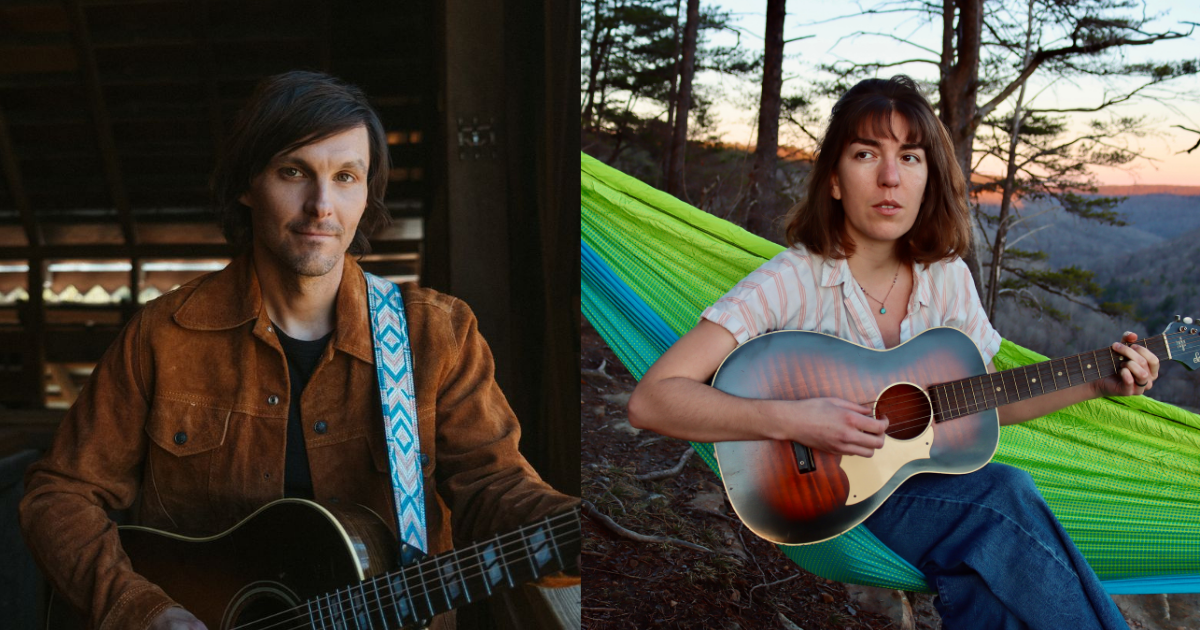
Photo Credit: Charlie Worsham by PJ Brown; Maya de Vitry by Ethan Jodziewicz.