The Five Pillars of Doc Watson’s Legacy

What a difference a Doc made.

Lots of people would like to think their lives have made a difference – whether through their family life, or work, or some sort of creative endeavor.

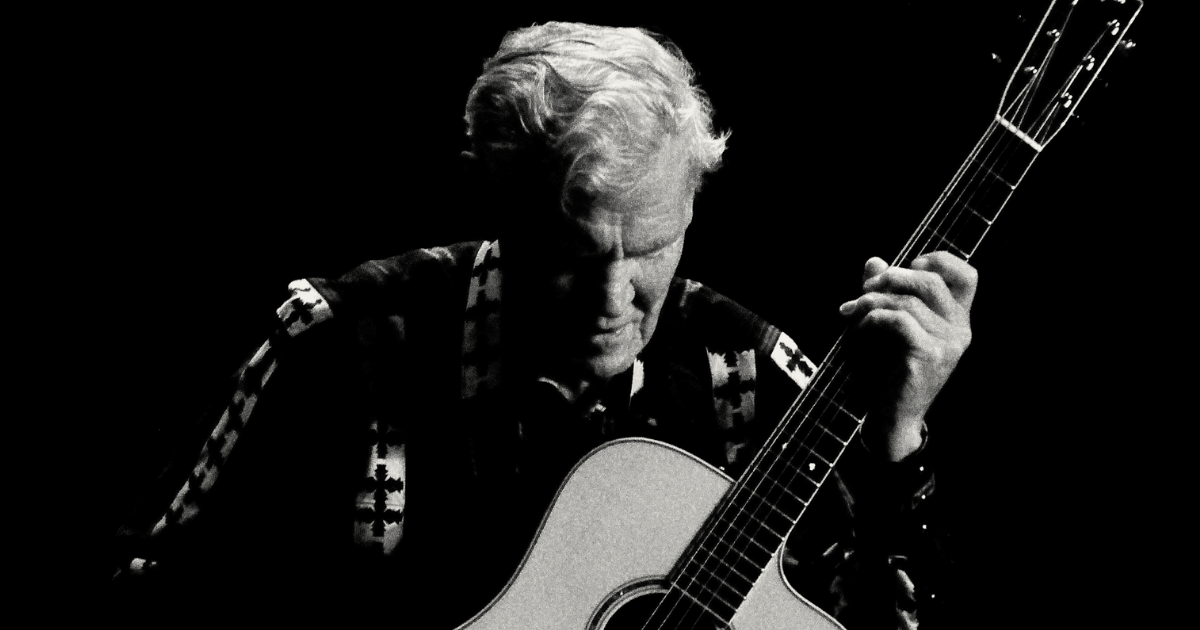
However, even to approach the enduring heritage of the great musician Arthel “Doc” Watson, a person would have to achieve lifetime landmarks as imposing as the North Carolina Appalachian mountains that were his home. During a lifespan from his birth in 1923 until his death in 2012, Watson created a legacy of music, folklore, and goodwill that no one has entirely equaled.

First a little background: Arthel Lane Watson was born March 3, 1923, near Deep Gap – he is not from Asheville – in Western North Carolina. An audience member suggested the nickname “Doc” when his given name was found less than compelling for an entertainer.

His life story before and after becoming an admired folk musician has been often told, notably in Doc Watson: A Life in Music, a 2025 biography by Eddie Huffman published by the University of North Carolina Press.

Blind since infancy, Watson started to develop life skills and musical ability from an early age. He learned both formal and popular styles when sent to the state’s school for the blind in Raleigh at about age 10.

The boy was consumed by music and persistent in getting better at it. Watson had learned both the rudiments of harmonica and a few banjo tunes from his father, General Watson, before he went off to Raleigh. While living within the strict environment of the school for the blind, Watson learned braille and grew familiar with classical and church styles of music taught there. Perhaps as strong an influence as that education was fellow student Paul Montgomery, the talented friend from whom he learned guitar chords. Young Watson and Montgomery, later a well-known Raleigh pianist and children’s show host, shared enthusiasm for the popular music of the day, including jazz and big-band sounds.

His parents, Annie and General Watson, taught the boy skills of growing crops and basic carpentry, and he contributed to the family despite his blindness.

After years of mostly local performances back in Western North Carolina, it wasn’t until the early 1960s, when East Coast musician and historian Ralph Rinzler tuned into and promoted his far-reaching ability as a singer and picker, that Watson’s name gained national, then international attention.

According to an account at the Blue Ridge Heritage Area website Watson recorded over 50 albums and was honored with “the National Medal of Arts, a National Heritage Fellowship, the North Carolina Folk Heritage Award, seven GRAMMY Awards, and a GRAMMY Lifetime Achievement Award.”

As fans know, Doc Watson contained multitudes of skills, a breadth of ability that inspired this list of the five pillars of his musical and artistic legacy.

The King Flatpicker

Watson largely created the challenging fiddle-inspired guitar style that led many followers along a flatpicking trail.

It was during the 1950s, when playing an electric Gibson Les Paul in the local Jack Williams Band, that Watson developed a style that would transform the way the guitar was played in folk and bluegrass music.

Generally, earlier acoustic guitarists in roots-derived styles used a flatpick to create basic “boom-chuck” back up, perhaps throwing in some fills and Jimmie-Rodgers-style bass runs.

But when dancers at Williams’s gigs wanted music for square-dancing, Watson worked up single-note versions of fast fiddle tunes such as “June Apple” and “Bill Cheatham” on his Les Paul. This approach enables lead guitar pickers to achieve the same flowing, rapid attack that fiddlers used for tunes, many of which had come over from the British Isles in past generations.

It’s not possible to say that Doc Watson was the first guitarist to flatpick fiddle tunes. After all, it wasn’t until Watson emerged as a folk artist in the 1960s that the broader music scene caught on to his musicianship. And high achievers such as Arthur Smith on “Guitar Boogie,” Don Reno on “Country Boy Rock ‘n’ Roll,” and Bill Napier on the Stanley Brothers’ “Mountain Dew” – along with some jazz and blues players – all recorded hot-licks acoustic soloing before Watson did. Joe Maphis was also cranking out ultra-fast flatpicking numbers in the 1950s.

But it was Watson’s 1960s performances that created a precedent for a wave of guitarists who had to muscle up to the speed and dexterity he displayed.

A long line of guitarists at the top of the field – from Clarence White to Tony Rice, from Bryan Sutton to Billy Strings – all show Watson’s clear influence not just in recreating fiddle tunes, but also in rapid-fire picking and clean sound on a broad range of material.

Player and educator Alan Barnosky wrote in “An Exploration of Doc Watson’s Innovative and Joyful Guitar Stylings” for Acoustic Guitar in 2023 about the spread of this kind of playing.

“Watson amazed folk fans in the early 1960s by taking tunes typically reserved for the fiddle and reworking them for the acoustic with speed, clarity, and flash,” he wrote. “He never claimed to be the first to play fiddle tunes on a guitar, but for the majority of listeners at the time it was an entirely novel and groundbreaking approach.”

Another world-class, tradition-based player, Earl Scruggs, praised Watson’s adaptation of fiddle tunes as the two were joined by Ricky Skaggs for the 2003 The Three Pickers performance and album.

“He was the first man I ever heard on the guitar that was fooling with tunes like that,” Scruggs said in a Three Pickers introduction. “You had all these good G-C-D pickers – that’s chord positions – but I had never heard anybody that actually took over a lead like a banjo or a fiddle or a mandolin and do those tunes. He could do it.

“And what amazed me about Doc Watson’s picking, and still does, is he’s got that – I call it ‘mountain sound’ to his picking, and he’s one of the best to keep it in that mode of sound.”

New generations of players have immersed themselves in Watson’s style. When I interviewed him for a Bluegrass Unlimited article, leading guitar picker and multi-instrumentalist Bryan Sutton talked about being captivated by Watson’s playing during Sutton’s youth on Western North Carolina.

“Doc and Dan Crary were the first great influences on me,” he said. “Doc Watson was one of the first professional musicians/guitar players that I ever saw. He doesn’t live too far from Asheville, so I saw him play some different festivals and at Maggie Valley. So, he was the first one to really catch my ear as far as what you could do with the flatpick.

“My right hand – it may not as much anymore – but I remember at one time it was kind of like Doc’s. It’s kind of like the way Sam Bush plays, using the whole forearm and wrist involved in the playing, whereas with jazz players or Tony Rice it’s more of a wrist thing. I think I’ve got a little bit of both now.”

Billy Strings, the artist who’s likely doing the most to promote Watson’s legacy in the 21st century, sounded almost evangelical during a September 2025 interview for NPR’s Fresh Air.

“He’s like the ground upon which I stand, you know?” Strings said. “My dad played his music all around the house growing up. And by the time I could play guitar, you know, 5, 6 years old, I was learning those tunes, too. I might’ve been able to play some of them before I knew how to tie my shoes or something, you know?

“It was like, I was learning how to speak and talk and walk, and I was learning all these Doc Watson tunes at the same time. And it was just, like, a religion in my house, you know? His music is just – it’s the best.”

To see some of the top pickers in the field paying tribute, check out this video shot at the Merle Watson Memorial Festival – what would become MerleFest – in Wilkesboro, North Carolina, in 1992.

A Model Fingerpicker

From his first albums on, Watson regularly also played guitar with a thumbpick and index finger. As he noted with his customary self-deprecating humor in the DVD “Doc’s Guitar: Fingerpicking & Flatpicking,” “See, I just play with one finger and a thumb. I don’t use the sensible three-finger method that you should use on finger-style guitar.” (Watch below.)

Watson sounded great with that approach, making finger-picked tunes such as “Deep River Blues,” “Nashville Blues,” “Omie Wise,” and “Doc’s Guitar” fan favorites and objects of long study. For every striving guitarist who practiced hard on his fiddle-tune adaptations, plenty of pickers also worked on showcases such as “Windy and Warm,” with its alternating bass, pull-offs, note bending, and a jazzy minor sixth chord at its conclusion.

Watson’s fingerpicking often showed off his acquaintance with diverse approaches, as in “Deep River Blues,” with an E diminished as its second chord. It also illustrates the way he put his touch on existing pieces such as 1933’s “Big River Blues” by the Delmore Brothers, who played with flatpicks.

“There were two guitars, a tenor – a little four-string, and the regular flattop, and I never could get my guitar to sound like both of theirs did,” Watson said. “Then I began to hear brother Merle Travis, the late Merle Travis, on the radio. And I thought, Now, wait a minute. If I can steal me a lick off brother Travis, maybe I can learn ‘Deep River Blues.’”

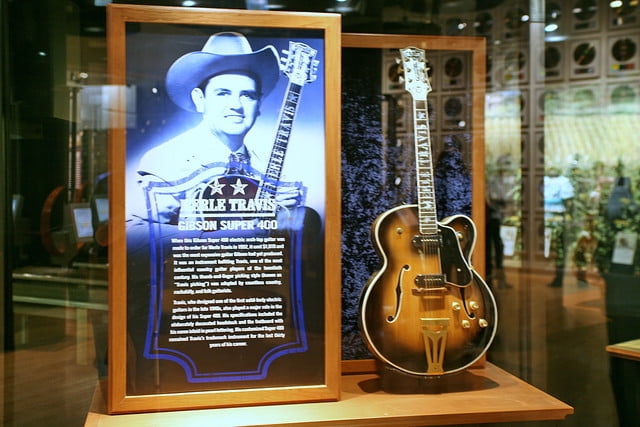
Multi-talented Kentuckian Merle Travis (1917-1983) popularized a style in which the thumb plays an alternating bass on the guitar’s lower strings while picking the melody on treble strings. Watson also studied the work of the great guitarist Chet Atkins. The picking buddies released the album Reflections in 1980.

The centuries-old, transatlantic ballad “Georgie” would have once been sung unaccompanied, leaving Watson and others free to craft a brand new style of guitar back up. With no clear precedent on guitar, he might employ the flowing, almost classical patterns that became popular among folk revivalists.

And fingerpicking became the tool Watson used to play the blues that he loved and drew on so deeply, music he followed from the time he heard Mississippi John Hurt on the family’s disc player in childhood.

In the end, there’s no easy way to pin down the many elements Watson brought to his picking, musical points of view that enriched his listeners along the way.

A Standout Singer

Doc Watson’s vocal abilities don’t generally get as much attention as his top-drawer chops as an instrumentalist. However, he was also a tuneful singer with a natural, angelic mountain baritone.

Watson came along during an era when rougher-voiced vocalists such as Hobart Smith, Dock Boggs, and his picking buddy Clarence Ashley represented mountain singing to a growing audience. And Watson’s less mannered style likely contributed to acceptance among listeners less familiar with the high lonesome sound. His direct vocal approach was often heard in performances with no instrumental backing.

It’s useful to remember that Watson also enjoyed the smooth country vocalist Eddy Arnold so much that his son Merle Eddy Arnold was named not just after fingerpicker Merle Travis, but also for Arnold.

Tunes from the Tennessee Plowboy’s repertoire such as “Tennessee Stud,” “I Couldn’t Believe It Was True,” and “Anytime” also showed up in Watson’s repertoire. These were only a few examples of the eclectic side of Watson’s vocal approach, with emphasis on great material over genre labels.

Given his broad taste, Watson at times put some extra grit into his singing on a number such as “Blue Suede Shoes” from his Jack Williams days of the 1950s, later a concert favorite. But more often he sang songs straight, even on one like “Nights in White Satin,” a 1967 pop hit by British rockers the Moody Blues. With waltz-time guitar and plain singing, Watson makes the song come across as relevant to himself and listeners as songs by the Delmore Brothers and Jimmie Rodgers.

Watson’s first memories of vocal music came in church, and he prized the straightforward, no-vibrato sounds that carved such songs in his memory.

“If you love music, you have to listen from the time you’re big enough to notice music,” he told me when recording his 1991 GRAMMY-winning CD On Praying Ground.

“If you’re looking for old-time material in songs, those old songs that you heard when you were young were the easiest to put down.”

From his first commercial recordings on, Watson featured gospel numbers such as the a cappella version of “Talk About Suffering” from 1964 and “Down in the Valley to Pray” from 1966. Both radiate belief and unornamented clarity.

More recent listeners may know the latter song as “Down in the River to Pray,” as it was opportunistically relabeled to match a scene in the 2000 hit film, O Brother, Where Art Thou?.

Always A Song Man

Doc Watson had an impressively broad range of musical interests, perhaps markedly so, given the period in which he came along.

Country or folk music didn’t start appearing on commercial records until Watson was about two years old. In childhood he listened to down-home picking as well as church and gospel songs. It wasn’t until the 1930s that the family owned a radio that let them hear music beyond their 78-rpm record collection.

Virtually every great musician is a song collector at heart. And like Bob Dylan, Watson took on songs from tradition and added new elements. Take the mournful ballad “Omie Wise,” based on a North Carolina murder from the early 19th century.

In the 1920s notable old-time artists G.B. Grayson and Clarence Ashley recorded it with modal accompaniment that was neither truly major nor minor. When Watson recorded in the 1960s, he ventured into folky, arpeggiated picking that put it squarely into minor-chord territory, opening up the song to young folkies who couldn’t play fiddle like Grayson or banjo like Ashley.

In fact, Watson’s playing on “Omie Wise” occupied the same guitar realm as folk star Joan Baez’s playing on “East Virginia” and other traditional songs.


He also tuned into compositions by folk musicians Bob Dylan (“Don’t Think Twice It’s All Right), Tom Paxton (“The Last Thing on My Mind,” “Leavin’ London,” and “Bottle of Wine”), and Townes Van Zandt (“If I Needed You”).

Watson isn’t chiefly known as a songwriter, but he enjoyed notable success with “Your Lone Journey,” which he wrote with wife Rosa Lee. The starry duo of Led Zeppelin frontman Robert Plant and bluegrass’s own Alison Krauss released it as “Your Long Journey,” leading to what biographer Huffman called significant royalties for the family.

Watson’s greatest legacy in songs may have come with the wealth of lasting favorites – just a few are “Deep River Blues,” “I Am a Pilgrim,” “Banks of the Ohio,” “House Carpenter,” and “Shady Grove” – that made their way into the folk, old-time and bluegrass repertoire and could otherwise have been forgotten.

Ambassador for the Old-Time Way

This role for Watson may be the hardest to pin down, as it overlaps with almost all the others. By cleaving to his Appalachian heritage while also making the most of decades of change, Doc Watson was able to introduce countless fans to a rich, living culture.

“I don’t live in the past,” Watson told me in 1991. “I still burn wood in a furnace at the house, but I have heat ducts and a blower on it just like an oil furnace.

“I love to burn wood and I love to split wood. There’s a few of the old-timey things I love to do. I like good dried-apple pie and I like ‘leather britches’ beans.

“And I like to be at home, dadburn it. I hate the road.”

Watson’s long career of traveling to take his music to listeners, often in the company of his beloved son, Merle, nourished their taste for music that he built upon sold timbers of musical tradition.

Wade Smith, a legendary Tar Heel lawyer, told me once about his first experience of hearing Watson, at a small coffeehouse in downtown Raleigh in 1965.

“What word would I choose to describe how I felt?” Smith said for a later Raleigh News & Observer story. “Electrified, stunned at the speed of his fingers and the way he played single strings, and the clarity of the sound. Each note was like a piece of gold, so amazing.

“We stayed to the last note. When we left, I remember thinking that I had never heard anything like it and that in some way I had been changed by it, that I was in an altered state of existence.”

Watson’s national and international impact becomes more impressive given that he wasn’t heard outside his North Carolina stomping grounds until his late 30s. That’s when he honed his broad range of expertise into a mountain-based style that captivated and often amazed listeners at first hearing.

When the Society for American Music, a distinguished non-profit scholarly and educational organization, made Watson an honorary member in 2012, musicologist and musician Greg Reish paid tribute to Watson’s broad impact.

“As I discovered more of America’s traditional musical styles through my teenage years, Doc Watson always seemed to be at the core, an entrée into both older and newer styles,” Reish wrote. “Through Doc’s music I found my way to the pre-war music of the Carter Family, Jimmie Rodgers, and the Skillet Lickers; to the first-generation bluegrass of Bill Monroe and Flatt & Scruggs; to the classic country of Merle Travis, Chet Atkins, and Eddy Arnold; to the country blues of John Hurt and Frank Hutchison; and to the contemporary and progressive flatpicking of Clarence White, Norman Blake, and Tony Rice.”

Huffman’s book quotes the great bluegrass musician Roland White as he talked about the way his guitarist brother Clarence was caught up in Watson’s flatpicking after hearing him at California’s Ash Grove club.

“After seeing Doc, his picking became an obsession, an everyday part of everyday life. To play music and practice every day. Whether we played gigs or not, he was always playing music.”

Sixty years after White’s epiphany, Doc Watson’s music continues to gain and inspire new followers, whether through the picking and testimony of contemporary players such as Sutton and Springs, or through his own dozens of albums and videos. His legacy of tradition and innovation still flows like one of the ancient streams that nourish his cherished mountainsides.


Thomas Goldsmith is an award-winning journalist based in Tennessee and North Carolina. In addition to producing many hundreds of articles for newspapers and magazines, he edited The Bluegrass Reader and authored Earl Scruggs and Foggy Mountain Breakdown: The Making of an American Classic, both for the University of Illinois Press.

Lead image courtesy of MerleFest.

Explore more of our Doc in December Artist of the Month series here.
Doc Watson: Live Moments and Memories

While the late great Arthel “Doc” Watson released scores of albums over the course of his career, he only made the main Billboard charts once and peaked at a modest 193 (for his 1975 album, Memories). But Watson made a far bigger mark as a performer, often in some unusual settings — from the most prestigious concert stages down to humble living rooms.

Even though Watson wasn’t a huge record seller, few artists in the history of American music ever generated more transcendent moments. He remains revered as one of the best flatpick guitarists of all time, and MerleFest (the festival he founded in memory of his late son) stands as an essential acoustic-music event.

Here are some of Watson’s signature moments of performance, captured for the ages. (Listen to the playlist below.)

“Roll In My Sweet Baby’s Arms” – The Three Pickers: Earl Scruggs/Doc Watson/Ricky Skaggs, 2003

We begin with a collaboration between Watson and his fellow North Carolina legend, master of the bluegrass banjo Earl Scruggs, with the old Flatt & Scruggs warhorse “Roll In My Sweet Baby’s Arms” — the closing track from the live album they recorded together in Winston-Salem in 2002. The picking is as hot as you’d expect, especially on this track where Ricky Skaggs urges a solo by calling out, “Try one, Doc!” He gets gone.

“Railroad Bill” – Legacy, 2002

Legacy was the Grammy-winning retrospective album Watson made with his longtime, late-period accompanist David Holt, with songs and stories going all the way back to his earliest days playing music. The package includes a live show recorded in Asheville, North Carolina in 2001, with one of his best-ever versions of the Etta Baker Piedmont blues classic “Railroad Bill.” Watson could indeed play about as fast as a runaway train, and this features some of his swiftest guitar runs ever captured.

“Corrina” – Doc Watson and Gaither Carlton, 2020

Watson’s newest release is this live recording of some of his earliest shows in New York City, 1962 in Greenwich Village, when he was one of the rising stars of the budding folk revival. Watson performs here with his father-in-law, the renowned old-time fiddler Gaither Carlton. But what’s really notable is that Watson is playing banjo in the old style rather than guitar. It turns out he was almost as formidable on five strings as six.

“Tennessee Stud” – Nitty Gritty Dirt Band’s Will the Circle Be Unbroken, 1972

This Americana landmark captured a revolutionary moment, an intergenerational, country-rock summit with the Dirt Band on one side and the country/folk/bluegrass establishment on the other. And it wasn’t live onstage, but live in the studio, with the tape machine left running to record between-song conversations. That captured some of Watson’s priceless homespun pearls (“That’s a horse’s foot in the gravel, man, that ain’t a train!”), as well as what stands as his definitive recording of this stately, well-worn standard. “Tennessee Stud” made Watson a star all over again to yet another generation of roots-music enthusiasts.

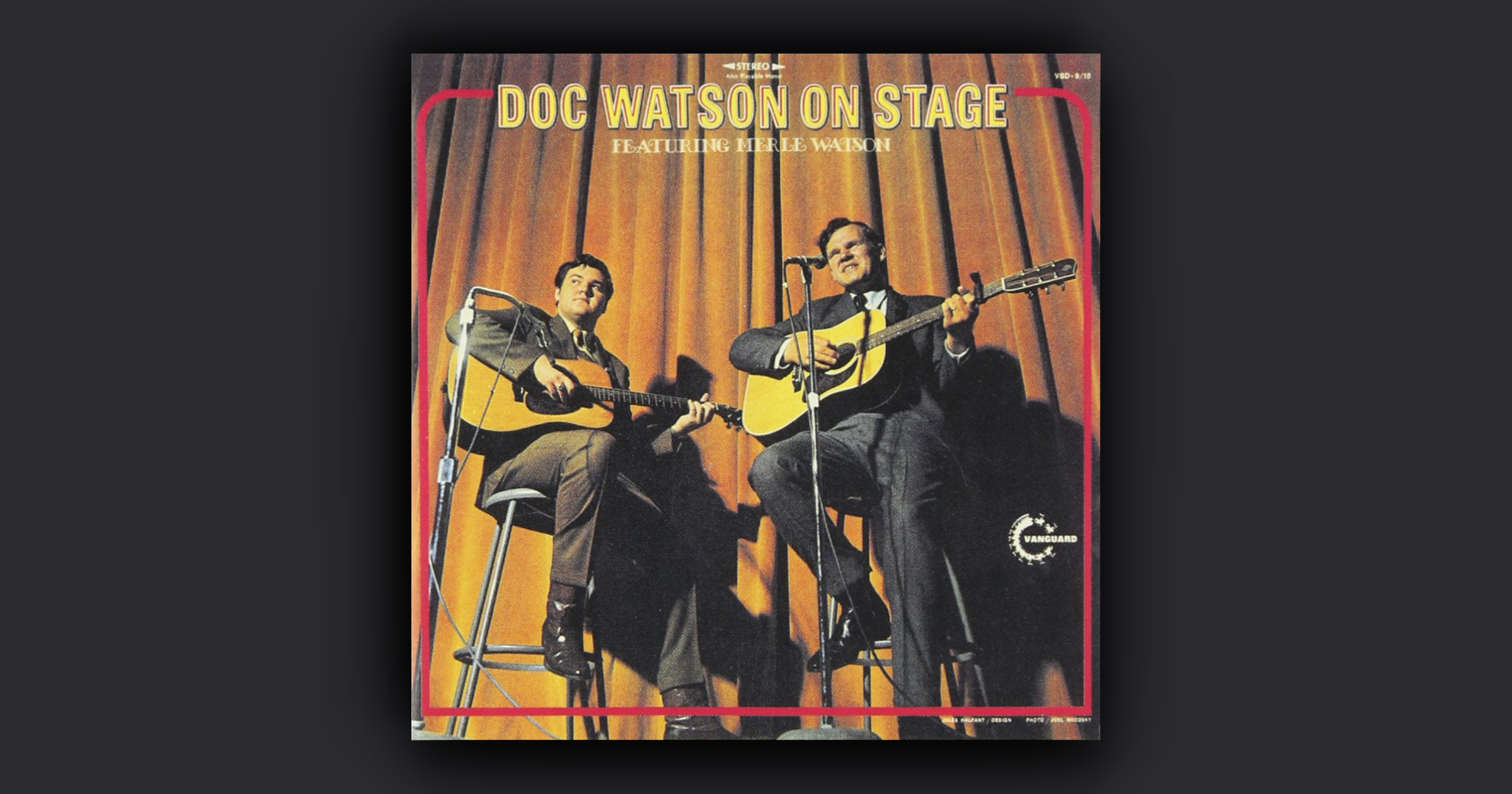
“I Am a Pilgrim” – Doc Watson on Stage, featuring Merle Watson, 1971

Watson had many fine accompanists over the years, but none better than his son Merle, who was always on Doc’s wavelength. Ever modest, Doc always claimed that Merle was the better player. He was, of course, wrong about that, but Merle was a great picker in his own right. Recorded live at Cornell University, this is an excellent version of the old spiritual that also appeared on Circle. “I Am a Pilgrim” would remain an evolving onstage set piece for Doc over the years. After Merle’s tragic death in 1985, Doc would customize the lyrics in performance: “I’ve got a mother, a sister and a brother and a son, they done gone on to that other shore.”

“Blue Smoke” – Doc Watson at Gerdes Folk City, 2001

Another track drawn from one of Watson’s early-period excursions up to New York City, this was recorded during 1962-63 engagements at the legendary Gerdes Folk City nightclub. And this cover of the instrumental by Merle Travis (for whom Doc named his son) is aptly named. When he really got to cooking, Watson could play guitar so fast he just about left a vapor trail.

“Every Day Dirt” (from The Watson Family, 1963)

Ralph Rinzler, the musicologist who first discovered Doc in the early 1960s, recorded this album live at the Watson family homestead in North Carolina. It captures some of what life must have been like growing up singing and playing with Doc; son Merle, wife Rosa Lee and father-in-law Gaither Carlton are among the relatives present. “Every Day Dirt” shows off just how personable a vocalist Watson could be, although as always the real draw is the obligatory killer guitar-picking.

“The Cuckoo Bird” – The Watson Family, 1963

From that same recording, Doc plays guitar accompanied by his son Merle on banjo, covering the old Clarence “Tom” Ashley song that appeared on Harry Smith’s epochal Anthology of American Folk Music. Thanks to the familial radar that comes when blood relatives play together, the instrumental interplay is perfect. This is also a great example at Watson’s mastery of the art of call-and-response between his guitar and voice.

“What Would You Give in Exchange for Your Soul?” – Bill Monroe and Doc Watson, Live Recordings 1963-1980: Off the Record Volume 2

Watson’s modesty was such that his natural inclination was to regard himself as a sideman — even though he was rarely if ever not the best picker and singer in the room. But he plays the role of foil perfectly here, vocally as well as instrumentally, to Monroe’s rippling mandolin and high lonesome tenor on this live version of the first song The Father of Bluegrass ever recorded.

“Wabash Cannonball” – Doc Watson on Stage, featuring Merle Watson, 1971

Before he started playing guitar, Watson’s first childhood instrument was actually a harmonica, which he wore out so fast from playing it so much, his parents had to give him another one at Christmas. A new harmonica became a perennial favorite gift. This version of the venerable folk-music classic features Watson blowing a mean harmonica and his descending runs on guitar are also a thing of beauty.

“Your Lone Journey” – Steep Canyon Rangers’ North Carolina Songbook, 2019

We close with a bit of a wild card, in that it’s a performance by someone else. But it’s one in which the presence of Watson’s spirit looms large enough to be felt. “Your Lone Journey” is a song that Doc and Rosa Lee wrote, and it bids a poignant farewell to a loved one at the moment of death. It is performed here by Watson’s fellow North Carolinians Steep Canyon Rangers, recorded on the main Doc Watson Stage to close out the 2019 MerleFest.


Editor’s Note: David Menconi’s Step It Up and Go: The Story of North Carolina Popular Music, from Blind Boy Fuller and Doc Watson to Nina Simone and Superchunk will be published in October by University of North Carolina Press.

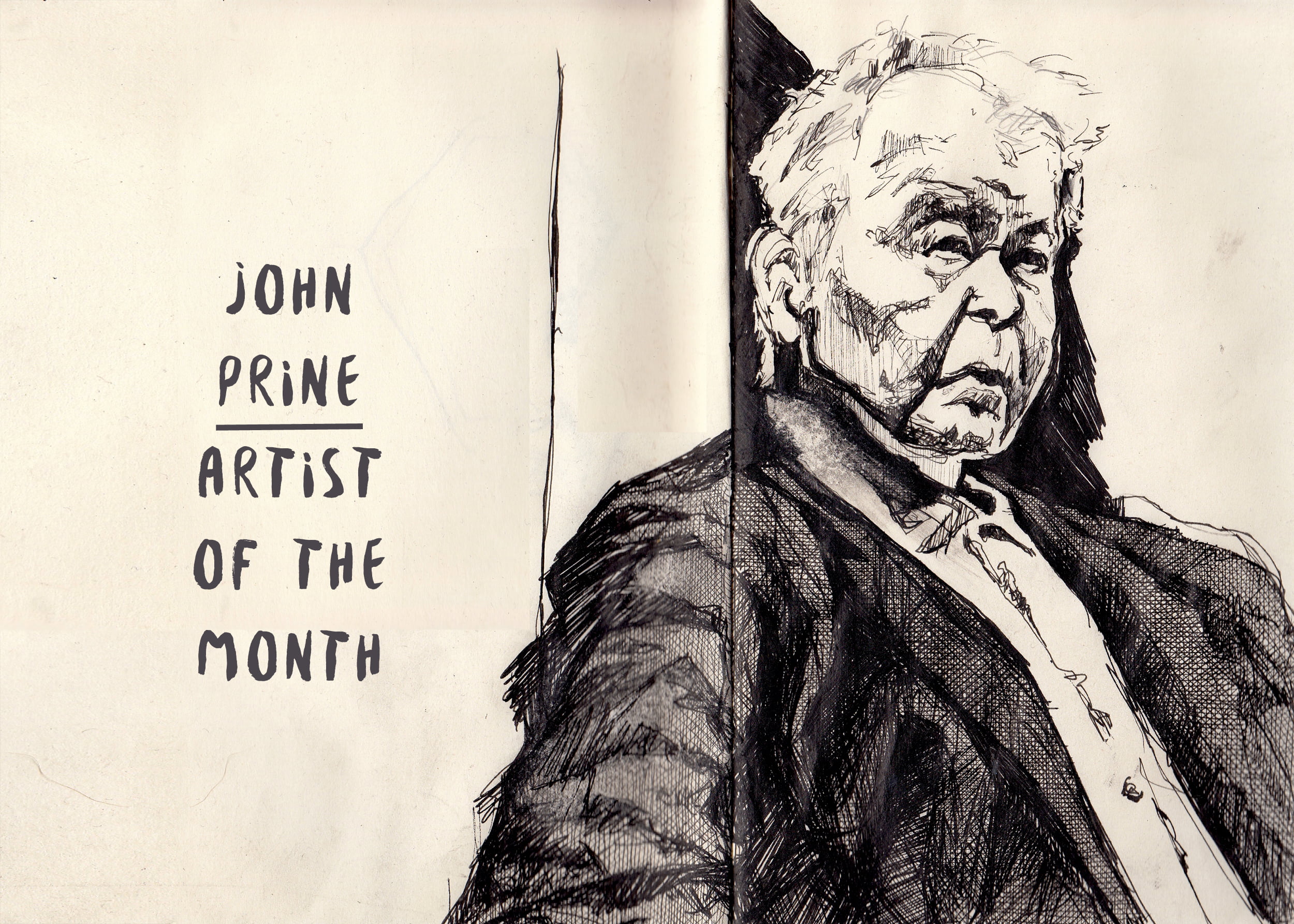
John Prine: The Difficulty of Forgiveness

In the days following the release of The Tree of Forgiveness, John Prine — the 71-year-old master song crafter, storyteller, and lover of a good meatloaf — had the best sales week of his decades-long career. His first album of originals since 2005’s Fair and Square, it’s a rare bit of triumph for the good guys — and for an artist like Prine, who has shaped our current musical climate in ways that are often beyond measure. Because, despite being one of the primary influences on Americana’s best and brightest — from Jason Isbell to Margo Price and Deer Tick — Prine’s never banked those platinum albums. Though 1991’s The Missing Years eventually sold around a half-million copies some 20 years after his self-titled debut, records, like the rest of human life, then went online: People stopped buying, and started streaming.

“Just as I started selling records, records stopped selling. I hope it wasn’t my fault,” Prine says, chuckling from his living room at home in Nashville. “I’d be spoiled, if I sold a million records. I probably wouldn’t go on the road for 10 years. But I don’t ever want to sell so many records that I have to do shows in a stadium. Stadiums are for sporting events: They’re not to watch a guy with a guitar come out and tell his story.”

He’s right, though if there’s anyone who could capture a stadium full of people with just an acoustic guitar and his heart-shaking stories, it would be Prine. The Tree of Forgiveness, an exquisite record that finds Prine looking at love, death, and the passage of time with humor, lightness, and his own quirky sort of grace, isn’t a set of arena rock barnburners (obviously). Instead, it’s touching moments of humanity that stick to the bones and linger in the mind, letting the imagination wander in exactly the direction that Prine wants it to … which is everywhere. Take “Summer’s End,” a nostalgic track if there ever was one, though it’s not explicitly clear for what — for summer, for a relationship, for life itself. “I could sell John Prine Kleenex with a song like that,” he says, laughing.

But it’s hard to be too sad about the end of life or love in Prine’s world, particularly life, if what happens next is as fun as “When I Get to Heaven,” the album’s closer. With Amanda Shires, Jason Isbell, and Brandi Carlile all chiming in on kazoo and vocals — all three appear across the Dave Cobb-produced LP — it details Prine’s perfect afterlife, where he can smoke again, post-cancer, hug his loved ones, and drink his signature cocktail, the Handsome Johnny, to his heart’s content. Like most of what Prine does, “When I Get to Heaven” is loaded with a potent combination of humor and vulnerability. Death is life’s biggest mystery, and Prine would rather solve that problem with lightness than exist in the dark, reality be damned. And Prine likes a good story as much as he likes (or doesn’t like) reality, anyway.

Prine’s own life story is a bit of rock ‘n’ roll lore: He grew up outside of Chicago in a mill town, and formed his songwriting voice after leaving the Army, writing between shifts as a mailman. But much of his signature finger-picking style and his artistic identity come from Kentucky, where his father hailed from, and which feeds the deep bluegrass presence within his songs.

Prine is equally important to Kentucky, too — and to Kentucky’s artists, like Kelsey Waldon, who will open select shows for him in the fall. “John Prine’s music is very special and significant to me,” says Waldon. “He brought together my country and bluegrass worlds, but with relevant and honest songwriting that I think would touch most any walk of life. As a Kentuckian, yes, of course his bluegrass roots make me proud. I have spent some time in Muhlenberg County, and I believe that’s where John learned to play, from his grandfather. That is the area where the great Merle Travis is from, and you can really hear a lot of Merle in John’s pickin’ style — that rhythmic thumb picking. The Everly Brothers and Bill Monroe are also from around the same area so, you know, it’s a lush environment for music. Something has always been in the water. I had heard in an interview that his daddy used to drill the kids that they were not only from Illinois, but also from Kentucky. So, I’d say the roots run deep.”

“I can never really lose those roots,” Prine says. “My family is a big part of my life. A lot of the older relatives are gone now, but I still have family in Kentucky, and I still go to my family reunions every year. Country and bluegrass have always been big influences on me and my music. I still listen to that music.”

Prine listens to a lot of Isbell and Shires, too, and Sturgill Simpson, a fellow Kentucky native with whom he shares a songwriting office — which has never actually been used for any songwriting. Prine stores a big pool table there and, besides, they can’t give it up. Producer/engineer Dave Ferguson uses the space next door, and he likes to smoke there, so Prine and Simpson hold on to it so a new tenant doesn’t put the kibosh on the stogies. “Friendship and cigarettes,” Prine says.

“I would love Sturgill if he was from New York City,” says Prine, “but he is from Kentucky, and I love that he respects and cherishes those roots as I do. He and I both come from the same long line of country-folk-bluegrass guitar-playing musicians. I learned to fingerpick by listening to Elizabeth Cotton and musicians in our tradition. We are all still playing and writing about stuff we know.”

One of the reasons that Prine’s songs are so impactful is how they balance what he knows and what he doesn’t — the mysteries of life, its frustrations, and unknowns. On The Tree of Forgiveness, recorded at RCA Studio A, he’s thinking a lot about forgiveness, itself, and what it means to be kind, something that resonates loud and clear in the Trump era. Prine didn’t write explicitly political songs on this record, but that simple act of forgiveness and kindness is political, in and of itself, in 2018 — a concept that other country and folk singers, like Kacey Musgraves and Courtney Marie Andrews, have also explored on their recent albums.

“Forgiveness, to me, it’s probably the most difficult thing to do,” Prine says. “And the most difficult person to forgive is yourself. A lot of people go through life not forgiving themselves for short-selling something, or paying enough attention to kids or parents, not looking after them when they get old. But the most difficult thing is to forgive yourself.”

Prine’s songs include so much permission to forgive ourselves for being imperfect, for acknowledging that we can love our weaknesses as much as our strengths, and for being content with our priorities, however skewed they may be. Some of Prine’s personal priorities are songs, a good meatloaf, and friends and family. His record label, Oh Boy, is a family affair, with his wife and manager Fiona running things with their son, Jody Whelan. When he’s not touring or playing with his grandkids, he’s writing with friends like Dan Auerbach, who appears on the record, and Pat McLaughlin, or seeing shows around town. He recently checked out the I’m With Her gig at the Station Inn in Nashville. “His support is incredibly meaningful,” says Sara Watkins, who could see he him bopping along from the stage.

“The longer I live in Nashville, I only co-write with friends,” says Prine. “Because, if you spend an afternoon together and you don’t write a song, at least you get to hang out.” For one of The Tree of Forgiveness‘s tracks — “Egg & Daughter Nite, Lincoln Nebraska, 1967 (Crazy Bone)” — Prine and McLaughlin were writing together on a Tuesday (“meatloaf day, that’s our carrot on a stick”) and Prine brought up a story about how he’d heard of farmers taking their daughters to town in order to pawn them off for marriage — which he’d heard jokingly referred to as “egg and daughter night.” Naturally, this gave Prine a good laugh. And an idea.

Prine didn’t think it was a real thing, though (according to Google, apparently, it is), but they wrote the song anyway. “We didn’t think it was about the truth and, when you aren’t writing about the truth,” he says, “the world is your oyster.”


Illustration by Zachary Johnson

Tommy Emmanuel: Swinging for the Fences

There’s a moment at the beginning of “Saturday Night Shuffle” — one of 16 duets from Tommy Emmanuel’s new album, Accomplice One — where the song’s guest, Jorma Kaukonen, turns to his host and says, “You’re a badass cat, man.”

It’s a nod of approval from one guitar great to another. Accomplice One is filled with those unplanned exchanges: a shout of encouragement here, a surprised laugh there. Raw and real-sounding, the album feels like a jam session between friends, mixing off-the-cuff solos and first-take performances with the virtuosity of an instrumentalist who’s been doing this for a long, long time.

Emmanuel began touring more than a half-century ago, hitting the Australian circuit as the youngest member of a family band. Now 62 years old, he still plays 300 shows a year. He doesn’t use a pick. He doesn’t use a regular amp. In a world whose most well-known guitarists — Eric Clapton, Jimmy Page, Chuck Berry, and the like — inevitably tend to be electric players, Emmanuel has remained true to the acoustic guitar. He’s the king of the unplugged.

With appearances from 20 guests, Accomplice One shows just how far the king’s empire extends. Americana poster boy Jason Isbell joins Emmanuel on the album’s opening track, a soulful reimagining of Doc Watson’s “Deep River Blues.” Bluegrass heavyweight Jerry Douglas stops by to swap solos on Jimi Hendrix’s “Purple Haze.” Mark Knopfler, Ricky Skaggs, and Rodney Crowell all make their own cameos, too. Recorded in studios across the world, these songs nod to the core ingredients of American roots music — Emmanuel’s bread and butter — without losing their global perspective.

“I grew up with music that came out of America more than the music that came out of Australia,” says Emmanuel, who was raised in New South Wales. “It was a combination of sounds that were coming out of Nashville, Detroit, Chicago, Kansas City, and New Orleans. I love all kinds of music, but that’s still the stuff that really touches my soul.”

Those childhood influences resurface on Accomplice One. “Saturday Night Shuffle” flips the Western twang of Merle Travis’s original on its head, sounding instead like the funky work of a New Orleans jazz band. Madonna’s dance-pop hit, “Borderline,” is turned into a lilting folksong with help from Amanda Shires. Emmanuel trades country licks with banjo phenom Charlie Cushman and blues-rock guitarist J.D. Simo on “Wheelin’ & Dealin’,” then bounces between Celtic shuffles and barn-burning bluegrass on his Clive Carroll collaboration, “Keepin’ It Real.”

It’s during “Djangology,” though, that the album truly goes international, with Emmanuel and his guests looking far beyond the Lower 48 for inspiration. A tribute to Django Reinhardt’s laid-back, jazzy phrasing, the song was recorded alongside Frank Vignola and Vinny Ranioloa in Cuba, during the middle of the country’s first-ever guitar camp.

“I was teaching 120 international students — everyone from 18 years to 80 years — for four days, and playing shows at night,” Emmanuel remembers. “One of the days, we went to the studio where they recorded Buena Vista Social Club. All the original microphones were there. We brought in some plastic chairs, and all the students sat in the main orchestral room. We had mics set up in front of us, and we worked out the arrangement in front of the kids. Then we recorded it twice and played it back, so they could hear it. The second take was the best, so that was the one we kept. It was very simple.”

Remember Santana’s Supernatural and its biggest hit, “Smooth,” which paired the guitar legend with Matchbox 20’s Rob Thomas? That song was inescapable for years, but it never truly sounded believable. Did anyone actually think Santana and Rob Thomas hung out together? Could anyone imagine them co-leading a guitar camp in Cuba?

That’s what makes Accomplice One so compelling: It’s believable. There’s fret noise on these tracks. There’s studio chatter between the musicians, all of whom are fans of one another. During the Cuban recording, you can hear someone tapping a foot on the studio floor, unable to resist keeping time with the music. The imperfections that would’ve been bulldozed by Supernatural‘s high-gloss production are, instead, put on a pedestal and celebrated by Emmanuel, whose album emphasizes feeling and intention over perfection.

That said, there’s a good bit of perfection here, as well. Emmanuel attributes his refined playing to a lifelong Chet Atkins obsession, which brought him face-to-face with — and eventually under the wing of — his idol during Atkins’ later years.

“Chet lived a life with a lot of great experience,” says Emmanuel, who became friends with the guitarist in 1980. “He had a lot of great people around him. He didn’t just make great music; he made the people around him great, too. He taught me a lot, not just about music, but about human nature. That’s the stuff I can write about.”

Nearly two decades before they met in Nashville, Emmanuel first head Atkins on the radio in 1963.

“It was a sound that I knew, deep in my soul, was what I wanted to make,” he remembers. “I wanted to sound like that. I just wanted to be like that. I think it’s nature’s way that all of us start out emulating somebody.”

If Emmanuel’s approach to the guitar began as emulation, it’s since grown into something signature. Like a one-man band, he’s learned to simultaneously pluck out a song’s melody, underscore it with a walking bass line and beef up the mix with accompanying chords. Listening to “Deep River Blues,” it’s easy to assume that Emmanuel and Isbell are tag-teaming the song’s guitar duties, filling its verses with blue notes and densely stacked chords. But that’s Emmanuel playing alone, with Isbell opting to leave his guitar in the case and, instead, channel his inner soul singer.

“When Jason started to sing that song, you’ve gotta imagine the chicken skin I got,” says Emmanuel, happy to refocus the spotlight on Isbell’s voice rather than his own playing. “I was doing the thumb-picking Doc Watson part and, when you add his voice to mix, it’s totally a soulful experience. It’s real, and that’s what I love about playing music.”

The feeling appears to be mutual. Accomplice One is filled with the sympathetic interplay of musicians who want to be there and that’s what elevates it above the usual catalog of guitar-heavy duets. Filled with covers, originals, (“Rachel’s Lullaby,” a Beatles-inspired song written for Emmanuel’s baby daughter, is one of his most compelling compositions in years.) and top-shelf playing, the album is for guitar nerds and casual Americana fans, alike. It’s the sound of a roots music lifer who, a half-century into the game, is still swinging for the fences.


Lede illustration by Cat Ferraz.

Nitty Gritty Dirt Band: An Unbroken Circle

In 1971, Richard Nixon was president and the United States was divided. It was an era marked by civil rights struggles, Vietnam War demonstrations, and labor union losses. The counterculture movement that evolved in the 1960s was continuing to take shape and was intrinsically linked to the outpouring of a whole generation’s worth of musical innovation. Amidst social upheaval, at a time when your music reflected your politics, a common ground was forged among unlikely sources. The Nitty Gritty Dirt Band’s milestone 1972 album, Will the Circle Be Unbroken, single-handedly bridged generational and cultural gaps by pairing country music veterans with young hippies from Southern California.

“I don't think we realized the sociological impact that that record would have,” says Jeff Hanna, founding singer and guitarist of the Nitty Gritty Dirt Band. “On the surface, it looked like, 'What the hell are they doing making music together?'”

The Nitty Gritty Dirt Band formed in Long Beach, California, in 1966 and became a staple of the wave of California rock that included acts like the Byrds, the Flying Burrito Brothers, and the Eagles who were all exploring old-time country sounds in their own music. By the time the recording sessions for the Circle record began, the Dirt Band was fresh off the success of their cover of Jerry Jeff Walker’s “Mr. Bojangles,” which had become a Top 10 pop single. Record executives and fans, alike, were anticipating a follow-up in the same vein. But the band’s manger and producer, Bill McEuen — brother of band member John McEuen — had another idea: to get the band in the studio with the bluegrass and country musicians that had influenced them when they were coming up.

“I have a lot of respect for [the Dirt Band] for doing it, for going out on a limb, you know, and doing that kind of thing in the middle of a career that was just really on its way up at that point,” says multi-instrumentalist and longtime Dirt Band collaborator Jerry Douglas. “They were the famous people on the record and their guests were the people that they were introducing to their audience, you see. So it was kind of going out on a limb for them. You know, the record company didn't wanna do it. Nobody wanted to do it. They just kind of pushed it through and it was a success.”

When it came time to recruit a slew of Nashville greats for the project, the generational divide ended up working in the Dirt Band’s favor. Their friendship with the Scruggs family began when Earl Scruggs brought his children, who were fans of the band, to a gig they played at Vanderbilt University in 1970. Scruggs became the first artist they invited to guest on the Circle record. They snagged Doc Watson the same way: his son, Merle, was a fan of the band.

“One of the things that was really interesting with a lot of these acts is, their kids were fans of the band. There was kind of a stamp of approval from the younger generation,” recalls Hanna. “And Merle Watson said something like, ‘Well daddy you love the way they sing and play.’ And also the invitation was, ‘We've got Earl Scruggs.’ And Doc said, ‘Yeah, that sounds like fun,’ so there it went.”

Other guests included heavyweights like Jimmy Martin, Mother Maybelle Carter, and Roy Acuff.

“I mentioned to Bill McEuen, at one point, that I'd read this article about Roy Acuff where he said he'd play real country music with anybody anywhere. And we talked about that and Bill said, ‘Well, let's see if he'll put his money where his mouth is,’” Hanna says.

But Acuff wasn’t an easy sell: His initial meeting with the band didn’t go as well as they were hoping. It turns out that the idea of West Coast hippies in their early 20s recording in Woodland Studios in Nashville was a bit of a hard pill to swallow.

“[Acuff] came in and he was just largely unimpressed with us. He was kind of like — he wasn't totally negative — it's just kind of flat and he said later, ‘Well, I don't trust a man that I can't see his face,’ and we all had like massive beards and mustaches and long hair,” Hanna remembers. “Meanwhile, we got in the studio and recorded our tracks with Merle Travis and, lo and behold, Roy Acuff comes strolling in, or sort of quietly walks in the back of the studio at the end of the day. And Bill played him — it was either ‘Nine-Pound Hammer’ or ‘Dark As a Dungeon’ — one of those. And Roy got this big smile on his face and he said, ‘Well, that ain't nothin' but country. I'll be here tomorrow. Be ready.’ So we cut those tracks, so he was in.”

The result was a monumental cross-generational album that combined genres and styles.

“Just to put it in context: You've got Merle Travis's Travis-picking; you've got Earl Scruggs' Scruggs-style banjo; you've got Maybelle Carter, Carter scratch; and Doc Watson — even though flat-picking isn't named after him, it should be,” says Hanna. “I mean, just all these guys that were just so big in our world.”

The Dirt Band’s love of country and old-time sounds goes way back, so it was a natural progression for them to want to honor and record with these musicians.

“A lot of us got into bluegrass because of the folk boom in the mid-60s. A lot of us also had older siblings and they'd bring home these records by Peter, Paul, and Mary or the the Kingston Trio,” says Hanna. “When I first started playing guitar, I bought a Pete Seeger instructional LP and book that had a section about the Carter Family and Maybelle Carter and her playing style, as well … I was a huge fan of the Everly Brothers. We all were. The Everlys, Buddy Holly, Eddie Cochran, Chuck Berry, Little Richard: that stuff killed us. But I think something we all had in common was our deep love of the sounds of Appalachia. And blues for that matter. But a lot of it was acoustic music, I've gotta say.”

Singer/songwriter Jackson Browne joined the Nitty Gritty Dirt Band when he was 17 years old, after meeting them at a gig at the Paradox club in Tustin, California, a little town in Orange County. “Getting to play with them was a huge installment in my musical education because I got to sit there and play these really intricate songs,” Browne recalls. “I mean, they were all better players than me, so I learned a lot.”

What struck him immediately about the band, he says, was their vast musical palette.

“The Dirt Band was great because they were true music fans and music aficionados. They weren't just kids that were playing folk music that they heard. They dug deep, is what I'm saying,” says Browne. “They found recordings of the Memphis Jug Band and those things were hard to find. I mean, like that wasn't just lying around. And they were kind of musicologists even then, from the very beginning.”

This year, the Nitty Gritty Dirt Band celebrated their 50th anniversary as a band. In commemoration, they returned to Nashville for a star-studded concert at the famed Ryman Auditorium last September, which aired on PBS and was released on DVD. Aptly titled Circlin’ Back, the show was both a nod to the first Circle record and a career retrospective that incorporated the musicians that have impacted the band’s history. Vince Gill, Alison Krauss, Rodney Crowell, Jerry Jeff Walker, John Prine, Jerry Douglas, and Jackson Browne were among the handpicked guests.

“What was even cooler to me than playing the show that night was the rehearsals that we had before,” Douglas recalls. “The first time you do a run-through of one of those songs is so magical. It has all of this extra spark and fear and everything in it. So there were sparks flying in the rehearsal hall when we were doing these things and trying to figure out who played on what.”

Just as the Dirt Band introduced their audience to their earlier influences on the first Circle record, the Circlin’ Back anniversary show connected the next generation of artists and fans together. Musicians like Vince Gill and Jerry Douglas, who remember buying the first Circle record when it came out, are now considered “little brothers” of the Dirt Band. Although they are each musical powerhouses in their own rights, the anniversary show was an opportunity for them to play with some of their heroes.

“I think the first time I played on the song with Jackson Browne that I played lap steel on, I held my breathe through the whole thing,” Douglas says. “I'm such a fan of all of those guys and then they bring Jackson Browne in, and I'm playing on this thing with Jackson Browne and I'm just going nuts inside. So much raw emotion that's happening.”

The Nitty Gritty Dirt Band has always had the ability to tap into emotion. Through their shared love of traditional music, they impacted legions of listeners by bridging generations and styles. Their legacy is littered with stories of parents and children bonding over the first Circle record, which is arguably one of the most significant releases in the history of music. At a time of cultural unrest, it showcased music’s ability to bypass divides and cross boundaries. The Nitty Gritty Dirt Band was Americana before Americana had a name, and their genre-bending illustrates the most important facet of music: how it connects us all.


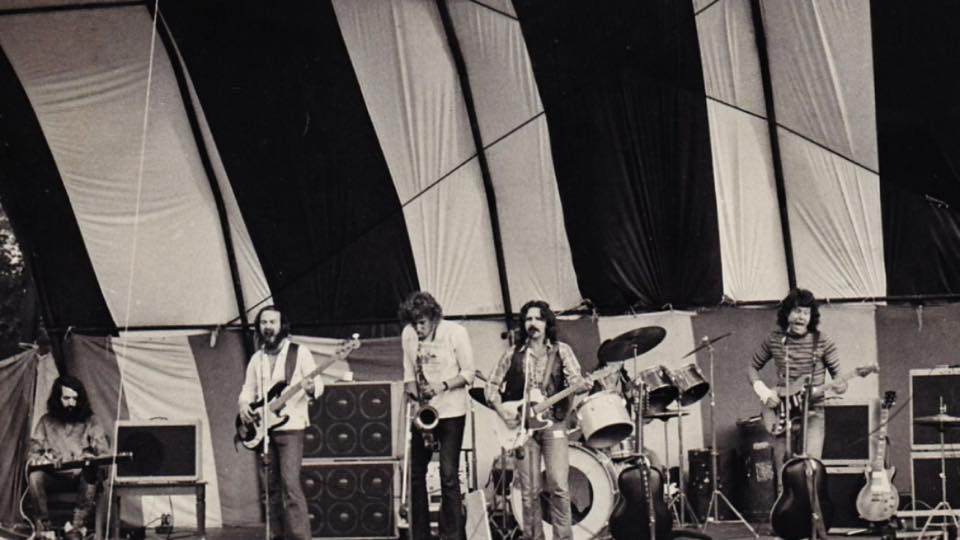
Photo of the Nitty Gritty Dirt Band in the early 1970s courtesy of the artist.

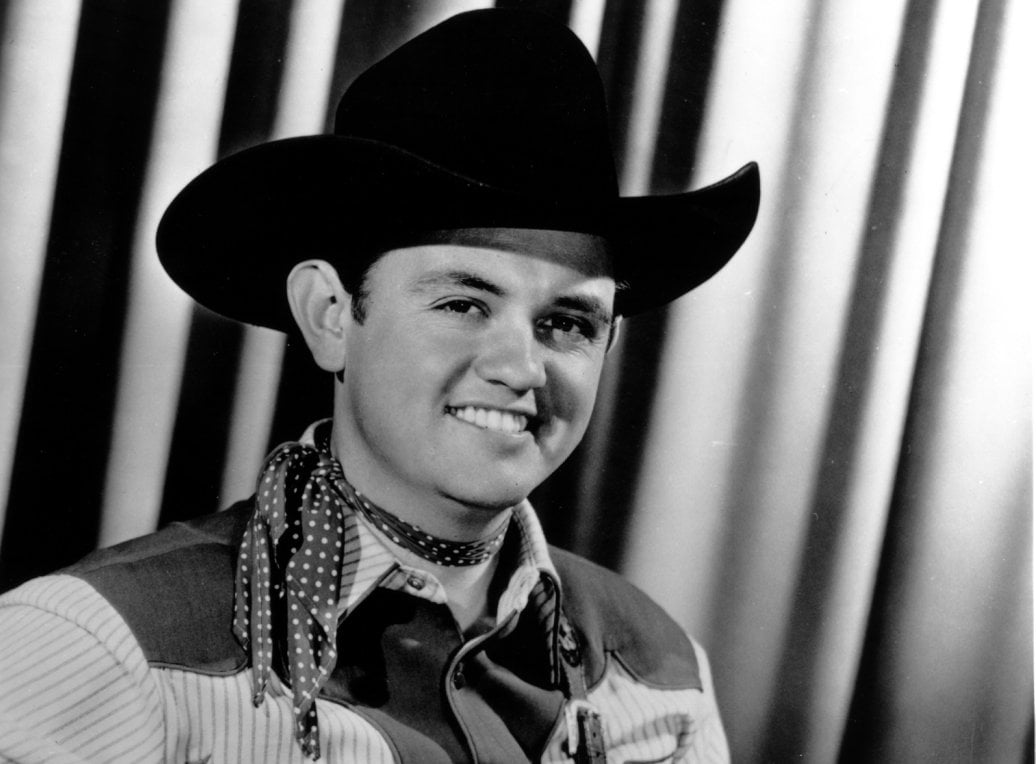
Merle Travis: The Urban Hillbilly Guitar Hero

Welcome back to In Memoriam, a monthly series that chronicles Americana legends. So often, one giant is memorialized in their field while the others are displaced to historical footnotes. In Memoriam will spotlight influential musicians that are fading from the collective conscious and commemorate them appropriately. This month, Merle Travis.

Merle Travis is one of the greatest country musicians of all time. His renown does not match his influence. Born in rural Kentucky, Travis overcame nearly insurmountable poverty and went on to become one of the most sought-after and revered guitar pickers of all time. He wrote many of country music’s most enduring classics. His guitar design innovations are legendary. Yet, he’s often only remembered as a footnote to the Chet Atkins story.

Travis was born in 1917 in Roseburg, KY. His family were hard luck coal miners and his early life inspired some of his most well-known songs — “Sixteen Tons” and “Dark as a Dungeon” both chronicle the lives of Kentucky coal miners. At 18, Travis won a talent contest in nearby Indiana that launched his life as a professional musician. He played guitar in the Georgia Wildcats before settling in Cincinnati. There, he performed on WLW radio from 1938 until 1943. Chet Atkins first heard Travis on WLW in 1939 and was inspired to adapt his fingerpicking techniques.

Merle Travis first flirted with national fame after settling in Los Angeles in 1943. Los Angeles in the 1940s was one of the largest country music communities in the U.S. — Roy Rogers, Tex Ritter, and Gene Autry were some of Los Angeles's biggest stars. Thousands of the country’s best honky-tonkers convened on the bourgeoning metropolis. In this throng of urban hillbillies, Travis shined bright. Early on, megastar Tex Ritter took the young Travis under his wing. When the Musicians' Union kept Travis from steady work, Ritter hired him for a tour. When the Union put the kibosh on the tour, Ritter gave him $100. The two collaborated for the rest of their lives. Many of Ritter’s 1940s and '50s albums feature Merle.

[Photo credit: CliffCC BY-NC.]

Travis also had luck with television. Through this brand new medium, he found steady work playing for six hours a day five days a week on CBS — an unheard of feat by today’s standards. He also made time to front his own bands and act in B-movies. He finally signed a record deal with Capitol in 1946. It was a fruitful period in Merle’s often tumultuous life. His name was not on the marquees, but he was making a lot of money.

Travis cast a long shadow because he was a triple threat: a peerless guitar player, a brilliant songwriter, and an innovative guitar designer.

In fact, Merle Travis redefined country guitar. His trademark picking pattern was based on a Western Kentucky regional style that developed in the early 20th Century. It incorporated a syncopated bass pattern plucked with the thumb on the first and third count while the index and middle fingers played the melody on the higher strings. It created a huge sound, and mimicked the rhythm and feel of a full band. The technique is now known as Travis picking and it is instantly recognizable.

Like all great players, Merle sought out great musicians in other genres. He incorporated elements of ragtime and jazz into his music — the preeminent bluesman Blind Blake also influenced him. Artists like Chet Atkins have expanded on Travis’s techniques, but none were as groundbreaking. It is a timeless and enduring approach to the guitar that will never stale.

Merle Travis signed with the young Capitol Records in 1946 and had a string of self-penned hits. He tackled the topic of displaced veterans in “No Vacancy,” even while he found success with novelty songs like “Divorce Me COD” and “So Round, So Firm, So Fully Packed.” In a strange twist, most of his own hits during this period did not showcase his sought-after guitar skills. Instead, the recordings highlighted his smooth vocals. In 1947, he released Folk Songs of the Hills. At the time, it was an anomaly in his catalog. It flopped, but has aged well. Merle’s most enduring hits — “Sixteen Tons” and “Dark as a Dungeon” — come from this Kentucky-inspired folk album. Later in life, he reflected on his Capitol records and said, “I had a streak of good luck, but never took recording seriously. All of my records sounded very much alike. I just had fun making them.” You'd be hard pressed to find anyone that agrees.

[Photo credit: Thomas Hawk / Foter.com / CC BY-NC.]

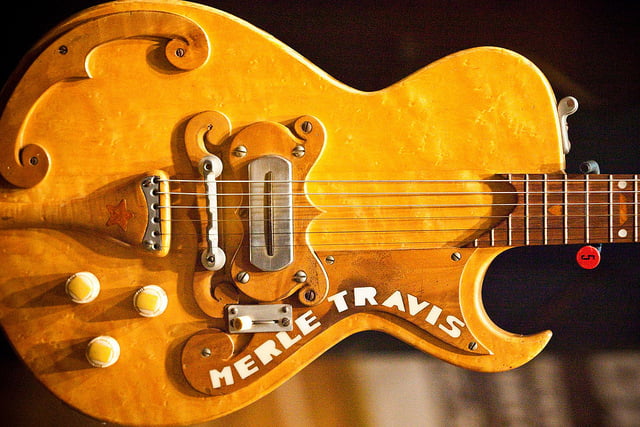
Though it is an oft-disputed fact, history indicates that Merle Travis designed the first solid body guitar. In 1947, he met Paul Bigsby who is now known for his whammy bar contributions. At the time, he was a motorcycle machinist. Travis, Bigsby, Leo Fender, and Les Paul all drank together. (All four are often credited with inventing the solid body guitar.) In 1947, Bigsby built a steel guitar for a friend, and it impressed Travis. He fell in love with the sustain. He wondered why his hollow body guitar didn’t have the same sound. “I came to the conclusion it was all because the steel guitar was solid,” Travis later wrote. “Another pet peeve of mine was changing strings on a guitar. When I lay my guitar down in my lap to change strings, the ones that were on the bottom are on the wrong side. They're awkward to change. I wondered why not put all he pegs on one side.” Travis sketched out a guitar for Bigsby, who went to work on it. It is now cited by most historians as the first solid body guitar. Bigsby built a handful of other guitars, but they are rare and now sell for upwards of $40,000. When Bigsby’s guitar tail pieces took off, he couldn’t handle the workload. When an order came in, he farmed out the work to his good friend Leo Fender. Although Travis’s claims were often doubted, Fender’s former vice president and the MusicMan amp creator Forrest White confirmed the story with Rolling Stone. Merle Travis beat both Les Paul and Leo Fender to the punch.

There are two reasons Merle Travis isn’t a household name. First, he always followed the money instead of the fame. He focused on steady work and playing on other artists' recordings, instead of on his material. The second reason is his personal life: In the 1950s, his drinking caught up with him. He was unreliable as a sideman and incapable of fronting his own band. He was arrested countless times for drunk driving on his motorcycle. In 1956, he pistol whipped his then-wife and held her hostage. His best friend Joe Maphis called the cops, and there was a standoff at the Travis house. It appears charges were never filed, but it was a horrendous stain on an already tarnished career. He managed to scrape by in the 1950s with a small part in the film From Here to Eternity and on the hype of Ernie Ford’s successful version of “Sixteen Tons.” His good friend Hank Thompson also kept him busy in the studio, although not on the road. The 60s didn’t look much better. Travis kicked them off with a narcotics arrest. Country radio and fandom all but forgot him by 1965.

Luckily, in 1968, Merle moved to Nashville at the behest of Chet Atkins, and his luck began to change. Travis and Atkins recorded an album together — The Atkins-Travis Travelling Show — that won a Grammy for Best Traditional Folk Album. Travis quit drinking and began recording again in earnest. The Nitty Gritty Dirt Band even featured him on their ground-breaking album Will the Circle Be Unbroken, introducing him to another generation of traditional and New Grass pickers. He signed with CHD records in 1976 and his most prolific studio years followed. He was up for his second Grammy in 1983 when he died of a massive heart attack. By all accounts, he died a happy man, having overcome his struggles.

Although Merle Travis’s commercial success never matched his influence, he left an indelible mark on country music. You can hear it coming through Chet Atkins in the Nashville Sound of the '60s. His imprint is in Scotty Moore’s biting solos on Elvis Presley’s records. His clear tone is in George Harrison’s weeping guitar. Perhaps the most fitting homage to such a profound musician is that two other country music greats, Merle Watson and Glen Travis Campbell, were named in his honor. You may not know the name Merle Travis, but all your favorite musicians do.


Lede photo credit: Michael Ochs