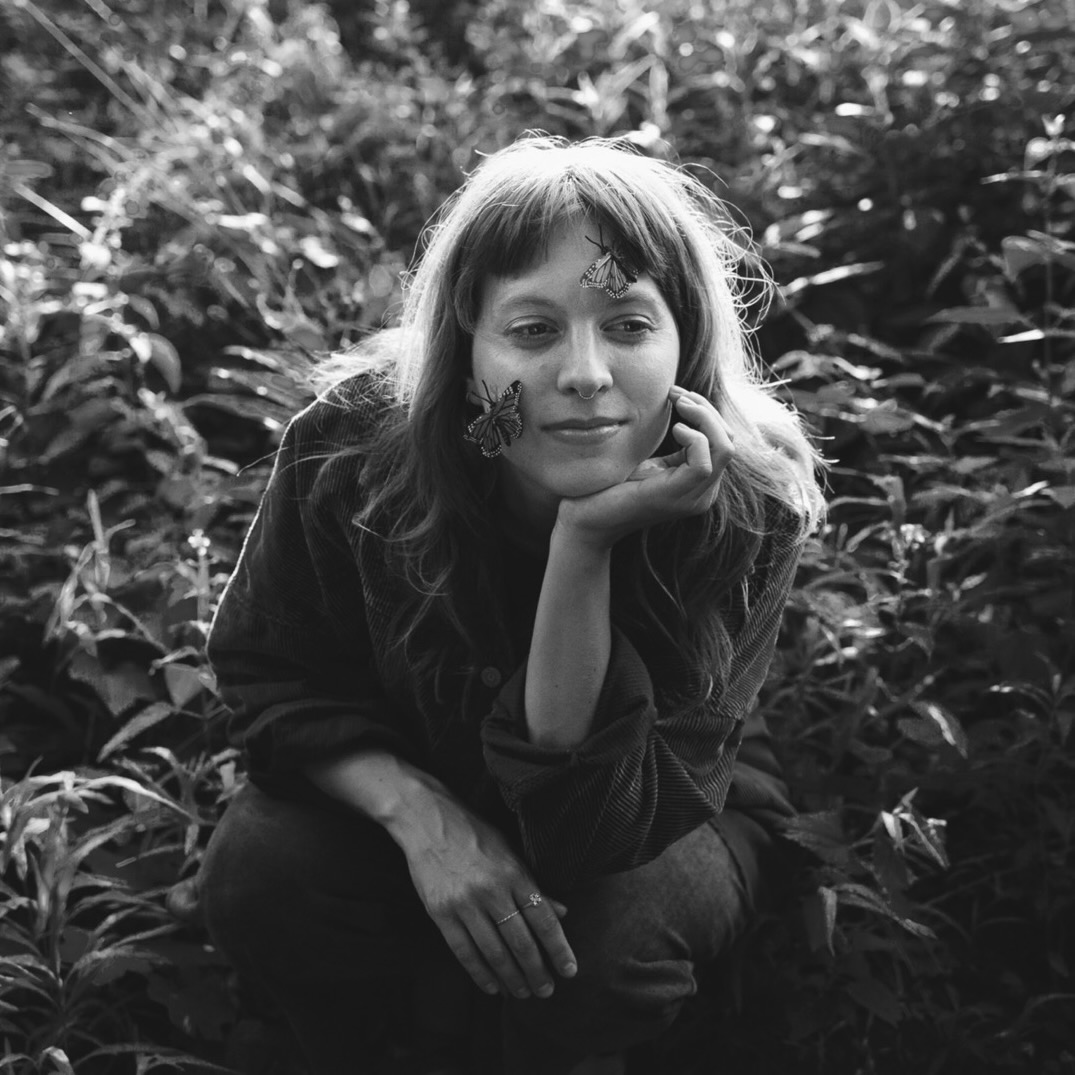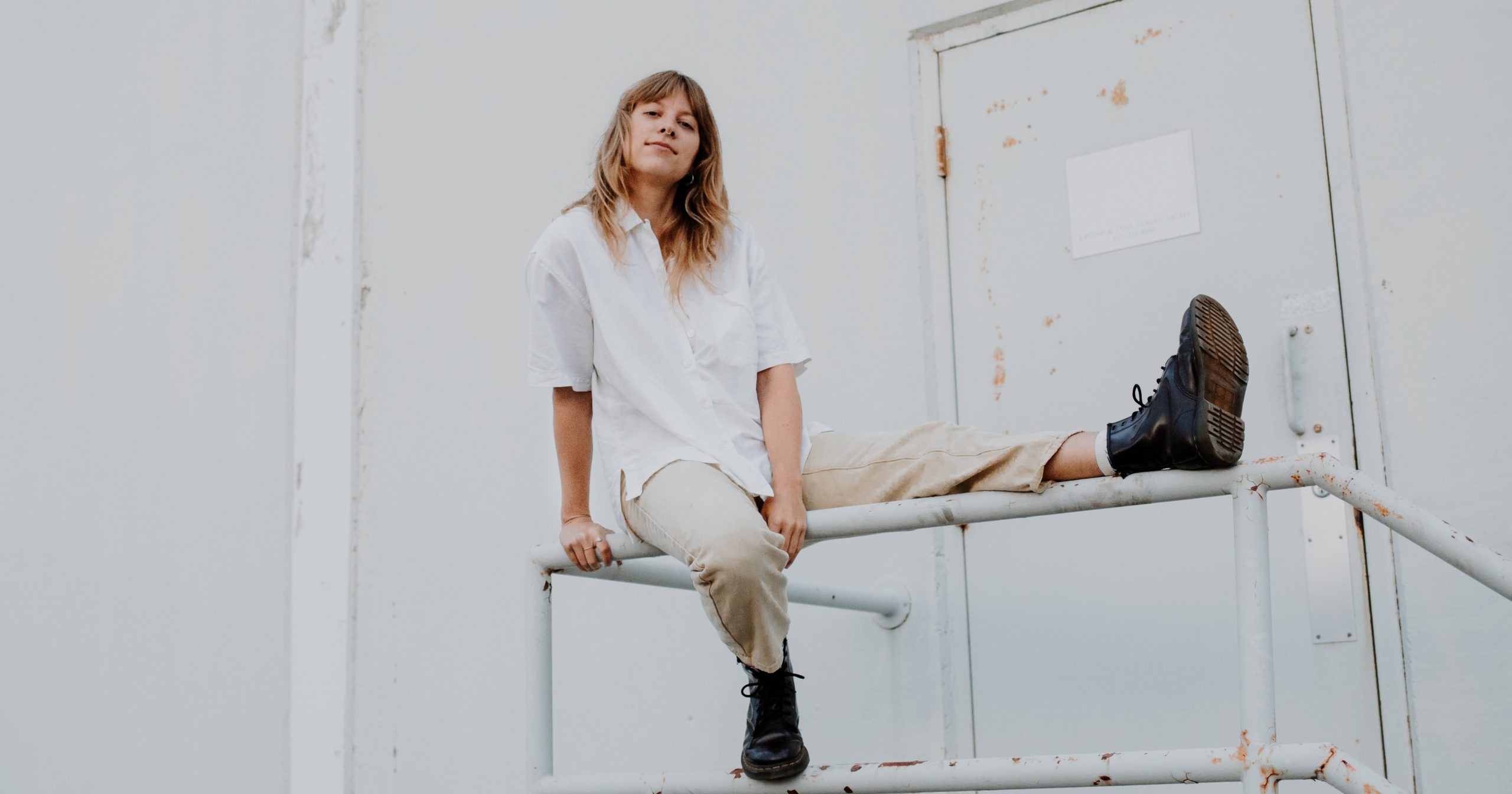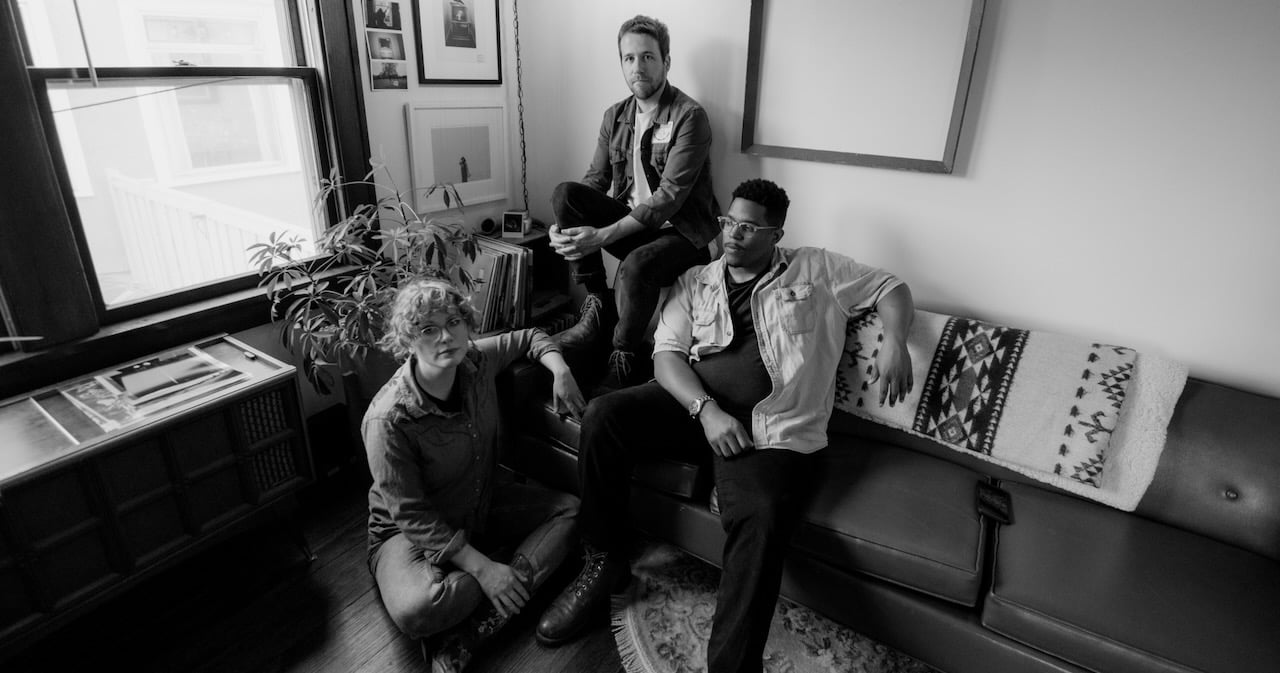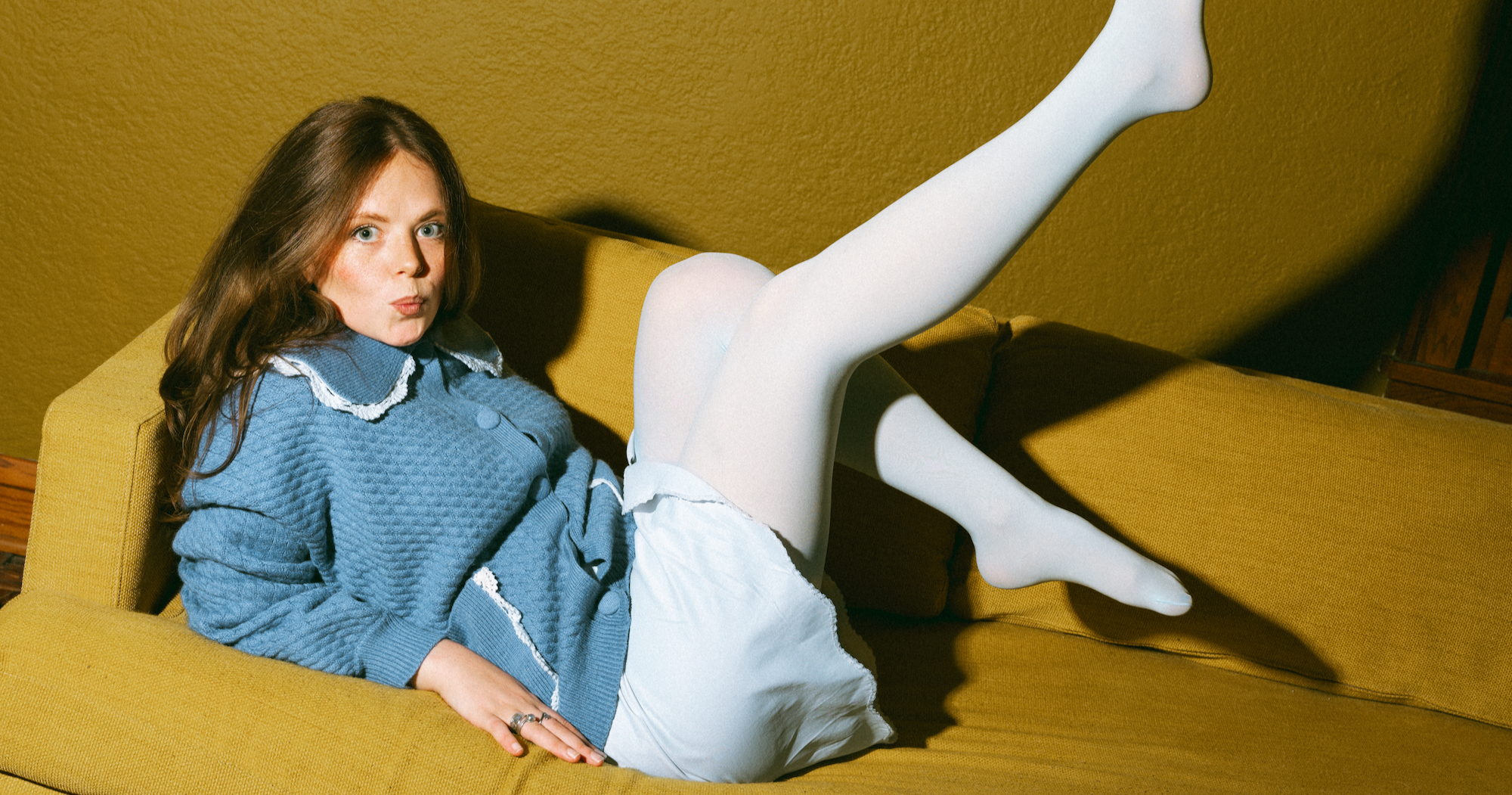
Ber Is No Longer Hiding Her Folk Elements

When you think of common musical touchpoints for young roots artists, the Shrek movies’ soundtracks likely don’t come to mind. But those compilations, beginning with the first film in 2001 and continuing through a handful of sequels in the aughts and ‘10s, feature an impressive if surprising roster of artists, including Rufus Wainwright, Tom Waits, Frou Frou, and David Bowie.

Quickly rising singer-songwriter Ber laughs as she reveals her penchant for those soundtracks, but her affection is sincere. On the Minnesota-born artist’s first full-length album – the newly released Good, Like It Should Be – she turns that winking sincerity inward, writing a dozen songs about opening up to love despite the real risk of heartbreak.

Ber wrote and recorded the bulk of the LP with close friends and collaborators Rob Milton, Austin Ward Sherman, and Bradley Hale, who joined her on a writing trip to Pepin, Wisconsin, and helped deepen both the record’s narrative vulnerability as well as its sonic range. The resulting songs are self-assured and lived-in, with an emphasis on melody and emotional tension that lets her agile, nuanced vocal shine.

Below, BGS catches up with Ber the day before Good, Like It Should Be releases, chatting about songwriting, a-ha moments and, yes, everyone’s favorite big green ogre.

Tomorrow – or in just a few hours, really – you’ll release your new album, Good, Like It Should Be. What are you feeling in this last stretch as you get ready for folks to listen to the project in its entirety?

Ber: It’s a little crazy. I think it’s actually out in Australia already. Maybe this slow burn of me realizing, all day, that it’s just gradually coming out will make it a little less overwhelming. But I would say overwhelming is the default nature of the last month. Coming up to this April 3 date has been challenging but also really exciting, and something I’ve tried to accept and just be really happy about, because it’s really crazy to be putting a whole album out. It feels really, really wild. I’ve never done that before. It’s new territory. We’ve been rolling out singles for six months, and I’ve been listening to the whole album for like a year, so really it’s not going to hit me that other people haven’t sat with it yet until tonight. I’ve been crying a lot, mostly happy tears. But it’s definitely a little bit of a release, emotionally, too. So, it’s a weird one to have to process.

To your point about living with this music for so long, do you feel like your relationship to the music has shifted in that time? Has any new meaning or insight been revealed to you?

It feels really solid. I don’t think it’s shifted so much outside of maybe me reaching for songs for the month of November, and then kind of getting sick of that one so then going for another one. I think I’ve sat with all of it in different ways. I haven’t been doing loads of writing in this period of releasing the album, so this is really the stuff that exists for me right now. And it is where I am still, which I think is really fun. We were pretty careful about choosing what the singles would be, so that there was still some magic in the unreleased tracks that people could hopefully discover when the whole album came out.

Let’s talk about the early days of the record. As you mentioned, this is your first full-length album. Did you originally set out to write a full LP?

Definitely. When I decided that it was going to be an album, there was a moment where I shocked myself that I even felt capable of that. But we definitely were like, “Okay, this is going to be a full-length record. We’re going to do 12 songs.” It was pretty concise in the planning that way, but I didn’t realize I was writing it at the time. The first songs from the album were just moments where I was pulling from things and writing for fun. I hadn’t really signed up to the task yet, so I think that’s really fun.

The first song that was written for the album is called “Smooth Ride.” I wrote that in my second EP cycle, in 2021 or 2022, with Rob Milton and Benjamin Francis Leftwich, who are just great. It was the first day we had all met and it was the first day I met Rob, who since then has been this really sturdy and really inspiring collaborator. We wrote that song and I didn’t like it then, so it got tabled. It’s something we revisited last summer, and I was like, “Oh, it lives on the album. It’s here. It’s time. I wasn’t ready for this yet, but now I am, and I love it now.” It’s one of my favorites…

The rest of it all came in a window of eight months of really intentional writing towards the album and trying things with different people, being in London or going back to Minnesota, going on this writing trip with my friends Brad and Austin [Ward Sherman] to this Airbnb in Pepin, Wisconsin. We wrote eight songs in three days and five of them shaped what the album ended up sounding like and feeling like and being about. It was the glue for all these other songs that I’d been working on in my own time with Brad. So, it was really like a puzzle to piece it all together and to choose the track list. There were probably 50 songs that we whittled down to 12.

To write eight songs in three days, you must have a special creative relationship with those friends. Do you know what it is about your working relationship that makes it so fruitful?

I just trust them implicitly. They both know so much about me and I think that trip really cemented our relationship as a collaborative team. We had been working together for a few years at this point, but Brad, who produced the record, is one of my dearest friends… It’s a really specific thing to be able to sit in the studio with someone and just make eye contact and go, “So that’s what this is.” Or, “Oh no, that’s not what you’re trying to say.” He could call my bluffs a lot and tell me to chase something, and I could follow that direction, because I trust him and I love him.

Then bringing Austin into that, too, was so fun, because he’s brilliant and he suggests things that I would never in a million years think of. He has a very band-y sensibility about his production and his vision for music and I really loved that… When you do a writing session with someone, you basically spill your guts for a few hours. You have to be really honest with yourself and with the people around you, otherwise the thing you make is gonna sound like trash. With the album, I really wanted to make something that felt true to where I was at the moment, and I was falling in love. I had to be really vulnerable with them about the things I was feeling and the way I would possibly describe it.

It is indeed a very personal record, so it makes sense to hear you are so close with your collaborators. When you write songs grounded in your own experience, do you end up understanding yourself or your place in those experiences better?

Absolutely. It’s a point of reflection for me, often. I used to journal a lot. I’ve been doing that a little bit less recently, which is something I want to pick back up. But when we were writing these songs, regardless of what we would walk into the room with, as you’re writing about it and sitting there with music around you, you’re thinking about how it actually feels. You’re putting down words onto paper and it is a very telling experience, because you find stuff and you write words in an order and it moves you, and you go, “Oh, my God. I didn’t even think that I felt this way about that.”

“Good, Like It Should Be,” I cried after writing that song. We all did. I’m tearing up thinking about that moment. That song was about getting out of your own way and letting something just be good, because it is good and you don’t have to question everything being good. At that point, I don’t think I even realized that I was suppressing so much.

There’s a line in there that’s like, “I know it’s a choice, I can be sturdy/ Let it be good, good, like it should be.” And I was like, “Oh, wow, that explained it to me. Actually, this new love, this letting something be good, this is actually a decision for me. Not only is it natural, but I have to also accept it and come to terms with this.” It was such a big moment that was like a light bulb for the entire album, and for what I had been writing about for a year at this point. Writing these songs revealed pieces of me that I didn’t really know were in there, and that’s such a treat. It’s exhausting emotionally, but in the good type of way where you feel like you walk out of it learning something new about yourself. It’s like tarot, getting you toward those subconscious things that need to come up.

The production is so lush and intricate, and really gives a fullness of emotion to the lyrics you wrote. Could you hear a fleshed-out version of a song in your head as you were writing it, or did they find that fullness in the studio?

Probably both in different situations. I’m so pleased with the production. It was really fun to sit with Brad and to sit with Rob, and not only watch them create magic but also be able to listen to it and partake and play these instruments. We played all of the guitars. I got to play tambourine on a lot of stuff. Brad took it upon himself to teach me how to engineer a little bit while he was recording all the drums in our basement, which was really fun. And it gave me the itch to get into more production.

But yeah, when we wrote them, there were some songs that just had to be the way they are. “Forget Me Not” was like, “Okay, we should essentially just do a demo. This is so touching and beautiful.” When we did that writing trip, we just brought this one Korg eight-track recorder and that was all we were allowed to use. So, we did a lot of in-the-room recordings of the six songs that ended up on the album from that trip. “Hey, Bluebird” and “Give It All Away” both have samples from those demo recordings in the final product. We wanted to hold on to the energy…

With other songs that are a little bit more produced, like “Cool, Boy,” I did that one with Rob and he had just gotten off of vacation. He was like, “I am only listening to Clairo and I absolutely love the beach, and I think we should do something beachy and flirty and fun.” And I was like, “Bet, that sounds cool. Let’s just see what’s up.”

In addition to Clairo, what were you listening to or feeling inspired by while you were making the record?

You might laugh, but I pretty much exclusively listened to the Shrek soundtrack. It’s brilliant. There’s just bangers on there. “I Need a Hero,” the Frou Frou version, is amazing. We were referencing Counting Crows. I also am a massive Kacey Musgraves fan. I grew up on Mumford & Sons, and the Decemberists, and Kings of Convenience, and some really rootsy stuff my parents turned me onto.

For a long time, at the start of me writing songs on my laptop and posting them and putting EPs out, I was really hiding from this folk element that I knew I had in me. But I wasn’t ready to touch it yet. I decided with the album we’d just really dive deep and let it be good. It’s some of the stuff I resonate with the most. But yeah, Clairo has been a huge indie inspiration. I love everything she does. And, again, it was Shrek that really did it.

You spent a lot of time figuring out the record’s sequence. How did you eventually settle on a final track list?

There were, like, 40 iterations of the track listing. It was the bane of my existence for a long time. And I actually really credit my manager for putting up with me for that window of time. Honestly, I love where it landed, but it was never my first choice. All I knew was that I wanted to sandwich the entire album between “Good, Real” and “Good, Like It Should Be,” that was my non-negotiable. So, it was like a deck of cards, sort of feeling it out.

I know a lot of people like to try and tell a story through the songs, but as I was listening to them, the story was just me. These are all things I felt and there wasn’t necessarily an order or a rhyme or a reason to it other than I made them. I would be remiss to say it was purely artistic.

My team was pretty heavy on the idea of most of the singles landing on side A of the record. And I hated that. I was so angry at the time, because what do you mean we’re gonna prioritize how an album feels on a streaming platform, of all things? It genuinely drove me over the edge for the longest time. But then I got to this point where I was like, “Maybe it’s not that deep.” … I wanted to have the journey of listening to the album feel like you land somewhere at the end, and it’s like a soft pillow. I think with where it’s landed, that’s the experience I at least have. You get to boogie a little bit in the first few and then I slowly go through the motions.

You’ve already been out playing shows around the record and you have more dates coming up later this month. What are you enjoying and looking forward to most about playing this new music?

These songs are where I feel I resonate the most at the minute anyway, so what a treat to be able to push these and to sit in them and sing them for people. I love my first three EPs and I have a lot of empathy for the girl who wrote them. I love those songs and how far they’ve reached people, and I definitely will never just let them go, but I think it’s going to be so special to be able to sit down and sing most of these songs at, like, First Avenue in Minneapolis. I’ll probably cry so much that day.

I’ve been testing the waters on these last two tours. I’ve been so lucky to fill the first quarter of my year with touring with SYML in the EU and then touring now with Callum Scott on the West Coast in America. It’s given me the opportunity to sing acoustic versions and the response I’ve gotten has been amazing… It’s really wild, I think artists are constantly releasing and performing behind themselves, in the sense that you grow so much in the time that it takes to put out an album. So often, that album and that album cycle exists in a year or two years before the person you are when you’re actually performing them and talking about it to people. But in this moment, it feels true to me and it feels really exciting to talk about still. It’s very cathartic.


Photo Credit: Tom Thornton
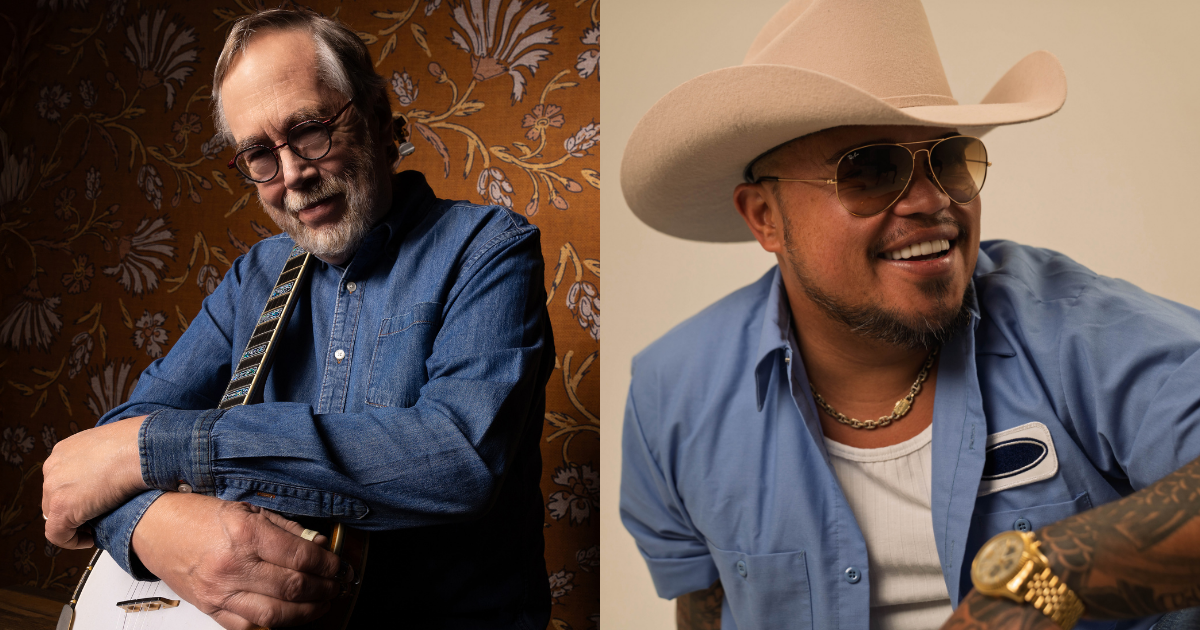
You Gotta Hear This: New Music From Tony Trischka, Maoli, and More

So much new roots music to enjoy this week! From bluegrass to the Pacific Islands and back again.

Starting us off, artist and songwriter Ryan Dart debuts a new song, “Dirt Road Woman,” combining folk, country, and troubadour styles in a musical tribute to strong, empowered women. Below, Dart explains how the song arrived quickly, “like it downloaded straight from the muse.” For a more tropical, seaside country flair, Maoli – who was born and raised in Hawaii – offers a brand new single today, too. “Some Are Just Better” is a track we’ll be returning to plenty this spring and summer, as it celebrates those good, dreamy days that are almost too perfect to believe.

In bluegrass, Lonesome River Band lean into their moniker with a new track, “There Where the River Rolls Around,” written by their longtime friend and songwriting collaborator Billy Smith. Mild and old-timey with lush low-tuned banjo and a laid-back groove, it’s a song about home, homesickness, and place – all perfect topics for ‘grassy explorations. Banjo great Tony Trischka is on his way to a new album, Earl Jam 2, so he’s dropping off a new music video released earlier this week. “Red River Valley” features Molly Tuttle on lead vocal and guitar with Bronwyn Keith-Hynes, Sam Bush, and Mark Schatz filling out the band. We can’t wait for more from the second round of Earl Jam. And young mandolinist phenom Wyatt Ellis launched a new video this week featuring a bunch of all stars, too. “West Dakota Rose” is a cinematic instrumental tune centered on Ellis’s virtuosic playing and featuring Christopher Henry joining on guitar. In the official music video, Ellis strolls around a cabin porch while picking through the tune with an excellent slate of pickers – and a tasty twin fiddle break.

Meanwhile, the Montvales offer an old-timey track of their own, “Carolina,” out today in anticipation of their upcoming March album, Path of Totality. While it certainly sounds old-timey, this is a song rooted in the present, heels dug in against late stage capitalism and the rampant woes of our current day-to-day. Also, singer-songwriter Jack McKeon gives us a sneak listen at his new song, “Kid Like Me,” a sort of sonic bridge from his last album, Talking to Strangers, to his next – which is set for release in JulyWritten with Theo MacMillan and inspired partially by Tim O’Brien, the track began much more bluegrassy than it ended up after reaching the studio.

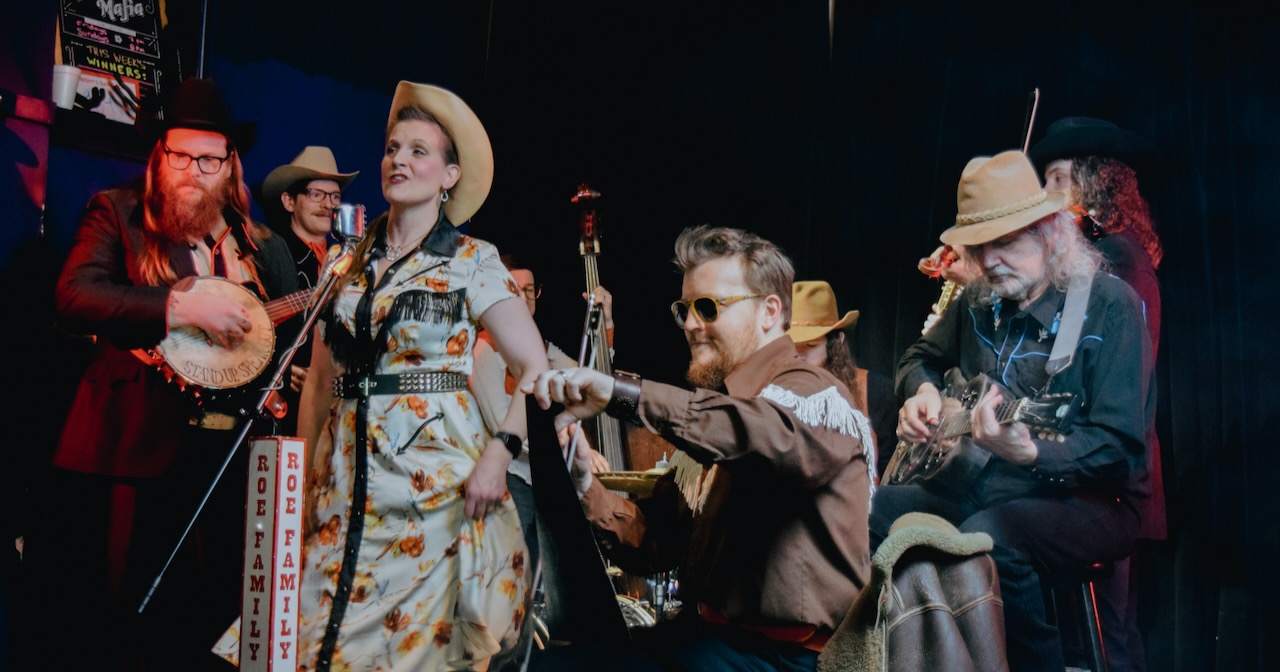
Finally, Minneapolis, Minnesota’s Roe Family Singers speak truth to power and bring each of us into their communities and neighborhoods with a chilling new folk song, “Blacked-Out Ford.” Living in Minneapolis in 2025 and 2026 means living on the frontlines of fascism, kidnappings, and government overreach, with the Roes and their friends watching chilling federal SUVs surveil their streets and neighborhoods, tearing families apart and violating human rights. The Roe Family Singers highlight ICE’s murders and unlawful actions in song, calling us all to join them in action and solidarity.

We always love sharing new music with you all every Friday, but this one is especially high quality. Enjoy! ‘Cause You Gotta Hear This…

Ryan Dart, “Dirt Road Woman”

Artist: Ryan Dart
Hometown: Boulder, Colorado
Song: “Dirt Road Woman”
Album: If Love Don’t Break You
Release Date: February 20, 2026 (single); May 1, 2026 (album)

In Their Words: “I wrote this song about falling in love with a powerful woman and the ‘love bubble’ phase of a relationship – how the outside world just fades away. I know some men may not be comfortable with powerful women, but I think there are plenty of us who are attracted to an empowered, strong woman who also embodies the sacred feminine. It’s incredibly compelling and I wouldn’t want anything else.

“You’ve got to ride the bad horses before you recognize the good ones. I set out to write a love song that felt like a cousin to Jason Isbell’s ‘Cover Me Up’ – something that balances raw, real emotion without ever feeling cheesy. This one came fast, like it downloaded straight from the muse, born of pure feeling. I hope it resonates with listeners the way it does with me.” – Ryan Dart


Wyatt Ellis, “West Dakota Rose”

Artist: Wyatt Ellis
Hometown: Maryville, Tennessee
Song: “West Dakota Rose”
Release Date: February 6, 2026 (single); February 19, 2026 (video)
Label: Knee High Records

In Their Words: “Getting to shoot the music video for ‘West Dakota Rose’ was just one of those days you don’t really forget. The tune already feels like it tells a story without words, so being able to stand in a place that matched that feeling made it even more real. Joseph Cash has directed and filmed all of my music videos so far, and he always makes it an adventure. It’s like showing up not totally sure what kind of wild idea he’s going to have, but somehow it always comes together even better than I could’ve imagined.” – Wyatt Ellis

Performer Credits:
Wyatt Ellis – Mandolin
Christopher Henry – Guitar
Julia Claire Eversole – Bass
Kyle Tuttle – Banjo
Noah Goebel – Fiddle
Christian Ward – Fiddle

Video Credits: Joseph Cash, director, director of photography, editor. Kitt Fresa, gaffer. 


Lonesome River Band, “There Where the River Rolls Around”

Artist: Lonesome River Band
Hometown: Floyd, Virginia
Song: “There Where The River Rolls Around”
Release Date: February 20, 2026
Label: Mountain Home Music Company

In Their Words: “We got this song for our long time songwriting friend Billy Smith (‘Hobo Blues,’ ‘Tears In My Tracks,’ ‘Crazy Heart,’ among others). As we listened to the song one late night going down the road in the bus, the arrangement just fell into place and we began working on it. A haunting song about leaving home searching for more and longing to be back. Thanks, Billy!” – Sammy Shelor

“The River [in the song] is Haw River in Rockingham County, North Carolina. I always believed that I would make it big playing music and writing songs in Nashville and go back there. I moved here with my brother Terry (the Grascals) and cousin Alan O’Byrant of the Nashville Bluegrass Band. 52 years later, I’m still here, with three kids from two marriages. But I always wanted to return ‘There Where The River Rolls Around’ and it always touches my heart when I hear it sung. Bless Sammy Shelor and the Lonesome River Band for recording that one and 8 other of my songs, including ‘Crazy Heart’ and ‘Hobo Blues.'” – Billy Smith, songwriter

Track Credits:
Sammy Shelor – Banjo
Jesse Smathers – Acoustic guitar, harmony vocal
Mike Hartgrove – Fiddle
Adam Miller – Mandolin, lead vocal
Kameron Keller – Upright bass
Rod Riley – Electric guitar


Maoli, “Some Are Just Better”

Artist: Maoli
Hometown: Haiku, Maui, Hawaii
Song: “Some Are Just Better”
Album: Maoli Music OverloadMMO 3
Release Date: February 20, 2026 (single)
Label: ONErpm

In Their Words: “I’ve been waiting to release this since the day we wrote it. It was my first time writing in Nashville and I was so excited to collaborate with Mikey Reeves and Rob Snyder. I love the horns, the feel, and the lyrics – I’m so proud of how it all came to life.

“We all have days that stand out – not just good days, but the kind where everything falls into place and just feels right. The kind of day you know you’ll look back on and smile about for years. It’s about capturing that feeling. You can’t relive a day once it’s gone, but music has a way of taking you back – even if it’s just for a few minutes.” – Maoli


Jack McKeon, “Kid Like Me”

Artist: Jack McKeon
Hometown: Chatham, New York
Song: “Kid Like Me”
Album: Every Once in a While
Release Date: February 27, 2026 (single); July 3, 2026 (album)

In Their Words: “‘Kid Like Me’ began its life as the ‘most bluegrass’ sounding song in the bunch before I went into the studio. Written with Theo MacMillan, we talked a lot about parenting, being an older sibling, and trying to make sense of a world that’s always in flux. Theo’s son was about to be born and I was reflecting on watching my younger sister begin to reach adulthood and face real and more challenging problems. Musically, we spent most of the writing session talking about Tim O’Brien and wrote ‘Kid Like Me’ at a faster tempo that we thought would fit with Tim’s Odd Man In era. Once we were in the studio, it was Casey Campbell and Seth Taylor who turned the recording in a more ambient direction, hinging on Casey’s extended mandolin intro that sets the tone for the rest of the song. I wanted to lead my new project off with ‘Kid Like Me’ as it is reminiscent of the sounds and themes of my debut album Talking to Strangers, but breaks new ground for my production as it features Mellotron, drums, and electric guitar as well.” – Jack McKeon

Track Credits:
Jack McKeon – Acoustic guitar, vocal, songwriter, producer
Seth Taylor – Acoustic guitar, electric guitar
Casey Campbell – Mandolin
Vickie Vaughn – Bass
Josh Hunt – Drums
Phillippe Bronchtein – Keys
Melissa Erin – BGVs


The Montvales, “Carolina”

Artist: The Montvales
Hometown: Cincinnati, Ohio
Song: “Carolina”
Album: Path of Totality
Release Date: February 18, 2026 (single); March 20, 2026 (album)
Label: Free Dirt Records

In Their Words: “‘Carolina’ is an old timey song that is firmly situated in late stage capitalism. I called upon the steadfast, rooted sounds of home when I was writing this one. It brings those old sounds forth into this uncertain era and makes a vow: even when there seems to be no path forward, we’ll find a way.” – Sally Buice


Roe Family Singers, “Blacked-Out Ford”

Artist: Roe Family Singers
Hometown: Minneapolis, Minnesota
Song: “Blacked-Out Ford”
Album: Light & Hope & Roses
Release Date: February 2, 2026 (single)

In Their Words: “We wrote ‘Blacked-Out Ford’ about two weeks after Renee Good was murdered by ICE in our Minneapolis streets. Good’s murder, combined with the discovery that ICE is housed about six blocks from our house and has been seen circling our neighborhood, looking for people to abduct… that’s where this song came from. Our area has a large Muslim population, neighbors primarily from India and Pakistan, also Somalia and Ethiopia, so pretty soon every blacked-out SUV started to look like ICE sharks circling, and every parked truck looked like a prelude to a kidnapping. We debuted the song live at a mutual-aid benefit, and the benefit raised a ton of money; the next morning we woke up feeling proud of ourselves and empowered by the fact that we felt like we were using our art to fight the fascists. Then we got the news that Alex Pretti had just been murdered by ICE in our Minneapolis streets.” – Quillan Roe

Track Credits:
Kim Roe – Washboard, vocals
Quillan Roe – Guitar, vocals


Tony Trischka, “Red River Valley” Featuring Molly Tuttle

Artist: Tony Trischka
Hometown: Fair Lawn, New Jersey
Song: “Red River Valley” featuring Molly Tuttle
Album: Earl Jam 2
Release Date: February 18, 2026 (video); March 13, 2026 (album)
Label: Down The Road Records

In Their Words: “I grew up listening to ‘Red River Valley’ and once I found Earl Scruggs and John Hartford playing it in one of their jams, I knew I had to put it on Earl Jam 2. Who better to sing it than Molly Tuttle? I’ve known Molly since she was a teen (when I thought she was just a solid Scruggs-style banjo player) and it’s been a joy seeing her career take off. She has the perfect voice for this tune and with the estimable talents of Bronwyn Keith-Hynes on fiddle, Sam Bush on mandolin, and Mark Schatz on bass, I knew we had something special. When we’d finished recording and I went back to listen to it the next day, I felt it needed just a little bit more of something. So I got in touch with Bronwyn (talk about careers taking off!) and she added beautiful harmony vocals. The very last vocal chorus melts my heart!” – Tony Trischka

Track Credits:
Tony Trischka – Banjo
Molly Tuttle – Guitar, vocals
Bronwyn Keith-Hynes – Fiddle, harmony vocals
Sam Bush – Mandolin
Mark Schatz – Bass


Photo Credit: Tony Trischka by Ali Hasbach; Maoli by Sean McGee.

The Lowest Pair Are as Enchanting as Ever

It’s fitting to enjoy the Lowest Pair’s new album, Always as Young as We’ll Ever Be, in the opening weeks of a new year. In particular, the song “Give It All Away” gently offers a theme of letting go amid an orchestration of acoustic guitar, banjo, and other subdued instrumentation. As the song swells, a soft percussion begins to underscore a sense of renewal.

“I feel the lightest when I give it all/ Give it all away,” sings Kendl Winter in the opening moments; she’s later joined by bandmate Palmer T. Lee when they harmonize on a simple yet poetic lyric: “Before the sun, there was the rain/ Before the rain, there was the sun.”

Indeed, it’s been quite a few seasons – six years in fact – since the Lowest Pair released an album of their own. The duo enlisted Tucker Martine to produce the new project, recorded in Portland, Oregon. There are some surprising musical textures for longtime fans of the duo, but at the heart of the Lowest Pair, there’s still the welcoming vibe that’s enchanted listeners since their 2014 debut album.

“We were really excited about the recording situation, being with Tucker Martine in his studio, and having such beautiful musicians paint our songs, to flesh them out more than just the two of us,” Winter says. “They really did lean into the medium of the studio and the sounds that were available to us. There are a lot of instruments and musicians…”

“… A lot of other people’s ideas coming into the mix. We were just feeling open to that,” Lee adds.

Although both Winter and Lee are reluctant to divulge too much about the meanings behind the songs, listeners will certainly relate to lyrics about making it through rough patches (“Diamonds”) and learning to find comfort in the unknown (“Uncertain Seas”). The album’s country-tinged closing track, “Thorn,” is an elegant ode to getting past the pain.

“You visit these things that hurt often. I mean, we all do,” says Winter, who wrote the song. “That’s what grief is, right? You’re kind of hoping you’ll figure it out, and then it’ll go away. …

“With Always as Young as We’ll Ever Be, the whole theme is now, and now, and now, and trying to be in the present with things. There’s a love and there’s a ‘go to hell’ in that song. There’s a wanting to hold things sacred but also let them go.”

The album is actually named for a song that didn’t make the final track listing; Martine loved the phrase so much that he insisted the band should keep it as the title. The words are wistful enough to also call to mind the 2009 bluegrass festival in Minnesota, where Palmer, Lee, and a few other musicians stayed up late jamming along the Mississippi River.

“That was really pretty special!” Winter recalls. “Both of us were playing banjos in different bluegrass bands at the same festival. I saw Palmer playing and singing and I loved his voice and I loved his melodic style. I still hadn’t seen a bunch of other banjo players exploring more, like, off-the-grid playing and more melodic approaches. And after he played, I think I said something about it, right?”

“Well, I think the first time, you were just like, ‘Hey, nice banjo playing.’ And I was like, ‘Thanks, random person,” Lee remembers with a laugh. “Then maybe a few hours later, you were just like, ‘I really dug your melodic style,’ And it’s like, ‘Oh… you’re a banjo player.’”

Growing up in Arkansas, Winter heard the banjo in bluegrass, but considered herself more of a punk rocker. Hearing Béla Fleck & the Flecktones changed her perception of what tones and sounds could come from the instrument. Lee, a Minnesota native, inherited two banjos – one from each side of his family – when his relatives heard about his burgeoning interest in music. He dismantled them both to create one instrument specifically suited to his personal taste.

Several years later, after that initial encounter at the riverbank, Winter decided to quit her band; Lee asked if she needed a singing partner. Remembering their easy musical bond, she invited him to Olympia, Washington, where she’d relocated in her early twenties. In turn, he asked her to make a duo record with some time he’d already booked. Thus, the Lowest Pair was born.

“I think, serendipitously, both of our bands were falling apart at the same time, and I was exploring ideas about how to move forward in my career,” Lee says. “It was like, maybe if I collaborate with somebody and make a record that way, that could be a way forward.”

Now living about a mile apart in Olympia, Winter and Lee will be touring the Pacific Northwest this spring. At the merch table they’ll have some lino-cut carvings and prints, new posters, stickers, and T-shirts, and of course, vinyl copies of Always as Young as We’ll Ever Be. (The album art is a watercolor painted by Winter’s mother, Jill Morgan.) Along with the new material, they’ll also be mixing in catalog cuts like “Too Late, Babe” and “Rosie.”

Asked about the enduring popularity of the former song, Lee chalks it up to placement on an editorial playlist when it was released as a single in 2020. “I have this vague memory at one point of someone after a show mentioning that we played a really good cover of that ‘Too Late, Babe’ song,” he says. “That was like, ‘Hell, yeah!’”

As for “Rosie,” Winter says, “Yeah, that one’s still in the set list. That one is a really early one. I was playing that even before we had started the Lowest Pair. And it’s really interesting what people latch onto, because it’s simple. I mean, I wrote it crying.

“I think with songs, you can kind of feel the ones that come from your heart. They did the thing. They gave you the goosebumps when you wrote it, and then they continue to have that effect, and it’s pretty cool.”

That emotional effect remains in place for Always as Young as We’ll Ever Be, too.

“I took a lot of space from it and hadn’t listened to it for a few months before we started talking about what we’re gonna do with it,” Lee says of the album. “And I remember being kind of surprised. You know, there’s an amount of pride and accomplishment. I was grateful to have contributed to it.”


Photo Credit: Sarah Cass

BGS 5+5: The Last Revel

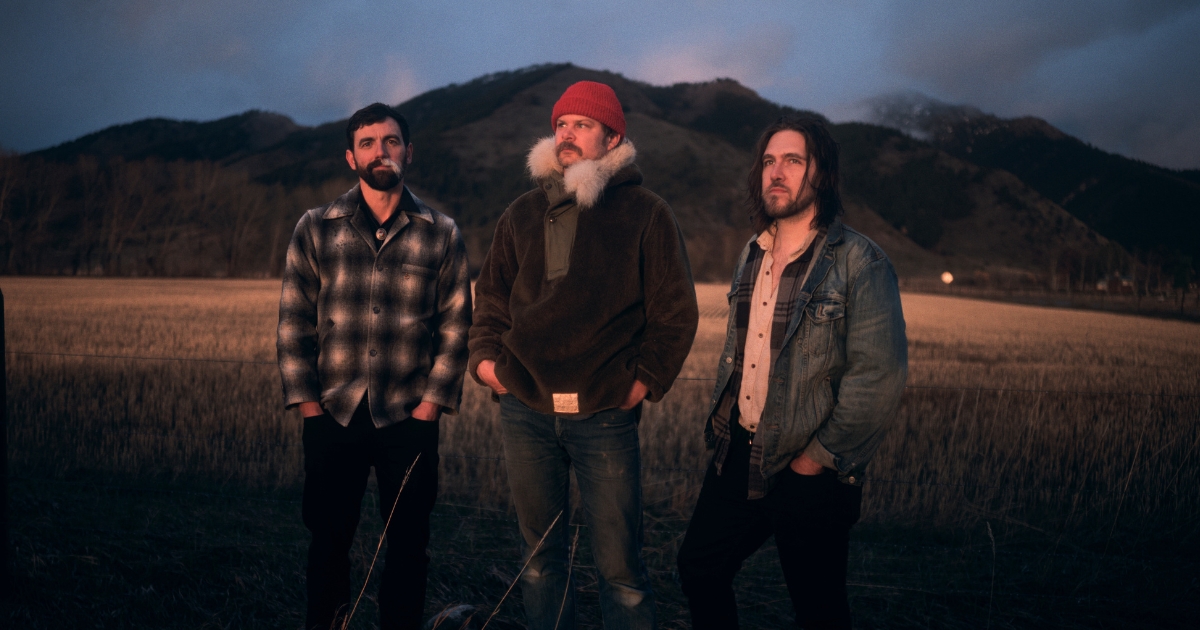
Artist: The Last Revel
Hometown: Minneapolis, Minnesota
Latest Album: Gone For Good (out July 18, 2025)

Which elements of nature do you spend the most time with and how do those impact your work?

I grew up fly fishing, hunting, and camping in my home state of Wisconsin. Those experiences have turned into passions of mine in my adult life and are about the only other thing in my life that I feel a hyper-focused mental clarity like I do when I’m performing onstage. I cherish them both equally and I wholeheartedly feel that one informs the other. I began writing “Go On,” a song on our forthcoming record, while on a solo mule deer hunt near my current home of Livingston, Montana. The verses seemed to pop up fully formed. I still have a voice memo on my phone of me humming lines from the song while hiking down a mountain in the dark. For me, there is a clear path between being deeply immersed in an outdoor experience and being able to hear ideas and inspiration from my subconscious mind. I feel lucky to now live in a state like Montana where the opportunities for great outdoor experiences are endless. – Ryan Acker

What has been the best advice you’ve received in your career so far?

The best advice I ever received was kind of in passing on a long drive between a few tough shows on tour in the early days. We were all talking about how hard some shows can be, especially when there’s very few people there. It can be difficult to put your whole heart into it and when you do, it can feel exhausting. So we were all talking about it. Vinnie’s family owned a restaurant when he was young and his mom used to say, “You win people over one plate of pasta at a time.” I have thought about this phrase on a regular basis for years to stay inspired about the shows and the songs regardless of turnout or enthusiasm from the crowd. It helps to remember that at least one person there is enjoying our version of pasta. And it helps me stay passionate about what we are sharing rather than worrying about how it will be received. – Lee Henke

If you didn’t work in music, what would you do instead?

If I didn’t work in music, I think I would be an excavator. I think in order to move dirt, dig holes, and grade slopes all day everyday you would almost have to achieve a Buddha-level zen to sustain your well being. It would also give me time to focus on something simple and seemingly endless, which can be soothing for my brain. There is also something mystical about making something beautiful out of dirt. We always talk about the magic of making something out of nothing in the band so I guess that’s maybe why I think I would be a good excavator in another life. Or maybe retirement. – Lee Henke

Since food and music go so well together, what is your dream pairing of a meal and a musician?

Italian tavern food with Nick Cave and the Bad Seeds in the corner.

There is a little tiny village called Compello Monti at the end of the road, way up in the mountains on the border of Italy and Switzerland. It is just at the edge of the tree line and built around a waterfall that drops through the middle of several blocks of stacked buildings, because of that everything is covered in dew. It is a place that is shrouded in moss and held together by benevolent ghosts. In the center of the town there is a little tavern that will serve you a five-course dinner in striking Italian fashion – that is to say, simple, robust, and perfect – with libations to match for an extraordinarily modest price. I recall having the most incredible antipasti, followed by a simple plate of linguine al pomodoro, and porchetta, the last time I was there. I would love to enjoy that meal with a great heaping portion of Nick Cave and the Bad Seeds playing in the corner mostly for themselves, serving up deep, dark, lovely sorrow for us all to enjoy. – Vinnie Donatelle

What rituals do you have, either in the studio or before a show?

There is often a lot of time to kill backstage and at a certain point I started randomly making up nonsensical and sometimes libidinous songs to kill the time, have fun, and try to get my guys laughing. Ryan pointed out recently that when I do that I get all the yips out and tend to play better sets. Since then I’ve tried doing that before anything important, like interviews or studio time, and it actually does seem to make a world of difference. – Vinnie Donatelle


Photo Credit: Christopher Murphy

With a Collection of ‘Vignettes,’ Humbird Show How Expansive Love Can Be

What makes a song?

It’s a simple sounding question, one that invites discussion about structure, melody, production techniques and more (and certainly has no real answer). It’s also something Humbird explores on her transcendent new record, Astrovan: The Love Song Vignettes, which follows last year’s critically acclaimed Humbird LP, Right On.

Written before the pandemic, the 11-song project spans just 16 minutes, but is expansive in its vision and emotional depth, as principal Siri Undlin muses on love in its many forms using varied musical styles. The resulting album is especially meditative when enjoyed in one sitting and invites listeners to consider how love is present in their own lives, whether in the beauty of nature or in small, domestic gestures from loved ones.

Below, BGS caught up with Undlin to chat about making Astrovan, finding beauty in mundane moments and how creative restrictions can often lead to happy artistic accidents.

This new project is such a cool idea with these short vignettes. I’d love to hear a little bit about the project’s beginnings and how that idea came to you?

Siri Undlin: It started off very much not an album. I was struggling to write and struggling to feel inspired. A friend of mine was like, “Why don’t you write simple, short songs and not worry about if they’re good or not?” I had recently fallen in love, so I was trying to write some love songs that weren’t super annoying. I was like, “Maybe short is the way.” So, yeah, it was just a goofy project that I sometimes did at live shows, because it’s funny.

People usually get a kick out of it and it’s fun to talk on stage about what a song is, like, “Why do we expect it to be a certain length?” It’s a fun, intimate audience moment. But then, a couple of friends who are really talented producers and engineers were at a show and they were like, “What the heck? You should definitely record these.” Those pals were Brian Joseph and Shane Leonard, so the three of us recorded them. This was all back in 2019, so it was also a while ago.

So, you’ve been sitting on those for a little while. What made it feel like the right time to put them out as a full album?

They were just weird enough that I was not quite sure what to do with them. Back in 2019, we were very much a DIY band. I was booking most of the tours. We were self-managed, putting out albums independently. So, it was just this one-woman shop. I honestly didn’t have time. I don’t want to release music unless I can do a good job and be proud of really putting my whole heart behind releasing it. It took a while, but I feel like, in the last year, it was like, “Oh, you should come out.” They’ve been waiting for a while, and now I have the bandwidth thanks to some folks helping me out behind the scenes. I’m also more confident as an artist. We’ve been a band for longer, and we’ve put out other music. So, I felt like, “Okay, if [fans] are into what we’re doing, they have an idea of this project’s personality and we can throw this strange project at them.”

I love how know each song is a love song, but you’re you’re covering lots of different types of love. It’s not just your standard, romantic love – there’s love for nature and plants and for mundane-seeming gestures like leaving food out for someone who’s coming home late. It’s a very expansive vision of love.

I know that in my personal life, sometimes those [mundane] moments are the most loving. Sometimes in love songs, on a broader scale, we get high drama and high stakes. But I love the little, ordinary moments that, when you put them in a song, feel really magical.

It’s a rewarding experience to sit and listen to the record start-to-finish. It feels very meditative, in a way. What was your time recording like? A few moments ago, you mentioned thinking about what makes a song a “song,” and what a song is allowed to be. How did that play out while you brought these songs to life?

In my memory, it was a pretty quick, moving process. I think we did the initial tracking in maybe four days and then we did some overdubs a handful of other days, maybe half a year later. And because the songs are so short, it was like, “Okay, how can we make these feel fully realized in such a short period of time and still take risks and have various arrangement choices that are engaging?”

It has to happen in such a condensed period. It was a great challenge: take your ideas but make them as compact and meaningful as possible because you only have a few seconds. Now that it’s out in the world, people are like, “I wish this song was just a normal length. It’s so sad when it’s over.” But I felt like we had to stick to the premise. Some of the songs could go way longer, sure, but it’s fun to keep it short and sweet.

What did you take away from that experience? It seems like it would be instructive to have to work with those restrictions and to learn how to cram so much meaning into a minute’s worth of music.

The biggest takeaway was that you can do it. You can have an emotionally resonant song in 45 seconds or one minute if you’re really determined. Going forward with recordings that came after it made me a better listener and a better editor of my own work, because when you have to be so cutthroat during the editing and arranging processes, you’ve flexed that muscle. I think it strengthens the writing and arrangements going forward because it was sort of a, “Do we absolutely need this or not?” question. That’s how I prefer to move through music recording: throw it all at the wall and then pare it back and have something you’re really proud of.

I’m surprised to hear that these songs were written so long ago, as I had noticed some musical and thematic connection points between Astrovan and Right On and assumed that Right On played an influential role. Do you feel a connection there, too?

I think you’re hearing it just right. But the truth is that Astrovan led to Right On. Astrovan has some folky, almost country music moments. But then there are also some rockers. Those are, to be honest, some of the first times in the studio where I was like, “Dang, rock and roll is fun to play.” It’s so fun to turn up the amp and use a distortion pedal and just have fun. It’s really cathartic, and those songs were only a minute. So then, when I picked up the guitar again later on to write songs for Right On, I think in the back of my mind I was like, “I want to do more of that fun, loud, more abrasive stuff.” And that definitely informed choices for Right On.

Speaking of Right On, that’s been such a big record for you. And now that we’ve hit 2025, it’s been out for the better part of a year. When you reflect on the year you had in 2024, what comes to mind?

One really cool thing that I didn’t anticipate was a level of confidence that me and my bandmates were able to sink into with the Right On album. We put our whole hearts into making it. It was so fun to record and it’s so fun to play live. As a result of performing it all year, we’ve just gotten better at performing. I think we all really stand behind what we do on stage and in a music ecosystem that’s so confusing and hard to know. But when you can get on stage with people you love and play music that you’re proud of and you’re excited to share with people, that is the best feeling ever.

I feel like that was what a lot of our year was about. We love playing this music. We’re stoked to share it with you. And we’re not getting too caught up in all of the other elements that swirl around with making music your livelihood. Not that those factors aren’t there, but ultimately, the year was about this record that we were proud of. So, that feels great.

You have some festival dates on the books for this year. Do you have any plans to tour, too?

We’re a band that definitely hits the road, historically, and that’s the plan for 2025, as well. We were all upper Midwest kids, so we also hibernate hard. But when the snow thaws, we’ll be out there, and I think it’ll be pretty consistent throughout the year. That’s where we’re at right now as a band and we’re soaking it up because it’s a good chapter to be in.


Photo Credit: Juliet Farmer

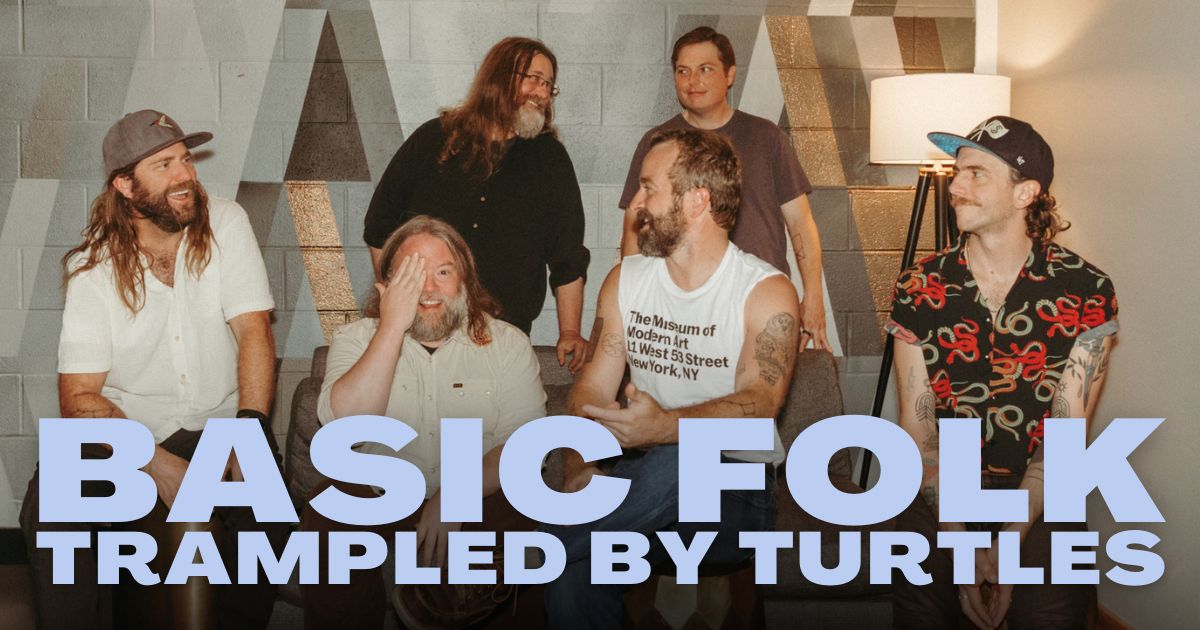
Basic Folk: Dave Simonett of Trampled By Turtles

Lead singer and songwriter of the bluegrass adjacent Trampled by Turtles, Dave Simonett is a talented musician and a great outdoorsman. From the small town of Mankato, Minnesota, to the vibrant music scenes of Duluth and Minneapolis, Dave shares his upbringing in a musically inclined, nature-loving family shaped by the sounds of church hymns and classic rock. He opens up about his dual passions for music and the great outdoors, recounting his experiences with pheasant hunting and conservation efforts in Minnesota. He also reflects on the parallels between the camaraderie found in hunting and playing music, emphasizing the importance of trying new things and embracing the unknown. Follow as we delve into the evolution of Trampled by Turtles’ unique sound, described as a “butterfly’s heartbeat,” and trace the band’s journey from traditional bluegrass to their own distinct style.

LISTEN: APPLE • SPOTIFY • AMAZON • MP3

In our Basic Folk conversation, Dave also talks about the challenges and rewards of maintaining artistic integrity in the music industry while balancing creative growth with commercial pressures. He shares insights on his band’s latest project Always Here, Always Now, a dual EP featuring recordings by both Trampled by Turtles (Always Here) and his solo project, Dead Man Winter (Always Now). He wrote five songs and instead of picking a band to record the tracks, he handed them over to both bands to do what they will to the music. The results are very cool to listen to side by side. The episode wraps up with a fun lightning round, where Dave reveals his dream supergroup and favorite hunter orange accessory (gotta be safe out there!).


Photo Credit: Olivia Bastone

Humbird: From Dinner Table Singing to Dismantling White Supremacy

Siri Undlin, better known as Humbird, is a talented singer-songwriter from the Twin Cities with deep roots in Minnesota music and the land that surrounds her. Growing up, she was a true cold-weather kid who loved hockey during winter, but also loved music and feeding her vivid imagination. Her interest in music was nurtured by her parents, religious music, church choir, and also her Aunt Joan, who taught Siri guitar at age 12. Hockey actually led her to her first band, Celtic Club, which would play at Irish Pubs, talent shows, and of course, at the local hockey rink. They introduced her to Celtic music and her first live performances.

LISTEN: APPLE • SPOTIFY • STITCHERAMAZON • MP3

In this episode of Basic Folk, Undlin shares her rich experience studying folklore and fairy tales, which greatly influence her musical journey. She discusses her intensive research in Ireland and Nordic countries, exploring how music intertwines with storytelling traditions.

Throughout the episode, Undlin reflects on her upbringing, her time at an art school, and her evolving approach to songwriting, blending traditional folk music with indie music and experimental sounds. On her new album, Right On, Siri is acknowledging and addressing white supremacy in middle America, as highlighted in her song “Child of Violence.” She talks candidly about what writing and releasing the song taught her about white supremacy. Touring has provided Undlin with unexpected challenges and valuable insights, shaping her perspective as a musician and performer. We talk about the importance of being open to chaos and disciplined in one’s mindset while navigating the music industry and life on the road.

(Editor’s Note: Read our recent interview feature with Humbird here.)


Photo Credit: Juliet Farmer

Into the Squishy Middle: Humbird Celebrates Being Wrong on ‘Right On’

When I first heard Right On, the new album from Humbird, (the moniker for Minnesota-based singer-songwriter Siri Undlin), I thought immediately of Jason Molina and Magnolia Electric Co. There’s an emotional rawness in the production paired with a choral background vocal style on songs like “Fast Food” that reflects a Midwestern landscape to my ears. Imagine a million ears of corn singing to nobody in the blazing heat of summer, right beside a sprawling concrete strip mall.

“Quilted miles of iron and wheat / does it count, if it just repeats?” Undlin sings.

I had the privilege of talking to Undlin over the phone about her new album, while she was at home in Minnesota and I was in a parking lot outside of a Barnes & Noble somewhere in Maryland. The first thing I asked was if she was familiar with Molina’s work, and much to my surprise, she was not. So, I will have to assume that what I heard as historical reference is merely a shared landscape of influence and delicious, melancholy songwriting.

Throughout her new album Right On, Humbird explores the human desire to retreat into ease, safety, and ignorance, rather than put oneself at risk of being wrong. Undlin begins this exploration with the experience of heartbreak, but quickly zooms out to include topics of cultural conflict, destruction of natural ecosystems, societal priorities, and gun violence. All the while, these songs ask us not to know the answers, but to merely be willing to ask the questions.

On “Child of Violence,”she sings: “I could be a break in the chain / you could be a break in the chain / you could be a piece of the change / When you talk about it call it by it’s name…”

I have been a fan of Humbird ever since I saw her performance at the Mile of Music Festival in Appleton, Wisconsin, this past summer and I was thrilled to get to interview her about this album.

Central to this record is a kind of celebration of being wrong. Can you speak to the specific benefits of being wrong and what being wrong means to you?

Siri Undlin: I find that there is a carefulness and reservedness, a real fear of being wrong, that often gets in the way of important conversations, and prevents people from trying to learn and do better. The reality is that sometimes you’re wrong, but you still have a responsibility to show up and be a part of things.

Ah, that makes sense. So on the title track you sing, “You might be dead wrong… at least you’re trying…” This particular song seems to be about a romantic relationship, but in a broader sense, is this about avoiding apathy?

Yes, it’s a central message of the album, and honestly I need to hear it as much as anyone. There is a time for resting and rejuvenating, but I think it’s important to be really honest with yourself about whether you are in that process, or whether you are making excuses because it’s hard. You have to be able to get into the squishy middle of things and really dig in.

I’m from Minnesota and in the wake of George Floyd’s murder, which I have written about explicitly on other records, I’ve had to realize how slow change can be. You have that initial communal outrage, but then what happens a year later? What happens two years later?

Whether its a global event or personal event, I’ve done a lot of growing up and I can’t just ignore these things. It’s a kind of rugged realism that comes with this greater knowledge, which can be really beautiful, but there’s a reframing that just has to happen.

When you talk about rugged realism, it makes me think of your song “Cornfields and Road Kill,” which is one of my favorites on the album.

That is my favorite song to play live and has been for years. I just think it’s one of the more honest songs I’ve ever written. I was able to capture a lot of what I feel about the landscapes where I’m from and the complexities and subtle beauty of it.

There’s so many road songs, but there’s very few songs written about the landscapes of the Midwest; roadkill and monocrops, soy and corn, and animals that are dead is the reality of traveling and the landscape and the economy of the area. It’s this visual representation of the choices that we’ve made about culture and society.

I was just mad about that when I wrote that song. I wrote it as a connecting tool and a bridge rather than just rage… but it is also just fun to be loud and turn up the amps and be cathartic…

I feel like the Midwest is having a real artistic moment right now with Waxahatchee/Plains and Kevin Morby, how do you think the Midwest and specifically Minnesota influence your work?

It’s tricky, because it’s such a subtly nuanced place in a lot of ways. It’s home, first and foremost, which is an endless topic of analysis. But creatively, I do feel really inspired by the landscape of the prairie, because of its subtleties. It’s a landscape you really have to sit with and pay attention to in order to understand it. You have to really slow down. I also think there’s a lot of space for a creative community, which is really exciting when you take into account income inequalities and the densities of the larger cities. There’s space here to collaborate and there’s not really the infrastructure that super ambitious people are interested in, so they move away… I think it was Prince who said that “The cold keeps the shitty people away!” [Laughs]

I am blown away by the production on this record, you worked with Shane Leonard who is another artist heavily rooted in the Midwest. What was the process like working with him, and what did that collaboration bring to the project?

Shane is a dear pal who I have recorded with before, so we have an established workflow. I, along with two of my bandmates, had been playing these songs live for a couple years on tour by the time we went to record, so going into it we were aiming to capture the live feeling of these songs, very much trying for the sound of a band in a room.

In approaching the record, I thought, let’s just go and hang with Shane and record live to tape and try to capture that energy. Because we do tackle heavy and weighty topics, but at the end of the day we still have a blast playing together.

I loved recording to tape. Instead of going into it with infinite options it was like, “Here’s how we play it and just do your best.” That infused the whole process with some magic and adrenaline, and it was awesome.

Humbird is a pretty fluid project, there’s a cast and crew of folks who are always shifting based on people’s lives, but I made the record with Pete Quirsfeld (drums) and Pat Keen (bass) and the three of us have been playing together for six-ish years. So these are road worn and comfortable songs that were ready to be captured.

I read that you spent a year doing research as a Watson Fellow. I’m interested to hear about what you were studying and how that has influenced your own music?

Yeah, the Watson Fellowship is this insane opportunity you basically do research on a topic of your choosing for a year. In my case, I was comparing Celtic and Nordic traditions and their storytelling. Historically, so much happened via trade routes and conflict, particularly in the balladry tradition and saga tradition, you will find that similar motifs and melodies crop up across folklore traditions that are also so specific to certain places.

I spent a year shadowing storytellers and musicians, compiling this bank of folk tales and ballads. I was doing a lot of writing and researching and playing music already, but I didn’t actually know that making music could be a job. When I went and did this research and was shadowing all these folks who were essentially doing DIY touring, or playing or performing in community spaces, witnessing how they move through the world I realized, “Oh my god, you can do this?”

One person I spent a lot of time with is Brendan Begley, on the west coast of Ireland. The Begley family are these incredible musicians on the Dingle Peninsula. It was the first time I was exposed to a DIY arts culture… it was so mush part of the fabric of life there and when I came home I realized I want to make art this way, I don’t want to do it academically. I feel like often in the classroom you’re in the business of taking art apart and I wanted to actually create it.

Speaking of the ballad tradition, when I heard your song “Ghost on the Porch,” it sounded like a brilliant remake of an old ballad a la Sam Amidon, but in this case it is actually an original song. I find your songwriting to be more through-composed in a storytelling way than a typical commercial song might be. Do you draw on that ballad tradition in a conscious way or do you hear that influence?

That is actually a song that started as a short story, a fairy tale of sorts. I love to write fiction and non-fiction and it generally happens on a Humbird record that one or two songs per album are drawn from a short story or some other writing format. I’ll write out prose and then think, actually this could be a song.

Anytime you’re writing fiction your own life is in there, but I have not personally had the experience of a ghost of my own likeness standing on the porch telling me to run for my life, which would be terrifying.

Sometimes with writing, it’s almost like dreaming, where you don’t know where things come from!


Photo Credit: Juliet Farmer

On ‘About the Winter,’ Barbaro Find an Emotive Sound All Their Own

Barbaro, who take their name from the famous Kentucky racehorse whose life was tragically short, have recently released About the Winter, their second full-length album.

The band was founded as a duo by Kyle Shelstad and Isaac Sammis in 2017, later welcoming Rachel Calvert and Jason Wells into the fold. They released Dressed in Roses in 2020, and while Sammis departed the band after the birth of his second child, he contributed heavily to the new album and left a great deal of inspiration with the rest of his bandmates.

About the Winter, which was co-produced by Shelstad and Brian Joseph (Bon Iver, Sufjan Stevens), features nine original tracks that seamlessly weave in and out of one another, gently guiding the listener through vulnerable lyrics, intimate soundscapes, and technical prowess.

BGS caught up with Barbaro following their month-long album release tour to chat about the new record, their musical process, and recent world travels.

The textures on this album – while ranging from synths and samples to pizzicato bass and fiddle – maintain a familiar sonic foundation for each of these songs to sink into. How did you go about selecting and arranging the material for this record?

Kyle Shelstad: As a group, I think we tend to gravitate towards tunes that we can connect with on some sort of deeper level, tunes that we can internalize in some way that provokes an emotional reaction in ourselves and hopefully those listening. This is the basis for all our song choices in this group, finding tunes that allow our whole selves to buy into the intimate, distant, delicate, and coarse moments that help create the dynamic range found in many of these tunes.

Regarding the arrangements, some of this was pre-planned going into the recording, but many of these songs were somewhat unfinished going in. Our goal was to explore in the studio and Brian allowed us a space to be creative and experimental with these songs. For example, there is a moment in “Subpoena Colada” where Jason is crunching a plastic water bottle full of leaves into the microphone… it’s a sick solo, check it out. Brian took all these experiments and helped us make them musical.

There’s a line in the album’s press release that caught me: “Barbaro’s compositions prioritize texture and expression over technical virtuosity.” I really like that, considering that two of you – Calvert (fiddle) and Wells (bass) – come from the classical world, whereas Shelstad has a stringband background. That said, this music is thoughtfully orchestrated, which I know must require a fair amount of calculation and precision. When putting this music together, where do you find the balance between those two worlds?

Jason Wells: I’d say the balance comes more from each of our instincts than from traditional orchestration. Since Kyle writes the material and brings the songs to the rest of us, I’d say the base of the music is in the string band tradition, but the way Kyle writes and how he uses space and texture is really unique and lends itself to a more classical approach to filling out the other parts.

What makes the songs work is each member’s commitment to really listening for what each song needs and not adding any more than that. As we workshop new material, each of us will try different things and only keep what seems essential to the song, and through that process the form of the song takes shape. It’s a really natural process.

I love the Bruegel piece, “The Hunters in the Snow,” that you chose for the album cover, and the way that it pairs with this music. Can you tell me more about how you came to feature the famous painting alongside this music?

Rachel Calvert: I was researching how winter shows up across art history when I came across the Bruegel painting. I was surprised that it was a 16th century painting, it looked more modern to me. I was seeking something that evoked emotional ambiguity, nostalgia, and the collision of the natural and manmade – and it hit all the marks! I also noticed that the colors matched up with the Barbaro “uniform.” We typically show up to gigs wearing denim, black, and earth tones. “Hunters in the Snow” was already one of us!

The farewell track, “Ike’s Farewell,” is obviously much more than a lone instrumental to close out the album – it’s clear that Isaac Sammis had a big impact on this music, both through his co-founding of the band, and expressive banjo playing. While I know that someone leaving the band can be difficult to navigate musically, I like that Sammis’ contributions are celebrated on this album. I was curious if you could attest to the influence, musically or otherwise, that he’s left with you.

JW: Man, Isaac’s influence on the band’s sound can’t be overstated. He has this unique ability to really push the boundaries of sound and tonality, and I attribute his instinct for tension and release to be one of the primary reasons our songs flow compositionally the way that they do. In addition to his stellar banjo playing, Isaac’s also a hell of a guitar player and you can hear him adding electric guitar effects and note bends on several of the tracks. Those lines and sounds he laid down ended up being foundational to the new sound direction for the album, so his influence is everywhere!

This is unrelated to the record, but I wanted to ask about your 2023 American Music Abroad tour. That seems like a pretty special thing to do – to get to journey to Qatar, Turkey, and Bulgaria to share this music. I know it was after the recording of this album, but how do you think that tour influenced the band?

RC: Our travels abroad reaffirmed our overall mission – to form pathways for all sorts of folks to connect to both their interior emotional world, and to the people and place that form communities around them. Bringing audiences to tears, even through cultural and language barriers, was a powerful reminder that music and art are indeed universal languages that allow us to see the sparks of life and love within ourselves and others.

With your album release tour wrapped up, what’s on Barbaro’s horizon for 2024?

KS: Barb is excited to keep working on and recording new music. We really enjoy the process of writing together and look forward to working on a fresh batch of tunes. I think we found a voice on this record that is uniquely ours, and we intend to keep exploring that.


Photo Credit: Wolfskull Creative

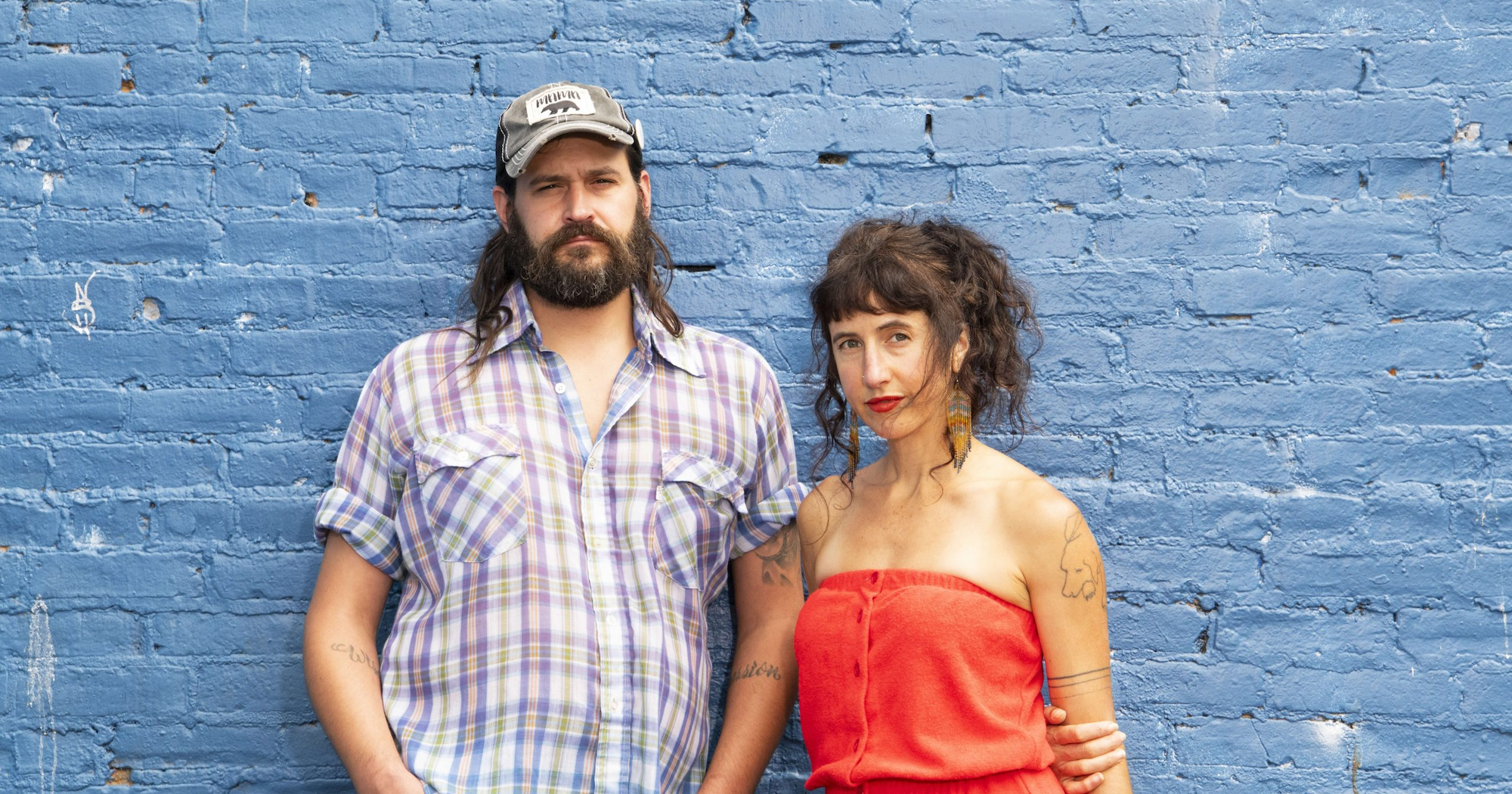
WATCH: The Roe Family Singers, “Loretta Lynn Blues”

Artist: The Roe Family Singers
Hometown: Minneapolis, Minnesota
Song: “Loretta Lynn Blues”
Album: Sisters And Brothers
Label: Bonfire Music Group

In Their Words: “‘Loretta Lynn Blues’ is a tribute to both Loretta Lynn herself and the songs she wrote. There was a time when country music was made by real people, speaking about real, everyday issues. Folks like Loretta Lynn, Dolly Parton, and Hazel Dickens had everybody singing along and, more importantly, gave a voice to folks who didn’t have one before.

“Today’s country music is dominated by manufactured pop stars who, at best, sing about nothing and, at worst, use their gigantic platforms to amplify their messages of racism and misogyny.

“We wanted to write a song that gets back to the roots of what country music was and what it still could be. All while honoring one of the greatest there ever was: Loretta Lynn.

“The title is a reflection of how we thought Ms. Lynn would feel about today’s country music: after spending so much of her career singing songs like ‘One’s On the Way,’ ‘Rated X,’ and ‘The Pill,’ we figured she’d feel kind of down to hear modern country music singing about beers, my best girl, beaches, dogs, and pickup trucks.” – The Roe Family Singers

Track Credits:

Dan Gaarder – guitar
Dave Gustafson – mandolin
Noah Levy – drums
Eric Paulson – bass
Kim Roe – vocals
Quillan Roe – banjo
Rich Rue – steel guitar
Annie Savage – fiddle & back-up vocals

Stage Band:

Erik Brandt – accordion
Dave Gustafson – mandolin
Jake Johnson – fiddle
Brody Kucera – drums
David F. Robinson – guitar
Kim Roe – vocals
Quillan Roe – banjo
Rina Rossi – bass
Rich Rue – steel guitar
Adam Wirtzfeld – musical saw


Photo Credit: Katie Viles
Video Credits: Ryder Seeler – director, editor; Adam Olson – director of photography; Leah, Seth, and Tristan – film crew