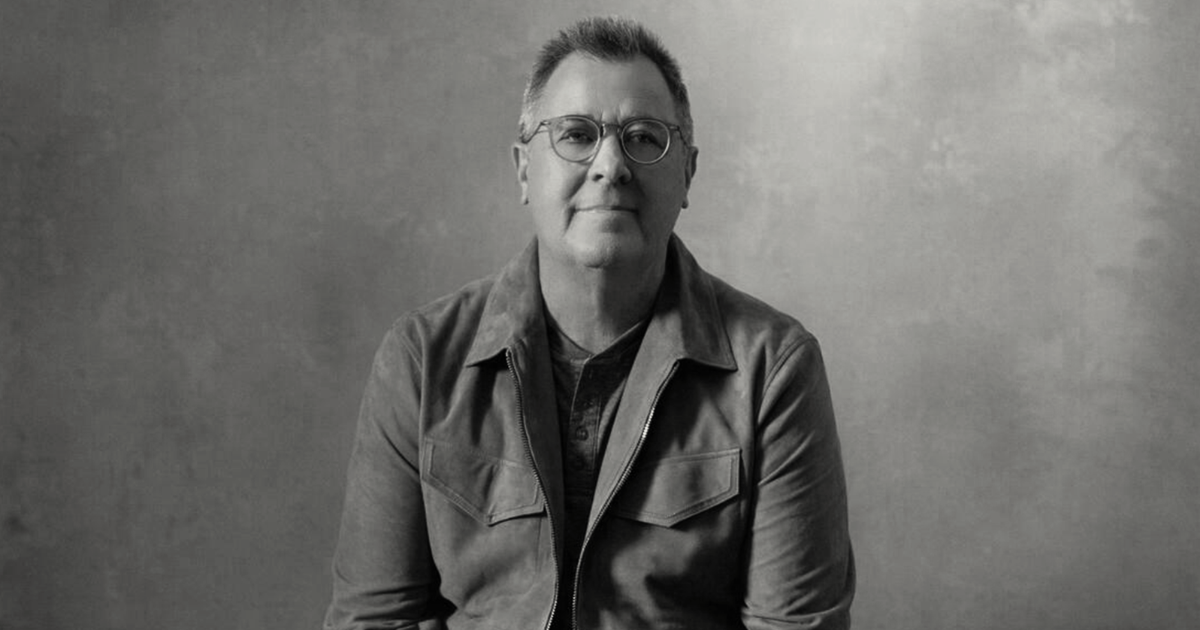
Vince Gill Has Done It All (Part 2)

Poaching from Elvis, well over 50,000,000 Vince Gill fans can’t be wrong.

The longevity Gill discussed in Part 1 of this interview has taken him from bluegrass beginnings to a genre-inclusive 50 years as one of country’s most beloved and sought-after artists.

It’s not always been easy, however. No one, regardless of talent or fan loyalty, is immune from freedom of the keyboard and Gill is no stranger to the highs and lows of public opinion. Mostly it’s outpourings of gratitude from the millions whose lives his music touches. Sometimes it’s claptrap about his now decade-long tenure in the Eagles, or venomous spewing over songs like “March On, March On,” from Secondhand Smoke, the second in his series of retrospective EPs being released monthly.

In Part 2 of his conversation with Good Country, Gill discusses, among other things, the aforementioned decade-long tenure with the Eagles, bullying – with a few choice words for those who inflict it – his scrolling habits, and he indulges us in a rapid-fire round of closing questions.

In the arc of this 50-year project, it is not unnoticed that Hotel California turns 50 this year. Do you have memories of listening to that album as a young man, as you now find yourself onstage playing those songs?

Vince Gill: I had all the Eagles records. We did a lot of their songs in my bluegrass days, and it’s completely surreal. I’m starting my tenth year of being in that band and continuing that legacy of songs. What I value most about getting to play with these guys, what I’ve learned most, is how important songs are – all the notes, all the licks, all the riffs, all that stuff. Getting to relearn that at this stage of life has been pretty profound in the way that I’m trying to write songs. I’m patient in the way I write. I’m patient to wait for it to come – the right words, to not settle on anything, and really edit and work and edit and work and continue to try to be mindful of how important the song is.

What I’m mindful of with the Eagles is the tragedy. More important than the fact that I get to do it is that if Glenn had not passed away, I would not have gotten to do this and I’m grateful I’m the one they called. I met all those guys in, I think, 1980, when I was living [in California]. In a million years, would I have ever thought this would have happened? No. But I am careful of how I couch everything, because it came from something tragic and I am respectful of that.

Glenn was a really good friend of mine, actually, and his son Deacon is doing a great job up there of carrying on his dad’s tradition. I think I’m a great fit for them in the way I play guitar and sing, and sing harmony, and play all the instruments I do. I’m not saying I’m better than anybody else they could have gotten. I’m just saying what I do suits them really well.

Jedd Hughes described you as “one of the greatest band leaders I’ve ever worked with. He’s listening to everything and everyone, always, so you can read his cues pretty easily.” First part of the question: Where did you learn to lead?

Because I’m a musician, I think I come at it different and I operate under the mindset that every note is equal. You’re not more important because you’re the lead singer. You’re not more important because you play the lead solo in the song. I value every note the same. Spending my life in the studio like I have, knowing what you play and do has to sit well and play well with others, you have to listen to everybody else.

It’s amazing what you can accomplish if you don’t care who gets the credit. Sometimes people play only to be noticed and that doesn’t necessarily constitute the right thing for the song. They say in Nashville all the time, “Just serve the song.” That’s all I’ve ever tried to do. If someone’s playing something and doing something, don’t do something to distract it. Do something to enhance it, to support it.

Second part: How does that translate to arrangements and contributions from the musicians you work with?

Great players all listen to each other and you’re dealing with a caliber of musicians that already know what not to do, so you don’t have to waste time going, “Hey, don’t play that, that’s too much, that’s not necessary.” Every time I’m in there playing, I take every note, examine it, and make it move me, make it sit just right.

Once again, if you’re playing with that caliber of people, which I fortunately am – my band is usually made up of a lot of studio musicians and amazing players – they like playing with me because I’m a player, too. I’m not just someone up there singing the songs. So I think I have their respect, and that points you once again towards, “What’s the best thing for the song? What’s the best arrangement idea? What’s the best part to play? What’s the best part not to play?” That’s it in a nutshell.

I’m surrounded by musicians that can all play me under the table, straight up. That’s the truth. I’m grateful to have them, grateful to get to play with them, and it makes for a very democratic spirit. Even in the way we record, I’m not heavy-handed. I’m not telling people what to play. Oftentimes we’ll be in there and they’ll say, “Do you like this?” I go, “I don’t have any idea. I’ve never even heard this song before. I know I wrote it, but we’re in here trying to figure it out, so we’re just going to figure it out all together.”

It creates a great spirit in there if everybody feels like they’re all walking on equal ground, everybody has a right to an opinion, everybody has a right to try something, nobody gets shut down, nobody gets put off. It’s an amazing experience. I don’t ever do demos with my songs. I just write them and then I show them to the guys on the floor. I go, “This is how it goes. Let’s figure it out.” They naturally gravitate towards something great and you just follow them off the cliff! It’s wonderful to watch other people’s gifts.

Earlier you described yourself as “the happiest son of a bitch in the world” who just loves sad songs. In that happiness, however, you have experienced much grief. Your faith is strong. Have you ever lost or questioned it during times of loss?

When I think about faith, I don’t think of it so much [from] the religious point of view. I think faith in humanity – more than Baptist or Methodist, or heaven or hell, or any of that stuff. None of these questions have ever been answered, so to pretend you know the answers seems a little, I don’t know, pretentious almost. That might not be a good word. But, no. It all comes from loving deep. The people I love, I love them deeply. They matter to me.

Music is where I go to grieve. It’s where I go to get through loss. It’s where all those things are. I tell everybody it’s cheaper than therapy. I just write about it.

I never feel the need to fix everything in my life. My relationship with my dad, if it was funky or whatever, I said, “It’s not my place to change him. It’s my job to accept him.” Once I could do that, we had a great relationship. You don’t have to be like me for me to like you. You don’t have to think like I do for me to like you.

I’ve been told more often than not, “Why I like your songs is you are able to say what I wish I could say. You are able to express feelings I have that I don’t know how to.” Maya Angelou sought me out and asked me to come and meet her when she was in Nashville years ago. She told me, “‘Go Rest High’ was a lifesaver to me. It helped me get through the loss of my brother.” Those kinds of things make you go, “I’m going to try to find a way to be emotional about things and not only help myself, but help other people too.” I think if you can portray in a story what someone’s going through, you have a chance to make people feel better.

You can’t name-drop Maya Angelou and just go on to the next question! We need to back up a little bit.

She was speaking at Vanderbilt and wanted to meet. [My wife] Amy [Grant] and I went and afterward we got to go back and say hi. She said, “You mean a lot to me, because your song helped me get through one of the hardest times of my life.” It was a great visit.

You’ve released the fourth EP in your series. Which chapter is this and do you know what’s to follow?

It’s uptempo-y and groove-y, kind of like “Liza Jane” and “One More Last Chance” and some of those fun songs. Each record is, on purpose, similar-driven. The record after this fourth one will be a lot of real country-country stuff, real traditional stuff. The one after that is going to be more like “I Still Believe In You” and “Don’t Let Our Love Start Slippin’ Away,” from a more rocking side. I don’t want to say the word “pop,” but it is. It feels like an Eagles record or a Fleetwood Mac record at times. The inspirations are all in there.

The one after that is real bluesy R&B-ish. Are you hip to Lamont Landers? He’s a soul singer from Alabama. You look at him and go, “There’s no way this voice is coming out of that dude.” He does all these really cool things. I found him and I got him to come and sing on one of my songs that’s coming out later in the year. He’s just such a cool dude. I’ve been trying to turn people on to him.

How did you find him?

Scrolling.

You’re a scroller!

Oh, heavily guilty. I tell Amy it’s my TV now instead of channel surfing. Once in a while you’ll come upon a great young musician, or a great young singer, or a great comedian. There’s so many options, and if you stop on something, it’ll start giving you hundreds of things just like that.

The algorithm gets you.

Yeah, exactly. But it’s entertaining, and I found a couple of people to track down and
have them sing on my record because I like what they do.

What do you scroll?

YouTube, Facebook, Instagram. Most of the stuff is pointless, but there’s a nugget once in a while.

How do you handle the cruelty of social media? It can get to anyone, especially when it’s directed toward you.

It can, if you let it. That’s the life we live in now. You can’t go perform and not have everybody have a camera out and put it up and showing it and seeing it. You have a bad night and everybody’s going to rip you for it. It’s like, “How much negativity can you continue putting out there, saying negative things?” It’s never going to stop, you know that, but it’s still entertaining to read.

I read it to be informed and I don’t mind taking it. I’ve lived with critics being critical of everything I’ve ever done. It comes with the territory. If you’re brave enough to stand up there and speak through a microphone, you know you’re going to get judged to some degree. Once in a while, somebody will say something and I say, “That’s fair. That’s truthful.” Other people will say things and I go, “You don’t even know what the hell you’re talking about, but you have an opinion that’s inflammatory towards me, and you couldn’t be more wrong.” I know that, so it doesn’t have an impact.

Sadly, people have to get on there, the keyboard warriors. They think they finally have a voice. Being able to post and have an opinion, they think that gives them a voice. But in the grand scheme of things, it doesn’t. I know that, so I just take it with a grain of salt and move on.

Perhaps being 68 years old with experience and success makes that easier than for a young person just starting out.

People are still critical of me being in the Eagles. They say, “Now it’s a cover band and you shouldn’t be there,” blah, blah, blah. You know it’s coming, so press on. Say whatever you want. Say it to my face and see what happens to you!

I can’t control any of it. I can control me. I can control my heart, what my heart thinks, what my heart feels. If you hate what I do, that’s okay. A lot of people don’t like what I do. I’m used to that. You’re not going to stop me.

Earlier we talked about hope. I just hope people respond. I don’t mind if they respond negatively. You don’t want that, you’d rather not, but it’s funny how you can get a hundred good reviews on a record and one bad and you only remember the bad one. That’s human nature. It’s not a weakness. It just goes to show how being cruel and negative towards someone has an impact.

I think about the times I was in school and was talked to in a negative way, and how it lasted. I remembered it forever. There was a girl I was in a band with for a little bit. She sang in this choir at the school that was really well thought of, and the choir director told her, “You are wasting your time with that guy and his banjo and bluegrass. He’s a fool.” And I just want to go, “Na-na-na-na-na!” But you remember it. And an English teacher that kicked me out of the class for saying something she didn’t like and painted me a certain way. You remember it.

My own kids, one teacher said to my youngest daughter, “My dog has more manners than you.” Things like that … my hundred-year-old mother is still pissed off about that! She’s still, “I’d like to get my hands on that teacher!” We’ve got a good bit of redneck in us!

I watch my sweet wife take slings and arrows all the time and the way she handles it is so beautiful to watch and so inspiring. It’s helped me do the same thing.

Can you play everything you hear in your head?

Probably. I hope so! It’s funny you brought that up, because being a musician and a singer, people say, “How do you get inspired to sing?” or “How do you get inspired to play?” Well, before I play something, in my head, I’m saying, “How would you sing this?” And when I’m getting ready to sing something, I ask myself, “How would you play this? What kind of rhythm? What kind of phrasing?” All those things.

I think the real difference [between] a good singer and a great singer is the way they phrase. Ray Charles could phrase like nobody’s business. Jerry Lee Lewis, when he sang country songs, could phrase like nobody else. George Jones could phrase like nobody else. You go on and on and look at all the greatest singers, and they’re unique because more so the way they phrased than how many notes they sang.

What is the difference between playing guitar and being a guitarist?

Oh, man. I don’t know if there is. I think it’s the same thing. It all comes from the same heart. It all comes from the same ears. I just play what I think fits. I think that’s what being a great guitarist is – playing what fits.

I saw something the other day that said, “I refuse to name who I think the greatest guitar player is,” and it makes sense to me because there’s no such thing. Everybody goes at it in a different way and has a different spirit about it, has a different way they want to play and statement they want to make. Then it becomes a matter of your preference, of what you like best, that defines what the best guitar player is.

I just like people that are gifted, and people that are musical, and they play what’s in their hearts and what they feel. If you feel it like they do, game over. If you don’t, you move on. Not every great guitar player moves me. It might move you. I think we’re lucky that we can be subjective and not have to all feel the same way about the same things.

Let’s close with a lightning round. Anything goes, whatever comes to mind. An album you wish you had played on.

Hotel California.

A song you wish you had written.

’Till I Gain Control Again” by Rodney Crowell.

A session in which you wish you could have been a fly on the wall.

Together Again” by Buck Owens.

A concert you attended that made your head spin.

Paul McCartney.

A guitar solo you wish you could claim as your own.

Oh, gosh. I might have to go with a Chet Atkins solo, because he’s the first person I ever saw play live when I was a little boy.


Editor’s Note: Check out part one of our Good Country conversation with Vince Gill here.

Want more Good Country? Sign up to receive our monthly email newsletter – and much more music! – direct to your inbox.

Photo Credit: David McClister
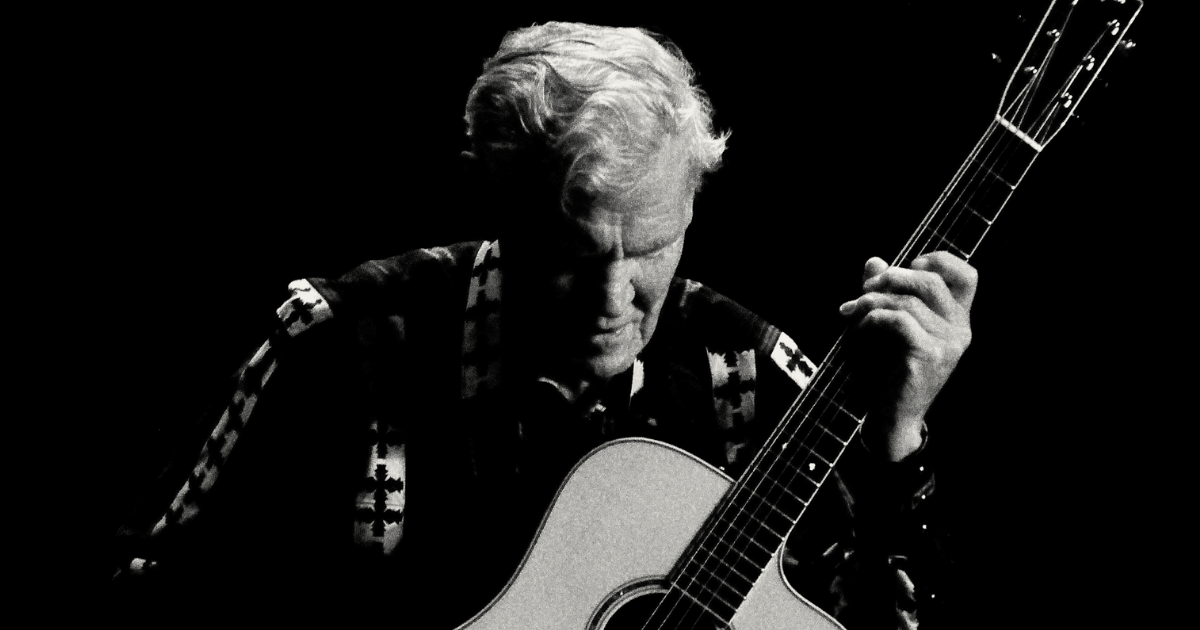
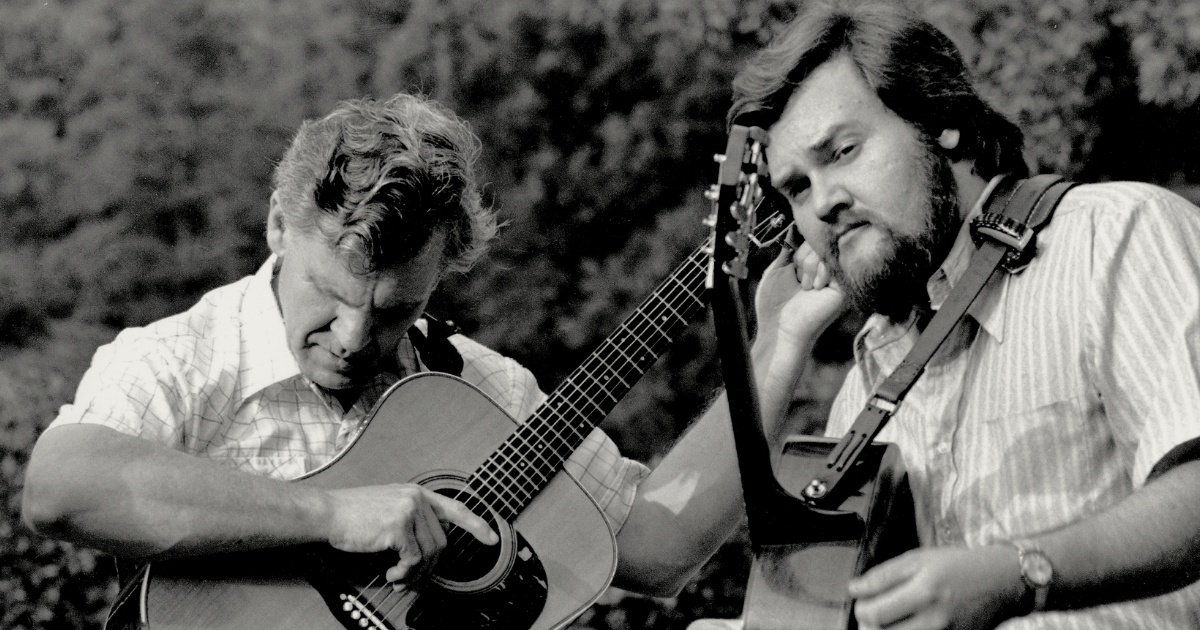
The Five Pillars of Doc Watson’s Legacy

What a difference a Doc made.

Lots of people would like to think their lives have made a difference – whether through their family life, or work, or some sort of creative endeavor.

However, even to approach the enduring heritage of the great musician Arthel “Doc” Watson, a person would have to achieve lifetime landmarks as imposing as the North Carolina Appalachian mountains that were his home. During a lifespan from his birth in 1923 until his death in 2012, Watson created a legacy of music, folklore, and goodwill that no one has entirely equaled.

First a little background: Arthel Lane Watson was born March 3, 1923, near Deep Gap – he is not from Asheville – in Western North Carolina. An audience member suggested the nickname “Doc” when his given name was found less than compelling for an entertainer.

His life story before and after becoming an admired folk musician has been often told, notably in Doc Watson: A Life in Music, a 2025 biography by Eddie Huffman published by the University of North Carolina Press.

Blind since infancy, Watson started to develop life skills and musical ability from an early age. He learned both formal and popular styles when sent to the state’s school for the blind in Raleigh at about age 10.

The boy was consumed by music and persistent in getting better at it. Watson had learned both the rudiments of harmonica and a few banjo tunes from his father, General Watson, before he went off to Raleigh. While living within the strict environment of the school for the blind, Watson learned braille and grew familiar with classical and church styles of music taught there. Perhaps as strong an influence as that education was fellow student Paul Montgomery, the talented friend from whom he learned guitar chords. Young Watson and Montgomery, later a well-known Raleigh pianist and children’s show host, shared enthusiasm for the popular music of the day, including jazz and big-band sounds.

His parents, Annie and General Watson, taught the boy skills of growing crops and basic carpentry, and he contributed to the family despite his blindness.

After years of mostly local performances back in Western North Carolina, it wasn’t until the early 1960s, when East Coast musician and historian Ralph Rinzler tuned into and promoted his far-reaching ability as a singer and picker, that Watson’s name gained national, then international attention.

According to an account at the Blue Ridge Heritage Area website Watson recorded over 50 albums and was honored with “the National Medal of Arts, a National Heritage Fellowship, the North Carolina Folk Heritage Award, seven GRAMMY Awards, and a GRAMMY Lifetime Achievement Award.”

As fans know, Doc Watson contained multitudes of skills, a breadth of ability that inspired this list of the five pillars of his musical and artistic legacy.

The King Flatpicker

Watson largely created the challenging fiddle-inspired guitar style that led many followers along a flatpicking trail.

It was during the 1950s, when playing an electric Gibson Les Paul in the local Jack Williams Band, that Watson developed a style that would transform the way the guitar was played in folk and bluegrass music.

Generally, earlier acoustic guitarists in roots-derived styles used a flatpick to create basic “boom-chuck” back up, perhaps throwing in some fills and Jimmie-Rodgers-style bass runs.

But when dancers at Williams’s gigs wanted music for square-dancing, Watson worked up single-note versions of fast fiddle tunes such as “June Apple” and “Bill Cheatham” on his Les Paul. This approach enables lead guitar pickers to achieve the same flowing, rapid attack that fiddlers used for tunes, many of which had come over from the British Isles in past generations.

It’s not possible to say that Doc Watson was the first guitarist to flatpick fiddle tunes. After all, it wasn’t until Watson emerged as a folk artist in the 1960s that the broader music scene caught on to his musicianship. And high achievers such as Arthur Smith on “Guitar Boogie,” Don Reno on “Country Boy Rock ‘n’ Roll,” and Bill Napier on the Stanley Brothers’ “Mountain Dew” – along with some jazz and blues players – all recorded hot-licks acoustic soloing before Watson did. Joe Maphis was also cranking out ultra-fast flatpicking numbers in the 1950s.

But it was Watson’s 1960s performances that created a precedent for a wave of guitarists who had to muscle up to the speed and dexterity he displayed.

A long line of guitarists at the top of the field – from Clarence White to Tony Rice, from Bryan Sutton to Billy Strings – all show Watson’s clear influence not just in recreating fiddle tunes, but also in rapid-fire picking and clean sound on a broad range of material.

Player and educator Alan Barnosky wrote in “An Exploration of Doc Watson’s Innovative and Joyful Guitar Stylings” for Acoustic Guitar in 2023 about the spread of this kind of playing.

“Watson amazed folk fans in the early 1960s by taking tunes typically reserved for the fiddle and reworking them for the acoustic with speed, clarity, and flash,” he wrote. “He never claimed to be the first to play fiddle tunes on a guitar, but for the majority of listeners at the time it was an entirely novel and groundbreaking approach.”

Another world-class, tradition-based player, Earl Scruggs, praised Watson’s adaptation of fiddle tunes as the two were joined by Ricky Skaggs for the 2003 The Three Pickers performance and album.

“He was the first man I ever heard on the guitar that was fooling with tunes like that,” Scruggs said in a Three Pickers introduction. “You had all these good G-C-D pickers – that’s chord positions – but I had never heard anybody that actually took over a lead like a banjo or a fiddle or a mandolin and do those tunes. He could do it.

“And what amazed me about Doc Watson’s picking, and still does, is he’s got that – I call it ‘mountain sound’ to his picking, and he’s one of the best to keep it in that mode of sound.”

New generations of players have immersed themselves in Watson’s style. When I interviewed him for a Bluegrass Unlimited article, leading guitar picker and multi-instrumentalist Bryan Sutton talked about being captivated by Watson’s playing during Sutton’s youth on Western North Carolina.

“Doc and Dan Crary were the first great influences on me,” he said. “Doc Watson was one of the first professional musicians/guitar players that I ever saw. He doesn’t live too far from Asheville, so I saw him play some different festivals and at Maggie Valley. So, he was the first one to really catch my ear as far as what you could do with the flatpick.

“My right hand – it may not as much anymore – but I remember at one time it was kind of like Doc’s. It’s kind of like the way Sam Bush plays, using the whole forearm and wrist involved in the playing, whereas with jazz players or Tony Rice it’s more of a wrist thing. I think I’ve got a little bit of both now.”

Billy Strings, the artist who’s likely doing the most to promote Watson’s legacy in the 21st century, sounded almost evangelical during a September 2025 interview for NPR’s Fresh Air.

“He’s like the ground upon which I stand, you know?” Strings said. “My dad played his music all around the house growing up. And by the time I could play guitar, you know, 5, 6 years old, I was learning those tunes, too. I might’ve been able to play some of them before I knew how to tie my shoes or something, you know?

“It was like, I was learning how to speak and talk and walk, and I was learning all these Doc Watson tunes at the same time. And it was just, like, a religion in my house, you know? His music is just – it’s the best.”

To see some of the top pickers in the field paying tribute, check out this video shot at the Merle Watson Memorial Festival – what would become MerleFest – in Wilkesboro, North Carolina, in 1992.

A Model Fingerpicker

From his first albums on, Watson regularly also played guitar with a thumbpick and index finger. As he noted with his customary self-deprecating humor in the DVD “Doc’s Guitar: Fingerpicking & Flatpicking,” “See, I just play with one finger and a thumb. I don’t use the sensible three-finger method that you should use on finger-style guitar.” (Watch below.)

Watson sounded great with that approach, making finger-picked tunes such as “Deep River Blues,” “Nashville Blues,” “Omie Wise,” and “Doc’s Guitar” fan favorites and objects of long study. For every striving guitarist who practiced hard on his fiddle-tune adaptations, plenty of pickers also worked on showcases such as “Windy and Warm,” with its alternating bass, pull-offs, note bending, and a jazzy minor sixth chord at its conclusion.

Watson’s fingerpicking often showed off his acquaintance with diverse approaches, as in “Deep River Blues,” with an E diminished as its second chord. It also illustrates the way he put his touch on existing pieces such as 1933’s “Big River Blues” by the Delmore Brothers, who played with flatpicks.

“There were two guitars, a tenor – a little four-string, and the regular flattop, and I never could get my guitar to sound like both of theirs did,” Watson said. “Then I began to hear brother Merle Travis, the late Merle Travis, on the radio. And I thought, Now, wait a minute. If I can steal me a lick off brother Travis, maybe I can learn ‘Deep River Blues.’”

Multi-talented Kentuckian Merle Travis (1917-1983) popularized a style in which the thumb plays an alternating bass on the guitar’s lower strings while picking the melody on treble strings. Watson also studied the work of the great guitarist Chet Atkins. The picking buddies released the album Reflections in 1980.

The centuries-old, transatlantic ballad “Georgie” would have once been sung unaccompanied, leaving Watson and others free to craft a brand new style of guitar back up. With no clear precedent on guitar, he might employ the flowing, almost classical patterns that became popular among folk revivalists.

And fingerpicking became the tool Watson used to play the blues that he loved and drew on so deeply, music he followed from the time he heard Mississippi John Hurt on the family’s disc player in childhood.

In the end, there’s no easy way to pin down the many elements Watson brought to his picking, musical points of view that enriched his listeners along the way.

A Standout Singer

Doc Watson’s vocal abilities don’t generally get as much attention as his top-drawer chops as an instrumentalist. However, he was also a tuneful singer with a natural, angelic mountain baritone.

Watson came along during an era when rougher-voiced vocalists such as Hobart Smith, Dock Boggs, and his picking buddy Clarence Ashley represented mountain singing to a growing audience. And Watson’s less mannered style likely contributed to acceptance among listeners less familiar with the high lonesome sound. His direct vocal approach was often heard in performances with no instrumental backing.

It’s useful to remember that Watson also enjoyed the smooth country vocalist Eddy Arnold so much that his son Merle Eddy Arnold was named not just after fingerpicker Merle Travis, but also for Arnold.

Tunes from the Tennessee Plowboy’s repertoire such as “Tennessee Stud,” “I Couldn’t Believe It Was True,” and “Anytime” also showed up in Watson’s repertoire. These were only a few examples of the eclectic side of Watson’s vocal approach, with emphasis on great material over genre labels.

Given his broad taste, Watson at times put some extra grit into his singing on a number such as “Blue Suede Shoes” from his Jack Williams days of the 1950s, later a concert favorite. But more often he sang songs straight, even on one like “Nights in White Satin,” a 1967 pop hit by British rockers the Moody Blues. With waltz-time guitar and plain singing, Watson makes the song come across as relevant to himself and listeners as songs by the Delmore Brothers and Jimmie Rodgers.

Watson’s first memories of vocal music came in church, and he prized the straightforward, no-vibrato sounds that carved such songs in his memory.

“If you love music, you have to listen from the time you’re big enough to notice music,” he told me when recording his 1991 GRAMMY-winning CD On Praying Ground.

“If you’re looking for old-time material in songs, those old songs that you heard when you were young were the easiest to put down.”

From his first commercial recordings on, Watson featured gospel numbers such as the a cappella version of “Talk About Suffering” from 1964 and “Down in the Valley to Pray” from 1966. Both radiate belief and unornamented clarity.

More recent listeners may know the latter song as “Down in the River to Pray,” as it was opportunistically relabeled to match a scene in the 2000 hit film, O Brother, Where Art Thou?.

Always A Song Man

Doc Watson had an impressively broad range of musical interests, perhaps markedly so, given the period in which he came along.

Country or folk music didn’t start appearing on commercial records until Watson was about two years old. In childhood he listened to down-home picking as well as church and gospel songs. It wasn’t until the 1930s that the family owned a radio that let them hear music beyond their 78-rpm record collection.

Virtually every great musician is a song collector at heart. And like Bob Dylan, Watson took on songs from tradition and added new elements. Take the mournful ballad “Omie Wise,” based on a North Carolina murder from the early 19th century.

In the 1920s notable old-time artists G.B. Grayson and Clarence Ashley recorded it with modal accompaniment that was neither truly major nor minor. When Watson recorded in the 1960s, he ventured into folky, arpeggiated picking that put it squarely into minor-chord territory, opening up the song to young folkies who couldn’t play fiddle like Grayson or banjo like Ashley.

In fact, Watson’s playing on “Omie Wise” occupied the same guitar realm as folk star Joan Baez’s playing on “East Virginia” and other traditional songs.


He also tuned into compositions by folk musicians Bob Dylan (“Don’t Think Twice It’s All Right), Tom Paxton (“The Last Thing on My Mind,” “Leavin’ London,” and “Bottle of Wine”), and Townes Van Zandt (“If I Needed You”).

Watson isn’t chiefly known as a songwriter, but he enjoyed notable success with “Your Lone Journey,” which he wrote with wife Rosa Lee. The starry duo of Led Zeppelin frontman Robert Plant and bluegrass’s own Alison Krauss released it as “Your Long Journey,” leading to what biographer Huffman called significant royalties for the family.

Watson’s greatest legacy in songs may have come with the wealth of lasting favorites – just a few are “Deep River Blues,” “I Am a Pilgrim,” “Banks of the Ohio,” “House Carpenter,” and “Shady Grove” – that made their way into the folk, old-time and bluegrass repertoire and could otherwise have been forgotten.

Ambassador for the Old-Time Way

This role for Watson may be the hardest to pin down, as it overlaps with almost all the others. By cleaving to his Appalachian heritage while also making the most of decades of change, Doc Watson was able to introduce countless fans to a rich, living culture.

“I don’t live in the past,” Watson told me in 1991. “I still burn wood in a furnace at the house, but I have heat ducts and a blower on it just like an oil furnace.

“I love to burn wood and I love to split wood. There’s a few of the old-timey things I love to do. I like good dried-apple pie and I like ‘leather britches’ beans.

“And I like to be at home, dadburn it. I hate the road.”

Watson’s long career of traveling to take his music to listeners, often in the company of his beloved son, Merle, nourished their taste for music that he built upon sold timbers of musical tradition.

Wade Smith, a legendary Tar Heel lawyer, told me once about his first experience of hearing Watson, at a small coffeehouse in downtown Raleigh in 1965.

“What word would I choose to describe how I felt?” Smith said for a later Raleigh News & Observer story. “Electrified, stunned at the speed of his fingers and the way he played single strings, and the clarity of the sound. Each note was like a piece of gold, so amazing.

“We stayed to the last note. When we left, I remember thinking that I had never heard anything like it and that in some way I had been changed by it, that I was in an altered state of existence.”

Watson’s national and international impact becomes more impressive given that he wasn’t heard outside his North Carolina stomping grounds until his late 30s. That’s when he honed his broad range of expertise into a mountain-based style that captivated and often amazed listeners at first hearing.

When the Society for American Music, a distinguished non-profit scholarly and educational organization, made Watson an honorary member in 2012, musicologist and musician Greg Reish paid tribute to Watson’s broad impact.

“As I discovered more of America’s traditional musical styles through my teenage years, Doc Watson always seemed to be at the core, an entrée into both older and newer styles,” Reish wrote. “Through Doc’s music I found my way to the pre-war music of the Carter Family, Jimmie Rodgers, and the Skillet Lickers; to the first-generation bluegrass of Bill Monroe and Flatt & Scruggs; to the classic country of Merle Travis, Chet Atkins, and Eddy Arnold; to the country blues of John Hurt and Frank Hutchison; and to the contemporary and progressive flatpicking of Clarence White, Norman Blake, and Tony Rice.”

Huffman’s book quotes the great bluegrass musician Roland White as he talked about the way his guitarist brother Clarence was caught up in Watson’s flatpicking after hearing him at California’s Ash Grove club.

“After seeing Doc, his picking became an obsession, an everyday part of everyday life. To play music and practice every day. Whether we played gigs or not, he was always playing music.”

Sixty years after White’s epiphany, Doc Watson’s music continues to gain and inspire new followers, whether through the picking and testimony of contemporary players such as Sutton and Springs, or through his own dozens of albums and videos. His legacy of tradition and innovation still flows like one of the ancient streams that nourish his cherished mountainsides.


Thomas Goldsmith is an award-winning journalist based in Tennessee and North Carolina. In addition to producing many hundreds of articles for newspapers and magazines, he edited The Bluegrass Reader and authored Earl Scruggs and Foggy Mountain Breakdown: The Making of an American Classic, both for the University of Illinois Press.

Lead image courtesy of MerleFest.

Explore more of our Doc in December Artist of the Month series here.

Doc Watson’s Legacy in Collaboration:
8 Essential Performances

Few musicians have ever moved as fluidly between eras, genres, and generations as Doc Watson. From front-porch duets to grand-stage bluegrass revivals, Watson’s collaborations have a way of dissolving categories entirely.

His flatpicking precision, rhythmic calm, and vocal warmth made him the kind of performer who elevated everyone within earshot – young prodigies, genre pioneers, folk-tradition torch bearers, and musical iconoclasts alike. His reputation as a consummate accompanist was built not on showmanship or flamboyance, but on musical generosity and an intuitive sense of timing, phrasing, and expression that allowed others to shine while retaining his unmistakable voice.

Part of Watson’s power lies in the consistency of his musical identity. He never strained to fit into a new format or trend; instead, others bent gratefully toward his center of gravity. Whether playing an old-time fiddle tune, trading licks with a jazz-influenced mandolinist, or harmonizing with a younger bluegrass singer, he brought a sense of ease and groundedness that anchored every ensemble. That stability gave his collaborators the freedom to explore, improvise, and innovate – knowing Doc would be right there, steady and sure.

This sense of balance between precision and freedom made him a model collaborator for musicians across generations, and his impact can be traced through countless recordings, festival lineups, and mentorships of younger players.

Watson’s influence was not just technical but communal. He could guide a performance without overwhelming it, offering the ideal blend of authority and humility. In his guitar, listeners hear the voice of the North Carolina mountains, the pulse of Appalachian tradition, and the adaptability of a musician able to engage any genre without losing authenticity.

Today, YouTube’s patchwork archive of footage allows us to witness these collaborations anew: small moments of musical connection, sometimes real-time, sometimes reconstructed from archival sources. Below is a curated set of eight standout filmed or recorded collaborations that illustrate Watson’s reach. From storied duets with Chet Atkins or Earl Scruggs to meetings with newer-generation players.

“Roll in My Sweet Baby’s Arms” – Doc Watson, Earl Scruggs & Ricky Skaggs
(The Three Pickers)

This relaxed but virtuosic performance features Watson, Scruggs, and Skaggs playing with the ease of a porch jam made public. Watson’s crisp flatpicking forms a warm foundation, while Scruggs’ banjo drives with characteristic agility and Skaggs adds mandolin flourish and bounce.

The trio exhibits mutual respect and joy, and their lines interweave with natural conversation.
The recorded performance comes from the 2003 album The Three Pickers. The energy and clarity of the musicianship exemplify Watson’s ability to anchor an ensemble while remaining entirely supportive, a model of intergenerational teamwork. It is a performance that displays the combination of technical mastery and intuitive musical empathy that defined Watson’s career.

“Tennessee Stud” – Doc Watson & Nitty Gritty Dirt Band
(Will the Circle Be Unbroken)

Watson’s performance of “Tennessee Stud” on the Will the Circle Be Unbroken project exemplifies his ability to blend seamlessly with both established musicians and a younger ensemble eager to learn from him. His deep, resonant vocals float over understated but fluid flatpicking, supporting the Nitty Gritty Dirt Band’s harmony vocals and rhythmic drive.

Watson’s musical sensitivity allowed for a dialogue that bridged generations, bringing traditional songs into a contemporary context while retaining their original heart and vibrancy. This track also highlights Watson’s ability to adapt to the studio environment, shaping a sound that was both authentic and polished. The 1972 studio album is well-documented, though various YouTube versions may mix studio, rehearsal, or live takes.

“Tennessee Rag / Beaumont Rag” – Doc Watson & Chet Atkins (Reflections)

In this medley, Watson and Chet Atkins engage in a playful, masterful guitar dialogue. Watson’s flatpicking exhibits crisp, percussive articulation, while Atkins’ thumb picking introduces a smooth, jazz-inflected counterpoint. Both artists navigate tempo and dynamics with precision, creating a performance that is both technically dazzling and deeply musical.

The track appears on the Reflections album and while some online performances derive from live shows or reissued audio, the studio recording itself exalts the collaborative interplay. This duet demonstrates Watson’s ability to move effortlessly between folk and jazz guitar traditions, honoring both while creating something uniquely their own. The performance underscores his adaptability, an essential quality in a musician sought after by so many genres and generations.

“Black Mountain Rag” – Doc Watson & Merle Watson

The father-son dynamic between Doc and Merle Watson is in full display in this live rendition of “Black Mountain Rag.” Merle’s nimble, rhythmic energy dances atop Doc’s grounded guitar tempo, producing an interplay that is conversational, playful, and intricate. Their shared history and years of touring allow for spontaneous embellishments and musical commentary woven into the tune.

This performance captures the essence of the Watson family legacy, showing how Doc nurtured both musical skill and expressive interpretation in the next generation. The piece also serves as a lesson in ensemble sensitivity, as Doc balances his playing to give Merle ample space while maintaining rhythmic and harmonic cohesion.

“What Would You Give in Exchange for Your Soul?” – Doc Watson & Bill Monroe

Watson and Monroe’s pairing on this traditional tune combines the latter’s piercing, high-lonesome tenor with the former’s warm baritone, creating a striking emotional contrast. Watson’s guitar provides steady, unobtrusive accompaniment, allowing the vocal interplay to take center stage.

This recording exemplifies Watson’s ability to adapt to any partner, responding in real time to vocal phrasing and tempo shifts. The performance demonstrates his interpretive sensitivity, highlighting how he could honor a song’s emotional core while integrating his own stylistic voice.

“Shady Grove / Summertime” – Doc Watson & David Grisman

Watson’s collaboration with David Grisman blends Appalachian folk with progressive acoustic styling. In this rendition of “Shady Grove,” Watson’s rhythmic guitar backgrounds Grisman’s mandolin flourishes, resulting in a lively, conversational back-and-forth. Improvisation is key, as both musicians respond to each other’s phrasing, demonstrating mutual respect and spontaneity.

This collaboration underscores Watson’s versatility, showing he could navigate between traditional melodies and innovative interpretations, elevating both in the process. It is a reminder of his role in bridging traditional and progressive acoustic music for audiences and colleagues alike.

“Amazing Grace” – Doc Watson & Jean Ritchie

Watson and Jean Ritchie’s collaborations were well-established, including performances at venues like Folk City in the early 1960s. However, the specific attribution of some YouTube uploads titled “Amazing Grace” is ambiguous. The Live at Folk City album recording is the most reliable source, showing their complementary styles: Watson’s gentle, precise guitar lines support Ritchie’s clear, expressive vocals, blending Appalachian tradition with personal interpretation. They represent the transmission of Appalachian folk music to wider audiences and the seamless melding of their similar sensibilities.

“Summertime” – Doc Watson & Mark O’Connor

Watson’s influence on multi-instrumentalist Mark O’Connor is well-known; O’Connor cites him as a formative inspiration and their collaboration remains significant as a symbolic bridge between generations. Watson’s teachings and style informed O’Connor’s fiddle mastery, illustrating Watson’s mentorship and the continuity of American acoustic tradition. Indeed, their shared repertoire speaks to the passing of musical knowledge and the sustaining of tradition through personal and professional interaction.

These eight performances above collectively highlight Doc Watson’s role not only as a primary musician, but as a profoundly generous collaborator. He created space for others to excel, whether alongside legends like Bill Monroe, Earl Scruggs, and Chet Atkins or with younger rising stars such as Alison Krauss and Mark O’Connor. Watson’s approach combined technical mastery with emotional intelligence, allowing him to respond intuitively to fellow musicians in real time.

His collaborations illuminate the breadth of his influence. Watson moved with ease between old-time Appalachian tunes, rag medleys, gospel-inflected ballads, rocking hillbilly sounds, and improvised jam sessions. Across these contexts, he remained unmistakably himself: grounded, warm, and adaptable.

By mentoring younger musicians, bridging generations, and seamlessly adapting to new musical contexts, Doc Watson demonstrated that tradition is not static; it is a living, evolving practice. His legacy continues to teach musicians the art of generosity, the importance of listening, and the beauty of musical dialogue. Perhaps in every collaboration, Watson’s spirit resonates, ensuring that his contribution to music endures across time, space, and audience.


Lead image courtesy of MerleFest.

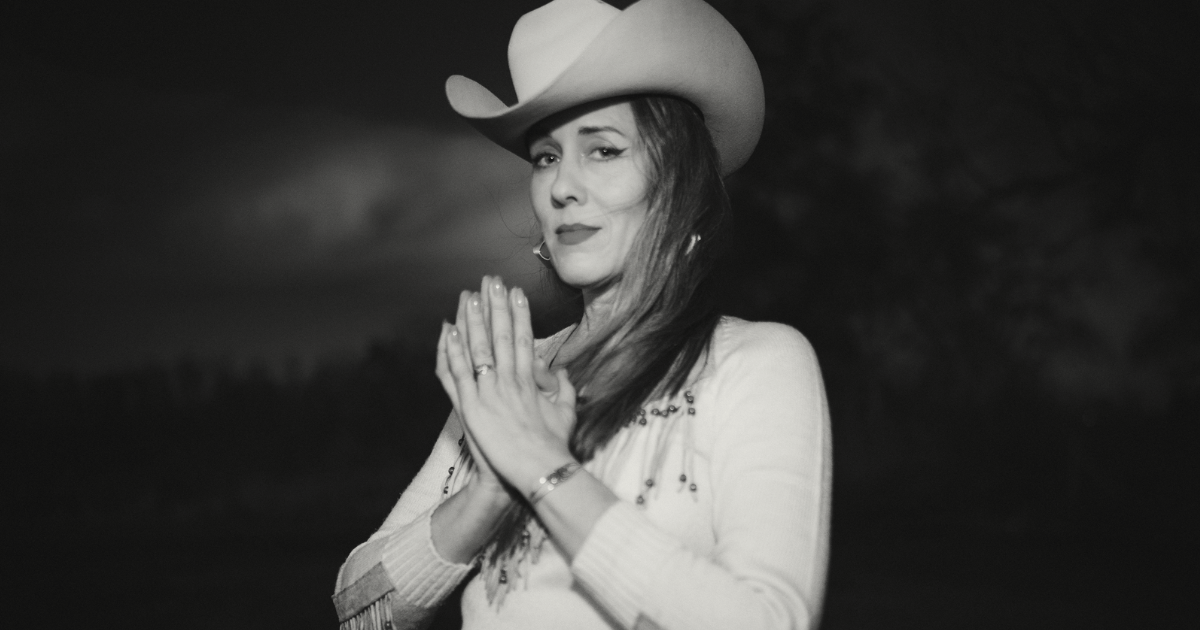
Brennen Leigh’s Modern Retro Country

Brennen Leigh says she’s been a goner for country music since she was a teenager. But when it comes to her discography, she hasn’t been gone for long. Don’t You Ever Give Up On Love (released October 3) is the musician’s fourth album in five years, and it continues a creative streak that matches her love of traditional country arrangements with clever, well-crafted songwriting.

Recorded in Dayton, Texas, where Leigh now lives, Don’t You Ever Give Up On Love is a mostly up-tempo collection that should appeal to anyone who loves country from its golden eras. Catching up with Good Country, Leigh talks about the turning point in her love of country, her fondness for bluegrass, and how she really feels about one of Nashville’s most famous phrases.

I was curious about the title track, “Don’t You Ever Give Up On Love.” It’s got such a positive feel. Why did you choose that one to put on the cover of your record?

Brennen Leigh: I love the title of it, for one, and for two, I wrote that with a dear friend named Elijah Ocean. He’s a great writer and a player and we kind of came up through the mud together, I’ll say. He told me, “I just was thinking about you as I was writing it.” And not even about me singing it, but me as a person. He sent me the first verse – and I’m a procrastinator and I won’t read people’s texts and I won’t return phone calls – but he knows I love him, he doesn’t care. That’s how songwriters are. But about a month later, when I finally went and listened to it, I said, “Elijah, I hope you haven’t finished that, because I would love to participate.” He said, “Yeah, of course, that’s why I sent it to you.”

So I finished it. And it’s just two verses. That’s the whole song. I love that thing about songwriting, and specifically country music, where it’s just a quick statement and out. So many of the best songs are just a verse and a chorus, or even just a verse. We wrote it in the midst of recording this album and then we recorded it down in Dayton. And it’s like, well, that’s an obvious choice for the album, because it is so positive. I really like performing it.

It’s encouraging, too. Have you had a good response from the crowd with that song?

Yeah, I’ve had a lot of positive feedback from people. On the surface, it’s a love song and it’s a relationship record, but to me, it’s really more of a “Don’t ever give up on yourself” message. Because people come and go, sadly, in our lives, and for me, it’s more a story of resilience.

I think it’s similar to the song “Dumpster Diving,” where it gets the point across in a pretty cool way. You filmed that video for “Dumpster Diving” at the Sagebrush in Austin, right?

We did, and it was hot! It was like 90 degrees in April or something. We brought one of our favorite videographers, Oceanna, down from Nashville, and I just kind of threw her into this situation in Austin, but she rolled with it. She really has a wonderful eye. And we dressed me up and put me in a dumpster. [Laughs]

Then some of the other videos for this project look like ‘60s Nashville country. I love the vintage eyeglasses and that cool yellow-and-orange shirt in the “You’re Finally Hurting” video.

Those are my real glasses! [Laughs] I really have a prescription in them to drive with. And the thing specifically about the “Tell Me” video was that we wanted to make it look like we were the Nashville A-Team in the ‘60s. We were just going to work, like country business casual or Western business casual. Like, how an Anita Kerr or Chet Atkins would show up to work in kind of fancy dress, but casual. Read their charts, put the song down, and smoke a cigarette. You know, we weren’t smoking, but that’s kind of the idea.

“Tell Me” is a simple title, but that song says a lot. What was on your mind as you wrote it?

I was imagining calling somebody in a sweaty panic, like, “Oh, I heard something, I’ve got this feeling, and I need you to confirm my suspicions.” And not getting the answer that you want, but sort of trying to demand this answer. I love country songs that are one-sided conversations. There are so many good ones throughout history. For some reason, the one that is popping into my head is “I Met a Friend of Yours Today.” You’re feeling like a little bit of a psycho, like you’re losing your mind a little bit, and you confront somebody. That’s the sort of song that that is.

People often say country is “three chords and the truth.” Do you like that phrase?

I do like it, but I think in a way it’s not 100 percent accurate. We’re splitting hairs here, but for me, a lot of my writing is at least semi-fictional. Maybe I’m doing myself a disservice as an artist by saying that. But fans want to believe, and I think the listener wants to believe, that this is my story, and this came from me tossing in desperation on my bed and grabbing my notebook.

Well, you know, I’m a songwriter and it’s my job to make up stories. While this record has some truth on it, some of these stories are just straight made up! That doesn’t mean that there’s not feeling behind them, or that I haven’t experienced something similar, but I’m also a private enough person that I’m not going to just air things of a certain nature for the public. I do have lines that I won’t cross. Now, I’ll say some of these are true, word for word, and some of them are not. But that’s what imagination is for.

I think the song is not for me, it’s for the listener. So, if somebody gleaned something that they feel personally in one of these songs, I love that. And probably, as a Western swing person at heart, I should say we have a few more than three chords. But I do really appreciate and love that sentiment of like, “This is just no BS, I’m gonna sing this.” I mean, I like that saying, and I think at its heart, it’s pretty true.

How old were you when country music kind of sparked your interest?

I grew up hearing it around the house, but I was maybe 14 before I went headlong into it.

Was there a song or an artist that pulled you in?

There was one summer when my brother and I were already budding musicians. We were already playing gigs. He was heavily into Robert Johnson. I had gotten into that stuff, too, and I liked oldies. I liked ‘50s and ‘60s rock and roll and soul music, like Buddy Holly and Bessie Smith, and I liked some show tunes. We got into country one summer, courtesy of our parents’ record collection.

Then we got a free ticket – via donating a canned good to the radio station – to see Dwight Yoakam. I think I was turning 15, and I kind of flipped my lid. It was our county fair in Fargo, North Dakota and it was probably September or August – and it was probably 40 degrees. I stood there for that whole concert and went, “Wow!!” [Laughs] Then one friend gave me a box set of Hank Williams and that was huge. I already had heard him, but that Bear Family box set is like six or eight discs. I dubbed it onto tapes and that’s all I listened to.

Somebody else gave me a Smithsonian Folkways set that had Bill Monroe on it and it had Lucinda Williams on it, because it was more of a folk label. It was like, “Wow, there’s all these tentacles to country music.” And my family was into it, too. So, I was pretty well immersed, except geographically. I wasn’t around any live music, but I was around a lot of good recorded music.

Are you a fan of bluegrass?

Oh, yeah! Very much, and I grew up with it. My favorite guitar player is Norman Blake. I get asked all the time, “When’s your bluegrass record?” I would love to do something. I just need to get the songs together, because the bluegrass community, they’re the best fans in the world. Bluegrass fans are so loyal, and they know what they like and they don’t care what you look like. It’s a great culture and it’s diverse, and that’s a beautiful thing. So, yeah, that’ll happen.

You know, I wish there were two of me and I had double time. I’ve been loving East Nash Grass and Thunder & Rain. I love the Kody Norris Show. They’re so poised and so good. I’ve been feeling the influence to do something with bluegrass again, because it’s been a long time.

We can maybe wrap it up with this. What are you looking forward to the most coming up?

I just got off a three-week album release tour that was great fun. Before that, I was everywhere. [Laughs] So, to be completely honest, I’m looking forward to being home for a bit. But I’m also working on another project that’s even weirder than all the other ones I’ve ever done. I don’t want to say too much about it, but it feels like a spiritually important album for me to do. I’ve also got some songs in the can with my other band, Wonder Women of Country. We have a couple singles we’ve recorded and I think we’re going to be out together some next year, too.

You’re so collaborative and you’re not just off doing your own thing. It’s like a luxury to have such a great, rich community around you.

Well, thank you. And it is a luxury. Honestly that’s how I’ve gotten by and kept it sane, because I know it’s not about me. I know it’s about the art, and the art can be more fun than when you involve others sometime. Also, I’ve noticed a lot of the good things that have happened in my career are because I’ve worked with other people on musical collaborations. It’s just so much stronger together.


Photo Credit: Lyza Renee

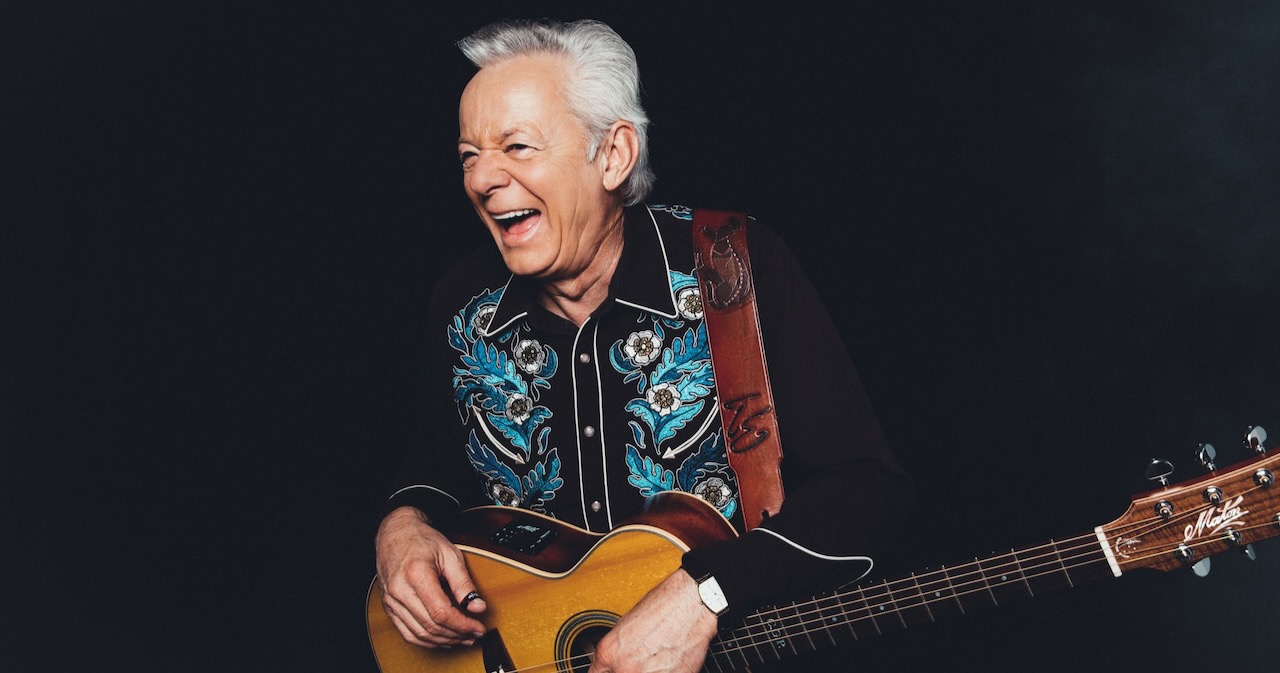
These Days, Tommy Emmanuel is Living In The Light

Last October, Tommy Emmanuel took a fall and busted a couple ribs at a concert in Toronto’s Massey Hall. While the injury led to some postponed concerts (although he performed the full show in Toronto), it also produced, in its own way, a very welcome result: Emmanuel’s first solo studio album in a decade.

From his home in Nashville the guitar master told BGS that he experienced a burst of creativity while recuperating at home. “I’m like, ‘Wow, I’ve got time to write and play and experiment.’ All of a sudden I’m a kid in a candy store again.” He also confided that he disregarded his doctor’s advice on how long to rest and was back on the road after “going into hibernation” for three weeks. “If I had taken my doctor’s advice, he’d have set me back 20 years. I’m a moving-forward guy,” he explains.

Emmanuel may not pass muster as a medical doctor, but he certainly qualifies as a doctor of guitar playing. In fact, an authority such as Chet “Mister Guitar” Atkins bestowed Emmanuel with his Certified Guitar Player honor, one of only four CGPs that he handed out during his lifetime. An Australian native who moved to Nashville in the early 2000s, over his long, exceptional career Emmanuel also has earned a GRAMMY, many various music awards in Australia, a Lifetime Achievement Award from the National Guitar Museum, and he is a Member of the Order of Australia.

Never one to rest on his laurels, Emmanuel delivers perhaps his most eclectic album with Living In The Light. While it is definitely stocked with exquisite acoustic picking, the album also contains some more experimental tracks. On “Intuition #25,” for example, he uses some delay pedal wizardry to reimagine an old instrumental. He also handles lead voices on a trio of tunes, including his take on an ‘80s Australian new wave pop hit “Maxine,” the even older, yet still timely “Waiting For The Times To Get Better” – previously recorded by folks like Crystal Gayle and Doc Watson – and a funky, inspiring number, “Ya Gotta Do What Ya Gotta Do,” written by his buddy Michael “Mad Dog” McRae.

Emmanuel may have turned 70 this year, but he exhibits a perennially youthful passion for music. As he explains it: “Music is my blood. I love it.”

Living In The Light is your first solo studio album in around a decade – how did it come about?

Tommy Emmanuel: Well, after I broke my ribs [last year], I knew I had to surrender from touring, and so I was forced to come home and hibernate – try to get my ribs fixed or healed. When I got home, even though I was kind of slightly medicated because of the pain and everything, I was in a great place. I didn’t have to walk out the house and fly somewhere and go play shows. All I had to do was be here and get healed. … Probably the best thing to happen to me was falling, breaking my ribs, and then being poured into a break, because then I got the whole record together.

The first thing I wrote was “Black and White to Color.” It’s like full of energy, full of spark, it’s got everything. It’s completely adventurous and it just came out of nowhere. I started playing some of the guitars that I don’t take on the road, and all of a sudden I got this idea in the way it went. And that’s kind of like how it all came together.

How did you hook up with Vance Powell as your producer?

My great desire was to work with Vance Powell, who I had heard and discovered through Chris Stapleton, Jack White, and people like that. I just loved his work. It was so real and so pure. And I thought, “I’ve got to work with this guy.” He is so busy that last year when I tried to book him, he could only give me four days this whole year, right? That’s how busy he is. So, I booked him. And we cut the whole album, finished, [and] mixed it in four days. That’s it.

I got to tell you that Vance is my kind of guy. There’s no bullshit. There’s no wasting time. We start at 10, we finish at 6. That’s it. We didn’t work all night and wear ourselves out and labor over take after take after take after take. People are always surprised when you say, “Well, I just did it in one take.” They’re like: “What? That’s impossible.” No, it’s not. I have to do it every night when I walk on stage.

You sing on a couple songs on this album, which is more than you usually do.

I’ve worked with some great singers and I’m not one of them, but there’s an honesty about what I do. If you sing something because you really love it and you love to sing it, that’s a good enough reason, you know? I don’t have to prove that I’m the world’s best singer, because I’m not.

Where did the album title, Living In The Light, come from?

I’m glad you asked that. This is how it all started. I was out with my buddy, “Mad Dog.” Him and I are early morning walkers. We go down to an area called Percy Priest Lake here in Nashville and there’s a three-mile walk. We usually do that at like 6 a.m. We’ll meet there and we’ll walk the three miles and talk and laugh and carry on.

And he was amazed how well I looked. He said, “Brother, I’ve never seen you looking so well. You must be living in the light.” And when he said that, I went: “That’s it!” I just thought: “Living in the light. Wow, this is what it’s about.” We’ve all had enough darkness. Let’s get some light.

Can you talk a little about the guitars you use here?

They’re mostly my touring guitar, my Maton Traditional, it is called. When I did “Ready for the Times to Get Better,” I borrowed a Martin D28 because it was just the right sound for that track. When I played “Little Georgia,” I used my Larrivée, which was a different, Canadian guitar and it just sounded just right for that track.

Did you know which guitar you wanted for “Little Georgia” or did you try your Maton guitar and then go, “I don’t think it’s the right match”?

I went straight to the Larrivée because the guitar has a sweetness and it has great sustain. When you play it in a kind of close-to-the-microphone, intimate way, it’s like everything you need is right there, and it’s beautiful.

I’m a song player, I’m a song person, and so I need the right voice to tell the story.

And on instrumentals, your guitar is like your voice?

That’s right. I tell stories without words. That’s my job.

Bluegrass has been influential in your music, but on Living in The Light it seems less prominent than other albums.

I tend to not think about putting a label on it or a genre. Bluegrass music is to me as soulful as R&B or as in-your-face as rock and roll. So I never worry about someone saying “Oh, is this really bluegrass?” or whatever… I’m hardly bluegrass, but yet I am bluegrass in many ways. But I’m also R&B and I’m rock and roll, and I love pop music. I just like good songs and good music.

What American music did you first connect with growing up in Australia?

My first love was Jimmie Rodgers and Hank Williams. And then I heard Jim Reeves and Marty Robbins. Then, when I was about seven, I heard Chet Atkins and that galvanized me. That sent me on another path and changed my life completely. Because when I heard Chet Atkins, something changed inside me. I heard a sound that I’d never heard before and I just knew that’s what I wanted to do. “I want to do that – whatever that is.” I didn’t know how to play like him at all. But I worked it out myself.

And because, you got to remember, this is the early ‘60s. There were no music shops. There were no guitar teachers. There was no video. There was no TV in Australia that we could see live music on. It was all either on the radio or the record player. That was it.

To have Chet Atkins take you under his wing must have been an unbelievable dream come true.

Exactly! You said it, right on. When my dad died, I was 10, I kind of retreated into Chet’s records. That’s what got me through that terrible loss and that period. And I ended up writing a letter to him and he wrote back and we stayed in touch. We were like pen pals and he stayed in touch with me.

Then somebody sent him a tape of me playing when I was about 18 and I get this letter out of the blue. It’s from Chet saying, “I heard your tape and when you come to Nashville, you call me and here’s the number.” He gave me his office number. I came to Nashville to meet him in 1980 and we were like family when we got together. He was my daddy, you know.

You’ve hosted a guitar camp for several years. Is that a way for you to mentor the next generation of musicians, similar to what Chet Atkins did for you?

It’s not just my camp. It’s nearly every night of my life, wherever I am. I meet young players and people and I try to be a positive force for them in their life. I try to show them that if you’re willing to put the work in, this is what’s possible, because I came from nothing and from nowhere, and this is what you can do. You’ve just got to stick at it. Do not quit. You know, stuff like that. But also, my camps give me a chance to talk to people from the perspective of: “I’m an example to you of someone who makes a living playing the guitar. I don’t do anything else.”

Most of the teachers that I employ are much better teachers than I am, but I have fun talking about what I do and demonstrating stuff that shows people behind the wizardry that they’re seeing with their eyes. I can open the window on it and say, “Look in here, this is what I’m actually doing.”

Congratulations on turning 70 earlier this year. I was wondering how your playing style has evolved. Have you had to make any adjustments to the way you play guitar?

Here’s the truth. I’m pushing harder than ever. I’m getting out there like a kid having the time of my life. I’m bulldozing the shit out of everything. I’m having a great time. And I feel energized, inspired, and I just feel like I don’t have that anxiety of, “Oh I’ve got to get out and prove myself.” I just get out and play because I love to play and take people with me. It’s as simple as that.

Of course, there are certain things, like some songs that I try to play that I struggle with now, because my skills in some areas are not what they used to be. I can hear myself playing a song 30 years ago and I go, “Holy shit, I can’t play anywhere at all like that now.”

But I can do other stuff that’s more meaningful to me now, you know. So, my focus has changed. I know that I don’t have the skills in some areas that I used to have but I’ve been there and done that, so now I’ve got this. And I’ll try to do my best with whatever I’ve got to give the people right now at this time in my life.

It certainly seems like you also now have the freedom to make the music that you want to make.

That’s exactly right. And I don’t labor over stuff and I’m not a perfectionist. It’s about telling the story and capturing the feeling of the whole thing, even if it has a few rough edges. If this is the one that has all the feeling, [then] that’s the one I’m going to live with. I’m not going to try and polish it up.

I’m just going to say, “This is it and here’s the story,” and that’s it. … It’s only the people who are willing to be true to their art [who] are the ones that the public actually really likes – all the other stuff is contrived.


Photo Credit: Simone Cecchetti

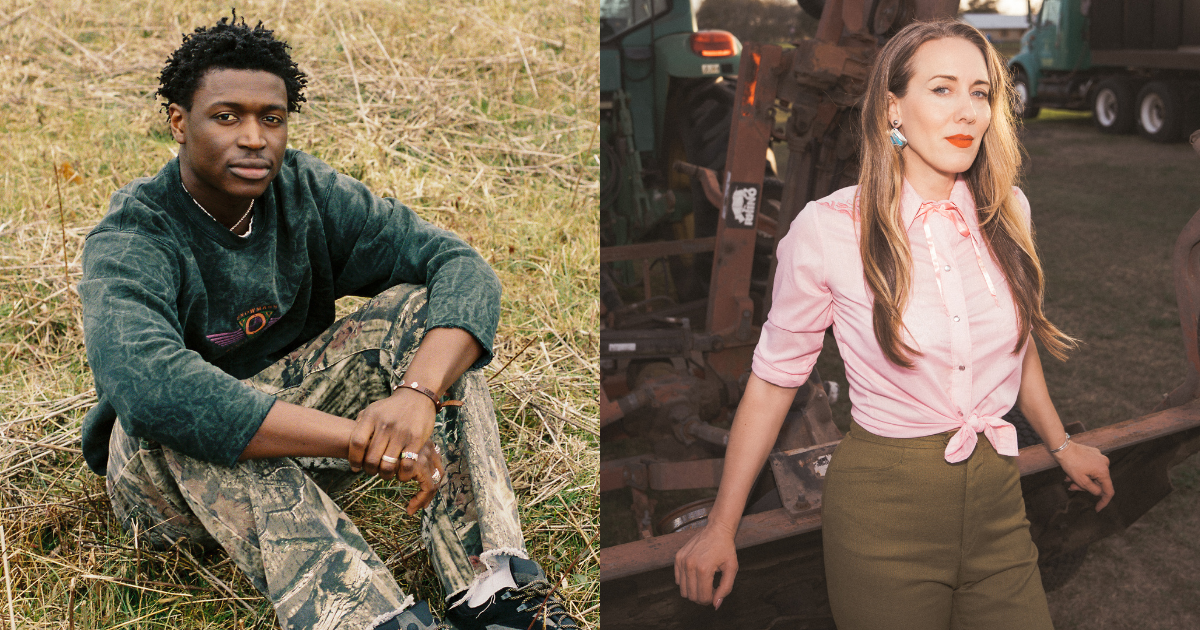
You Gotta Hear This: New Music From Mon Rovîa, Brennen Leigh, and More

You Gotta Hear This! Our weekly new music collection is yet again full-to-bursting with the best in country, bluegrass, Americana, and beyond. It’s another week for popcorn and Milk Duds, too, as most of our featured artists have brought us music videos to enjoy.

Son of iconic and beloved troubadour Jim Croce, singer-songwriter A.J. Croce brings a soulful and plaintive song, “Didn’t You Want That Too,” packaged in a brooding and passionate performance video. Croce tells us he wrote the song while heartbroken on a cross-country flight. South Caroline’s Jennie Arnau showcases an adorable stop-motion music video today for “Mabel,” a lovely and heartfelt Americana track inspired by her beloved cat and the idea that when you need connection and joy, one ought not forget the comfort and light we carry with us as we move through our communities and the world.

In the bluegrass realm, one of Western North Carolina’s favorite mandolinists/bandleaders Darren Nicholson drops a new single today, “Get Me Down the Line.” Written with Charles Humphrey III, it’s deep-pocketed and grooving modern ‘grass, an anthem for all the folks who might be chasing the next best thing. Plus, Josh “Jug” Rinkel returns with another solo performance video from his Live from Reverb and Echo Studio series. “Lonely and Free” came to Rinkel like a jolt in the middle of the night; he wrote the song sitting on the side of his bed at 4 a.m.

A Good Country purveyor of the first degree, Brennen Leigh has a new single that released last week, “Tell Me,” so we’re excited to share the new music video for that fine track. The video is a bit of an aesthetic time machine, a stylistic rewind that pays tribute to the ’60s on Music Row and “country business casual,” which we love. Boston-based artist Robin Young also shares her new video for “There’s a Part of Me,” below. Featuring a loping, energetic beat and plucked banjo, it’s the first song Young wrote for her upcoming album, Letters to a Ghost, and it artfully balances country and bluegrass grit with a lush, glossy polish.

Rounding us out, an indie folk singer-songwriter who’s almost universally beloved by the internet – and IRL – Mon Rovîa has announced his debut full-length album today with a new track, a single from the project, “Whose face am i.” Bloodline, the upcoming LP, arrives in January 2026. “Whose face am i” shows Mon’s captivating, contemplative sort of writing that has charmed millions of indie and roots fans around the globe. It’s a song about generational trauma, history, family, interpersonal connections, and the strife and turmoil that can stand between these facets of identity.

We hope you enjoy another exemplary round-up of roots music, ’cause You Gotta Hear This!

Jennie Arnau, “Mabel”

Artist: Jennie Arnau
Hometown: Greenville, South Carolina
Song: “Mabel”
Album: A Rising Tide
Release Date: September 5 (single); September 12 (video); November 7, 2025 (album)

In Their Words: “When I wrote ‘Mabel,’ I was reflecting on a time when I craved more connection and joy. While I was traveling alone, it occurred to me that my cat, Mabel, my constant companion and quiet soulmate, reminded me of the comfort and light I carry with me. That thought brought into focus how much I thrive when I’m traveling, meeting people, sharing a glass of wine, and exploring new ideas and places. That’s when I feel most alive. The idea for the video came to me immediately after. I found Adrian (the videographer) and asked him to capture a character on a journey – discovering light, warmth, and happiness along the way. In many ways, Mabel represents the brighter version of myself, the part that chooses joy and moves forward and he was really able to translate that in what I think is an amazing video.” – Jennie Arnau

Track Credits:
Jennie Arnau – Vocals, acoustic guitar, songwriter
Alan Lerner – Drums
Pete Levin – Keyboards
Binky Griptite – Electric guitar
Brett Bass – Bass
Greg McMullen – Pedal Steel
Kendall Sherman – Background vocals
Jacob Joliff – Mandolin
Mike Savino – Banjo, tenor guitar

Video Credit: Adrian Venti


A.J. Croce, “Didn’t You Want That Too”

Artist: A.J. Croce
Hometown: Born in Bryn Mawr near Philadelphia, Pennsylvania
Song: “Didn’t You Want That Too”
Album: Heart of the Eternal
Release Date: September 12 (video); March 7, 2025 (album)

In Their Words: “This is the most personal song on the album. Some songs I’ve written are fun to analyze, because in looking back I see that there was a deeper meaning than I realized at the time. In this case it’s too painful for me to look any deeper than the surface. I wrote it, heartbroken, on a flight from California to Tennessee.” – AJ Croce


Brennen Leigh, “Tell Me”

Artist: Brennen Leigh
Hometown: Moorhead, Minnesota
Song: “Tell Me”
Album: Don’t You Ever Give Up On Love
Release Date: September 3 (single); September 12 (video); October 3, 2025 (album)
Label: Signature Sounds

In Their Words: “When our producer Kevin Skrla built Wolfe Island Recording Co., it was with Nashville’s legendary RCA Studio B in mind. Many of my favorite albums were made at RCA in the ’60s, so when we recorded the video for ‘Tell Me,’ we were imagining some of the magic that occurred in that world… when Nashville A Team studio musicians might have gone in for a day of work in the studio. We played dress up, imagining folks like legendary producer and musician Chet Atkins and visionary engineer and vocal group leader Anita Kerr, what they might have worn – country business casual – and the charts they may have made.

“I’ve always been a musician first and a performer second, so the world of working session players in the ’60s holds a special mystique for me. Georgia Parker, Rebecca Patek, and Josh Artall (some of my favorite musicians) portrayed the original session band, Dave Biller, Matty Meyer, Josh Hoag, and Damien O’Grady. Kevin Skrla and I portrayed ourselves. We’re saving up for a time machine.” –Brennen Leigh

Video Credit: Directed by Oceanna


Darren Nicholson, “Get Me Down The Line”

Artist: Darren Nicholson
Hometown: Canton, North Carolina
Song: “Get Me Down The Line”
Release Date: September 12, 2025
Label: Mountain Home Music Company

In Their Words: “‘Get Me Down The Line’ is such a fun song! It’s another one that I co-wrote with Charles Humphrey III and it’s without a doubt the best response I’ve ever had to a song when performed for our live audiences. It’s a jukin’ little anthem for the person who is chasing the next best thing – another take on the human condition and how we are constantly looking for something to fill the void, looking for whatever ‘it’ is to make us feel better temporarily. I am laughing as I write this because I’m very familiar with this notion. I love writing songs about my own human experience, and I hope maybe others can relate to them from time to time. Thanks for listening! I hope you find yourself groovin’ along as well. Have fun and enjoy the quest for whatever ‘it’ is that gets you on down the line.” – Darren Nicholson

Track Credits:
Darren Nicholson – Mandolin, lead vocal
Tony Creasman – Drums
Kristin Scott Benson – Banjo
Mark Fain – Upright bass
David Johnson – Acoustic guitar, resonator guitar
Kevin Sluder – Harmony vocal
Avery Welty – Harmony vocal


Josh Rinkel, “Lonely and Free”

Artist: Josh Rinkel
Hometown: Mount Eden, Kentucky
Song: “Lonely and Free”
Album: Live from Reverb and Echo Studio
Release Date: September 12, 2025 (video)
Label: Reverb and Echo

In Their Words: “I’ve always heard songwriters tell stories about how a song came to them in their sleep, how it woke them up and they just had to write it… I never believed them until it happened to me. That’s how ‘Lonely and Free’ came about. I wrote that song sitting on the side of my bed after waking up out of a dead sleep at four in the morning. I think a lot of people are afraid to admit that they’re lonely and they write it off as being free or independent – not needing someone in their life to slow them down. To me, that’s the meaning behind ‘Lonely and Free.'” – Josh Rinkel

Video Credits: Video by Carter Brice; audio by Dan Deurloo.


Mon Rovîa, “Whose face am i”

Artist: Mon Rovîa
Hometown: Libera-born, Tennessee-based
Song: “Whose face am i”
Album: Bloodline
Release Date: September 12, 2025 (single); January 9, 2026 (album)
Label: Nettwerk Music Group

In Their Words: “A lot of life is about your history. The search for understanding what has happened, what is, and what isn’t. The Truth lies at the epicenter of the case. For many adopted children, or those who have lost parents when young or never knew theirs to begin with, there can be an unspoken weight. We all long to know who brought us into this world, and at what cost. Relief releases sweetly as answers come to light. Know you aren’t alone in your search for your story. Many seek with you.” – Mon Rovîa


Robin Young, “There’s a Part of Me”

Artist: Robin Young
Hometown: Boston, Massachusetts
Song: “There’s a Part of Me”
Album: Letters to a Ghost
Release Date: September 17 (single); October 17, 2025 (album)

In Their Words: “‘There’s a Part of Me’ is the first song I wrote for my debut album, when my emotions were truly raw. I was in the beginning stages of a relationship with someone new while a large part of my heart stayed stubbornly loyal to someone from my past. He’d made me feel a depth of emotion that I just couldn’t seem to access with anyone else and I couldn’t imagine ever being able to move past it, though many years down the road I now thankfully have.

“The major chords during the chorus represent a momentary glimpse of what moving on might feel like, but then drift back into minor chords in the verses like a slide back to reality. Rather than sounding upbeat, the faster tempo is meant to feel almost frantic.

“The music video shows me trying to enjoy the beautiful scenery of Western Massachusetts in the present, while being continually pulled back into memories of the past. The one shot taken indoors is meant to evoke a confession booth as I express the guilt of retaining feelings for someone while in a relationship with someone else.” – Robin Young

Track Credits:
Robin Young – Vocals, acoustic guitar, songwriter
Charlie Burket – Electric guitar, mandolin, banjo
Carter Sanders – Piano
Russ Sternglass – Drums
Joe McMahon – Upright bass

Video Credits: Directed and edited by Chris Bartlett. Color grading by Jefferson Rosa.


Photo Credit: Mon Rovîa by Zayne Isom; Brennen Leigh by Lyza Renee.

MIXTAPE: Will Holshouser on the Accordion in Country, Bluegrass, and Roots Music

The accordion is like a cousin you don’t see very often, but who is an integral, colorful member of the family. In country, folk, bluegrass and related roots music from the U.S., the accordion has always been there, more of a presence than you might think. It’s central to styles such as zydeco, Cajun, and conjunto music, but also many foundational bluegrass and country artists – such as Bill Monroe and the Carter Family – used accordion in their music at times. The accordion was in the environment, part of the sound world of mid-20th-century popular music, adding a special touch to bands of all kinds. Although it did not continue to flourish as a central bluegrass or country instrument, there’s no musical reason for that absence: it fits right into the sound. Whether playing rhythm or lead, it can be versatile, punchy, and expressive.

If country music is our unifying theme here, the accordion makes a great lens for viewing the vast diversity of the genre and its extensive family tree: Tejano-conjunto accordion playing, with its polka and Spanish origins and its two-beat and waltz rhythms, is a natural fit with country; zydeco and Cajun music overlap with it seamlessly; Western Swing bands, which merged jazz and country, often included accordionists from the Midwest with Central or Eastern European backgrounds. Of course, the impact of African American blues, swing, and jazz is so strong in all these styles that it’s more than just an “influence” – really a foundation. Jewish klezmer music is also a branch of the “roots music” tree; it came from Europe and developed in the U.S., absorbing many of the same influences as the other genres while making great use of the accordion. – Will Holshouser

“Together Again” – Steve Jordan

The incredible Esteban “Steve” Jordan grew up playing conjunto music in Texas and expanded his repertoire to include country, Latin music, rock, zydeco and more. He was known as “El Parche” for the patch he wore over his blind eye and also as the “Jimi Hendrix of the accordion,” since he played through an effects pedal (flanger or phaser). On his version of this Buck Owens tune, he plays many roles brilliantly: lead vocals, accordion solo, fills and accompaniment.

“J’ai Eté-Z-Au Bal” – Steve Riley & the Mamou Playboys

Steve Riley is one of the finest Cajun accordionists working today; this blistering version of a classic Cajun tune (“I Went to the Dance”) shows his virtuosity, the Cajun (diatonic) accordion in a lead role, and his band’s deep groove.

“Tennessee Waltz” – Pee Wee King & His Golden West Cowboys

Pee Wee King was born Julius Frank Anthony Kuczynski to a Polish-American family in Wisconsin. He learned accordion from his father, who played in a polka band, and went on to become a famous Western Swing bandleader and write the music for this country classic. His beautiful, single-reed accordion fills and moving thirds sound totally country, while revealing a Slavic touch.

“Blues de Basile” – Amédé Ardoin

Amédé Ardoin made some of the very first accordion records in Louisiana and is a common musical ancestor of all zydeco and Cajun accordion playing. His innovative, rhythmic, virtuosic accordion style and haunting vocals won him a great reputation both inside and outside his Afro-Creole community. He often played dances and made records with his close musical partner, Cajun fiddler Dennis McGee, including “Blues de Basile” in 1930. His life ended tragically when he was beaten by white vigilantes.

“Hard to Love Someone” – Clifton Chenier

Known as the King of the Bayous, Chenier brought together southwestern Louisiana zydeco rhythms and Delta blues. On this slow blues tune recorded in 1970, his fluid improvising and support of his own singing is nothing short of glorious. His brother Cleveland Chenier plays the rubboard.

“Bluegrass Special” – Bill Monroe (with Sally Ann Forrester)

Most people know that Bill Monroe defined the classic bluegrass sound. Some may not know that an early version of his band, The Blue Grass Boys, included a Blue Grass Girl, Wilene “Sally Ann” Forrester, on accordion. Her solid rhythm playing and all-too-short accordion break add warmth to this early instrumental, a 12-bar blues. If things had worked out just a little differently, maybe every bluegrass band today would include an accordion! (Hey, it’s not too late, folks.)

“Root, Hog or Die” – Mother Maybelle & The Carter Sisters (with Helen Carter)

Later in her life, Mother Maybelle Carter of the iconic Carter Family had a long performing career with her daughters. The group featured Helen Carter playing great accordion and often Chet Atkins on guitar. Here, too, the influence of swing and blues is readily apparent. “Root, hog, or die” is an old expression that means “you’re on your own.”

“Alon Kouri Laba” – Corey Ledet Zydeco

Corey Ledet, one of today’s most exciting zydeco accordionists, plays beautifully and sings in Louisiana Creole on this high-energy tune from his album Médikamen (2023).

“American Without Tears” – Elvis Costello (with Jo-El Sonnier)

Accordionist Jo-El Sonnier brings his sensitive touch and gorgeous Cajun waltz style to this song from Elvis Costello’s album King of America. (Rock producers and engineers, please take note: this is where an accordion should be in the mix – loud enough that it can breathe dynamically and find its place among the other instruments.)

“Shouting Song” – Will Holshouser

Here’s a tune from my new album, The Lone Wild Bird. I wrote “Shouting Song” with the sound of shape note singing in mind. This is a choral tradition in the rural U.S., mostly in the South, with a unique sound: shape note composers ignored (or just didn’t know about) many European harmonic rules which disallowed features like parallel fifths and chords with only two notes. Along with influences from various folk traditions and camp meeting spirituals, that stark approach to harmony gives the style its sound, which I use here as a point of departure.

“Un Mojado Sin Licensia” – Flaco Jimenez

The creative genius of the great Flaco Jimenez is on full display in this conjunto song about the hardships faced by a Mexican immigrant in Texas. His rhythmic drive, melodic inventiveness, and roller-coaster chromatic runs are thrilling to the ears.

“Streets of Bakersfield” – Dwight Yoakam (with Flaco Jimenez)

Here’s Flaco again, on a recording that went to the top of the country charts in 1988. This song was written by Homer Joy, first recorded by Buck Owens in 1972, and re-done here by Dwight Yoakam with both Buck and Flaco as guest stars.

“Spadella” – Spade Cooley (with Pedro DePaul)

Accordionist and arranger Larry “Pedro” DePaul grew up in Cleveland, Ohio, where he studied music at the Hungarian Conservatory. Spade Cooley, originally from Oklahoma, was a popular Western Swing bandleader in the LA area. There’s a grisly tale behind this tune: Cooley wrote it for his wife Ella, who he was convicted of murdering in 1961.

“Second Avenue Square Dance” – Dave Tarras with the Abe Ellstein Orchestra

Any discussion of the accordion in American roots music should include klezmer, Eastern European Jewish music that came to the U.S. and absorbed influences such as the drum kit, certain jazz band formats, etc. On this tune the great clarinetist Dave Tarras plays the lead, but the anonymous accordionist is heard prominently, playing beautiful fills and rhythm, harmonizing with the melody, and using rich chords to blend with the horns. Second Avenue in Manhattan was the epicenter of the Yiddish theater scene, which had a huge impact on Broadway. The title could be just a lark, or a nod to the musical kinship between klezmer and country music!

“Atlantic City” – The Band (with Garth Hudson)

Garth Hudson’s adventurous playing with The Band carved out a role for the accordion in that kind of rock music. (He also played the horizontal keyboards: organ, etc.) I had the thrill of meeting him when we both played on Martha Wainwright’s live Edith Piaf tribute album (Sans Fusils, Ni Souliers à Paris). Unfortunately, the producers had us playing on different tunes, not at the same time! On this cover of a Bruce Springsteen song, recorded in 1993, Garth creates a fantasy using multi-tracked layers of accordion and organ.


Photo Credit: Erika Kapin

Tommy Emmanuel’s Fiery Guitar Picking Is Not Just for Musicians, It’s for Everyone

Tommy Emmanuel is in his happy place: spending a Thursday afternoon at Nashville’s Gruhn Guitars in anticipation of recording a new solo album. “I’m here getting a new pickup system featured in one of my guitars, buying strings, hanging out with the guys, and getting a little Gruhn mojo from the shop,” he says. “The weekend, I’ll spend stringing up and playing my guitars, making decisions about which guitar I’ll use for what song, and stuff like that.”

For the next hour, however, he’s upstairs in the store’s amp room, settled in to discuss his two new albums – the just-released Live at the Sydney Opera House, recorded over the course of two performances in May 2023, and a solo album in the works – along with many other topics. Highlights from that conversation follow.

I was trying to find a starting point for this interview, which is challenging because there are so many. I listened to your January interview with Rick Beato and had a “stopped me in my tracks moment” when you said you spent three days listening to Taylor Swift’s The Tortured Poets Department. I thought, “Tommy Emmanuel is a Swiftie! We’ll start there.”

Tommy Emmanuel: Taylor, as a writer, is definitely a big influence on me. Someone who achieves what she achieves is doing something beyond the norm. Even beyond talent, it’s a spiritual experience, it’s big, and it’s deep, and I like to observe, listen, and learn from people who achieve like that.

You described her songwriting as “crying from the heart.” That stood out because that’s really what music is – it comes from the heart. We always hear that tone is in the hands, but is the heart not at the core of that?

Exactly. I was [writing a new song] and trying to find something that could give me the right melody to say with the chorus what I wanted to say without words, making the melody this cry from the heart. It’s– [sings melody], the chords change underneath, and so there’s movement, but there’s this cry from the heart right in the middle of everything.

Can you tell us more about this new solo album?

Normally, I record here, fly to LA, mix and master it with my friend Marc DeSisto, and I’m the producer. With this album, I’m working here in Nashville with Vance Powell, the busiest guy on the planet. We start on Monday and we’ve got to get it all done in four days.

I have eight new songs, including this piece we’ve been talking about, “A Drowning Heart.” There’s “Black and White to Color,” “Young Travelers” – I’ve got some interesting titles. The songs are different to what I’ve written in the past. There’s a couple of typical fingerpicking tunes that I really like. They’re a little more folk-influenced. The other ones I’ve been talking about are much more ’80s rock and roll style. I have a song called “Scarlett’s World.” The introduction and ending sound a bit like Dire Straits. I did that on purpose, because it’s such a cool sound. That song is inspired by the movie Lucy with Scarlett Johansson. I love that movie. I love her work. My granddaughter is like Scarlett and she is a force of nature. I got the idea to call the song “Scarlett’s World” when I was with her.

I’m enjoying this phase of my life. Whatever page I’ve turned to get to this stage has been worth it, because some songs have come to me in this last six months that I really love playing in my shows. Playing new songs live gets rid of anything that doesn’t need to be there, because sometimes you can write a song, you’re trying to be clever, you’re trying to be creative, you’ve got all these good ideas going, and then you play it for somebody and you realize, “Oh, this part here is not necessary.” You throw it out and get to the meat and potatoes. Forget all the other stuff. Just tell me the story. Take me somewhere. That’s why I like to perform my songs to an audience before I record them. Your instincts are on a hundred. When you walk on stage, your physical and spiritual instincts have risen up and they’re ready to serve you.

Of course, you’ve also just released your live album. You’re known for working without a set list. With such a rich repertoire, how do you sequence your shows, and sequence them so that the performance speaks both to musicians and non-musicians?

That’s so important to me. My music is not for musicians; it’s for everybody. I’m trying to be an all-around artist, entertainer, writer, player, performer. I’m trying to give people a bit of everything. [The show] has to be a journey, a story, entertaining, and when it’s over, I want people to think, “I’ve got to see that again.” There’s a passage in the first Indiana Jones movie that I never forgot. One of the characters says, “What are you going to do now, Indy?” Harrison Ford says, “I don’t know. I’m just making this up as I go along.” That’s me. That’s how I live my life.

Your history with Maton Guitars goes back to your days playing electric guitar. The common trajectory is the player begins on acoustic, and then goes on to electric. True to originality, you did the opposite.

I started on electric. When I was starting to be a songwriter and making my own records, I was mostly writing on electric, 60 to 70 percent, and the rest was acoustic. I started doing solo shows on acoustic and all of a sudden I realized, “Holy smoke, this really works well.” So I started writing more songs to play as a solo acoustic player. It was more pop and rock and roll music, funky, all that sort of stuff.

The record company wanted me to do something we could get on radio, so I made some jazz-oriented records. I got a lot of airplay on jazz stations and that kind of forced me into that direction for a while. It was good, because I learned to write and perform that way. When I moved to Nashville, I wanted to be on the Opry and play the Ryman, so I focused on being more country- and bluegrass-based, which is my roots. My biggest influences when I was a kid, before Chet Atkins, were Jimmie Rogers and Hank Williams. They were my first two loves of music.

What are the biggest challenges of doing what you do the way you do it?

Everything comes down to commitment. How committed am I to be a better player? I often tell people who want to talk about my technique, “I don’t talk about my technique. It’s invisible.” The music is what counts, not how I do it. My abilities fluctuate because I’m a human being. I’m not a robot; I’m not going to be exactly the same every time.

If you want it to be good, to flow, and to be wonderful to watch, then there’s a lot of work ahead. You’re going to have to work so hard to make it that way. I never stop working on my abilities, because it’s so important. My role model, Chet Atkins, worked harder than anybody I’ve ever seen at practicing and making sure that every little detail was so smooth. I will follow that with adding that my age is challenging me as well. There are things I could do twenty years ago that I can’t do today and I have to be okay about that. I have to find new things to replace some of the things that I physically can’t do.

I’ve just come off a five-week tour, which was grueling, long, lots of travel, not a lot of chance to do some serious practice. Every day was like, get to the venue, get my guitar out, start playing, work on some songs that maybe I didn’t play the night before or the night before that, remember some of my other songs that I haven’t been playing, put them in the show, and constantly find ways of making it different and interesting from the night before.

I’ve got to be in good shape physically, mentally, and spiritually to get up there and play my heart out for nearly two hours and throw my whole life into it. I’ve got to eat well, rest well, and have enthusiasm for what I’m doing. I can’t remember a time where I was standing on the side of the stage and thought, “Not this again.” That never has entered my mind. I’m like, “I can’t wait to get out there. I can’t wait to play. I can’t wait to see how this night is going to go and what I’m going to do that’s going to surprise me.”

You’ve told us a bit about your introduction to bluegrass, coming to acoustic guitar from electric, and your passion for jazz. Can you draw a through line between all those genres? How do they shape what you do?

It’s about musical abilities and musical ideas. When I play with Ricky Skaggs, or Molly Tuttle, or anybody, it’s about me fitting into what they do and serving the music as best I can. There’s a bit of bluegrass in everything I play. There’s a bit of blues in everything I play. I don’t feel like I need to be in a box or have a style stapled to me. It’s all music to me.

When I play with Billy Strings, I can hear Doc Watson and Tony Rice, of course, but I can also hear little bits of Stevie Ray Vaughan, B.B. King, George Harrison. You know, we’ve all got it in us. It’s all styles of music together. Bluegrass is such an open-ended thing to me. If I’m playing “Highway 40 Blues” and I take a solo, I don’t necessarily think, “Oh, I’d better tap into Tony Rice.” I just play what I feel at that moment.

A number of musicians have told me that they sometimes get sick of their own playing. Does this ever happen to you, and if so, how do you climb out of that rut?

I get tired of myself sometimes and usually something comes along that lifts my faith in my gift. Right when I think I’ve had enough of me, I need a break, something happens and somebody needs me to play for them, and they remind me, “Don’t forget – you’re here for a reason. You’re here to serve others. When you play, people feel something. They feel happy. So get out of your own head and do it for someone else.”

There are times when you definitely need a break. I just had a week after the tour I finished in Zurich a week ago. I flew into England to be with my grandchildren and my daughters and I didn’t play much. I played a little bit after the girls had gone to bed. I made my dinner, played a little bit, and then watched Netflix and chilled out. It was good. I needed that break.

When your colleagues talk about you, they always describe you as a good guy, a nice guy, a mentor. How much of that comes from the kindness and mentoring you received from Chet Atkins?

I’m just trying to hand on what was handed to me. When you’ve been loved on by a guy like Chet Atkins, you know you’ve been loved. When you’ve been loved on by someone like my mother, who led by example her whole life … what a great soul, a great spirit.

When I moved to the big city when I was young, I was so used to people being almost aggressive towards me, because they thought I was showing off or thinking I was much smarter than them. And it never entered my mind. But they were full of jealousy or fear or whatever, I don’t know. So when I got to the big city and I saw musicians who did things I couldn’t do, when I got to know them, they were so encouraging to me. They were so honest with me. They treated me with a dignity that other people didn’t. And so I just want people to feel good when we play together, because it’s a very honest experience.

Who is your dream artist to work with?

Marty Stuart. What a talent! He’s a free spirit and the kind of guy I like being around. I would love to work with Marty.

You’ve spoken openly about your long battle with addiction. You are in recovery and you’ve also done the work through therapy. What part has guitar played in your recovery journey?

The guitar has always been my go-to thing to help me get through stuff. When I went through my first divorce, we’d been married for 15 years and I thought we were doing great. Everything was wonderful, I’ve got two little daughters, then my wife wanted to separate and then she was with someone else. I had to let her go and I went through a painful divorce.

I was broken beyond measure and my world went upside down. It was during that period that I wrote some of the best music I’ve ever written. It came to help me and gave me something good to focus on. Next thing I know, people are loving the music I’ve written, and I’m out, I’m starting again, I’m off on a new road.

The thing I love [about sobriety] is being clear. I’m present. My love of music and playing in general has grown so much since I’m not ruled by drugs or alcohol. I’m [five years] free and I’m so grateful. What I do now is better, it’s more honest, it’s more real. I don’t feel self-obsessed, self-absorbed, or feel sorry for myself for all the bad things that nearly destroyed me.

I know what addiction is now. I know how to deal with it. It’s finding what the problem is, being willing to talk about it, put the work in, follow the steps, and keep doing the work that has made my life so beautiful and so much better. Sometimes I think, “How the hell did I ever survive that?” I’m guessing that my maker was with me all the way. I’m totally free today, but I don’t take it lightly. It’s living one day at a time, and it’s beautiful.

And finally, what is the difference between playing guitar and being a guitarist?

Being a guitarist is being a gun for hire. Being a guitar player is a way of life. A guitar player is someone who loves to play for people and who loves his instrument deeply.


Photo Credit: Alysse Gafkjen

Celebrating Women’s History Month: Emmylou Harris, Mother Maybelle, and More

Our partnership with our friends at Real Roots Radio in Southwestern Ohio continues as we celebrate Women’s History Month. We’re proud to bring you weekly collections of a variety of powerful women in bluegrass, country, Americana, folk, and elsewhere who have been featured on Real Roots Radio’s airwaves each weekday in March, highlighting the outsized impact women have on American roots music. You can listen to Real Roots Radio online 24/7 or via their FREE app for smartphones or tablets. If you’re based in Ohio, tune in via 100.3 (Xenia, Dayton, Springfield), 106.7 (Wilmington), or 105.5 (Eaton).

American roots music, historically and currently, has often been regarded as a male-dominated space. It’s certainly true of the music industry in general and these more down-home musics are no exception. Thankfully, American roots music and its many offshoots, branches, and associated folkways include hundreds and thousands of women who have greatly impacted these art forms, altering the courses of roots music history. Some are relatively unknown – or under-appreciated or undersung – and others are global phenomena or household names.

Over the last few weeks, radio host Daniel Mullins, who together with BGS and Good Country staff has curated the series, has brought you just a few examples of women in roots music from all levels of notoriety and stature. Week one featured Dottie West, Gail Davies, and more. Week two shone a spotlight on Big Mama Thornton, Crystal Gayle, Rose Maddox, and more. This week, we’ll pay tribute to Emmylou Harris, Wild Rose, Goldie Hill, Jenee Fleenor, and Mother Maybelle Carter. We’ll return next week for the final installment of the series – with even more examples of women who blazed a trail in roots music.

Plus, you can find two playlists below – one centered on bluegrass, the other on country – with dozens of songs from countless women artists, performers, songwriters, and instrumentalists who effortlessly demonstrate how none of these roots genres would exist without women.

Emmylou Harris (b. 1947)

Let’s spotlight a true legend of American music: Emmylou Harris. Born on April 2, 1947, in Birmingham, Alabama, Emmylou Harris grew up in a military family, moving frequently across the South. A straight-A student and class valedictorian, she initially pursued drama at the University of North Carolina. However, her passion for music led her to the vibrant folk scene of Greenwich Village in the late 1960s.

Her big break came when she collaborated with Gram Parsons, contributing to the birth of country rock as a genre. After Parsons’ untimely death, Harris embarked on a solo career, releasing her acclaimed album Pieces of the Sky in 1975. Over the next four decades, Harris became a musical chameleon, effortlessly blending folk, country, and rock. Her collaborations read like a who’s-who of music legends, including Rodney Crowell, Mark Knopfler, Ricky Skaggs, and as one third of “Trio” alongside Dolly Parton and Linda Ronstadt.

In 1992, Harris recorded an acoustic album at the Mother Church of Country Music. The historic building had been practically abandoned and nearly condemned, but the success of Emmylou’s live project At The Ryman is largely viewed as responsible for saving the historic landmark. Her 1995 album, Wrecking Ball, is also significant for Emmylou, as she leaned into more of an alt-country space, creating a landmark record for what is now referred to as Americana.

With over 25 albums and 14 GRAMMY Awards to her name, Emmylou Harris was inducted into the Country Music Hall of Fame in 2008 and received a GRAMMY Lifetime Achievement Award in 2018, cementing her legacy as one of the most influential artists in contemporary music. ​Her distinctive voice and heartfelt songwriting continue to inspire artists and captivate audiences worldwide. Whether revisiting traditional tunes or exploring new sonic landscapes, Emmylou Harris remains a beacon of authenticity and artistry in the music world.​

Suggested Listening:
Roses In The Snow
Guitar Town” [Live At the Ryman]
All My Tears

Wild Rose (active 1988 – 1991)

A groundbreaking band in country history, do you remember Wild Rose? Founded by several veteran musicians in 1988, Wild Rose proved that a band with girl power can bring some serious fire power, too.

The group featured Pam Gadd (banjo/guitar) and Pam Perry (mandolin), who had cut their teeth in bluegrass as members of the New Coon Creek Girls, plus Wanda Vick (guitar/fiddle) and Nancy Given (drums) who had worked on the road with Porter Wagoner, and Kathy Mac (bass). Originally known as Miss Behavin’, they would change their name to Wild Rose. Combining country-rock, bluegrass, and more, they were full of energy and sass.

The title track of their debut album, Breaking New Ground, was written by Carl Jackson and Jerry Salley and would be a Top 15 Country Hit in 1989 (and a kickin’ music video as well). Their first album would also include the Top 40 Texas-flavored follow-up single “Go Down Swingin’” and the GRAMMY-nominated instrumental track, “Wild Rose.” With their tight harmonies and hot pickin’, Wild Rose was nominated for Top New Vocal Group or Duet at the 1990 ACM Awards. Their lively stage presence would earn them television appearances on Hee Haw, Nashville Now, and more. The band would release two more albums, Straight and Narrow and Listen to Your Heart, before disbanding in 1991. Many of the gals would continue to work in traditional music as session musicians, songwriters, and more. Although their time together was short-lived, their country-grass sound made waves and made history during country’s new traditionalist era.

Suggested Listening:
If Hearts Could Talk
Go Down Swingin’
Wild Rose

Goldie Hill (1933 – 2005)

Goldie Hill is one of country’s unsung legends. Born in 1933, Goldie was a trailblazer and a shining star in the early days of Nashville. She wasn’t just a pretty face–she was a powerhouse vocalist with a heart full of soul.

Goldie’s breakout hit, “I Let the Stars Get in My Eyes,” soared to the top of the charts in 1953. It was an answer song to “Don’t Let the Stars Get in Your Eyes,” so popular in 1952 that Perry Como, Sketch McDonald, and Ray Price all had separate hit renditions. “I Let the Stars Get in My Eyes” made her only the second female country artist to have a Number One hit song.

Goldie Hill would entertain audiences on radio airwaves through the Grand Ole Opry and the Louisiana Hayride and on television screens through the Ozark Jubilee. With a voice that blended sweetness and grit, she became a favorite of fans and fellow musicians alike. She would go on to have several hit duet recordings with Red Sovine and Justin Tubb. She married fellow country star Carl Smith in the late ’50s, releasing some albums under the name Goldie Hill Smith in the ’60s. Goldie largely retired from the music business by the end of that decade. She and Carl Smith were married for 47 years before Goldie’s passing in 2005. Along with her peers such as Kitty Wells and Jean Shepard, Goldie Hill helped open doors for women in country.

Suggested Listening:
Looking Back To See” with Justin Tubb
Blue Lonely Winter

Jenee Fleenor

When you think of today’s great country fiddlers, one name has to be a part of the conversation – Jenee Fleenor! Born and raised in Arkansas, Jenee picked up the fiddle as a kid after she heard Bob Wills’ “Faded Love” and never looked back. She dropped out of college when she landed her first professional gig playing bluegrass music with Larry Cordle & Lonesome Standard Time.

Since then, she has toured with some of the biggest names in country, including Blake Shelton, Terri Clark, Martina McBride, and George Strait, while also doing session work in Nashville, playing fiddle, mandolin, and guitar on all sorts of hit records – such as Jon Pardi’s fiddle-laden “Heartache Medication.” She’s the first-ever female to be named a CMA Musician of the Year – taking home the honors a whopping four years in a row.

Not only is Fleenor a top-tier musician, but she’s also a talented songwriter, penning hits for artists like Miranda Lambert, Blake Shelton, Darin & Brooke Aldridge, Del McCoury, Adam McIntosh, Rebecca Lynn Howard, Kathy Mattea, and more. Recently, she helped form the hit bluegrass and roots band, Wood Box Heroes, where she lends her talents as a picker, songwriter, and vocalist — a true triple threat! Her skills are shaping the sound of modern country and roots music.

Suggested Listening:
This Train” with Wood Box Heroes
Fiddle and Steel

Mother Maybelle Carter (1909 – 1978)

Referred to as the “Mother of Country Music,” there was only one Maybelle Carter. Born in 1909 in the hills of Virginia, Maybelle Carter didn’t just play the guitar – she changed the way it was played. With her signature “Carter Scratch,” she made the guitar a lead instrument, blending melody and rhythm like nobody had before.

Maybelle, Sara, and A.P. Carter formed the original Carter Family. Maybelle was eight months pregnant in August 1927 when the trio made the trek to Bristol, Tennessee/Virginia, to audition for RCA Victor’s Ralph Peer, part of what we now refer to as the “Big Bang of Country Music.” Peer immediately knew the Carter Family were stars.

The Carter Family’s music captured the heart of America – from “Keep on the Sunny Side” to “Wildwood Flower.” Epitomizing the “Sunday morning” aspect of country’s Saturday night/Sunday morning dichotomy, their songs of hearth and home told stories of love, loss, and life in the Appalachian mountains and became part of the bedrock of country, folk, and even rock and roll.

After Maybelle’s cousin Sara Carter divorced A.P. Carter, the original Carter Family went their separate ways by 1944, with Maybelle taking on a matriarchal role – literally! With her daughters Anita, June, and Helen, “The Carter Sisters and Mother Maybelle” began making waves on radio throughout the southeast, even hiring a young guitarist by the name of Chet Atkins as a part of their show in 1949 and bringing him with them to Nashville when they were made members of the Grand Ole Opry in 1950.

By the latter half of the 20th century, Mother Maybelle was a revered figure in American roots music. She would be a special guest of Flatt & Scruggs on their 1961 salute to the Carter Family. Maybelle and her daughters would frequently tour and collaborate with her future son-in-law Johnny Cash, and would find an enthusiastic new generation of fans thanks to the Folk Revival. In 1972, she would appear alongside other musical pioneers as featured guests on the Nitty Gritty Dirt Band’s platinum-selling Will the Circle Be Unbroken, shortly before her passing in 1978. Mother Maybelle’s influence still echoes today in every twang, every strum, and every song that dares to tell a story.

Suggested Listening:
Keep On The Sunny Side” the Carter Family with Johnny Cash
The Storms Are On The Ocean” with Flatt & Scruggs
Will The Circle Be Unbroken” with the Nitty Gritty Dirt Band


Photo Credit: Emmylou Harris by Paul Natkin/Getty Images; Jenee Fleenor by Katie Kauss; Mother Maybelle Carter via the Southern Folklife Collection at UNC.

You Gotta Hear This: New Music From Darren Nicholson, Maya de Vitry, and More

To welcome you to the end of the week, we’ve got a slate of superlative premieres from across the roots music landscape.

Below, find new tracks from singer-songwriters – Maya de Vitry, who sings a song from her upcoming co-written with Caitlin Canty, as well as Lucy Isabel bringing “A Hero’s Welcome.” We’ve also got a few Western North Carolinians in our round-up, including bluegrass mandolinist Darren Nicholson playing a song about a true mountain man, John Colter, and Amanda Anne Platt & the Honeycutters offering “Big Year.”

Plus, guitarist Jacob Johnson is joined by Willie Nelson & Family harmonica player Mickey Raphael on an acoustic Allman Brothers cover and Tommy Emmanuel pays tribute to Chet Atkins’ 100th birthday with a video BGS premiered earlier this week.

It’s all right here on BGS – and You Gotta Hear This!

Maya de Vitry, “Odds of Getting Even”

Artist: Maya de Vitry
Hometown: Lancaster, Pennsylvania
Song: “Odds of Getting Even”
Album: The Only Moment
Release Date: July 12th, 2024
Label: Mad Maker Studio

In Their Words: “I wrote ‘Odds of Getting Even’ with my dear friend Caitlin Canty at a kitchen table in Nashville, several years ago. I was borrowing a friend’s snare drum at the time and having so much fun just grooving on that drum and singing. We were really moved by an article laying on my table, it was about the late Sharon Jones. Her story is powerful – her devotion to music in spite of so many years of rejection and really outright dismissal by the music industry – and then her battle with cancer, and performing in the midst of treatment… Against so many odds, she persisted in making her music. And singing was the only thing that could take her pain away.

“The band Della Mae made the first recording of this song on their 2020 Headlight album. It’s a real honor and thrill to hear another band bring your song to life. Then, Caitlin recorded her own version on Quiet Flame, which came out last summer. One of the things I love most about making records is making a collection of songs that feel like they magnetically want to live alongside each other, like companion plants or something – and this one just absolutely belongs in the song garden of The Only Moment. And to hear Phoebe Hunt on harmony vocals… well I just think Phoebe is an absolute legend. I’m so lucky to get to sing with her.” – Maya de Vitry

Track Credits:
Maya de Vitry – Vocals, acoustic guitar, synth
Phoebe Hunt – Harmony vocals
Anthony da Costa – Electric guitar
Ethan Jodziewicz – Bowed upright bass
Dominic Billett – Drums


Lucy Isabel, “A Hero’s Welcome”

Artist: Lucy Isabel
Hometown: Nashville, Tennessee
Song: “A Hero’s Welcome”
Album: All The Light
Release Date: June 28, 2024 (single); October 11, 2024 (album)

In Their Words: “‘A Hero’s Welcome’ is the only song on the album that wasn’t written specifically for the album. I taught myself to play guitar in college and started writing music pretty much right away. ‘A Hero’s Welcome’ was the first song that I ever felt proud of writing; I felt like I had found my voice. While I was in the process of writing the bulk of this album, I hung out with a college friend who reminded me of ‘A Hero’s Welcome.’ I suddenly realized that it was a perfect fit for All The Light and I added it to the track list. It’s been really fun to revisit this song that I wrote as a 21-year-old and hear how it’s transformed through the production process.” – Lucy Isabel

Track Credits: Written by Lucy Isabel Fortune-Cabrera.
Produced/mixed by Jared Anderson.
Mastered by Preston Cochran.
Lucy Isabel – Vocals, BGVs
Jared Anderson – Guitar, bass, pianos, percussion
Andy Ellison – Pedal Steel


Jacob Johnson, “Jessica” featuring Mickey Raphael

Artist: Jacob Johnson
Hometown: Greenville, SC
Song: “Jessica” feat. Mickey Raphael
Release Date: June 21, 2024

In Their Words: “It’s an unwritten rule for musicians that if your darlin’ (that’s how we say “significant other” or “partner” in the South) is named after a famous song, you must learn the song and you must use it to serenade them. Unfortunately, my wife was named after a 7-minute Allman Brothers jam. Eventually, I got serious and put together a solo/acoustic version of ‘Jessica’ that I later played as she danced with her dad at our wedding reception on May 31, 2019. It’s been knocking around in my head since then and earlier this year I decided it was time to flesh out the arrangement with some collaborators.

“Jack Ryan and Stephen Campbell from the dangerously hot Marcus King Band laid down a groovy, breathing foundation on drums and bass respectively, and Aaron Bowen supplied tasty keyboard lines throughout. In addition to the main melody, I played the second solo on my trusty Takamine acoustic guitar, but I knew I wanted to feature another special guest for the first solo section. I was completely blown away when my first choice, Mickey Raphael, legendary harmonica player for Willie Nelson and Family, agreed to participate. Mickey has played on some of my favorite albums of all time, and his lyrical, melodic style was just what the track was asking for. Having part of his magic on one of my tracks has been on my musical bucket list for many years.

“Of course, this entire project was created with lots of love and respect for its composer, the great Dickey Betts, who we lost not long after production was completed. If you know Southern music, you know he was one of the greats. Though I never had the opportunity to meet the man, I hope that my arrangement and attention to the details of this composition can honor his legacy in some small way.” – Jacob Johnson

Track Credits:
Jacob Johnson – Guitars
Mickey Raphael – Harmonica
Jack Ryan – Drums
Stephen Campbell – Bass
Aaron Bowen – Keyboards
Produced by Jacob Johnson.
Recorded by Shane Nelson at Asaph Studios & Mike McCarthy in Jack Ryan’s Garage.
Mixed by Shane Nelson at Asaph Studios, Greenville, South Carolina.
Mastered by Anna Frick at Ally Sound.


Darren Nicholson, “Big Sky”

Artist: Darren Nicholson
Hometown: Canton, North Carolina
Song: “Big Sky”
Release Date: June 21, 2024
Label: Mountain Home Music Company

In Their Words: “This is one of my favorite cuts of my entire recording career. I feel there’s a special spirit in the song and the way it turned out. It’s based on the true story of early American explorer, John Colter. He was a member of the Lewis and Clark Expedition and became the first known person of European descent to enter the region which became Yellowstone National Park. There’s several fascinating periods of his life and career. I became aware of him through a fabulous book about his survival and harrowing adventures called Colter’s Run. He was one of the first true mountain men. This was the inspiration for the song when Charles Humphrey and myself set out to write it. I also think it would make a great film. I feel the musicians knocked it out of the park in regard to capturing the mood and old-time essence. Hope you enjoy!” – Darren Nicholson

Track Credits:
Darren Nicholson – Mandolin, octave mandolin, lead vocal, harmony vocal
Tony Creasman – Drums
Kristin Scott Benson – Banjo
Zach Smith – Upright bass;
Colby Laney – Acoustic guitar
Deanie Richardson – Fiddle
David Johnson – Dobro
Kevin Sluder – Harmony vocal
Jennifer Nicholson – Harmony vocal


Amanda Anne Platt & the Honeycutters, “Big Year”

Artist: Amanda Anne Platt & The Honeycutters
Hometown: Asheville, North Carolina
Song: “Big Year”
Album: The Ones That Stay
Release Date: August 9, 2024
Label: Mule Kick Records

In Their Words:“I wrote the first line of this song in 2018, after what felt like a really big year. I would revisit it from time to time, trying to find the rest of the words. And while I was doing that, the years just kept getting bigger and bigger. Good stuff, bad stuff, life just gets overwhelming at times. And of course there was a global pandemic. I’m still waiting on a smaller year, but maybe I’m also learning how to ride the wave a little better.” – Amanda Anne Platt

Track Credits:
Amanda Anne Platt – Acoustic guitar, lead vocal
Matt Smith – Dobro
Rick Cooper – Electric guitar, vocal harmony
Kevin Williams – Piano, vocal harmony
Evan Martin – Bass, drums, percussion, vocal harmony

Produced by Scott McMicken and Greg Cartwright, FrogHouse Productions, and Amanda Anne Platt.


Tommy Emmanuel, “Mr. Guitar (Live)” 

Artist: Tommy Emmanuel
Hometown: Nashville, Tennessee
Song: “Mr. Guitar (Live)”
Album: Endless Road: 20th Anniversary Edition
Release Date: May 28, 2024
Label: CGP Sounds

In Their Words: “The one and only Chet Atkins would be celebrating his 100th year if he were still here in body. We miss him. We love his playing, we remember all the great lessons and wisdom he handed out freely to us.  We always use his example as the one written in stone. My fellow CGPs, John Knowles and Steve Wariner, have their own experiences and memories to share, and they have lived a different life to me. Yet, because of our love for Chet’s music, we are forever joined, like family…” – Tommy Emmanuel

More here.


Photo Credit: Maya de Vitry by Kaitlyn Raitz; Darren Nicholson by Jeff Smith.