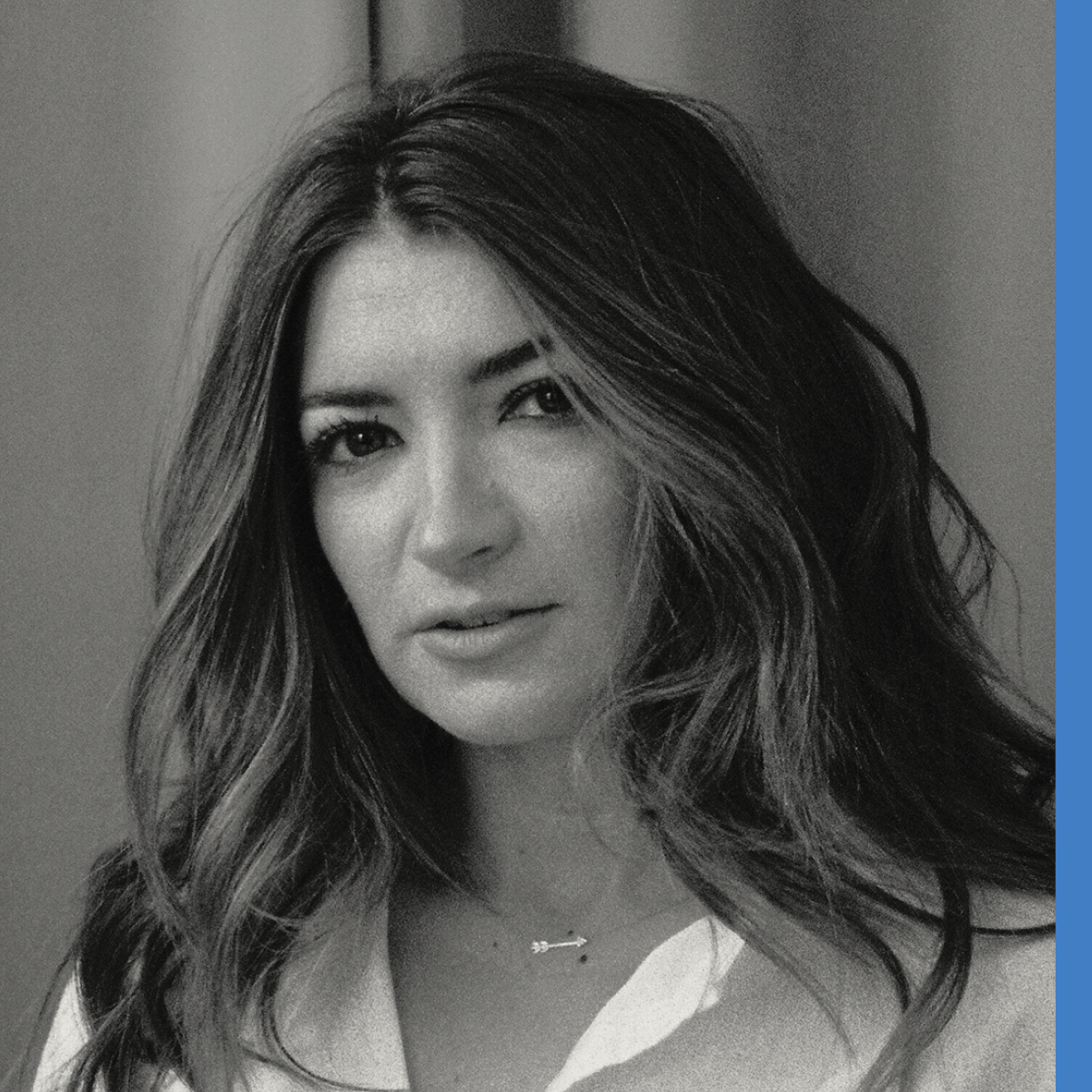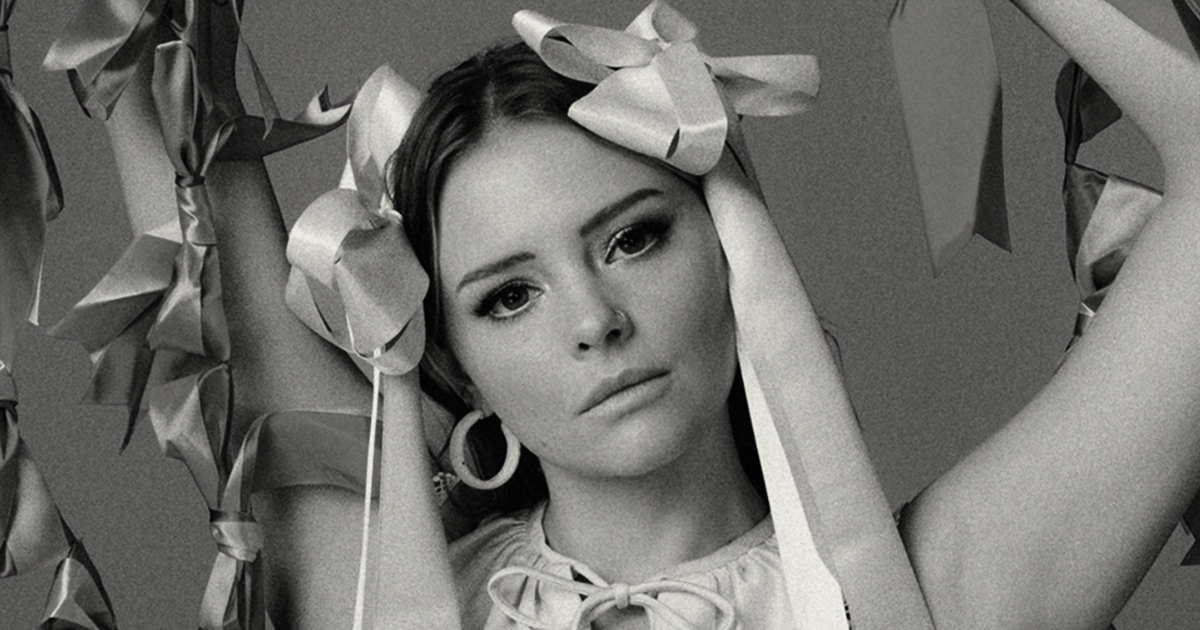
There’s an Edge to Abbie Callahan’s Sugary Country

There’s an effortless charm to singer-songwriter Abbie Callahan’s persona when you first encounter her via vertical video. Beautiful and whimsical makeup, adorable wardrobe, hyper-femininity, and a Gen Z polish to her social media presence are all complicated in the most fascinating ways by her music itself. Landing somewhere in between witty and incisive pop country like Kacey Musgraves and gritty, train-hopping Americana such as Sierra Ferrell, you’d be well served not to make assumptions – or to sell Callahan’s songs short based on appearances.

This is not a book you can accurately judge by its cover. Callahan’s songs will reel you in with her sharp, impactful vocals, her deft wordplay and solid hooks, and a wink and sly smile around every lyrical corner. Tracks like “Simon Says” will have your head bobbing before you even realize the devastation and trauma woven through the lyrics. A new, as-yet-unreleased number, “OptiMystic” – debuted, as Callahan tracks often are, on TikTok – lays out her worldview pretty tidily:

I’ve been known to be a little easy on a Saturday
Known to smoke a cigarette and throw up in the alleyway
Checked off greed and lust in a church pew
Had confession in the Red Door bathroom

Who can really say where you can talk to Jesus anyway?
Anyway…

If you were to engage with and enjoy Callahan’s music without any deeper inspection, you’d still come away with plenty. But the real appeal here is that the sweet, sugary veneer on these songs is only to bring you in. It’s the tinges of bitterness, the tannins, the “something much deeper going on below the surface” that will bring you back again and again. However you zoom out or zoom in on Callahan, her lyrics, her process, and the way she brings her songs directly to her listeners there’s subversion, a deliberate and inspired flouting of expectations.

@iamabbiecallahanWho can really say where you can talk to Jesus anyway… anyway🧚🏼‍♀️🔮♬ OptiMYSTIC – Abbie Callahan

Callahan is intentionally leveraging the way she’s perceived outwardly and visually to “Trojan horse” her way of making music into a country industry that’s often loath to platform artists like her, who build fandoms and idiosyncratic styles on hyper-femininity without apology. Like Dolly, Loretta, Kacey, and so many others who’ve come before her in that age-old country tradition, Abbie Callahan is onto something.

We caught up after a gentle spring rain in Napa Valley, as Good Country attended Live in the Vineyard Goes Country and caught Callahan performing as part of the event. Finding ourselves in such a stunning location, we began our interview chatting about country’s relationship to place and how well-suited this music is to the many settings it finds itself in.

I wanted to start by asking you about country’s relationship with place. Country music is always about place – rural places, urban places; farms and ranches; California, Tennessee, Iowa. We’re at Live in the Vineyard Goes Country here in Napa, so I’m thinking about country and place, and I wonder if you think about country’s relationship to place – and about how this music is so appropriate for so many different contexts, whether you’re in Napa or playing a honky-tonk or a festival. How do you think about country’s relationship to place and to land? It’s interesting to be here in a place like this with everybody sharing a few days in such a beautiful setting.

Abbie Callahan: That’s a great question. Usually I think about it in context of place in genre. It kind of is the same thing to me. My music with a band or just with guitar, I can make it fit into whatever genre I want – I feel like that in place, too.

But here [in Napa] it’s spring and the flowers are everywhere, it feels like they are one and the same. Especially my last project, Grossly Aware, with all the flowers – and we have the garden [right beside us] and all that. It feels like this is the perfect spot for me to be.

Two weeks ago we were back where I’m from in Iowa. It was gloomy and rainy and we were playing a bunch of the new stuff. It was, I don’t know, probably a little bit out of place, ’cause it was all fun disco [music]. But maybe it added to [the impact], because it was so gloomy and getting rained out. I don’t know how [my music] relates to place, but I feel like I can make it whatever I want, which is kind of nice. Kind of fits anywhere.

Well, being in California for this interview makes me wanna talk about “Strawberry, California.”

We went there yesterday! We drove through it. It was my first time actually there. We went over the Golden Gate Bridge and I was– I’m from Iowa, so I’m from like, not much. [Laughs] So it’s cool that music can bring you somewhere and you get to see all the things. I don’t think I would’ve been able to see the Golden Gate Bridge and come to California [without music]. Or be in Napa for country music. Napa’s outside of my tax bracket, so it’s nice to be here. [Laughs]

One of the things I noticed when I was listening to “Strawberry, California” to get in the mood for us talking in California is the banjo playing. I love that the banjo is playing the melody along with your voice. And I love that you evoke bluegrass in your music so often. Could you talk a little bit about that song and having banjo in it, and about the bluegrass touchpoints across your catalog?

I was in a rock band that played in downtown Nashville. That’s how I paid for college. I was playing ‘90s grunge, so I’d go home and I want to listen to the opposite. That’s how I found bluegrass – just how simple and deep everything is. It’s different than how I write and talk. It’s so concise and wrapped up so well that I just envy it, in a way. I love listening to it, ’cause I feel like I can learn a lot. But then my setup, my band when I play, is a bluegrass setup. It’s upright bass, me, guitar, fiddle, another guitar. We just added drums, which is a big step.

But that’s when I started listening to bluegrass, ’cause it was like a palate cleanser. I don’t listen to a lot of modern country, because that’s the space I’m in. When I listen to it too much, I feel fatigued from it all. So bluegrass is a nice outlet. It just feels refreshing to listen to. I wasn’t raised on it or anything, so I feel a little bit like an impostor, but I love it so much.

Charlie Worsham played banjo on “Strawberry, California.” He played throughout the whole record, Grossly Aware, on guitar and banjo. “Strawberry, California,” it was tricky to get it right with a band, because of the time changes and how intricate the guitar is. But I pulled it up for him in the studio, he listened to it once, and he was like, “Wow, this is tough.” Listened to it twice, and then had it perfectly. I was like, “What in the world?!” He’s a freak. So good.

I really enjoyed listening to it. And then I also have been listening to your new single, “Drag, Queen.” I love it in so many ways.

It’s a little controversial.

Of course, it’s a little controversial, but also it’s 2026. They can catch up or we don’t need them. [Laughs] I love that, again, you’re subverting expectations. And again, it’s traditional modern country with that big hook, the wordplay is great. The sort of wink and a smile about it. But also I love that it sounds so bluegrassy.

Yeah, it’s the grassiest song I’ll be putting out this year. It’s super grassy. It’s so fun to play live. I played it on tour with Carter Faith this spring. Her audience was so perfect for it, ’cause they love weed and they are awesome. [Laughs] I played it on tour with her and it was probably my favorite song in my set.

I wrote that song last year – last June – and I posted it right away and it’s just been my favorite. I think it’s silly, but it has a lot of layers to it. I had a song, “Marry Jane,” blow up on TikTok. It was my first thing that ever did anything on TikTok, so I got hate for the first time. Which is always an interesting experience. It was all like balding, middle-aged old men being like, “Is this a song about a lesbian or a song about weed??” And I was like, “It’s about both, duh.” [Laughs]

Have you ever heard of an entendre? Yeah, no, you haven’t.

Double it. [Laughs]

[Laughs]

Anyway, it was so funny. But that’s why I wrote it. I was like, “They’ll hate this.”

@iamabbiecallahan Wrote this one yestersay, Marry Jane💌🍃 #maryjane #singersongwriter #nashville ♬ original sound – Abbie Callahan

I also wanted to ask you – femininity and hyper-femininity in country are also traditions. The performance of femininity by folks like Dolly Parton and Loretta Lynn all the way to k.d. lang. I love the way that you inhabit femininity and it’s so clear that you do not feel like it’s a burden, or that it weighs you down, or that it’s something that you could be penalized for. But I wonder how you feel like it’s received – especially on social media, like you mention, TikTok. Do you ever feel like you’re penalized for your femininity?

You know, I think as we’re starting to talk to labels and all that, yeah. I think if I was a man with this amount of monthly listeners and success so far, I would have a deal already. In that way, it’s definitely hindering, but it’s not gonna stop me from anything. I will have more leverage in two years, and that’s fine. [Laughs] But whatever. But because it’s so raw and real and feminine, I feel like my audience is all girls. It’s been really nice. I feel like I can be myself, say whatever I want, and I don’t have to worry about it. [I can] dress however I want – and dress strange – and be something to look at and not just, like, pretty, you know?

And the girls get it. I love it. I don’t think it’s a bad thing at all. It’s what I prefer. …

Another song that really jumped out at me is “Simon Says.”

The production of it started with just me in my room on guitar on TikTok, and then people were like, “I need a full strings version of this. I need a banjo version of this. I need a pop version,” all these different things. When we recorded it for the first time the demo had a synth on it, which is the banjo part. That’s how it started. I knew that wasn’t how it was gonna end, but it was like in demo jail for a year and a half. And I was like, “It has to have that element,” and then it just worked out for the banjo.

I did have a question about TikTok, so it’s interesting to hear you talk about how you’re in the comment section, you’re seeing what people say. It’s interesting to me that you’re responding in your creative process as well. Like what you just said about “Simon Says.” You’re listening to the fans being like, “I need this, I need that.”

If they want an acoustic version I’m like, “If you’ll stream it, I’ll do it.” Without a label right now, that’s been amazing. Something will blow up and in a month and a half or two months later we can have it out. You can’t replace that. It’s been really nice.

How do you feel when you’ve done a bunch of reps of a song, or when you’ve taken it from TikTok, to demo, to recording, to bringing it to an audience – do you feel like the song changes meaning? Do you feel like “Simon Says,” for instance, will always have that tinge of sadness and trauma to you? Or do you feel like the audience takes it, it changes, and then you get up on stage and you don’t feel that anymore? Or does that feeling always stay with you? ‘Cause as a songwriter myself, I feel like I re-traumatize myself every single time I play one of my songs. Is that how it feels to you with a song like that?

I have to write about what I live. I can’t just write to write. I have to put myself through stuff. It’s whatever – “tortured artist,” you know. Every line in there is real, so it’s definitely re-traumatizing.

But I guess it was my first tour, my first time singing it on stage, I was thinking about the writing of it a lot. ‘Cause it’s something so magical, that three people are in a room – or two people or just me – and then now I’m in front of 1,000 people and some of them know the songs. I don’t know, something about that is so special. I wish my co-writers were there to see it. It’s such an intimate thing.

There’s a little bit of a healing moment there.

Totally. It kinda changed what I was thinking about, especially with “Simon” and a lot of the next project. All of it’s co-written, which is different for me. I was just thinking about the people that made it all come to life. When we were in the studio, little ideas that people had. It’s so cool.

So it’s like, less sad now. I guess it depends on the situation. If it’s me on TikTok, I’m getting into the sad headspace. But in person I’m like, “Oh my gosh, this is so fun. My favorite people helped get me here.” I’m like singing “Simon Says” with a pep in my step. Like, what is going on?! [Laughs]


Want more Good Country? Sign up to receive our monthly email newsletter – and much more music! – direct to your inbox.

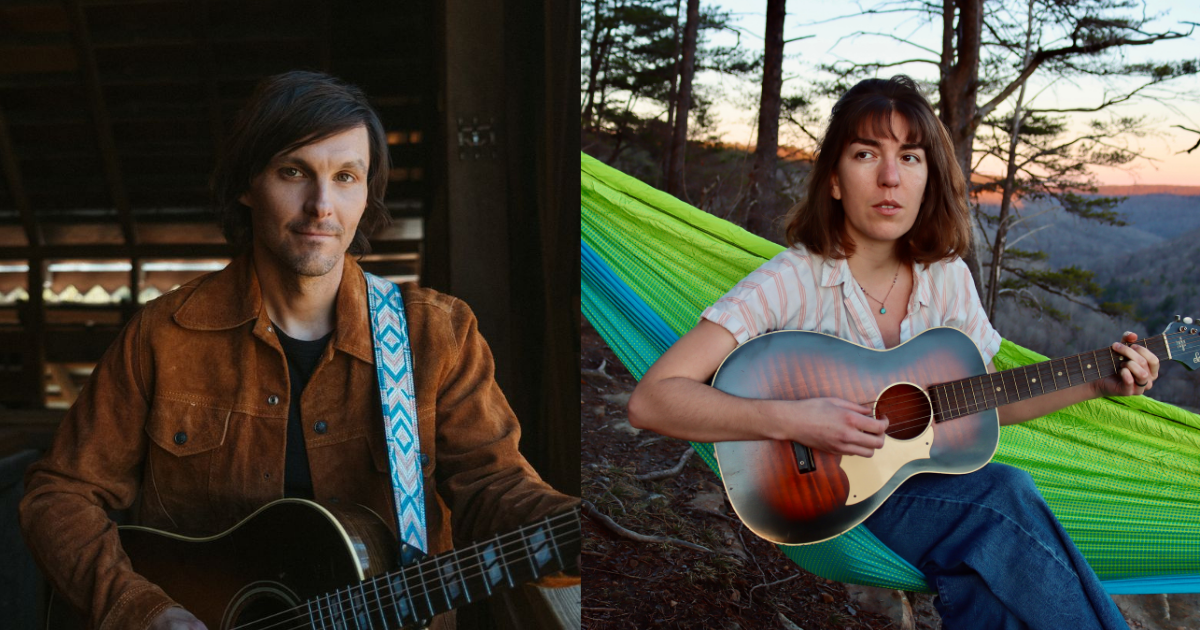
Photo Credit: Catherine Powell
You Gotta Hear This: New Music From Charlie Worsham, Maya de Vitry, and More

New Music Friday is here! Our final Friday of April finds our roundup sharing excellent country, folk, and Americana. You Gotta Hear This.

To start, Los Angeles based neo-folk artist Malena Cadiz has released a very cool track, “Smoke Rings.” It’s a Les Paul cover recorded on the original Les Paul recording console. Music nerds will get the importance of the first-ever multi-tracking console and how apropos the song selection is, too, with Cadiz offering her own rendition of a song by Paul and Mary Ford. It’s jazzy and lazy – deliciously relaxed. Also based in LA, Dominique and the Diamonds launch a vibing and glittery honky-tonkin’ song, “I Don’t Mind,” to announce their upcoming album Honky Tonk Queen. It evokes California in a sonic package that shines like it’s covered edge-to-edge in sequins, pulled forward by Dominique Gomez’s lush voice.

Earlier this week, Irish artist Glen Hansard released a gorgeous live video for “Don’t Settle,” the title track for his new album out today, Don+t Settle – Transmissions East. Hansard and his ensemble perform the impassioned song in the round, surrounding each other and surrounded by their audience and a circle of shadows. It’s dramatic and compelling. Out in the sunshine, singer-songwriter Maya de Vitry announces her new upcoming album with a fresh song, “Confidence of the Sun.” Written in the warm and soft sunlight of the Texas Hill Country, the track showcases de Vitry’s penchant for finding redemption in herself, in breaking old habits, and in being present – within music and without – to do so. It’s a lovely harbinger for what’s to come.

Texan Jacob McCoy shares a new song with us today, as well. “All Our Days” is rich with deeply stacked vocal tracks and a country-meets-indie twang. One of the last songs written for his EP, Deep Deep Water, it’s also one of the singer-songwriter’s favorite tracks he’s written to date. His EP is out everywhere today. To round us out and finish us off, our old pal Charlie Worsham – country’s modern renaissance man – returns with a new single, “Grass,” out now. It’s a tribute to his favorite pastime (mowing), his favorite surface for walking barefoot, and his rowdy 20s (IYKYK). With a heaping helping of the humor he’s often known for, “Grass” is a summer anthem perfect for farmers tans and coming in the house smelling like a fresh-trimmed lawn. As Worsham performs at Stagecoach this weekend, we’ll be cheering him on and enjoying “Grass” right here on BGS.

There’s so much to enjoy below. Get listenin’, because You Gotta Hear This:

Malena Cadiz, “Smoke Rings”

Artist: Malena Cadiz
Hometown: Los Angeles, California
Song: “Smoke Rings”
Release Date: April 20, 2026
Label: Sad Mall

In Their Words: “A few months back, an old friend from NYC, Tom Camuso, reached out that he was in LA working on an exciting new project. Tom, who’s worked with Lenny Kravitz, Blondie, and Steve Earle, was in charge of refurbishing the original Les Paul recording console. For music nerds this is HUGE. Les Paul created the very first multi-tracking console in 1957 and it now has a new home in the historic United Studios in LA.

“He invited my band and I to track a few songs on the console to test the gear – this was the first time anyone had recorded on this machine since it had been put in storage decades ago. We were obviously over the moon to be invited and decided the first track recorded on Les Paul’s console after all these years should be a Les Paul song. We chose to do a version of Les Paul and Mary Ford’s ‘Smoke Rings.’ I’ve loved this song forever for its dreamy, whimsical quality and Mary Ford’s gorgeous performance.

“My buds Jason A. Roberts (Norah Jones, Spoon, Bedouine), Leeann Skoda (Noah Cyrus), and Aaron Stern (Curtis Harding) came into the studio with me and I do not exaggerate when I say it was a semi-spiritual experience to get to record in this legendary space – they even got to play Les’s original guitars for the recording.” – Malena Cadiz


Maya de Vitry, “Confidence of the Sun”

Artist: Maya de Vitry
Hometown: Lancaster, Pennsylvania
Song: “Confidence of the Sun”
Album: All My Faith
Release Date: May 1, 2026 (single); July 24, 2026 (album)
Label: Mad Maker Studio

In Their Words: “Over the years, I have shed what feels like many skins. When I wrote the first lines of this song, ‘It took me a long time to recognize peace as a place I belong,’ it felt healing just to sing it and own that truth. It’s taken years for me to begin to rewire some painful patterns, some deep grooves of self-doubt and self-sabotage. For anyone who has ever been through periods of interpersonal chaos, times of loud endings and quiet beginnings, an era of coming back to honesty in your body and spirit after going through the motions – it can be hard to actually see and feel and appreciate in your bones just how far we’ve come, you know?

“I wrote this song in the unapologetically bright-yet-soft sunlight of the Texas Hill Country, in spring, at the Blue Rock Artist Ranch & Studio. I received a gift of attending a writing residency there, and it allowed me the space and time to slow down and listen to my own heart. I love this arrangement so much, the way it feels like home for me to rest my vocals in Dom Billett’s drum groove, the way the band rises and falls in energy together because this all happened in one whole live take, and the comfort and camaraderie of singing in unison with Shelby Means and Joel Timmons before we split into some joyous three-part harmony towards the end of the song.” – Maya de Vitry

Track Credits:
Maya de Vitry – Vocals, acoustic guitar
Shelby Means – Harmony vocals
Joel Timmons – Harmony vocals
Jo Schornikow – Keys
Ethan Ballinger – Electric guitar
Spencer Cullum – Pedal steel
Ethan Jodziewicz – Fretless electric bass
Dom Billett – Drums


Dominique and the Diamonds, “I Don’t Mind”

Artist: Dominique and the Diamonds
Hometown: Los Angeles, California
Song: “I Don’t Mind”
Album: Honky Tonk Queen
Release Date: April 24, 2026 (single); June 26, 2026 (album)

In Their Words: “Before moving to LA, I lived in a small farm town on the coast of Northern California. I didn’t want to leave, but I had to escape a dangerous relationship I was in. I was heartbroken for having to leave the town, not so much the relationship itself. I had plans of making it back one day and settling down, but when I found out my ex had planted roots out there, I knew it wouldn’t be safe for me to go back. I felt like he took a dream of mine away from me. I wanted this song to sound like that coastal town I was living in; a song that could transport you to that same beach where the sea touches the redwoods of Muir Woods. It might seem contrary for the song’s title to be ‘I Don’t Mind,’ but it’s how I feel about everything now. Moving to LA was the best decision of my life and unfortunately I don’t think I would have ended up here if I hadn’t experienced all of those terrible things up north. There would be no Dominique and the Diamonds, this incredible, dreamlike life that I live now because of this project would have never existed. So in the end, I don’t mind that my ex took my old dream away from me. This is exactly where I was meant to be.” – Dominique Gomez

Track Credits:
Dominique Gomez – Vocals, acoustic guitar
Hamilton Boyce – BGVs, bass
Tyler English – Pedal steel
Craig Jacobs – Drums
Glenn Brigman – Piano, producer
Dominique and the Diamonds – Producer


Glen Hansard, “Don’t Settle”

Artist: Glen Hansard
Hometown: Dublin, Ireland
Song: “Don’t Settle”
Album: Don+t Settle – Transmissions East
Release Date: April 21, 2026 (video); April 24, 2025 (album)
Label: Plateau/Secretly Distribution

In Their Words: “‘Don’t Settle’ is a song I wrote to a younger version of myself, the song came quite fast. A kind of roadmap of dos and don’ts for the sometimes treacherous tightrope that is one’s life in music. Stay the road, know your north. Listen only to your own heart and gut. Your road is your road. You’ll know the signs. Don’t deviate. And when you do, deviate completely. Don’t settle for less than you envisioned.” – Glen Hansard

Video Credits:
Frank Machel – Director, editor
Markus Mörtz – Producer, editor
Sara Kelly-Husain – Documentary, unit manager
Vincent Chmiel – Documentary
Martin Ullrich – DOP
Eric Poß – Camera
Armin Riedel – Camera
Stephan Bodner – Technical assistance, camera


Jacob McCoy, “All Our Days”

Artist: Jacob McCoy
Hometown: Amarillo, Texas
Song: “All Our Days”
Album: Deep Deep Water (EP)
Release Date: April 24, 2026

In Their Words: “‘All Our Days’ was one of the last songs written for the EP, and to date is one of my favorite songs I’ve written. I wrote it with friend and fiddle player Coral Bradshaw just a few weeks prior to recording. Something about it contains this seasoned, hard-earned romantic intimacy that just immediately drew me in like a lot of old country songs do. The song moves through all of the seasons of a long love – summer’s ease, winter’s frozen hope, and the slow return of spring – before landing somewhere that feels genuinely hard-won.

“Sam and I cut it on the first day of recording in his small above-garage studio in Nashville and it came together very organically. Syncopated fingerstyle guitar provides the foundation for the entire song and almost immediately you become immersed in intimate harmonies, with a waltzing bass line and support from an upright piano that provides some forward motion. For the interludes, I ended up playing my mother-in-law’s old cheap classical [guitar] from the ’70s that almost gave it a Willie Nelson feel, which given that he was always playing somewhere in the background growing up, I absolutely love. It might be my favorite musical moment on the entire project.” – Jacob McCoy

Track Credits:
Jacob McCoy – Vocals, acoustic guitar, classical guitar, bass
Sam Westhoff – Upright piano, producer


Charlie Worsham, “Grass”

Artist: Charlie Worsham
Hometown: Grenada, Mississippi
Song: “Grass”
Release Date: April 24, 2026

In Their Words: “‘Grass’ is an ode to my favorite surface to walk on barefoot, my favorite domestic pastime (mowing), and maybe a wink to a certain favorite pastime of my 20s, IYKYK…

“More than that, ‘Grass’ represents the blend of blues and bluegrass influences that raised me. I play that song and it takes me back to drinking from the water hose, attending my first MerleFest, walking out to the lawn seats at amphitheaters across the country, whether I was playing the show that night or catching a show with my friends.

“Some people like sand. Some people like snow. Some people like the concrete, where ain’t nothing grows. But I’d rather be… sweatin’ all summer on a John Deere stacking up cash cash cash…” – Charlie Worsham


Photo Credit: Charlie Worsham by PJ Brown; Maya de Vitry by Ethan Jodziewicz.

Friends New and Old

Editor’s Note: Each issue of Good Country, our co-founder Ed Helms shares a handful of good country artists, albums, and songs direct from his own earphones in Ed’s Picks.

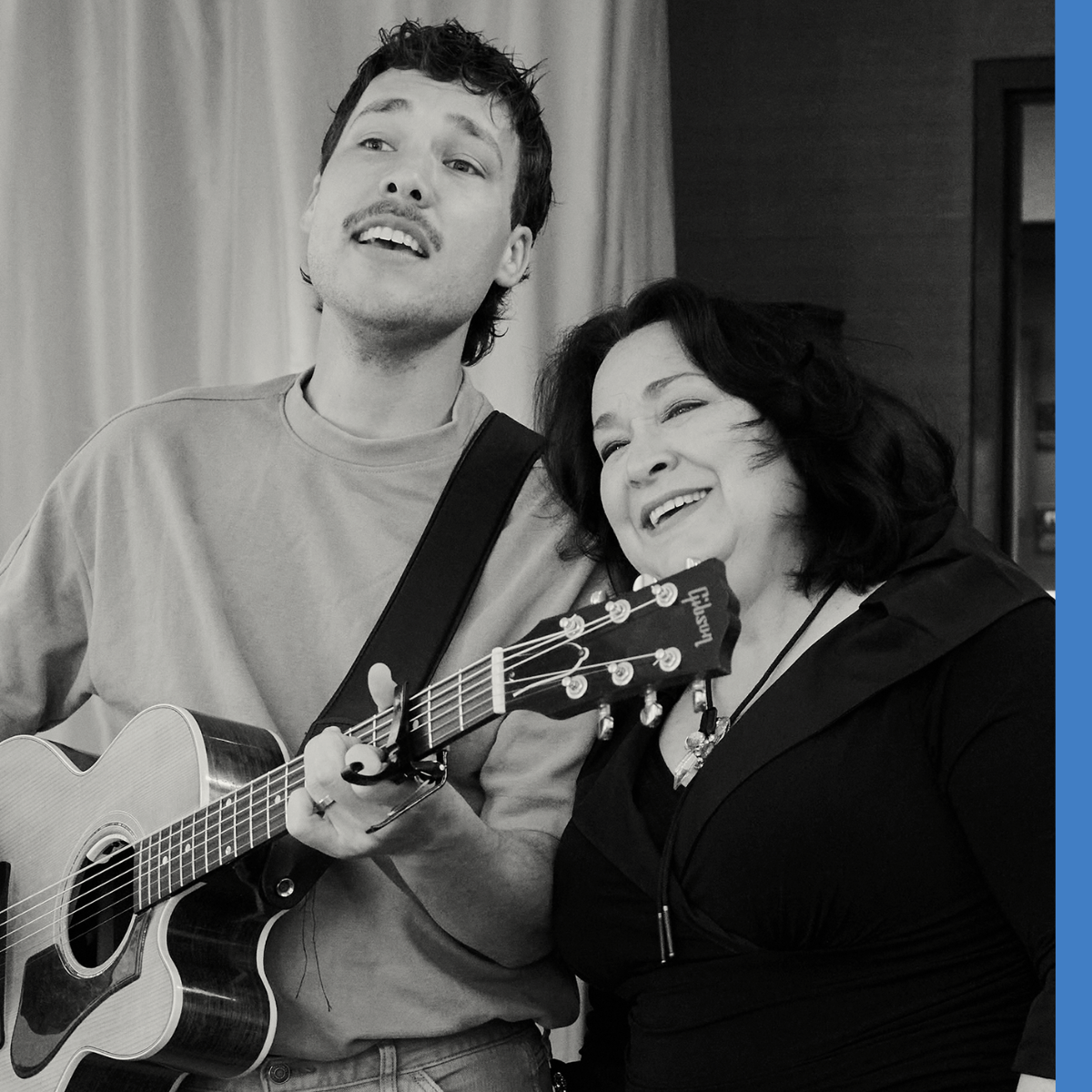
Suzanne Cox & Brandon Ratcliff

Suzanne Cox (of the GRAMMY-winning bluegrass band the Cox Family) and her son, country singer-songwriter Brandon Ratcliff, are taking the internet by storm with their lovely and tender familial harmonies. Their duets have racked up millions of views and likes on social media, leading to a new EP, Mother/Son Volume 1, and a recent appearance on the Grand Ole Opry. Those voices!


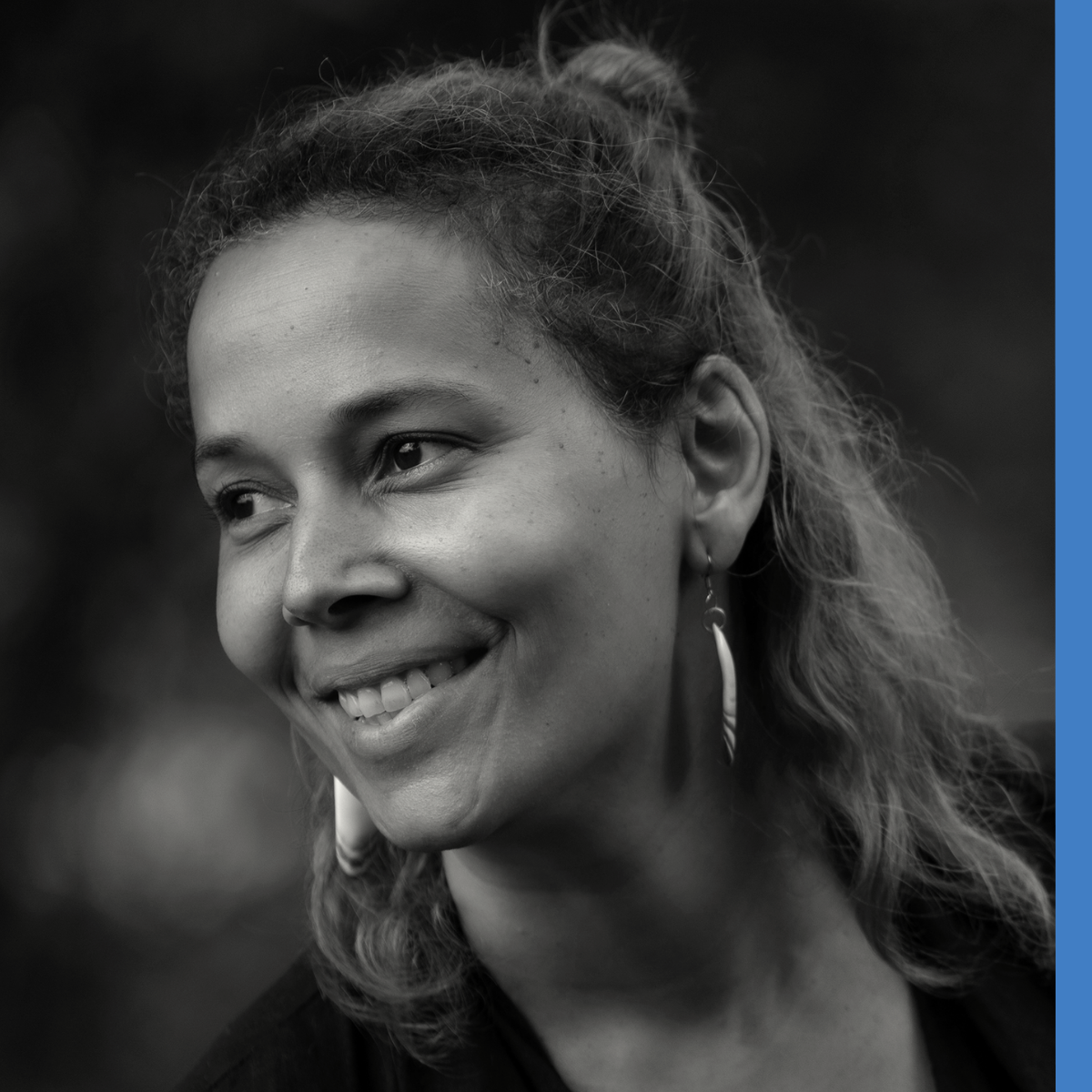
Rhiannon Giddens
Rhiannon Giddens

You may have seen, I’ve had the good fortune of getting to spend a lot of quality time making a film – and doing plenty of banjo pickin’! – with Rhiannon Giddens recently. Since shooting An Ode to Mary Jo together, I keep going back to Rhiannon’s catalog of recordings and cannot get enough. This duet with fiddler Justin Robinson is from her most recent release, 2025’s What Did the Blackbird Say to the Crow. Fantastic old-fashioned, down-home fiddle and banjo music drawn from North Carolina.


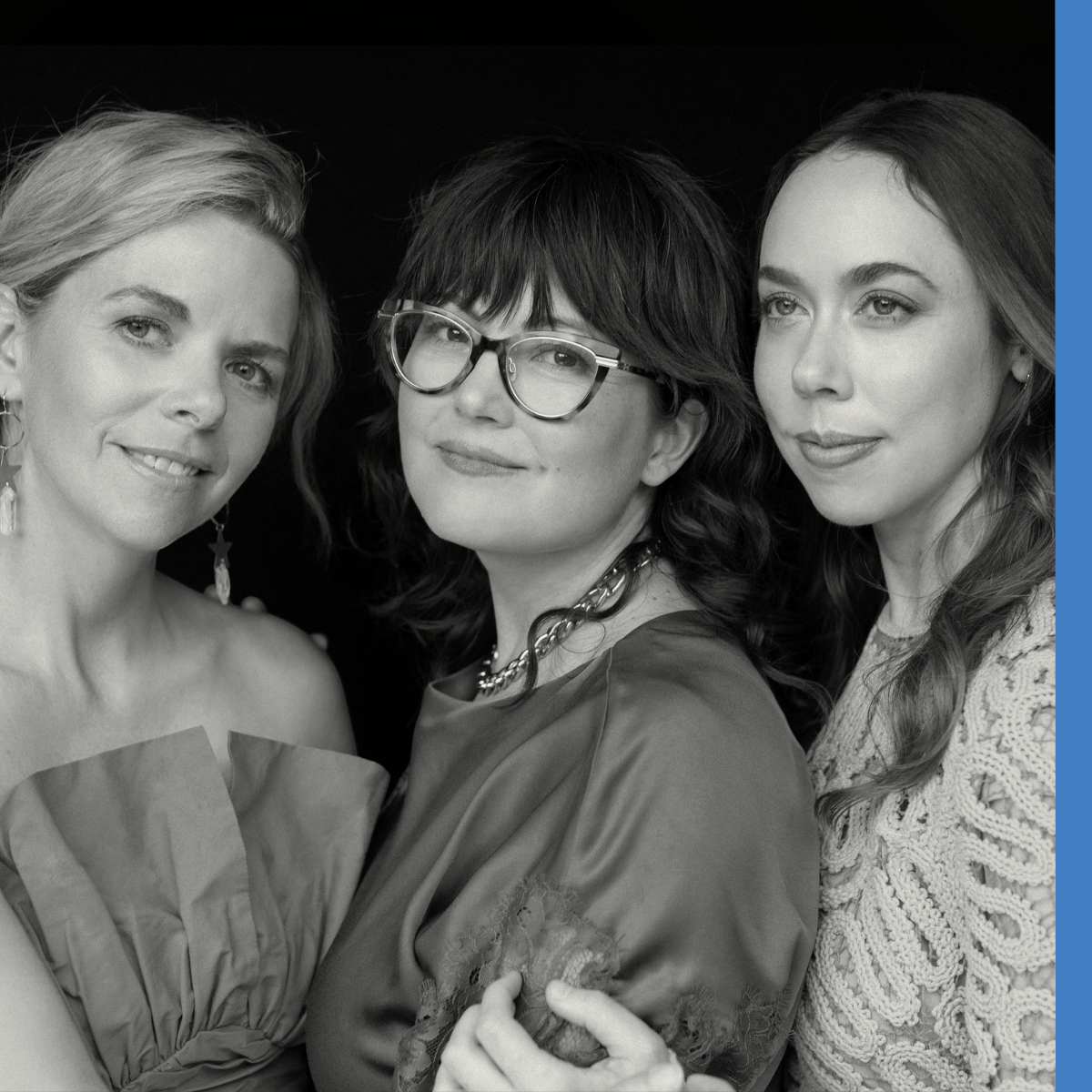
I'm With Her
I'm With Her

I’m with I’m With Her, too. One of our favorite trios in Americana and bluegrass released a brand new live album today, Sing Me Alive, packed with 20 tracks captured at performances across the country and in Canada. Many familiar favorites can be found alongside cover songs and tracks they’ve never released before. Here, they’re joined by Ye Vagabonds in Rocky Mount, Virginia, on “Rhododendron” in November of 2025.


Tenille Townes
Tenille Townes

Our Good Country and BGS Artist of the Month, Tenille Townes, released the first full-length album of her independent era last week. As she describes in our exclusive Artist of the Month interview, she took a much different approach to recording this music, doing most of the tracking herself, alone. The songs are deep, meaningful, and cathartic – and damn good. But it’s not an entirely solo album, as I’m With Her (how perfect) and Lori McKenna both feature on tracks. Hear McKenna join Townes on the title track, “the acrobat.”


Charlie Worsham
Charlie Worsham

Our old pal Charlie Worsham is back at it – though he truly never stops. A sideman, radio and podcast host, session player, songwriter, and artist, Charlie does it all. He’s got new music of his own out and the GC team can’t wait for more. As he usually does, he’s once again calling on his superlative cohort of friends in Music City. On his most recent single, “They Never Do,” it’s Lainey Wilson joining in. From some teases on social media, though, we’re expecting many more special guests on Charlie’s outings in the future!


Listen to this issue of Ed’s Picks in one YouTube playlist here.

Listen to the full Ed’s Picks archive playlist here.


Want more Good Country? Sign up to receive our monthly email newsletter – and much more music! – direct to your inbox.

Photo Credits: Suzanne Cox & Brandon Ratcliff by Chase Hentges; Rhiannon Giddens by Karen Cox; I’m With Her by Alysse Gafkjen; Tenille Townes by Madison Rensing; Charlie Worsham courtesy of the artist.

Vince Gill Has Done It All (Part 1)

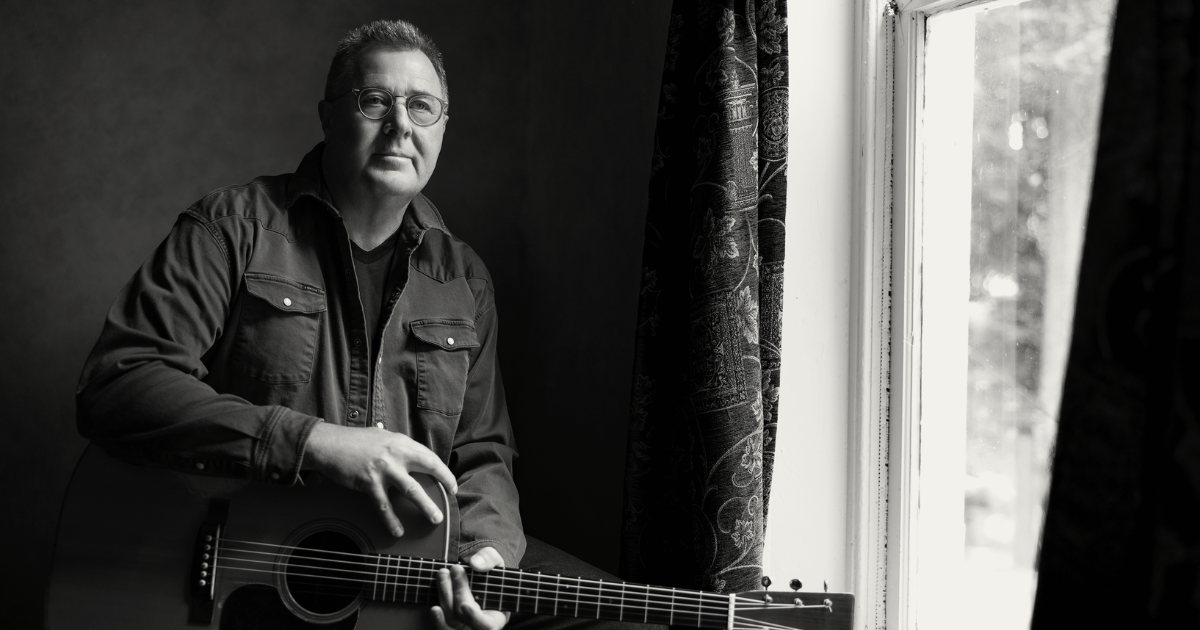
Vince Gill doesn’t give interviews; he gives conversations – lengthy, engaging conversations filled with the same reflection and storytelling that make his songwriting so relatable and successful. Factor in his enviable mastery of guitar and other instruments and the result is a well-rounded artist who has won 18 CMA awards, 22 GRAMMY awards, and eight Academy of Country Music Awards.

In 2025, he was presented with the CMA Willie Nelson Lifetime Achievement Award, and this year, on May 6, he will receive the Ken Burns American Heritage Prize. He’s been a member of the Grand Ole Opry since 1991 and in 2005 was entered into the Nashville Songwriters Hall of Fame. Two years later, he was inducted into the Country Music Hall of Fame.

Over the course of 21 albums his sales exceed thirty million with 45 chart singles. Coming up is a summer tour, which will wrap with a six-night residency at the Ryman Auditorium, while continuing his ongoing schedule with the Eagles. All of this is only a cursory glance at his many accolades.

Gill’s accomplishments, and the experiences that accompany them, are at the core of his latest project, 50 Years From Home, a yearlong series of monthly EPs marking the fiftieth anniversary of his leaving home to pursue a music career. Each collection features themed new songs and revisited classics, with photos of select guitars on the covers. The EPs are introduced via detailed conversations with friend and colleague Charlie Worsham – watch all episodes on Gill’s YouTube channel.

Down At The Borderline, released February 13, is the fourth and latest EP in the series, while the next installment, Lonely’s What I Do, already arrives this Friday, March 13. A few weeks prior to the release of Down At The Borderline, Gill made himself available for more interviews and conversations, including a talk with Good Country.

At this point, it’s difficult to imagine anything Vince Gill hasn’t done. In fact, there are two key things, neither of which he cares to pursue:

“I’ve never sent a text,” he says, “because I prefer talking to people. What you find out [with texts] is how many people really don’t want to talk to you!” And, “I’ve never posted anything on the internet,” although he does have a scrolling habit, which he gladly admitted to during this discussion.

As you move through endless interviews around these EPs, is there something you’ve always wanted to talk about but have never been asked? Now’s your chance to tell the world!

Vince Gill: I wouldn’t have a clue! I never was much of a planner. I think it’s a blessing that I just live in the moment. I don’t look ahead, I don’t look back much, and there’s not a lot of regrets in my life. I figure the mistakes I made were valuable to learn something. I never planned any of this. I didn’t sit down and have a diary that I’d go, “When I’m this age, I want to have done this and this.” I just answered the phone.

You should probably give classes on that, because this is an industry of nonstop worry: What’s going to happen? Will this work? Will this not work? To move from project to project, stage to stage of your career with that mindset is impressive.

I started out with absolutely not one dollar, so money has never been the reason for any of it. I bought a guitar when I was 18 years old and I moved away from home. It was an old pre-war Martin that was perfect for bluegrass. I spent every dime I had on it and I didn’t worry. I said, “My rent’s $15 a month, I’ll make a couple hundred bucks a week when we work, so I’ll be fine.”

Amazing.

Speaking of going from stage to stage of your career, the EPs are each a chapter told with collections of songs. Tell us more.

The majority of it is fairly new. From the time I started in 1975, there was no reason to have a publishing deal for a long time. Even after I had a record deal, I didn’t see the need because I had a place for my songs to land on my own records. I never partnered up with a publisher, to give away half the money, to give a monthly draw to help pay my rent or whatever. I was able to always pay the rent somehow – my house note, whatever it was – with playing and singing.

Three or four years ago, Jody Williams, who’s a lifelong publisher in Nashville and a friend of mine for 40-something years now, called me and said, “You’ve never had a publisher. Would you consider letting me manage your songwriting for a while? I think you still have a lot to say as a songwriter.” I said, “Yeah, I’ll try that out.”

He would call great songwriters and say, “Would you like to write a song with Vince?” I was never a very good self-promoter, so I would never do that on my own. I just let it unfold with people I would meet. So it started me down this path of writing a lot of music, and over the last three or four years I’ve written twice as many songs as I’ve recorded on this new 50 Years From Home project. I think I’m writing the best songs I’ve ever written. With time you should get better, and I think I have.

I don’t want to check out someday and have all these songs lost in a desk drawer somewhere, so I’ve started recording them all. It’s a different world now, a different way. If you want to release 75 songs, you can do it. You don’t have to have one album with 10 songs on it anymore. So I started thinking about what it would be. My first conception was to release two songs a week, like an A-side and B-side of a 45. “It’s Monday, it’s time for a couple new Vince songs.” The record company came up with the idea of, “Why don’t you do a series of EPs and have six or seven songs on each one?” I said, “That sounds cool. We’ll put one out a month.”

That’s where the whole thing started. I was trying to find a way to put all this out. I realize at this point in my life, I’m almost 69, I don’t have as much time left to be creative as I’ve had to this point, obviously. How much more it matters now is palpable. It really means something to me to be creative, and if I see myself improving, I want to nurture and foster that and continue, because it’s so dear to me, being musical, being creative, coming up with an idea, coming up with a story that could potentially move somebody, touch somebody. It’s unbelievable to be able to have that gift, to be able to do that. So I’m trying to take full advantage of it.

But 68 or 69 today is not the 68 or 69 of our parents’ years. When you’re a kid, your parents turn 50 and it seems ancient.

That’s true. My mom’s a hundred years old.

See? You have many more years to go, especially if you’re still 17 in your head, which happens in this business.

Yeah, and I am. I don’t feel any different than when I pulled out of the driveway and took off. I still have the same love and I’m so drawn to playing music. It’s such a huge part of me. I tell everybody, “My mom’s a hundred and I hope I’m really her son, so I have those genes! For all I know, she might have rented me out of a yard in southern Oklahoma somewhere!” But my dad checked out early. He died at 65 – and I was afraid of being 65. There’s so many instances of people passing at the same age as their parents and whatnot.

I’ve heard from others that it’s a strange feeling when you reach the age when a parent passed.

Absolutely. But my dad drank a lot, he smoked two packs a day, and he didn’t take very good care of himself. I don’t think I have too many of those qualities. I don’t smoke and I don’t drink. I eat bad, but that’s about it.

You’ve stated many times that your goal was always to be a recording musician. With reality shows and social media, do young players have that same goal, or is a lot of it about chasing clicks and stardom? Are you concerned about the future of musicianship?

No, because there are plenty of young kids out there that can play their brains out. There’s so many of them that you don’t worry about it. I tell people all the time, “If American Idol was on in 1948, Little Jimmy Dickens would’ve been on it.” I don’t really care for those shows – and not in a bad way, because a lot of talented people go on them – but sadly, you don’t see that really bear out with a lot of artists coming from those shows that have longevity. They have that moment, but we’re so ready to slide our thumb and move on to the next scrolling thing. It’s the same way with those shows: “The season’s over. Okay, who are the new ones?” And I never like seeing creativity be a contest.

But I don’t worry too much. You see someone like Sierra Hull, who can play better than anybody in the whole world, and Michael Cleveland, and so many that come along that can completely annihilate their instruments. It’s beautiful to watch. I don’t think that’ll ever go away.

Does AI-created “music” concern you?

Of course, but when I’m asked about it, I say, “The people who create it, deep down, they know they haven’t done anything. They know they’ve done nothing.”

As a recording and performing guitarist, singer, and songwriter over a lot of years, how has your approach changed? Your technique, your picking style, your ear, your tone?

It’s a combination of all of those things. I’ve spent the latter years realizing what I don’t need, what I don’t need to do, what I don’t need to play, what I don’t need to sing, what I don’t need to say in the lyrics. To me, the beauty of it is your willingness to try to say the most with the least.

I like my singing better now than I did when I had hits. I much prefer the way I sing and play my songs today. That’s motivation enough, that I feel like I’m better now than I ever was. My ears have never lied to me, and with that, if I feel like I’m making progress, that’s all the reason in the world to keep doing it. If I start wheezing like an old woman, I probably won’t wanna go out there and sing. But, thank God, that hasn’t happened yet,

With music, the more you do it, the more you learn. The point of it is not to impress, but to move people. If you can move people with what you play and sing and write, that’s the real gift. That’s when you really get something that matters out of it, rather than a big “Woo, that was incredible! That was impressive.” That’s fleeting in a way. I like the long haul.

I could have very easily stopped working on other people’s records and being a sideman and a harmony singer and guitar player and what have you. But I love doing that so much, because I always thought it was a harder job to complement somebody and what they’re doing, more so than doing what you want and having everybody follow you. It took more talent to do that – better ears, bigger ears, that kind of stuff. So I continue to do that. I’ve worked on over a thousand artists’ records in the last 50 years. The diversity of that, the willingness to go into any kind of world of music and try, and not just be shortsighted and only do this and only do that – I love all of it. I’ll find something good in any of it. If I can play a part in making something better that’s being done, then that’s a good feeling.

Can you draw a through line from your bluegrass roots to what you’ve done and what you do now?

“When I Call Your Name” wouldn’t have sounded like it did had I not played bluegrass. That high lonesome sound was totally taken out of my love and life of bluegrass. A song on one of my new records [Secondhand Smoke, EP 2] is called “Hill People,” with [harmony vocalist] John Meador – great singer, great player, it just blows my mind how good he is. That sounds the way it does, it was written the way it was, because of my history of bluegrass.

I was never one of those guys that [would say], “I can only play bluegrass and it has to be traditional.” I loved New Grass Revival. They were different than Bill Monroe and I loved it all. If you take whatever’s great about something and cast the rest aside, then you’ve done your job. I’m not critical of young people that don’t do it the way I did it, or the way my heroes did it. That doesn’t serve anybody any good, to be critical of stuff. I remember hearing Billy Strings talk about how he would go to jam sessions and felt unwelcomed, and that killed me. I felt so bad for him.

I experienced that once when I was 17. We were playing some bluegrass festival, a hardcore traditional-minded festival. We were up there playing “Rocky Road Blues,” which is a Bill Monroe song, but we were doing it real bluesy. The promoters kicked us out of the festival and said, “You can’t be playing that kind of music!”

As they were kicking us out, Jim & Jesse were playing Chuck Berry’s “Johnny B. Goode.” I said, “Now wait a minute. We’re playing a Bill Monroe song and we’re going to get kicked out, and they’re playing ‘Johnny B. Goode’ by Chuck Berry? What’s cool about that?” They go, “Their suits match. Get outta here!”

I’ve known Sam Bush for 50-something years. The story he tells about Monroe is that he said, “What is it you call that music you play?” Sam said, “We call it New Grass.” He goes, “Yeah, I hate that.” That kills me, but it didn’t impact Sam one bit. But that hardline thing – I don’t go for it.

You’ve said that the role of the artist is to speak for others. Are there songs that speak for you, or to you, in those moments?

I like the things that are the most honest, that are not trying to be something they’re not. I’m not a fan of singers that alter the sound of their voice to make it do something it doesn’t naturally do. I heard Merle Haggard say, “Man, just tell the truth.” That’s where I’m finding the biggest inspiration in songs is being truthful. I think the truth has always been the greatest thing you can lean on.

People talk about country music, and if you could point somebody to what you think country music is, I’d say Merle Haggard’s “Mama Tried.” How it starts– “I turned 21 in prison doing life without parole.” That’s pretty dark. That’s pretty sad. And then, “No one could steer me right, but Mama tried.” There’s your hope.

One thing they’ve never taken away from me is hope. Even though they quit playing my records on radio stations and I don’t have hits anymore, I’m always hopeful that something will slide through and move people. I had hope when I made my first record at 16 or 17 years old, and lo and behold, some radio station played it and I heard it in my pickup truck. That instilled a hope in me that’s never faded. They can pass on songs, they can not play them, they can do all that, but they have never dinged my hope in my heart for what it is that I want to try to do.

Where were you in your truck when you heard yourself on the radio for the first time?

I-40, Oklahoma City. I was driving and all of a sudden they started playing “July You’re a Woman.” It’s a John Stewart song and we’d done a bluegrass version of it. I was singing lead. I think some other bluegrassers had done that same song. I’m driving and all of a sudden they started playing it on the radio station and I get on the CB radio and start screaming, “You’re not going to believe it! They’re playing our record on the radio!” Truckers were coming back saying, “Hey, you sound good, kid! Hang in there.” Wow.

The first record I ever made, I heard on the radio. It put that dose of hope in me that has never faded.


Editor’s Note: Read part two of our Good Country conversation with Vince Gill here.

Want more Good Country? Sign up to receive our monthly email newsletter – and much more music! – direct to your inbox.

Photo Credit: David McClister

A New Children’s Book Welcomes Youngsters to the Grand Ole Opry

Last month, we celebrated the 100th anniversary of the Grand Ole Opry as our Artist of the Month. We dove into the history of the world’s longest running radio show, we celebrated the music made on its hallowed stages, and we spoke to author Craig Shelburne about undertaking the gargantuan task of squeezing all of that rich history into a book, 100 Years of Grand Ole Opry. That coffee-table-ready tome is 350+ pages of photos, stories, interviews, and Opry lore.

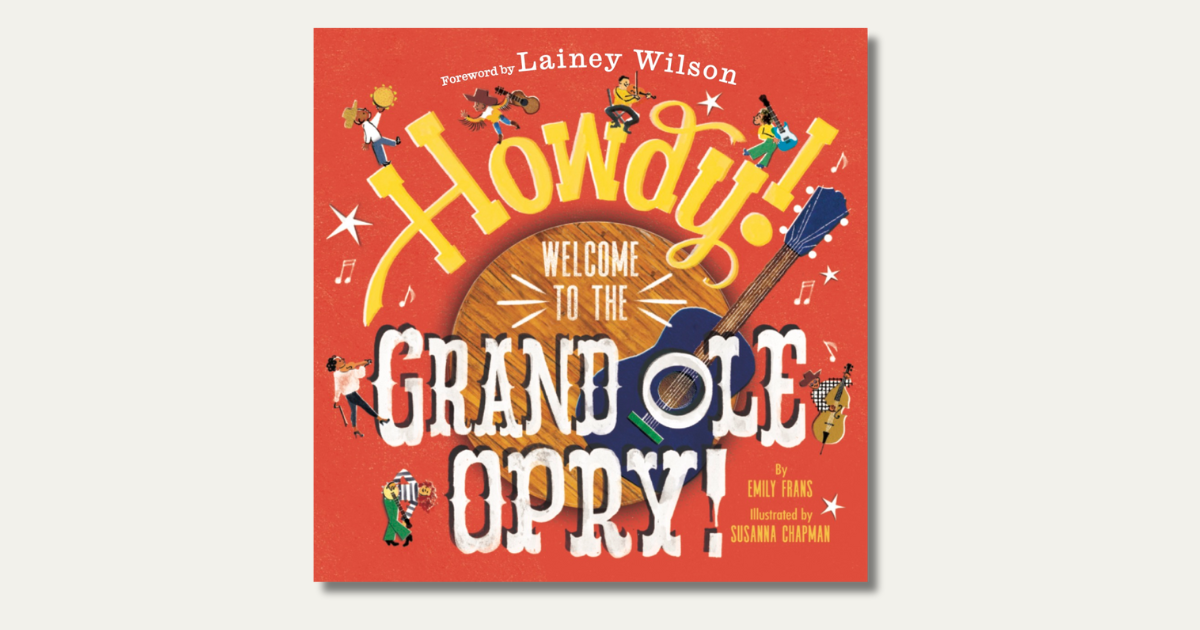
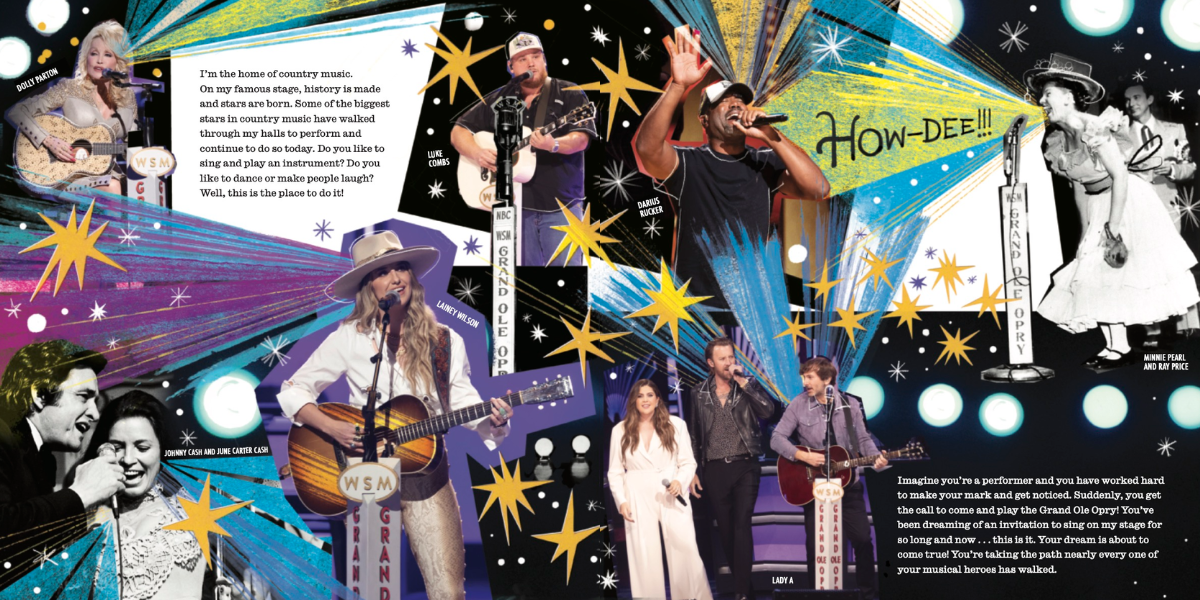
Now, imagine the same task for Opry employee, archivist and content manager Emily Frans – but squeezed into a children’s book. The new title, Howdy! Welcome to the Grand Ole Opry! does just that. One hundred years of history, illustrated gorgeously and fantastically by Susanna Chapman alongside words and story by Frans, it distills the magic of the Grand Ole Opry for its tiniest audience members and fans. With a foreword by Lainey Wilson and stories from Dolly Parton, Lauren Alaina, and more, it’s an Opry 100 celebration that can be appreciated by country music fans of any/all ages.

Whether a gift for the holidays, an everyday present for the youngsters in your life, or pro-country-music propaganda (which we can always get behind), the new kids’ book is certain to inspire oncoming generations of would-be stars, pickers, and songwriters, seeding dreams of someday stepping into that hallowed circle on the Opry House stage. We spoke to author Emily Frans about the project and the special balance of telling a complete Opry history that engages, inspires, and stokes the imagination of children all around the world.

It must have been a difficult enough task for your colleagues to write the 350+ page 100 Years of Grand Ole Opry book that distills the immense history of the Opry into a single volume — it’s hard to imagine condensing all of that history, all of those stories, and all of that music into an even smaller space, a kids’ book! How did you go about it?

Emily Frans: You’re right! After pouring so much time into artist interviews, research, and trying to cover 100 years of history in as much detail and photography that a 350+ page book will allow, shifting gears into a children’s book was a completely different challenge. The biggest task was figuring out what not to include.

With kids, it’s all about clarity, pacing, and imagination, so I asked myself: What moments spark imagination? Which people feel larger than life? What stories can light a fire in a young mind? I tried to frame the story as kind of an adventure that kids could really imagine themselves experiencing while still including historical facts and details that they could learn from.

What do you see as the essential “nuts and bolts” of the Opry story that could – or should – be translated to country fans of all ages? What is the central idea or mission here, as far as putting this incredible, respected show in front of its youngest audience?

As a parent to young daughters, I realize how important it is for the youngest generation to understand not just what the Opry is, but why it matters. This book was written to bridge that gap and to spark wonder, inspiration, and to continue cultivating the tradition that we all cherish. In an age where attention spans are short and kids can choose their entertainment with a swipe of a screen, creating a book to share the Opry with children felt more important than ever.

The Opry is different than any other stage because of the way it connects people – artists to fans, parents to kids, and one generation of country music to the next. That emotional connection is the heartbeat of the Opry, and why, at 100 years old, it continues to thrive. I wrote this book with the goal of sparking that connection with our youngest generation.

The book has a foreword by Lainey Wilson and includes Opry stories from folks like Lauren Alaina, Dolly Parton, Kelsea Ballerini, and more. Country artists often have very special, down-to-earth relationships with their younger fans — these artists especially. Can you talk about curating the artist stories for the book and what Lainey Wilson brought to it with her foreword?

The artists featured in the book all share a genuine connection to the Opry and a real heart for their younger fans. I wanted to include messages that would almost feel like a little spark of mentorship coming straight from the stage, conveying the gravity of being asked to perform on the Opry while also making it sound achievable.

Lainey Wilson embodies that spirit so naturally. Her message is all about believing in yourself and honoring the roots that helped shape you. When she talks about stepping into the circle, she makes it sound magical, but also achievable. That tone set the stage for the rest of the book beautifully.

The book was illustrated by Susanna Chapman — the Grand Ole Opry and its history, especially its visuals, branding, costumes, and pageantry, are simply perfect for a children’s book like this, aren’t they?

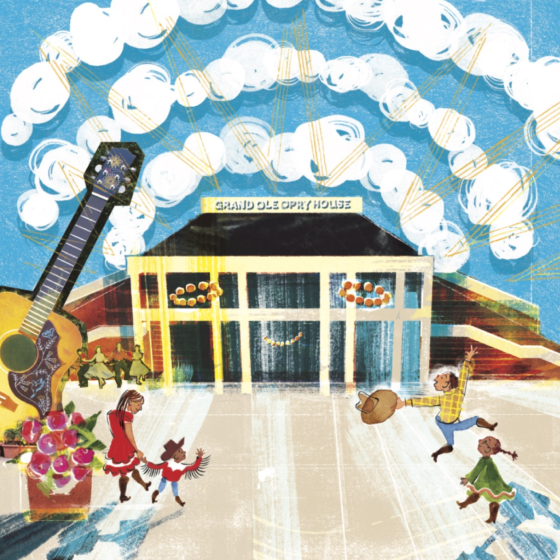
Absolutely. The Opry has always been visually rich – from stage lights to rhinestone suits to the red barn set, it was practically begging to be illustrated! Susanna Chapman did an incredible job and brought a wonderful balance of authenticity and imagination. She captured the physical space of the Opry and infused her illustrations with movement, color, and emotion.

In fact, she spent time with one of my daughters during an Opry show trying to understand which elements of the sights, sounds, and even smells stood out to her so that she could create illustrations that really make the reader feel like they were there. The words are important, but it is the visuals that really draw kids to a book and Susanna knocked it out of the park.

So many kids have made appearances on the Grand Ole Opry — Sierra Hull, Wyatt Ellis, Charlie Worsham, Vassar McCoury, and many others — do you think this book will birth a new generation of youngsters itching to step into the circle?

I really hope so. One of my goals with this book was to show kids that the circle isn’t just for legends, it’s for dreamers, too. The Opry encompasses the past and present of country music, but also its future. If even one child reads this book and thinks, “Maybe that could be me someday,” whether they imagine themselves on stage or in a seat, then it’s done its job.

Why do you think the Grand Ole Opry has such broad appeal — across identities, geography, genres, communities, and age groups?

I think the Opry continues to thrive because it offers authenticity, tradition, and genuine connection all while continuing to evolve. On any given night, you can see legends, today’s hitmakers, and up-and-coming artists sharing the same stage. That blend of past, present, and future gives the Opry a real uniqueness and, unlike a typical concert, provides a platform for guests to discover music they may have otherwise missed out on. And the emotional connection is what brings both artists and fans back night after night. When an artist steps into the circle for the first time, guests can feel it. They can sense the history, the honor, and the gratitude and that the artists are there because it matters to them. That kind of sincerity creates a powerful bond between the stage and the seats.


All images courtesy of Ryman Hospitality Properties, illustrations by Susanna Chapman.

Explore more content on the Grand Ole Opry here.

Bluegrass Gospel,
Arena-Style

This feature ought to start with a laundry list of our subject’s accomplishments, but rootsy country hitmaker Dierks Bentley’s résumé and inventory of accolades, awards, and trophies would be far too long to include. After 30+ years in Nashville, Bentley has more than made it and his particular brand of country – down-to-earth approachability, bro-ey (while remarkably non-toxic) good-time vibes, honeyed crackling vocals, an unwavering sense of humor, and fierce love for bluegrass virtuosity – has now gained such a strong gravitational pull, it continues to shift Music Row. (For the better, of course.)

In June, Bentley released his eleventh studio album, Broken Branches, and launched an eponymous continent-spanning tour with everybody’s favorite, fellow trad country lover Zach Top, and swampgrass North Georgia duo the Band Loula in tow. Broken Branches features guests like Miranda Lambert, Riley Green, John Anderson, and more and – like all of the albums in his expansive Dierkscography – quite a few string band- and bluegrass-inspired moments, as well.

The Broken Branches Tour, which has been clipped and shared thousands and thousands of times on social media over the past several weeks, includes many hits, striking sets and theatrical tech, cameos from the infamous Hot Country Knights, and, yes, plenty of bluegrass. On the set list, Bentley and Top duet on an incredible “Freeborn Man” – we’re leaving out spoilers here so you can catch the tour’s scant remaining dates yourself and still be delighted. Bentley also performs the title track from his hit bluegrass album, 2010’s Up On The Ridge, and Logan Simmons and Malachi Mills of The Band Loula join him elsewhere in the set for a delicious bit of church.

@thebandloula the broken branches tour is in fulll effectttt 🥹🤧 y’all come see us with @dierksbentley and @Zach Top ♬ original sound – The Band Loula

Singing a Bill Monroe bluegrass gospel number in tight, intricate three-part harmony may seem like an odd choice for a big mainstream country arena show, but longtime fans and listeners of Bentley will know this is no aberration. This is the norm. Whatever the sonics of his music, from the most poppy and radio-ready country to the more Americana-coded to straight-ahead bluegrass, classic rock, and New Orleans grooves (and back again), Bentley brings bluegrass with him everywhere he goes. He brings its pickers, legends, and unsung heroes, too, uplifting them for all to enjoy.

When Mills, Simmons, and Bentley step to the center stage of an enormous auditorium or amphitheater to sing “Get Down On Your Knees and Pray,” depicted behind them on towering LED screens is a little log cabin dive bar with a neon cross steeple and a flickering “open” sign. As they lead the audience in the stark, convicting, hair-raising number – with grit and heart and endless spirit – you realize, yes, this is church. This is gospel. This is country and bluegrass, front porch music and arena music. This is Saturday night and this is Sunday morning.

It’s hard to imagine all of these intricate roots music details not only being palpable in a show of this scale, but they’re also measured, vulnerable, and intimate – traits not known as hallmarks of either country or bluegrass. It’s here that we find exactly the conglomeration of reasons why Bentley retains such widespread appeal and adoration from fans of all entry points. While neither he nor any other artist is universally loved, Dierks Bentley accomplishes being the modern country “everyman” not by diluting himself and his personality beyond recognition, but by purposefully, creatively, hilariously – and spiritually! – putting all of himself on the line in his music.

Before the Broken Branches tour launched earlier this summer, Good Country sat down backstage with Dierks Bentley and the Band Loula during a break from tour rehearsals, after the trio had just run through “Get Down On Your Knees and Pray.” We spoke about what bluegrass means in a country context, the appeal of gospel to folks of any (or no) faith, tent revivals and camp meetings, the joys and vulnerabilities of singing harmony, and much more.

Obviously, Dierks, across your entire career you’ve had a relationship with bluegrass. And not just Up On The Ridge, which we just heard you rehearse a bit of for the Broken Branches Tour. You’ve got records and posters on the wall at the Station Inn here in Nashville, you namecheck Keith Whitley on the new album. You’ve worked with the McCourys over and over, Charlie Worsham, an excellent bluegrass picker, is in your band. There are so many more bluegrass touchpoints. Your bluegrassy CMA Awards show appearance last year was very popular with our audience.

And for y’all, the Band Loula, you call yourself “swampgrass.” The harmonies clearly have the grit and the gospel of bluegrass and the timbre of how your voices blend together reminds me of bluegrass.

It might be an obvious question to ask, but I figured we could go around the circle here and get each of your takes on what does the genre mean to you? What’s your relationship with bluegrass? What does bluegrass mean to you in the constellation of country music that you make now?

Dierks Bentley: When I think about bluegrass, obviously it’s the music and all that, but really it’s just people with acoustic instruments gathering to play and sing together. I never really did a lot of stints on my own, solo. Probably I’m not good enough, but bar gigs where I was just doing cover songs never really interested me. I always liked being in a band. I love the way this instrument talks to that instrument, this voice talks to that voice, and this voice gets added and– “Whoa!”

Like the Osborne Brothers, they’re switching harmonies. Sonny is singing the high tenor, then the next thing you know, he is on like a low baritone part. The voices, the way they move around. That’s the main thing, that’s what drew me in when I walked into the Station. And there were guys my age. I always thought bluegrass was kinda like Hee Haw stuff. I walked in and I was like, “Oh my God, there’s guys my age.”

It was about just playing songs together. And they were doing a lot of Merle Haggard songs, George Jones songs mixed in. Johnny Cash songs mixed in with Stanley Brothers, the Osborne Brothers, and all that too. So it was just, “Wow.”

It’s more about the community of people congregating through and with their instruments. And using those to have fun – and drinks as well. [Laughs] Lotsa drinks, a lot of moonshine back then. The real stuff! No label on it.

Not 30 proof. [Laughs]

DB: That’s what it means to me and that’s what I hear in [The Band Loula’s] music, a lot of, if you want to call it, “front porch” picking music. Picking their roots – you know, deep, Southern gospel-y kind of roots, the mixing of that, and those voices together.

That’s what bluegrass has always been to me. It’s about the community as much as it is about the instrumentation and the bands. It’s the great community of people.

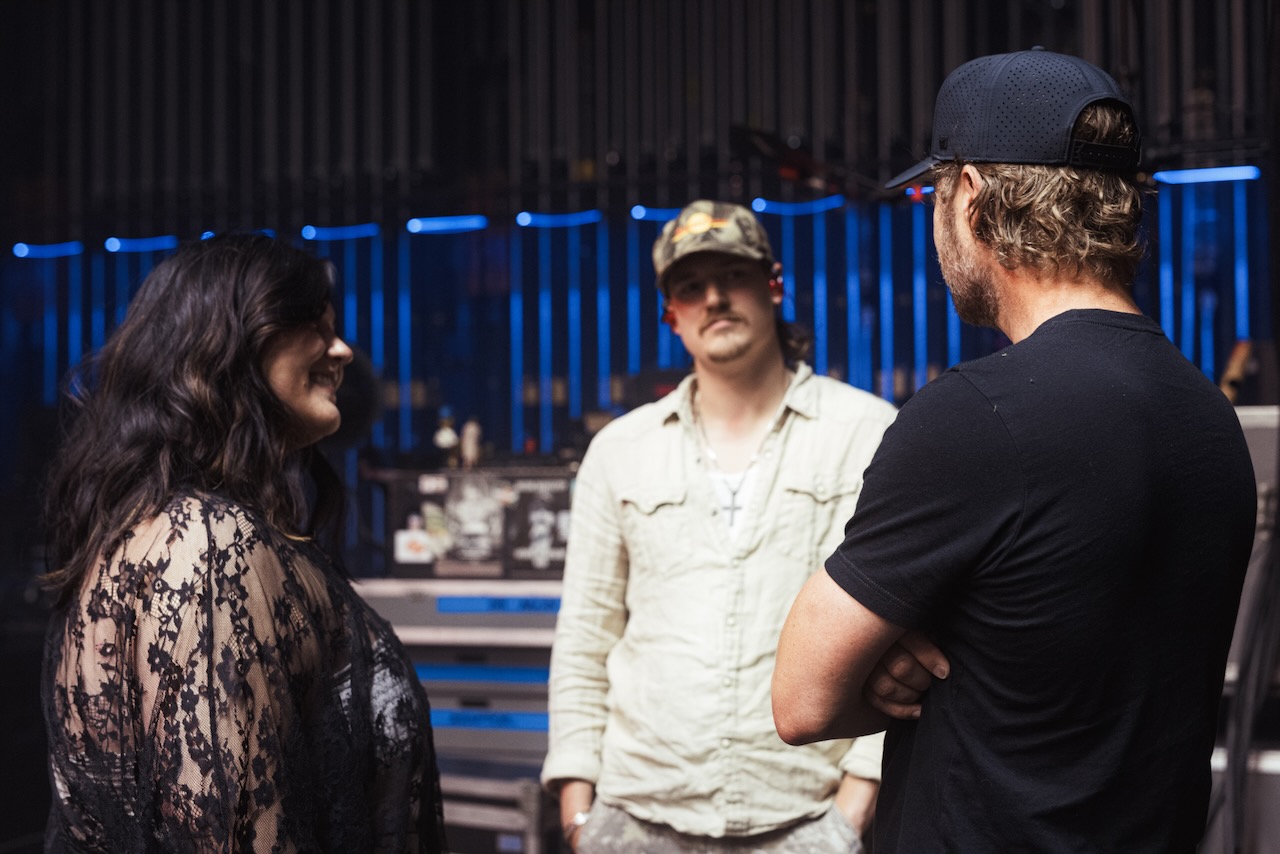
(L to R): Logan Simmons and Malachi Mills (of the Band Loula) confer with Dierks Bentley during rehearsals for the Broken Branches Tour. Photo by Zach Belcher.

Logan Simmons: I’ll say something that comes top of mind for me. I spent my whole life going to tent revivals. It’s not just, “I go and it’s summer camp, ’cause somebody made me.” It’s like the pinnacle of who I am.

I really believe that it’s the pillar of my family. We go for about 10 to 15 days every year. It’s beside my nanny’s house, and all it is, red-back hymns and bluegrass. The service happens every night and you go for about an hour and a half before service starts, before preaching starts, to hear bluegrass, gospel bands.

That’s how I learned harmonies, hearing all my godmothers and aunts sing the wrong ones around me. [Laughs] And you’ll hear somebody over there, Linda’s like [sings operatically and off-tune] and she’s not on it at all. But I was at least learning something and I feel like with my roots in general, it already infused that bluegrass sound into my life.

Then when Malachi and I became friends and started making music together. He has a lot of Motown roots. I think, blended together, the blues and bluegrass just made something beautiful. And, on top of that, the family harmony we have together. We’ve been friends forever, half our lives.

Malachi Mills: It all comes back to blues, yeah. And just like you said, that cross-pollination of the different genres. North Georgia is like the southern point of Appalachia. Like she said, it really influences the music we make by our harmonies. That’s the biggest thing we take from it. I love bluegrass music, but I’m not like a bluegrass buff. I would lose at bluegrass trivia. [Laughs] But it’s just in our bones and in the harmonies that she was talking about. Growing up in church and everything influences the way that we sing together and the notes that we pick whenever we’re singing harmonies. One of the biggest things that I love about bluegrass is the rhythm and pocket. And the intonation of the instruments. Bluegrass players choose to be intentional about [all of] it, the pocket, the timing, the tuning. It’s all so dead on. The details matter when you’re making records.

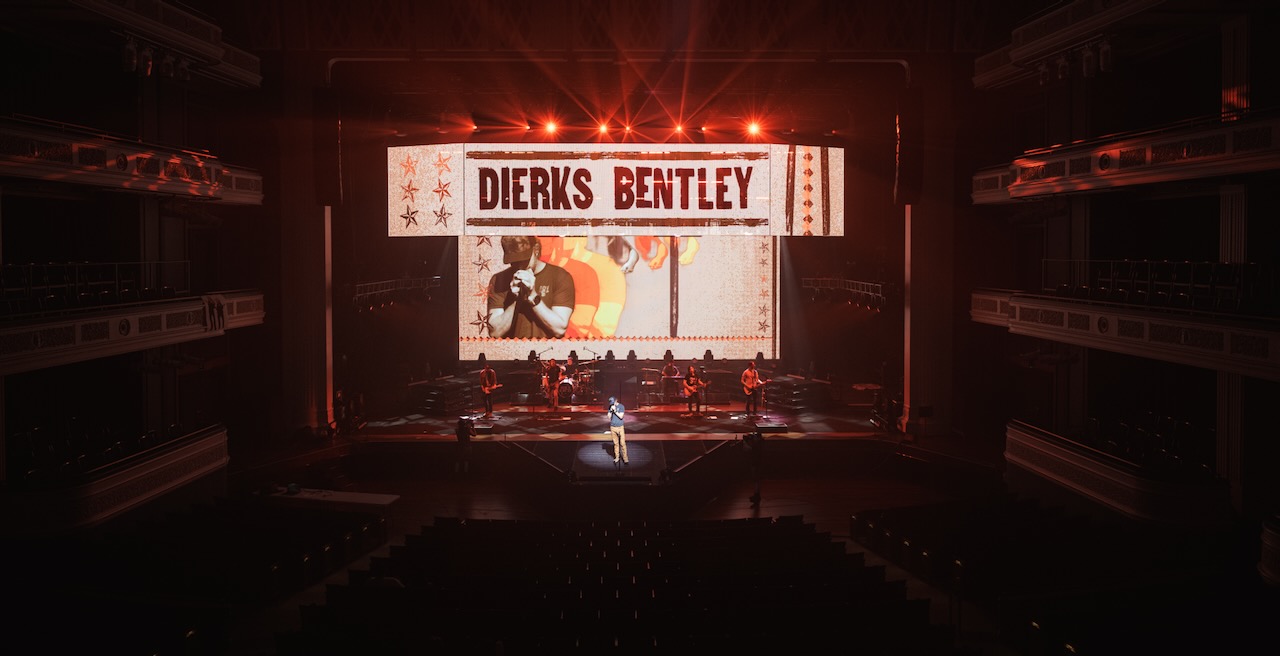
Dierks Bentley and band give Good Country and members of the media an exclusive sneak peek at their Broken Branches Tour set at rehearsals in May 2025 in Nashville. Photo by Zach Belcher.

I think that’s one of the reasons why it’s striking that y’all have this bluegrass song as part of this big, arena-sized stage show. Because for me, translating those details in such a big space and in such a broad format could be really hard.

Then I hear and see y’all singing in three parts with a neon cross behind you and suddenly yes, this is church. This is what it is. Any close-singing harmony vocals are great, but when it really sounds like bluegrass to me is when you can hear the reeds of your voices match up when you’re harmonizing. That was a really beautiful moment.

Could you talk a little bit about capturing those details for a big audience in big rooms like this – or even outside, in amphitheaters. How do you take a Bill Monroe gospel song and translate it to that space?

DB: Well, there’s “Bluegrass” Ben Helson out there walking the hallways. Ben and a couple other guys in the band have played with Ricky Skaggs. Ben played with Ricky and Tim [Sergent] still plays with Ricky. I always say, if you can graduate from the Ricky Skaggs school of bluegrass and country music, you’re probably a pretty good musician. He also played with Rhonda Vincent.

I’m a big Del McCoury fan. They did [“Get Down on Your Knees and Pray”] and Del has such a cool version of it. We were just kinda thinking of songs to do with these guys that would be great using their voices. Like [they] said, they’re the blues and bluegrass. I’m still trying to figure out their sound. It’s such a unique mixture; it’s so Americana in the way that in this country we have this melting pot of stuff. We thought it would be cool to do a little three-part thing, so that one came up.

Marty Stuart also did a really cool version of that song. But Ben [Helson], our guitar player really came up with that [arrangement], leaning into the swampy stuff they do. Gave it that feel, a little Southern – I don’t know what the vibe is there, but that telecaster is playing and it just has a cool kind of dirty, bluesy vibe to it. Then working up the harmonies, there’s just something about hearing a cappella bands.

I remember seeing Billy Strings at a bluegrass festival years ago and the band all stopped – no one knew who he was back then. Bryan Sutton had told me who he was, so I was where he was. He played like a Thursday set in the middle of the day. They had just done three songs and then they stopped and did a four-part harmony thing. There’s just something about it that’s so powerful. It goes straight to your soul.

The oldest version of entertainment there was was probably harmonizing. Finding people, seeing how your voices sound together, it’s a weird, cool thing. Singers talk about it all the time, in any genre of music about how seeing how we sound together is an intimate thing.

It’s vulnerable and it’s immediately establishing that community that you’re talking about. “We may not be a band, but now we’re a thing.”

DB: I feel like I blend well with anybody, because I’m like the condition. I sing it pretty straight here and allow the people around me to really do their stuff. I’m just gonna hold the line. There’s like nothing special about my voice, but it’s good to blend with ’cause other people have these amazing voices. They can do a lot of movement and a lot of great vibrato. I’m like the dumbest Del McCoury School of Bluegrass [student], just find that note and put everything into it. [Laughs]

Not to mention, introducing people to bluegrass as well – I love that. You have a chance to be a bridge to your heroes and that is always fun. People have been that to me, Marty Stuart probably the biggest. You get into Marty Stuart’s music and you find out who he likes, and then, whoa! He brings you back there. So [I hope] this turns somebody onto Bill Monroe. That’s pretty cool.

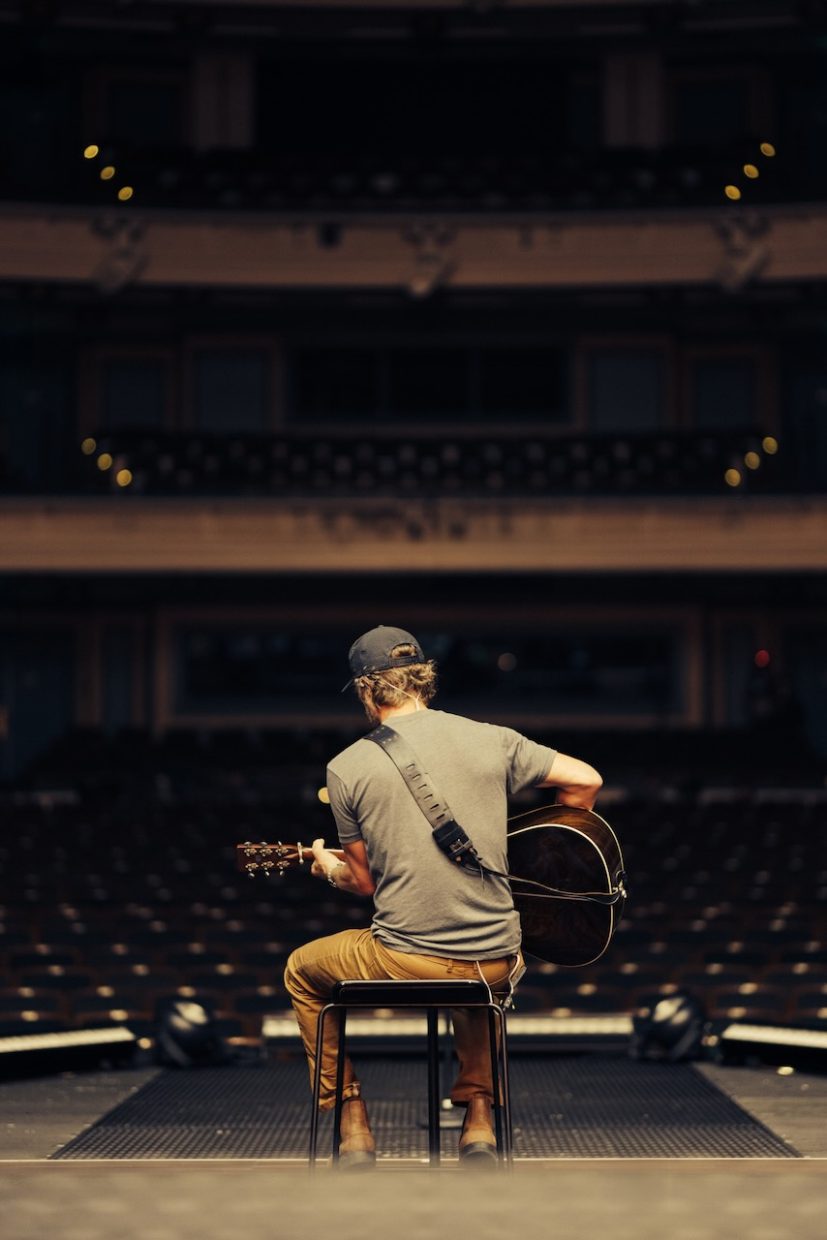
Dierks Bentley has a quiet moment on stage during rehearsals for the Broken Branches Tour. Photo by Zach Belcher.

Country – a lot like blues, R&B, and the early days of rock and roll – it has this often tempestuous and inspiring relationship between the fun of Saturday night and the conviction of Sunday morning. So seeing y’all sing that song in front of the depiction of a church as a dive bar, complete with a neon cross and a flickering “open” sign – to me that’s “a little bit holy water, a little bit Burning Man” epitomized. You guys are embodying that relationship between the sacred and the secular here. And that duality is all over your new album, too, Dierks.

MM: I’ll say, I think that one of the biggest things that contributes to that is the goosebump, hair-standing-up-on-your-arm feeling. It’s knowing that you have a part in something and whenever you sing and play bluegrass music together, you have to give way to one another on stage. So it’s the whole stage saying we’re doing this very intentionally in unity, in harmony.

And everybody in the crowd, whether they know that or not, they feel it. That’s what I think people feel. Even if you’re not a believer and maybe the message that’s being said [doesn’t apply], but you still resonate with serving each other. With being present, which is a strong energy. I think that’s what makes me excited about playing this song. I don’t know what’s gonna happen emotionally for me whenever that moment happens, ’cause it’s gonna be so much of that unified energy.

DB: Unified energy is a good way of putting it. It’s unified and it really is energy.

We’re pretty involved with the church. I have an older daughter who’s involved in the church and another middle daughter who doesn’t believe it like I did. But there’s something divine that you just can’t ignore, whether you believe it or not – just look at a sunset, look at a flower, look at a fish, look at so much unnecessary beauty in the world. There’s just some energy that exists and you can’t deny it when you sing a song like this. It just taps [something] on anybody. Recognizing how small you are in this world and the power of whatever version of prayer you do.

LS: I liked how you said it joins secular and holy together and that actually made me think of the tent revival, as well. I think growing up in Appalachia, like Malachi said – I wish I could just teleport you there so you could experience!

DB: That would be cool, a tent revival – I can’t even imagine.

I haven’t been to a camp meeting or revival in so long!

LS: Everybody’s invited to camp meeting. I don’t know if you’d love it. Our tent – I say tent, it’s like a shack on a square, it’s like a big square, four sides. So we’ll say, “Are you on the upper line or the lower line?” We’re on the upper line, which is not a good thing. It’s like you think upper line is like uppity people or something, but it’s not. Our shack is the oldest and [most] untouched of the whole campground. It was built in 1846.

DB: Wow!

LS: So there’s holes in the roof and like, my bunk bed, I get water drops on my head if it rains. There’s hay floors, there’s no air, and there’s a lot of us, so it’s all packed in there. But camp meeting is where I learned my first Bible verses and where I smoked my first joint. [Laughs] So it all marries together how you said, like holy and secular at the same time. I think of that picture of going to the gospel tent revival, going to camp meeting, singing those red-back hymns, doing all those things – but then also learning the grit of growing up.

I just loved when you said joining those things together, because that was such a representation of my upbringing. Yeah, it’s a little bit holy water, a little bit Burning Man. It’s definitely Saturday nights and Sunday mornings – and the tent revival is where I feel like those two worlds are so evident.

Dierks, in all you’ve done across your career there are all these bluegrass moments. The country that you “grow,” it’s mainstream, it’s radio-ready, but it’s like there’s bluegrass in the “soil” you grow it in, so you can always taste bluegrass in everything you do. Like on the new record, “Never You” with Miranda Lambert feels that way and “For As Long As I Can Remember”–

DB: There’s a little “Circles Around Me” by Sam Bush [reference] there at the top of that song.

Oh my gosh, yeah! Exactly what I’m talking about.

You said a little bit earlier turning people onto your heroes always feels great, but for you, from your own perspective being that guy that used to just hang out at the Station Inn and now being the Dierks Bentley and going on tour in sheds and arenas and amphitheaters… Why do you keep bluegrass with you?

Dierks Bentley: It is selfish in a lot of ways. I have such a great band and I just take so much joy watching them do cool stuff that I can’t do. It’s like our guitar player, Ben, he’s just an unbelievable flat picker. Charlie Worsham’s in our band and Charlie won the CMA Musician of the Year. He is just an incredible musician. Dan [Hochhalter] is an incredible fiddle player. Tim is so underutilized. Our steel guitar player – who plays banjo and everything else – he’s one of the best singers to me. Hearing him is like hearing Merle Haggard. He sings like nobody else, but he’s also so underutilized. And Steve’s been playing with me since 1999.

It’s just a great group and we love bluegrass music, featuring that, and having the music part of the show. I like being in a band setting, so just getting to be around it and hear these instruments swirling around me playing, I think it’s just cool.

I got a chance to play ROMP Festival last year and I feel lucky to be friends with guys like Jerry Douglas and Sierra Hull and have them come up on stage and play with us. I still think bluegrass music is the punk rock of country. It’s just the coolest genre of music there is.

It’s gotta be centering or grounding to a certain degree just to have that as something you can go back to, to feed yourself and fill yourself back up even while you’re touring.

DB: Absolutely. In the show we go from playing Tony Rice to John Michael Montgomery. We play bluegrass with the Hot Country Knights with costumes on. It’s just it’s all very selfish! It’s like, “How can I have a lot of fun in the next 90 minutes?”

I wanna do our radio country. I want people singing songs back, because that’s a great feeling. I want to get a little bluegrass in there. Just see if we get away with that. Then, can we try to get canceled on the way out? [Laughs] I dunno. It’s really fun for me. And having these guys [out with us] and getting to harmonize with them, it’s gonna be really fun. Check back in a few months, see how it turned out.


Want more Good Country? Sign up to receive our monthly email newsletter – and much more music! – direct to your inbox.

All photos by Zach Belcher.

Dierkscography

In 1994, a not yet 20-year-old Dierks Bentley threw all caution to the wind when he packed up his dorm room at the University of Vermont with hopes to never return. Bentley’s relocation would not only forever change the course of his life – it would go on to catalyze his tremendous impact on roots music at large.

After a trip with his father to Nashville made quite the impression, Bentley decided to complete his college degree at Vanderbilt, dedicating his studies to English (the major most proximal to songwriting). After graduating, Bentley continued to foster both his musical education and career; his day job entailed archiving old country performances at The Nashville Network (in fact, his diligent field work even got him banned temporarily from the Grand Ole Opry), while his evenings were filled with bar gigs and songwriting sessions. After five years of grunt work, 2003 saw Bentley release a self-titled album with Capitol Records. His first single, “What Was I Thinkin’,” made waves on the country charts. Since then, Bentley has been responsible for the release of 20 No. 1 country singles and 10 additional studio albums, the latest of which, Broken Branches, arrived in June.

While Bentley’s career has seen major commercial country success, his deep respect for expansion and immersion has made him a beloved fixture within bluegrass, as well.

Of his instrumental move to Nashville, Bentley has shared, “I moved to Nashville in 1994 – I was trying to find that seed of truth, that authenticity, that thing ‘country music’ that I had in my head. And I got here and it was definitely different than I expected it to be. It’s big business, a lot of money.

“Luckily, for me, I found a little bar called the Station Inn where bluegrass music existed – and I found what I was looking for. Just the sound of a five-piece bluegrass band blew my mind. And they’re not trying to take meetings all the time and meet producers, and get their foot in the door. It’s funny, I moved to Nashville looking for country music, but I found bluegrass.”

Whether it’s his proclivity for cross-genre conversation, songwriting prowess, or patinaed tenor delivery, Dierks has proved himself a mainstay favorite for country, Americana, and bluegrass fans – here at Good Country and BGS, and beyond. In honor of his recent album release and his huge Broken Branches tour with Zach Top and the Band Loula concluding this month, we present you with our Dierkscography, a non-comprehensive compilation of more than 15 songs meant to show off some of our favorite Dierks gems from across genres sampled from the many years of his remarkable career.

“Never You” featuring Miranda Lambert, Broken Branches (2025)

Dierks’s new album, Broken Branches, arrived fresh off the press with a slew of impressive collaborators, from Riley Green to Stephen Wilson Jr. Dierks fondly calls the record a “special” display of “making music in the studio with our buddies.” Country giant and longtime collaborator Miranda Lambert joins Bentley on this banjo-driven track, with the pair’s velvety duet vocals imbuing tenderness and warmth into one of the album’s only love songs.

“High Note” featuring Billy Strings, Gravel & Gold (2023)

This rip-roaring tune off of Bentley’s tenth studio album features a whole handful of bluegrass greats. Not only does Billy’s high tenor soar above Dierks gravelly tones during choruses, his famous flatpicking joins the likes of Sam Bush, Bryan Sutton, and Jerry Douglas for a superjam ending.

Of the collaboration, Dierks recalls, “Bryan Sutton first tipped me off to Billy Strings about seven years ago, mentioning that the future of bluegrass was in good hands. I was totally blown away the first time I saw him. I’ve cut songs like these since my first record, and I knew I wanted to have him on this one, I’m such a huge fan. It was a lot of fun to have him, Jerry, Sam, and Bryan all passing licks around – having them all on this record means a lot to me personally.”

“American Girl” (2024)

Who doesn’t love an Americana “American Girl”? Bentley delivers this country-fied Tom Petty classic alongside some BGS favorites, including Chris Eldridge on guitar and Noam Pikelny on banjo. Dierks reprised the hit single joined by Bronwyn Keith-Hynes, Sierra Hull, and Molly Tuttle on stage at the 2024 CMA Awards, bringing down the house.

“For As Long As I Can Remember,” Broken Branches (2025)

The country canon has seen its fair share of heartache, murder, trains, and drinking. Also on his latest release, “For As Long As I Can Remember” shirks these motifs in favor of something a little more wholesome – a warm and adoring ballad dedicated to the strength of enduring familial bond. An ode to his brother and father, Dierks reminds that respect and love can be country, too.

“Train Travelin’,” Dierks Bentley (2003)

With many of his nascent Nashville days edified by nights at the Station Inn and in the surrounding bluegrass scene, iconic bluegrass family the McCourys quickly became repeat collaborators for Dierks. Their features pepper many of his earlier albums, dating all the way back to his debut self-titled release in 2003. “Train Travelin’” would become the first of many, with other gems such as Good Man Like Me (Modern Day Drifter, 2005) and Last Call featuring Ronnie McCoury (Feel That Fire, 2009) dotting the road to Bentley’s eventual bluegrass-centric album, Up On The Ridge.

“Up On The Ridge,” Up On The Ridge (2010)

The titular track off of Bentley’s bluegrass-inspired album is thrumming with energy, both quickly-paced and haunting with its descending melodic hook. Up On The Ridge was Bentley’s fifth studio album, featuring a star-studded list of bluegrass collaborators including Alison Krauss, Punch Brothers, Chris Stapleton, Tim O’Brien, Sam Bush, and beyond. Del McCoury even joins forces with Bentley and Punch Brothers to deliver a deliciously grassified cover of U2’s “Pride (in the Name of Love)” further evidencing the album as a culmination of both tradition and innovation.

“Freeborn Man,” (Live, 2025)

Another of our favorite timeless covers, Dierks has been adorning his Broken Branches Tour this summer with his vigorous take on “Freeborn Man.” This rendition includes a fiery feature by Zach Top, nearly toppling the stage with talent.

“Hoedown for My Lowdown Rowdy Ways” featuring Dierks Bentley, Lowdown Hoedown (Jason Carter, 2022)

With Jason Carter fiddling his heart out on Dierks’ records since 2003, it’s of course a polite roots custom for Dierks to return the favor. Released as part of Carter’s second solo album, Lowdown Hoedown, “Hoedown for My Lowdown Rowdy Ways” has Dierks singing harmony and strumming away on the bluesy breakdown. Lowdown Hoedown also features a tender Jamie Hartford number, “Good Things Happen,” that Dierks Bentley covered on his 2005 album Modern Day Drifter, yet another frame of conversation between the two artists.

“Prodigal Son’s Prayer” featuring The Grascals, Long Trip Alone (2006)

This acoustic tune features the bluegrass sensibilities of the Grascals, a long-running group lauded for their instrumental prowess. The song loosely follows the parable of the prodigal son, ultimately centering themes of repair and reconciliation. The song also features the stomps and hums of incarcerated individuals from Charles Bass Correctional Complex, who had been in Bentley’s producer’s Bible studies course at the time.

“Free and Easy (Down The Road I Go),” Long Trip Alone (2006)

From the same release, this breezy banger remains a hallmark of Bentley’s career, even after nearly two decades since it dropped. The fifth of his singles to top Billboard’s Hot Country charts, “Free and Easy (Down The Road I Go)” lures in listeners with its fast-paced country twang and life-affirming sentiment.

“Beautiful World” featuring Patty Griffin, Feel That Fire (2009)

No stranger to incredible collaborators, Dierks Bentley asked iconic folk and country singer-songwriter Patty Griffin to accompany him on this track, gushing, “Her voice is one of a kind and she’s such an important figure in the American music scene… She’s just amazing. And so I asked her.”

The result is a tender homage to the beauties of the world, largely inspired by his wife, who was pregnant with their daughter at the time of the song’s conception. “You hear people sometimes say, ‘Man, I can’t imagine bringing a child into this world. It’s so bad.’ That’s just such a negative outlook,” Dierks says. “You cannot live your life with that viewpoint of the world. Yes, there are a lot of things that are wrong, but it is a beautiful world, and you need to find the positive in it.”

“Heart of a Lonely Girl,” Home (2012)

From Bentley’s sixth studio album, Home, comes this spirited, emotionally deep number. The narrative song was penned by the infinitely talented Charlie Worsham, who would go on to join Bentley’s touring band a decade later – and you can currently see him on stage each night during the Broken Branches tour.

“Trip Around the Sun,” featuring Dierks Bentley, I Built a World (Bronwyn Keith-Hynes, 2024)

Fiddler Bronwyn Keith-Hynes first connected with Bentley through Molly Tuttle & Golden Highway, the popular bluegrass group that opened for him several times on tour. She’s also married to Jason Carter, so Dierks wasn’t just a professional collaborator, but a member of her personal Nashville network, as well. It’s no surprise, then, that she’d end up on stage with him at the CMA Awards and, in the same year, he would guest on her acclaimed and GRAMMY Award-nominated album, I Built a World.

“Mardi Gras” featuring Trombone Shorty, Black (2016)

Soaked in Louisiana charm, this tune was inspired by Dierk’s 2015 galavant on a Mardi Gras parade float. Featuring the indelible hornsmanship of Trombone Shorty, the track grooves along with bluesy undertones. “Getting Trombone Shorty to do his thing on it, what a great guy. I love working with him. He is so laid-back and so good at what he does,” Bentley boasts of his collaborator.

“Travelin’ Light” featuring Brandi Carlile, The Mountain (2018)

Featuring the powerhouse vocals of Americana giant Brandi Carlile, this tune appears on Bentley’s 2018 album, The Mountain. The collaboration between the two icons came to fruition after Bentley saw Brandi perform at Telluride Bluegrass Festival, inspiring him to approach her about dueting on the track.

“Sun Sets in Colorado,” Gravel & Gold (2023)

Written reflecting his pandemic move to Colorado (though he has since returned to Nashville), Bentley released this tune on Gravel & Gold. The song shouts out New Grass Revival and Telluride in a verse: “Sing an old new grass song with me/ Telluride along with me,” while also featuring New Grass Revival founding member Sam Bush on mandolin. Bryan Sutton also joins in on the studio recording, yet another sparkling collab with bluegrass greats.


Want more Good Country? Sign up to receive our monthly email newsletter – and much more music! – direct to your inbox.

Photo Credit: Robby Klein

You Gotta Hear This: New Music From Andy Leftwich, Carter & Cleveland, and More

Okay but really, You Gotta Hear This! Our weekly premiere and new music roundup is simply packed with entirely legendary bluegrass in this edition of the column.

Kicking us off, award-winning husband-and-wife duo Benson – made up of Kristin Scott Benson and Wayne Benson – offer their rendition of a Harley Allen song, “Things Have Changed,” with Dustin Pyrtle lending a perfect lead vocal to the track. The Seldom Scene, an iconic bluegrass band for now more than 50 years, release their brand new album today. We’re celebrating Remains to Be Scene by highlighting “Hard Travelin’,” a Woody Guthrie-written number that you, like Ron Stewart, may recognize from Flatt & Scruggs’s discography.

Fiddle is represented in force this week, too, with fiddler and multi-instrumentalist Andy Leftwich racing through an original, “Highland Rim,” with Cody Kilby, Matt Menefee, and Byron House along for the ride. Jason Carter & Michael Cleveland are releasing their debut duo album today as well, so we’ve cued up “In the Middle of Middle Tennessee” from that stellar project. Written by Darrell Scott, it features Carter’s tasty baritone and country star Charlie Worsham (who has strong bluegrass roots) on harmony.

To round out our collection this week, Joe Mullins & the Radio Ramblers preview their new bluegrass gospel album, Thankful and Blessed, set for release next week on March 21. “He Sees the Little Sparrow Fall” is a superlative example of the gospel and sacred traditions in bluegrass, a little concentrated dose of Friday revival for the end of your work week.

Every single track herein is bluegrass of the highest quality, so you know what we’re going to say… You Gotta Hear This!

Benson, “Things Have Changed”

Artist: Benson
Hometown: Boiling Springs, South Carolina
Song: “Things Have Changed”
Release Date: March 14, 2025
Label: Mountain Home Music Company

In Their Words: “We’re excited for this song to finally come out. We love the lead vocal by Dustin Pyrtle and the sentiment of ‘Things Have Changed’ is universal. It seems things do change so fast these days. Downtown Nashville is different every time I go! But even in small towns, you feel it, both physically and relationally with the people who live there. I love the line, ‘I’m sort of glad that Mom and Dad ain’t around.’ That melancholy embodies the mood of this guy who goes back home and feels an overall sense of loss. Wayne and I love to play this slower tempo on mandolin and banjo. He gets to tremolo and I get to play fun chord-based banjo. I always enjoy playing this kind of banjo backup.” – Kristin Scott Benson

“I’ve always loved Harley Allen and certainly do love this song. Dustin Pyrtle seemed like the perfect singer to reach out to and man did he ever deliver the goods on this one!” – Wayne Benson

Track Credits:
Wayne Benson – Mandolin
Kristin Scott Benson – Banjo
Cody Kilby – Acoustic
Tony Creasman – Drums
Kevin McKinnon – Bass
Dustin Pyrtle – Vocal


Carter & Cleveland, “In the Middle of Middle Tennessee”

Artist: Jason Carter & Michael Cleveland
Hometown: Nashville, Tennessee (Jason); Charlestown, Indiana (Michael)
Song: “In the Middle of Middle Tennessee”
Album: Carter & Cleveland
Release Date: March 14, 2025
Label: Fiddle Man Records

In Their Words: “This is a fun song that transports me to a place in my mind where I’d love to be – stuck in the middle of Middle Tennessee. Special thanks to Charlie Worsham for singing with me on this track. It’s one of the highlights of the entire record for me! I never had the chance to meet Darrell Scott’s cat, Bobtail, but somehow, I feel like I’ve seen him before. Thank you, Darrell, for writing this song about him!” – Jason Carter

Track Credits:
Jason Carter – Lead vocal, fiddle
Michael Cleveland – Fiddle
Charlie Worsham – Harmony vocal
Sam Bush – Mandolin
Jerry Douglas – Dobro
Bryan Sutton – Guitar
Cory Walker – Banjo
Alan Bartram – Bass


Andy Leftwich, “Highland Rim”

Artist: Andy Leftwich
Hometown: Carthage, Tennessee
Song: “Highland Rim”
Release Date: March 14, 2025
Label: Mountain Home Music Company

In Their Words: “I’ve always loved the intensity of a fast-paced instrumental and we hold nothing back on this one. Named after a raceway close to home where I grew up, I thought this one perfectly described the rush that you get from going fast. I wanted a song on this new project where we can go absolutely bananas and I feel like we captured it on this one!” – Andy Leftwich

Track Credits:
Andy Leftwich – Fiddle, mandolin
Byron House – Upright bass
Cody Kilby – Acoustic guitar
Matt Menefee – Banjo


Joe Mullins & the Radio Ramblers, “He Sees the Little Sparrow Fall”

Artist: Joe Mullins & The Radio Ramblers
Hometown: Xenia, Ohio
Song: “He Sees The Little Sparrow Fall”
Album: Thankful and Blessed
Release Date: March 21, 2025
Label: Billy Blue Records

In Their Words: “It’s so easy to sing a song of gratitude and celebration when we consider the beauty of creation. Our friend, songwriter Conrad Fisher, lives in a gorgeous valley surrounded by the mountains of Pennsylvania. No matter where we look around the world, seeing God’s magnificent beauty in creation is easy and worthy of our praise. A new song with an old-time flavor and a universal message opens our new album, ‘He Sees the Little Sparrows Fall.’” – Joe Mullins

Track Credits:
Joe Mullins – Vocal, banjo
Adam McIntosh – Lead vocal, guitar
Chris Davis – Vocal, mandolin
Jason Barie – Fiddle
Zach Collier – Bass


The Seldom Scene, “Hard Travelin'”

Artist: The Seldom Scene
Hometown: Bethesda, Maryland
Song: “Hard Travelin'”
Album: Remains to be Scene
Release Date: March 14, 2025
Label: Smithsonian Folkways

In Their Words: “This song comes from a Flatt & Scruggs album of the same title, circa 1963. Written by Woody Guthrie, the song was first recorded in 1947. Anyone who knows me knows how much I love Flatt & Scruggs and this is one of my favorites from the early 1960s when they were still plowing bluegrass, but using material from a broad range of writers.” – Ron Stewart


Photo Credit: Andy Leftwich by Erick Anderson; Carter & Cleveland by Emma McCoury.

Dierks Bentley Shines with Sierra Hull, Molly Tuttle, and Bronwyn Keith-Hynes on CMA Awards

A big night for country music ended up being a big night for bluegrass as well when Sierra Hull, Molly Tuttle, and Bronwyn Keith-Hynes joined country star Dierks Bentley on the CMA Awards stage for a show-stopping performance. The quartet, backed by Bentley’s band (including the evening’s winner of Musician of the Year, Charlie Worsham) played a rousing rendition of Tom Petty’s “American Girl,” a huge single for Bentley this year from the compilation album, Petty Country.

Bentley has released plenty of ‘grassy and string band tracks across his career, especially on his 2010 album Up on the Ridge, and he is close friends with many bluegrass musicians and legends. He used to haunt the World Famous Station Inn in Nashville well before his fame and recognition – and well after, too. He’s even gifted commemorative hit records to the bar (which still hang on the walls today) and he’s appeared at the divey listening room dozens of times. He’s also a friend of the McCoury family and has collaborated with Del and sons on multiple occasions. In addition, he’s brought Tuttle and her band Golden Highway out on the road as an opening act repeatedly, and he guested on Keith-Hynes’ now GRAMMY-nominated album, I Built a World.

Tuttle even shared an image to social media from a past MerleFest where Bentley can be seen braving the North Carolina rain to catch her band’s mainstage set in the very front row of the VIP section. It’s no surprise that he would tap Hull, Tuttle, and Keith-Hynes for the CMA Awards, even if the context feels a bit out-of-left-field for diehard bluegrassers.

“American Girl” was truly a highlight of the star-studded awards show, which despite more than a few perceived flubs and snubs highlighted plenty of Good Country, Americana, roots music – and yes, bluegrass! Here’s to plenty more primetime television moments in the future highlighting incredible bluegrass pickers such as these.


Jett Holden’s Dreams Come to Life on ‘The Phoenix’

For years, Jett Holden dreamt and dreamt about making a living through music, but everywhere he turned he was met with doubt, subtle prejudice, and closeted racism that left him running on empty and searching for something new.

Following a journey to rock bottom, Holden is back stronger than ever on The Phoenix, a 10-song collection that catalogs his rise from the ashes and spotlights the community that embraced him when it seemed nobody else would. Told through a mix of countrypolitan, rock, punk, metal, and R&B sounds, the record is proof that there are no boundaries to who, where, and what good music can come from – and that we all benefit from everyone having a seat at the table, sharing their stories and perspectives.

“This album reflects who I’ve been throughout my entire life,” Holden explains to Good Country. “It’s been really cool to look back on when and where my different influences come from while bringing these songs to life. For example, ‘Karma’ is definitely Paramore meets Stapleton, while ‘West Virginia Sky’ harkens to my Tracy Chapman and Jim Croce influences.”

Fresh off a move to Nashville, Holden spoke with GC over the phone about the doubt and prejudice he’s faced along his musical journey, his work with the Black Opry, using music to heal past trauma, and more.

There’s a lot going on in your song ‘Scarecrow,’ from exploring your family’s reaction to coming out to masking the crippling weight of other’s doubts of what you’re capable of – along with a slew of Wizard of Oz references to the scarecrow, tin man, and cowardly lion. Mind sharing how all those ideas coalesced into one?

Jett Holden: It’s the first song I finished for the album. I wrote it back when I was 25, and at that point my family and I didn’t really have a personal relationship. It had gotten to the point where I came out 10 years earlier and wasn’t sure where I stood with them. I wasn’t disowned, but I also didn’t have anyone to turn to – they all pretty much told me they didn’t want to hear about it. I didn’t want to keep living in limbo, so a few years later I skipped town and moved to East Tennessee, which is where [Black Opry founder Holly G] found me in 2021.

You also had a brief stint living in California around this time that left you on the brink of quitting music for good. What all transpired out there?

I moved out to Long Beach after dropping out of community college. I was in talks about a development deal and during the “get-to-know-you” phase I let it slip that I was gay and they responded by saying that I wasn’t marketable as a Black, gay man doing the kind of music that I wanted to do. Things fell apart from there, which is why I left California and moved back to Virginia before eventually relocating to Tennessee.

Aside from that moment, were there any other circumstances that contributed to you feeling so defeated about your music prospects?

When I first moved out West, there was a very steep trajectory that isn’t common for most people, but it quickly deteriorated after I mentioned being gay, making for a really high peak and a really low low. When I returned to Virginia things got stagnant and didn’t progress at all, even moving backwards at times. It was a frustrating time of trying to figure myself out that culminated in the move to East Tennessee where I was roommates with a close friend before coming home one day after she committed suicide.

Another of my friends got cancer around the same time and just recently passed too, so those were very traumatic years for me.
By 2020, I just couldn’t do it anymore, so I started going to therapy right before the pandemic hit and the world shut down. Suddenly [music] was just too much to deal with, so I stopped making it. Being online was toxic so I shut down, got a stay-at-home job with AT&T, and accepted that as my future, working my way up in the company.

Then Holly — and the Black Opry — came around?

Exactly. I’d already called it quits when she found me on Instagram through a video I’d posted of my song “Taxidermy.” I only had that and a couple other covers posted, but it was enough for her to take interest and slowly pull me back into the industry. A couple months later she launched the Black Opry as a blog and it’s crazy to see where things have gone since then.

Within a year I’d gotten to tour all over the country, appear on The Kelly Clarkson Show, and I recorded my first single and EP through a grant I received from [Rissi Palmer’s] Color Me Country. Holly has made so many things possible that had been unavailable to me for my entire career until then, fighting for me in ways nobody else had before. She took chances because she wasn’t an industry person, but rather a flight attendant who was just a fan of country music and wanted to feel connected to it and the artists she was listening to, which is something a lot of others were in search of as well.

When I went to the first outlaw house she threw at Americanafest in 2021, I was expecting a bunch of Black country fans to show up, but it was also the queer community, the Latin community, and the women in country music that didn’t feel like they were getting a fair shake of things. Everyone who felt “othered” in country music showed up and it felt like immediate family. Seeing the excitement around that is what drew me back in.

Speaking of your song “Taxidermy,” I remember you being brought to tears while singing it during a Black Opry panel at Americanafest that same year. What’s that song meant to you, both in its message and what it’s meant to your career?

That song relaunched my career essentially, because I wasn’t chasing music when I wrote it. In fact, when I posted it online I only had one verse and the chorus. Despite it not being complete, Holly still sent it off to Rissi Palmer and got me the grant and I finished writing it the day we recorded. It’s a song of frustration that I didn’t expect many people to watch when I posted it, but Holly really connected with it, spread it around, and helped it blow up into something bigger than I ever imagined.

I was just singing about my frustrations with what was going on around our country at the time concerning police brutality, which was a big reason why I quit social media and music altogether in 2020. Instagram was the [only] online account I had when Holly found me. That song allowed me to vent about those things, but it also helped me gain the community I needed to break myself out of the news cycle that we were constantly absorbing, because we had nowhere to go. The song came about out of all that negativity, but had a huge positive impact on me that I never expected.

In addition to the support you’ve received from the Black Opry, you’ve also got a helluva team behind you for this record including the folks at Thirty Tigers, [producer] Will Hoge, and collaborators like John Osborne and Charlie Worsham (“Backwoods Proclamation”), Cassadee Pope (“Karma”), and Emily Scott Robinson (“When I’m Gone”). I imagine that, after everything you’ve been through, having folks like that working alongside you is incredibly validating?

Definitely! Emily was the first person I asked, since she was a very early supporter of the Black Opry. We both connected over “When I’m Gone” and our similar stories [around] suicide, so it was a no-brainer to have her sing with me on it. Holly ended up reaching out to Cassadee after I mentioned wanting someone similar to Hayley Williams featured, and she nailed it. It’s very cool seeing all these people I’ve looked up to legitimately wanting to work with me. I still haven’t met Charlie or John, but it’s wild knowing that they’ve heard my song and wanted to be involved in it.

Regarding “When I’m Gone,” is that a reference to your friend in East Tennessee that you walked in on after committing suicide? If so I’m sorry for your loss, but I love how you used the song to memorialize them and bring attention to the plight of suicide. It’s an awful thing to experience, but putting your feelings from it to song is a great way to bring beauty to an otherwise unimaginable situation.

You’re completely right. When I play songs like “When I’m Gone” or “Scarecrow” live I always have people coming up to talk to me about them afterwards, whether it’s someone who’s come out, dealt with religious trauma, or a person who’s just lost somebody close to them. There’s something very cathartic and heavy all at once that’s led to a lot of crying, but more importantly a lot of growth. It’s been great feeling like I’m not going unheard – which I did for over a decade – and having interest in what I’m doing where there wasn’t any before.

We’ve talked about a lot of the trauma captured in these songs, which brings me to the album’s title, The Phoenix. Is that reference meant to reflect how your life — specifically your musical dreams — have been reborn in recent years?

That was the intention. It was about the resurrection of my career, plus I also referenced the phoenix in “West Virginia Sky,” so it felt appropriate. Then, weirdly enough, just after recording the album I had a friend, also named Holly, give me a phoenix bolo tie for Christmas. It was a very kismet occurrence and a sign that that was the correct title to move forward with on the project. It makes for the perfect project, one where I have creative control and wrote every song (besides co-writing “Backwoods Proclamation”). I put my heart and soul into it, and am really excited for people to hear it.

If you could go back in time to speak with yourself when you were about to call it quits, what would you tell them?

Prioritize the relationships you build, because those are the people that will help you get to where you are supposed to be.

(Editor’s Note: Sign up on Substack to receive even more Good Country content direct to your email inbox.)


Photo Credit: Kai Lendzion