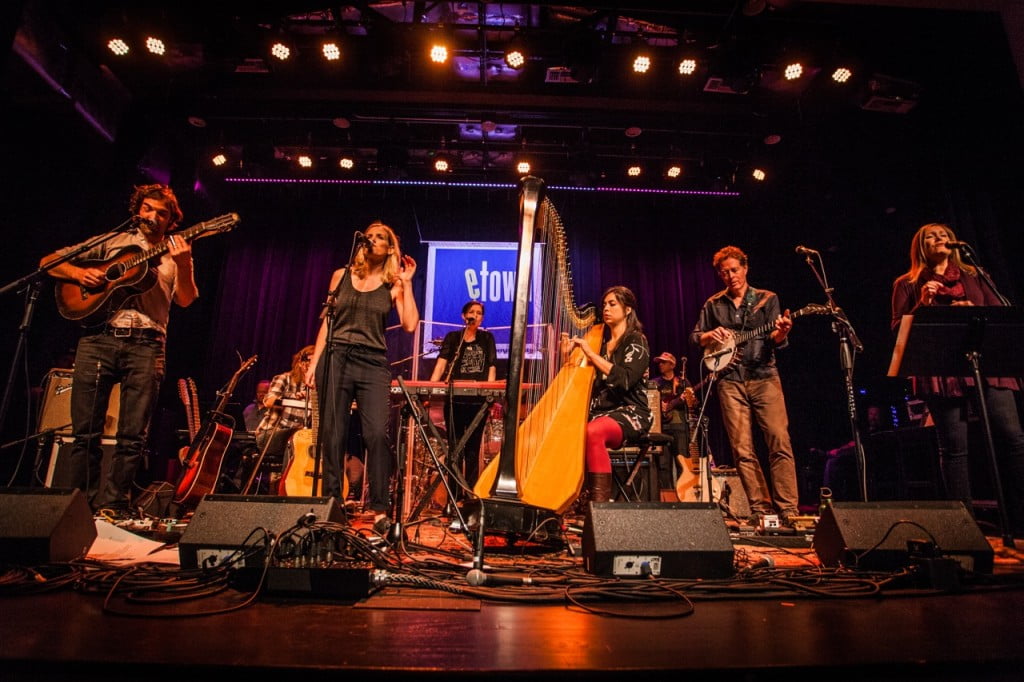
eTown: Come for the Music, Stay for the Message

Wife/husband duo Helen and Nick Forster have experienced first-hand how music can facilitate a connection. Both performers, they met backstage at the Telluride Bluegrass Festival in Colorado 30 years ago. While Helen had served as the co-owner and co-producer of the festival from its inception, Nick was a founding member of the acclaimed bluegrass band Hot Rize, which was on the precipice of a long-term hiatus. The couple bonded over music and shared values — including a concern for the environment. In 1991, they launched eTown, a nationally syndicated, independent, nonprofit radio show integrating conversations with community organizers and researchers along with performances and Q&A sessions with musical guests.

“If you imagine what happens at a bluegrass festival, there’s something very fundamental, which is that everyone comes together from disparate backgrounds and walks of life and there’s no vetting of philosophy or political party or socio-economic alignment or anything like that,” Nick says. “They have a shared experience … [and] a common focus … their hearts are being opened by music, which is a very real and palpable and powerful thing … There is that sense of connectedness which means that, by Sunday night, as things are starting to wrap up and people are thinking about heading home and going back to their jobs the next day, going back to their normal concerns and cares, there’s a wistfulness. There’s a little bit of sadness about, ‘Man I was part of something this weekend.’ I think, to a large extent, a community that’s connected like that is also going to do a couple of other things, including looking out for each other. And they also tend to look out for their space … and so all of those things are a part of the DNA of eTown.”

The program’s tagline defines eTown as a place where people come for the music and stay for the message.

“We wanted to give people a place to go where the music brought people together, where everybody was welcome, where the music would be both the connection point and uplifting, but more importantly, we would also stimulate dialogue in conversation about how do we take better care of each other and the planet,” Nick explains.

eTown is recorded weekly in front of a live studio audience at eTown Hall, a 17,000-square-foot converted performance space in the middle of downtown Boulder, Colorado. Once a church, the building features state-of-the-art recording studios, production rooms, and camera and lighting equipment, allowing Nick and Helen to navigate the shifting media landscape. eTown films the performance portion of each show and posts the videos on their website. When deciding which musicians they will feature each week, Nick and Helen say diversity is key.

“We wanted to have musicians who were soulful. We didn’t necessarily want to have any from a particular style. I think we do tend to focus on vocal singers, you know. We don’t do as much instrumental music, for example, because I don’t think it really fits with our show as well as others,” Nick says. “We’ve always tried to feature one well-known act and one less well-known act, so that people can get excited about hearing the person they know, but then get more excited about the discovery piece … We try to mix it up further, so we have one band, one solo, maybe one male, one female, maybe one from one musical tradition and one from another, because at the end, everybody plays together for the finale and so we want to make sure that the finales are kind of like, ‘Wow that’s a weird combination.’ You’ve got a singer/songwriter and a hip-hop artist, or you’ve got a bluegrass musician and a blues guy, or you’ve got a Cajun band playing with a Latina band from Los Angeles or whatever it is.”

The other segments of the show address social and environmental issues — from homelessness and hunger to air pollution and compromising the oceans. But in 1991, eTown was ahead of the curve when it came to these discussions. Climate change and global warming weren’t even concepts at the forefront of public or political discourse.

“There was a lot of apathy at the time, and people are not apathetic because they’re bad people. It’s usually because things seem overwhelming and you don’t feel like you have any power to do anything,” Helen explains. “So we wanted to bring people in and give them some food for thought. We wanted to inform them and, most of all, we wanted them to be inspired to get involved. We wanted to bring our skills together in order to create something that was really welcoming across the board: Wherever you were, you’re in eTown.”

This idea led to the creation of the eChievement Award, which Helen gives to one winner each week, inviting them to speak about their work on the show. Nominated by other listeners, eChievement honorees are citizens who are actively trying to improve their communities. “We’ve tried to be solutions-oriented,” Nick says. “We’ve tried to highlight the problems but also think about things that are working and things that are positive in the age of Trump and those things are welcome. We hear from listeners that are like, ‘Thank God, there’s something positive out there in media.”

After 26 years, Nick and Helen believe eTown is just getting started.

“The reason for doing eTown, I think, is more important now than ever because we are entering into this time in our nation’s history where politics have become so divisive and so violent, frankly, and the idea that we need to come together particularly around some core issues that are relevant and important for all of us. I mean, it is absolutely critical that we find some common ground,” Nick says. “And we are more committed than ever to making sure that we can use music to bring people together — but not gloss over the details — and talk about what’s important and talk about what we can all do, each of us, to try to address these issues that are absolutely critical for our future. So I’m super pumped about both our history and our legacy, but especially about our future.”

Traveler: Your Guide to Fayetteville, Arkansas

Home to the University of Arkansas, the northwest Arkansas town of Fayetteville is an artful and musically inclined college town surrounded by the scenic Ozark Mountains. Maybe there’s something in the water, because northwest Arkansas is home to some big businesses, as well, including Walmart, Tyson Foods, and J.B. Hunt. More than 300 Fortune 500 companies can be found here — one reason the area continues to be a destination for international businesses. It’s not all business, though. Explore Fayettechill like a local by biking the Frisco Trail, stopping for local beer and music along the way.

Getting There

Fayetteville has a regional airport with direct flights from select big cities to northwest Arkansas Regional Airport (XNA). It’s a quick 30-ish mile trip from Missouri and Oklahoma, and a couple of hours from Springfield, Illinois, and Tulsa, Oklahoma.

Where to Stay

The Dickson Street Inn is the top-rated bed & breakfast in the city and is in a Victorian house built in the 1800s. If you want the local flair, your best will be AirBnb accommodations to avoid chain hotels and stay like a local. Prices range from $80-100 per night.

What to Do


Lake Sequoyah, courtesy of Fayettevillear.gov

Our Traveler locations all have a common thread: natural beauty. We’re admittedly nature enthusiasts, and picking Fayetteville was no exception. Lake Sequoyah sits on 1,400 acres of land and is a notable bird watching and swimming spot. Home to more than 40 miles of trails, Fayetteville’s trail system is designated as one of 37 International Mountain Bicycling Association Ride Centers in the world. The Frisco Trail is a great way to explore Fayetteville by bike, connecting Dickson Street to south Fayetteville.

Botanical Gardens, courtesy of the Botanical Garden of the Ozarks

The Botanical Garden of the Ozarks hosts 12 themed gardens and a butterfly house on an immaculately maintained property showcasing the woody, herbaceous, and exotic plants and flowers that thrive in northwest Arkansas.

Embrace your inner nerd and visit the Fayetteville Public Library, ranked one of the top libraries in America by USA Today. The library has the busiest self-service checkout kiosk in North America, and is a notably green building. For the politically inclined, the Clinton House Museum is of note. Home to the first family of Fayetteville, Bill and Hillary’s former abode and marriage venue is located near the University of Arkansas’ campus, where both taught in the 1970s.

What to Eat & Drink

Arsagas eats, courtesy of Arsagas Depot

Arsagas Depot is housed in an old freight depot, specializing in crepes, coffee, and a full service, locally focused menu. Get your fancy ‘za fix at Wood Stone Craft Pizza with Thai curry pizza and $2 local draft beer during happy hour. For the veggies, Greenhouse Grille is the local go-to. A gem of the town, Little Bread Co’s motto is, “Everything tastes homemade, because it is!” Grab Seinfeld-themed bagel sandwiches and coffee right off the square at this spot. Dirty Apron Bakehouse is another new bakery in town that comes highly recommended. Head to the College Avenue Yacht Club for all kinds of food truck fare.

Get your mixology on at Maxine’s, one of the oldest bars in town, while whiskey aficionados will love Smoke and Barrel. For all other drinking needs, Dickson Street’s got ya covered. It’s full of a variety of a mix of dives and fancy cocktail spots.

The Arts

I’m With Her, courtesy of Fayetteville Roots Festival

George’s Majestic Lounge opened its doors in 1927 and has been hosting live music ever since. It’s the longest-running venue in Arkansas and hosts BGS faves like Elephant Revival and Nikki Lane. The performing arts thrive at Walton Arts Center on Dickson Street. Block Street Records is a not-so-hidden gem of a record store, hosting local music and art shows.

Perhaps the pinnacle of the music scene in Fayetteville culminates with a widely renowned festival called Fayetteville Roots. Recurring each August, the annual event spans four days and features dozens of musicians on indoor and outdoor venues throughout downtown. Catch BGS there this August alongside performers like the Wood Brothers, Rodney Crowell, River Whyless, and many more BGS sweethearts.

Fayetteville’s art community is evidenced in the bustling gallery scene, and> Fayetteville Underground stands out among the rest as a hotspot for local artists. Nightbird Books is a great small contemporary book shop that has readings and art shows fairly regularly.Dickson Street Bookshop is another local bookshop and our favorite place to buy used books because of the vintage, European vibes.

Crystal Bridges, courtesy of Crystal Bridges Museum of American Art

The world famous Crystal Bridges Museum of American Art is a worthy day trip away. Everything from the art it houses to the architecture of the building to the free admission make it a great experience. 

A Minute in Paris with This Is the Kit

Welcome to “A Minute In …” — a BGS feature that turns our favorite artists into hometown reporters. In our latest column, Kate Stables from This Is the Kit takes us on a tour of Paris, France. Take a listen to the band’s latest release, Moonshine Freeze, to get the full effect.

One of the main things I love about being in Paris is the outdoor places where people hang out. Free public spaces are something I think are extremely important — places you can be without feeling bad if you’re not buying a drink or spending money.

Just up the canal from where we live is Parc De La Villette. It’s a huge space with museums and greenery and play areas and cinemas. Lots of green and lots of people hanging out. And, in the summer, they have open-air cinema every night. La Geode is a big spherical 3D cinema there and it’s right next to the science museum that we used to go to nearly every day before our daughter started school. It’s got the Canal de l’Orcq running through it and you just can’t beat being near to the water. Even if it is kind of stinky city water, it still makes everyone feel kind of better somehow.

And if you follow the canal up left from the science museum (Canal de St-Denisas opposed to Canal de l’Orcq), there’s a cycle path that takes you past all kinds of calm and secret water-side spots to sit and walk and watch. It’s pretty urban, and the farther out you go, the more industrial it gets, but I like that. It’s nice to see another Paris. It’s not all cafés and scarves and Baudelaire, contrary to popular belief! 

Jardins d’Eoles is, I think, my favourite park in Paris. It’s a lovely open space next to the railway lines and has a huge amount of sky. There are big flat spaces for kids to wheel around on and large green areas where you’re actually allowed to sit on the grass (pretty rare in Paris). The kids here are always up for joining in with your games, and the adults are usually up for chatting. People from all walks of life hang out together and it’s really great to see and be part of.

Bibliotheque Hergé (named after the man behind Tin Tin) is one of my favourite places to go and be quiet. They have a really great comic book collection and a music library there, too. The staff are always so nice and they put on a lot of community events. Libraries for me are real life savers! Life in Paris (as in a lot of cities) is pretty cramped and working from home can take its toll on everyone’s health and shared space. So it’s really important for me to be able to go and work elsewhere from time to time. Being in a different space brings with it a different headspace. And there is something so calming and reassuring about being in a library. I’m a sucker for a public amenity! 

Bibliotheque Vaclav Havel (named after the Czech writer, philosopher, and political dissident) is on a new stretch of eco buildings on Rue Pajol in the 18th Arrondissement. They’ve planted a kind of community garden/sitting space outside, which is another very nice place to sit and to be. And, inside, they have an excellent games room with all the best board games in — Dixit, King of Tokyo, Carcassonne … the list goes on! And what’s more, it’s just down the road from Bob’s Bake House, an excellent Paris establishment and eatery.


We’re pretty lucky in that there are some really very nice places to eat in our neighborhood. Krishna Bhavan is just up the road from where we live and makes amazing Southern Indian food. I’d say this is the best place to go for a masala dosa in Paris. 

My other favorite local restaurant is an Eritrean restaurant called Massawa. There are two vegetarian options on the menu and I usually get them both. Totally delicious food and a very nice and friendly vibe inside.

Also just round the corner from where we live is a great music venue called Le Point Ephemere​. We’ve played there quite a few times over the past 12 years of living here, as have our friends who pass through Paris on tour. It’s a really great venue and arts centre, with classes and exhibitions and events. And it’s totally brilliant that it’s about 60 seconds walk from our flat. 


Lede photo by Lucy Sugden Smith

Traveler: Your Guide to Olympia, Washington

The great out-of-doors is the name of the game in Olympia, Washington. The natural beauty of the state’s park-filled capital offers views of the Olympic Mountains, Mount Rainier, and Capitol Lake, all from downtown. With a population of around 42,000 and a total count of 40 city parks on 963 acres, Olympia’s ratio of people to parks ensures plenty of green space for all. Olympia’s vibe is informed by its rich past of feminist musical history, political dealings, and spectacular scenery.

Getting There

The Seattle-Tacoma International Airport — referred to as “Sea-Tac” — is an hour north of Olympia and is accessible via the Sound Transit route 592, going from downtown Seattle to downtown Olympia during weekday rush hours. Otherwise, taxis and rideshare apps are your best bet getting into the city.

Stay

Photo credit: swantowninn.com

Green bed & breakfast the Fertile Ground could be from an episode of Portlandia with its grown-on-site breakfast from their six chickens, organic cotton sheets, and commitment to composting all waste … and we’re into it. If you want to splurge on a more decadent room, the Swantown Inn is a 17-room Victorian mansion built in 1889 which is now an inn and spa. And it’s not even as pricey as you might think — rooms range from $119-$179.

See

Photo credit: Olympia Farmers’ Market

How could a town this au naturale not have a bomb-ass farmers’ market? An outdoor bee farm, fresh oysters, and live music are all staples at the Olympia Farmers’ Market. Head to the Swantown Marina nearby to watch boats dock in the Port of Olympia after perusing produce.

Photo credit: Port of Olympia

The Nisqually National Wildlife Refuge is a crossroads for the freshwater of the Nisqually River and the saltwater of Puget Sound, forming an unspoiled estuary, rich in nutrients and perfect for wildlife watching with a $3 price tag. Then, throw yourself to the wolves, literally, at Wolf Haven International, an 80-acre wolf sanctuary where guided tours are given every hour on the hour. The 287-foot-high dome at the Washington State Capitol is the fourth tallest in the world and a staple to see while you’re there, with its marble walls, floors, and pillars from different countries. It’s worth the free tour and even has two-hour free parking.

Sip

Photo credit: burialgroundscoffee.com

Burial Grounds Coffee is a delightfully morbid coffee shop, offering some skull-ful latte art atop their death-themed lattes. For brews hop, err … hops, on over to Three Magnets Brewing Company for sandwiches, local microbrews, and ginger beer on draft. Fish Brewing Company boasts bargain beer and cider in 20-ounce pours for $4.50. Spar Café, called “the Spar” by locals, is in a 1930s building with a bohemian vibe and a 22-foot shuffleboard, plus pub grub and craft beer.

Do

Photo credit: levoyeurolympia.com

Energetic art and music scenes are thriving cornerstones of Olympia’s culture. With the feminist riot grrrl movement barely in the rearview mirror, Olympia’s grunge scene remains alive and kickin’. However, rock ‘n’ roll isn’t the only genre around: Olympia’s folk, blues, and jazz scenes thrive. The best places to catch shows include the restored 1920s Capitol Theater and Le Voyeur, the quintessential Olympia lounge. The city’s DIY scene makes use of nearly every vacant building, bar, and basement as a music venue.

Photo credit: Last Word Books

What’s an eclectic town to do without a bustling bookstore? Luckily, Olympia has Last Word Books, touting itself as a “radical, independent bookstore” selling mostly used books. Speaking of grungy, enter the town’s best vintage clothing store, Dumpster Values, and don’t ignore the Sleater-Kinney discount bin at Rainy Day Records.

Eat

Olympia’s culinary scene has everything from Pad Thai to Adobo to a good ol’ American “John Wayne” burger. Check out Cebu for authentic Filipino food in a strip mall next to a gas station. Get your Pad Thai fix at the Lemon Grass, and grab a John Wayne burger from Norma’s Burgers — a local chain voted best burger in Washington State. Da Nang’s authentic Vietnamese food is also a staple in the city, and we hear it’s pho-cking great!


Lede photo credit: dreamsjung via Foter.com / CC BY-SA

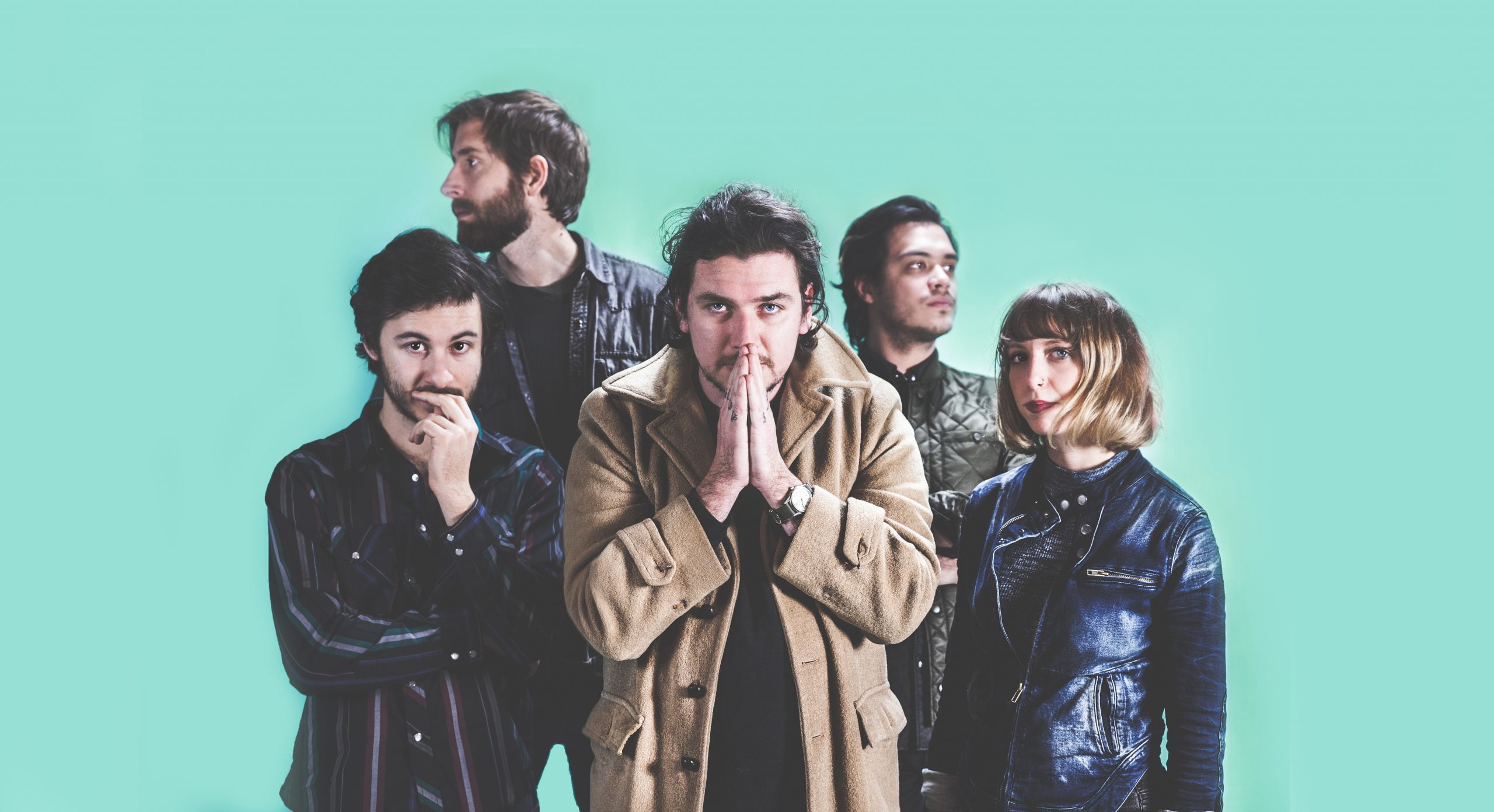
A Minute in Charleston with SUSTO

Welcome to “A Minute In …” — a BGS feature that turns our favorite artists into hometown reporters. In our latest column, Charleston, South Carolina’s SUSTO takes us on a tour of their favorite places for rehearsals, live music, and creepy strolls through the cemetery. The band released their newest album, & I’m Fine Today, earlier this year.

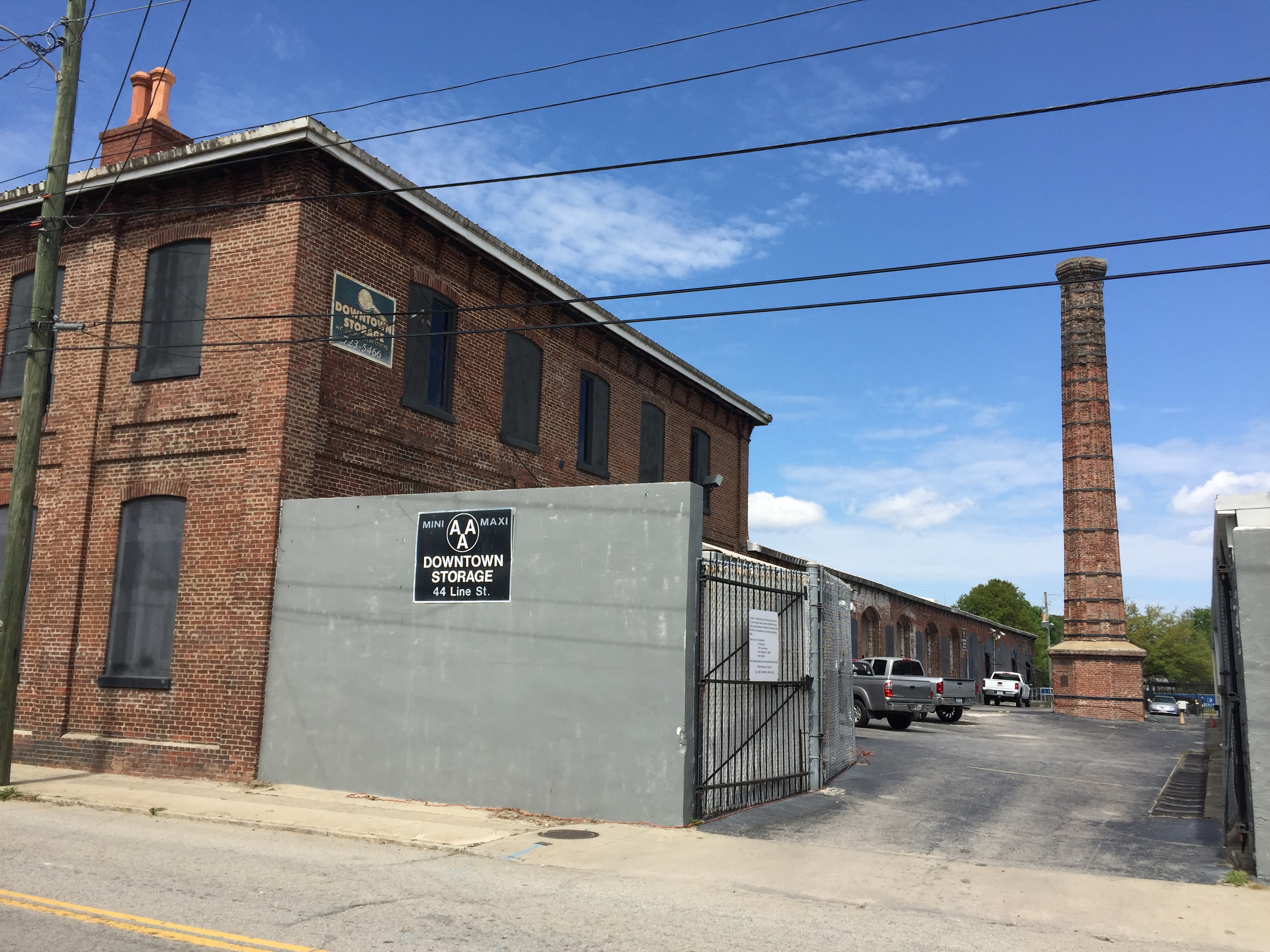
AAA Downtown Storage: This is where we recorded our first two albums, plus a ton of other albums have been made there. A lot of bands have had storage/practice spaces here and it serves as a sort of epicenter for the local music scene. There are always people hanging in different units rehearsing or recording, and white vans pulling in and out, coming home and leaving for tour. Other cool folks, entrepreneurs of all types, have units there, too. Also, very good juju. Remember, though: You’ve gotta know the code to get in.


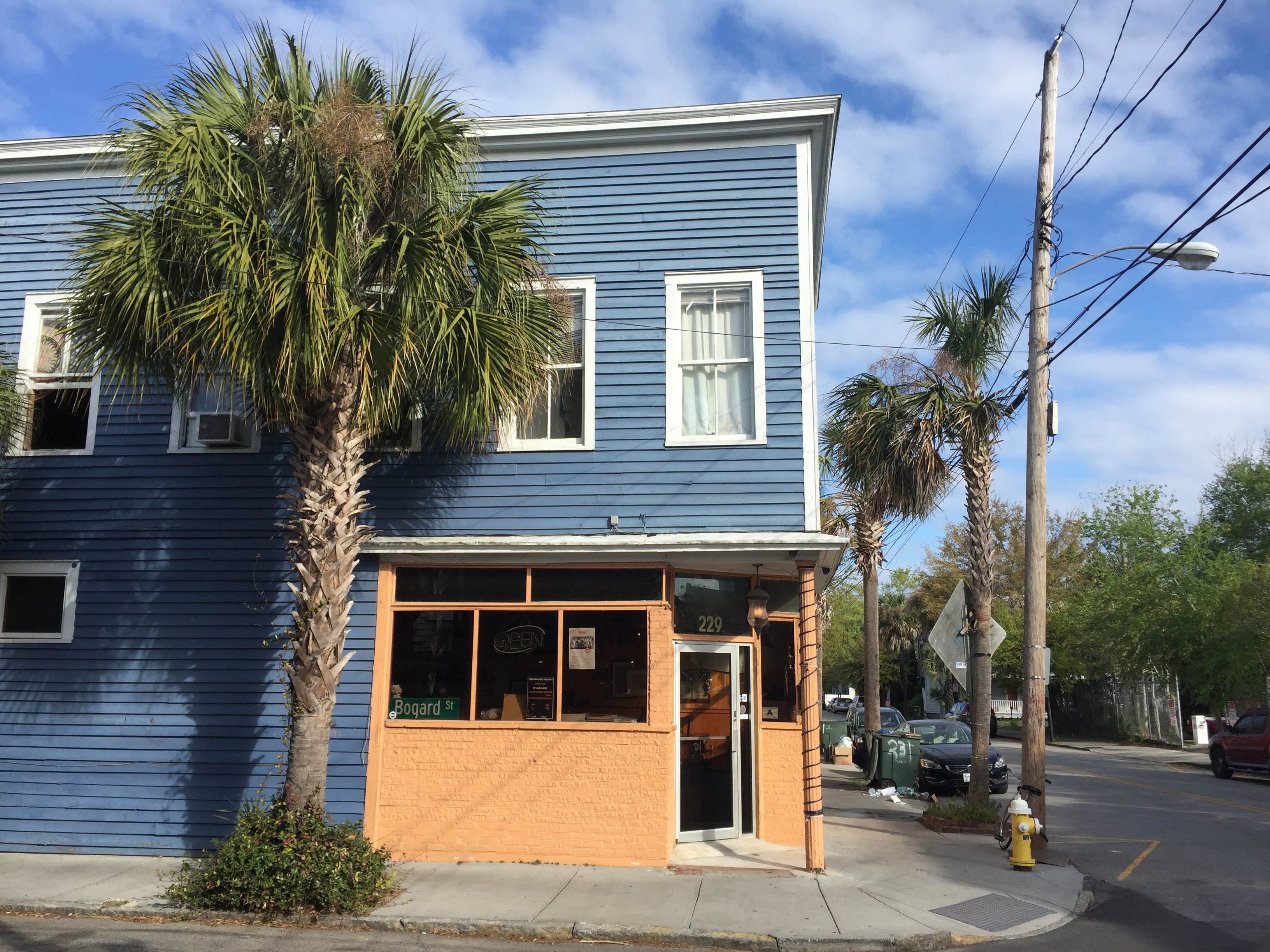
D’Allesandro’s: D’Allesandro’s (D’als) is one of our favorite local spots. It’s just around the corner from where we formed the band and recorded both of our albums. We’ve had members work there and we’ve played the semi-annual D’als Block Party a couple times, which is a celebration of the Elliotborough neighborhood arts scene.

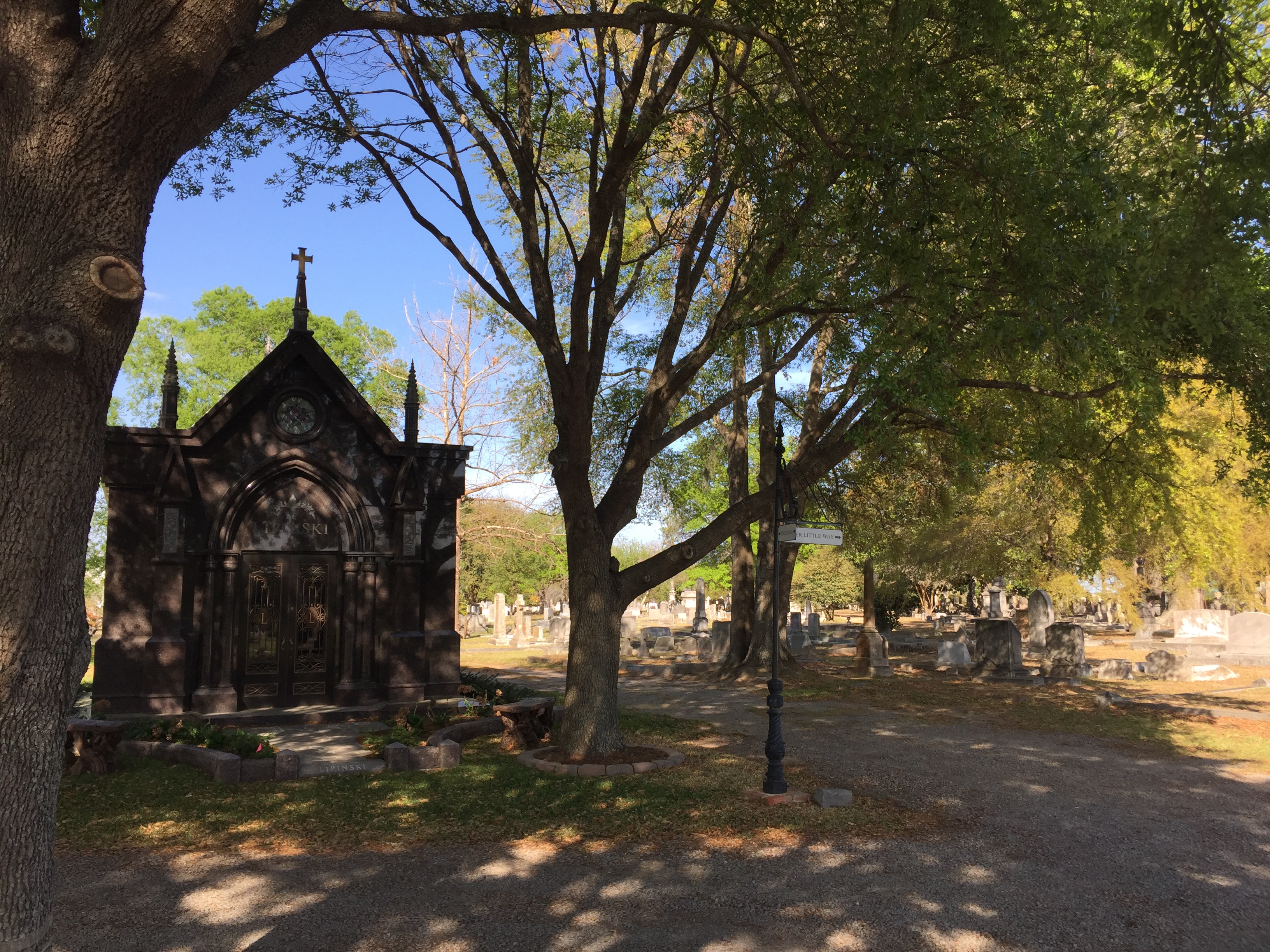
Magnolia Cemetery: Magnolia Cemetery is a great place to visit with friends or by yourself. You can always find a new corner to walk through. It can be a bit spooky, but that’s nice sometimes. It’s beautiful always.


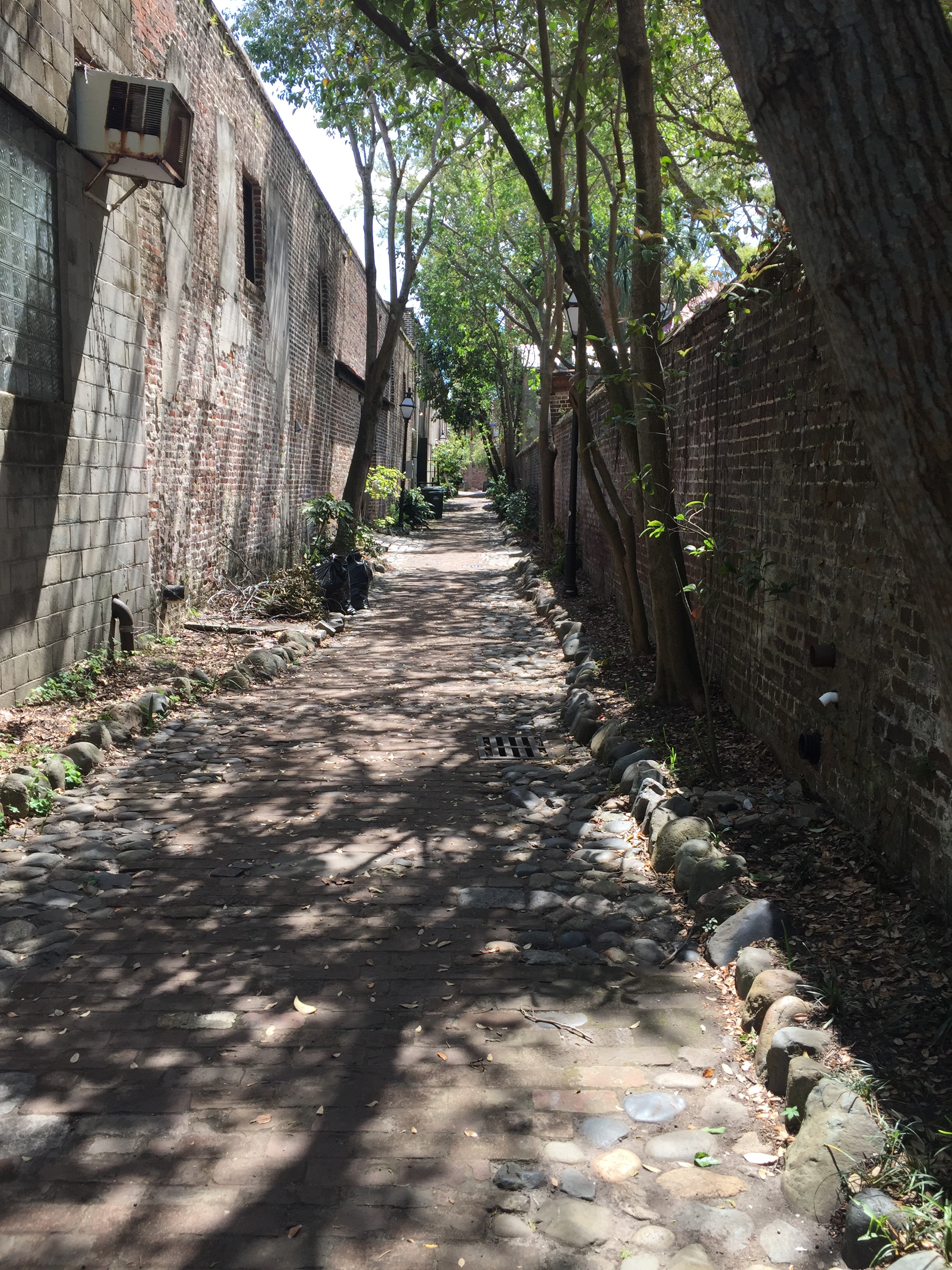
Philadelphia Alley: I have a special place in my memory for this place because, a few years back, when my friends and I would ride bikes around the city a lot, late at night, we would always stop here and hang out for a while, doing whatever. It’s got good juju.

Royal American: Royal is the place that kind of sparked the Charleston music renaissance. There hadn’t been a good rock club downtown for a while until it opened up. I started working the kitchen there while we were recording the first SUSTO album, and we played a lot of our first shows here. I still love to hang out at the bar when we are home.


Sullivan’s Island: Sullivan’s Island is a laid-back place. There are other great beaches in Charleston, but Sullivan’s is easy to get to from where we live downtown, plus you can still find secluded spots there (and free parking), sometimes. It’s great for swimming because there’s hardly ever any surf.


Lede photo by Paul Cheimis

Traveler: Louisville

Loo-a-vul, Lou-e-ville, Loo-a-ville, Looey-ville: Ask a local and you might get mixed responses on the correct pronunciation of its name, but anyway you spin it, the city boasts a lot more than their slugger. Louisville is proving itself as a destination, not just a stop along Highway 65. In addition to the unmistakably Kentucky traditions of bourbon and basketball, the town has a storied cultural history, a thriving food culture, and an evolving music scene. Derbies and juleps are great, but we did a deep dive of Louisville’s local spots.

Getting There

Smack dab in the middle of the eastern U.S., Louisville’s geography lends itself well to a quick weekend trip from various surrounding cities, like Nashville (two+ hours), Cincinnati (four hours), and St. Louis (four hours). Take the Bourbon Trail through Lexington to Louisville or, if you’re feeling ambitious, bike it. Louisville International Airport is 10 minutes from downtown.

Accommodations

Photo credit: Seelbach Hilton
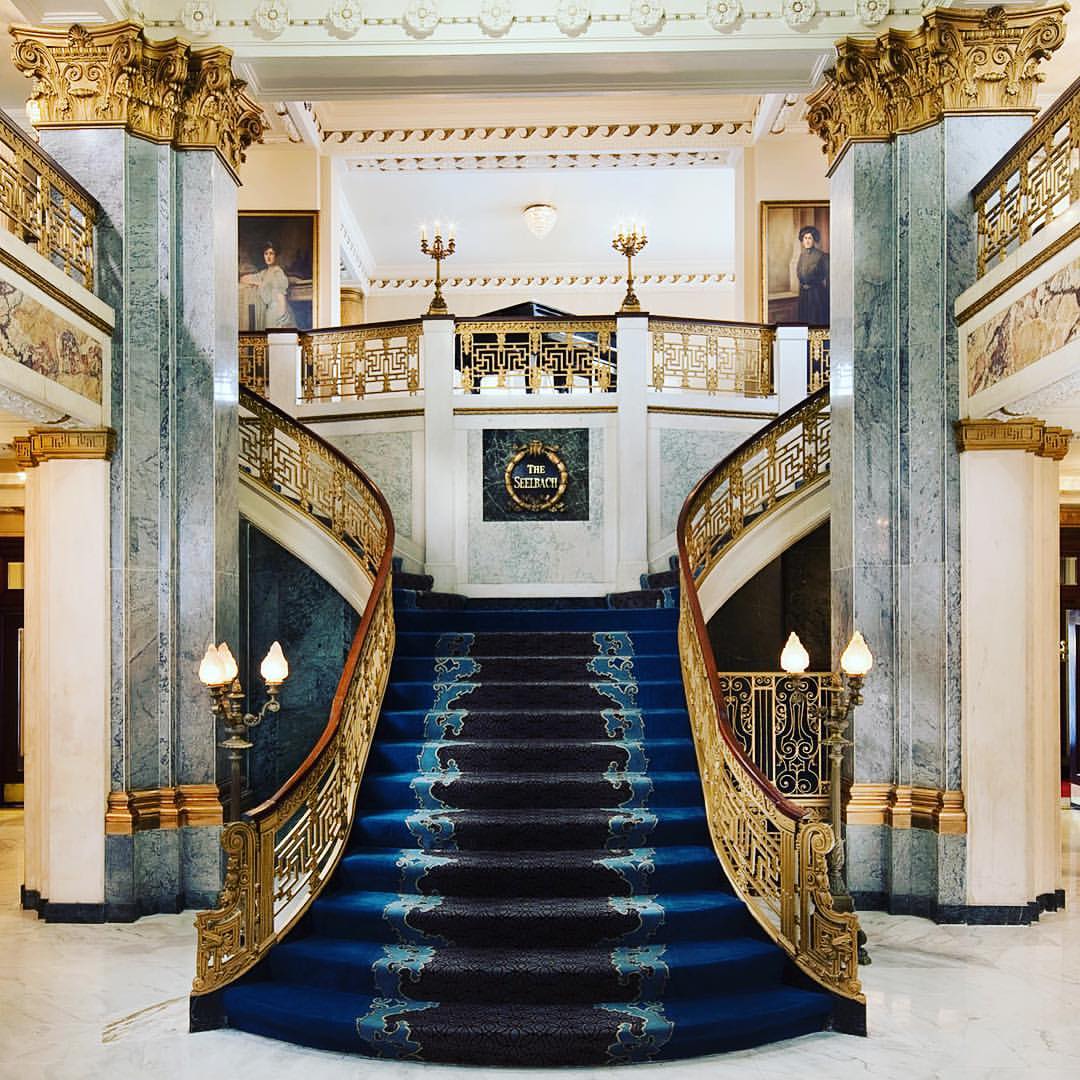
If you like your accommodations with a side of cocktails and modern art, check out the 21C Hotel. If a hotel with an art museum isn’t in your budget, you should still stop by for cocktails and art browsing. For the lit nerds, F. Scott Fitzgerald hung around the Seelbach Hilton’s bar, meeting a gangster who inspired his socialite character, Jay Gatsby, in The Great Gatsby.

Eats

Photo credit: Rye on Market

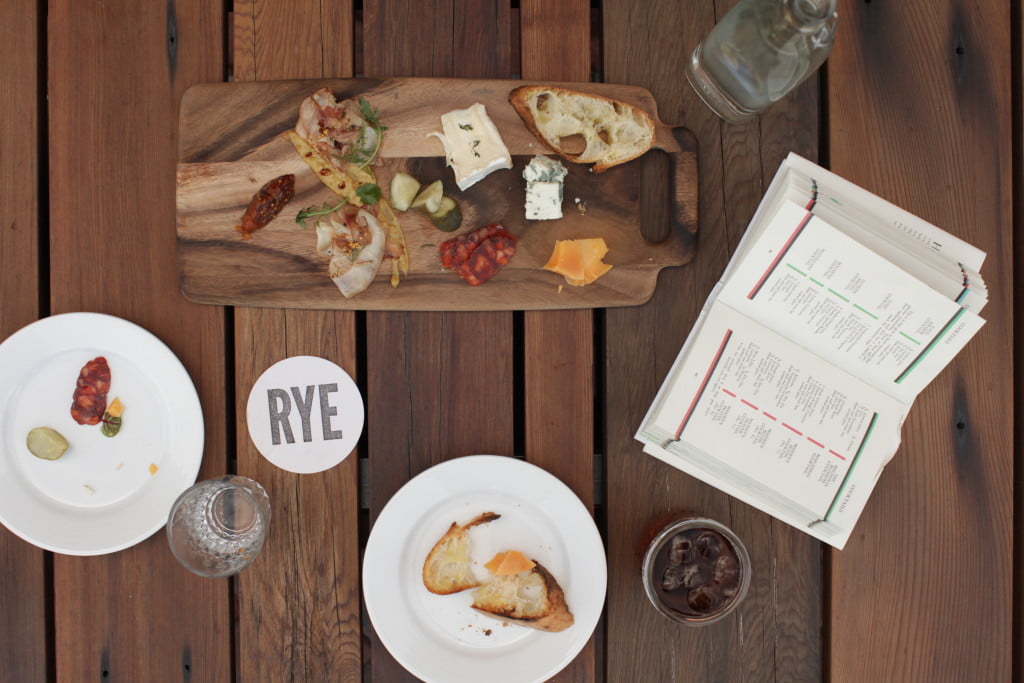
UPS is headquartered in the town, so local chefs have extra speedy access to fresh ingredients overnighted, thus fostering a killer food scene. From restaurants which have endured the times — like Jack Fry’s — to new kids on the block — like Rye — Louisville’s food scene is rooted in Southern food with a finger on the contemporary foodie pulse. Chef Edward Lee’s 610 Magnolia is also a great choice for a fancy meal that’s worth it.

Drinks

Photo: Please & Thank You

Bourbon. And lots of it. Declared “America’s Official Native Spirit,” more than 95 percent of the world’s bourbon is distilled and aged in Kentucky. Downtown Louisville has a free Urban Bourbon Trail, which consists of bars which all serve at least 50 different kinds of bourbon. For the hops enthusiasts, Falls City Brewery is in the midst of reinventing itself and has been a Louisville staple for years. Apocalypse Brewing has quality brews made in an environmentally conscious process and a Yappy Hour for you and your pup.

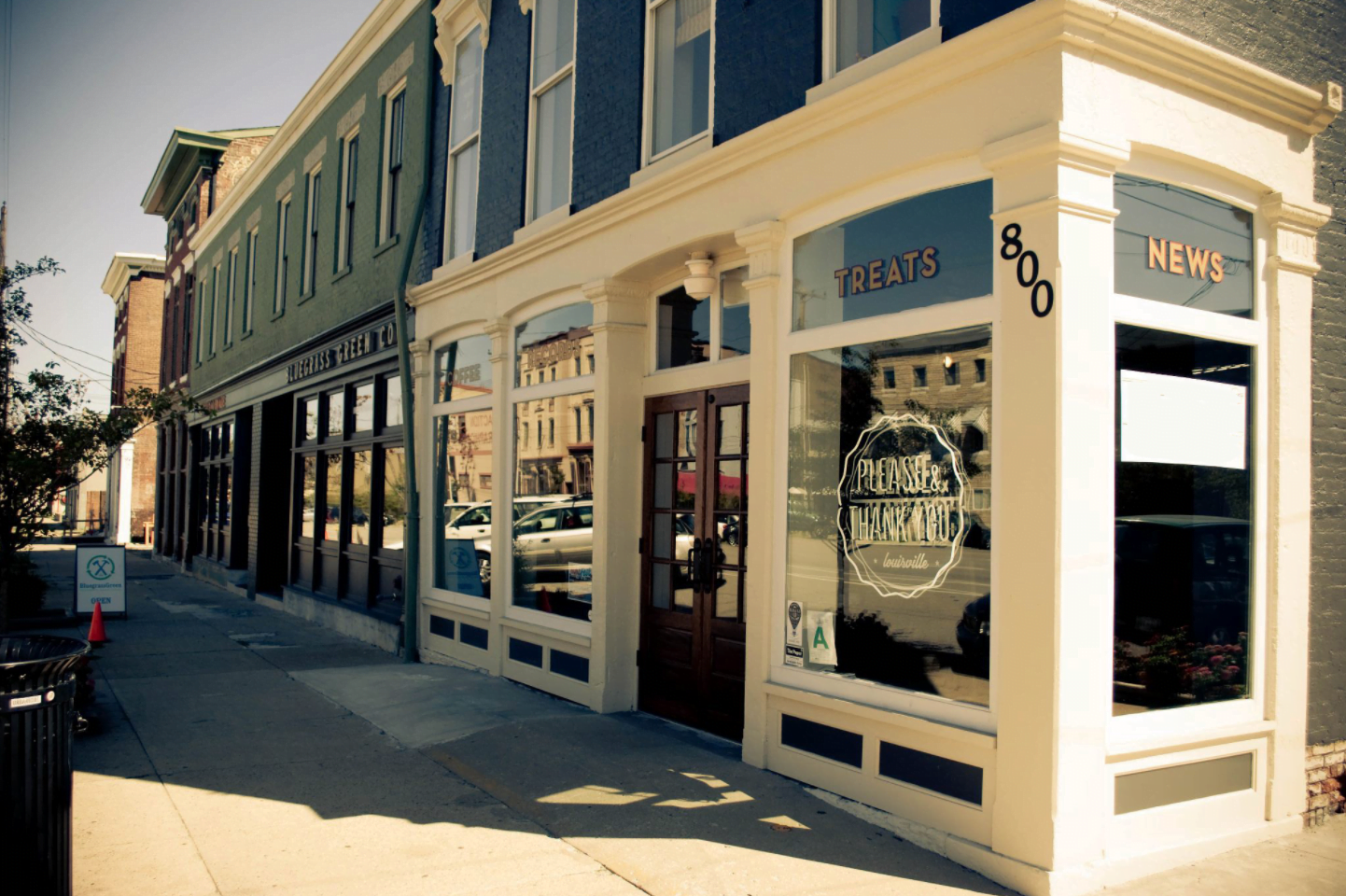
For your coffee fix, Quill’s Coffee and Please & Thank You will fit the hip coffee bill of big cities. Head to the back of Please & Thank You to shop for records, while you sip their Thai iced coffee and eat “Louisville’s Best Chocolate Chip Cookie.” Wander over to Bardstown Road for local shops, food, and bars in one spot.

Cultural Sights

Photo credit: Muhammad Ali Center

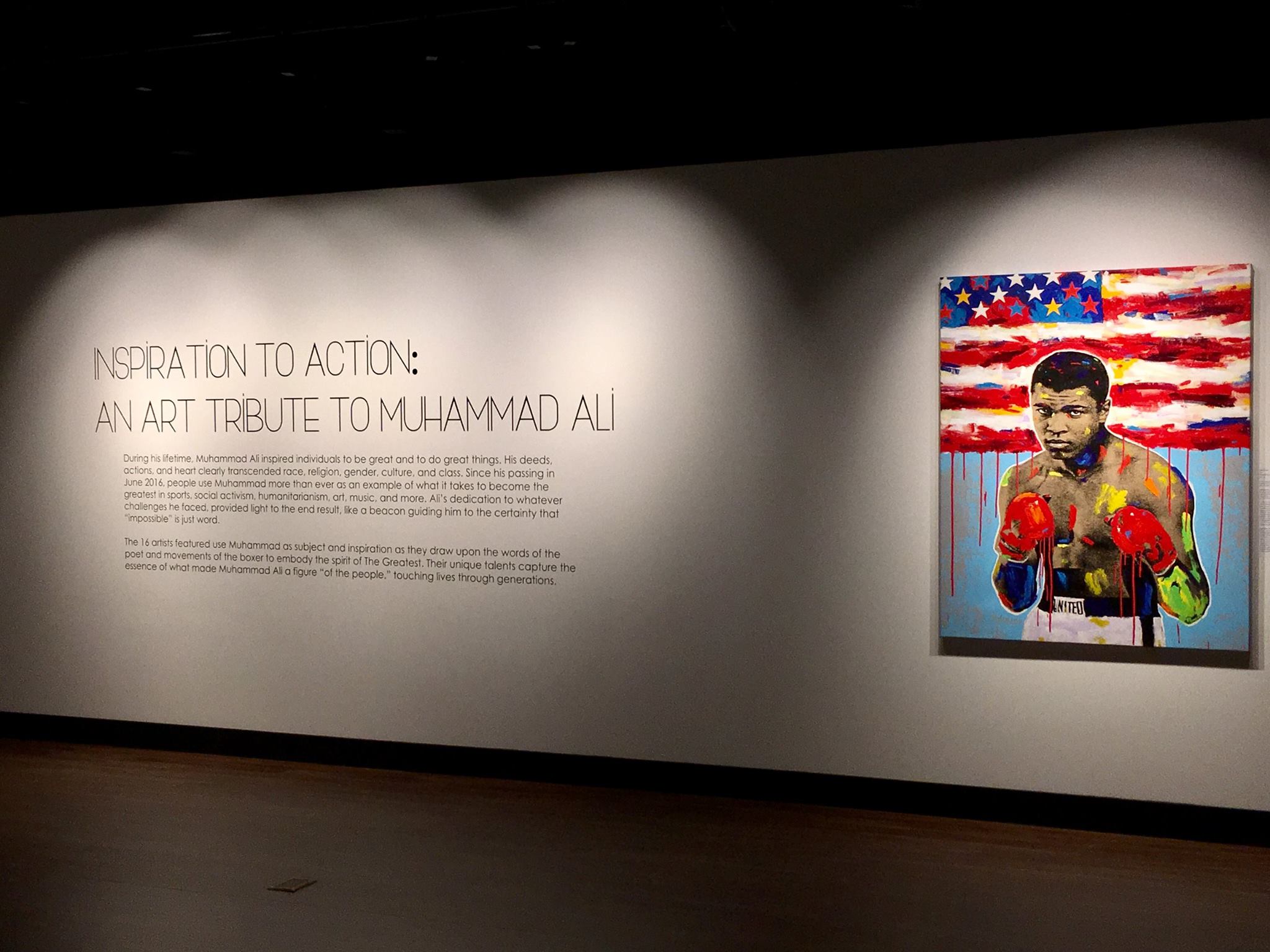
Pay homage to the greatest of all time at the Muhammad Ali Center, a spot well worth the $12 price tag. It’s just as much about civil rights as it is his career, plus we could all take a cue from his motto, and the museum’s tagline: “Be great. Do great things.” It’s not open on Mondays and has spotty hours, so check before you go.

If you’re planning on geeking out on museums, consider getting “The Main Ticket,” which bundles admission to six downtown Louisville attractions, including the Frazier History Museum, Kentucky Museum of Art and Craft, Kentucky Science Center, KentuckyShow!, Louisville Slugger Museum & Factory, and the Muhammad Ali Center for 30 bucks.

On top of that, the Bernheim Arboretum and Research Forest is a great day hang and hosts all kinds of nerdy plant events, like wildflower walks and updates on the American Woodcocks’ nesting.

Photo credit: louisvillemegacavern.org

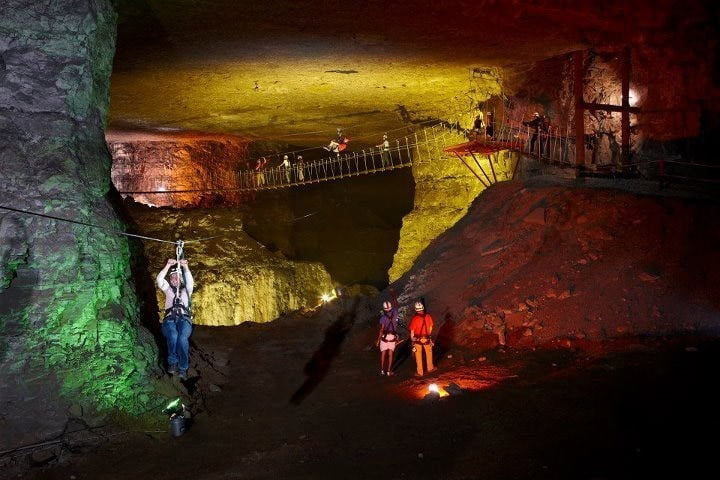
Louisville Mega Cavern boasts the world’s only underground zipline. Yep, that’s a thing, and they’ve got six of them which run year round.

Music

Louisville’s upped its festival game with Forecastle every July, and Bourbon And Beyond in September. If you’re looking for low-key, down-home Kentucky bluegrass, look no further than Barret Bar. For bluegrass with your bloody mary, check out the Monkey Wrench. Louisville’s quirky Zanzabar brings under the radar artists to their pinball arcade/venue combo, and has been open since the ’30s.


Lede photo credit: Scott Oves

A Minute In Charlottesville with Lowland Hum

Welcome to “A Minute In …” — a BGS feature that turns our favorite artists into hometown reporters. In our latest column, Charlottesville, Virginia’s Lowland Hum takes us on a tour of their favorite places for donuts, bagels, and scenic strolls. The husband-and-wife duo of Daniel and Lauren Goans just released their newest album, Thin.

We moved to Charlottesville a little over two years ago after experiencing small slices of its unique creative community when passing through on tour. However, we spent the bulk of our first year based in C-ville away from home, on the road. While we have travelled a little less this year, I feel the first year of our time here has influenced the way we approach engagement with what our town has to offer. You’ll hear from everyone about the unique gourmet dining experiences and the beauty of the surrounding farmlands and wine country, and while all of that is true and worth mentioning, in our little snippets of time at home between tours, we have latched on to a handful of inexpensive or free low-key treasures that we continue to prioritize when we have time at home. 

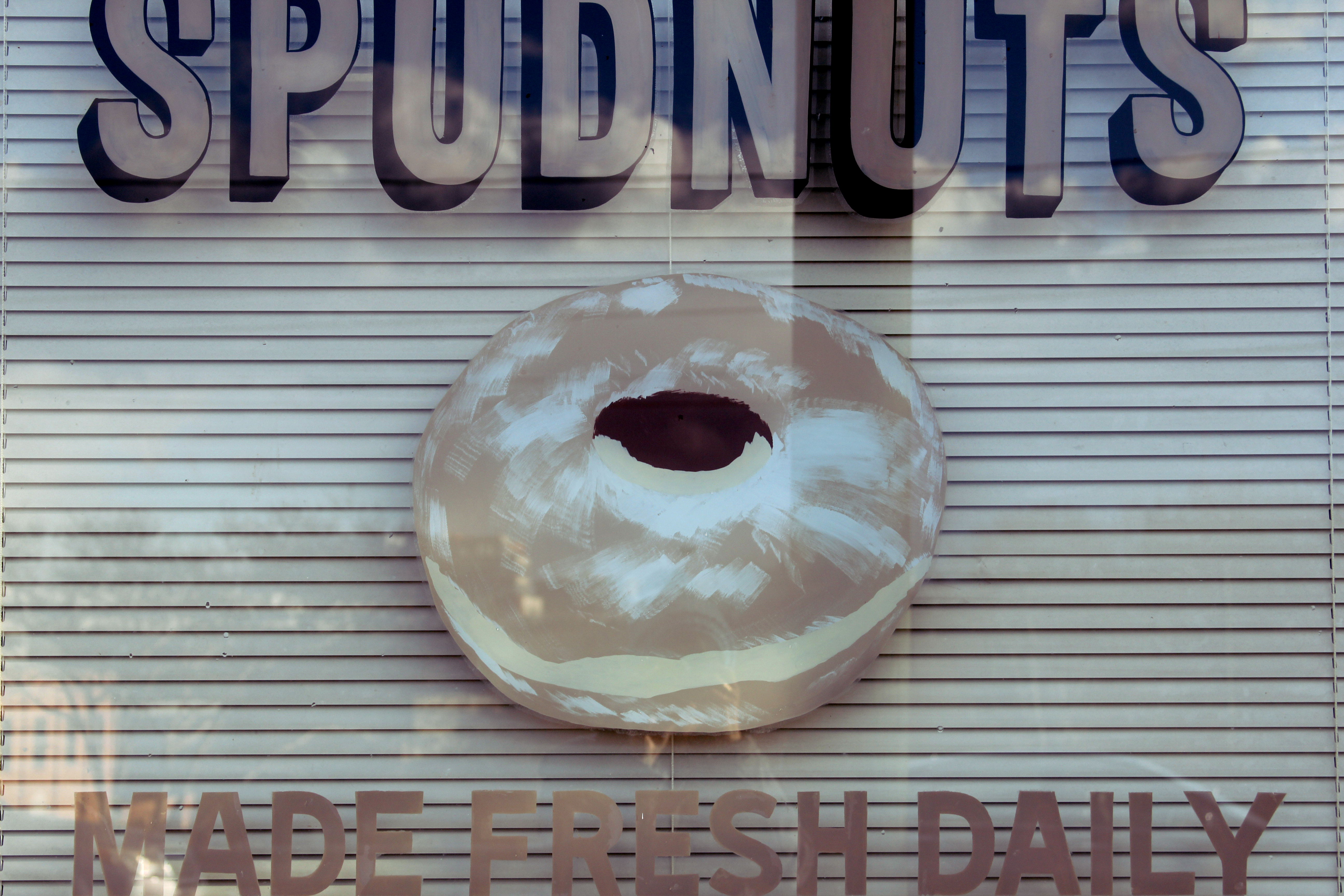
Spudnuts: We lived in the Belmont neighborhood when we first moved to town. On morning walks, we could smell the sugar-glazed glory wafting out from two blocks away. Don’t let its sleepy looking exterior fool you: This place is the real deal. When we have to leave really early in the morning for a tour, a stop at Spudnuts on the way out of town is a mighty consolation. Every visit to Spudnuts is a trip back in time to the ’50s. They’re closed Sundays and Mondays, but all other days, the owners are there, bright and early, standing behind the counter in old-fashioned white aprons, ready to serve up hot, fresh donuts and fritters of several varieties that change with the season. Spudnuts will not try to be a trendy donut shop for you. No salvaged barn wood interior, no cutesy chalkboard signs, or ridiculous toppings. What you can count on is classic confectionary goodness, in unfussy flavors: original glaze, blueberry cake, cruller, chocolate glaze, apple fritter, and a few seasonal extras like original glaze with coconut or maple glazed. As soon as they sell out, they close up shop, so remember to bring cash and get there early to get yourself a lovely white waxed bag of treats to scarf or share, depending on your mood. 


Riverview Park: Tucked back in the Woolen Mills neighborhood is Riverview Park. It has become our go-to for a quick refresh. It consists of a playground, some picnic tables, and a couple of winding paths, one of which runs alongside the Rivanna River. Our favorite features of Riverview Park are the places along the path where, with a little care, you can make your way down the embankment to small, sandy banks for a dip in the river. We were recording our album in town this Summer and a short trip to Riverview to wade up the sandy-bottommed river did wonders for our minds when we got too inside our heads during recording sessions. We have been really thankful to have such easy access to water and natural areas, and being only a four-minute drive from downtown, Riverview Park is one of our favorite nearby places to reset.


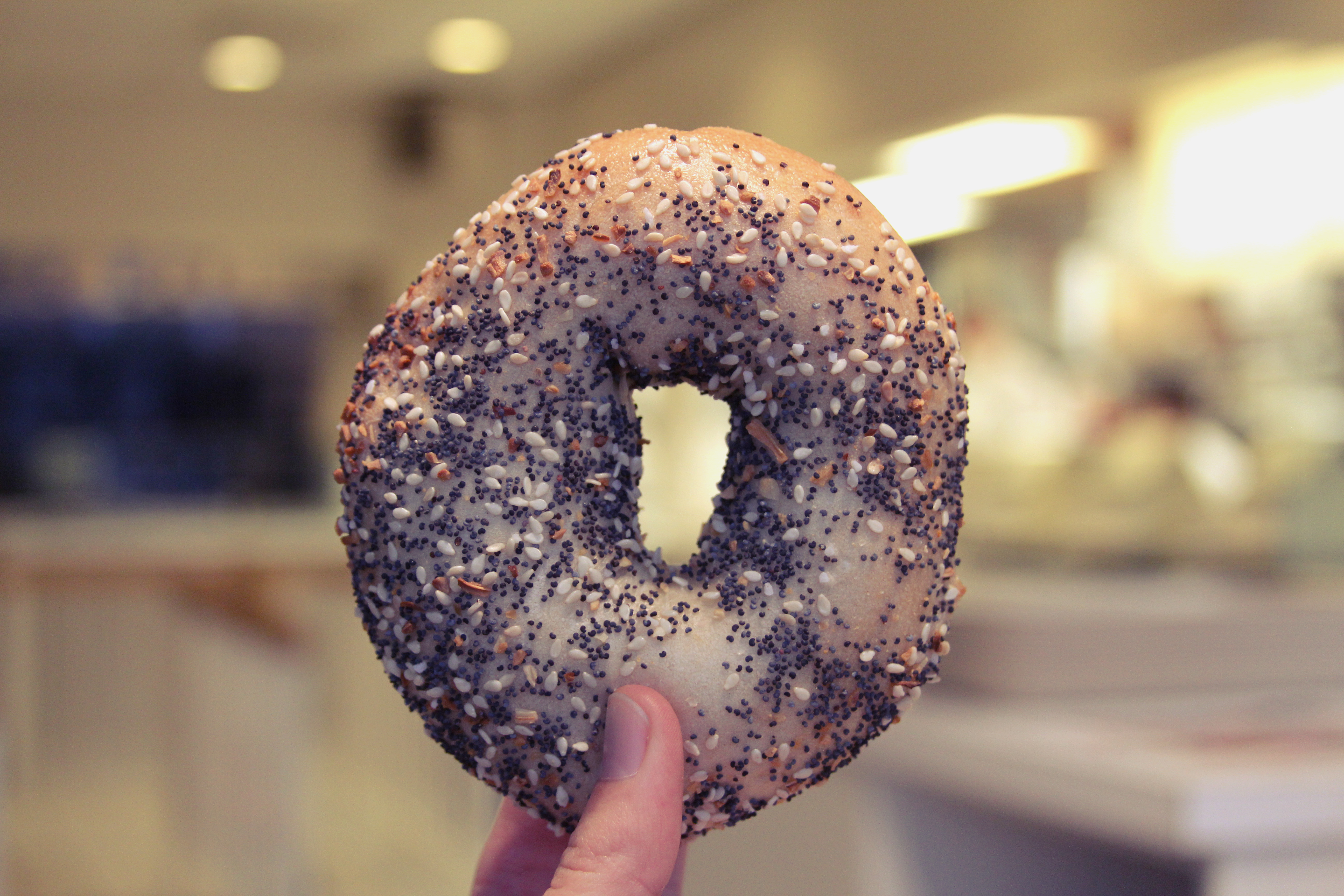
Bodo’s Bagels: Bodo’s is an original Charlottesville favorite, with three locations in town. Our favorite is the one on Preston Avenue, where the staff is genuine and kind in a way that can’t be forced or taught. There is always a line at Bodo’s and for good reason: The New York-style water bagels are made fresh all day (I have never had one that wasn’t hot off the press), and can be made into nearly any kind of sandwich with fresh, locally sourced ingredients, cream cheese varieties made in-house, solid coffee, and great vegetarian and vegan options. Their salads and soups are just as popular as their bagels and just as fresh. Service is fast and everything is so reasonably priced that we are often astounded when we hear the total of our order. The music is always on point — a mixture of obscure hits of the ’60s, timeless jazz, and top notch Stax and Motown. Bodo’s became a regular breakfast, lunch, and coffee break stop for us this Summer when we were recording our album in a friend’s attic just down the road. 


Beer Run: Beer Run is a local beer and wine shop with a full bar and restaurant attached. It is our favorite spot for a low-key celebration and a no-brainer when we don’t have energy to prepare dinner after a long day in the studio. With a rotating list of award-winning beers on draft (and every other beer imaginable for purchase in the shop), it’s the place to go for a good brew. The restaurant serves a wide range of plates, all made with organic and locally sourced ingredients, but our favorite, by far, is the “Beer Run Nachos.” One mountain-sized order of black bean nachos is enough to fill us both to maximum capacity. Whether we are marking a milestone or passing a sunny Saturday afternoon on the patio with beers and friends, Beer Run is our favorite spot. 


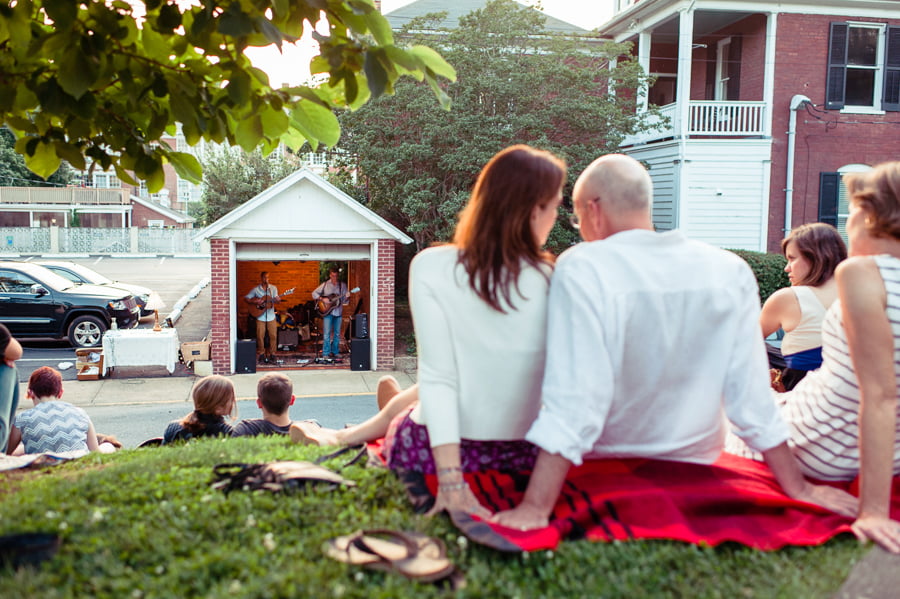
The Garage: The Garage is both exactly what it sounds like and so much more. It is a prime example of the magic of Charlottesville’s creative community. The Garage is a one-car garage facing the edge of a downtown park that functions as a gallery, music venue, and community hub. This is not your garden variety, cobbled-together, volunteer-run community center. It is a small-scale, well-oiled music venue and carefully curated gallery space. At least one excellent local artist’s work is artfully displayed on the exposed brick walls under clean track lighting, with a full-scale art opening the first Friday of every month, complete with price lists, hors d’ouvres, and wine. The concert series features great acts from all over the world, multiple nights a week in the warmer months. Bands perform within the mouth of the garage, facing the park, and people gather across the street on the grassy knoll with blankets, picnics, dogs, and children. A jar is passed and all donations go to the bands. After the concert, people are encouraged to chat with the performers and come inside to view the art show of the month. It is a true community gem, offering professionally led writing and craft workshops, readings, and even a bring-your-own picnic and music lunch hour in the Summer for folks working in the downtown area. Check their schedule online to see if your visit to Charlottesville coincides with any of their many magical events. There is nothing quite like wandering up to the soft glow of the garage on a balmy evening to camp out on the hill with friends and soon-to-be friends, take in the sunset, and enjoy a night of good music. Though every event is well-planned, experiencing one first-hand feels like the definition of serendipity.


Photos by Lowland Hum, Eric Kelley, and Lisa Boggs

Traveler: Your Guide to Washington D.C.

If you’re not swearing off our nation’s capital until 2020, we’re here to help you avoid the tourist traps in Washington, D.C. Full of free museums, bustling nightlife, ethnic eats, and a diverse population, Washington D.C. offers reaffirmation of the fabric of our nation in a time of division.

Getting There

The airport situation might be the hardest part about getting to Washington, D.C. since the District itself is a no-fly zone for all commercial airlines. With all of the airports on the outskirts, you’ll want to choose carefully the closest one to your accommodations. Ronald Reagan/DCA has Metro access and is the closest to the city center, Dulles is a 40-minute ride to town, and Baltimore/Washington International is close to an hour away from D.C. proper, but is accessible via city bus. Getting around with no car is doable with a Metro pass, ride sharing, or your own two feet.

Accommodations

From bed and breakfasts in Georgetown to Airbnbs in DuPont Circle to swanky hotels overlooking the White House lawn, there is no shortage of spots to crash in D.C. The Kalorama Guest House is a cozy euro-style B&B right off the metro and two blocks from the National Zoo. Airbnb has plenty of options, averaging $190 per night. And, if you’re feeling fancy (and planning way in advance), check out a room in the Hay-Adams, overlooking the White House.

Eats & Drinks

Photo: View from the W bar, Photo credit: Saahil Agrawal

D.C.’s multicultural make-up makes for comprehensive dinner plate fare. They’ve got a killer high-brow food scene, but the hidden ethnic gems are what make D.C. so tasty. If you want to eat Greek with the local Greeks, head to Mykonos for Imam Baildi and the most authentic tzatziki in town. Neapolitan pizza made by Italians in Arlington at Pupatella was voted best pizza in the state of Virginia and is right down the road. Other must-trys include Japanese donburi from Donburi in Adams Morgan and Latin eats from El Pollo Sabrosa.

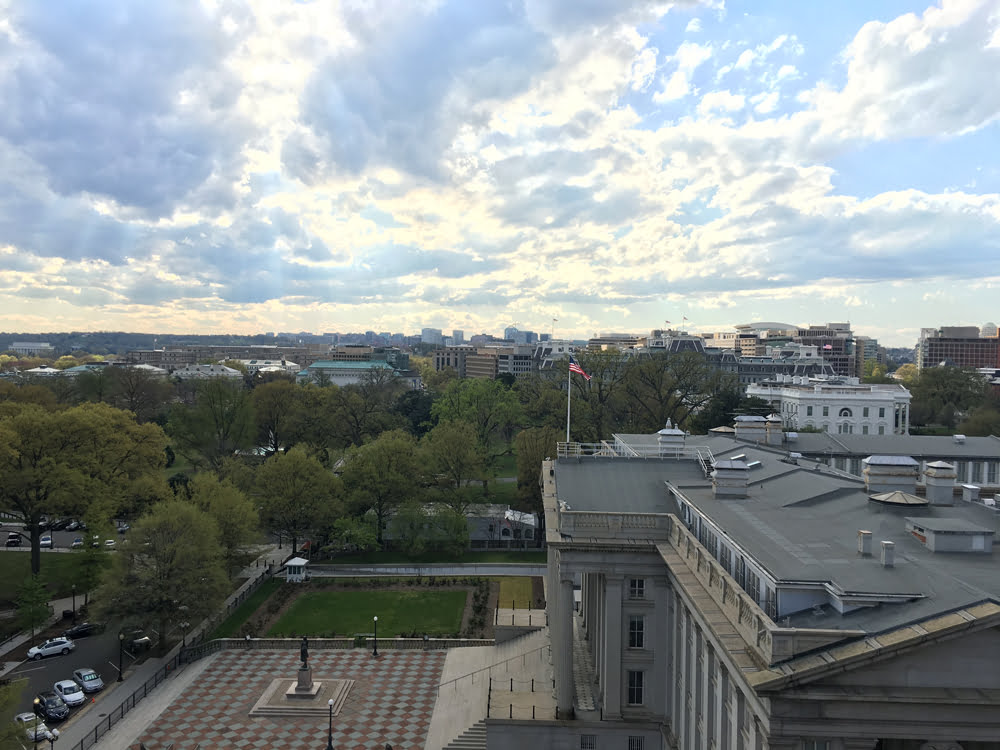
The D.C. crowd is a work hard, play hard kinda crew, so there are also plenty of places to wet your whistle. The rent is too high, so dive bars are aplenty, as are the complete opposite — exclusive clubs. Bar Pilar is on 14th Street and is Hemingway-themed. ChurchKey is a beer lover’s delight, collaborating with breweries like Sun King Brewery and 3 Stars Brewing Company on exclusive brews. Head to the top of the W for drinks with a view of the Treasury and the White House, plus you can play Where’s Waldo? to find the security personnel on top of the White House.

Sight Seeing

D.C. has the obvious political sights that are popular for a reason. There’s nothing like walking the monuments that circle the Tidal Basin on the West End of the National Mall at night, taking a selfie in front of the White House, or perusing the National Archives, but there are some off-the-beaten path spots that are worth the deviation from throngs of tourists.

Music

Photo: Black Cat, photo by: Josephine Wood

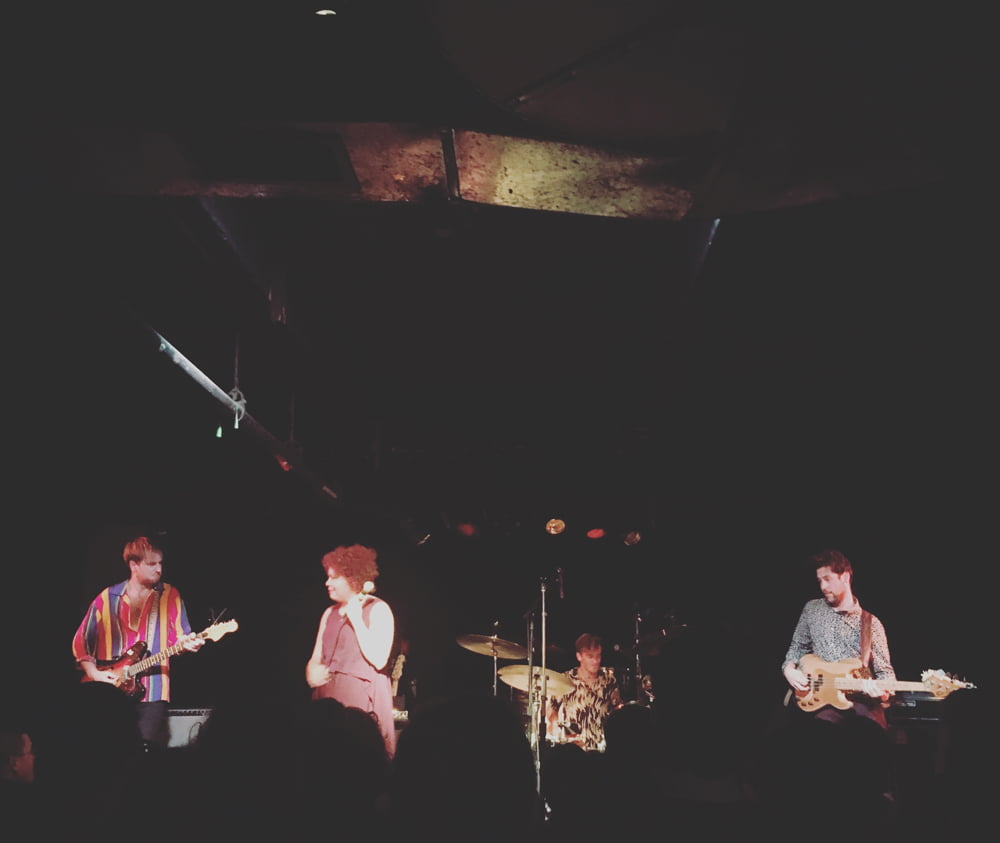
D.C.’s got plenty of live music venues. Catch indie bands at Black Cat, bluegrass and Americana at Gypsy Sally’s, and a wide variety of other touring bands at the 9:30 Club, where they make their famous 9:30 cupcakes for artists and for sale to the public.

As for record stores, two Sundays of every year, collectors wrap around E Street to get first dibs on DC Record Fair’s vinyl fare at Penn Social. Grab some Emmylou from Red Onion Records or get nitro cold brew and peruse new and used records at Songbyrd Music House.

Books

Photo: Politics & Prose

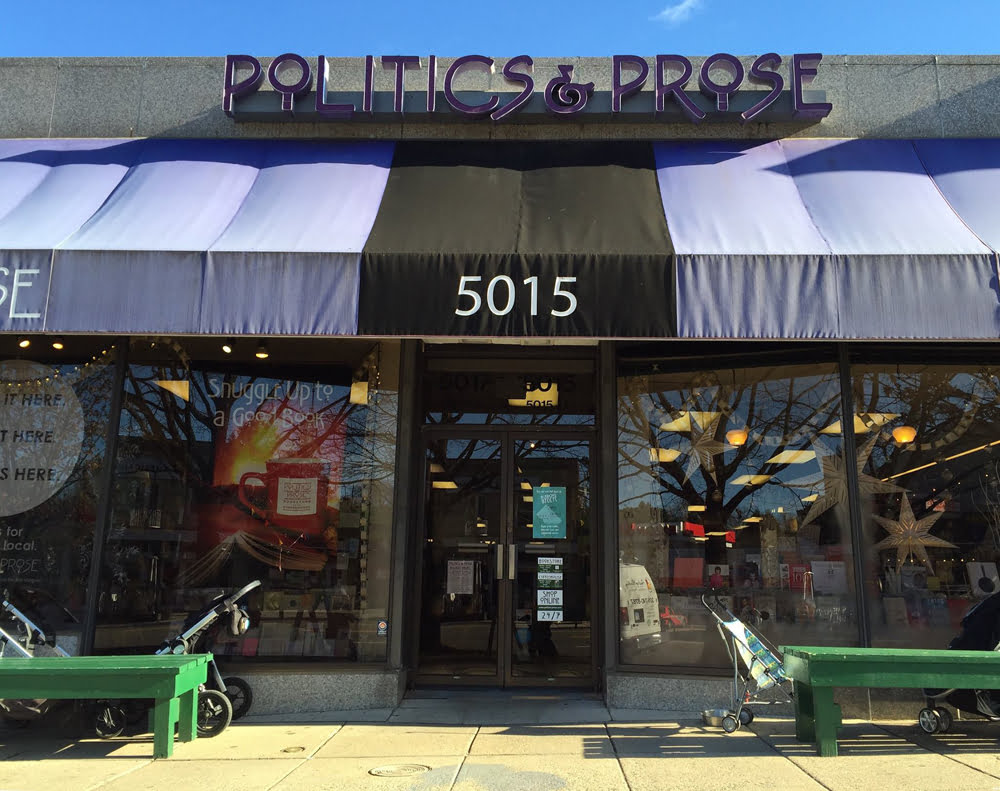
Go book shopping and get a hearty breakfast at Politics & Prose. Be sure to check out their events lineup because they host notable people like Trevor Noah, Bernie Sanders, and Bob Boilen often, plus they have killer deals on used books.

Museums

Photo: National Gallery, Photo credit: Josephine Wood

The National Portrait Gallery is one of the more obscure Smithsonians, but is well worth the visit, particularly their “In the Groove” series of Herman Leonard’s jazz photography.

In the age of media skepticism, the Newseum offers a timely look back at the history of media in the U.S., including a 50th anniversary exhibit on the history of the Civil Rights movement, photography of immigrants and a history of rock ‘n’ roll and politics’ intersection. It’s not a Smithsonian Museum, so it costs $25, but is worth the cash.

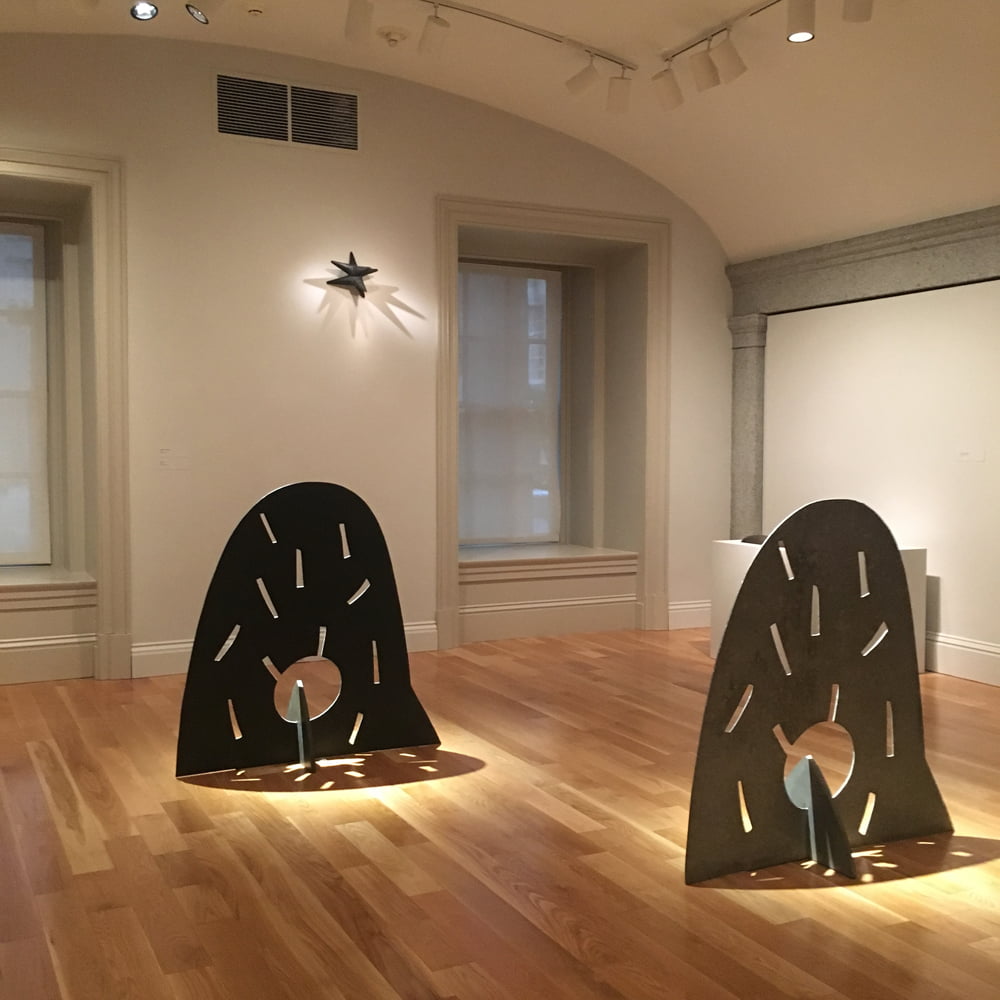
The National Gallery boasts the most comprehensive art collection, which allows a wide range of visitors — art lovers or not — the chance to connect with different styles. Plan to spend a large chunk of time exploring, or target one genre or time period to meander through.

The National Museum of African-American History and Culture is the newest Smithsonian and tickets are tougher to come by, though still free. It’s worth the wait. The museum is a walk through the history of African-Americans in the United States, including Civil Rights history, slavery, music, art, and much more. You’ll learn more than you did in any history class, but plan at least half-a-day to spend wandering the museum, because there is a lot to take in at this five-story, emotionally taxing museum. Get ticket details here.

This one’s not exactly a hidden gem, but taking a stroll at the Georgetown Waterfront, along the Potomac River, is a great place to enjoy a sunny day. There are biking and walking paths, as well as plenty of stores and restaurants to pop in along the way. Plus, Georgetown is pretty much the most charming spot in D.C.


Lede photo credit: freestock.ca ♡ dare to share beauty via Foter.com / CC BY

Traveler: Your Guide to Montréal

“Hi, bonjour, hello,” is the greeting when you walk into any spot in the faux-Euro artsy port city of Montréal. This vibrant, French-speaking city is full of open-air markets, intricate architecture, vintage shops, and every kind of art. With just a quick hop over the U.S. border, English speakers may get cold feet upon arrival, but 56 percent of the population can speak English and French. Between Mont-Royal, the walkable streets of Old Port, and the array of diverse museums, you’ll want to pack your walking shoes, then refuel with the carb-heavy signature dishes of the city.

Getting There

Montréal has an international airport named for everyone’s favorite hunk of a prime minister’s dad: Pierre Elliott Trudeau International Airport. It’s 12 miles from downtown and a quick city bus ride into town. Multiple railway lines service Montréal, including a daily Amtrak train to and from New York City. From Montréal, you can also hop on a train for a quick trip to Québec City or Toronto.

Accommodations

A variety of quality hostels, like Hi-Montreal in downtown or Auberge Saint-Paul in Old Port, range from $15-25 CAD for shared rooms to $85 CAD for private rooms. Most of them have free wi-fi, free breakfast, and an upscale European vibe, unlike many seedy American places that give hostels a bad rap. There are also plenty of Airbnb options and quaint hotels, if you’re looking to spend a little more. Check out Hotel Nelligan or W Montréal. Staying in or near downtown is a good idea, if you’re sans car.

Entrée Libre Attractions (Free Entry)

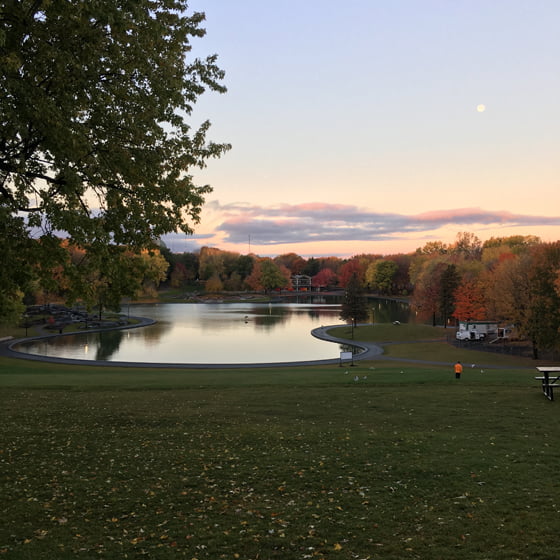
Just walking the streets of Montréal could take up a whole trip to the city. There’s also a lot to take in if you’re strapped for cash. Mont-Royal was designed by Frederick Law Olmstead (Central Park, the Biltmore) and is a great people-watching spot, with lots of room to hike, bike, picnic, etc. Highlights include Beaver Lake, a chalet that overlooks downtown Montréal, and an old cemetery. It’s also home to Tam-Tams, weekly drum circles held on the lawn — a uniquely Montréal tradition.

Saint-Laurent Boulevard is peppered with murals, vintage shops, a stretch of Chinatown, clubs, and the best bagels you’ll ever eat.

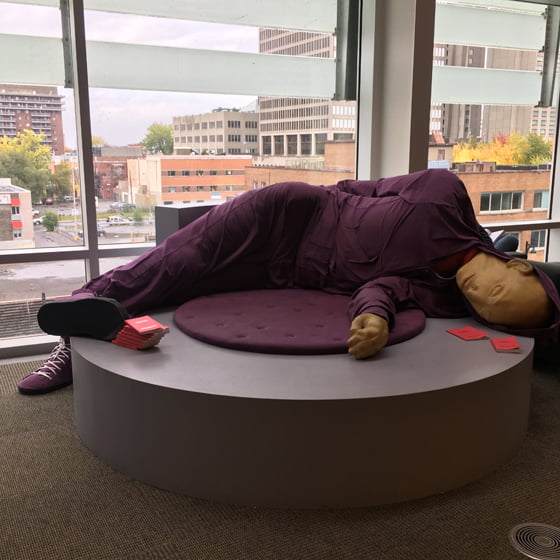
Nerds will agree the Montréal Main Public Library is something special. The large, modern building is centrally located and is worth stopping by for a look. Plus, there’s an art gallery downstairs.

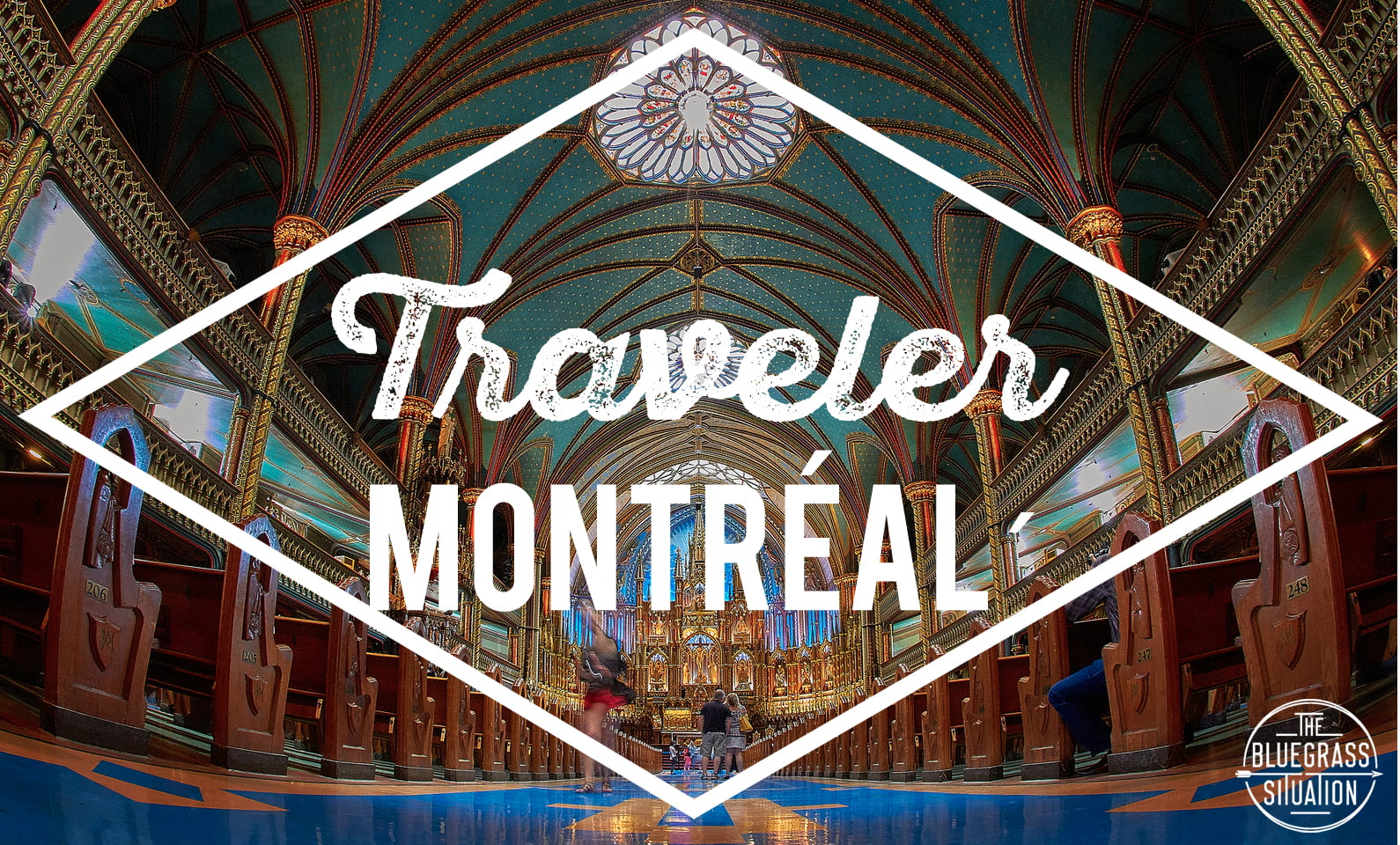
Montréal has some of the oldest buildings in North America, located near the port in Old Montréal. Bonsecours Market, Montréal City Hall, and Notre-Dame Basilica are among the buildings not to be missed. The 17th-century architecture borders Old Port, which is exactly what the name says — an old shipping port. Both areas are major tourist attractions, but worth the crowds. Parc La Fontaine in the Plateau also has a skating pond during the winter that is free.

Paid (and Worth It) Attractions

Getting lost in the Museum of Fine Arts is a must. Artists from Edmund Alleyn to Toulouse to Robert Mapplethorpe have recently been on display in this contemporary-leaning museum. It’s half-priced on Wednesday evenings and costs a well-worth-it $10-$14 CAD.

The Jardin Botanique is the second-largest botanical garden in the world. History buffs and plant lovers will both dig this spot, opened in 1931, featuring 10 greenhouses.

Music

Montréal’s music scene is plentiful and diverse. Catch Hillbilly Night at the Wheel Club , the Montréal Orchestra, or an indie band at myriad venues across town. Get fancy at the Theatre Rialto, a neo-baroque dinner theatre hosting all types of music, or visit La Sala Rossa and Casa Del Popolo, sister venues located across the street from each other — the latter is where Arcade Fire got their start. PDB Ritz, Club Soda, and Divan Orange are hipster haunts for live alternative music.

Eats

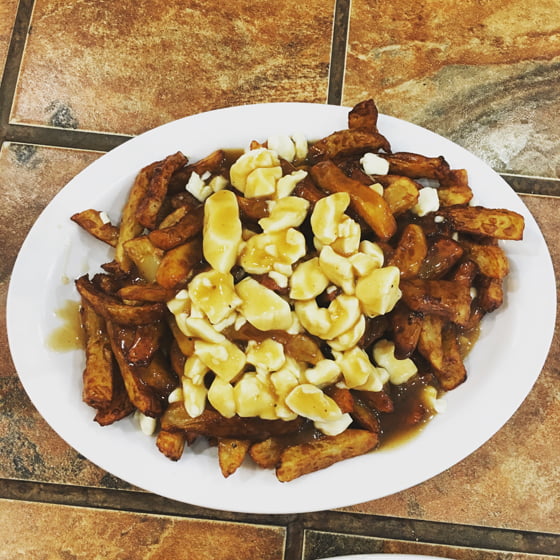
Get ready to carb load. Poutine, bagels, thick sandwiches … Montréal’s food scene is home to some heavy-hitting dishes. Highlights include:

Patati Patata — Best burger $2.75 can buy ya, tucked in a lively neighborhood.

Chez Broussard — Because you have to have poutine.

Tommy — The coffee scene is alive and well in Montréal, boasting homemade croissants almost as good as in Paris. Almost.

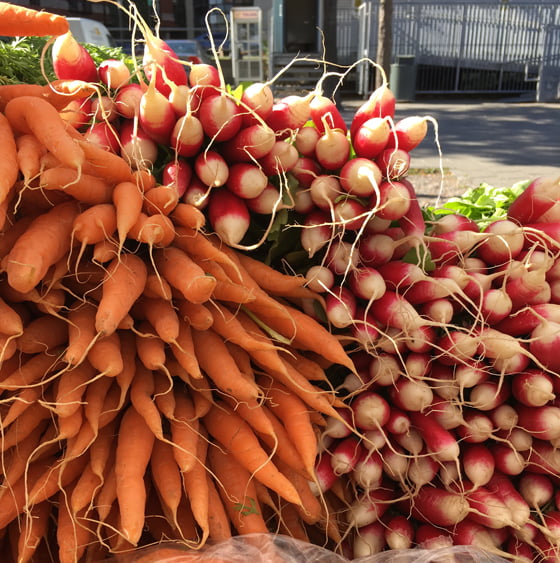
Local Marches are a trademark of the city’s culture. You’re sure to run into fresh produce, if you go during the Summer or Fall. Check out Jean-Talon Marche.

Getting Around

Montréal’s public transportation is award-winning. Four lines service 68 stations across town, allowing you to get to — or within walking distance of — almost anywhere in the city via metro, or bus the Société de transport de Montréal (STM) for $3.25 CAD/trip or $18 CAD/weekend. The city is easy to navigate, and there are plenty of ridesharing services available. They also have a network of rental bikes located throughout the city, if you’re feeling active.


Lede photo credit: szeke via Foter.com / CC BY-SA. All other photos by Josephine Wood.

Traveler: Your Guide to Burlington

Burlington, Vermont, has a lot to offer besides Bernie, Phish, and Ben & Jerry’s. This small, hippie town is a healthy, friendly, and affordable getaway located in the northwest corner of the state on the coast of Lake Champlain — a college town at heart with a lot to offer besides schooling. Food, coffee, and art run deep in Burlington. Where else can you do yoga overlooking a wild salmon hole, sip a local Smoked Vermont Maple Syrup latte, and happen upon a knitting club/bluegrass jam combo night at the local bar?

Getting There

An oddly relaxed small spot with rocking chairs to lounge while you wait, Burlington International Airport is almost as charming as the city. The airport is a 12-minute cab ride from downtown. Beware: There is an Uber shortage in Burlington and Lyft does not service the area, so having the number of a local cab company comes in handy. There’s also a Greyhound station located in the airport. (Pro tip: It’s a quick bus ride to Montreal.)

Accommodations

Burlington has plenty of charming bed and breakfasts like Lang House, Made INN Vermont, and One of a Kind Bed and Breakfast. Airbnb also has 300+ affordable options averaging around $150 per night. The town also has a hostel — for backpackers passing through — which runs $40 per night. Just a couple miles northeast of the city is a suburb called Winooski, which is a hip haven full of places to stay for a bit cheaper.

Eats

Burlington is a vegetarian’s dream and, with places like Revolution Kitchen, Onion River Co-op, and Pingala Café, any carnivore would be happy, too. Chittenden County is a refugee resettlement area, which means there’s a multitude of great cuisines and people from African countries, Nepal, Vietnam, Tibet, and Bhutan. Spice Trader’s Kitchen and Tiny Thai are a few authentic and cheap ethnic eats.

Breakfast is the meal not to be missed. With menus sporting homemade rye bread, Vermont maple syrup on every table, and gingerbread pancakes, Sneakers and Penny Cluse are two spots widely agreed upon as the best breakfast spots in town. And, if you’re feeling it, grab Ben & Jerry’s Vermont-only flavor — Vermonsters — from the factory up the road for breakfast.

Coffee

Every town has their ode to the hipster coffee shop, and Burlington has no shortage. Check out Scout & Co. for their Smoked Vermont Maple Latte , Radio Bean for great coffee into the night, and Muddy Waters to grab espresso featuring some light reading — patrons hide notes in the stone walls.

Drinks

Light Club Lamp Shop, an old lighting shop turned bar, has a bluegrass jam and knitting club on Wednesday nights — a killer combo of local flavor — with fancy pants cocktails. Plus, it’s attached to Radio Bean, if you’re feeling a late-night espresso stop. Oak45 is a go-to for quiet after-dinner drinks; Mule Bar has the best selection of Vermont ciders; and Vermont Pub & Brewery will satiate the craft brew fans.

Music

Higher Ground is one of the largest music venues in Vermont, drawing big artists to Burlington with its double-room capacity. Signal Kitchen brings a lot of smaller, traveling indie and alternative bands to the area, as well as better-known local bands. And, in the middle of downtown, Burlington Records is one heck of vintage vinyl haven, with old show posters galore.

Outdoors

Perhaps Burlington’s crown jewel is the view of Lake Champlain framed by the mountains. Grab a bike from the non-profit rental shop, Local Motion, and hit the many bike paths in town which showcase the natural beauty of Vermont. Waterfront Park is a great place to take a stroll and make a balancing rock formation on the rock beach, alongside many others.

If you’re looking to do a quick day hike, Shelburne Farms is close by and definitely worth the 15-minute drive. Established as a non-profit to teach people about sustainability, Shelburne has activities for the whole family like cheese-making tours, hayrides, hiking along Lake Champlain, and huge vegetable gardens.

Art

Burlington City Arts Center is a three-story, free contemporary art museum in downtown, featuring local Vermont artists. Head to Arts Riot for local art, food, and live music, and take a stroll through South End to explore art studios galore.

Shopping

Church Street Marketplace is a pedestrian-only shopping spot in the middle of downtown, featuring many locally owned spots and street performers on the weekend. Phoenix Books, a great indie bookstore with handwritten recommendations from their employees, is also just around the corner. For the vintage collector, Jamba’s Junktiques is the hippest junk shop outside of Austin.