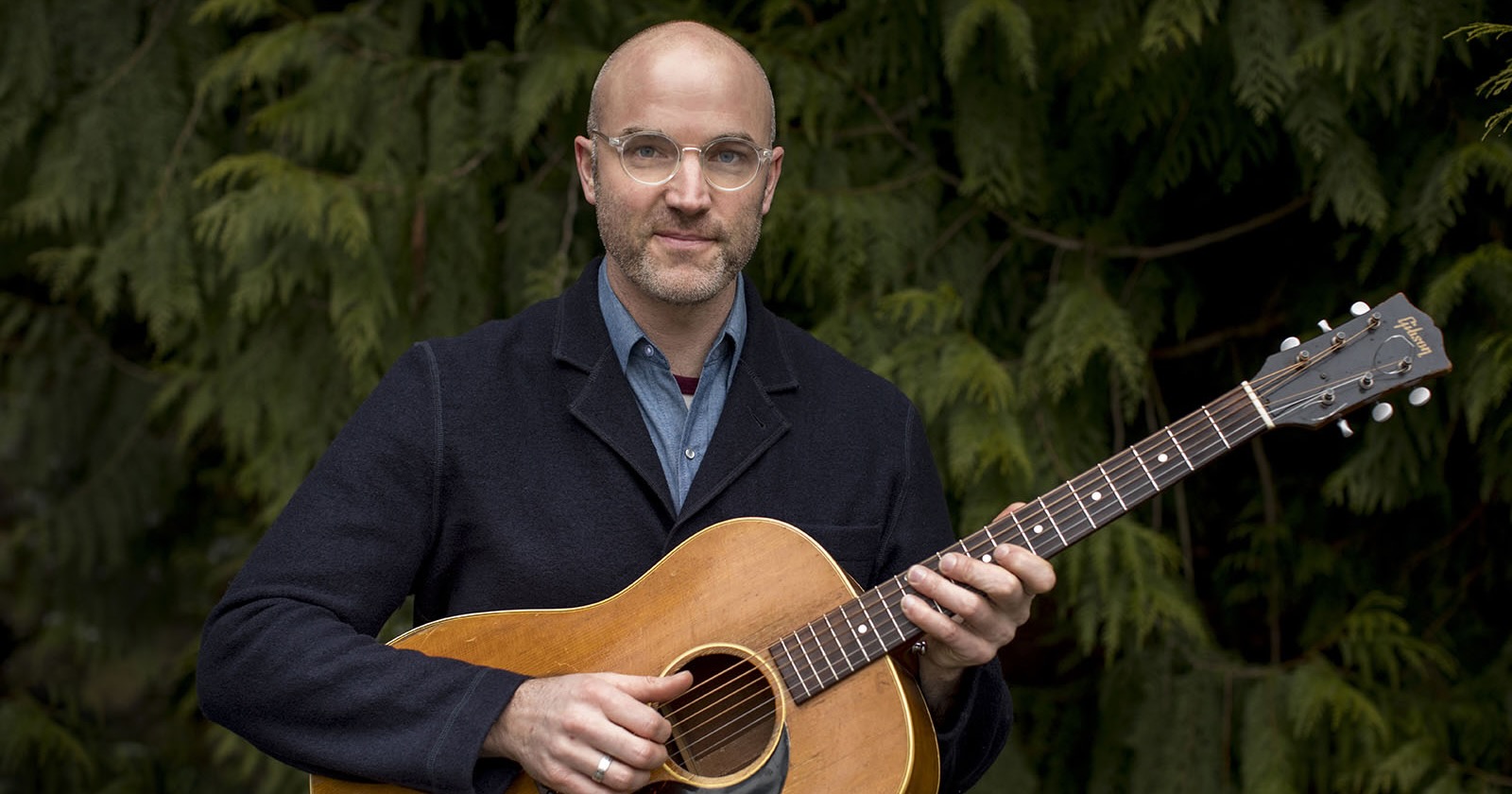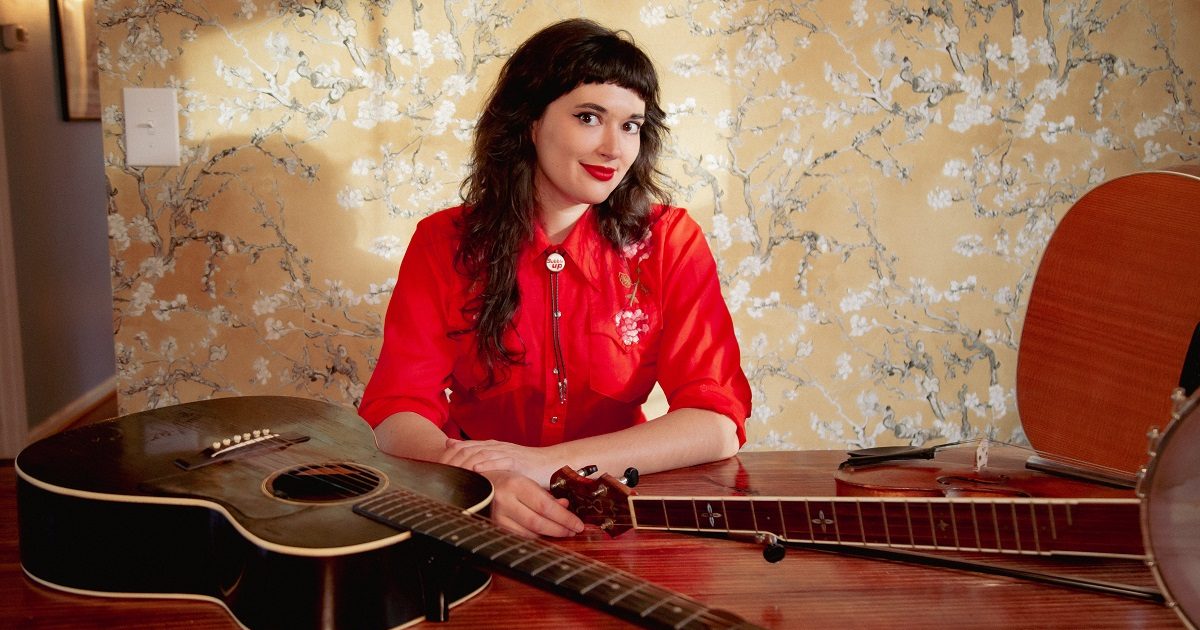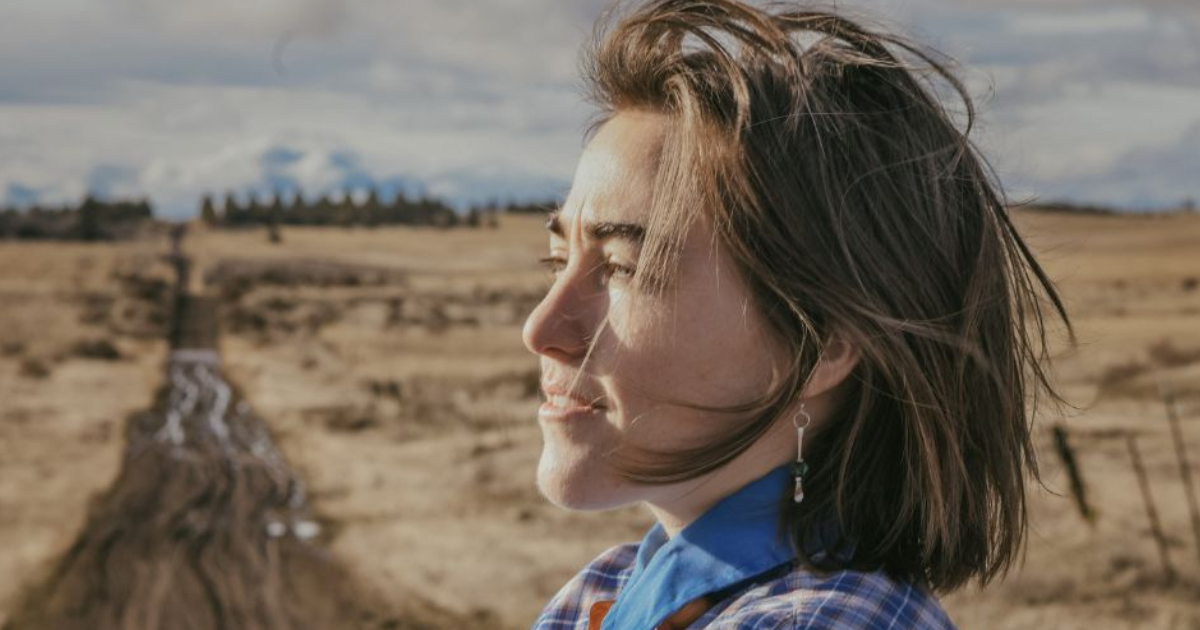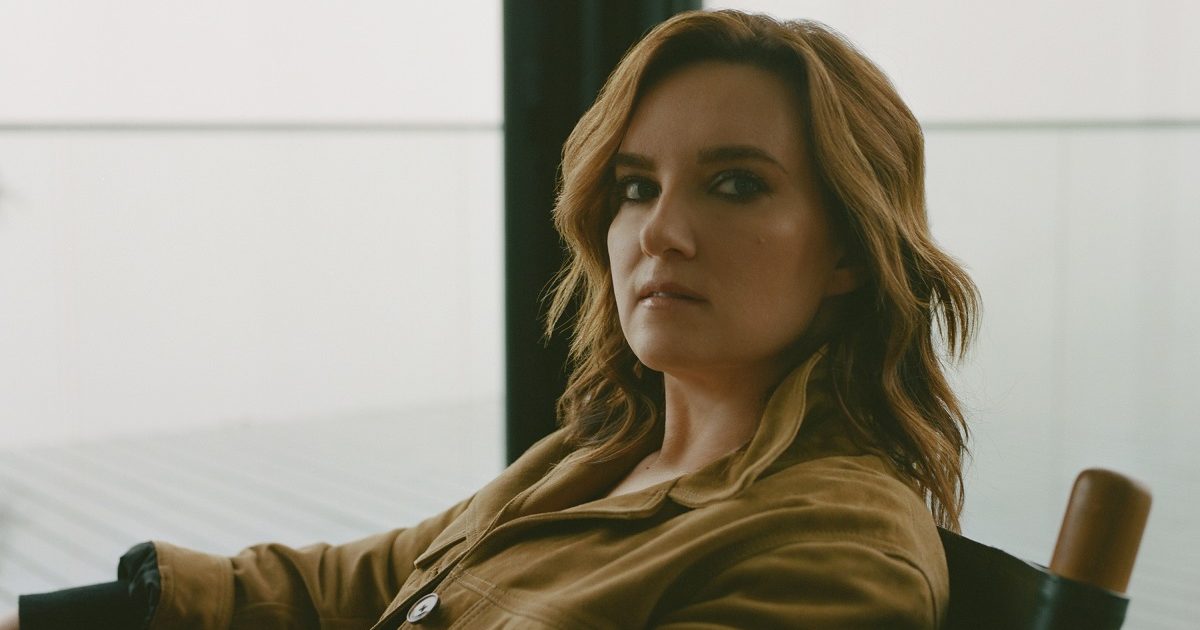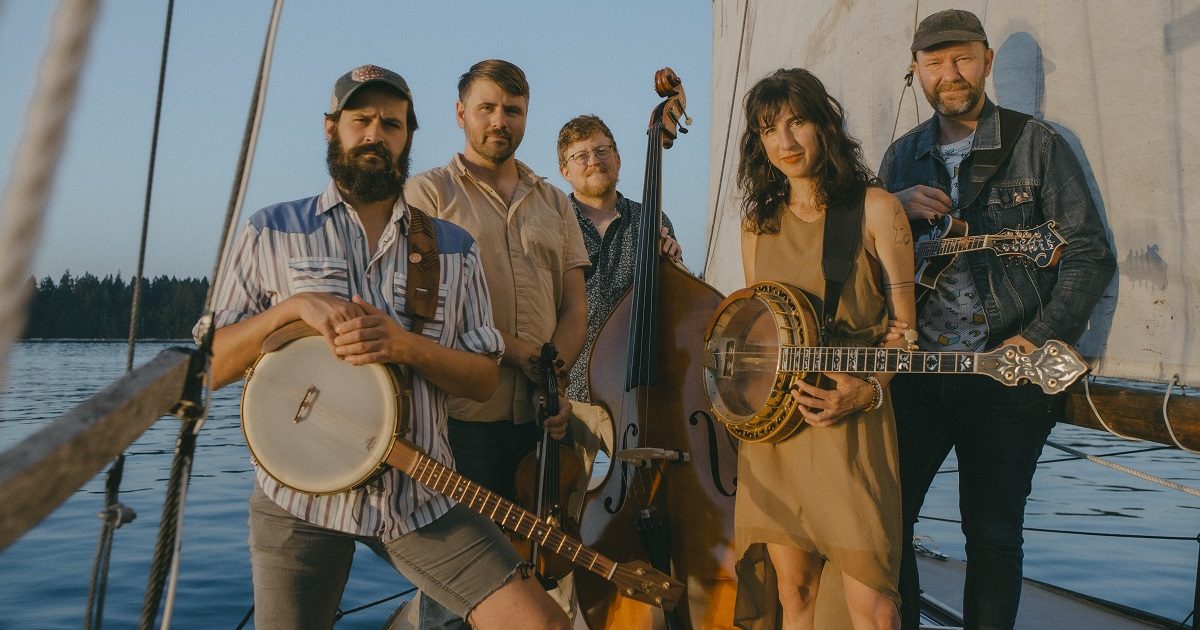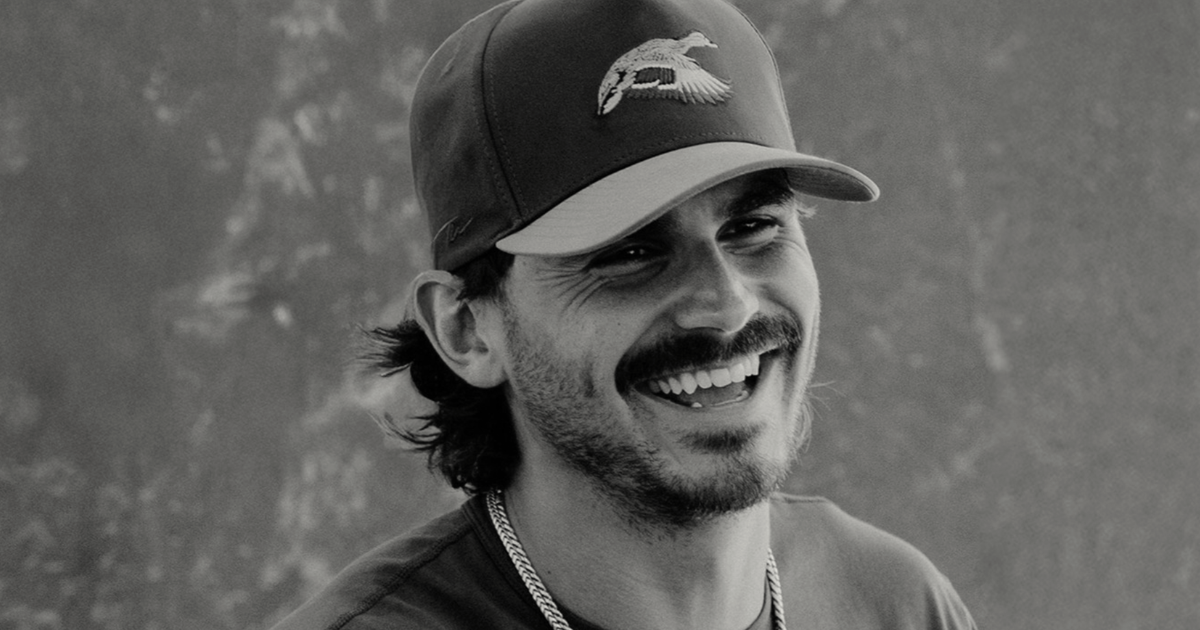
Tucker Wetmore Is Buckled Up for the Ride

If you’ve read about Tucker Wetmore or listened to one of his many interviews, chances are the following subjects were lobbed his way: women, whiskey, blondes versus brunettes.

When the “star-maker machinery” that is the business of music collides with media outlets in search of headlines and algorithm rankings, it can make or break a promising new artist by reducing them to a pretty face with a clickbait story angle, the whole time steamrolling over the singer-songwriter at the core.

Tucker Wetmore is keenly aware of this and proceeds with caution. He’s affable enough to play along and astute enough to know the game. Peel back the layers and you’ll find a thoughtful, hard-working artist rooted deeply in faith and family and with a sense of public image versus personal values, carefully monitoring how and what he presents.

With multiple hit singles, award nominations, over a billion streams, product endorsements and campaigns, television appearances, endless interviews, the 2024 breakout Waves on a Sunset EP, and 2025’s unstoppable nineteen-track What Not To, Wetmore is taking it all in with cautious abandon, savoring the wins as they come.

It’s been a long, hard-fought road in a story now told countless times: he grew up in a small town, was raised in the church, brought up by his mother when his father walked out on the family. Music became vital at a young age, athletic prowess and four state titles led him to college, a severe football injury sidelined his career goals. Back home, he again threw himself into music, moved to Nashville in 2020, and pursued his dream.

On January 25, 2026, Wetmore added another victory to his timeline – this one particularly special, as it brought with it a lifetime of memories. He performed the National Anthem at Lumen Field during the halftime show at a Seattle Seahawks game, in front of a stadium filled with cheering fans.

He was still on that high when he spoke with Good Country only days after – and days before the launch of his Brunette World Tour. “It felt like a full circle moment,” he says of the halftime show. “I’ve been to Seahawks games growing up. I’ve been in that stadium, screaming my face off, cheering for the ‘Hawks. But to be on the field and playing my songs in front of thousands and thousands of people was absolutely surreal, especially for something as big as the NFC Championship. I’ve pretty much seen every NFC Championship since I was born. I was super nervous, but we got through it and we didn’t mess up too bad, so it was a good time.”

You have the biggest country debut album from a new artist in 2025. When did you realize that things were really taking off and it was time to “buckle your seatbelt, because this is happening”?

Tucker Wetmore: I’d say even before the album. The first time I felt like that was when Kameron Marlowe was nice enough to bring me on tour. I had one song out and I hadn’t even dropped “Wind Up Missin’ You” yet. I remember getting onstage at that first show and people screaming my songs back to me, singing every word to the songs I had teased [online]. It was absolutely insane. I was like, “I should probably buckle up. This is getting pretty real.” That’s when I knew I might have a chance to do this.

Can you ever be truly prepared for this level of success?

There’s definitely ways to prepare for certain situations, but there’s curveballs thrown at you every single day, so there’s no way to prepare for that. To put it in sports terms, learning how to sit back on the curve, wait for it to cross the plate, swing, and hopefully hit it.

We know about fan reactions to “What Not To,” and people relating to it from the perspective in which you wrote it. Have you also heard from fathers whom that song is hitting as hard because of what they didn’t do?

I’ve heard stories at meet-and-greets, people spending a little extra time telling me about how much that song has helped them cope. But I don’t think I’ve heard anything from fathers having that realization. That’s a touchy subject, and I hope it moves some fathers to want to be better.

All I can do with my music is write what I’m feeling, produce it the way I think it should sound, and put it out to the world for people to do what they will with it. One of my goals with that song was hopefully this changes some viewpoints on some fathers, and hopefully it helps people learn. It’s a “glass half full” kind of song. It’s saying, “Even though these things happened to me in my life, I can learn from this and use everything as a lesson,” instead of, “Oh, poor me.”

Have you ever fallen into that mindset?

I think we’re all human and we all do it. Not in a really long time, though.

I look at life as an opportunity. Whether it’s good or bad, it’s always an opportunity to learn and grow. I don’t [fall into it] so much anymore, but I remember being young and being pretty upset about some of the cards I was dealt. Luckily, my mom’s great and my family’s super supportive, I’ve got the best friends in the world that think the world of me, and I do the same for them. So I’ve got good people around me to keep my head on straight.

You had to grow up early when your dad left. What are some life lessons you took from those years that apply to your life and career now?

Growing up, I had four sisters and a beautiful mother, so it was a lot of women in the house, but it taught me a lot of things and I wouldn’t have changed it for the world.

There’s definitely times where I thought, “It’d be really nice to go out with another male and throw the ball out in the yard.” But looking back at it now, I learned so much about how to care for women, and how to be a provider, at a really young age, even though there wasn’t much I could do back then. Now I’m taking all those lessons and putting them into real life, like providing for my family, taking care of them, making sure they’re good mentally and financially.

A lot of things I learned at a young age are translating into my life now. Down the road, when I do find that special someone, I want kids someday. I want to build a family and do it right. And so I’d say I’m prepared for when that day comes because I know what to do and what not to do.

In an interview with Billboard, you said about music, “It saved me. It helped me. It was my therapy.” Let’s talk about how music helped you and how it continues to do so.

Music is, in my opinion, the best form of therapy. I think it’s God’s gift to us to be able to create and sing along, or dance, or whatever it is, to a tune. Music has shaped my mindset so much. I started playing when I was 10 or 11 years old and it shaped the way I cope with things. Instead of getting angry or upset or sad or frustrated, whatever the emotion is, I sit down at my piano and I just play for 30 minutes to an hour.

Being creative and having that creative mind, it runs fast and it runs 24/7. It’s … not a double-edged sword, but there’s a yin-yang to it. Music is the thing that drives me crazy because my mind can’t shut up and stop. But at the same time, I was in a write yesterday and the energy in the room was so great for four or five hours straight. We were smiling and laughing and creating the song. So music is my escape from what music does to my brain, if that makes any sense. It helps me ease the craziness of my mind.

During those earlier periods, when music, as you said, saved you, how dark was the darkness?

I lean very strongly on my faith, even during the dark times, and we all get them. I’m the happiest man in the world most days, but I still have days where the weight of the world feels like it’s compressing my spine, in a sense. It’s definitely been dark at times, but I lean on faith and I lean on God, and I lean on my music and other people’s music. It’s easy to snap out of when you have those avenues that are so moving to the soul or the mind.

Has there ever been a time when your faith wavered, or when you questioned it?

Yes. In college … it sounds wrong, and I don’t mean it in this way, but I kind of put my faith on the back burner. I was focusing on other things instead of the most important thing. I was playing football, I was partying a lot with my buddies, I was drinking every weekend to escape whatever it is. I still drink, but I do it with a solid conscience and it’s more celebratory now. There’s a fine line of focusing on worldly things and keeping your eye on the bigger picture of faith and the blessings that God has for us, because there’s so many.

You are giving a portion of ticket sales from this tour to Face The Fight, supporting suicide prevention and mental health treatment for veterans. Why is this the organization you selected to promote and help?

The first time meeting them, I turned to my manager and I was like, “I want a part of this. Let’s find a way to do something.” We put our minds together and it was, “What if we do ticket sales?” I was like, “Yes, a hundred percent.” It’s a huge thing for me because I’ve got a lot of veterans in my family, a lot of men that served and that have given their life on the battlefield.

My grandpa was like my father figure a lot growing up. He ended up taking his life five years ago. He was a very decorated veteran and one of the best people I’ve ever met, but even though it was so many years later, he couldn’t win that battle in his mind.

I think it’s super important to not just shine a light on it, these people that have given so much for our country and the people in it. It is such a selfless act, especially in the heat of war, when you’re fighting for people that you don’t even know, and doing things that no human should do, in my opinion. And then to come home, and 20 or 30 years down the road you’re still thinking about it, and still in that mental space of, “I can’t escape my mind.”

What [Face The Fight] is doing is amazing. It’s a blessing to be a part of. I think if my grandpa had an avenue like that, or knew of an avenue like that, maybe he’d still be here.

In an interview or podcast, you mentioned that you read the comments–

Sometimes.

You must have a really thick skin, because that can wear a person down.

There’s a lot of keyboard warriors out there. I can read the worst comment in the world and it doesn’t get under my skin at all. At the end of the day, I know who I am. The irony behind it is most of the people saying heinous and nasty things online have never created a song. They’ve never sung a tune. They’ve never sat in a room at 3 a.m. because they can’t sleep and put all their feelings on a piece of paper and tried to put a melody behind it. They don’t get it. They see things at surface level. I’m not going to bash on them or say it’s their fault for that. There’s irony behind it and that’s all I take it as. It’s funny to me. It’s almost comical at times.

@tuckerwetmore This one is getting loud live.. #songofthesummer ♬ Brunette – Tuck

I heard you use the words “build your brand” during a podcast. There’s a lot of image in this industry: wear the tight jeans, pose with your shirt up – you know what I’m talking about. How do you make sure this doesn’t overshadow the craft? As a new artist, do you have the autonomy to say no, to not answer a question, to stop an interview, to not want to take this picture?

While building a brand, and while creating something that is larger than yourself, it is more important to say no than it is to say yes. I definitely have the autonomy of saying no, and I do say no to a lot of things that come across the table. It’s saying yes to the correct things that align with not just the goal of what we’re trying to build, or the pillars that we are building it on, but morally. I account for my faith in pretty much all the decisions I make.

If I could give advice to any artist coming up – and I’m still making my way there – my biggest piece of advice is, “Say no to things that don’t feel right or don’t make you look like you.” I think I’ve done that pretty decently. At the beginning it’s really hard to say no to things, because you want every opportunity there is. But now I’m saying no to a lot more, saying yes to the correct things, and trusting my people. They know who I am and what we all want to build together, and it makes it a little easier.

Earlier you mentioned people reacting to song teasers. Before this career explosion, was there pressure to keep up when “everyone” is teasing songs on social media and the algorithm is bombarding people? It can turn into artists chasing numbers, which can also affect your mental health. How did you ride that storm without falling victim to it?

The grace of God, honestly. That’s a tough thing. It’s easy to compare yourself to others, based on a numerical scale of, “This got a million views, and I just posted one that’s got 150,000, it’s not being shared.” It’s very easy to get into that comparison mindset, but I do think it’s important to keep posting your stuff. Luckily, I’m getting to the point where I don’t have to post all the time. Posting is one of the most taxing things to my brain. I can’t stand just sitting there and making TikToks or taking photos or whatnot.

I realize the weight that a viral video can hold to your career and to a certain song or a project. It’s an easy way for millions of people to engage with what you’re trying to create. It’s a great tool. That’s the word I’ll use for it: social media is a tool. Some people idolize it and can’t go through their day without it. I look at it as a tool for people to share my music and hear my music and get excited about the things I’m trying to do.

We can’t do this without talking about your mother. She is such an integral part of your life and your career. Without her support, how different would your trajectory have been?

I don’t think there would be any trajectory at all, honestly. After I got injured playing football and dropped out of college, I was living back home. I remember having that conversation with her. I was like, “Mom, I really want to chase this music thing.” It was like a sigh of relief from her, in a sense. Her shoulders went down, she took a deep breath, she goes, “Finally. Finally. I’ve been telling you this for years now.”

She helped me pack up all my stuff and move, and she supported me financially the first couple years of me moving to Nashville. I would be living on the street if it weren’t for her – metaphorically living on the street, because she would never let me do that. She believed in me before I even had good songs. She believed in my work ethic and my mind and my creativity. One of the biggest blessings God has given me is a mother who cares and wants to see her kids succeed in whatever dream they have.

And now she’s doing podcasts and talking about your childhood.

Yeah. Somebody needs to rein her back a little bit!

You love being on the lake. Is water also a form of therapy for you?

Oh, a hundred percent. I grew up in a super small town, Kalama, Washington. Because it’s built up on a hill, pretty much wherever you are, you can see the Columbia River. I spent so much time on that river, or on the Kalama River, or at the lakes surrounding. I feel happiest when I’m at the ocean or at the islands.

I’ve got a lake house in Nashville and it’s a great escape for me to go back home and be able to sit there and look at the water. It helps not just my creative mind, but [also] my mental health. Another thing God has given us as natural therapy is the beauty of a body of water. It’s the most simple thing in the world, but I do not take it for granted.

Is it a spiritual place for you as well, a natural church?

Yeah. Anything can be a church, as long as you’ve got the spirit in it!

What’s on your heart as you’re getting ready for this tour?

Excitement. It’s been a couple months since I’ve toured and I’m itching and eager to get back to it. I’ve had a great break. I’ve had a very creative break. I finished writing my second album yesterday. Obviously, things change and I get new thoughts or whatever, but right now I feel pretty confident in the songs we got, and I’m excited to get back on the road and maybe tease or play some of these new ones and see how people like them.

And I’m excited to just be on the road. I feel most alive when I’m in the craziness of it all. It does get taxing at times, but it’s truly a drug to not just me, but pretty much all my artist buddies. It’s a feeling you can’t really explain, getting up on a stage in front of thousands and having people scream your creations back to you. It’s the coolest thing in the world. I’m excited to see the fans and be with my band, my crew, and my team. It’s a family that we’ve built, and it’s going to be cool. I’m excited.

Since you brought it up, before we close, what can you tell us about the next album?

It is sonically one of the coolest things I’ve heard in a long time. I don’t want to give too much away. I’ve been doing a lot of thinking about what I want this next record to be for the last year already. I think about what I get in my truck and listen to, and I’m kind of an older soul. So it’s very ‘70s-influenced and early ‘80s, with the guitar tones and drums and weird, synth-y sounding steel guitar licks. It’s really cool and it’s fresh, and I don’t think anybody’s really doing it right now, which I’m excited about but which is also scary, because I don’t know how people are going to feel about it because it is different.

I was thinking about this yesterday, actually: “Proving Me Right” is the perfect bridge into this next chapter, sonically. It’s not too far leaning over there, but it’s still got the old tendencies in it. If you were to listen to anything that gets you excited about this next record, I’d say “Proving Me Right” is a great start.


Want more Good Country? Sign up to receive our monthly email newsletter – and much more music! – direct to your inbox.

Photo Credit: Chase Foster
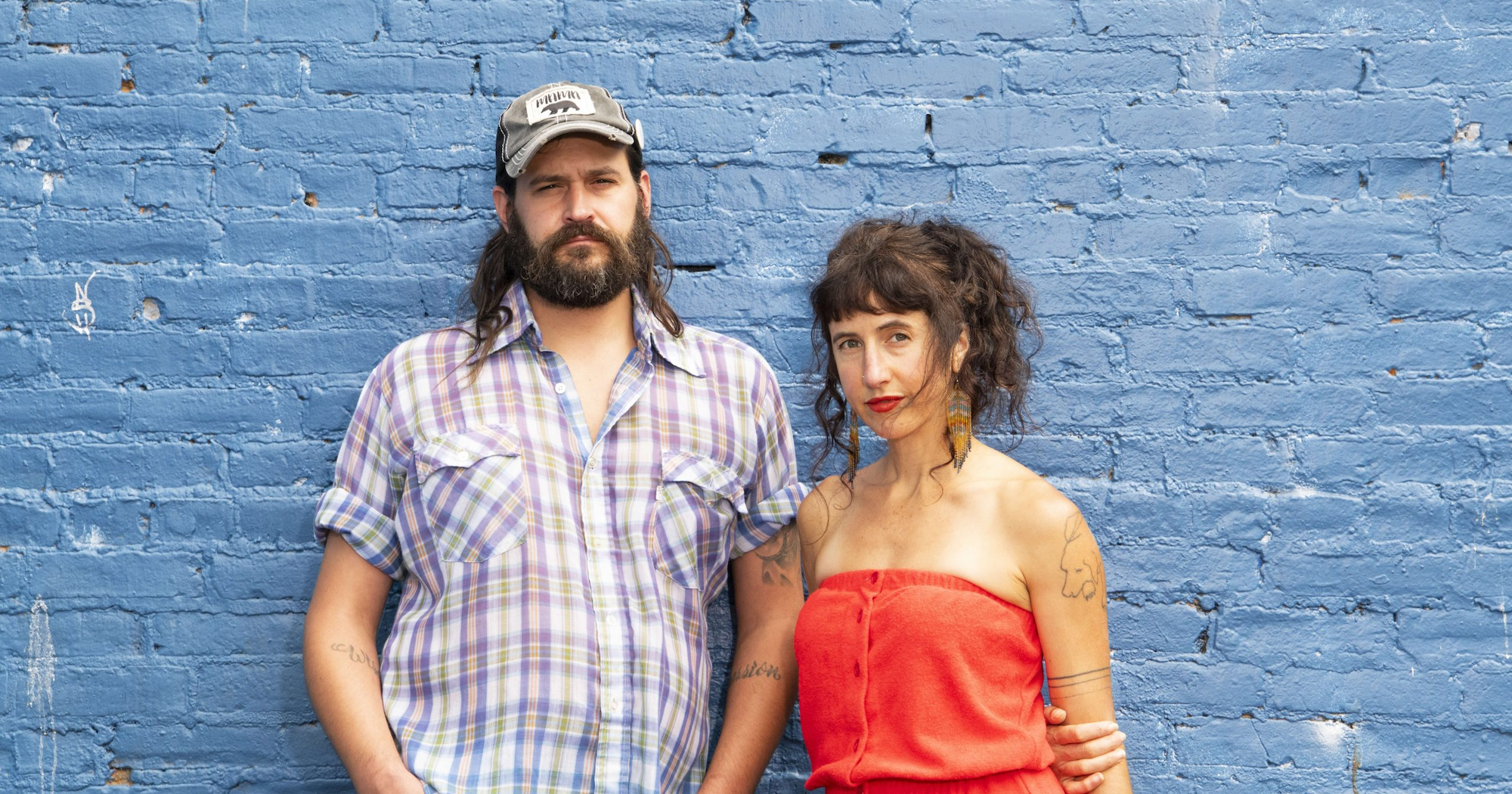
The Lowest Pair Are as Enchanting as Ever

It’s fitting to enjoy the Lowest Pair’s new album, Always as Young as We’ll Ever Be, in the opening weeks of a new year. In particular, the song “Give It All Away” gently offers a theme of letting go amid an orchestration of acoustic guitar, banjo, and other subdued instrumentation. As the song swells, a soft percussion begins to underscore a sense of renewal.

“I feel the lightest when I give it all/ Give it all away,” sings Kendl Winter in the opening moments; she’s later joined by bandmate Palmer T. Lee when they harmonize on a simple yet poetic lyric: “Before the sun, there was the rain/ Before the rain, there was the sun.”

Indeed, it’s been quite a few seasons – six years in fact – since the Lowest Pair released an album of their own. The duo enlisted Tucker Martine to produce the new project, recorded in Portland, Oregon. There are some surprising musical textures for longtime fans of the duo, but at the heart of the Lowest Pair, there’s still the welcoming vibe that’s enchanted listeners since their 2014 debut album.

“We were really excited about the recording situation, being with Tucker Martine in his studio, and having such beautiful musicians paint our songs, to flesh them out more than just the two of us,” Winter says. “They really did lean into the medium of the studio and the sounds that were available to us. There are a lot of instruments and musicians…”

“… A lot of other people’s ideas coming into the mix. We were just feeling open to that,” Lee adds.

Although both Winter and Lee are reluctant to divulge too much about the meanings behind the songs, listeners will certainly relate to lyrics about making it through rough patches (“Diamonds”) and learning to find comfort in the unknown (“Uncertain Seas”). The album’s country-tinged closing track, “Thorn,” is an elegant ode to getting past the pain.

“You visit these things that hurt often. I mean, we all do,” says Winter, who wrote the song. “That’s what grief is, right? You’re kind of hoping you’ll figure it out, and then it’ll go away. …

“With Always as Young as We’ll Ever Be, the whole theme is now, and now, and now, and trying to be in the present with things. There’s a love and there’s a ‘go to hell’ in that song. There’s a wanting to hold things sacred but also let them go.”

The album is actually named for a song that didn’t make the final track listing; Martine loved the phrase so much that he insisted the band should keep it as the title. The words are wistful enough to also call to mind the 2009 bluegrass festival in Minnesota, where Palmer, Lee, and a few other musicians stayed up late jamming along the Mississippi River.

“That was really pretty special!” Winter recalls. “Both of us were playing banjos in different bluegrass bands at the same festival. I saw Palmer playing and singing and I loved his voice and I loved his melodic style. I still hadn’t seen a bunch of other banjo players exploring more, like, off-the-grid playing and more melodic approaches. And after he played, I think I said something about it, right?”

“Well, I think the first time, you were just like, ‘Hey, nice banjo playing.’ And I was like, ‘Thanks, random person,” Lee remembers with a laugh. “Then maybe a few hours later, you were just like, ‘I really dug your melodic style,’ And it’s like, ‘Oh… you’re a banjo player.’”

Growing up in Arkansas, Winter heard the banjo in bluegrass, but considered herself more of a punk rocker. Hearing Béla Fleck & the Flecktones changed her perception of what tones and sounds could come from the instrument. Lee, a Minnesota native, inherited two banjos – one from each side of his family – when his relatives heard about his burgeoning interest in music. He dismantled them both to create one instrument specifically suited to his personal taste.

Several years later, after that initial encounter at the riverbank, Winter decided to quit her band; Lee asked if she needed a singing partner. Remembering their easy musical bond, she invited him to Olympia, Washington, where she’d relocated in her early twenties. In turn, he asked her to make a duo record with some time he’d already booked. Thus, the Lowest Pair was born.

“I think, serendipitously, both of our bands were falling apart at the same time, and I was exploring ideas about how to move forward in my career,” Lee says. “It was like, maybe if I collaborate with somebody and make a record that way, that could be a way forward.”

Now living about a mile apart in Olympia, Winter and Lee will be touring the Pacific Northwest this spring. At the merch table they’ll have some lino-cut carvings and prints, new posters, stickers, and T-shirts, and of course, vinyl copies of Always as Young as We’ll Ever Be. (The album art is a watercolor painted by Winter’s mother, Jill Morgan.) Along with the new material, they’ll also be mixing in catalog cuts like “Too Late, Babe” and “Rosie.”

Asked about the enduring popularity of the former song, Lee chalks it up to placement on an editorial playlist when it was released as a single in 2020. “I have this vague memory at one point of someone after a show mentioning that we played a really good cover of that ‘Too Late, Babe’ song,” he says. “That was like, ‘Hell, yeah!’”

As for “Rosie,” Winter says, “Yeah, that one’s still in the set list. That one is a really early one. I was playing that even before we had started the Lowest Pair. And it’s really interesting what people latch onto, because it’s simple. I mean, I wrote it crying.

“I think with songs, you can kind of feel the ones that come from your heart. They did the thing. They gave you the goosebumps when you wrote it, and then they continue to have that effect, and it’s pretty cool.”

That emotional effect remains in place for Always as Young as We’ll Ever Be, too.

“I took a lot of space from it and hadn’t listened to it for a few months before we started talking about what we’re gonna do with it,” Lee says of the album. “And I remember being kind of surprised. You know, there’s an amount of pride and accomplishment. I was grateful to have contributed to it.”


Photo Credit: Sarah Cass

Eli West: Timber and Timbre

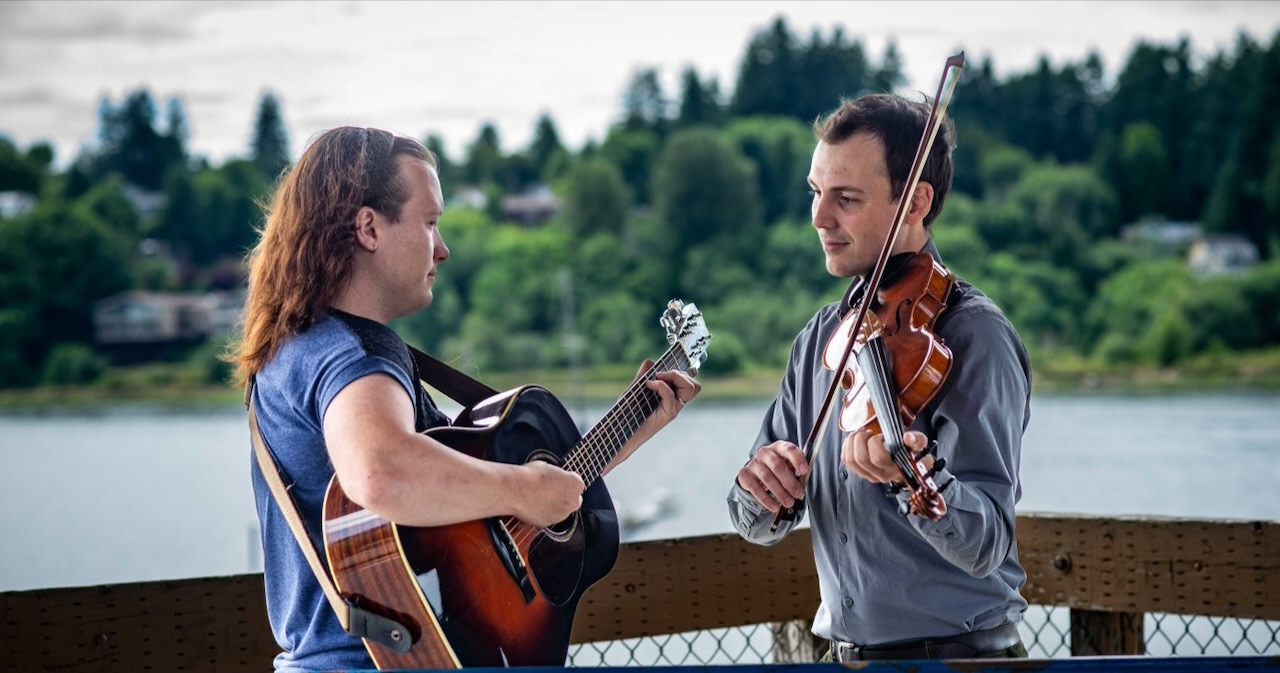
Eli West first rose to prominence in the acoustic music world as part of a duo with fellow singer-songwriter Cahalen Morrison. After creating three highly regarded albums together in the 2010s, West set off on his own. In 2016, he released The Both, featuring appearances by folks like Dori Freeman and Bill Frissell and on 2021’s well-received Tapered Point of Stone, West led a band that included Watchhouse’s Andrew Marlin and Clint Mullican and fiddler Christian Sedelmyer (Jerry Douglas Band).

This summer, the Seattle-based musician delivered his third solo album, The Shape of a Sway, where he is backed by his current sidemen, fiddler Patrick M’Gonigle and bassist Forest Marowitz, along with longtime collaborator Matt Flinner (mandolin, banjo) and an old college buddy, Peter Hatch (harmonium, piano).

West didn’t take a straight line to becoming a professional musician. Although he played violin and guitar growing up in the Pacific Northwest, he studied visual arts and political science in college. Then he headed east, where he went to timber framing schools in Vermont and Maine. Returning to Seattle, he got a job as a graphic designer.

Dissatisfied with his 9-to-5 existence, he quit his desk job after several years and went to Seattle’s Bainbridge Graduate Institute to study business. About halfway through, he realized business school wasn’t for him. It was around this time that West, who was getting more interested in bluegrass, met Morrison. He quickly decided to take a big leap and start playing and touring with Morrison. “My 30s were my 20s and it was awesome,” he shares with BGS. “And music was the means for that.”

West took some time to talk about his new album and his life while loading up a rental truck with timber frame kit to take to Orcas Island off the coast of Washington, where he and his wife own the Victorian Valley wedding chapel.

The Shape of a Sway is your third solo album. What type of a musical evolution do you see with this album?

Eli West: [With] each sequential record since my project with Cahalen, I’ve just been kind of establishing myself as a solo artist and singing my own music.

Tapered Point of Stone occurred right after my dad died and then this [album] occurred right after I became a dad. And making it halfway through life, turning 40, thinking about the second half. So, there’s kind of a transition theme. Looking up to someone and then all of a sudden looking down to my kids. Kind of switching teachers. My parents were my teachers and now my kids are my teachers. That’s a really abrupt shift.

I was writing for my last two records, but with this record I’m finally singing my songs that matter to me in a way that if they fall on other ears and feel good, I’m stoked. But I’m mostly happy with them as my own journal entries.

You have said you had something of a late start as a songwriter. How did your recent significant life events – your father dying, you getting married, and having children – influence your songwriting?

It took me so long to start songwriting, because I felt like I was cocky if I was putting my songs out if I hadn’t lived life. So, I needed to experience death. I needed to experience life on the other end, being a dad. I just didn’t have enough to say until then. It felt arrogant to do that without those experiences.

I have more certainty in whatever I’m doing. And I honestly needed a few years to think about my dad dying before I became a dad. And that certitude I feel in my music now, too.

I’m not writing to anything. I’m writing for myself. I have a lot of friends in Nashville, but I hate Nashville, because everyone’s writing to something. Not everybody, but there’s a big trend of writing to something to get awards or get someone to cover it – you know, that kind of thing.

How did you select the ten songs – did you pick them because they felt like a piece or because they were the ones ready to record?

It’s half matchmaking and half just the dam breaking because it was time. Making sense of getting half of your life, getting married, settling down, not road-dogging anymore, and ultimately deciding to have kids. So the matchmaking was finding the songs that spoke truth to being a new parent, I guess.

Are there tunes that you feel especially stand out to you from a songwriter’s perspective?

Well, “Ever Lovin Need To Know” doesn’t have a lot of meaning and it’s kind of filling syllables and it just feels good. It had meaning, but it was more about the feeling of the song than the content. “Spite and Love” is maybe the other end, where I had read this article in the New York Times about crows holding grudges and that just kind of launched it. I’m really proud of the lyrical content of that song.

And what songs served as the impetus for the album?

“Ever Lovin Need To Know” kind of felt like the tipping point where I could start assembling songs… And then “Rocks and Trees” is the most pertinent to my current situation. I have a nine-month-old daughter and that is speaking to that reality of who she is in my life.

“Rocks and Trees” also contains the line that you used for the album’s title.

Yeah, I don’t like naming a record after a song title. I think picking a lyric is way more interesting. I think there’s more satisfaction in finding that as a listener, than having a song title be the album title. So, “the shape of a sway” was kind of a secondary line that ended up meaning a lot to me. I have this newborn daughter, and I feel like I really know her not in a cognitive sense, but in a feeling sense. And “the shape of a sway” is this kind of different way to know somebody.

It feels like your lyrics often concern people exploring, examining, and searching for answers, but you don’t necessarily provide answers or explanations. Also, several songs (“All The Saints,” and the cover of Jean Ritchie’s “Cool of the Day”) have spiritual or religious imagery. Is this intentional or coincidental?

I’m glad you brought that up. I grew up in the church but then realized there’s just such a bigger common denominator than religion to get to know the world and people. So, I’ve happily delivered myself from that. But I think I ask better questions of myself because I acknowledge that human experience is bigger than any one religion.

I’m kind of looking back on those religious questions with a humanist empirical perspective, and I think that’s pretty fascinating to look back at the same questions but have a deeper well of experience and knowledge.

Was it difficult to quit the more structured world of graphic design and later business grad school for a life of a musician?

I think we’re all trying to reclaim this word “freedom” in this time and the definition of freedom for me was choosing a creative pursuit. There was some privilege and luxury in that, but it just felt like freedom. And I am grateful.

Has your background in design influenced the way you make music, similar to the connection that people have drawn between music and math?

Yes, spatial thinking – relative understanding based on space – what it feels like to be in one room and look into another room. I think of music and arrangements like that. The flow of walking through space and anticipation and memory, that’s really how I navigate music. That sounds kind of cocky, but I think you know what I mean.

You have talked about how collaborations are important to you. And this album features performers who you are familiar with (Patrick M’Gonigle, Forest Marowitz, Peter Hatch, and Matt Flinner). So, I was wondering how you walked the line with the arrangements and the collaborating, when it’s your name on the cover.

Yeah, I think any relationship [involves] grabbing onto the things that are important. The first line of this “Rocks and Trees” song is “a heavy rock that’s lightly held.” So, how to grab on to important things, but not white-knuckle them. I mean, I had this a few times, mostly in relationships, but also in musical collaborations that you seize the moment, but you don’t pretend it’s eternal.

And there’s a kind of like healthy promiscuity in music that just feeds the creative side. That said, this band that I play with right now – I feel so lucky. They’re just some of my favorite musicians. Besides Matt, we’re all in the Northwest now. And I think beyond anything, that’s why I do this – it’s just to play music with pals that I appreciate.

I had tried to record this a year previous, [and] it was basically too lightly held. I went in with a framework, but not enough rehearsing or structure around mostly [the] arrangements. And it was a great session. Those songs sound great. But it just didn’t have that kind of cohesive thing. So, I think my ideal process is leaving like 20% to be determined the day of recording. And then like that shit is always so great. But I need the 80% structure there.

You play a rather impressive variety of instruments. Guitar is your main instrument, but you play mandolin on this album’s two original instrumentals (“Gentleman’s Bulldog” and “Thanks and Sorry”). And you also play banjo and pedal steel. Do you feel like you have a particular facility with playing instruments?

I did Suzuki violin as a kid, which focuses mostly on ear training and that really helps to be fluid on instruments later in life. So, I’m really grateful for this Suzuki method!

This album has a little less bluegrass sound to it. Songs like “Spite and Love” and your reworking of Paul Simon’s “Hearts and Bones,” in particular, have real adventurous arrangements. Listening to it, the album sounds more genre-less – in a good way.

Yes, I am without genre. I just am drawn to good music, and I don’t like bad music. That’s how I define genre. There’s a lot of whim and not feeling bound to anything. So, that’s a freedom, and I kind of don’t care.

The Shape of a Sway also contains fewer instrumentals than your prior albums, was that by design?

I also love instrumental music…But the lyrical content of this record is important enough that I think that the instrumentals are just kind of supplemental.

You end the album with a real lively version of “I’d Rather Be A Train.” Was that on purpose?

[Chuckles] That Larry Sparks song was mostly just to make sure I still love bluegrass or to show that I love bluegrass.


Photo Credit: Jenny Jimenez

BGS 5+5: Countercurrent

Artist: Countercurrent (Brian Lindsay and Alex Sturbaum)
Hometown: Olympia, Washington
Latest Album: Flow (released March 3, 2025)

Which artist has influenced you the most – and how?

It’s a three-way tie for me between Great Big Sea (gateway drug into trad music, consummate performers, wonderful harmonies), early Solas (dazzling musicianship, tight arrangements, and an unmistakable guitar style) and the Grateful Dead (fearless improvisation, and pushing the boundaries of what is possible while keeping one foot firmly in folk). – Alex Sturbaum

Chicago fiddler Liz Carroll has probably had the most comprehensive influence on me – she is a master of creative interpretations of traditional fiddle tunes and composing new tunes in a trad idiom. Much of how I think about melodic improvisation and variation around a melody is influenced by her playing. Her recordings over the years showcase some incredible arrangements and beautiful production, ranging from very minimal, traditional-sounding, to lush and modern tracks. – Brian Lindsay

If you had to write a mission statement for your career, what would it be?

“Play ’em happy, sing ’em angry.” We want our music to inspire joy and resilience and to generally make folks feel good. However, we also want to call out the injustice we see in the world every day and use our music to aid the fight against fascism in whatever way we can. – AS

“Every tradition is a living tradition, if we participate.” Musical traditions don’t thrive when we only admire them inside a glass case, they benefit from curating the archives of the past, honoring the figures who have shaped it today, and welcoming new contributions that reflect today’s influences (cultural, political, technological, etc.). Most importantly, music communities thrive when we make music that we really love to listen and move to. – BL

Genre is dead (long live genre!), but how would you describe the genres and styles your music inhabits?

We draw from a lot of different folk traditions – Celtic, old-time, maritime, jam-band music, and more – but fundamentally, Countercurrent is a dance band. We cut our teeth playing for contra dancing, that’s still the main thing we do, and everything we play is built around groove and drive. One of our favorite things in the world is bringing our music to venues outside of folk communities and getting an audience to unironically throw ass to fiddle tunes. – AS

In a nutshell, “modern fiddle tune dance jams.” Our focus is to create music that moves people, both physically and emotionally, and our vocabulary comes from the genres of Irish, American old-time, and adjacent fiddle and song traditions. We add our own compositions using that vocabulary, but incorporating our musical influences from genres like jam bands, funk, electronic, and rock that we love. – BL

What is a genre, album, artist, musician, or song that you adore that would surprise people?

We both really enjoy the offbeat songwriter Dan Reeder. We had the pleasure of getting to see him and his daughter Peggy in Seattle recently – one of their rare tours from Germany – and we have been enjoying singing his songs together in green rooms and tour vehicles. I also have a sizable soft spot for Owl City. – AS

I’m very fond of the music of blues singer and instrumentalist Taj Mahal. I got some of his recordings when I was quite young and got to see him live near my home when I was in high school. I also love Moon Hooch, who essentially make saxophone-based EDM with live drums (I have an unabashed love for the saxophone, and brass instruments in general, though I don’t play any). – BL

Since food and music go so well together, what is your dream pairing of a meal and a musician?

I once had a Thai meal with roasted coconut and pork belly right before seeing Gillian Welch perform The Harrow and the Harvest in its entirety, and to be honest I have been thinking about both ever since. – AS

A meal consisting entirely of East Asian dumplings of every variety, with Kishi Bashi, whose music I adore and also appears to be an incredibly interesting and kind person. – BL


Photo Credit: Molly Walsh

Viv & Riley’s Tradition and Innovation on Basic Folk

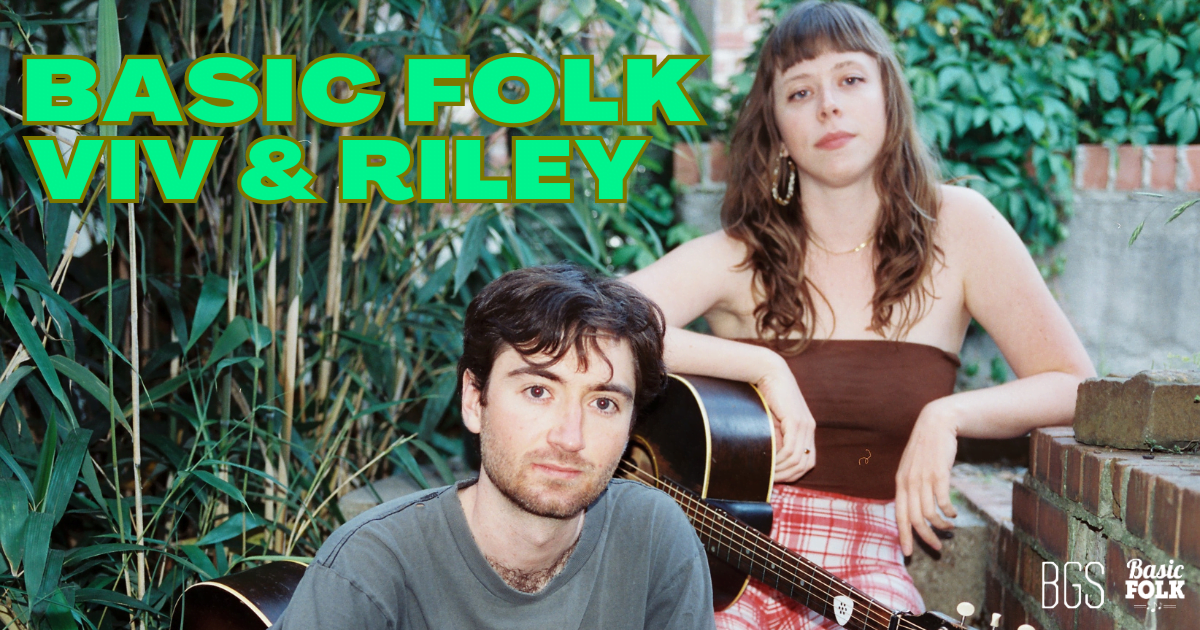
Vivian Leva and Riley Calcagno, known as Viv & Riley, dive deep into the nuances of old-time music, their folk influences, and the process behind their album, Imaginary People. The duo, who ​met ​at ​a ​music ​camp ​in ​Port ​Townsend, ​Washington, trace their roots from Riley’s disciplined musical practice to Viv’s intuitive approach. The two found inspiration from growing up in the Seattle area listening to KEXP to living in Portland, Oregon, to their current home in Durham, North Carolina. Drawing on their experiences at fiddlers conventions and music camps, Viv & Riley reflect on the transformative power of collaboration and the vibrant community that has shaped their unique sound in their duo as well as their other band, The Onlies.

LISTEN: APPLE • SPOTIFY • STITCHERAMAZON • MP3

As they share insights into their songwriting process, the episode unravels the intricate layers of Imaginary People, delving into the harmonious blend of indie roots and experimental production that defines their latest release. With a nod to their eclectic influences, including the supportive atmosphere of Durham, North Carolina, the duo discusses the evolution of their sound under the guidance of producer Alex Bingham from Hiss Golden Messenger, who produced their latest album.


Photo Credit: Libby Rodenbough

One to Watch: Viv & Riley Are Much More Than Just Old-Time or Americana

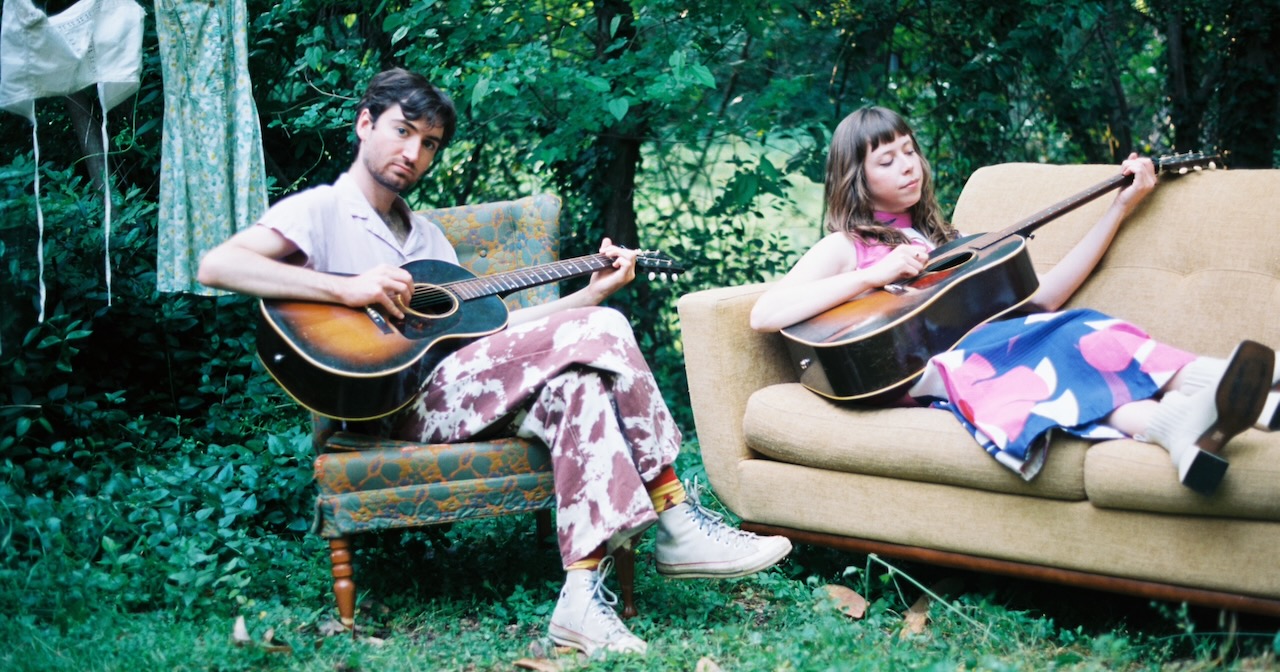
Comprised of singer-songwriters and instrumentalists Vivian Leva and Riley Calcagno, Viv & Riley are an up-and-coming musical duo that defy definition. Their new album, Imaginary People, is a masterful blend that weaves together their shared reverence for traditional Appalachian music alongside indie-folk, pop-leaning adornments. The result is an emotionally potent 10-track album that covers a vibrant range of personal and universal truths — from the bittersweet nostalgia of visiting a beloved childhood hideaway decades later, to the poignant curiosities that accompany reckoning with climate grief.

Based out of the dynamic music scene in Durham, North Carolina, this duo is currently on tour across North America. With their insightful explorations of the past and creative probings of the future, Viv & Riley uncover rich and complicated explorations of what it means to be alive in this precise moment.

So how did the two of you first start making music together?

Vivian Leva: Well, we first started making music together when we first met in 2016, the summer after we both graduated high school. I grew up in Lexington, Virginia, and Riley grew up in Seattle, Washington, and we just happened to meet at a camp in Port Townsend, Washington. It’s one of those camps that has weeks back to back — there was a vocal week that I was teaching with my mom, and then Riley came to teach fiddle the following week. We happened to overlap by a few days, and Riley was there with his band The Onlies. The first night we met, we played music together all night! After that, I joined the band, and we also started playing together as a duo and writing songs.

Riley Calcagno: The origin of our sort of band, our duo, came later that year, in the fall. We had been communicating and texting some music back and forth, and then Viv invited me down to Asheville to play a gig with her and her dad. I was a fan of her dad, James Leva, for his fiddle and singing, so we did that gig. But we thought it’d be also fun to try out some duo material while we were down in the same place, even though we had never played songs just the two of us. We emailed a venue in Asheville called Isis Music Hall, which was a prominent venue there at the time. Somehow they slotted us in, on a Wednesday night, into this big hall that they had — 200-person capacity, maybe bigger. We had never played music together going into that, but we put together some material and we enlisted some friends to play with us. It was a bold move! Talk about faking it until you make it. Only about 15 people came out to the show, and I’m sure it sounded terrible. But it was fun!

That sounds amazing. So how would you describe your musical chemistry? What is it like playing together?

VL: ​​Well, I think our initial musical chemistry initially came from our shared background in old time music and traditional music. That first night that we met, we played a lot of fiddle tunes, old music, and traditional songs. So it kind of began from a place of excitement about being exactly the same age, having never before met, and somehow both being raised around this same music that we have a shared respect and love for. So that was the initial spark of actually finding another young person who’s into the same niche genre and community. But since then it’s totally stretched into other realms. We are both so open to other kinds of music, and we have very similar tastes and aesthetics. It’s very easy to create music together because we come to it from a similar place.

RC: One of our dynamics in making music together has also been sharing our individual strengths with the other person. When we first started playing together, I couldn’t really sing harmony or find a harmony part. Vivian was very patient with me and helped me learn, and I still feel like I’m getting better all the time. That’s exciting!

VL: I just play guitar, and Riley plays every other instrument. He’s a great fiddler, guitar player, banjo player, mandolin player— instrumentally he brings so much to the table. And I feel I bring a lot of singing and songwriting-focused material to the table. We stretch each other, fill in the gaps for each other, and learn from each other.

What a beautiful thing! So what do you each feel like the biggest difference in your respective musicianships is?

RC: Viv is a very natural musician. She grew up traveling around with her parents as they toured, sitting in on harmonica at her dad’s gigs when she was only three or four. I also was born and raised around music, but it was a bit more formalized, whereas Viv’s music just comes very naturally and it’s not forced in any way. She does what she does super well and consistently and steadily, and I’m a bit more erratic. I take chances and get obsessed with things and take big leaps that sometimes fall flat. Every time she steps on stage, Viv can knock out a great performance, and I feel more streaky.

VL: But he tries lots of different things! And like he mentioned, Riley has a more formal background in music. He took lessons, he learned how to read music, he knows music theory, he did classical violin. So I think a big difference is that he technically knows what’s going on, whereas I don’t have the language or skills that he has. I’m definitely more intuition based than technically based.

You really balance each other out! So your new album, Imaginary People, just came out on September 15, and I’m wondering how your songwriting, as it appears on this album, has shifted since you first began as a duo.

RC: Well, in the past, before we started writing music for this record, we were living in different places so it was a lot of collaboration from afar. A lot of the songs on our last record came from texting voice memos back and forth. And you know, it’s not utterly different to work on them in person, but some of these new songs came out playing them together in the moment.

VL: Another big difference is Riley has started writing way more. So I think there’s more of an equal voicing on this record than in the past. There’s more of his perspective in it. And I think now that we’re living in the same place it’s also allowed us to write about a more diverse range of things. We’ve written a lot of intense emotional, romantic songs in the past, but in this recent past couple of years, we’re more interested in other things, like our shared experiences about other parts of life.

RC: And it’s also partly stylistic. Our last record was pretty much a country record. During that time, I was listening to a lot of classic country music, and this time we were listening to a wider range of things. Having a broader array of influences definitely helped us push the narrative forward.

What are you each proudest of on the album?

VL: I think what I am most proud of isn’t a specific track or anything — mostly it’s this feeling that I unlocked something. I think I let go of some fears in the process of making this record. I felt more free to just say yes to trying new things and became less concerned with things like what genre it was going to be considered, or if the people who liked our last record would like this record… and so on. I stopped worrying about categories like, “This doesn’t sound traditional enough,” or “This isn’t country enough,” or “That’s too rocker or indie.” Instead, I was able to adopt the mentality of “Hmm, that sounds interesting, let’s try and just do what feels fun!” I think I’m most proud that I was able to do that. It felt amazing to take things a little lighter and to roll with ideas that felt a little outside of the mold.

RC: When you start making music, being young musicians, you get immediately labeled. It’s not something that I think either of us necessarily anticipated, but when that first record got classified, people said it was Appalachian and classic country. And then the next one was classic country and Americana. Like “Hits-the-Spot Americana,” whatever that means. And I think there’s an urge for musicians, when you get labeled as something, to keep reproducing it. There’s this toothlessness to the modern Americana music label— it’s the creation of music that is literally meant to sound like other music under a category. I don’t have a problem with genre or specifications, I think it’s oftentimes useful, but it’s [useful] when you’re trying to reproduce sounds so that you can cater to an audience, it’s like you’re trying to sell something in a market that’s already been created. I think that can be the “dampification” of art. And while I think there’s been so many amazing things created within the Americana industry, I also think it often leads to less creativity and less interesting music.

Coming out of our last record, we had some buzz in the Americana world, and it would have been easy for us to make another “Hits-the-Spot Americana” record. But I don’t think that we did that, and I feel proud of that. Like Viv was saying, we didn’t just do what we were supposed to do. You know, there’s synthesizers, but there’s also a fiddle track, and personally, I think it all works together. So maybe if you’re an Americana devotee, you’re not going to love this album, but that’s okay with me. I think there’s a power in making an album that the machine doesn’t really know what to do with. The machine can make up albums and spit them out, but I feel proud that this one isn’t something that can just be spit out because of how we combine traditional and non-traditional music. For example, there were super organic moments where we all stood around one mic and sang together, coupled with other moments where we had things locked in, produced, and added synths because a particular song called for it. Making those two things coexist in the same ecosystem was definitely a challenge, but listening to the record, I think it all makes sense together.

It’s an album full of teeth! Now, before we wrap up, I have to ask: you’re our One to Watch, but who are you watching right now? Any creatives, musical artists, or otherwise that are inspiring you right now?

RC: One is our neighbor in Durham, North Carolina, Alice Gerrard. She’s almost 90, and she’s putting out a record on this indie label from the area called Sleepy Cat. She’s collaborating with a bunch of young people and their art for the record, like making these amazing videos. It’s a really cool thing! People around here are really conscious and thoughtful about aesthetics and sound and ethos. Everything is done with integrity, so it’s a cool scene around here in that way. Alice makes amazing music, I’m really excited for her upcoming record — I think we’ll all be glued to it once it comes out. Another one is our friend who we wrote two songs with on our previous record, “Love and Chains” and “Time Is Everything”— often people’s favorite songs of ours. I just had the honor of producing his upcoming record under his band’s name, Preacher & Daisy. I love the music, so I definitely want to give them a bump! The fun thing is that all this music is sourced locally from the Durham, North Carolina area, where we’re based.

VL: Some folks I’m enjoying listening to right now, not that they’re not already being watched, are: KC Jones, Canary Room, Dori Freeman, Alexa Rose.


Photo Credit: Libby Rodenbough

WATCH: Josie Toney, “City Girl Blues”

Artist: Josie Toney
Hometown: Olympia, Washington
Song: “City Girl Blues”
Album: Extra
Release Date: April 7, 2023
Label: Like You Mean It Records

In Their Words: “‘City Girl Blues’ was one of the last tracks written for the album, Extra, which was recorded in summer of 2020. From 2018-2020 I lived in Boston, by far the biggest city I had really experienced, and I loved being in school there. Between the hustle to and from class, riding the T, and the endless things to do in a big city, the longing for wilderness was only a distant nagging feeling until I graduated in December of 2019.

“I was already starting to feel claustrophobic when the stifling weight of the COVID pandemic hit the city, and all the things I loved about it vanished. Suddenly all I could think about were the skyscraper evergreens and endless tides of my home on the Puget Sound of Washington State, and it started to feel like between class, networking, and gigging, maybe I’d ‘paid my dues’ in the city and I was ready to make a home somewhere green.

“This brought me to Nashville, where I now very happily live on two acres of my very own; I even managed to find property with a couple of evergreen firs to stand beneath when I miss home. Extra is full of themes like home and the search for belonging, and ‘City Girl Blues’ addresses the particular affinity we have for whatever environment we grew up in — whether it’s the Smoky Mountains, the Mississippi River, or Washington State, where the water meets the woods.” — Josie Toney


Photo Credit: Natia Cinco
Video Credit: Jesse Weeden

LISTEN: Margo Cilker, “Lowland Trail”

Artist: Margo Cilker
Hometown: Santa Clara Valley, California
Song: “Lowland Trail”
Album: Valley of Heart’s Delight
Release Date: September 15, 2023
Label: Fluff and Gravy Records

Editor’s Note: Recorded with producer Sera Cahoone and engineer John Morgan Askew, the upcoming album Valley of Heart’s Delight is an homage to Cilker’s birthplace of Santa Clara Valley in California.

In Their Words: “I wrote these songs surrounded by the wild landscapes of the Northwest, but I was leaning toward the place I’d come from. The valley felt like a distant memory to me. I was geographically cut off, and feeling cut off from my family. I spent hours thinking about my sense of belonging. I’d traveled through many places and then, when the travel stopped, I ruminated on where I had ended up. Where were you when the music stopped? I was in Enterprise, Oregon. And there in Enterprise, my mind drifted back to the Valley of Heart’s Delight.

“I wrote about family — about death and rebirth, and the arcs of love and art through a family line. There are songs that hint at missteps and redemption. There are songs about trees: in orchard rows, family trees, redwood trees. And water: agricultural runoff, wild rivers, baptismal flows, tears, brine of the sea. And there’s a [cover] song about a fish, ’cause it’s a damn good song and I wanted to record it.” — Margo Cilker


Photo Credit: Jen Borst

LISTEN: Brandy Clark, “She Smoked in the House”

Artist: Brandy Clark
Hometown: Morton, Washington; Nashville, Tennessee
Song: “She Smoked in the House”
Album: Buried (produced by Brandi Carlile)
Release Date: May 19, 2023
Label: Warner Records

In Their Words: “I was driving around listening to a lot of Merle Haggard. I got stuck on ‘Are the Good Times Really Over for Good’ for weeks. That song really makes me think of my grandparents and that generation. I just couldn’t get away from it. So I started on a song called ‘They Smoked in the House,’ but I just couldn’t connect with it in the way that I needed to. I remembered someone once telling me that to be general, you must be specific and so I pivoted and started working on ‘SHE Smoked in the House.’ The ‘SHE’ is my grandma Ruth. To this day, my grandma Ruth is my favorite character to ever walk the planet. Looking back, I wrote this song because I was missing her and the things that she valued in life. I never thought that it would ever be on a record. It was for me….but now it’s for you, too.

“This album is a return home to me in many ways. Musically it’s the rawest I’ve been since 12 Stories and maybe even rawer. When Brandi and I sat down and talked about working together, one thing that really intrigued me was her saying ‘I see it as your return to the Northwest.’ (Since the two of us are both from Washington state). That comment inspired so much for me. It took me back to where and how I grew up. ‘Northwest’ and ‘She Smoked in the House’ were both a result of that early conversation. Working with another recording artist on this project was such a gift that I didn’t even know I needed and changed the way I want to write songs and make records moving forward. My hope is that anyone who hears this album will feel the heart that I put into every note of it.” — Brandy Clark


Photo Credit: Victoria Stevens

BGS 5+5: The Lowest Pair

Artist: The Lowest Pair
Hometown: Olympia, Washington
Latest Album: Horse Camp
Rejected Band Name: The Goodle Days

Answers by Palmer T. Lee

How often do you hide behind a character in a song or use “you” when it’s actually “me”?

Oh, this is very common practice in both directions. Sometimes a writer will take on a character as well, using “me” when its actually someone else. And that character could be a real person or quite frequently an amalgamation of people and experiences both real or concocted. Sometimes topics can feel a little too personal while they also feel relevant and powerful to write about and share so a new character is born of necessity. And of course, sometimes the most potent way to express this seems to be to keep it personal and use “me” when I mean “me” and yet the situation may not be 100% literal or accurate to the source. I mean, don’t let the truth get in the way of a good story, eh? The most important thing is to find what best serves the song, how the intention of the piece will be conveyed most effectively.

What other art forms — literature, film, dance, painting, etc. — inform your music?

I think it’s fair to say literature is the largest non-music art form that influences our music. While we have both always pursued musicianship, developing our technique and skill set, learning bluegrass and old time fiddle tunes, etc., we are songwriters first and musicianship is largely part of that toolbox. If someone were to deep dive into our lyricism they would likely find a lot of sampling and referencing of whoever we were reading or moved by at the time. And further, our styles are pretty influenced by writers as well. The playful word and phrase bending of e.e. cummings, the literary landscape paintings of Steinbeck, the psychospiritual paradigm twisting of Thich Nhat Hanh, to name a few.

If you had to write a mission statement for your career, what would it be?

It’s truly a blessing to find good work, to do something that feels important to both yourself and for others. On a personal level, we get to create these little tools that we can return to over time. Little devices we can process things through, both intellectually and emotionally. If a song doesn’t seem to be serving us (we’re not feeling it) it tends to gradually slink out of the set list. If it’s a song that has spent a lot of time with us there is probably a reason for that and these songs will likely return to rotation later with a whole new set of meanings and associations. The great bonus of this craft is that other people get to use them as well. Listening to a record can transport you to somewhere you didn’t know you needed to go, somewhere you forgot was there, somewhere you’ve been trying to figure out how to access. And in a live performance we all get to do that together, everyone on their own trip but also sharing the space and time with each other (a wonderful social experience for introverts! Ha!).

What rituals do you have, either in the studio or before a show?

Whenever possible I love to wash my hands before playing instruments, especially before a concert. There is something resetting and care-taking about it.

Which elements of nature do you spend the most time with and how do those impact your work?

A significant part of being a writer is spending time not writing, or at least not making anything, maybe thinking about writing, maybe not at all, maybe not even identifying as a writer for a while, maybe collecting notes from an overheard conversation or trying to describe the wind just for fun, or maybe just being quiet for a few days.

Kendl spends a lot of time hiking the Cascade and Olympic mountains and running through the densely forested parks of Olympia. I seem to frequently find myself living in the woods or an otherwise rough-and-tumble environment where you might need to walk fifty yards to do your business or cook and it’s quiet and the elements have a say in the flow of your day.

I think these influences can be both heard and intuited in our music. Place names will find their way into our stories, critters and plants, a sense of awe or isolation or reverence or a passing conversation with the colors and smells of a quiet dawn.


Photo Credit: Molley Gillispie