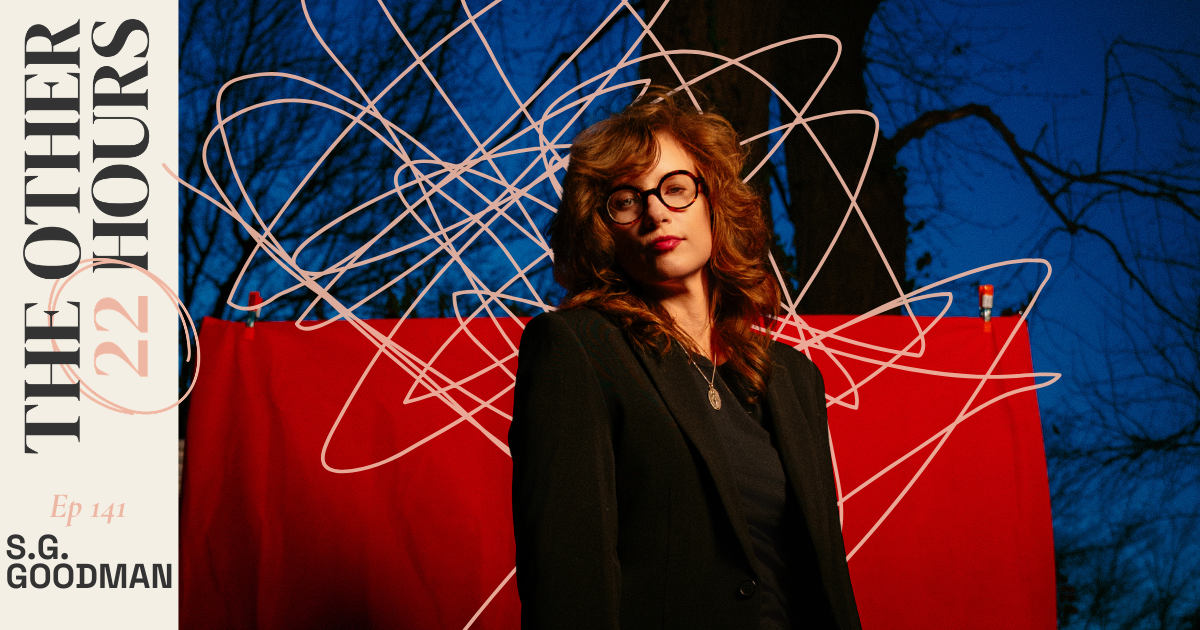
The Other 22 Hours: S.G. Goodman

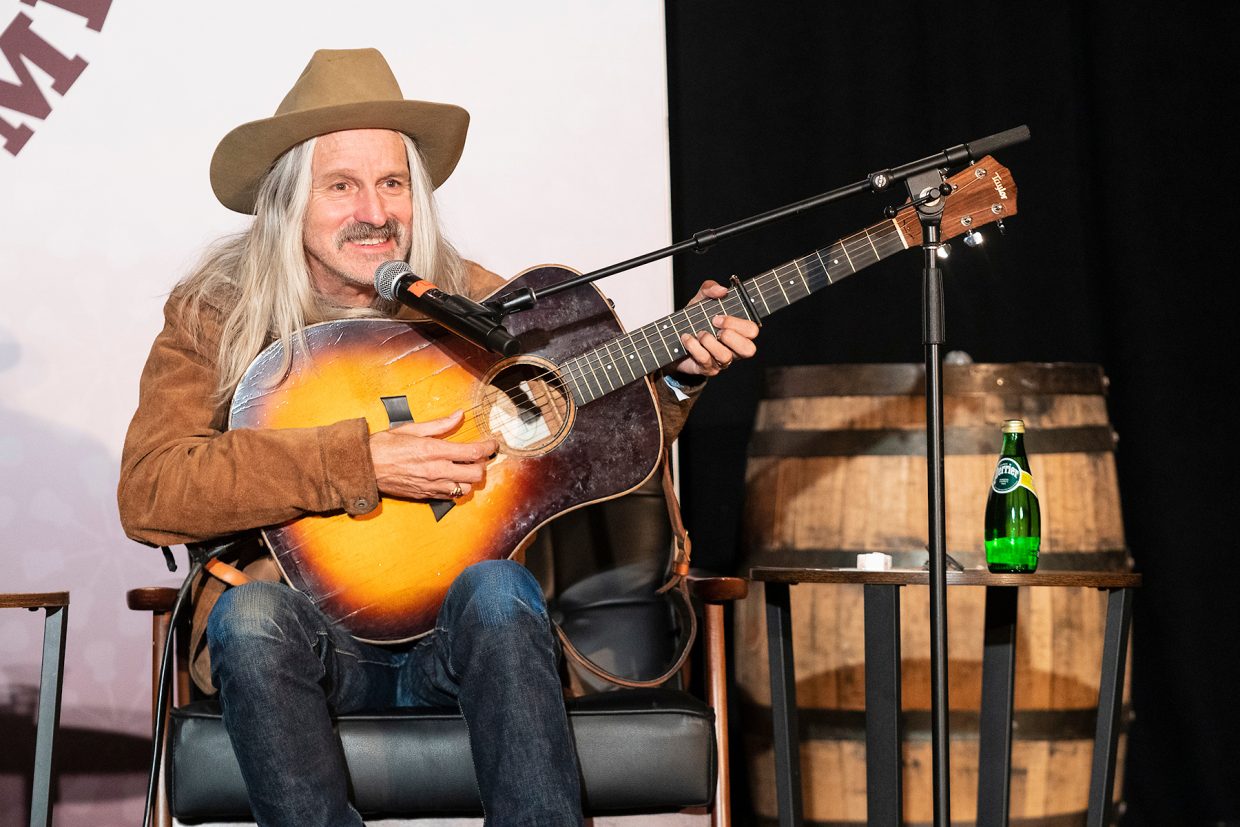
Singer-songwriter S.G. Goodman has earned critical acclaim, award nominations, and has worked with legends like Tyler Childers, Jason Isbell, and Jim James of My Morning Jacket. In this episode of the Other 22 Hours, we discuss the grueling physical and mental requirements of “making it.” From working manual labor to stay afloat while not on the road to navigating the complex realities of running a bona fide business, S.G. opens up about scarcity, OCD, and the hard-won wisdom of learning to drive the lawnmower instead of letting it drive you.

LISTEN: APPLE • SPOTIFY • AMAZON • MP3

In This Episode:

SG Goodman
Mas Tacos
Madison Cunningham
Jesse Welles

Go Deeper:

Watch: View this entire conversation on YouTube.
Explore: Find similar conversations in these themed playlists.
Connect: Join the conversation on Instagram.

The Other 22 Hours is hosted by Aaron Shafer-Haiss (producer, mixer, musician) and Michaela Anne (songwriter, artist, creative coach). More about Aaron’s workMore about Michaela Anne’s work.


Produced by Aaron Shafer-Haiss. Original music written, performed and produced by Aaron Shafer-Haiss.

Photo Credit: Ryan Hartley

The Steel Wheels’ Songs for Humans, by Humans

It’s common these days to wring hands over the many ways powerful tech companies have meddled, without permission, in how we discover and listen to music (among other things). It’s just as common to fearfully declare that music’s good old days are past and gone. But after 20 years as a working band, we know that the strength of community through music is much more enduring; and we see it all the time.

There is no greater force than a group of people who are ready to share a joyful experience. It doesn’t matter if they’re gathering to jam, attend a concert, or anything else. People in community can create strong connections in a heartbeat, under almost any circumstances, and music is a powerful vehicle for it. Some days it feels harder than others to find that spark, but it’s always there if we come together and dig for it. Every day the pressure grows to strip the things we all have made and love for parts, but collectively we can raise our voices and push back. As a band, we’re choosing to resist that force and to keep building things. Together.

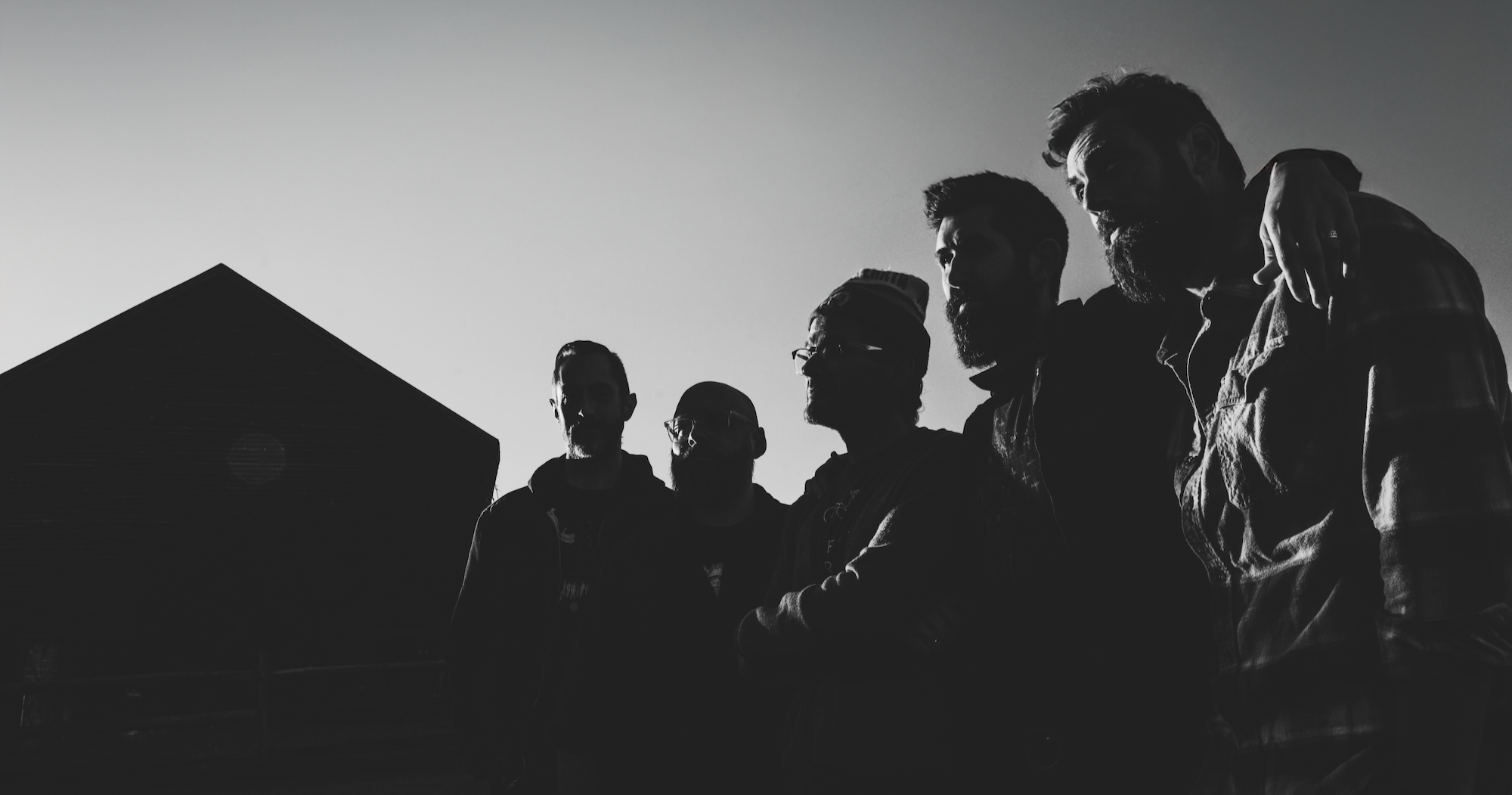
This playlist features artists that we feel musical and professional kinship with, bands that have been around and are well into their careers. The songs we chose come from albums that are worth spending time with over and over again. These folks have played lots and lots of gigs and revel in the energy of a great show as much as we do. You’ll also find some music from our 9th studio album, The Steel Wheels, too. Music that we made together in a room. – The Steel Wheels

“Easy” – The Steel Wheels

A breezy song with a swirling fiddle intro and a big question at its heart. We live in the future now, with the entire world available to us on the other side of our screens. So why are we lonelier than ever? If everything is supposed to be easy, why does it all feel so hard?

“Talk Is Cheap” – Dr. Dog

Because they inspired me with one incredible Bristol Rhythm & Roots Reunion set probably 15 years ago. Their old amps, their confident trailblazing of their sound that was clearly referential and respectful – but not chasing what a lot of other bands were chasing.

“Los Angeles” – Big Thief

An artist’s job is to remain open and soft to the world and to distill all that pain and joy into work that transmits emotion across space and time. Somehow, Big Thief seems to only become less jaded with time, maintaining curiosity and exploration as part of their creative process.

“Go Back” – The Steel Wheels

All deep relationships come with joy and with pain. To be rid of one you would also lose the other. It’s part of lived experience, this is a reminder to embrace all of it. True connection is worth it.

“Waiting For The Sun” – The Jayhawks

The Jayhawks are a band that prove you can continue to forge your own way and make it through the highs and lows. I was still really just a kid when I discovered them through some older cats I was playing with at the time. Son Volt and Wilco were very much in the alt-country scene and the Jayhawks just had something a bit different going on.

“Worried About The Weather” – Greensky Bluegrass

I love the way this song pivots between the anxiety of pushing forward through uncertainty and the breezy delight of taking a moment to enjoy the journey. There’s momentum to both things and “Weather” has tons of it.

“Keep On Dancing” – The Steel Wheels

Let’s take a break from responsibilities to just see ourselves and each other. Don’t forget to breathe and to appreciate the unadorned peace that can fill the spaces between us.

“I And Love And You” – The Avett Brothers

Even a track like this, one full of solitary stillness, shows the Avetts’ songs are packed with other people. They always remind me that I’m not as alone as I often feel. You can sense the presence of old partners and family throughout this song even though the speaker is alone in their car.

“Valerie” – The Brothers Comatose

These guys are everybody’s friends. Maybe the acoustic Dawes? I don’t know. We’ve known them a long time and they keep bringing joy and fun with warmth and grounded songs that don’t rely too heavily on bluegrass tropes.

“Sway / Endless Highway (Pt. 2)” – Watchhouse

Watchhouse invest deep thought into every lyric and intention into every note without ever seeming to overthink their process or get held back by previous work. “Sway / Endless Highway (Pt. 2)” demonstrates how the band is constantly in conversation, transitioning between tempos and driving down into a deep groove with a breeziness that belies the technical mastery of their acoustic instruments. At a Watchhouse show, the crowd will hang on every note and every silence, sharing a reverence for the song with the band.

“Slow Rise (to the middle)” – The Wood Brothers

Oliver, Chris, and Jano seem to be propelled forward by some groove force that penetrates everything they do and they invite listeners to join in on the funky joy. Their track “Slow Rise (to the middle)” tips a hat to their musical journey. To be in an audience is to get lost in the moment, only to occasionally remind yourself how wild it is that all the sounds coming from the stage emanate from just three musicians.

“Way Down Yonder ” – Chatham County Line

I first heard Chatham County Line when I opened for them at The Livery in Benton Harbor, Michigan, with a jamgrass band I was in, probably 20 years ago. They were tight and had their act together. I was blown away by their professionalism and it made a big impact on me. I will never forget that moment and I’m still inspired by their creativity and longevity as a band.


Photo Credit: Monik Geisel

Becca Stevens Strips It All Back on ‘Maple to Paper’

In her dynamic, restless career, Becca Stevens plans to never repeat herself, like the proverbial waterway that’s never the same river twice.

Since being noticed by New York Times jazz critic Nate Chinen in 2008 as a 24-year-old “best kept secret,” she’s collaborated with: David Crosby and his Lighthouse Band; jazz orchestra Snarky Puppy; the modernist ensemble Kneebody; pianist Brad Mehldau; harmony genius Jacob Collier; the neo-classical Attacca Quartet; and others. Her five solo studio albums, especially the mind-stretching and richly grooving Regina (2018) and Wonderbloom (2022), have mingled folk-grounded melodies and jazz-deep harmonies with pop dazzle. The common denominator has been her uncommon voice, which is conservatory-trained, but utterly unique and enthralling. She is, in my humble opinion, one of the finest overall musicians making song-based music today, a peer to 21st century savants St. Vincent and Madison Cunningham.

One frontier that remained for Stevens was, ironically, the most obvious for a singer-songwriter – the solo acoustic album. Her version of this venerable format finally arrived in late August with Maple to Paper, a 13-song collection that was shaped at every level by a series of landmark life events. After marrying Nathan Schram, violist in the Attacca Quartet, she gave birth to daughters in 2022 and 2024. Their family moved from New York to Princeton, New Jersey. Her mother died, as did her close collaborator and friend David Crosby.

Stevens alchemizes this season of change, love, and loss through songs that challenge conventional forms with rich and fearless lyrics that play at times like Emily Dickinson set to classical guitar. On the cover, she’s demurely naked behind a guitar. In the grooves, she’s as vulnerable as we’ve ever heard her. As she told me of her emotional multiverse of the past few years, “I felt uncomfortable about sharing it, but I also was like, well, if I’m going to do this, I might as well make it completely exposed.”

It’s easy to suppose that the changes of the past few years – moving, having children, losing your mom – made a solo acoustic record sound more appealing at both artistic and practical levels?

Becca Stevens: Absolutely, yeah. You’re spot on. Two things can be true. So the choice to do this album completely solo and from home both served the concept and integrity of the album. But it also was maybe the only way that I could have gotten it done during that time.

Just to put that into perspective, you know, there was the logistics of the grieving. The loss of my mom was super fresh, and I had a six-month-old who was part-time in daycare. And then towards the end of the recording and writing process, I was pregnant again. So there was the logistics of being a new mom, of having morning sickness, of being in a new place, of grieving my mom, and all of that was so much more possible to do from home. But I resisted it.

For a long time, I had the idea of recording the demos at home and then going into the studio. But I went back and forth a lot with Nic Hard, who mixed it with me. He also did Wonderbloom. And the deeper that we got into the material, the more crystal clear it was that the songs were best served if performed live – guitar and singing at the same time – and performed at home, where I was really in the character and in the feelings.

Did writing and making art feel like what you wanted to do under all those cross-cutting pressures and changes, or did you have to force yourself a bit through the work?

“Want” is maybe the wrong word. I felt like, at least for the grieving part, I had to do it because it was like I was going to explode if I didn’t do something. And it was a confusing loss – something that left me with a lot of questions. Ever since I was a kid, I’ve been somebody who processes confusing emotions through writing songs or stories, or art in some way.

I felt like I needed to do it. But also, yes, there were times where I just absolutely did not want to and just wanted to lie on the floor. And I had to find a way to incorporate that as part of the process, so that I could forgive myself. I literally had a futon on the floor of my workspace, where I told that part of my brain, “You are invited to lay down there whenever you need to. You’re not at a studio. The clock’s not ticking. You’re not paying for this.” I called it my Womb Room. And I would put on salt lamps and put the lights down really low and lay down. And then some of the songs came from that space.

Some of these feel more like classical art songs than folk songs, in that they’re not shaped around a set number of measures or predictable beats. Did they feel a bit like that to you?

Yeah, the song “Payin’ to be Apart” comes to mind. It definitely felt that way; a little less folky, more like poetry that just happens to be on a wave of music. It’s interesting to hear you say that, because in the writing process – harmonically and in the accompaniment – I took a much simpler approach than what I have done before, on Regina or Wonderbloom, on everything really. Because I put so much intention and honesty and, like, blood, sweat, and tears into the lyric, I gave myself permission to let the waters that it was floating on be a little less turbulent artistically, a little less complex and a little more like I was trying to cradle them and deliver them in a way that takes care of them and makes it easier to metabolize – or something.

Was your mindset different, knowing there’s not going to be the grid of the drum beat? Can drums be a bit of a cage sometimes?

Yeah, they can be a cage. But they can also be like something that’s really cozy to lean on in the arrangement. Like, I can drop everything and have it just be drums and vocals for a verse and it feels really good. But for this album, I set a goal that the songs are meant to be performed as just me and the guitar, because that’s how they were recorded. That means that whatever break that I gave you in Wonderbloom by stripping down the arrangement and going to drums now needs to be created with whatever tools I have by myself, whether that’s narrative, or a right hand finger pattern, or fill in the blank.

This made me wonder how much you have performed solo acoustically in your career, given the emphasis on arrangement on a lot of your records.

Quite a bit, yeah. I have a lot of respect for my bandmates. And if there were ever gigs that we were offered where I felt like I couldn’t cover their fee and treat them well, I would just take it solo. I’ve done that a lot. I’ve done a lot of solo tours. A lot of my writing has started out solo, and I have solo versions – for example, “You Didn’t Know,” the song from Wonderbloom that was inspired from watching the documentary about R. Kelly. That song, I poured my heart out solo and then stripped the solo version back when I was in the studio turning it into the Wonderbloom version.

Solo feels like a home base to me, and it’s something that I think I’ve resisted, because maybe I felt like it wouldn’t be enough. There’s this narrative, especially in the booking world, that they don’t want to book you unless you have more than one or two people on stage, because it’s not enough to create the energy to get the focus of the audience. And maybe it’s not loud enough, you know? I also had that in mind. This might not be very marketable, but I’ve got to do my best to just serve these songs to the best of my ability. And it’s got to get done anyway, because this is how I’m processing this part of my life,

Meanwhile, your tempo of collaborative work never seems to let up. I have my personal favorites, but can you address some of your favorite partnerships here in the last few years?

We haven’t mentioned this yet as part of the story of this record, but knee-deep in the writing and recording stages of this album, we also lost David Crosby. I’d already gotten punched in the face and then I was like, kicked on the ground. Not that it’s about me. The whole world grieved that loss. As I mentioned, when I lost my mom, it was a very complicated grieving process. I took a lot of inspiration from listening to albums like Sufjan Stevens’s Carrie & Lowell, where it’s okay for grief to be ugly and complicated and to show that. But with Croz, it was so sad, because I loved him so much, and I loved being in his band, and I loved writing music with him. But the presence that he held in my life didn’t diminish. I couldn’t hug him, but there was this sort of heavenly presence when I was writing the songs for this album, where I could hear him and see him in my mind, kind of rooting me along.

And tell me about Michael League of Snarky Puppy and the universe that he inhabits with the GroundUP record label, which has been supportive of you all this time. It’s such a fascinating record company. I feel like they’ve got a lot to teach the music industry about curation and cultivation of a tribe, and I’d love for you to remark on how that model has served you.

I like the word tribe. I often think of it as family, but I think tribe is even stronger. I feel safe with that label in a way that I’ve never felt safe with labels before, especially major ones, where, if you’re not performing exactly the way that they want you to, you get kind of put on a shelf, and then your art doesn’t get heard because, because you’re not pleasing the corporation.

With GroundUP, I’ve always felt like whatever I’m getting into is what they want me to do. They’re like, “Your health and happiness and artistry come first and if that’s what you need to make right now, we’re behind it.” And I can’t tell you how liberating and comforting that is as an artist to know that the people that are helping you put your music out have your back. And we all love each other too. We all play together and love each other too.

And speaking of Sufjan Stevens, you got to be on Broadway in his Illinoise musical. What did that add to your world?

Yeah, it was a limited run on Broadway and I did half of the run. So I had Isla, my second daughter, on February 24 of this year. And then I got a call from Timo Andres, who did the orchestrations, saying, “I know you’re on maternity leave. This is crazy. I shouldn’t even be calling you, but I can’t not think of you for this role. Is there a world where you would ever audition for this?” I was like, “Yeah, I could audition and see what happens…” and didn’t expect to get it. I came in with my newborn baby. I handed her to my manager, did the audition, and they called me within a day and said they’d love for me to do it.

Initially I thought, “There’s no way.” I’m giving you all of this extra detail because a huge part of the experience for me was the chaos and the balance of the life that I was living at home for the first half of that day in Princeton – nursing my baby and being a new mama – and then handing her to my husband and jumping on the train for two hours, going into the city just in time to perform, and then coming back home and doing it all again and nursing through the night. It was this superhuman thing that initially I thought, “Oh, there’s no way this is going to work.”

The whole experience was like a dream state – being on stage and singing that music, which I’ve loved for so long. And also, having it not be about me was very refreshing. I’m not the band leader and I’m singing someone else’s music as a narrative that’s coming from the bodies of the dancers. We can lean on the coziness of the production, and just enjoy it.

I would say coming out of that helped me to be less self-absorbed. The headspace that I was in for Maple to Paper was very me, me, me, me, me, me. And then Illinoise was like, “No, it’s not about you. It’s about being in service to something greater than you.” Whether you’re writing a song about your feelings or singing somebody else’s, that’s always what it’s been.


Editor’s Note: Need more Becca Stevens? Check out our recent Basic Folk conversation with Stevens here.

Photo Credit: Shervin Lainez

Photographer Mario Alcauter’s Beautiful Portraits From Park City Song Summit

In August earlier this year, BGS was on hand for the latest edition of Park City Song Summit in Park City, Utah. An intentional and unique event focusing on songwriting, songcraft, singer-songwriters, and more – like mental health, community, wellness, and thought leadership from a musical and artistic perspective – PCSS is a premier event. It’s certainly one-of-a-kind, and in so many ways.

This year, the lineup included artists like Nathaniel Rateliff & the Night Sweats, Mavis Staples, Larkin Poe, Tank and the Bangas, Steve Poltz, Duane Betts, and many more, as well as programming like song summits, sound baths, and panels, conversations, and dialogues.

Beautiful Park City is the perfect home for such a festival, with stunning natural surroundings, an excellent art scene, incredible food and restaurants, but a relatively cozy and small-town feel.

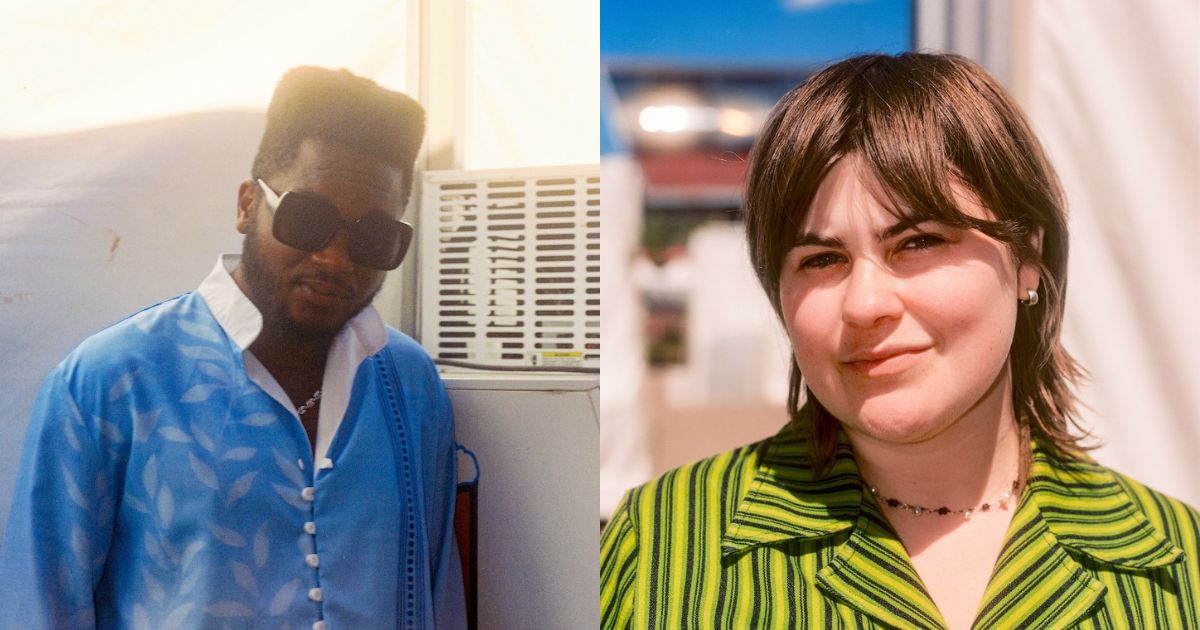
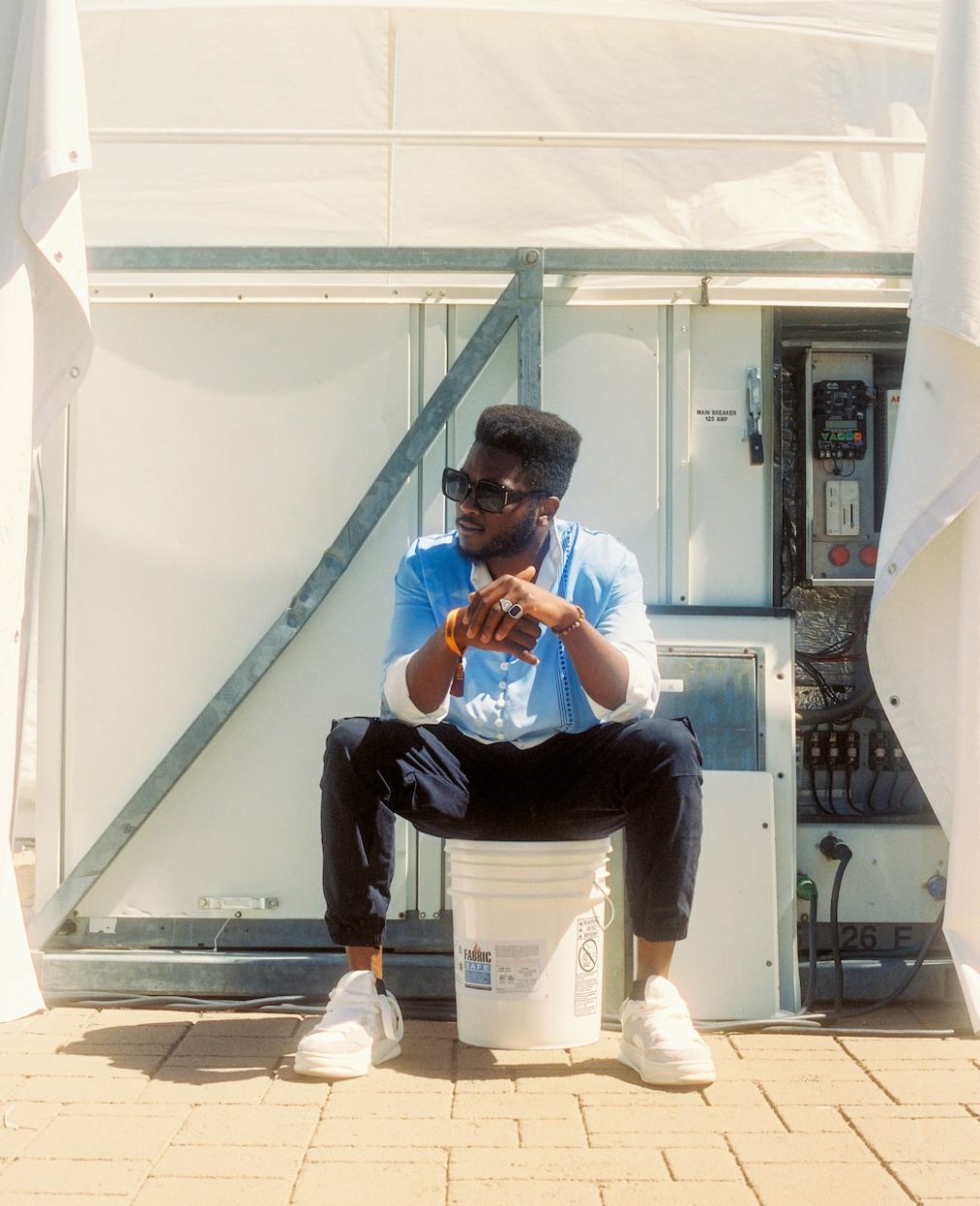
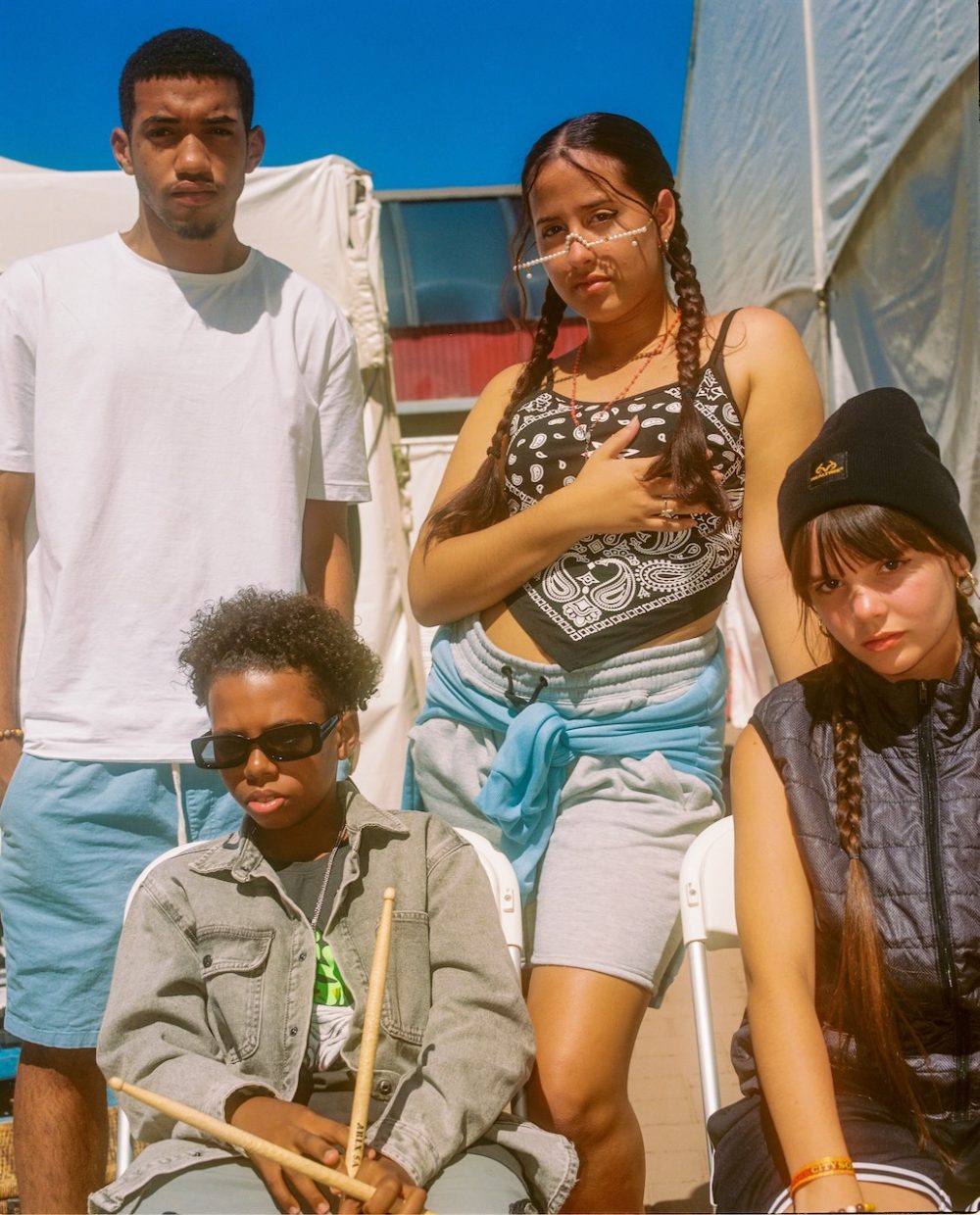
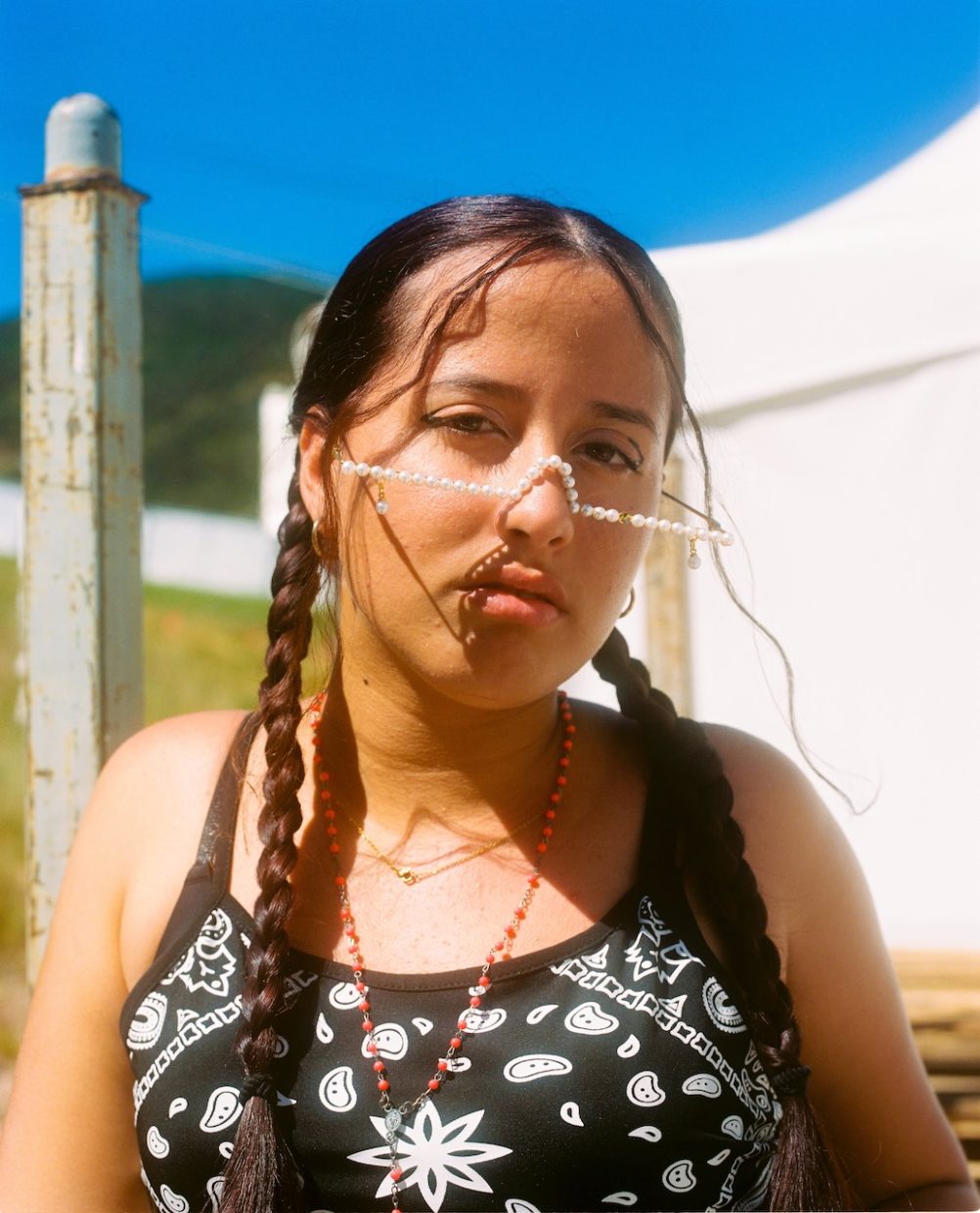
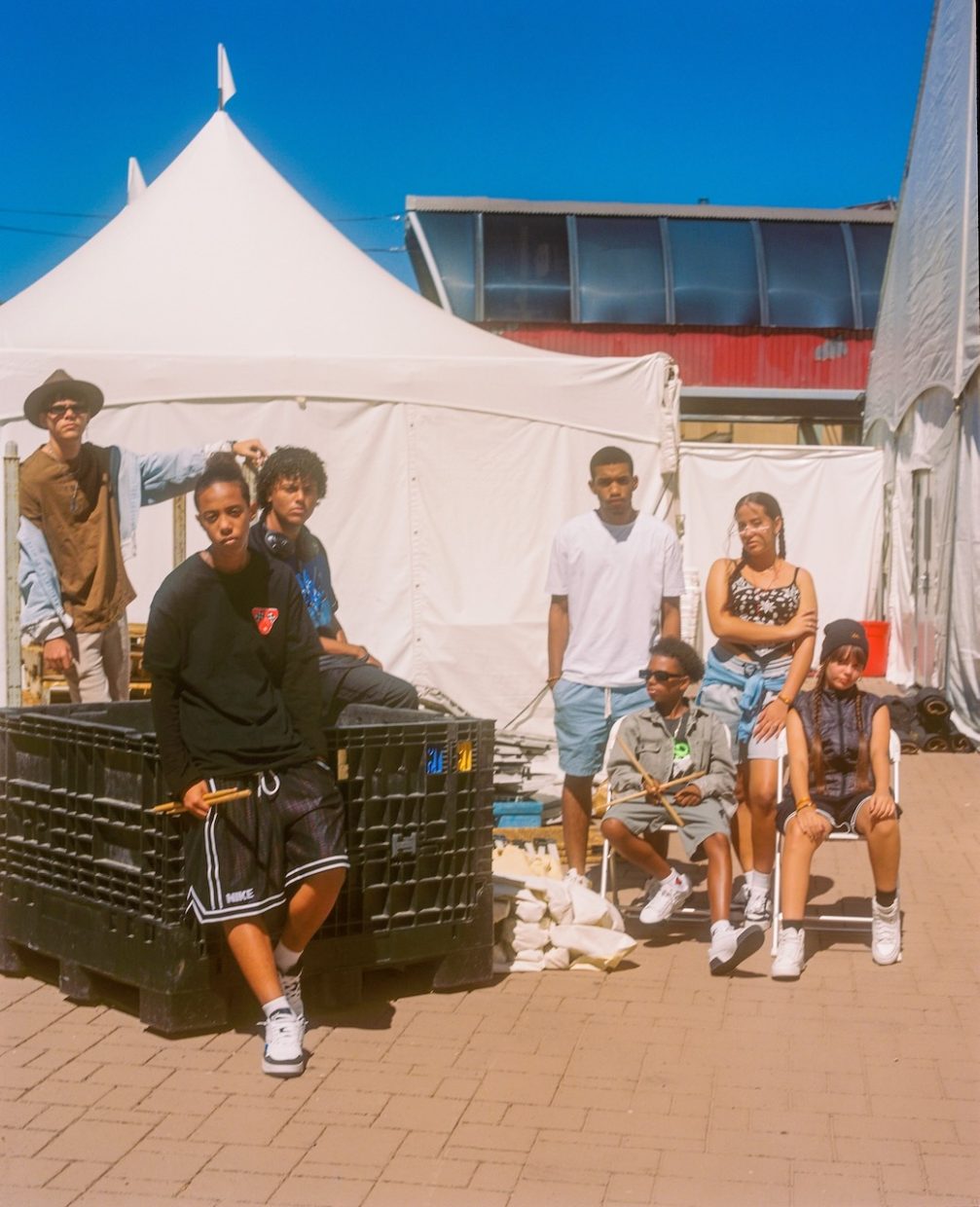
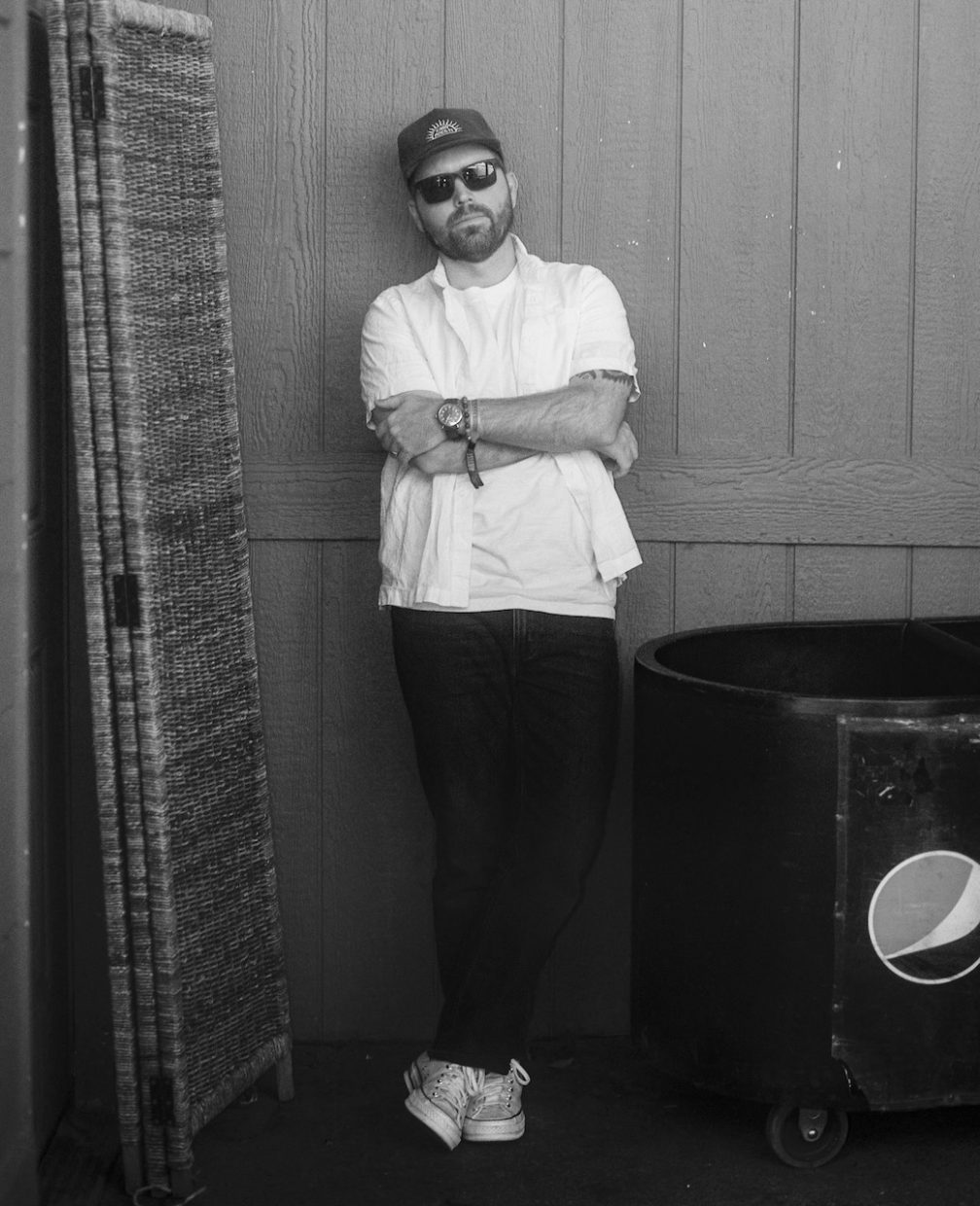
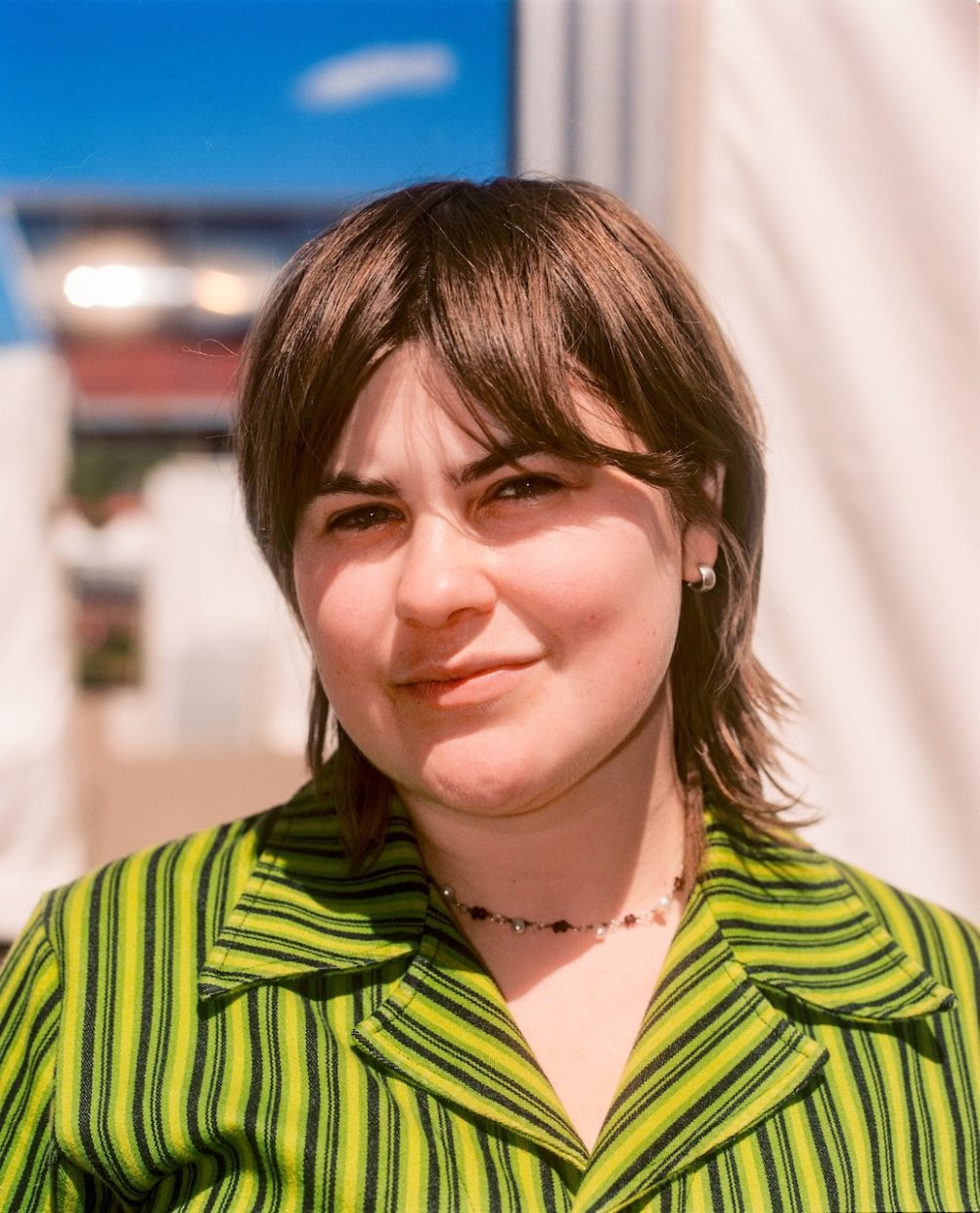
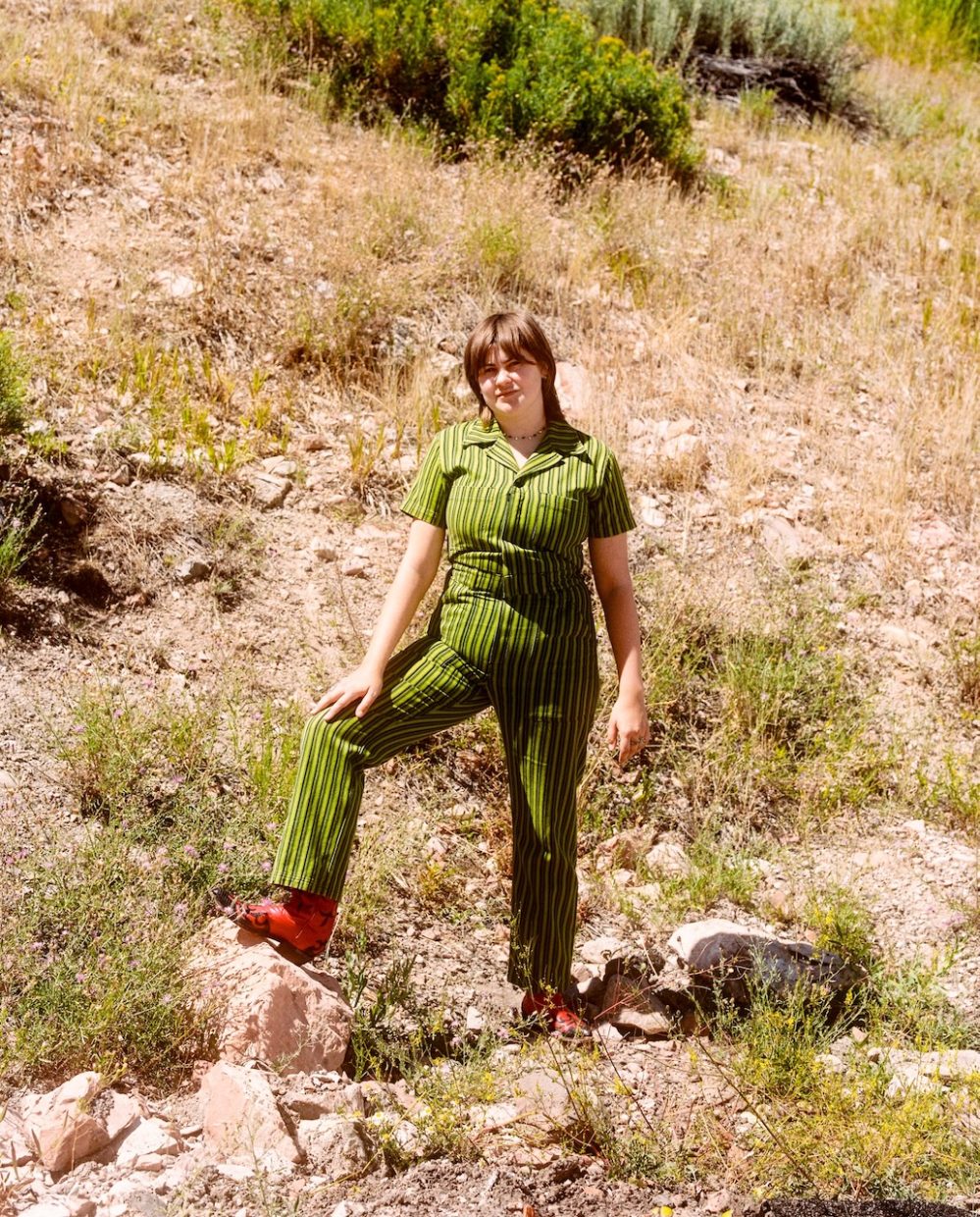
This year at PCSS, photographer Mario Alcauter shot a series of gorgeous portraits of many artists on the PCSS lineup. For BGS, Alcauter collects a handful of his favorite shots and subjects, sharing his thoughts on each.

Check out the photographs below – featuring artists and songwriters Cimafunk, Primera Linea, Sean Marshall, and Jobi Riccio – and make plans to join us in Utah for Park City Song Summit next year, August 14 to 16, 2025.

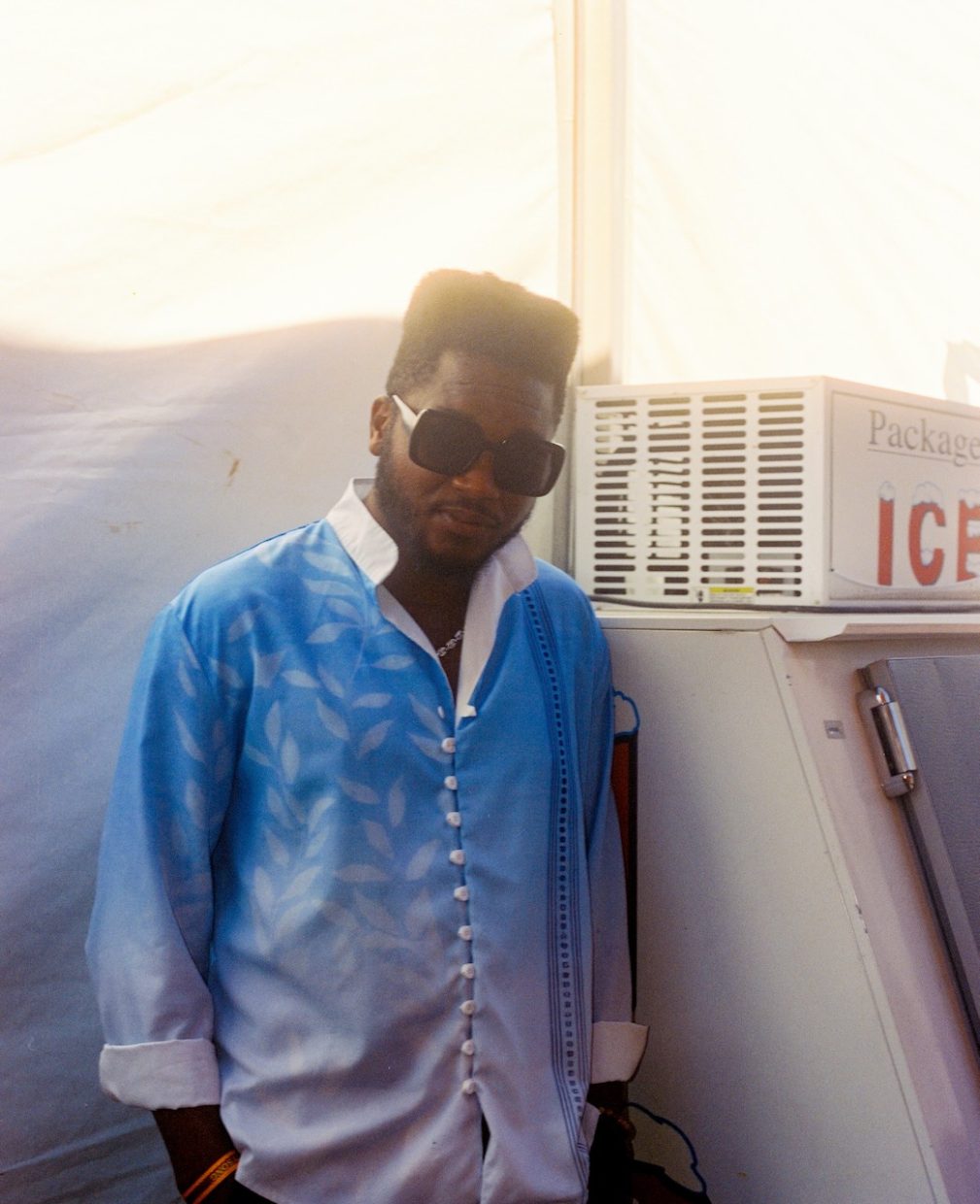
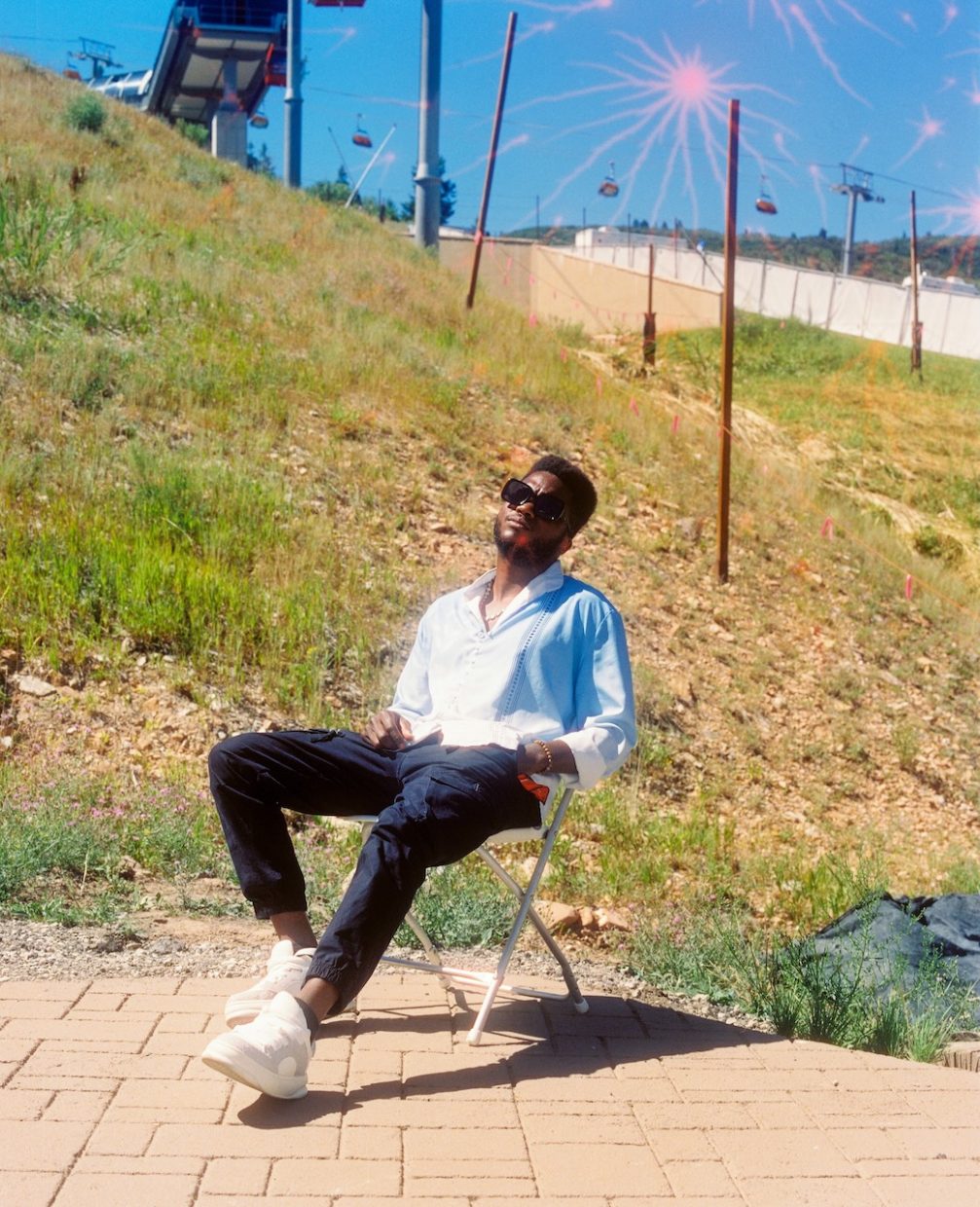
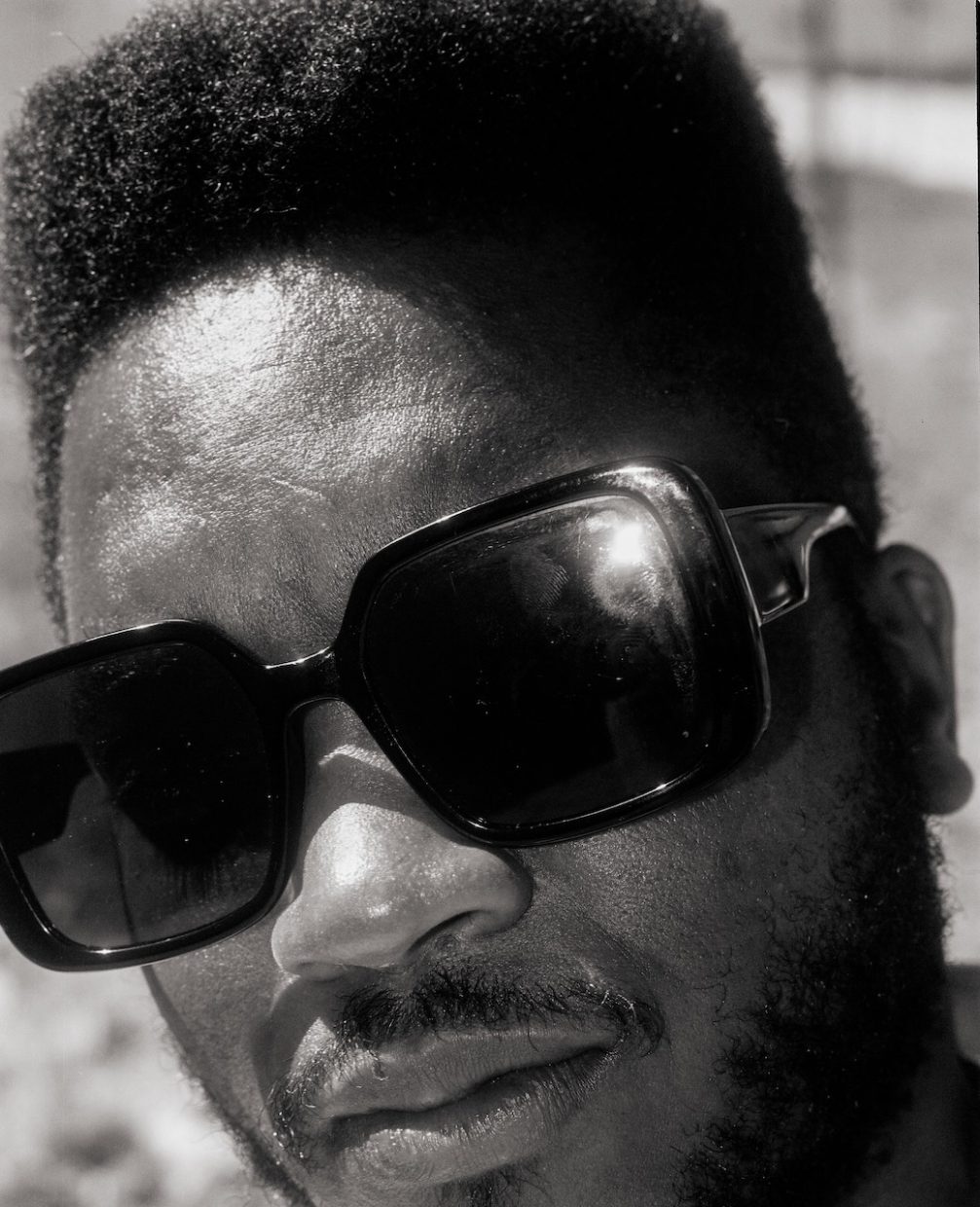
Cimafunk

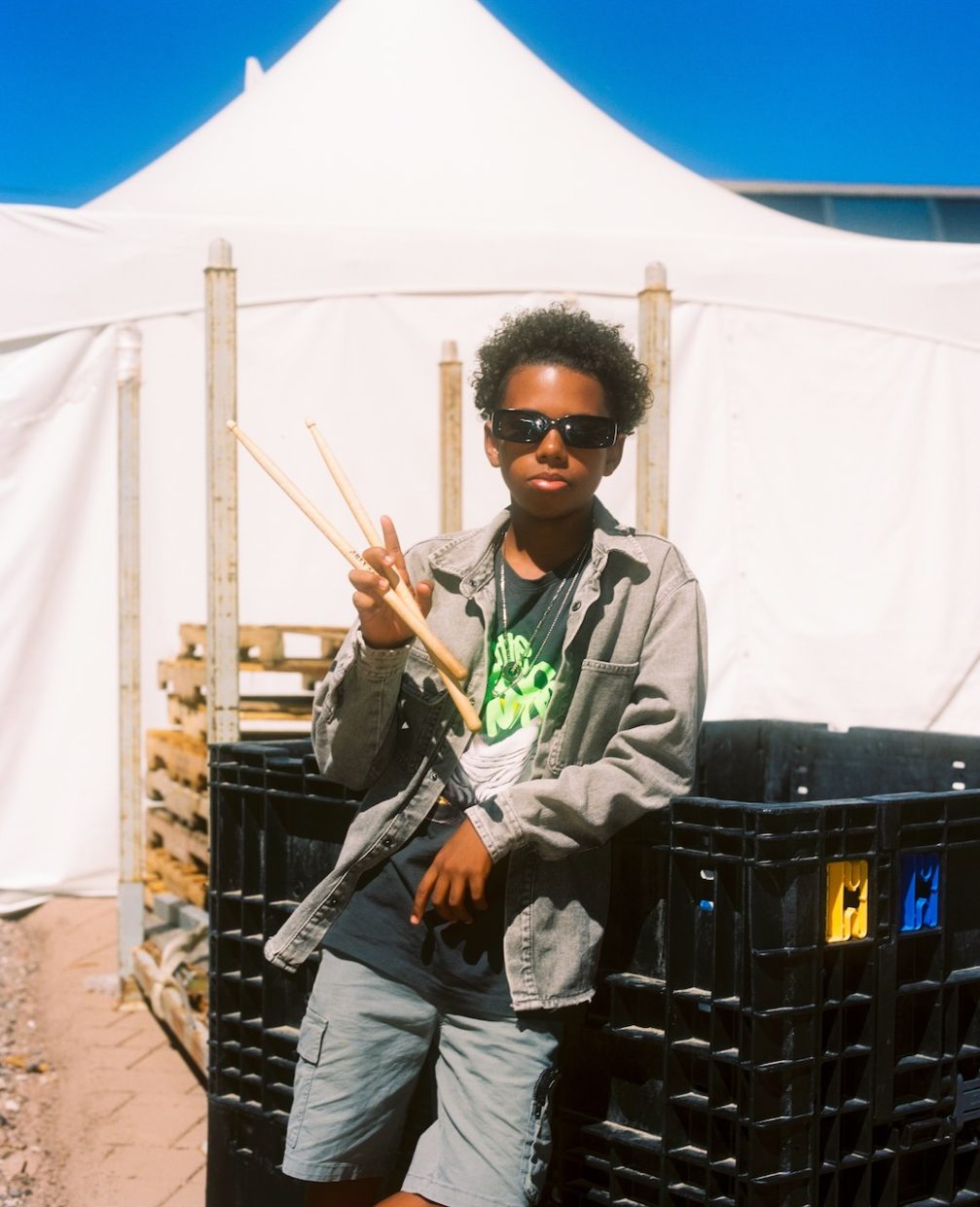
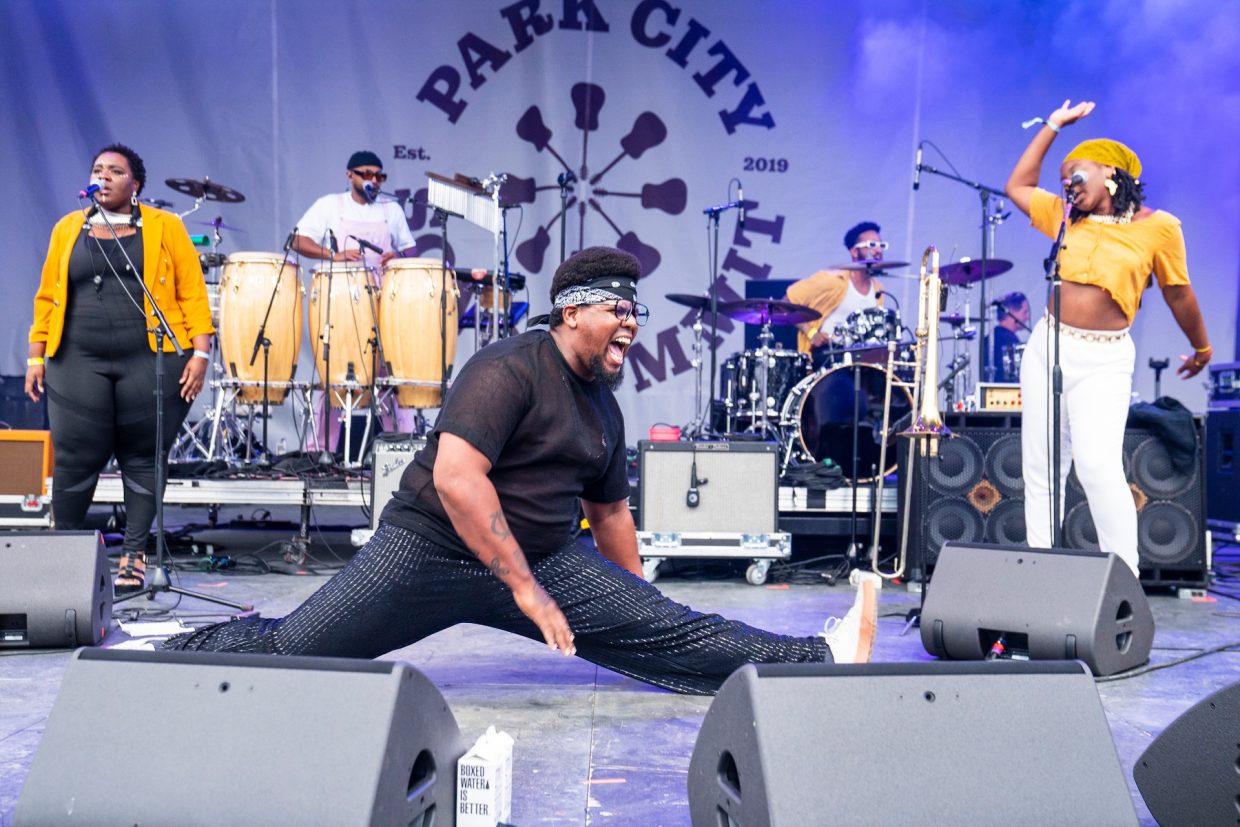
Mario Alcauter: “Channeling Cimafunk’s vibe – bold, soulful, and effortlessly cool, just like those iconic shades. This is something I wanted to capture with the short time I had with him. His music isn’t just sound; it’s a whole aesthetic.”


Primera Linea


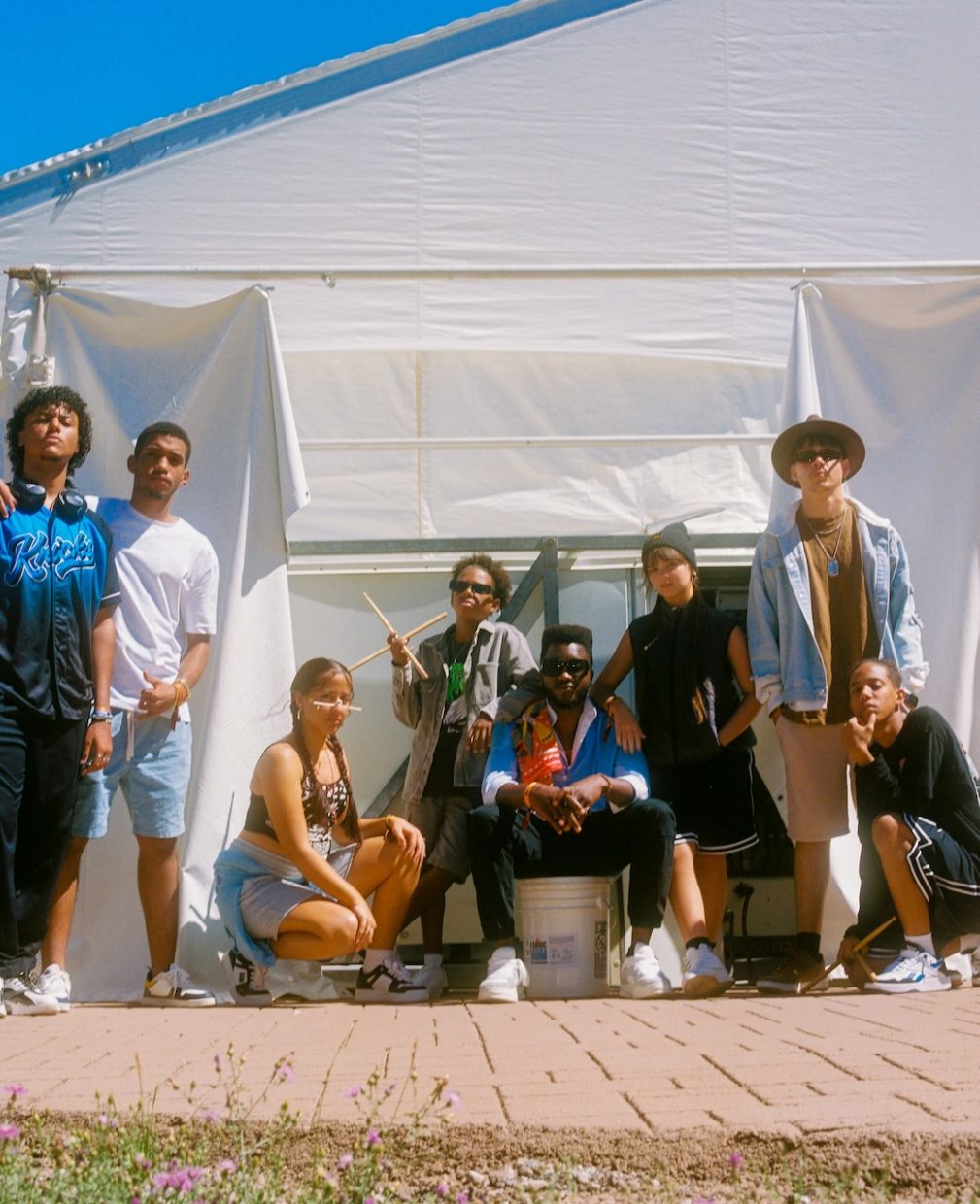
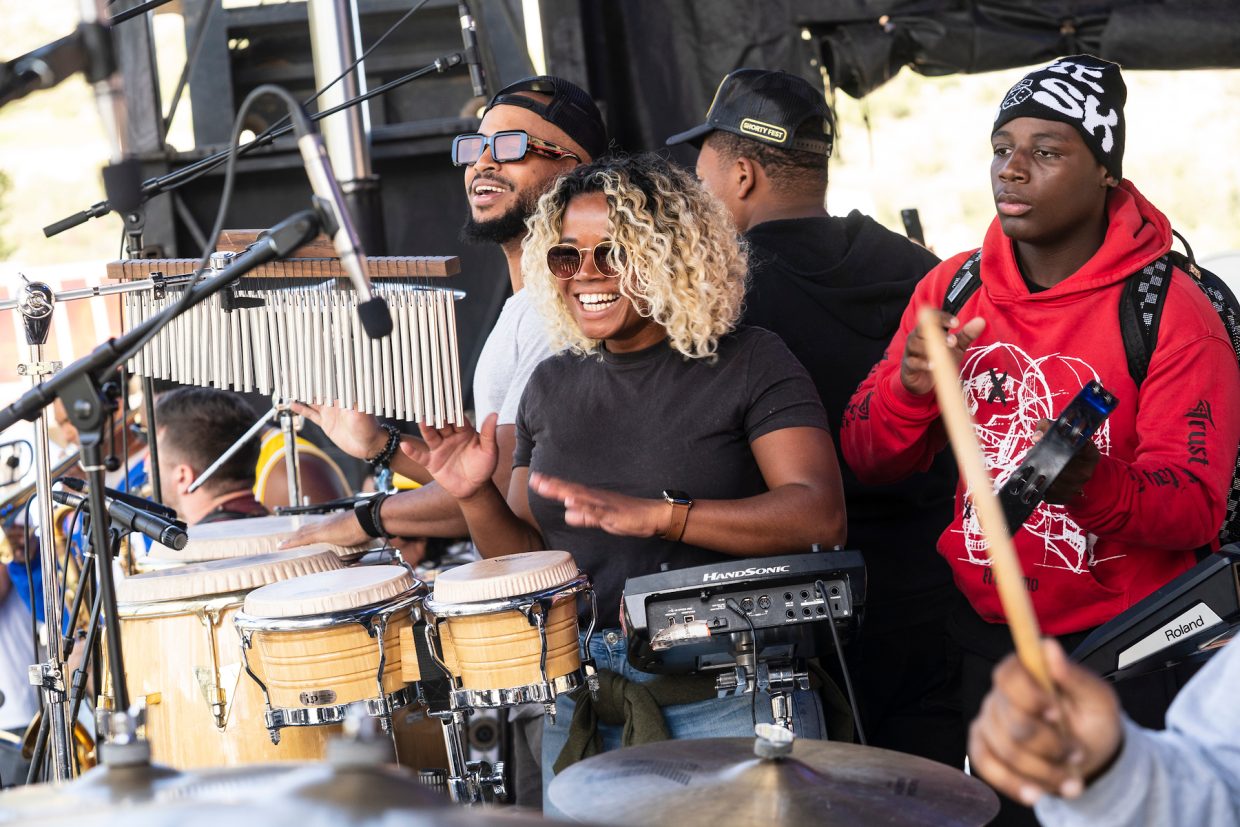
Mario Alcauter: “Photographing Primera Linea, I wanted to capture their raw, collective energy – young, grounded, and proud of their AfroCuban roots, fused with New Orleans funk. Each member brings their own style, yet together they stand as a united ‘First Line’ from Havana, ready to share their vibrant sound with the world. This shot shows their casual confidence and the pride they carry as they redefine tradition.”


Sean Marshall

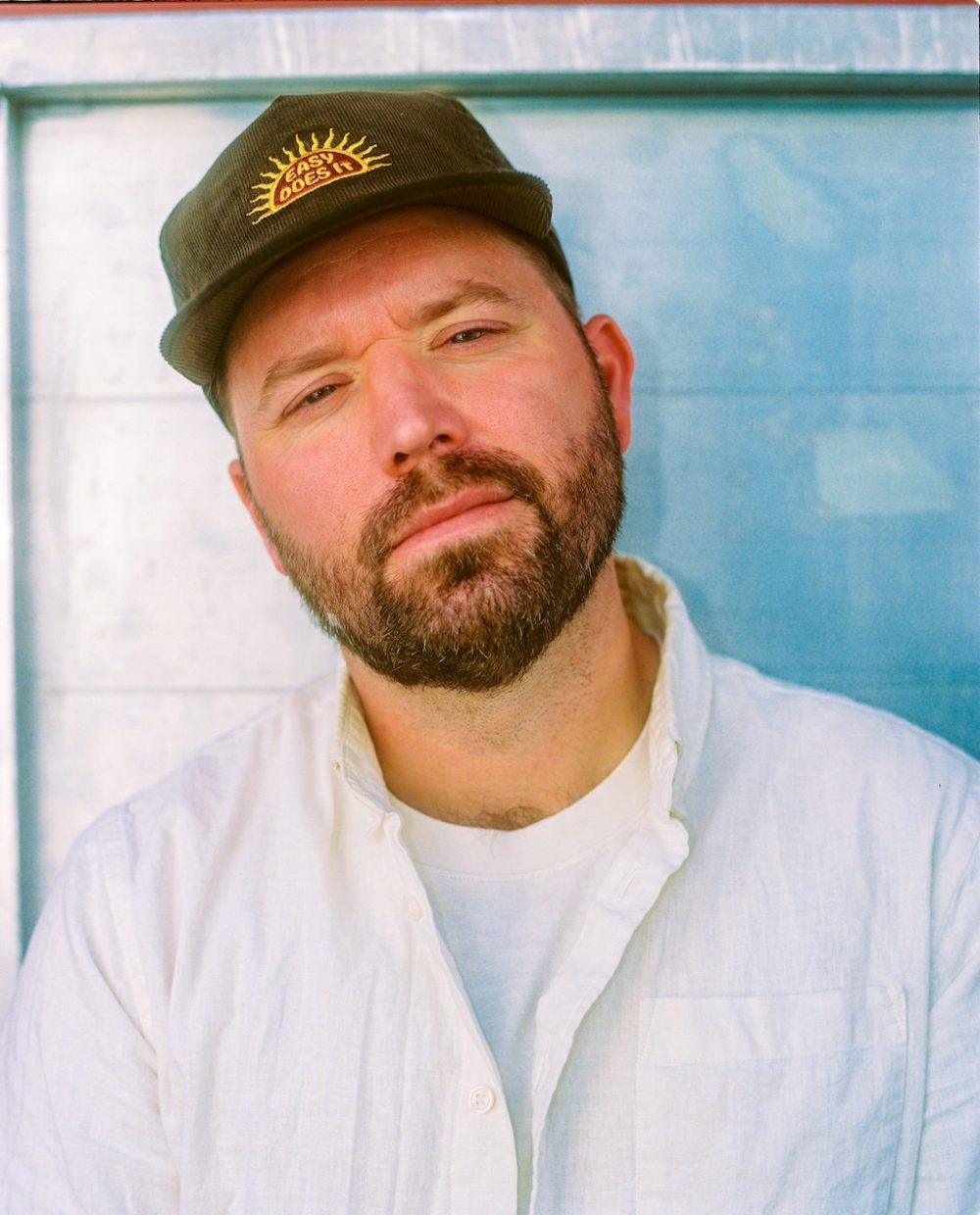
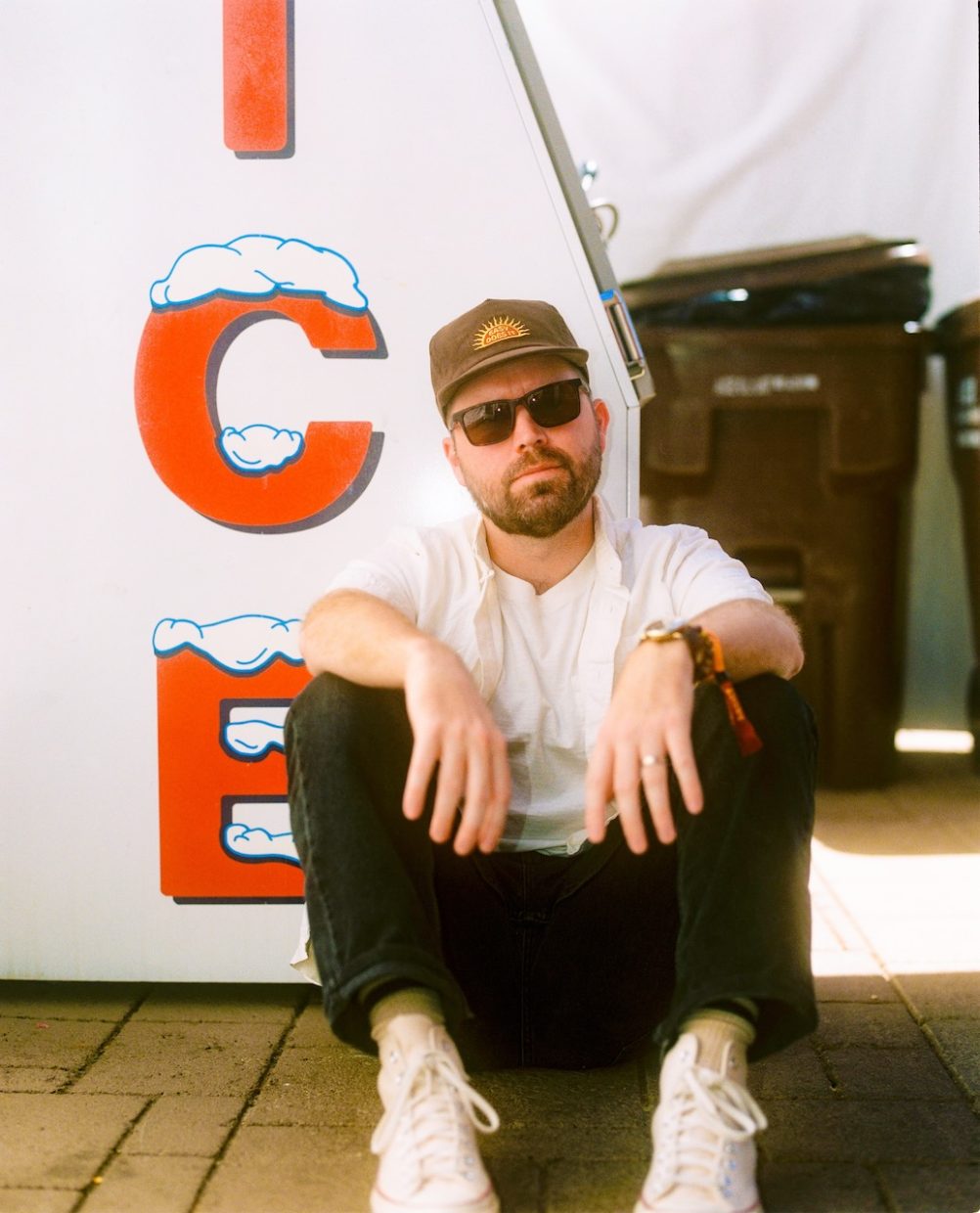
Mario Alcauter: “Shot Sean Marshall by an ice machine – low-key and real, just like his blend of folk, indie, and country. His music is as honest and I wanted to capture that in this environment.”


Jobi Riccio

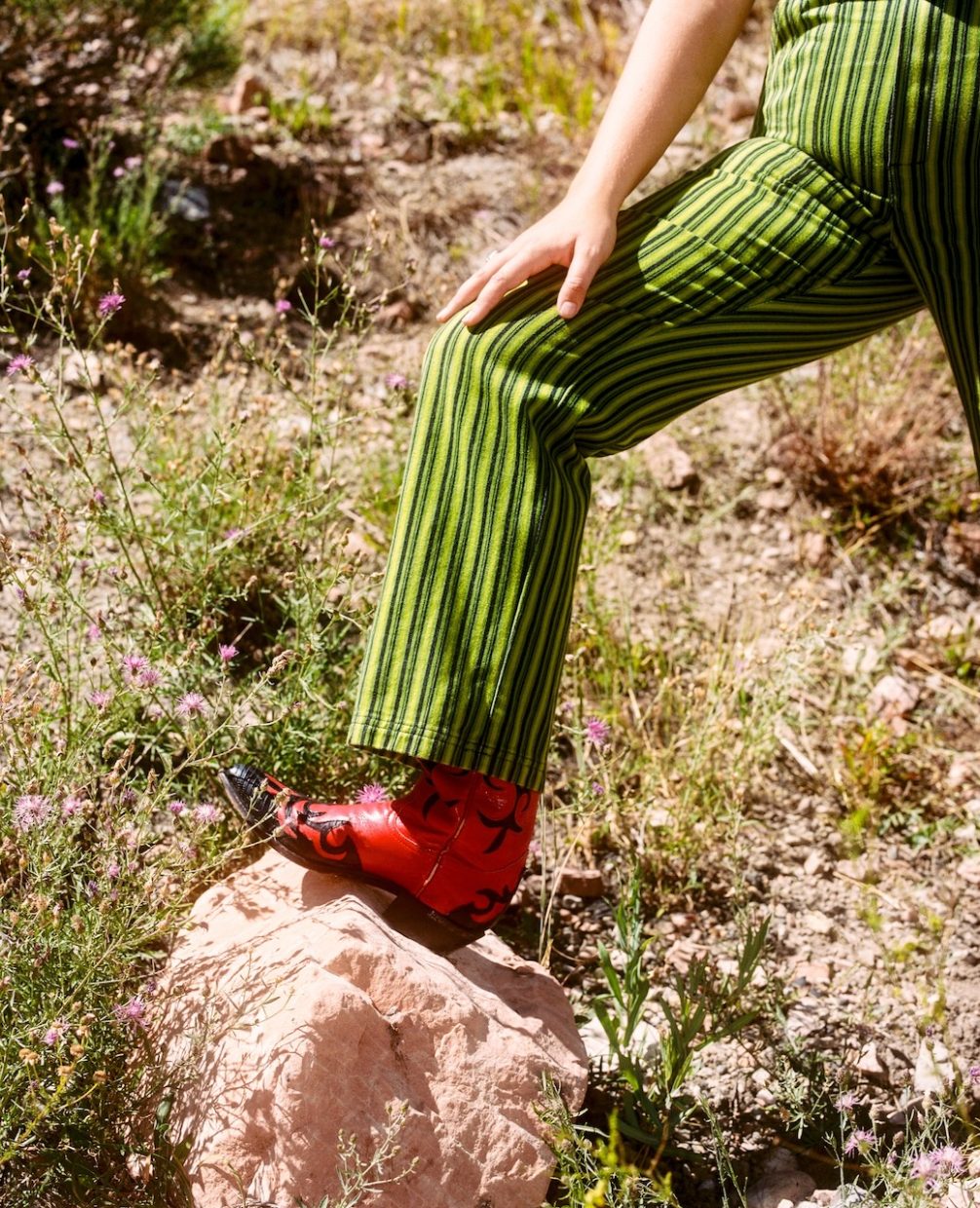
Mario Alcauter: “Capturing Jobi Riccio – authentic, grounded, and a bit rebellious, just like her music. Her songs weave together folk and Americana with a fresh, honest voice, and this outfit – bold stripes, red boots, and all – perfectly reflects that. I wanted this shot to feel like her sound: down-to-earth yet striking, with a personality all its own.”


Mario Alcauter is a Mexican photographer based in Utah who focuses on combining fashion and documentary-style images.

All photos: Mario Alcauter

When You Listen the Land Speaks

(Editor’s Note: Sign up here to receive Good Country issues when they launch, direct to your email inbox via Substack.)

An often nameless, faceless character present in all country music is land. In a genre commonly referred to as country & western, land is a constant presence, whether foreground or background, evoked or painted, longed-for or spurned. Another nameless, faceless character that comes hand-in-hand with country and its relationship to land is colonialism – white supremacy, genocide, and imperialism advanced by music that claims to simply center nostalgia, rurality, and an “old fashioned” way of doing things.

This kind of revisionist history in country music – a sanitization of this nation’s past and present, in order to fit into widespread myths, around which this genre and our national identity is built – is no less pernicious simply because it is common and pervasive. It’s important to not only acknowledge country’s relationship with land, but to also attempt to deconstruct the ways that these roots genres perpetuate colonialist ideals and norms.

Can Good Country exist if it must deny the history of the land it professes to love? Can Good Country exist if it must deny that there would be no “country & western” without Indigenous people? These are questions that we feel are essential to ask, right out of the gate, even if their answers are not so simple. Good Country hopes to be a place that can represent all kinds of country music, but it cannot do that if we accept, uninterrogated and unexamined, that country’s relationship to the land must be good, moral, wholesome, and just.

At the heart of the second edition of Counterpublic – an artistic activation described on its website as “a civic exhibition that weaves contemporary art into the life of St. Louis for three months every three years…” – just south of downtown and the towering Gateway Arch, sits Sugarloaf Mound. From April to July 2023, Counterpublic included twenty-five public art installations at a variety of locations, including Sugarloaf Mound, a sacred site for the Osage People and the last intact mound in the city. In earlier eras, the area was home to many thousands of Indigenous people – and the largest city in what would become the United States, Cahokia.

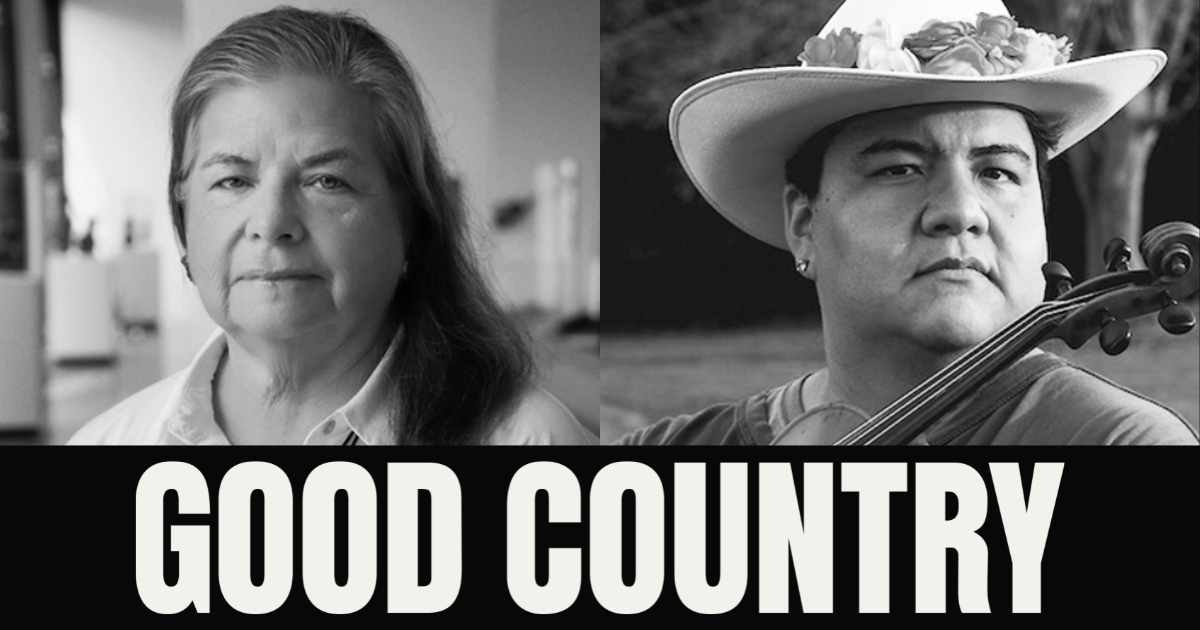
Adjacent to Sugarloaf Mound was the first Counterpublic installation and site, a collaborative piece that wove together sculpture, land, and music by mother-and-son artistic duo, Anita and Nokosee Fields. Anita Fields (Osage/Muscogee) is a fine artist who works in many media, but especially clay and textiles. Nokosee Fields (Osage/Cherokee/Muscogee) is a critically-acclaimed and in-demand old-time fiddler, equally at home in country and Americana as in old-time and string band traditions, and with a great deal of expertise on Indigenous fiddlers and Indigenous fiddling.

Their piece, WayBack, which was curated by Risa Puleo, is synopsized as such:

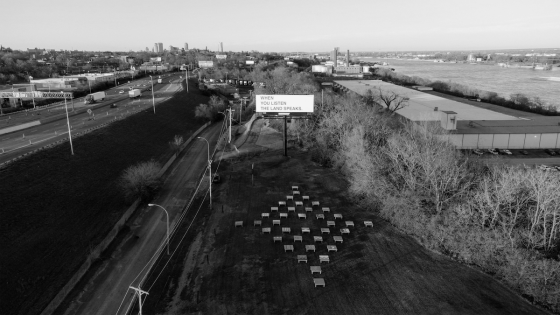
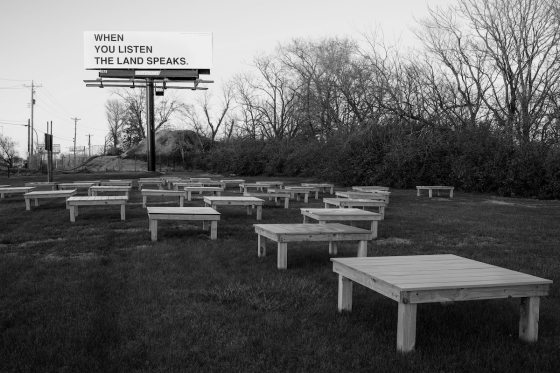
“Created in collaboration with her son Nokosee Fields (Osage/Cherokee/Muscogee), Anita Fields’s (Osage/Muscogee) WayBack invites visitors to gather in physical relation to each other, to Sugarloaf Mound, and to Osage ancestors, history, and legacy. When the Osage Nation purchased part of Sugarloaf Mound in 2007, the sacred site was reabsorbed into the Nation through the auspices of property, extending Osage territory from the site of their displacement in Oklahoma back to their ancestral homeland. Atop this site, forty platforms are installed, modeled after those found at Osage events in Oklahoma. Each platform is embellished with ribbons that reference Osage cosmologies of balance between sky, water, and earth. Nokosee Fields’s composition for wind instruments invites further consideration of the earth from which the mound was constructed, the sky that unfolds above the platforms, the sound of the Mississippi River on the banks below the quarry and the wind that flows through the surrounding trees that transform first into breath. After the exhibition, the platforms will travel from St. Louis to Tulsa where they will be distributed to Osage community members completing the link between the current home of the Osage Nation and its ancestral homelands.”

“Middle Waters,” the labyrinthine composition by Nokosee that acted as soundtrack for the installation, its platforms, and the adjacent mound (listen via the Counterpublic site here), perfectly illustrates how adept country music – and its textures, styles, and traditions – can be at capturing the ineffable, spiritual qualities of land and our relationships with it. Fiddle, field recordings, wind instruments, voices, and more intermingle in a piece that feels as organic and grounded as Anita’s sculptures.

Now, after the installation’s closing, each of the forty platforms constructed by Anita and displayed at the Counterpublic site will be moved to what’s now called Oklahoma, to be distributed to members of the Osage community and to have a continued life, further illustrating how art, music, and land gain all of their meaning from the communities that interact with and rely on them.

On the occasion of Good Country’s inaugural issue, we spoke to Anita & Nokosee Fields about WayBack, “Middle Waters,” the Counterpublic exhibition, and how humans, land, music, and art intersect and combine.

Could you just take me into the inspiration and the conception of WayBack and how you started working together and collaborating on the piece, not only with each other, but also with the land and with the site? Um, maybe Anita, do you want to start?

Anita Fields: Sure. Over two years ago now I was contacted by Risa Puelo, who was one of the curators chosen for the Counterpublic triennial in St. Louis. [Risa] asked if I would like to join and explained their purpose, what they were doing, and what their groundwork was for the triennial. She said, “I know your whole family are artists, so if you would like to invite somebody from your family to participate with you, that would be absolutely fine.”

But let’s begin with what their goal was, and that was to talk about the difficult histories of a place. St. Louis is certainly one of those. The reason that I was asked to join was that, for the Osage People, St. Louis, Missouri – and even further than that – is our ancestral homeland. It’s a large area, including St. Louis, Missouri, Arkansas, and even further than that in the beginning, migration from almost the East Coast to the Ohio Valley, to where our written and documented history begins in Missouri. So that was our homeland and there are documented villages there, still, and lots of history there, because after Lewis and Clark’s expedition we held the trade there. After Lewis and Clark, we started interacting real heavily and marrying with the French, partially because the French were trying to hold onto political power through the fur trade.

That is our history there [in St. Louis]. And then of course came displacement. A series of treaties started moving us out of that area, ‘til we came into Kansas. We had a reservation there and then we sold that reservation and with that money we bought what is our reservation today from the Cherokee Nation in Oklahoma. That’s it in a nutshell, and of course it’s way more complicated than that.

Nokosee and I don’t live in close proximity to one another, so I was like, “Oh my gosh, is this going to be able to work over the phone and Zoom? That’s going to be kind of difficult!” Then an opportunity arrived for me to go to Bogliasco, Italy for a month-long residency. I asked if I could bring a collaborator, and that’s where we landed for a month – on the Mediterranean, in this beautiful, beautiful, beautiful place, on the coast of Italy, not very far from Genoa. We schemed and dreamed and planned. And it was very difficult trying to arrive at a place where we were both happy.

Nokosee, I wonder how, as a songwriter and composer, you began approaching this? How did you take your musical vision and dovetail it with the physical vision, with the sculpture, and with the place? What was the process like as you sat down in Italy to start creating together?

Nokosee Fields: When we were both in Italy, I had a little field recording kit that I had been using. I would just roam around the grounds recording things. There’s the ocean right there, there are all these really intense waves happening, a lot of sounds to be had. There was also a poet, Robin Robertson, who was a fellow there at the foundation and I asked if he wanted to do any collaborating, because we had a lot of time there – it was a testament to the importance of having space and time to have creative thoughts. Which, I feel it’s really rare. For a lot of artists, you have to hustle a lot. We were there for one month, I was getting very regular sleep, I was eating three nourishing meals a day, and getting some exercise. And again, it’s also in this beautiful location, and we were surrounded by really smart artists. It was just a very stimulating, nourishing, and calm environment. I was able to actually have some visions and clarity. And I was able to indulge a lot of things – where, you know, most of the time I’m just barely piecing things together to make money or to pay rent.

It began with [Robertson] reciting a poem, then I started layering him reciting this poem with the waves and different sounds from around the grounds, manipulating them. I like the idea of using really intricate, small, detailed, fine sounds – using a really sensitive mic – and then turning that into something else. Or, pitching it, layering it on top of people’s voices or singing, or maybe something a little more recognizable.

For me, the space and time to have all of that creative flow happening – it took what felt like a month of just space to finally get somewhere with something. It was eye opening, a testament to needing space and time, because we kinda flip-flopped back and forth on what we were gonna do. I wouldn’t say we were struggling, it was just that we were in this new place and jet lagged. Our project was not hands-on, because it was just all conceptual, so it was a little difficult to land on something.

I do want to talk about the site, because – obviously I’ve only seen the photos – there’s an interesting juxtaposition of this kind of dreamlike soundscape for the piece with “Middle Waters” and then the site itself feeling somewhat shoehorned into modernity. You have the river there you have the highway here and of course there’s a billboard incorporated into the piece, as well. Anita, can you talk about how you wanted to play around with that juxtaposition with this sacred site that now is somewhat entrapped by modernity and by settler culture?

AF: There’s always a backstory surrounding my work, and how I came to be. I was born on the reservation and spent a lot of time with my grandmother, who was full blood, and I’ve chosen to be very close to my culture, even as an adult. As much as I could, I did what my grandmother did for me for my children, to make sure they have a place there, [in my culture]. In my own work, as I became older and older, I would be inspired by things that come from our worldview, which is a very complex worldview, but it’s very beautiful.

We still have those values. As a modern person, those values are still in place – you know, where I’m from. You can witness them in how we interact with one another, a lot of times. I think that is a very beautiful thing to know that what my ancestors left for us you can still recognize. A lot of my work surrounds that kind of thought, that there is another way of looking at the world that is not just a tunnel vision of, “We’re all like this and we’re going to go to the mall forever.”

And that’s our worldview; it’s way deeper than that. Through art, that’s a beautiful place to be able to tap into those kinds of thoughts and values. So I wanted, because that is our original homeland and that is such an important site, I wanted to be able to bring in this sense that we’re reclaiming that space again, marking it as ours, and [saying] this is who we are. I want people to know this is who we are.

Those wooden platforms are actually found throughout [our culture]. I’ll describe it to you this way, because this is the way I write about it: They have been around for a very long time. My earliest memories of them are when I was a young person, a young girl going around with my grandmother, and I would see them outside of large Osage homes or outside of our dances.
At camps, people have family camps, and these platforms would be there and you’d see older people putting their blanket down and sitting on it and then maybe somebody giving them a glass of lemonade or a Coke. And then they’d light up a cigarette and they’d be just visiting and laughing away with a relative or a friend.

And it always looked very calming and peaceful to me. Those are the kind of memories too that I often tap into. But it’s also much deeper than that. What I was seeing there was, yes peaceful and calming, that was happening, but I was also witnessing survivors who had gone through a lot just for us to be able to be here. There are always these links.

What better place to be able to bring those [platforms], because that is the place that we had to survive from, to move from St. Louis. I’m always interested in giving people a glimpse into who we are. It’s not my job to talk about ceremony or rituals or any of that kind of thing. But I want people, again, with that thought in mind, I want people to know who we are and that there’s a different way of looking at the world and it comes from very complex, intelligent thinking and is based on observing nature and the cosmos. These values and these systems are still here for us today.

With the platforms, we started by going to Google Maps, downloading maps and images, and the site was kind of big, so it wasn’t working with one platform. And we just kept going, “Guys, that platform is gonna drown in that big space!” It’s beautiful to be able to work with a great curator because between our conversations with all of us we decided, if the money can be found, maybe we can have more – it began there. That is how those arrived and then we topped them with designs that are familiar to us as Osage People. We painted those on there, designs that are used in our ribbon work clothing – which comes directly out of our interaction with the French, when we started trading for ribbons and needles and threads and thimbles and that kind of thing. This kind of interaction with the French and our time there totally changed our culture forever.

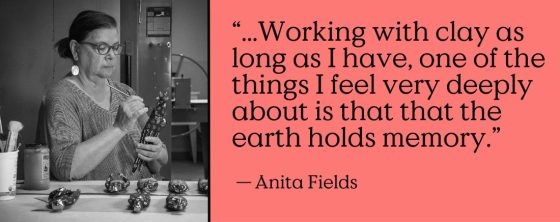
…You know, with working with clay as long as I have, one of the things I feel very deeply about is that the earth holds memory. That has been revealed to me, just because of how clay is made over time. I’m certain it holds the memories of who was there, wherever in the world.

I mean, in Italy, a couple of times when we would travel to these places and then we would read about the history, I felt that there, too. No matter where you’re at there are always the similarities to what has happened in history – “the conqueror” and “the conquered” – these stories are all threaded together and similar. I couldn’t see WayBack without sound in any way, shape, or form. It just wouldn’t have the punch that I was looking for.

I did want to ask, where are we at in the lifespan of the piece? I know that the plan is to distribute the platforms to Osage community members back around Tulsa. I just wonder where you’re at in that process?

AF: Yes, it was temporary and as soon as Counterpublic closed, I think it was within two weeks, they were picked up and shipped back to Tulsa to the [Tulsa Arts] Fellowship. The Fellowship is storing them for me. Then I got a call from the First Americans Museum in Oklahoma City, which is I think in its second year. They have a beautiful courtyard plaza and they have built a mound-like area where you can witness the solstices. The curator was at the Counterpublic closing and she said, “I want to bring these to First Americans Museum, what’s the plan for these as soon as this is over?” Well they took half of them and then half of them stayed here, displayed at a place called Guthrie Green in Tulsa for about a week. Yesterday, the ones from First Americans Art Museum were delivered to the Osage Nation. I want to distribute them to the Osage community. In my mind I’m like, “What am I going to do with 40 platforms when they return? What’s going to happen with these and who owns them?” And actually that was [curator Risa Puleo’s] suggestion: Is there any way these could be returned to the Osage community?

People are excited about it, those that know about it. Not a whole lot of people know. I’m trying to keep it [quiet] ‘til I get it all figured out, but they’re excited about it. I’m excited about it, too, because that is another way to make art accessible. To bring it back to where you come from. Because those folks are totally my inspiration, and I say this at every turn, whenever I have the opportunity. You’re my inspiration. Your grandmother, my grandmother, every interaction I’ve seen throughout my life. This is my inspiration.

Nokosee, I wonder, do you see a similar way of bringing “Middle Waters” to the people? Do you see a lifespan for that piece beyond this installation? Or do you think it’s a moment in time and it’s onto the next work?

NF: Yeah, I think it’s just a moment in time. I might edit it, but I’m pretty pleased with it. If anything, it’s more of a reason to want to do more sound installations, sound art kind of things. I’ve been wanting to transition to that kind of work. As much as I’ve enjoyed touring – and I’ll probably do it for as long as I can – I find it to be pretty taxing. It’s tons of fun, but I think I need something that’s a little more cerebral, a little more isolated, a little more supported, and also a place for my voice and creativity. I feel like I’m kind of waking up from an obsession where I just got into traditional American music, traditional fiddle. Now that I’m steeped in that world and I feel like I’m really a part of it, I also feel like there’s a lot of it I just don’t really care for.

This sounds really uppity, but making traditional fiddle music feels kind of separate from [country], it’s just melody. I like the foundational aspects of music and the research and tone, things like that. And I like it because it’s not really tied to lyrics, it’s not putting on a type of personality, like lyrical content [does].

That, to me, is often just perpetuating settler mythology about old-time music. There are a lot of things that could be said about old-time music that are also problematic. Instrumental music is where I really jive and get into stuff, but I’ve also had to constantly interface and participate in lots of country music or lyrical music that has content that, to me, just feels like propaganda with really rudimentary, basic understandings of the land.

It feels like a type of erasure. It’s just kind of designed that way – maybe not maliciously – but it’s just so deeply woven into how things work in this country. …I find a lot of country music today, a lot of the younger, popular stuff, it feels like it’s about convincing white people that they’re white or something. There’s this pseudo-woke take on country music, which I think is fine, it’s just not radical enough for me or something. It’s like it’s just enough for people to kind of maybe get their outlaw fix.

It still doesn’t work for me and I still find it very rudimentary and actually not very confrontational or very deep, as far as what’s actually going on in the world or on this continent.


Sign up here to receive Good Country issues when they launch, direct to your email inbox via Substack.

Lead Image: Anita & Nokosee Fields via Counterpublic.
Image of Anita Fields: Courtesy of the Artist.

Headline text from Anna Tsouhlarakis, “The Native Guide Project: STL.” Billboard and digital signage. Curator: New Red Order. Counterpublic 2023, Sugarloaf Mound Site.
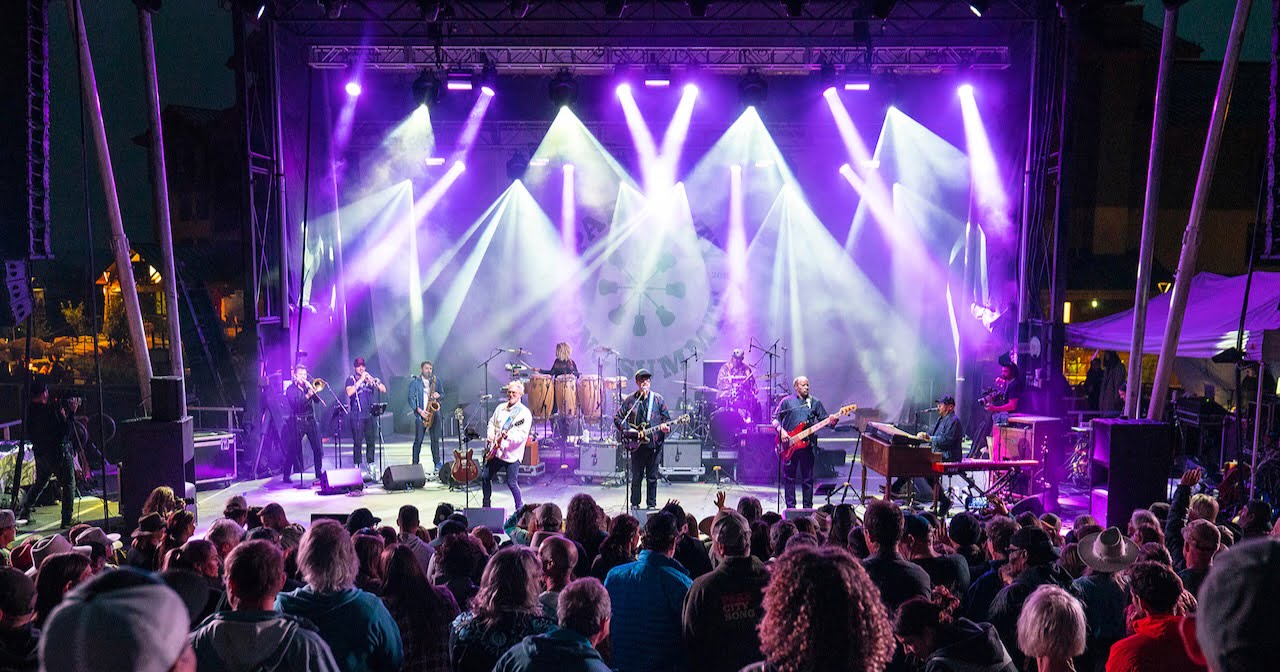
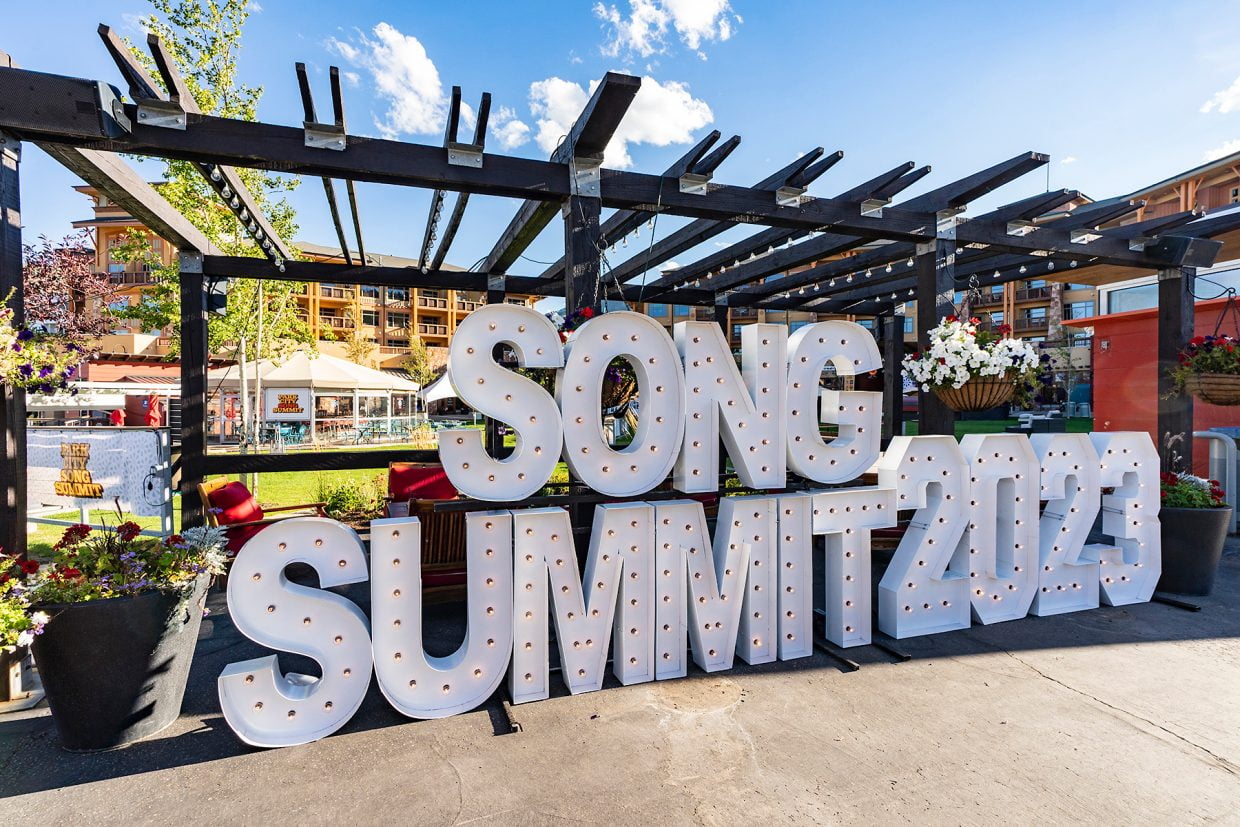
PHOTOS: Park City Song Summit 2023

[Editor’s Note: In September 2023, fine art photographer Erika Goldring (Getty Images, New York Times, Billboard) was on hand at Park City Song Summit in Utah to document the music and wellness event. Below, enjoy selections from her PCSS photographs and her reflections on this one of a kind gathering of songmakers.]

All in all, what moved me about Park City Song Summit was seeing artists and fans connect in a different way — more intimate shows, the opportunity to ask questions. We’re all just trying to make our way through this crazy world. Song Summit has created a community for those of us in the industry to have open and honest conversations about navigating personal struggles. – Erika Goldring, photographer

When I first heard about Park City Song Summit, I was like, “This is where I need to be!” It’s more than a music festival, it’s four days of music AND wellness! It’s a chance to take a deeper dive into the lives of the musicians I love, whether it’s hearing about someone’s creative process or what they do to maintain sanity on the road. No one is afraid to talk about mental health and recovery, and this is where the magic lies for me.
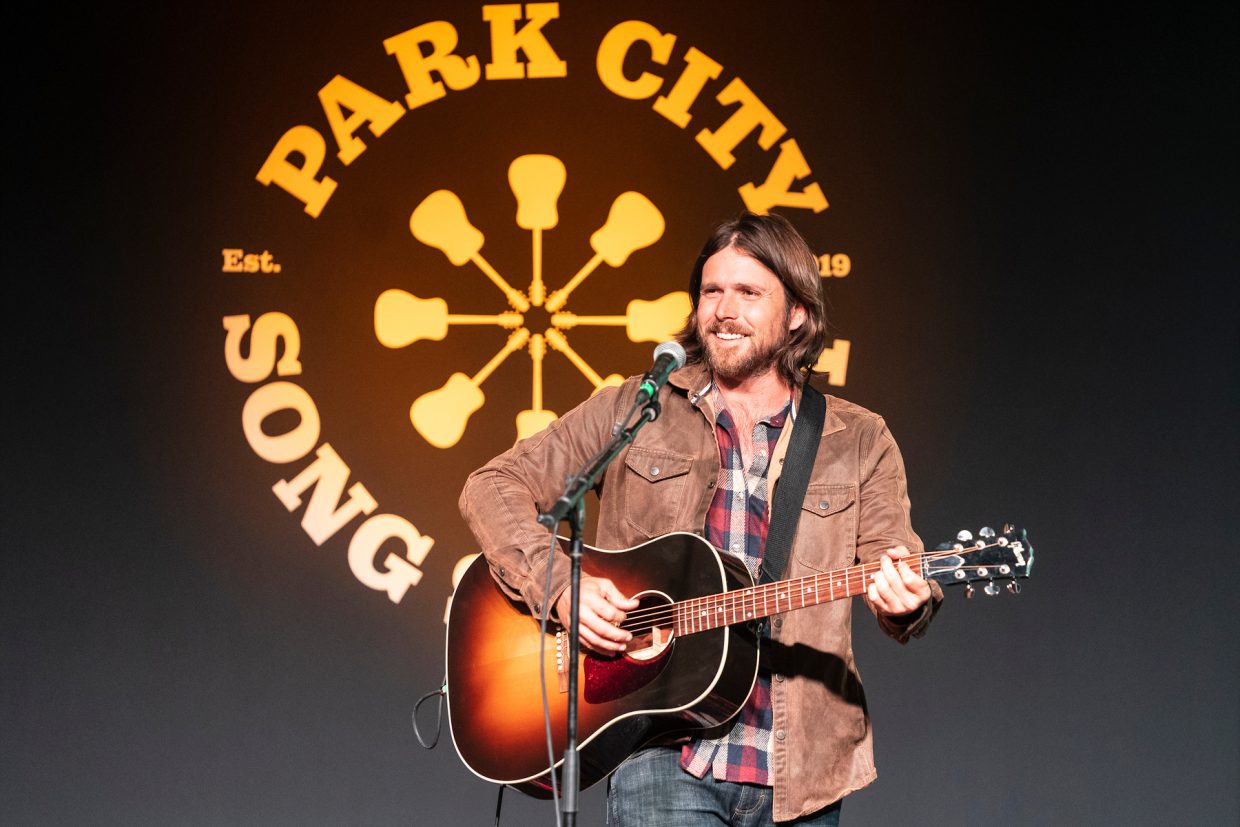
To see an artist do a solo acoustic set who doesn’t usually do that is always a treat. You know you’re getting something different. When Lukas Nelson sat down at the keyboard to do the title song of his last album, A Few Stars Apart, I got goosebumps — it felt so intimate and vulnerable. He did a few covers at the end of his set, including Pearl Jam’s “Breathe” and the Grateful Dead’s “Ripple.” I loved it, the audience loved it, we all joined in singing, and it was lovely to see him enjoying himself.
I first met Harold Owens at Imagine Recovery in New Orleans when MusiCares invited Ivan Neville to tell his recovery story. I have crossed paths with him many times since then. He’s helped a lot of people with substance abuse issues get into treatment.

Elliott Adnopoz, aka Ramblin Jack Elliott, a cowboy folksinger. The first time I saw him was on Arlo Guthrie’s Ridin’ on the City of New Orleans tour, post-Hurricane Katrina. He’s 92 years old and still at it! He sat in with Bob Weir for a cover of Bob Dylan’s “I’ll Be Your Baby Tonight.”

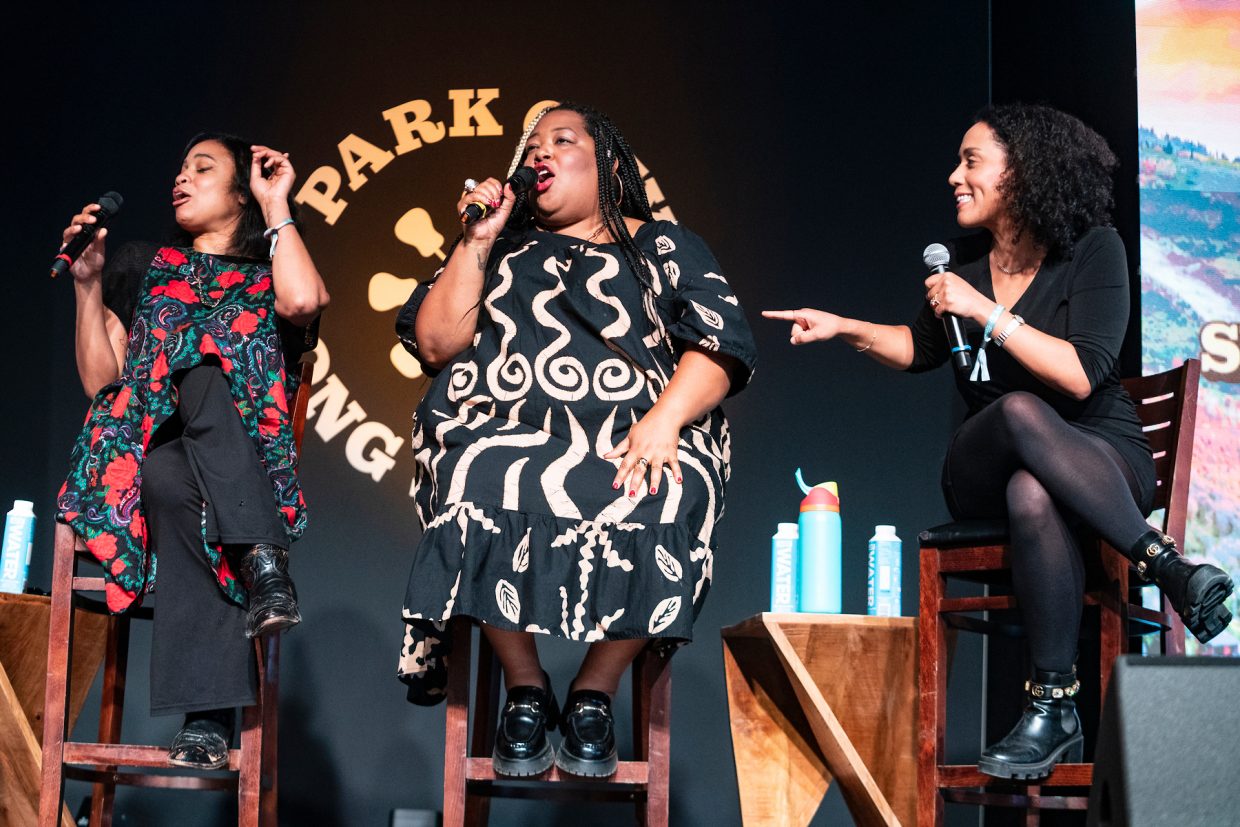
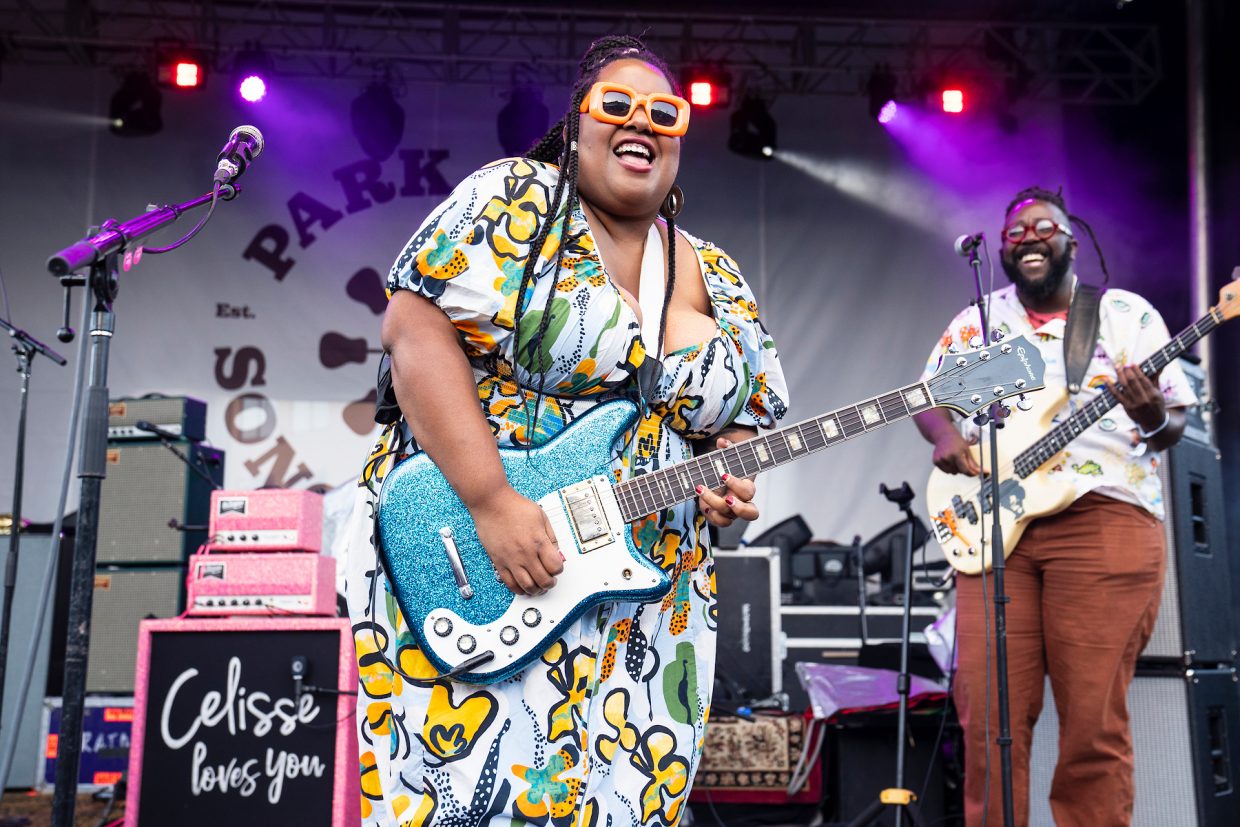
I was thrilled to see Caroline Randall Williams (right) announced as a panelist with Adia Victoria (left) and Celisse (center). She wrote a piece early on in the pandemic about Confederate monuments that really made me think in a different way. These are smart and eloquent women talking about the blues and loving every minute of it.

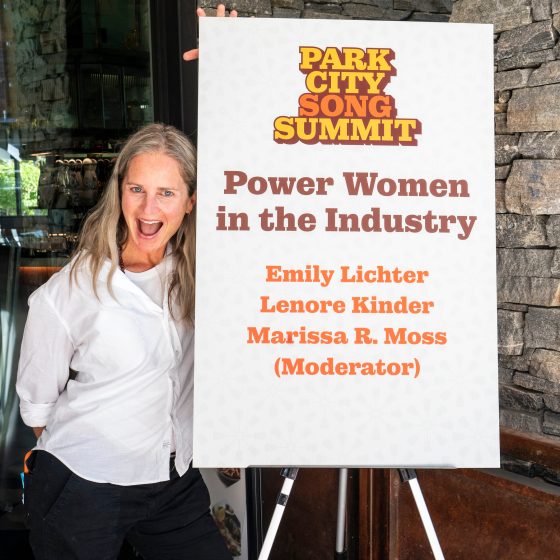
Emily Lichter has a great spirit. Not only did she speak about managing artists, but she also brought Leta Herman from Alchemy Healing Center and speaker Ruthie Lindsey to Song Summit. Hilary Saunders subbed for Marissa Moss as moderator, due to an illness, and did a great job.

I would say Steve Poltz is a stand-up comedian first and a songwriter second. He wrote “You Were Meant for Me” with Jewel. I met him about 20 years ago when he was still drinking. He’s sober now and his stories are hysterical. I left his panel with a smile on my face and then went to watch him teach people how to write songs. I have no musical abilities. I don’t know how to play any instrument and would not even know where to begin to write a song… maybe lyrics, but definitely not music. This creative process is foreign to me even though music is my life!


At 40, Danielle Ponder quit her job as a public defender to launch a career in music. She is a reminder to be brave and follow your dreams. She can command a crowd with her voice, sometimes delicate and sometimes roaring. While shooting the second photo, I saw this halo of light appear the very moment she belted out “Run!” during her cover of Radiohead’s “Creep” that ended her set.

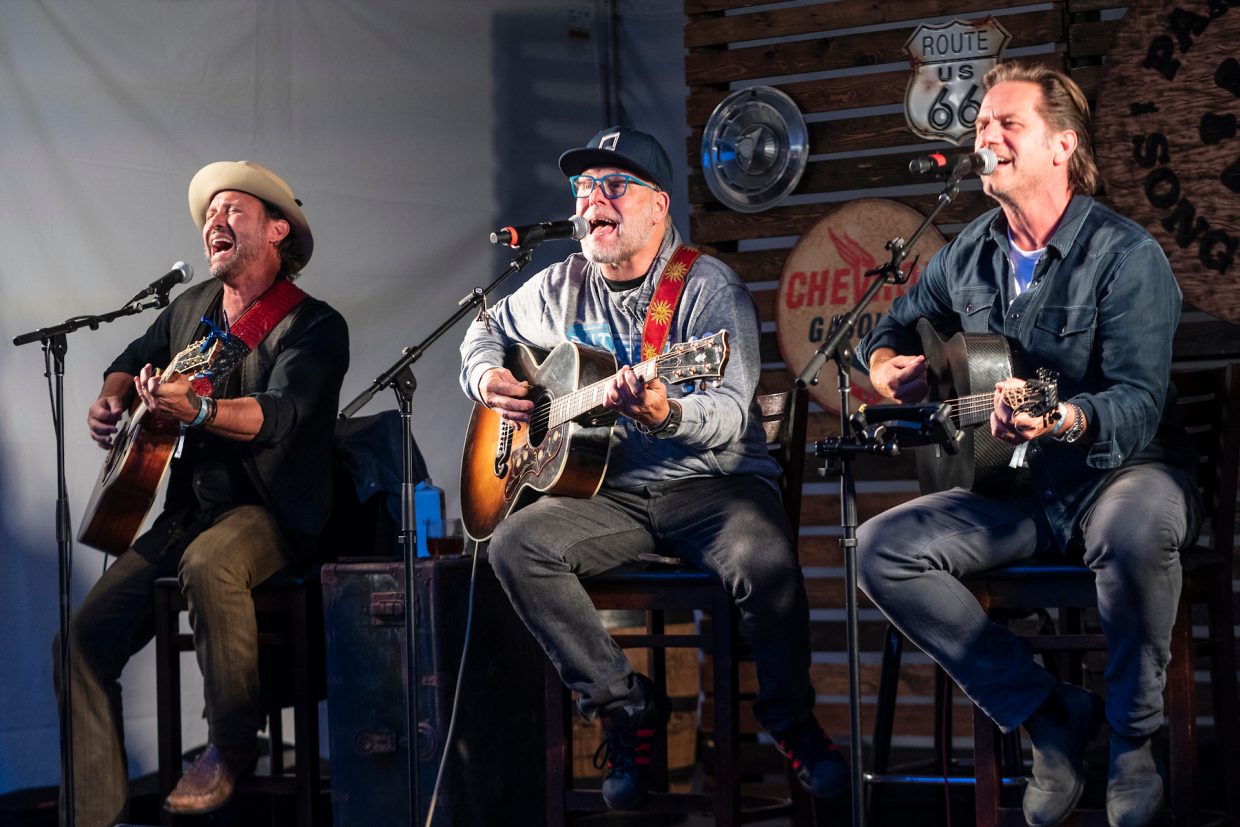
I love a songwriter round – the joy in this hootenanny was infectious! This round featured Danny Myrick, Travis Howard, Aaron Benward and Matt Warren.

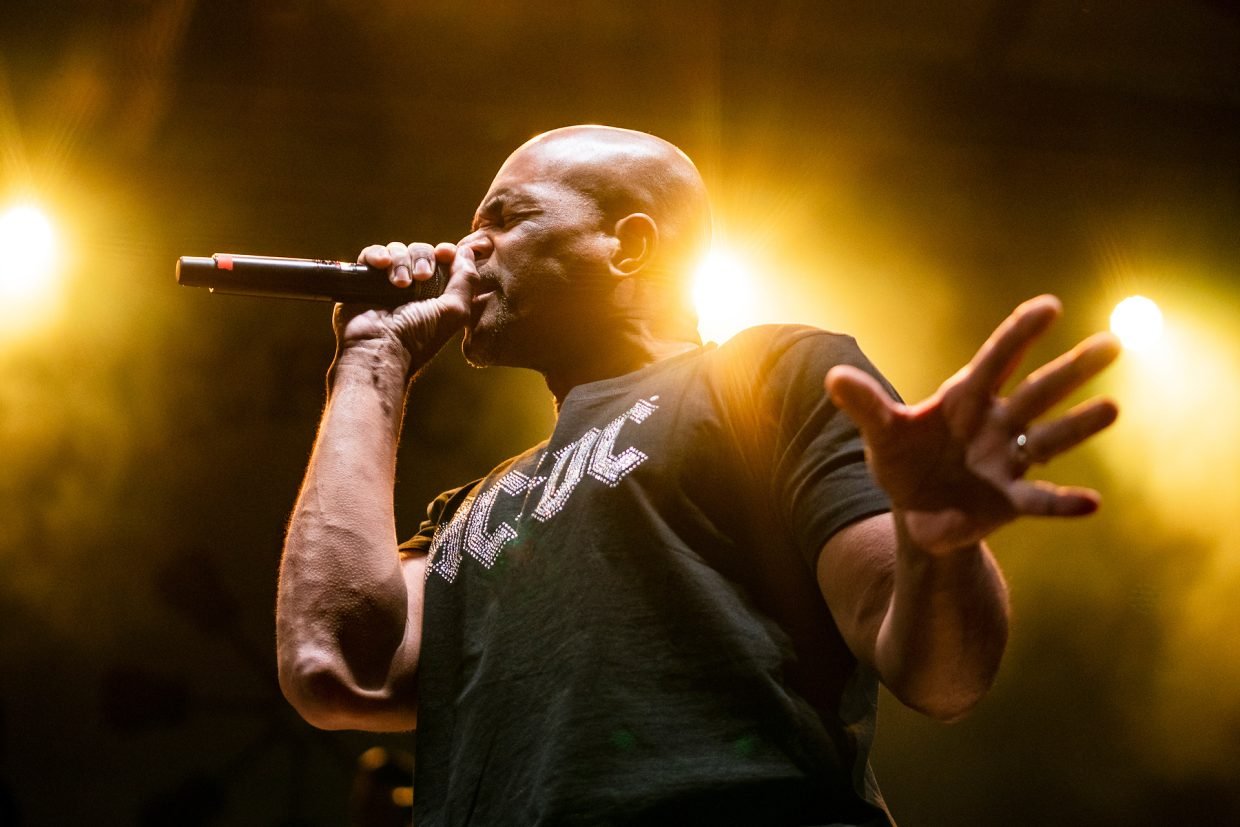
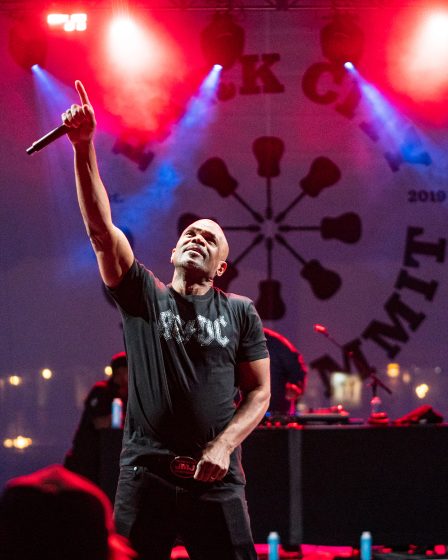
Darryl “DMC” McDaniels, half of Run DMC, was in Park City to celebrate 50 years of hip hop. While we were all watching Run’s House on TV, DMC was in rehab for addiction and depression. The first photo is another shot when I saw the light surrounding him in an intense moment of rap.

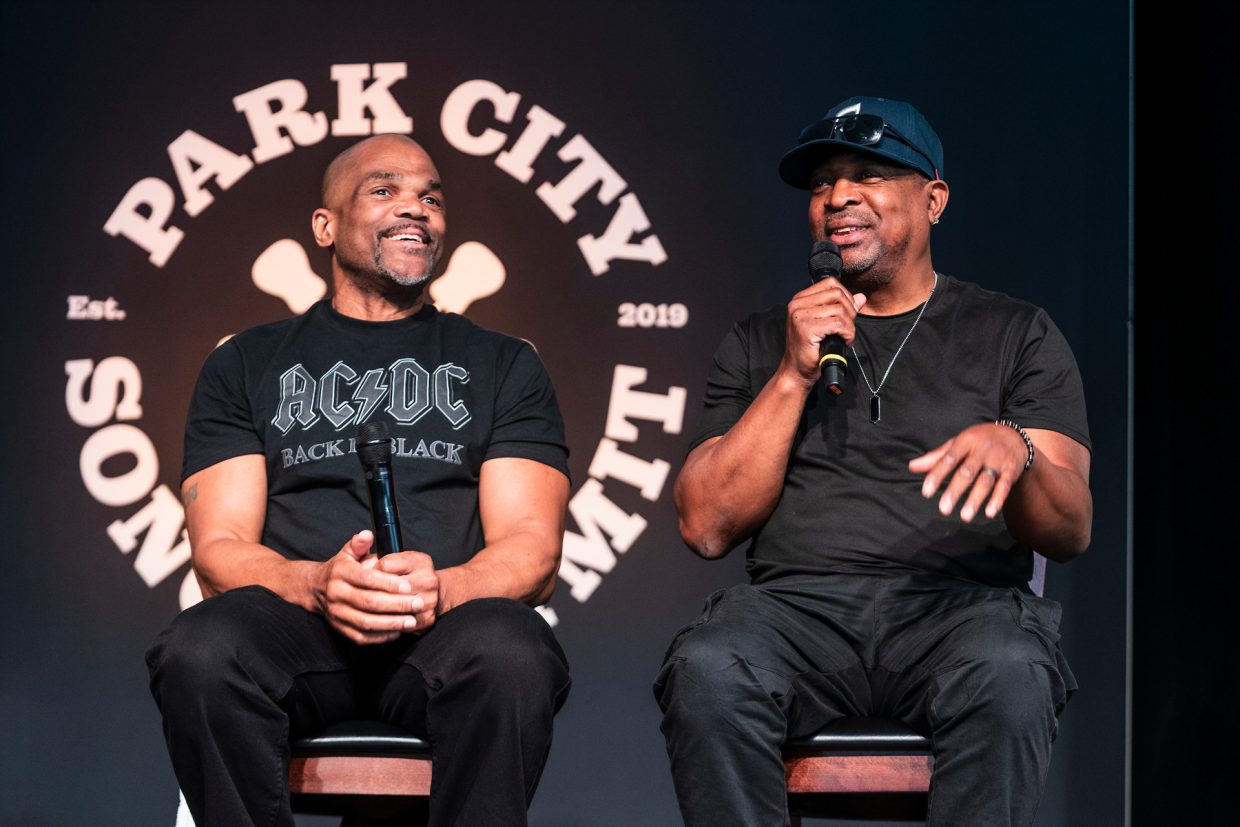
DMC and Chuck D of Public Enemy onstage discussing the first 50 years of hip hop. These two guys toured all over together in the ’80s and ’90s, so they know each other well. I loved seeing them enjoy each other’s company while talking about their hugely successful careers.

Celisse loves you. She has such a beautiful smile and she let it rip on that guitar!

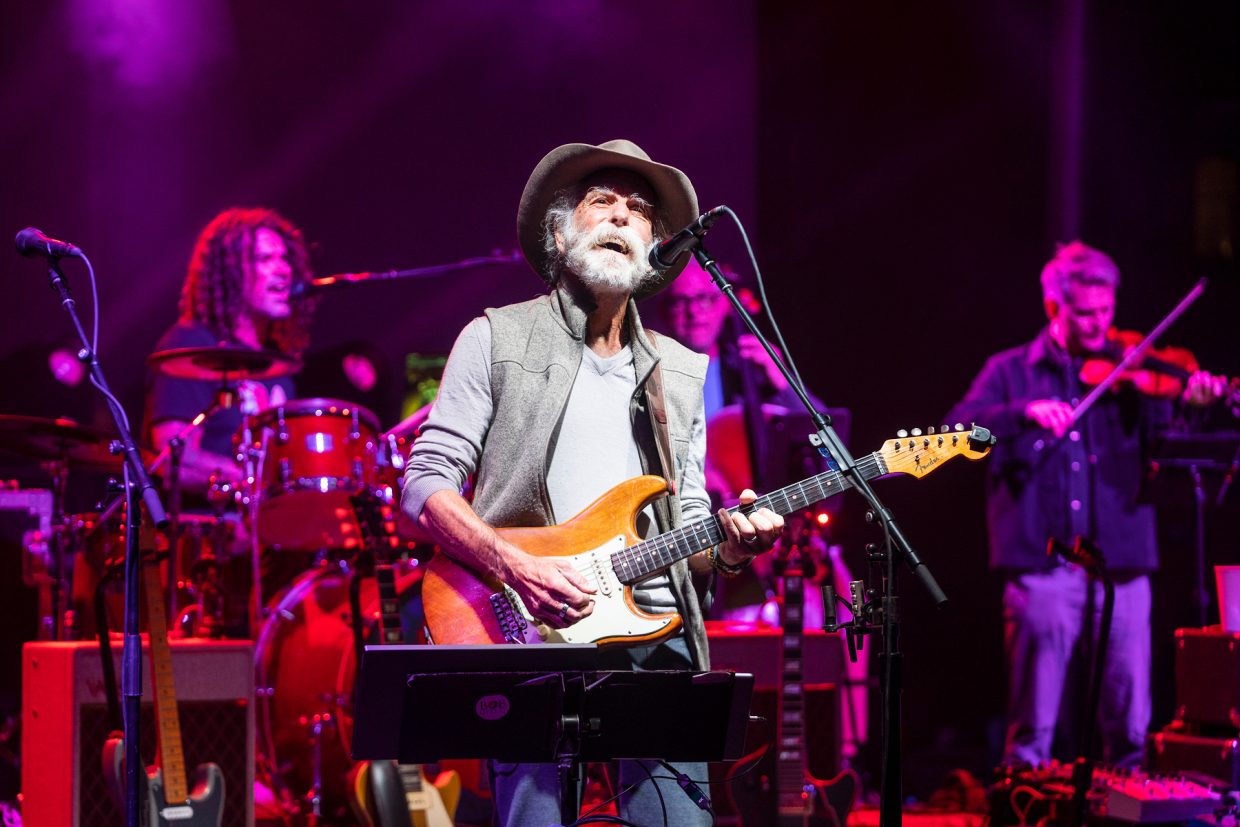
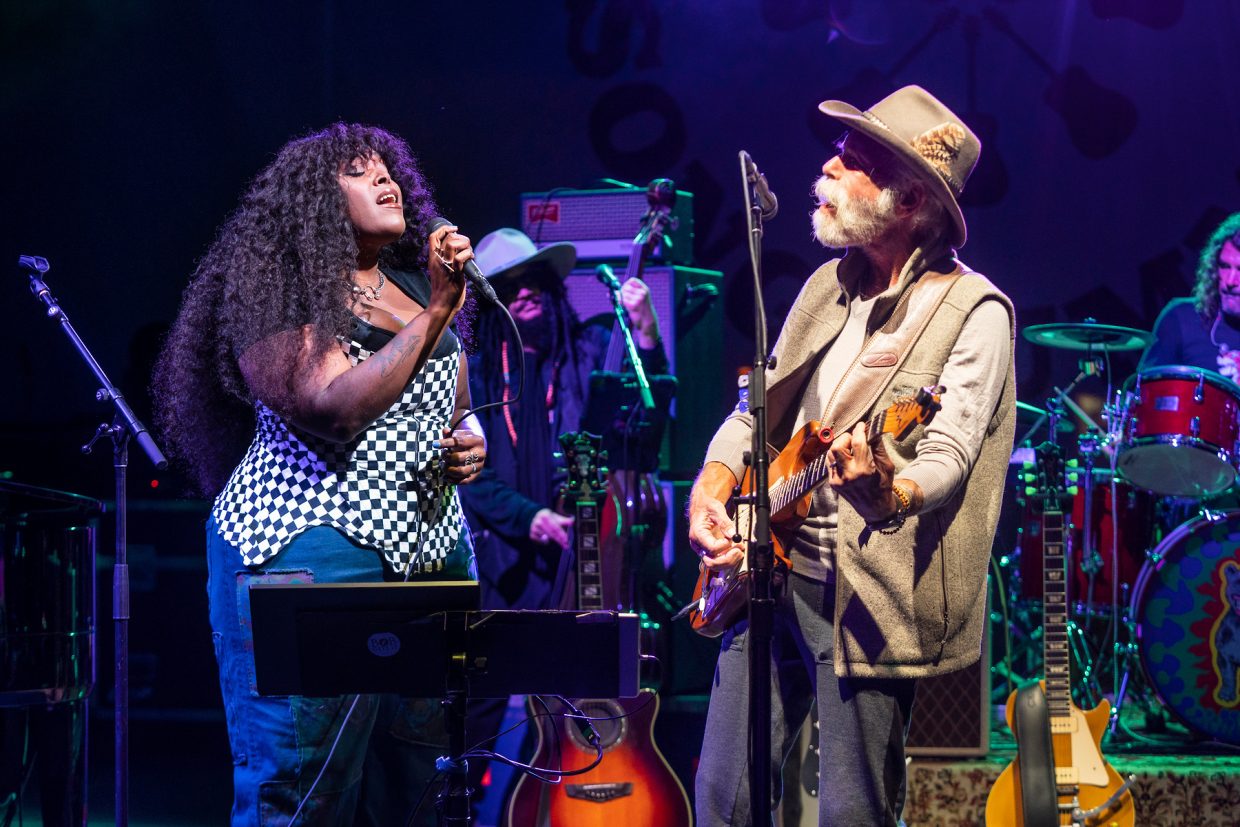
Bob Weir is the artist I was most excited to see at PCSS. The Grateful Dead were the soundtrack to my college years. I loved the album Blue Mountain and was excited to see what the Wolf Bros had in store for us on Saturday night. I love this photo, because he actually looks like he’s smiling.

The first time I saw Brittney Spencer, she opened for Jason Isbell in Detroit, Michigan. She joined Isbell and the 400 Unit to cover the Rolling Stones’ “Gimme Shelter” and nearly knocked me on my butt. The woman is a powerhouse! She joined Bobby for “Looks Like Rain” and showed all her tender glory. It was beautiful.


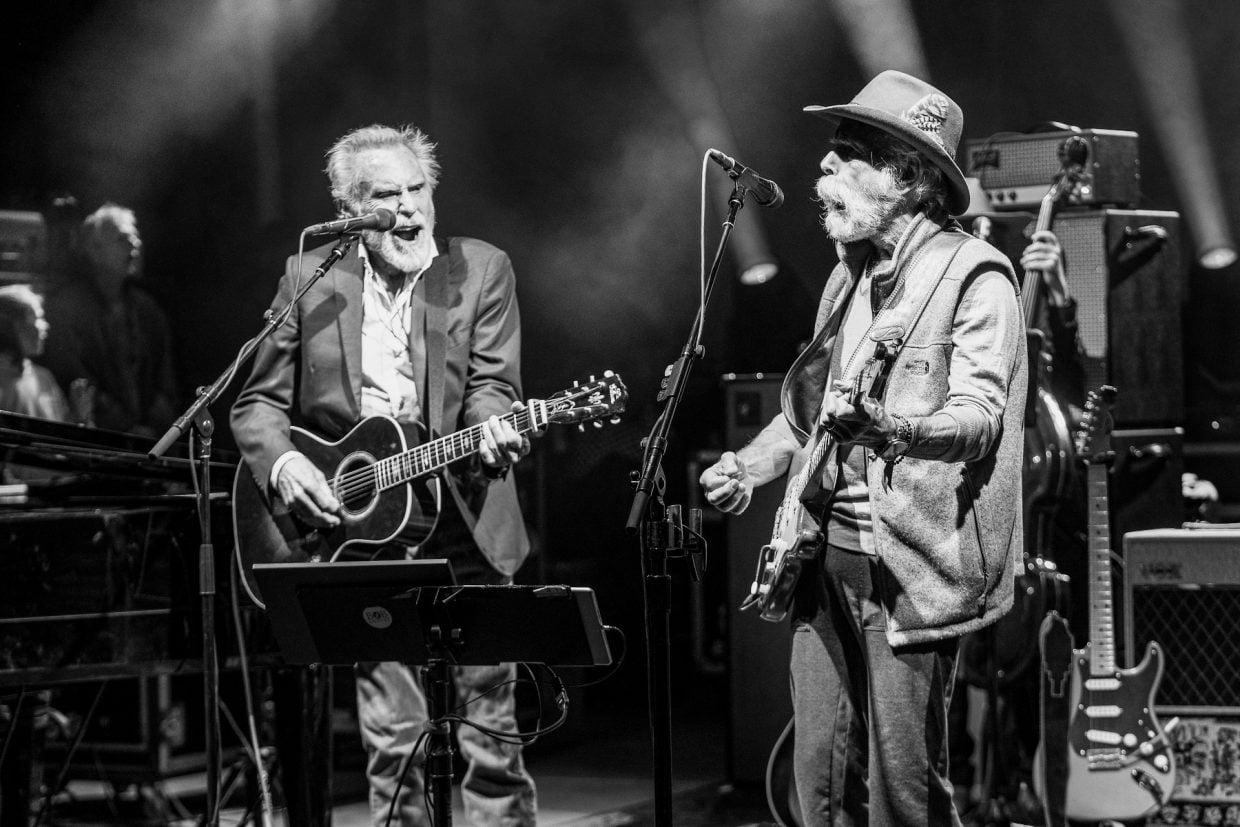
JD Souther, come on! This guy wrote or co-wrote some of the Eagles biggest hits. He also joined Bobby on stage for “Heartache Tonight.”

Devon Gilfillian was part of Sunday morning’s Biscuit and Jam benefitting Café Momentum, a restaurant and culinary program designed to teach teens involved in the juvenile justice system life skills so they don’t end up in jail again. Devon’s warm heart and soulful voice was a good compliment.

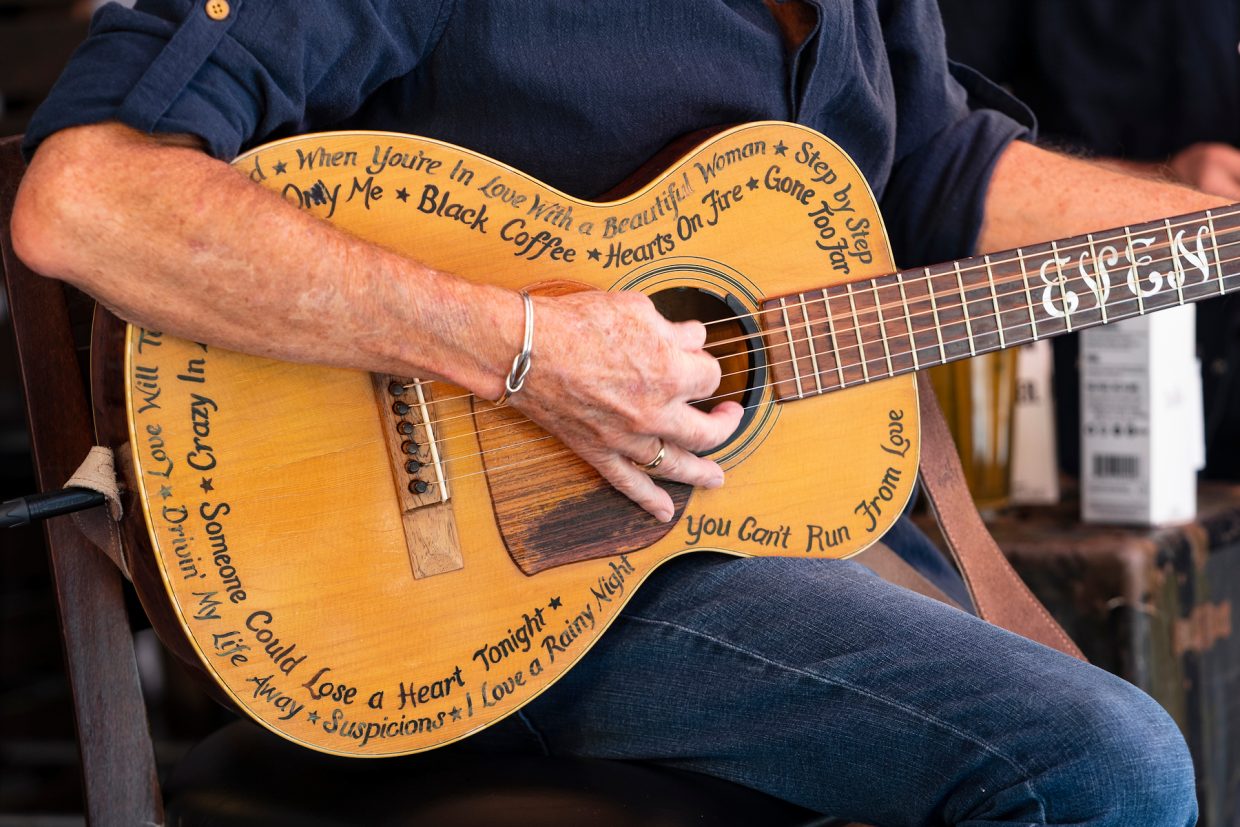
I think the only times I’ve seen Even Stevens have been in someone’s living room on a Sunday afternoon in Key West, playing hit after hit that I grew up listening to in the ’70s, many for Eddie Rabbit. “I Love a Rainy Night,” “When You’re in Love With a Beautiful Woman,” “Drivin’ My Life Away,” and “Step by Step,” to name a few. Kenny Rogers’ “Love Will Turn You Around.” Pop country classics!

Collaboration, connection. Negah Santos plays with Jon Batiste, but ended up in Park City as the guest of another participant. They added her to the Eric Krasno show on the mountain with Dumpstaphunk and some New Orleans horn players. She fit like a glove.


If you know me, you know I love Cuba and Cuban music. I’ve been traveling to Cuba for 20 years so I am always excited to see Cimafunk. The first time I saw Erik, the lead singer, was in Havana with an all-star band called Interactivo. It was March 2016 and I was in Havana to see the Rolling Stones. This band brings a mix of funk, hip hop, Cuban, and Afro-Caribbean music to the stage that will get you moving.

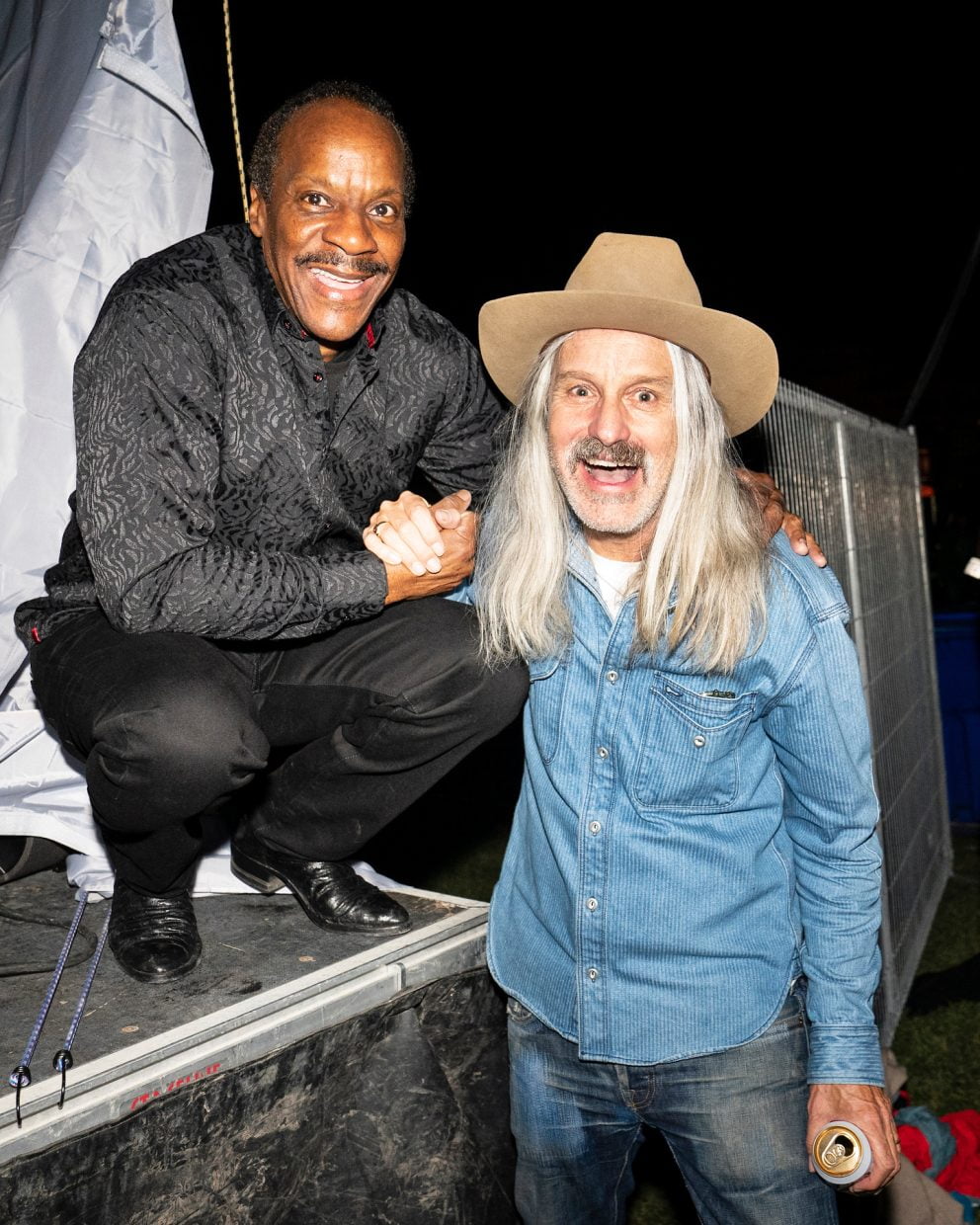
Tony Hall and Steve Poltz traveled all over the world together as part of Jewel’s band during the height of her career. Tony was performing with Eric Krasno & Friends on Saturday night of the Summit. It was mostly New Orleans musicians from Ivan Neville’s band, Dumpstaphunk, plus Anders Osborne and Negah Santos. I spotted Poltz in the crowd rocking out when Tony Hall stepped off stage to let Ben Anderson take over on bass. This photo is just a moment captured — two old friends running into each other. I honestly don’t think I’ve ever seen Tony smile like this.


All photos courtesy of Erika Goldring.
Lead Photo: Eric Krasno & Friends perform at Park City Song Summit 2023.


Harmonics with Beth Behrs: Courtney Marie Andrews

This week, in the final installment of our Americana April series here on Harmonics, host Beth Behrs speaks with folk singer-songwriter Courtney Marie Andrews, who has just released Old Monarch, a beautiful collection of poetry, and her very first of its kind. Beth’s own deep love of poetry makes for a perfect pair in this episode.

LISTEN: APPLE • SPOTIFY • STITCHERAMAZON • POCKET CASTS • MP3

On top of her songwriting and poetry, Andrews also had a deep passion for painting, and she and Beth discuss the difference between various artistic outlets and how she moves through a creative block, as well as the joy of creating art simply for the sake of creating art, not necessarily as something to be shared with the world — or with anyone, for that matter.

Growing up in the Sonoran desert of Arizona, Andrews has been influenced by the beauty and vastness of the desert since a young age, and the desert and nature in general continue to inspire her art and spirituality to this day. And as we will never know the answers to the major questions of the universe in this realm, she finds comfort in embracing the beauty in the mysteries of life, rather than in the answers.

Andrews discusses the feeling of recently playing her first live show to an audience since the pandemic began, reads us some poetry from Old Monarch, and so much more on this episode.

Also check out our first two installments of Americana April featuring Fiona Prine and Margo Price.


Listen and subscribe to Harmonics through all podcast platforms and follow Harmonics and Beth Behrs on Instagram for series updates!

This episode of Harmonics is brought to you by BLUblox: blue light blocking glasses, backed by science. Reclaim your energy and block out the unhealthy effects of blue light on your mental and physical health. Take 15% off your order with code “HARMONICS”

Traveler: Your Guide to Jackson Hole

Jackson Hole, Wyoming, is quite literally a hole in the the Teton Mountain Range, created be a 50-mile long, flat valley. This small town, with about 9,500 permanent residents, is the type of place where you pull on your fanciest cowboy boots for a night out drinking whiskey. Found in the northwest corner of Wyoming, Jackson Hole is 6,237 feet high and 2.9 square miles in size. The Western nostalgia and Native American influences are pervasive throughout, making themselves known from statues to studded saddles. Jackson Hole is a city where the most recognizable neon sign in the “skyline” reads “Cowboy Bar,” but the culinary, art, and resort influences give the town a more debonair feel.

Getting There

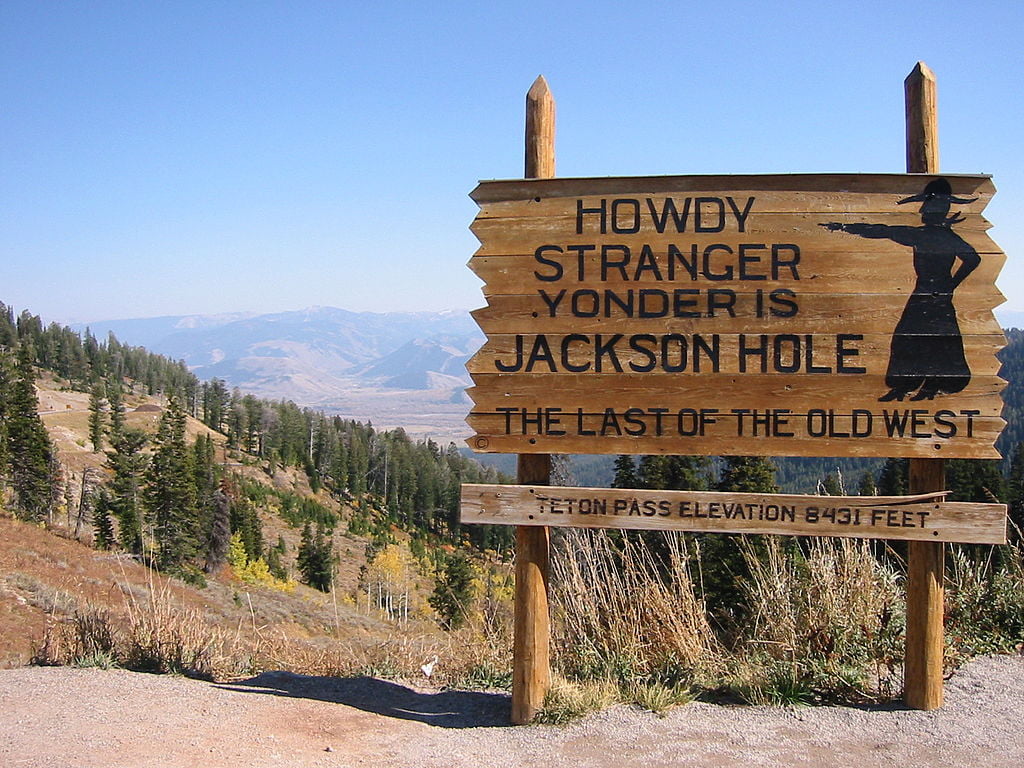
Yonder Is Jackson Hole. Photo credit: Dhtrible via Wikimedia

United, Delta, and American service Jackson Hole Airport (JAC), the only commercial airport in the U.S. within a national park. The town is 36 miles from the airport, 15 miles from the Idaho border, and 12 miles south of Teton Village. Within Jackson Hole, the public bus system, called START, is so efficient and easy to use you won’t need a car.

Stay

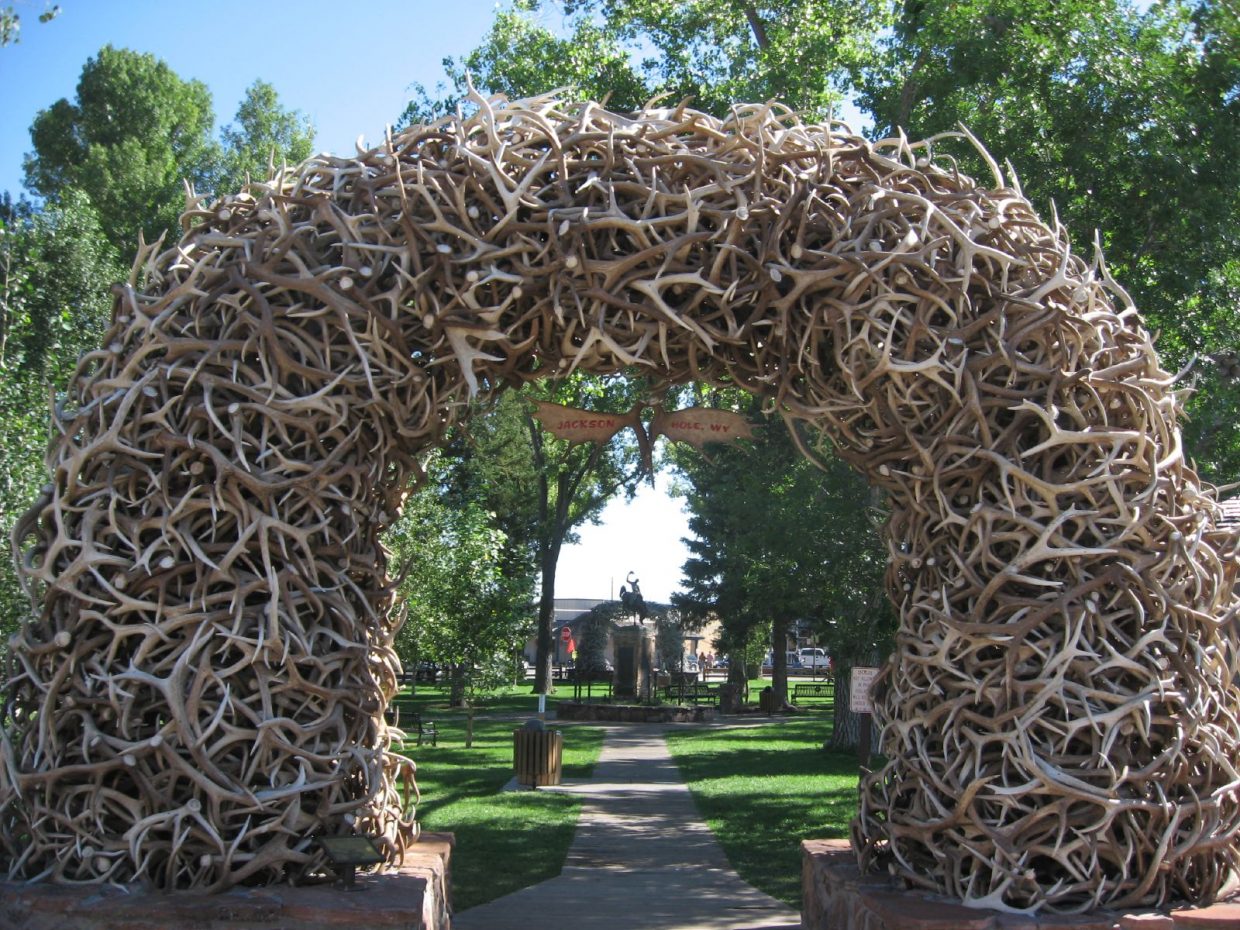
Antler Arch. Photo credit: Ken Lund via Wikimedia

Whether you’re looking for an opulent mountainside villa or a campsite with compost toilets, Jackson Hole has a manifold of accommodations. Alpine House’s European-style, certified eco-friendly lodge serves breakfast prepared by in-house chefs each morning. The Wort — pronounced “The Wirt” in local lingo — is a boutique hotel nearly 80 years in the making, offering quintessentially Western suites and the town’s most hoppin’ music venue, the Silver Dollar Showroom. If you’re rolling in it, Amangani’s rooms have expansive views of the Tetons, plus a ski-in lodge. On the opposite side of the ammenity spectrum, campgrounds abound. Try the Jackson Hole/Snake River Koa, Curtis Canyon Campground or the Hoback Campground.

Eat & Drink

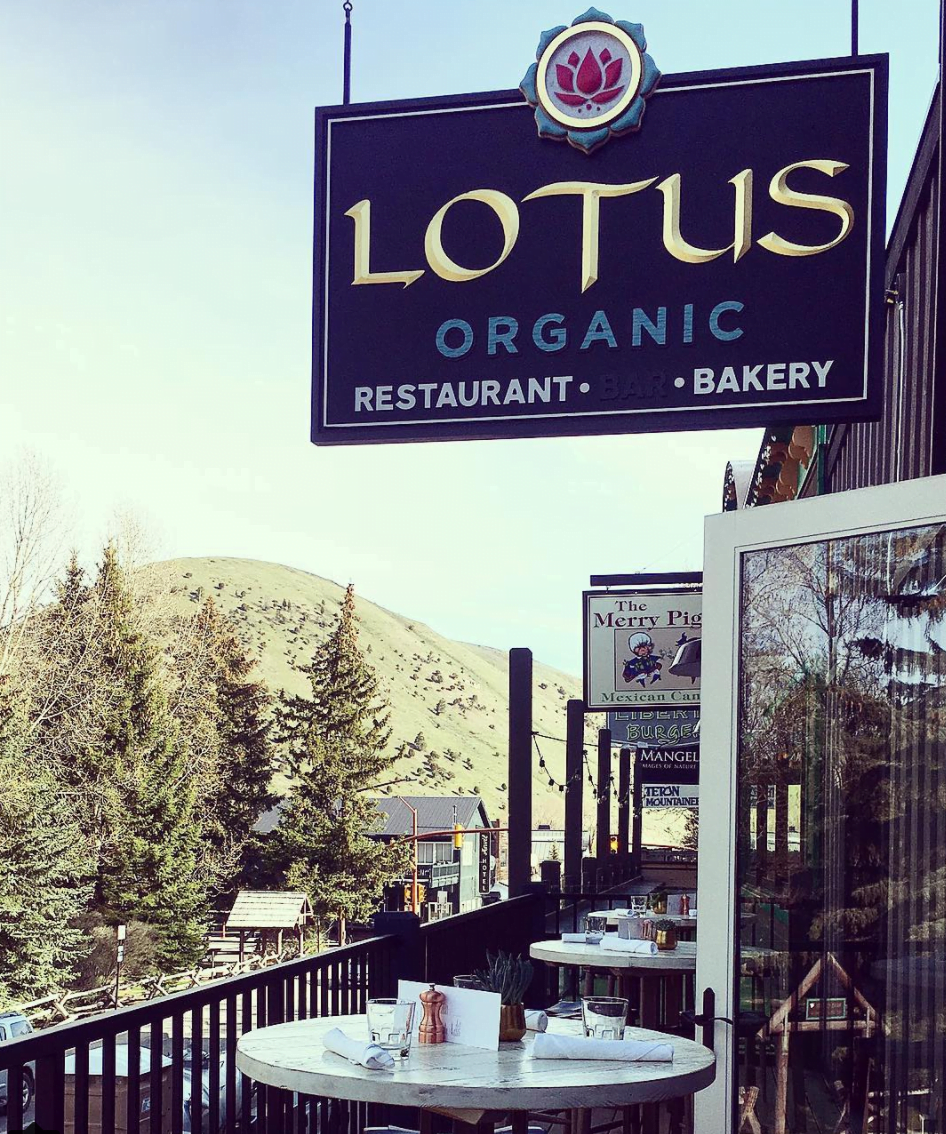
Lotus. Photo credit: @organiclotusjh on Instagram

From classic spots with speakeasy Western vibes like the White Buffalo Room’s house-aged steaks to Lotus’s raw pad Thai made with turnip noodles, this tiny town’s food scene runs the gamut.

Persephone is a popular French-style bakery offering breakfast and lunch options. Pro tip: Order the squash and ricotta toast, featuring creamy butternut squash and ricotta spread with crunchy pumpkin seeds and espresso salt. Their sister restaurant, Picnic, offers the same core baked goods, plus not-so-average breakfast items like biscuits & gravy with Dijon maple creme and goat cheese bacon crumbles. Pinky G’s is the late-night spot of choice, going on five years voted as Jackson Hole’s “Best Pizza.”

For a night out, start with drinks at the Handle Bar, where you can roast s’mores at your table while you sip whiskey neat. Then, head to the Coach for a night of dancing to the renowned Stagecoach Band, who also plays a weekly “Sunday Church” show on Sunday nights.

Adventure

Grand Tetons National Park. Photo credit: Hawthorne Ave via Wikimedia

With two national parks, a national refuge, and myriad public parks situated in Jackson Hole, less than three percent of the land is privately owned. The other 97 percent is state or federal government-owned. All year, outdoorsy tourists roam Jackson Hole. Summer months are full of hiking, fly-fishing, and mountain biking, while winter is for skiing and snowboarding, and spring is the most active time for wildlife viewing.

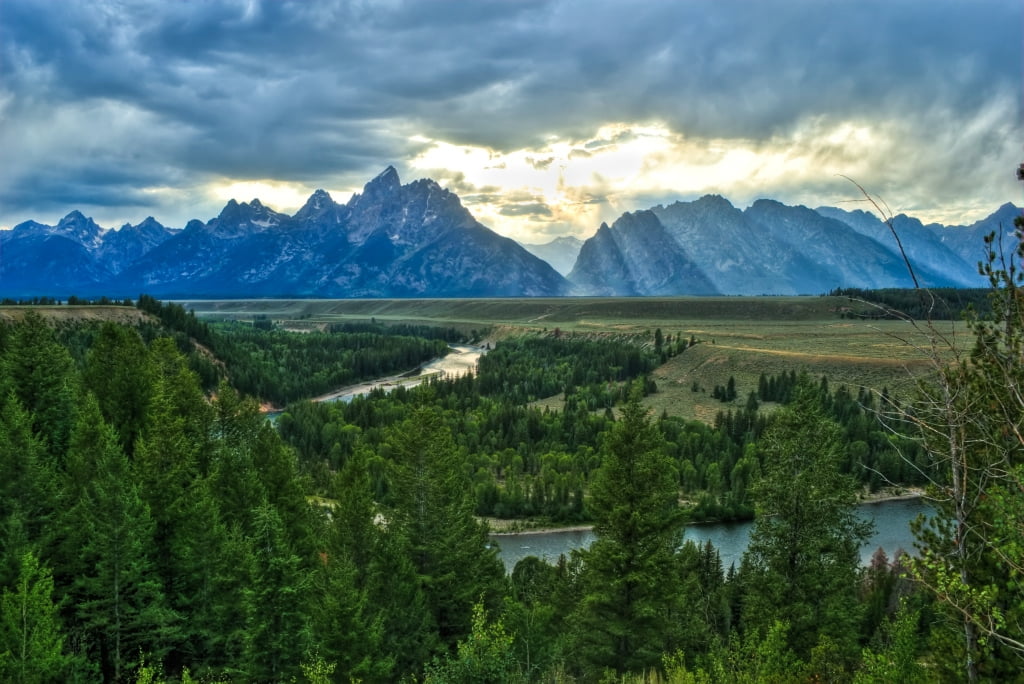
The sheer grandeur of Grand Teton National Park is right in the name. You can’t go wrong meandering within the park, but don’t miss Cascade Canyon, Granite Canyon, and Amphitheater Lake. The park is a magnet for photographers and technical mountain climbers because of the size and breadth of the mountain range. The entrance fee is $30 per vehicle.

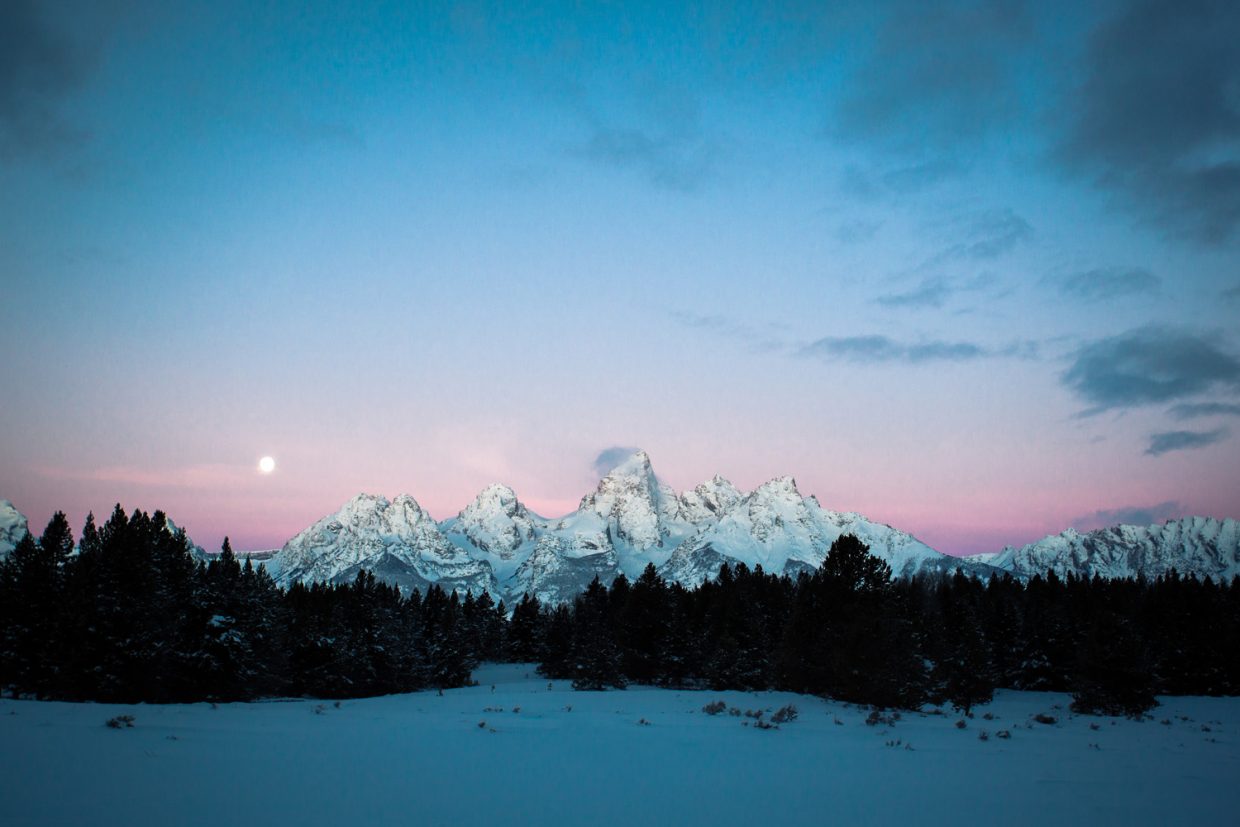
Grand Tetons. Photo credit: Jackson Hole Mountain Resort

Yellowstone National Park’s south entrance is 90 miles north of Jackson Hole, covering 3,500 square miles of land in Wyoming. It is the oldest national park, gaining status after photographers, painters, and sketchers captured and showed the wonders of the Tetons to Congress in 1872. The park sits on top of an ancient super-volcano and has more than 1,000 of miles of backcountry hiking. Also noteworthy is the National Elk Refuge with thousands of elk making the spot their home for the winter and spring. For the best chance of catching a glimpse of elk, head out with binoculars in the spring.

Of course Jackson Hole is predominantly a ski town, with several resorts close by like the challenging Snow King and the cornerstone of ski resorts in town, Jackson Hole Mountain Resort.

Art

National Museum of Wildlife Art. Photo credit: Daniel Mayer via Wikimedia

The art scene in Jackson Hole is distinctively Western and home to world-class organizations. From ornately decorated handmade leather saddles to scenes of buffalo upon canvas to jewelry adorned with large hunks of turquoise, strolling the galleries in Jackson Town Square won’t let you forget you’re in equestrian country. We recommend the Congressionally designated National Museum of Wildlife Art, RARE Gallery of Fine Arts, Astoria Fine Art, and Trailside Galleries. 

As for the musical arts, the Pink Garter Theatre hosts a variety of roots artists we love like Elephant Revival and the Lil Smokies. The Silver Dollar Show Room has a bluegrass show every Tuesday night featuring their house band, One Ton Pig, and the Mangy Moose is a solid choice for drinks and live music apres skiing. Our roots music brethren gather in Grand Targhee Resort for the Targhee Bluegrass Festival. Catch classics like Sam Bush, Tim O’Brien, Railroad Earth, and Greensky Bluegrass at this fest recurring yearly since 1988.

Traveler: Your Guide to Moab, Utah

Moab, Utah, is a playground. Seemingly built to climb rocks and rappel down rock faces, this rugged town is surrounded by two national parks and countless state parks. It’s the chaco-wearing, Jeep-driving, Clif Bar-eating crowd’s Mecca. In a valley of red rock, the otherworldly colors and shapes are a reminder of how powerful water and ice can be in shaping a landscape. Rock-peeping tourists, tour guides, local business owners — plus the plants and animals who can survive in the harsh climate — are the occupants of this adventure lovers’ town.

Getting There

About an hour from the Colorado border, Moab isn’t exactly centrally located. The two closest major (read: cheapest) airports are in Salt Lake City and Denver at four hours and five-and-a-half hours away, respectively. Moab is right off Interstate 70, which makes for a long but scenic drive through the mountains from Denver. Grand Junction, Colorado, is an hour-and-a-half away and has a regional airport.

Where to Stay

CloudHouse

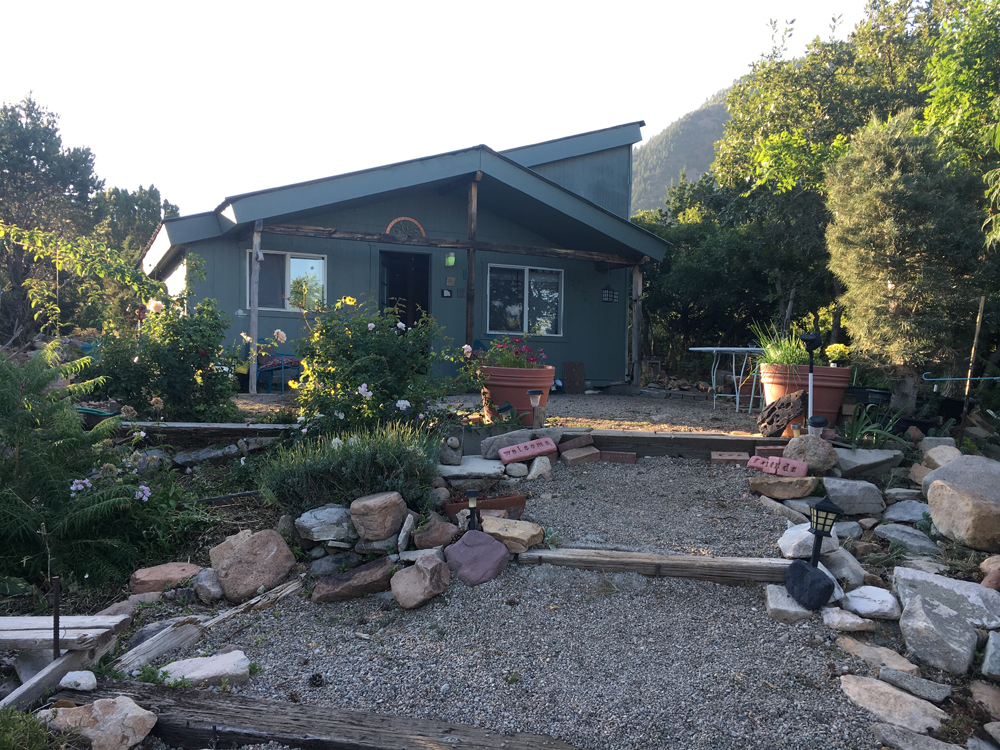
Kitschy hotels and “resorts” abound in Moab, but we recommend convening with nature. With campgrounds a-plenty, camping is one of your best bets. Try the Big Bend campground, located on a scenic road right on the Colorado River just a few miles from downtown Moab. Of the resorts, Red Cliffs Lodge stands out as one of the best with large rooms right on the Colorado River and views for days. Airbnb options range from tiny cabins right in town, like Sunny Acres, to plenty of yurts and teepees, which are a popular option. We also recommend staying in the La Sal Mountains outside of town in the “CloudHouse.

The Outdoors

Tower Arch

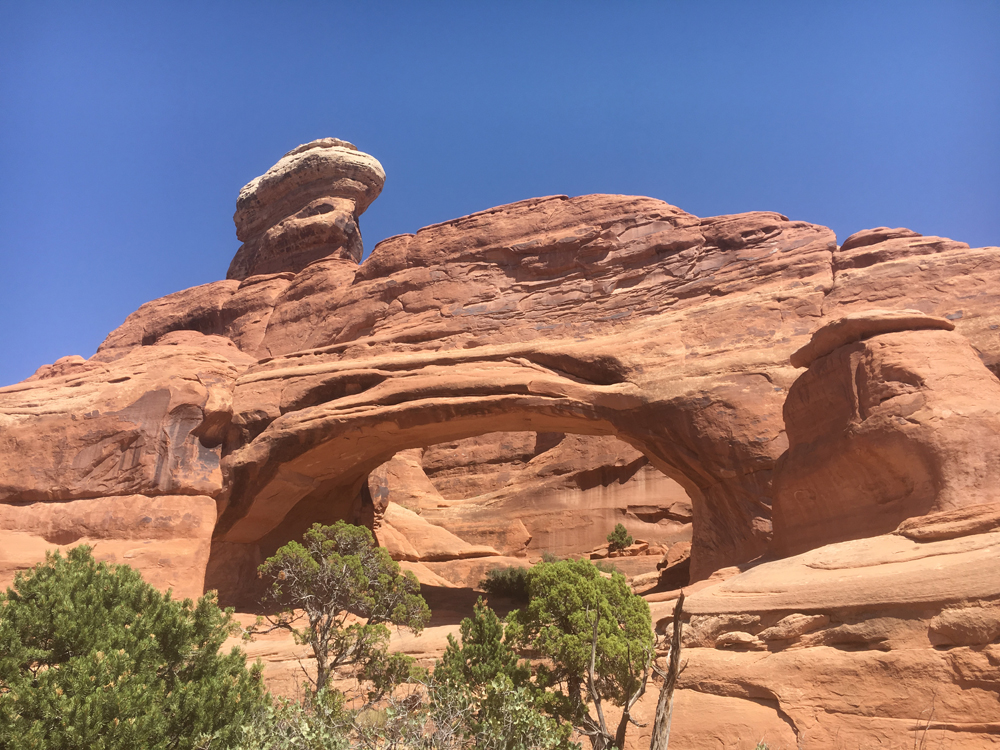
The two national parks — Arches and Canyonlands — get most of the condign glory in the area. Arches National Park has plenty of rock formations to go around, and most are viewable from the scenic drive which intersects the park. The park offers hikes for every level, from a mere quarter-mile climb leading to the impressive Double Arch, to longer hikes across the primitive landscape involving rock scrambles and sand trekking to the Tower Arch and Devil’s Garden. Heat strategies are encouraged for the summer months, like getting hikes in before noon and toting a liter of water per person at all times.

Canyonlands: Island in the Sky

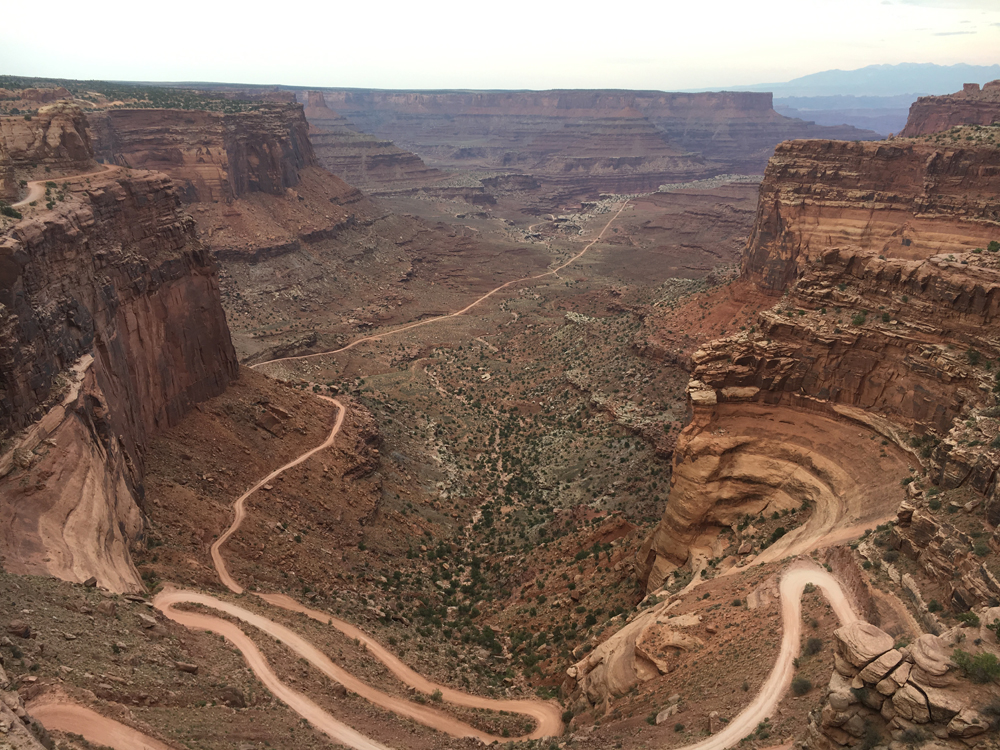
After visiting Arches, it seems impossible for nearby parks to be any different from the steep, reddish-pink rocks visible for miles, dotted with the grey-green cacti and sagebrush. However, Canyonlands National Park’s immensity and landscape is a stark contrast from Arches. It’s huge and split into four sections with sprawling, steep rock formations. The Needles is a particularly stunning spot to explore for longer trips, and Island in the Sky is a great lookout point for passers-through.

A departure from the desert climate of both Arches and Canyonlands, climbing into the Manti-La Sal National Forest offers a green, lush heat respite and is peppered with archeological sites like dinosaur footprints, giving us Land Before Time throwbacks.

After taking in the scenery by foot, Moab’s thriving adventure tourism scene will prompt you to explore via plane, rope, boat, or 4WD vehicle. We recommend canyoneering with Red River Adventures or flying over Arches in Redtail Air Adventures’ $99 flight. Mill Creek Waterfall provides a much needed place to take a cool dip in the middle of the desert and, if you’re feeling hungry, head to Potato Salad Hill to drive ATVs over the boulders and well-trafficked 4WD trails.

Food & Drink

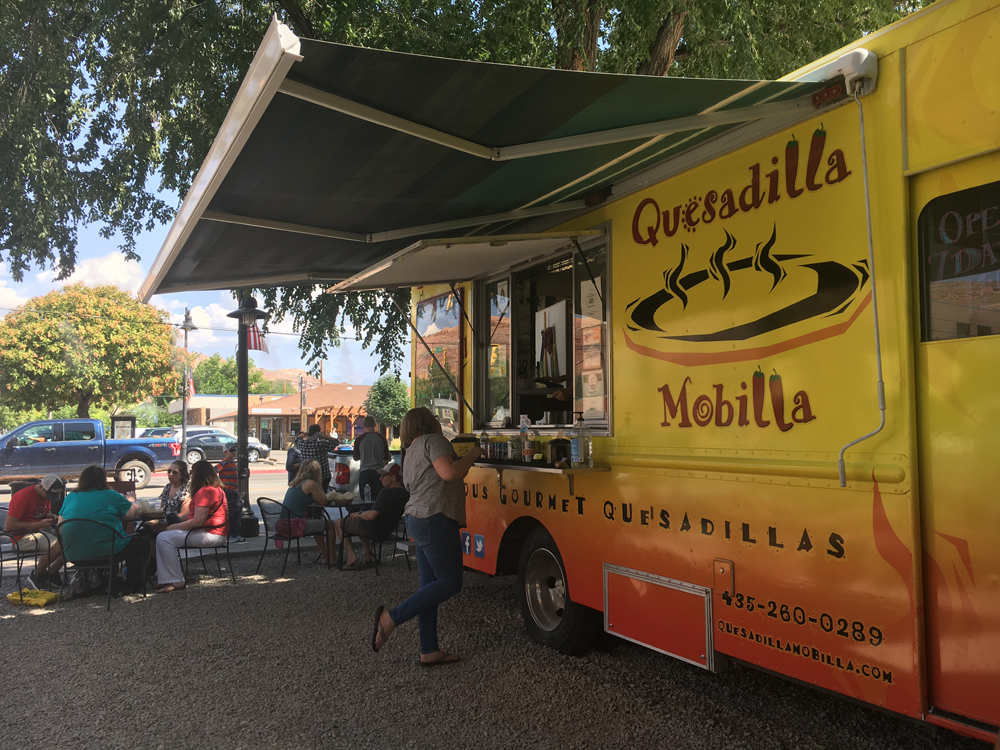
Quesadilla Mobilla

Admittedly Moab isn’t a foodie town, which makes finding post-adventure grub a bit tougher. Quesadilla Mobilla has flavorful, cheap quesadillas with chipotle sour cream and spicy salsa, plus a courtyard full of water misters to cool you down while their food heats you up. We may have eaten at this downtown food truck three times in five days. Groceries and quick food options are available at Moonflower Community Co-op, a classic organic grocery located in downtown.

There’s no other brewery option in Moab, which makes the choice clear to head to Moab Brewery for post-hike brews. Love Muffin is a breakfast and lunch spot with plenty of veggie options, breakfast sandwiches, plus deliciously strong cold brew. Moab Garage Co. serves nitro ice cream by the friendliest husband and wife entrepreneur duo and offers local art.

The Arts

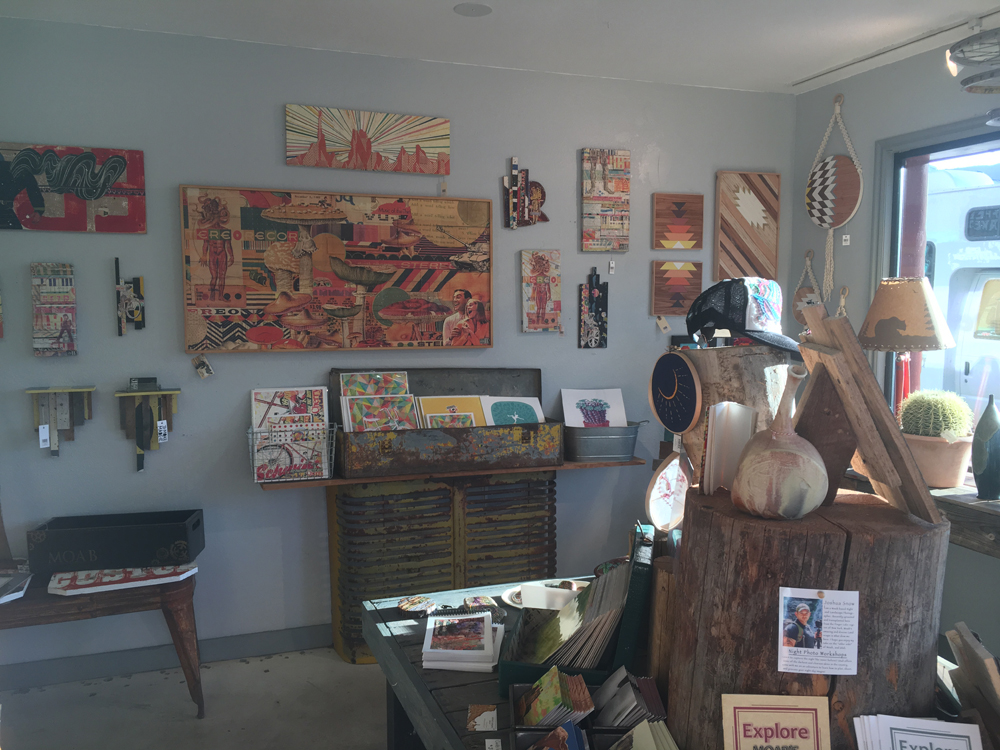
Moab Made

Certainly inspired by the landscape, local artists — and those just passing through — have created a robust art gallery scene along the main strip. Moab Made features rotating local artists, many of them using recycled materials for their artistry, like a local who makes jewelry from re-tire-d bike tires.

Moab Music Festival pairs musicians with the landscape every summer, offering musical hikes, musical raft trips, and concerts at the edge of the Colorado River. We were lucky enough to see BGS faves Béla Fleck & Abigail Washburn do their witty, endearing, magical thing at the Red Cliffs Lodge.

Local Flair

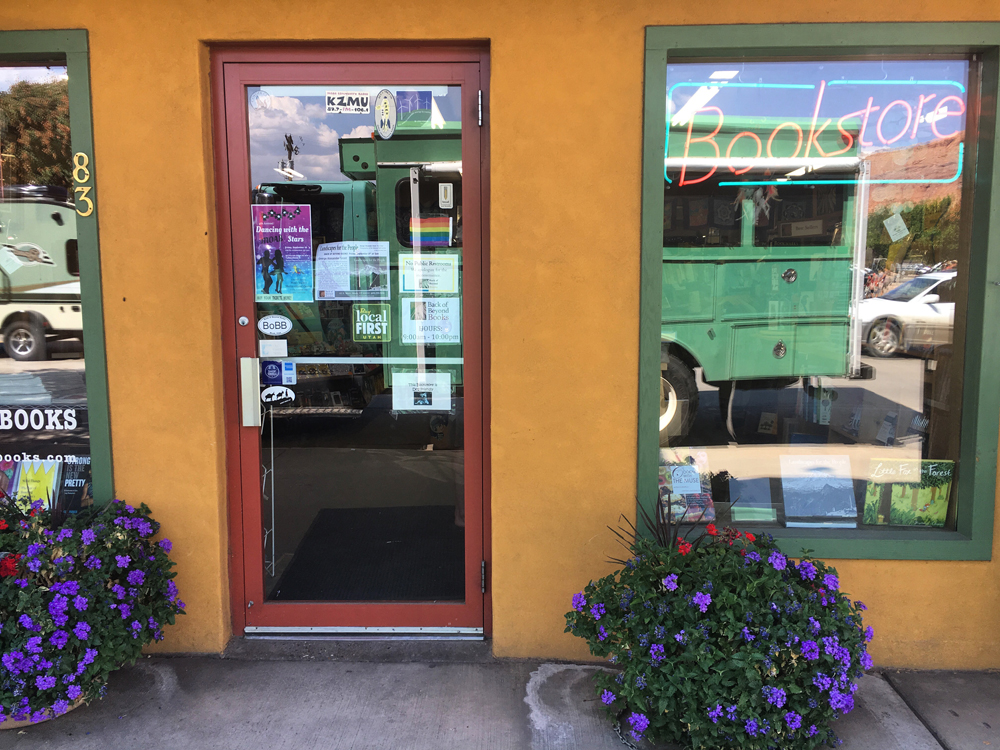
Back of Beyond Books

Indigo Alley is a well-curated local clothing shop offering men’s and women’s clothing, like leggings patterned with cacti to blend in with your surroundings. Back of Beyond Books has a great selection of regionally specific books for deeper dives into the Utah area and an impressive selection of antique copies of classic literature.

If you’d like to take a bit of the landscape with you, Moab Rock Shop is your souvenir shop. It’s not one of those cheeky rock shops, instead offering pieces from Utah to the Himalayas with rock nerds there to tell you the origin and benefits of each piece.


Lede photo credit: Anthony Quintano via Foter.com / CC BY. All other photos by Josephine Wood.

Ask Jolie Holland: Finding Your Space

Dear Jolie, 

I’m going on a huge sailing trip next year with my man. We’ve known each other 21 years, but have only been in a proper, beautiful, committed relationship since last Christmas. I want to know how I can withdraw and feel alone to rest and recharge when we are together 24/7 on the boat. I know my pattern is for my energy to be “out there” scanning the environment for threats, preoccupied with the other person’s moods. I’ve been a people pleaser who, in middle age, has learnt the nourishing qualities of solitude. I haven’t a clue how to maintain this on the boat. I’m scared of losing myself.

Thank you, Jolie, for all the music and wisdom.

*   *   *   *   *

Dear Sailor, 

Congratulations on your exciting trip coming up! 

This is a great opportunity to develop some important skills that will aid you both on this trip and for the rest of your life. Anything that gets you “out of your head” is going to help — anything that disrupts linear thinking. No matter if you make strides with these skills now or during your trip, you will learn some amazing things about yourself on this journey. I bet you’ll discover all sorts of new tactics to maintain inner grounding aboard ship, even without preparation. 

I suggest starting any number of practices right now, so that they’re available to you when you need them. Meditation, a stretching or yoga regimen, art-making, and learning songs might all be helpful. Here are my thoughts on these different routes:

1) Sitting meditation isn’t for everyone. It can even be harmful, in some cases. But if you think it sounds like a good path for you, choose a style and find some reliable instruction. There are so many different types of meditation, some more inherently religious than others. I’d study up on different traditions and modalities, and see which ones resonate with you. 

Personally, if I were going to study meditation, I would find instruction in Chögyam Trungpa’s tradition. I love his writing, plus I know a few people who learned to teach meditation through him. He taught Pema Chödron how to teach meditation, for instance. His is a lineage that makes sense to me.

2) Having a daily physical regimen on the boat could be helpful — anything that sets aside non-negotiable time for yourself. This doesn’t have to be yoga, but it could be a series of yoga poses. 

I had some guitar-related rib injuries 10 years ago, and a chiropractor gave me a series of stretches to do every day. It took 20 minutes to do all of them, and there was something really peaceful about the process. Even after the injuries healed, I would do the series daily during periods of high stress. 

3) My friend Gill Landry says that painting is the best tool he’s ever used for fostering inner peace. You could get a nice little set of colored pencils. It might be possible to bring one of those beautifully designed, miniature watercolor sets (the ones I’ve seen are Japanese) and a small book of watercolor paper on the boat. I’m thinking about bringing something like that on tour with me. Check out my friend Mayon Hanania’s Instagram page, to see the beautiful seascapes that she paints almost every day. If you have no practice with art-making, now’s the time to find a beginner’s class, so you can see if it might work for you. 

4) I think singing, playing music (ukulele?), or even the process of memorizing lyrics or poetry could be helpful. It might be fun to learn some sea shanties! If you’re not too self-conscious, any of these activities can be potently centering. All of these can be useful tools in the overall process of allowing your inner awareness to eclipse linear thought. 

Wishing you a beautiful journey,

Jolie Holland 

Have a questioni for Jolie? Email it to [email protected]


Over the span of her career, Jolie Holland has knotted together a century of American song in jazz, blues, folk, soul, and rock ‘n’ roll. A founding member of the Be Good Tanyas, Holland has released a half-dozen critically lauded albums of her own material over the last 12 years. She recently rejoined forces with Samantha Parton — her former Be Good Tanyas bandmate — for a new duo project simply called Jolie Holland and Samantha Parton. Holland currently resides in Los Angeles.