The Garden of Gospel Music: A Conversation with Phil Cook

The motivation for Phil Cook’s unapologetically familiar gospel sound is simple: he LOVES that style of music and the people he’s learned it from. At times he veers into Appalachian instrumentation, reflecting his current North Carolina surroundings, and there’s individuality and innovation aplenty. But this Wisconsin kid and his band never stray far from a black gospel blueprint, incorporating backing choirs, tinkling piano stabs, organ that’s more Booker T. than Benmont T., and a vocal delivery that’s loose and expressive.

On his new album, People Are My Drug, Cook invites us to marvel gratefully and joyfully at the greatness of so many people whose creativity and communal originality have flourished under oppression, as well as those who hold the weight of the world within their silence.

There is a definite space that People Are My Drug lives in. I’d love to hear your thoughts on that. 

I’m lucky. If I’ve learned anything, it’s to surround yourself with people that know what they’re doing, have a lot of experience, and have something to say. I can possess those things, not all at the same damn time, but if I’m surrounded by other people, I feel safer to be that multiplicity. So my circle starts with my brother, as a producer who knows me better than any other and helps me deliver the most honest statement that I can make. He knows when I’m hiding and helps me stand up tall and be who I have to be to do the thing.

From there, all the musicians in the band – we essentially made the record in two days. Most everything was made in a studio in Wisconsin, which happens to be owned and operated by my old friend Justin Vernon. So we brought the whole crew up, and we holed up in a live room, the four of us – drums, bass, keys, and me. We played for two straight days and didn’t leave the room. We trusted the people across the house were doing their job.

And that’s where this record starts: trust. I am surrounded by musicians that I trust more than anyone else in that moment on stage or in the studio, and we made that a bubble. Then after we were done we had a nice dinner and went into the control room and listened to the record that we’d just made. We were laughing and smiling at each other. There are little moments that happen all over the place. We start out “He Gives Us All His Love,” and I was like, “Bass, I love ya.” And when we listened back to it, that’s exactly what the vibe of the entire record is, that fraternal kind of vibe.

Speaking of fraternity, “He Gives Us All His Love” stirs me to feel universally connected to humankind, more brotherhood of man than fatherhood of God. Is that what you were going for?

Yeah! It’s my favorite Randy Newman song off of Sail Away because it’s the one time he lets his sardonic humor-guard down for a very simple song about gratefulness and generosity, and I like that a lot. Funny story, we sang our version of that song for the first time and halfway through it a woman in the front row looks up at me with a little smile and goes, “How do you know it’s a ‘he’?” and immediately switched the entire perspective of the song. And the rest of the song we sang “She gives us all her love.” I was like, “Well, this is how we’re gonna perform it from now on!”

And that’s the kind of spontaneous moment that you have to pay attention to as a musician, to be open when something passes by and be like, “That’s it! Cool! Switch directions. Let’s hit this.” And you trust. It made for a really beautiful moment at a hometown show. So yeah, I do feel that the fraternity, the brotherhood of man, is the heart and soul of how gospel music plays a role in my life. It’s much more of a family, a community. That’s the togetherness of space that I think the center of this record is.

What I ultimately got out of a childhood in church was this great community that was really supportive of me being who I was. They saw a little kid with glasses in Wisconsin, and they told me to keep being who I want to be. That’s what every kid deserves. And as much as I walked away from church, when something is a part of you in your childhood, you can’t just walk away from it. It’s going to be a part of you for the rest of your life, even if you don’t have a weekly interaction with it.

And I think gospel music in general has been a part of me having this continual, ongoing dialogue with my faith and my questions in a deeper way that feels really real, that feels like a real practice, nothing about dogma, nothing about a system. It’s not gonna work for everybody, but I was able to dial back my anxiety medication after two or three years pretty much listening to quartet black gospel music and getting into it until I started to feel it.
What is it about gospel music that connects you to that human moment?

Well, gospel music is the original garden of all music that comes out of America. On one side you’ve got the blues, which way more people in the white community are familiar with. That’s ubiquitous. A lot of people know who Robert Johnson is, Buddy Guy, B.B. King, even someone more eclipsing, like Jimi Hendrix. A lot of those artists were torn their whole lives between what they were doing for money and what they were doing on Sunday morning.

Religion never left them either. Religion gave them so much. So even blues artists weren’t free of that spiritual paradox. If you look at some of the greatest singers, they all came out of this garden of the church. Aretha, Curtis Mayfield, Sam Cooke, all the Staples Singers – a vast number that were able to have a safe space as they were growing up. The safest space they could find was church, the place where they were able to seed and plant their art and their voice.

The church was also the source of this friendly competition with players raised up there. You’ve got young kids in the wings watching every single move that you’re doing, and they’re going home and practicing. It creates a whole circle of virtuosity and innovation. It was the only place for it to thrive, and, damnit, it thrived. It changed the entire world. Most of those artists went on to big careers in soul music and left the church in some ways. The church didn’t leave them though. That was with them the entire way.

I appreciate the way in this album you direct attention toward others and away from yourself. I’ve cried twice this morning listening to “Another Mother’s Son.”

It’s heavy. I had my own experience with almost losing my youngest son when he was born to some complications with respiratory stuff. You get close to almost losing the thing that you hold most precious, even though you just met him. Your family is forced to grip with the possibility that things aren’t gonna turn out ok. I don’t know who isn’t gonna be affected by a situation like that in a way that’s gonna crack your heart wide open. And what happens after that is really important.

He came home from the hospital and I put him to bed; we’d had an incredible family day. I felt like, “Oh, my family is so strong. I’m so thankful for this family. We’re gonna get through this life together and it’s gonna be ok.” And then I checked Instagram and saw the video that Philando Castile’s girlfriend, Diamond, took of the police officer after [the officer] shot him multiple times with her daughter in the back seat of the car. In that moment it was the juxtaposition of how safe I was feeling, how strong my family felt, to seeing a young man who was such a giving soul ripped so violently from his own mother, who called him her miracle child.

She wasn’t supposed to be able to have kids and she had a son, Philando Castile. And then this broken-ass justice system completely stole him away from her and everyone else that loved him. And it just hit me way harder than it normally would have because of what I went through. Often times you go through something and then maybe days, months, years down the line, something else will happen that will give you a whole new perspective on what you experienced initially.

The second fold was one of my bandmates, a phenomenally gifted musician and gregarious, incredible human being, Brevan [Hampden], who came over one night to meet [my son] Amos. Brevan was raised by his mother, who had three boys, all black men in America growing up. We sat on the porch drinking beers, and the talk turned to all this stuff. I love Brevan with all my heart. We’ve gone through a lot in our lives as musicians together in just a few years. And I think that moment just a few days after Philando Castile’s death really delivered home the two worlds that are so separate in this country. What some mothers don’t have to worry about. And what some mothers have to live in fear of every single day. And no matter how hard they sandbag and prepare against the terrible reality that could happen, their black son is walking out the door every day with a target on his chest. There’s no guarantees.

Brevan was raised sternly about how to interact with police, body language, tone of voice, every single thing. It was so foreign to me to listen to that, growing up in northern Wisconsin, the diversity-free capitol of the world. I knew all the police officers in Chippewa Falls. They all knew my mom and dad. I don’t know how many benefits of a doubt I got because of that. I can’t ignore that. I’m gonna go through the rest of my life grateful that it’s never happened to me. It’s a poisonous system, and I moved south to get away from indifference, so I could be in more of an interactive dialogue with communities that didn’t look, think, and act like me.


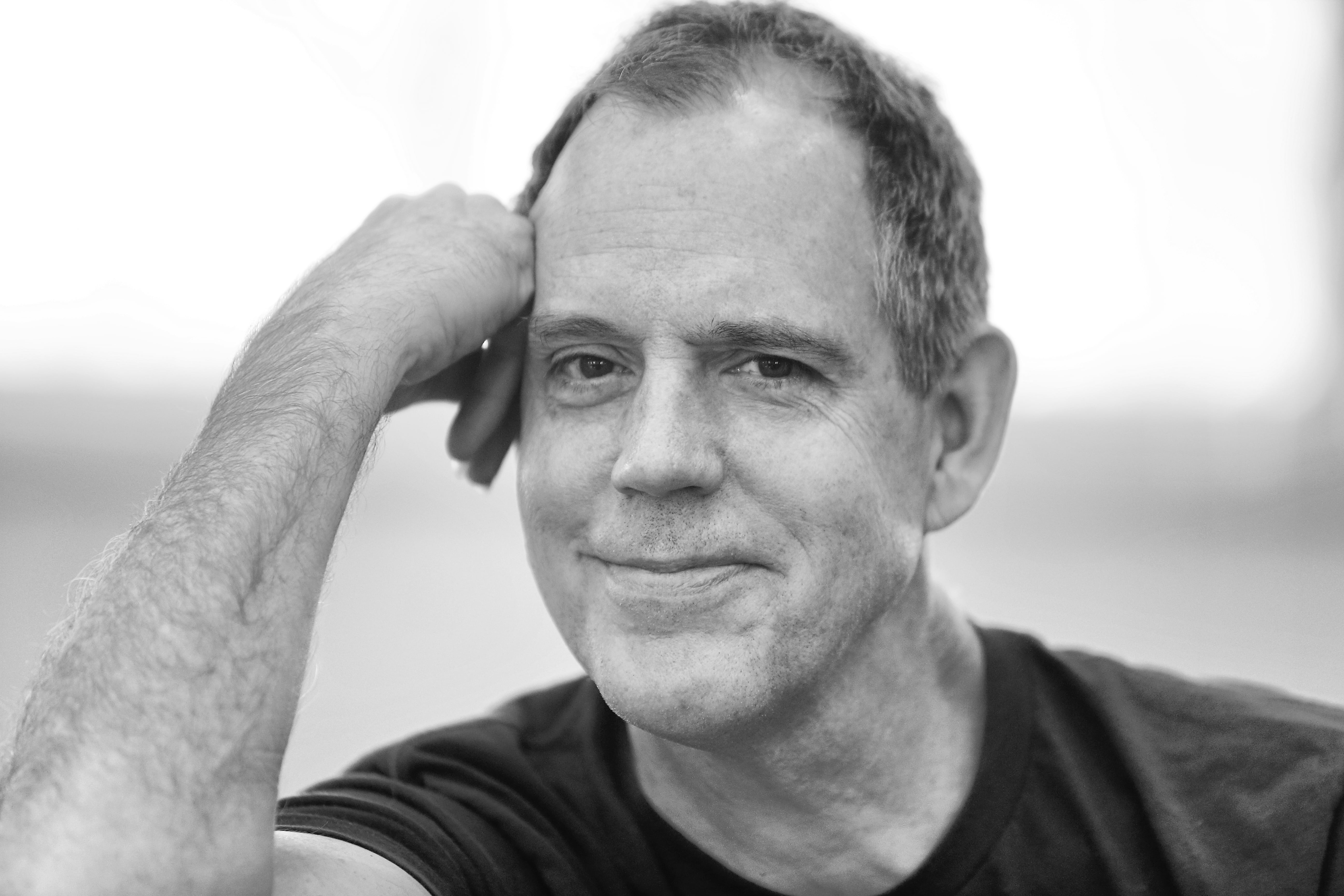
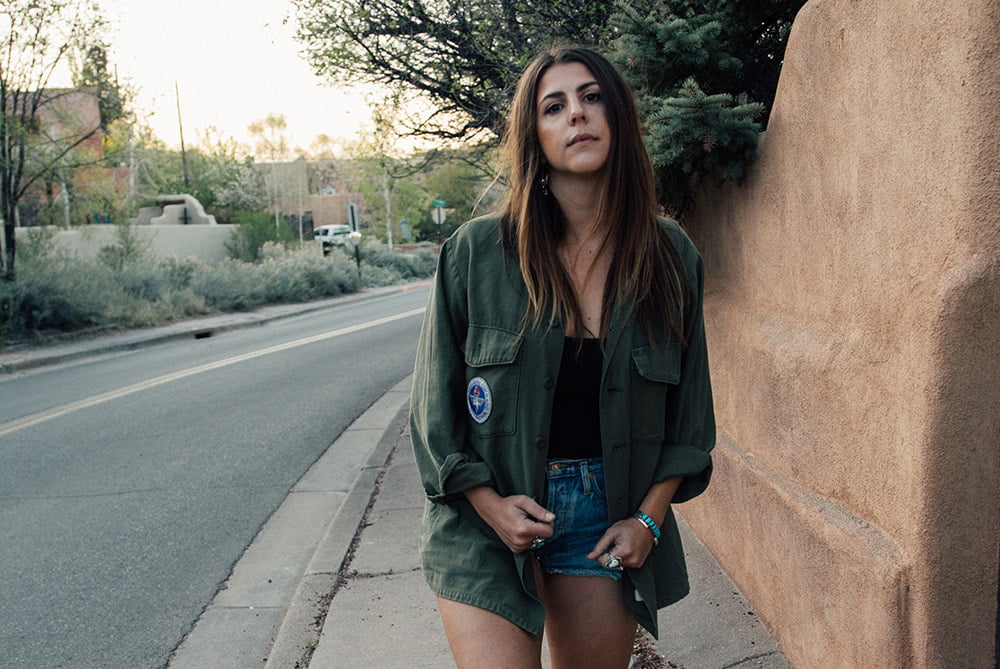
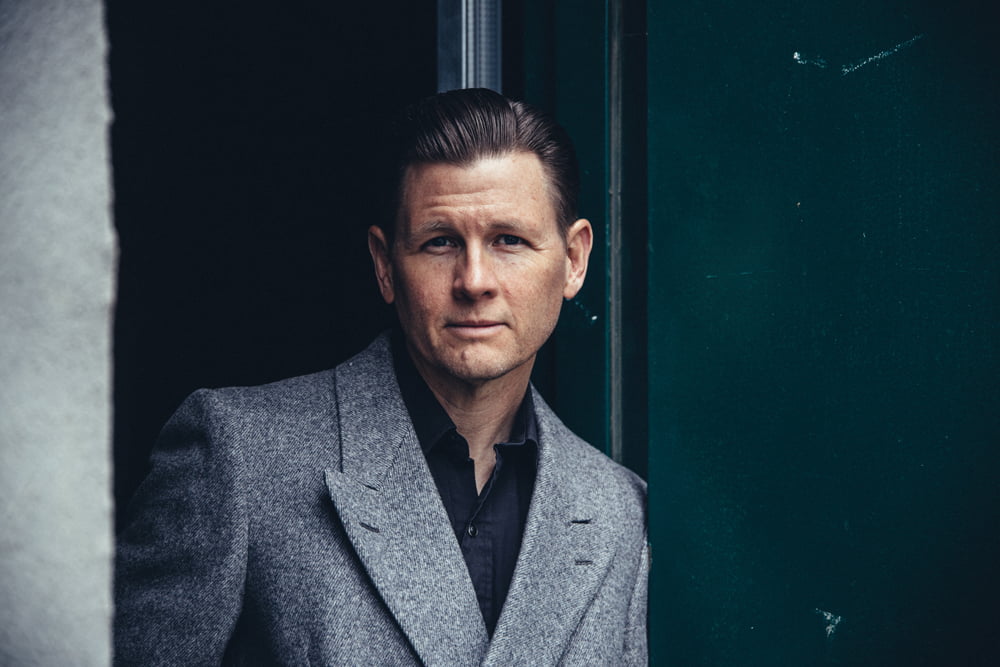
Photo credit: Josh Wool (Top); Graham Tolbert (Middle)
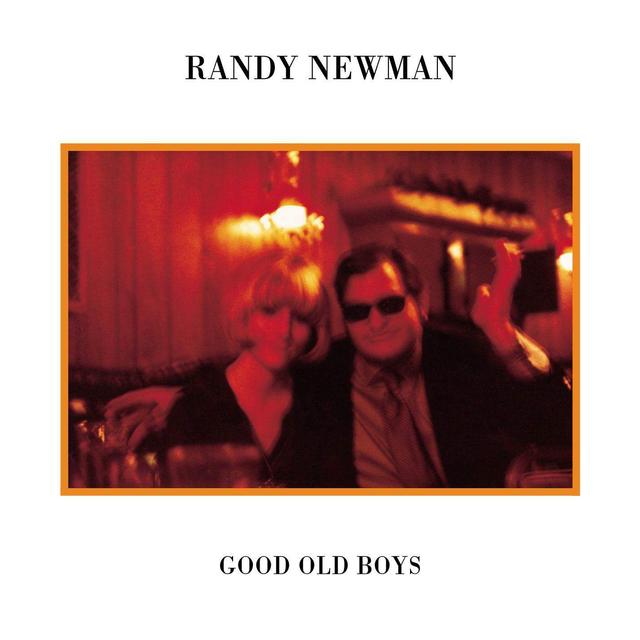
Canon Fodder: Randy Newman, ‘Good Old Boys’

Red Mountain in Birmingham, Alabama, is one of the largest metaphors for race and class in the American South. Part of a range that cuts a diagonal southwest-northeast line through the state, it provided the ore that fed the region’s iron mills in the late 19th and early 20th centuries and more crucially it divided the city into two neat halves: downtown and over the mountain. The former has historically been the province of the poor and in particular the black, while the wealthy and the white lived over the mountain. It became a convenient barrier between the races and the classes, blocking the fumes billowing from the furnaces and largely removing the well-heeled residents of the suburbs from the ugly realities of the city.

At the top of this mountain is Vulcan Park, home of the state’s most famous landmark – a 50-ton, 56-foot statue of the Roman god of the forge, cast in local iron. This is the setting for “Rednecks,” the opening track on Randy Newman’s 1974 album Good Old Boys, a squirrelly collection about race and masculinity in the South that 40 years later still has the power to provoke. The song opens with a 29-year-old millworker named Johnny Cutler sitting on a bench in the shadow of Vulcan and thinking about the governor of Georgia:

Last night I saw Lester Maddox on a TV show
With some smart-ass New York Jew
And the Jew laughed at Lester Maddox
And the audience laughed at Lester Maddox too.

In this short introduction Cutler is referring to an episode of The Dick Cavett Show, which did not have a “New York Jew” as its host but did book a range of guests including politicians, writers, musicians, and sports figures. In December 1970, his guests included actor Jim Brown, author Truman Capote, and Lester Maddox, who had campaigned on a flagrantly segregationist platform. Cavett barely disguised his contempt for the Southern politician and even dismissed Maddox’s constituents as “bigots.” After an argument in which Cavett failed to apologize to his guest’s satisfaction, Maddox walked off the set and refused to return. Because the show was filmed the day before it actually aired, newspapers reported the incident and viewership skyrocketed.

Once the song settles into its breezy ragtime swing, Cutler doesn’t defend Maddox as much as he embraces every insult ever hurled at Southerners. He proclaims himself an ig’nant redneck, a degenerate drunkard, an uneducated rabble-rouser. “We’re too dumb to make it in no Northern town,” he laughs, then gets to the heart of the matter: People like him are oppressing the country’s African American population. Except he doesn’t say “oppress.” He says they’re keeping them down. And of course he doesn’t use “African Americans.”

The word he uses is so blunt and ugly coming from both the narrator and the writer, such a jolt in the song—almost like a punchline, as if the whole point is that Cutler and his brethren are so dub they think other races are below them—that we should take a step back for a minute. Newman of course is singing in character, but still his use of that word teeters on the knife blade of irony: The singer gets some good distance on it, but the narrator wants no distance at all.


By 1974 Newman was well-known for this kind of risky satire, having already raised eyebrows with “Sail Away,” about a slave trader advertising the glories of America. There is purpose to such provocations, and by the time “Rednecks” reaches the bridge, Newman his narrator are holding a mirror up to America. Embracing the worst aspects of the Southern character allows Cutler to turn those accusations back on his accusers. Speaking of African Americans, he sings:

He’s free to be put in a cage in Harlem, New York City
He’s free to be put in a cage in the south side of Chicago and the west side
He’s free to be put in a cage in East St. Louis
And they put him in a cage in Hough in Cleveland
And they put him in a cage in Fillmore in San Francisco
And they put him in a cage in Roxbury in Boston

Listeners may not recognize those neighborhoods—and Newman admits his character wouldn’t have known them either—but in the 1960s and 1970s, they housed segregated ghettos, neighborhoods ravaged by poverty and violence. In 1964, just two weeks after the Civil Rights Act became law, a black teenager was shot by a white cop in Harlem, resulting in six days of riots in Manhattan and Brooklyn. In July 1966, a riot broke out in the Hough neighborhood of Cleveland when a white bar owner began turning away black patrons and patrolling the sidewalk with a shotgun. In September of that same year, San Francisco police shot and killed a black youth suspected of stealing a car, sparking a neighborhood demonstration that soon erupted into a riot. Chicago alone had multiple race riots throughout the 1960s.

The point is clear: Birmingham was no more or less racially segregated than any other American city, but was being scapegoated for the sins of the entire country. It’s a tricky point to make, and Newman reinforces it with the music. Rather than setting the song in a regionally specific style, such as country, blues, hillbilly, or Southern rock, he writes in a more broadly American mode, rooting “Rednecks” in popular jazz, ragtime, and Tin Pan Alley.

No doubt Cutler would have been familiar with these sounds, even if he didn’t claim them as his own. And certainly it reveals the album’s foundation in musical theater and possibly in minstrel shows of the late 19th and early 20th centuries. These flourishes of horns and strings underscore the song’s pointed view on race, refusing to distinguish the South as a place separate from the rest of the nation. Despite its history of thwarted secession, the American South remains American. Its racism, therefore, is America’s racism.


This is the main point of Good Old Boys, and the idea from which nearly every song stems. Newman conceived the album as something like a musical, which he explains in the infamous bootleg Johnny Cutler’s Birthday, a rough outline of the narrative with Newman singing, playing piano, and introducing the songs. (The bootleg was officially released as a bonus disc on the 2002 reissue of Good Old Boys.)

Roughly the first half of the record follows Cutler as he descends Red Mountain. “Birmingham” not only touts his hometown as “the greatest city in Alabam’” but provides Johnny’s working-class backstory, revealing just how thoroughly Newman had sketched out his narrator. Much less satirical, “Marie” and “Guilty” locate the character’s bruised heart through his marriage to a woman, both as gentle in their melody and as tough in their self-loathing as anything Newman has written. “I’m drunk right now, baby, but I’ve got to be,” he sings, “or I could never tell you what you mean to me.”

As the album proceeds, Cutler becomes less and less the main character, but rather one in a full choir of Southern eccentrics and roustabouts, who may not have the most sympathetic politics but earn Newman’s grudging respect for their determined self-definition. “Kingfish” is a barbed stump speech about former Louisiana governor Huey Long, the subject likewise of Robert Penn Warren’s novel All the King’s Men and a figure who recalls a certain you-know-who in his deployment of base racism as a campaign platform. Newman may be too jaded to be horrified by Long’s aggressively divisive politics, but he’s amused that the governor, eventually assassinated in the state capitol, had the chutzpah to keep his promises to the rural voters who elected him: “Who took on the Standard Oil men and whooped their ass?” he asks as the strings trill triumphantly. “Just like he said he’d do.”

“Back on My Feet Again” is a tale of woe presented as a weirdly elaborate complaint to a doctor (“Get me back on my feet again”), and “A Wedding in Cherokee County” is a monologue from a man in love with what he describes as a wild woman: “If she knew how, she’d be unfaithful to me,” he laments… or maybe boasts. “I think she’d kill me if she could.” Newman allows the man his dignity, even as he sullies himself for love, at least until the song’s end, a bridge to nowhere that serves as the album’s culmination despite the fact that there are two songs left to go: Dreaming of his wedding to this woman and then of their wedding night, he confesses, “She will laugh at my mighty sword. Why must everybody laugh at my mighty sword?”

During a decade when pop culture was presenting new exemplars of tough, moralistic Southern masculinity—think Burt Reynolds in Deliverance, Joe Don Baker in Walking Tall, or even Ronnie Van Zant fronting Lynyrd Skynyrd—Newman’s depiction of these sons of the South was subversive in its satire. These characters invite our scorn and laughter, but Newman also provokes something sympathy for them as well. He presents them as relentlessly human, if not always humane, their shortcomings reflecting the worst failings of America in general and the South in particular.

MIXTAPE: David Wilcox’s Character Study

I love songs that have interesting characters in them. One of my favorite questions to ask, when I’m investigating a lyric is, “Who is speaking to whom, and why?” I love it when a song contains a complex idea that changes the way I see the world. — David Wilcox

Paul Simon — “Train in the Distance”

The narrator watches a couple who have the best of intentions, as they try to make a relationship work, but the chorus keeps coming back with this haunting restlessness.

Susannah McCorkle — “The Waters of March”

I think my favorite song is probably the Susannah McCorkle version of “The Waters of March.” How can such a simple song communicate such complexity of how we miss the beauty that is all around us?

Joni Mitchell — “Paprika Plains”

This song contrasts the small scale pursuits of us humans with a giant desert landscape, communicated so beautifully with orchestral music.

James Taylor — “Sugar Trade”

I love the big view of the song “Sugar Trade” which was written by James Taylor and Jimmy Buffett. Start with a specific question about that guy in the boat, as you’re walking the beach. How deep do you want to go to understand the workings of the world?

Randy Newman — “Dixie Flyer”

The Randy Newman song “Dixie Flyer” describes his earliest memories in a way that explains why he has worked his whole life to sing about the issues of race and justice.

Donald Fagen — “The Goodbye Look”

Speaking of childhood memories, the Donald Fagen album The Nightfly is full of thoughts he had as a kid. There are some great characters in the song “The Goodbye Look.” He does a detailed character description of the man with the motor launch for hire — a skinny man with two-tone shoes.

Peter Case — “Blue Distance”

Peter Case made a record called Flying Saucer Blues that has lots of lovely characters. On that CD, there’s a song called “Blue Distance.” Indescribable longing frustratingly pursued in carnal relationships … Hey! My favorite theme.

Annie Gallup — “West Memphis Arkansas”

Another in this category is Annie Gallup’s song “West Memphis Arkansas.” We get the whole story, but the characters are described sparingly with the most meticulous details.

Justin Farren — “Little Blue Dirtbike”

It’s the details that describe the characters so beautifully, as he thinks about his grandfather’s adventures and the mutual shyness that kept them from ever talking.

Peter Mayer — “The Birthday Party”

Bravely communicating across our cultural and religious differences is the subject of this song. I like the version that’s on his live album.

Andy Gullahorn — “Holy Ground”

Andy Gullahorn has a song about Shane Claiborne that’s called “Holy Ground.” I learned how to play it and, after a few days of practice, I could sing it without being moved to tears.

XTC — “Harvest Festival”

The XTC album called Apple Venus is one of my favorite records of all time. Lots of beautiful characters. “Fruit Nut” is a great song, but my favorite for this mix would have to be the song “Harvest Festival.”

Ana Egge — “Dreamer”

Next is Ana Egge with her song “Dreamer” from the album Bright Shadow.

Robinson & Rohe — “The Longest Winter”

And for the last song on this mixtape, Jean Rohe and her husband Liam Robinson singing “The Longest Winter.”


Photo credit: Stuart Dahne

MIXTAPE: Jillette Johnson’s Piano Pioneers

Piano players aren’t as common in roots music as pickers are, so we asked Jillette Johnson to compile a list of her favorites for us. The keys-tickling singer/songwriter’s new album, All I Ever See in You Is Me, pretty well indicates that she’s on her way to joining this list herself.

Molly Drake – “The First Day”

There is no sweeter, more poignant sound than that of Molly Drake, Nick Drake’s mother. She sounds like my childhood, chasing bunnies in my grandparents’ yard in Bethlehem, Pennsylvania, while my aunts, grandparents, and parents ate tuna fish sandwiches on the patio and talked about the weather. This song, in particular, has taken me through many changes in my life, from ending relationships to moving to new states to simply starting new days. 

Aretha Franklin – “Since You’ve Been Gone (Sweet Sweet Baby)”

What a voice. And, by voice, I don’t just mean what happens when she opens her mouth. Aretha Franklin is, hands down, my favorite piano player. She plays like she sings. Without apologies and, simply, better than anyone else ever could, and perhaps ever will. 

Randy Newman – “I Think It’s Going to Rain Today”

I first saw Randy Newman play when I was 16, at an ASCAP convention, where he was the guest of honor. He sat for two hours playing his songs and talking about them for long intervals in between. That day changed everything about songwriting for me. This song, I had already heard from my favorite movie of all time Beaches. Bette Midler, who plays Cecelia Bloom, sings a beautiful version of it. It’s one of my favorite moments in the movie. But honestly, once I heard Randy sing it live in that room, I fell madly in love with him, and don’t think anyone can hold a candle to his recording of it. 

Carole King – “So Far Away”

I can’t think of a single person, album, or song, for that matter, that has influenced me more as a songwriter than this one. This — and she — taught me everything, starting at a very young age. I’m so grateful for it.

Elton John — “Mona Lisas and Mad Hatters”

Favorite Elton song. I was already a superfan, but when my childhood friend, Chelsea, put this on a mix she made for me when we were in middle school, I became forever addicted to it. I listened to it every morning on the bus going to school and every afternoon coming home.  

Leon Russell — “Tight Rope”

Saucy, groovy, wicked excellence. 

Tom Waits — “Martha”

He released Closing Time when he was 23, I think, which means he must have written “Martha” before then, which doesn’t make any sense. “Martha” is a story that only an old man would be able to tell. My best friend and I often drive around Nashville together, singing this song at the top of our lungs. 

Billy Joel — “Summer, Highland Falls”

I grew up on Billy Joel, and this has always been one of my favorite songs of his. He taught me not to be afraid of wordy mouthfuls of lyrics, as long as they tell the story in a way you can understand. My brother also, coincidentally, went to West Point for college, which is in Highland Falls, New York. So I blasted this song every time I drove up to bribe him to do my physics homework for me in exchange for donuts. 

Tori Amos — “Winter”

My friend Jon once said to me that he believes music can be reincarnated in people as generations pass. If that’s true, in my wildest dreams, I might be a reincarnation of Tori Amos. The way she writes, sings, and plays makes so much sense to me. It feels like my pain and my happiness, when I listen to her pain and her happiness. I know she makes the rest of the world feel that way, too, which is part of why she’s brilliant. And this song gets me every time. 

Ben Folds Five — “Boxing”

Ben is the only person I’ve ever “fan girled” over. I was 17 and saw him in line at Starbucks in New York City. I walked up to him, thanked him for having such a big influence on me, and darted out before he could even respond. My big brother got me into him when I was 11 or 12, and I ate up everything he ever did from then on. 

Fiona Apple — “Paper Bag”

Now if I had the opportunity, I would definitely fan girl over Fiona. I dreamed of being her from the minute Criminal hit the airwaves. I’ve watched that music video thousands of times. I had a hard time picking just one song. 

Rufus Wainwright — “Poses”

If you are a man and you sound anything like Rufus Wainwright, I will probably fall in love with you, at least a little bit. He really sunk into my skull after I turned 20, and changed the way that I thought about melody. He’s got this lilting, grand romance to him that few people other than Rufus can pull off. 

Father John Misty — “I Went to the Store One Day”

If I had a nickel for every time someone told me I had to listen to Father John Misty … I’ll admit I was late to the game and fairly resistant, just because I live under the constant, bull-headed assumption that modern music is less good than the stuff I grew up on. But I’ll be damned if Father John Misty isn’t amazing. This song is beautiful, jarring, painful, and lives in a world all its own. 


Photo credit: Anna Webber

3×3: Jillette Johnson on Saying Dope, Liking Butts, and Balancing Environs

Artist: Jillette Johnson
Hometown: Pound Ridge, NY
Latest Album: All I Ever See in You Is Me
Personal Nicknames: JJ, the kid, Jayge


Happy belated 4th of July. I’m still celebrating. Do I have something on my face?  @danicadora

A post shared by Jillette Johnson (@jillettejohnson) on

Who is the most surprising artist in current rotation in your iTunes/Spotify?

I don’t know if it’s surprising, but lots of Randy Newman.

If you were a candle, what scent would you be?

Hibiscus

What literary character or story do you most relate to?

Max from Where the Wild Things Are

What’s your favorite word?

I’ve been told I say “dope” a lot, unironically.

What’s your best physical attribute?

I’m proud to say I’ve come to like all of it, but recently I’ve grown quite fond of my butt. I never used to think twice about it.

Which is your favorite Revival — Creedence Clearwater, Dustbowl, Elephant, Jamestown, New Grass, Tent, or -ists?

Creedence Clearwater


Piano surgery. @jonahkraut

A post shared by Jillette Johnson (@jillettejohnson) on

Banjo, mando, or dobro?

Dobro

Are you more a thinking or feeling type?

Feeling

Urban or rural?

I’m a pretty even balance of both. Can’t have one without the other.


Photo credit: Anna Webber

3×3: Jake La Botz on Bertolt Brecht, Blind Boy Fuller, and a Hopeful Amount of Laundry

Artist: Jake La Botz
Hometown: Nashville, but originally from Chicago
Latest Album: Sunnyside
Personal Nicknames: Jake (real name Jakob)


Almost home! #nashvillehereicome #musichwy

A post shared by Jake La Botz (@jakelabotz) on

What song do you wish you had written?

“I Think It’s Going to Rain Today” — Randy Newman

Who would be in your dream songwriter round?

How many in a “round”? I don’t think I’ve been to one yet. I’m going to guess six. Hank Williams, Thomas A. Dorsey, Bertolt Brecht, Skip James, Lou Reed, Henry Mancini.

If you could only listen to one artist’s discography for the rest of your life, whose would you choose?

Blind Boy Fuller


A post shared by Jake La Botz (@jakelabotz) on

How often do you do laundry?

I own approximately two weeks worth of clothes. So, hopefully, not more than two weeks.

What was the last movie that you really loved?

The Lobster

If you could re-live one year of your life, which would it be and why?

You stopped my mind with that one. Sorry, I can’t come up with an answer!


San Diego: playing here at 10pm TONIGHT

A post shared by Jake La Botz (@jakelabotz) on

What’s your go-to comfort food?

Thai or tacos

Which Whiskey is your favorite — Scotch, Tennessee, Myers, Shivers, or Gentry?

The most expensive one. I’m too cheap to buy it. Keeps me sober.

Mustard or mayo?

Spicy mustard


Photo credit: Joshua Black Wilkins

A Hard Religion: An Interview with Robbie Fulks

Robbie Fulks is the type of songwriter capable of mining myriad material sources for his work. His life and the lives of those around him are all fair game. On his new release, Upland Stories, the lives of those long gone even come into play. Some of the tales told here date back to 1936, when writer James Agee and photographer Walker Evans set out to capture sharecroppers' stories in Alabama, eventually collecting them in Let Us Now Praise Famous Men. On other cuts, Fulks reaches into his own history to sketch out in stark relief the often hard-scrabble lives he remembers from growing up in Virginia and North Carolina.

I'm always curious about geography as an artistic factor. You've lived in a few different places in your life — Pennsylvania, Virginia, North Carolina, New York. Tell me why Chicago makes sense as a home base for a roots musician.

I came here because I knocked my girlfriend up and her family had a nice place in the suburbs here. Before long, I had knocked another Chicago girl up and just couldn’t leave … old story. Anyway, I quickly found that there was no shortage of clubs and other outlets for musicians in Chicago. I got a job at Old Town School [of Folk Music] teaching, and started playing in little clubs like Holstein's and meeting pickers, and eventually I drifted into Greg Cahill’s band, Special Consensus. Because it’s such a big place with a decent and diverse economy, musicians like me can make it work out in Chicago, even with its disadvantage of not being a music business place. I try to counter the disadvantage by keeping in touch with people who move on to become famous on the coasts, and traveling all over doing shows.

Similarly, you've been a bit of a musical nomad, as well. Will you always come back to your folk-country home base, sooner or later, as you've done on Upland?

Donna and I talk pretty constantly about moving southward, where I fit in better musically and, in some ways, temperamentally, but I doubt it’s really in the cards — at this point, I have a fucking grandson here. Oh, but I think your question means am I, at heart, a folk-country musician? I just call myself country. It’s a big country.

Pretty clever of you to step into James Agee's shoes for some of these stories, particularly considering what's going on in the country currently. How'd that all come together for you?

Brian Yorkey, the playwright, and I were talking about a show to collaborate on and, in going over the themes that crop up over and over in my stuff — like memory and family and hardship and Southernness and so on — [Let Us Now Praise] Famous Men came to mind. I hadn’t read it for a long time and never read it in more than excerpts. I was shocked to find how much it turned me off — the writing was so calculated to annoy the reader, and the boring detail and purple language were too reminiscent of … I don’t know, the covenant-building section of “Exodus.” But the original piece he wrote, rejected by Fortune and decades later republished as “Cotton Tenants,” is sharp and beautiful; and I still admire his talent and accomplishments across a wide swath of genres … and, of course, his dangerous sexy-suicidal charisma, as well.

I wrote seven or eight songs in starting the project, and the three I included on my record felt to fit my voice well, and were just favorites of mine, for whatever reason.

Tying then to now, America is still a very hard religion, wouldn't you say? The more things change and all …

Of course any comparison between the 1930s and now is inexact and, on its face, it may seem ludicrous to suggest that the lives of cotton sharecroppers — which were hardly better than feudal serfs — have any analogue in today’s America. That’s the tough position that song stakes out, if you know, going in, that it’s related to Famous Men.

If you don’t, it simply articulates the harsh life and mindset of a resourceless person whose body hurts from work, who sacrifices children to war, who can’t hope to change his or her prospects, who takes pleasure in a fantasy of being happier after death, and whose stoic complaints are a sort of art form.

What's it take to write a funny song well? And to have them fit into an overall mix with non-funny songs?

I’m not sure a modern music listener accepts the transition on an “album” between funny and solemn. I grew up in an era that did, so it feels natural to me — light and dark, sharp mood swings, relate strongly to lived experience, in my view — but I’ve sometimes gotten the impression that a comic persona spoils the audience for anything else. “Look, that’s Cinderfella who we used to laugh at. Now he’s doing death camp tragedy and helping kids, Jesus Christ.”

My funny song influences are widespread. Stan Freberg, Michael Flanders, Tony Hendra, Bill Carlisle, Sheldon Harnick, Don Bowman, Loudon Wainwright, Cole Porter, Randy Newman, on and on. That list shows the fluidity and breadth of what I think of as funny or as a funny song. Basically, I think the same skills to write that way are the same as to write any song; but the instinct for the laugh-getting … who knows? As Steve Martin says, “If you put a slice of baloney in each of your shoes, you feel funny.”

Having done a few cover tunes along the way, what do you look for in a song? Something you don't think you could come close to writing? Some phrase that slays you?

I did Merle Kilgore’s great and moving song “Baby Rocked Her Dolly” on Upland Stories. iI strikes me as something I could have written myself, almost, but has a little something that’s beyond me or, perhaps, outside of me. The songs written by others that infect me, so to speak, to the point where I want to make a record of them and then sing them 200 times afterward in performance, a lot of them probably have that quality — they fit my voice, but there’s some feature that’s outside my bailiwick enough as to compel my admiration or envy. But, ultimately, songs infect a writer for the same reason as they do a non-writer: A good song makes you want to own it.

You did some time on Music Row. If creativity is alive and, mythologically speaking, associated with a muse or goddess, is there a way for formula writing to be something more than empty and soul-less?

I don’t think anyone alive would call himself a formula writer, but those writers that focus on a market and learn what it takes to satisfy it and bang the bell again and again, those people have their place. In the olden times, the industry seemed to offer more rewards to the popular music writers who were both commercially and artistically motivated, such as Chuck Berry, the Bryants, Lennon and McCartney, Carole King, Willie Dixon, Harlan Howard … people these days that are that talented are either in littler niches or get their gravy from film, TV, theater … something other than product geared for radio-driven sales. All my impression. I really don’t know much about it.

In my Music Row years, there were publishers who were very sensitive and smart sounding boards and constructive editors (not mine, alas, but still). But I'd guess that, as the commercial musical sphere has gotten stodgier and simpler and shoddier, these people have grown even rarer.

With all that you've done and seen throughout your career, is there any moment you'd like to go back to and relive or re-do?

Every single one of them!


Photo credit: Andy Goodwin

3×3: Julie Christensen on SXSW, Senior Year, and Splitting the Geographic Difference

Artist: Stone Cupid / Julie Christensen
Hometown: Nashville, TN
Latest Album: The Cardinal
Rejected Band Name: Piehole


On my walk this morning.

A photo posted by Julie Christensen (@stonecupid) on

If you had to live the life of a character in a song, which song would you choose?
I have lived the character in the Randy Newman song "Marie." I think she may be the girl in "The Cardinal."

Where would you most like to live or visit that you haven't yet?
I had "astro-cartography" done a long time ago, and was told to go to the Portuguese islands of the Azores in the Atlantic. So I would like to go. They're supposed to be what's left of the lost civilization of Atlantis.

What was the last thing that made you really mad?
I can't tell you what it was exactly … probably a friend getting sick or dying because of the inequity in our health care system.


Oh, hell yeah.

A photo posted by Julie Christensen (@stonecupid) on

What's the best concert you've ever attended?
I can't decide between two concerts: In 2008 during SXSW, I heard Chuck Prophet and the Mission Express in a sweaty basement full of 300 people rock with the same fire and abandon we all carried in the '80s in that punk scene in L.A. (So glad I have that Chuck Prophet song on The Cardinal.) Same with X at the Ryman last year: John Doe said "Ernest Tubb must be turning over in his grave …"

What was your favorite grade in school?
When I was a senior, all I had left to take was French IV, dance team, and Chorus.

What are you reading right now?
A book of stories by Canadian author Alice Munro that my co-producer Jeff Turmes gave me, called The Love of a Good Woman. I've been savoring, for a good while, her exploration of the depth inside these Great Plains "plain folk." These are my people. Kind of dark down in the soul.


Vintage Feet. Well-traveled.

A photo posted by Julie Christensen (@stonecupid) on

Whiskey, water, or wine?
For the last 28-and-a-half years, water.

North or South?
Somewhere in the middle.

Pizza or tacos?
Tacos. Hello.


Photo credit: Michael Kelly