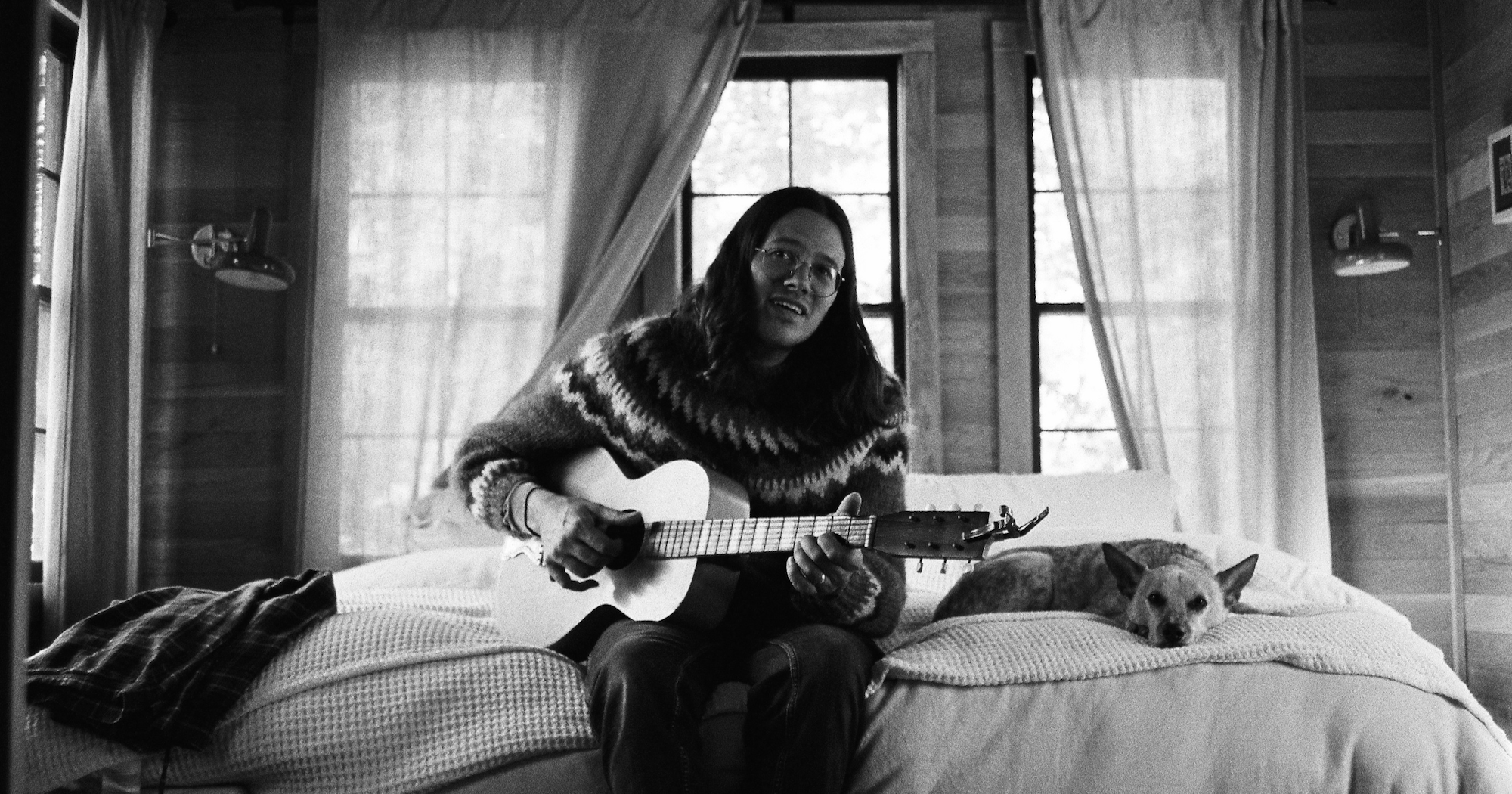
What other art forms – literature, film, dance, painting, etc. – inform your music?
I’m a film nerd. I try to watch as many movies as possible, and also love the cinema (shout out to the Belcourt in Nashville), so if I’m burnt out from touring or music I fall back on that for influence. If you hear my music there is a deep influence of British folk horror from classic titles such as The Wicker Man and The Blood on Satan’s Claw to modern British folk movies such as Enys Men and Bait.
I do tend to go on the hunt for obscure ones I haven’t seen. I recently watched the 1977 TV series Children of The Stone and 1972’s A Warning to the Curious. Both incredible early origins of folk horror. Worth a look if that floats your boat.
What’s your favorite memory from being on stage?
Bonnaroo with Rich Ruth. Our backline was these giant Fender Twin [amps] and we all just turned up. It was this incredible wall of sound. I also think a big percentage of the audience had taken acid and there was a certain sway to everything.
Green Man Festival in Wales was also pretty magical, the sun was setting over Bannau Brycheiniog [National Park] and I got to play my favorite Trees cover, “Road,” in that environment with Sean Thompson, Erin Rae, and Hollow Hand.
What has been the best advice you’ve received in your career so far?
Surround yourself with friends that inspire you and encourage you. Be in a community you treasure.
Commit to what you enjoy and care about.
This is more advice for the “session” musician world. For years I was insecure about not being as good as x-y-z or the older players I look up to, but there’s something so powerful about harnessing insecurity. It’s what makes art special. To be confident in taking a risk and not knowing the outcome. There’s a lack of that in Music Row cause everyone plays to a formula, so the idea of risk and insecurity is not there.
What is a genre, album, artist, musician, or song that you adore that would surprise people?
Oh, I have some very questionable tastes. Especially if I’m behind the wheel and it’s an eight-hour drive home. I love Robert Palmer. I weirdly like Primus (especially the Brown Album) – I think it’s a nostalgia thing with them. Kicking around blasting Tommy the Cat at the Romford Skate Park on my CD Walkman.
Oh, Bruce Hornsby. I can burn through three hours of Bruce in one stint. Easy!
What would a perfect day as an artist and creator look like to you?
With my wife and two dogs on a hike, then a pub lunch by the seaside (somewhere in Cornwall), then a cheeky tobacco pipe outside in the evening with the cat listening to John Peel archives, but like the intense Aphex Twin archives… really loudly.
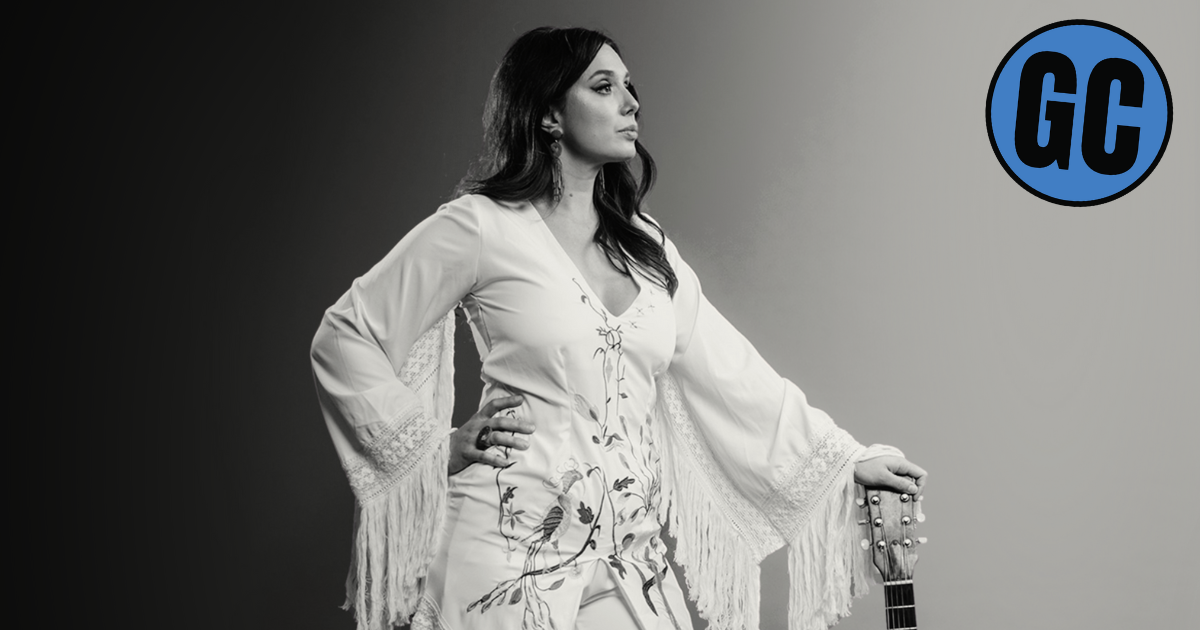
Patience and persistence have long been traits embodied by the music and songwriting of Kristina Murray, but with her new album, Little Blue, she can add another “P” word to the mix: perseverance.
Now a decade into her time in Nashville, Little Blue (out May 9 on New West Records) is poised to be her “ten year town” breakout moment. Through its blend of old school country twang and swampy southern R&B she ruminates on everything from the grind, pursuing her honky-tonk dream, to finding love, and the unseen burdens placed on women. She shows off her formidable knack for storytelling in the process. The project is also direct evidence of the inroads she’s made in Music City, with artists like Erin Rae, Logan Ledger, Sean Thompson, Miss Tess, Frank Rische, and John Mailander all lending a hand.
Originally from Atlanta, Murray was introduced to country as a child via a cassette of Patsy Cline’s greatest hits in her mother’s car. She eventually got her first guitar in high school, but didn’t play it anywhere outside of open mics and church camps until she moved to Colorado in the mid 2000s to pursue a degree in recreational therapy. While there, she became immersed in the regional bluegrass scene and began playing out more, slowly gaining confidence and building toward her eventual move to Nashville in 2014. While she was only in Colorado for six years, Murray still looks back on her time out west as foundational for her direction in life and the art she’s pursuing now.
“I’d never lived outside the South before and had a couple mentors of mine tell me I should give it a try for a little bit,” recalls Murray. “It was out there where I realized that being a musician is what I wanted to do with my life. Once you get bit by the playing-on-stage bug, there’s no going back. It’s so much more than just playing for people, too. It’s also being in sync with your band and performing at a high level and the energy feedback loop that can come from that.”
Since relocating to Nashville, Murray has become a linchpin of the city’s dive bar and juke joint scene, frequently popping up at places like Dee’s Country Cocktail Lounge and Bobby’s Idle Hour, and became one of the first women to front a full band at Santa’s Pub. But despite all this, she was starting to feel stuck as the pressure of things like her father’s sudden death, car wrecks, watching others have the success she’d been waiting on began to weigh her down. But in that darkness she was able to find a glimmer of light, and Little Blue was born.
Leading up to the album’s release, Good Country caught up with Murray to discuss imposter syndrome, expectations in the music business, the healing power of music, and more.
If going from open mics and church camps in Georgia to diving into Colorado’s bluegrass scene was a big step, then moving from there to Nashville must’ve felt like being on another planet. What was that transition like?
Kristina Murray: My time in Colorado was foundational in some ways. I learned the Nashville number system, how to play with a band, and how to execute a bunch of different songs really well while I was there. But, eventually, it got to being a big fish, small pond kind of thing. You can make a living out there just by playing cover songs in bars, but what I wanted was to write songs and be around people my age who were also writing the kind of songs I like, wanted to listen to, and wanted to write. Moving there was a big step because Nashville is the place where the music I love was and is still being made.
You’ve been grinding away in Nashville for a decade now as an independent musician, but this new record marks your debut with New West. How’d that partnership come about?
Southern Ambrosia [was] the first record I put out after moving to Nashville and, quite frankly, I didn’t know what I was doing. I had seen a lot of my peers kind of take off and naively I thought, “Well, this is a really good record full of great players and good writing and I’m in this kind of circle community; because all those things are true, then this record should get me to the next place that I wanted to go.”
It was actually on the radar of Normaltown and New West back in 2018, but things fizzled out because I didn’t know how to go about having conversations with business people about my music – I’d never done anything like that before. Fast forward a few years, this record was done in 2023 and by early 2024 I was talking with them again about picking it up. Their support means a lot, because it’s really difficult to get your record and your career to the places that you want to go without it.
New West and Normaltown are also based out of Athens, Georgia, and I’m from Atlanta, so it means a lot to be involved with them on that level as well. I was a huge Drive-By Truckers fan in my 20s and can’t get enough of Jaime Wyatt, Lilly Hiatt, Nikki Lane and others. There’s just a lot of people that I love and respect on that record label and I’m happy to be a part of the family.
Better late than never, I suppose! You just mentioned the feedback for Southern Ambrosia not meeting the lofty expectations you had for it. I imagine seeing friends and colleagues having success with their music – from signing with labels to getting on bigger and bigger shows to nailing down high-profile writing sessions – doesn’t help to keep the imposter syndrome at bay.
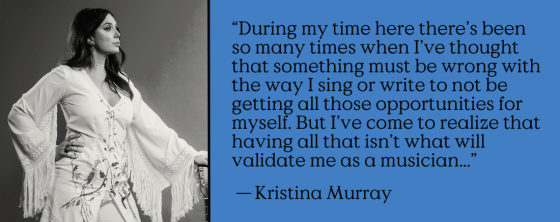
It’s funny, because during my decade in Nashville I really have seen so many people just skyrocket, and it’s all been so deserved, like Erin Rae – nobody sings or writes like her – or Sierra Ferrell, I mean who else sings like that? Logan Ledger, who also joins me on this record, is one of my favorite singers and songwriters around. During my time here there’s been so many times when I’ve thought that something must be wrong with the way I sing or write to not be getting all those opportunities for myself. But I’ve come to realize that having all that isn’t what will validate me as a musician, writer, performer, and person who simply loves this music, because at the end of the day, if I still get something out of it, shouldn’t that be enough? It’s something I’ve grappled with a lot through the years and continue to do on this album.
Speaking of expectations in the music business not always being reality and the illusion of success, are those things you’re tackling head on in the song “Watchin’ the World Pass Me By”?
What’s funny about that song is it started out as me just trying to see if I could write a basic “outlaw” country song. It obviously evolved a bit from a writing exercise parody to a commentary on getting “so tired of watching ‘em livin’ my dreams” and “daddy’s bankroll to make the rules” nepotism and suddenly being a country singer, because you threw on a cowboy hat. But I also poke a bit of fun at myself, too, with lines like “She’s just a bitter, jaded, helpless fool.”
Another tune I’ve really enjoyed is “Phenix City.” In many ways it seems like an outlier on the record, a story song amid a sea of deeply personal, autobiographical tales. With that in mind, what was your intention for including it here?
Most of this record is autobiographical or composite sketches of me and those around me, but that one specifically is a story song. It very much paints a picture of small-town circumstances in Phenix City, a small town in Alabama along the Georgia border. One time I was driving down to a gig in Columbus, Georgia, and instead of going through Atlanta I decided to head straight down from Nashville through Alabama. I rented a car because my van was out of commission, and about a half hour outside Columbus I broke down after running out of gas because I had my music so loud I couldn’t hear it beeping. I eventually got it to a mechanic shop in Phenix City where the man told me I just needed some gas, which was both a relief and a moment that made me feel like the biggest idiot around, but briefly getting stuck there did inspire the song in a roundabout way.
Similar to “Phenix City,” another outlier of sorts on Little Blue is the lead track, “You Got Me,” which seems to revolve around the early, butterflies-fueled stages of love. Mind telling me a bit about it and the mood it sets for the remainder of the project?
I’m not one for writing love songs too much. The only other real love song I have is “The Ballad Of Angel & Donnie” from Southern Ambrosia, which is another story song about a meth dealer and his girlfriend. I wrote “You Got Me” early on in my relationship with my now-partner. It’s a very true-to-life song and I knew if it was going to be about him that it had to be a really cool-sounding song. My guitarist, James Paul Mitchell, came over one night when I was writing it and helped to come up with that signature lick you hear on it right at the beginning, which I loved. I really wanted it to be like a Band song with the Clavinet sounds that they twin throughout the song. My partner, Corey [Parsons], also plays percussion on this one, which is really sweet that he got to put some of his touch on a song about him.
The song also starts with the word “and,” which came from a writing exercise after listening to Robert Johnson’s “Love in Vain.” It begins with “And I followed her to the station.” I thought it was so cool to start a song with “and,” because it’s like you’re just dropping someone into the middle of a story.
While “You Got Me” is a bright spot, a lot of this album leans more toward the somber and dark. What are your thoughts on the catharsis and healing that can come from writing through difficult times such as the ones you’re encountering here?
The album is titled Little Blue for a reason. We are remiss to forget how significant the pandemic was and how devastatingly sad that period of time in our collective human history was. A good chunk of these songs were written during that two-year period along with general ruminations about the sad and unjust world we live in that even the music industry isn’t immune from. It feels silly at times to whine and cry about the music industry when there’s so much other crazy stuff happening, but that’s the world I live in so I have to write through that.
I wouldn’t say that writing songs is cathartic for me as much as sharing in the collective. What grabs me about music is when it feels real and is relatable to me and I hope that I’ve done that here with what I’ve written about. Music is magical, so the fact that I get to do this at all is amazing and continues to drive me. I’m never not going to be amazed by music. For instance, I took a harmonica lesson the other day with Ilya Portnov, who also plays on the record. I’ve done a little bit of Bob Dylan-esque singer-songwriter harmonica, but I really wanted to understand the harp a little bit better. It’s a magical feeling when the music and notes and scale are all working together. I feel endlessly humbled by it and very proud that I get to be a small ripple in the river of music.
What did the process of bringing Little Blue to life teach you about yourself?
That I’m gonna keep doing it regardless of if it makes any sense at all. I didn’t get my record deal until after everything for this album was done, meaning that I funded it all myself. It was a lot to handle, because making records isn’t cheap, especially if you’re paying people what they deserve to get paid. I feel very lucky and grateful for all the folks that lended their talent to this record. It made me realize that the more I keep pushing ahead to more everything will begin to make sense around me. It’s a mix of perseverance and understanding that good things take time and intention. I feel really good about this record and even though it’s only my third, and first in six years, I’m glad to put it out in the world because we need art now more than ever.
Photo Credit: Schuyler Howie
This website uses cookies to improve your experience. We'll assume you're ok with this, but you can opt-out if you wish.AcceptRejectRead More
Privacy & Cookies Policy
Privacy Overview
This website uses cookies to improve your experience while you navigate through the website. Out of these, the cookies that are categorized as necessary are stored on your browser as they are essential for the working of basic functionalities of the website. We also use third-party cookies that help us analyze and understand how you use this website. These cookies will be stored in your browser only with your consent. You also have the option to opt-out of these cookies. But opting out of some of these cookies may affect your browsing experience.
Necessary cookies are absolutely essential for the website to function properly. This category only includes cookies that ensures basic functionalities and security features of the website. These cookies do not store any personal information.
Any cookies that may not be particularly necessary for the website to function and is used specifically to collect user personal data via analytics, ads, other embedded contents are termed as non-necessary cookies. It is mandatory to procure user consent prior to running these cookies on your website.