Magoo on Taking Chances and Giving Up Second Guessing

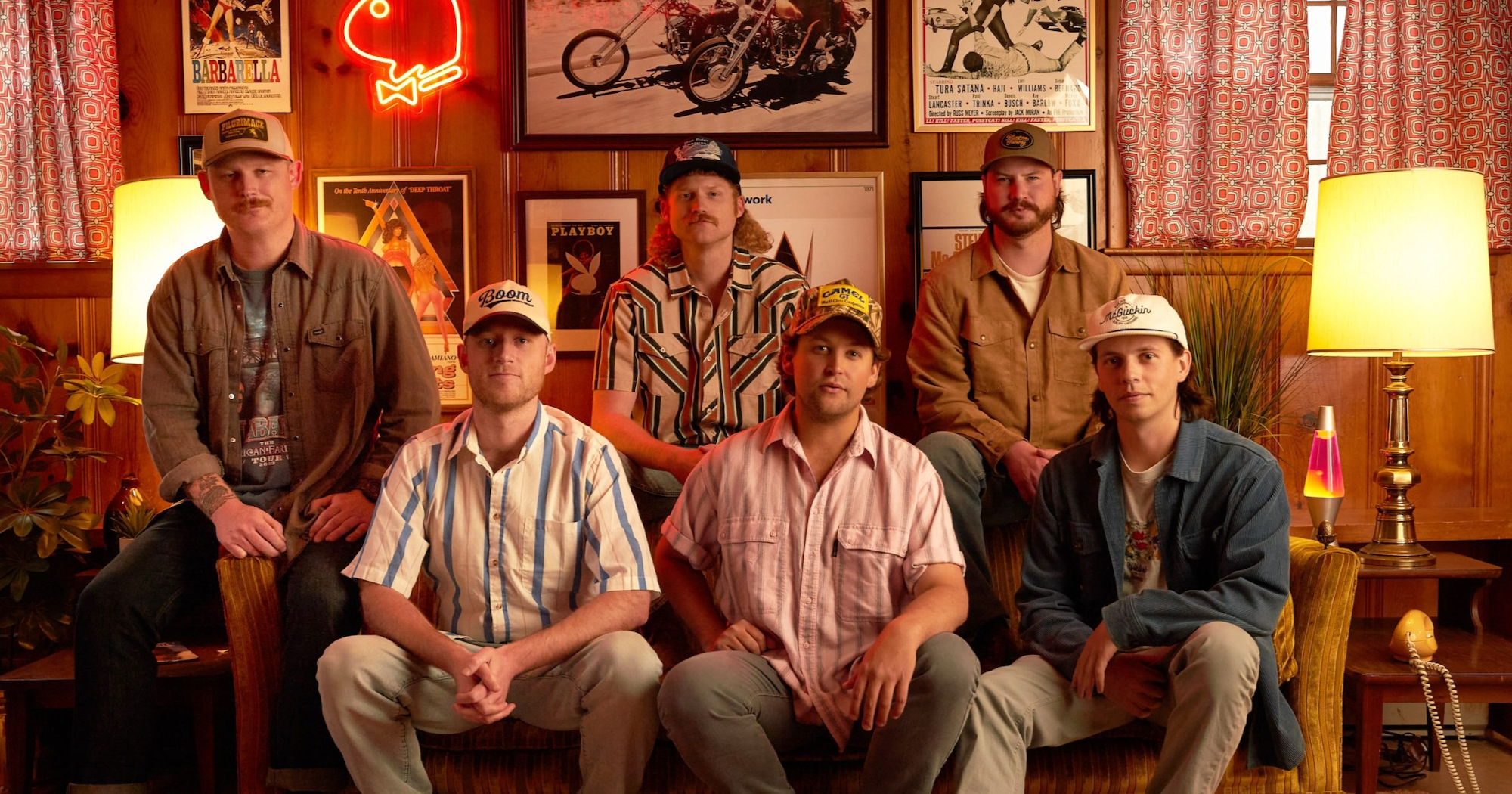
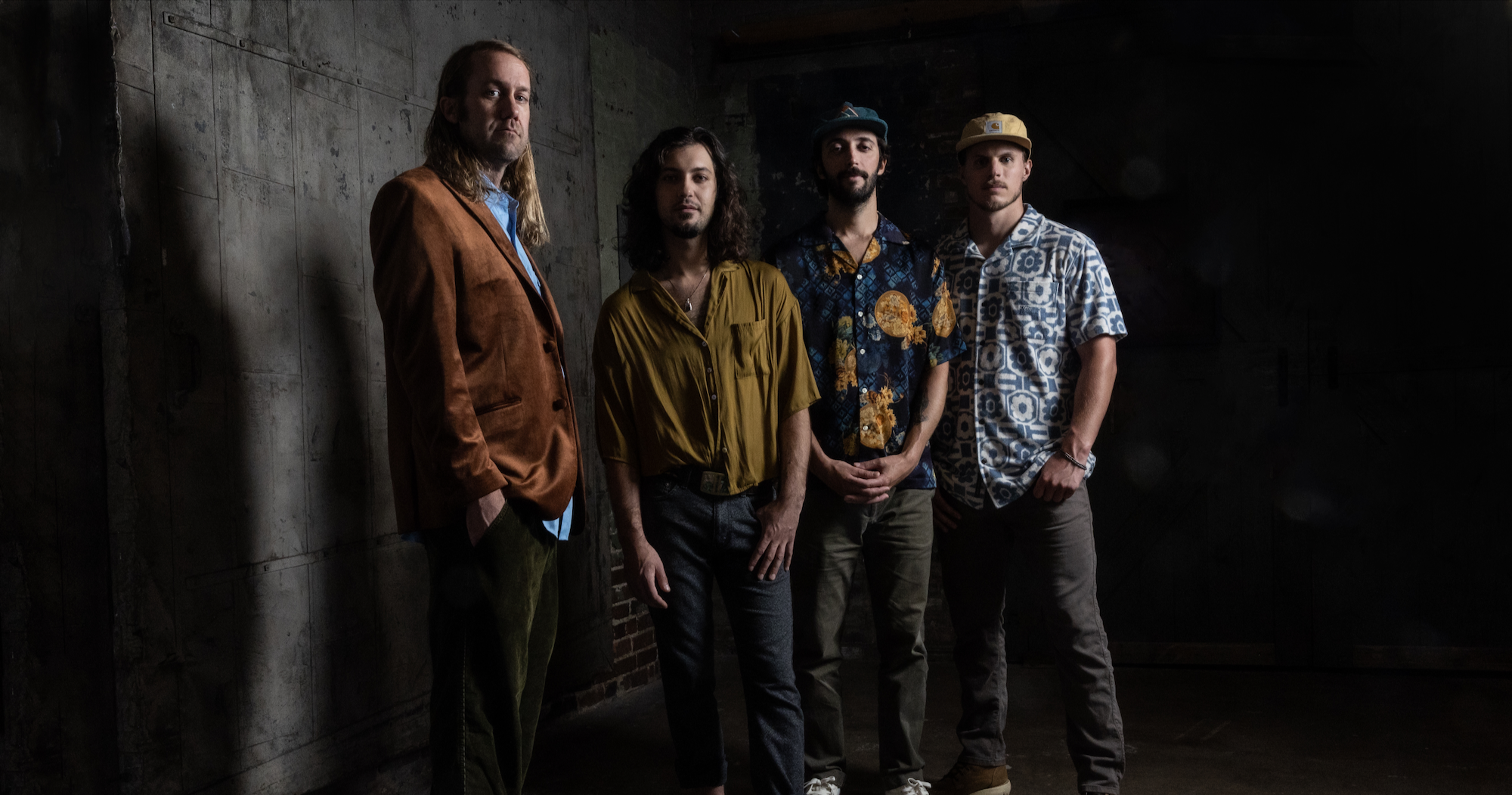
Magoo has been lighting up Colorado’s vibrant and crowded jamgrass scene since 2022. Their collision of string band music with danceable beats, jazzed up instrumental breaks, and anthemic lyrics rooted in rock has led guitarist Erik Hill to coin the phrase “bluegrass with lasers” to describe their sound and style.

After turning heads with two volumes of Magoo The EP in 2023 and 2024, the band – now comprised of Dylan Flynn (Dobro), Courtlyn Bills (mandolin), A. Denton Turner (bass), and Hill – have finally unleashed their full-length debut, What A Life. The 10-song compilation sees the upstart group of pickers contemplating everything from the sacrifices of a life lived on the road, the places that have transformed us, and how our stories are all connected.

Across 52 minutes of run time, the musicians rip their way through meandering jams that flow freely from one song to another as if it was a live show, an approach Hill says was intentional to keep the album from feeling sterile.

“Our live shows and recordings are very important to us, so it was imperative that this album not feel so copy and paste or cut and dry like studio projects often can be,” explains Hill. “I think we landed on a nice, organic feel that stretches the songs out, but not as much as we do when you see us live. In that sense, it serves as a good bridge between the two.”

During a free-flowing conversation with the band inside the green room at The Burl in Lexington, Kentucky, midway through their winter tour, Magoo spoke about the DIY approach to What A Life, Telluride’s significance to the group, near-death experiences, and more.

Why was now the right time to release your debut record?

Erik Hill: We had all the songs that we wanted to record. With the EPs we released previously, we basically recorded the couple originals that we had at the time along with a few covers. Eventually we started collecting a nice set of original music and figured it was time to do a full-length album.

Denton Turner: A big part of it is just having all the parts in place, from our management to booking people, so we can hit the road full speed. But in order to do that right it was important we have an album out to go with it – we needed a product to market. That was a big motivator for us this year, having an album to really kick in the door and make the most of our 100+ shows this year. Getting those other pieces in place on our team gave us ample time to focus on recording. When you’re trying to do everything it’s easy to half-ass it all, so having them by our side allows us to focus on and tackle what we love – the music – head on.

And with What A Life you opted to tackle it in your own DIY studio. Tell me about that experience?

Courtlyn Bills: I’ve made about 80 records in the past, but for this one everything was set up special just to make this album. I was moving and had my dad drive up a bunch of equipment from Texas, including my console he’d been holding in storage that was previously owned by Prince.

EH: Sessions were scattered throughout the month when we weren’t touring. Any time we were able we’d try getting over to Courtlyn’s to bang out a tune or two.

CB: There were a lot of 4 a.m. sessions. The coffee pots were flowing! The only big difference from one session to the next came on the jams, which we decided to use our pedal boards on and mic them up simultaneously. The only other thing is that I changed the action in my mandolin near the end of some tunes, which is why my mandolin sounds a bit thicker to close out three songs. There was a lot of us repeatedly asking each other, “How does your instrument sound?” Because there’s no turning back now, so no pressure. [Laughs]

DT: Even though we’re coming from touring and going straight into recording and back to touring – which seems hectic in a way – it’s nice for me doing [songs] one at a time. Being in a studio can be a grueling, tedious process, so having the luxury of being able to do it ourselves when it made sense for us was nice. We were able to just focus on one song or two songs at a time and give them all our attention. It didn’t feel like we were on the clock and paying by the hour with the pressure to get it all done quickly. Instead we were able to focus on banging out a song then hitting the road and discussing what next song we want to do and develop next before coming back being ready to give that song the attention it deserves, which was a lot of fun.

Courtlyn, you mentioned having a deep catalog of producer credits already. Has it always been a goal of yours to record your own band’s projects?

CB: I first started working in a studio when I was 15, mostly with younger artists that have less developed material, which I love. However, what I don’t love recording is my own music, which is why I never made a record for myself up to this point. But the cool thing about Magoo is, even though I write for and sing a lot with them, it feels like I’m working for a band and not myself. Knowing that removed a lot of the pressure of it being a make or break thing because I could trust my dudes. If they said something was good I wouldn’t question it, I’d just say, “Let’s move on!”

If I’m not mistaken, the only song you didn’t record at the DIY studio was “Angel Of Telluride,” which you flew to Nashville to knock out with its feature artist, Sam Bush. How’d that one come about?

CB: That connection came about through Jeff Fasano, an amazing photographer who used to shoot the rock band I was in prior to Magoo. Whenever we first met I had just started playing mandolin and I remember him telling me that he could see into my soul and could tell that playing it was my destiny, not rock music. I knew he was also close to Sam, so when I eventually wrote “Angel Of Telluride” I did it to be a Sam Bush song.

One day Jeff emailed Sam about the song and once he realized we were a real band and not full of shit he gave me a call and said he’d be honored to be a part of it. When we got to recording, I remember asking him if he wanted a producer credit on the song and he turned it down even though he was still effectively acting as a producer, because every freaking note, chord change, and tone shift he hit was spot on.

DT: Sam actually beat us to the studio the day we recorded. We wound up spending the entire day hanging out with him. It reminds me of a line in “What A Life” – “Buy the ticket, take the ride.” You only get one life, so don’t shy away from taking chances and shooting for the stars. Who knows, you might just wind up at a studio in Nashville recording with one of your heroes. Working with Sam never would’ve happened if we hadn’t taken the chance, and I’m so glad we did. I hope it inspires others to bet on themselves and their abilities too.

That song also holds a lot of significance given what the Telluride Bluegrass Festival has meant to the band, notably how you wound up bringing Courtlyn into the fold. Can you tell me about that?

Dylan Flynn: Erik, myself, and my Uncle Paul [Flynn] were the original Magoo and would regularly attend and pick around at festivals like Telluride, Rockygrass, and Tico Time. Then a few years ago Courtlyn, still new to bluegrass at the time, stumbled into our campsite. We ended up picking all week, through the night until 8 a.m. each day.

Then at one point when we were watching Greensky Bluegrass perform I remember him turning to me and saying, “I want to be in your band” and I responded, “I just met you like five minutes ago. Let me talk to the guys about it first.” [Laughs] But after spending all that time with him there and seeing not just how his brain works, but also how far along he was as someone still new to bluegrass, it was a no-brainer. In the weeks after Telluride it dawned on us that he was the missing piece we needed, not just as a player but as a person as well.

We rode with that lineup for about a year until my Uncle Paul decided he wanted to step away from music to travel the world – he’s actually rooting us on from Thailand right now. But when he departed, Denton was presented to us by a mutual friend. Similar to Courtlyn, after being introduced he tagged along to play several gigs before we formally asked him to join us long-term.

DT: I still remember them proposing to me and making it official with a Slim Jim ring. I still have mine and see it every day. It’s on the bus sitting on the butter tray in our fridge. [Laughs]

Sounds like you’re preserving it like one of those Big Macs you see in a museum that’s unchanged after 20 years!

Switching gears now – Courtlyn, what led to your move from the rock world into bluegrass?

CB: I was seeing the String Cheese Incident and going to festivals like Hulaween a lot, but I still didn’t quite love or understand bluegrass yet. I come from a really progressive and heavy world of jazz fusion, metal, and radio rock, but once I started hearing Cheese do more bluegrass-leaning songs I started falling in love and learning how to do them myself.

Then in 2019 – still prior to picking up a mandolin – I ingested DMT for the first time. When I did, I remember a friend who’d been telling me for years that even though I didn’t know it, that I was a mandolin player. [He] put a 1916 Gibson A[-style mandolin] into my hands and told me to shred. I don’t know how to explain it besides it being like “Dr. Strange,” but with numbers. It was that moment I became a mandolin player.

From there I formed a Celtic band and began plugging away with that, all the while realizing I had to get this bluegrass thing figured out. Bluegrass is one of the most prominent genres in the counterculture-ish scene that I loved being a part of, from String Cheese people to Deadheads and Spreadnecks and beyond. One day I sat myself down and said bluegrass is gonna have to be it – you are married to bluegrass now. Then I started going online and listening to pickers like Ricky Skaggs, Sierra Hull, Jarrod Walker, and David “Dawg” Grisman, slowing down YouTube videos to learn their breaks. That was about it. Once I learned what was going on in bluegrass musically, then it was obvious that these guys and gals are monsters. To be able to create such a back pocket with no drums on that mash grass stuff – there’s nothing like it.

You’re right, there is nothing like it! With that in mind, is that what your song “What A Life” is about – taking chances and being grateful to make a living making music?

CB: The melody and chorus for that song came together really quickly one day in my buddy’s living room. At that time in my life, the songs I was writing didn’t hold a lot of meaning or significance, so I wanted this one to be profound. The last verse really says it all: “What a life/ Is what I thought before I got swallowed by the tide/ Something felt amazing/ But I knew it wasn’t on the other side.”

I had a near-death experience when I was 19 and that is where I take a lot of the song’s inspiration from – although in the beginning I try to get cute talking about grandpas and other relatives and how their actions and memories have impacted the person you are in this very moment. Despite how insignificant those stories may seem to you right now, the fact that they were passed down and made it to you means they must’ve been pretty big moments in their and your family’s history.

So even though something like hopping into a stranger’s car and hauling ass to Telluride may not seem significant to anything other than the present moment, it’s so much more than that. We’re all connected in the climb and the work we put in together to build the memories we cherish. If none of us were here, what would be the point?

DF: …There’d be no life at all. That’s my favorite line in the entire song: “If none of us were here there’d be no life at all.” [Laughs]

A big part of the musical life and memories in your Colorado stomping grounds are its vibrant jamgrass community, a talented and tight-knit group that reminds me a lot of the Kentucky scene I’ve been fortunate to grow up in. What are your thoughts on the scene there and where Magoo fits into it all?

EH: We’re pretty lucky to call Colorado our home base. It’s certainly a breeding ground for a lot of great bands and even better music fans. People that love our type of music are everywhere in Colorado, no matter what town you’re in. From Denver to Boulder and up in the mountain towns, people want to hear that jam music, bluegrass, or a mix of both. It keeps us constantly busy and buzzing with new ideas to explore.

DF: We also have so many friends who are a part of great bands like Clay Street Unit, Tonewood String Band, and The Fretliners. I have more friends in my life now than ever before because of the community that we’re building. It’s also funny too – like one day I was driving home and saw [the Infamous Stringdusters’] Andy Hall in my neighborhood and am in awe, only to find out he lives half a mile down the road. My number one Dobro inspiration is Andy Hall, so having him so close by is a testament to just how unbelievable the music scene is in Colorado right now.

CB: There’s just something about being above 8,500 feet [elevation] that pushes people to their limits, whether it’s climbing a mountain or writing a song. The special thing about Colorado is the people here are making music for their friends. They’re making music for their little community to get together and have a good time. Someone like Vince Herman isn’t out there writing a song to have a number one hit. He’s writing a song so his family and his homies can get in front of the stage and throw down and feel comfortable and have the time of their lives, which is exactly what we’re getting to do now.

All: What a life!

What has bringing this album to life taught you about yourselves?

EH: Doing this album DIY style, we had to learn to trust ourselves and say, “Hey, this is really good.” You can sit here and nitpick each part and each take fucking forever, but at the end of the day what we have is really good, good enough to put out for people.

DT: For me, it’s in line with the phrase “what a life,” to take the chance and take the ride, call Sam Bush, whatever. I hope it inspires others the way it inspired me. When I met these guys, I lived three and a half hours away on a good day, but I saw what was going on and wanted to be a part of it. That meant getting in my car and driving to Denver multiple times a week to practice and learn the material. People thought I was crazy, but if you want something, you’ve got to go for it and give it your all. When you do that, amazing things can happen.

This whole experience has been a case in point of that, especially with the Sam Bush thing and making that call. We didn’t sit there and second guess ourselves about it and look at what happened. It’s always worth your time to give it a shot. You never know where the ride will take you. For me, that’s what this is all about.


Photo Credit: Jeff Fasano
An Oral History of the Infamous Stringdusters

BGS was founded 14 years ago and from the very beginning, we’ve been covering, collaborating with, and cheering on the Infamous Stringdusters. Our first posts about the group published to our site in 2013 – not even a year after our launch – spotlighting banjoist Chris Pandolfi’s Bluegrass Manifesto, the band’s only-four-years-old marquee event The Festy Experience, and their most recent album at that time, Silver Sky. Now, in 2026, they’re not only our Artist of the Month for the second time, they’ll be headlining our stage at Bourbon & Beyond this September, too. But, our love for the band – and the many partnerships we’ve built together – began, like most, back in 2007 with their now iconic debut album Fork in the Road and a banner year for the group at IBMA’s World of Bluegrass and the IBMA Awards.

Back then, when the Stringdusters took home trophies for Song of the Year (“Fork in the Road”), New Artist of the Year, and Album of the Year, perhaps no one – not even the band themselves – would have predicted the seismic, existential impact they would end up having on bluegrass and the as-yet-unnamed subgenre thereof: jamgrass. Twenty years on, the Stringdusters celebrate their duo of decades with 20/20, an album of 20 songs celebrating 20 years of defining and redefining bluegrass and jamgrass.

For our Artist of the Month coverage, BGS and Good Country co-founder Amy Reitnouer Jacobs sat down with all five members the Infamous Stringdusters for a wide-ranging conversation of a band that epitomizes bluegrass, jamgrass, and psychedelic string band music in the 2000s.

First of all, again, I wanna just thank you for doing this. We are so thrilled to have you guys as our Artist of the Month and congratulations on 20 years of the ‘Dusters.

I wanna start this with Panda actually, and this is not gonna be just an oral history interview, but I think, looking back on 20 years, it feels appropriate to start from the beginning. So let’s talk about origins and start back at Berklee [College of Music], if that’s cool. Tell us a little bit about the beginning of the band.

Chris Pandolfi: I arrived at Berklee in 2001, which was the year that Andy [Hall] had just left Boston for Nashville. I first met Critter [Chris Eldridge] through Zach Hickman, who was playing in Josh Ritter’s band. He went to Oberlin [University] with Critter. We got together and we were playing, and Zach had some free studio time at a spot in New Hampshire and we were gonna go record some music, just for fun. Our careers were not underway in any way, shape, or form. We didn’t have any grand designs here. We were just gonna go record some music and have some fun.

Then, on the precipice of this recording, we went down to the Cantab Lounge to meet this guy named Andy Hall. We went there and–

Andy Hall: [It was] The Plough and Stars.

CP: The Plough and Stars! Andy was playing–

AH: I don’t remember exactly if I was playing or if you were playing.

CP: And the next day we were in New Hampshire at this recording studio and we made this EP called Stable Horse. Essentially, Andy was already living in Nashville, so around that same time, he had met Jeremy [Garrett] and they were playing together. It was that recording session that got the wheels turning for me. Like, “Oh, we could do this thing with other people our age,” and not fall into the very sort of common thing in bluegrass where you get hired by someone else and you’re essentially a sideman.

We were recording and teeing things up, and we all had other gigs at that time. It was me, Andy, Jesse [Cobb], Critter, and Alan Bartram from the Del McCoury Band. But that was my earliest memory of “We could start a band with our contemporaries.” And Zach Hickman, I give him credit, he facilitated that.

I don’t even think we had the name “Stringdusters” yet. Alan got the offer to go play with Del McCoury and we had met Travis [Book] at IBMA, so we called him up and he came and lived in my driveway for a few months. True story.

Travis Book: You can really get away with a lot if you park your car in someone’s driveway and then try to stay outta the way.

So Andy and Jeremy, what are the origins of you guys starting to play together?

AH: Was it Ronnie Bowman? Was that the first time? I was in Ronnie Bowman’s band and the fiddle player and Ronnie had a bit of a falling out while we were on the road and–

CP: We were all at a festival, so we scooped up Jeremy and he got on the bus with Ronnie Bowman!

Jeremy Garrett: Yeah, I definitely knew about you two beforehand. And, of course, in bluegrass everyone’s a fan of Ronnie Bowman. He’s such a crooner and such a cool cat. I definitely had plenty of experience before, but this was like one of my first major Nashville gigs. And it was eye-opening very quickly that, as a sideman, it’s pretty limiting.

The conversations I remember started happening pretty fast in the back rooms: “Hey, let’s maybe consider doing something of our own. Long-term, how can we make this happen?” But it was just like whispers. I remember going to IBMA – that’s where I met Chris Pandolfi and he blew me away with his melodic banjo playing style and this futuristic sound that he had. I’d really never played with that before, because I came from a very traditional side of bluegrass.

CP: Didn’t I give you a copy of my record? I remember you telling me that.

JG: Yeah. And I listened to that record all the way home from IBMA – I’ll never forget – and my dad was riding with me. I was just like, “This guy’s awesome.” Overall, it felt like all of us coming together through our connection in Nashville and these music parties that used to happen on the reg. I don’t know if they still do. We would have huge jam sessions, especially at Panda’s Pad. There’d be 20-30 people all gathered up in somebody’s backyard, picking. And it was almost every night. So you can’t help but get tight and start seeing the writing on the wall, the possibilities, through those kind of connections.

CP: These days in Nashville are so different. It’s so much “cooler” now. There’s so many young people playing bluegrass and when you hear about a lot of the socializing in Nashville, it’s a lot of young musicians. When we were having these parties, it was a real diverse mix of ages. You had Sam Bush there, you had Scott Vestal, you had Ronnie Bowman, and the McCourys. We were the young cats around and there wasn’t a very vibrant young scene. We were intermingling with a lot of the elder statesmen of bluegrass.

That’s a really special time in Nashville. I can remember that’s when I started hanging out in town and there was like a magic in the air. That intergenerational mix doesn’t organically seem to be happening as much, but maybe it is and I’m just not invited to parties anymore.

So Travis, were you coming to Nashville from Colorado? Where were you before then?

TB: Yeah, I was living in Durango and Anders Beck from Greensky [Bluegrass] and I started playing music together in maybe 2002. There were gigs and we were learning this music and then Andy Thorn and some other friends – that’s Leftover Salmon – they just showed up in a music store one day. Andy was probably 19 on college break and we hung out with him for three days straight. When he went back to North Carolina, we called him up. We’re like, “Dude, you gotta come back! We gotta make a band! We’ll play RockyGrass, you’ll win the banjo contest, we’ll win the band contest.” Anders and I were like, “We can see the future, but we need Andy Thorn,” because he was such a compelling musician and just such a natural. Still is.

We started this band called the Broke Mountain Bluegrass Band with Jon Stickley, who’s also a visionary in our music. We were all picking and almost entering that same path as Leftover Salmon or Yonder [Mountain String Band]. We were already doing this like hippie bro band, just loving playing music and camping and playing festivals and going to hot springs and just fucking around. It was brilliant.

But then we went to IBMA, which at the time was the best way to show off your band and position yourself in the context of the larger [bluegrass] world. Try to get some gigs and go party your absolute brains out for a week. We were pretty rough around the edges, but one night I stepped off an elevator and Chris Eldridge came around the corner. [He] was like, “We need a bass player for this jam. Will you come jam with us?” I went into this little alcove and it was essentially the Stringdusters. It was Critter and Pandolfi and Andy Hall and Jeremy and Jesse Brock. I was just hanging out, holding on for dear life. I’m partying, I have a backpack full of beer, I have no shoes on, and I looked around and all my band mates were just there sitting along the hallway floor listening to the jam.

Andy’s partner at the time, Janice, said, ” Do you ever think about moving to Nashville?” I just laughed. Absolutely not. But I had fixed myself in their mind and once they exhausted all the possibilities of people who could play bass in Nashville – at least this is my understanding – they dug into their collective consciousness and called me up to audition. They’re like, “We think you’re the guy. When can you move to Nashville?” So I went out there to work on Fork in the Road that summer. What was this, 2004? Am I right, guys?

AH: I think that would’ve been 2005.

TB: Yeah, you’re right. 2005. [I] moved out there in September and lived in this guy’s driveway. It was kinda wild.

Falco, I promise we’re getting to you. We’re almost there!

In pretty quick succession though, you’ve got the core crew with Critter and Jesse [Cobb] at that time, you record the album, and get signed to Sugar Hill. And then things just start happening! Can you walk me through the time between recording and the IBMA Awards in ’07?

CP: There’s a lot of extremely disorganized touring. We’re driving around in two cars. I still have the notebook from the gigs – we were getting paid a few hundred bucks a night, maybe a thousand on a good night. Doing everything that we could.

We didn’t have grand designs on anything. The IBMA Awards was a really big moment for our band. Thinking back, it was a moment of legitimacy, of just getting [to] one of the hardest things as a band, which is the collective feeling that this thing is gonna stick together. That’s the peril of starting a band with players who you think are really good: at any time anyone could get hired away for something. But we were playing gigs, we were loving life, we were working on our music, and we were poor as could possibly be. I just remember the IBMA Awards as a big moment of solidity, of that feeling like we could really do this, we could really be in this for a long time.

TB: There was that first summer we had a couple of big anchor gigs, but a lot of it was really just driving around and killing time in between these anchors and hoping that we could reach the right audiences. I think that the big bluegrass scene was ripe for some young pickers who were taking it seriously and committed to each other.

JG: Yeah, getting gas in the tank right off the bat was huge for us, that’s for sure. And we spent a lot of time in between those gigs just going to be in the wilderness and spending time together. I don’t know, for lack of a better way of explaining it, [we were] bonding like a band.

But man, when you’re a real band and you’re not just like a frontman or whatever, you’ve got a real synergy with other guys in a group. It’s special. And I feel like a lot of what brought us together and [what] makes us as tight as we are now was those off times where we were discovering our lives and just doing cool stuff like that. Creating this thing together.

I do need to know who came up with the name. Where did the name come from?

CP: Ben Eldridge.

AH: Yeah!

CP: We were working with a list of pretty mediocre names and Ben came up with “Stringdusters.” After 20 years, I can say there’s a lot of bad band names out there, but the Stringdusters – I think it’s a cool band name and it suits us.

All right. Now we bring Falco into the mix. So how did you get mixed up in all this? Tell us your origin story.

Andy Falco: So, Critter fell off the back of a truck and I got picked up – no! What happened was, I’d known Pandolfi and Andy Hall from the Northeast bluegrass scene. I was playing with this guy, Buddy Miriam, who’s on Long Island, and who actually was friends with Bill Monroe because he got struck by lightning at the Berkshire Mountain Bluegrass Festival, which of course was Grey Fox. And Monroe found out about it and reached out and they became friends. So he learned a lot of mandolin directly from Monroe.

My brother was getting into bluegrass and was like, “You should come to this bluegrass festival.” I went up there and saw Doc Watson and really got into playing bluegrass. ​I moved to Nashville maybe a year after Panda and Critter did. Andy Hall was already playing in Dolly Parton’s band. And I had met Jeremy, actually by accident, at SPBGMA. My first time in Nashville, some guy came up to me and said, “Hey man, how are you doing? How’s everything been?” I was like, “Great. This is my first time in Nashville. Everything’s been great.” Then he stopped and said, “Man, I thought you were someone else.” And he says, “Come meet my son.” That was Jeremy’s dad, and that’s the first time I met Jeremy.

When I moved to Nashville, these guys were starting the band. I was watching them doing their sets at IBMA. It was killer. Then when Critter left, they asked if I’d be in. I wasn’t gonna start until September and one month later was the IBMA Awards. So I just joined the band and here they are, winning all these awards.

JG: I would like to say, I’ll never forget your first gig. You killed it harder than literally anybody I’ve ever worked with to this day. Absolutely stepped into the role and blew it away. And it was very obvious at that moment that he was the right man for the job, for the Stringdusters.

AF: I had big shoes to fill with Critter – and Critter and I were friends. In fact, I knew Critter before I met anybody in the Stringdusters. We met at seven o’clock in the morning on the last day of IBMA, when we’d pick all night and our door was open. And here comes Critter with his guitar.

CP: Critter introduced us.

AF: Yeah.

CP: He said to me, “Do you want to go hear the fastest guitar player alive?” And I said yes.

AF: I worked with Critter, too. Critter was very supportive of coming over when I was preparing to join the band, showing me the parts that he played on the record. So I had a really good foundation, thanks to Critter, of what he had done. Then I was able to put my stamp on it.

So what is that pivot then? You all mentioned the kind of shift that occurred, moving you away from traditional bluegrass and more towards jamgrass. How did you find your own sound? What was the decision to pivot?

AH: I remember a specific show where we decided we were gonna try and extend some [of the] set. I think it was the Animus Theater in Durango and it was a Colorado bluegrass crowd, which was more of a dancing crowd. They were used to more diverse sounds. I don’t remember, we were just like, “Let’s try and put a jam in this one song,” or whatever. So we’re playing, we’re jamming, and we’re extending whatever song it was. The whole crowd was just dancing. The energy was feeding back and forth and it was like, “Whoa! This is so much more exciting,” in contrast to everyone sitting silently and clapping in between songs. We made a choice one night and we saw the crowd just light up and dance and lose themselves in the music, and that fed our energy.

CP: Also, we were into that stuff.

AH: Yeah.

CP: But we hadn’t really made that connection yet. The real moment that I remember is we opened three shows for Railroad Earth. We played the 9:30 Club. We played Theater of the Living Arts and, I think, and we played Burg Williamsburg, when our van broke down and we showed up last minute. Those are the gigs that I referenced in the Bluegrass Manifesto. When I did the IBMA keynote that grew out of that, it really referenced those. I remember a few shows, too, where we would come off stage and we’re like, “Oh my god, that jam. Let’s do that again.”

We played these shows with Railroad Earth and it connected some dots that didn’t connect automatically, even though we had Grateful Dead, Phish, playing all the time. We were really coming from that IBMA buzz and awards. And, like anything, it took some time to discover, [it took] some experience. That was when some real change started happening around our business. Then the music really followed that trend.

JG: I’ll say, you guys, don’t forget about the Zeltfestivals. They were beyond anything that I personally had ever experienced. We went out and these people were going absolutely bonkers for our music – they had barricades out there and stuff. I’d never seen any of that at a bluegrass show. To me, that was fire in the tank.

AF: I think that also a big part of that is just, I know for myself, not growing up playing bluegrass music and then getting turned onto it by Garcia and Grisman and people like that. But I think it was just like when I started learning bluegrass. There’s a way that you have to do it and then, finally, you get to a certain point where all these dots are being connected, where you start to let these other influences come out, because you start to get more comfortable as a band. You start to allow that like, “Yeah, why can’t we do it? Why can’t we mix these things?” Even just as individual players. Why can’t you play this style? Blending these kind of jammy elements and these rock elements and then seeing how it worked.

You all have such varied individual projects and influences. Do you still think that you’re shifting your sound? What are you listening to and is that influencing what you’re doing?

AH: It’s definitely influencing what we’re doing. I think, to Falco’s point, I feel like I’m allowing [in] more and more of my original influences that I grew up with. I was a metal dude in high school. I think the older I get, the more I enjoy letting in who I am.

AF: Getting away from the “that ain’t a part of nothing” bullshit, right? Like, what? Who’s to say, right?

JG: Yeah, at the end of the day it’s art and you gotta let that lead itself, if you’re a true artist. Otherwise, you’re doing a preservation society kind of thing in the bluegrass world. For the longest time, I felt we were all paying homage to this awesome music, but we’re not letting it breathe like it should sometimes. It’s very fun to be an artist and be able to have the permission to just kinda let it flow, which is what we let ourselves do. We let the art dictate what we did, and we were true to ourselves in that way. That was something that served us very well. Still does.

You all live in different places now. I know the band is not as centered in Nashville as it used to be, but you did talk about the off-times and how that bonded the group early on. How do you stay bonded as a band now? How have things shifted? Being a decentralized band, how has the writing recording process changed for y’all over the last 20 years?

JG: I think that’s an important point. Yes, we’ve changed a lot over the years, but we’ve been able to stay tight because of those early formative years when we were all just broke traveling around in a band. I didn’t have any brothers growing up, but these guys are definitely my brothers and they know more about me than anybody else in this world. To allow each one of us to have the freedom to live where we wanna live and come together the way that we want to come together, I think that has been really one of the main things that have kept us together.

Over the years we’ve all developed little side things outside of the band. I think that’s been healthy. For me, I like to do my own solo music, music that I write and I like to perform – and stuff that wouldn’t necessarily fit within the confines of the Stringdusters. But I still want to get that art out there. We continue to challenge each other. Music can be competitive in a not-healthy way. But I feel like we do it in a healthy way, in the sense that we drive each other to just be the best that we can be at what we do.

CP: I got married last fall and in the run up to my wedding, one of my aunts asked me, “Are all your bandmates gonna be there?” In my mind I had this moment where I was like, “Are my band mates gonna be there?” You might as well ask me if my family is gonna be there! It’s just life at this point. After 20 years, it’s cool to observe the level to which you become each other’s family.

That’s the definition of community and you don’t think about these things when you’re going into this life, but there are some incredible unintended consequences. That informs the music and that informs all the life experiences too.

And here we are, 20 years later. That’s pretty cool.


Explore more of our Artist of the Month coverage of the Infamous Stringdusters here.

Photo Credit: Daniel Milchev

Clay Street Unit Chat Sin & Squalor and Excitement for the Future

Since their inception in 2021, Clay Street Unit has quickly risen into the national spotlight. The rollicking Americana string band is garnering the frequent tag of “must-see” by their rapidly growing fanbase.

Formed in Denver, Colorado, the sextet is unique in sight and in sound. With a foundation soaked in bluegrass, the ensemble also includes a drummer and a pedal steel player – which often kicks the act into the realms of indie folk and honky-tonk. Ultimately, this lends them to a wildin’ out scene when placed in a packed room of fans and the curious alike, something that has become commonplace as of late.

It’s at this exact juncture – of deeply held dreams and aspirations coming to fruition – that Clay Street Unit will finally release their debut album, Sin & Squalor (out February 13 via Leo33). The 11-song LP is a perfect introduction to this band of melodic pirates as they currently navigate the high seas of the music industry. The record not only captures the essence of the outfit, it’s also impressive in nature, showcasing the vibrant energy of the group’s live show via the studio.

Produced by the Infamous Stringdusters’ Chris Pandolfi, Sin & Squalor is a sonic roadmap to the here and now of where jamgrass stands in the modern era. With members of Clay Street Unit hailing from a variety of places in the U.S. (Alabama, Virginia, Colorado, Pennsylvania, Georgia, Illinois), their multilayered influences lead to traditional acoustic aspects mirrored by modern sounds. Each texture a product of the unique environments from which these musicians proudly emerged.

Catching up with mandolinist Scottie Bolin and guitarist Sam Walker, the duo spoke at length with BGS about the group’s origin, how their sound came to be, and what’s in store for Clay Street Unit. The road seems to be wide open as this troupe has created quite a buzz, coast to coast, coming into 2026.

I was kind of curious about how 2025 wrapped up for y’all.

Sam Walker: I think 2025 was probably the most important year we’ve had yet. It was a huge year for us, as far as crossing off a bunch of big local goals and national goals. We got to play Red Rocks with some of our heroes and buddies, Leftover Salmon and Kitchen Dwellers. We got to play [our] biggest hometown show in Denver at the Ogden Theatre, and had the privilege of selling that place out and playing with our good buddies, Andy Hall and Chris Pandolfi from the Stringdusters. And then, we signed our record deal [with Leo33] and got to plan the rollout for this record and finally get it released.

I would surmise last year will really be setting the pace for 2026, justifying all the blood, sweat, and tears going into this.

Scottie Bolin: Yeah, absolutely. A ton of work went into making the album and getting the songs where you wanted them to be. And finally getting to tour a bunch last year has been really rewarding, getting to play these songs to live crowds and really hitting the road hard.

You guys have had a pretty fast trajectory for five years together. And I was wondering about the background of how the band formed and the timeline of how it all came together.

SW: Our former banjo player, Jack Klein, and I met one night at a brewery in Denver, a couple blocks from Clay Street and the house I was living in at the time. I played some guitar, picked tunes all night at my house, and ended up booking a gig over at that same brewery. It all happened really organically. We weren’t really trying to start a band. It just felt like the right people, right place, right time to try to get something going. We ended up meeting our former drummer and bass player, and then everything kind of picked up steam a little bit quicker than we thought.

We were playing The Patio [at Sloan’s], then [Cervantes’] Other Side, then the [Cervantes Masterpiece] Ballroom. People kept buying tickets, listening, and supporting the music. As things grew, some people weren’t really dedicated to being lifelong musicians in the band. I ended up going on tour and playing with Colorado [jamgrass] band Morsel that our bass player [Jack Kotarba] and Scottie had started. We all became really close buddies over that tour. And things kind of naturally shifted in a different direction for some members. We all kind of crossed paths at the right time.

SB: At the end of the day, we were all just kind of playing music with various groups and side projects in Denver, playing a lot of bluegrass. And things just clicked. Everyone got along really well. The band, at its core, is a group of good friends. And it just snowballed and grew from there.

SW: I moved out here to Colorado eight or nine years ago. And we had this big 4,000-square-foot party house. There were four or five guys living in it at any given time. It was just where everyone would kind of come through and hang, and we would play music all night. It felt like a revolving door of people in there. That house was kind of where everything started.

We got the band going and rehearsed. It felt like the origin of the band. We were listening to a ton of Tony Rice at the time. I kind of came into bluegrass the long way. I didn’t grow up being a huge disciple or anything like that. But, obviously, moving out to Colorado, I got a class in bluegrass culture pretty quick. We were just obsessed with that Tony Rice record, Manzanita.

Was playing in a band something you each wanted to do or is it just the way everything unfolded?

SB: I’m from Charlottesville, Virginia. I started [playing] in college [at the University of Colorado Boulder with] Morsel. We tried to make a go of it. We did a couple tours. [But], the touring lifestyle is hard and takes full dedication from the whole group. Some of the guys [in Morsel] didn’t wanna do that. So, I stepped away from that. Luckily, right around that time, I met Sam and all the Clay Street guys.

SW: I grew up down south in Montgomery, Alabama. I kind of came into it the opposite way. I played in a Widespread Panic/Grateful Dead cover band in college and just sang. Then, I moved out to Colorado and picked up the guitar. I’d always sang and written a few songs and loved live music. But, I really kind of fell into it. It wasn’t something necessarily in my early twenties I expected to be doing for a living.

All the dominoes fell in the right places and I was around the right people that gave me a lot of confidence to push the boundaries of what I was comfortable with. Playing in some side bluegrass bands around town really helped me feel more comfortable about being a part of the Denver music scene. Everything happened step by step. I wasn’t really trying to make it a career, but a few years later, it felt like something that made sense – to take the leap and try to push it as far as we can.

Your band is a huge melting pot of sound. Is that by design or just how it all just came together?

SW: I feel like it’s a little bit of both. We definitely didn’t set out or want to be a traditional bluegrass band. Obviously, when we added the drums and pedal steel and electric bass that decision was kind of made for us. It’s kind of a melting pot of everything we listen to and the music we like.

When Scottie and I go to write a song, we don’t think, “This is a bluegrass tune,” “This is a folk tune,” “This has an indie feel.” We let the music and everybody’s kind of flavor and influence on how the song’s going to sound. We don’t really try to have those guardrails of how it needs to sound or what vibe it needs to be.

When I was listening to the album, I kept thinking how I really want to see you guys live. And I think that’s a real testament to the band, to have that kind of sound radiating out of an album that encourages you to go to the live show, which I think is probably the endgame for you.

SW: Absolutely. At the core of our band, we’re a live band. It’s where we really shine through, and you can just feel the energy up there. We always try to say, “There are only so many Thursday, Friday, Saturday nights,” and we want to elevate that and bring the energy and the emotion and let [the audience] loose – life’s too short to not go out and enjoy live music. We want to make sure at every show we’re bringing that to the table, our full attention to the energy and making sure that everyone’s having as good a time as they can.

Is there any kind of ethos behind the title of the album?

SW: It’s our origin story. [When we started], we didn’t know how to do it or if we were doing it right, and we weren’t doing it with much, just trying to put it together piece by piece. It sounds a little heavy, but it’s more about the beauty of humanity, the nature of [life] we have all been through, and it’s a commonality of everybody. It’s the nature of our music and string instrument music – music that has a little more “down in the holler” feel. It all felt aligned with what we were trying to get out for the first record.

Why was Chris Pandolfi the guy you wanted to produce this?

SB: I had the opportunity to work with Chris before with Morsel, which was a little bit more of an electric rock jam with some bluegrass elements in there. He produced a few albums for [Morsel]. So, I knew what it was like to work with him. I knew that he was just a musical genius and the right guy for setting the vibe and making sure we were comfortable in the studio.

[Chris was] coming in with great arrangement ideas for our band, specifically, and being a great mentor all-around. [Clay Street Unit] actually had the pleasure of being his wedding band this last summer, which was awesome. I feel like the Infamous Stringdusters, Greensky Bluegrass, a lot of those Colorado bands, Leftover Salmon, have really kind of set the tone of what is “allowed” in that genre and for pushing the boundaries of what people want to hear. With the Stringdusters, I’ve seen them live for 10-15 years and they’ve really made a mark on the bluegrass scene, the Colorado music scene, and definitely a big impact on us.

You’re currently hitting the five-year mark together. What does that milestone mean to you right now?

SW: The last five years have been so much of a learning curve and going through so many different stages of figuring out who we are and how we want to operate. I feel like now we’re really starting to get a grasp of what we want to do and who we want to be as musicians, as a band, and as people. The last five years were such a blessing and such a great learning experience, but I think we’re just so excited for the next five years of just pushing this thing to the limit and, and trying to, to make the best music we can and, and really just enjoy every step of it together.

SB: It just takes a long time to get a group of people on a mission aligned and I think we’re finally there. Everyone’s on the same wavelength of what we want to get done and what we want to accomplish. We’ve got a really busy year ahead of us, and it’s kind of the culmination of the last five years of hard work that’s been coming to fruition – we’re pretty excited.


Photo Credit: Lead image by Robert Chavers. Alternate image by Tobin Voggesser.

Emily Scott Robinson Stays Hopeful Through the Thick of It

Before embarking on a music career, Emily Scott Robinson worked as a social worker. The two occupations, she says, really overlap with who she is as a person. Talking from her home outside of Telluride, Colorado, Robinson shares that being a performing artist and playing shows has “a similar quality of service to it and connection that being a social worker did…”

“One of the things I loved about being a social worker is being able to help people,” she continues. “[Music] brings me a lot of joy and purpose. I get so much feedback from people that my songs help them. That’s the most important and meaningful thing that my music could do in this lifetime.”

On January 30, Robinson will launch Appalachia, her third release on Oh Boy Records and her fifth album overall. Its 10 tracks reveal her uncanny knack for conveying empathy, comfort, and compassion through a set of songs that explore topics such as a friend’s suicide, a grandparent’s death, her own divorce, and the destructive effects of Hurricane Helene on her home state of North Carolina.

Robinson recorded Appalachia with producer/musician Josh Kaufman (Bonny Light Horsemen, Josh Ritter) in late April and early May of 2025 at his Dreamland Recording Studios, near Woodstock, New York. Having loved his production work on Anaïs Mitchell’s 2022 self-titled album, Robinson wanted to work with him. “I want to make my version of what [Mitchell’s] record is,” she explains. She was thrilled that Kaufman not only was available to produce the album, but was also very excited about working with her.

Robinson’s road to becoming a singer-songwriter began when she was 14, when she went to a “super hippie summer camp,” as she describes it, in northern Michigan. There she fell in love with acoustic music she heard the counselors play at night during “mellow time” – songs by folks like Cat Stevens, Joni Mitchell, Dar Williams, and Ani DiFranco. After camp ended, she learned to play her mother’s old classical Yamaha guitar. Robinson loved to sing, but only played cover tunes whenever she would perform at coffee houses and open mic nights.

Her life changed, in many ways, when she took a Planet Bluegrass Song School workshop in 2014 while working as a social worker in Colorado. Besides learning about the art of songwriting, Robinson also discovered how to make a living as a musician. She quit her social worker job the next year and didn’t look back. “I felt such a strong sense of connection and purpose when I sang for people. Their response was so powerful, and I just thought this really feels like something I should pursue.”

That Robinson has a gift for words feels like a genetic inevitability. Her mother worked as a journalist and her father taught English. As she describes it, Robinson learned how to tell and edit a story from her mother, and how to write in a direct and active style from her father. “My parents taught me how to write… that stuff is burned into my brain,” she states. “I’m my parents’ child.”

2026 represents a significant career moment for Robinson with the new album arriving in January and tours crisscrossing the U.S. throughout the year. She took time out from a snowy winter morning to speak with BGS about Appalachia and the roads she took to make her album.

It has been several years since your last full-length album, 2021’s American Siren. How did this album come into being?

Emily Scott Robinson: It took me about four years to write this record. These are the songs written in the aftermath of a lot of upheaval and change in my life. I went through a divorce in 2021 and then moved away from Telluride the next year. And even though I didn’t move that far – I moved about an hour away – I left the only community that had really been home for me for about a decade.

And there were a lot of endings that felt really sad. Both my grandmothers passed away. [But] I also became a parent. I am now engaged to my partner, who has a nine-year-old son. And that has been amazing. So, my life kind of completely changed. These are all songs written in the thick of that – and [the] surrender and joy and grief all happening at once.

Was there a song that really kickstarted this album?

The first song I wrote for this album – and then it was the only one I had written for like a year and a half – was “Hymn for the Unholy,” which is, of course, the opening track. And that felt like my anthem. I wrote that song [when] I was going through this divorce. It was New Year’s Eve and I just couldn’t even fathom this whole movement of setting plans and goals for the new year when so many things felt like they were ending or becoming really unsure for me. It was the only new song I had for quite a while. And then, in about the last year and a half, I wrote almost all of the rest of the songs.

“Appalachia” I wrote right after Hurricane Helene hit Western Carolina. There were a couple songs that I wrote at a writer’s residency in Texas, [including] “Time Traveler” about my grandmother who passed away. I wrote “Cast Iron Heart” on another songwriting retreat. “And Bless It All” was really one of these songs that emerged that I wrote really quickly, like an homage to this chapter of life [about] raising a kid [and having] parents aging – like my generation is now doing the same.

“The Time For Flowers” is a song that you had for a while. How did that find its way on the album?

“Time For Flowers” is on here because it’s a song that has never lived on a full album. A lot of my fans would come up to me after shows and go, “Which record is ‘Time for Flowers’ on?’” … I released it in 2020 in the summer [during the pandemic as a single] and it grew legs and traveled far and wide. People started to perform it at funerals and with their choral groups and they started to sing it in church and ask for arrangements. It became a song that meant a tremendous amount to a lot of people.

I put a lot of heart and a lot of craft into that song. But the song has taken on its own life and that’s really beautiful for me to be a part of. And it means a lot again in 2025, to people who are living in what feels like an increasingly dark time. I wanted to put that on the album and to sing it in the way that I perform it at my shows, which is just acoustic.

I felt like, on this album, there was a feeling of expressing compassion and forgiveness and reassurance. A message of “finding a sense of strength” not only for yourself, but for listeners as well.

The one cover on the album is “The Water Is Wide” and I was wondering why you chose that old folk song to include.

I love that you wondered that because, to be quite honest, I felt a very strong instinct to put this song on here and I didn’t really know why. Sometimes I just feel a deep sense that needs to happen and so I just trust it and do it. I love that song and I had planned on putting it on there. I think, if I were to explain it on a more logical or grounded level, I would say that I felt that song – as old as it was – still speaks in both a deep and a fresh way. The lyrics strike me as being fresh and a little unusual every time. And it felt very timeless but also fresh, and so I just was drawn to it.

Sometimes I write a song, or I put a song on the record, and I just go, “I will find out later why I had to do this.” But, genuinely, I’ll find out along the way why it is that that song begs to be on this record. Also, Josh Kaufman, my producer, was so excited when I told him I wanted to put that song on there. He loves old folk songs and making them feel a little bit new or breaking them down a little bit and rebuilding them. And so do I, so it just kind of felt like it fit.

“The Fairest View,” which follows “The Water Is Wide,” closes the album. It holds an old folk song vibe although listening to it, you realize that it’s not.

“The Fairest View” was actually not a song that even existed until the last 24 hours that we were in the studio. My friend [songwriter Lizzie Ross] and I have a mutual friend who died before we were in the studio together. He really loved music and had grown up in Western North Carolina. He died by suicide and we were really writing this song for him, and to him. … We finished it the night before the final day. We were in such a great groove of creative flow that this just made total sense

I sent [Josh Kaufman] this voice memo. I think it was like 11:30 at night. I was like, “What do you think about putting this on the album tomorrow?” And he goes, “I dig it. Let’s do it!” He said that there was nothing really like this on the record, but it felt like it still fit sonically, lyrically, and melodically.

What were the important contributions that Josh Kaufman brought to the recording process?

Really the magic of working with Josh – the thing I love the most – is when we first had our first conversation. We were talking about how we work in the studio and he said something along the lines of, “You know, you play the song and we all start just kind of experimenting and playing around on instruments. We’ll know it when we find it, because you can hear it and you can feel it in your body when you have found the thing.” And that for me is exactly how I work creatively and in the studio. I’m comfortable with that kind of workflow and so I was like, “Yep, that’s exactly how I want to work.”

There is a wonderful intimacy to your vocals. I got the feeling I was sitting on a couch and there you were singing from just across the room.

D. James Goodwin, who is the [album’s] recording engineer and who mixed the record, created a specific reverb treatment based on the room in Dreamland, based on the actual recording space. … He started to measure the exact EQ and decay of all these different points in the room and then created his own reverb setting that he calls “the Dreamland reverb setting,” which is just meant to sound exactly how it sounds in the room.

You do a great duet with John Paul White on the track “Cast Iron Heart.” How did he get involved on this project?

John Paul White is a great interpreter of songs, because he doesn’t put too much on them. This is like an acting principle, which is “the more you’re trying to act, the worse it is.” But if you’re allowing the song to come through you, and you’re not getting in the way of that and you’re being honest to that song, then that’s when the powerful performance really happens. And John Paul is experienced enough to really know that.

I knew that I couldn’t have somebody with a fully polished country voice singing this. I wanted it to sound like somebody who had lived. I know John Paul and I know that he has lived and he has a family and he’s been making music for years. He embodies the person singing the song – the actual voice of the narrator of the song – and it was such a gift that he said yes to this. He’s the sweetest, most generous artist and human, so that’s how he got involved.

This is your third release for Oh Boy Records – how did you get involved with them?

I got a message from Jody Whelan [head of Oh Boy Records and John Prine’s son] and he said, “We’re really big fans of yours at Oh Boy and if we can ever help you in any way let us know – we’d love to work with you.” And I was like, “Did I just get offered a record?”

I reached out to Jody and I said, “I would love to talk to you. I have a record that I’m about to make and we should connect.” I’m a huge fan of Oh Boy and John Prine. I signed a fantastically supportive and artist-friendly record deal with Oh Boy. And I go on the record to say that as often [as I can]. … I genuinely hit the jackpot when I signed the deal with Oh Boy. I love working with them. Their heart has been, and always will be, in the right place. I’m really, really lucky.

Are there things you hope listeners take away from the new album, or from your live performances as well?

I hope that people do feel fortified, encouraged, and hopeful when they listen to these songs because this record is about finding those bright spots and finding that hope in the thick of all the other parts of being a human. It’s about leaning on other people and finding that in relationships and in community. I also hope that this record will comfort people who’ve lost somebody they loved recently.

I want this record to be of service to people. I want it to reach them in ways that they need to be reached. I don’t want people to give up hope in this time in history or this time in our country. I don’t want them to give up hope in themselves and each other.

I think we’re increasingly in a corporate media landscape and a very engineered social media landscape that has a lot of voices that say there’s no hope; there’s no reason to fight, it’s too late. And I think the social worker in me and the political activist in me wants to yell, “That’s fucking bullshit!”


Photo Credit: Angelina Castillo

Let’s Party About It

When it comes to the rich, vibrant musical landscape that is American music, few bands have the sonic range, technical capabilities and curious prowess as that of Leftover Salmon — bluegrass to blues, country to Cajun, rock to roots, jazz to jam.

And it’s that jam element at the melodic core of Salmon. They jam under the cascading snowflakes atop a Colorado ski slope or with beads of sweat rolling down their faces in the backwoods of Florida. They jam early in the morning or way late into the night. They jam for massive crowds or simply for themselves. What matters most is the music and where it can take you, onstage and on the road.

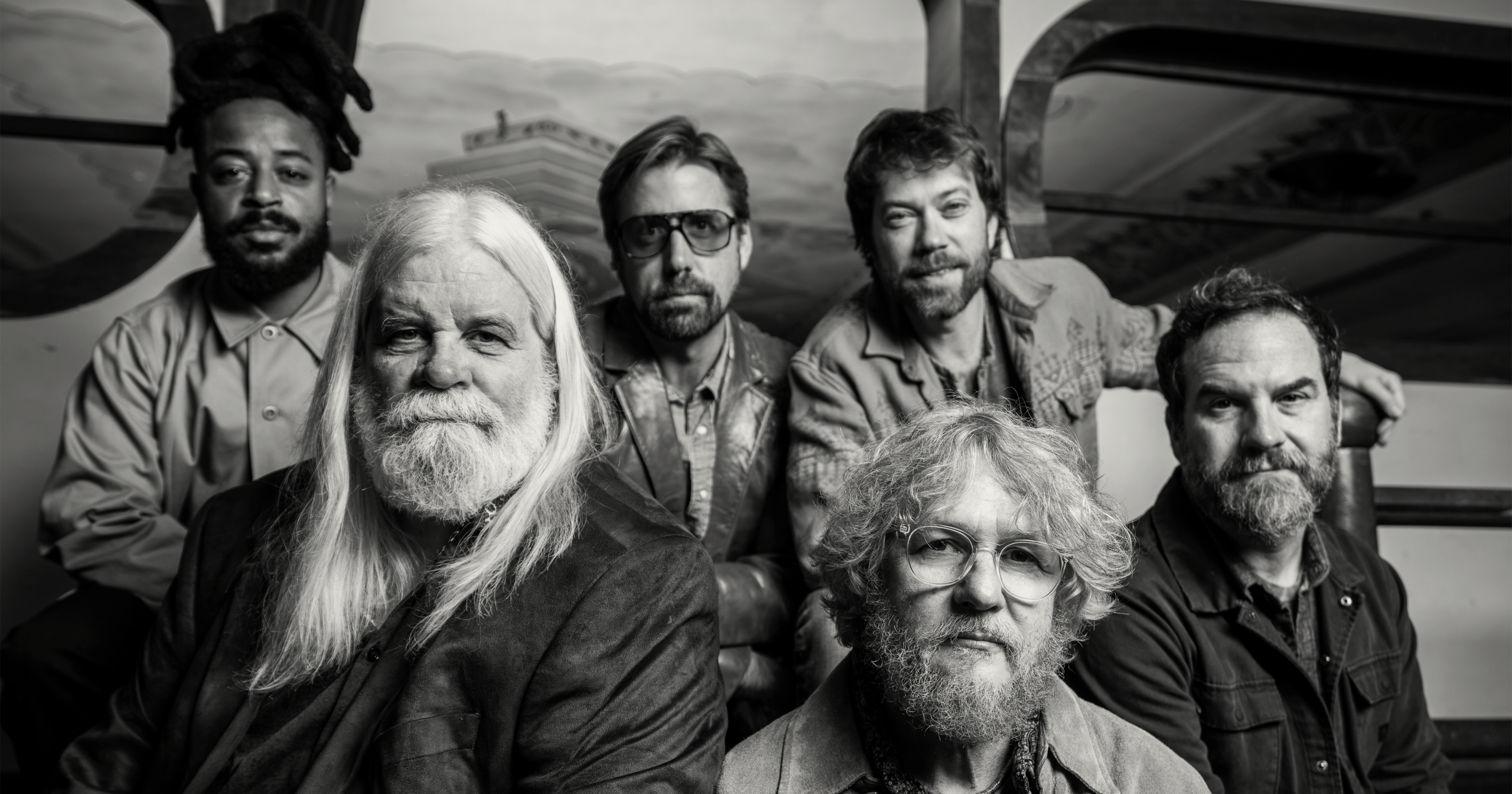
Though Salmon is in the midst of its 35th anniversary celebration, the actual timeline goes back four decades, where, in 1985, a young guitarist named Vince Herman took off from West Virginia in search of the “mythical bluegrass scene” in Colorado.

His quest eventually led him to a bar in Boulder one night, the same evening a talented multi-instrumentalist, Drew Emmitt, was performing onstage in the Left Hand String Band. The sign on the door said “Live Bluegrass Music Tonight,” so Herman strolled in.

From there, the duo became inseparable, ultimately joining forces in 1989 to play a New Year’s Eve gig in Crested Butte under the name Leftover Salmon (a combination of Emmitt’s band moniker and Herman’s short-lived Colorado group The Salmon Heads).

With Salmon’s latest album, Let’s Party About It, the outfit once again rises to the occasion, providing soothing, feel-good tunes that radiate gratitude, graciousness, connectivity and compassion in a modern era of uncertainty, confusion and fear.

Backstage before a show in Asheville, North Carolina, Herman and Emmitt talked at length about the road to the here and now. In simplest terms, Leftover Salmon is currently riding a big wave of popularity and cultural importance — a high-water mark of its legend, lore and legacy.

What spurred you to go to Colorado in 1985?

Vince Herman: It was fall [in Morganton, West Virginia]. It was getting cold in this place I was living, which was in an attic of a house that we were remodeling. It didn’t have any heat. I went to college there [at the West Virginia University] and had six credits to go. I kind of ran out of motivation and it was getting cold. We just figured it was time to do something else.

Why Colorado?

Well, it was the bluegrass scene there. I was playing a lot of old-time and some bluegrass in West Virginia. And I knew there was a progressive bluegrass scene based around the Telluride Bluegrass Festival. The band Hot Rize was in Boulder, which was a major influence on me. So, I figured Boulder would have a good progressive bluegrass scene. And it sure did, proven by pulling up and seeing a “Live Bluegrass Music Tonight” sign [at a bar].

Did you drive across the country by yourself?

No, I came across with a guy named Lou Pritchard. There’s all kinds of Pritchards in the music business. He’s a teacher [now] in southern West Virginia. So, I threw the dice and sold a guitar to make the trip. We lived the first week in a storage shed. We rented it. It was a storage shed, but hell, it had power, you know? [Laughs] The plan was, “Let’s go to Colorado and see what happens.” Lou was thinking about starting a brewery because small breweries were just made legal. I ended up getting a job cooking in a restaurant and just playing tunes on the Boulder Mall. [Back in West Virginia], I was playing for free beer and somebody’s wallet, played a little bit in a Grateful Dead band called Nexus. But nothing professional in any way.

Were there aspirations to start a band and really give it a go?

Yeah, definitely. It was, “Go to Colorado and find like-minded players.” I didn’t know for sure whether I’d have a music career, but other things were totally unsatisfying. I’ve had a lot of jobs, man. I’ve been a cook, bartender, fisherman, roofer, painter, landscaper. I’ve done all the jobs you can imagine. But this is by far the best.

So, your first night in Boulder, the stars align. You walk in on a bluegrass jam and run into Drew, who’s been with you since that moment.

VH: Yeah, it’s been 40 years. I said hello [to Drew] that night and, I guess, it was probably six or nine months later I was in the Left Hand String Band. I did about a year there, and then they got a better guitar player. So, I started The Salmon Heads after I got kicked out of Left Hand. [Laughs]

You told me one time that if you tried out for Salmon now, you wouldn’t get in.

Oh, for sure. Definitely. My philosophy has always been to be the worst player in any band I’m in. So, it has served me well over the years. [Laughs]

So, New Year’s Eve 1989, you form Leftover Salmon.

We went through every combination of those two band names — Left Hand String Band and The Salmon Heads — and stuck with Leftover Salmon for the first night, never knowing it would be any more than one night of a gig [in Crested Butte]. The older the tune, the more the bluegrass stomp kind of thing would go on, people would slam dance. We were like, “Something’s good about this.” And we had a bunch of gigs the next morning. All the bar owners talked to each other. There was no plan [to form a group], but we got all those calls the next morning to book the band.

[Drew Emmitt enters the backstage area and sits down.]

What about for you, Drew? You and Vince have been together for 40 years. What was it about Vince that you felt this was a guy you wanted to play with?

Drew Emmitt: Well, I came from more of a bluegrass-serious kind of world. And I always loved the lightness that Vince always brought to the music, all the fun. Playing music with him was always fun, and singing with him. He’s got a very powerful voice. We both sing kind of loud, so we sing well together. The lightness and the fun factor — that’s what, in so many ways, has driven this band. It’s just always been fun. I can’t tell you how many times I’ve been onstage just laughing hysterically because there’s so much madness going on.

I’ve been following you guys for almost 20 years and, no matter what kind of day your day is, you’ll always have fun at a Salmon show. And it seems, lately, that there’s a reinvigoration in the band, a few more logs being thrown on the fire.

VH: Absolutely. Jay Starling on keys, dobro and lap steel adds a great element to it, you know? And [drummer] Alwyn [Robinson] and [bassist] Greg [Garrison] together in the rhythm section. It just brings such energy to it. And Drew, [banjoist] Andy [Thorn] and I just get to ride on that stuff.

What is it about Drew that works for you?

VH: He’s relentless, man. (Turns to Emmitt). You hit that mandolin and just get that tremolo going — nobody like it. It sure gets a crowd riled up.

You have a new album out. What does it mean that people still believe in what the band is and what the band does?

VH: Hot Rize was a real major influence. I saw Tim [O’Brien] and was like, “Okay, so we’ll be in this little musical niche.” It’s never going to be the Rolling Stones or Pink Floyd level kind of stuff. But, it could be this niche that I could age in and stay in, and be able to do it for a long time. That’s kind of what the folk/bluegrass world looked like to me. I just feel very lucky to have kind of imagined that so many years ago, and to have actually lived it. It’s pretty unusual and I’m incredibly grateful.

What’s been the biggest takeaway from this journey thus far?

DE: The fact that people are still coming to see us. And it’s still working, and actually working better than it ever had. The fact that we can keep playing this and that it’s still relevant. And there’s this scene that has built up around this music. There’s a lot of different bands out there that are building the momentum, [with] probably the main driver of that would be our buddy, Billy Strings.

And you guys blazed a lot of that path Billy’s walking on.

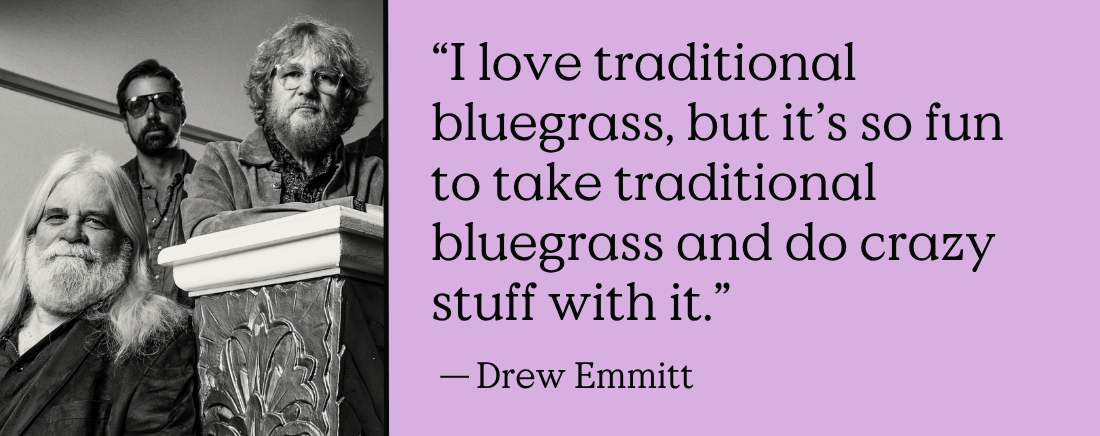
DE: And we followed in a blazed path. We came up behind the people that blazed it for us. And then we contributed our part of it, which was maybe adding a little more rowdiness, a little more rock and roll. But, keeping with that progressive thing that we learned from Hot Rize, New Grass Revival, Nitty Gritty Dirt Band, Old & In the Way — bands that were pushing the limits of bluegrass. I love traditional bluegrass, but it’s so fun to take traditional bluegrass and do crazy stuff with it.

Traditional bluegrass gives you the tools to do whatever you want.

DE: Exactly. Because it’s an art form, and you’ve got to learn it if you want to play bluegrass, which I’m still working very hard at, trying to learn to how to do it. What this band has brought to the scene is a levity, a fun factor. Over the years, so many of these amazing musicians have sat in with us, and they always have such a good time because it’s just wide open. Like, for instance, when Sam Bush sits in with us, he has such a good time ‘cause we just let him go.

Is that by evolution or by design, that ethos?

VH: I guess it has a lot to do with the Grateful Dead. You know, really saying, “It’s okay to have fun with music.” Go out looking for stuff in the middle of a jam. It gave us permission to do that, and [the Dead] brought so many people to bluegrass.

DE: And I hope we can keep doing it for a while. I hope that I can keep looking across the stage and seeing Vince for a long time. I’m glad to still be onstage with this guy. [Turns to Herman]

VH: I just keep being reminded of the importance of community, and helping us all get by with this [music]. Thank God we have music in the midst of all this chaos [of modern society], something that brings people together under a positive banner, and reinforces the humanity in all of us — there ain’t nothing better than music to do that.


Editor’s Note: Don’t miss Leftover Salmon and so many other great artists on the BGS stage at Bourbon & Beyond 2025. More info at bourbonandbeyond.com.

Lead Image: Tobin Voggesser

Little Blue

Patience and persistence have long been traits embodied by the music and songwriting of Kristina Murray, but with her new album, Little Blue, she can add another “P” word to the mix: perseverance.

Now a decade into her time in Nashville, Little Blue (out May 9 on New West Records) is poised to be her “ten year town” breakout moment. Through its blend of old school country twang and swampy southern R&B she ruminates on everything from the grind, pursuing her honky-tonk dream, to finding love, and the unseen burdens placed on women. She shows off her formidable knack for storytelling in the process. The project is also direct evidence of the inroads she’s made in Music City, with artists like Erin Rae, Logan Ledger, Sean Thompson, Miss Tess, Frank Rische, and John Mailander all lending a hand.

Originally from Atlanta, Murray was introduced to country as a child via a cassette of Patsy Cline’s greatest hits in her mother’s car. She eventually got her first guitar in high school, but didn’t play it anywhere outside of open mics and church camps until she moved to Colorado in the mid 2000s to pursue a degree in recreational therapy. While there, she became immersed in the regional bluegrass scene and began playing out more, slowly gaining confidence and building toward her eventual move to Nashville in 2014. While she was only in Colorado for six years, Murray still looks back on her time out west as foundational for her direction in life and the art she’s pursuing now.

“I’d never lived outside the South before and had a couple mentors of mine tell me I should give it a try for a little bit,” recalls Murray. “It was out there where I realized that being a musician is what I wanted to do with my life. Once you get bit by the playing-on-stage bug, there’s no going back. It’s so much more than just playing for people, too. It’s also being in sync with your band and performing at a high level and the energy feedback loop that can come from that.”

Since relocating to Nashville, Murray has become a linchpin of the city’s dive bar and juke joint scene, frequently popping up at places like Dee’s Country Cocktail Lounge and Bobby’s Idle Hour, and became one of the first women to front a full band at Santa’s Pub. But despite all this, she was starting to feel stuck as the pressure of things like her father’s sudden death, car wrecks, watching others have the success she’d been waiting on began to weigh her down. But in that darkness she was able to find a glimmer of light, and Little Blue was born.

Leading up to the album’s release, Good Country caught up with Murray to discuss imposter syndrome, expectations in the music business, the healing power of music, and more.

If going from open mics and church camps in Georgia to diving into Colorado’s bluegrass scene was a big step, then moving from there to Nashville must’ve felt like being on another planet. What was that transition like?

Kristina Murray: My time in Colorado was foundational in some ways. I learned the Nashville number system, how to play with a band, and how to execute a bunch of different songs really well while I was there. But, eventually, it got to being a big fish, small pond kind of thing. You can make a living out there just by playing cover songs in bars, but what I wanted was to write songs and be around people my age who were also writing the kind of songs I like, wanted to listen to, and wanted to write. Moving there was a big step because Nashville is the place where the music I love was and is still being made.

You’ve been grinding away in Nashville for a decade now as an independent musician, but this new record marks your debut with New West. How’d that partnership come about?

Southern Ambrosia [was] the first record I put out after moving to Nashville and, quite frankly, I didn’t know what I was doing. I had seen a lot of my peers kind of take off and naively I thought, “Well, this is a really good record full of great players and good writing and I’m in this kind of circle community; because all those things are true, then this record should get me to the next place that I wanted to go.”

It was actually on the radar of Normaltown and New West back in 2018, but things fizzled out because I didn’t know how to go about having conversations with business people about my music – I’d never done anything like that before. Fast forward a few years, this record was done in 2023 and by early 2024 I was talking with them again about picking it up. Their support means a lot, because it’s really difficult to get your record and your career to the places that you want to go without it.

New West and Normaltown are also based out of Athens, Georgia, and I’m from Atlanta, so it means a lot to be involved with them on that level as well. I was a huge Drive-By Truckers fan in my 20s and can’t get enough of Jaime Wyatt, Lilly Hiatt, Nikki Lane and others. There’s just a lot of people that I love and respect on that record label and I’m happy to be a part of the family.

Better late than never, I suppose! You just mentioned the feedback for Southern Ambrosia not meeting the lofty expectations you had for it. I imagine seeing friends and colleagues having success with their music – from signing with labels to getting on bigger and bigger shows to nailing down high-profile writing sessions – doesn’t help to keep the imposter syndrome at bay.

It’s funny, because during my decade in Nashville I really have seen so many people just skyrocket, and it’s all been so deserved, like Erin Rae – nobody sings or writes like her – or Sierra Ferrell, I mean who else sings like that? Logan Ledger, who also joins me on this record, is one of my favorite singers and songwriters around. During my time here there’s been so many times when I’ve thought that something must be wrong with the way I sing or write to not be getting all those opportunities for myself. But I’ve come to realize that having all that isn’t what will validate me as a musician, writer, performer, and person who simply loves this music, because at the end of the day, if I still get something out of it, shouldn’t that be enough? It’s something I’ve grappled with a lot through the years and continue to do on this album.

Speaking of expectations in the music business not always being reality and the illusion of success, are those things you’re tackling head on in the song “Watchin’ the World Pass Me By”?

What’s funny about that song is it started out as me just trying to see if I could write a basic “outlaw” country song. It obviously evolved a bit from a writing exercise parody to a commentary on getting “so tired of watching ‘em livin’ my dreams” and “daddy’s bankroll to make the rules” nepotism and suddenly being a country singer, because you threw on a cowboy hat. But I also poke a bit of fun at myself, too, with lines like “She’s just a bitter, jaded, helpless fool.”

Another tune I’ve really enjoyed is “Phenix City.” In many ways it seems like an outlier on the record, a story song amid a sea of deeply personal, autobiographical tales. With that in mind, what was your intention for including it here?

Most of this record is autobiographical or composite sketches of me and those around me, but that one specifically is a story song. It very much paints a picture of small-town circumstances in Phenix City, a small town in Alabama along the Georgia border. One time I was driving down to a gig in Columbus, Georgia, and instead of going through Atlanta I decided to head straight down from Nashville through Alabama. I rented a car because my van was out of commission, and about a half hour outside Columbus I broke down after running out of gas because I had my music so loud I couldn’t hear it beeping. I eventually got it to a mechanic shop in Phenix City where the man told me I just needed some gas, which was both a relief and a moment that made me feel like the biggest idiot around, but briefly getting stuck there did inspire the song in a roundabout way.

Similar to “Phenix City,” another outlier of sorts on Little Blue is the lead track, “You Got Me,” which seems to revolve around the early, butterflies-fueled stages of love. Mind telling me a bit about it and the mood it sets for the remainder of the project?

I’m not one for writing love songs too much. The only other real love song I have is “The Ballad Of Angel & Donnie” from Southern Ambrosia, which is another story song about a meth dealer and his girlfriend. I wrote “You Got Me” early on in my relationship with my now-partner. It’s a very true-to-life song and I knew if it was going to be about him that it had to be a really cool-sounding song. My guitarist, James Paul Mitchell, came over one night when I was writing it and helped to come up with that signature lick you hear on it right at the beginning, which I loved. I really wanted it to be like a Band song with the Clavinet sounds that they twin throughout the song. My partner, Corey [Parsons], also plays percussion on this one, which is really sweet that he got to put some of his touch on a song about him.

The song also starts with the word “and,” which came from a writing exercise after listening to Robert Johnson’s “Love in Vain.” It begins with “And I followed her to the station.” I thought it was so cool to start a song with “and,” because it’s like you’re just dropping someone into the middle of a story.

While “You Got Me” is a bright spot, a lot of this album leans more toward the somber and dark. What are your thoughts on the catharsis and healing that can come from writing through difficult times such as the ones you’re encountering here?

The album is titled Little Blue for a reason. We are remiss to forget how significant the pandemic was and how devastatingly sad that period of time in our collective human history was. A good chunk of these songs were written during that two-year period along with general ruminations about the sad and unjust world we live in that even the music industry isn’t immune from. It feels silly at times to whine and cry about the music industry when there’s so much other crazy stuff happening, but that’s the world I live in so I have to write through that.

I wouldn’t say that writing songs is cathartic for me as much as sharing in the collective. What grabs me about music is when it feels real and is relatable to me and I hope that I’ve done that here with what I’ve written about. Music is magical, so the fact that I get to do this at all is amazing and continues to drive me. I’m never not going to be amazed by music. For instance, I took a harmonica lesson the other day with Ilya Portnov, who also plays on the record. I’ve done a little bit of Bob Dylan-esque singer-songwriter harmonica, but I really wanted to understand the harp a little bit better. It’s a magical feeling when the music and notes and scale are all working together. I feel endlessly humbled by it and very proud that I get to be a small ripple in the river of music.

What did the process of bringing Little Blue to life teach you about yourself?

That I’m gonna keep doing it regardless of if it makes any sense at all. I didn’t get my record deal until after everything for this album was done, meaning that I funded it all myself. It was a lot to handle, because making records isn’t cheap, especially if you’re paying people what they deserve to get paid. I feel very lucky and grateful for all the folks that lended their talent to this record. It made me realize that the more I keep pushing ahead to more everything will begin to make sense around me. It’s a mix of perseverance and understanding that good things take time and intention. I feel really good about this record and even though it’s only my third, and first in six years, I’m glad to put it out in the world because we need art now more than ever.


Photo Credit: Schuyler Howie

Big Richard, Big Feelings – Their New Album is a Delicious ‘Girl Dinner’

The members of Big Richard – Joy Adams (vocals, cello, banjo, octave mandolin), Eve Panning (vocals, fiddle), Hazel Royer  (vocals, bass, guitar), and Bonnie Sims (vocals, mandolin, guitar) – were seasoned studio and gigging musicians when they met for their first rehearsal. Familiar with one another from Colorado’s thriving music scene, their initial gathering was the result of an offer to assemble a band and perform at McAwesome Festival 2021 in Castle Rock.

Musical and personal chemistry, apparent during practice, was also a given onstage, solidly reinforced by an outpouring of support from fans. There was also a flip side – backlash to the band’s suggestive name and often-bawdy stage banter. This, it turns out, created even more incentive to continue. Big Richard was officially a band.

Their wealth of experience across musical genres – bluegrass, country, jazz, classical, rock, and beyond – opened the door for writing, recording, and performing music that pushes beyond parameters while remaining firmly planted in tradition. It shows on their new album, Girl Dinner (released January 24), produced by the band and recorded with Colorado musician and friend Eric Wiggs at his Vermillion Road Studio.

Technically their second release, following 2022’s Live from Telluride, Girl Dinner represents several firsts for the band: their first studio release, first recording of all-original material, and first with Royer, who joined the ensemble a year ago. According to the musicians, Girl Dinner demonstrates the many sides of Big Richard, everything from stripped-down, quiet instrumentation and harmonies to the blazing solos that define their performances.

When was it obvious that Big Richard would be more than a one-festival project?

Joy Adams: It wasn’t really in the first rehearsal. It was in the reception to the show that we played. Obviously, bluegrass is a jam-based genre; it’s common to sit down with your friends and play tunes. But we felt a crazy chemistry in the way we sang and played together that was apparent from the very first song we played at Bonnie’s house. When we played McAwesome Fest, for starters, our set got rained out, so we didn’t get to play the whole set. We were upset about that. We were looking for another gig just so we could get to the other songs. And we also had a bad reaction to us, too. There were people who were very upset about our name and how crass we were onstage and we got some initial hate mail after that first show. That was the moment – in my head, anyway – where we were like, “Oh, we have something here. If we can ruffle some feathers with this band, we’ve got to do this. This is an important thing.”

When and how did you build the band?

Bonnie Sims: We played that first gig in May 2021, our second gig in September 2021, and we hit the ground running in the beginning of 2022. We booked [Colorado festivals] RockyGrass and WinterWonderGrass right out of the gate, and that gave us a lot of fuel in our tank to want to invest in the creative side, start writing together, start rehearsing more, and really invest in the music, because we had these exciting opportunities to be a part of. Not long after we booked those things ourselves, we signed with Crossover Touring. Our buddy Chandler Holt has been our booking agent from the beginning and has been a huge part of helping us get to lots of festivals and play fun rooms.

Eve Panning: That first year or so was an unexpected influx of gigs. We did a ton of touring and I feel like we were kind of playing catch-up. It’s been really fun in this last year. We’ve all settled into the band a little bit more, and it’s been fun to hear the songs that everybody’s bringing and spend a lot of time working on those. You can hear that in the new album. Live From Telluride had some originals, but we were doing a lot of covers because we were so new as a band. This new album is all originals, and it’s been fun to explore that side of things as well.

How have the sound and dynamic changed since Hazel joined you?

JA: The band has changed so much. Hazel is wonderful. Her attitude is fantastic. She’s an incredible musician who has brought the level of the band up a lot. The arrangements have gotten better, the groove is tighter, and the overall balance of band vibes is wonderful. It’s everything all of us could ever have dreamed of, and I blame Hazel for that entirely. She’s such a lovely person to be around, she writes incredible songs that are deep and moving and exciting, and we’re so lucky to have her in the band. She really saved us.

BS: I agree. Hazel brings such a strong singing voice. It’s really fun to lean into the power she brings vocally, intertwine with that power, and lose ourselves in it. And her original songs are incredible. It’s a natural elevation of maturing as a group and playing together. This is year three going on to year four for the band. It’s a lot different. The pace has been incredible as far as how much time we’re spending making music together. It’s very much like a pressure cooker. It has an effect on the music itself, so the sound has evolved immensely and continues to evolve in an exciting way.

Hazel Royer: Thank you, everybody. That’s so nice. When I joined the band, everyone was, “We want to work. We want to try new things and learn new songs.” We spent two months rehearsing before we played our first gig with me on bass. We looked at the music and we became a band before playing the shows. There was an emphasis on learning new material, and there was a really good excuse to do that because there was a new member and no gigs for a couple months, so we had the space to learn new things. I’m really grateful that I got to be a part of that.

EP: When you only have four people onstage and it’s all acoustic instruments, when 25 percent of the band changes, that’s really significant. That means the sound is definitely going to change. But, like everyone said, Hazel has such a powerful voice, she’s such an accomplished musician, so it’s felt great. It’s felt like a wonderful step up.

HR: I was super-lucky because everyone in this band wanted me to exist as myself. That was the primary thing: “We want you to sing. We want you to write your own songs and bring them to the band.” That’s rare for a new person – joining a band and being like, “We want what you do as embedded immediately.” Additionally, we have a lot of crossover, musically, that we all can draw from. I grew up playing bluegrass and old-time music, and these guys are steeped in that. I also like pop music, and everybody likes that, and I had classical studies, and there’s two people who are very accomplished classical musicians, so there was a lot of crossover that made the integration of myself into the band easier than it could have been.

Let’s talk about the album – the songwriting process, song selection, your goals going into the studio.

BS: Our goal was to present something different than what we presented on our live album, which, like Eve said, was mostly covers. We recorded Live From Telluride after being a band for right at the one-year mark. It was very much the first generation of material. This is our debut studio album, but it’s our sophomore offering as far as the material, in my opinion, because it’s the second stage of the band’s development as far as it’s all original. There’s introspective and thoughtful moments within the songwriting. We have those at shows, but they’re always intermixed with high-energy, raging things where you can hop around and have a really intense, energetic experience. The album, I feel, offers up the soft side of Big Richard, in a way. We have this saying, “Big Richard, big feelings,” and the album is representative of that side of the band, which is, again, usually balanced with this different vibe live. So we took that out and just are doing the original stuff on the record, which is exciting.

Did you write deliberately to explore that softer side, or did the direction become obvious as you were writing?

JA: We didn’t intentionally write a soft album, and I hesitate to call it a soft album, because there are some burning fiddle tunes that Eve wrote and there’s a couple of aggressive songs, mostly coming out of Bonnie’s pen. The album is all over the map. The more lyrical songs were collected over the course of a year playing together. We love these songs so much and they got such a good reception at all of our shows. We did play them out pretty thoroughly before we recorded them, so it was a matter of collecting our favorite songs that we felt hit the emotional depths of “Big Richard, big feelings.” We were really proud of these songs.

HR: To go off of what Joy said, they’re our favorites. We picked them because we all were very passionate and love those songs. There are some soft songs on the album, but there’s a wide variety of things going on there. It is different than our live show by a significant margin. The album, in my view, is a piece of something that’s made out of love. We love this music and we created these arrangements together.

Once the songs were selected, what was the sequencing process?

EP: We had an initial sequence, and then we were limited by how many songs we could put on each side of the vinyl, so we had to take our original idea and rework it. The album starts and ends with songs about saying goodbye, and that hits; that feels like a powerful moment.

HR: We looked at this group of songs as a set list. We wanted to create a listening experience similar to something we would provide at a show, like, how do these songs flow into each other? Are there seamless transitions that we’re able to utilize? That’s how we looked at sequencing the album. And also separating saying goodbye a million times. At the top and the end of the album was important.

BS: Vinyl presents an opportunity for sequencing to have more of a presence again. With digital consumption, people just click what they want and add it to their own playlist. No shade; do your thing with your playlist, but with vinyl you’re going to probably sit and listen to it in the order that we put it in, because that’s the style of listening for a record. So it’s nice to have that opportunity with vinyl.

Tell us about the recording process.

JA: We recorded this album in May 2024, and we had the last master submitted in September or October. Vinyl production takes a little while, so we got the vinyl back in December, which was really exciting. Mixing and mastering is a crazy process that takes so long. That’s the part I’m very obsessed with. I was, unfortunately, the squeaky wheel the whole time, being like, “The bass needs to be half a dB [decibel] higher in this song, in this one section, but not all the other sections.” That was all me. I love the process of recording. We’re not a band that plays a song a hundred times – thank heavens for that. We tend to get things within five takes. Some solos got replayed or re-recorded, little things that got added, studio magic. I’m very proud that this album required basically no tuning and really simple edits.

EP: We also did a lot of tracks without a click. We didn’t go into the studio with a plan as far as which ones we were going to record to a click and which ones we were going to just play. But I think it keeps a lot of life in those songs as well, playing them like we do with a little bit of breadth to them.

HR: This might go without saying, but we tracked the whole thing together. We made basic tracks and there was some soloing, editing, but that was it. Just iso booths, but all four of us live.

The album was self-produced. What does the word “producer” mean to you? Did you experiment much or make changes to the songs while recording them?

JA: Production for this kind of band, to me, means deciding how we were going to record it, which is a very big discussion: are you all in the same room together, are you recording separate, are you recording to a click track, etc. And then, of course, trying to democratically decide what take has the most musical power, because you’re going to sacrifice a little perfection somewhere for the sake of something that’s riveting. That’s always the case. And then making decisions about mixing and mastering. In some ways it would have been nice to have had an external source of nature in the room, like another producer to help us make those decisions, but it was incredibly empowering to make them ourselves, because we have dragged these songs through both the mud and the sky on the touring road.

We had really figured out and dialed in the arrangements in front of thousands of people. We knew exactly what we wanted out of these songs, and so it was liberating to be able to put those down in our way and not have to fight a producer on some decisions. As far as things changing in the studio, not a whole lot changed. We were all playing the instruments that we do. Sometimes Hazel plays guitar or bass, and so we had the ability to have both bass and guitar on some of her tunes, which was really effective. That was one thing that was different than how we usually do it live.

HR: To go off what Joy said, I think the production, as far as the musical side of things goes, really did happen on the road and in rehearsals. We came into the studio knowing our songs, exactly how they go, what we want where, and what we’ve tried and tested a billion times, instead of coming up with arrangements in a studio environment.

The Colorado music scene has been very supportive. How great a part have those audiences played in taking the band to the next level?

BS: The audience has been instrumental in every step and every piece of our success. They are the success, because if they weren’t there, buying tickets and wanting to be at shows, we wouldn’t have a reason to be out touring. We’re grateful to everybody who comes to shows. When we come back to our Colorado hometown vibe, it really keeps us going. It keeps the light on for us, because those are the crowds that lift us up energetically and have been there from day one. Coming back to those audiences fills our tank in a real way.


Find more Big Richard here.

Photo Credit: Jason Innes

Max & Heather Stalling on Only Vans with Bri Bagwell

Welcome to the first of four live episodes of Only Vans from the MusicFest at Steamboat 2025. Two of my inspirations and great friends, Max & Heather Stalling, helped us kick things off. We get into many topics such as ex-husbands, cassette collections, mortal vs. immortal musicians, skinny dipping – and they even perform a few live songs.

LISTEN: APPLE • SPOTIFY • AMAZON • MP3

Max and Heather Stalling are a staple of our music scene and these lovebirds are my favorite, you can tell. Heather is an accomplished singer-songwriter, incredible fiddle player, and I love that we had the opportunity for them to play three songs together live at our very first hour-long Musicfest podcast taping up in Steamboat Springs, Colorado, in front of a live (and rather large) audience!

Max is a Texas A&M Aggie graduate, but we don’t hold that against him, because he has multiple amazing records out. Heather’s project, Blacktop Gypsy, is awesome and also available wherever you get your music. On this Only Vans episode, Heather makes me cry with a lovely impromptu monologue that I will cherish forever and, after joking that I never go to the late night jams in Steamboat at MusicFest, I did in fact attend an epic jam this year with Max, Heather, the Braun Brothers, and many more.

We joke about drinking a lot of wine and I outed Paul on a hangover after our hilarious “marriage” story, sorry! I also talk about the Sequestered Songwriters, which is something that Courtney Patton and Jason Eady started over COVID and that really helped a lot of us get out to a really large audience. If you have not checked out the Sequestered Songwriters videos on Facebook, I think they’re all still up there. A lot of people have told me [those videos] really got them through COVID and that was a way for us all to keep in touch with one another and learn some new tunes.

Thanks again to Dirt Trail Entertainment for sponsoring our MusicFest episodes. And thanks to our show sponsors, Hand Drawn Pressing & CH Lonestar Promo!


Photo Credit: Allison V Smith

Find our Only Vans episode archive here.

You Gotta Hear This: New Music From Natalie Spears, Chris Jones, and More

You Gotta Hear This! We’ve got an excellent collection of premieres for you today on BGS, including two new music videos and a new tribute track, too.

Check out a brand new video for “Homeward” by Natalie Spears, off her upcoming album, Hymn of Wild Things, which is set for release June 28. Also, don’t miss a fiery, Tarantino-esque video from India Ramey for “Baptized By the Blaze,” the title track of her new record coming in August.

To round us out, bluegrass singer-songwriter and radio personality Chris Jones pays tribute to iconic folk songwriter Tom Paxton with a rendition of “The Last Hobo” from the stacked Bluegrass Sings Paxton project.

It’s all right here on BGS and You Gotta Hear This!

Natalie Spears, “Homeward”

Artist: Natalie Spears
Hometown: Carbondale, Colorado
Song: “Homeward”
Album: Hymn of Wild Things
Release Date: June 28, 2024 (album)
Label: SleeLee

In Their Words: “‘Homeward’ is a soulful manifesto about returning to oneself. It can be so easy to lose ourselves in relationships and this song is about coming home to our own being. I left Colorado during the pandemic to be with my partner on the East Coast. When things hit rock bottom, I packed the car and headed west. Miles of empty flatlands, cornfields, and numbing road noise only made my static mind chatter louder, constantly questioning, ruminating in self doubt. When the Rocky Mountains finally came into view, my whole body let go. I pulled into a McDonald’s parking lot to write these words, ‘That muddy road was getting old and keeping on just kept me down, I was one step forward, two steps back, now I’m heading homeward bound.'” – Natalie Spears

Track Credits:
Natalie Spears – Vocals and keys
Bradley Morse – Bass
Kevin Matthews – Drums
Eric Wiggs – Audio engineering and mixing

Video Credit: Erik Fellenstein
Payden Winner and Eric Fellenstein – Camera operators


Chris Jones, “The Last Hobo” (From Bluegrass Sings Paxton)

Artist: Chris Jones
Song: “The Last Hobo”
Album: Bluegrass Sings Paxton
Release Date: June 14, 2024 (single)
Label: Mountain Home Music Company

In Their Words: “It was such an honor to get to participate in the Bluegrass Sings Paxton project as both studio guitarist and as a vocalist on ‘The Last Hobo.’ I was immediately drawn to this song, which struck me as a classic Tom Paxton story song of travel and love lost. It’s the kind of song that pretty much sings itself. Plus, I’ve just always wanted to sing a song that mentions Tucumcari, New Mexico.” – Chris Jones

Track Credits:
Chris Jones – Acoustic guitar, vocals
Darren Nicholson –Mandolin
Deanie Richardson – Fiddle
Kristin Scott Benson – Banjo
Nelson Williams – Upright bass


India Ramey, “Baptized By the Blaze”

Artist: India Ramey
Hometown: Nashville, Tennessee (by way of Birmingham, Alabama)
Song: “Baptized By the Blaze”
Album: Baptized By the Blaze
Release Date: June 14, 2024 (single); August 23, 2024 (album)
Label: Mule Kick Records

In Their Words: “This is a song about how I made the choice to put myself through the pain of getting off an anxiety drug that I was seemingly hopelessly addicted to, going through excruciating withdrawals, confronting my childhood trauma, and starting my healing journey in order to step into my personal power and become a better version of myself. It’s about phoenix energy. It’s about the death of the old me that was a slave to my trauma and the birth of the new me who is living a full and happy life without fear.

“My healing journey felt like a phoenix building its own funeral pyre, setting itself on fire, and being reborn as a more powerful version of itself in the flames. I took that myth and put it in a sort of Tarantino-esque, Faster Pussycat vibe, because that’s what I like, and made the car the ‘pyre.’ Alan Collins, my friend of over 15 years, is a VFX genius and he shot and edited the video.” – India Ramey

Track Credits: Produced, mixed and mastered by Luke Wooten at Station West Studios.
India Ramey – Lead vocal
Seth Taylor – Acoustic guitars
Tommy Hardin – Drums
Alyson Prestwood – Bass guitar
Scotty Sanders – Pedal steel
James Mitchell – Electric guitars


Photo Credit: India Ramey by Stacie Huckeba; Natalie Spears by Emily Teague.