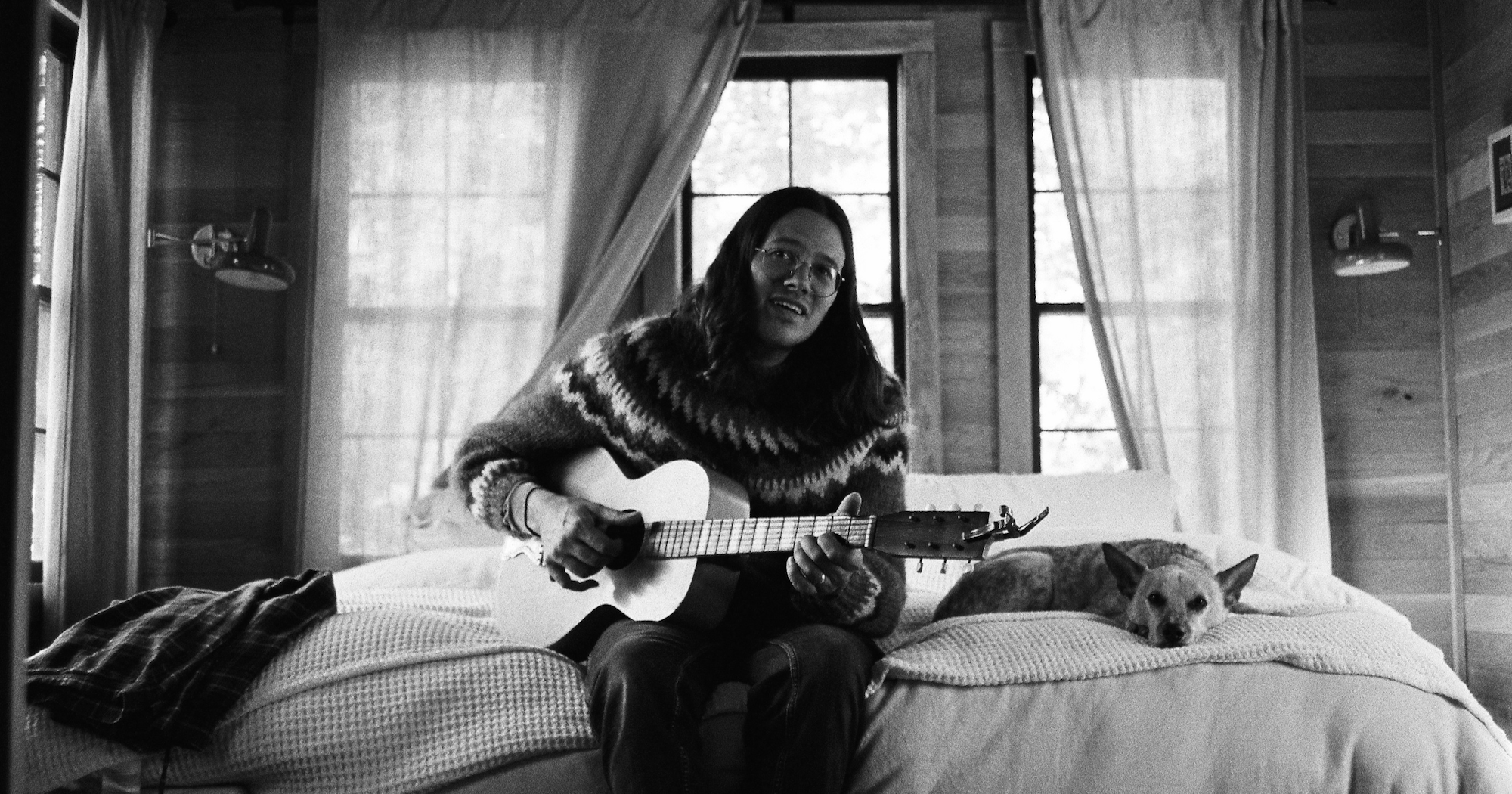
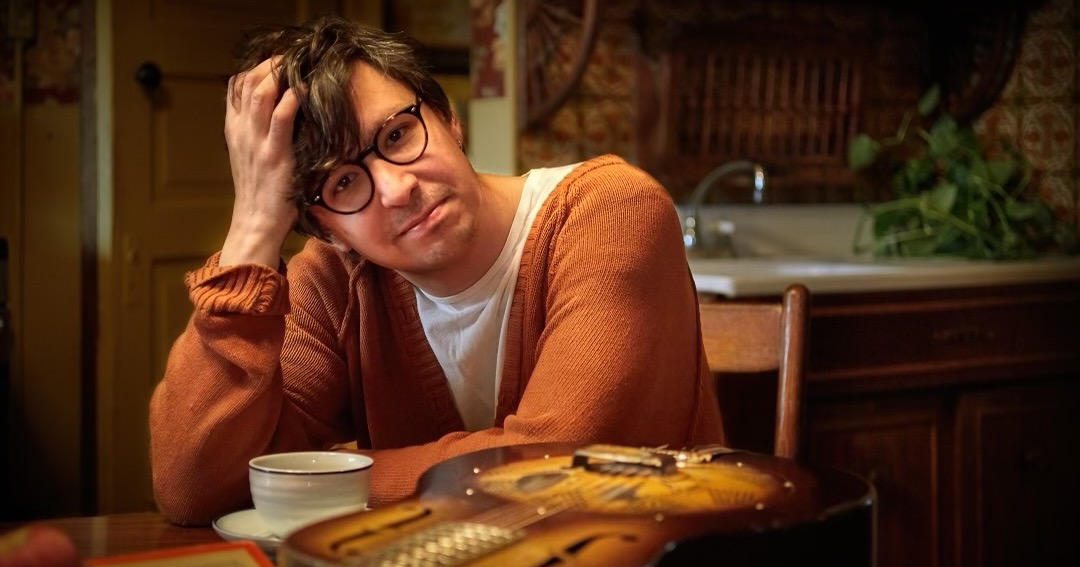
What other art forms – literature, film, dance, painting, etc. – inform your music?
I’m a film nerd. I try to watch as many movies as possible, and also love the cinema (shout out to the Belcourt in Nashville), so if I’m burnt out from touring or music I fall back on that for influence. If you hear my music there is a deep influence of British folk horror from classic titles such as The Wicker Man and The Blood on Satan’s Claw to modern British folk movies such as Enys Men and Bait.
I do tend to go on the hunt for obscure ones I haven’t seen. I recently watched the 1977 TV series Children of The Stone and 1972’s A Warning to the Curious. Both incredible early origins of folk horror. Worth a look if that floats your boat.
What’s your favorite memory from being on stage?
Bonnaroo with Rich Ruth. Our backline was these giant Fender Twin [amps] and we all just turned up. It was this incredible wall of sound. I also think a big percentage of the audience had taken acid and there was a certain sway to everything.
Green Man Festival in Wales was also pretty magical, the sun was setting over Bannau Brycheiniog [National Park] and I got to play my favorite Trees cover, “Road,” in that environment with Sean Thompson, Erin Rae, and Hollow Hand.
What has been the best advice you’ve received in your career so far?
Surround yourself with friends that inspire you and encourage you. Be in a community you treasure.
Commit to what you enjoy and care about.
This is more advice for the “session” musician world. For years I was insecure about not being as good as x-y-z or the older players I look up to, but there’s something so powerful about harnessing insecurity. It’s what makes art special. To be confident in taking a risk and not knowing the outcome. There’s a lack of that in Music Row cause everyone plays to a formula, so the idea of risk and insecurity is not there.
What is a genre, album, artist, musician, or song that you adore that would surprise people?
Oh, I have some very questionable tastes. Especially if I’m behind the wheel and it’s an eight-hour drive home. I love Robert Palmer. I weirdly like Primus (especially the Brown Album) – I think it’s a nostalgia thing with them. Kicking around blasting Tommy the Cat at the Romford Skate Park on my CD Walkman.
Oh, Bruce Hornsby. I can burn through three hours of Bruce in one stint. Easy!
What would a perfect day as an artist and creator look like to you?
With my wife and two dogs on a hike, then a pub lunch by the seaside (somewhere in Cornwall), then a cheeky tobacco pipe outside in the evening with the cat listening to John Peel archives, but like the intense Aphex Twin archives… really loudly.
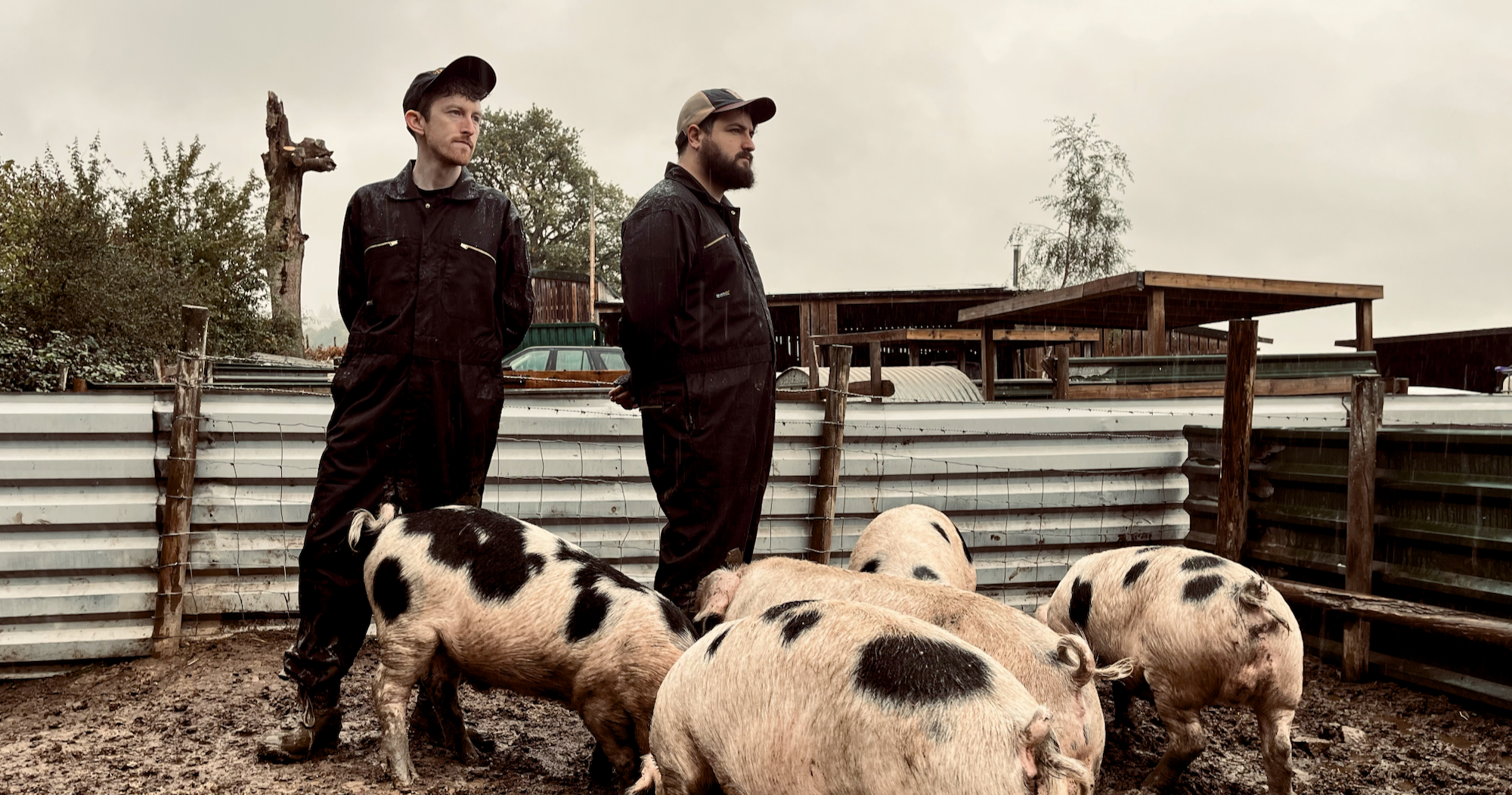
(Editor’s Note: Below, United Kingdom-based old-time duo Old Spot – Rowan Piggott and Joe Danks – curate a Mixtape for BGS celebrating old-time music of the UK and Ireland. In order to include as many tracks as possible representing the vibrant string band scene in the UK, some selections are shared via Spotify and others via Bandcamp, depending on availability. We hope you enjoy listening and learning about transatlantic old-time – and that you support all roots musicians directly whenever possible.)
This is a Mixtape designed to highlight some of the amazing old-time string band music coming out of the UK and Ireland at the moment. Old Spot is a product of a vibrant scene, with the fiddlers and bands around us just as influential to us as their American counterparts.
This playlist looks to reflect some of the musicians performing string band music today, whilst shining a light on lesser-known gems. In compiling it, we’ve realized how much of the music we love on the old-time scene here isn’t on Spotify – if you love any of this music, buy it from the artists who made it! Anyway… less jawin’ more sawin’… – Old Spot
“Elzick’s Farewell” – Rattle On The Stovepipe
Rattle On The Stovepipe formed in 2003 and have played up and down the UK spreading old-time with band stalwarts Pete Cooper and Dave Arthur joined later by Dan Stewart – probably our favorite banjo player in the UK. This groovy version of “Elzick’s Farewell” is from their first album with Dan, No Use In Cryin’.
“Maggie Mead” – Follywren
Follywren is the brainchild of Bristol musician Kai Carter. We love lots of stuff that Kai does – his old-time trio is great and his original music (Kai & Hollis) is also a tour car staple. We have a real soft spot though for this amazing Follywren album, described as a kind of New Orleans-inspired electric string band. The tuba and electric banjo actually end up landing you somewhere between Clyde Davenport, Ghanaian Highlife, and Captain Beefheart’s Shiny Beast era… a good place to be.
“Rainbow” – Cath & Phil Tyler
Cath & Phil Tyler straddle the traditional and experimental music scenes in the UK and run the Newcastle sacred harp singers. Their albums are a treasure trove of ballads, with Phil’s mesmeric guitar and banjo playing supporting Cath’s one-of-a-kind, transportive voice. In some ways though, they are at their best a cappella where their background in shape note style really shines.
“Shanghai Skyline” – Jeri Foreman & Ruth Eliza
Jeri Foreman & Ruth Eliza are a powerhouse fiddle and banjo duo and you always want to see them on a festival lineup. Where these guys go, good tunes follow and their debut album shows off their musical connection beautifully. Recorded live, we’ve chosen one of Jeri’s tunes to highlight here.
“Chicken & Dumplings” – Ben McManus
Welsh musician Ben McManus is a multi-instrumentalist and promoter of old-time music in the UK. He’s schooled in the history of old-time and has done a number of interesting projects exploring the connections between Wales and Appalachia. He’s also interned at the Smithsonian – absolute dude. This is a laid-back clawhammer guitar and cello version of “Chicken & Dumplings,” a favorite of UK sessions. This record makes us miss Ben, and not just because he makes a mean Negroni.
“Dormae” – Hannah Read
Hannah Read’s first Fungi Sessions album is one of our favorite ever records as a band. We loved the sonics of it so much that we travelled to the studio in Scotland where it was recorded to make our new album. Hannah is now based in the US, but hails from Scotland and comes over frequently to collaborate with the incredible Michael Starkey. Hannah has collaborated with indie royalty Big Thief, Julien Baker, and Lucy Dacus, and you can hear this broader sonic palette across her output. But the real star of these Fungi Sessions albums is her incredible composition and the subtle magic of her bow arm.
“Wolves A’ Howlin'” – Kieran Towers & Charlotte Carrivick
Kieran Towers & Charlotte Carrivick can most often be found in the bluegrass scene in the UK, but came together for this one-off old-time album of absolute rippers. Charlotte, one of the best flatpickers in the UK, reveals herself to be one of the finest clawhammer players, and Kieran, best known for shredding bluegrass solos, turns into prime Bruce Molsky. Being able to just casually drop this album as a side project is outrageous. A frustratingly brilliant album from two undeniable musical geniuses.
“Glory In The Meeting House” – Ben Paley & Tab Hunter
In our opinion, Ben Paley is the jewel in the crown of British old-time music. He’s performed in loads of different lineups with musicians from the South of England – probably most notably The Long Hill Ramblers and with his dad Tom Paley of The New Lost City Ramblers. His fiddling is just as good as it gets, full of character, groove, and skill. On this record from 1999, he’s backed by Tab Hunter who is an old-time backer with taste, power, and pocket.
“Pterodactyl” – One Night Stringband (Old Spot, Jeri Foreman, Ruth Eliza)
We recorded this collaborative album with Jeri Foreman and Ruth Eliza over the course of one night and a bottle of whisky. We put it out the following day after some hungover mixing and now we perform sporadically as The One Night Stringband for square dances and concerts. We’ve got our seventh and eighth gigs together this summer!
There’s a kind of exploratory madness in these recordings and we all chose tunes we couldn’t get to hang quite right in our duos. There’s a raging version of Rhys Jones’ “I’ll Reap What I’ve Sown,” a version of “Josie-O,” and this, Ruth’s prog-y old-time wig-out “Pterodactyl.”
“Benton’s Dream” – High Strung Trio
From Cork, Ireland, this is one of our favorite old-time records of the last few years. From ex-members of the Grits & Gravy Stringband comes a new trio record of uncompromising ragers. Fiddle player (and luthier) Ian is an absolute machine on this record, laying down danceable bangers like it’s nothing. A great record to pick up new tunes or to power a long car journey, we can’t stop listening.
“Two Little Sisters” – Sugarwell Hill
Sugarwell Hill is a trio from Leeds in Yorkshire. This is a new record from them that the scene has been anticipating for a while. Recorded confidently and simply, it’s a great snapshot of what is so magical about this laid-back band. “Two Little Sisters” features Simon’s relaxed vocal delivery and groovy banjo playing set against Mick’s gritty fiddle playing. We’re so lucky to have these three in the scene over here, and can’t think of a bad time to stick this beautiful new record on.
“Walk Me Round” – Rhona Dalling
Rhona is another Bristol-based fiddler, singer, and banjo player. This record is, so far, her only recorded output, but like so many of the best trad musicians, her best music happens in sessions and muddy fields. She has an incredible fiddle style, full of poise and effortless technique, and a beautiful voice. This quietly beloved record features a great waltz and her tune “Balfour Road,” which is played in trad sessions up and down the country and has really transcended the old-time scene, thanks to a recording by bal folk band Topette!. Perfect for a rainy day.
“Bear Creek” – Lankum
Whilst most of their repertoire is drawn from Irish folk, experimental trad behemoths Lankum often close their sets with this old-time tune. We couldn’t not include it after watching 20,000 people bouncing up and down to it at Glastonbury!
“Bowling Green” – Joe Mansfield & The Temperance Two
Bristol-based Joe Mansfield is another person you love to see walk through the door at a jam. He’s got an amazing repertoire and is a great hang. He’s got a new duo called The Low Line (watch that space), but he gigs out all the time with the Temperance Two. This is a great version of “Bowling Green.”
“The Roustabout Song” – Old Spot
We heard “The Roustabout Song” sung at a Morris Dance festival singing session. The song sounded distinctly American – a bit of digging led us to English folklorist Sandy Paton and, in turn, the songwriter Dillon Bustin. The song was written at Pinewoods Camp and according to Paton presented both a cappella and with a “lazy river” banjo accompaniment. We’ve done a new joyful fiddle-singing version, bringing out the song’s subtle political undertones. Unfortunately the parasols are twirling faster than ever.
“June Apple” – The Firecrackers
The Firecrackers are five of the UK old-time scene’s stalwarts, and they whip up a frenzy wherever they go. This album of field recordings is a good snapshot of them doing their thing and Benton Flippen’s “June Apple” is their signature tune.
One of the band’s fiddle players, Dave Proctor, edits Old Time News, the quarterly old-time magazine published by FOAOTMAD (Friends of American Old Time Music and Dance), a grassroots organization that has supported the growth of old-time in the UK so much over many years.
I left home (a sleepy market town in middle England) the day after high school finished and traveled around the world with just a guitar and a backpack. I paid my way by teaching English and singing songs in cafes. Five years, 36 countries, and two unfinished degrees later, I moved to Canada to marry a girl I’d once met at a party in Beijing and started my new career as a street performer.
Since then, I’ve played about 3000 gigs, from street corners to stadiums, successfully avoided getting a real job, and raised three amazing ginger kids. I love meeting and singing with people of all walks of life, especially the ordinary, humble folks who are often overlooked. I’m not really interested in finding a niche or a scene – I’m much more keen on finding ways to bridge the gaps between them.
One thing we all have in common is hard times and a need to hold on to hope through our grief and disappointment. Songs have always helped me, and do that, and I feel that I’m not alone. These tunes have inspired and comforted me over the years, and a couple of my own can do the same for you. – Martin Kerr
“Love More, Care Less” – Martin Kerr
I recorded this live in one take, because it’s a song about honesty and acceptance, and because there’s already enough airbrushing and auto-tuning in the world. ‘Love more, care less’ is how I’m trying to live my life now.
“Better, Still” – 100 mile house
This gem of a song beautifully encapsulates the feeling of being a young couple trying to find your place in a senseless world. 100 mile house have disbanded now, and they never got the recognition they deserved, but to me this song is timeless.
“Sometimes” – James
I still remember the first time I heard this song, wedged into the middle seat of an old car with new friends on a dark country road in northern England as the rain poured down. It’s an ecstatic, defiant celebration of song, storms, death, and the meaning of life.
“Big Bird In A Small Cage” – Patrick Watson
The softness of this song’s beginning is so inviting. It grows, line by line, with new instruments and harmonies, the song spreading its wings like the bird in the title. I love a song that grows and lifts and takes you on an unexpected journey. Plus, it’s my wife’s favorite, so I always get extra points for playing it.
“Re: Stacks” – Bon Iver
Usually I favor narrative songwriting with a clear story. But this abstract work of genius somehow immerses me in a world, a heart, and a feeling without making any outward sense. It’s the perfect end to a mind-blowing album, carrying the listener from anguish through acceptance to a new day.
“Feather On The Clyde” – Passenger
Passenger was a street performer when he made this record, busking on the streets of Sydney to pay for the recording and sleeping on the studio couch at night. I love the vulnerability and honesty in this simple song with its intricate fingerpicking that ebbs and flows like the titular river. I remember listening to this 20 times in a row on a long flight home and resolving to allow myself to be carried by the flow of life like the feather he sings about.
“A Case of You” – Joni Mitchell
Possibly the greatest vocal performance on any record ever. I’ve always wanted to cover this song, but never felt I could do it justice. Joni paints vivid pictures of heartbreak with her words and illuminates them with the glow of her perfect voice over a lonely dulcimer. The peak of confessional singer-songwriting. I listened to it endlessly in my first apartment in Beijing when I owned nothing but a sofa, a Discman, and a handful of pirated CDs bought from the street market.
“Fast Car” – Tracy Chapman
I love that this song was rediscovered by a new generation recently, but the original version can never be beaten. As a 5-year-old hearing this for the first time, I’m not sure I understood the whole story at first, but I pored over the lyrics on the back of the vinyl dust-cover in my sister’s room until I knew every word and every note of this young woman’s story from half the world away. The lift into the chorus captures the bittersweet exhilaration of escaping something that was once beautiful, but now has turned dark and needs to be left behind.
“Can’t Unsee It” – Martin Kerr
Unspeakable things are happening in the world at the moment and we’re told to look the other way, to pretend it’s not happening. I made this song to try and express the grief in my heart at witnessing the genocide in Gaza, while being powerless to stop it. The melody is inspired by “Here Comes The Sun,” in the hope that there could yet be some light at the end of this long darkness for the children of war.
“Guiding Light” – Foy Vance
My parents used to sing me to sleep with old Scots lullabies that I only half understood. Foy Vance manages to bridge the gap between Gaelic traditions and the modern world in his music and this song gives me a timeless feeling of home and belonging.
“Innocence and Sadness” – Dermot Kennedy
Hearing Dermot sing this solo for a whole stadium every night was magical. I got to open for him on his cross-Canada tour last year and it was unforgettable. His songs are so nostalgic and so fresh at the same time, ancient and modern, so personal yet universal. I try to reach for that in my own songwriting and performing.
“Farewell And Goodnight” – Smashing Pumpkins
I used to fall asleep to this song every night when I was 16 and 17, when I was trying to figure out who I was, where I belonged, and why the girls I fell for never fell for me. Listening now I can hear it starts with a brush on a snare drum, but I always thought it was the waves lapping on the shore. The song is a calm and wistful end to a chaotic album full of angst and confusion (Mellon Collie And The Infinite Sadness). I think it taught me the value of simplicity and comfort, of contrast and context. I can still hear the click of the stop mechanism that would almost wake me up as the tape ended on my cheap plastic boombox.
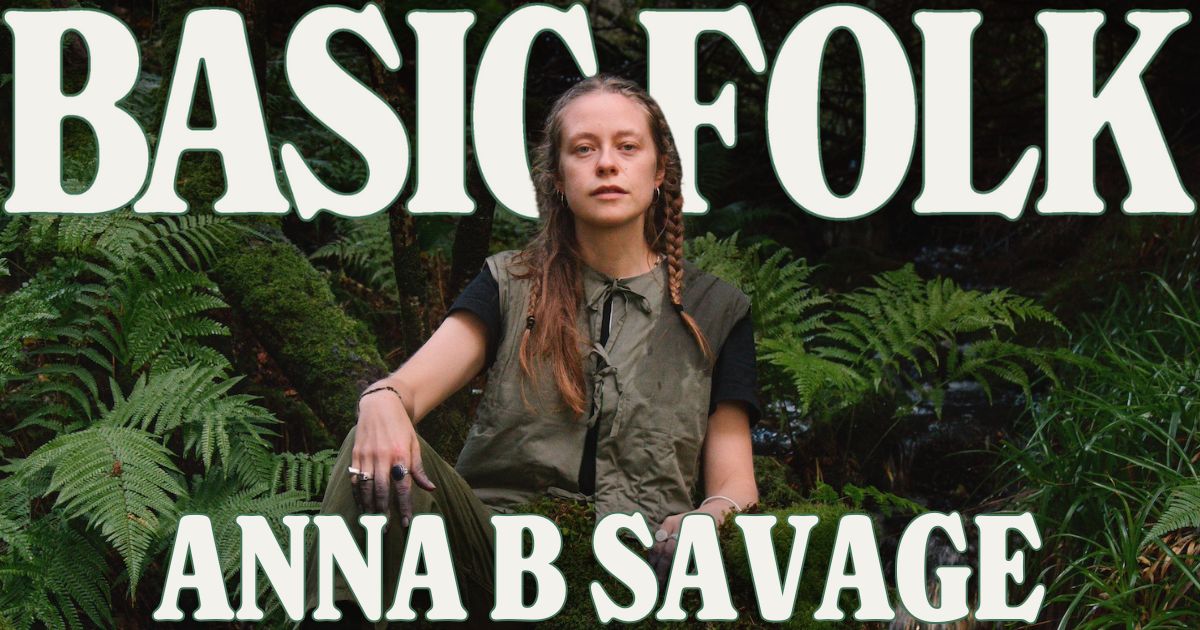
Anna B Savage is down-to-earth and witchy as hell at the same time. Over her three albums, she’s cultivated a mesmerizing sound and epic image – like David Bowie, Björk, Kate Bush, etc. – that’s gained her a godlike reputation. A reputation which preceded the actual human being behind the art, leaving some to wonder what it would be like to speak to her. Turns out, she’s a grounded, kind of goofy, and perfectly normal person. In our Basic Folk conversation, we explore the duality of her persona – Anna Savage versus her stage name of Anna B Savage – and how her new album, You & i are Earth, reflects a blending of these identities with a focus on nature and love.
In this episode, Anna reflects on the realization of her parents’ unusual musical paths (they are both opera singers) and how it influenced her own creative pursuits. We delve into her songwriting journey, her love for birds, and the evolution of her unique singing voice, which blends classical influences with a jazz singer’s sensibility. Anna also opens up about her stage fright and the progression of her confidence as a performer. She touches on the complexities of being an English person living in Ireland and the importance of understanding the historical context of her new home.
As we navigate the themes of You & i are Earth, Anna reveals the inspiration behind the track “Agnes” and the mysterious allure of the 17th-century plate that inspired the album’s title. With a lighthearted lightning round, we learn about her favorite birthday tea, her ideal stage outfit, and her witchiest recent activity, too.
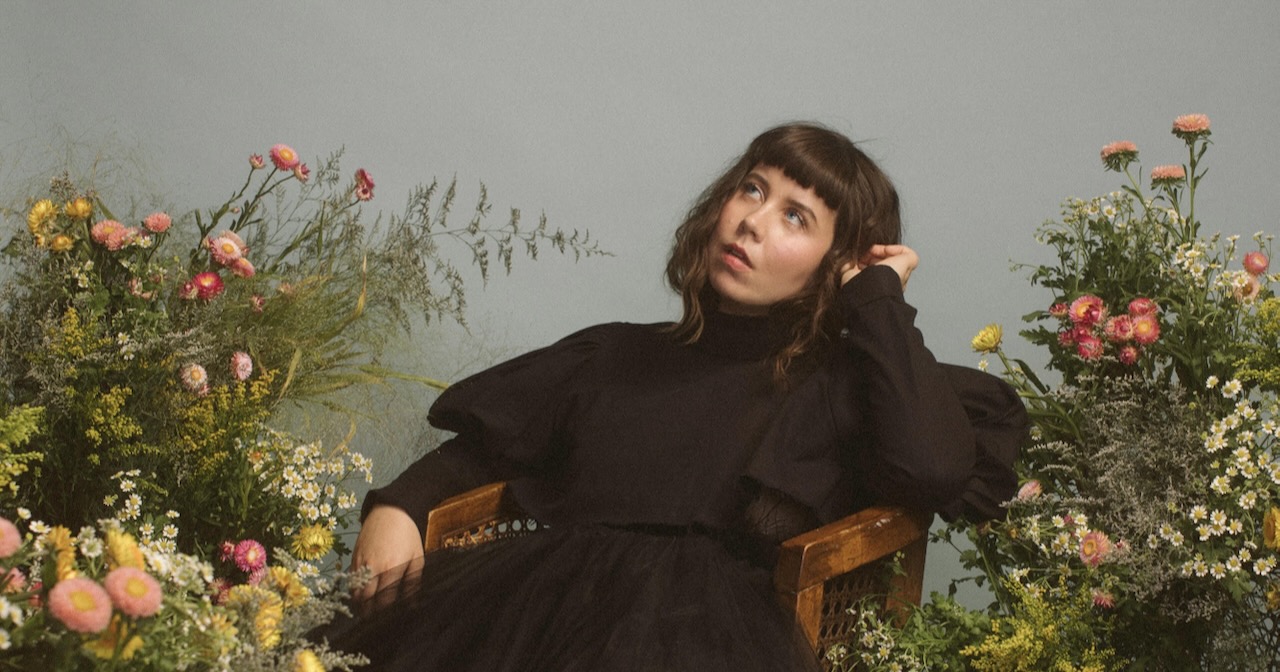
I feel like I’ve been living a cottagecore life since always. All my interests outside of music line up: I sew my own clothes, read old Russian literature, and I love horse riding, long forest walks, and filling my house with wild flowers and candles – and dreaming of picnics out of baskets, dressed in long skirts with ribbons in my hair and champagne in tea cups. My upcoming album, There Is No Ship, is a love letter to my homeland, [the UK], where a cottagecore lifestyle is a bit easier to achieve than here in LA. But, here’s a playlist with some songs that make me feel closer to it. – Rose Betts
“Do It Again” – John Mark Nelson
John Mark Nelson and I met at a session and as soon as we got to talking about books I realized he was a total keeper and we’ve been friends since. His vibe is so cottagecore. The man’s car smells like a pine forest and he bakes his own bread. I feel like his voice is so cozy and this song just feels like a day inside with the rain against the windows and pleasant feelings of being in love.
“Snow In Montana” – Michigander
My sister considers it illegal to listen to Christmas songs outside of December, but this has to be an exception. I love this song. On whatever side of Christmas I listen to it, it either makes me wistful about the one to come, or pleasantly melancholic about the one just passed. “Snow In Montana” makes anywhere feel cozy, which is quite a feat if you live in LA. I listen to it in the car on the way home from Trader Joe’s with bags full of vegetables and cheese and flowers feeling all stocked up and ready to light candles and get flower-arranging. I own so many small vases so that I can crowd my house out with flowers and make it feel like a garden.
“Deeper Well” – Kacey Musgraves
Her voice is so smooth and rich, I love it. And, her songs have this warmth and natural quality to them that I just want to sink into. Makes me want to rent a cabin in the woods with friends and get a campfire and hot cider going and watch the sparks fly up into the night.
“Wells” – Joshua Hyslop
I’ve been reading Anne of Green Gables lately and those books are so full of nature and the simple life, they make me really want to run away to Prince Edward Island, pick apples, and make jam. This song has that natural feel, like a little stream you sat by for a while and had a beautiful time, but all the while knew you couldn’t stay forever. Anne as a character is wonderfully joyful, but also so tragic, so the meeting of those two qualities felt expressed in this song somehow.
“Inconsolable” – Kate Gavin
A friend who knows me well sent me this song and I listened on loop for days. I love the instrumentation, that lovely fiddle part! One of my favorite things about being a musician is that when my musician friends come round they just start playing whatever instrument is in the house. The other week my friend came round and our hangout consisted of cups of tea, me sewing a top, and him going through my pile of sheet music on the piano. This song has that feeling of shared music… maybe it’s the harmonies or those lovely melodies, either way it reminds me of impromptu musical moments that are just so lovely.
“Bishops Avenue” – Rose Betts
For about a year and a half, some friends and I had the run of a mansion on Bishops Avenue in North London. We put on plays, painted out in the orchard, had renaissance parties and banquets in the ballroom, and it was one of those golden times when everything is just a little more precious and glittery. I feel like it’s how I always want to live, banquets by candlelight and then some creative frivolity of some kind. Moving to LA, it’s hard to find orchards and dilapidated mansions to play in, but I found some playfellows who get into the spirit with me so I get close.
“Tier Abhaile Riu” – Celtic Woman
This song has such a strong feminine energy to it, reminds me of all my creative friends who enrich my life so much. My friend and I hosted an evening where we invited just women to come and share stories and we lit candles and drank Champagne out of teacups and it was total bliss. Something about women together in candlelight talking feels ancient and holy and special in a way nothing else is.
“Skye Boat Song” – Bear McCreary, Raya Yarbrough
I’m lucky to have a twin who lives in Scotland, so I get to visit a lot and even lived there for a while in lockdown. It’s such an amazing part of the world. There is a beach near her village where I’d go for walks as often as I could, where the seals sing and the sky stretches out like a great pearl above your head. So much of songwriting is about finding the silence in the noise, so that the song has space to blossom and so many songs came from those walks. This song I’ve known since before I could remember hearing it, but it became more well known to the world when they used it as the title track for Outlander. This is a beautiful version. It sounds like Scotland to me, full of low skies and colossal lochs and mystery.
“The Author” – Luz
Some songs are so lovely they make me want to stop listening and write a song instead. This is one of those. I’ve started trying to write a poem every morning, just something small to start my day creatively. Then I punch a hole in the paper and hang it off some fairy lights I have around my bed. I think we are all the authors of our own life, which isn’t what this song is saying, but it’s so darn romantic and in its existence turns the singer into the author that tells the girl how she feels. If that makes sense…
“Sigh No More” – Joss Whedon
I heard this song in Joss Whedon’s Much Ado About Nothing and it takes a Shakespeare poem and sets it to music. I always really liked it. I have a little book of Shakespeare’s sonnets that I’ve carried around for years and I’m always trying to learn a new sonnet. If I’m bored at some LA party, I’ll get it out and read a sonnet and it puts me in a better mood.
“The Stars Look Down” – Rose Betts
This is off my first EP and I sound so young, which is kind of embarrassing, but also sweet. It’s like hearing a past version of me. I was reading a lot of Russian literature when I wrote this song and it was the mansion period of my life (which I mentioned before for “Bishops Avenue”). I’d just discovered Tolstoy, was reading War and Peace, and this song is full of the stories and vignettes in that book, heroism and love and dreaming and nights of glory followed by disastrous heartbreak. Books have always been where I get the most inspired for my songs, the quality of the writing makes me work harder at my lyrics.
“Mexico” – The Staves
The Staves are a group of sisters who actually come from a town right by the one I grew up in. It’s a place called Watford and is a bit of grey hole of a place. It’s surprising that these three beautiful singers came out of it. I guess music and beauty can come from anywhere, which is how I feel about my life. There’s beauty in everything, and if there isn’t you can bring it. My little apartment in LA is pretty boxy and lightless, but once you add candles and art and music it’s suddenly a little bohemian enclave where I can rest and be creative. Me and family sing together and there’s nothing like families harmonising, which is why I chose this song. Reminds me of the supper table at my childhood home, where we sing before we eat and sometimes after too, and whatever argument or trouble that’s going on disappears for a moment.
Running has been a way for me to balance the highs and lows of the music industry. It gives me time to process my thoughts and decisions, and it’s also the perfect time for me to discover new music. In a chaotic world, running helps clear my mind and give me better energy throughout my day. I like to change up what I listen to, but below are a few of my go-to favorites. – Old Sea Brigade
“Starburster” – Fontaines D.C.
This was one of those songs that instantly grabbed me the moment I heard it. When I’m out running, I like to find songs where the beat is consistent. I think the scarcity of the instrumentation lets the drums and vocals just put you in a trance. It’s a perfect pace setter to start out your run.
“Midnight Rider” – Allman Brothers Band
Though I live in Sweden now most of the year, this song always brings back memories of growing up in Georgia. My mom’s from a small town in south Georgia called Brunswick and to get there from Atlanta (where I grew up), we’d always stop for a while in Macon, GA, home to the Allman Brothers. Every time I hear this song I oddly feel nostalgic for those blistering hot July drives through south Georgia to visit my grandparents. It’s a nice memory of home when I’m on a run through the streets of Gothenburg.
“New Noise” – Refused
Switching gears here… but I grew up playing in heavy bands and Refused were a pivotal band to me within hardcore music. I think this is the perfect mid-run song to help kick in those endorphins.
“You Think I Ain’t Worth A Dollar, But I Feel Like A Millionaire” – Queens of the Stone Age
A lot of times when I’m running, I like to daydream I’m the drummer in a heavy band. There’s definitely been a number of occasions where I’m air-drumming to this one on a run. Hopefully, no one has that on video.
“Seventeen” – Sharon Van Etten
The lyrics to this song hit me with every line. Such a beautiful song with an equally magnificent production. The driving drums make it perfect for a run.
“Centurion” – King Buffalo
This song hits so hard, plus I love a good stoner rock jam. Fun one to run to.
“Run To Your Mama” – Goat
I love the Black Sabbath feel here and the consistent guitar rhythm. Sets a nice pace for running
“Under The Pressure (Live)” – The War on Drugs
I like to time this to be one of the last songs of my run. When the guitar solo hits at the end, it’s absolutely amazing. What an incredible live band.
“Punk Rock Loser” – Viagra Boys
I love this band. I was a little late to the party, but this was one of the first songs I heard from them.
“Broken Man” – St. Vincent
I’m obsessed with St. Vincent’s production on this one. I love how drastic the new instruments are introduced here.
Sam Lee’s musical career grew out of his environmental activism, from the Mercury-winning album, Old Wow, to his ongoing conservation project Singing with Nightingales. The British folk star’s fourth album, songdreaming, released earlier this year, is his most creative venture yet. It’s a manifesto for reconnection with nature constructed from luscious, haunting reinterpretation of the songs of the UK’s Traveller communities.
Its title comes from the summer retreats Lee leads that bring people together to connect to their land and ancestry through song: “Singing to the land happens across the world in Indigenous communities that still have their relationship to nature very much intact,” says Lee. “It’s ceremony, it’s devotional work, it’s prayer.”
We spoke to Lee about songdreaming, how he sources material, queerness, connection to nature, and much more.
Sam, your music is usually based on traditional folk song, but these songs go far further from the source material than you’ve ever taken them before.
I had done a little bit of original writing on Old Wow, but this is an album where almost everything is written by me, some to the point where there’s no semblance of the primary folk song left. And that was a big risk, because I’m quite shy when it comes to thinking of myself as a songwriter. It’s not like I’m a seasoned Johnny Flynn or Anaïs Mitchell. It’s not my training, and I’m a very reluctant writer, because I failed English at school. I’ve always had a great sense of inadequacy.
What prompted you to step out of your comfort zone?
It actually came about in an unusual way – the songs were originally commissioned for a movie, The Unlikely Pilgrimage of Harold Fry. It was an adaptation of a much-loved book about a man who walks the entire length of the UK, a portrait of our connection to the land and the healing power of passage-making. I was already a great fan of its director, Hettie Macdonald – her first movie, Beautiful Thing, was seminal for me when it came out in 1996 – so I was really excited to be involved.
We arranged and wrote lots of songs to capture the mood of the film and some were used, but there were all these, dare I say, leftovers? Being the resourceful, waste-not-want-not type, I said, “Well, these all have something in them that is powerful.”
What was your writing process?
I don’t have one particular method, but the way I work is a bit like the way I interact with nature. I’m a forager for sonic and lyrical opportunity, seeing relationships within words in the way that I see relationships within the ecosystem. You start to find what Simon Armitage, Britain’s beloved poet laureate, will call the “neon” moments, things that suddenly shine.
Can you give an example?
Absolutely. “McCrimmon,” the third song on the album, is a ballad I learned from my late mentor Stanley Robertson, who was a Scottish Traveller. There’s a lyric in the original which is, “no more, no more,” but I heard it as “in awe, in awe.” Suddenly a whole song about the state of awe appeared.
There’s another track which is a love song between a fair maid and a plowboy – I recalibrated and reframed it, so it’s a more complicated relationship between species that are in a state of separation. The folk songs say everything already. I’m like someone taking a Shakespeare play, resetting it, maybe adapting some of the language, like West Side Story from Romeo and Juliet.
Which of the songs came easiest?
“Green Mossy Banks,” which is actually about pilgrimage, was so easy to write. It was like, “Oh my god, I’ve been wanting to write this song forever.” And they didn’t even use it in the film!
What is it in that song that you had been longing to express?
The story of the film paints this wonderful portrait of free passage – there’s never a moment where it deals with trespass or permissions or this idea of private land. No barbed wire fences, or angry landowners going, “What do you think you’re doing here?” One could walk from Devon to the borders of Scotland and never have any issue.
But there is no person in England who goes on a country walk and isn’t affected by our punitive, archaic, and utterly unequal private ownership laws. That’s why I was a founder member of the Right to Roam movement. For all its avoidance of politics, “Green Mossy Banks” is a deeply political song. Social and ecological injustice is at the roots of so much of our international crisis.
Is the UK not quite a good place to walk compared to, say the US? The English have ancient rights of way that allow them to walk across private land, whereas try it in the US and you might get shot…
Absolutely. But where does the US get their notion of land rights from? They were inherited as an enhanced version of British law at a time when, in England, if you were caught poaching a hare or something, that’s it, you had your hands cut off, or you were hanged, or sent to Australia.
On the music video for “Green Mossy Banks” we see you surrounded by various mesmerising English landscapes.
It’s a combination of many of the pilgrimages that I’ve made with Chris Park, a druid, and Charlotte Pulver, an apothecary. At cardinal points of the year – the solstices, the equinoxes – we lead communal pilgrimages to places like Stonehenge, or the South Downs.
Are there any songs on the album that were inspired by specific places?
“Meeting is a Pleasant Place” is very much about the Dartmoor landscape, down to the very tor that we filmed the video on. The exact location shall remain nameless, because it’s one of the few tors that exist in a forest, as opposed to Dartmoor’s sheep-wrecked landscape of denuded grassland. It’s deep in beech and oak forests, which makes it especially stunning.
And the song itself came out of a Devon Gypsy folk tune.
Yes, and it contains this rather mystical language that had become something of a mantra to me. “Meeting is a Pleasant Place/ Between my love and I/ I’ll go down to Yonder’s Valley, it’s there I’ll sit and sing…” It’s bad English, but at the same time so powerful in its ambiguity. It could be a love song between two people, but in that Gypsy corruption of the words, suddenly it speaks about something so much bigger. So then I wrote my three verses as a love song to the land.
The appearance of the Trans Voices choir on the chorus turns it into something epic and anthemic…
It’s English folk gospel, as I call it. ILĀ, who runs Trans Voices, is an old friend and when the choir was set up I said I’ve got loads of songs that I’d like to speak to the queerness of land. Folk song often tends towards the heteronormative, and I want to break that down.
In the liner notes you also talk about the queerness of nature, what do you mean by that?
When you look at relationships within the natural world, sexual or otherwise, what you see is massive diversity in roles and identities. In the fungi world, for instance, there are hundreds and hundreds of genders, working collaboratively in community. Humans, too, need to start to recalibrate the way we behave in nature. So much of our subjugation and exploitation of nature has come through a male-dominated worldview and it’s not working.
One of the species you have a great connection with is the nightingale – as well as singing with them in secret woodland gigs every year, you recently wrote a book about their threatened extinction.
Yes, and when I’m with them, for seven weeks each spring, I get this sense of what is it like to be in a relationship that’s falling apart. That heartbreak, saying farewell, and knowing that it has a time limit to it. That’s what inspired the opening track, “Bushes and Briars.” It was the first folk song Ralph Vaughan Williams ever collected, and it’s a lament of a man and a woman who are separating. As somebody who spends a lot of time in bushes and briars trying to keep a relationship with a bird going extinct happening, that’s a space that is very familiar to me.
Coming from a background of singing acoustically, outdoors, how do you work up the big, dense sounds that populate your albums?
I do my writing with James Keay, who plays piano in the band. We both want a richness of sound, so that what are often very repetitive lines and melodies can take the listener on journeys through different emotional states. It’s about trying to paint as big a painting as possible.
As well as strings and horns and pipes, you’ve added a more pan-global feel with a Syrian Qanun, and a Swedish Nykelharpa.
We wanted to create textures that gave a sense of both the ancient and the unusual. I’d never used a Qanun in an arrangement before, though I have used dulcimers before on almost every album, which are part of the same family.
Maya Youssef, Britain’s best-known Qanun player, features on the one folk song that you haven’t changed, “Black Dog and Sheep Crook,” about a shepherd being thrown over by his lover because he’s “just” a shepherd.
I’ve kept its truth and entirety – it just felt so wonderful bringing the tragedy and the melancholy of the Qanun into that song.
So often in this album you’re grieving our detachment from and devaluing of the natural world. But the spirit and purpose of the music, as you describe it, is also to re-establish those connections. What are your current priorities for climate activism?
At the moment, there’s a big campaign to get young people voting, and voting for nature, in the UK. Hope for me is always about having a plan. And there are many brilliant plans out there. It’s about overcoming apathy and resistance and reawakening people to what we have to lose.
I can’t speak to what I think the outcomes will be, I think that’s a dangerous thing to do. But I hope that the album has as many opportunities to instill hope and beauty as there are moments of doom and tragedy.
His name might be a little … beige? But those who know John Smith have long loved the vibrant colors of this gifted guitarist and singer-songwriter’s creative palate – especially the serene sophistication at its core. A unique form of meditative propulsion has endeared Smith to heavyweight collaborators like 3-time Grammy winner Joe Henry and his own fans alike, but with his new album, The Living Kind, Smith paints with a new shade of calm, confident, consciousnesses.
Produced by Henry and driven by Smith’s steamroller of a right hand, The Living Kind seems to have a gravity of its own making – a contemporary folk album that is both spartan and lush, modern and timeless, desolate and dense with the movement of life.
Perhaps that’s due to the subject matter, since it was written as Smith grappled with a season of change and an Alzheimer’s diagnosis that impacted not just his father, but the whole family. Or maybe it came down to the recording style, which found the UK native escaping to Maine with a few vintage guitars in the dead of winter, finding new courage in Henry’s home studio. But no matter the reason, the result is a work of deep reflection – and ultimately deep revelation.
Just after The Living Kind’s release, BGS spoke with Smith about the mix of experiences that led to his cathartic new album, a project that helps convey the beautiful tragedy of living itself.
Thank you for making some time for us to connect, John. To start, I just wonder how you’re feeling about the act of making music these days?
John Smith: I mean, I love music. Music is the good bit. I feel like music is the bit I do for free. The music business itself is tough. It’s in a strange place at the moment and everyone I know is working five times harder for half the money. So I feel that going on tour and playing shows cannot be taken for granted, especially since that moment where it all shut down. It feels like a real privilege to be able to go and do live shows. To make this record with my favorite producer was just a dream come true. The whole thing feels completely satisfying and good to me.
Tell me a little about where these songs came from. I understand they came in sort of a creative burst and you had a lot of tumultuous things going on in life at the time before that. Did this music have an impact on you personally – were you using it to process?
I think the album before [2021’s The Fray] was all about that. It was me writing so I didn’t lose my mind. This album feels more about moving through turmoil and looking behind you, looking at the rear view mirror and seeing a part of your life fade into the distance and recognizing it and keeping your eye on the road ahead. I wrote this as I was emerging from a time of tremendous – well, yeah, I say turmoil again, and the songs came very quickly. Once Joe and I had decided to make a record together, I wrote the songs over the course of the winter of 2022 into ‘23, wrote most of the record in about six weeks.
That’s crazy.
I think the thing is, when you’re writing and you put up your aerial, sometimes you catch a good frequency, you get lucky, and you catch something that falls into your lap.
I noticed that you described this project as an actual song cycle, which is not always so common anymore. What’s the story you feel these songs are really taking people through?
Actually, I think that was a journalist who said that, and it kind of hit me that it was not entirely untrue. The album moves through a series of different moods. It starts in a place of despair with “Candle” – a song about Alzheimer’s and looking after someone and feeling burned out. And it ends with this song “Lily,” which is a kind of evergreen love song about hope and being able to get through something, because you’ve got someone to do it with. And I think the album takes you through various situations of grief and longing and love and hope, and then it ends in a very hopeful place.
You mentioned earlier, “Watching the person you were get left behind.” I mean, is that a scary feeling at this point in life?
Yeah, I think I never seem to have any say in it. Things happen and I move around them. What I’m learning as I get older is just to be more malleable, be more subtle. There’s a line in “The World Turns:” “We’ll be stronger if we soften and yield,” and that’s kind of what I learned over the course of the last five years. I was always someone who would attempt to resist the flow, but I’ve learned that just jumping in and seeing if you don’t drown is probably the best way.
I did want to ask you where your sound is landing on this record. It’s got this very peaceful, but sort of propulsive feeling and it puts me in a good place. I like it a lot. I wonder, does that energy show up in your daily life, or were you sort of getting out of yourself to find this mix of calming but also pushing forward?
That’s a really good question. It’s almost as if you’ve done this before. [Laughs] That’s really good, man. I never thought of that. …
Well, I’m a calm person, but I’m always moving. I’m always thinking of the next thing and always planning and always on it, but I’m generally very calm, and maybe that’s a reflection of me. When I went in, I wanted to record something that sounded like me, but also sounded idiosyncratic to this one recording process.
Most of these songs are driven by the right hand. It’s that propulsive groovy right-hand thing that I do, and I’ve been working on my whole life, really. That is at the center of the mix, and Joe wanted to frame that, then just have other actors walk out onto the stage, do their bit, and then walk off. We wanted to put that front-and-center instead of me being part of the ensemble.
Do you think that’s maybe part of why this one was so satisfying feeling?
I think so. I think that’s largely down to Joe and his recording process. He just put a mic up and asks you to play a song. This felt like the record I’ve been trying to make my whole career, just sometimes you need a beautifully gifted Grammy-winning producer to help you get there.
Fortunately, I’ve played on lots of Joe’s records. I’ve played on four or five of his solo records and a bunch of his productions, so I’m used to that way of working – and as soon as I saw him do it the first time like 13 years ago, I just said, “Right, that’s how I want to record.”
He’s always been very encouraging of me, and tried to get me to do my thing without inhibition. And there was a moment when I was singing the song “Silver Mine.” He looked over and he just kind of winked at me and said, “You’ve done it now, son. You’ve done it.” And it was like, “Yeah, I have actually done it. I’ve managed to sing without inhibition on a record,” which I don’t think I’d ever really done before.
How did the setting of Maine – in the winter – impact what you made?
Well, the idea for the album was born there a year previous. I was on tour in New England in February ’22 and then Joe and I wrote this song early after dinner, went upstairs, made a demo, and then Joe just said to me, “There’s no reason why we shouldn’t make a record here in this house.” And so a year later, I was back there and it was the same icy, snowy, frozen situation from the last February, and I’d had it in mind the whole time I was writing. … I always had those frozen finger lakes where he lives in mind.
So, when I went back, it was exactly as I’d remembered it. The songs suited the place, they suited the setting and the weather, and then it happened. On the second day, the temperature plummeted to -25º Celsius. So we just stayed in, man. We stayed in the house. We looked out the window and we cut the record in four days. It brings a closeness that you can’t manufacture. You can hear that on the record.
Tell me about where “Candle” came from. This is the track that starts the record off, and I know it’s kind of a heavy topic, right?
It is a bit heavy. It’s a song about admitting that something is very wrong and that you have to deal with it, and you have to try not to burn out. In this case, my father suffers from Alzheimer’s. We chose to completely change our lives to move around him and his condition and look after him, and it’s a song about that. I felt there was no point in dressing it up and trying to speak of it in broader strokes, because I know a lot of folk whose parents are suffering dementia of some kind. So I just decided, let’s be straight up about it.
Obviously, the visual metaphor is a candle burning out. You, as a carer, will burn out. But actually, I think really the song is about putting your hands around the candle and trying to just stay warm, enjoy that light as long as you can. The relationship with somebody who has Alzheimer’s just changes every day.
You chose “The Living Kind” as the title track. Why did you feel that was the best way to describe the record?
I don’t know, actually. It’s a bit of an anomaly because it’s such an upbeat song. The record isn’t all that upbeat. … I guess I thought “The Living Kind” sums it up. Rather than becoming complacent in the face of great difficulty or becoming stunned into inaction, it’s about getting on with it and trying to live life as best you can. I think that is what a lot of the record is about.
What do you hope people take away from this?
I just hope it makes listeners feel good. I think at the end of the day, that’s all I can hope for. I believe Bob Dylan when he said that once you release music, it is not your business what people think of it. I hope it makes ‘em feel good.
Artist:The Wandering Hearts Hometown: England Song: “Still Waters” Release Date: October 26, 2023 Label: Chrysalis Records
In Their Words: “‘Still Waters’ is a conversation between the head and the heart and the separate choices we make on behalf of them. We try to see clearly enough to make a firm decision either way, only to discover that there is a rippling series of consequences whatever the outcome. Writing and recording this song, we gave the rhythm a feel of lapping waves to capture the sense of the push and pull of the tides, to mirror the push and pull of the inner conflict.” – The Wandering Hearts
Artist:Davy Knowles Hometown: Isle of Man Song: “Speak Softly, Tread Lightly” Album:If I Should Wander Release Date: August 25, 2023
In Their Words: “I feel the only way to talk about this song is frankly and honestly, as every one of its words is a truth for me.
“I have struggled with depression for a long time, although it’s only in recent history that I’ve accepted that and called it what it is. It was my wife, Amber, who persuaded me to find help and for that (and a million other things), I am so thankful to her. I’m honestly not sure I would be here without her.
“With depression, sometimes it’s hard to look past your own nose so to speak, and to see how the condition may be affecting those closest to you. If and when you do notice, you can then start to feel guilty for feeling the way you do. Thus creating a vicious circle within yourself.
“This song was/is my way of trying to comfort Amber during my struggle, to thank her and to reassure her that she’s perfect the way she is, that this is an internal fight. That I’m the problem, and while I’m learning to navigate it I may need a little extra comforting. It’s also to apologize to her for how this internal fight may materialize on the outside.
“Sounds depressing right? Guess it kind of is. It’s a sad song, written from a loving point of view. Kind of like – ‘Bear with me. You’re perfect, but I’m not right now.'” – Davy Knowles
Photo Credit: Michael Coakes
This website uses cookies to improve your experience. We'll assume you're ok with this, but you can opt-out if you wish.AcceptRejectRead More
Privacy & Cookies Policy
Privacy Overview
This website uses cookies to improve your experience while you navigate through the website. Out of these, the cookies that are categorized as necessary are stored on your browser as they are essential for the working of basic functionalities of the website. We also use third-party cookies that help us analyze and understand how you use this website. These cookies will be stored in your browser only with your consent. You also have the option to opt-out of these cookies. But opting out of some of these cookies may affect your browsing experience.
Necessary cookies are absolutely essential for the website to function properly. This category only includes cookies that ensures basic functionalities and security features of the website. These cookies do not store any personal information.
Any cookies that may not be particularly necessary for the website to function and is used specifically to collect user personal data via analytics, ads, other embedded contents are termed as non-necessary cookies. It is mandatory to procure user consent prior to running these cookies on your website.