Do You Know the Story of Betty Harford?

Over the past year, I have been surprised and delighted to find myself working closely with the Hartford family to continue the legacy of one of my favorite musicians, John Hartford. John is famous for his songwriting, but he also loved the fiddle and was a true scholar of the instrument. After his death, thousands of previously unheard and unrecorded fiddle tunes were discovered, written out in his personal notebooks. John’s daughter, Katie Hogue, has spearheaded the effort to get these tunes recorded.

With the album Julia Belle, she brought together an all-women cast of musicians, engineers, and producers to record a second volume of his original tunes. (The first was released in 2020 as The John Hartford Fiddle Tune Project and was nominated for a GRAMMY.) I was honored to be included, and impressed that Katie had decided to frame the second volume of John’s fiddle tunes around women. But this focus on women musicians also got me wondering about the women in John’s life. As a woman honoring the work of a very successful male artist, I had to wonder, “Who were the women who made all of this creative time possible for John?”

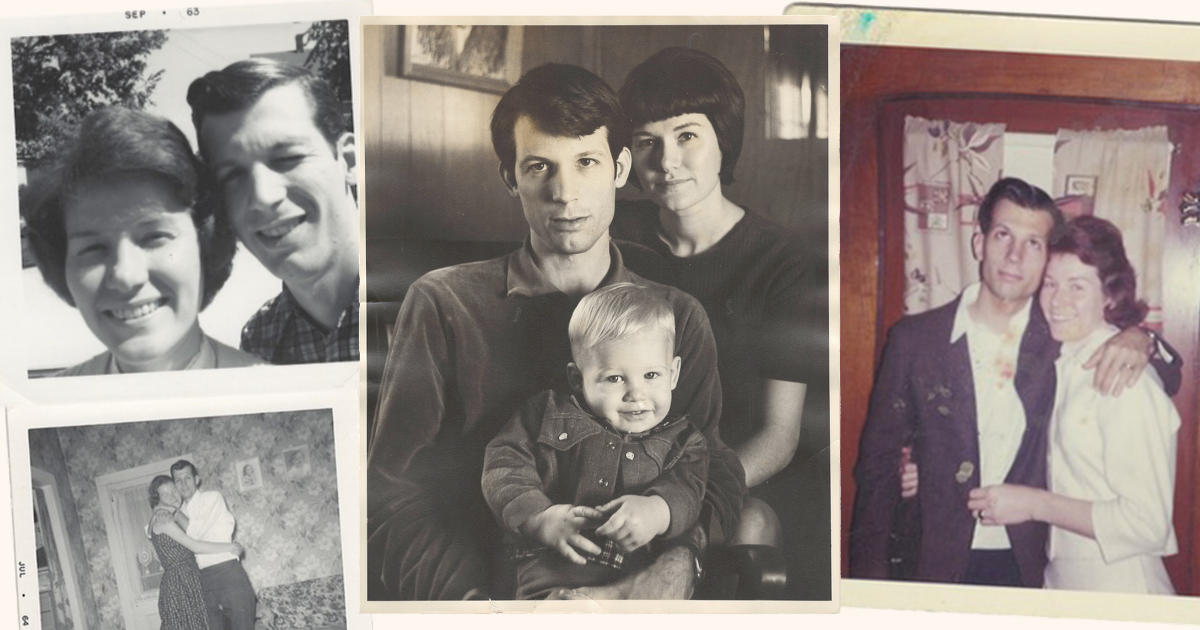
I had briefly met John’s first wife, Betty Harford-Gilbert, at a dinner party. (John later added the “t” to “Hartford” as an artist name.) We got to talking about the past and her experiences meeting and marrying John, as well as raising their two children, Jamie and Katie. I was relieved to find that Betty wasn’t especially bitter towards John. In fact, she had a lot of nice things to say about him. But I wanted to know more about her role behind the scenes, and I asked if she would be up for doing an interview with me. As so often happens in these situations, I had an idea of the story I wanted to tell: Two musicians meet and fall in love. Both want to pursue a professional music career, but as soon as they have children, the woman is relegated to motherhood and steps out of the spotlight to support her husband’s stardom.

However, when I started talking to Betty, it became clear how much I was projecting my own insecurities and generational desires onto the situation. Betty is an extraordinary woman who seems to have lived a million different lives. The story she told me was much more interesting than the one I had made up in my head. In fact, I feel confident that this article is just the beginning of a much bigger project surrounding Betty, her music, and her life.

Betty Beck was born in a small town in southeast Missouri in 1939. Her parents separated when she was three and she was raised by her mother and her grandparents, along with her mother’s siblings, on a cotton farm. As a child, Betty began playing music with her uncle, Jimmy Payne. Jimmy was her mother’s baby brother and he was only 4 years older than Betty, so they grew up like siblings.

“We both hated being in the cotton fields,” Betty explains. “All my life I was working in the cotton fields. We would chop cotton. We would pick cotton. I couldn’t remember a time when I wasn’t doing that. But Jimmy and I were dreamers. I was always looking up at the clouds, saying, ‘I wonder what’s out there? There’s something beyond this cotton patch.’”

The family had a radio at home and they would listen to the Grand Ole Opry on Friday nights. Betty remembers writing down the lyrics to songs in her little black book as she heard them. She and her Uncle Jimmy began learning to sing songs from the broadcast and trying to harmonize like their idols, the Louvin Brothers. Eventually, Jimmy managed to save up enough cotton money to order a $25 guitar from an Aldens catalog. Once a week, he went into town to learn guitar chords from the local church musician.

James and Betty, as they were known in the region, began playing together regularly. When Betty was 14, the pair began hosting a radio show at KTCB in Malden, Missouri, and their duet became officially known as the Allstar Gospel Singers. (When I texted her to ask about this detail, Betty sent me an eyeroll emoji and said, “Hey, I was 14!”) The duo went live every Saturday and sang requests on the spot.
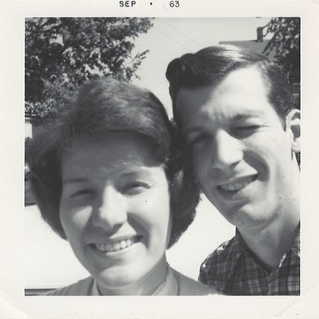
Betty Harford pictured with John Hartford circa 1963.

After graduating from high school, Betty packed her bags and took the bus to St. Louis looking for work. She had been working part-time as a secretary during high school and had become an expert typist. She soon landed herself a job and apartment. Her mother showed up with her younger brother three weeks later, placing the responsibility of breadwinning squarely on Betty’s shoulders. Betty describes those three weeks before her mother arrived as some of the happiest of her life: “I was free!”

Her uncle Jimmy Payne arrived in St. Louis not long after and the two continued playing music together occasionally, although she felt that he was more interested in pursuing a solo career at that point. It was through Jimmy that Betty met John, when the two of them went to perform at a radio station for which John was DJing. Notably, in my research about John’s early life as well as Jimmy’s, nobody mentions playing or writing music with Betty, even though she is the common denominator between these two hit songwriters.

Betty and John hit it off immediately, although Betty says she was “not impressed” with John.

“He was a good musician,” she explains, “but there were a lot of musicians better than him… and he dressed terribly. He had holes in his sleeves and wore ridiculous hats. I was sometimes embarrassed to be seen in the diner with him.”

Despite all of this, she fell for him, and the two began dating, eventually marrying in secret to avoid grief from Betty’s loving but controlling mother.

This is where our conversation started to surprise me. Betty told me about the two of them singing together, the music they would listen to and learn, and the hymns and country songs that she taught John, but she also mentioned going along to his band practices with Don Brown and Norman Ford, falling asleep on the couch as they played late into the night, then having to get up early for work the next day.

“You went to his rehearsals?” I asked.

“Well, yes,” she explained, “that was the way to be with him.”

Later, John told her that he was “testing her” to see if she could handle the musician lifestyle. It occurred to me at this point in our conversation that Betty wasn’t thinking about her career versus John’s career, it was just their lives together and a life around music that they both loved. They listened to records together, they wrote songs together, they sang together, and they went to rehearsals and gigs together. Betty played me an old recording that she and John had made of three songs; two they had written together and one she had written. Their voices in harmony over solo banjo gave me chills.

“How has nobody heard these?” I asked. She just shrugged.

It was on the drive home from one of John’s gigs (John was playing in the Ozark Mountain Trio) that Betty first suggested to John that he could consider playing his own songs rather than being a sideman for a band he was bankrolling. He soon began gigging solo and gaining a following. Betty was also the first to hear “Gentle on My Mind,” the song that launched John’s career into Hollywood via Glen Campbell. They had just been to see the movie Doctor Zhivago and Betty put Jamie to bed while John wrote.

“He came downstairs and said, ‘Honey what do you think about this?’ He was so proud of it. And I said, ‘Yes, I really do like it, but what about these two women you’re talking about? Which one am I?’” she laughs.

Some of our conversation revealed disappointing, though typical, attitudes of the time. Although John wanted children, when Jamie and Katie came along, he didn’t cope well with factoring them into his bigger picture. “John wasn’t a hands-on dad, never was,” Betty explained. By this time, Betty and John were both working musicians living in Nashville. They decided that John would pursue his music and Betty would focus on the kids.

When I asked Betty if this bothered her she said, “I agreed to it. I could just feel that he had a real fire to make it happen, more than I did.”

But it wasn’t that John wanted Betty to stay home while he went off on tour. He wanted her right by his side. “He called me one day so excited. We had always talked about going to Europe and he said, ‘Betty, we’re going on tour, 21 days in Europe.’ Well, Katie was six months old at that time and when he called I was holding the phone with one hand and trying to feed her with the other. I said, ‘Okay, well…’ and he said, ‘I thought you’d be more excited!’”

After some argument – John thought they could leave the kids with a babysitter and Betty was not in agreement – they decided that the kids would stay with John’s parents back in St. Louis. But the tour was the beginning of the end of the marriage.

More troubling than John’s absence as a father was the environment of Los Angeles stardom. John had found a new social scene, with actors, groupies, and plenty of weed. It was the early ’70s and John was on TV.

Betty told me about a performance John did at the Playboy Club, after which the two of them got into an elevator only to be squeezed in by several well-endowed “bunnies.” “He came home one day with Carl Gottlieb, a writer for The Smothers Brothers Show, and the two of them were just so happy. Later, he said, ‘Betty, we should smoke some grass together’ and I said, ‘John, I don’t need that stuff.’”

Betty felt John was becoming something she didn’t recognize, something she didn’t want the kids around, and something that they hadn’t planned on for their life together. Betty stayed in Los Angeles for six months after she and John separated, but he hadn’t made much effort to be a part of the kids’ lives, so she took them back to Nashville, a place that she missed terribly.

Betty is religious and refused to stray from her principles for John’s sake, something she feels that John always respected her for. As the years went by, he made more effort to get to know his children, but they were largely raised by Betty. However, this was in no way the end of Betty’s story.

After her kids had grown up, she moved to Alaska where she “worked part time for Statewide Blasting … rigging explosives and blowing stuff up, and flew all over Alaska in a [Piper] Super Cub.” Betty met the true love of her life in Alaska, a man who she married just weeks before he died.

John returned to Nashville and, in some ways, returned to himself. He married Marie Fielder and they lived on the Cumberland River in Madison, Tennessee, until he passed away in 2001.

During the last weeks of his life, Katie and Betty went to visit John. He asked Betty to sing to him and she began singing the old gospel songs that they had learned together. After she went through all that she could remember, he motioned for her to come close to him. He could barely speak but whispered to her, “Life of a Flower.” And she sang to him:

As the life of a flow’r,
As a breath or a sigh,
So the years that we live
As a dream hasten by
True, today we are here
But tomorrow may see
Just a grave in the vale
And a mem’ry of me.

It occurs to me now that John Hartford’s legacy and catalog is in the hands of his daughter, Katie Hogue, who runs his estate. Katie has worked tirelessly to put out records and books of her dad’s fiddle music, partially with the intention of getting to know him posthumously, but also because she believes that his music is a gift to the world.

Though John was unable to factor his family into his creative success, or perhaps they were unwilling to follow that success on his terms, it is the women in his life who continue to support and uplift his career long after his death, just as they did while he was living.


Photos courtesy of Betty Harford-Gilbert via Rachel Baiman.
Steve Wariner Draws Parallels Between Music and Painting

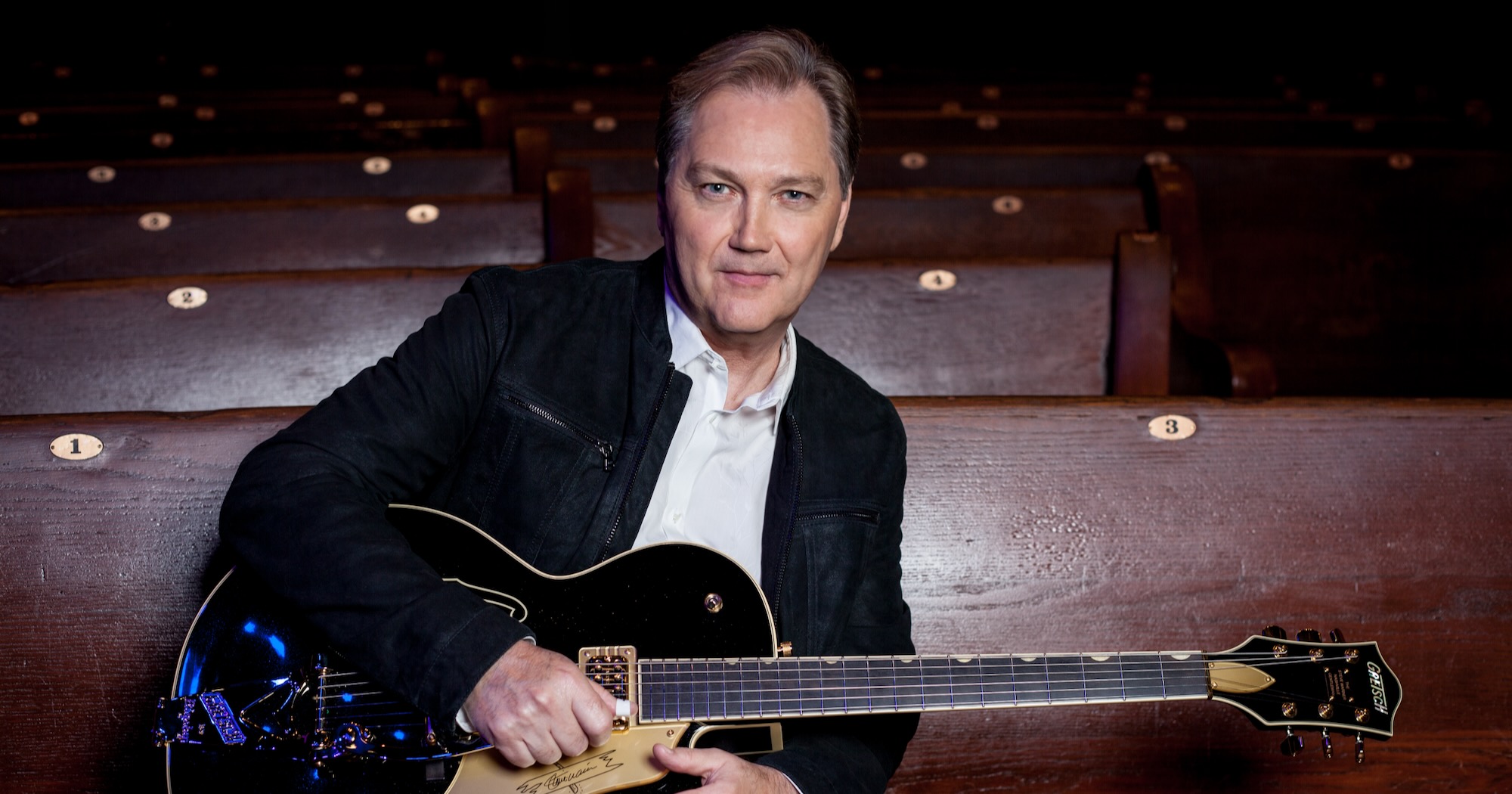
When the world locked down during COVID in 2020, Steve Wariner was determined to use his time productively by dedicating himself to his two passions: guitar and art. That meant a lot of writing, practicing, and painting – and expanding his skills by exploring new areas.

“I told myself that I’m going learn some things, I’m going to go to work,” he says. “Of course I started writing. I’m always writing songs, so the music part of what I do will never go away. I write all the time, and I’m lucky to write with some wonderful co-writers. I wrote with a lot of people by Zoom. That was a weird thing. I did a bunch of that.

“I painted every day and built up a pretty good body of work. I started diving into oils, which I never did much before. I didn’t like how long it takes to dry, and using chemicals with it – turpentine, linseed oil, so forth. But the reasons I was hesitant are the exact reasons I love it now. You can go back and paint a week later, it’s still wet, and you can add things to it.”

He worked diligently with no specific goal in mind, other than broadening his horizons and satisfying his need to create. “I really paint for myself,” he says. “It’s like my songs. I just write, and if they get heard, if they get out there in the world, that’s great. If not, that’s cool too. I write for me, mainly, and same way with painting. I’m lucky that people every now and then hear my songs and cut them, and every now and then I sell paintings.

“I sold a couple pieces last year. And of course, this year at the show we’ve sold some. But it’s not something I’m aspiring to do all the time or make a living doing it. It’s something I do because it’s therapy and something I love. It’s joyful to get out and paint. You get in the zone, too. It’s real easy to get lost in it.

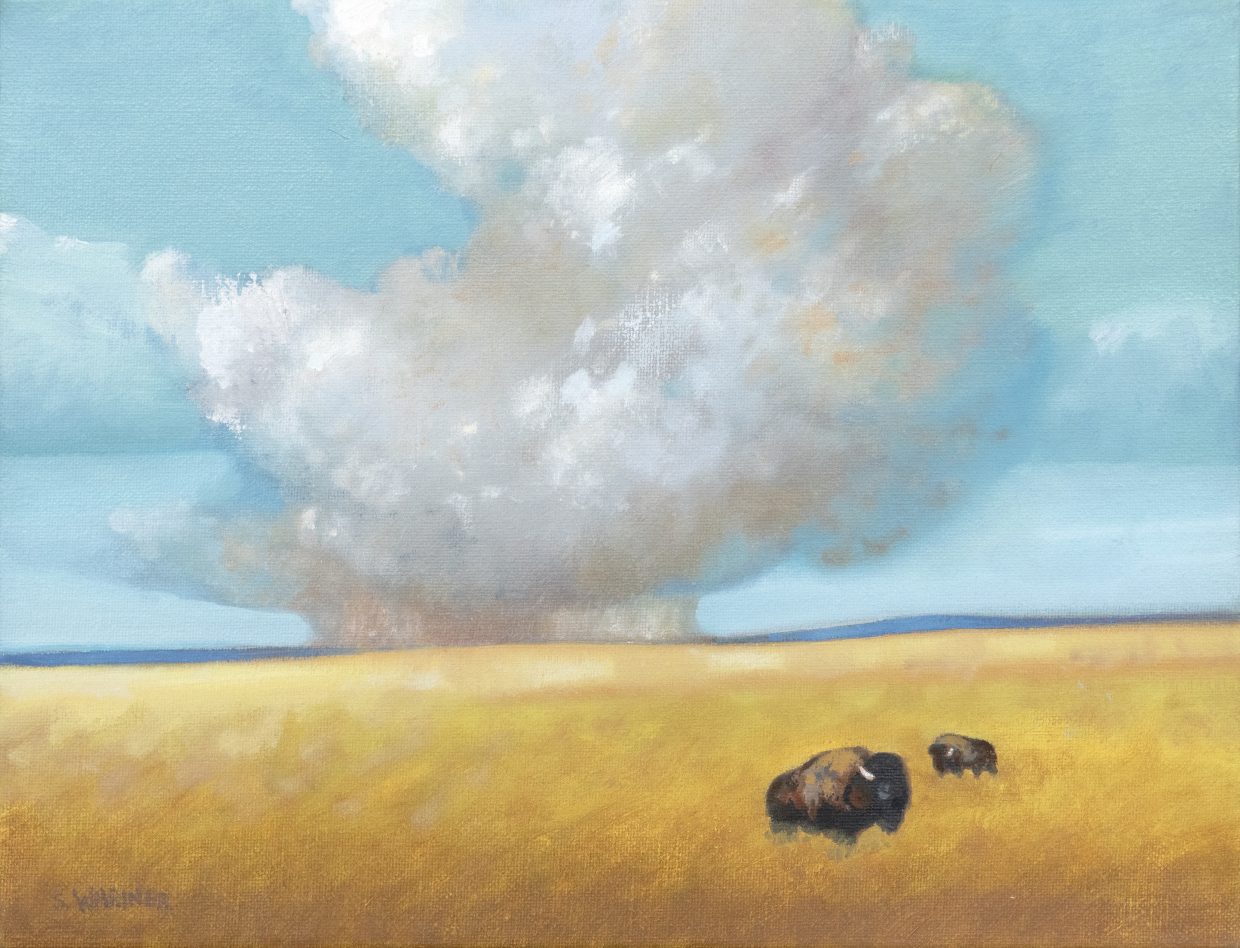
“Rain Out There” by Steve Wariner.

What he didn’t expect was that his time and effort would lead to the aforementioned “show.” Through mutual friends, the staff of the Monthaven Arts & Cultural Center, in Hendersonville, Tennessee, found out about his work and requested a viewing. The result is the Flip Side, a collection of 60 pieces in various mediums. The show opened on June 21 and runs through July 26. On June 25, Wariner performed an intimate concert as part of The Monthaven’s Heritage Music Series, making him the first artist/musician to simultaneously exhibit art and perform onstage.

Music has always been Wariner’s first love. His tremendously successful career is filled with dozens of Top 10 and Number 1 hits and a multitude of industry awards and recognitions. He has also painted throughout most of his life, and sold his first piece, a pencil drawing of a country store, when he was a high school sophomore – his art teacher purchased it for twenty dollars.

He is no stranger to exhibiting his work, and sometimes donating it to the best possible causes. In 2014, he created a fiberglass Basset Hound statue for Old Friends Senior Dog Sanctuary’s fundraising auction. In 2016, he participated in an artists’ exhibit at the Tennessee State Museum.

Between then and now, he has shown his paintings in California and sold numerous pieces, but “never anything on this scale,” he says about The Flip Side. “When this started out, we were talking about 35 to 40 pieces of art, and I thought that was pretty overwhelming. I’ve got tons of art, but Ruth Chase, the curator, and Cheryl Strichik, the executive director of Monthaven, looked at about 89 pieces of my work, total, and wanted to run with 60 pieces for the show.

“It is daunting, the work that goes into doing this. People don’t see that work and I never realized it either, to be quite honest. It’s time-consuming, and it takes a lot to frame and wire and get everything ready. Even placing it on the walls, matching it up, is an art. When you walk into the museum, it’s really nice; it’s got a nice flow to it, how they put it together. I’m really pleased.”

Let’s try something different with this interview, drawing parallels between painting and playing guitar. Let’s start with the tools: selecting the medium, brushes, paper, and so forth and selecting guitars, amps, pedals. The signal chain for each craft.

Steve Wariner: My first thought was watercolors would be like the acoustic guitars. In my guitar collection I have some old Martins and an old Epiphone Broadway that’s more of a jazz kind of guitar. Watercolor is very loose and free and unforgiving. If you mess up with watercolor, you start over because there’s no fixing it, unlike other mediums. I think that’s why a lot of times watercolor is harder than anything.

I think people take acoustic guitar for granted sometimes. If you’re not in that bluegrass or Americana world, where it’s very acoustic-driven, a lot of people think, “Oh, yeah, that’s acoustic.” No. It’s an art unto itself. People that play acoustic really well, the great players like Tony Rice, Mac McAnally, Bryan Sutton, they make it look easy, but it’s not. And that’s watercolor.

An oil painting, let’s say a beautiful English landscape, is like a vintage D’Angelico or Gretsch or some kind of beautiful archtop electric guitar that’s smooth and nice and elegant. That’s what I would equate with an oil painting. If you switch over to an abstract painting, something that’s more hard, that’s very expressive and can be loud, that would be the rock guitars, a Les Paul into a Marshall amp, or a Fender Strat, something very expressive, with a Nobels pedal or any kind of overdrive. That’s the abstract painting.

There are so many parallels with music and art. You start with a blank sheet of paper and you start writing, you start making something out of nothing. You start writing a song and you put a few words on there. On the blank canvas, you start putting a few colors on it and then, “Oh, this looks good with that.” With writing a song, you go, “Oh, that sounds good with that. If I say this, maybe I should…” It’s same with painting. It builds up as you go along.

With music and art, it’s not about what you hear or see. It’s about what you feel. A lot of people don’t understand why they love a painting, and it doesn’t matter; they just love it. A lot of the reasons why are the colors, the values, the way it’s put together, the composition, the harmony of it. In music you talk about tone, harmony, values, space. You hear a song and you love it right away. The song just hits you and it connects with you.

We always hear that tone is in the hands, it’s in the individual player, which is a parallel to painting and the individual painter.

Two people can pick up the same guitar and it sounds different. Two artists will look at the same thing, their paintings look different, and both are beautiful. I really do believe … a little bit of my faith has to come through because I think it’s a God-given talent in a way. You can hone it, like music, and when you love it so much, you’re going to do it. You’re driven to do it. But part of it is a God-given thing. I think you’re just born with it. You can hone it. It can be taught. But a lot of it is natural ability, too, I believe, and it’s something you’ve just got to do.

Does mood affect the choice of medium and, if so, how does that parallel mood and choice of guitar?

It is the mood. Some days I feel like doing a watercolor, and some days I say, “I’ve got a giant canvas out there and I want to just put some paint on it. I don’t know how I’m going to do it, or what or where it’s going to take me, but I’m going to put my old overalls on and paint.”

That’s me with the guitar, too. Some days I go out to my recording studio and, for example, I’ll say, “I feel like doing a Hawaiian song today,” and I’ll get out my Rickenbacker lap steel and start. It’s where the mood takes you. That’s what you feel like doing, and you can dive in and be creative.

You mentioned that with watercolor, you can’t make mistakes. Watercolor is to painting what tape is to recording?

That’s exactly correct. Chet Atkins used to talk about direct-to-disc recording, which means they would have one shot at it. It’s basically being cut into a disc when they record it, and you didn’t want to be the one making a mistake, because if somebody messed up, that’s it. That’s a watercolor painting.

The musicianship in that era was so strong. Their ear training was great because they had to figure everything out. Technology today makes it easy. You can tune it, fix it, slide it, do all these things. Don’t get me wrong – there are some great players today. But tape makes you really on point because if you mess up, it’s over with.

That’s the way it is with watercolor. If you mess up, you have to start over, and that’s what I like about it – the danger thing. I’ve done it before, where you have a beautiful thing going and you have to start over. With oils it’s still wet, so you can wipe it away and go over it, or when it’s dry, just paint over it.

Oil is Pro Tools. You can fix it in the mix.

Totally. Absolutely. The “undo” button makes you bold!

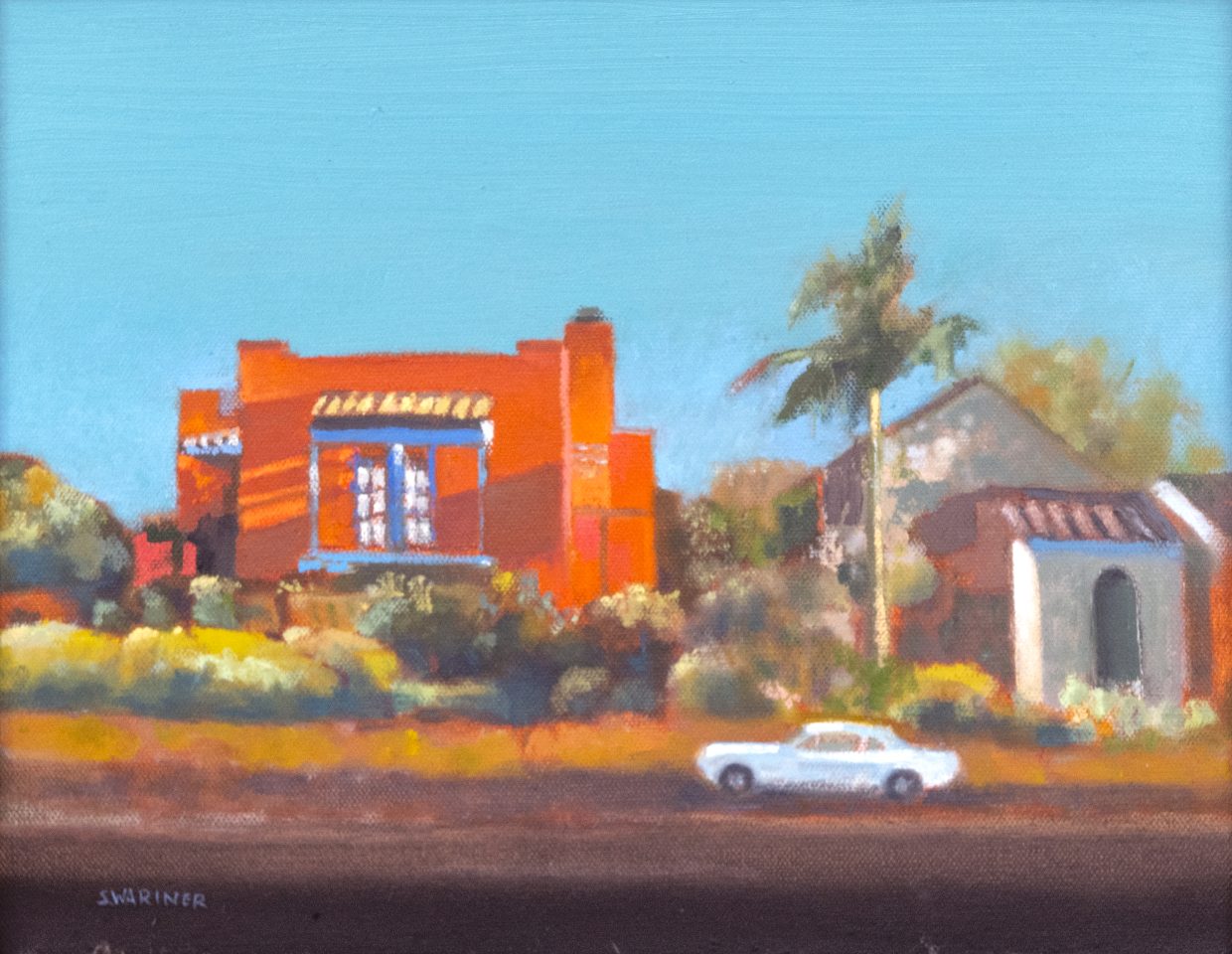
“A Glorious Day in Berkeley” by Steve Wariner.

Do you sometimes sketch first, or do you go directly to paint?

I do both. I keep sketchbooks and I sketch. My wife Caryn and I have a little RV and sometimes we go on road trips. I don’t want to carry all my stuff, so a lot of times I’ll just sketch, make notes on colors, and go back to it later. I also use my phone and iPad sometimes.

Sketching is the demo process, the pre-production.

That’s correct. There’s the demo in my sketchbook, now let’s make a record. Let’s get out the big canvas and make the painting.

Does your music or your guitar playing ever inspire a painting, and conversely, do you sometimes paint something, “hear” it on the canvas, and then it becomes a riff or a melody?

The answer is yes, to the first. I have thought of some guitar pieces, compositions. Both are compositions, but I have thought of that. Sometimes I paint with a certain mood or riff or song in mind, and if I have a name for the music piece, I call it that.

I have a piece in the show called “The Ocean’s A Little Bit Bigger Tonight.” It’s the name of the painting. It sold the other night. It’s a large abstract landscape, but it was inspired by a song I wrote with Bill Anderson called “Two Teardrops.” The first line of the chorus is, “Oh, the ocean’s a little bit bigger tonight, two more teardrops somebody cried…” That song is about the circle of life, and that’s the painting. As I was painting it, I kept thinking you could see the ocean way back in the back. It’s very abstract, but it has a lot of textures.

Bill came to the opening of my show and I showed him that painting. I said, “Bill, it’s like you when we first started writing this,” because he had part of it started and he was saying, “Wariner, you’re going to think I’ve either lost my mind or I’m a genius, I don’t know which, but it’s about two teardrops talking to each other.” The painting is that way. I told Bill, “You may think I’ve lost my mind with this abstract painting, but to me, that’s what it represented: two teardrops.”

Could abstract art be parallel to instrumental music? It’s open to interpretation from the viewer or listener, versus a painting of a specific subject being more like lyrics – even though those things can certainly mean different things to different people, too.

That’s a good way to look at it. It could be instrumental music, or more to me, I think freestyling. When you look at a jazz or bluegrass band, they get to the back half of the song and they’re just passing it around. Everybody’s playing – “Now you play eight bars, now you play eight,” or whatever. They’re freestyling. To me, that’s more what it is. It’s whatever you feel, it’s whatever you are interpreting, and I always loved that.

My first thought is Sam Bush. I love playing with him because with those songs where you do freestyle, I can’t wait for him to get ahold of his eight bars when it’s his turn, because he’s into it all the way. A lot of times that’s what I think an abstract might be, something like that. I like jazz, too, and some of those players get lost in their own world. They’re painting, they’re really layering and throwing some colors on there. It’s about the freedom.

You had to select 60 pieces for this exhibit. Is that parallel to putting together a song list for a show or sequencing an album?

Yes. It came down to that. It was interesting for me and very liberating, because I wasn’t in on making the set list necessarily. My suggestions were there, but that would be the difference. When I play, I make the set list, but they had the curator Ruth Chase, who’s wonderful, and she’s an artist in her own right. She had some great suggestions and great ideas, so she helped me put together the set list.

The curator is the co-producer.

Exactly, and the director is the engineer. She puts the whole thing together. It really is a team, the players.

In addition to your exhibit, something else that’s in the news is 75 years of Telecasters. Would you agree that it’s still the guitar that defines and is associated with country music?

That’s true. Number one, it’s so versatile. Maybe distinct is a better word. The West Coast guys, Roy Nichols, Buck Owens, Merle Haggard … they were certainly using them in Nashville, too, but the Bakersfield records really made the Telecaster, in my mind. It’s an iconic instrument.

James Burton turned me on to the Telecaster, no question. I saw him bending strings when I was a kid. I didn’t know how he was doing it, but I wanted to do it. It was like a magic trick I had to learn. Later we became great friends and we still communicate. He’s the king of the Telecaster, in my opinion. Roy Nichols was a big influence too.

We know you have quite a guitar collection. When did you get your first Tele?

I didn’t own a guitar until I was a sophomore in high school. I learned to play on my dad’s Jazzmaster, which he bought brand new in, I think, 1962. I still have it. Every time I played it, I dreamed and acted like it was a Telecaster. In my mind, it was a Telecaster, even though it didn’t sound or twang like a Telecaster.

When I was a sophomore, I had saved up about 400 bucks and I bought a Telecaster sight-unseen from a catalog. I ordered it from a store in Fort Worth, Texas. It was a ’71 or something like that. They sent it to me and I drove like a maniac to what is now Indianapolis International Airport to pick it up. I had an old 1964 Volkswagen and I blew the engine up going to get that guitar. I left it on the side of the road on [Interstate] 465, called my dad at work, and he came and got me and took me to pick up my guitar. We left my car sitting there for five days. I got my Telecaster and I was absolutely thrilled. That was my first guitar, and it’s now on display in a case at the Musicians Hall of Fame.

With all this talk of guitars and painting and writing, are we going to enjoy new music from you anytime soon?

I’ve got a stockpile of songs that I’ve been writing and going, “Ooh, I like this. I’ll put that over here.” I’ve got probably thirty songs or so that I just love, new ones I’ve written and that I’ve not really pitched around. I don’t have any plans right now. I don’t play them for anybody. I just sit on them. But I’ve thought about getting back in, getting some players together, having some fun, and see what comes out.

In the press release about the exhibit, there’s a quote: “Painting has always been a kind of therapy. It’s my sanctuary and escape.” How do painting and guitar fulfill and heal you therapeutically?

I think any artist will attest that you’ve got to find a place that you can go and just get away, get in a zone. It’s the free time that you’re not thinking about [anything else]. Music does the same thing. If I’m writing a song, I’m concentrating on what the song says. I have to force myself not to write about what I’m trying to escape from. But that’s good, too, to actually talk about it sometimes.

Painting is a place where I can turn my phone off. I’m listening to music in my headphones and I’m painting. I don’t know what time it is and I don’t care. I just go and go. No phones, no bother, nobody worrying you, nothing going on. It’s an escape and it’s great. It’s a really safe, free place.


Photo Credit: David Abbott. 

Reproductions of Steve Wariner’s visual art appear with permission, titles as marked. Images courtesy of the artist.

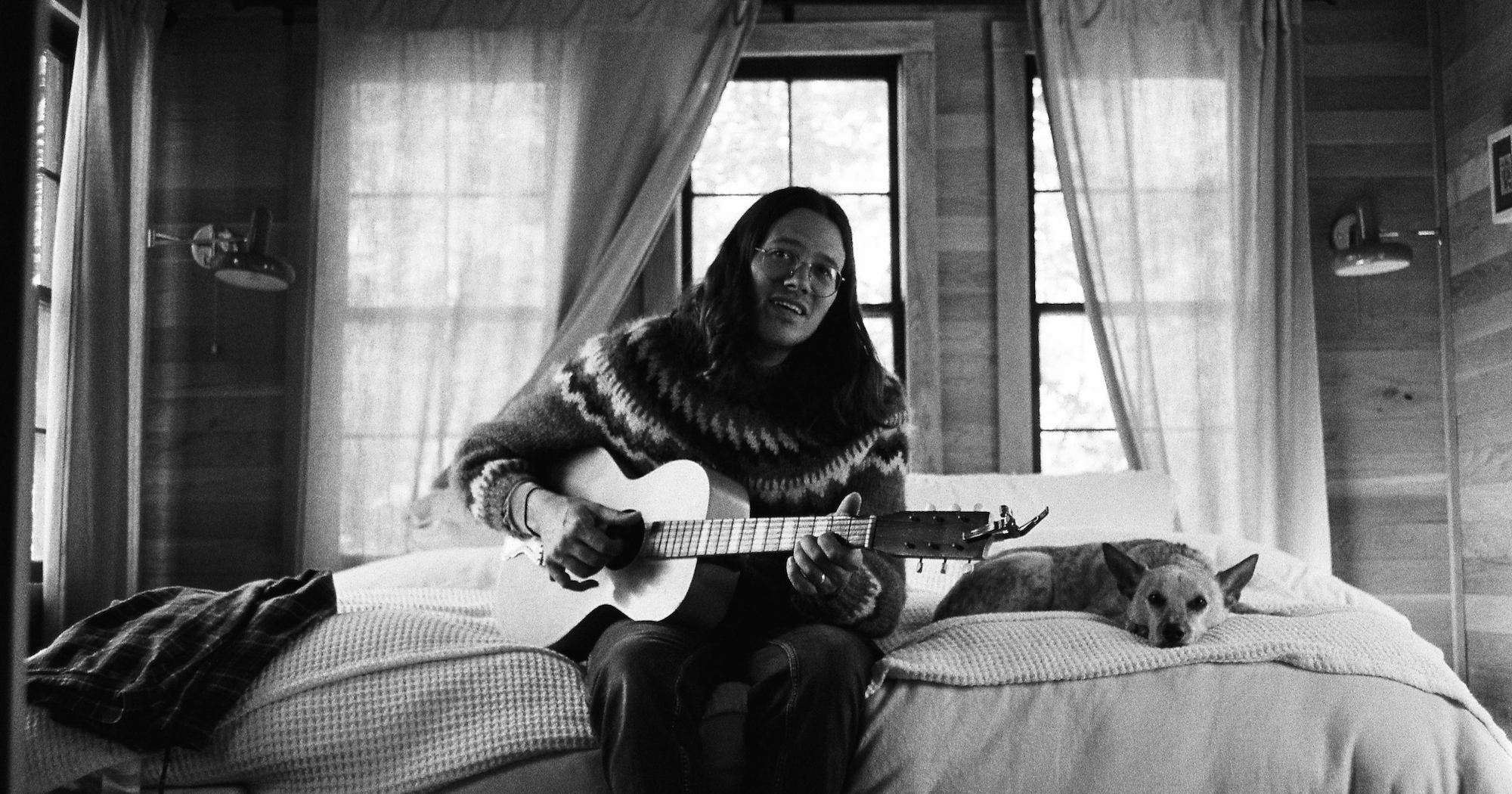
The Other 22 Hours: James Gardin

How do you build a sustainable life around your art when the traditional definitions of success feel increasingly narrow? In this episode of The Other 22 Hours, we sit down with musician, songwriter, and educator James Gardin. While his joyous, infectious music has found a global audience through major sync campaigns for brands like Apple, Tommy Hilfiger, and Saks Fifth Avenue, James’s core creative philosophy is anchored in something much more grounded: community, education, and the refusal to second-guess the spark. Together, we explore the nuts-and-bolts realities of the licensing world, the absolute humility required to teach songwriting to eight-year-olds, and how letting go of the industry’s arbitrary rules allows us to finally blaze our own paths.

LISTEN: APPLE • SPOTIFY • AMAZON • MP3

In This Episode:

– Lizzo
– Marshmello
– J Dilla
– Proof
– Elzhi
– Slum Village
– Liza Garza
– Def Poetry Jam
– SZA
– Chance the Rapper
– Marmoset
– Musicbed
– iSpot.tv
– TuneFind
– Western States Center
– Eric Ward
– All of the Above Hip Hop Academy
– Trails End Camp
– Brooklyn Philharmonic
– Sinners
– Ryan Coogler

Go Deeper: 

Watch: View this entire conversation above or on YouTube.
Explore: Find similar conversations in these themed playlists.
Connect: Join the conversation on Instagram.

The Other 22 Hours is hosted by Aaron Shafer-Haiss (producer, mixer, musician) and Michaela Anne (songwriter, artist, creative coach). More about Aaron’s work. More about Michaela Anne’s work.


Produced by Aaron Shafer-Haiss. Original music written, performed and produced by Aaron Shafer-Haiss.

Photo Credit: Lead image courtesy of the artist. Alternate vertical image by James Gardin. Alternate square image by Victor Manuel.

BGS 5+5: Spencer Cullum

Artist: Spencer Cullum
Hometown: Nashville, Tennessee
Latest Album: Spencer Cullum’s Coin Collection 3 (released March 27, out now!)

What other art forms – literature, film, dance, painting, etc. – inform your music?

I’m a film nerd. I try to watch as many movies as possible, and also love the cinema (shout out to the Belcourt in Nashville), so if I’m burnt out from touring or music I fall back on that for influence. If you hear my music there is a deep influence of British folk horror from classic titles such as The Wicker Man and The Blood on Satan’s Claw to modern British folk movies such as Enys Men and Bait.

I do tend to go on the hunt for obscure ones I haven’t seen. I recently watched the 1977 TV series Children of The Stone and 1972’s A Warning to the Curious. Both incredible early origins of folk horror. Worth a look if that floats your boat.

What’s your favorite memory from being on stage?

Bonnaroo with Rich Ruth. Our backline was these giant Fender Twin [amps] and we all just turned up. It was this incredible wall of sound. I also think a big percentage of the audience had taken acid and there was a certain sway to everything.

Green Man Festival in Wales was also pretty magical, the sun was setting over Bannau Brycheiniog [National Park] and I got to play my favorite Trees cover, “Road,” in that environment with Sean Thompson, Erin Rae, and Hollow Hand.

What has been the best advice you’ve received in your career so far?

Surround yourself with friends that inspire you and encourage you. Be in a community you treasure.

Commit to what you enjoy and care about.

This is more advice for the “session” musician world. For years I was insecure about not being as good as x-y-z or the older players I look up to, but there’s something so powerful about harnessing insecurity. It’s what makes art special. To be confident in taking a risk and not knowing the outcome. There’s a lack of that in Music Row cause everyone plays to a formula, so the idea of risk and insecurity is not there.

What is a genre, album, artist, musician, or song that you adore that would surprise people?

Oh, I have some very questionable tastes. Especially if I’m behind the wheel and it’s an eight-hour drive home. I love Robert Palmer. I weirdly like Primus (especially the Brown Album) – I think it’s a nostalgia thing with them. Kicking around blasting Tommy the Cat at the Romford Skate Park on my CD Walkman.

Oh, Bruce Hornsby. I can burn through three hours of Bruce in one stint. Easy!

What would a perfect day as an artist and creator look like to you?

With my wife and two dogs on a hike, then a pub lunch by the seaside (somewhere in Cornwall), then a cheeky tobacco pipe outside in the evening with the cat listening to John Peel archives, but like the intense Aphex Twin archives… really loudly.


Photo Credit: Rebecca Moon

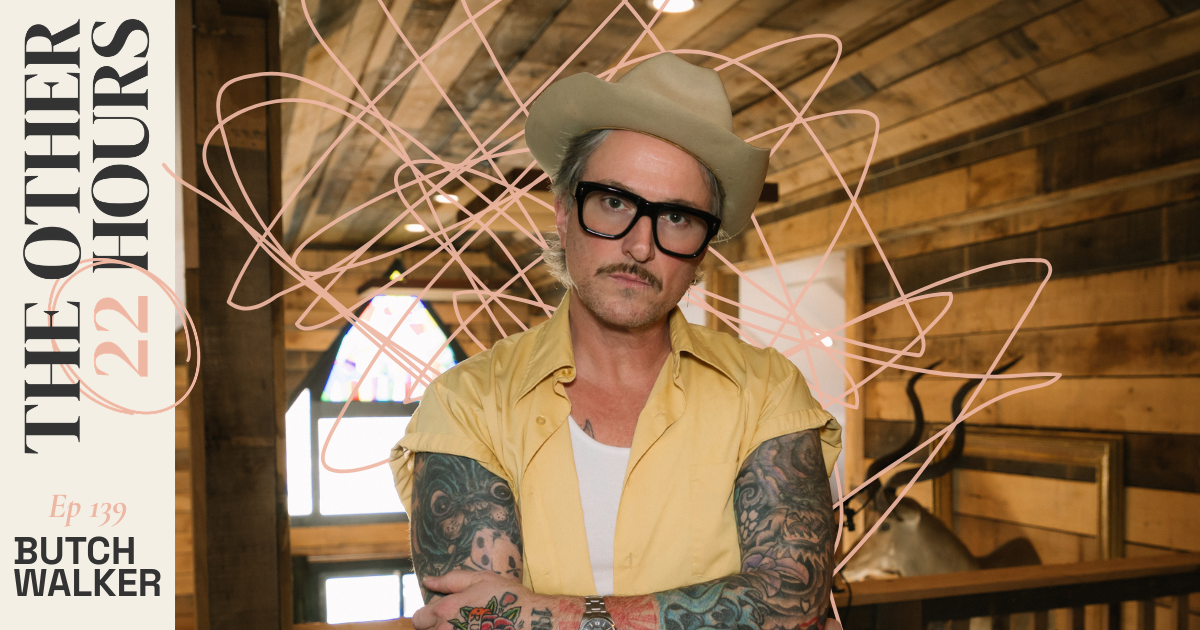
The Other 22 Hours: Butch Walker

Butch Walker has spent decades at the summit of the music industry, producing multi-platinum records for icons like Pink, Katy Perry, and Green Day while fronting his own high-energy solo tours. Yet, despite reaching that peak, he found himself “climbing the hill” so intently that he had forgotten to look at the view, leading to burnout and a desire to step back. In this episode of the Other 22 Hours, we explore the courage required to dismantle an ego-driven path in favor of a soul-driven one, and finding unbridled joy in the simple act of being a “sponge” for new inspiration.

LISTEN: APPLE • SPOTIFY • AMAZON • MP3

In This Episode:

– Butch Walker
– Marvelous 3
– John Legend
– Frank Zappa
– Train
– Taylor Swift
– Bad Bunny
– Kendrick Lamar
– Desmond Child

Go Deeper:

Watch: View this entire conversation on YouTube.
Explore: Find similar conversations in these themed playlists.
Connect: Join the conversation on Instagram.

The Other 22 Hours is hosted by Aaron Shafer-Haiss (producer, mixer, musician) and Michaela Anne (songwriter, artist, creative coach). More about Aaron’s work. More about Michaela Anne’s work.


Produced by Aaron Shafer-Haiss. Original music written, performed and produced by Aaron Shafer-Haiss.

Photo Credit: Rose Catherine Hohl

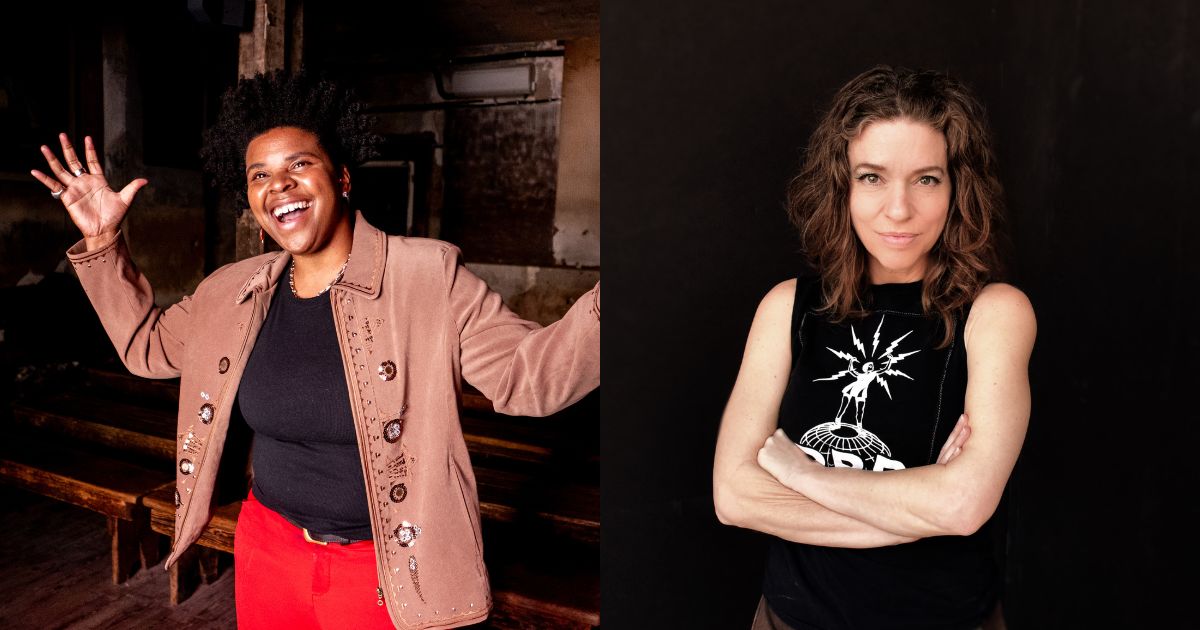
Righteous Babes All Around: Joy Clark in Conversation with Ani DiFranco

Joy Clark and Ani DiFranco connected over something unexpected: a Christmas song. Slated to perform at the same benefit show in 2022, the two singer-songwriter-guitarists were grouped to take the stage together and needed a holiday tune, ideally an original one. Clark’s “Gumbo Christmas” made it to DiFranco before the show, and the legendary artist and founder of Righteous Babe Records heard a hit. Once the pair synced up, they felt an instant musical kinship, and it wouldn’t be long before DiFranco signed Clark to her label.

Last October, Clark released her critically acclaimed debut album, Tell It to the Wind. Informed by her experience as a side player and imbued with a deep reverence for her craft as a solo artist, the record was one of 2024’s finest releases, announcing Clark as an artist with a keen sense of who she is and what she wants to create. The album sonically pulls from Clark’s roots as a Louisiana native and thematically from her experiences as a Black and queer woman making her way through the world. Highlights include “Lesson,” a bluesy, groovy reminder to keep your head up in the face of struggle, and the record’s vulnerable closing title track.

Before the holiday break, BGS caught up with DiFranco and Clark over Zoom to chat about Clark’s signing to Righteous Babe, her album Tell It to the Wind, and what she and DiFranco admire most in one another – as they prepare to hit the road together on tour next month.

Let’s start by having you share how you met and what drew you to one another.

Joy Clark: Well, it started with a Christmas song. It was 2022, and we were both on a Christmas show. There was a big lineup, with Big Freedia, John Goodman, and a lot of other people. So, they tried to group the performers together and I got grouped with Ani and Dayna Kurtz, and I happen to have a Christmas song called “Gumbo Christmas.” My agent contacted me and said, “Hey, can you make a recording of your song and send it to Ani?” He sent it to Ani and I heard back that it was a hit. She liked the song. So, they grouped us together and we performed it.

Ani DiFranco: It’s a total hit, this song. I mean, I don’t understand why people are not holding hands all over America singing this song right now.

JC: I wrote about my grandmother making gumbo every Christmas, it got to Ani, and I think that’s how I got on the radar.

AD: From my perspective, I’m asked to do a benefit and it’s just tons of New Orleans usual suspects involved, like she said. Then, I found out a little later everybody had to play Christmas songs for this thing. I was thinking I’d just show up and play a song or two of my own. I’m like, “Oh, man, Christmas. What the hell?” So, I’m combing through Christmas songs, and I’m like, “I don’t know.” And then I thought, “Oh, I’ll just write one. I’ll write a Christmas song.” I pounded my head against that wall for a few days and discovered that it’s harder than you think to write a Christmas song that anybody ever wants to hear.

Finally, somebody rescued me by saying, “Well, you know, Joy’s got a Christmas song. Maybe you could sing with Joy Clark.” And in comes this little video of Joy singing. I was like, “Oh, my God, that’s the best. That’s the best.” Now I know how hard it is to write a Christmas song, so my respect for this woman is already right up here for making this sweet, soulful Christmas song. And then [Joy] came and recorded it.

You don’t hear many artists getting signed off a Christmas song or even having that be their entry point to meeting their eventual label. That’s a great story.

AD: It was also just hooking up, you know, in person, doing a little rehearsal at Joy’s house, and then going and doing the gig. We got to hang out. It’s not just like I heard the song somewhere. I got to see firsthand that Joy can play and sing her ass off and was an artist in the world doing her thing. I always say that we’re not really a label with tons of resources that can create something out of nothing, or market somebody into existence or something. But what we can do is support working artists and try to get behind them and help facilitate what they’re already doing.

JC: I think that’s the cool part, because I’ve been a working musician for a long time. And not just being Joy Clark, just writing my songs and performing – I played in a lot of different bands, playing guitar, singing harmony. … I’ve really just been working, been doing the thing. I played as a side person for a long time, which is how you learn. That’s how you learn to just be a musician. I feel like that’s been a gift for me. So, now to be able to just to step out up front and write and put out music, I feel pretty lucky. But it also feels really right.

It sounds like you came into the picture with a fully realized sense of who you are and the kind of music you make and what you want to do. And it sounds like the label is a great home for artists like that, who already have strong senses of self and don’t necessarily need, like you mentioned, Ani, a lot of development and marketing.

AD: Certainly at Righteous Babe, you’re not going to have some pencil pusher telling you what you should do with your songs. The thing about an artist-run label is the artist has to follow their heart. That much is clear at Righteous Babe.

Joy, I’m going back to what you were saying a moment ago about being a side player and the opportunities that provides – or sometimes forces – for you to adapt and learn and be able to do things on the fly. How do you feel that those experiences have shaped your solo work?

JC: There’s pressure in it, but then there’s not really pressure, too, because it’s not about me. I think it allows me to just be and not think about, “What do I look like?” or “How do I feel about this certain thing?” It’s giving somebody else space to do their thing. And that gave me a lot of confidence, actually. It gave me a lot of freedom. … I think that helped me step into my work, because when you do need people, when you do need support, you get both sides of it. I think it’s made me more compassionate. I hope I’m not an ass. I don’t think I’m an asshole. [Laughs] I understand what it is to support somebody’s work.

AD: I can really relate, too. I remember the first time I worked on somebody else’s record that wasn’t my shit, and I was like, “Whoa. This is all the fun of making music without the crushing emotional baggage of exposing your guts and putting yourself up for judgment.” So, I completely hear what you’re saying about how it’s a different experience to make music when you’re not on the hot seat, when it’s not you being judged. I love working on other people’s music for exactly that reason. It’s so freeing emotionally. … And now we’re about to go out to make some live music together. That will be fun times.

I wanted to ask about that. As you get ready to hit the road together, is there anything you can share about your plans, or what you’re looking forward to, in particular, about getting to share a bill with one another?

AD: Another thing that is always in the back of my mind with Righteous Babe, if we’re considering releasing a record, is whether this is an artist we could have the means to help. Somebody came to us with a very different genre of music recently and it was a super cool record, but I just thought, “I don’t know how to get to the right audience and get this project where it needs to go.” But from the minute I met Joy and saw her play and interact with an audience, I thought to myself, “My audience will love this person.” So, that’s always in the back of my mind, like, if we put out a record on Righteous Babe, could we do shows together? That’s a really easy way for me to assemble a bunch of people and then point, “Look at her. Check this out.” I just know that they’ll eat you up, Joy. And I haven’t told you yet, but I was hoping to ask you if we could play a song or two together.

JC: Of course! Just let me know what you want. I’ve already been listening. You know it.

AD: I’ll text them to you.

JC: One thing I’m looking forward to is being on a bus. My dates have been fly, pick up a car, then drive, you know? And it’s not like I have a right hand. It’s me and my guitar, driving. When I’m driving, I can’t do anything.

AD: And it’s exhausting. Most of your energy is zapped when you get to the gig.

JC: Yeah, it’s like, “Can I just sit in the green room? Can I just recover from that?” I’m looking forward to having that tour experience of being on a bus and chatting it up and maybe even writing. We’ll see if I can actually write on the road.

AD: Yeah, you need a certain amount of space just to do that, like your own dressing room and your own hotel room. It’s so hard when you’re just out there driving around, doing all the things. Funnily enough, Joy and I were just at another benefit the other night, both playing a tribute to Irma Thomas, singing Irma Thomas songs and benefiting the New Orleans Musicians’ Clinic. We were joking and I was like, “You got to be careful because once you get on that bus, it’s so hard to get off.”

JC: I can feel that coming. I’m looking forward, too, because I’ve really only seen Ani perform once, at French Quarter Fest in 2023. Now, I get to check out the show night after night.

Ani, you mentioned a moment ago that feeling of knowing that your audience will love Joy’s music. I see a lot of connection points in what both of you do. There’s a lot of vulnerability there, for one – I think you described it as “exposing your guts” earlier, Ani, and that feels true for both of you, at least from my perspective as a listener. What points of connection do you see in one another’s music?

JC: I think Ani is a badass guitarist. I respect that, because it takes a lot to be able to play with the band and then to just be a person on stage with a guitar. I think I really connect with that fingerstyle picking. I prefer fingerstyle because it gives you a lot of different textures and it gives you different choices. Instead of strum – a strum is great, it’s just when you can pick, there are these other things happening. These little flavors and lines that I connect with, because that’s the type of player I am. I don’t have the picks on my fingers, it’s just my fingers. But I think that’s how I connect [to the instrument].

AD: Ditto for me. Keep those naked fingers, because it sounds so much better. I put on these plastic nails, but that’s just because I get so violent with my guitar and I bloody myself if I don’t have them. But the sound is so, so great with the real finger and the real nail. I’m really more of a rhythm player, and I just sort of play by ear, but you can play solos. You know what key we’re in and what the notes are supposed to go with that – all the things that I don’t actually freaking know. [Laughs]

I’m just super impressed with anybody who can legitimately play guitar like you do. There’s knowing how to play or knowing how to sing or this or that, and then there’s knowing how to stand there alone on stage and hold an audience. And Joy can do that, too.

I’m glad y’all brought up each other’s guitar playing, because there’s clearly so much passion and care there for both of you. And I don’t think we ask musicians about their instruments enough. People ask a lot of questions about songwriting and lyrics but not so much about, say, devising chord progressions. How does incorporating guitar into your songs work for each of you?

JC: It’s always different. When I write, there is no one way that it comes. But there is a feeling. There are colors that appear. Sometimes, there are sounds that come out. But one thing that I can say, for me, is that [writing] happens simultaneously with messing around on a guitar. I often sing as I play. I’m not usually writing. I do write, but the core of it is a feeling. If it’s something sentimental, then sentimental lines appear. Sometimes it happens if I’m driving, then I pick up my phone and I hum, and then when I pick up the guitar, I’m flowing. There’s an improvisation that happens and it’s a little bit mysterious. I don’t really understand it. It’s just mystery. But I love chords and I love to pick out cool shit. Then, I just put words to the thing that I’m picking.

AD: I can basically relate to everything you’re saying. Same for me. It’s different all the time. There’s no, like, set process, of course, and each song happens in a different way. But generally, it’s just being able to hang out with your instrument and just be with your guitar, hang out, and process your feelings with it. I miss that myself in life these days. I’m older and at a different point in my road than Joy. And I, many moments, wish I could put myself back where you are, Joy, just embarking on something and being really focused and having that guitar by your side all the time. Now, my kids are in the way most of the time, you know? [Laughs] … But that’s really what it is, having a relationship with the guitar that deepens and deepens. The understanding between you and this instrument deepens, and the guitar starts finishing your sentences.

JC: You can find some really pretty jewels in something that didn’t really feel good [while] writing it. But I want something to grow on me. Maybe it doesn’t fit so perfectly, but in time, “Oh, yeah, that does make sense.”

AD: I feel like that’s what you want for other people, too. It’s not necessarily to always be making songs that are instantly like, “Oh, Skittles! It’s sweet and fruity.” But, something that, maybe, on repeated listens, it takes its time to get under somebody’s skin. Then it really lives there. … What I’ve learned over many years and many albums and hundreds of songs is that, even after you get back to your disillusionment or you sour on something that’s not new anymore, you just have to have faith that somebody out there in the world is still going to have that first experience that you had with it. Somebody is going to feel that way about it, even if it’s not you anymore.

That feels like a lovely place to wrap. Before we sign off, do you have any parting words for one another?

JC: I’m really freaking grateful. I’ve been doing my work and I feel pretty lucky that people want to hear what I have to say. And I feel really lucky to have an album out on Righteous Babe, on your label, Ani. I feel like it’s right. I just turned 40 a couple months ago, and I think it’s pretty fantastic to feel like I’ve just started.

AD: Well, I would say – in a way that’s not weird, in a way that [reflects] that we’re on the same level – that I’m proud of you. It makes me so happy to see you stepping into yourself and your music and stepping out there in the world. You’ve paid a lot of dues and you completely deserve this moment. I can’t wait to see what’s next.


Photo Credit: Joy Clark by Steve Rapport; Ani DiFranco by Shervin Lainez.