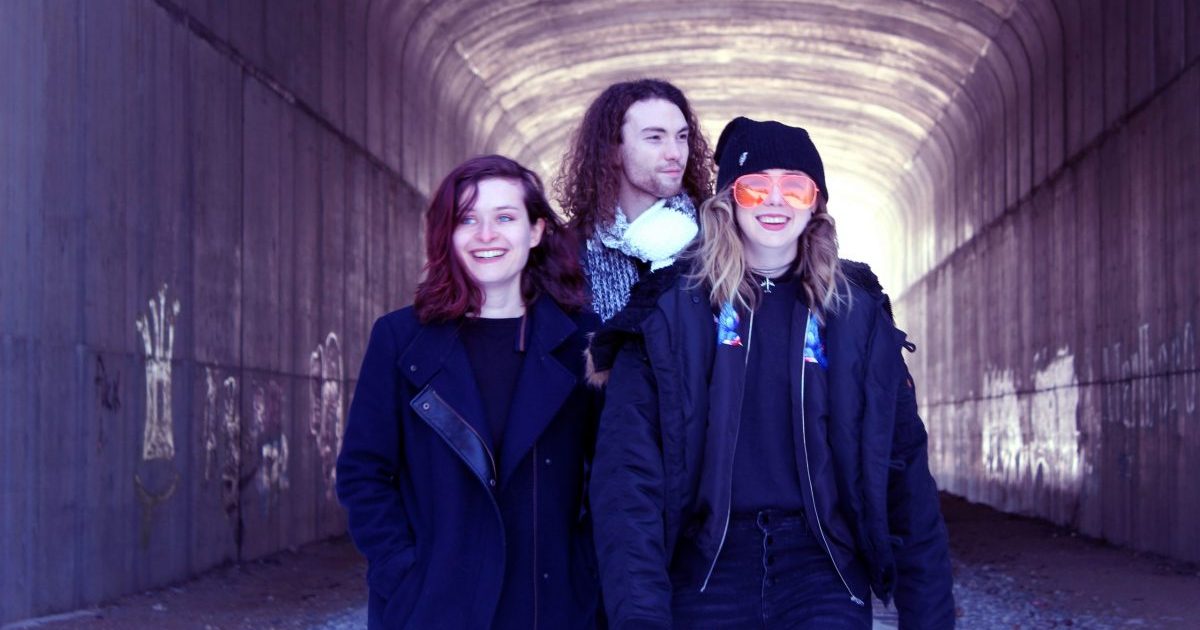
Artist: The Accidentals
Hometowns: We split hometowns of Traverse City and Nashville; we have houses in both (Sav and Katie) and Michael is from Grand Rapids
Newest Album: TIME OUT (Session 1)
Nicknames: Savannah is Sav, Katherine is Katie, Michael is ALWAYS Michael. haha.
Rejected band names: Flavor Monkeys, Savage Kittens (now our publishing company), Go Dog Go, Jalapeno Honeymoon, Comfort and Dismay. We were The Treehuggers before.
Which artist has influenced you the most … and how?
Katie: Brandi Carlile is one of those through-line artists we bonded over when we were teenagers and have never stopped learning from. I’ll never forget hearing “The Story” for the first time and doing a double take when the music drops out and she belts the chorus like there’s no tomorrow. As a socially anxious kid I wanted nothing more than to be able to hurl my feelings out of my lungs the way she does. Over the years we’ve watched her do everything from producing records to making her own music festival in order to support women artists.
One of the last shows we saw before the lockdown was Brandi playing with Kim Richey at the Ryman Auditorium in Nashville. We had just moved to town and as we sat on the worn wooden pews overlooking the stage, I was moved to tears watching the young girls in the front row throwing their heads back and belting along to “The Story.” Never in a million years would we imagine that a few months later we’d be writing music for our TIME OUT EP with Kim Richey, but we’ve learned even our heroes are humans who we can talk to on Zoom while wearing sweatpants and talking about bread baking. When we cancelled all our tours in 2020 we started feeling lost, but so many artists including Brandi reminded us that you never have to give up collaboration, activism, hard work, and heart.
What’s your favorite memory from being on stage?
Katie: Looking back, I have to say that 90% of my favorite moments were the unplanned ones. In 2018 we had the opportunity to sing on stage with Joan Baez for the Ann Arbor Folk Festival. I had just finished reading her biography and was starstruck, but once we were onstage her voice made everyone at ease and soon there were thousands of voices singing along. While everyone was walking off stage she grabbed my hand and I felt like my feet were floating.
Another favorite memory was playing Summerfolk Festival in Ontario — they have a tradition of pairing up two bands at the festival who’ve never met, and put them on stage together to play an after-party set. We had no idea what to expect when we loaded in our gear, but ended up playing an insanely fun hour-long set with Turbo Street Funk, a five-piece brass funk band including electric guitar, drums, sax, French horn and a hand-painted sousaphone plugged into a bass amp. We improvised on each other’s tunes all night, throwing in covers of “Ghostbusters” to The Yeah Yeah Yeahs to the Black Keys. We’re friends to this day, it was amazing.
What other art forms — literature, film, dance, painting, etc — inform your music?
Sav: Katie and I pick up inspiration everywhere we go. Usually every song is a culmination of things we’ve picked up around us – a piece of an Edgar Allan Poe poem here; the first sentence of Markus Zusak’s The Book Thief paraphrased; a story in the New York Times about an endangered kind of parrot; an art piece made entirely of thread in the Crystal Bridges Museum, or if you’re Katie, sometimes a perfectly made plate of zucchini noodles is all it takes to be inspired.
We never really know where the moments of inspiration strike. I keep voice memos on my phone of little ideas as they come to me (usually in a public place, so I have to mumble them into my phone like a nerd) and a whole list of sticky notes of random billboards saying ominous phrases or things I pick up in conversation. There’s an episode of the Song Exploder podcast featuring John Darnielle of the Mountain Goats, who talks about keeping a whole list of song titles written down at his disposal, so I started picking that up recently, too.
I will say that being in the music industry requires you to know a little bit about other art forms like film and visual art, because you never know when you’re going to be writing a treatment for a music video, or brainstorming / creating an album cover from scratch. Seeing how projects like TIME OUT EP or our upcoming album Vessel translate into film or visual art is fascinating, because it shows how when an art piece becomes multimedia, it starts to feel like you’re not just looking at a picture anymore – you’re standing in a room full of color, and you can see how it all fits together.
What’s the toughest time you ever had writing a song?
Sav: I think the answer would be different for both of us — our processes for writing vary song-to-song, but also Katie and I are really different writers. Katie usually takes her time with writing, and she’ll work on the same song for months at a time until it’s perfect. I usually like to knock out a song by sitting down once in a blue moon and just getting it down in two hours. So a process like “Night Train,” co-written with Dar Williams over the course of many Zoom calls, was pretty tough for me. That song had a Leonard Cohen-like aspect where it had infinite verses; the stories Dar told would have amounted to at least ten different songs. It was really hard to pick and choose what best told the story we were trying to tell.
Ultimately the version we kept is a travel journal about the power of community, the magic you experience in meeting strangers and finding common ground. The song is about coming to the realization that we are more alike than not, and there is more goodness in the world than we might believe. We wanted a song that would speak to every generation and community, a song about healing and investing in our future, because there’s still work to be done.
How often do you hide behind a character in a song or use “you” when it’s actually “me”?
Sav: This is one of the very first things Beth Nielsen Chapman called me out on when Katie and I were doing our first co-write with her (which was also our first co-write in general). Beth made a good point that using “you” too many times in a song starts to sound pretty accusatory. If that’s what you’re going for, great! Ha ha. She went further to say that saying “I” makes it more personal. I definitely have a habit of doing this — putting “you” where “I” should be — and sometimes I still do it, but I’m watchful of it now.
One thing we picked up this year is that songs don’t always have to be about us, necessarily. They can be from someone else’s perspective, while still using “I” and “me.” On one of our weekly Monday writes with Tom Paxton, he told us one of the best ways to get started was to pick up a newspaper, read a story, and write like you’re a person standing in the room where it happened. There will always be some personal piece of you invested in it by the time you’re done. The goal is to get outside of yourself for a moment and write for the sake of the story. That was a good lesson to take away after a year of isolation. It’s human nature to tell stories — whether that story is to heal, to inspire, to relate, or to learn from. So even if it’s “me” or “you” or “they” or “we,” the goal is for someone to walk away feeling like they got something out of that story, so that they may retell it in their own way.
Photo credit: Aryn Madigan