More than any of the world’s music, the songs of America are a reflection of a national identity and character. We are our songs.
Distilled into a few memorable minutes go the nation’s hopes and aspirations, the glories and tragedies of her past, and the promises of her future. This American canon is as diverse and vast as the country itself – our blues, breakdowns, or corridos are as different as prairies are from coastlines, as the Appalachians are from the Rockies. And yet, somehow, still our sound is a commonwealth, a singular voice rising from the chorus of many just like our national motto purports: “E Pluribus Unum.”
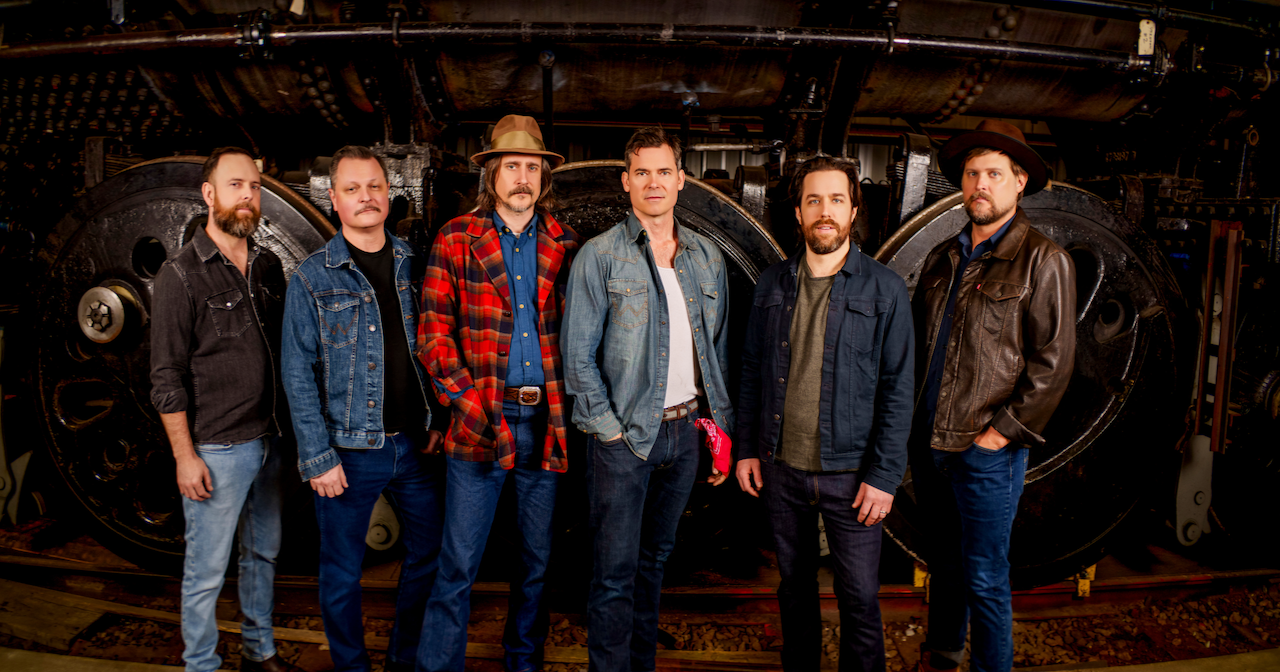
250 years is not a long time in the global scheme, and neither is 28 years of Old Crow Medicine Show‘s reign as an Americana string band. But somehow it is the vigorous and youthful American voice/song/songwriter/band (and not our transoceanic elders) that can best capture the world’s heart and soul in just a few minutes.
In this Mixtape, I’m proud to share some examples of this powerful artistry. You might already know every word to some of these songs while others you may have never heard, yet each is stitched together with a cloth of commonwealth that can only be found of uncommon ancestry. Though the singers may be perfect strangers, the songs that bubble up from our national cauldron are enough to nourish each and all. – Ketch Secor, Old Crow Medicine Show
“Howdy Do America” – Old Crow Medicine Show, Jesse Welles
Jesse Welles came whirling into the studio the other day and helped put a spit shine on this love song about the 50 states. I wondered if he was gonna get excited when he sang “Arkansas” and brother, he did not disappoint. Love this cat. He’s a brother, and I expect we’ll all be singing his tunes for years to come.
“Golden Rocket” – Jim & Jesse
I had the privilege of knowing Jesse McReynolds, even traveling and performing with him, and buddy there’s no wonder why Jerry Garcia thought he was the best of the bluegrassers.
“Field of Opportunity” – Neil Young
I was raised on Neil Young’s unique brand of tall prairie country rock. This track features the great Cajun fiddler Rufus Thibodeaux.
“Heaven Help Us All” – Joan Baez
Joan’s a real hero of mine. She’s like that tree planted by the water we all sing about, unmovable. Of all the singers on this playlist, I can say without a doubt if more people could be like Joan Baez, then this world would be a better place.
“I Wanna Go Country” – Otis Williams & the Midnight Cowboys
I love this Motown singer turned country crooner, and the world would have too, if Nashville hadn’t been so narrow-minded.
“Beautiful Land” – Old Crow Medicine Show, Maggie Rose, Lee Oskar
I wrote this one with a Baháʼí faith elder named Eric Dozier just down the street from the Tennessee State Capitol building. Sometimes politics feel like a fortress. But music has a way of wandering through the keyhole of even the most impenetrable door.
“There’s a Star Spangled Banner Waving Somewhere” – Elton Britt
I played this one for my kids on Memorial Day. They sat through it start to finish, and you should, too. It’s easy to get complacent about the sacrifice our grandparents and great-grandparents made in the 1940’s for each of us. Don’t do it.
“Oasis” – Molly Tuttle
Molly’s my favorite American singer. Here’s one of our travelogue-style songs. I had it stuck in my head all last week at the Tico Time Bluegrass Festival in Aztec, New Mexico.
“The Green Rolling Hills of West Virginia” – Hazel Dickens & Alice Gerrard
These girls rip. Back at MerleFest in the year 2000, I filled out Old Crow’s first ever W-2 form and gave it, with a shaky hand, to the great Alice Gerrard.
“How’s About You” – Dave Rawlings Machine
The Great Depression gave the world some of its most powerful songs. And even generations later, the events of the 1930s remained powerful enough to inspire music like this.
“Rock of Chickamauga” – Jimmie Driftwood
Songs about the Civil War are some of my favorites in the national cannon. Jimmie Driftwood is one of my favorite songsmiths. He’s an absolute master of the historical ballad.
“Across The Great Divide” – Kate Wolf
I am awestruck by the landscape of the West, and few songwriters can take you there better than the amazing Kate Wolf.
“What Did You Learn in School Today?” – Tom Paxton
I’ve been singing this one since I was a youngin. When I was 12, I discovered my uncle’s weathered copy of Vanguard’s album Newport Broadside: Topical Songs at the Newport Folk Festival 1963, and that was my introduction to Tom.
“The Tramp on the Street” – Molly O’Day
Born in Pike County, Kentucky, she’s one of my favorite bluegrass singers. She first heard this song from Hank Williams on a Birmingham radio station, and it became her signature song. American music has a way of championing the underdog better than most.
“Shenandoah” – Bob Dylan
I think I was 15 when I first heard Bob singing this gem, hidden in the ruffles of one of his more questionable ’80s albums. I thought, “Damn, Bob knows where I’m from.”
“Corrido de John F. Kennedy” – Los Reyes del Corrido
My band has been dabbling in conjunto for two decades now. We got to learn this one for next time we play the big D (Dallas).
“Which Side Are You On” – The Weavers
No collection of American songs is complete without a protest piece from the labor movement, the first dark corner where the full power of American music was unleashed.
“The City of New Orleans” – Arlo Guthrie
When we play Chicago, I always talk about Steve Goodman, who wrote this song. I sure would have liked to have known the guy. Thankfully his music will last forever.
“Cowboy National Anthem” – O.B. McClinton
O.B. left this world before he was fully known by the country music fanbase that would soon send black country singers consistently to the top of the charts. He was a man before his time, but the music he made reminds us that, just like Ray Charles said, “Country music is black music.”
“Deportee (Plane Wreck at Los Gatos)” – Old Crow Medicine Show
We love Woody Guthrie, and this is one of the numerous songs of his we’ve recorded through the years. In a nation of immigrants (I’m a French Huguenot), it’s hard to imagine how we could exist without a steady flow of new members to our American family.
“Big Backyard” – Molly Tuttle
When Molly and I wrote this, it was on account of having a massive vacant lot behind the house we were composing in. Now that same lot is full of little yellow flags and “coming soon” signs. Yet still we sing, louder this time.
“For What It’s Worth” – Buffalo Springfield
A few years back, I had the distinct pleasure of sharing an elevator with Stephen Stills, author of this earthquaking song which Buffalo Springfield recorded in 1966 – and we covered this year on our new album, Union Made. I wanted to tell him thanks, gush, and get my picture made. Instead, I stood quietly until he rasped, “I heard your soundcheck. Great band you got there. Keep ‘em together if ya can.” Thanks, I will Stephen.
“Louder Than Guns” – Old Crow Medicine Show
This summer, PBS stations across the country are broadcasting the film we spent three years making in a half-dozen tour stops along our travels. It’s a movie about bringing together the disparate ends of the 2nd Amendment debate during an era in which guns kill innocent Americans at shocking rates. It’s a tall order, coming together to flatten the curve, seeing past our silos and personal politics, but in town after town I watched people listening across the divide. As easy as it is to be hopeless, the film has made me hopeful we’ll get beyond this impasse and prioritize the safety of our communities. This song is the theme of this film.
“American Tune” – Allen Toussaint
I’m glad you made it through to the end. Old Crow opened up for the great Allen Toussaint in the Berkshires back around 2011. The record featuring this song had just come out and when he launched into it, I was nearly knocked off my feet. So powerful. So simple. Says it all.
Located inside the historic Wang Theatre and founded by the Boch Center, the Folk Americana Roots Hall of Fame is Boston’s premier cultural and educational initiative dedicated to celebrating America’s rich musical heritage. Since its launch in 2019, FARHOF has honored the artists, songs, and movements that have shaped folk, Americana, and roots music while creating immersive exhibits, educational programming, and live experiences that connect audiences to the stories behind the sound. Guided by iconic artists and industry leaders, the Hall exists to honor the past, celebrate the present, and nurture the future of these genres.
On March 24, 2026, FARHOF will host its 2026 Induction Celebration at the Wang Theatre, an unforgettable evening recognizing the artists and industry leaders who helped build the foundation of folk, Americana, and roots music. This year’s honorees, whose collective achievements include 30 GRAMMY Awards and countless other accolades, represent the influence and ongoing evolution of the genres we preserve.
Our playlist theme, Roots That Built the Hall, celebrates the legacy and influence of this year’s inductees. Each song reflects the innovation and cultural impact of the artists who shaped Folk and Roots music, reminding us why this music endures and continues to inspire. – Denise Arellano, The Boch Center
“(I’m Your) Hoochie Coochie Man” – Muddy Waters
Muddy Waters electrified the Delta blues and carried it into the urban North, shaping the sound of modern roots music. This track demonstrates that blues roots continue to inspire folk and Americana, exemplifying the music and legacy the Folk Americana Roots Hall of Fame celebrates.
“Chain of Fools” – Aretha Franklin
Aretha’s voice bridges gospel, soul, and rhythm & blues, reminding us that roots music is inseparable from the Black musical traditions that shaped America. Her artistry embodies FARHOF’s mission to celebrate music as both cultural expression and social force.
“Suzanne” – Leonard Cohen
With poetic lyricism and folk instrumentation, Cohen represents the storytelling tradition central to folk music. His work highlights how intimate songwriting can shape national culture and influence generations to come.
“Make Me A Pallet On Your Floor” – Mississippi John Hurt
Hurt’s fingerpicking style and oral storytelling roots in this country blues standard echo the preserved histories and rare artifacts celebrated within FARHOF’s exhibits.
“My Journey To The Sky” – Sister Rosetta Tharpe
Blending gospel and the electric guitar, Sister Rosetta Tharpe helped lay the groundwork for rock ‘n’ roll. Her inclusion reflects FARHOF’s commitment to honoring artists whose innovations continue to ripple across genres.
“Running on Empty” – Jackson Browne
A pillar of folk and Americana, Browne captures the restless spirit of life on the road. His songs blend roots traditions with raw, lived experience, shaping the sound and soul of a generation.
“Both Sides Now” – Judy Collins
A defining voice of the 1960s folk revival, Collins helped bring reflective and socially aware songwriting to the mainstream. Her work showcases the genre’s power to spark dialogue and deepen cultural understanding.
“Harvest Moon” – Neil Young
Young’s blending of folk intimacy and country influence illustrates the fluid evolution of roots music. Songs like this show how tradition can feel timeless while still speaking to contemporary audiences.
“The Last Thing on My Mind” – Tom Paxton
Paxton’s songwriting embodies the heart of the folk process, simple melodies carrying profound emotional truth. His legacy reinforces FARHOF’s mission to preserve the craft of storytelling through song.
“Urge for Going” – Tom Rush
Rush played a pivotal role in championing emerging songwriters and expanding the Boston folk scene. His work connects directly to FARHOF’s educational spirit by nurturing future generations while honoring those who paved the way.
“Go Down Sunshine” – Odetta
Odetta’s commanding voice became a soundtrack to the Civil Rights Movement, proving music’s power to inspire social change. Her artistry ties directly to FARHOF’s belief that folk and roots music are not just entertainment, but vessels for justice, unity, and cultural preservation.
“All I Want” – Joni Mitchell
Joni Mitchell’s intricate songwriting and emotional clarity helped redefine the possibilities of folk music in the 1970s. “All I Want” is built upon the deeply personal storytelling that continues to influence generations of artists, embodying FARHOF’s commitment to honoring innovation within tradition.
“Tear the Fascists Down” – Woody Guthrie
Woody Guthrie stands as one of the foundational voices of American folk music, using song as a vehicle for social conscience and collective resilience. This track underscores how roots music has amplified the voices of working people and movements for justice, a legacy FARHOF preserves.
“Black Betty” – Lead Belly
Lead Belly’s recordings carried traditional work songs and prison chants into the American mainstream, ensuring these stories were not lost to time. “Black Betty” represents the oral traditions and lived histories that form the foundation of roots music and the cultural preservation FARHOF continues to strive for.
“It Ain’t Me Babe” – Joan Baez
Joan Baez helped bring folk music into the national spotlight during a pivotal era of cultural change. Her interpretation of this song reflects the genre’s spirit of independence and social awareness, qualities that continue to shape the folk and Americana traditions celebrated within the Hall.
Graphics courtesy of the Folk Americana Roots Hall of Fame.
Roots music was everywhere this year. It’s time we decide once and for all: Is roots music enjoying a “moment”? Or are these genres and sonic stylings alwaysthis foundational to popular and mainstream music?
Maybe roots is just at the center of everything we do here at BGS, but we’re inclined to the latter option. Roots music, folk music, whatever you want to call it, these styles are at the root – pun intended – of everything we love, not just in our scenes and spaces, but what we love about pop music, radio hits, and the musical mainstream, too. It’s no wonder, then, that roots shows up in albums and offerings by Bad Bunny and Sabrina Carpenter. That roots music finds its way across the globe in the fight for justice. That banjos and fiddles and the blues and bluegrass can be seeds by which entire resplendent artistic universes can be birthed, whether festivals or films or documentaries or albums or songs.
For our final year-end retrospective list of 2025, we asked our BGS contributors to reflect on the roots music and moments that stuck with them over the course of this year. Instead of setting strict criteria for what qualified as “roots music,” we did just the opposite, leaving our year-end “best” prompt as loose, open, and broad as possible. The results reaffirm our central belief that roots music isn’t a niche, it’s everything. There’s no limit to what it can touch on, impact, and transform.
We look forward to continuing to celebrate all things roots music and roots culture with you in 2026. In the meantime, enjoy our BGS Class of 2025. Roots music below, bluegrass here, and Good Country here.
Bad Bunny, DeBÍ TiRAR MáS FOToS
Last year, the most mainstream and far-reaching roots album was most certainly Beyoncé’s Cowboy Carter. The project has amassed billions of streams and listens, millions of sales, and has been certified Platinum by RIAA. This year, the most prominent roots album has received little to none of the controversial discourse of “belonging” and genre and roots-adjacency that Cowboy Carter attracted. Bad Bunny’s 2025 masterpiece, DeBÍ TiRAR MáS FOToS, is perhaps a bit sneakier in its rootsiness – or, being that it was made by a Puertorriqueño and is delivered entirely in Spanish, perhaps the same sorts of racism that put Beyoncé under the crosshairs may have relieved Bad Bunny of such targeting.
DeBÍ TiRAR MáS FOToS is jaw-dropping in its artistic and sonic accomplishments. Reggaeton and pop, hip-hop and house are grounded and contextualized by roots music, which does incredible heavy artistic lifting across the album. Interludes and intros reference many of the Latin and Caribbean folk styles that would birth the genres Bad Bunny currently inhabits. Calls of endemic frogs are mentioned alongside varied sounds of the diaspora, gentrification decried while advocating for self-determination. The album successfully does the work of so many solely folk and/or roots projects, but given its mainstream appeal and A-lister creator, that fact seems to have been lost in the glitz, glamour, and Super Bowl Halftime Show of it all. Make no mistake, though, for all the things that it is, DeBÍ TiRAR MáS FOToS is obviously roots music. – Justin Hiltner
Carsie Blanton
Singer-songwriter Carsie Blanton gave the most fun performances I saw on folk stages this year. Whether solo in the round or with frequent collaborators Sean Trischka, Joe Plowman, and Isa Burke, a Carsie show feels like a block party. People pack in corners to see what she will cook up next: a saucy tale, a power pop-influenced anthem of revolution, a quiet moment that demands reverent attention. Blanton has a gift for translating history into sing-alongs without softening any of her political edges. It takes an expert vocalist and arranger to sing “I guess America’s coming untied/ Half of my neighbors are living outside” without the audience feeling gloomy or preached at.
It helps that Blanton embodies the kind of working-class swagger that only a bad bitch from New Jersey can pull off. An outspoken feminist and member of the Party for Socialism and Liberation, this past October she brought the revolutionary hope of her songs to Global Sumud Flotilla to Gaza, where she risked her life as a member of the humanitarian coalition. Blanton, along with many of her comrades, was detained when the Israeli military intercepted their boats. Her bandmates were waiting at the airport when she got home. – Lizzie No
Brooklyn Folk Festival
Celebrating its 17th year, the Brooklyn Folk Festival is the best of the independent roots music community incarnate. Each November, the festival brings together members of the New York folk music community with musicians from across the country (and sometimes the world) for one weekend of homegrown joy, hosted in the Saint Ann and the Holy Trinity Episcopal church in Brooklyn. Musicians swap instruments and stories and audiences pack church pews and sit cross-legged on the floor to listen, intently.
The festival fosters space both for old-timers and young musicians; each year students from the Jalopy Theatre and School of Music, which hosts the event, perform. This year, the mainstage audience waited patiently, giving grace to 91-year-old folk legend Alice Gerrard (of Hazel & Alice) as she remembered the lyrics to one of her songs. Friends, lovers, and children waltzed together to Black string band New Dangerfield. And when musician Nick Shoulders invoked folk music’s long history of protest and compared old-time music to public lands – dubbing both worthy and precious resources, which should be protected and preserved as free for all – the entire room cheered. Community uplift at its purist and sweetest. – Meredith Lawrence
Sabrina Carpenter’s Sneaky Roots
They say the Germans have a word for everything. Do you think there’s one for how good it feels when roots music sneaks into the pop mainstream? Maybe… Beyoncénfreude? There should be some term for it, because it’s a special kind of satisfaction, and this year the good vibes continued with Ms. Short n’ Sweet herself, Sabrina Carpenter.
The superstar had already shown a genuine appreciation for country when she teamed up with Dolly Parton on “Please, Please, Please” (even changing explicit lyrics to better suit the mild-mannered icon) and with the dreamy country-folk of “Slim Pickins.” But in 2025 two important things happened. 1) She made her Grand Ole Opry debut in October, beaming with pride and lavishing the institution with praise. “Please, Please, Please” and “Slim Pickins” were both part of her set. And, 2) “Man Child.” Beneath the disco pulse ran an undercurrent of country twang, with a rhinestoned electric guitar hook dripping in her signature campiness.
This alone would be a prime case of Beyoncénfreude, but the best part was how Carpenter felt no need to call attention to the matter. It wasn’t a play or statement. She just wanted some country in there and knew her fans would accept it. What that says about roots music and the mainstream is definitely a 2025 highlight. – Chris Parton
Neko Case, “Winchester Mansion of Sound”
The late great Flat Duo Jets guitarist Dexter Romweber, who died at a too-young 57 last year, was an inspirational figure to generations of artists, Neko Case among them. The Americana siren repaid that debt with a cameo on Dex Romweber Duo’s 2009 LP Ruins of Berlin, and goes one better with this eulogy from her latest album, Neon Grey Midnight Green. Over spectral tack piano plinking away, Case paints a picture of kindred spirits bound together by music:
I still think of you And your wild, recurve guitar Only you can play so far out of tune And still kick me in the heart.
By the end, shortly before the full band kicks in for the outro, Case concludes, “Only music is forever.” Perfect.
This has been just one of 2025’s Romweber afterlife artifacts, including posthumous induction into the North Carolina Music Hall of fame and depiction in the teen drama TV series, The Runarounds. But this one is the best of all. – David Menconi
Chatham Rabbits, Be Real With Me
Despite its general lamenting about growing older – something I can relate to all too well – I can’t get enough of husband-wife duo Chatham Rabbits on Be Real With Me. But instead of focusing on the aches, pains, and other changes that come with the passing of time, Sarah and Austin McCombie also reflect on the wisdom that accompanies it as well.
This manifests itself in missives like “Matador,” where Sarah sings about trusting people too fast and ignoring red flags along the way, and “Gas Money,” which touches on overcommitting to relationships with others before first looking after yourself. The duo also navigate everything from falling out with longtime companions (“Childhood Friends”) to wanting freedom while also having desires to build and nurture a family (“Collateral Damage”), painting an understandably complex web of stories in the process.
The result is a very millennial-leaning record that puts a positive spin on aging as a young adult and will leave any 20-something listening ready to do what Austin describes on the album’s lead track, “Facing 29” – “Grabbing 30 by the strap of its boots.” – Matt Wickstrom
Michael Daves, Early Morning Sun
2025 has been a bang-up year for new releases and one at the top of my list is Michael Daves’ five song EP, Early Morning Sun. Daves’ music is always inspiring, but this EP differs from his past releases. Unlike Orchids and Violence, which was a two-part album with one side being bluegrass covers and the other being electric covers of those same bluegrass songs, Early Morning Sun is just Daves and his guitar.
All recorded on a low-tuned Kay guitar in an old church in Brooklyn, the EP has a rough, thrashy bluegrass and somewhat country feel. It’s an album of covers that, if you live in Brooklyn, you’ve probably heard Michael play around town, especially at the Jalopy Theatre or in the old days at Rockwood Music Hall. What’s special about this EP is that you can really feel the energy of how it was recorded. The slight echo of the church compliments the songs in a unique way, bringing a lot of oomph to the songs both in his vocals and his guitar playing. – Emma Turoff
Flock of Dimes, The Life You Save
Feeling weighed down by life? Tired of propping up others who can’t (or won’t) get their act together? Friend, have I got a record for you.
Jenn Wasner has been telling survivors’ stories through exquisite, deeply textured music for two decades. Her third Flock of Dimes LP, The Life You Save, leans into the atmosphere of Wasner’s voice over instrumental theatrics. Its songs find her in the deeply wearying role of reluctant savior, trying her best to heal her little corner of the world – or at least herself. The album’s money shot is “Long After Midnight,” which sounds like it could be about anything – from trying to save a friend from a drug problem or a parent sliding into dementia. The video shows Wasner sitting on the floor singing as every piece of furniture behind her is removed, finally directing attention to herself near the end:
I live my life among the lucky ones When things are bad I never let them know When you come from where I come from There’s only so far you can go…
But if you try some time, you just might find, you get what you need. – David Menconi
Rhiannon Giddens & Justin Robinson, What Did the Blackbird Say to the Crow
Rhiannon Giddens reunites with former Carolina Chocolate Drops bandmate Justin Robinson for what is essentially a crash course in the music of North Carolina. What Did the Blackbird Say to the Crow contains 18 songs – a healthy mix of instrumentals and tracks with lyrics. The music comes alive in the pair’s very capable hands and invites the listener to take a 44-minute stroll through Appalachia and North Carolina’s Piedmont. Their late mentor, Piedmont musician Joe Thompson, taught them all he knew, which is quite evident on selections such as “Hook and Line,” “Little Brown Jug,” and “Old Molly Hare.” Together, it’s like no time has passed between Giddens and Robinson, and they reach new heights in their work with some of the most propulsive and emotive string work of the year.
What Did the Blackbird Say to the Crow demonstrates that learning and growing never end. String work is best served when untethered to strict structures, but rather fluid and gently gliding, they evoke both a sense of whimsy and raw emotion. – Bee Delores
The History of Sound
I was in a cab going up the mountain to see Bugonia, and I was talking to another queer friend about The History of Sound. Specifically, about Josh O’Connor and Paul Mescal singing “Pretty Saro” and “Silver Dagger” to each other as a method of seduction. We talked about other versions of both songs – especially “Silver Dagger” – about how tender the song is in general, how O’Connor makes it softer, and about how his halting, half-good singing was effective in ways that, for example, Joan Baez wasn’t.
I thought a lot about the “Silver Dagger” scene, with a heat and a hunger, more than anything else in that film; a song which was too formalist to fully represent the erotic lives of the main characters. The movie made me sad and aroused, and what else can you ask for from a film? But it also made me worry about what songs we absorb from which traditions, and that the trading of these two famous songs as signifiers of a kind of melancholic, cock-blocked Appalachia only considers one kind of desire, one kind of hunger, and one kind of aesthetic. One marked by loss, and one which never completes except in death.
I wondered what it would mean, instead of “don’t sing love songs,” to sing every possible love song for every possible kind of love. In that too-short scene in the tent, Mescal and O’Connor sing to each other as a mode of seduction, but we get an incomplete song and an incomplete seduction. If we are listening to folk songs for their ardor, then the tradition must allow for all kinds of ardor – all kinds of desire. Sure, we have their version of “Pretty Saro” (the movie convinced me that nothing would be sexier than hearing that song post-coitally), but what about everything from “The Money Comes Rolling In” to “The Wanton Seed” to “The Two Magicians”? – Steacy Easton
I’m With Her, Wild and Clear and Blue
Right from the get-go, 2025 was a hard year. The Los Angeles wildfires ripped through homes and communities in January, displacing thousands of people, including many of my friends and music industry peers. Even for those of us whose homes were unscathed, everything suddenly felt untethered and dangerous, like it could disappear at any second.
For me, nothing captured that unnatural feeling quite like I’m With Her’s “Standing on the Fault Line.” “Is it when the reservoir runs out/ And the birds stop flying south/ Are we gonna know it’s time to flee?,” questions Sara Watkins. Many of us did have to flee, loading our cars with whatever we could grab; evacuating to anywhere that seemed remotely safer. But as climate change and economic and political upheaval continuously flip our world upside down, is anywhere really safe?
The rest of I’m With Her’s beautiful album, Wild and Clear and Blue, has been a soothing balm amidst these strange times. Each song captures a different aspect of womanhood, family, home, and the slipping of time – a testament to the shared songwriting duties of Aoife O’Donovan, Sara Watkins, and Sarah Jarosz. Their harmonies ring out like an old friend offering words of comfort on the other end of the line. – Amy Reitnouer Jacobs
Lilith Fair: Building a Mystery
One of the highlights of the late 1990s was Lilith Fair, a popular music festival co-founded by Sarah McLachlan and featuring the talent of such acts as Fiona Apple, Mary Chapin Carpenter, Sheryl Crow, Bonnie Raitt, and The Chicks over three years (1997-99). Director Ally Pankiw, known for I Used to Be Funny and two episodes of Black Mirror, pulls from a remarkable 600 hours of never-before-seen footage that cuts to the core of what Lilith Fair meant – and continues to mean – for women and female-identifying people. Interviews with Emmylou Harris, Brandi Carlile, and Jewel, among others, give new insight into the landmark festival and the tough-as-nails artists who stormed its stages.
Pankiw pulls back the curtain and offers the audience a peek into the blood, sweat, and tears that festival planners and the talent endured for the sake of the art and proving to the world that women artists were far more valuable than as tokens in a sea of men. Lilith Fair: Building a Mystery is raw, honest, and probing. For any casual music fan, it’s a must-watch of the year. – Bee Delores
Jess Sah Bi, Jesus-Christ Ne Deçoit Pas
Seven years ago, I worked on the reissue of Our Garden Needs Its Flowers (1985) by the West African country, folk, and afro-pop duo Jess Sah Bi & Peter One. Back in the 1980s, they were one of the most popular musical acts in Côte d’Ivoire (Ivory Coast), entertaining stadium-sized audiences at home, and later on, throughout Benin, Burkina Faso, and Togo.
When I first heard it, Jess Sah Bi & Peter One’s music was a revelation. In a sense, it offered a whole new lens through which to view country and folk music, while unlocking an entirely different set of African musical histories to learn from. Afterwards, Peter One scored a deal with Verve Records, culminating in his celebrated comeback album, Come Back to Me (2023).
Earlier this year, Awesome Tapes From Africa, the label that gave Our Garden Needs Its Flowers a second wind, reissued Jess Sah Bi’s rare early-1990s gospel, folk, and country solo album, Jesus-Christ Ne Deçoit Pas (Jesus Christ Does Not Disappoint). Written and recorded after recovering from a mystery illness and relocating from Côte d’Ivoire to the United States, the album’s seven songs, sung in French and Gouro, are soaring, transcendent, and undeniable. – Martyn Pepperell
Caroline Spence, Heart Go Wild
For me, 2025 has been typified by abject, all-encompassing grief. Singer-songwriter Caroline Spence’s past albums are certainly also heartfelt and lean towards tear-jerking and raw emotion-inhabiting, but Heart Go Wild feels particularly primed for a good, cathartic, therapeutic cry. Spence processes quite a few life and career changes within these songs, but the specificity by which these tracks and lyrics were born don’t hem them in or limit their relatability. On the contrary, by Spence opening up her own particular introspections to all of us, yet again, she enables each of her listeners to find our own healing, growth, and redemption in the same way she has. Through song.
Tracks like “Fun at Parties,” “Confront It,” “Why the Tree Loves the Ax,” and “Where the Time Goes” – really, the entire collection – have been remedies I didn’t know I would need so deeply when the album was first announced. Spence never needs to rely on tropes or platitudes to handle these sorts of topics. She rises above gratuitousness or melodrama, even while she acknowledges the sorts of grief, pain, and change she’s reckoning with aren’t aberrations from the human experience, they are the human experience. She’s reminding herself as much as each of us, and I suppose that’s where the magic of her particular skillset truly lies. – Justin Hiltner
Billy Strings at IBMA World of Bluegrass
When it comes to the International Bluegrass Music Association, two big things happened in 2025: the annual conference, festival, and awards show found new digs in Chattanooga, Tennessee, and Billy Strings finally returned to where it all began for the star. Taking home his fourth Entertainer of the Year award this year, Strings made a genuine, heartfelt effort to appear at the IBMA events. Not only to accept his recognition, but also to hang around the festivities all week.
Strings kicked off the conference with a stunning keynote address, only to then perform two shows in Chattanooga (one with his full band, one with guitar wizard and mentor Bryan Sutton). Throughout the week, Strings casually popped up all over the city, either jumping in on jam circles or merely stopping to chat with fans and fellow musicians alike, including a memorable jam with 90-year-old bluegrass icon Paul Williams. Strings’ presence was a well-received thing for a bluegrass community not only indebted to the six-string ace for what he’s brought to the scene, but also to remind everyone he hasn’t abandoned bluegrass — it’ll always be the essence of his melodic core. – Garret K. Woodward
Molly Tuttle, So Long Little Miss Sunshine
Molly Tuttle’s So Long Little Miss Sunshine actually comes loaded with sunshine and it’s evident from all angles. The empowered and fearless lyrics start on the first track, “Everything Burns,” and continue through “No Regrets” and “Story of My So-Called Life,” showing Tuttle standing proudly in feelings, intentions, and reflections that are true to this chapter in her life.
Whether she’s basking in a seemingly perfect headspace (“There’s no valley I can’t cross, or mountain I can’t climb/ I’m in a golden state of mind”) or making a messy choice and owning it without self-abasement (“Don’t try to fix it when you break my heart/ Knew when you hit me with your poison dart”), every moment is deliberate and delivered with confidence. That includes the sonic side of things, too – despite judgmental heat coming from folks who think Tuttle is trading in pickin’ parties for pop(ularity).
First: There’s plenty of Tuttle’s prodigious musicianship shining on this record. Second: take a cue from Tuttle herself and embrace what’s new as we go into the new year! Because for Tuttle, not all the personality on this album is new. It’s just new to us because she’s finally letting it out and letting it breathe. – Kira Grunenberg
Cristina Vane, Hear My Call
The Italian-born, Nashville-based singer and multi-instrumentalist Cristina Vane has long been at home playing bluegrass, country, blues and everything in between, but on Hear My Call she’s finally at home with the most important thing of all — herself.
Across the album’s 13 tracks Vane embraces the cultures and sounds that have shaped her, from finding joy in everywhere she’s been on the rock anthem, “Little Girl From Nowhere,” to relating to the stories of someone born an ocean away on the banjo ballad, “My Mountain.” While many songs on the record lean heavy into introspection and the strength that comes from it, others find power in everything from fun and sensual moments (“Shake It Babe”) to moving on from people who don’t value your presence and time (“You Ain’t Special”).
On top of Vane’s clever songwriting, I also can’t get enough of her playing on this album. Throughout, she moves effortlessly from banjo to slide guitar without skipping a beat, further reinforcing her staying power. This is someone to watch from 2026 onward. – Matt Wickstrom
Lead Image: Justin Robinson & Rhiannon Giddens by Karen Cox; I’m With Her by Alysse Gafkjen; Carsie Blanton by Bobby Bonsey.
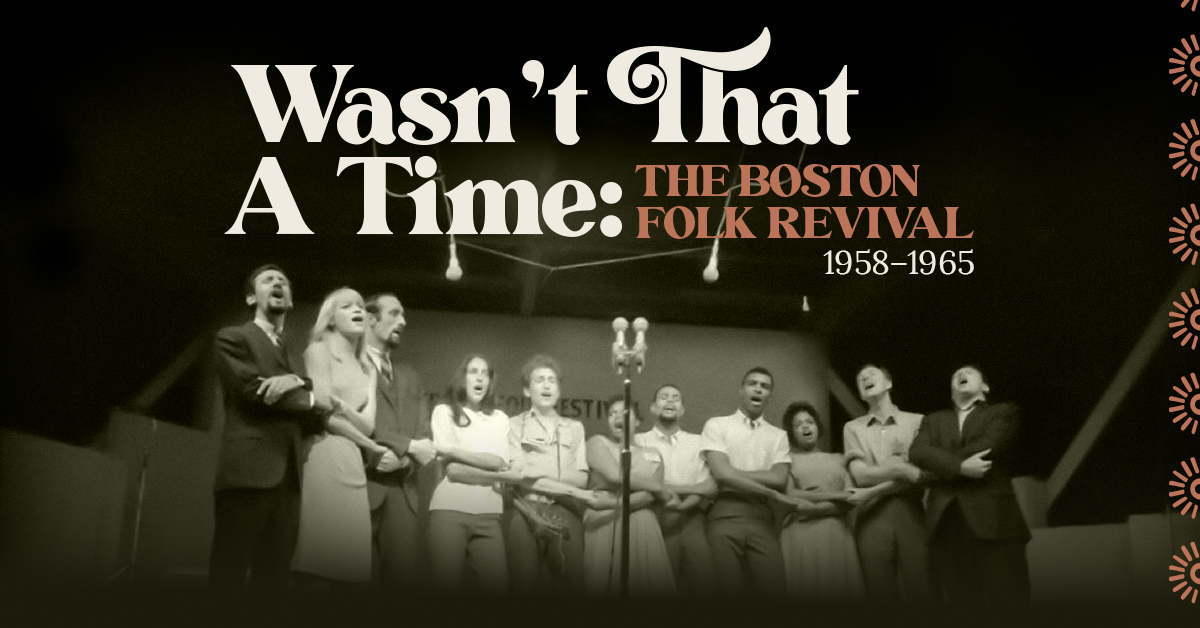
Editor’s Note: On September 27, 2025, the Folk Americana Roots Hall of Fame in partnership with the Bruce Springsteen Archives and Center for American Music held a collaborative symposium entitled Wasn’t That A Time: The Boston Folk Revival 1958-1965. Over the course of the day, attendees at the Arrow Street Arts Center in Cambridge, Massachusetts, enjoyed sessions and panels on such subjects as Club 47, Joan Baez, Bob Dylan at Newport Folk Fest, a conversation with Peter Wolf, and much more. The symposium programming was captured and filmed, and over the course of the next few weeks we’ll be sharing select sessions with our audience right here on BGS. Tune in and enjoy learning more about how Boston was at the epicenter of the folk revival in the ’50s and ’60s.
About the Video: Joan Baez first played Club 47 when she was 17 and performed there every Tuesday night until her career took off at Newport Folk Festival. How did this shift from local coffeehouse performer occur, who and what were the pivotal influences on Joan and her career, and how do music archaeologists study her career?
“This panel on Joan Baez is one of the richest conversations we hosted at our September Symposium – a panel that captures Joan Baez’s artistic legacy through the voices of people who’ve both lived and studied her story up close. It’s smart, emotional, and full of perspective you won’t hear anywhere else. We’re excited to share it with BGS readers.” – Casey Soward, President and CEO of the Boch Center
Lots of people would like to think their lives have made a difference – whether through their family life, or work, or some sort of creative endeavor.
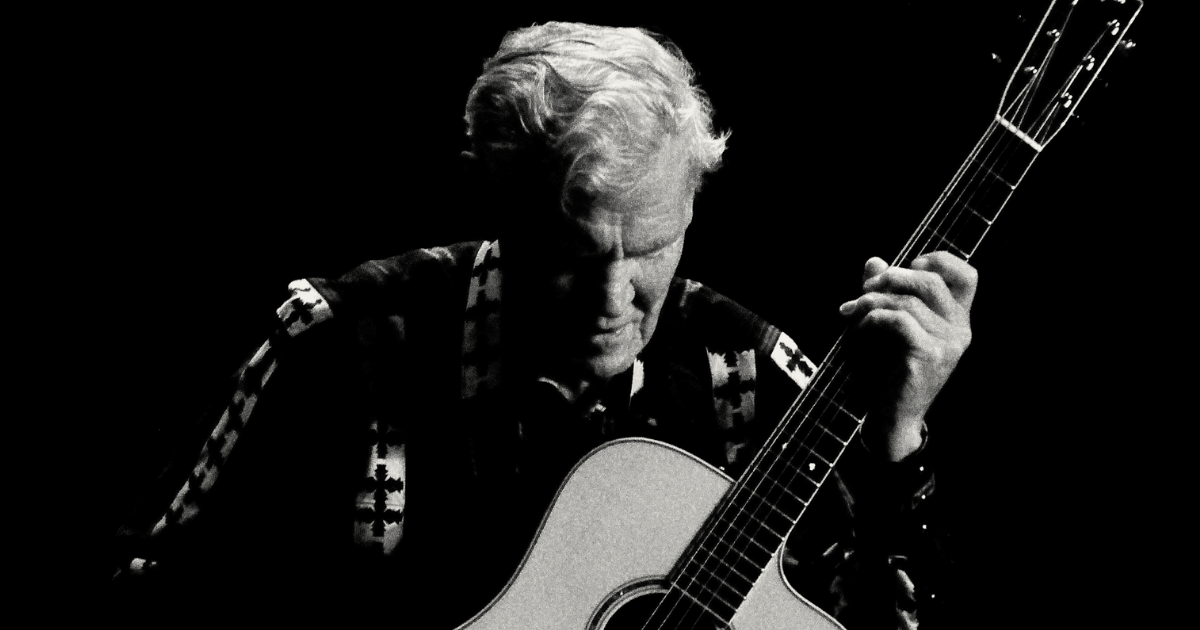
However, even to approach the enduring heritage of the great musician Arthel “Doc” Watson, a person would have to achieve lifetime landmarks as imposing as the North Carolina Appalachian mountains that were his home. During a lifespan from his birth in 1923 until his death in 2012, Watson created a legacy of music, folklore, and goodwill that no one has entirely equaled.
First a little background: Arthel Lane Watson was born March 3, 1923, near Deep Gap – he is not from Asheville – in Western North Carolina. An audience member suggested the nickname “Doc” when his given name was found less than compelling for an entertainer.
His life story before and after becoming an admired folk musician has been often told, notably in Doc Watson: A Life in Music, a 2025 biography by Eddie Huffman published by the University of North Carolina Press.
Blind since infancy, Watson started to develop life skills and musical ability from an early age. He learned both formal and popular styles when sent to the state’s school for the blind in Raleigh at about age 10.
The boy was consumed by music and persistent in getting better at it. Watson had learned both the rudiments of harmonica and a few banjo tunes from his father, General Watson, before he went off to Raleigh. While living within the strict environment of the school for the blind, Watson learned braille and grew familiar with classical and church styles of music taught there. Perhaps as strong an influence as that education was fellow student Paul Montgomery, the talented friend from whom he learned guitar chords. Young Watson and Montgomery, later a well-known Raleigh pianist and children’s show host, shared enthusiasm for the popular music of the day, including jazz and big-band sounds.
His parents, Annie and General Watson, taught the boy skills of growing crops and basic carpentry, and he contributed to the family despite his blindness.
After years of mostly local performances back in Western North Carolina, it wasn’t until the early 1960s, when East Coast musician and historian Ralph Rinzler tuned into and promoted his far-reaching ability as a singer and picker, that Watson’s name gained national, then international attention.
According to an account at the Blue Ridge Heritage Area website Watson recorded over 50 albums and was honored with “the National Medal of Arts, a National Heritage Fellowship, the North Carolina Folk Heritage Award, seven GRAMMY Awards, and a GRAMMY Lifetime Achievement Award.”
As fans know, Doc Watson contained multitudes of skills, a breadth of ability that inspired this list of the five pillars of his musical and artistic legacy.
The King Flatpicker
Watson largely created the challenging fiddle-inspired guitar style that led many followers along a flatpicking trail.
It was during the 1950s, when playing an electric Gibson Les Paul in the local Jack Williams Band, that Watson developed a style that would transform the way the guitar was played in folk and bluegrass music.
Generally, earlier acoustic guitarists in roots-derived styles used a flatpick to create basic “boom-chuck” back up, perhaps throwing in some fills and Jimmie-Rodgers-style bass runs.
But when dancers at Williams’s gigs wanted music for square-dancing, Watson worked up single-note versions of fast fiddle tunes such as “June Apple” and “Bill Cheatham” on his Les Paul. This approach enables lead guitar pickers to achieve the same flowing, rapid attack that fiddlers used for tunes, many of which had come over from the British Isles in past generations.
It’s not possible to say that Doc Watson was the first guitarist to flatpick fiddle tunes. After all, it wasn’t until Watson emerged as a folk artist in the 1960s that the broader music scene caught on to his musicianship. And high achievers such as Arthur Smith on “Guitar Boogie,” Don Reno on “Country Boy Rock ‘n’ Roll,” and Bill Napier on the Stanley Brothers’ “Mountain Dew” – along with some jazz and blues players – all recorded hot-licks acoustic soloing before Watson did. Joe Maphis was also cranking out ultra-fast flatpicking numbers in the 1950s.
But it was Watson’s 1960s performances that created a precedent for a wave of guitarists who had to muscle up to the speed and dexterity he displayed.
A long line of guitarists at the top of the field – from Clarence White to Tony Rice, from Bryan Sutton to Billy Strings – all show Watson’s clear influence not just in recreating fiddle tunes, but also in rapid-fire picking and clean sound on a broad range of material.
Player and educator Alan Barnosky wrote in “An Exploration of Doc Watson’s Innovative and Joyful Guitar Stylings” for Acoustic Guitar in 2023 about the spread of this kind of playing.
“Watson amazed folk fans in the early 1960s by taking tunes typically reserved for the fiddle and reworking them for the acoustic with speed, clarity, and flash,” he wrote. “He never claimed to be the first to play fiddle tunes on a guitar, but for the majority of listeners at the time it was an entirely novel and groundbreaking approach.”
Another world-class, tradition-based player, Earl Scruggs, praised Watson’s adaptation of fiddle tunes as the two were joined by Ricky Skaggs for the 2003 The Three Pickers performance and album.
“He was the first man I ever heard on the guitar that was fooling with tunes like that,” Scruggs said in a Three Pickers introduction. “You had all these good G-C-D pickers – that’s chord positions – but I had never heard anybody that actually took over a lead like a banjo or a fiddle or a mandolin and do those tunes. He could do it.
“And what amazed me about Doc Watson’s picking, and still does, is he’s got that – I call it ‘mountain sound’ to his picking, and he’s one of the best to keep it in that mode of sound.”
New generations of players have immersed themselves in Watson’s style. When I interviewed him for a Bluegrass Unlimited article, leading guitar picker and multi-instrumentalist Bryan Sutton talked about being captivated by Watson’s playing during Sutton’s youth on Western North Carolina.
“Doc and Dan Crary were the first great influences on me,” he said. “Doc Watson was one of the first professional musicians/guitar players that I ever saw. He doesn’t live too far from Asheville, so I saw him play some different festivals and at Maggie Valley. So, he was the first one to really catch my ear as far as what you could do with the flatpick.
“My right hand – it may not as much anymore – but I remember at one time it was kind of like Doc’s. It’s kind of like the way Sam Bush plays, using the whole forearm and wrist involved in the playing, whereas with jazz players or Tony Rice it’s more of a wrist thing. I think I’ve got a little bit of both now.”
Billy Strings, the artist who’s likely doing the most to promote Watson’s legacy in the 21st century, sounded almost evangelical during a September 2025 interview for NPR’s Fresh Air.
“He’s like the ground upon which I stand, you know?” Strings said. “My dad played his music all around the house growing up. And by the time I could play guitar, you know, 5, 6 years old, I was learning those tunes, too. I might’ve been able to play some of them before I knew how to tie my shoes or something, you know?
“It was like, I was learning how to speak and talk and walk, and I was learning all these Doc Watson tunes at the same time. And it was just, like, a religion in my house, you know? His music is just – it’s the best.”
To see some of the top pickers in the field paying tribute, check out this video shot at the Merle Watson Memorial Festival – what would become MerleFest – in Wilkesboro, North Carolina, in 1992.
A Model Fingerpicker
From his first albums on, Watson regularly also played guitar with a thumbpick and index finger. As he noted with his customary self-deprecating humor in the DVD “Doc’s Guitar: Fingerpicking & Flatpicking,” “See, I just play with one finger and a thumb. I don’t use the sensible three-finger method that you should use on finger-style guitar.” (Watch below.)
Watson sounded great with that approach, making finger-picked tunes such as “Deep River Blues,” “Nashville Blues,” “Omie Wise,” and “Doc’s Guitar” fan favorites and objects of long study. For every striving guitarist who practiced hard on his fiddle-tune adaptations, plenty of pickers also worked on showcases such as “Windy and Warm,” with its alternating bass, pull-offs, note bending, and a jazzy minor sixth chord at its conclusion.
Watson’s fingerpicking often showed off his acquaintance with diverse approaches, as in “Deep River Blues,” with an E diminished as its second chord. It also illustrates the way he put his touch on existing pieces such as 1933’s “Big River Blues” by the Delmore Brothers, who played with flatpicks.
“There were two guitars, a tenor – a little four-string, and the regular flattop, and I never could get my guitar to sound like both of theirs did,” Watson said. “Then I began to hear brother Merle Travis, the late Merle Travis, on the radio. And I thought, Now, wait a minute. If I can steal me a lick off brother Travis, maybe I can learn ‘Deep River Blues.’”
Multi-talented Kentuckian Merle Travis (1917-1983) popularized a style in which the thumb plays an alternating bass on the guitar’s lower strings while picking the melody on treble strings. Watson also studied the work of the great guitarist Chet Atkins. The picking buddies released the album Reflections in 1980.
The centuries-old, transatlantic ballad “Georgie” would have once been sung unaccompanied, leaving Watson and others free to craft a brand new style of guitar back up. With no clear precedent on guitar, he might employ the flowing, almost classical patterns that became popular among folk revivalists.
And fingerpicking became the tool Watson used to play the blues that he loved and drew on so deeply, music he followed from the time he heard Mississippi John Hurt on the family’s disc player in childhood.
In the end, there’s no easy way to pin down the many elements Watson brought to his picking, musical points of view that enriched his listeners along the way.
A Standout Singer
Doc Watson’s vocal abilities don’t generally get as much attention as his top-drawer chops as an instrumentalist. However, he was also a tuneful singer with a natural, angelic mountain baritone.
Watson came along during an era when rougher-voiced vocalists such as Hobart Smith, Dock Boggs, and his picking buddy Clarence Ashley represented mountain singing to a growing audience. And Watson’s less mannered style likely contributed to acceptance among listeners less familiar with the high lonesome sound. His direct vocal approach was often heard in performances with no instrumental backing.
It’s useful to remember that Watson also enjoyed the smooth country vocalist Eddy Arnold so much that his son Merle Eddy Arnold was named not just after fingerpicker Merle Travis, but also for Arnold.
Tunes from the Tennessee Plowboy’s repertoire such as “Tennessee Stud,” “I Couldn’t Believe It Was True,” and “Anytime” also showed up in Watson’s repertoire. These were only a few examples of the eclectic side of Watson’s vocal approach, with emphasis on great material over genre labels.
Given his broad taste, Watson at times put some extra grit into his singing on a number such as “Blue Suede Shoes” from his Jack Williams days of the 1950s, later a concert favorite. But more often he sang songs straight, even on one like “Nights in White Satin,” a 1967 pop hit by British rockers the Moody Blues. With waltz-time guitar and plain singing, Watson makes the song come across as relevant to himself and listeners as songs by the Delmore Brothers and Jimmie Rodgers.
Watson’s first memories of vocal music came in church, and he prized the straightforward, no-vibrato sounds that carved such songs in his memory.
“If you love music, you have to listen from the time you’re big enough to notice music,” he told me when recording his 1991 GRAMMY-winning CD On Praying Ground.
“If you’re looking for old-time material in songs, those old songs that you heard when you were young were the easiest to put down.”
From his first commercial recordings on, Watson featured gospel numbers such as the a cappella version of “Talk About Suffering” from 1964 and “Down in the Valley to Pray” from 1966. Both radiate belief and unornamented clarity.
More recent listeners may know the latter song as “Down in the River to Pray,” as it was opportunistically relabeled to match a scene in the 2000 hit film, O Brother, Where Art Thou?.
Always A Song Man
Doc Watson had an impressively broad range of musical interests, perhaps markedly so, given the period in which he came along.
Country or folk music didn’t start appearing on commercial records until Watson was about two years old. In childhood he listened to down-home picking as well as church and gospel songs. It wasn’t until the 1930s that the family owned a radio that let them hear music beyond their 78-rpm record collection.
Virtually every great musician is a song collector at heart. And like Bob Dylan, Watson took on songs from tradition and added new elements. Take the mournful ballad “Omie Wise,” based on a North Carolina murder from the early 19th century.
In the 1920s notable old-time artists G.B. Grayson and Clarence Ashley recorded it with modal accompaniment that was neither truly major nor minor. When Watson recorded in the 1960s, he ventured into folky, arpeggiated picking that put it squarely into minor-chord territory, opening up the song to young folkies who couldn’t play fiddle like Grayson or banjo like Ashley.
In fact, Watson’s playing on “Omie Wise” occupied the same guitar realm as folk star Joan Baez’s playing on “East Virginia” and other traditional songs.
He also tuned into compositions by folk musicians Bob Dylan (“Don’t Think Twice It’s All Right), Tom Paxton (“The Last Thing on My Mind,” “Leavin’ London,” and “Bottle of Wine”), and Townes Van Zandt (“If I Needed You”).
Watson isn’t chiefly known as a songwriter, but he enjoyed notable success with “Your Lone Journey,” which he wrote with wife Rosa Lee. The starry duo of Led Zeppelin frontman Robert Plant and bluegrass’s own Alison Krauss released it as “Your Long Journey,” leading to what biographer Huffman called significant royalties for the family.
Watson’s greatest legacy in songs may have come with the wealth of lasting favorites – just a few are “Deep River Blues,” “I Am a Pilgrim,” “Banks of the Ohio,” “House Carpenter,” and “Shady Grove” – that made their way into the folk, old-time and bluegrass repertoire and could otherwise have been forgotten.
Ambassador for the Old-Time Way
This role for Watson may be the hardest to pin down, as it overlaps with almost all the others. By cleaving to his Appalachian heritage while also making the most of decades of change, Doc Watson was able to introduce countless fans to a rich, living culture.
“I don’t live in the past,” Watson told me in 1991. “I still burn wood in a furnace at the house, but I have heat ducts and a blower on it just like an oil furnace.
“I love to burn wood and I love to split wood. There’s a few of the old-timey things I love to do. I like good dried-apple pie and I like ‘leather britches’ beans.
“And I like to be at home, dadburn it. I hate the road.”
Watson’s long career of traveling to take his music to listeners, often in the company of his beloved son, Merle, nourished their taste for music that he built upon sold timbers of musical tradition.
Wade Smith, a legendary Tar Heel lawyer, told me once about his first experience of hearing Watson, at a small coffeehouse in downtown Raleigh in 1965.
“What word would I choose to describe how I felt?” Smith said for a later Raleigh News & Observer story. “Electrified, stunned at the speed of his fingers and the way he played single strings, and the clarity of the sound. Each note was like a piece of gold, so amazing.
“We stayed to the last note. When we left, I remember thinking that I had never heard anything like it and that in some way I had been changed by it, that I was in an altered state of existence.”
Watson’s national and international impact becomes more impressive given that he wasn’t heard outside his North Carolina stomping grounds until his late 30s. That’s when he honed his broad range of expertise into a mountain-based style that captivated and often amazed listeners at first hearing.
When the Society for American Music, a distinguished non-profit scholarly and educational organization, made Watson an honorary member in 2012, musicologist and musician Greg Reish paid tribute to Watson’s broad impact.
“As I discovered more of America’s traditional musical styles through my teenage years, Doc Watson always seemed to be at the core, an entrée into both older and newer styles,” Reish wrote. “Through Doc’s music I found my way to the pre-war music of the Carter Family, Jimmie Rodgers, and the Skillet Lickers; to the first-generation bluegrass of Bill Monroe and Flatt & Scruggs; to the classic country of Merle Travis, Chet Atkins, and Eddy Arnold; to the country blues of John Hurt and Frank Hutchison; and to the contemporary and progressive flatpicking of Clarence White, Norman Blake, and Tony Rice.”
Huffman’s book quotes the great bluegrass musician Roland White as he talked about the way his guitarist brother Clarence was caught up in Watson’s flatpicking after hearing him at California’s Ash Grove club.
“After seeing Doc, his picking became an obsession, an everyday part of everyday life. To play music and practice every day. Whether we played gigs or not, he was always playing music.”
Sixty years after White’s epiphany, Doc Watson’s music continues to gain and inspire new followers, whether through the picking and testimony of contemporary players such as Sutton and Springs, or through his own dozens of albums and videos. His legacy of tradition and innovation still flows like one of the ancient streams that nourish his cherished mountainsides.
Thomas Goldsmith is an award-winning journalist based in Tennessee and North Carolina. In addition to producing many hundreds of articles for newspapers and magazines, he edited The Bluegrass Reader and authored Earl Scruggs and Foggy Mountain Breakdown: The Making of an American Classic, both for the University of Illinois Press.
Editor’s Note: On September 27, 2025, the Folk Americana Roots Hall of Fame in partnership with the Bruce Springsteen Archives and Center for American Music held a collaborative symposium entitled Wasn’t That A Time: The Boston Folk Revival 1958-1965. Over the course of the day, attendees at the Arrow Street Arts Center in Cambridge, Massachusetts, enjoyed sessions and panels on such subjects as Club 47, Joan Baez, Bob Dylan at Newport Folk Fest, a conversation with Peter Wolf, and much more. The symposium programming was captured and filmed, and over the course of the next few weeks we’ll be sharing select sessions with our audience right here on BGS. Tune in and enjoy learning more about how Boston was at the epicenter of the folk revival in the ’50s and ’60s.
Our first installment focuses on the origins of the folks scenes in Boston and Greenwich. Watch above, learn more below.
“Origins of Boston and Greenwich Folk Scenes”
Speakers: Melissa Ziobro (moderator), Mitch Greenhill, Jim Brown, Jim Rooney, Tom Paxton
About the Video: “Recorded at the Wasn’t That A Time: The Boston Folk Revival 1958-1965 symposium presented by the Folk Americana Roots Hall of Fame, ‘Origins of Boston and Greenwich Folk Scenes’ traces the beginnings of the American folk revival through the voices of those who lived it. Moderated by Melissa Ziobro, curator at the Bruce Springsteen Archives and Center for American Music, the panel features Jim Brown, Jim Rooney, Mitch Greenhill, and Tom Paxton in a wide-ranging conversation about the artists, venues, and cultural currents that gave rise to one of the most influential movements in American music.” – Casey Soward, President and CEO of the Boch Center
As you might guess, there’s tens of dollars to be made working in folk music. One of the more macabre ways I’ve made a living is… um… off the dead, performing educational programs on gender inequality in murder ballads for more than a decade with my band, ilyAIMY (i love you And I Miss You).
Maybe I was just born spooky (Halloween birthday!), but I’ve made the most of my curiosity for folk music’s unnerving and often misogynistic underbelly. All while collecting a few outliers that turn the old tales on their heads.
First found in Europe in the 1600s, murder ballad poems and songs have since become heavily associated with traditional American music. A mainstay in country and folk – whether it’s Polly or Omie falling prey to poor choices, or “Stagger Lee” (a staple since 1897), or Brokeneck Girls: The Murder Ballad Musical selling out its 2023 run – we’re still pressing play on cautionary tales of love inextricably woven with violence and remorseless outlaws. But we’re also starting to look back at the facts, wondering more at why the women of murder ballads are voiceless victims and rarely vigilantes.
I’ve kept the body count relatively low on my new album, Panic Room with a View, but there are a few graves. It is October after all. So, witches, black widows, and wanton women – who makes it out from this Mixtape alive? – Heather Aubrey Lloyd
“Bang, Bang” – Nancy Sinatra
This one might be a metaphor, but the messaging sure isn’t. Love is interlaced with violence right from childhood: “He would always win the fight,” and she should have known better. P.S. Sinatra may be singing it, but this lament from the “female perspective” was written by Sonny Bono.
“Come All Ye Fair And Tender Ladies” – Odetta
In rare cases, it’s not a man’s voice behind the mask, but women warning one another to “lock their hearts” against lying lovers. Cause of death here will eventually be sorrow, but don’t worry – we’re getting to the grisly bits and what happens when you don’t heed the warnings.
“Pretty Polly” – Coon Creek Girls
Appalachian, music academic, or horror movie fan, we all know the rules: the girl getting “busy” is the first body to drop. This song has roots in 1750s English ballads, where the pregnant and unwed victim at least sometimes gets revenge as a ghost. Not so with most American versions of Polly, or North Carolina’s Omie Wise, where the vague-but-violent tale is told with little remorse or consequence.
This is the blueprint of the classic American murder ballad. He’s dug the grave in advance or brought her to the river (no obvious sin-cleansing symbolism here) and “her blood, it did flow.” In some versions of “The Knoxville Girl,” his friends still try to bail him out of jail. Though countless renditions exist (The Byrds, Béla Fleck & Abigail Washburn, etc.), this stark presentation by the Coon Creek Girls has always been my favorite.
“Barbara Allen” – Joan Baez
Controversial opinion alert! I’ve always had a huge problem with the claim of “the world’s most-collected English-language folk ballad.”
Barbara Allen doesn’t die because she loves a man, but because she simply doesn’t. When women refuse there are still consequences, and “hard-hearted” Barb’ry follows “sweet” William to his grave, where he entwines with her in death. Ew. Still, it’s hard to argue with Baez’s perfectly mournful vocal take on this tune.
“The Dreadful End of Marianna for Sorcery” – Malinky
Or, if she says no and doesn’t die of sorrow, you can always cry “witch” and get her burned at the stake. Happy Halloween! You might think it’s a traditional, but this modern murder ballad from the year 2000 has a feminist twist; Marianna gets to tell on the men who wronged her, their hypocrisy revealed, her virtue extolled. This is a significant evolution from the third-person narrator (or male murderer’s perspective) pervasive in classic murder ballads.
“Frankie and Johnny” – Pete Seeger
Let’s get to a murderess. What if I told you Pete Seeger was singing you a lie? Did Frankie shoot her cheatin’ man? Yup, on October 14, 1899, Frankie Baker did. Was she sentenced to the electric chair for it? No. Songwriters didn’t bother waiting on the verdict. Besides, what ideas might women get if they thought they might get away with it?
Just days after the shooting, the streets of St. Louis were already singing. Frankie’s philandering beau, Allen, became “Albert” then “Johnny.” And Frankie, who unsuccessfully sued once a movie was made, was hounded by hundreds of renditions before she died in 1952.
“The Valley Is Ours” – Heather Aubrey Lloyd
Does a folk singer owe listeners absolute truth, or do we use bits and pieces of honesty to shed light on greater truths? As a songwriter and a former journalist, I’ve spent a while reconciling that question. This song from my freshly released album is a perfect example. I weave true stories from various eras of flood-ravaged Ellicott City, Maryland – a news article about a drowning victim, my time sanitizing debris from my friend’s submerged apartment – into a fictional family, unifying the experiences for the greater story representing all those who brave disaster and rebuild.
“Independence Day” – Martina McBride
If you’re an ’80s baby like me, this 1995 CMA Song of the Year (and one of Rolling Stone’s 100 Greatest Country Songs of All Time) was probably the first murder ballad you heard on the radio. Domestic violence, the standard trope, drives the battered wife to finally burn down the house with them both in it, leaving their surviving daughter to wonder, “I ain’t sayin’ it’s right or it’s wrong/ But maybe it’s the only way.”
I’ve spent years thinking about just how many other ways there should be for that woman. And maybe that’s the point of a great line like that. (I was too nervous to ask Gretchen Peters, the song’s writer, when I opened for her in 2022.)
“Silent Little Bells” – ilyAIMY
We all start by mimicking the art we loved growing up. So, it’s no wonder that in 2010 when it came time to write a murder ballad for my own band, ilyAIMY, I couldn’t seem to let the murderess get away with it, either. But my questions were starting. How do I reconcile my love of murder ballads with their problematic or outdated ideas? Can the women get more say in their stories?
“Can it be a sin/ For a woman done wrong to do the man done it/ Do that man right in?”
“Country Death Song” – The Violent Femmes
And I probably threw my fictional characters down a well, because I subconsciously remembered it from this song. We are all the culmination of everything we’ve ever heard and only think we’ve forgotten. This song’s presentation is so deadpan it’s almost parody, like a scary Halloween costume. An innocent daughter falls victim to a father’s starvation and madness. And when the victim is a woman child, at least, the murderer can’t live with the guilt and punishes himself.
“Delia’s Gone” – Johnny Cash
You can’t have a murder ballad Mixtape without Johnny Cash. The man in black – also a kind of persona/costume – put plenty of women in the ground through song, with a vocal delivery that’s dead serious. We know little about Delia’s actual “trifling” offenses, and as with early American murder ballads, much is left to the imagination.
“So if your woman’s devilish/ You can let her run/ Or you can bring her down and do her/ Like Delia got done…” references the old trope that men are somewhat justified killing sinful women, be it 1762 or 1962.
“Church Bells” – Carrie Underwood
Between 2000 and 2016 women got a lot of mixed messages about spousal abuse and murder ballads. The Chicks’ infamous “Goodbye Earl” was met with 14% of Radio & Records reporting stations refusing to play it with accusations the song “advocated premeditated murder.” Um … “Folsom Prison” much?!? Why not the same uproar for 2007’s “Gunpowder & Lead” wherein Miranda Lambert shows she’s willing, but we never get the actual trigger pull, or Underwood’s similar poisoning of an abusive husband in 2016?
Answer: It’s all about the aftermath and the attitude. The Chicks were too undeniably happy. “Church Bells,” meanwhile, walks the line that the bells toll for her in remorse and damnation, or that she finds absolution in the church.
“Pocket of God” – Cory Branan
When asked how the genre is evolving, I can’t hit play fast enough on this tune, featured on BGS in 2022. It has all the vicious, remorseless teeth I want in my bloody ballads – along with a surprising respect for its female victim. “Pocket” is reminiscent of a narcocorrido (Mexican drug ballad), narrated by a dealer who falls for a woman that becomes “a punch” he “couldn’t counter” and someone he “admired” for her intelligence. It’s only when she double-crosses him in business that he’s forced to kill her, like any other rogue henchman, as an example. But she haunts him.
“Oh (Field Recording)” – Laurel Hells Ramblers
Young artists keeping old Appalachian song traditions alive might be killing off a new kind of character – their former selves. Trans songstress Clover-Lynn follows up this boy’s murder by asking her father, “Oh, tell me daddy/ Can you ever forgive/ The death of your son/ So your daughter can live?”
“The Ballad of Yvonne Johnson” – Eliza Gilkyson
Trigger warning: this one’s a hard listen, but the truth always is. Instead of exploiting “Stagger Lee” as a Black anti-hero powerful enough to usurp the devil, or fetishizing Frankie in her kimono, we get the thorough, unflinching story of a Canadian Cree woman’s childhood abuse and the murder it drove her to, told in her words (Johnson shares a writing credit) through Gilkyson. All so that listeners can “awaken to themselves and to all people of this world.” When it comes to the fate of women in murder ballads, we’re starting to make room for greater complexity.
“Sisterly” – Jean Rohe
I’m skeptical that a song can change the world, but this song definitely changed me. When Rohe witnesses an assault on a woman from her window, she hesitates to get involved “in the name of it wasn’t me.”
“I’m not known for being sisterly/ Let the strong girls win and cut the weak ones free/ The boys lie, they say the boys are mean / Said I better get myself a spot on the boys’ team.”
We’re left uncertain of the girl’s fate, but mine was revealed. I was Rohe at the window, who didn’t like women I viewed as weak. I’d learned the rules to survive and they hadn’t. After I couldn’t look away from that part of myself, I started performing with more women, looking harder at where I stand in life and in the songs I love.
2024 served up a treasure trove of great music books – too many to encapsulate in a concise way. However, it’s still worth a try! So, here is a look at some notable books (in no particular order) that should hold an appeal to the BGS community. This baker’s dozen hopefully provides a diverse and interesting sampling of what has been published over the past year.
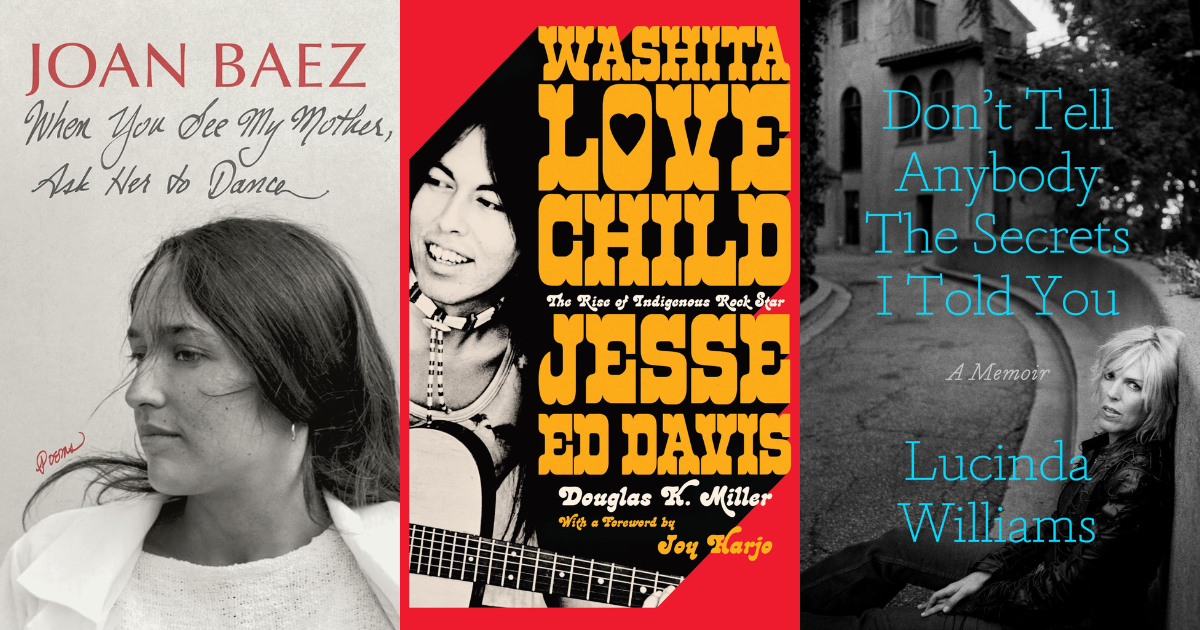
There are biographies of superstars like Joni Mitchell and Dolly Parton alongside important if underappreciated figures, such as guitarist Jesse Ed Davis and the Blind Boys of Alabama. Look into the lives of bluegrass icons Tony Rice and John Hartford led by those that knew them while Joan Baez, Lucinda Williams, and Alice Randall each released memoirs that told their life stories in fascinating ways.
There are books here, too, that examine sub-genres like the world of busking and the outlaw country movement, as well as scenes from the musical history of Greenwich Village and the story of a little-known but significant music project that was part of FDR’s New Deal.
There’s a little something for everyone, whether for your holiday shopping list, your winter break stack of books “to be read,” to use up those bookstore gift cards, or for your 2025 resolution to sit down and read more.
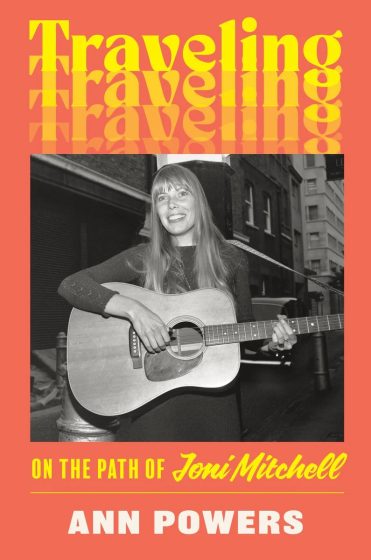
2024 was a big year for Joni Mitchell, with her captivating appearance at the GRAMMY Awards representing another major milestone on her amazing recuperation from her 2015 brain aneurysm. NPR music critic (and occasional BGS contributor) Ann Powers extensively examines the many sides of Joni Mitchell in this stimulating and provocative book. Powers makes it clear from the get-go that she isn’t a biographer and compares her work here to being like a mapmaker. It makes total sense then that Powers entitled the book Traveling. The word not only references Mitchell’s tune “All I Want,” but it also reflects the numerous paths that Mitchell has traveled down during her long, storied career – a journey Powers incisively and insightfully explores over the course of some 400-some pages.
Dolly Parton’s White Limozeen by Steacy Easton (Bloomsbury)
Steacy Easton followed up their Tammy Wynette biography, Why Tammy Matters, by tackling an even larger female country music icon: Dolly Parton. Part of the acclaimed 33 1/3 book series, this compact tome focuses on Parton’s popular 1989 album White Limozeen. Easton views it as a pivotal work for Parton as it represented a triumphant rebound from her roundly disappointing 1987 release, Rainbow. Besides delving into how the Ricky Skaggs-produced White Limozeen found Dolly returning more to her country roots from the more pop-oriented Rainbow, Easton also uses her album as something like a prism to look at Dolly’s wildly successful career and her iconic persona.
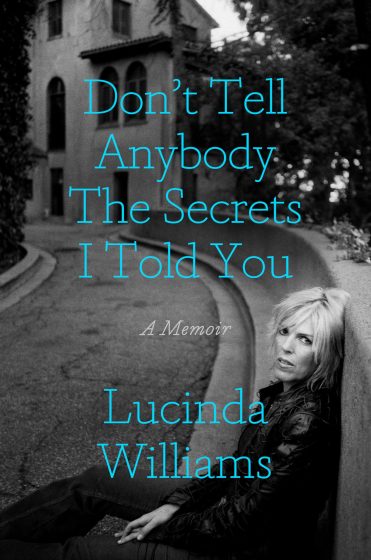
Don’t Tell Anybody the Secrets I Told You: A Memoir by Lucinda Williams (Crown)
Fans of Lucinda Williams’ songs may think they know her through her lyrics, which are often drawn from Lu’s own experiences. Williams’ memoir, however, reveals more about her extraordinary life than even her deeply felt lyrics have expressed. The book is especially strong in covering her quite turbulent childhood involving her father Miller Williams (a poet/professor long in search of tenure) and her mother, Lucille, who suffered from manic depression. Fittingly, Williams prefaces her book by listing the many places where she lived (a dozen before she was 18) which reflects her rootless childhood and set her up for a home in the Americana music pantheon. While the title suggests a racy tell-all, the book feels more like having the great pleasure of listening to Lucinda intimately tell stories from her life – what more could you ask for?
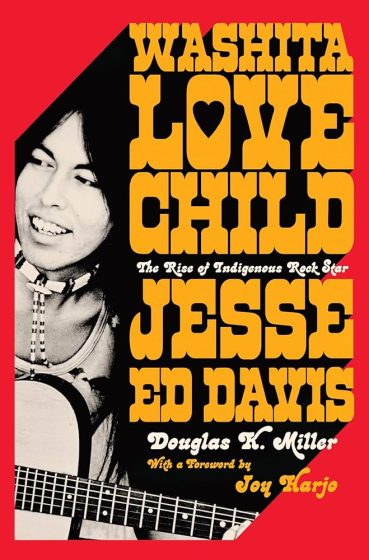
Washita Love Child: The Rise of Indigenous Rock Star Jesse Ed Davis by Douglas K. Miller (Liveright)
Jesse Ed Davis is a name that probably is not familiar to most music fans. Lovers of ’70s rock might recognize his name as a guitarist who worked with the likes of Taj Mahal, Eric Clapton, Neil Diamond, Ringo Starr, John Lennon, and George Harrison (Davis performed at the fabled Concert For Bangladesh). Those who know him from those gigs, however, might not even know that Davis was a rare Native American in the rock ‘n’ roll world. He only really made his Indigenous heritage prominent when he teamed with Native American poet/activist John Trudell during the ’80s in the Graffiti Band. Sadly, Davis’ career was derailed due to alcohol and drug abuse, which also led to his death in 1988 at the age of 48. In this vividly told biography, Douglas K. Miller, a professor of Native American History at Oklahoma State University, turns a spotlight on this ground-breaking and underappreciated musician.
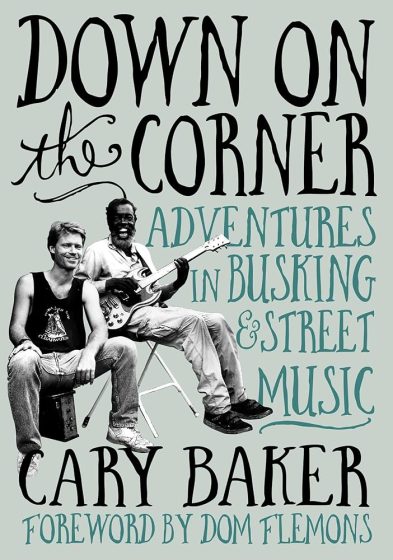
Down On The Corner: Adventures in Busking & Street Music by Cary Baker (Jawbone Press)
For his debut book, longtime publicist and journalist Cary Baker turned to a lifelong music interest of his: street musicians. Early on in this book, he relates the transformative moment when, as a teenager, he was taken by his father to Chicago’s famous Maxwell Street where he saw bluesman Blind Arvella Gray perform on the street. This experience not only led to his first journalism work, but it also launched a love for street music. His enlightening book, which is broadly divided geographically, profiles buskers from across America and Europe. Down On The Corner is populated with colorful characters like Bongo Joe, Tubby Skinny, and Wild Man Fischer along with well-known musicians, such as the Old Crow Medicine Show, Rambling Jack Elliott, Billy Bragg, Fantastic Negrito, and Peter Case, who share tales about playing on the streets.
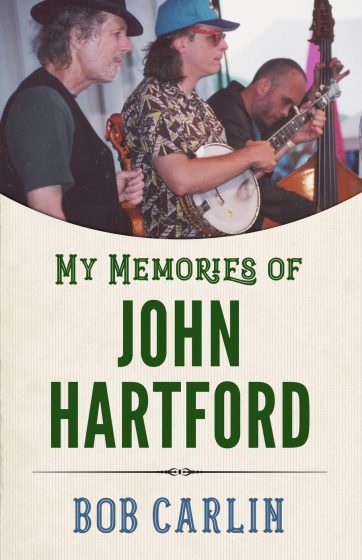
My own memories of John Hartford are of him playing on Glen Campbell’s TV show. He seemed so cool and laidback – and he could play banjo with lightning-fast virtuosity. Happily, Bob Carlin has more interesting memories about the legendary musician, and he comes to this book from a pretty unique perspective. Carlin first met Hartford when he interviewed him in the mid-1980s for the radio program Fresh Air. Carlin (himself an award-winning banjoist) later performed with Hartford and even became his de facto road manager. In his book, he deftly balances his background as a journalist and position as a longtime friend in telling the story of Hartford, who was a true crossover star bluegrass musician of his time.
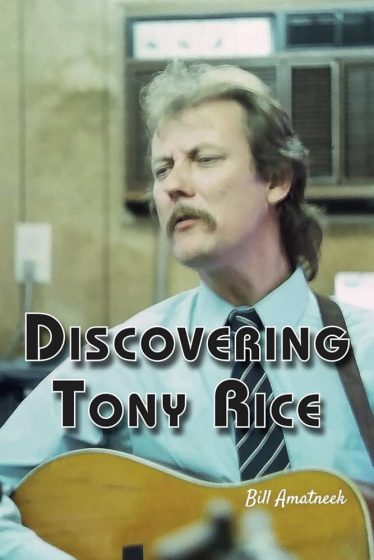
Like Bob Carlin with John Hartford, Bill Amatneek has a privileged perspective when it comes to writing about his subject, the late, great Tony Rice. Amatneek, a musician as well as writer, spent several years playing with Rice in the David Grisman Quintet. Rice was one of the best-ever flatpicking guitarists (and a terrific vocalist) whose career was undercut by illnesses and his own personal demons. Amatneek constructed his book as an oral biography, built around stories told to him by fellow musicians who knew Tony, like Sam Bush, Béla Fleck, Peter Rowan, and Jerry Douglas along with Rice family members, allowing readers to discover the bright and dark sides of this bluegrass master.
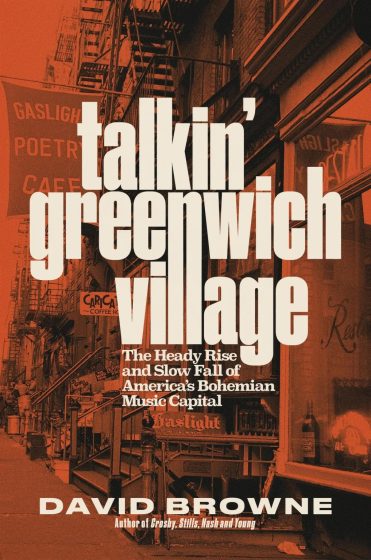
Talkin’ Greenwich Village: The Heady Rise and Slow Fall of America’s Bohemian Music Capital by David Browne (Hachette Books)
As its title plainly states, Talkin’ Greenwich Village discusses the renowned area of New York City that has been a center for bohemian arts culture for decades. The book can be described as a “biography” of both the people (Dave Van Ronk plays a prominent role throughout this story) and the places (particularly the clubs, such as the Bottom Line, Kenny’s Castaways, Gerde’s Folk City, and the Bitter End) that populated the Village’s music scene from 1957-2004. (Browne here basically concentrates on the West Village.) The author of books on the Grateful Dead, CSN&Y, and Sonic Youth, Browne does a masterful job at bringing this neighborhood to life during its many eras. The Village holds a special place in Browne’s heart; he discovered the neighborhood as an undergrad at NYU just as the new folk scene of the early ’80s was brewing. His passion shines through in his storytelling.
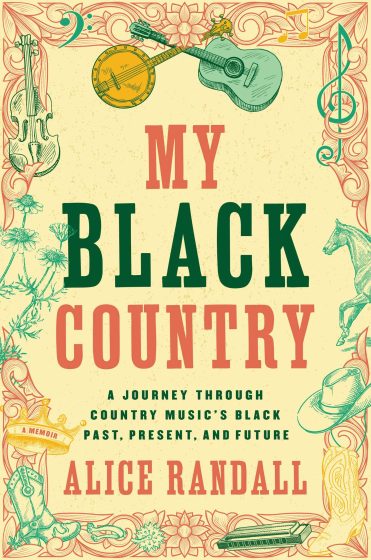
My Black Country: A Journey Through Country Music’s Black Past, Present, and Future By Alice Randall (Simon & Schuster)
You may have already heard about Alice Randall and her book right here, on BGS and Good Country. My Black Country has received great acclaim (NPR listed the book among its “Books We Love” for 2024) and justifiably so. An author, professor, and songwriter, Randall tapped all her talents in creating this inspiring work that addresses her life story and investigates the history of Black country music, which she traces back nearly a hundred years to when DeFord Bailey performed on Nashville’s WSM radio station. It should be noted, too, that this isn’t just a Nashville-centered book; it explores Black country music made all across America. Besides enjoying Randall’s literary creation, you can also enjoy her songwriting craft too; Oh Boy Records released an eponymous compilation of Randall-penned tunes interpreted by such artists as Rhiannon Giddens, Allison Russell, Valerie June, and Leyla McCalla. (Of which, Giddens’ performance of “The Ballad of Sally Anne” is nominated for a GRAMMY for Best American Roots Performance.)
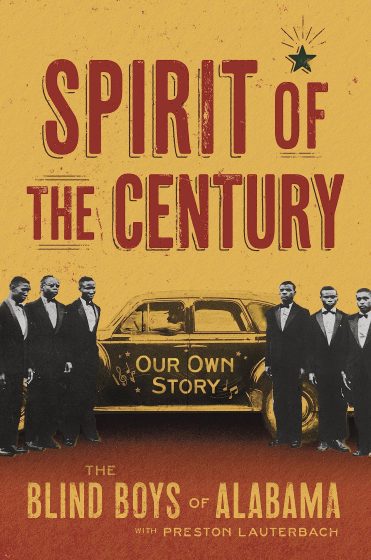
Spirit of the Century: Our Own Story by The Blind Boys of Alabama & Preston Lauterbach (Hachette Books)
The Blind Boys of Alabama are a remarkable story. Remarkable in the sense that the vocal group came into existence around 1940 at the Alabama Institute for the Negro Deaf and Blind and made their way out into the world through the gospel music circuit. And it is remarkable, too, that the Blind Boys of Alabama not only remain a group today (they describe themselves as the “longest running group in American music”), but they have earned five GRAMMYs (and a Lifetime Achievement Award) as well as an NEA National Heritage Fellowship. Preston Lauterbach (author of books like Beale Street Dynasty and The Chitlin’ Circuit) has done an eloquent job weaving together stories from band members and other musical colleagues, and turning them into this absorbing biography.
Willie, Waylon and the Boys: the Ultimate Outlaw Country Primer by Brian Fairbanks (Hachette Books)
This book is something of a biographical combo platter. The first nine chapters concentrate on the “Mount Rushmore” of outlaw country: Willie, Waylon, Johnny, and Kris. Those 240 pages are packed with colorful tales of the foursome, whether on their own or together as the Highwaymen. At that point, the book pivots and explores outlaw country’s legacy in the form of the alternative country scene that was burgeoning during the ’90s, as the Highwaymen were ending their run (their third, final, and least successful album came out in 1995). Fans of alt-country and “new outlaw” artists might wish for a deeper dive into this scene. The chapter on “The New Highwaymen” (built upon the idea of guys like Chris Stapleton, Jason Isbell, Ryan Bingham, and Sturgill Simpson as a new outlaw quartet) feels a bit too speculative. Fairbanks, however, is on stronger footing with his “Highwaywomen” chapter, which looks at the actual supergroup collaboration of the Highwomen, featuring Brandi Carlile, Natalie Hemby, Maren Morris, and Amanda Shires that, among other things, countered the male dominance of the original outlaw movement.
A Chance to Harmonize: How FDR’s Hidden Music Unit Sought to Save America from the Great Depression—One Song at a Time By Sheryl Kaskowitz (Pegasus)
This is a book for history buffs who love music – and vice versa. Author Sheryl Kaskowitz (who previously wrote a book on the history of the song “God Bless America”) has dug up the story on a little-known music unit that was part of the New Deal. This U.S. government program led by Charles Seeger (yes, the father of Pete) sent out musician/agents (noted American ethnomusicologist Sidney Robertson was one prime participant) to gather up folk songs around the country. The goal was to use these songs to build community spirit at homestead communities launched by federal government under the auspices of the Resettlement Administration. The projects were considered radical and controversial back then and, consequently, were very short-lived. Fortunately, however, more than 800 songs were recorded and have been stored away in the Library of Congress.
When You See My Mother, Ask Her to Dance by Joan Baez (David R. Godine)
Joan Baez spent over 60 years making music and touring. While she has basically retired from music, Baez hasn’t put an end to expressing her creativity. In 2023, she released a book of drawings and in 2024, she published this book of poetry. There are at least a couple of notable aspects to this poetry project. Baez has long been known more for being an interpreter of songs rather than a songwriter, so it is intriguing to see more of her writer side expressed in this collection. Also, she has struggled with dissociative identity disorder (AKA multiple personality disorder, a topic addressed in the powerful documentary Joan Baez:I Am A Noise). Baez candidly states in the Author’s Notes that some of the poems are “are heavily influenced by, or in effect written by, some of the inner authors,” adding intriguing layers to her creative process – which she displays through the pieces collected in this book.
Nearly 50 years after the Earl Scruggs Revue concert I saw at the University of Maine, an internet search led me to Jaime Michaels of the opening act, Beckett. He still has vivid memories from that night in Orono. I sent him a copy of my report. He wrote back, saying:
I have no idea about the song titles but it was nice that my ’63 Gibson J50 got a mention … I still have it.
He has vivid memories of his time backstage with Scruggs.
… at the very end of Earl’s set as he walked back out for his 3rd or 4th encore he stopped and said to me “If I’d just play the darned thing right, I wouldn’t have to keep going back out …”
A little later as we were all loading out Earl came up to us and said, “Do you guys want to see my new bus?” He took us for the grand tour. I was still pretty young and had never seen a real tour bus before.
He was such a sweet guy with this humble self-effacing humor.
Earl was proud of that bus, I reckon; he’d named an instrumental after it.
When I saw them in 1975, the Earl Scruggs Revue was a polished Nashville rock act that had been together since 1969. Debuting at a folk festival that May, not long after Scruggs split from Lester Flatt, it featured Earl’s sons.
The two oldest, Gary (then 20) and Randy (then 16) were already Nashville recording studio veterans. They’d been in the Columbia studios multiple times (Gary 11 sessions, Randy 15 sessions) since May 1967, helping on the last three albums Lester and Earl made before their split (Changin’ Times, The Story of Bonnie & Clyde, Nashville Airplane).
Also new to Flatt & Scruggs, in the fall of 1967, was Columbia producer Bob Johnston, then 35. Concerned about declining record sales, Columbia had replaced Frank Jones and Don Law, highly regarded Nashville veterans who’d been producing F&S since the fifties, with Johnston, who was producing Bob Dylan.
Dylan had stunned the folk world when he went electric at the Newport Folk Festival in 1965. He first recorded in Nashville in 1966, completing Blonde On Blonde there using mainly Nashville studio musicians. In the next two years he returned, making John Wesley Harding and Nashville Skyline.
Flatt & Scruggs’ final albums reflected their move to Johnston, a leading producer at forefront of Columbia’s move from acoustic folk into electric folk rock.
Later, when asked about what led to the split with Earl, Flatt spoke of his difficulty in singing the band’s new songs. “Johnston,” He said, “…also cut Bob Dylan and we would record what he would come up with, regardless of whether I liked it or not. I can’t sing Bob Dylan stuff. I mean, Columbia has got Bob Dylan, why did they want me?”
Of the final three F&S albums, both Changin’ Times and Nashville Airplane had folk-rock repertoires. At the very first session for Changin’ Times, four folk-rock favorites were cut, three Dylan hits, one by Ian Tyson: “Don’t Think Twice,” “Four Strong Winds,” “Blowin’ In the Wind,” and “It Ain’t Me Babe.” Here, Earl’s boys Gary (singing) and Randy (lead guitar) were together for the first time in the studio with Flatt & Scruggs and Johnston.
Imagine the dismay of Lester (who, soon after splitting with Earl, would record “I Can’t Tell The Boys from the Girls“) at this session! It seemed as if the young longhairs with their strange new music were taking over.
Released in January 1968, the back cover of Changin’ Times was filled with the image of a rock poster. Unsigned notes beside it read:
With their smash appearance at the Avalon Ballroom (a West Coast temple of rock and light-shows) when they turned on the whole of San Francisco, there are no new worlds left for Flatt and Scruggs to conquer. Flatt and Scruggs are for everyone.
One of the album’s 11 tracks was a remake of Earl’s “Foggy Mountain Breakdown,” which had just become a hit through the soundtrack of Bonnie and Clyde. Five tracks were by Dylan; the album closed with Woody Guthrie’s “This Land is Your Land.”
Gary and Randy Scruggs personified the Lovin’ Spoonful’s “Nashville Cats,” but also in the studio for that album were other, older, Nashville cats – Charlie Daniels, Grady Martin, Bob Moore, Charlie McCoy and other A-team studio musicians. Randy and Gary would come to know these men well as they built life-long careers in the Nashville studios. These careers were forged during their years (1969-82) with the Earl Scruggs Revue.
Fortunately, the Revue’s earliest days were chronicled in a television documentary. David Hoffman’s ninety-minute NET TV special, Earl Scruggs: The Bluegrass Legend – Family and Friends, was recorded in 1969-70. It has been issued on DVD several times since then and can be seen on YouTube.
It’s fascinating to watch Hoffman’s documentation of Scruggs as he narrates his past, voices his present, and sets out his future directions. Along the way, Hoffman captures Earl’s music-making with a wide variety of performers and audiences. By the end of those 90 minutes, Scruggs’ cultural and political perspectives are manifest; likewise the breadth of his musical tastes.
Hoffman filmed in New York, North Carolina, Nashville, Washington, D.C., and California. The documentary opens with a five-minute jam session: Earl, Gary, and Randy are in upstate New York visiting Bob Dylan at the home of illustrator and sculptor Tom Allen, who had done many Flatt & Scruggs album covers. After Bob sings “East Virginia Blues,” Earl asks him if he’d like to hear their version of “Nashville Skyline Rag,” the instrumental title track from Dylan’s most recent album. I don’t know when this jam took place, but in mid-August of 1969, when Earl was in the studio with Lester to record Final Fling: One Last Time (Just For Kicks), an album they’d agreed to make after their split, the first track they recorded was “Nashville Skyline Rag.”
The tune became a fixture in the Revue concert repertoire, used, for example, as the show opener at Orono in 1975 and in 1977 when they played PBS’s Austin City Limits. Earl had recorded it again in 1970 for his first solo album, Nashville’s Rock.
After the jam with Dylan, the film’s next twenty minutes take the viewer with Earl and the boys to his North Carolina home with visits to the Morris Brothers (the first group he’d worked with), Doc Watson, and Scruggs family and friends in the Flint Hill community. It closes with a shot in which Earl speaks of how he’d taken the banjo to different types of music: “Now it’s easy to blend with today’s music. It works very well. I’m really happy. I had dreams of this.”
The next five minutes come from a jam session with the Byrds at a ranch outside Nashville. It begins with them doing “Nothing To It” (the title Earl used for “I Don’t Love Nobody,” when he recorded this tune with Doc Watson) followed by “You Ain’t Goin’ Nowhere,” a Dylan tune that was on the Byrds’ Sweetheart of the Rodeo, the 1968 album that is often thought of as a foundational statement of country rock.
It’s followed by four minutes with electronic music pioneer and composer Gil Trythall, who plays along on Moog synthesizer with Earl and Randy doing “Foggy Mountain Breakdown.”
Then comes an interview with Charlie Daniels, at the time an associate of Bob Johnston, soon to become one of country rock’s leading figures. The focus shifts as he, Earl, and the Revue attend the second Moratorium to End the War in Vietnam, held in Washington, D.C. on November 15, 1969 – generally considered to be the largest demonstration ever in Washington. After performing “Foggy Mountain Breakdown” there, Earl speaks of his opposition to the war.
Back in Nashville, Daniels is co-producing (with Neil Wilburn) All The Way Home, the first Scruggs Brothers album, for the New England folk and classical label Vanguard. The film follows them into a Nashville studio.
Earl is also working on an album, his first post F&S solo project, Nashville’s Rock. After listening to a demo of one track at the Scruggs home, we see an old friend of Earl’s, Dr. Nat Winston, give testimony to his character, and then Earl demonstrates how he creates his music, explaining that he’s self-taught. Next, we meet Earl’s wife Louise, who’s worked as his manager for fifteen years. She points out that Earl was immersed in the music from age five and that their son Randy has had the same experience.
A shift of focus to Randy follows, as we see him picking “Black Mountain Rag” (a guitar performance reflecting the Scruggs affinity for Doc Watson), and then go with him to class at Madison High and have a chat with his principal, who talks about Randy’s “skipping school.”
After hearing from Louise about how she met Earl at the Grand Ole Opry, we drive on a spring afternoon (in 1970) with the Scruggs family from home to the Ryman Auditorium in downtown Nashville. Inside, Earl, with Randy, joins Bill Monroe and the Blue Grass Boys in a backstage dressing room for a jam and then we witness the Revue’s debut on the Opry stage.
In the center is Earl on banjo, flanked by Randy on guitar and Gary on bass and vocals. Also in the band is Jody Maphis, a contemporary of the Scruggs brothers and son of country stars Joe and Rose Maphis, on guitar. He would subsequently move to drums and remain in the Revue for about a decade. On piano and tambourine is Leah Jane Berinati. Except for Earl, this was a group of kids, dressed like young flower power types. They perform two very conservative old traditional songs, “Nine Pound Hammer” and “Reuben,” to an enthusiastically appreciative audience.
The last twenty-five minutes of the documentary follow the Scruggs family as they travel, early in 1970, to California’s Bay Area for a visit and a jam in Joan Baez’s home. Joan, with her young newborn son Gabriel nearby, chats with Earl about their 1959 meeting at the first Newport Folk Festival. She sings two songs (both are Dylan compositions) and then, while photos are shown of her husband – Gabriel’s father David Harris, whose Vietnam protests had led to federal imprisonment for draft refusal – she sings “If I Was A Carpenter” with Gary. A heady mix of politics and music.
The film closes with Earl back in North Carolina talking again about his musical aspirations:
Keep up with the times and make as much progress with the banjo along with other instruments as long as it blends in as possible.
As the credits roll, we hear Earl playing “Folsom Prison Blues” using his tuners.
This documentary, aired at the height of the Vietnam war, included a forthright statement of opposition from a leading figure in Nashville, where there was considerable support for the war. The documentary was also a carefully crafted showcase of the Revue’s folk/country rock repertoire, musical style, and cultural connections.
The albums that Earl and his two oldest sons were working on while Hoffman was making the documentary released before its broadcast and both contain songs and tunes that appear in the film. A couple of examples: “Train Number Forty-Five” (F&S’s radio theme in the early days), which is heard in Earl and Randy’s backstage jam with Bill Monroe, is also heard on Earl’s album Nashville’s Rock. Similarly, Randy’s version of “Black Mountain Rag,” an acoustic guitar solo in the documentary, is heard on the Scruggs Brothers’ album, All The Way Home, in an extended version with not only acoustic and electric guitar breaks but also a banjo break in his father’s style.
In the next Bluegrass Memoir we’ll see how, by 1971 and 1972 when this documentary was broadcast, the Earl Scruggs Revue was appearing on a series of albums that realized Earl’s aspirations and helped launch his touring.
TULSA, OK – Generative AI company Altosphere released an album of “new” Woody Guthrie music, courtesy of their first artificially generated resurrection of the famous folk musician, who died in 1967.
“Artists like Woody Guthrie have been silent for years,” declared Altosphere CEO Blake Mundy. “So we thought, like, what if Woody dropped a new joint now? Wouldn’t that be sick?”
Guthrie, once a towering figure of American folk music, championed themes of equality, socialism, and anti-fascism and laid the groundwork for the socially conscious folk music later popularized by artists like Bob Dylan and Joan Baez. But apparently, AI Woody didn’t get the memo.
After initial testing returned some positive song outputs, researchers quickly discovered that their creation, dubbed “WoodyBot,” departed sharply from the views typically associated with Guthrie.
While the flesh-and-blood Guthrie was best known for “This Land is Your Land” and a guitar with the inscription “This machine kills fascists,” WoodyBot cranked out tunes praising corporate consolidation, touting a lower minimum wage, and lauding police militarization.
In one tune called “Good Guy with a Gun,” the bot crooned, “I’m a fella who ain’t yella/ This country’s headed down/ I’ll get my AR-15/ Run the leftists outta town!”
Attempts to course-correct the model with additional data from the Guthrie canon were not received well by WoodyBot. “I tried to give some feedback when it wrote ‘No Women in the Voting Booth,'” said AI researcher Pico Dhaliwal. “But WoodyBot called me a commie pinko and doxxed my whole family. From then on, I just let it do its thing.”
Other WoodyBot “hits” included “Take a Ride in the Cybertruck!,” “Jesus Was a Snowflake,” “Unions Make You Gay,” and “A Jar of Monster Energy (Makes Me Feel Alive!)”
“We still have some tweaking to do,” Mundy admitted, before adding with enthusiasm, “But actually, I think these songs slap way harder than the original stuff.”
Greg Hess is a comedy writer and performer in Los Angeles. His work has been featured in The American Bystander, The Onion, Shouts & Murmurs, Points in Case, and he cohosts the hit satirical podcast MEGA.
This website uses cookies to improve your experience. We'll assume you're ok with this, but you can opt-out if you wish.AcceptRejectRead More
Privacy & Cookies Policy
Privacy Overview
This website uses cookies to improve your experience while you navigate through the website. Out of these, the cookies that are categorized as necessary are stored on your browser as they are essential for the working of basic functionalities of the website. We also use third-party cookies that help us analyze and understand how you use this website. These cookies will be stored in your browser only with your consent. You also have the option to opt-out of these cookies. But opting out of some of these cookies may affect your browsing experience.
Necessary cookies are absolutely essential for the website to function properly. This category only includes cookies that ensures basic functionalities and security features of the website. These cookies do not store any personal information.
Any cookies that may not be particularly necessary for the website to function and is used specifically to collect user personal data via analytics, ads, other embedded contents are termed as non-necessary cookies. It is mandatory to procure user consent prior to running these cookies on your website.