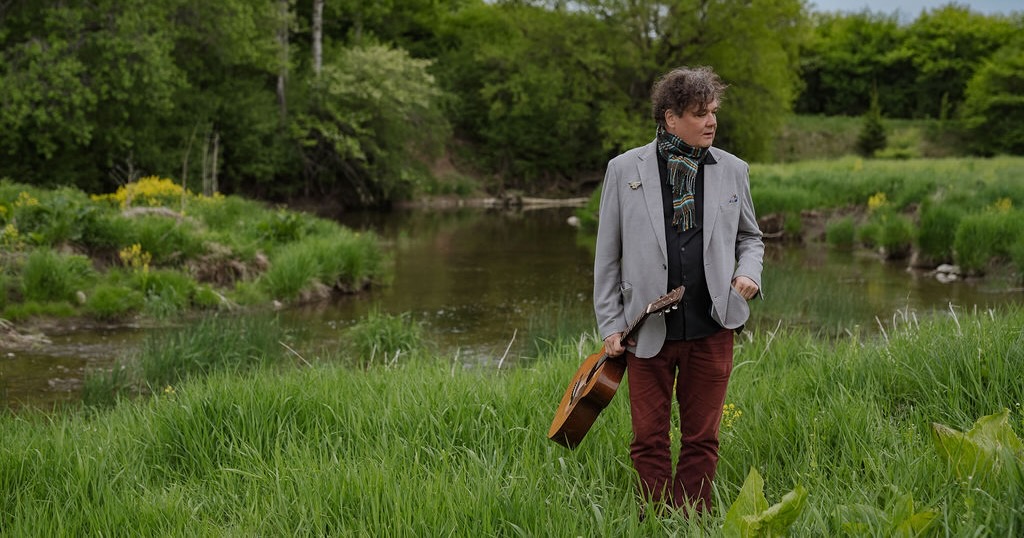
Joshua Burnside’s It’s Not Going To Be Okay is an Absolutely Shattering Album

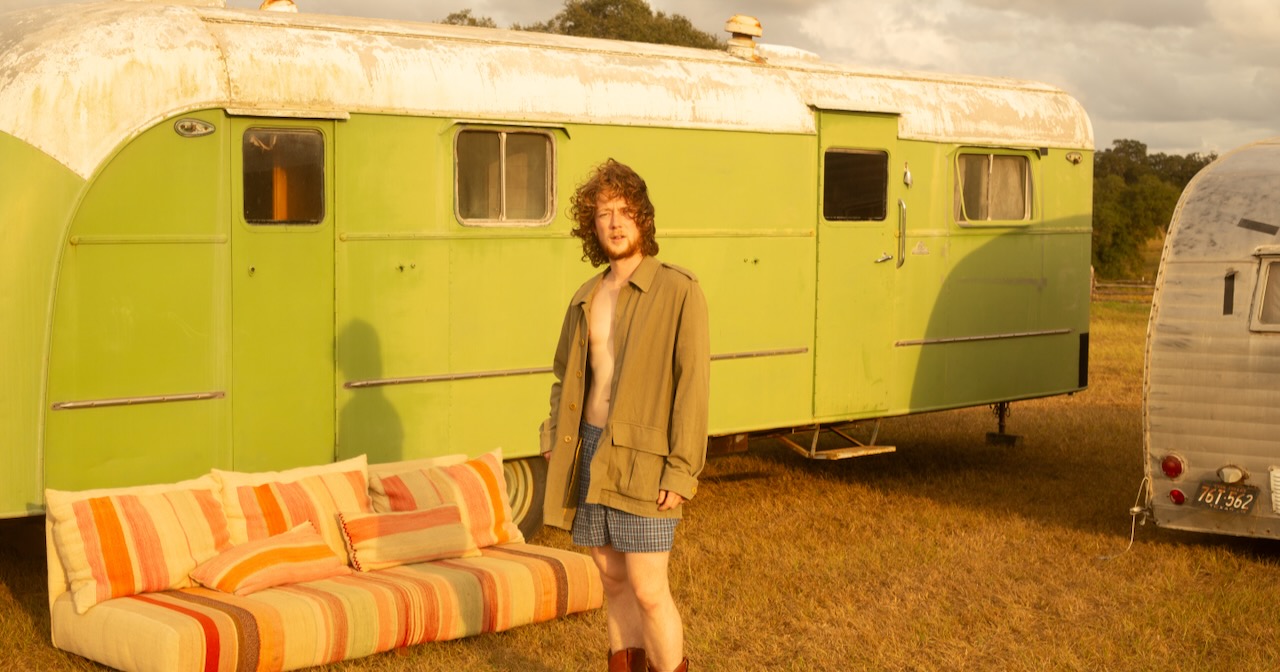
Irish folksinger Joshua Burnside has always shown an affinity for expressing grief, once calling it the reason he began writing songs as a precocious 13-year-old. He’s 36 now, and that sense of grief has never felt as overt as it does on his latest music. Burnside’s It’s Not Going To Be Okay is absolutely shattering, an album that more than lives up to its title. Written and recorded in the wake of the death of Burnside’s best friend Dean Jendoubi, who died of a drug overdose in August of 2024, the album is a bittersweet requiem.

Burnside’s previous albums combined Irish folk with electronic flourishes, worldly rhythms, and elements of sonic collage. His multi-layered experimentation reached a peak with 2025’s Teeth of Time, a record that felt like a major statement and milestone. Barely a year later, It’s Not Going To Be Okay could almost be his Nebraska move – bare-bones stark with minimal embellishment, focused on unadorned voice and guitar in the service of deep, deep mourning.

It’s a state of mind where everything brings back memories of the departed, like the opening of “The Last Armchair”:

Oh, the last armchair you ever sat on
Before you overdosed
Is the one I sit in every morning
To eat my egg and toast…

Ahead of the album’s release on March 20, 2026, we caught up with Burnside for a Zoom interview about his musical past, present and future plans.

It’s Not Going To Be Okay is quite a title. How did that come to be the name of this body of work?

Joshua Burnside: These songs are about the inevitability of pain, suffering, and death, which is what I was dealing with while accepting the loss of my friend. But it was at least a little bit tongue-in-cheek, too, such a ridiculously depressing statement to make. I thought it would be funny in a way. In Northern Ireland, we have a very strong sense of gallows humor. So I was drawing on that a wee bit. I don’t think it’s supposed to be taken literally.

How did you and Dean Jendoubi first meet?

Our paths crossed briefly in school and then we met playing music. Formed a band with a few other people. He and I were maybe 14 and got on immediately. Then there was a trio when we were 16. He played drums, I played guitar, and another friend played bass. We didn’t really gig, just played for the fun of it at his parents’ house. He was a great musician and songwriter himself. His music is amazing and beautiful and weird and dark, like him in many ways. He released a few EPs. The last one is called Skin Hunger and I sing on one of those tracks. Recorded in his mum’s greenhouse, our summer shed 10 years ago.

Since it’s been not much more than a year since Teeth of Time was released, when did you make It’s Not Going To Be Okay?

My sense of time has been so terrible the last few years. It was maybe a few months after Dean passed away in 2024, which is strange to say now. So, end of 2024 is when I started writing and recording and I finished it up autumn of 2025. I was recording it as I was writing it, and the last song I wrote was “It’s Not Going To Be Okay.” It was in the last month of making the record that that one happened.

Is it unusual for you to be working ahead like that, on the next record before the last one was even released?

It’s not typical. It was five years between Teeth of Time and Into the Depths of Hell. That one was a similar dark-humor title, but then COVID hit not long after I’d written those songs. That was some strangely perfect timing. So no, it’s not really normal for me to write and record this quickly. But I just felt an urgency, because one of the main ways I’ve always processed painful feelings is writing and singing about them.

The songs came quickly and easily. I had not planned to focus on just one topic, but most of what came out happened to be that. It felt natural to have them all together like this, almost like a grief journal. That’s the story. A lot of people thought some songs on Teeth of Time had been about Dean’s passing, but they were all written before that. Some of those songs seem resonant with this new record. That seems to happen to me a lot, I’ll write a song and then it seems like life imitates it. If I were not of sound mind, I’d start to worry about ever writing anything tragic or sad.

Was it your intention from the start for this one to be so sonically spare?

Absolutely. I’d been listening to Bill Callahan and Smog, A River Ain’t Too Much To Love. I love how sparse his records are – guitar and cymbal and voice – and they’re still so alive and rich. So sparse, you hang on every word. His voice is so clear. I wanted to do something like that.

Teeth of Time had a lot going on, so I wanted to go with more of a less-is-more principle. See if I could make the songs simpler, almost minimalist, and keep attention with straightforward and very to-the-point lyrics. So I challenged myself. Before that, I was almost hiding behind production and layered instruments. I’d maybe felt a little insecure. But after all these years, I’m feeling more confident.

What has the response been to this record and these songs?

It’s been interesting. I’ve already been playing a lot of these songs live, and so many people come up afterward to say how they lost a friend, dad, uncle, and how much it means to them to connect with my music in a time of grief. That’s powerful, makes me think it’s worthwhile to make music and do this at all. It’s special. I feel a great responsibility not to take this lightly.

I did send the album to Dean’s family, my family, his closest friends, to make sure it’s okay and wouldn’t upset anyone to put this out in the world. My brother and dad knew Dean as well and they told me they couldn’t finish it at first. Just too painful. It took them a while to come around to it. It’s so raw for people who knew him. A bit of an emotional whirlwind in general.

Touring with a record this intimate and personal seems like it would be challenging. Does it feel like you’re delving into difficult feelings every night?

Actors have an ongoing debate about performance technique, whether you should act an emotion or actually feel it. I think it’s similar to performing as a musician. I don’t know what’s more correct or authentic, but the main thing seems to be to stay present in the moment. Playing these songs does make me revisit those feelings a little bit. But I have to be careful with that because I only have so much emotional bandwidth. In performance, I try to remain as present as possible with the feeling of the song, the melody, sound of the words, and craft of the song, as opposed to tapping directly into the original emotion. Sometimes I’ll do that and it’s powerful. But I can’t do that the whole gig or every night, because then touring would be too much.

How many of these It’s Not Going To Be Okay songs will be in your every-show setlist this go-round?

I’ve been toying with the idea of playing all of it start to finish. I was thinking of it that way while writing these songs, how I wanted to play every track and have it hold up even if it was just me. I need to get into the rehearsal room with my bandmates to see if we can crack it. Would be nice to make some different arrangements with electric guitar and cello. We’re a three-piece most of the time.

What were you listening to while growing up?

Lots of heavier stuff, hardcore and post-hardcore, new metal, funk, grunge. Nirvana, Offspring, Fall of Troy. An endless list of screaming, shouting, loud bands, which I still love. But alongside that, I also got a heavy dose of what mom and dad were listening to – Simon & Garfunkel, Fleetwood Mac, Alanis Morissette. Jagged Little Pill was a favorite of my mom’s and I still love that one. Great pop record.

You’ve often cited the experimental duo The Books as a major influence and the source of some of your experimental tendencies.

I saw The Books playing when I was a student in Manchester 15 years ago and they just knocked my socks off. It did not sound like any music I’d ever heard before. All the sampling and found-sound collaging was just eye-opening, a completely different way of making music. I loved the aesthetic, the sound, the folksiness of banjo and cello with all that. It was just inspired.

I would not think about music the way I do without The Books. I still listen to them all the time, and you can hear their influence on loads of my tracks. “Under the Concrete” has city noises I recorded in a park in Belfast, sirens in the distance. I wanted that song to have the feeling of being set in that park in that city. It felt like that’s where it had to take place emotionally.

After two such vastly different records back to back, what’s next for you?

I don’t know yet. I need a bit of time for gestation and recalibrating why I make music and to try to come at it from a different angle. I’m very excited at the prospect of making something new that goes away from what I’ve done before, something a bit more experimental. That’s where my head is at now. Maybe someplace percussive. At the moment all I’ve got are loose imaginary mental soundscapes, but that’s enough to keep me happy for now.


Photo Credit: Tom Johnson

Laurel Premo’s Songs of Grief and Opening

On Halloween, I released an album of griefwork music. Laments features four compositions for solo fiddle and voice born out of an instinctive and spontaneous draw into lamentation when my body demanded it as part of its healing processes.

In both my vocal and instrumental soundings, the role of a traditional lamenter has long been rooted in my identity and how I seek to be of service as a community member who helps others enter into emotion or move through to the other side of an emotion. That work is not limited to sorrow, but can move joy as well. Music can help to bring more aliveness and connectedness to one previously detached, as I’ve been lucky to experience in my work of being a dance musician or a wedding fiddler.

Since my initial education on the topic of “lament” around age 20 while studying in Helsinki, I have held the possibility of a similar role as a guide into or through feeling at the core of my work. It wasn’t until the middle of the last few years, when I had been writing this music on fiddle and voice, wailing music with few words, that I realized I was working with actual lament and that I had found myself knee deep in a river of tradition. So I am here, coming full circle.

Seventeen years later, I returned to research and to listen to archive sources after I had birthed this work, to begin to understand the context of my path, to grab on to some railings, and to move into whatever comes next. I have since come to understand that performative ritualized mourning is a global phenomenon of traditional cultures. While my record is a performance of prepared arrangements and echos of what I experienced in liminal spaces, as opposed to my live lamentation or ritual, it’s my hope that the music can represent the shallows of what is available inside of the great depths of the tradition. (For more reflections on this work, read on via the extended notes booklet for Laments.)

For this Mixtape, I thought back through time to craft a collection of tracks that have been medicinal to me in seasons of heaviness, in times when I needed assistance to reopen a closed self. The tunes span many genres – please take them with open ears and meet them with what they offer. Through different modes, they all have the power to help bring in a glimpse or a full serving of transformation, whether that’s delivered from the quietest breath of the mechanics inside of a piano or from the wall of supportive pressure that is the embrace of the Scottish smallpipes. Three traditional lament forms are featured (Ireland, Scotland, and Peru) nestled here alongside music that I think works in related ways. It is music that helps us enter ourselves. – Laurel Premo

“Riverside” – Tim Lowly

(Listen on Bandcamp.)

This is the first song that came to my heart for this Mixtape, possibly because it was an early memory of the expansive potential of music as a tool in grief. I heard Tim Lowly sing this song at an intimate house concert in Kalamazoo sometime in the 2010-2015 range and his album traveled with me over many touring miles in America that decade. Tim is a painter and writer, and the central protagonist of much of his work has been his daughter, Temma, who has cerebral palsy with spastic quadriplegia. The melody and lyrics in this piece surrender to “slipping down” until they land on some solid new core.

“Pililiù” – Bridghde Chaimbeul

I’ve been very moved by the sounds from Scottish pipes player Bridghde Chaimbeul, who’s just recently completed her first US tour. I listened to her rendition of “Pililiù” during a high intensity breath practice once and it produced an immediate outpouring of tears. Some deep thread of connection existed there. A few months later, while researching vocal roots and lamentation, I recognized that this melody that she had recorded instrumentally is indeed an example of a traditional keening melody. The melody of this lament is a recreation of birdsong of the Redshank. In Scottish tradition, this coastal bird inhabits the liminal space between solid earth and the vastness of the fluid ocean, between known and unknown eternity.

“Body” – Emma Ruth Rundle

A few winters ago Engine of Hell hit me in a heavy way and seemed to be the exact medicine of resonating my own experience that was needed. When music reflects some color of what we’re feeling, it can vibrate our emotional body into become something bigger than we can see and relate to, converse with, question, and be held by.

“Visit Croatia” – Alabaster DePlume

This nostalgic journey is created from patience, deep listening, and real breath. Alabaster DePlume is an English musician and poet.

“Batonebo – Rachan” – Ensemble Ialoni

This is a pre-Christian healing song from an incredible Georgian women’s ensemble. In traditional Georgian belief, “Batonebi” is the name of spirit beings that are the cause of childhood infectious diseases. Songs like this are sung to these spirits, alongside other ritual, to appease them and ask them to leave the sick child so that they may heal. This whole record contains traditional folk song in complex harmony that work as chants for the singer and listener (including the Batonebi spirit audience!).

“My Friend The Forest” – Nils Frahm

Nils Frahm presents deep texture and intimacy here. The flex and breathing of the piano, akin to the live breath of the forest, takes you on a whispering trail of release. Other tracks that have a similar vibe from this record are “A Place” and “Forever Changeless.”

“Gorm” – Susan McKeown

I was introduced to this recording through the master’s thesis of Michelle Collins who investigated the de-ritualization and re-ritualization of keening in contemporary Ireland. This original song from 1996 is written in the traditional form of Irish lament and sings grief related to emigration and grief caused by AIDS. Listen for the traditional cry of “ochón.”

“Nude” – Radiohead

Bringing in some movement now after our ‘set one’ of still listening. Feel the tilt of this waltz gently push you around while the vocals reach and spin.

“Without The Light” – Kelly Joe Phelps

Kelly brings in some sonic reverence here, reaching upward and swimming through memory. “I can see better without the light.” This relaxing into surrender here, perhaps even some praise for the grief in how this song is presented, is an important point in the process. We throw up our hands at the mystery of it all. We sit in awe of the many threads that connect to our heart from all we’ve lived through, from all those we have shared love with. This expression of love – our grief – is actually nourishment towards those living strands that connect us through worlds.

“Vuela Golondrina” – Coral Rojo

Morning light beams through this tune from Chilean vocal ensemble Coral Rojo. The lyrics here speak (again) of birds, both the swallow and the condor, of water, of revolving and renewing time, and the patterns and daily rituals of the natural world healing and waking us to new days. “Cry your sorrows while the mountain range shines as the day arrives.”

“Acid Rain” – Lorn

I’m including this dark ambient, industrial track from Milwaukee artist Lorn to honestly reflect the variety of tunes that do this work for me, personally. Here, bringing in the big guns of bass and synth grit to massage out angst and sorrow stored deep in the muscle. Sometimes you need to order size large.

“Surrender” – Rotana, Superposition

The tunes on this project from Palestinian/Saudi vocalist Rotana and duo Superposition are truly animated prayers and meditations. By that I mean, breathing life, bringing into life, and making alive old and new words. It takes a lot of experience and intention to keep that devotion in your music. Rotana sings codes of freedom.

“Song of Marriage” – Young girl in Huancavalica, Mountain Music of Peru, Vol. 1 

I found this song very recently while listening through a track that shared five-second samples of all of the music on Voyager’s Golden Record (a project that served as a “message in a bottle” for extraterrestrial life led by Carl Sagan in the 1970s). It stuck out to me, even though it was a sweet young voice, I could tell it was some form of blues. Looking up more information about the track, I learned that it was actually lament. Across cultures, in addition to lamentation being used to accompany death, laments are sung quite often to accompany the journey crossing the threshold of entering marriage, as ritual protection in that liminal space, particularly for the bride leaving her family and entering a different life.

“Oh Aadam, sino essitus” – Anonymous, Heinvaker

This project from an Estonian vocal ensemble featuring folk hymns and runic songs was one I listened to a lot in the first summer of the pandemic. The sound is such a balm. A close friend once remarked that this music gave him such pride and hope in what humans are capable of. The actual singing of it, that we are capable of creating this resonance with each other, shows us that we hold such power to shape our world, that we can be positive citizens in the large environment. On our theme today, let this tune speak to the transformation that we lead ourselves on through the journey of grief. We are capable, and we are deeply belonging to this big web of creation.


Photo Credit: Harpe Star

Hangover Terrace Shows There’s an Edge to Ron Sexsmith

Now appearing in the role of nasty Bill Sikes in the musical Oliver!Ron Sexsmith?

Well, not exactly. But Sexsmith had the character of Sikes in mind (specifically as played by Oliver Reed in the movie) when he wrote the original version of “Damn Well Please,” a jaunty, pointed highlight of his new album, Hangover Terrace.

The song was initially intended as part of a musical Sexsmith was creating based on Deer Life, a fairytale book he wrote and illustrated, that was published in 2017.

“There’s this villain character that was going to sing that song,” Sexsmith, a great fan of classic musical theater, says on a video chat with BGS from his home in Stratford, Ontario, Canada. “I just remember thinking how Oliver Reed played Bill Sikes. But he didn’t sing, because the director said as soon as the villain starts singing it takes away from his threatening element. And I thought that was smart.”

So, while he is still looking to bring the musical to the stage, he had put this song in a drawer. Eventually, though, he reworked it as a screed against what he sees as oversensitivity endemic to our era, with everyone so easily offended, and set it to perky Baroque-pop music and a tone bearing more than a shadow of classic Ray Davies.

“I refashioned the lyrics to be more about a kind of grumpy, bickering kind of thing,” he says. “Just because sometimes I’ll get mad or because [he and his wife Colleen Hixenbaugh] will bicker sometimes about my wine consumption. And I’ll be like, ‘I can have wine.’ Or whatever. And I just felt that it was fun to sing. We tried it out in a concert recently and it went over really big.”

Now, just in case you’re confused, yes, this is that Ron Sexsmith – Mr. Sensitive himself, Mr. Melancholy, Mr. “Secret Heart” (the first song on his first real album, 1995’s Ron Sexsmith, and arguably his most enduring and much-covered number). All vulnerable and romantic.

Yes, it’s him, the guy known for wearing his heart on his sleeve, weaving his feelings into stunningly indelible melodies sung with engaging understatement, all endearing him to fans throughout North America and Europe, earning him 15 Juno Awards (including eight as Canadian Songwriter of the Year) and a 2010 documentary, Love Shines. The guy who has been lavishly praised by countless fellow artists, notably among them Elvis Costello, Nick Lowe, Steve Earle, Daniel Lanois, and Feist.

That Ron Sexsmith is here, slinging arrows at people he sees as too sensitive. “I’m intent on poking the bear,” he sings.

“It’s just kind of a song about the culture we’re in now, there were a lot of people tip-toeing around and afraid to offend all the time,” he says of “Damn Well Please.” “And I think maybe we’re coming out of that a bit now. When I played it live, there were some people who came up afterwards and told me they found it really empowering.”

He laughs.

“I don’t want to empower the wrong people, though.”

The fact is, he is feeling empowered to show that edgy side a bit more. While there is plenty of the sensitivity, the romance, the explorations of heart on this, his 17th studio album in three decades, there are several songs that show this trait, lashing out some at matters both cultural and personal.

In “Camelot Towers,” another with a clear nod to his Kinks devotion in its sharp view and Baroque-pop tones, he expresses disgust at the proliferation of fancifully named housing projects that in reality are blights. In “Outside Looking In,” with Hixenbaugh chiming in as something of a Greek chorus, he suggests that “some friends should come with expiry dates.”

Mr. Costello, one of his biggest heroes and biggest fans (as a songwriter he has ranked Sexsmith with Paul McCartney and Tim Hardin), famously arrived in the punk era bearing the tag of “angry young man” before later evolving with great emotional nuance. Has Sexsmith gone the other way, from genteel young balladeer to, at 61, an angry, uh… mature man?

“I guess it’s better late than never,” he says, a wry smile and shrug tilting his country-gentleman hat and large wire-rim glasses.

“I mean, my earlier albums were more melancholy and kind of sad, just based on what was happening. But I had a song on [2004’s] Retriever called ‘Wishing Wells’ that was kind of angry. And I’m sure I could go and find those songs throughout my career. They exist before this. Maybe they don’t all exist in one place like on this album.”

Make no mistake: He still wears his heart on his sleeve. In fact, the opening line of “Easy For You to Say” is “I wear my heart is on my sleeve.” And the very first words of the album’s first song, “Don’t Lose Sight,” are “Hearts get broken,” sung with great vulnerability.

In other places there’s the romance of wistful, poignant nostalgia, as in “Cigarette and Cocktail,” a colorful portrait of the seemingly carefree life of earlier generations with “a cigarette in one hand and a cocktail in the other.”

“I wanted to express the full range of emotions, human emotions. I don’t want to be the master of one emotion, like some people do these days. ‘That’s the guy who writes all the sad songs,’ or ‘that’s the guy who writes all the ironic songs,’ you know. I want to be an actual human being.”

Hence Hangover Terrace spans from pastoral (“House of Love,” a lovely ballad with brass that’s an ode to “a dirty happy home” filled with play and laughter) to perky pop (“It’s Been a While,” his account of a reunion with his old bandmates, with “shades of our yesterdays” and ‘80s-ish Casio-like keyboard lines) to pumping power-chords (“Burgoyne Woods,” with a little spirit of the Who). Produced by Martin Terefe – who has worked with artists from James Blunt to Engelbert Humperdinck and produced three Sexsmith albums in the 2000s – at his bustling London studio complex, it features among its musicians former Pretenders/Paul McCartney guitarist Robbie McIntosh (he provided the Townshend-esque licks to “Burgoyne”) and keyboardist Ed Harcourt (a fine singer-songwriter in his own right). But for the variety, or because of it, there’s a flow, an arc – it’s not a big leap to imagine the album as being the tuneful bones of a musical or narrative song cycle.

“I think I could probably write a story where these songs would fit,” he says, noting that no one had mentioned that before. “In all my albums there is a document of a particular time or phase that I was going through. So definitely with this record it was coming off the heels of the pandemic and all that stuff. You could probably write a story. I don’t know if I’m the guy to do it. But yeah, I’m going to think about that.”

Much of this, he says, reflects the life he and Hixenbaugh have led since moving from Toronto to Stratford seven years ago. Especially the theater orientation.

“Stratford, where I live now, is an internationally renowned theater town,” he says. “People come here from all over to see the plays and musicals. Maggie Smith worked here, and Christopher Plummer. I really love the theater and feel we’ve landed in a kind of oasis. The world is going crazy and we’re going to plays and all. I can’t believe our luck that we ended up here.”

Even outside the theaters, in this Stratford, as that bard from the other Stratford put it, all the world’s a stage. The players there? Superb. And for this Canadian bard?

“It’s been inspiring,” he says. “We have a yard with all these critters running around, like rabbits and things. We had an owl. Didn’t have that in Toronto. I feel like Beatrix Potter or Huckleberry Finn. It’s a whole different way to live.”

That has also brought out a wistfulness that counters, or at least complements, some of the hotter feelings expressed. Take “Burgoyne Woods,” a look back to a time in his life when the world was open and the radio rocked.

“It’s a very nostalgic song for me,” he says. “Every song on this album has its own character and personality. Here, I like rock. I love The Who and all that stuff. I was trying to write that kind of thing they do. It’s about a time in my life with my high school friends and we’d just go on trips through the woods near our house.”

That was his hometown of St. Catherines, down near the Niagara Falls/Buffalo area.

“It was that free-range period where your parents don’t know what you’re doing,” he says. “You’re just out there and just, you know, doing things you shouldn’t do. And drinking.”

So sort of his “Cigarette and Cocktail.”

“Yes,” he says. “Exactly.”

Even in “Camelot Towers” Sexsmith has found himself considering the humanity within the walls of the eyesores. “I’m just noticing, I mean, obviously people live there and they make the most of it,” he says. “And my son [one of two adult children from a previous marriage] lives in a place like that. You walk the halls and you can hear the people or you smell the different foods that everyone’s cooking. I kind of get into that in the last verse. Everybody needs a home and a home is what you make it.”

So yeah. Mr. Sensitive hasn’t gone anywhere.

And how does he bring the curtain down on Hangover Terrace? Well, he’s sensitive there too. Several songs before the album’s close, in “Please Don’t Tell Me Why,” a buoyant folk-rocker reminiscent perhaps of the Beatles’ “I Will,” he lets us know what to expect, or not to expect. He’s all about cherishing the moment, relishing the life and love he’s built with Hixenbaugh, savoring the theater and the wildlife around their home, without looking down the road:

I don’t want to hear
Don’t want to know
The trouble that surrounds
The happiness we’ve found
Don’t want to see
The way our story ends

That might even bring a tear to Bill Sikes’ cold eyes.


Photo courtesy of Cooking Vinyl.

Gimme That Old-Time
Non-Monogamy

At times frowned upon or occasionally slandered, covers are as deep-rooted as the songs and the emerald valleys that have produced them.

Indeed, covers stir discussion, spark research, and add another patch to the great heart-sewn embroidery of music. Fashioned in a similar vein to the original – that’s flattery. When a song circles across genre divides, well, that’s an enriching voyage.

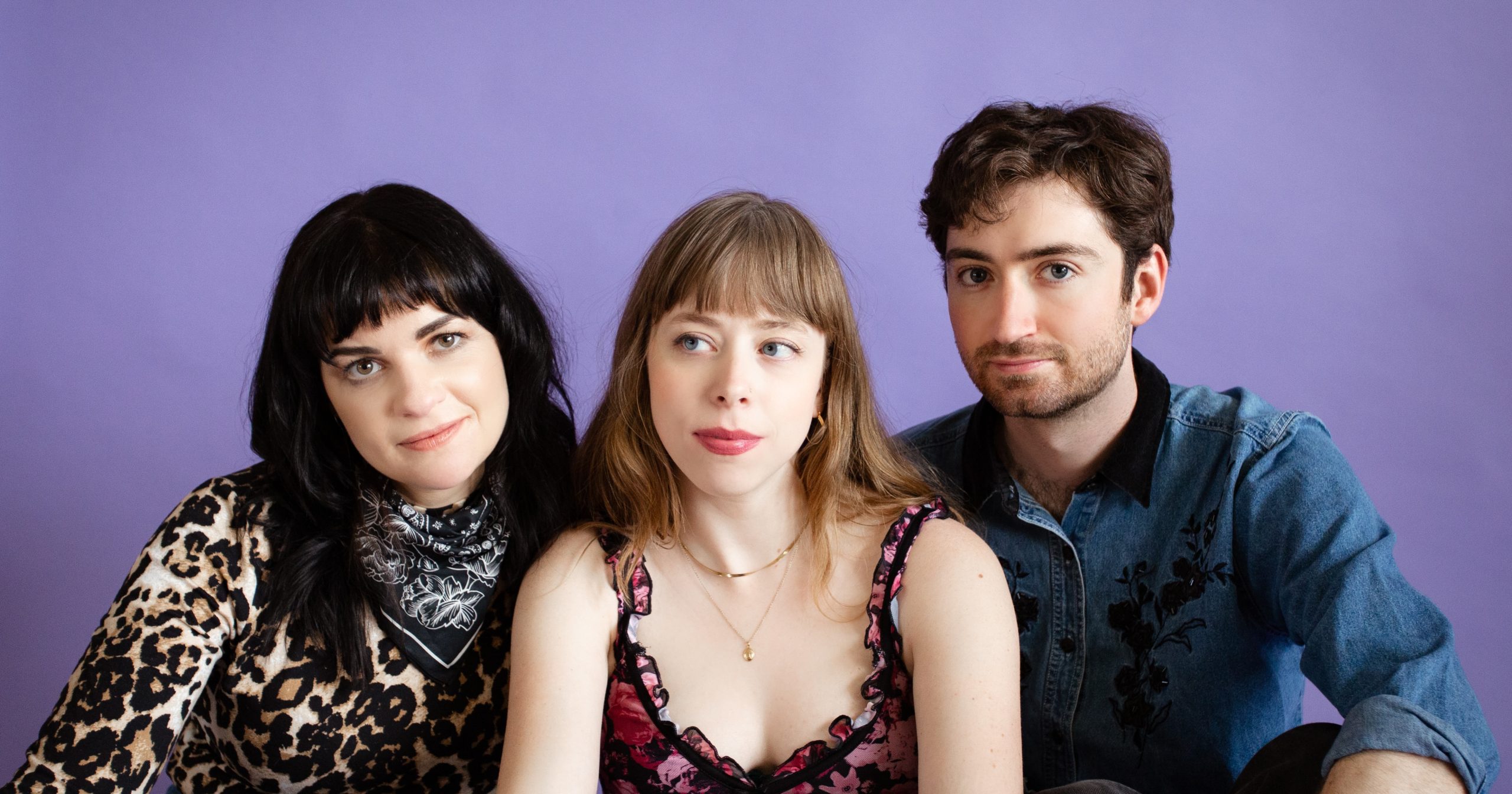
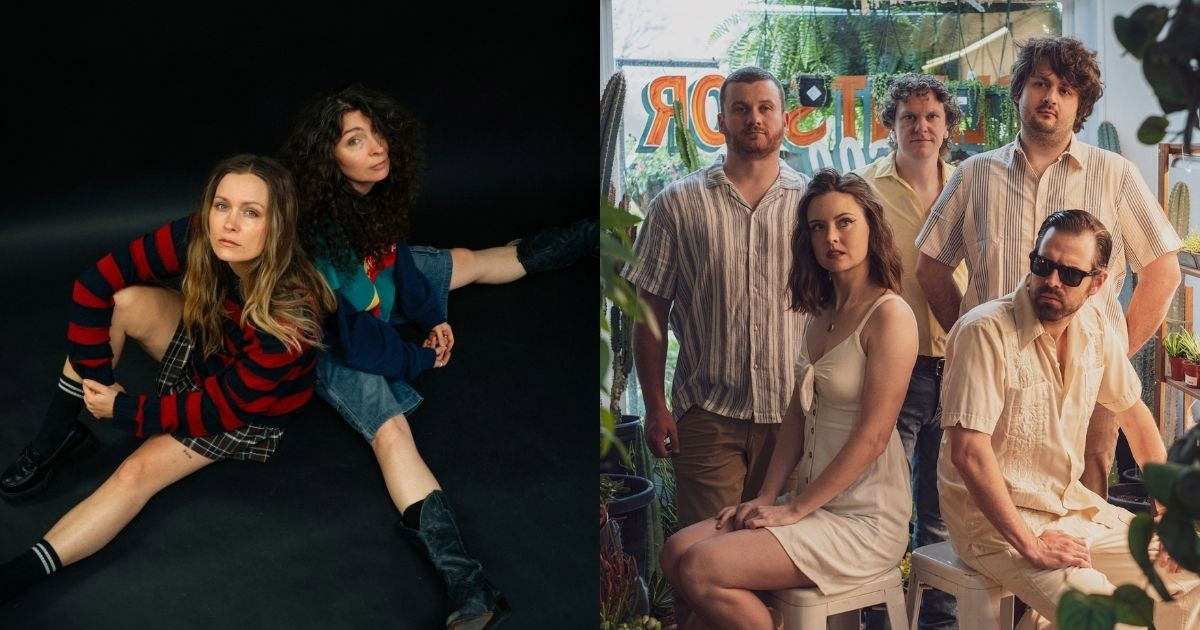
The members of Kissing Other pplRachel Baiman and folk duo Viv & Riley – see their endeavor not just as an individual artistic sojourn but as a larger opportunity to establish a collective conversation. Here, they’ve taken a handful of mostly rock and pop songs and blended, marinated, and sautéed them in unfamiliar flavors. The end results turned out nearer to their own identities.

“I grew up playing traditional Appalachian style,” said Riley. “This is not that!”

Baiman is a sincere and dogged lyricist, with a harmonious ear and a top contender’s punch. She grew up in Chicago, with a factory-made violin in her hands and an insatiable curiosity for why and how music could conform and contort to her swiftly evolving moods. Somewhere along the line, she started getting serious about music and purchased a John Silakowski five-string fiddle on a lengthy installment plan. She arrived in Nashville at age 18, riding fragile finances. Slogging on foot, lugging her fiddle in a hard, cumbersome case, she lacked the extra dollars to hail a taxi. Her odd jobs were many: dog walking; catering; reading novels and writing summaries for a sociology professor; she once even held a job organizing a comedy contest. But a fearless, tenacious sense of purpose compelled her to stick with music.

Pondering all of these circumstances in her heart, Baiman released several persuasive projects, including Shame (2017) and Common Nation of Sorrow (2023). Riley Calcagno, one half of the contemplative folk duo Viv & Riley, added stringed support and pre-production assets to one of Rachel’s albums.

Subsequently, Baiman asked Riley and Vivian Leva (the other half of the duo) if they’d be willing to join her on tour, where long hours on the road were spent in between gigs consuming, swapping, and contemplating music. Baiman’s traditional background taught her how to fully perceive a recording – whether an old fiddle tune or multi-generational, passed down ballad, or even a contemporary pop song – to not only hear it superficially, but to visualize its promise. Through prolonged stretches of asphalt and expressway, she’d oftentimes wonder what she, if given the opportunity, could bring to a certain song.


@kissing.other.ppl♬ original sound – kissingotherpplband

“The idea stems from Rachel’s musical generosity and curiosity and the extended times in those van rides,” said Riley. “Eventually, the songs included were the ones that we’d all individually had been listening to and were moved by. Songs that had stopped us in our tracks at different realms of our lives. Songs that hit us emotionally or otherwise… spontaneously contributed in the week that we recorded them.”

Some of Riley’s earliest memories are of his father’s fondness of traditional music. His father played the guitar, fiddle, mandolin, and banjo. At age 3, the younger Calcagno expressed interest in the fiddle. Though he was raised in an unrelentingly urban environment in the heart of Seattle he was never far from the folksy hospitality of music: square dances, jams, and potlucks. At the Wintergrass Music Festival in Bellevue, Washington, he formed connections with musicians originating from the sparsest, most countrified swaths of the state.

“I discovered an authentic-feeling bluegrass scene in the state and an old-time rural music scene on the West Coast that was kept going by people living in cities,” he explained, “and I don’t see that at all as contradictory.”

Like many other kids his age who grew up in Seattle, beginning in middle school, Riley burned liberal hours listening to local indie rock, though the attachment he had made with traditional music would override all else. He met Vivian Leva at a music camp in the Seattle area which emphasized the cultural importance of preserving long-standing traditions.

“I was a fan of Viv’s parents’ music,” said Riley. “We started playing music right away. Viv is a gifted songwriter. We started passing ideas back and forth. That was eight years ago.”

Vivian Leva was born and raised in Lexington, Virginia, in the Shenandoah Valley close to the abounding cultural and geographical influences of Charlottesville, Roanoke, and the Blue Ridge Mountains. It’s a small town with a deep worship of bluegrass and old-time narratives.

“Before I was born, it was a big hub of old-time traditional music,” said Viv. “Young people moved here for the rich, blossoming scene. My dad came here at 18 and stayed forever.”

Viv’s father, too, took a particular interest in the fiddle, traveling to neighboring counties and states to observe and jam. Her mother sang and guitar-picked, emulating and scrutinizing the local and regional ballads she had fallen in love with. They attended old-time fiddler’s conventions as a family. And when her parents formed a duo and headed out on the highway, sometimes she would share in such jaunts first-hand.

“When I was little I went on tour with them for a bit,” said Viv. “As a teenager, I was playing in my dad’s bands. As a kid he would bring me up to sing a song on stage.”

Certainly, music has long filled the souls of Rachel, Viv, and Riley with good things – and Kissing Other ppl is a remembrance of affection as much as it is a representation of impression. Indeed, Baiman said that Kissing Other ppl is a natural extension of her – and her counterparts’ – inquisitiveness, their attempt to understand the mysterious processes of expression, meaning, and memory.

“In reality,” said Rachel, “I don’t think any band or musical project should attempt monogamy, because you miss out on so many opportunities to learn and grow and bring new inspiration back to your main role.”

Similar to Rachel, Viv finds original songwriting to be a sacred, mysterious place to dwell. But she also believes that covers are a part of the whole process of an artist’s maturity, the recognition of the music of one’s friends, mentors, neighbors, and across-the-board community.

“There can be a stigma about covers,” she said. “You can’t make it your own. You are not creative enough to make your own music. It’s a shortcut. It’s a cop out. But as someone who has written a lot of songs and released a lot of records of original music, and plans to do so in the future, I don’t see it that way. It is an acknowledgment of how being inspired by other people’s music is such an important part of creating your own music. You can’t make your own music in a vacuum.”

“Anytime that you are playing a song, you are creating it again in the moment, and re-interpreting in your own way,” added Riley. “Whether it is a cover or an old traditional song, you still have the power to sing it and do it in a way that really moves someone.”

Baiman said the intuitive, empathetic nature of the type of music she plays requires that she be an attentive observer as well as a cordial, broad-minded learner – prerequisites for a collaboration of this sort.

“I think that having a background in old-time and fiddle music in general really prepares you to be a musician who listens,” said Rachel. “If you approach any musical situation with the mindset of, ‘Can I do something to help support the group musically here?’, that goes a long way.

“Old-time really prepares you for the idea that your best contribution might be not to play at all. The bar is really high for joining in, you have to make sure you’re adding something that isn’t already there, and you’re not dragging down the groove. That’s part of the etiquette of informal jamming and it translates to professional playing.”

A fine cover such as the group’s rendition of Wilco’s “Ashes of American Flags” not only illuminates a previous desire, elevating or enriching it with brand new urgency, but in some fashion it obliges the total re-evaluation of the original.

“There are people who are not able to handle ‘Ashes of American Flags’ because of the context, or they come from a different generation, or they don’t like Jeff Tweedy singing it,” said Riley. “Why not give a song like that another chance or give it another life? If you have a song that’s fun, or one that hits hard, emotionally, lyrically, or harmonically, maybe you can add to it, instead of just burying it on a playlist.”

Riley notes that many of the greatest records and biggest chart sellers are in fact cover-centric productions, though they might not have been advertised or promoted as such at the time. Many great albums are rife with songs written by others, sometimes entire roomfuls of songwriters on Music Row. Many memorable albums, such as Bob Dylan’s 1962 self-titled debut, only have a small number of originals; among the traditional folk and blues arrangements, Dylan’s had but two.

Indeed, Kissing Other ppl simply builds on a long tradition of artists rearranging songs that they like and then reinserting them back into the public sphere of approval.

“We seem to be obsessed with originality in our current moment and society,” said Riley. “But we are also at a time when art and – the pursuit of it – is less funded and less valued monetarily than ever. So many of the great records that we love are cover records. Ours isn’t heavy-handed.”

Perhaps one sterling example of a cover album that marvelously nudged old material into fresh fields was Tim O’Brien’s Red on Blonde, on which O’Brien grabbed a handful of Dylan songs, tinkered with their framework, and dragged them into bluegrass brightness. Many of these songs have stuck around since the album’s release in 1996 and bluegrass buffs routinely call out titles such as “Señor (Tales of Yankee Power)” and “Farewell Angelina.”

One of the record’s most memorable tracks is a rendition of Jason Molina’s “Hold On Magnolia,” which draws out the spookily and eerily beautiful essence of the inscrutable artist’s mystifying original. Rachel’s fiddle punctuates the abstract stylishness with characteristic splendor and aplomb.

“Jason Molina [1973-2013] was one of the greatest songwriters,” said Riley. “He grew up in Lorain, Ohio, and he went to Oberlin College, where I went. He had a rough life and died of alcohol-related complications. He left so much amazing music behind… if even one person hears our version and goes and listens to his records then it is a job well done.”

Alluding to Molina, Viv noted the deferential nature of covers and their special reward.

“That’s the cool element of doing a record of covers,” she said. “You can inspire people with that special song that resonates and if they haven’t heard of that artist, they can go back and listen to their work.”

On both “Hold On Magnolia” and “Ashes of American Flags,” Viv found herself in the new position of playing the drums. She sensed the two songs required the presence of drums and their inclusion was inspired by her simple desire to test the unfamiliar.

“One of the incentives I had to go to guitar lessons when I was younger was that my teacher would let me play drums for the last ten minutes of the lesson,” said Viv. “During COVID, Riley surprised me with a drum kit. He got an electric guitar. We were having fun during the lockdown in our basement. We were doing less folk music, and experimenting with instruments outside of the immediate folk genre. So, I took a crack at it.”

“I think it is a testament to the spirit of making the record that we felt comfortable putting her on the drums,” added Riley. “[Producer] Greg D. Griffith made the snare drums sound huge and awesome, adding a big element to the tracks.”

One song that Viv introduced to the project was “Born to Lose” by Waylon Payne, and the diversity in these respective arrangements is startling: Payne’s original was supported by a complete country band; the new offering is sagaciously stripped down, extracting every syllable of bitterness, sorrow, self-loathing, and private turmoil from the lyrics.

“I had been particularly into this artist, Waylon Payne,” said Viv. “His vocals are really fascinating to me. His ornamentation is really incredible. I spent a lot of time trying to figure out what he was doing. I was definitely interested in trying to get his vocal ornaments similar, because I think that they are really beautiful.”

The spacey, moody “Where’d All the Time Go?” by Doctor Dog was another one of Rachel’s proposals.

“That is a fun song to do as a trio, because of its echoing harmony parts,” said Viv. “I would have never picked that song for myself to learn. That’s what made it challenging. It took me outside of my vocal comfort zone, and that was a fun challenge for me.”

The name of the band, Kissing Other ppl, is a teasing affirmation of one of the pop songs covered on the album, a soft, mischievous Lennon Stella song released in 2020.

“It has a fun and flirty vibe,” said Riley, “but it also gets to something funny and true about relationships. It captures the lightness of the experience of playing music and hanging out, and not taking yourself too seriously. It was Rachel’s idea and she stuck with it. It is awkward and funny, and why not? Life is short.”

Baiman said the namesake reveals a good-natured admittance of the diversionary quality of art.

“Coming from two different projects that are based in original music and collaborating on cover songs,” said Rachel, “we chose the band name as a playful nod to the idea that we were cheating on our own projects by trying something different and new.”

The trio intends to take their reincarnated versions on the road. Beyond that they have no fixed plans to continue – or, for that matter, discontinue – sewing and hemming their skills and interests together.

Indeed, sustained in its own special love and humility, kissing other ppl expresses not just innovative lyricism and beautiful buzzes, but a powerful sense of understanding. What Rachel, Viv, and Riley all agree on is that the genre or style of its communication is less important than the nourishing energy and want that necessitated its assembly.

“In the end, a lot of the songs are ambiguous,” said Viv. “It is hard to say exactly what some of the songs are about. We are not spelling out what you should be thinking or feeling. It’s just cool to see how other people are able to communicate things in totally different ways than how you would communicate them. But somehow it still hits you.”


Photos courtesy of the artist.

Jackson and the Janks Celebrate “Garage Gospel Jank”

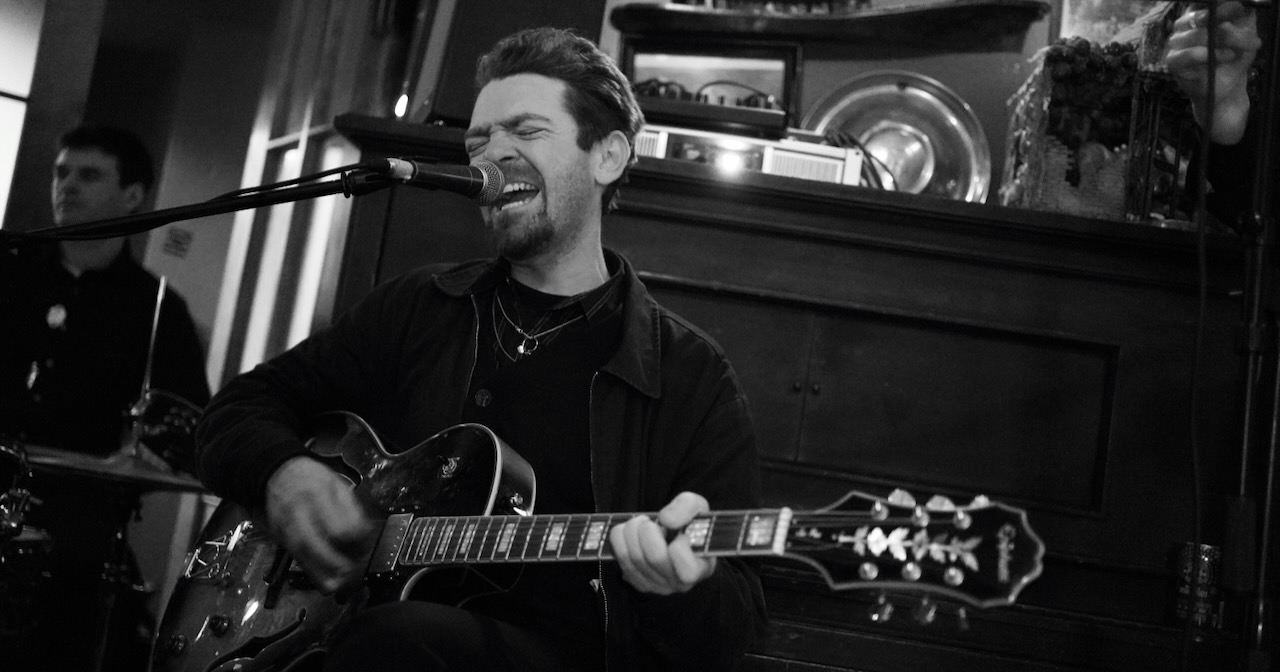
Jackson and the Janks, we started in a living room in New Orleans. Piano and guitar playing old gospel songs and trying to make a dance band. First there were two, then a third came in to use the bathroom – he was living in his van out front at the time. He sat down and played along after nature’s call. Over a year it grew from there, adding bass, saxophone, and steel guitar. We started playing shows in New Orleans, sweaty dance shows, and we didn’t have a name other than “the garage gospel band” (officially, Sam Doores’ Garage Gospel Band). We’ve branched out now and adopted New York janks into the family.

The Janks as a name came up, describing all things Janky. An old time, do-it-yourself way of playing, inspired by New Orleans R&B, rock and roll, honky tonk, and of course the sacred songs.

This playlist is a mix of sounds that influence the sentiments of Jackson and the Janks. Rollicking dance music, garage band approach, songs of love and lost love, sweet and sour, irreverent. – Jackson Lynch, Jackson and the Janks

“My Journey To The Sky” – Sister Rosetta Tharpe

There’s something wrong if Sister Rosetta is not in the conversation. True muse and queen progenitor of rock and roll, she kills me with her gospel.

“Rockin’ Bicycle” – Fats Domino

The great Fats Domino. I picked this because it inspires an approach to songwriting that gets overlooked. Have fun with the lyrical content and make fun music.

“Unchained Melody” – The Fleetwoods

I don’t take baths, but listening to this tempts me to try it out. The harmonies do it to me. My favorite version of this song.

“No More Tear Stained Makeup” – Martha & the Vandellas

This one has that lyricism and rhyme that I love. Taking a simple theme and so cleverly making it heartbreaking, don’t see it coming. Smokey Robinson at his best.

“Young Boy Blues” – Snooks Eaglin

New Orleans for real songster Snooks Eaglin played everything. Country blues, jazz, and pop songs of his day. That’s the job: play what people want to hear, do it good, and make it your own.

“Let’s Leave Here” – Jackson and the Janks

It’s about trying to not be the last one at a party that’s going under. Nothing’s happening, but you gotta leave before something does. “Gates are dropped, the service stopped, at the shop on the corner…”

“I Got Loaded” – Keith Frank & the Soileau Zydeco Band

This is a great zydeco version of a swamp-pop party song. Keith Frank (son of the famed Preston Frank) and his whole family make some of the best music I’ve ever had the privilege to dance to.

“Sweet Nothin’s” – Brenda Lee

Sugar, spice, everything nice.

“Sitting on my front porch, well do I love you? Of course,” Brenda growls and tucks me in.

“Who Will The Next Fool Be” – Charlie Rich

This speaks for itself. Just listen to how Charlie Rich sings the word “Who.”

“Life Is Too Short” – Benny Spellman

A great ballad deep cut from the man who gave us that deep voice on “Mother In Law.” Operatic. ”

We do big things in a hurry/ Let’s do what’s right to live…”

“Immigration Blues” – Duke Ellington

This secular hymn is my favorite shit. Early Duke’s orchestrated pieces like this make me regret and hope, sad and happy.


Photos courtesy of Jalopy Records.

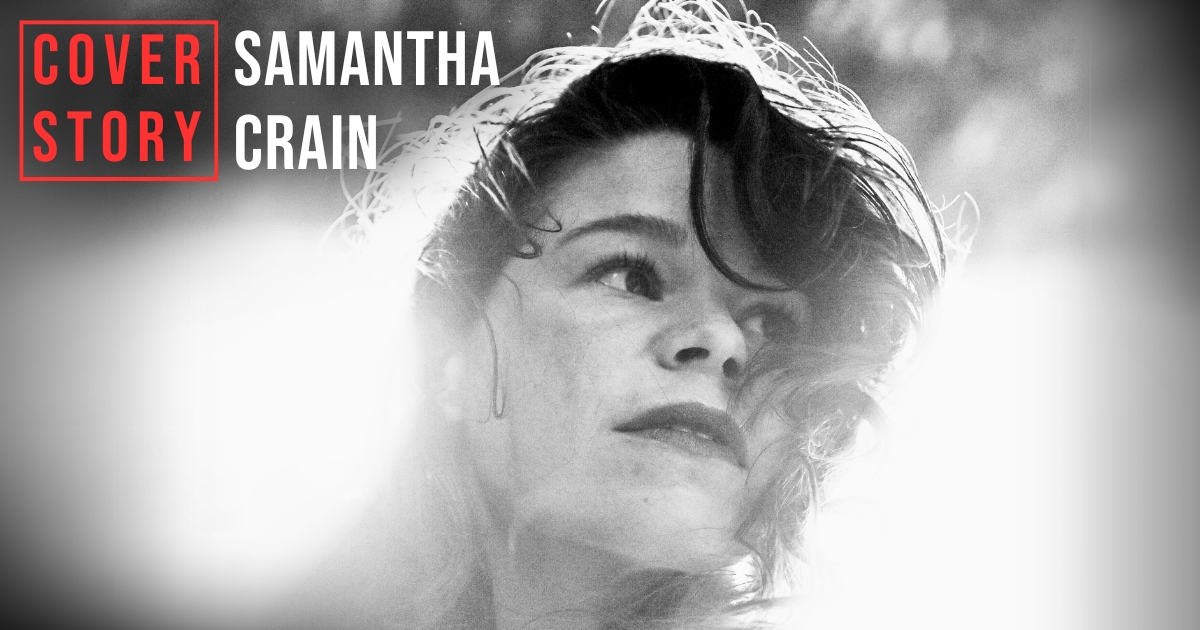
Samantha Crain Made ‘Gumshoe’ with Reciprocity and Vulnerability as Its Core

Growing up in Oklahoma, Choctaw singer-songwriter Samantha Crain found solace and calm in mid-20th-century film noir, Westerns, and Broderbund Software, Inc.’s cult Where in the World Is Carmen Sandiego? media franchise. Along the way, she developed a soft spot for the vernacular term for a private detective, “gumshoe.”

“I’d always write it in my notebooks, thinking I’d use it one day,” she says.

During her teenage years, Crain taught herself how to play guitar and began writing songs before embarking on a lifestyle on the road as a singer-songwriter, performer, and recording artist as she entered adulthood. Over the last seventeen years, she’s released seven albums and a bevy of EPs, singles, and collaborations, while evading any sense of hard stylistic classification. “Honestly, I don’t know that I have a lot of understanding of genre,” she explains. “I write the songs and then I think about what will serve them best.”

When she was in the early stages of writing her recently released seventh album, Gumshoe, Crain watched American film director John Huston’s storied 1941 mystery thriller, The Maltese Falcon. Afterwards, when she was scribbling down some ideas, she found herself returning to Humphrey Bogart’s portrayal of Sam Spade. “He’s the quintessential, emotionally detached private investigator,” she says. “I can see a lot of that personality in myself.”

From there, Crain felt compelled to write a song about two people with that disposition falling in love. “I immediately thought, maybe this is where I finally get to use gumshoe,” she says. “It became a song about the mystery of trying to solve interpersonal relationships.” Rendered through a dreamy concoction of guitar, percussion, strings, eerie sound design, and her yearning tones, that fact-meets-fiction scenario became the titular track on Crain’s new album.

From using the dragonfly as a metaphor for flexibility and resilience (“Dragonfly”) to exploring her relationship with the natural world (“B-Attitudes”) and revisiting memories that still haunt her, Gumshoe reveals itself as a mercurial blend of alt-country, Americana, breezy psychedelic rock, and close, bedsit folk. It’s one of those records that feels perfectly designed for the introspection of late-night drives, solo walks, or wherever else you find your moments of reflection.

Co-produced with Brine Webb and Taylor Johnson at Lunar Manor Recording Studio in Oklahoma City, the album documents a period of profound transformation within Crain’s personal life and how she relates to those closest to her. In late April, BGS spoke with Samantha Crain about all of the above and more.

How are you doing?

Samantha Crain: Good, yeah. The town I live in has a big free music festival going on right now. It’s always interesting maneuvering your way around town when it’s happening. I’ve spent my morning trying to get things done. This happens every year. I should really know better by now.

To paraphrase the late, great Sharon Jones, some of us have to learn the hard way.

Yeah. That’s probably a good example of most things in my life.

Do you have a philosophical stance that underpins what you do as a songwriter?

I don’t think of what I do as a songwriter as being separate from how I live my life. I’ve spent so much of my life being a lone wolf, very hyper-independent. Lately, I’ve started to explore the ideas of vulnerability and reciprocity within my personal relationships with my friends and family members. I’m trying to embody that there is no “is” and we can change by the minute.

In my ancestor’s language, the Choctaw language, there are no words for “is” or “are.” That speaks to their value. You can’t ever describe anything with certainty. You can only pair something with descriptors that describe it as it appears in a moment. Living in a less defined way feels more mentally and spiritually sustainable. It’s also more sustainable for me as an artist to embody that flexibility and impermanence.

At this point, you’ve been a musician for over half your life, right?

Yeah. Honestly, I have a pretty poor memory of growing up. I’ve got a bad memory in general. I don’t remember much about my life apart from what I’m doing currently.

Lately, I’ve been thinking a bit more about the relationship between someone’s lifestyle and the music they make.

Sometimes I’m very aware that even if I didn’t have this desire and ability to write songs and make records, I’d probably still be living pretty close to how I am now. I have this very deep curiosity in me to experience as much of life as possible while I’m still on this mortal coil. I don’t know that everybody has that same curiosity or desire, and that’s completely fine. I just think I’m lucky to have an outlet and an instigator to justify how I go about living through music and songwriting.

When you think about making Gumshoe, what are some of the first experiences that come to mind?

The first memory I have from this album is having to set an alarm really early in the morning, so I could have quiet time alone and try to be a lightning rod for whatever was awaiting me. I did that every morning for three or four months to make sure I could get the active writing part in. I remember sitting at the kitchen table in the wee hours of the morning with my iPad and my guitar, trying to make demos and get these songs out.

At the same time, I was working forty hours a week at another job and dealing with all these stressful things that kept happening. I’m still slightly surprised that I was even able to make this album, because over the last two or three years of my life, I’ve had a lot of really difficult things going on. I’ve been dealing with health, interpersonal relationships and family stuff. Amidst all that, I had to find a way to answer the call of active writing time, which felt impossible.

I always get fairly offended whenever it’s been a year or two between records and people want to talk about how long it’s been since I’ve had a record. It’s like, “Excuse me, I’ve just been living my life.” I don’t know what to tell you. It hasn’t felt that long to me. I’ve felt like everything is moving right on time.

There can be a level of cross-cultural confusion around what time even means.

Western societies run on capitalism’s watch. What good are you to those societies if you’re not producing something? It’s just not a value I have in my life, so I find it hard to match that energy.

I like that you made the distinction around active writing time earlier. You’ve got to have space for yourself as well. You can’t give everything away.

Not only can you not give everything away, but you can’t constantly be in bloom. Flowers are not constantly in bloom; there’s a good reason for that. There’s energy that has to be sustained through the seasons of life. If you can’t close up and protect that periodically, you’re never going to make anything for anyone else or yourself.

Can you talk a bit more about what you were exploring across the album?

The songs I was writing were me trying to wrap my head around what it means to be in really close relationships with people. This was something I hadn’t really let myself do before. I thought it would be really strange if I wrote all these songs about how I’m trying to get better at connecting, or allowing myself to be vulnerable with other people, and then I went and made it how I usually make records – which is a lot of single tracking, or people that are isolated in their own booths. That led us to all recording together in one big live room. That also led me to bring co-producers in, rather than being the main driver of all the ideas. It was really important for me to have the experience of being able to lean on other people. I just felt like I needed to match what was going on with me personally with the recording process as well.

After listening to the album and talking to you, it sounds like you’ve had a heavy few years.

Nobody can tell you about these experiences ahead of time. There are things you have to live through to understand. You can’t tell an eighteen-year-old that their sense of invincibility is an illusion. You can’t talk someone into having that knowledge. It’s just something they have to live long enough to understand.

Imagine how paralyzing it would be to understand these things at a young age?

I think if I’d had a full idea of what this life path – being a singer-songwriter and musician – would look like at the age I started, I don’t know if I would have done it. Now, I don’t regret any of it. I still wake up every day and choose to keep doing this because I love it, but I think the naivety, greenness, and blind confidence of younger people is a massive help in pushing us off in any sort of direction at all.

What do you think have been the significant turning points in your journey through all of this?

There’s an experience I’ve had that happened many times over the last twenty years. As an artist, you get to a point where you have a set of people helping you: labels, booking agents, managers, etc. Inevitably, people end up moving in a different direction. Every time somebody like that has to leave my circle, I feel like I’m being abandoned in some way. What has always somehow happened afterwards is that I’ve always been able to link up with someone else who helps me keep carrying on.

I am forever in awe of that pattern of feeling that I am in the right place, doing the right thing. I don’t just mean this with business people. I really mean this in life as well. A lot of times, the people who end up helping me in my journey as a songwriter and a musician also play a huge part in my life as friends, mentors or things like that. It really gives me a sense of comfort and trust in myself. If you’ve run out of gas and you’re on the side of the interstate with your thumb out, someone is going to come and help you quicker if you have a smile on your face and a positive attitude about it all.

Some people evoke the idea that you shouldn’t go into business without already having an exit strategy in place. Obviously, not many of them are musicians.

I never have an exit strategy. I’m just forced into the next thing.

It’s worth noting that in recent years you’ve been working on film and television soundtrack projects, such as scoring for Fancy Dance and Winding Path.

When you’re working in film and television, the amount of collaboration you have to do is so intense. It’s beyond any level of collaboration I’ve ever done with my own records. A big portion of making my records occurs in solitude. When you’re scoring films, the number of people you have to pass ideas through, or get the OK from, is massive.

Also, all the films I’ve scored for are about community and family in a way. They’re about connection and reciprocity. So far, they haven’t been about the lone wolf character, which I find good. If my first dip into scoring films had been for a detached, lone wolf character nobody understands, I think I could have gotten a bit too emo for my own good. So, I think it’s good that the projects I’ve been brought into so far have been more about connection.

What does it mean to come from Oklahoma at this point in your journey?

It is to exist somewhere you both can’t live without and can’t wait to return to. At the same time, you want to get as far away from it as possible. That dichotomy is the thing that got me on the road as a young person. I don’t want to only understand this one existence, but it’s also one of the only places where I feel like I make sense. If I were going to grow out of the ground somewhere, this is the only place I could envision myself sprouting out of. Unfortunately, being here reminds me of how hard it has become to be in nature. When I say, be in nature, I don’t mean trying to connect with something outside of myself. I feel like I’m a part of the planet’s ecosystem.

Growing up, I spent a lot of time in southeastern Oklahoma, in the Kayami Street River Valley with my cousins. Even as kids, we were living in a respectful communion. We knew if you saw a diamondback rattlesnake, you don’t mess with that rattlesnake. We were taught to walk softly through the forest and disrupt as little as possible, because we were passing through. I’m still in those same physical spaces, but as I’ve gotten older, knowing I’m becoming more and more disconnected from the natural world feels really strange. I haven’t thought about this much, but maybe this is why I feel this pull to remain here. Maybe it is because I haven’t resolved that, or gotten back to a place that feels right in that aspect of my life.

It sounds like there’s a bigger set of questions at work here. I will say this, though: there’s not much that’s more grounding than walking barefoot on the grass or dirt.

It is. I do it every weekend when I do Tai Chi at the park across from my house.

That’s great. Well, thank you for your time.

Of course. Thank you for yours.


Photo Credit: Sequoia Ziff

You Gotta Hear This: New Music From JOSEPH, East Nash Grass, and More

You Gotta Hear This! It’s another excellent roundup of track and video premieres plus new music arriving on digital “store shelves” today. There’s bluegrass, folk, Americana, and more.

Kicking us off, Kentucky’s Bibelhauser Brothers enlist their hero and friend Sam Bush on their rendition of “One Tin Soldier,” from their upcoming album, Down The Road. As an added bonus, Aaron Bibelhauser and Sam Bush had a nearly hour-long chat about the track, too – you can find and watch that video below. Also in a bluegrass space, Irish ‘grasser Danny Burns offers his cover of “Brother Wind,” a modern classic written by Tim O’Brien. Dan Tyminski joins Burns on the track, which does O’Brien and Darrell Scott’s versions of the song justice, for sure.

Alt- and indie-folk outfit JOSEPH return with new music, bringing us a video for their new track, “Bye and Bye,” borrowing a classic and often ecclesiastical line to explore growth, loss, and the drawn out transformations life brings each of us – while tipping their hat to a bar by the same name. You can also hear Appalachian mountain music duo the Wildmans perform “Autumn 1941,” a song co-written by Berklee’s Mark Simos and Roger Brown that touches on the harrowing reality of eugenics in the mountains of the Southeast.

East Nashville’s favorite band of lovable bluegrass delinquents, East Nash Grass, released a new single earlier this week, too! Don’t miss the excellent and lovely “Followin’ You,” written by ENG guitarist James Kee and new Travelin’ McCourys fiddler Christian Ward especially for Maddie Denton to sing. Plus, Nick Dumas is readying a bluegrass album, offering our readers a peek at a new video for “Where Have You Been,” a song about how sometimes folks you love “go away” without actually leaving.

There’s still more fantastic roots music, though! Award-winning fiddling phenoms Deanie Richardson and Kimber Ludiker are teaming up on a twin-fiddle album coming soon from Mountain Home Music Company; you can hear “Cacklin’ Hen,” the first offering from that project, below. And, wrapping us up this week, Jessica Willis Fisher went into the studio with Bryan Sutton playing guitar and mandolin to record the heartfelt and touching, “Seeds,” a country/Americana flavored track about interrupting generational cycles of pain and trauma and refusing to reap the seeds someone else may have sown in your heart and mind.

It’s quite the collection of music, and, as we say every week: You Gotta Hear This!

Bibelhauser Brothers, “One Tin Soldier” (Featuring Sam Bush)

Artist: Bibelhauser Brothers
Hometown: Louisville, Kentucky
Song:One Tin Soldier” featuring Sam Bush
Album: Down The Road
Release Date: May 15, 2025 (single)
Label: Common Loon Records

In Their Words: “Our latest collaborative effort, ‘One Tin Soldier,’ marks the first studio version of the familiar song that features Sam Bush singing and playing mandolin. The Father of Newgrass jumped right in as an honorary Bibelhauser Brother on this fourth single from our forthcoming album, Down The Road, slated for release this October. (I actually had a candid, nearly hour-long conversation with Sam on video to chat about the track – check that out here.) With his help, we’ve made an honest attempt to frame this song as a missing link in ‘newgrass’ history, connecting the dots between some larger-than-life personalities quintessential to the evolution of the bluegrass world. Much like many of our heroes, we’d like to keep the traditional torch burning bright, while igniting our own flame, fusing elements of blues, country-rock, and soul with our primordial bluegrass sensibilities.” – Aaron Bibelhauser

Track Credits:
Sam Bush – Mandolin, vocal
Adam Bibelhauser – Vocal, bass
Aaron Bibelhauser – Vocal, guitar
Steve Cooley – Banjo
Jeff Guernsey – Fiddle


Danny Burns, “Brother Wind” (Featuring Dan Tyminski)

Artist: Danny Burns
Hometown: Donegal, Ireland
Song: “Brother Wind” featuring Dan Tyminski
Album: Southern Sky
Release Date: May 16, 2025 (single); August 22, 2025 (album)
Label: Bonfire Recording Co.

In Their Words: “I first discovered ‘Brother Wind’ on the Transatlantic Sessions on BBC many moons ago. I’ve had the great pleasure of knowing Tim O’Brien and working with him — he was one of my very first collaborators in Nashville when we cut a few songs at John Prine and Ferg’s Butcher Shoppe [studio]. I asked him about ‘Brother Wind’ and he said, ‘Yeah, you should cut it.’ So, we did — tried to stay true to his original version while adding something new. Having Dan T. come in and sing on it brought it to another level of cool.” – Danny Burns

Track Credits:
Danny Burns – Vocals, guitars
Dan Tyminski – Vocals
Ethan Burkhardt – Upright bass
Billy Contreras – Fiddle
Matt Menefee – Banjo, mandolin
Cody Kilby – Guitars
Jerry Roe – Drums

Video Credit: Shot by Ryan Kay at the Station Inn, Nashville, Tennessee.


Nick Dumas, “Where Have You Been”

Artist: Nick Dumas
Hometown: Sturgeon Bay, Wisconsin
Song: “Where Have You Been”
Album: Where Have You Been
Release Date: May 16, 2025
Label: Skyline Records

In Their Words: “Everyone has been in that place – where someone close to you just isn’t there like they used to be, even if they haven’t gone anywhere. This song really struck me because of how real and universal that feeling is. And when Jim Van Cleve came in to mix it, he completely brought out the emotional tension in a way that blew me away. There’s this haunting, almost cinematic atmosphere that he created in the mix – it’s ominous, raw, and it elevates the story in a way that made me hear the song differently. It gave the whole track this weight, like you’re walking through fog trying to find someone.” – Nick Dumas

Video Credit: Thomas F. Obrien, TFOBV 


East Nash Grass, “Followin’ You”

Artist: East Nash Grass
Hometown: Madison, Tennessee
Song: “Followin’ You”
Album: All God’s Children
Release Date: May 13, 2025 (single); August 22, 2025 (album)
Label: Mountain Fever

In Their Words: “East Nash Grass was touring Ireland the first time I heard the demo recording of ‘Followin’ You,’ which I was told that our guitar player, James Kee, and our good songwriting pal and fiddler, Christian Ward, had written for me to sing on our upcoming record, All God’s Children. We were on the way to our next gig, driving through scenery too incredible to describe, and I was enchanted by an iPhone recording of Christian playing the guitar and singing this new song. The chorus is simple: following you. That’s all. And right there, in the beauty of simplicity, I understood that we had all been brought together to make this music to share, not because someone told us to or because of any hidden agenda; but purely because there was no other option for us.” – Maddie Denton

Track Credits:
Harry Clark – Mandolin
James Kee – Guitar
Jeff Partin – Bass
Maddie Denton – Fiddle
Cory Walker – Banjo
Gaven Largent – Dobro


JOSEPH, “Bye and Bye”

Artist: JOSEPH
Hometown: Portland, Oregon
Song: “Bye and Bye”
Release Date: May 16, 2025
Label: Nettwerk Music Group

In Their Words: “This song is about being a woman in her late thirties with none of the results she expected from the plans she made – no husband, no house, no kids, no religion. The start of the song came one night when I was getting dinner with my then-girlfriend Talia at a bar called the Bye and Bye on Alberta St. in Portland. Our sister Allie had just quit the band, I was about a year past my divorce, I had a hunch the relationship I was in couldn’t keep going in its current form. I told Talia, ‘I feel like, in a way, I just died. Like everything I am – every bit of identity I’ve had – is over.’ I started crying in the way that isn’t tidy so I ran to the bathroom and let the tears rip. It had been a rough few days and as I sat on the toilet lid bawling I opened my notes app and typed ‘Crying in the bathroom of the Bye and Bye/ Saturday’s mascara in my eye/ it’s Tuesday.’” — Natalie Closner


Deanie Richardson & Kimber Ludiker, “Cacklin’ Hen”

Artist: Deanie Richardson & Kimber Ludiker
Hometown: Nashville, Tennessee; Silver Spring, Maryland
Song: “Cacklin’ Hen”
Release Date: May 16, 2025
Label: Mountain Home Music Company

In Their Words: “I’ve been a Kimber Ludiker fan for many, many years now since I heard her play at the Grand Master’s Fiddler contest. I was a judge that year and she completely blew me away. I think Kimber is one of the most tasteful, versatile fiddlers that we have in bluegrass music today and the work she’s done with Della Mae speaks volumes for her integrity and her talent. Kimber and I have been talking about doing a twin fiddle record for at least three years now and we’re so glad that we found a home and so glad that we found a place to record this record. Mountain Home has been so generous and good to me and allowed Kimber and I the space to come record this twin fiddle record. And we took it back-old school — just twin fiddles through the whole thing and we’re super excited for you guys to hear some fun music.” – Deanie Richardson

“Deanie Richardson has long been one of my favorite fiddlers and has always been my favorite to play with. We’ve been dreaming about a twin fiddle record for years and Mountain Home is the perfect label to share our excitement and vision. With our bands Della Mae and Sister Sadie, we’ve both had a long commitment to showcase and create a platform for women in this music, and we’re excited to add our fiddling to the canon of tunes in our music. I especially hope young girls will be excited to have more and more recordings of instrumentals played by women to inspire their learning.” – Kimber Ludiker

Track Credits:
Deanie Richardson – Fiddle
Kimber Ludiker – Fiddle
Cody Kilby – Acoustic guitar
Hasee Ciaccio – Upright bass
Tristan Scroggins – Mandolin
Kristin Benson – Banjo


The Wildmans, “Autumn 1941”

Artist: The Wildmans
Hometown: Floyd, Virginia
Song: “Autumn 1941”
Album: Longtime Friend
Release Date: July 11, 2025
Label: New West Records

In Their Words: “‘Autumn 1941’ is a song Roger Brown, former Berklee College of Music President, co-wrote with Berklee songwriting professor Mark Simos. Mark has written for Alison Krauss, the Infamous Stringdusters, and Del McCoury. Del recently released the other song in this series titled ‘Working for the WPA.’ The ‘Autumn 1941’ story hails from Roger’s North Carolina Appalachian roots, it was passed down through his family and while some of the specifics remain unknown, different versions of this story of eugenics prove to be true across Appalachian regions and more largely other minorities throughout American early-mid 20th century history. Stories of this same movement took place in Virginia and communities like Floyd, our hometown. Once we got into the studio with this song, it just flowed and out of it came a haunting authenticity we hadn’t yet discovered in our music.” – The Wildmans


Jessica Willis Fisher, “Seeds”

Artist: Jessica Willis Fisher
Hometown: Nashville, Tennessee
Song: “Seeds”
Album: Blooming
Release Date: May 16, 2025
Label: Bard Craft Records

In Their Words: “When we’re young, much of our life is shaped in ways we can’t control. Seeds are planted in our life and when we grow up, we can be left reaping the effects of toxic generational patterns. A big part of my life the last few years has been weeding out so many beliefs and habits that, if left to continue to grow, would choke me to death in many ways. Some days are harder than others and I still have doubts that rise up about which way to go in life, how to best move forward, how to heal from the abuse I experienced when I was younger.

“That vulnerability and honesty felt important to include on this record which centers around healing and growth.” – Jessica Willis Fisher

Track Credits:
Jessica Willis Fisher – Vocals
Bryan Sutton – Acoustic guitar, mandolin
Ben Fowler – Engineer, producer, mix engineer


Photo Credit: JOSEPH by Gardenia Miramontes; East Nash Grass by Scott Simontacchi.

Jack Van Cleaf’s Contemporary Inspirations Playlist

One of my most consistent sources of inspiration, when it comes to writing and recording my own songs, is the music of my friends and contemporaries. JVC is an album made amongst friends and the songs were written, if not with their direct help, by the grace of a friend’s emotional support or a colleague’s awe-inspiring set during a time of my life that otherwise felt lonely and lifeless.

In the spirit of that, here’s my Mixtape of 12 songs from contemporary inspirations of mine, whether I know them well or not at all, many of them local to the Nashville scene. – Jack Van Cleaf

“Afterlife” – Joelton Mayfield

This playlist is in no particular order, except maybe when it comes to this song. “Afterlife” was my most-streamed song last year, and Joelton Mayfield is one of the few artists I’ve considered dropping everything for and driving eight hours to catch a set (particularly when he opened for Robert Earl Keen in Winston-Salem). I’m lucky to be close enough in his orbit to catch most of his shows in Nashville, and they never cease to amaze me. If I want my faith in the importance of music restored, I go see a Joelton Mayfield show.

“Laughing Out Loud” – Ethansroom

I’ll never forget when my best friend sent me this song he just wrote. I was holed up in a motel next to my restaurant job in Carlsbad, California, while my family was all down with COVID. He sent me this as a voice memo and I listened to it as I was getting ready for bed; then I listened to it again. It gripped me from the get-go and it still amazes me. I have the privilege of playing nearly every show and recorded track I’ve ever put out alongside Ethan Fortenberry. His musical prowess is only rivaled by his capacity for love, as evidenced by his latest record. This song will always be one of my favorites.

“Lying Lately” – Emma Ogier

Emma Ogier is opening on tour for us this May and it is no exaggeration to say I feel lucky to see her in venues this size while it’s still possible. Emma’s brother, Aidan, also an extremely talented player and writer, is a good friend and introduced me to her music when he invited me to their show in San Diego, when I was living there. Anyone who has seen Emma live knows how powerful her performances are. Songs like this, and the trove of unreleased music I’ve heard her play, keep me inspired and constantly on the edge of my seat for the next line she delivers.

“Groundhog Day” – Nic Fair

I saw Nic play a Halloween set at the East Room just over a year ago and I’ve been itching to see another show of his since. His vocal runs will stun you first, but directly after that you’ll be immersed in his lyrical world of unexpected images and keen metaphors as exhibited in “Groundhog Day,” one of my personal favorites that I remember clearly from that Halloween show.

“Tomatoes” – Briston Maroney

Briston Maroney has just come out with an amazing new album. I was lucky enough to get the sneaky link and I’ve listened to it front-to-back over and over again for the past few weeks. To me, JIMMY seems like a perfect balance between where Briston’s been and where he’s going. I hear familiar traces of songs like the ones on “Carnival” while enjoying something totally brand new: like the narrative moment in this song when Briston talks about “picking out his grave at the graveyard” – it’s fresh and I’m addicted to it. I’ve felt very fortunate to have lots of meaningful conversations with Briston about life and art over the years; he continues to inspire me as a friend and from a distance, as an outside observer of his brilliant work.

“co-pilot” – Val Hoyt

I pursued Jack Schneider, guitar virtuoso and tape enthusiast local to East Nashville, to record my live acoustic album because of his work on Val Hoyt’s Muscle Spasms. This record is full of beautiful songs, masterfully written and recorded. Val’s guitar performances coupled with his unique melodic and lyrical approach to songwriting stops me in my tracks. This song has me singing along in my car every time it finds its way, inevitably, to my monthly playlists. It’s the lyrics and Val’s vocal performance that get me, but Jack Schneider’s guitar solo being possibly my favorite acoustic guitar solo I’ve ever heard doesn’t hurt, either.

“Camcorder (recovered)” – Macho Planet

It’s no secret to most of the indie singer/songwriter scene in Nashville, but Macho Planet’s ‘Still, You Don’t Joke About It’ is near flawless. It’s an album I come back to again and again and hold in the highest regard as a blueprint for a successfully crafted full-length record. I find a new gem every time. “Camcorder” could be considered the hit off the record, boasting the most streams. It was my gateway song into Austin’s music, and it functions as a great introduction to an equally magnetic catalogue of songs that will remain special to you long after the first listen.

“Ovid” – Annie DiRusso

I had been bumping the singles to Annie DiRusso’s debut album, Super Pedestrian, for months leading up to its release; it was no surprise to press play on her record on release day and be greeted by this rock masterpiece. The opening line draws me right in (still have no idea what it’s about) and the very relatable reprise keeps coming back again and again every time I hop in the car. It’s one of those lyrics that leaves me surprised I haven’t heard it before, because it feels timeless: “Always looking for something to change my life/ Never wanna hear nothing to change my mind.”

“Heaven Is” – Melanie MacLaren

Melanie does an incredible job of writing Americana songs that carry the torch of greats like Gillian Welch while bringing something totally new, fresh, and honest to the table. Her lyrics are a well-balanced mix of captivating imagery and straightforward truth telling. “Heaven Is” is an awesome example of her ability to make a listener enjoy a song that forces them to face their own mortality.

“high achiever” — Charli Adams

Charli sang on one of the songs on my record, JVC. She lent her voice to the bridge of the second song, “Piñata.” I asked her to do this because Charli’s voice is one of my favorites in the singer-songwriter world. It’s completely unique to her, incomparable to anyone else I can think of. On top of this, Charli’s long been an inspiration to me in her songwriting. Her EP, nothing to be scared of, is a vulnerable look at childhood and self-growth that spares not difficult topic. “high achiever” is one of my slow-burning favorites.

“I Like to Worship the Devil” – Dan Spencer

This man is a master of writing lyrics that engage a sense of humor while still remaining totally sincere and heart-wrenching. Some of the best theological lyrics I’ve heard, put forward so casually, come from Dan Spencer’s songs. This one gets me singing along every time. (Dan’s voice is probably the only one that can get me to sing, full-heartedly at the top of my lungs, “Pissed my pants and shit the bed.”)

“Neighbors” – Future Crib

I was fortunate enough to see Future Crib at their album release show at The Blue Room in Nashville, just a couple weeks before I played mine there. I don’t hesitate to say that they may be the best band we have today. The love amongst the members and in the music they make is so palpable that it’s hard not to feel. Every time I see a show of theirs I feel I’m a part of something important. The performance of this one at their release show, and the energy in the crowd, was particularly memorable.


Photo Credit: Sam Lindsay

Trousdale’s It’s All Happening Playlist

We’re figuring it out, one day at a time. Sometimes life can go by so fast, one can forget to savor the moment.

These songs keep us present and feeling alive. Our new album, Growing Pains, talks about the highs and lows of life and the emotions that come along with balancing your career and mental health. This collection of songs is what we’re currently listening to as it’s all happening. – Trousdale

“There’s A Rhythm” – Bon Iver

“Can I really still complain” just hits me so hard. The chord progression, the tempo, the production– everything about this song gets me into a meditative zone of presence and reflection. – Georgia Greene

“Sapling” – Foy Vance

“I wished I could go back in time, but all I could do was apologize. Right then, your eyes were healing…” I mean come on. – GG

“Molly I’m Coming Around” – Annika Bennett

This song just feels like a warm blanket of truth – being honest with yourself and others. – GG

“Don’t Stop” – Fleetwood Mac

This one was definitely a sonic inspiration for the album. It has such a positive vibe and message and helps remind us that there’s always another day to try again. – GG, Quinn D’Andrea, Lauren Jones

“Green Light” – Darlingside

This song just feels like a meditation, the chord progression feels like it’s existed forever, and the lyrics feel like they could be spoken as a prayer. Could listen to this song on loop forever. – QD

“Let’s Be Still” – The Head And The Heart

I need a constant reminder to move slower. This song is perfect for that. – LJ

“My Love For You Is A Straight Line” – Ken Yates

This song feels like coming home to myself. – LJ

“Never Been Better” – Ben Abraham

Coming from an artist who also understands the grind of this life we’ve chosen, I feel like Ben puts this feeling perfectly. Sometimes when we’re overwhelmed it’s just helpful to hear that exact feeling validated and put into words. – QD

“Look Up” – Joy Oladokun

I love this song when I need a reminder to zoom out. We can get so caught up in the everyday stress, and the words of this song coupled with the arrangement is the perfect opportunity to remember that this life is so much more than that. – QD

“You Make Me Feel Like Dancing” – Leo Sayer

Listen to this song for an immediate dose of serotonin. – LJ


Photo Credit: Alex Lang

Mark Knopfler’s ‘Shangri-La’ Rearranged Adam Wright’s Artistic DNA

(Editor’s Note: No Skips is a brand new feature from BGS that asks artists, songwriters, musicians, and industry professionals what albums they regard as perfect, with every track a masterpiece – i.e., No Skips!

For the first edition of the column, songwriter-artist-musician Adam Wright highlights Mark Knopfler’s seminal album, Shangri-La, as we look ahead to Wright’s own upcoming project, Nature of Necessity, coming later this year.)

There are only a few times in your creative life when someone’s work hits you so hard it rearranges your artistic DNA. I could probably count those moments for me on one hand.

Shangri-La was a big one. It told me that you can write away from the outside understanding of things. That you can start from the inside of your own knowledge and continue inward. It also taught me that you can write about anything you find interesting. That being understood is not as important as whether or not you’ve put something down worthy of working out for whomever decides to try to understand it. And that there are so many things to write about that are not falling in and out of love. (People probably could have stopped writing love songs in 1950 and we still would have too many.)

The depth and perspective of the storytelling, the crafted excellence of the writing and the sublimely tasteful musicianship make it, to me, Knopfler’s masterpiece. He’s done this on all of his albums, they all include brilliant gems of songs, but Shangri-La is just perfection from top to bottom. – Adam Wright

“5:15 AM” (Track 1)

Like all of the songs on this album, “5:15 AM” is exquisitely written and recorded. It is the story of a coal miner on his way home from the night shift discovering a murder victim who turns out to be involved with organized crime. It is chock-full of lingo and references to specifics about gambling machines, nightclubs, and lots of mining terms. The way Mark weaves all of this language into lyricism and brings it back to the tragic lives of the coal miners at the end is exceptional and beautiful writing. The recording is gorgeous and still somehow earthy as dirt. Just a masterclass in songcraft.

“Boom, Like That” (Track 2)

“Boom, Like That” is about the rise of Ray Kroc from a milkshake salesman to a fast food emperor. Like “5:15 AM,” there are plenty of specific references in this one. “Going to San Bernardino, ring a ding ding. Milkshake mixes, that’s my thing now.” You’re in the middle of the beginning of a story right off the bat. I love songs from the character’s perspective and few writers do that as well as Knopfler.

The movie The Founder was filmed in my hometown of Newnan, Georgia. I noticed the town when I saw it, so I looked it up and read a bit about the filming. While the song was inspired by the book about Kroc, I’d read the movie was actually inspired by the song. Even if the song weren’t so well-written, the riff at the end of the chorus is enough to keep any guitar player happily busy for days.

“All That Matters” (Track 11)

Much of Shangri-La is written from the perspective of the characters in its songs. The title track and “All That Matters” seem to be more personal. “All That Matters” is just a sweet, simple song from a father to his children. Again, beautifully written and pretty as porcelain. It has some surprising chordal and melodic turns in the B section to juxtapose the nursery rhymey-ness of the verses. Just perfect. And a nice respite from the mostly cynical tone of much of the album.

“Stand Up Guy” (Track 12)

“Brew the coffee in a bucket/ Double straight man and banjo/ If you don’t got the snake oil/ Buster, you don’t got a show.”

Again, you’re right smack dab in the middle of someone’s story. This time it’s a musician in a group of traveling, Victorian-era pitchmen. They apparently have teamed up with “the Doctor” who peddles snake oil medicine to townspeople and does it well enough to keep them fed on beefsteak and whiskey. Just wonderfully interesting, both lyrically and musically.

If you wanted to become a very good songwriter (or musician or producer, for that matter), you could only study Shangri-La for years and get a very long way toward the goal. I’ve been mining this album for inspiration for twenty years. It always gives me something more.


Photo Credit: Jo Lopez