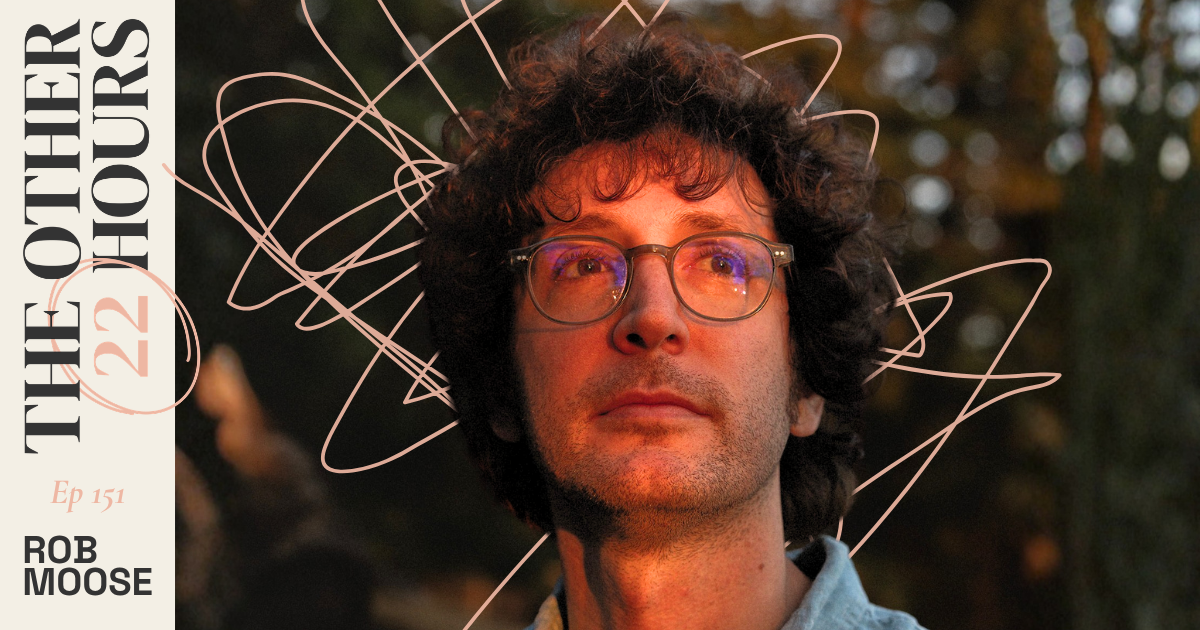
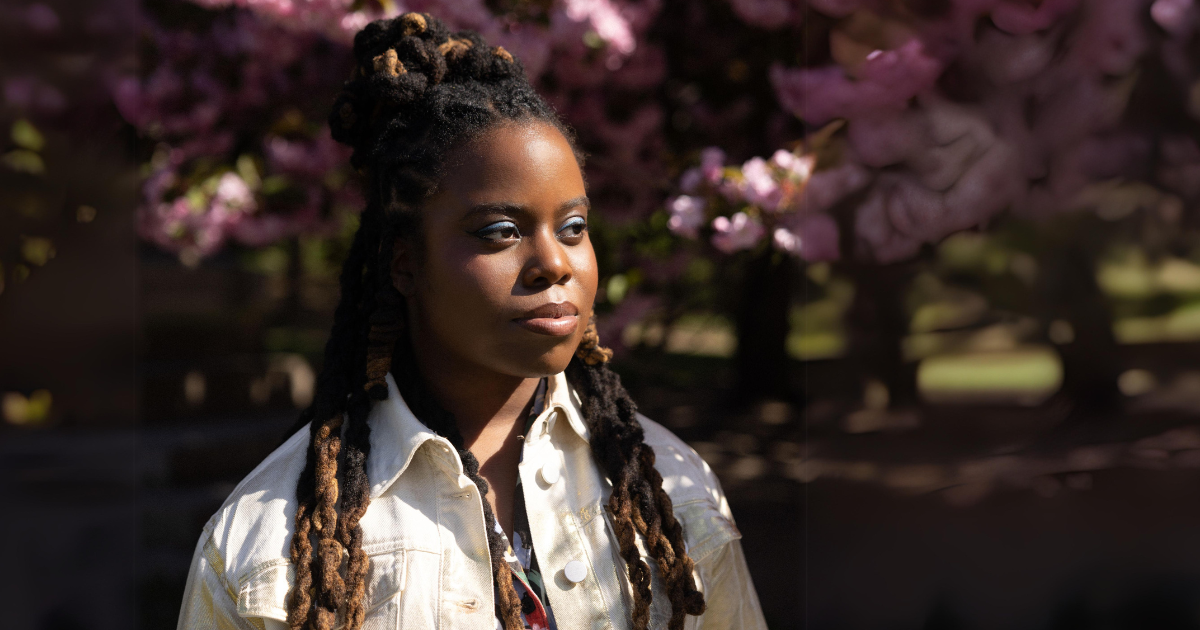
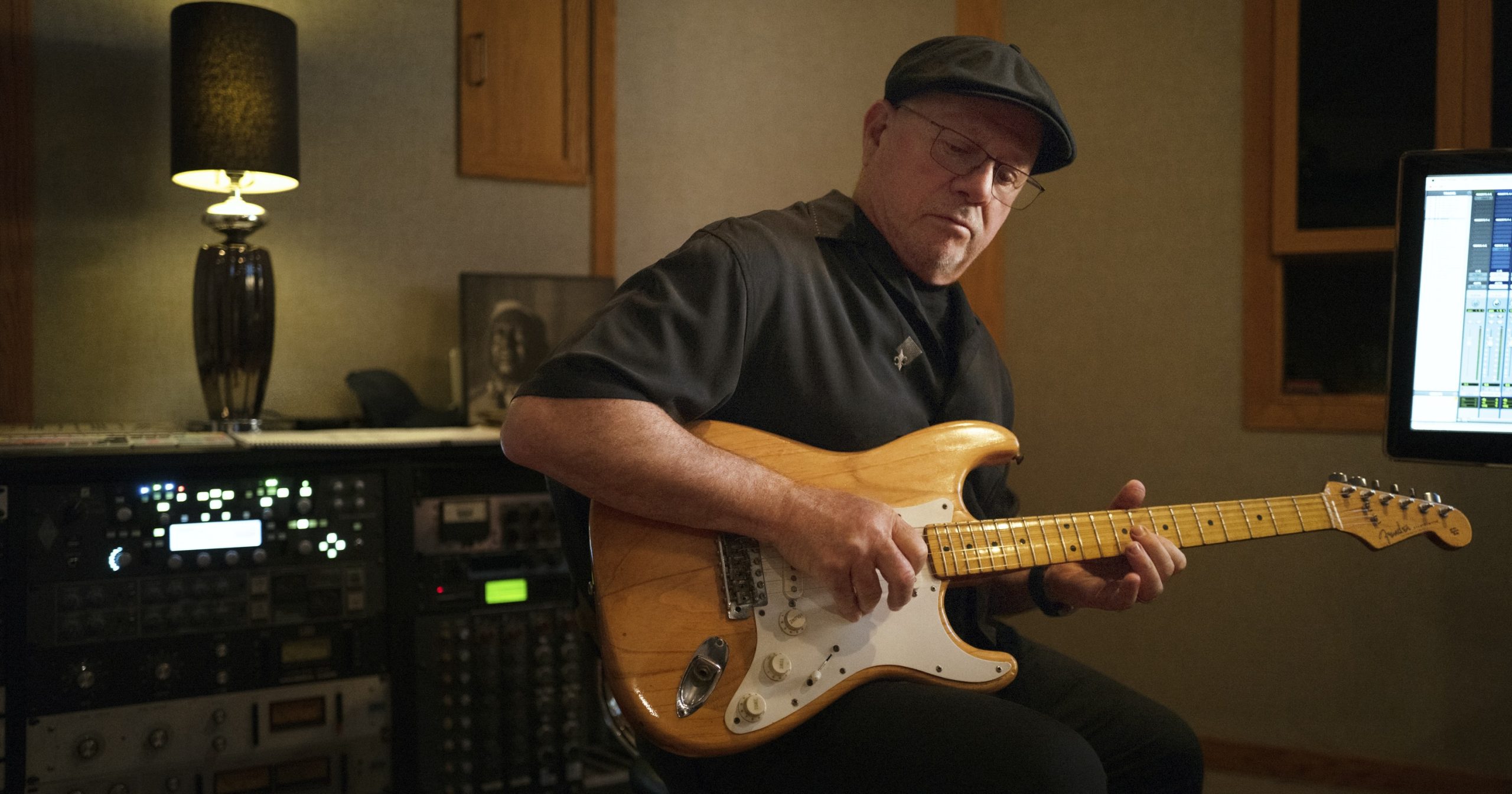
Behind nearly every influential indie-rock and pop record of the last 15 years has been the brilliant mind and hand of string arranger and multi-instrumentalist Rob Moose. The three-time GRAMMY winner has contributed to thousands of records by the likes of Paul Simon, Taylor Swift, Phoebe Bridgers, Bon Iver, St. Vincent, Bruce Hornsby, and Mumford & Sons. In this calming, deeply reflective conversation on The Other 22 Hours, Rob opens up about “peaking” in the live touring industry, the transition to a studio-centric life, and how fatherhood has introduced a powerful focus into his creative process. It is an exploration of legacy, creative boundaries, and why sustaining a 20-year career ultimately comes down to treating music not as an athletic feat, but as a deeply human relationship.
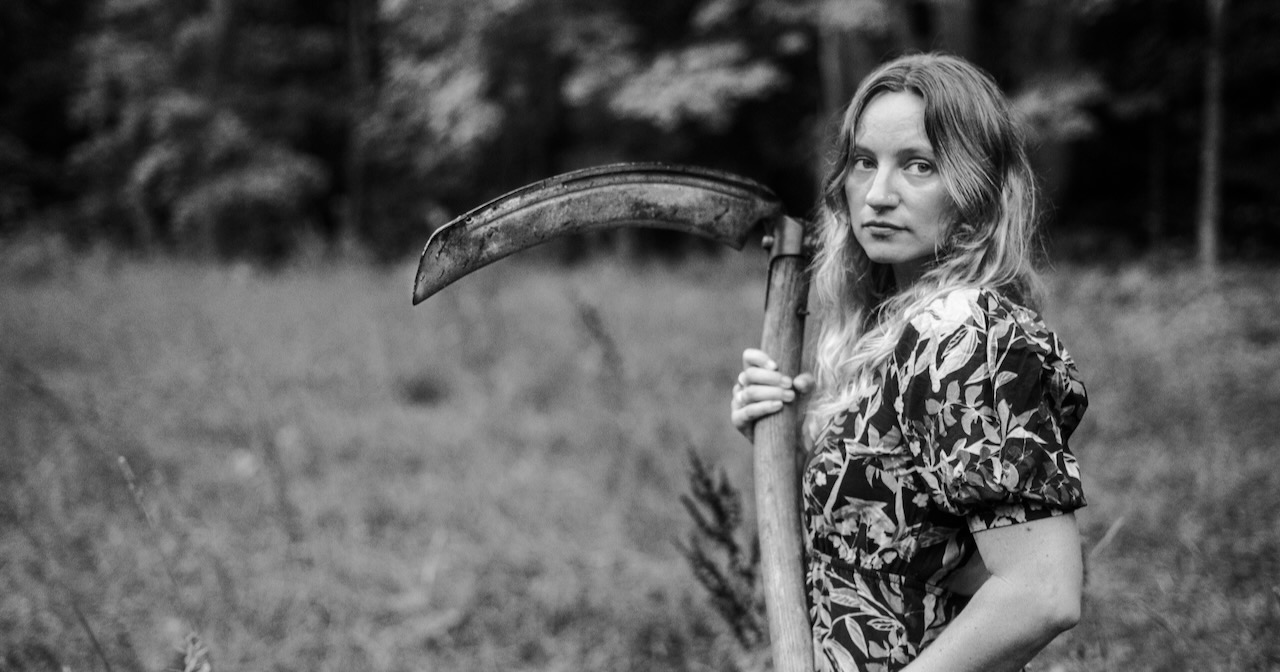
To celebrate our 150th episode of The Other 22 Hours, we try a bit of an experiment: interviewing ourselves, for the first time. After nearly two decades of partnership, we examine the evolution of the creative self. Michaela Anne – whose fifth record, These Are The Days, marks her first in over 10 years for which she retains total ownership – discusses the “massive shift of self” required to walk away from industry gatekeepers. Aaron Shafer-Haiss, whose compositions have scored major network dramas like Station 19 and The Good Doctor, reflects on the “utilitarian creativity” of a producer. It is a conversation about resilience, the “growth seesaw” of a creative marriage, and the realization that the dream is already happening.
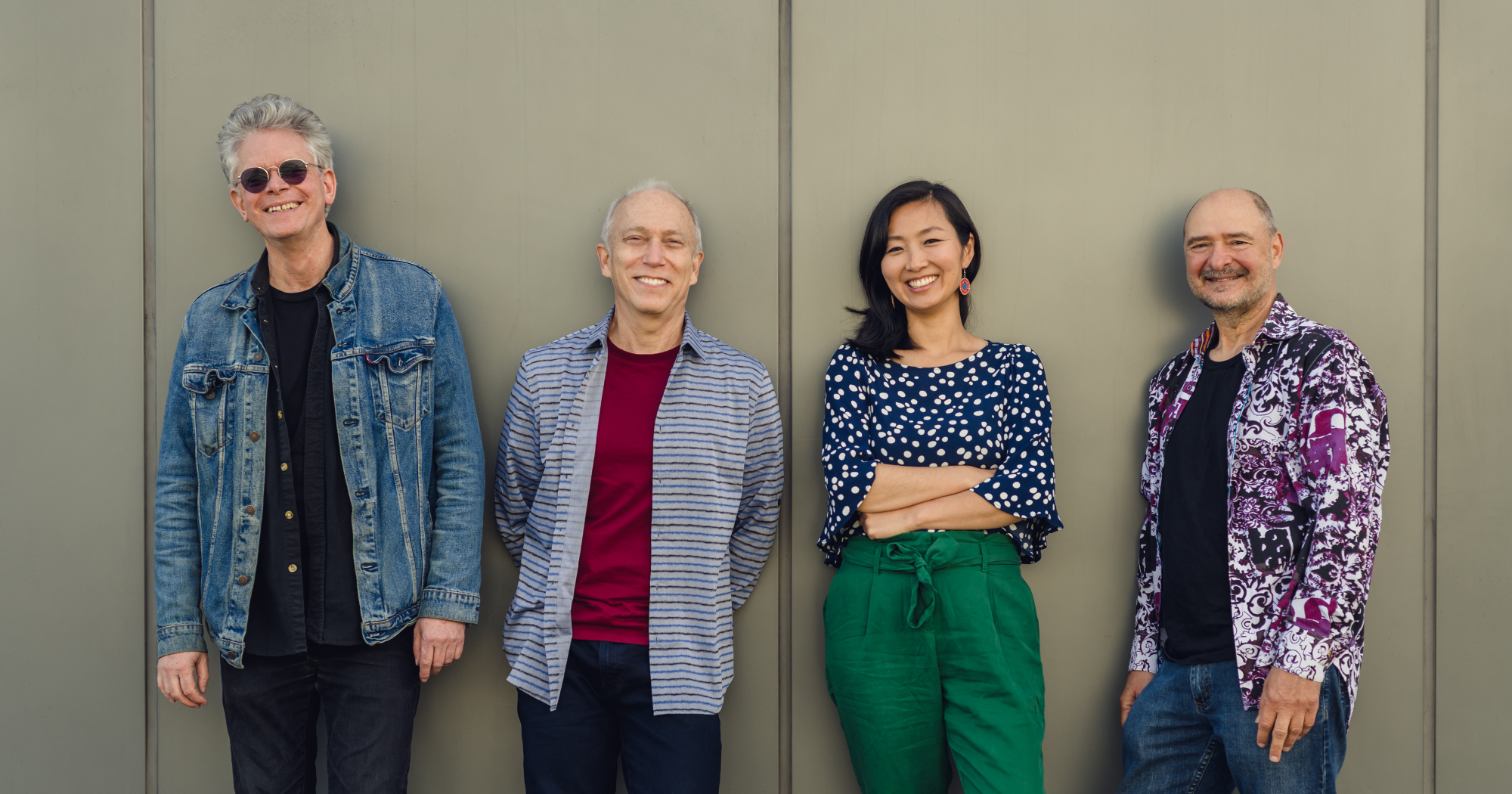
“If Mahalia Jackson were singing right now, I would have figured out a way that we would be able to perform with her,” says David Harrington, co-founder and violinist of Kronos Quartet, an ensemble that in its more than 50 years has consistently set new standards for what a string quartet can be.
He laughs as he leans into the camera on a Zoom from his San Francisco home, his white hair sticking straight up.
“You can count on that.”
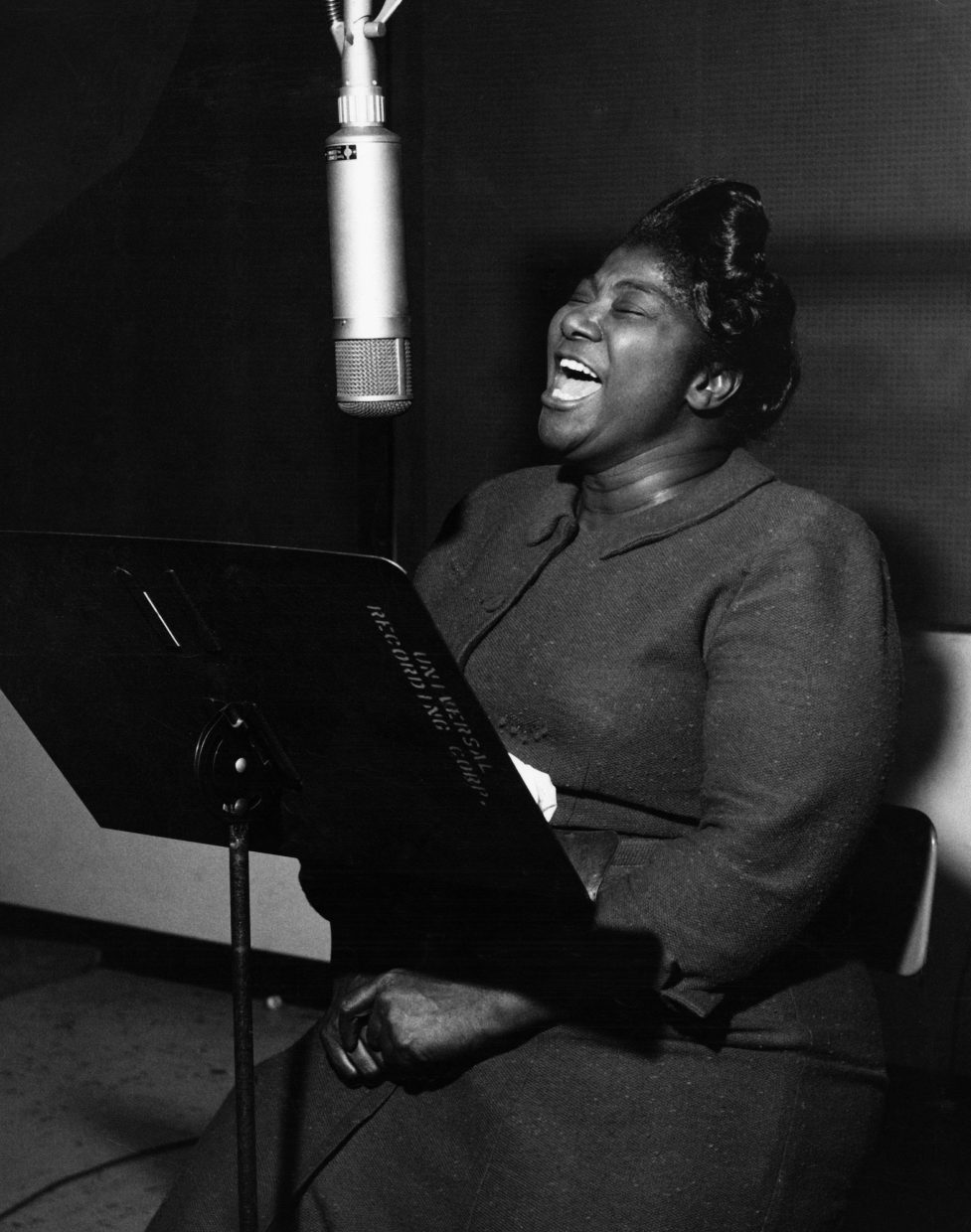
Of course, that’s impossible. Mahalia Jackson, the New Orleans-born gospel singer, voice of the Civil Rights Movement, mentor to Aretha Franklin, confidant of and advisor to Martin Luther King Jr., died in 1972 at age 60. But Harrington got close. A little while back he commissioned composer Stacy Garrop to craft musical settings for excerpts from a 1963 interview conversation Jackson did with Chicago radio host Studs Terkel, a longtime friend of hers, and from performances broadcast in 1957.
The result is Glorious Mahalia, a five-part suite and the title piece of a new Kronos Quartet album featuring the ensemble’s recent lineup of Harrington, John Sherba (violin), Hank Dutt (viola) and Sunny Yang (cellos). It’s insightful and bold, the music echoing and enhancing the conversations, at times cordial, but also at times testy between these two friends as Jackson tells Terkel that he can never understand the experience of Black people in America.
And in one segment, Harrington gets right up next to his wish, as Kronos performs to a recording of Jackson singing “Sometimes I Feel Like a Motherless Child.” It is, indeed, glorious.
Mahalia Jackson photo by Lacey Crawford (courtesy of the National Museum of African American History & Culture.)
This is complemented by another suite, “Peace Be Till,” commissioned by Kronos from composer Zachary Watkins, incorporating reminiscences by King lawyer and speechwriter Clarence Jones as recorded by Harrington about the friendship between King and Jackson. At its core is the moment in a 1963 rally as he watched Jackson interrupt the written speech King was giving, shouting to him, “Tell them about the dream, Martin,” spurring one of the most impactful orations of modern times, the extemporaneous “I Have a Dream.”
An instrumental arrangement by composer Jacob Garchik of Antonio Haskell’s hymn “God Shall Wipe All Tears Away,” based on a 1937 Jackson recording, serves as a perfect interlude between the suites. Kronos has performed the song for years, including a stunning version with Mali’s Trio Da Kali on the 2017 album Ladilikan.
Kronos has long used spoken oral histories in its vast, wildly eclectic career. There is 1988’s landmark Different Trains, composed for the quartet by Steve Reich, juxtaposing audio accounts from a former Pullman porter and survivors of Holocaust transports, and last year’s Witness, by composer Mary Kouyoumdjian, with audio from survivors of the Lebanese civil war and the Armenian genocide. Glorious Mahalia’s themes of social justice also connect to, among many others, 2020’s Long Time Passing, a celebration of Pete Seeger, and 2022’s My Lai, the Jonathan Berger/Scott Chessman opera about the 1968 U.S. Army massacre of a Vietnam village. The new album follows those latter two as the third Kronos release from Smithsonian Folkways.
Harrington discusses all of this in a generous, wide-ranging chat for BGS, edited for length and clarity.
What were your first experiences with Mahalia Jackson’s music?
David Harrington: I think I heard her on television as a kid. But it was Hank Dutt, our longtime violist, who gave me an LP of hers in the late ‘70s. It just blew me away. Have you seen Summer of Soul, that film [Questlove’s 2021 documentary about the 1969 Harlem Music Festival]? Then you’ve seen Mahalia on that. Our family watched it, my daughter, son-in-law, grandkids, wife, and I watched together. And wow, when Mahalia got on, I said to everyone, “I have never seen a singer with a full-body vibrato before!” [Laughs] That was one of the most amazing performances I’ve seen in my life.
Glorious Mahalia springs from the conversations between Mahalia and Studs Terkel, and then it feels like Stacy Garrop joins the conversations with her music, and then Kronos join in too, all of you in a four-way exchange.
That’s a beautiful expression of it. I’ve never thought of it that way. What I wanted to do was hear all the interviews [Terkel] ever did with Mahalia. And that’s where my conversation started with Stacy Garrop. I think she knew a lot about his work, so it started there, really. We wanted a piece that celebrates their friendship and relationship, and what they brought to our society and our country.
It’s not always an easy conversation between Terkel and Jackson. She pushes back on him, even snaps at him that he can never know what it’s like to be her, to be Black in America. Was that part of your process with this, to consider, culturally and experientially what your place is in terms of presenting her views and experiences?
It gets back to wanting to perform with Mahalia Jackson. [Laughs] It’s like, every once in a while I hear a musician – I’m lucky as an explorer of music – I’ll hear something that is just so amazingly powerful. I want to find a way of bringing it into my own experience and that of the other members of Kronos and of our audience. And so I think I’ve been really consistent about that through the years.
The question is, what gives me the right to do that? I guess I’ve never really asked that question too often, because this is what musicians do. I’m absolutely convinced that if Beethoven would have heard some of the amazing musicians in India or various places around the world in his time, he would have wanted to bring elements of that music into his work in some way or another. Beethoven did a lot of transcriptions of Scottish music!
The first thing we hear on the album is Jackson’s voice, alone, singing the words “hold on.” It’s gripping and powerful, and must be even more so in a darkened theater for both you and the audience, hearing that before you even start playing.
Yeah, it’s about as good as it gets!
And then, from there, your task is to enhance and echo and illustrate the tone of her voice.
We’re also commenting, and our role takes on different kinds of complexities, being there as a platform for [Jackson’s and Jones’s] thoughts and voices to exist.
You have a history of projects that let others tell their cultural stories and experiences, from the oral histories of Different Trains and Witness to working with composers and musicians from many different places and traditions around the globe. This one is more centered on one person, though.
It goes back a long way, and thinking how to present this on a Kronos album – not only the voice, but the personality, the force, just the being of Mahalia Jackson. [That] was what I felt would be a good thing to do. That really came into focus when right around the 50th anniversary of the “I Have a Dream” speech, Clarence Jones was on television and he recounted how the speech became the speech as we know it.
When he described that moment of hearing Mahalia Jackson, someone King relied on in moments of need, Clarence spoke of when she would sing to him on the phone. I mean, when you think of anybody in the universe, a leader like Martin Luther King Jr., a civil rights leader, a spiritual leader, and he’s getting sustenance from a musician!
So then the speech is happening and, from what I can gather, she wasn’t quite hearing what she needed to hear from her friend. And so she called out to him: “Tell them about the dream.” When I heard that story I thought, “Okay, I get it. Mahalia Jackson has defined to me the role of musicians, the musical community in our world.” It was so clear. And what we get to do as musicians is listen. We listen to our inner selves, we listen to our families and our friends and our society.
In this case, Mahalia Jackson used her musical ability and listened to Martin Luther King and then gave him feedback. “Come on. I’ve heard you do better.” Now, am I imagining this? I don’t know if I am. I don’t even care, because it kind of defined something for me about my own role and the role of Kronos and musicians. So at that moment I thought, “I need to get in touch with Clarence Jones.”
This project started a few years back, but it’s coming out as the U.S. celebrates its 250th birthday. How does that timing feel, especially with the current political and cultural climate?
We’re doing a triptych, “Three Bones,” that’s premiering at Carnegie Hall [on April 25]. Part one will [draw on] Indigenous cultures. Part two will be African American, particularly Gullah Geechee [of the Southeastern U.S.]. Part three will be Chinese and Chinese American.
I’d like to make an experience that brings these three essential elements of American society to the stage at Carnegie Hall as our contribution to the 250 years. It’s about listening. It is just growing from listening. That kind of gets back to Mahalia.
Back to the idea of a conversation, it seems like it’s not just with Jackson and Terkel, but with the nation, with the cultures and the experiences, and not a static situation from 60 years ago. Does it feel like your relationship with Mahalia, her music, and her mission is something living and evolving?
I am very happy when Kronos gets to play this music on a college campus and for audiences that maybe never heard Mahalia Jackson, never heard about her, [or heard] that an artist can have very powerful ideas about life and our society. [About] what’s good and what’s right, and can express them as beautifully as Mahalia Jackson and Studs Terkel and Clarence Jones. You put these leaders together and it’s very impressive. And I don’t think there’s an expiration date there.
Photo Credit: Lead image of Kronos Quartet by Lenny Gonzalez. Inset image of Mahalia Jackson by Lacey Crawford courtesy of the National Museum of African American History & Culture.
The banjo, a sonic staple of folk and bluegrass, has often been left to its established devices in traditional circles or, more optimistically, among contemporary newgrass like Punch Brothers, the Infamous Stringdusters, and New Grass Revival, which included the genre-bending banjoist himself, Béla Fleck. Still, some musical spaces, like classical performance and composition, remain largely devoid of the banjo despite its lengthy and socially complex history, global presence, and tonal variety. Thankfully, between artists like Fleck, Noam Pikelny, John Bullard, and others, classical compositions have had a chance to shine on the instrument, paving the way for next-generation players to embrace and mix the traditions of classical writing with the distinct sound and musical capabilities of the banjo.
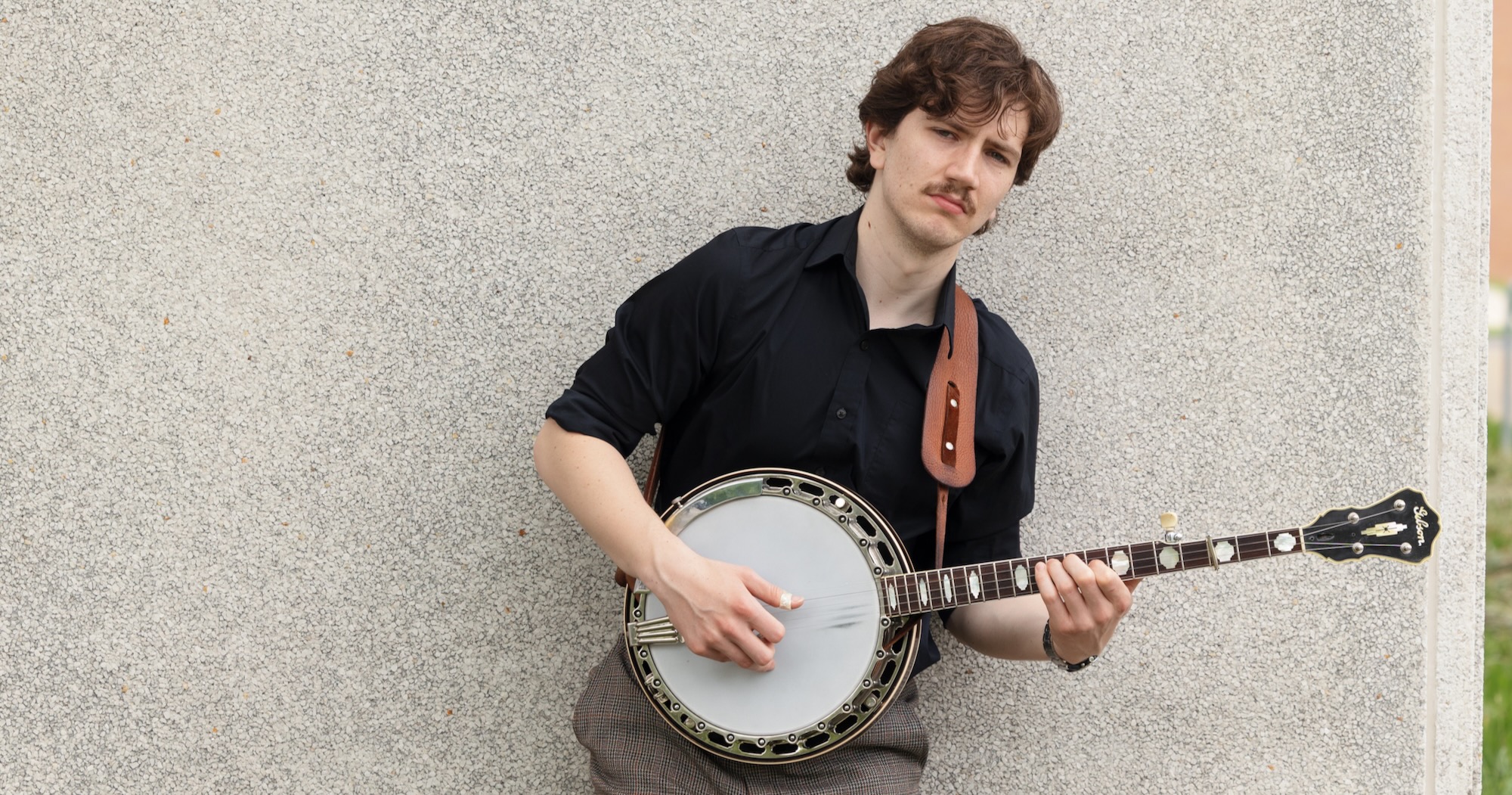
One such figure rising to the occasion is composer and artist Max Allard. A recent graduate of Oberlin College’s Conservatory of Music, the Chicago native is a champion of many cultures and genres in his work, which Allard describes as “an unclassifiable mix of bluegrass, jazz, new acoustic, classical, and pop.”
Allard has brought his stylistic openness to every facet of his artistry, including a duo with his brother Otto Allard; a bluegrass ensemble he co-founded, EZRA, that includes mandolinist Jacob Jolliff, guitarist and composer Jesse Jones, and bassist Craig Butterfield; and his touring support of Michigan-based bands Full Cord and Westbound Situation and Virginia-based band the Hackensaw Boys. Another instance finding him pushing banjo boundaries was his collaborative performance with fellow banjoists Bill Evans, BB Bowness, Cassidy Beentjes, and Matt Flinner in an adventurous arrangement of “In C,” the iconic composition by American minimalist composer Terry Riley, as part of a commissioned work series at the 2025 FreshGrass Festival.
Many of these ambitions grew alongside or after Allard’s studies, giving him several creative contexts in which to nurture his knowledge of classical forms and styles. One of the most impactful of these opportunities was part of Allard’s collegiate work itself: A Concerto for banjo and mixed ensemble. Encouraged by his EZRA bandmate and Oberlin professor Jesse Jones, Allard wrote his single movement work in 2023, giving the world premiere with the Oberlin Contemporary Music Ensemble under conductor Tim Weiss in December 2024. Though the piece has long since debuted, Allard’s vision for what the concerto would accomplish and what the experience of writing it revealed to him along the way remain ongoing sources of inspiration and guidance as Allard continues to write and perform for anyone who wants to listen. (Watch a video of Allard’s Concerto below.)
BGS recently spoke with Allard over the phone, discussing the many branches of his work as an artist and composer. We dive into how each stylistic space blends with his classical training, where he sees the banjo’s place in classical performance, his thoughts on cross-genre efforts by other artists, and more.
How would you describe the journey around your Banjo Concerto and its compositional process?
Max Allard: I had anticipated [the piece] for a while. I had gotten into Oberlin College as a composition major and part of the reason I chose Oberlin is because composition faculty member [Jesse Jones] comes from a background of playing bluegrass. He plays mandolin, some banjo, and guitar so I knew that I would have someone in the faculty on my side to help me, to know where I was coming from and to help guide the path forward in terms of a study and a pedagogy that I had not been taught before. So Jesse told me, “I think it would be great for your work here at Oberlin to culminate into a banjo concerto.”
I had the plan of approaching the banjo as a concert instrument – and as a concert instrument with the supporting ensemble. To do that, I had to get away a little bit from the folk aspects of the banjo in terms of a composition process, while still embracing those same aspects in terms of style.
[The concerto] sort of started as a banjo draft. And something I think is interesting to mention is that people have compared my banjo playing before to piano players and it’s a very valid comparison, because I take a lot of inspiration from piano players like Keith Jarrett, Chilly Gonzales, and many European classical composers like Sergei Rachmaninoff and Frédéric Chopin. I have long thought of the banjo as a very capable instrument to take solo composition very seriously on. I had to find ways to creatively think about which instruments to give various roles to. The nice thing was that I got to pick the makeup of the ensemble. I knew I wanted to have celesta. I wanted to have clarinet, flute with piccolo – there were certain sounds I knew I wanted to include.
I had very specific ideas about which instrument fulfills which role. It’s definitely a string-heavy piece and I’m a huge fan of writing for strings. So I had known that this piece would provide me the depths that the banjo doesn’t always have. I thought, “I can fill out these luscious piano-like chords that I usually like to write on the banjo, with the help of the supporting string section that has a much broader range than the banjo has by itself.” It was actually really liberating for me, because having an ensemble with a very diverse range – not just timbre-ly, but sonically and in terms of highs and lows – I had many options. It was a really great blank canvas for me to further explore creativity without some of the limitations of the banjo, be it physical or range related, or what have-you. I was able to basically apply my banjo knowledge and compositional tendencies to a blank slate, which presented a lot more opportunities.
What are your thoughts on the banjo’s “place” in classical music?
The banjo has a very checkered, problematic history and there’s a lot of moral debate that I’ve witnessed amongst people about what the banjo’s role is. It has had many different roles – a lot of it actually being erased. We talk about the problematic history of the banjo being used for minstrelsy but we actually forget about the banjo’s history of being used in parlor music. For a long time, the banjo actually had a role being played in parlors and social events, and even playing classical music.
I find it funny when people sort of criticize the banjo these days because the reputation has been ruined so much. People tend to think of the banjo with the film Deliverance. That film sort of ruined the reputation of the banjo as being this hillbilly folk instrument that’s not taken seriously. Unfortunately, that stereotype still exists, so people sort of scoff at banjo players who want to elevate the instrument into a certain concert environment.
I think all instruments can be used however people want. It’s like the artist has a final say in how they want to showcase their instrument. But for me, I think I’ll always still want to pay my respects to the traditions of the banjo. And as I said, the banjo has, throughout history, been used in a variety of different contexts. What I try to do is bridge the gap of pedagogic composition and folk music. If we’re talking about my banjo concerto, I want to write well-written concert music but [avoid creating] a totally contrived piece of music that just tries its best to fit the banjo in with an ensemble. I want to at least take my understanding of bluegrass, folk music, and old time music and still amalgamate it with concert music.
What do you find you learn most from other banjo players who have thrived in the classical space like Noam Pikelny, Béla Fleck, John Bullard, and others?
Broadly speaking, if [banjo players] want to put our instruments in the classical space, we need to do our best to understand the way the classic musicians think – really get in the minds of classical musicians. If one, as a banjo player, wants to pursue classical music, it behooves them to get at least a decent understanding of concert music. And I think most banjo players [like Fleck, Pikelny, Bullard] who have attempted that absolutely do have a different understanding. I just think the understanding of how deep it actually goes, what details go into really good concert music – it just takes a long, long time to master. And I am nowhere close to mastering it. But I at least have an understanding of how little I knew before attending [Oberlin].
Are there any aspects of Terry Riley’s “In C” that were especially challenging to capture with this banjo-centric arrangement?
I should give a shout out to Cassidy Beentjes, who did all this arranging – a really good pedagogue of the banjo. In terms of limitations though, the key [was one]. With the banjo’s natural key being G major, we took the piece down to a G-major tuning, so it makes much more sense to play the piece in G, especially since we want to achieve certain overtones. We could have played in C with a C tuning, but a lot of complexity would have arisen from playing in a foreign tuning. We were already uncomfortable in the first place, you know, with a piece of music like this, because banjo players don’t get the opportunity to do something like this very often, so we were careful.
What aspect of your musical identity does EZRA help you to fulfill that you don’t necessarily achieve in the same way with other pursuits?
I’d say it’s a good opportunity to write for a smaller acoustic ensemble where there’s a good understanding of not only folk and bluegrass, but also classical and jazz music.
It makes a big difference when you’re writing for people who you’re friends with – writing for people you know. You want to give people roles that you know they’re going to enjoy doing and that they do well. When I write for EZRA, it’s definitely much more stripped down and basic than if I were writing something like the banjo concerto. Because with the banjo concerto, I give very specific instructions, I supply a whole score with those specific instructions for everyone to read from. And when I’m writing for EZRA, usually I’m just writing lead sheets, just chords with the melody. In terms of arrangements, that can be discussed in the studio.
It’s funny though, because anytime we’ve recorded a record, we’ve had such limited studio time that we have to get our act together in just 72 hours or so and make our arrangements studio-ready. But again, that’s freeing for me, because I can write more vague ideas, stuff that I would not feel as intrepid writing with a big ensemble. When I’m with EZRA, I can just do whatever the heck I want and know that we can get away with it in some way. It’s also definitely a great opportunity for me to write contemporary folk music that is absolutely rooted in folk and bluegrass but also has all these other influences. A lot of Béla Fleck influence, a lot of classical music as influence – all kinds of stuff. It’s definitely a very special opportunity for me.
What’s the most unique aspect about the duo you perform in with your brother? How do you both approach playing together?
I guess the main thing that stands out is just the brotherly synergy. My brother is the easiest musician to play with because we know each other so darn well. Not much has to be planned – there’s almost never any stress. We’ve played plenty of gigs where we haven’t rehearsed at all beforehand and it goes pretty well just because we can glance at each other a certain way and know exactly what we mean musically. We’ve also played gigs where like a half hour has gone by and the whole thing is improvised. We just weave sounds together and it’s great.
It’s great to have a brother who plays music because it’s just that very intense, personal connection that one has with their sibling. You know each other so well that no communication really has to be done verbally. In general, playing with my brother is just very fun because we make crazy, spontaneous decisions and do ridiculous things that we would not do in any other setting.
Do you think the folk and bluegrass communities could better embrace the banjo being a genre-versatile instrument? And do you think that schools or community spaces are the best starting place to initiate that shift?
If I were talking to a banjo player who wants to get into classical music, I would say you can learn just as much by surrounding yourself with the right people. I think the most viable option is to try to meet some people who come from that background. And it can be any background. Like, say you want to get into a certain style – find musicians who can do that and try your best to talk to them, befriend them, whatever you can, and surround yourself with that. I think community is always important in the arts. Definitely, it’s very important to surround yourself with people – not even not necessarily like-minded people – but people who have very different experiences and very different backgrounds. Personally and musically in any way.
I think the bluegrass culture and scene could definitely benefit from opening themselves up a little bit. I think sometimes we forget that bluegrass has a very progressive foundation to it. Even Bill Monroe valued when he heard New Grass Revival. He was supportive of it, supportive of all those people who were taking bluegrass in a different direction. So I think it’s very progressive by nature. And music has always evolved and always will evolve and it has to sort of be accepted.
I think the banjo is actually in a very good place right now, because we’ve never had so many banjo players. It’s very good because the banjo is becoming popular for the right reasons – not necessarily gimmicky reasons, with banjos being used in pop music – but it’s being taken seriously amongst musicians from all different types of backgrounds. Broadly speaking, I don’t have too many complaints. I think it’s in good hands.
How many years does it take for a musician to master the music of Johann Sebastian Bach? This isn’t the start to a joke, but the answer to the question can be a bit amusing considering that, for Chris Thile, there’s no such defined number of years or fixed amount of time.
It’s an apropos viewpoint for the GRAMMY-winning mandolinist, composer, vocalist, and collaborator to have, given that Thile is reviving a Bach-related pursuit he began more than 12 years ago. In January 2013, Thile recorded three of the six works that make up Bach’s Sonatas and Partitas for Solo Violin. That August, he released Bach: Sonatas and Partitas, Vol. 1. The logical question following the record’s release and enthusiastic public praise was, “When would volume 2 arrive?”
There’s no disputing the abundance of professional endeavors and musical collaborations that Thile dove into since then, recording with the likes of Yo-Yo Ma, Brad Mehldau, Edgar Meyer, Punch Brothers, and Nickel Creek; winning a MacArthur “Genius” Grant; hosting Live From Here; releasing other solo albums; and even creating a new musical variety show with Claire Coffee, The Energy Curfew Music Hour, which just released its second season on Audible. The extended wait has been understandable. Still, it became difficult not to wonder if Bach’s sonatas and partitas would ever see completion in Thile’s extensive and stylistically diverse discography. Thankfully, Thile renders the other half of the collection on a new solo recording, Bach: Sonatas and Partitas, Vol. 2, released November 7.
The undertaking sounds simple enough: record the remaining two partitas and one sonata. However, Thile embraces Bach’s work with a completely different aim from the first volume. Vol. 1 stayed true to Bach’s written intentions as much as possible. Now, Thile has allowed himself to consider his inner desires for what he feels the music needs – particularly where his music-making process is concerned.
The result is music that is not only pristinely performed, but also offers moments that occur naturally as Thile puts each piece together. Whether that means the ethereal decay of an individual harmonic, harnessed and expanded to ignite a particular feeling between movements I and II of Partita No. 3 in E major, or listeners’ ears traveling from one place to another as a piece blends audio from two completely different settings – like a concert hall, public park, or Blackberry Farm. Vol. 2 is an enlightening peek into Chris Thile’s mind and a bit of a walk in his shoes. In fact, he goes so far as to say that the process of learning Bach’s music is eternal, ongoing, and personal to every musician.
“It’s never done,” he says. “I think you could keep living and growing with Bach forever. But god, what a rewarding process!”
Chris Thile spoke to BGS on a call from Ann Arbor, Michigan, amid a cluster of solo tour dates. He reflects on the different ways musicians become inspired to explore Bach’s music, some of the very subtle but unrelenting dissatisfaction he encountered during the recording process, how practicing Bach is like practicing yoga, and much more:
Given the profundity you view Bach’s music as having, how did you negotiate its iconic place in music history with your desire to explore the possibilities you feel when listening to it, learning it, and making it part of yourself?
Chris Thile: I think that almost every ambitious musician’s relationship with Bach begins when someone tells them they should check it out, you know? Some of us just encounter it in the wild and have a major moment with it, but for me, my grandmas on my mom’s side – my grandma and my step-grandma – they both are excellent pianists and taught piano, performed a bunch, and both are gigantic Bach fans. When they realized their little mandolin-playing, bluegrass grandson was pretty serious about music, they were like, “Well, this boy needs to know about Bach!”
Sometimes it takes an expert to tell you that something is amazing and that you should see what’s there in it for you. And, sometimes, you’re just intrinsically aware of the thing’s value. I think mine was kind of both that helped. Having these women in my life who were so important to me tell me that this guy was really, really good helped [foster curiosity].
When [my grandma Sal] sat me down with Bach, it was with Glenn Gould’s second recording of The Goldberg Variations. She was also underlining that Gould’s performances of the music were more notable. That, I think, impressed itself on me, too; that we don’t have recordings of Bach playing Bach. So someone makes those for us or we make them for ourselves. Then it introduces this other music-making entity into the equation.
That’s a big and very long transition going from “Bach, the Almighty” to Bach, a human being whose music I am interested in having a real relationship with. And by “real relationship,” I mean a two-way, back-and-forth conversation. Yes, the text is fixed, but you can still have a living, growing relationship with it. And it takes a long time to learn how to do that. I think it’s lovely to have people giving you advice along the way.
You’ve said that practicing Bach “is like practicing yoga” and that it’s something you do everywhere you can. What does that mean for you?
Being someone who plays Bach and being someone who does yoga, I did want to figure out a way that the recording could represent that [connection] – the living, changing, growing, aspect of being someone who interacts with this music regularly. That these pieces could go from one place to another, potentially mid-movement. And then realizing that would also potentially mirror my experience of playing the pieces.
Because it’s not like I’m only playing them in my workspace. I might play them at the Elbphilharmonie in Hamburg and then a couple months later be at a Hampton Inn in Carbondale, Illinois. Or, it’s just too nice outside and I gotta practice outside today. So, multiple locations ended up serving two ends: wanting to be able to utilize the studio and [all that’s] possible when you’re recording music, to trying to figure out a way to sonically represent that life of practicing Bach.
Did you have a lot of thoughts on Bach going through your mind even while planning Season 2 of the Energy Curfew Music Hour?
Yeah! That was all happening concurrently. Every now and then, Punch Brothers would be in a practice room and I’d show my bandmates something, [asking,] “What do you think of this random thing I’m trying to do with the C major Fuga?” Just trying to get a read on people and playing a little bit of it on the side, to see if I can gauge a natural reaction to it and see if that gives me any ideas for future shenanigans. And it definitely did.
You’ve said that once you hear something in your head and enjoy it, you have to chase it until your ears tell you differently. That making peace with that aspect of your musicianship “is actually kinda the B story of this whole record.” What does it mean for you to “make peace” with this facet of your artistic spirit?
I am compelled to make this music. I don’t always understand the nuts and bolts of why I think it’s important to do it. First and foremost, I love the music. I love hearing other people play it. I love it on the page, I love the physical sensation of playing it, and I love the sound of me playing it.
But then, as is my custom, I’m voice memo-ing myself playing [the sonatas and partitas]. I heard the voice memos back and did not like how it sounded. There was something insincere about it. It was very, very strange, like something reflexive. It was almost the sensation of seeing video of me back and having some sort of physical mannerism that I was unaware of and not liking it. Or like, hearing the tone of my voice on a recording and thinking, “That’s what I sound like?” I think we’ve all had that sensation before.
So it was really disorienting and vexing, my perception of what was happening: the music that was actually being made was so off and somehow struck me as inauthentic and non-additive – and like regurgitation. So I had to do something.
The thought struck me, “I’m not ready to make this record.” The way I approach making music has changed over the last 12 years. I went back into this music thinking that my methods from when I was 31-32 were gonna be great and yield a good result. I just like to get my hands dirtier these days. The musician that I am takes everything down to the studs and blends it with everything else that’s swirling around in my musical life. That’s what I do. That’s how I make music. It’s how I write music and it’s how I approach performing any other music besides Bach. I think my reverence and awe that I hold [Bach’s] work in was preventing me from actually engaging with the music the way that I do with every other piece of music in my life.
It was scary for me, because I’m not any less reverent of what Bach did. I don’t love it any less. I don’t think it needs to be different. But when it’s me playing it, it has to go through my process, like everything else does, or else it doesn’t sound sincere and doesn’t sound authentic. That was an almost painful realization to have, and to have to basically scrap an approach and build a whole new approach to working on this music. But again, it wasn’t a new approach. It was just applying everything I know about music to Bach for the first time.
What was your intention when you decided to record in different settings – New York City’s Reservoir Studios and Tomkins Square Park, Tennessee’s Blackberry Farm, and Farrell Recital Hall at Murray State University – as well as choosing to merge audio together?
The different locations thing was part of the initial impulse, in terms of turning the thing into an actual record. It was a fairly radical move – to go from just recording in a nice studio or nice hall and getting a great sound and letting that be the sound and playing the music.
There were two reasons to do it: One of them is that, increasingly, I feel if you’re going to make a record, you should utilize the studio as an instrument. You should make sure that you’re using the medium. I guess it’s not a “should.” You can utilize the medium. For me, I’ve made a lot of archival records where really it’s just, “This is what happened in the room. Enjoy!” But I’ve realized about myself that often, when I’m listening to an archival recording, I have FOMO or something. I wish I were there, because clearly this happened in a room just like this and imagine if you had been there when it happened.
Whereas, I don’t have that when I’m listening to something that’s really taking advantage of the tremendous tool that the recording studio can be. For example, a record like Radiohead’s Kid A, where it’s something that can’t happen live. If you had been there in the room, it would have been really interesting to hear them discover the sounds. But then the flight that performance takes in the hands of a great engineer, who’s been set free in terms of exercising their own creativity in the mix environment, or artists who are very hands-on during that part of the process.
Again, it’s like a performance that’s happening over the course of months, even years at times. What happens live in the room is part of it. And then what happens in the editing booth is part of it, and what happens in the mixing room is part of it. If you’re going to make a record, it’s just interesting to note the difference. You can use the studio as an instrument or it can merely be the camera with which you’re taking the snapshot of where you’re at with a piece of music at a given time. I wanted to mess around with the former on this album.
The more I listened to something like that in my head, the more I liked it. The more committed to it I became, the more I considered, “[What if I] allow myself to record these things in multiple locations and even stitch performances together from from very tangibly different environments?” Really, sort of leaning into the surrealism of it. Now you’re in a studio and now you’re in a corner of Tomkins Square Park in the East Village. If I’ve allowed myself to do something like that, then what wouldn’t I allow myself to do?
Track 10, the first movement of Partita No. 3 in E major, I. Preludio, ends with nearly 13 seconds of ominous, rising, distorted feedback that pivots right into the clean first notes of movement II. Loure. What role is that very intentional ending meant to play?
It wasn’t something I knew that I needed until I had everything quote-unquote “done.” And then it was like, these moments in this medium need a little extra something. To give the [Partita No. 3 in E Major II.] Loure this kind of psychodrama towards the end of it was important to me. And then to prepare that [piece] with that crazy delay loop, grabbing that last harmonic [in the first movement, Preludio] was also important to me. So I asked my mixing engineer, Joseph Lorge, to find something. Bless him, I love what he found. That is almost like the harbinger of what’s going to happen on the Loure. What happens during the Loure was really important to me, artistically. But then I wanted there to be some sort of trumpet call like, “Hey, look out. Something’s coming.”
What stands out as something unique about making Bach’s music more your own this time around, especially knowing this is a solo endeavor?
There’s so much in today’s society about “Be yourself!” “Follow your dreams!” I’m talking about how important it is for me to have a two-way conversation with this music and not just revere Bach to the point that I’m taking myself out of the equation as a creator.
But we are so “Me, me, me, me” now. “This is me, just deal with it.” It can be really interesting to consider, “What happens when you expose yourself to the taste of other people?” It’s ultimately going to happen anyway, but what if there’s a practical concern? Can you go through that kind of exercise? It’s one of the reasons I love being in bands. In Punch Brothers, for instance, I need [all four of my bandmates] to be as happy with the music as I am. It’s not done until then. When I make music by myself, I have to figure out ways to trick myself into considering more than just me while I’m doing it.
[However,] you do have to make sure that you’re pleasing the only ears that you actually have any control over pleasing, which are your own. That’s first and foremost. But yeah, you’re always looking for any way to give shape to the very nebulous process of creating something from nothing.
What do you think musicians and composers of today can learn from Bach’s approach to music that would bring today’s songs, performances, and practice mentality closer to the timeless, ever-insightful, and continually inspiring nature of Bach’s work?
One thing that I keep trying to learn from Bach, just as someone who does try and write music or make it all the time, is how much of his art was happening anonymously. He had his professional duties – as he was a court composer and then he was a church composer – so there were those things, where he was writing music for very definite purposes with very definite deadlines. A ton of it was really theoretical and him working on the craft without any promise of getting a reaction out of his fellow humans – really his own curiosity and work ethic and desire to know and discover.
So I’m constantly thinking about, “Are people going to like this? Is it going to help me grow my audience? Is it going to help me make rent? Pay the mortgage?” Of course, [Bach] had those kinds of concerns. I think human beings in the early 1700s were not immune to ego. It’s not like Bach didn’t care what people thought of him – I’m sure he did. But I’m also sure that [thought process] took a very different form in those days and I think being able to make music – just for the love of it and with the patience that it takes to really explore your materials – is a thing that I at least keep trying to learn from Bach.
Carolyn Kendrick is known among folk and roots fans as a fiddler with legitimate trad bona fides and as a singer-songwriter prone to introspective, observational songwriting. In the podcast zone she has carved a place as producer, researcher, and composer for several shows, including the award-winning You’re Wrong About podcast hosted by Sarah Marshall and Michael Hobbes.
In fact, it was while Kendrick was researching the “Satanic Panic” of the 1980s for an episode of You’re Wrong About that she became obsessed with cultural panics in general. That obsession ultimately led to her haunting new album, Each Machine, which released December 6 on Occulture Records.
Last month, from her home in Los Angeles, Kendrick explained the album’s genesis.
“I’ve been thinking a lot about lineage and tradition lately,” she says. “… I’ve been thinking of all of these songs that have these deep traditional roots, that I’ve been listening to and learning and singing around campfires with, you know, friends at bluegrass festivals and folk festivals for years and years and years.”
The songs that were standing out to her all carried some darkness, a little shadow of the devil. She started wondering what might happen if she decided to reinterpret some of them in a way that asserted her personal instincts. “That includes things like more electric instrumentation, more sound design, more world building,” she says. “Not for it to sound inflated, but what if it was part of a more extended concept rather than just, you know, individual songs?”
To explore these curiosities, she enlisted the collaboration of her friend, multi-instrumentalist, and fellow Berklee grad Isa Burke (Aoife O’Donovan, Mountain Goats) to help her flesh out the sonic landscapes that are sure to envelop Each Machine’s listeners in a creepy, devilish fog.
Indeed, the album’s swallowing darkness even pervades on deceptively welcoming songs like “Sumer (Sing Cuckoo)” –sung here in the traditional round, a cappella except for some decidedly spooky timpani wallops. As a result, and in the context of so many songs about the devil, the duo’s approach feels particularly untouchable, like the story of a photograph of a memory of lighter times.
Then again, Kendrick felt compelled to include it amid her exploration of panic. As if to say: Perhaps the light is gone for now, but the nature of summer is that it returns.
To that end, she notes: “It was really, really fun to be able to take these older songs that have such a rich lineage and reinterpret them with the lens of … the issues that we’re going through as a people right now.”
This side of the 2024 election, most topical interpretations are probably incidental – she wrote the album long before votes were cast. But, while Each Machine implies a general warning about what happens when humans become wrapped up in an historical moment, it also becomes specific, for at least one track, on the topic of women’s health.
Track nine is a spoken-word piece Kendrick has titled “Sugar and Spice.” For fifty-five seconds, the listener is treated to a collection of recordings about what it is to be a woman in America. From the nursery school rhyme from which the track gets its name to a news report about the overturning of Roe v. Wade, the track ends with a distant crowd of protestors chanting about abortion. This is followed by the artist’s take on the trad song “Wind and Rain,” about a pair of sisters competing for a man’s attention: In pursuit of her prize, the one shoves the other into a river to drown.
Kendrick isn’t wasting anyone’s time being subtle about her views here. Then again, where’s the room for subtlety amidst panic?
As The New York Times reported in 1994, the Satanic Panic encompassed “12,000 accusations of group cult sexual abuse based on satanic ritual.” The same Times article clarified that none of these events seem to have actually occurred, but the fear they provoked in the public was definitely real. As a folk singer drawn to moments of cultural import, digging into the Satanic Panic caused Kendrick to consider the way these “panics” might be connected.
That she tied in songs about the devil; ruminations on a view of Earth from space; what womanhood requires of us; and even the poetry of Rainer Maria Rilke means this is not an album meant to be background music. To be sure, the musicianship and arrangements are lovely, but the spoken word bits are necessarily jarring.
Over and over, the disc interrupts itself with interludes that pull one’s attention back – from feeling to meaning – before moving into another song. This tennis match between the heart and the head reaches its apex about halfway in, when Kendrick pivots between two separate recordings, “Are You Washed” and “In the Blood.” Between them sits a spoken word piece (the title track) which feels intimidating and disorienting.
Her decision to include two interpretations of the one song was inspired by Naomi Klein’s Doppleganger. That book, Kendrick explains, “really changed how I’m thinking about how we receive information.”
“As Americans,” she adds, “our media diets are so different and atomized from one another. And there’s also this confusion within the conspiracy landscape that we live in right now. … How can we be receiving the same information and interpreting it so differently? … [So that song is] an experiment. How do I approach one thing and look at it from all different angles? And how will that make me feel differently?”
Indeed, Each Machine is clearly trying to get through a whole lot of questions. And in just eight songs, it somehow achieves its goal. In addition to the questions already mentioned, there’s the Satanic Panic of it all. What, then, does fear – of the devil, of freedom, of technology, of one another – teach us?
As she sends Each Machine out into the world, Kendrick is clear that the lesson she learned is that she’s grateful to have a creative outlet to help her find light in darkness.
“I had been going through all of this really difficult subject matter,” she says. “… I had so many feelings of distress and worry – and also of hope. [I was in] this flurry of all the big emotions that we go through [when] we’re dealing with reality. I needed a place to put all of my feelings about moral panics, I guess.”
Oscar Wilde said, “If a thing is worth doing, it is worth doing well. If it is worth having, it is worth waiting for. If it is worth attaining, it is worth fighting for. If it is worth experiencing, it is worth putting aside time for.”
Composer and guitarist Yasmin Williams can certainly relate to the sentiments in Wilde’s reflection. Williams – who went from New York University in 2017 to releasing her first LP in 2018 to performing across the world – says when she picked up the acoustic guitar, it was about “trying to become the best guitarist [she] could be.”
Though a straightforward aspiration, and one that Williams has pursued fervently between the release of her debut album and now of her third record, Acadia, Williams has lived through ups, downs, and unknowns of the music industry, which have shifted her goals along the way. Particularly between 2020 and 2024, when Williams wrote the songs that would become Acadia, the inherent nature of public visibility and the process of establishing herself in the music landscape led Williams to discern what exactly is worth doing, having, waiting for, attaining, fighting for, and experiencing as a musician. It’s this amalgamation of inner realizations and external escapades that make Acadia the compelling journey it is.
Listening to each piece is like exploring a miniature world. Songs like album opener “Cliffwalk” unlock the door to an event memorable to Williams and all the emotions that came with it – performing at Newport Folk Festival and writing most of the song the night before, with the rest unfolding as an improvisation on stage. Pieces like “Virga” and “Dream Lake” reflect the duality of positive and negative challenges that come with nurturing a career as a musician. The two tracks are fittingly written with this direct connection to the other in mind.
Acadia as a whole is brimming with collaboration, a potpourri of artists, instruments, and culture, songs like “Harvest,” “Hummingbird,” and “Dawning” speak directly to what can grow from embracing new friendships, communities, and the unique creative resonance that can be found therein.
Acadia may encompass a fixed window of time in her life, but much like the many meanings of its title and Williams’ own ethos for the album – a place of peace, a place where creativity can blossom – the project endures as an oasis, a reminder from the past thriving in the present that scatters new seeds for music in the future, as Williams continues to walk down a trail of her own design.
Speaking with BGS by phone before a tour that will take her across the U.S. and to the UK later this year, Williams talked about the value of empowerment and patience, the expectations of the music industry, insights that came from producing her own music, and more.
What was the evolution of your vision for Acadia like and how did things develop as you met new artists and had so many new experiences from 2020 to 2024?
Yasmin Williams: I wasn’t really envisioning the album being as expansive as it is. Back in 2020 and even before that, I was still focused on just trying to become the best guitarist I can be, trying to become more confident in my playing and more confident in my abilities.
When I played Newport Folk Festival [in 2021], it gave me the confidence and the encouragement that I needed to realize that I can actually do this for a living – be a professional musician. It definitely lit a spark and after that, I realized I should take meeting people more seriously. Not necessarily networking, but just trying to make friends with musicians that I’m meeting at these festivals since I keep seeing the same people. That’s kind of how the collaborations came about: Just me being not afraid to tell people, “Hey, I really like your music. I’d love to do something with you,” or people telling me that and me not being afraid to follow up with them because, I guess I dealt with some sort of– I don’t want to say, “inferiority complex,” but like, I feel like the musicians that are on the record have been doing their thing for long time. I’d be afraid to reach out to people and ask them to collaborate with me.
After 2021, I got over that fear, which helped immensely. That led to the collaborations and that led to me thinking, “My next record can be what I want it to be but, I can also invite people to do things that I cannot do.” Like, I don’t play saxophone, I don’t play drums. I’m not super comfortable singing on my music yet and inviting all of these people to do those things really created the atmosphere and the universe that I wanted for Acadia. I wanted it to be something that my other two records aren’t necessarily, which is a more expansive kind of universe.
How did you approach conveying themes, motifs, or emotions when writing music to include others versus writing for yourself?
Every song was different. As far as [asking myself], “How does this person fit into the theme or the emotion that I’m trying to present?” What I did was, I told the collaborator, “Here’s what emotion or mood I’m trying to evoke here. Does this make sense to you? Do you think you can do this? Let’s figure out a way to do it.” I gave them slightly free reign, but help if they needed help figuring something out.
Where does your dedication to informing folks about the social and historical aspects of music, and the prospect of personal responsibility around that, fit within your music career?
It took me years to figure out if I even wanted to be involved in making people aware of the historical aspects of the music that I was playing. I also had to learn a lot about music that I was playing and about folk music in general, because I didn’t really grow up listening to folk music at all or bluegrass or things like that. So I’ve learned a lot in the last five, six, seven years.
Things changed when I finished [my album] Urban Driftwood. Just remembering, going to protests up here in Washington, D.C. when George Floyd’s murder happened and seeing all of the political unrest and social unrest around here where I live, and obviously seeing it on the news everywhere else definitely made me change my mind. As far as being open about, for example, speaking about being a Black female guitarist, which is not something I really wanted to do in my late teens, early 20s. I definitely came around to it and now see it as a necessity.
To me, social media is a great tool to try to help educate folks, because there’s so much online at our fingertips that’s just factually incorrect. Anything I can do to try to help mitigate that, I think is good. I think it’s important for me now to be involved in the full scene in a way that’s positive and educating people – to just get involved in things or be involved in ways that I’m interested in. I’ve always been a history nerd anyway so to me, it makes sense now to do that, whereas before, I guess I just wasn’t mature enough to understand why I would have to be a musician and educate folks and have a social media presence. But now I don’t have a problem at all.
What would you describe as the most challenging aspect of making Acadia and how did you wade through that experience?
Figuring out how to finish some of the songs. I realized I have to let time pass and let it come to me. “Sisters,” for example, I came up with that melody like, two, three years ago now? And it was stuck being a two-, three-minute song for years. I thought, “This doesn’t feel done.” But I couldn’t come up with anything. Then, the night before my recording session, I came up with four extra minutes of material. For me, I can’t force the issue of finishing a song. It just kind of has to come to me. And whenever it comes, it comes. And these songs, some of them took a really long time to get finished. So that was probably the most difficult part of it.
What was the most interesting new musical technique or process you explored while making Acadia and why was it so meaningful?
Producing was the most interesting part of it; hearing what people heard in my music was by far the most interesting aspect of recording. Just hearing how people process it, then hearing what they do in response. Pretty much everyone grasped what I was trying to accomplish in the song that they’re featured on.
For example, “Hummingbird” with Allison de Groot and Tatiana Hargreaves. They both come from a more, I guess, old-time tradition, which is very different than [the kind of song] “Hummingbird” is. It took a little while for us to kind of get the song in the studio, because the song is very difficult, first of all, to play. But they absolutely nailed it. Hearing how they heard the timing and the syncopation and the melody, and the melodic aspects of the song, and how they thought, “Okay, I can fit in here and drop out here and harmonize here,” it was really interesting to see how people’s brains worked and how it’s so different from how mine works but it somehow fits together pretty seamlessly.
How did you discern your feelings when a collaborator might encourage you to try something new, versus deciding to stay true to yourself and your voice as a composer and musician?
I feel like I was more so bringing the collaborators to a different place that maybe they weren’t used to and pretty much everybody who’s on the record was willing to do that and go to somewhere new.
Once the recording process and collaboration process got started, it was really easy for me to just tell people, “Okay, I want this, this, and this.” And most of the time, people are just like, “Yeah!” With Darlingside and the song “Virga,” I made it clear that I actually wanted them to do lyrics and then we worked on that. They were open to it for the most part so for me it was easy. But maybe for some of the collaborators it was about getting them out of their usual music making mode and into a more open-minded mode.
Being ready to make an album like this, it took living life and having different experiences.
Whether or not you realize it, the majority of people reading this have been listening to Mike Post’s music for a very long time. Like, a lot of it.
Post is the guy behind the theme songs to Magnum P.I., Hill Street Blues, Quantum Leap, The Greatest American Hero, and countless others. He even invented the famous Law & Order “DUN-DUN.”
But that’s only part of the story. Post began his 60+ year career as a member of the mythologized Wrecking Crew, becoming a Grammy-winning record producer who has worked with the likes of Kenny Rogers, Dolly Parton, and Van Halen whilst finding his niche in the television world with frequent collaborators Dick Wolf and Steven Bochco.
Now, Mike Post adds another chapter to his biographical tome, having released Message from the Mountains / Echoes of the Delta – an ambitious double album that blends his love of bluegrass and blues with his orchestral pedigree.
BGS co-founder Amy Reitnouer Jacobs sat down with Mike for an in-depth conversation, covering everything from Aaron Copeland to Earl Scruggs to Eddie Van Halen.
Amy Reitnouer Jacobs: Mike, what was your introduction to roots music? Because there is a long history, I think, of bluegrass and folk in Los Angeles that a lot of people don’t expect or understand. How did you get into bluegrass and Delta blues specifically?
Mike Post: I think I was first attracted to the harmonies and the melodies that are common to Irish music, to bluegrass, to the blues. There’s this modal sort of a thing that all those genres share, right?
Maybe even as far back as lullabies… My mom used to sing me this Irish lullaby, “Too Ra Loo Ra Loo Ral,” and I still remember it. And then I recall the first time I heard The New World Symphony and Grand Canyon Suite, things my parents were playing when I was 4 years old.
But, like every other white middle class kid from the Valley, when [Flatt & Scruggs’] Foggy Mountain Banjo album came out, it was like somebody handing you the Bible or the encyclopedia or something. I had to understand everything about it.
It wasn’t like [just] one thing that happened. It was a mishmash of The Kings: B.B., Albert, and Freddie. Flatt & Scruggs led me back to Monroe, which led me to Jim & Jesse and the Osbornes, and then I just drowned in this stuff.
This is not just a roots music album though, and I think you’ve kind of just touched on this in saying about how many different things you were pulling from. This is a record that has a really epic scale, often only saved for symphonic pieces and movie scores. It evoked Aaron Copeland the second I heard it. But it also has some of the most legit roots music players in Los Angeles on there, like Gabe Witcher, Herb Petersen, and Patrick Sauber. How did you get connected to those folks for the project? Did you already know them?
I met Herb when I was 18. You know, he just moved down from Berkeley. He’s about six months older than me, but we actually met at Hootenanny Night at the Troubadour. He was in a band called the Pine Valley Boys from Northern California, I had this five piece folk group; we were sort of like an expanded Peter, Paul and Mary. I had a Gibson 12-string and I’m a finger picker.
I heard [Herb] before I met him and I went, “Who was that?” And through Herb, I’ve known Gabe since he was a little boy.
Actually, I hadn’t worked with [Gabe Witcher’s brother], Mike Witcher before. And I’ve heard and worked with the best guys. So when I heard Mike, it was shattering to me because he is so soulful. You know, he’s not the flashiest, overplayer in the world. There’s a lot of them out there that have brought it to a place of technicality and speed that phenomenal. But Mike’s got the thing that Josh [Graves] had, which is the way he vibrates.
You can’t find much more authentic, better bluegrass players than the guys that are on this record. And the reason both the blues piece and the bluegrass piece are weird is because I’m weird.
You know, I’m a rock and roller folky that learned how to read, write, and orchestrate. So the idea for this was an odd idea. It only happened because my TV shows were on the beach, because of COVID. So I’m sitting there with nothing to do and I’m driving down to the desert to play golf. And I go down this Spotify bluegrass rabbit hole. I heard a couple of things I hadn’t heard before. And it just struck me.
I said, “You haven’t done anything scared you in a long time.” Not that I’ve been coasting – I’ve been writing music for television shows and producing some records all this time. But as a composer, you know, I’m the guy that at 23 years of age did this record, Classical Gas, which was supposed to be kind of off-the-beaten-path. I thought, well, why can’t you combine the orchestra and a bluegrass rhythm section? Not just a single fiddle player or a dobro player or a banjo player or a guitar player. Why don’t you put the five guys in front and have a conversation?
To have those things feed off of each other is really the formality of an orchestra and the improvisation that comes with bluegrass. It works really beautifully.
Thank you. I didn’t even know whether this was going to work. But I did it the old way… I got my drafting board out and my papers and pencils and score paper and did it by hand.
The we went into the Sony scoring stage in Culver City and had 80 players, genius orchestral players come in and it was thrilling.
Because orchestral recording, at least for television scoring, is more rare these days, has this inspired you to want to do more? To not just compose for picture?
It certainly was a different kind of rewarding. You know, working with pictures is fun because it’s so collaborative. They bring me their art and I put my art with it. Hopefully the whole thing’s more artful, right? But the truth is, I’m so satiated. I’ve been a member of the union since I was 16. I’ll be 80 in a few months. I’m still working. I was in here this morning working on the last episode of the season of SVU and still enjoying it!
One thing that I have noticed throughout your career is you consistently surround yourself with great collaborators that also seem like friends. First there’s your time starting with the Wrecking Crew and producing Kenny Rogers & the First Edition. Then there’s your ongoing projects with Steven Bochco, Stephen Cannell, Dick Wolf. Can you talk about those friendships and returning to work with people that you love and trust over and over again?
You’re never going to find anybody more fortunate than me. I am – it’s a corny word cause everybody overuses it – but I am blessed. It’s supposed to be a treacherous business, right? Supposed to be a business of people elbowing each other out of the way and climbing over bodies and litigation and getting screwed by the man and by the club owner and the record company. That never happened to me, none of it. I’ve been treated great. So why not give that back in double?
You know, I’ve been so fortunate to meet Steve Cannell before he’d ever sold a script. To be musical partners with a guy like Pete Carpenter… we worked together for 17 years. We wrote 1700 hours of music together for TV and never had an unkind word. So, you know, that’s the way my life has gone. Cannell led me to Bochco, Bochco led me to Dick Wolf. Cannell, Bellisario, Bochco, Dick Wolf. We did all kinds of stuff together, musically and film-wise and fun-wise and business-wise.
I just have never embraced the competitiveness. I’ve either made dear friends with the people I work with, or hired my friends, or the guys that hired me were already my friends. Wow, who gets to do that?
I moved out here to LA to work in film and then kind of stumbled into my musical life. But the whole time, I only wanted to surround myself with good people. It’s not about the competition. And it always surprised me, I guess, how revolutionary that seems to some people.
Speaking of working with your friends, I would be remiss if I didn’t talk about your work with Eddie Van Halen. Eddie is such a consistently referenced and venerated artist by some of the biggest bluegrassers today, like Billy Strings and Bryan Sutton. I read that you and Ed were friends before you produced Van Halen III. What was it about your musical sensibilities that attracted you to work together?
Let’s be honest. Eddie Van Halen is not the first martian that landed on the face of the planet, okay? Look at Mozart! Fast forward… how did Earl Scruggs sit there and go… [imitates the banjo]. Every once in a while, a genius shows up and changes everything.
After becoming friends, Eddie turned to me and he said, “Hey, will you help me with something?” I said, “Sure. What?” And he said, “I’d like to do one sober.”
I’ve never done any drugs. And Eddie knew that. So he said, you know, you can help me do this without any substance. And I went, am I producing an album or am I the sergeant at arms at the door? Am I your sponsor? And he goes, man, I don’t know, both? And I went, all right, fuck it. Let’s go.
Basically all I did was get out of the way. It’s not a very good album. It’s nobody’s fault. It was an experiment. Unfortunately, [Alex Van Halen] was going through a terrible time in his life. So Al didn’t play on that. Eddie played everything. It just didn’t have magic. That’s all.
Ed was right on that trail of genius martians that look at music a different way. And no one else is ever going to do it like that. That’s just once. When you study Mozart, you look at it on paper and you go, “How in the world did that happen? Look at that.”
It doesn’t make sense, actually. That’s the beauty of it.
Exactly. It doesn’t make sense.
The last thing I wanted to say is what a fan I am and to let you know how grateful I am for taking the time today. I was going through your catalog last night and realizing how many of the songs you have written have been true soundtracks of my life. I kid you not when I tell you that “Hill Street Blues” is still my ringtone on my phone. So, uh, I just need you to know that I still love that song.
That really makes me feel really happy! Sometimes [I look back at my career and] I don’t know that I actually believe that emotionally; I believe it intellectually. I go, “Oh yeah, that’s me up on the TV.” Like, did this really happen to me?
In Their Words: “The song was written after my first visit in Soave, Italy in 1999. It was the first festival I ever played. I was so happy and overjoyed from the experience of the festival that I started writing when I got into the backseat of the car. We were driving from Soave down to Rome for a show and workshop, and I wrote this song on the way there. I got it finished and played it that night at the show. I tried to give it a sort of Spanish feel in the bridge, because I had met a lot of Spaniards that weekend at the festival. Bella Soave means ‘beautiful Soave.’ It’s a beautiful place and has been a big part of my musical life.” – Tommy Emmanuel
Ethan Setiawan knows the importance of a good pick. The Portland, Maine-based mandolin player has lately been experimenting with changing the entire sound of his instrument through one tiny, flat piece, pinched between his fingers. The material, girth, texture, and weight of his pick all play a crucial role in how his mandolin sounds, sometimes bright and plucky, or dark and full-bodied. “It’s good to have a sound and have gear that you like, but often the thing that helps me be more creative is just being able to change it up,” he says. “Change is helpful for your own growth and can really spark new ideas or keep things fresh.”
On his new record, Gambit, he finds himself somewhere in between, which is fitting given the way he fuses his entire musical background to create something completely new. It isn’t jazz, but it’s not not jazz. It’s bluegrass, but not in the traditional sense. It’s funk, but also old-timey.
The Berklee College of Music grad could easily fool you into thinking he’s much older than his years. A seasoned bandmate to some of bluegrass music’s finest — including Gambit producer Darol Anger, whom he first met as a high school student — Setiawan is beginning to carve out space for his own songwriting. Written in Boston, workshopped in California, recorded in Maine, and then mixed in Nashville, Gambit, as its title suggests, is a joyful mixed bag of the many styles of music that have shaped him into one of the most formidable mandolinists of his generation.
BGS: Darol Anger produced this record, and though you had been playing together for some time, this was your first experience working with each other in this capacity. What led to this partnership?
Ethan Setiawan: We’ve played a bunch of gigs over the years, and it just felt like a good next thing to do was to make a record with him. And he was on board thankfully. We had plans to [record] in August 2020, and then the pandemic started to happen, and it became apparent that wasn’t going to work. So eventually I did make this big road trip out to California where Darol was living at the time, and we had these really nice couple weeks out there, working through the material, just me and Darol kind of playing through the stuff, trying to solidify arrangements and get ideas down on paper to go into the studio with. And eventually in October, we made it into a studio, the Great North Sound Society Studio in Parsonsfield, Maine. We had this four-day session and worked probably 12 to 14 hours a day, every day. And sometimes sessions like those feel like work, you feel tired and drained after a day. But at least for me, those sessions felt really fun, really good. Part of that was not having played music with a band before that time for six months or whatever, and it was cool for me to see these tunes come together, and just working with Darol and seeing how he functioned in the studio. He put in the longest hours of everybody. He was up until 3:00 every night, replacing fiddle parts and working on everything.
The tunes on Gambit are all originals, but there’s so much tradition rooted in these styles of music you’re playing. How do you reconcile that when trying to create your own compositions?
I do a lot of that, pulling from past traditions or old recordings. A lot of the compositional ideas and things that remain the same throughout the record are tunes by people like Matt Flinner and Béla Fleck, other people that have kind of pushed the envelope compositionally. On the record there’s kind of a whole, well, gambit of different styles. There’s old-timey music with fiddle and banjo, Appalachian string band [style] — and kind of in chronological order, I guess the influences would start there. Then you’d move into bluegrass, get into jazz and eventually fusion, funk, that kind of thing. Darol actually summed it up nicely. He was in the David Grisman quartet way back in the day, so he kind of had a hand in forming this style of music. He said something along the lines of, it felt like a journey through the past 40 years of his career. It just ended up this way that all these tunes grabbed from different areas of the past 40 years. The old-timey, the bluegrass, the sort of new acoustic, the jazz. And hopefully by merit of them being my tunes, they kind of hold together as a collection at the end of the day.
How much of creating an original arrangement is improvisational?
For me, there’s always a lot of throwing paint at the wall. There’s a stage that kinda looks like that, where I write a lot of tunes or even just generate a lot of ideas, not even taking the tunes to a completed state. The way I write is kind of two stages: there’s the melody and there’s the harmony, these two sides of the composition. Basically, I write the melody and I try all different combinations of notes and phrase endings. With chords, I’m always trying different stuff. That does a lot to create a mood, I think, for the tune. For any one note, you could harmonize in many different ways, and for any one bar. So I think the important thing for me is just to try all the options, really try to be objective, and see what works the best and what feels the best. Mandolin is the main thing that I play, but I also play some guitar and some cello. So just getting off the instrument I’m most familiar with and getting onto something else can be really helpful in sparking some creativity.
Given this wide range of styles of music you’ve played over the years, how do you describe your sound now?
I’d say that it’s sort of a furthering of the stuff that Darol’s been really involved in, this new acoustic sound. Which is not a label I totally love—just the sound of it—but it’s kinda what we got, I guess. It’s using the attitude of bluegrass in a lot of ways, but not being confined to the stylistic trappings of bluegrass if that makes sense. If you think about how Bill Monroe created bluegrass, he’s kind of the guy that finally took all these influences and put ‘em together and said, ‘here’s the thing.’ He wasn’t even trying to be original; he just was being original. He was just taking all the music that he liked and synthesizing it into what he wanted to hear. And that isn’t often actually the attitude of bluegrass musicians today, but it’s an interesting concept to me and a really interesting way to sort of look at music. So that’s the essence of bluegrass that I’m trying to go after.
How has your relationship with bluegrass evolved since your earliest experience with it?
I think bluegrass is kind of the underpinning of everything that I do, even if it’s not at the forefront of the final product. When I started playing mandolin, I started playing these old-time fiddle tunes, which pretty quickly brought me to bluegrass. When we’re talking about progressions, that is kind of the natural next step for somebody who’s interested in the tunes and the music and improvising especially. You’ll get drawn to bluegrass and then eventually to jazz and so on. That bluegrass vocabulary on the mandolin is really the basis of most of my writing and my playing. And I think that comes through on the record almost more in the way that we approach the tunes and treat how we play the tunes more than the compositions themselves. There are a couple tunes that are a little more bluegrass, but they’re always a little weird. There’s always something a little funky about them. It’s sort of the attitude of the thing that I think has stuck with me the most.
Photo Credit: Louise Bichan
This website uses cookies to improve your experience. We'll assume you're ok with this, but you can opt-out if you wish.AcceptRejectRead More
Privacy & Cookies Policy
Privacy Overview
This website uses cookies to improve your experience while you navigate through the website. Out of these, the cookies that are categorized as necessary are stored on your browser as they are essential for the working of basic functionalities of the website. We also use third-party cookies that help us analyze and understand how you use this website. These cookies will be stored in your browser only with your consent. You also have the option to opt-out of these cookies. But opting out of some of these cookies may affect your browsing experience.
Necessary cookies are absolutely essential for the website to function properly. This category only includes cookies that ensures basic functionalities and security features of the website. These cookies do not store any personal information.
Any cookies that may not be particularly necessary for the website to function and is used specifically to collect user personal data via analytics, ads, other embedded contents are termed as non-necessary cookies. It is mandatory to procure user consent prior to running these cookies on your website.