Becoming Himself, Mon Rovîa Helps Us All on Our Journeys of Becoming

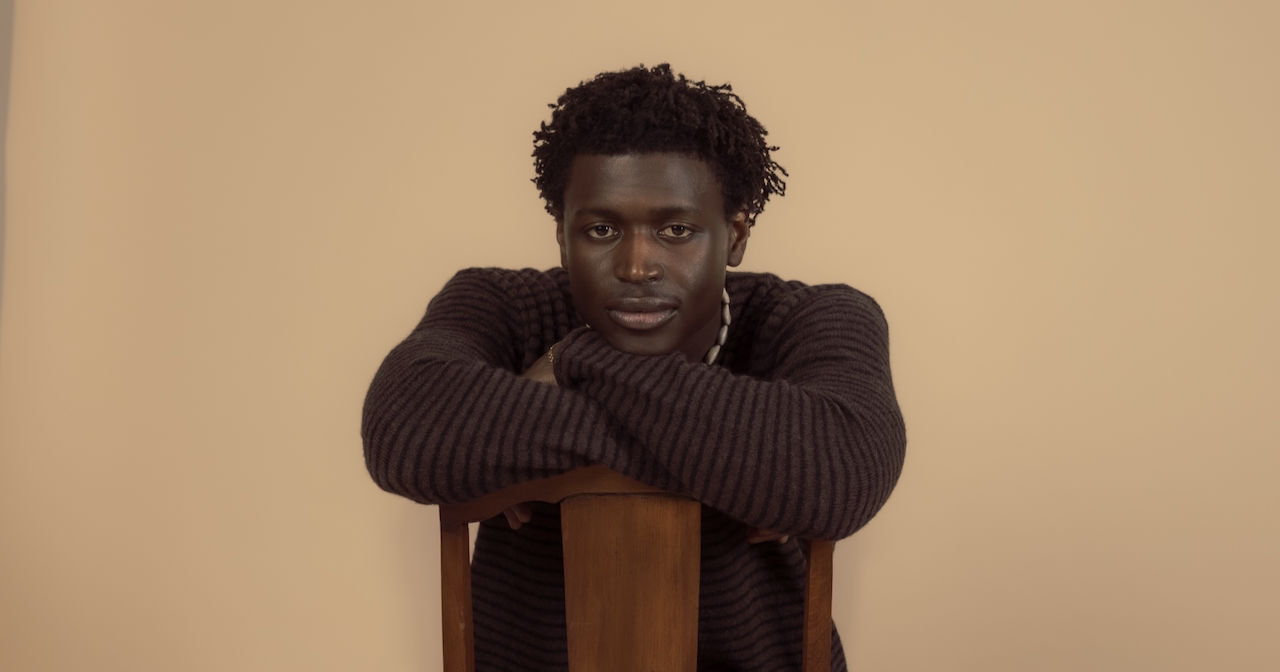
Mon Rovîa has kind eyes. Unassuming and watchful, he’s spent a lifetime reading the room and taking the temperature of the situations he’s found himself in. As a child, he was quiet. These days, he exudes calm. When he speaks or sings, people listen closely. If his eyes are kind, his voice is empathetic. Soft and soothing, it embraces the listener like a warm hug from somebody who knows how it feels to be lonesome and wouldn’t wish it on another. Only a fool would take this kindness for weakness. It’s a vulnerable strength, tempered over time in the fires of resilience.

By now, Mon Rovîa’s backstory almost feels etched into stone. Born in Liberia, on the Atlantic Coast of West Africa, he was adopted by Christian missionaries during the violent bloodshed of the Second Liberian Civil War. He traveled with his new family through the Bahamas, Montana, and Florida, before settling by the grandeur of the Appalachian Mountains in East Tennessee. From a young age, he has lived in complexity, contrast, and displacement, a questing soul searching for meaning, purpose, and his place in this world.

As he reveals in our Cover Story interview, he still hasn’t found what he’s looking for. However, through music, Mon Rovîa has uncovered a trail to walk along. In recent years, his distinctive Afro-Appalachian folk music sensibilities have earned him a devoted audience through social media, regular releases, and touring.

Across his debut album, Bloodline, he offers memoir and testimony, sharing yet more chapters from his remarkable story. Written and recorded in Los Angeles with producer Cooper Holzman, the album crystallizes his early promise into something timeless, sublime, and deeply needed. In late December, he made some time to reconnect with BGS.

This is more of a provocation than a question, but the highest compliment I could give your music is that it makes me feel that if we all listened more closely, there would be less need for questions.

Mon Rovîa: Thank you very much. That is beautiful. I’ll have to dwell on that.

When was the last time you cried?

I cried this year. That’s a crazy question, because I ask my friends at least once a year, “When was the last time you cried?” or “Have you cried this year?” What made you ask me that?

You seem like an emotional guy.

I guess I am. I’ve cried a couple of times this year.

It’s been a big year. How has your life changed over the last 12 months?

It’s interesting. From the outside, your friends and family see your life changing in a lot of different ways as they watch. Going through it as the artist, many things remain the same for me. I still spend a lot of time trying to reach something, and only I know where that satisfaction lies.

People can look at [what’s] outward and say, “Oh, he’s reached something.” The hard part, probably many artists go through this as well, is that deep down, the search always continues for something that hasn’t been answered. I couldn’t tell you what this is.

There’s the question of ego as well. I always think about these people, like Bill Withers, who were able to do what they needed to do before stepping away from the spotlight.

I hope I’m more of a Bill Withers. My personality leans towards silence and not being seen in general. I could see myself disappearing at a certain point. That would be nice.

Do you think there’s an inevitability to the pathway you’re on, or could you have become someone else?

I definitely think there are other things I could have been. I look back at the circle. The start of coming from Liberia as a young kid, surviving the war, being adopted and taken to the States. From there, I could have become many people. Perhaps it would have been sports, or a person who was not well-known, working a 9-to-5 job, clocking in and out. I also think about the choices I made. You could look at some of them and say, “Those were really bad choices,” but each thing is a step, a piece of this road we walk.

In the end, all of it became the better choice, because everything – the good and bad choices on the journey – led me to where I am now.

It’s great to spend a lot of time making and playing music, but everything that happens in between writing or recording songs is just as important.

You’re right. I did odd jobs. I worked the grounds, mowing lawns. I made flower beds. I was in tech recruitment. I worked at restaurants. Getting paid nothing. Getting yelled at more than getting paid. I took it in. I learned. All of these things became different parts of the story. They became different chapters of songs and elements.

I was thinking about what André 3000 said when OutKast were inducted into the Rock & Roll Hall of Fame: “Great things start in little rooms.” I agree with that, but I also think great things start as a response to big expanses.

I spend a lot of time in a little room with a ukulele, just singing into the ether, but I need both: the silence of a little space, the expansiveness of the world, and the opening of that as well.

19th-century Dutch painter Vincent van Gogh had this thing about bringing permanence to the impermanent. A flower will last for a season, but his paintings of those flowers still endure with us today. We can immortalise something through painting, or do the same with song.

I find from the artist’s standpoint that is, perhaps, the goal: to make something that is immortalized, that surpasses your own life, and carries on when you’re no longer here or present. I think that would be the greatest achievement. If there were an end goal to make something that lives on longer than I do, that would probably be the biggest joy of my life as an artist.

What does water mean to your music, and could a river be considered a bloodline?

Water is the source of all things. Rivers remember where the headwaters lie. They know where they come from. They never forget, no matter how far they come from the source. Bloodline for me is exactly that. It’s a reclaiming of remembering. A lot of the time in the States, I tried to forget. I wanted to assimilate into an American way of life that is built on forgetting. Over time, music brought me back to remembering the cornerstone of my life, the headwaters – which are Liberia, West Africa – and the gift of being able to make something out of a lot of pain, turmoil, and uncertainty. So water is crucial.

When I think about your story, how and why you left Liberia, and what has happened since you arrived in the United States, I think about how this was all preceded by an even more complicated story. As you’re reminding us, it goes deeper and deeper.

There’s truth there, and it’s crazy to me, too. I love that you brought this up, because there are a lot of people who live on the land here in America who don’t even have that in their consciousness, don’t even understand the relationship between the two countries in a way that isn’t talked about. It’s complex. The Back-to-Africa movement. Monrovia after President [James] Monroe. It’s embedded in the very fabric of the country of Liberia. A lot of Liberians feel a kinship to America, but they don’t understand that America doesn’t think one bit about that.

A fascinating thing about cultural exchange is how, through the good and the bad, it can create new cultures. It’s so deeply woven into the foundations of country, folk, and bluegrass: the musical techniques, the instruments, everything. I imagine you often meet people who are excited to tell you about different musicians, scenes, and eras from the past.

Yeah, people have. Growing up, I was pretty locked into a religious space. I listened to a lot of Christian music, but I had no idea about mainstream anything. That wasn’t based on living in Liberia either; it was just the family I was adopted into. I’ve been enlightened by things in the past, and people have referred to music. More importantly, I’ve learned some things on my own from Appalachia and folk music. As a Black man, one of the things that kept me away from the [folk music] space for a long time was feeling like it wasn’t mine.

The truth of the matter, as you have brought out so well, is that a lot of these things do come from cultures that have mixed over time. Slaves were brought over from West Africa, but they brought those instruments, sounds, and sang those songs. That’s another thing that has been stolen along the path, whitewashed, you could say. It’s been beautiful to reclaim things as they’ve found me unknowingly. I’ve learned a lot by looking back on that. It’s been super special to know that I do have a heritage in this space. It’s a beautiful thing.

How important is food to your music?

Food? How important is food to my music? Well, as someone who doesn’t eat that much food, I tend to be quite empty when I make songs, play shows and stuff. I don’t know why.

Do you think you fast for your art?

Yeah, I fast for my art. Perhaps I’m more filled by what music brings to me lyrically and sonically. Food, I guess, is a necessity to live, but for the soul, it’s music. You’ve got your body, but then the soul has to be higher. What’s filling that for you? People have to ask themselves that question.

Something I notice everywhere is people looking to country music and the culture that surrounds it for some form of direction. We’re two and a half decades into the 21st century, living in what used to be considered the future, and yet so many people are looking backwards through rose-tinted lenses.

If we look closely, the rose is very much withered. You can look back and romanticize the South, and its culture, as everyone in the States is doing; they love to be cowboys and farmers, but you know the hardships and the pain that this land has brought, right? Let’s look back on that, if we’re also going to look back and romanticize this. The piece of clarity people often miss in the whole system is the truth, the full truth.

The truth is ugly.

The truth is ugly, but I’m wondering, though– at least for me, there was a time when it was ugly, but the acceptance of it in my own life has brought some sense of beauty at the same time. Once you see the truth – which you know well – it will never leave you. That’s why people are afraid of it. That’s why they never look at it. They don’t want that thing to haunt them through time.

You give a lot of yourself through your music. How do you fill your own cup?

Honestly, being in nature. Being back home in Chatt[anooga], and also being very far away from music. That’s how I refill, 100%. When I’m back home, I do little things, like going back to where I started, which is being on TikTok, playing for these people. I didn’t know them. They didn’t know me. But they raised me up. So I give back that time. I’ll never stop doing that. No matter how big Mon Rovîa gets, I’ll always go back to the people in that space. That fills my cup.

Also, playing soccer. I play tons of soccer. Outside of music, it’s my favourite thing in the world. I would probably drop everything to be a professional soccer player.

If you’ve spent time in Europe, Latin America or Africa, you know what time it is. For many people in many parts of the world, soccer is more important than life or death. It is the game.

I never get tired of playing soccer. I play all the time. It’s my favorite thing and a big part of my joy. Also, my community here has been so beautiful to me. Whenever I get to be home for a long time, I’m just preparing to be filled, and then hopefully ready to pour it out when the road calls again.

It’s important for an artist to have a relationship with a place and its people. There is a value in being accountable to a community, and having a community that is accountable to you.

I would agree. They get to ask me questions about things I struggle with on the daily, and how I’m actually doing as an artist. People who don’t know me might say, “Man, touring must be the best thing in the world?” They’ll want to see if it’s just parties and going out every night in big cities. It’s not like that for me, but maybe it is for some artists.

How many years do you think it takes to become an overnight success?

I don’t know. Nobody knows the years someone has been working towards something like this. What’s your answer?

Five to ten, but people won’t always be transparent with you about how long they’ve been trying to get there for.

That’s a good point.

@mon_rovia_boy WBU?! This is “heavy foot,” from my debut album “bloodline” which is finally OUT NOW 🫂 #folkmusic ♬ Heavy Foot – Mon Rovîa

The other thing about being a musician or an entertainer is you’re operating in a space where you can easily spend 25 years being 25.

Yeah, and for some reason, it’s allowed. Maybe that’s why people don’t take musicians too seriously until they become really big. It always just seems like a hobby, or like you’re trying to stay young. I’ve always wondered about that. Even with my work, some people don’t understand that it’s my job. I’ve been fortunate enough to be able to pay some bills and live okay, but they’ll still talk to me as if I’m still looking for the dream. Like, “How’s that going? Are you doing okay?”

But maybe there’s a point: so many people grow older, but their mind and spirit stay the same age. I’m not sure whether our dreams should be all-encompassing. I think it’s good to dream, but when you have that big dream, you need to have little dreams as well, things that can come alongside the bigger picture and also bring life to you, because everything is fleeting, right?

Before we wrap up, I wanted to ask you something. When you think about everything that had to happen for you to arrive at this moment, how does it make you feel?

I’ve actually been thinking about this a lot, the feeling of it. Everyone around me is very happy about the things that have come to pass, but a lot of the time, I still feel a very great loss. I think about my mother, my father, my siblings, whom I have not seen, and everything that had to happen for me to come here, and come to it. I often wonder if I would trade all of that, perhaps, to look at my mother’s face, hear her voice, or remember what she looked like. I think all I can say is that it’s a beautiful sadness I’ll carry forever.

The late French illustrator Jean “Mœbius” Giraud loved to tell these stories that were essentially the same story. They’re all about someone who wants something more than anything, and, upon obtaining it, realizes they don’t want it at all.

I have had many thoughts of laying down the pen in that way. It’s a difficult thing. Joy for me is very elusive. I call it the elusive flower. In moments, I feel it, and it is amazing. A lot of the time, it’s very far from me.

I think that was how Mon Rovîa came to be, through my search for joy in all of these things that have happened. Really, happiness has been the connection with people. Having them relate to the songs, and the songs helping them on their journey to becoming.

My purpose is to focus on the human condition and the realities we all live day in, day out. I’m here to tell that story because it is the only one that is truthful currently. I’ll accept wherever that takes me. If it makes me super poor, great. If it makes me able to live a life aloof in the woods with some land and animals, great. At the end of the day, my path is set, and I walk it the way I must.


Photo Credit: Carter Howe
The Creative Freedom Behind Leyla McCalla’s ‘Sun Without the Heat’

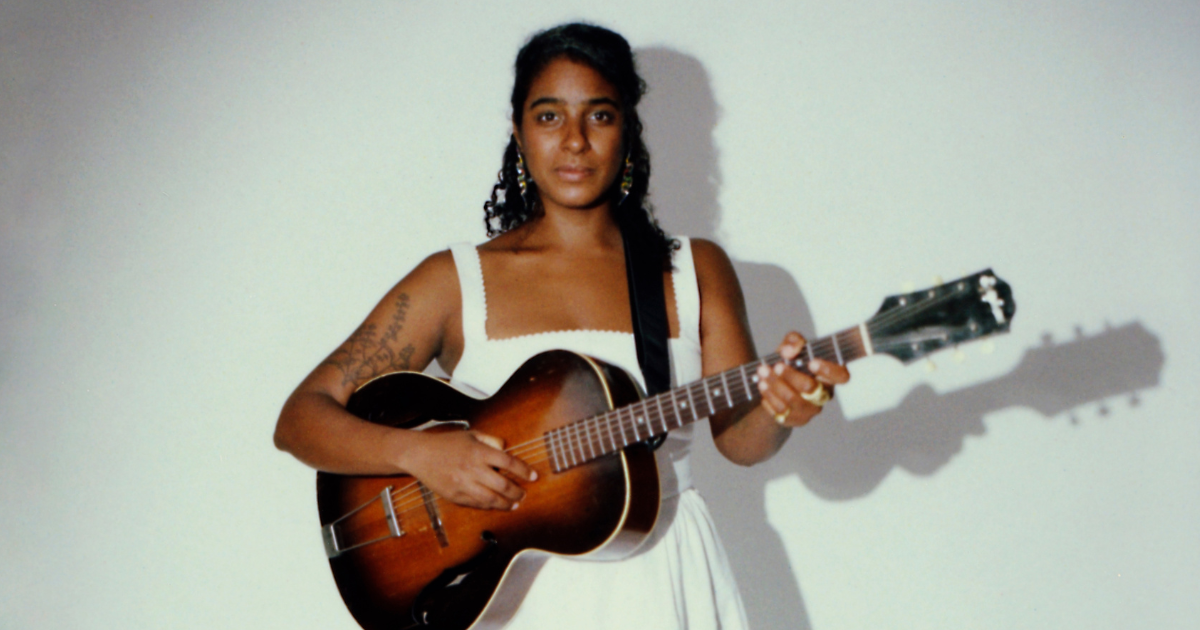
Sun Without the Heat is Leyla McCalla’s fifth solo album, but it is different from past efforts and she brings the listener through the transformative process with her. Produced by Maryam Qudus at Dockside Studio in Louisiana, McCalla dug into her personal history, primary sources from Amistad Research Center at Tulane University’s archives, world musical influences, and her creative trust in her long time bandmates to bring forth a bright, kinetic, and meditative project.

The studio, nestled along the Vermilion Bayou, offered an insular, bucolic setting for the nine days McCalla and band were recording; a place where friends and children could visit and local fishermen provided fresh catch for dinner. Qudus’ direction provided McCalla with space and vision to piece together her research and personal edification, while her relationship with her band allowed a deeply creative process to unfold. McCalla spoke wistfully about the experience, “It was very luxurious to have that kind of space. And it’s just really a very nurturing environment.”

Traditionally a cellist, on this project, McCalla explores her relationship with the guitar. She delves into West African and Brazilian polyrhythms flowing underneath lyrics that, at times, feel like a repetitive prayer or mantra. She balances the seemingly unanswerable aspects of life with the sometimes illusive, but simple notion that many contradictory feelings can be true at once.

BGS spoke with McCalla via Zoom from her home in New Orleans earlier this month. McCalla discussed the experience of researching, writing, and recording, her relationship with fans and supporters, creative freedom, and trusting the process.

I’ve been listening to all your music the past couple of days and I’ve noticed that the sonic palette of this album is somewhat of a shift for you. It seems like there’s a transformation theme running through it, both lyrically and musically, and it seems like even in the process of recording it. So I wanna talk about that on multiple levels, but can we start with the process for this? It sounds like you went into the woodshed and didn’t come out until the record was done.

Leyla McCalla: This is an album that was mostly finished in the studio. I had a pre-production session with Maryam Qudus, who produced the record. It was also just this really crazy time in my life. I was on tour a lot and coordinating with kids’ schedules. We really only had 36 hours of workshopping songs. Maryam was really amazing at being like, “Okay, let’s play with this idea, and come up with a verse and a chorus.” So I think we came out of that pre-production session with about 7 different demos that were just these rough sketches and we sent them all around to the band. When we went into the studio, everyone contributed what they were hearing to the songs. I’ve been working with my band now for about six years. I think that we have developed fluidity in our process of coming up with parts and talking about music. And so I knew that I had these sort of vague notions of delving into psychedelia and Afrofuturism and mining, this incredible music from Africa, ultimately. I think that that’s been a consistent through line in all my work is connecting my music through the ancestral lines of the sounds themselves.

I played a lot more guitar on this record than any other record. For me, it was really about delving into the songwriting and figuring out what I wanted to say. I’d been doing a lot of reading of Black feminist thinkers, and contemporary thinkers like Adrienne Maree Brown, Alexis Pauline Gumbs, and Octavia Butler. I think this record for me was really about, “How am I going to survive life? What does it mean to be resilient? What does it mean to transform and change? And give myself the space to grieve and also to hope and to dream.” There are a lot of things that I was meditating on when I wrote these songs.

I remember feeling very vulnerable, because I was really going back into this more beginner’s mind. I’ve never gone into the studio and been like, “I don’t know what it’s gonna sound like on the other side.” I’ve always had the band pretty well rehearsed and gone in. This time it was like, “These are the things that are emerging in real-time.”

Did you feel nervous about it? It seems like you have a lot of trust with your band, which is a great starting point. And you had the 36 hours of workshopping and all the ideas that you came up with. But were there nerves about it walking in to record?

Oh, yeah. It was not nerves about, “Can I trust my bandmates to be awesome?” It was more nerves of, “Do I suck?” Which is classic imposter syndrome that artists have as part of the process of writing. You get an idea. It’s a good idea. You question whether it’s a good idea.

I’m trying to do a new thing. I’m trying to break new ground in my creative life and in my sonic expression. Within that, I think that there’s a lot of room for self-doubt. That’s why for this album it was critical to have the support of my bandmates and of Maryam, who didn’t have that kind of attachment to any of the songs. They were just there to help execute what I wanted.
I think this album really has strengthened my trust in my songwriting and in my creative process. And just knowing that you don’t always have to know what’s gonna happen to know that it’ll be good.

Absolutely. I was just going to say when you said it was a sort of meditative for you, I think that really comes across, lyrically and sonically. There are these phrases that you repeat that are meditative and it seems like you’re asking questions, you’re answering the ones you can, and you’re submitting to the ones that you can’t. What you are saying you wanted to happen comes across.

Yeah, I think so. I think that there is, on a spiritual level, deep healing for me in writing these songs. I was calling that in. I was navigating single motherhood, divorce, breakups, and big deaths in my family. It was like, “How do I call myself back to myself, what is gonna guide me through that?” I think for me, doing a lot of sort of ancestral healing work and meditating on the the gifts and the things that I’ve inherited from my ancestors, those made their way into the songs.

Speaking of process, you mentioned in your liner notes that you are grateful for creative freedom on this project. And I’d love to know what creative freedom looks like for you and how it impacts your work. And maybe what a lack of creative freedom has felt like in the past for you.

I think creative freedom, for me, was kind of twofold. I have a label that is mostly doing stuff outside of the commercial realm. Obviously, we’re part of the music industry, but I never felt like I needed to make a particular album. I felt like the question from the label was, “What kind of album do you want to make? What is coming through right now for you? What do you want to say?” Being able to come from that place is very different than, “Try to take over this part of the market,” or something. It’s a lot more empowering experience. Also, not being afraid to go in different directions. Not being afraid to use weird pedals on my guitars, experiment with synths, have a freaking psychedelic freak out, or have piano on the songs or organ. It was just sort of intuitive, “Yes, this belongs.” And not feeling like anyone was going to disapprove of that.

I never felt that there was a particular agenda outside of the agenda that I wanted to fulfill. That has been a really empowering experience for me, coming off of my previous record where it was like, “Okay, these are these ancient rhythms that are Haitian and African, and this is a mapping of where Haitian people come from.” I felt empowered by that, but in a very different way, almost like I wanted to serve this music. For this record it felt like, “Okay, how can this process really serve me and serve my creative genesis?” Returning back to like a more beginner’s mind, “What are the things that really I love about music? What are the things that make me wanna write songs?”

I didn’t have as much of a mind for that with Breaking the Thermometer, because it had been such a longstanding collaboration that I had been working on for five years with a crew of theater makers and different musicians and then going into the studio.

I always felt like that project was like a garden of weeds that are growing out of control. It could be a book. It could be a theater project. It could be a dance piece. I explored the intersection of all those things together. Whereas this was like, “Okay, I’m just returning back to this one format. We’re making an album.”

It meant connecting with some of my earliest influences. That’s why I went back to listening to a lot of artists from the tropicalismo movement in Brazil, in the ’60s and ’70s. There was all this experimentation with traditional music forms and rock and roll and psychedelia. I love that music. There’s something about it that just really speaks deeply to me. And I think that it’s also because of my generation, who I am, and where I am. I’m drawn to things that are out of the box. And I’m also drawn to really solid groove and feel and deep emotional content. I never had an agenda other than to figure out what I want to sound like and being able to have that space. A lot of these songs were about like, “How do I get out of my own way?”

When you started thinking about making this record did you know that you’d be playing more guitar than cello? Did you write on guitar? What was the relationship with that instrument like?

I was writing a lot on guitar. I wasn’t like, “I’m gonna play guitar and not cello.” I didn’t have an agenda in that way. I really wanted to explore different shapes in my fingers and try different rhythmic structures. Guitar is exciting for me in that way.
I’ve done a lot of finger-picking in my work and there’s plenty of that on this record. But I’m like, “What about this inflection? What about this texture? And what about this feel? What does that conjure?” That was really fun for me.

Fun was also really central to the process. I was like, “I want to heal, I want to be creative, I want to expand my sonic palette, and I also want to have fun.” I do this work to have fun. I don’t do this work to be the “king of the capitalists” or something. I want to have a good experience with it and find it enriching. I feel like the guitar is the ultimate symbol of liberation and freedom. It has a different meaning to me than the cello. With cello, I know the notes. I am thinking about technique and I have to think about how I’m holding my body. Guitar is just like, “This is who I am.”

For sure. Partly because the guitar is so mobile. You can walk off into the woods with it.

Yeah, totally. You should see me walk through an airport. I’m carrying my guitar, my banjo, and my cello, and I’m always like, ”Man, life would be so much easier without this cello.” But it’s such a powerful thing. When I’m playing cello, it feels totally like, “Wow, this is also home.”

Cello moves so much air. It can completely change the vibration of a room.

Totally. I always tell my bandmates, “Oh, we gotta be careful with that cello. It’s like melting a dark piece of chocolate on stage.”

I think a lot about sense of place and how a place can affect the creative process. Since you were sort of in a “lock-in” at Dockside Studio, I want to know if that studio and that place had an effect on this record.

Oh, yeah. Dockside is an incredible place. There’s a house with a pool and then a whole other house with a studio. The grounds are beautiful and well-kept. You’re right by the river.

There was a sense of deep relaxation for me there, because it is kind of separate. If it were in the middle of a city, there would be so much more distraction. But because there isn’t, I felt like it really helped me to focus and to tune in. We burnt candles there every day. We were calling in a lot of spirits and support. I did a lot of just sitting by the river and writing and reading in order to write.

And Maryam is amazing. If it had just been me producing the record, it would have been way more disorganized. Maryam was amazing at being like, “Okay, Leyla, we don’t need you in the studio right now. What we really need from you is to go and write.” I feel like I do best in those sorts of relationships, when someone is gently nudging me in the direction of what’s gonna be most productive for me. I was really able to get to a place of being productive and feeling quiet enough to actually hear whatever was coming through. If we had made the record anywhere else, it would have probably sounded completely different. We are all pretty well versed in the different styles of Louisianan music, so we kept thinking, “What is this sound that we’re coming up with?” And we were like, “This is Louisiana tropicalia.” It’s a fun construct.

Tell me a bit about what your relationship is like with fans and supporters of your music and the impact that they might have on your creations or your career.

For my first record, I did a Kickstarter campaign and I asked for $5,000, because I didn’t know how expensive it is to make albums. I ended up making over $20k. That whole process of doing the Kickstarter was such a boon to my career. At that point, I had been touring with the Carolina Chocolate Drops. No one really knew who I was, but I realized that there was support and space for me to be doing these projects that combine research and intellectual pursuits with making music. That’s the line that I have been toeing this whole time. And it is incredible, over the years, the number of connections that I have made from pursuing two things at once and growing this academic life within my body of work as a recording artist.

People have brought me, over the years, limited edition Langston Hughes, Haitian Creole poetry from the 1800s, translations of Zora Neale Hurston books that are in French or German. Those are the kinds of connections that feel so sustaining creatively for me and really enriching. The music industry is so inundated with artists, and everyone’s trying to stand out. That kind of symbiosis, I think, is really critical not only to me as an artist but to me seeking support.

That’s wonderful. There’s something sort of clinical about the traditional record label rollout of material in the past, but now it feels like, because of social media, because of things like Kickstarter and house shows, a wall has broken down.

Totally. And I feel people really connect to that, even sometimes more than the actual songs. Which may be problematic in one way. Everything is kind of about more of this “cult of personality” thing. Not that I’m super invested in developing that, but I do feel like the fan base is invested in me as a person, and wants to want to support the music as a result of that.

Can you talk a little bit about the collaboration with the Rivers Institute and the Amistad Research Center at Tulane, and how that might have informed this project, or what you’re working on in general?

I was invited by the Rivers Institute to be their first music fellow. They have this incredible artist-in-residence program that is in concert with the Amistad Research Center at Tulane University, which is an incredible archive of stuff from all over the South, particularly Louisiana Black culture. There are so many oral history interviews. I discovered writers that I didn’t know about, particularly a guy named Tom Dent, who feels like he’s kind of like the Langston Hughes of Louisiana.

I’ve always known how important archives and libraries are, but it’s just so much information. There’s a woman named Jade Flint who works there who helped me. She was like, “What are you interested in?” I’m like, “I like poetry. I like organizers. I like movement work.” I found myself down this path of discovering letters that Fannie Lou Hamer had written to her best friend. She was from the Delta in Mississippi and in the ’60s was really active in registering Black voters at the height of Jim Crow. She was attacked. She was beaten really badly for that. She just kept on fighting her whole life for Black people to have the right to vote and for political participation for Black people at a time where that came at a great cost to her mental, emotional, and physical health.

There’s an organization called Core New Orleans, which actually did a lot of COVID testing during the pandemic, but they were also working on voter registrations. I was reading their pamphlets that were like, “This is how you deal with potentially violent situations. This is how you approach people about trying to get them to vote.” I was doing that and concurrently reading things about emergent strategy and pleasure activism and comparing notes like, “These are the activists of yesteryear and the organizing principles.”

And then I was reading Adrienne Maree Brown’s books. She’s like, “You’re gonna need to masturbate before reading this chapter, because otherwise you won’t be connected with your pleasure center. That is essential to this activist work.” You could see this sea change in the attitude about what is actually going to aid our collective liberation the most.

During this time, my grandfather passed away and he [had] started a Socialist Haitian newspaper called Haiti Progress. Both of my parents are activists. I’ve been immersed in a lot organizing and activist stuff my whole life like going to protests throughout my childhood, especially regarding Haitian immigrants and human rights issues in the United States.

All of these things just really filled me with this feeling of, “Wow! It’s taken so much bravery to be able to fight the good fight and keep these conversations moving forward.” I think we still have a long way to go. I did a lot of reflecting on that. And that song, “I Want to Believe,” was written during that residency. It’s a simple song, but I wanted to write something that was almost a song that could be sung at a protest, something that was not quite gospel and not quite protest music, somewhere in the middle.

I love a library, I love an archivist, and I love being in that space and finding things that feel like a secret. How you process that as a person in the present, feeling the history in the present, and how it comes across – that is reflected in your lyrics. We have access to so much information today, but that information is very much filtered by these multinational corporations. There’s search engine optimization and all that, and we can’t really dig down until you go into a place like that where those regional details exist, like in an archive or library.

It just is incredible to me, because there’s so much to keep track of. And you know, even the different categories like oral histories or audio interviews or drafts of books or poems. There are unpublished pieces that may only be read by five people every year.
Those five people then know about this thing and can share it with their community, and make work from it, or include it in their research papers. There’s there’s endless ways to see the world and then filter this information.

I feel like my job as a musician is looking for those bits of information that feel like the diamond in the rough, like the thing that I’ve been looking for my whole life. That’s really the chase. It really keeps me in the archives.

Can you talk specifically about the title track, “Sun Without the Heat?” In your liner notes, you dedicate the song to Susan Raffo and Frederick Douglass. I’d love to know more about that.

Susan Rafo released a book called Liberated to the Bone: Histories. Bodies. Futures. I went down this rabbit hole of progressive thought. Her book is written for healers, people working within the medical industrial complex, and anyone who’s engaged in healing work, whether that be on a community level or on a one-on-one basis. I read that book, and it was really fortifying for me.

She has this theory of the original wounds of our society, which are the genocide of Indigenous peoples and the enslavement of African people through the transatlantic slave trade. It’s about our inability to grapple with the harm that has been perpetuated and is being perpetuated from those original wounds. It is holding us back from larger systemic change. There’s a chapter where she references a speech that Frederick Douglass gave in 1857 to a room full of white abolitionists. He said, “You want the crops without the plow. You want the rain without the thunder. You want the ocean without the roar of its waters.” I was immediately like, “Those are song lyrics.” I just heard it immediately. Those were just such beautiful words and and phrases and concepts, and I kept on singing that.

It occurred to me, “You can’t have the sun without the heat.” I was like, “There are only three phrases, and I need that one other thing.” I was also thinking about how so many of these songs to me are about transformation, and are about what change really requires of us. And it felt like those phrases spoke so well to that theme.

I read a book called Undrowned by Alexis Pauline Ghums. It’s a Black feminist study of marine mammals off the coast of South Carolina and Georgia and the things that we can learn from them about survival, resiliency, living on this planet, and our inherent connection to nature — you know, how to thrive on this seemingly unsustainable planet. It is also about our connections to each other and community.

For a long time, I think in my own personal life I was like, “I just can’t help but feel like I’m drowning.” But I didn’t want to just make a record about that feeling. I wanted to make a record about getting through that feeling: about breaking through the overwhelm.


Photo Credit: Chris Scheurich

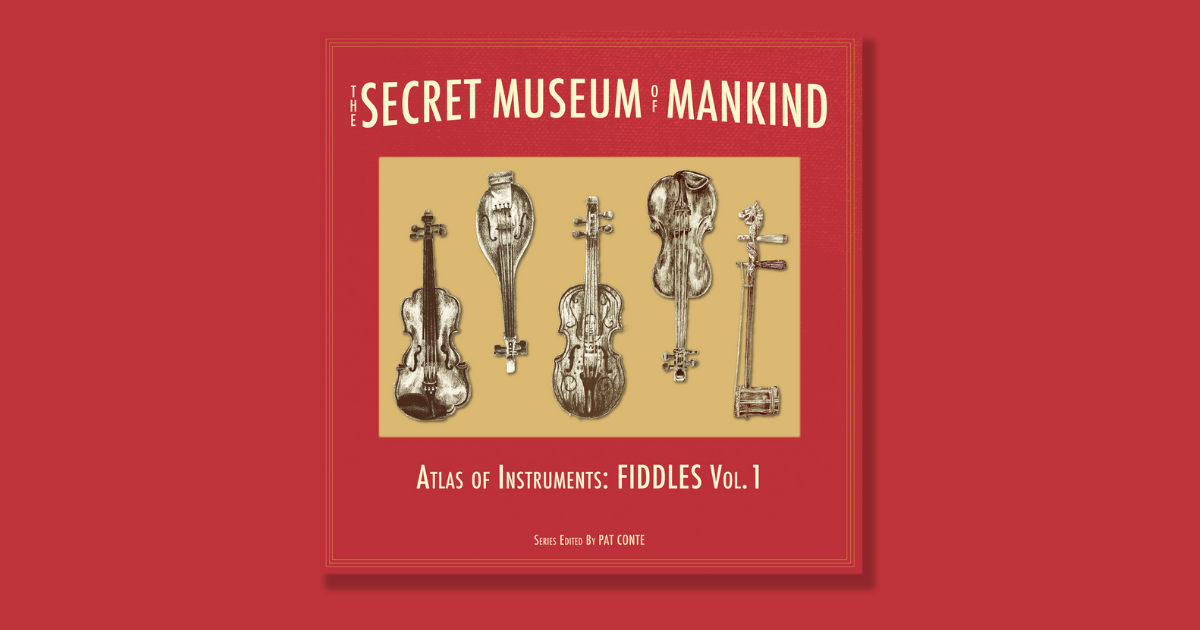
STREAM: Secret Museum of Mankind – Atlas of Instruments: Fiddles Vol. 1

Album: Secret Museum of Mankind – Atlas of Instruments: Fiddles Vol. 1
Release Date: September 15, 2023
Label: Jalopy Records

In Their Words: “The museum’s musical atlas of instruments continues with the opening of another wing, the first in a series on bowed instruments. To stretch boundaries over the earth and over time is to forsake them; whether it is a matter of Synchronizität or just the plain unconscious. In Western cultural history, the bowed instrument is a late installment, after centuries, of an almost primordial vibration that we imagine in sound; see in the old paintings; and yet can sample in the remnants of the ancient world captured on gramophone records.” – Pat Conte, curator

The Secret Museum series is legendary. It opened up new possibilities for me when I first heard it in the 1990s. The curator is Pat Conte, he did something remarkable, even more so because it was before the internet: Starting in the 1970s he began assembling the first and arguably greatest collection of world music recorded in the 78 rpm record era of the 1920s – 1950s, give or take. He did it by casing junk stores in Queens, New York, the most diverse place in the world, and by maintaining letter correspondence with collectors and dealers across the globe. That is the music you will find on the Secret Museum of Mankind albums.

“Conte programs the records by feel, not with a predefined structure. The records are not meant to be academic, they are meant to move the listener. The movement is emotional, using music that was recorded in different places and at different times. Each listener will experience the sequence in their own way, and each track is its own world.

The Secret Museum of Mankind: Atlas of Instruments – Fiddles, Vol. 1 continues the series and presents fiddle sounds developed and practiced across the globe. The compilation, drawn from Conte’s pioneering and remarkable personal collection of 78 rpm discs recorded in the 1920s – 1950s, offers fiddle music recorded across the world from Crete to Madagascar, Mexico, England, Sicily, Norway, India, the USA, Cape Verde, China and more.” – Eli Smith, producer


Image courtesy of Jalopy Records, Nick Loss-Eaton Media

Small World: African Influences Shape ‘Remain in Light,’ Then and Now

She is moving to describe the world
Night must fall now. Darker, darker
She has got to move the world, got to move the world, got to move the world
She has messages for everyone
— “The Great Curve,” Talking Heads

Remain in Light was, arguably, the album of the year for 1980.

Remain in Light may well be, arguably, the album of the year for 2018.

On the surface, it might seem obvious and inevitable for an African-rooted artist to take on Talking Heads’ landmark, even if it took 38 years. African inspirations, particularly that of Nigerian Afrobeat king Fela Kuti, are the alchemical core of the stunning amalgamation of African, Caribbean and American funk, experimental rock and David Byrne’s oddball, seemingly stream-of-consciousness poetry. It was the culmination of the band’s collaborations with Brian Eno and an album pretty much unlike anything else before it. And, in turn, it was if not the spark then at least a catalyst for an explosion of discovery and exploration of African styles among artists (Peter Gabriel and Paul Simon foremost among them) and fans alike around the world, an influence still reverberating today. Arcade Fire, anyone? Vampire Weekend?

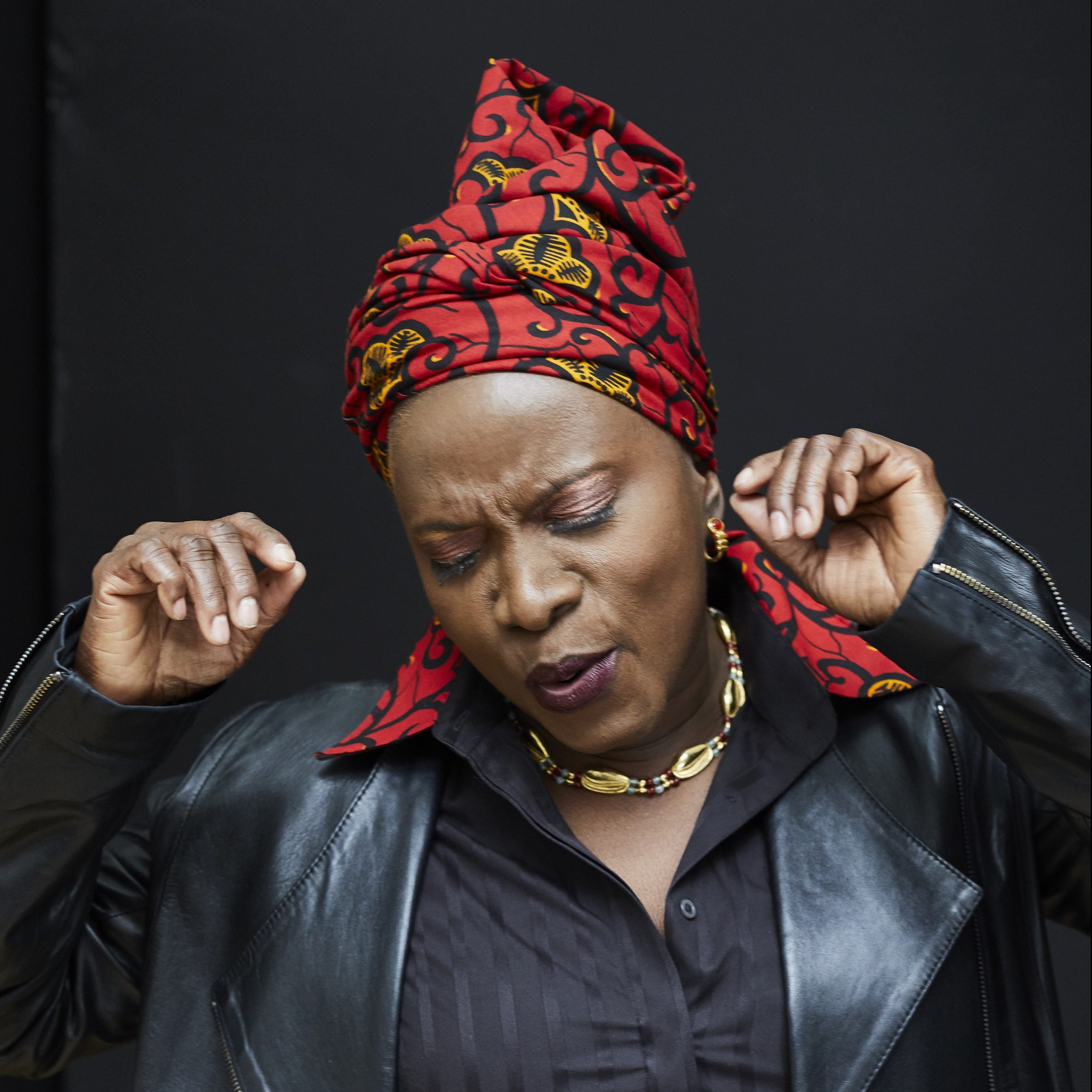
But Angélique Kidjo has never, ever in her career done anything obvious. This is no exception. But it is hard to conceive of a better match of music and artist than this. Obvious? No. Inevitable? No. Perfect? Yes. Her highly personal re-imagining/repatriation (or rematriation) of this album is every bit as bracing and as revolutionary an artistic achievement as the original in its own right, and a fulfillment of that discovery and exploration that the original Remain in Light helped launch.

Kidjo didn’t merely extract the burbling rhythms and elastically elliptical lines and reshape them as Afrobeat or highlife. She applied her own depth of vision to the material, her own cultural roots, and her embrace of many musical streams to make something distinctly hers, in some places blending in the traditional tunes she grew up with in Benin, in others broadening the perspective to what might be called Afro-Global. And, crucially, she locked into the often-perplexing, arty off-kilter lyrics and invested them with her complex, incisive worldview, adding new words here in there, sometimes in Fon, the language of her father.

Most of the songs start with Kidjo’s voice, single or multi-tracked, chanting in Fon or Yoruban (her mother’s language) as if a call from Mother Africa, a herald for what is to come. The opening “Born Under Punches” becomes a fight against oppression (“All…. I want… is to breathe”). “The Great Curve” shapes Byrne’s amorphous imagery into a forceful paean to women’s empowerment, propelled on a rubbery bass line and blaring brass. “Seen and Not Seen,” given an almost rural sound with its percussion-centric mosaics, looks at the skin bleaching many have done in Africa under cultural pressures.

The biggest challenge may have been the album’s best-known song, “Once in a Lifetime,” famed for the indelibly quirky video that accompanied it back in the pre-MTV days. Where Byrne more spoke/yelped than sang the verses detailing a sense of modern existential confusion (“This is not my beautiful house! This is not my beautiful wife!”) over an almost proto-techno roil, Kidjo turns it into a challenge to find meaning in the world, to create meaning, with a soaring, full-voiced melody on top of a rousing, rumbling highlife-derived tapestry.

Collaborating with producer Jeff Bhasker, whose credits include Rihanna, Kanye West and Harry Styles, she brought in an accomplished and fitting cast to help. Kuti’s long-time drummer and musical director Tony Allen is a driving force on “Houses in Motion” and “Cross-Eyed and Painless.” Kidjo felt inspired to add words from Kuti’s song “Lady” on the latter. Other guests include her fellow Benin-raised guitarist Lionel Loueke on three songs and Ezra Koenig from Vampire Weekend (whom she had sing on “Listening Wind” in Fon!)

Now, of course, Talking Heads had the benefit of working on a largely blank slate. Sure, there were many African bands that “modernized” traditional styles, most famously Kuti, who mixed hard James Brown funk and elongated electric jazz with fierce socio-political statements, running afoul of his country’s oppressive military government in the process. And the Anglo-Ghanian band Osibisa had at least moderate success in England with its mix of traditional rhythms and Western funk, though outside of the U.K. it was known more for its Afro-fantastical cover art by Yes’ designer Roger Dean.

There were the occasional hits that came out of Africa — South African singer Miriam Makeba with “Pata Pata” in 1967, her countryman and then-husband trumpeter Hugh Masekela with “Grazing in the Grass” reaching No. 1 on the U.S. pop and R&B charts in 1968 and Cameroonian saxophonist Manu Dibango with “Soul Makossa” in 1971 (its “mama-say, mama-sa” chant made familiar to the masses when Michael Jackson used it, uncredited, in 1982 on Thriller’s “Wanna Be Startin’ Something”). But these were isolated and “exotic,” not part of a wave. And there were occasional, isolated experiments with uses of African styles, to varying effect. The most prominent and artistically bold was Joni Mitchell’s use of a field recording of the Drummers of Burundi as the primary feature of the song “The Jungle Line,” a stark portrait of suburbia from her 1975 album The Hissing of the Summer Lawns.

Talking Heads, working with English musician, producer and aesthetic philosopher Eno, had dipped their collective toe into these rich waters with “I Zimbra” from the preceding album, Fear of Music, and shortly before starting Remain in Light, Byrne and Eno had drawn heavily on African music, much via samples, on the experimental musical collage My Life In the Bush of Ghosts. Around that time, the band’s married bassist and drummer (Tina Weymouth and Chris Frantz) vacationed in the Caribbean and became entranced with Haitian Voudou music, which they brought into the sessions for the next album, at which Kuti’s 1973 album Afrodisiac was also a constant presence. An unfinished outtake from Remain in Light, included in an expanded 2006 reissue, is even titled “Fela’s Riff.”

Where Fear of Music was about, well, fear, paranoia and isolation, Remain in Light looked out to the world with some perplexity, but ultimately celebrating its wonders in both the words and music. Byrne is revisiting much of the music now on his dazzlingly staged tour, the Remain in Light material perfectly complementing his new looks at modern life from his current American Utopia album.

Kidjo’s album comes, though, not just in the shadow of the original, but of a great wealth of other African and African-inspired music that came after. An early key was veteran Nigerian star King Sunny Adé’s Juju Music, with its buoyant rhythms and slinky Nashville-Hawaii steel guitar. Island Records founder Chris Blackwell had signed Adé in hopes to make him “the African Bob Marley,” this being shortly after Marley, his signature star, had died. That was an overreach, as Adé resisted most attempts to make his music, generally presented in long, sinuous tracks, more fitting for Western ears and radio programmers. Even with support from Stevie Wonder (whose unmistakable harmonica graces a song on the 1984’s Aura album), there was little-to-no chance of this music finding a spot in the American mainstream. It did, though, spur increased interest in African music, and many who saw Adé’s early-‘80s U.S. concerts cite that as a revelatory turning point.

Obviously, Paul Simon’s Graceland really got things going in 1986, both for the music itself and the debate stirred over the propriety of his methods and of his defiance of the cultural ban imposed on Apartheid-oppressed South Africa. Regardless, the music shined a light on the various South African musicians he used in the sessions and on the mbaqanga and other styles on which he drew.

After Graceland, the floodgates opened: There were dozens of releases from Africa (and elsewhere) on such dedicated labels as Island’s Mango imprint, Virgin’s Earthworks (which had already put out the landmark The Indestructible Beat of Soweto compilation) and, of course, Byrne’s Luaka Bop and Peter Gabriel’s Real World, the latter in conjunction with the WOMAD organization and its revelatory world music festivals. Malian guitarist Ali Farka Touré teamed for the brilliant 1994 album Talking Timbuktu with American guitarist Ry Cooder. Kuti’s North American tours in the late 1980s and early 1990s are still talked about breathlessly by those fortunate to experience them, and the years since his death in 1997 have seen numerous reissue projects of his catalog and impressive music and concerts from his sons Femi and Seun, each both carrying on and expanding the legacy. And ultimately choreographer Bill Jones’ Tony-winning production, Fela!, a music-and-dance-filled account of life on Kuti’s compound outside of Lagos, brought his legend to a mass audience.

And there’s the extensive work of Kidjo herself, signed by Blackwell to Island in 1991. That launched a singular career of impact and innovation, of a distinctively creative spirit, which has seen her drawing on everything from Sidney Bechet to the Gershwins to Jimi Hendrix and Santana, to teaming with Philip Glass on a project setting Yoruba songs for a full orchestra, to 2014’s EVE, dedicated to the strengths of African women and built on a foundation of field recordings she made throughout that continent. In 2008 in the Staples Center press room after her Djin Djin was awarded a Grammy for best world music album, she sharply told this writer that she rejected the very term world music because it in its very nature lumped together many unrelated styles and artists and ignored the kind of individuality and reach she brought to her art.

“What does it mean?” she said, almost seething. “Why do we categorize people?”

She continued: “Through music, every one of us can take what is in us to proceed onward in our life and roll out improvement in this world… We all must be perceived for what we do. There is only one humankind.”

No wonder she heard something that spoke to her in Remain in Light. No wonder she was able to take that and make it shine with such fresh and intensely personal light. And it, too, will remain.


Photo credit: Danny Clinch