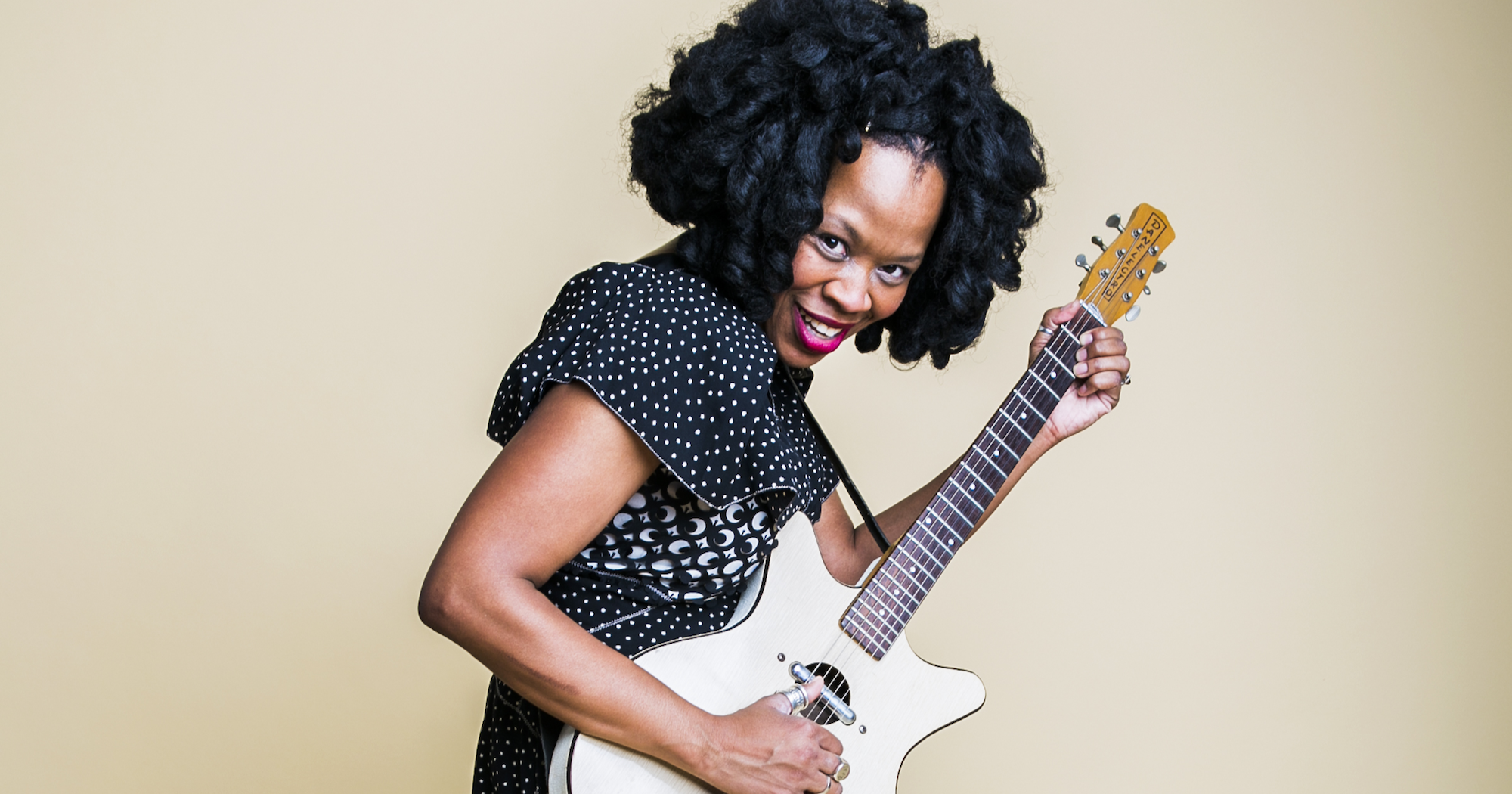
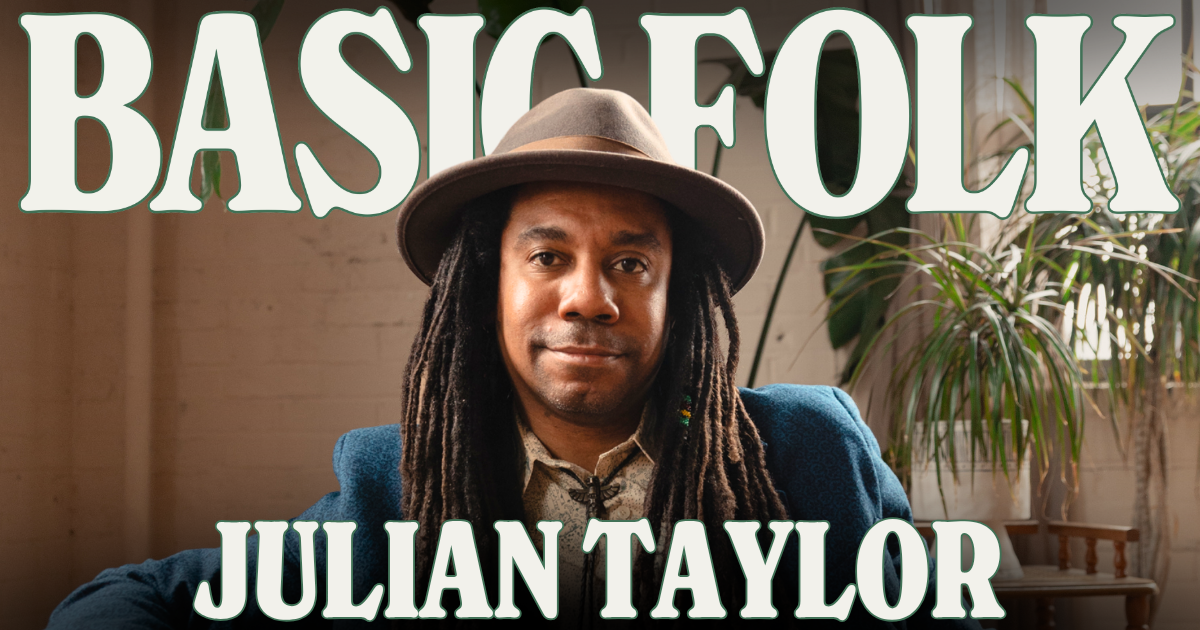
Basic Folk: Julian Taylor

One of the things I really enjoyed about interviewing Toronto-born singer-songwriter Julian Taylor is his relationship with the truth. He has a really peaceful attitude towards learning and sharing new information. For example, at the beginning and the end of our interview, there were biographical facts about him that I had gotten wrong in my research. Gently and matter of fact he fact-checked me and we just moved on. It was such a cool example of, “Oh, you’ve got this a bit wrong and it matters that we get it right,” but nothing about that is personal. In an era of misinformation and alternate facts, it feels really grounding to have an hour-long conversation with someone who really cares about getting it right. That shows through in his songs and in his storytelling.

LISTEN: APPLE • SPOTIFY • AMAZON • MP3

Julian experienced an eclectic musical upbringing thanks to his classical-and-gospel musician father, his mother’s love of Motown and folk, and wide influences from pop to blues. Oral tradition in his family shaped how he tells a story. Especially on his mother’s side with his Mohawk grandfather, a pastor who told incredible stories. He also discusses being pigeonholed by race and genre. Oftentimes, people will think that he performs a certain type of music because he looks a certain way. He mentions that audiences can be shocked when he pulls out a country song while sporting hair that looks more reggae than Johnny Cash. Taylor discusses his breakthrough 2020 album, The Ridge, he talks about his writing process (often starting with lyrics), and the intent behind his latest release Anthology: Volume Two – including “Hunger,” “Don’t Let ’Em” (with Jim James), “Dedication,” and “Weighing Down” – addressing mental freedom, identity politics, and self-forgiveness.


Photo Credit: Lisa MacIntosh

Queen Esther Made a Civil War Album Unlike All the Rest

Civil War albums are all too common in roots music, bluegrass, country, and Americana. Usually, these concept projects romanticize and valorize one of the darkest periods in our nation’s history, while cheerfully and cartoonishly detached from reality and untethered from the nuances of this horrifying and violent period of tumult in the U.S. Revisionism and imperialism are enacted by fiddles and banjos in loose, contrived musical period garb.

Audiences seem to devour this kind of idyllic reimagination of the Civil War and the issues that gave rise to it. Though chattel slavery and its foundational role in our economy were central to the conflict, Civil War concept albums rarely interrogate those facts, instead leaning on listeners’ love for story songs and cursory understanding of “brothers against brothers” narrative paradigms to sell records and tickets. The sketchiness of this practice is overlooked across the board, perhaps due to the sheer ubiquity of such efforts.

On February 6, artist, musician, songwriter, actor, and playwright Queen Esther released a very different sort of Civil War album, Blackbirding. Enabled by a grant from The National Parks Arts Foundation, Queen Esther worked and lived in residence at Gettysburg National Military Park in Gettysburg, Pennsylvania, for a month in 2020. During that time, she communed with the land, the place, and the losses and griefs seeped into the blood-soaked soil, plumbing stories, myths, memory, and feelings to craft her 12-song reckoning with the Civil War. Original songs, songs from that time period, and fascinating covers combine into a work of roots music and theater, dramatization and storytelling interwoven with knowledge-bearing and memory-keeping.

Queen Esther being a Southern Black feminist multi-hyphenate creative is exactly why Blackbirding stands out among its peers in the curséd Civil War concept album space. There is no idealization or revisionism happening in Queen Esther’s songs. Instead, there’s a tangible humanity and an awe-inspiring alchemy of grief, loss, and crimes against humanity into beautiful, redemptive music.

Queen Esther first brought Blackbirding into the world as a piece of performance art with a staged reading in 2024. Even now, in its LP form, these songs lean forward, doing narrative work perceptible whether on stage or off, and coaxing listeners to abandon passive listening and – as all theater asks – inhabit a third, artistic, creative space together in our interaction with these compositions.

The central point of the album is made over and over again across the 12 tracks and throughout our lengthy and in-depth BGS conversation. “Blackbirding,” the 19th-century practice of kidnapping free Black folks and selling them into slavery or back into slavery, never really went away. The Civil War was not won. Reconstruction failed. Slavery itself was not abolished, but rebranded. As such, Blackbirding, whether from the perspective of its content or its genre aesthetics, isn’t a throwback or time capsule album. This is music made in the present, for the present, about the present, and it calls on all of us – again, in the present – to reckon with and consider how we each contribute to or act in defiance of the continuation of racial apartheid and imperialism in the United States.

Do not fear, though, because Queen Esther’s approach to such musicmaking is remarkably joyous, grounded, and compassionate. It’s clear she’s not only ready to engage in the conversations this music evokes, but that is exactly her purpose. And the ultimate culmination of her many talents. In this way, she yet again distinguishes herself from other such concept albums in Americana.

I’ve been a fan of yours for a few years, ever since we discovered your TED Talk. When I first watched it, it was so revelatory. It felt like you supplied vocabulary – and knowledge and expertise – that I wish I would’ve had my whole life to help describe the multi-ethnic origins of roots music and bluegrass and country. If all of this came from “Scotch-Irish tradition,” then why does bluegrass sound like bluegrass? Why does country sound like country? Why doesn’t it sound like Irish music or Scots music or music from the British Isles? It sounds different.

I just wanted to start by saying thank you for that talk – and thank you for all of the insight, feeling, and emotion that you bring to these intellectual topics that people tend to forget are about real humans, real experiences, and real music.

Queen Esther: Absolutely. I really appreciate you saying that. I think more often than not, Black people have these conversations amongst ourselves. We wait until the door is closed and then we talk. I think we should have more conversations with everyone in the room. As long as they’re willing to listen. That’s a tall order. Much more so than you would think.

I’m really happy about this album, especially because people are starting to have conversations around the songs, topics, and everything that I’m bringing up. The fact is that slavery has never ended. It was just modified. The Civil War has never ended. It just evolved. “Blackbirding” has never ended. It just got a lot more inclusive.

Those three things are standing in the way of America being America. There is the America that is on paper – the one that is in the brochure with the Statue of Liberty, the flag behind it, and mom, and apple pie, and all of this stuff. And none of it is true. It’s all a marketing ploy. The actual America that really exists, that’s the one that Black people have had to endure and survive for hundreds of years. That’s the America that turned its back on us.

You know as well as I do that there are so many Civil War albums in bluegrass, folk, string band music, and Americana. So many are built upon the revisionist history that you’re talking about. The manicured, sanitized “picket fence and 2.5 kids” version of the “American Dream.” So, normally when I get a pitch about an album like this, it just goes straight to my email archive. Knowing you and knowing your work – and especially the way that you bring theater and all of your multi-hyphenate titles into crafting and creating – I was so excited to have a chance to talk about approaching the Civil War and approaching Gettysburg as an inspiration for music.

Blackbirding is set in the present. You’re talking about how slavery never went away, how reconstruction failed, and how the Civil War was not won. You’re contextualizing this art in the present sonically, as well. Because, like you’re saying, the Civil War never ended, slavery never ended, blackbirding never ended. Can you talk a little bit about placing all of this discourse in the present and not just in period garb, as it were?

I have to say perspective is a powerful thing. As a Black woman, as a Southerner, as someone that’s two generations removed from slavery, as a creative, I never heard any of this told from a Black perspective. It was always “the lost cause”: “These Yankees came and they just attacked us from out of nowhere. We were living this beautiful life and they just ruined everything.” When nothing could be further from the truth.

They literally terrorized Black people. They tore us apart, they raped our children. They did all manner of evil constantly, under the guise of Christianity. And it was even uglier than anyone would dare to imagine. Which is why they’re struggling to hide Black history, to hide lost history, to make sure that it stays lost. To not have anyone like me turn over the rock to see what’s underneath.

At the same time, these songs from minstrelsy, these songs from not that long ago, they’re important songs. They should be rediscovered. The problem that I’ve always had is that once you have that technical prowess as a musician and once you plumb the depths with that music, no one was bringing that music forward into the present. Not unless they were … putting it in a historical context, and that’s important, but to bring it into the now [is just as important]. …

Having a sense of intellectual curiosity, it’s really important. It doesn’t matter that you’re not the smartest, but that you are curious intellectually and that you are brave enough to explore that curiosity is way more important. That’s really my bedrock. That’s where I’m coming from now.

I’m a generative performing artist. … We are the ones who generate our work and we perform that work. Some people don’t necessarily perform their work. They just write it or they create it and they’re looking for other people to do the work, to perform the work, so that they can get their work out there. Lots of songwriters like that. Lots of lyricists are like that. That’s beautiful. That’s great. …

The songs would come to me, they would just float up in my head. It’s like a patchwork quilt. You take all these different kinds of fabric and all these bits and pieces. But you’re making this mosaic that turns into this overall image that is bigger than whatever bits and pieces you brought to it in the first place.

Talking about that mosaic, it makes me think that of course we would end up at this point, with a project like this, with a conversation like this, and with a body of work that couldn’t have been made if you had tried to step outside of yourself or your own identity to make it.

Exactly. All of that fueled me. I was reaching out in different genres, not just musically, but in the world. I was doing a lot of alternative theater, I was doing cabaret. I was doing performance art, I was doing solo performance. I was doing storytelling. I’d get up on stage and I would do just about anything. That was a world in and of itself.

Now, after a certain point, when you’re a generative performing artist, you’re looking for grants so that you can develop the work in general. It takes seven to nine years to develop a musical. It takes five to seven years to develop a play. When you see someone go, “Oh yeah, my new play, it’s up.” They put in a heavy grind! That’s five years of rewrites and workshops and readings. Some theater taking them on with their theater company and developing that work until it was ready for a test audience, not even necessarily ready [to open]. It’s just a lot of hard work and a lot of heavy lifting. There are certain grants that make that possible, where you just have to go away and you have to write and create.

I found a grant that would let me do that with this album through the National Park Service. The National Parks Arts Foundation has grants to at least a dozen National Parks. You can go to the park, you can live on the park, and they will pay you.

This project is also a work of theater. What jumped out to me first and foremost in that regard is what you’re talking about – the residency, the grant, being on location. Bluegrass, roots music, country music, they all ask us to be in a place together, but not in the same way that theater does. Theater is very much created so the audience are not passive participants. It actively invites listeners and collaborators and bystanders into a space and into a place.

You are doing that with this body of work – and with your residency at Gettysburg. I thought that was one of the most fascinating things about this project. Using theater, with a capital T, to help do that work of transporting all of us to the battlefield, to Gettysburg, to the geographical place that you are evoking with these songs.

I’ve been doing theater ever since I could stand up straight. Think about the cavemen, just standing in front of their brethren and telling a story about what happened to them that day. If my grandmother were here right now and in on this conversation, she’d tell you that I was telling stories ever since I could talk. I would just make things up. She would be sitting there washing dishes and I would try to distract her by making up something wild or crazy or imaginative. I don’t know, I just gotta say something to make her drop that dishcloth or at least laugh or something. [Laughs]

What is fantastic realism? Fantastic realism is when you have ordinary circumstances and then something extraordinary just pops right in. … So the idea of theatricalizing whatever was happening around me as a little kid, [that’s fantastic realism]. If we were sitting here at a table talking, for example, and then an elephant came along and took the hat off your head – that kind of a thing. Just the outrageous Southern tall tale. Bombastic storytelling is always floating just beyond your reach, I think, as a Southerner. It’s just how we do.

And of course, like everything in the South, this is an African tradition. This is an oral tradition handed down from West Africa. West African traditions [are] something else that people have a really hard time saying out loud and acknowledging. It’s not that other cultures didn’t tell stories, but our influence as Africans, as enslaved Africans, of our African ancestors on the South and on America, is seismic. It’s time for people to make the shift however small, however great, and center that and acknowledge it. They can’t even acknowledge it. …

I’m going to tell you a story. I almost always start [performances] with, “You wanna hear a story? I got a story to tell you.” Sometimes I’ll sing it, sometimes I’ll say it with music happening around me or behind me. But this is a story that you’re gonna want to hear. And every single song on [Blackbirding] is wrapped up in a story. There’s a story that’s around it that’s historical. There’s a story that resonates into the now, and there’s a story that I bring to you as an audience when I’m performing the song itself.

I’m thinking about how there’s so much music made in these genre spaces that is also putting on a costume, or telling a story, or doing theater, but that often isn’t grounded in reality at all. It’s all construction. So where some people might interface with your art and think, “Oh, this is a musical, this is theater, this is going to be a play, this is going to be ‘make believe.’” It’s actually so much further from that.

Oh no, it’s reality!

Exactly. And to me, that’s the whole story here. The thing I wanted to talk about most about Blackbirding is the point that you made right at the top – and that you’ve made throughout this conversation. You’re not talking about something that was happening a while ago and isn’t happening today.

Look, the 13th Amendment said slavery’s over “except.” Except? That’s a gigantic loophole. Except for what? Except for incarceration. That means if you’re incarcerated, you’re a slave. What if someone said to you, “You’re fired except on Tuesdays”? Then I’m not fired. You have to come in on Tuesday for four hours. Other than that you’re fired. You don’t work here. How much sense does that make? No one would hear an employer say that and go, “Am I fired or not?” Am I free or not?

You are free. Except they had to make that exception. They had to. Why? Because when the Civil War ended, this country was in absolute shambles. And because Black people were the actual currency. There were 4 million of us and we were basically worth trillions in today’s money.

We went off and we started our own little hamlets and towns, and we started working for ourselves. Suddenly there was this massive tilt. Black people were the money and had all of these resources, energy, and power. And just by sheer force of will, we started building for ourselves, which is why they started tearing us down. Showing up to each and every single community and just murdering people, burning people [alive] in their homes. Coming up with all of these lies built on pseudoscience to justify all of the things that they did. …

But it never ended. Pulling Black people over on the road, out in the middle of nowhere for no reason whatsoever. Beating them up. Maiming them, murdering them in some instances. This has always been the way. This has always been the case.

I’m imagining you on site at Gettysburg. How do you take that sort of emotional devastation or the intrinsic triggering and challenging nature of these topics and turn them into something beautiful? Do you see them as beautiful to begin with? I’m trying to imagine how you take care of yourself emotionally and psychically as you’re doing this important work. Because I think there must be an emotional toll to it, but you clearly are built for it as well. This feels like your wheelhouse – and the way you talk about it and the comfortability you have in having these conversations.

Simple. I am not an atheist. I am not an agnostic. I believe in God. I believe in Jesus. I’m a Christian, and I know that God is with me. I feel God’s presence upon me. I feel God hovering over me, protecting me divinely. I feel that I’m walking in divine purpose and in divine order. I know that I am divinely protected, that the blood of Jesus covers me everywhere I go. …

There’s this point at which inspiration takes over. There’s a point at which you are no longer there, and inspiration is there instead. An actor prepares– the idea is that you have technique, right? Your technique is there whether you’re playing an instrument or singing or washing the dishes or driving the car.

Let’s say driving the car. I don’t know how to drive. So, every time I get behind the wheel and the car is moving, even if it’s moving slightly, I’m screaming like a banshee. I’m so excited. But when I get in a car [with my partner], he just does what he’s been doing. He doesn’t think about it. He adjusts the window here and he readjusts this here, he puts the key in, and he does all of these dozen or more motions. He just does it automatically.

That’s the idea. When you make art, when you’re on stage, when you’re performing, when you’re creating, there has to be something that takes over. Inspiration takes over. Once you’ve got the technique, set the technique, learning how to drive the car, what do you do? Something else takes over. And I’m telling you, that’s something else for me, personally, is not my ego. For me, that’s the Holy Spirit.

I remember when I got to the house [at Gettysburg], everything was explained to me, and they gave me the keys. I’m sitting there in the parlor, I’m arranging everything, and it’s still light outside. I thought, “You know what? Why not?” I took my camera and I walked to Devil’s Den. The first song that I wrote was “The Devil May Care (But Jesus Knows).” I came back and I wrote that down like I was writing someone a letter. It just poured right out of me.

I can’t even begin to explain the process. I wrote it down and I wrote down the chords. I shaped it around everything that I did and I thought, “This is a complete song.” What is that song about? It’s about Devil’s Den, the Valley of Death, which is what they called that area in between Devil’s Den and Little Round Top. These soldiers would climb into Devil’s Den, which is these hulking, gigantic rocks. There was this big snake that lived there. It was huge. They called it the devil. It was so huge, it was as big around in the middle as a grown man’s waist. There were children that liked to play around that rock, so the townspeople got up the courage and killed it.

They would climb inside of that perfect coverage for a sniper and they would shoot Yankee soldiers that they could [see] from Little Round Top and they would fall into the Valley of Death. That was a run, Plum Creek – a run is a creek – and it was so filled with blood they just called it a bloody run. From where the creek started, all the way past the house that I lived in, all the way through that valley of death, was just nothing but human blood.

To be a soldier caught in [Devil’s Den] meant that you could not be saved. Someone would have to come and get you if you were wounded. More often than not, those soldiers died, not because they were shot and they fell down and they died. They died because no one came to get them. They died because they were wounded and the wounds got infected and they just bled out or [succumbed].

That Valley of Death comes for you, not just at the end of your life. It comes for you at any given moment, at any crisis that you have. Over and over and over again.

Can you talk a little bit about how you approached genre on these songs? Because I really love that you didn’t make a “time capsule” record that’s trying to sound like it came from the 1800s. At the same time, you’re collapsing time musically and creatively so that you can draw on those textures and on those sort of old-timey elements to do that storytelling for you, sonically. How did the production process actually look or feel as you were putting this collection together?

I think that when you have a kid or when you give birth to a kid, you just let that kid be the kid. You’re not sitting there going, “I want this kid to be this,” or “I want this kid to be that.”

That’s a really good metaphor. Just let them be themselves.

And what you’re doing, really, is sitting back and waiting to see what that kid turns into. You have no idea how they got so great at math. This kid is a mathematician. You can’t balance your checkbook. This kid is just explosively running in this whole other direction that you can’t even fathom. You have no idea what your children will do, what they will become. And none of it really has anything to do with you.

It’s the same thing. These songs came to me and when they came to me, sometimes fully formed, I literally wrote down what I heard in my head. And that really is it. Each song is its own world. I just let the song be what it is, whatever it is. However it came to me, I just let it be what it is.

I consider myself to be a transcriber of the song. I’m sitting there. The song is in my head and I’m just writing it down as quickly as possible. I’m someone with a butterfly net chasing the butterfly through the jungle. I’m running after the butterfly and I’m hoping that it doesn’t get away. It’s fluttering. It’s right above my head. Sometimes I capture it, sometimes I don’t. My job as a producer is to make sure that song sounds exactly the way it did in my head.

Even the cover songs, the Olivia Newton John song, “Magic.” When Olivia Newton John is singing that, it’s one way. It’s interesting. But I’m a Black woman and I’m singing that about my ancestors, and my family, and all of us in community. It turns into a completely different song.

You have to believe that we’re magic. Nothing can stand in our way. You have to believe that because, ultimately really, Black people never thought we were supposed to survive any of this.
Toni Morrison says that in an infamous speech that she gave, we were not just supposed to survive any of it. …

When the song comes, it comes as it comes. I knew that I had the goods as a producer, because the song sounded in the room the way they did in my head. That’s the best feeling. But moreover, more than anything else, you have to develop your own aesthetic. You have to know what’s good, what’s not good, and why. You have to know your own mind. You have to know your own aesthetic. And you have to have the courage and the willpower to stand on it.


Photo Credit: Whitney Browne
The Many Perspectives of Rissi Palmer

Rissi Palmer is putting her lifelong love of country music into Perspectives, her first project in six years. With three tracks produced by Shannon Sanders and a fourth by Dan Knobler, the new EP places Palmer back in the artist spotlight after a period of time focused on personal and professional evolution.

Palmer also hosts an Apple Music country radio show, Color Me Country, which spotlights original music from artists of color. But there’s even more to the story. She’s collaborated on a children’s book titled Color Me Country: A Celebration of Black Women Who Shaped Country Music and she’s also wrapped a memorable tour called The Trailblazing Women of Country, where she performed some of the best-loved songs from Patsy Cline, Loretta Lynn, and Dolly Parton. Off the stage, she’s devoted more time to her two daughters following her divorce, while still ramping up to the release of Perspectives.

Though she’s based in Durham, North Carolina, Palmer caught up with Good Country in Belfast, Northern Ireland, during the Your Roots Are Showing conference. At the event’s opening night concert, she sang “Old Black Southern Woman,” a heartfelt ballad that touches on the loss of her mother when Palmer was just seven years old. Perspectives also offers a cover of the SteelDrivers’ “Can You Run?” as well as an original song titled “Good For Me” (about diving back into the dating pool) and a rendition of a Loretta Lynn classic, “Somebody Somewhere.”

“All these things came together, and Shannon so graciously decided to be a part of this with me,” Palmer recalls. “He said, ‘Well, two of these songs sound very bluegrassy. What if we just did the whole project like that?’ I was like, ‘That’s kind of dope,’ because I hadn’t done anything like that. And again, perspectives. Two Black musicians, making this very bluegrassy, but still very soulful, project. And I decided midway through that we’re going to call it Perspectives.”

What was on your mind as “Old Black Southern Woman” was taking shape?

Rissi Palmer: I wrote that with Kyshona, and that was our first time writing together. Kyshona has a way of getting straight to the heart of whatever it is that you’re talking about. I had the idea for the chorus, the “ooh-ooooh” thing, in my head, and I hadn’t really started writing anything. So, we sat down and we started talking. When you go to her house, she’s got all these really cool plants from her mom and her grandma. We talked about that, and I wanted to write something that paid homage to my mother but also acknowledged all the other women that came in and helped raise me.

It’s a universal thing, too. Everybody thinks of getting older as really bad, and I don’t know what I thought my 40s were going to be like, when I was in my 20s. I honestly don’t know, but I don’t feel old! [Laughs] I think I thought 40 was going to feel different, but 40 actually feels just like a creakier 25! And I see the blessing in it. I feel really lucky to be here, because I outlived [my mother] and I have babies now. I just wanted to write something that says it’s OK to get old. It’s actually really cool to be able to get old and to see the fruits of your work.

I think the title kind of throws people off because they’re like, “Oh, this is a song about some Black people.” But it’s actually about getting to be old, seeing the blessing and good in that, and making the most of it.

When you sing that song now, it gives you a chance to talk about your mom and share her memory. Is that extra special for you?

Yeah. It was hard, I’ll be honest. The first few times that I sang it were really hard and I would cry. I’m starting not to cry when I sing it. Especially when we get to the lyric, “Every curse my family claimed ends with me.” That’s always where it got hard. You don’t realize how hard it is to overcome and not repeat mistakes.

Was it a dream for you as a kid to become a singer?

I’ve always known. I don’t know how, but I’ve always known that this is what I wanted to do. In that way, I’m very lucky. It was never, “Maybe I should be…” I would say that I was gonna do other stuff, just to make my parents happy, because I figured that they were probably really scared about me wanting to be a singer. So, I was like, “I’ll be a lawyer.” They’ve got a lawyer. My brother is a lawyer, so they got one. So, we’re good. [Laughs]

Now I did not always want to be a country singer. I wanted to be a singer and I wanted to write songs. I knew the kind of songs that I wanted to do, but I didn’t call it that. That didn’t become clear to me until I met my first managers, and then that was when I realized, “Yeah, I guess that is what I want to do.”

Is bluegrass an influence for you?

I like bluegrass! I’m a Rhonda Vincent fan and I’ve always been an Alison Krauss fan. And on Jon Randall’s first record he has this really cool song with Vince Gill called “My Life.” That’s one of my favorite records, by the way. It’s called Walking Among the Living.

I’ve always been a fan. I’ve always listened. I’ve always had those things on my playlist. I just never thought of myself as that, because there’s a very distinct vocal style. There’s a very distinct cadence in which they’re singing. A lot of the people on the show last night [at Your Roots Are Showing] were just brilliant bluegrass singers, and I never thought of myself that way because I can’t do that. Like, that’s not what I do. I didn’t really think of it as something that I could do. I used to write stuff like that all the time and I tried to give it to other people. But it was Shannon – Shannon was the push. Shannon was like, “Let’s do this.”

What was the Trailblazing Women of Country tour like?

It’s one of my favorite things that I’ve ever done. It was an all-female band and it was myself and Kristina Train, who’s a brilliant singer, as the two leads. We split the show in half, usually there was an intermission between Kristina and me, and we sang two songs together. You know how it is to be a fan, but you don’t necessarily know everything by a person? Patsy, I knew. For Patsy, I didn’t even have to study, because I knew all those songs. Most of my Dolly stuff I knew, but there’s a lot of words in “Coat of Many Colors”! And then Loretta, I’ll be perfectly honest, I had not gone super deep into Loretta’s catalog, so that was fun. That was the one that I needed the most work.

And I loved it! We did mostly theaters. I played in places I never went before. I went to Alaska. We did Wyoming – and you haven’t lived until you’ve driven across Wyoming! It’s just space! It’s wild! With the audiences, it was really funny how they varied. Sometimes we would make jokes, and sometimes people would say things to me. Like, someone asked me once, “Where’s your blonde wig?” when we got to the Dolly part. And I was just like, “Did you ask Kristina that?” They didn’t say anything, and I was like, “Girl, why would I cover up my fabulous hair?” and everybody started laughing.

You know, we got some weird comments. There were some people that (gasps) when I walked out. And afterwards, people would say really kind things. I never had anything rude said to me. But I did notice the [look of surprise] at first. It was good for me. It reminded me about why I love country music. I think I needed that, because you spend so much time, like with Color Me Country, talking about what’s wrong with the industry and talking about ways that we’ve been slighted or ignored. Then you lose sight of why you even started this in the first place, and that was why. It’s because of those songs. It’s because of those women. It’s because of the connection that the audience had with that music.

I can’t tell you how many people came up and told me stories. I met one woman who actually saw Patsy Cline performing on the bed of a truck when she was a kid. And I was just like, “That’s the most amazing thing I’ve ever heard before.” That’s country music.

You’ve got a lot of things coming up. Where would you like this new music to take you?

That’s a great question. I put so much into other facets of my career for the last few years. I put a lot into my children, because of our changing family situation, and just wanting to be there for them. At the same time, I was wanting to experience the career wave that I was having and trying to balance that. So, my own music took a backseat. I started feeling like, “I think people forget that I sing.” And really what I’m saying is, “I think I forgot that I sing,”

I was still doing shows, and still doing things in between, but it was like, “I don’t want everybody to forget why I’m here.” Really I’m saying, “I don’t want to forget why I’m here.” The Trailblazing Women of Country really cemented that for me, especially the “country” part. I’ve been experimenting and trying different things – and there is a project that comes later – but I wanted to do this. I felt like this was a really important statement to make, like, “This is why she talks so much shit.” [Laughs] Because this is where I started and this is what I do.


Photo Credit: Dire Image

Becoming Himself, Mon Rovîa Helps Us All on Our Journeys of Becoming

Mon Rovîa has kind eyes. Unassuming and watchful, he’s spent a lifetime reading the room and taking the temperature of the situations he’s found himself in. As a child, he was quiet. These days, he exudes calm. When he speaks or sings, people listen closely. If his eyes are kind, his voice is empathetic. Soft and soothing, it embraces the listener like a warm hug from somebody who knows how it feels to be lonesome and wouldn’t wish it on another. Only a fool would take this kindness for weakness. It’s a vulnerable strength, tempered over time in the fires of resilience.

By now, Mon Rovîa’s backstory almost feels etched into stone. Born in Liberia, on the Atlantic Coast of West Africa, he was adopted by Christian missionaries during the violent bloodshed of the Second Liberian Civil War. He traveled with his new family through the Bahamas, Montana, and Florida, before settling by the grandeur of the Appalachian Mountains in East Tennessee. From a young age, he has lived in complexity, contrast, and displacement, a questing soul searching for meaning, purpose, and his place in this world.

As he reveals in our Cover Story interview, he still hasn’t found what he’s looking for. However, through music, Mon Rovîa has uncovered a trail to walk along. In recent years, his distinctive Afro-Appalachian folk music sensibilities have earned him a devoted audience through social media, regular releases, and touring.

Across his debut album, Bloodline, he offers memoir and testimony, sharing yet more chapters from his remarkable story. Written and recorded in Los Angeles with producer Cooper Holzman, the album crystallizes his early promise into something timeless, sublime, and deeply needed. In late December, he made some time to reconnect with BGS.

This is more of a provocation than a question, but the highest compliment I could give your music is that it makes me feel that if we all listened more closely, there would be less need for questions.

Mon Rovîa: Thank you very much. That is beautiful. I’ll have to dwell on that.

When was the last time you cried?

I cried this year. That’s a crazy question, because I ask my friends at least once a year, “When was the last time you cried?” or “Have you cried this year?” What made you ask me that?

You seem like an emotional guy.

I guess I am. I’ve cried a couple of times this year.

It’s been a big year. How has your life changed over the last 12 months?

It’s interesting. From the outside, your friends and family see your life changing in a lot of different ways as they watch. Going through it as the artist, many things remain the same for me. I still spend a lot of time trying to reach something, and only I know where that satisfaction lies.

People can look at [what’s] outward and say, “Oh, he’s reached something.” The hard part, probably many artists go through this as well, is that deep down, the search always continues for something that hasn’t been answered. I couldn’t tell you what this is.

There’s the question of ego as well. I always think about these people, like Bill Withers, who were able to do what they needed to do before stepping away from the spotlight.

I hope I’m more of a Bill Withers. My personality leans towards silence and not being seen in general. I could see myself disappearing at a certain point. That would be nice.

Do you think there’s an inevitability to the pathway you’re on, or could you have become someone else?

I definitely think there are other things I could have been. I look back at the circle. The start of coming from Liberia as a young kid, surviving the war, being adopted and taken to the States. From there, I could have become many people. Perhaps it would have been sports, or a person who was not well-known, working a 9-to-5 job, clocking in and out. I also think about the choices I made. You could look at some of them and say, “Those were really bad choices,” but each thing is a step, a piece of this road we walk.

In the end, all of it became the better choice, because everything – the good and bad choices on the journey – led me to where I am now.

It’s great to spend a lot of time making and playing music, but everything that happens in between writing or recording songs is just as important.

You’re right. I did odd jobs. I worked the grounds, mowing lawns. I made flower beds. I was in tech recruitment. I worked at restaurants. Getting paid nothing. Getting yelled at more than getting paid. I took it in. I learned. All of these things became different parts of the story. They became different chapters of songs and elements.

I was thinking about what André 3000 said when OutKast were inducted into the Rock & Roll Hall of Fame: “Great things start in little rooms.” I agree with that, but I also think great things start as a response to big expanses.

I spend a lot of time in a little room with a ukulele, just singing into the ether, but I need both: the silence of a little space, the expansiveness of the world, and the opening of that as well.

19th-century Dutch painter Vincent van Gogh had this thing about bringing permanence to the impermanent. A flower will last for a season, but his paintings of those flowers still endure with us today. We can immortalise something through painting, or do the same with song.

I find from the artist’s standpoint that is, perhaps, the goal: to make something that is immortalized, that surpasses your own life, and carries on when you’re no longer here or present. I think that would be the greatest achievement. If there were an end goal to make something that lives on longer than I do, that would probably be the biggest joy of my life as an artist.

What does water mean to your music, and could a river be considered a bloodline?

Water is the source of all things. Rivers remember where the headwaters lie. They know where they come from. They never forget, no matter how far they come from the source. Bloodline for me is exactly that. It’s a reclaiming of remembering. A lot of the time in the States, I tried to forget. I wanted to assimilate into an American way of life that is built on forgetting. Over time, music brought me back to remembering the cornerstone of my life, the headwaters – which are Liberia, West Africa – and the gift of being able to make something out of a lot of pain, turmoil, and uncertainty. So water is crucial.

When I think about your story, how and why you left Liberia, and what has happened since you arrived in the United States, I think about how this was all preceded by an even more complicated story. As you’re reminding us, it goes deeper and deeper.

There’s truth there, and it’s crazy to me, too. I love that you brought this up, because there are a lot of people who live on the land here in America who don’t even have that in their consciousness, don’t even understand the relationship between the two countries in a way that isn’t talked about. It’s complex. The Back-to-Africa movement. Monrovia after President [James] Monroe. It’s embedded in the very fabric of the country of Liberia. A lot of Liberians feel a kinship to America, but they don’t understand that America doesn’t think one bit about that.

A fascinating thing about cultural exchange is how, through the good and the bad, it can create new cultures. It’s so deeply woven into the foundations of country, folk, and bluegrass: the musical techniques, the instruments, everything. I imagine you often meet people who are excited to tell you about different musicians, scenes, and eras from the past.

Yeah, people have. Growing up, I was pretty locked into a religious space. I listened to a lot of Christian music, but I had no idea about mainstream anything. That wasn’t based on living in Liberia either; it was just the family I was adopted into. I’ve been enlightened by things in the past, and people have referred to music. More importantly, I’ve learned some things on my own from Appalachia and folk music. As a Black man, one of the things that kept me away from the [folk music] space for a long time was feeling like it wasn’t mine.

The truth of the matter, as you have brought out so well, is that a lot of these things do come from cultures that have mixed over time. Slaves were brought over from West Africa, but they brought those instruments, sounds, and sang those songs. That’s another thing that has been stolen along the path, whitewashed, you could say. It’s been beautiful to reclaim things as they’ve found me unknowingly. I’ve learned a lot by looking back on that. It’s been super special to know that I do have a heritage in this space. It’s a beautiful thing.

How important is food to your music?

Food? How important is food to my music? Well, as someone who doesn’t eat that much food, I tend to be quite empty when I make songs, play shows and stuff. I don’t know why.

Do you think you fast for your art?

Yeah, I fast for my art. Perhaps I’m more filled by what music brings to me lyrically and sonically. Food, I guess, is a necessity to live, but for the soul, it’s music. You’ve got your body, but then the soul has to be higher. What’s filling that for you? People have to ask themselves that question.

Something I notice everywhere is people looking to country music and the culture that surrounds it for some form of direction. We’re two and a half decades into the 21st century, living in what used to be considered the future, and yet so many people are looking backwards through rose-tinted lenses.

If we look closely, the rose is very much withered. You can look back and romanticize the South, and its culture, as everyone in the States is doing; they love to be cowboys and farmers, but you know the hardships and the pain that this land has brought, right? Let’s look back on that, if we’re also going to look back and romanticize this. The piece of clarity people often miss in the whole system is the truth, the full truth.

The truth is ugly.

The truth is ugly, but I’m wondering, though– at least for me, there was a time when it was ugly, but the acceptance of it in my own life has brought some sense of beauty at the same time. Once you see the truth – which you know well – it will never leave you. That’s why people are afraid of it. That’s why they never look at it. They don’t want that thing to haunt them through time.

You give a lot of yourself through your music. How do you fill your own cup?

Honestly, being in nature. Being back home in Chatt[anooga], and also being very far away from music. That’s how I refill, 100%. When I’m back home, I do little things, like going back to where I started, which is being on TikTok, playing for these people. I didn’t know them. They didn’t know me. But they raised me up. So I give back that time. I’ll never stop doing that. No matter how big Mon Rovîa gets, I’ll always go back to the people in that space. That fills my cup.

Also, playing soccer. I play tons of soccer. Outside of music, it’s my favourite thing in the world. I would probably drop everything to be a professional soccer player.

If you’ve spent time in Europe, Latin America or Africa, you know what time it is. For many people in many parts of the world, soccer is more important than life or death. It is the game.

I never get tired of playing soccer. I play all the time. It’s my favorite thing and a big part of my joy. Also, my community here has been so beautiful to me. Whenever I get to be home for a long time, I’m just preparing to be filled, and then hopefully ready to pour it out when the road calls again.

It’s important for an artist to have a relationship with a place and its people. There is a value in being accountable to a community, and having a community that is accountable to you.

I would agree. They get to ask me questions about things I struggle with on the daily, and how I’m actually doing as an artist. People who don’t know me might say, “Man, touring must be the best thing in the world?” They’ll want to see if it’s just parties and going out every night in big cities. It’s not like that for me, but maybe it is for some artists.

How many years do you think it takes to become an overnight success?

I don’t know. Nobody knows the years someone has been working towards something like this. What’s your answer?

Five to ten, but people won’t always be transparent with you about how long they’ve been trying to get there for.

That’s a good point.

@mon_rovia_boy WBU?! This is “heavy foot,” from my debut album “bloodline” which is finally OUT NOW 🫂 #folkmusic ♬ Heavy Foot – Mon Rovîa

The other thing about being a musician or an entertainer is you’re operating in a space where you can easily spend 25 years being 25.

Yeah, and for some reason, it’s allowed. Maybe that’s why people don’t take musicians too seriously until they become really big. It always just seems like a hobby, or like you’re trying to stay young. I’ve always wondered about that. Even with my work, some people don’t understand that it’s my job. I’ve been fortunate enough to be able to pay some bills and live okay, but they’ll still talk to me as if I’m still looking for the dream. Like, “How’s that going? Are you doing okay?”

But maybe there’s a point: so many people grow older, but their mind and spirit stay the same age. I’m not sure whether our dreams should be all-encompassing. I think it’s good to dream, but when you have that big dream, you need to have little dreams as well, things that can come alongside the bigger picture and also bring life to you, because everything is fleeting, right?

Before we wrap up, I wanted to ask you something. When you think about everything that had to happen for you to arrive at this moment, how does it make you feel?

I’ve actually been thinking about this a lot, the feeling of it. Everyone around me is very happy about the things that have come to pass, but a lot of the time, I still feel a very great loss. I think about my mother, my father, my siblings, whom I have not seen, and everything that had to happen for me to come here, and come to it. I often wonder if I would trade all of that, perhaps, to look at my mother’s face, hear her voice, or remember what she looked like. I think all I can say is that it’s a beautiful sadness I’ll carry forever.

The late French illustrator Jean “Mœbius” Giraud loved to tell these stories that were essentially the same story. They’re all about someone who wants something more than anything, and, upon obtaining it, realizes they don’t want it at all.

I have had many thoughts of laying down the pen in that way. It’s a difficult thing. Joy for me is very elusive. I call it the elusive flower. In moments, I feel it, and it is amazing. A lot of the time, it’s very far from me.

I think that was how Mon Rovîa came to be, through my search for joy in all of these things that have happened. Really, happiness has been the connection with people. Having them relate to the songs, and the songs helping them on their journey to becoming.

My purpose is to focus on the human condition and the realities we all live day in, day out. I’m here to tell that story because it is the only one that is truthful currently. I’ll accept wherever that takes me. If it makes me super poor, great. If it makes me able to live a life aloof in the woods with some land and animals, great. At the end of the day, my path is set, and I walk it the way I must.


Photo Credit: Carter Howe

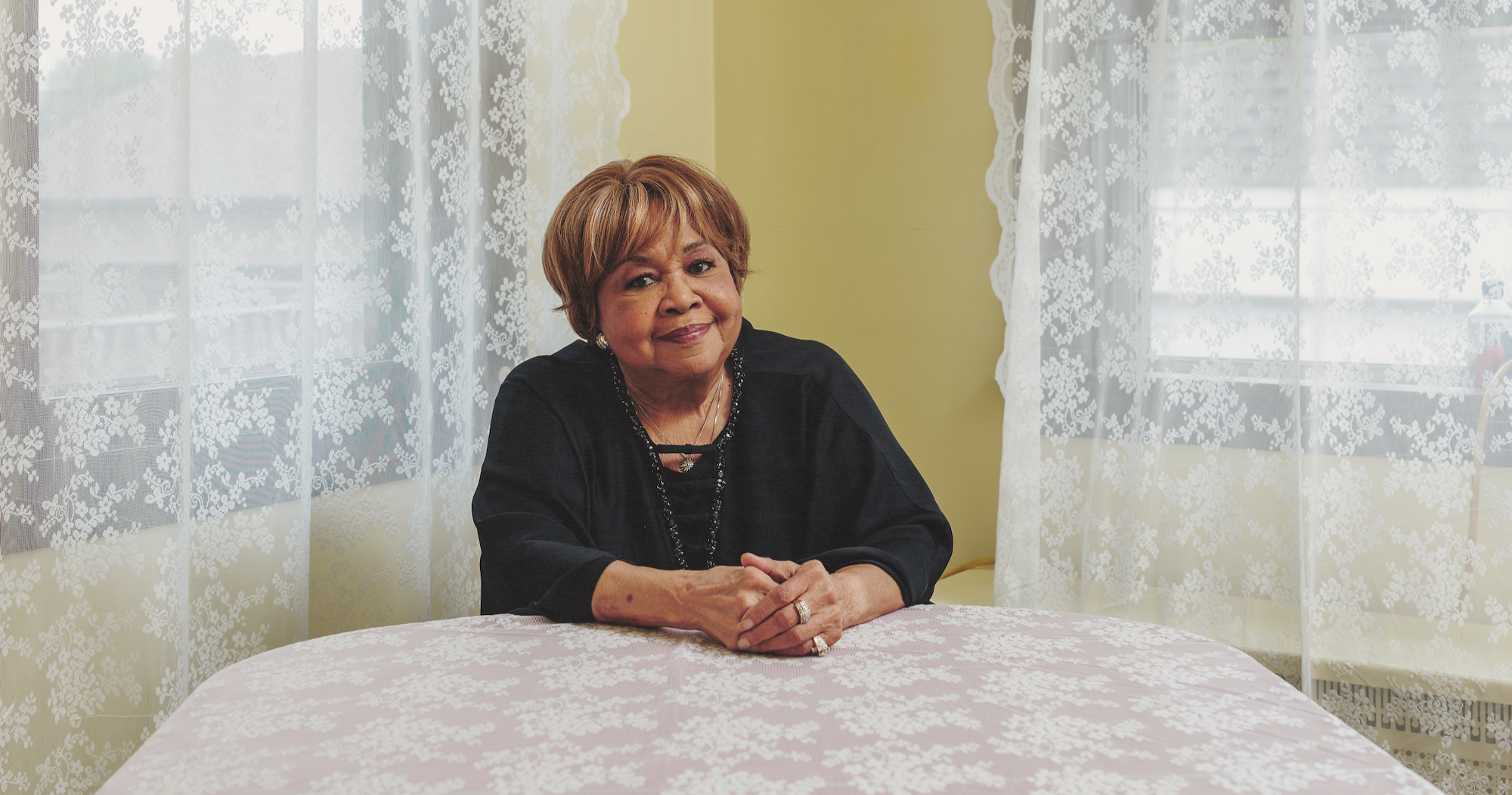
Despite a Sad And Beautiful World, Mavis Staples Still Transcends

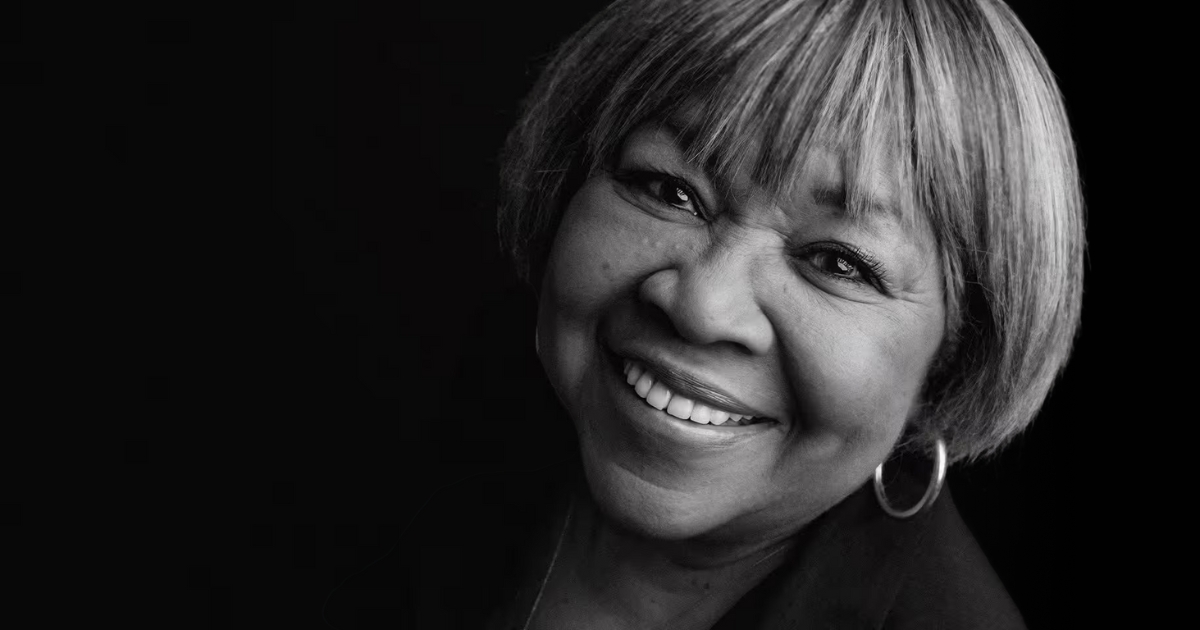
Such words as “legendary,” “transcendent,” and “magnificent,” while accurate, only skim the surface in describing the greatness of vocalist Mavis Staples. There’s no idiomatic area where she doesn’t excel and no song, regardless of origin or writer, that she can’t turn into a personal triumph. She’s also a genuine survivor, both in the familial (she’s the last living member of the Staple Singers) and socio-political sense (she’s a cultural warrior and champion of the Civil Rights era whose resonant voice has inspired generations of listeners).

For many artists, claiming they’ve gotten better with age is at best polite overstatement, and at worst woeful exaggeration. But Staples at 86 still has the authoritative edge, tonal quality, and lyrical flair that’s always marked her performances. It seems hard to believe she’s been singing since childhood, and listening to the 10 tracks on her newest release, Sad And Beautiful World (released November 7 by Anti), you hear the confident, jubilant sound of a vocal titan.

That Staples can cover with equal distinction and flair songs penned by Tom Waits, Curtis Mayfield, Gillian Welch & David Rawlings, Leonard Cohen, and Frank Ocean reaffirms her versatility. Producer Brad Cook smartly lets her voice dominate through each setting, regardless of instrumental backdrops, tempo or lyrical setting. Her spoken word narrative adds additional punch to the cover of Ocean’s “Godspeed” and underscores its recurring themes of urgency and redemption that fuel the album’s sensibility.

But the album also contains prominent message tracks, most notably “We Got To Have Peace,” a number whose tone and lyrics couldn’t be more timely in an era where it seems lunacy often runs supreme. “Anthem” and “Satisfied Mind” are just as powerful and energetic in their declarations of the importance of persistence, kindness, and goodwill. “Everybody Needs Love” provides the perfect finale, with Staples superbly punctuating its theme and completing a 38-minute epic work. Indeed, songwriter Kevin Morby has offered perhaps the best tribute to Staples’ brilliance possible, when he gave a press statement about what it meant to have her doing his song “Beautiful Strangers,” which is another memorable and passionate number.

“It isn’t easy to put into words what it feels like having one of the best, most important vocalists and cultural figures of both the 20th and 21st century sing one of my songs,” Morby said. “But hearing Mavis sing ‘Beautiful Strangers’ is hands down the greatest moment and highest honor of my career. Far beyond any kind of accolade or acclaim – having one of my biggest heroes sing something I wrote is the most validating and flattering thing that could ever happen to me as a songwriter and person. Thank you, Mavis.”

Staples has been awesome for so long, sometimes it’s easy to forget how many different periods and genres her artistry covers. The original family unit the Staple Singers were gospel and folk song giants. The unit included her sisters Cleotha and Yvonne, plus her brother Pervis, her father Pops, whose roots reached back to the seminal days of Delta blues, and Charlie Patton, who served as anchor, both vocally and on guitar. The Staple Singers began singing in Chicago churches in the late ’40s, became recording artists in the early ’50s, and earned their first hit with “Uncloudy Day” in 1952, recorded for the Black-owned label Vee-Jay. By the ’60s they were a cornerstone unit of the Civil Rights Movement, often accompanying Dr. Martin Luther King at rallies.

Mavis began really getting noticed as a solo performer during their transition in the late ’60s and early ’70s to a soul and pop unit. The decision to sign with Stax Records and the shift to secular music was one Pops often acknowledged as a controversial one, but it ultimately paid off as the group’s status elevated into crossover stars. They had eight Top hits in the early and mid-’70s; “I’ll Take You There” and “Let’s Do It Again” were chart toppers and “Who Took The Merry Out of Christmas” reached number two. Mavis also cut her first solo single in the late ’60s, then a full self-titled release for Stax in 1969. Their songs were expertly produced, featuring the crisp and outstanding backing of Booker T. & the MGs. Other essential hits included “I’ll Take You There” and “Respect Yourself.”

Slowly but surely, Mavis began to establish herself outside the Staples family trademark. Her soundtrack LP, A Piece of the Action on Curtis Mayfield’s label, helped her reach some new audiences, as did another self-titled mid-‘80s LP. But it was a pair of releases produced by Prince in the ’90s that really helped her reach the next generation of listeners. The second by the duo, The Voice, was another masterpiece. It included her magical version of Prince’s “Positivity,” as well as a cover of “Melody Cool” from the film Graffiti Bridge. Staples returned to the church in 1996 for a marvelous release, Spirituals & Gospels: Dedicated to Mahalia Jackson, that personified the close friendship that Jackson had with the entire Staples family and her influence on Mavis, personally and professionally.

Over the course of the 21st century, Mavis Staples has unquestionably become an iconic figure. The roster of artists with whom she’s worked over the course of her remarkable career is an astonishing one, both in terms of talent and musical approach. She’s recorded with jazz guitarist John Scofield, Los Lobos, Bob Dylan, Johnny Paycheck, Natalie Merchant, George Jones, Delbert McClinton, Aretha Franklin, Nona Hendryx, and Ann Peebles, to cite only a handful. Staples has also continued making emphatic message albums, among them the 2017 dynamo If All I Was Was Black. Her voice has been sampled by rappers and hip-hop and pop artists like Salt ‘N’ Pepa, Ice Cube, Ludacris, and Hozier.

Mavis also been featured in a host of television shows and films, among them The Tonight Show with Jay Leno, The Late Show With David Letterman, Conan, and “CBS Saturday Morning: Saturday Sessions,” and she was the featured performer on the very first episode of The Late Show With Stephen Colbert. Her film resume includes appearances in Martin Scorsese’s The Last Waltz and Antoine Fuqua’s documentary Lightning in a Bottle, about the Salute to the Blues concert at Radio City Music Hall in February 2003.

Mavis!, the first feature documentary about Staples and the Staple Singers, was directed by Jessica Edwards and had its world premiere at SXSW in March 2015. It was later screened in theaters and was broadcast on HBO in February 2016, eventually winning a Peabody Award. Her appearance with Mahalia Jackson at the 1969 Harlem Cultural Festival is among the many highlights in the award-winning documentary Summer of Soul, which was released in 2021. Staples has even been portrayed on film, played by Laura Kariuki in the 2024 hit film, A Complete Unknown.

Staples has rightly won numerous awards. The array includes three GRAMMYs and a GRAMMY Lifetime Achievement Award, induction into the Rock and Roll, Gospel Music, and Blues Halls of Fame, and having been a Kennedy Center Honoree. The Rock and Roll Hall of Fame honored her a second time in 2019 with the inaugural Rock Hall Honors Award for her solo work. Rolling Stone named her 56th among the “100 Greatest Singers of all Time” in 2008, though there was already no question about her inclusion in that select company.

Amazingly, there doesn’t seem to be any slowing down for Mavis Staples. She celebrated her 80th birthday at the Apollo Theater in 2019, returning to the famed venue where she first appeared as a teenager 63 years before that date. She did a series of collaborative birthday concerts that year with special guests that included David Byrne and Norah Jones. She also collaborated with Run the Jewels on the track “Pulling the Pin” from their studio album RTJ4. In 2022, Staples released Carry Me Home, a collaborative effort with the late Levon Helm that they recorded together at Helm’s Midnight Ramble in 2011.

She’s already announced upcoming tour dates for 2026 at three famous sites: Chicago’s Chicago Theatre, Nashville’s Ryman Auditorium, and New York’s Beacon Theatre. Mavis Staples also remains a voice for social justice. Way back in 2010, she performed at the Rally to Restore Sanity and/or Fear alongside singer Jeff Tweedy. In 2011, she was joined onstage at the Outside Lands Music And Arts Festival by Arcade Fire singer Win Butler. The two performed a version of “The Weight” by The Band. Shortly after the release of her 2016 LP Livin’ On A High Note, produced by M. Ward with songs written for her by Nick Cave, Justin Vernon, Neko Case, and others, Staples issued these prophetic words:

I’ve been singing my freedom songs and I wanted to stretch out and sing some songs that were new. I told the writers I was looking for some joyful songs. I want to leave something to lift people up; I’m so busy making people cry, not from sadness, but I’m always telling a part of history that brought us down and I’m trying to bring us back up.

These songwriters gave me a challenge. They gave me that feeling of, “Hey, I can hang! I can still do this!” There’s a variety, and it makes me feel refreshed and brand new. Just like Benjamin Booker wrote on the opening track, “I got friends and I got love around me, I got people, the people who love me.” I’m living on a high note, I’m above the clouds. I’m just so grateful. I must be the happiest old girl in the world. Yes, indeed.

Anyone paying attention to the songs on Sad And Beautiful World knows that’s still the case with Mavis Staples’ music.


Photo Credit: Elizabeth De La Piedra

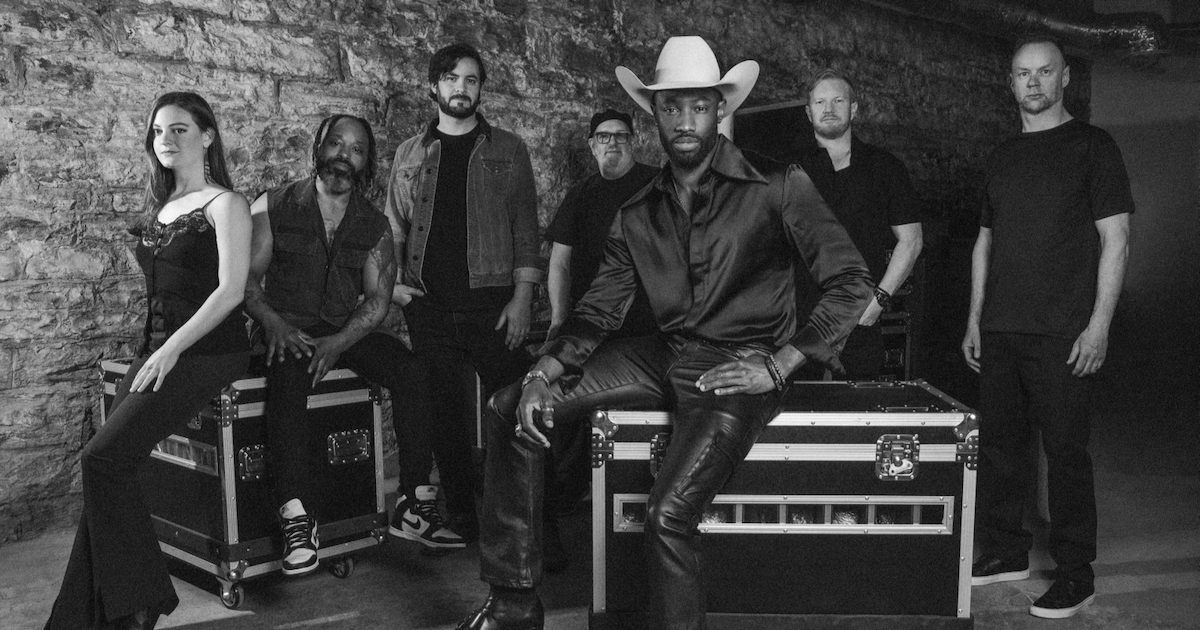
BGS 5+5: SAVNT of Ghost Hounds

Artist: SAVNT (lead singer of Ghost Hounds)
Hometown: Englewood, New Jersey
Latest Album: Almost Home (released by Ghost Hounds in March 2025)
Personal Nicknames (or rejected band names): Sav

What’s your favorite memory from being on stage?

My favorite memory from being on stage was back in 2018. A close friend of mine, Mitchell Lee, asked me to help him close his show at Music Farm in Charleston, South Carolina. I sang a song which we now know as “You’ll Never Find Me,” on our album Almost Home. By the time I got to the second chorus of the song, people were vibing so much that they were singing the chorus back to me. To witness a song no one had heard before make such an impact – that will forever be one of my favorite memories.

Which elements of nature do you spend the most time with and how do they impact your work?

Water is the element in nature I connect to the most. When I start writing a song, I am either walking in the rain, washing dishes, taking a shower, or standing by a body of water, and that’s when inspiration comes to me the most.

What’s the most difficult creative transformation you’ve ever undertaken?

Stepping into this new space as the lead singer of Ghost Hounds has been the most difficult yet rewarding creative transformation I’ve ever undertaken. As a solo artist you are often told to pick one lane, stick to it, and simplify your words so people can understand you; that doesn’t really work for someone like me, who is not only inspired by many genres of music and appreciates great storytelling.

With Ghost Hounds, I get to move wherever inspiration takes me. I get to explore my love of soul, folk, rock, blues, and country without apology. After coming from a world that was so restrictive, this type of freedom can be scary and you may feel like you are out of place. But with the support of my bandmates I realize the more authentic I am, the more real the music feels – in a world that teaches us to hide our emotions, this music thrives when you expose them.

What is the most random interview question you’ve ever been asked?

The most random question I’ve been asked was, “Is cereal a soup and is a hot dog a sandwich?”

If you were a color, what shade would you be – and why?

If I was a color I would be a shade of electric blue – the color of Iron Man’s heart piece. It reminds me of lightning and, for whatever reason, it makes me feel extremely powerful, like a storm.


Lead Image: Ghost Hounds by Allister Ann. Alternate image: SAVNT by Sergio Colon.

Basic Folk:
Rissi Palmer & Miko Marks

This time on Basic Folk, we are checking in with country singer-songwriter and Color Me Country radio host Rissi Palmer and Americana/country artist Miko Marks. The two close friends both came up as Black women in country music in the early part of the 21st century where they experienced gatekeepers and discrimination in the industry, but undeniable love from listeners. Both stepped away from music for several years, but have since come back and found their audiences, artistic grooves, and industry independence. We last spoke with the pair in 2023 (you gotta go listen to that convo if you missed it!) and we have wanted them back on ever since!

LISTEN: APPLE • SPOTIFY • AMAZON • MP3

Rissi and Miko dive into who they think is making waves and positive change in country and Americana. We talk about rising pop-country singer Tanner Adell and her 2023 hit “Buckle Bunny,” a song that’s clearly written for a different kind of country music fan (read: young Black women). Rissi mentions having Mississippi country sensation KIRBY on her show recently and promises her Miss Black America to be a monster of an album. There was a lot of consensus on the podcast that Madeline Edwards has released the best album of 2025 with her record Fruit, where she digs into the extreme grief and extreme joy she experienced after her brother passed away.

Elsewhere, we also touch on the pair’s experiences at Rhiannon Giddens’ inaugural Biscuits & Banjos fest in Durham earlier this year, an event dedicated to reclamation and exploration of Black music. We talk about Alice Randall’s new compilation, My Black Country – The Songs of Alice Randall, a collection of Randall compositions recorded by Black women – including selections performed by both Miko and Rissi. We talk about audiences in London versus the US, a contrast BF co-host Lizzie as well as Rissi and Miko have experienced first hand. In fact, Rissi has been curating a Color Me Country stage at The Long Road Festival in Leicestershire, England, for the past four years. We hope you learn something new, get some insight into what’s happening in Americana for musicians who are Black, and gain some joy from listening to Rissi and Miko’s hilarious banter.


Photo Credit: Cedrick Jones

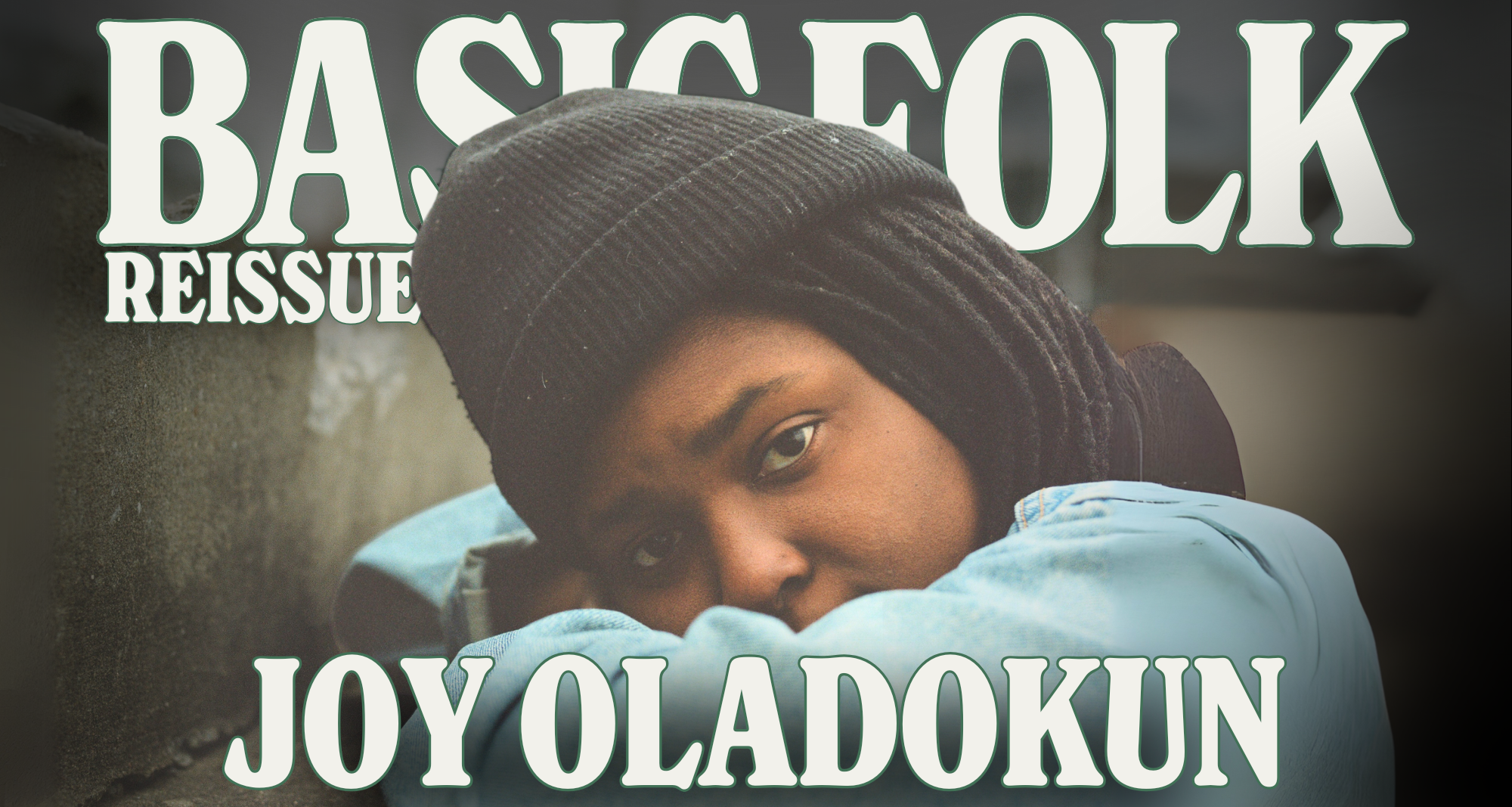
Basic Folk: Joy Oladokun (Reissue)

(Editor’s Note: Welcome to our Reissue series! For the next several weeks, Basic Folk is digging back into the archives and reposting some of our favorite episodes alongside new introductions commenting on what it’s like to listen back. Enjoy!

This episode featuring Lizzie No interviewing Joy Oladokun was originally posted on February 24, 2022.)

Joy Oladokun grew up in Arizona listening to her dad’s extensive record collection and falling in love with the wide and wondrous world of rock and roll. You can hear these diverse sonic influences, from Genesis to Tracy Chapman, in Joy’s rootsy, contemporary, and pop-savvy 2021 album, in defense of my own happiness. Of particular note are her superpowers for melody and smart repetition, which have made her a force to be reckoned with ever since she made the leap from LA to Nashville to make a life as a musician.

LISTEN: APPLE • SPOTIFY • AMAZON • MP3

Joy is not only a phenomenal songwriter, but she’s also fearless and hilarious on social media. Believe it or not, it was Twitter that brought us together and catalyzed this Basic Folk interview. It was fascinating to hear her talk about how she uses her platform as a rising star in indie pop and folk to create the kind of world she wants to see. She’s using emotional transparency as a tool for political change; she is healing in public and gently nudging others to heal as well. Her single, “keeping the light on,” is the perfect distillation of her radical softness.


Sawtooth
Country Soul

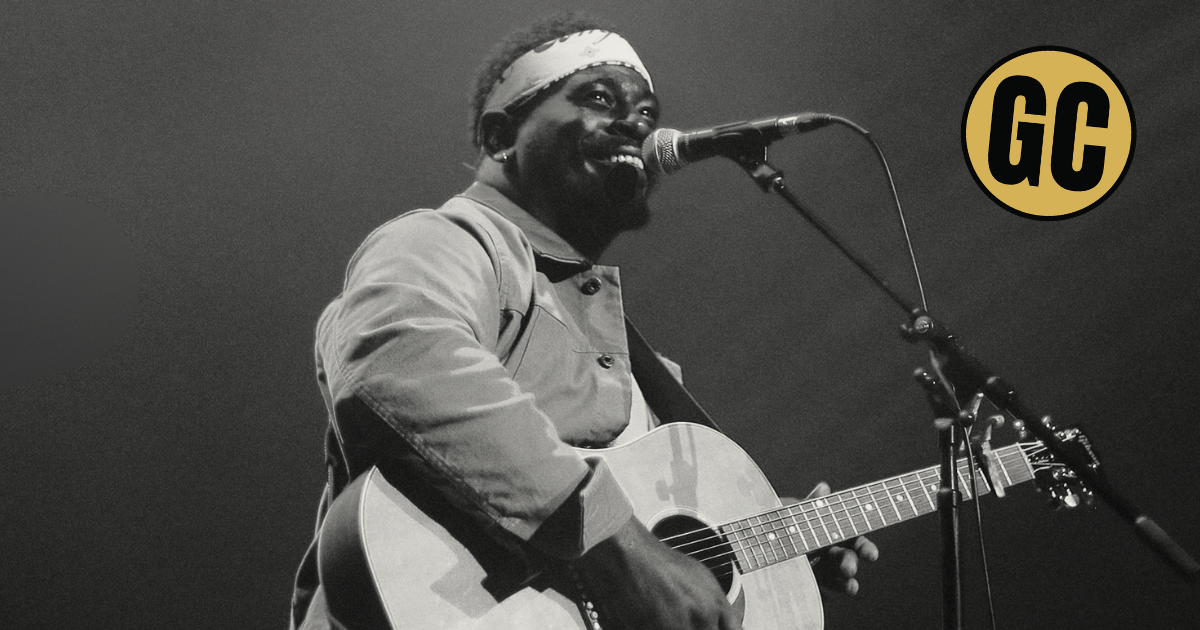
To say Kashus Culpepper’s life has changed over the last five years is an understatement. A former state champion wrestler, firefighter, and EMT, the Alabama native developed a raspy, smoke-and-voodoo vocal while stationed in Spain with the U.S. Navy in 2020, forced to pass the pandemic in his bunk. Since then, he’s knocked over one milestone after another.

With a distinctive mix of country, blues, Southern rock, and soul, the 27-year-old cites Robert Johnson, Bill Withers, and Hank Williams as inspirations and is now bringing his roots-renegade instincts to mainstream fans. Despite only releasing his first official track in June of 2024, the music industry short-timer has earned big-time appreciation.

That includes the respect of heroes like Elton John and John Mayer, a Grand Ole Opry debut, tour dates around the country, and inclusion on 2025 “artist-to-watch” lists at GRAMMY.com, Apple, Billboard, Pandora, and more. Culpepper just finished a run of dates with Leon Bridges and he’ll hit the road with Whiskey Myers in June before joining tours by Sierra Ferrell, Darius Rucker, and others later on in the summer. It would all be overwhelming, if he had time to think about it.

“I’ve just been taking it day by day,” Culpepper tells Good Country with a hearty laugh, waiting to perform at a community festival in Arkansas last month. “I think that’s the best course of action. Don’t think too far in the future and just take each show, each writing session, each recording session one at a time. Just pray everything works out and keep going. … Because when things started happening, I was like, ‘Oh, snap.’”

We wanted to get to know Culpepper before anything else “happens,” and figure out what’s fueling the hype. As it turns out, this all-natural talent is just going with the flow.

I read that you didn’t even start playing guitar until you were in Spain for the Navy, right? What made you want to do that?

Kashus Culpepper: Yeah, in Spain we got shut down and I didn’t have nothing else to do, man. I mean, literally I was bored out my mind. It’s a different type of boredom, because during COVID you couldn’t do nothing. It’s not like you can just go outside or go to a bar or hang with your friends. We couldn’t do nothing. So this was a weird point in my life and my buddy had a guitar in the barracks. I was like, “Well, this is a perfect time. I literally have nothing to do.” I just went on YouTube and looked up covers I wanted to learn. Music has always been something I go back to whenever life is hard. So I resorted back to music and that ended up leading me to learn guitar, eventually learn to write songs.

Thank God for YouTube, huh?

Shout out Marty Schwartz!

You seem to have a lot of diverse tastes, but that bluesy, soulful country thing – why did that speak to you?

I think maybe that’s just my music taste. My first taste of music was gospel, and I’m from Southern Alabama, so gospel there, it’s really rootsy already. It already sounds like a folk song. And the way they sing it sounds so bluesy, like old Son House type of vibes. From there I got into blues music outside of church. I got into country music and R&B and folk music a little. I’m all over the place when I listen to music. I can go from Allman Brothers to a Conway Twitty song really quick.

But I know you like John Mayer and all that stuff, too, right?

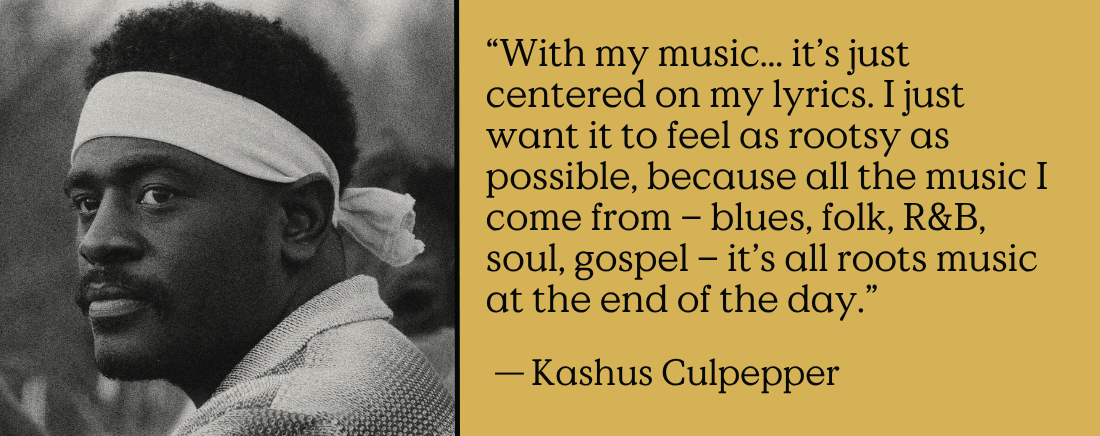
Yeah, yeah. I mean, I love so many of those rock artists, ZZ Top, Led Zeppelin, Skynyrd. People ask me all the time my influence and I’m just like, “Bro, it’s so hard to name everybody.” John Mayer was a huge thing for me. Recently I went back to Norah Jones, I’m like, “Man, I used to love this record.” But with my music, at the end of the day, it’s just centered on my lyrics. I just want it to feel as rootsy as possible, because all the music I come from – blues, folk, R&B, soul, gospel – it’s all roots music at the end of the day.

Your voice is so good at expressing these really raw emotional states, I think. Is that how you are naturally? Or does that only come out in your music?

Most of the time? Honestly man, it’s just with the music. It’s hard to open up to the people. I think for me music has been great, just to express how I actually feel through my singing and my lyrics. I don’t usually just tell people.

So you’re from Alabama. After the Navy, did you go home and keep playing?

I got out the Navy in 2022 and by that point I already had gigs booked on the Mississippi Gulf Coast. I was booked at all these casinos, all these bars. I was booked out for a year in advance. I got out and went straight to full-time doing cover band shows pretty much for another year, until I literally couldn’t take any more of it. Then that’s when I decided I really want to write songs. Literally, I decided “I’m going to move back home to save as much money as I can and move to Nashville.” I was home for maybe a week or two and posting a lot on TikTok and I remember I was in my mom’s living room. I posted a TikTok, I went out because I had an interview for a job, I got back home, and it had reached 100,000 views. From there it was just, “Oh, snap. It’s going on.”

@kashculpeppermusic Replying to @Casey Wayne One week till “Man of His Word” drops! Appreciating all the support on this one❤️ Pre-save link in bio🔥 #country #singersongwriter #original #kashusculpepper #newmusic #livemusic #countrymusic #countrymusiclover #tour #soul #newcountry ♬ original sound – Kashus Culpepper

That’s awesome. Congratulations on how that all turned out. I think one reason for it might be that your music seems so unconventional, almost untamed. Maybe because you did it on your own? Do you feel like fans are hungry for that?

I think so. We talked about John Mayer. John Mayer is kind of like that. He’s all over the place. Sometimes he’ll do a blues song and then straight up pop, and then an R&B song with Leon Bridges. I think people just love that from artists. Artists just being artists. Just do whatever the song feels like. That’s how I feel with songs.

“A Man of His Word” is super soulful, with lots of that gospel influence and a big raspy vocal. Tell me about being the man a girl deserves. Where’s that theme coming from?

I wrote that song with Natalie Hemby and at the time we was just talking about life. The song is from a perspective of a guy looking into a girl and she’s going through hardships, because she don’t have a man of his word. She’s drinking a lot, doing a whole bunch of stuff. The song has a lot of me in it. I grew up with a single mother and you don’t know how those things can affect you without having somebody in your life you can trust. You get the feeling you can’t really trust nobody, because that’s not part of your life, and that leads to mental health problems or substance abuse. You don’t even notice it at the time, until you look back and you’re like, “Dang, that’s why I feel that way.”

After that comes “Broken Wing Bird” with Sierra Ferrell and it’s on the opposite end of the spectrum. Very threadbare and folky, right?

Oh man. So I’m a huge fan of Willie Nelson. One of my favorite songs is “Funny How Time Slips Away” – I just love so much the crooner era that he was doing – and I wanted a song that felt like that.

I wrote the song about somebody that’s not really good for you and you just keep taking ‘em back regardless, because you love them and no matter what they do, you’re always going to. So she’s like my broken-winged bird – no matter what she does, she’s flying back and I’m always going to help her out and then she’ll probably be on her way again.

It’s been good getting to know you a little. Big picture, what do you hope people take away from your music?

I think overall, I hope they can see I’m just an artist trying to express the way I see things, and I hope in some way they can find music that can fit every part of their life. Whether they’re trying to have a good time out partying, or if they want to soak into the sadness of a lover they lost, I just hope my music can fit some aspect of their life. And I hope they can enjoy it.


Photo Credit: Cole Calfee

Sign up here to receive Good Country’s email newsletter direct to your inbox.

Mavis Staples Finds a Place to Call Home in Frank Ocean’s “Godspeed”

Mavis Staples counts herself among the legion of Frank Ocean fans and she’s just released her rendition of “Godspeed” as a sign of her admiration. Of course Staples is an iconic voice of her generation through her groundbreaking music with the Staple Singers on “I’ll Take You There,” as well as the family group’s participation in the 1960s civil rights movement alongside Dr. Martin Luther King Jr. For this heartfelt track, Staples and producer Brad Cook bring in songwriter and Youth Poet Laureate Kara Jackson for spoken word vocals.

Channel Orange was my first introduction to Frank Ocean and I was just amazed at the writing and soulfulness coming from his voice,” Staples said. “And I loved Blonde when that record came out. That first line in ‘Godspeed’ of ‘I will always love you’ just crushes me every time I hear it… or sing it. It’s just such a beautiful song and he sounds amazing on it so I was a little nervous if we could pull it off. I was honored to sing his words.”

This weekend in Canada, Staples will sing at jazz festivals in Ottawa, Toronto, and Montréal before crossing back over the border for shows in Knoxville, Tennessee, and Brevard, North Carolina. After a number of American concerts in July, she’ll pause just long enough to celebrate her 86th birthday. Then she’s bound for dates in Norway, the Netherlands, and Sweden in August, with even more stops scheduled throughout the U.S. through early October.

Yes, she’ll take you there… but only if you can keep up. Check out the Rock & Roll Hall of Fame member’s cover of Frank Ocean’s “Godspeed” released by ANTI- Records below.


Photo Credit: Myriam Santos