Becoming Himself, Mon Rovîa Helps Us All on Our Journeys of Becoming

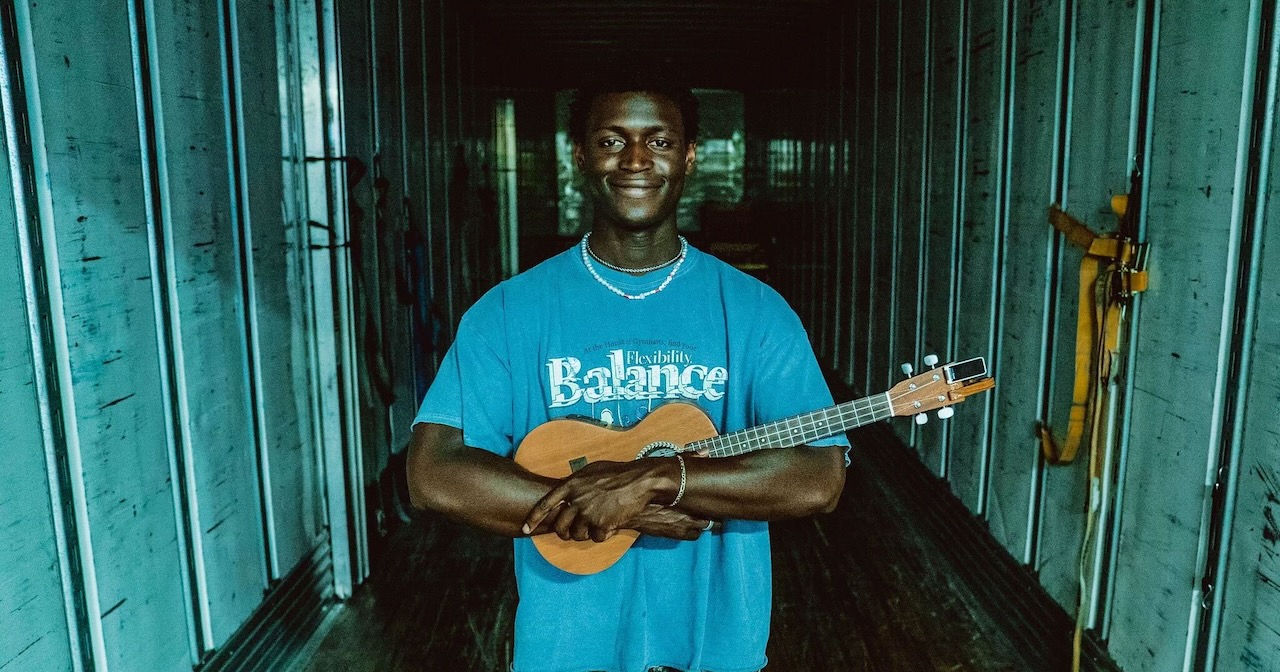
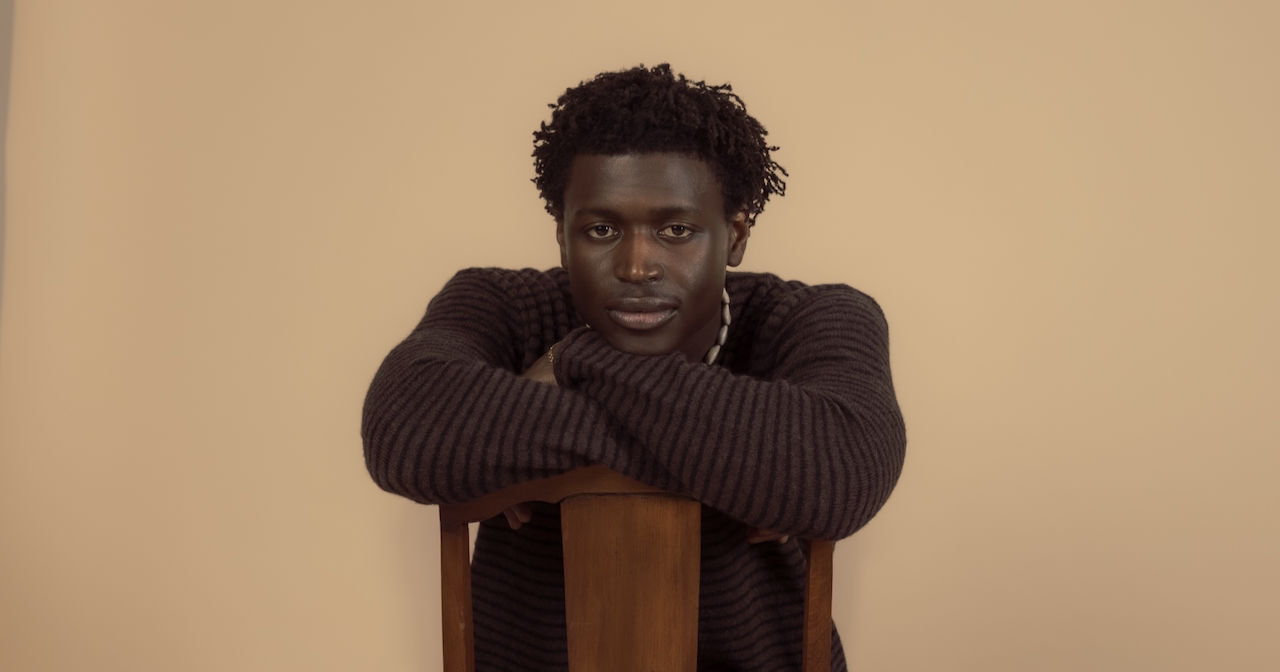
Mon Rovîa has kind eyes. Unassuming and watchful, he’s spent a lifetime reading the room and taking the temperature of the situations he’s found himself in. As a child, he was quiet. These days, he exudes calm. When he speaks or sings, people listen closely. If his eyes are kind, his voice is empathetic. Soft and soothing, it embraces the listener like a warm hug from somebody who knows how it feels to be lonesome and wouldn’t wish it on another. Only a fool would take this kindness for weakness. It’s a vulnerable strength, tempered over time in the fires of resilience.

By now, Mon Rovîa’s backstory almost feels etched into stone. Born in Liberia, on the Atlantic Coast of West Africa, he was adopted by Christian missionaries during the violent bloodshed of the Second Liberian Civil War. He traveled with his new family through the Bahamas, Montana, and Florida, before settling by the grandeur of the Appalachian Mountains in East Tennessee. From a young age, he has lived in complexity, contrast, and displacement, a questing soul searching for meaning, purpose, and his place in this world.

As he reveals in our Cover Story interview, he still hasn’t found what he’s looking for. However, through music, Mon Rovîa has uncovered a trail to walk along. In recent years, his distinctive Afro-Appalachian folk music sensibilities have earned him a devoted audience through social media, regular releases, and touring.

Across his debut album, Bloodline, he offers memoir and testimony, sharing yet more chapters from his remarkable story. Written and recorded in Los Angeles with producer Cooper Holzman, the album crystallizes his early promise into something timeless, sublime, and deeply needed. In late December, he made some time to reconnect with BGS.

This is more of a provocation than a question, but the highest compliment I could give your music is that it makes me feel that if we all listened more closely, there would be less need for questions.

Mon Rovîa: Thank you very much. That is beautiful. I’ll have to dwell on that.

When was the last time you cried?

I cried this year. That’s a crazy question, because I ask my friends at least once a year, “When was the last time you cried?” or “Have you cried this year?” What made you ask me that?

You seem like an emotional guy.

I guess I am. I’ve cried a couple of times this year.

It’s been a big year. How has your life changed over the last 12 months?

It’s interesting. From the outside, your friends and family see your life changing in a lot of different ways as they watch. Going through it as the artist, many things remain the same for me. I still spend a lot of time trying to reach something, and only I know where that satisfaction lies.

People can look at [what’s] outward and say, “Oh, he’s reached something.” The hard part, probably many artists go through this as well, is that deep down, the search always continues for something that hasn’t been answered. I couldn’t tell you what this is.

There’s the question of ego as well. I always think about these people, like Bill Withers, who were able to do what they needed to do before stepping away from the spotlight.

I hope I’m more of a Bill Withers. My personality leans towards silence and not being seen in general. I could see myself disappearing at a certain point. That would be nice.

Do you think there’s an inevitability to the pathway you’re on, or could you have become someone else?

I definitely think there are other things I could have been. I look back at the circle. The start of coming from Liberia as a young kid, surviving the war, being adopted and taken to the States. From there, I could have become many people. Perhaps it would have been sports, or a person who was not well-known, working a 9-to-5 job, clocking in and out. I also think about the choices I made. You could look at some of them and say, “Those were really bad choices,” but each thing is a step, a piece of this road we walk.

In the end, all of it became the better choice, because everything – the good and bad choices on the journey – led me to where I am now.

It’s great to spend a lot of time making and playing music, but everything that happens in between writing or recording songs is just as important.

You’re right. I did odd jobs. I worked the grounds, mowing lawns. I made flower beds. I was in tech recruitment. I worked at restaurants. Getting paid nothing. Getting yelled at more than getting paid. I took it in. I learned. All of these things became different parts of the story. They became different chapters of songs and elements.

I was thinking about what André 3000 said when OutKast were inducted into the Rock & Roll Hall of Fame: “Great things start in little rooms.” I agree with that, but I also think great things start as a response to big expanses.

I spend a lot of time in a little room with a ukulele, just singing into the ether, but I need both: the silence of a little space, the expansiveness of the world, and the opening of that as well.

19th-century Dutch painter Vincent van Gogh had this thing about bringing permanence to the impermanent. A flower will last for a season, but his paintings of those flowers still endure with us today. We can immortalise something through painting, or do the same with song.

I find from the artist’s standpoint that is, perhaps, the goal: to make something that is immortalized, that surpasses your own life, and carries on when you’re no longer here or present. I think that would be the greatest achievement. If there were an end goal to make something that lives on longer than I do, that would probably be the biggest joy of my life as an artist.

What does water mean to your music, and could a river be considered a bloodline?

Water is the source of all things. Rivers remember where the headwaters lie. They know where they come from. They never forget, no matter how far they come from the source. Bloodline for me is exactly that. It’s a reclaiming of remembering. A lot of the time in the States, I tried to forget. I wanted to assimilate into an American way of life that is built on forgetting. Over time, music brought me back to remembering the cornerstone of my life, the headwaters – which are Liberia, West Africa – and the gift of being able to make something out of a lot of pain, turmoil, and uncertainty. So water is crucial.

When I think about your story, how and why you left Liberia, and what has happened since you arrived in the United States, I think about how this was all preceded by an even more complicated story. As you’re reminding us, it goes deeper and deeper.

There’s truth there, and it’s crazy to me, too. I love that you brought this up, because there are a lot of people who live on the land here in America who don’t even have that in their consciousness, don’t even understand the relationship between the two countries in a way that isn’t talked about. It’s complex. The Back-to-Africa movement. Monrovia after President [James] Monroe. It’s embedded in the very fabric of the country of Liberia. A lot of Liberians feel a kinship to America, but they don’t understand that America doesn’t think one bit about that.

A fascinating thing about cultural exchange is how, through the good and the bad, it can create new cultures. It’s so deeply woven into the foundations of country, folk, and bluegrass: the musical techniques, the instruments, everything. I imagine you often meet people who are excited to tell you about different musicians, scenes, and eras from the past.

Yeah, people have. Growing up, I was pretty locked into a religious space. I listened to a lot of Christian music, but I had no idea about mainstream anything. That wasn’t based on living in Liberia either; it was just the family I was adopted into. I’ve been enlightened by things in the past, and people have referred to music. More importantly, I’ve learned some things on my own from Appalachia and folk music. As a Black man, one of the things that kept me away from the [folk music] space for a long time was feeling like it wasn’t mine.

The truth of the matter, as you have brought out so well, is that a lot of these things do come from cultures that have mixed over time. Slaves were brought over from West Africa, but they brought those instruments, sounds, and sang those songs. That’s another thing that has been stolen along the path, whitewashed, you could say. It’s been beautiful to reclaim things as they’ve found me unknowingly. I’ve learned a lot by looking back on that. It’s been super special to know that I do have a heritage in this space. It’s a beautiful thing.

How important is food to your music?

Food? How important is food to my music? Well, as someone who doesn’t eat that much food, I tend to be quite empty when I make songs, play shows and stuff. I don’t know why.

Do you think you fast for your art?

Yeah, I fast for my art. Perhaps I’m more filled by what music brings to me lyrically and sonically. Food, I guess, is a necessity to live, but for the soul, it’s music. You’ve got your body, but then the soul has to be higher. What’s filling that for you? People have to ask themselves that question.

Something I notice everywhere is people looking to country music and the culture that surrounds it for some form of direction. We’re two and a half decades into the 21st century, living in what used to be considered the future, and yet so many people are looking backwards through rose-tinted lenses.

If we look closely, the rose is very much withered. You can look back and romanticize the South, and its culture, as everyone in the States is doing; they love to be cowboys and farmers, but you know the hardships and the pain that this land has brought, right? Let’s look back on that, if we’re also going to look back and romanticize this. The piece of clarity people often miss in the whole system is the truth, the full truth.

The truth is ugly.

The truth is ugly, but I’m wondering, though– at least for me, there was a time when it was ugly, but the acceptance of it in my own life has brought some sense of beauty at the same time. Once you see the truth – which you know well – it will never leave you. That’s why people are afraid of it. That’s why they never look at it. They don’t want that thing to haunt them through time.

You give a lot of yourself through your music. How do you fill your own cup?

Honestly, being in nature. Being back home in Chatt[anooga], and also being very far away from music. That’s how I refill, 100%. When I’m back home, I do little things, like going back to where I started, which is being on TikTok, playing for these people. I didn’t know them. They didn’t know me. But they raised me up. So I give back that time. I’ll never stop doing that. No matter how big Mon Rovîa gets, I’ll always go back to the people in that space. That fills my cup.

Also, playing soccer. I play tons of soccer. Outside of music, it’s my favourite thing in the world. I would probably drop everything to be a professional soccer player.

If you’ve spent time in Europe, Latin America or Africa, you know what time it is. For many people in many parts of the world, soccer is more important than life or death. It is the game.

I never get tired of playing soccer. I play all the time. It’s my favorite thing and a big part of my joy. Also, my community here has been so beautiful to me. Whenever I get to be home for a long time, I’m just preparing to be filled, and then hopefully ready to pour it out when the road calls again.

It’s important for an artist to have a relationship with a place and its people. There is a value in being accountable to a community, and having a community that is accountable to you.

I would agree. They get to ask me questions about things I struggle with on the daily, and how I’m actually doing as an artist. People who don’t know me might say, “Man, touring must be the best thing in the world?” They’ll want to see if it’s just parties and going out every night in big cities. It’s not like that for me, but maybe it is for some artists.

How many years do you think it takes to become an overnight success?

I don’t know. Nobody knows the years someone has been working towards something like this. What’s your answer?

Five to ten, but people won’t always be transparent with you about how long they’ve been trying to get there for.

That’s a good point.

@mon_rovia_boy WBU?! This is “heavy foot,” from my debut album “bloodline” which is finally OUT NOW 🫂 #folkmusic ♬ Heavy Foot – Mon Rovîa

The other thing about being a musician or an entertainer is you’re operating in a space where you can easily spend 25 years being 25.

Yeah, and for some reason, it’s allowed. Maybe that’s why people don’t take musicians too seriously until they become really big. It always just seems like a hobby, or like you’re trying to stay young. I’ve always wondered about that. Even with my work, some people don’t understand that it’s my job. I’ve been fortunate enough to be able to pay some bills and live okay, but they’ll still talk to me as if I’m still looking for the dream. Like, “How’s that going? Are you doing okay?”

But maybe there’s a point: so many people grow older, but their mind and spirit stay the same age. I’m not sure whether our dreams should be all-encompassing. I think it’s good to dream, but when you have that big dream, you need to have little dreams as well, things that can come alongside the bigger picture and also bring life to you, because everything is fleeting, right?

Before we wrap up, I wanted to ask you something. When you think about everything that had to happen for you to arrive at this moment, how does it make you feel?

I’ve actually been thinking about this a lot, the feeling of it. Everyone around me is very happy about the things that have come to pass, but a lot of the time, I still feel a very great loss. I think about my mother, my father, my siblings, whom I have not seen, and everything that had to happen for me to come here, and come to it. I often wonder if I would trade all of that, perhaps, to look at my mother’s face, hear her voice, or remember what she looked like. I think all I can say is that it’s a beautiful sadness I’ll carry forever.

The late French illustrator Jean “Mœbius” Giraud loved to tell these stories that were essentially the same story. They’re all about someone who wants something more than anything, and, upon obtaining it, realizes they don’t want it at all.

I have had many thoughts of laying down the pen in that way. It’s a difficult thing. Joy for me is very elusive. I call it the elusive flower. In moments, I feel it, and it is amazing. A lot of the time, it’s very far from me.

I think that was how Mon Rovîa came to be, through my search for joy in all of these things that have happened. Really, happiness has been the connection with people. Having them relate to the songs, and the songs helping them on their journey to becoming.

My purpose is to focus on the human condition and the realities we all live day in, day out. I’m here to tell that story because it is the only one that is truthful currently. I’ll accept wherever that takes me. If it makes me super poor, great. If it makes me able to live a life aloof in the woods with some land and animals, great. At the end of the day, my path is set, and I walk it the way I must.


Photo Credit: Carter Howe
You Gotta Hear This: New Music From Mon Rovîa, Brennen Leigh, and More

You Gotta Hear This! Our weekly new music collection is yet again full-to-bursting with the best in country, bluegrass, Americana, and beyond. It’s another week for popcorn and Milk Duds, too, as most of our featured artists have brought us music videos to enjoy.

Son of iconic and beloved troubadour Jim Croce, singer-songwriter A.J. Croce brings a soulful and plaintive song, “Didn’t You Want That Too,” packaged in a brooding and passionate performance video. Croce tells us he wrote the song while heartbroken on a cross-country flight. South Caroline’s Jennie Arnau showcases an adorable stop-motion music video today for “Mabel,” a lovely and heartfelt Americana track inspired by her beloved cat and the idea that when you need connection and joy, one ought not forget the comfort and light we carry with us as we move through our communities and the world.

In the bluegrass realm, one of Western North Carolina’s favorite mandolinists/bandleaders Darren Nicholson drops a new single today, “Get Me Down the Line.” Written with Charles Humphrey III, it’s deep-pocketed and grooving modern ‘grass, an anthem for all the folks who might be chasing the next best thing. Plus, Josh “Jug” Rinkel returns with another solo performance video from his Live from Reverb and Echo Studio series. “Lonely and Free” came to Rinkel like a jolt in the middle of the night; he wrote the song sitting on the side of his bed at 4 a.m.

A Good Country purveyor of the first degree, Brennen Leigh has a new single that released last week, “Tell Me,” so we’re excited to share the new music video for that fine track. The video is a bit of an aesthetic time machine, a stylistic rewind that pays tribute to the ’60s on Music Row and “country business casual,” which we love. Boston-based artist Robin Young also shares her new video for “There’s a Part of Me,” below. Featuring a loping, energetic beat and plucked banjo, it’s the first song Young wrote for her upcoming album, Letters to a Ghost, and it artfully balances country and bluegrass grit with a lush, glossy polish.

Rounding us out, an indie folk singer-songwriter who’s almost universally beloved by the internet – and IRL – Mon Rovîa has announced his debut full-length album today with a new track, a single from the project, “Whose face am i.” Bloodline, the upcoming LP, arrives in January 2026. “Whose face am i” shows Mon’s captivating, contemplative sort of writing that has charmed millions of indie and roots fans around the globe. It’s a song about generational trauma, history, family, interpersonal connections, and the strife and turmoil that can stand between these facets of identity.

We hope you enjoy another exemplary round-up of roots music, ’cause You Gotta Hear This!

Jennie Arnau, “Mabel”

Artist: Jennie Arnau
Hometown: Greenville, South Carolina
Song: “Mabel”
Album: A Rising Tide
Release Date: September 5 (single); September 12 (video); November 7, 2025 (album)

In Their Words: “When I wrote ‘Mabel,’ I was reflecting on a time when I craved more connection and joy. While I was traveling alone, it occurred to me that my cat, Mabel, my constant companion and quiet soulmate, reminded me of the comfort and light I carry with me. That thought brought into focus how much I thrive when I’m traveling, meeting people, sharing a glass of wine, and exploring new ideas and places. That’s when I feel most alive. The idea for the video came to me immediately after. I found Adrian (the videographer) and asked him to capture a character on a journey – discovering light, warmth, and happiness along the way. In many ways, Mabel represents the brighter version of myself, the part that chooses joy and moves forward and he was really able to translate that in what I think is an amazing video.” – Jennie Arnau

Track Credits:
Jennie Arnau – Vocals, acoustic guitar, songwriter
Alan Lerner – Drums
Pete Levin – Keyboards
Binky Griptite – Electric guitar
Brett Bass – Bass
Greg McMullen – Pedal Steel
Kendall Sherman – Background vocals
Jacob Joliff – Mandolin
Mike Savino – Banjo, tenor guitar

Video Credit: Adrian Venti


A.J. Croce, “Didn’t You Want That Too”

Artist: A.J. Croce
Hometown: Born in Bryn Mawr near Philadelphia, Pennsylvania
Song: “Didn’t You Want That Too”
Album: Heart of the Eternal
Release Date: September 12 (video); March 7, 2025 (album)

In Their Words: “This is the most personal song on the album. Some songs I’ve written are fun to analyze, because in looking back I see that there was a deeper meaning than I realized at the time. In this case it’s too painful for me to look any deeper than the surface. I wrote it, heartbroken, on a flight from California to Tennessee.” – AJ Croce


Brennen Leigh, “Tell Me”

Artist: Brennen Leigh
Hometown: Moorhead, Minnesota
Song: “Tell Me”
Album: Don’t You Ever Give Up On Love
Release Date: September 3 (single); September 12 (video); October 3, 2025 (album)
Label: Signature Sounds

In Their Words: “When our producer Kevin Skrla built Wolfe Island Recording Co., it was with Nashville’s legendary RCA Studio B in mind. Many of my favorite albums were made at RCA in the ’60s, so when we recorded the video for ‘Tell Me,’ we were imagining some of the magic that occurred in that world… when Nashville A Team studio musicians might have gone in for a day of work in the studio. We played dress up, imagining folks like legendary producer and musician Chet Atkins and visionary engineer and vocal group leader Anita Kerr, what they might have worn – country business casual – and the charts they may have made.

“I’ve always been a musician first and a performer second, so the world of working session players in the ’60s holds a special mystique for me. Georgia Parker, Rebecca Patek, and Josh Artall (some of my favorite musicians) portrayed the original session band, Dave Biller, Matty Meyer, Josh Hoag, and Damien O’Grady. Kevin Skrla and I portrayed ourselves. We’re saving up for a time machine.” –Brennen Leigh

Video Credit: Directed by Oceanna


Darren Nicholson, “Get Me Down The Line”

Artist: Darren Nicholson
Hometown: Canton, North Carolina
Song: “Get Me Down The Line”
Release Date: September 12, 2025
Label: Mountain Home Music Company

In Their Words: “‘Get Me Down The Line’ is such a fun song! It’s another one that I co-wrote with Charles Humphrey III and it’s without a doubt the best response I’ve ever had to a song when performed for our live audiences. It’s a jukin’ little anthem for the person who is chasing the next best thing – another take on the human condition and how we are constantly looking for something to fill the void, looking for whatever ‘it’ is to make us feel better temporarily. I am laughing as I write this because I’m very familiar with this notion. I love writing songs about my own human experience, and I hope maybe others can relate to them from time to time. Thanks for listening! I hope you find yourself groovin’ along as well. Have fun and enjoy the quest for whatever ‘it’ is that gets you on down the line.” – Darren Nicholson

Track Credits:
Darren Nicholson – Mandolin, lead vocal
Tony Creasman – Drums
Kristin Scott Benson – Banjo
Mark Fain – Upright bass
David Johnson – Acoustic guitar, resonator guitar
Kevin Sluder – Harmony vocal
Avery Welty – Harmony vocal


Josh Rinkel, “Lonely and Free”

Artist: Josh Rinkel
Hometown: Mount Eden, Kentucky
Song: “Lonely and Free”
Album: Live from Reverb and Echo Studio
Release Date: September 12, 2025 (video)
Label: Reverb and Echo

In Their Words: “I’ve always heard songwriters tell stories about how a song came to them in their sleep, how it woke them up and they just had to write it… I never believed them until it happened to me. That’s how ‘Lonely and Free’ came about. I wrote that song sitting on the side of my bed after waking up out of a dead sleep at four in the morning. I think a lot of people are afraid to admit that they’re lonely and they write it off as being free or independent – not needing someone in their life to slow them down. To me, that’s the meaning behind ‘Lonely and Free.'” – Josh Rinkel

Video Credits: Video by Carter Brice; audio by Dan Deurloo.


Mon Rovîa, “Whose face am i”

Artist: Mon Rovîa
Hometown: Libera-born, Tennessee-based
Song: “Whose face am i”
Album: Bloodline
Release Date: September 12, 2025 (single); January 9, 2026 (album)
Label: Nettwerk Music Group

In Their Words: “A lot of life is about your history. The search for understanding what has happened, what is, and what isn’t. The Truth lies at the epicenter of the case. For many adopted children, or those who have lost parents when young or never knew theirs to begin with, there can be an unspoken weight. We all long to know who brought us into this world, and at what cost. Relief releases sweetly as answers come to light. Know you aren’t alone in your search for your story. Many seek with you.” – Mon Rovîa


Robin Young, “There’s a Part of Me”

Artist: Robin Young
Hometown: Boston, Massachusetts
Song: “There’s a Part of Me”
Album: Letters to a Ghost
Release Date: September 17 (single); October 17, 2025 (album)

In Their Words: “‘There’s a Part of Me’ is the first song I wrote for my debut album, when my emotions were truly raw. I was in the beginning stages of a relationship with someone new while a large part of my heart stayed stubbornly loyal to someone from my past. He’d made me feel a depth of emotion that I just couldn’t seem to access with anyone else and I couldn’t imagine ever being able to move past it, though many years down the road I now thankfully have.

“The major chords during the chorus represent a momentary glimpse of what moving on might feel like, but then drift back into minor chords in the verses like a slide back to reality. Rather than sounding upbeat, the faster tempo is meant to feel almost frantic.

“The music video shows me trying to enjoy the beautiful scenery of Western Massachusetts in the present, while being continually pulled back into memories of the past. The one shot taken indoors is meant to evoke a confession booth as I express the guilt of retaining feelings for someone while in a relationship with someone else.” – Robin Young

Track Credits:
Robin Young – Vocals, acoustic guitar, songwriter
Charlie Burket – Electric guitar, mandolin, banjo
Carter Sanders – Piano
Russ Sternglass – Drums
Joe McMahon – Upright bass

Video Credits: Directed and edited by Chris Bartlett. Color grading by Jefferson Rosa.


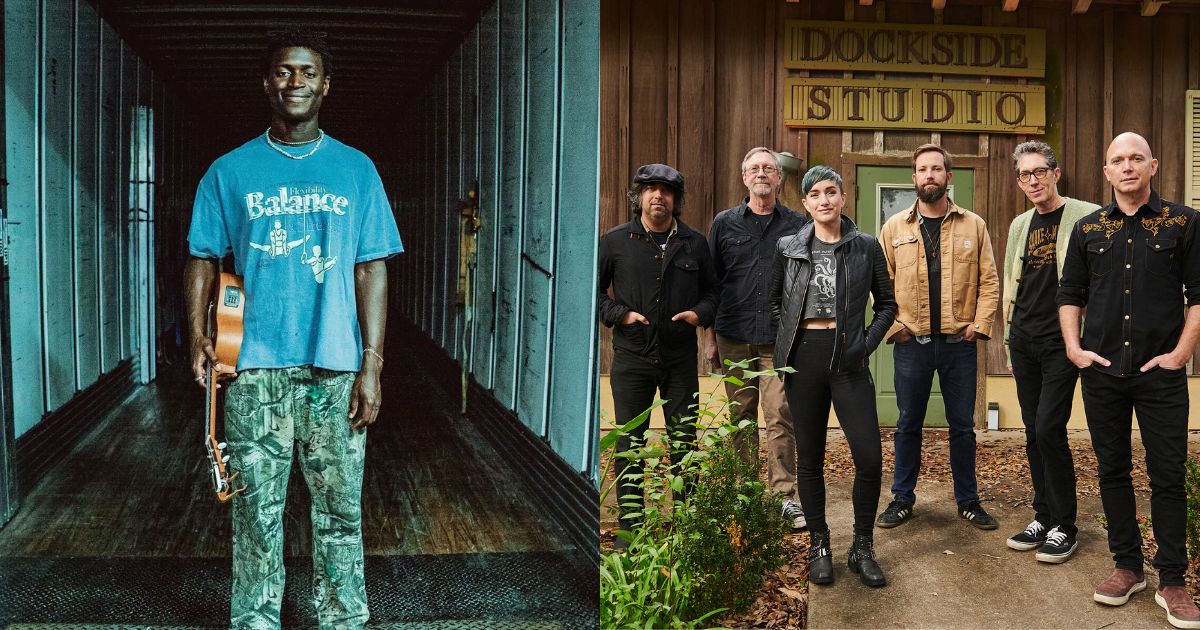
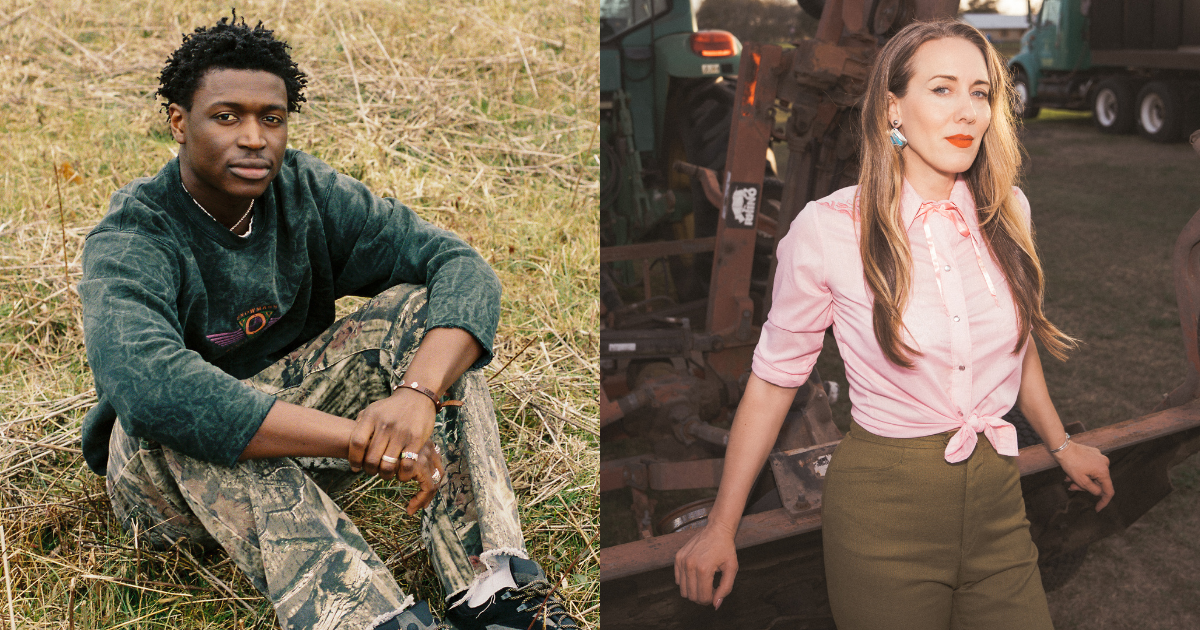
Photo Credit: Mon Rovîa by Zayne Isom; Brennen Leigh by Lyza Renee.

For Indie-Folk Sensation Mon Rovîa, ‘Atonement’ is Just the Beginning

(Editor’s Note: Read our January 2026 interview with Mon Rovîa about his new album, Bloodline, here.)

When one really digs below the surface of Mon Rovîa, there’s this intricate kaleidoscope of self, this winding path where the road to the here and now for the singer-songwriter has truly been one of restless resilience, dogged passion, and spiritual curiosity.

The rising artist has already lived this whirlwind existence of trials and tribulations, but also one of triumph and transcendence. Born in the West African country of Liberia, Mon Rovîa (taking his stage name from Liberia’s capital city) was adopted by Christian missionaries and taken from his homeland in the midst of an extremely violent and daunting civil war,

From there, Mon Rovîa bounced around the United States in a highly religious household, one where he wasn’t exposed to modern culture or the endless depths of music, either new or old. But, nonetheless, he fostered many existential questions about his unfolding life, with one main query in the forefront: Who am I?

The intricate nature of Mon Rovîa became heavy and tumultuous within his heart and soul, these deep layers of internal conflict. Being an immigrant in America. Being a Black man raised in a white family. Being adopted with no sense of his biological parents. And being filled with survivor’s guilt about leaving Liberia.

Yet, it was writing in his journals that launched the long process of healing and understanding within Mon Rovîa. Those words, thoughts and emotions soon took shape as songs, all while he began to learn to play the ukulele, guitar and other instruments. Add into that, his continued exploration of recorded music itself.

What has resulted is this unique tone, a vibrant crossroads of indie-folk, Americana, and shoegaze pop stylings, with many viewing Mon Rovîa as a talented rising voice in the Afro-Appalachian folk scene.

Fast-forward to 2025, where Mon Rovîa has become a very popular star on TikTok, yet his soothing sounds and melodies echo far across the massive social media platform. Several studio EPs have been released to wide acclaim, with the latest, Act 4: Atonement, putting a period on this chapter of his art – his eyes now aimed at the unknown horizon of his intent, head held high and optimistic.

When you’re looking out the window these days – in terms of your career, where the music’s going, and also where you’re going – what are you seeing?

Mon Rovîa: From even last year, I think things have accelerated a lot faster than I would’ve hoped in music, to be honest. It still seems really fresh though. It’s a lot of taking in the new fans and a lot of the joy that’s come with the acceptance of the music on a broader scale. At times, I wonder if I was really prepared for all of it, because a lot of these songs and a lot of the roadmap was written from a place of deep sadness and things that I was going through at the time. It’s crazy when you get to the place of living the thing you hoped for and realize that, “Oh man, there’s longevity that needs to be tied along with it now, since it’s becoming something that people are really desiring.” But, I’m very thankful. I try to be truly in tune with my energy and spirit. The world is super heavy and I tend to feel it a lot.

As things get crazier for you, expectations may shift and things change. How do you keep that piece of you that’s honest and real intact in your music?

A lot of it is, for me at least, having perspective. I know that’s easier said than done. But, being able to understand that you’re doing what you love and to be honest with whatever it is you’re presenting. Write what you know, write what you feel.

Your popularity soared through TikTok and now you’re playing more live shows. Has that been an interesting transition in being face to face with your fans that normally see you from behind a screen?

Absolutely. It’s totally different. I’m a pretty quiet, shy person. So now, transitioning to moving from the screen and having that barrier, that river that can divide, all the little things that come into play when you’re face to face? It was a little bit scary at first, especially with the first couple tours we did. With being in front of a crowd, the most important piece I think that I’ve learned now is the stories that I’m telling are the tales of my journey with each song. As I play music, that’s helped me become a lot more confident onstage, because I know what I’m speaking about and I know what the songs are about. It’s not this kind of idleness and just good music to listen to. I try to take the listener a little bit deeper, and that’s fun for me to do that. It creates a lot more fun. I’m just not someone that likes to be in front of a lot of people or be the center of attention, to be honest. I prefer writing things in silence, being in my room and contemplating.

@mon_rovia_boy To those alchemizing your traumas… this is “to watch the world spin without you” 🫂 #folkmusic #mentalhealth #derealization ♬ To Watch The World Spin Without You – Mon Rovîa

With all of this going on, you’re also on this journey of finding yourself and figuring out who you are, where you came from, and where you’re going.

I think every adopted kid eventually hits the point where they want to know so many different things about their life, their story, what their background was. And that’s what was happening to me around the time of [my 2021 album] Dark Continent. And that’s even before we were taking this route of Afro-Appalachia. But, it led me to dive deeper into music and I just happened to be [living in Chattanooga, Tennessee]. Being in this area helped me to dive deeper into where all this music kind of came from and the history [behind folk, bluegrass, and Americana]. So here I am, just a Liberian refugee, but somehow in the perfect hands of history learning from where I was, not necessarily anything else. It is a very full circle moment.

That’s got to be a lot to wrestle with as you get older and you become your own person. I mean, there’s a lot of layers there.

So many layers. But don’t forget, there’s that layer of being the Black kid in a white missionary Christian family. And then the experience of growing up Black in that private school kind of world, having no tie to the African American experience. Being exiled as well from that group, because I didn’t have the same upbringing. I was always looked at as being a white Black person, a Black person that spoke white, because I spoke pretty properly. Kids that have my experience are very lonely, you know? There’s not really a place you fit, because you don’t fit with the white kids because you’re Black in their eyes, clearly. And then the African Americans don’t accept you because you don’t know their world either.

It was a very tough upbringing. I was very quiet and I watched a lot. I learned how to be what I am in social settings, how to relate to [others] and keep things to myself a lot, just try to fit in as best as possible. It was tough. It was lonely. Music didn’t really come to me as Mon Rovîa until 2018, and that’s when I really started to take music a little bit more seriously. [Growing up], it was more of an outlet. It was just a fun thing I did with my brothers. I didn’t think of a career or me being good at it, because nobody said I was good at music or writing music. My friends did like my writing. They thought I was very clever, but I didn’t consider it for myself at that time. I just did it.

With this period of your life and career, it seems Act 4: Atonement seems like the end of the beginning of this chapter of your music and your journey.

Yeah. That’s what Atonement is. It’s the end of the beginning. Everyone is a hero in this story of life. So, everyone has their hero’s journey, whatever that is to them. Some don’t make it to becoming the hero, which is a tragic thing. And some do, but everyone has that journey in their life. For me, this atonement ending is the start of what I am now. I think it gets me to this place where I’ve gone through a lot of difficult things. Hopefully now, in my next chapters of Mon Rovîa, whatever that is, I can atone to the people – people that are hurting and going through different things. The point is, I can hopefully now be some kind of light to these people, where I can tell them things I’ve learned along the way. And hopefully it helps them through their things and through their time. That’s the important piece of what atonement is – the knowledge then turns hopefully to wisdom.

Have you been back to Liberia at all?

The last time I was there I was 10 or so. But, I’m supposed to go back next year to see my sister and brother. They still live there.

Have you tracked down your parents?

My mother passed away during the war and my father also did. I keep in contact with my sister, and that’s only recently. Growing up, these people were not in my thoughts. I tried to forget a lot of these things and just assimilate to American culture. It wasn’t until I was older that that guilt set in where I realized, “Man, I hadn’t even thought about anybody else in my country or the gift that it is to be chosen,” because it could have been my sister or brother that was chosen to come to America. I was just picked out of the group of them like, “Hey, he should go with this missionary family.” So, a lot of those things didn’t even come to my mind until I was older, to really see how much time I wasted absolutely doing nothing for anyone else but myself in this place. At that time, I was going through a lot of different vices and dealing with a lot of different bad things. I was constantly drinking and deep into my depression and lack of understanding of what my purpose was at all.

Or who you are.

I didn’t know who I was. I didn’t really know my past and history. I had glimpses of it from just some things my adopted parents had told me. But, I hadn’t dove into it until I contacted my sister and heard the real thing, the truth of it all. The goal is to go back [to Liberia] and try to get some colors from my native country and, and just, you know, spend some time with people that I haven’t seen in a long time and learn. The last time I went was really difficult. When I was there, it was in the middle of the second civil war and we ended up staying longer than expected because the child soldiers had taken over the capital city of Monrovia. It was a really scary time and that was the last memory of Liberia during the conflict. That’s a whole other cathartic piece of my journey, to [once again] step foot on that soil. I think once I step foot on that soil, I’ll probably weep. A lot of things have been bottled up and lodged into different areas of my body, [and will be] released onto the continent. But, not until I go there. My story won’t end until I go back. That’s a major piece.

You have such an interesting perspective, because I think a lot of times people in this country take things for granted, where they’ve either never traveled out of this country or they’re not from other countries. I would surmise that you probably see things that are beautiful in this country that a lot of us don’t acknowledge.

Yeah. There’s so much beauty in this country. Through all of the tirades against each other, there is still so much goodness. I mean, being able to walk out your door and be able to get anything you want at a store that’s there and not be–

Afraid to go for that walk.

Not afraid to go, yeah. Not afraid to go on that walk knowing I might not come home today, and there’s many countries like that currently. People don’t even have that freedom to go out their door and just see something and or go walk in the woods.

Or make an album.

Or make an album. It’s crazy to me that we forget so easily the good things when times are tough. And when times are tough, you think that the good won’t come back again. Man’s memory is so short and it’s really the plague.

That’s really what kills us all is that our memory is terrible. In times of famine, you never think good will come again. So, you lose hope. But, everything’s cyclical as well. Good comes back and hard times come again. And then you weathered the bad time before, but you forget that you weathered it, so you suffer. That’s us. That’s humanity.


Photo Credit: Glenn Ross

You Gotta Hear This: New Music From Mon Rovîa, Loose Cattle, and More

We’ve reached the end of the week and we’ve got your new music covered this Friday! Our premiere round-up is completely full with excellent new songs and videos from a variety of artists who work in a variety of roots styles.

Check out new music videos from folks like singer-songwriter Sadie Campbell performing “Getting Older,” a subtly spooky tune from High Horse entitled “Tombstone Territory,” country outfit Loose Cattle bring us “The Shoals,” on which they are joined by none other than Patterson Hood, and “Afro-Appalachian” artist Mon Rovîa’s lyric video for “Winter Wash 24” is colorful and engaging.

You’ll also find brand new music from folks like JD Clayton, who sings about being disappointed by a friend on “Let You Down,” Benny Sidelinger processes a difficult season of life on “Lilacs,” and roots rockers Clarence Tilton call on their pal Marty Stuart for their latest, “Fred’s Colt.”

To cap it all, we debuted our new video series, the AEA Sessions, with our partners at AEA Ribbon Mics earlier this week with an incredible performance by our longtime friend, Gaby Moreno. You can watch that debut session below, as well.

It’s all right here on BGS and, you know the routine – You Gotta Hear This!

Sadie Campbell, “Getting Older”

Artist: Sadie Campbell
Hometown: British Columbia-raised, Nashville-based
Song: “Getting Older”
Album: Metamorphosis
Release Date: October 11, 2024 (single); October 25, 2024 (album)
Label: Glory War Records

In Their Words: “In a sea of filters, fillers, and constant pressure to look young, ‘Getting Older’ is my reminder to embrace myself where I am, as I am, to be proud of every wrinkle on my face, that my body was well-earned through laughter and learning, and not everyone gets the privilege to grow older. This video is meant to symbolize the many different versions we can be throughout our lives — and that it’s really about perspective. The photo can be the same, but through a different lens, you see a different image. Just like how we see ourselves. If we can change the lens, and the way we perceive ourselves, the picture we see often changes, too.” – Sadie Campbell

Video Credits: Filmed and edited by Justin Alexis at That Good Graphic.


JD Clayton, “Let You Down”

Artist: JD Clayton
Hometown: Fort Smith, Arkansas
Song: “Let You Down”
Release Date: October 11, 2024
Label: Rounder Records

In Their Words: “‘Let You Down’ was born in a coffee shop in East Nashville called Cafe Roze. I sat next to a new friend who would later become my bass player. We had an itch to hit the town and get dinner at an unfamiliar restaurant, but to our surprise every establishment the waitress recommended was closed that day. After about the fourth restaurant it became a humorous bit. It immediately began pouring rain outside. Although the waitress meant nothing by it, I teased that she was letting us down. On my drive home that day I sang ‘sometimes people let you down’ in my voice memo. It immediately hit me and I was flooded with feelings of an old friend that had actually let me down and meant it. I then had my sweet little song. But it needed more. It wasn’t until the day of recording that I dreamed up a huge instrumental break to highlight all of my band members and bring their skills to life. On a Thursday at Sound Emporium studio on Belmont Boulevard, my band cut ‘Let You Down’ and it became in my own humble opinion a certified banger. I’m certainly biased, but I truly love the song and its flow of story to emotionally charged musical outrage.” – JD Clayton

Track Credits: 
Written by JD Clayton.
JD Clayton – Vocals, acoustic guitar, background vocals, harmonica
Bo Aleman – Electric guitar
Lee Williams – Bass guitar
Kirby Bland – Drums, percussion
Hank Long – Piano, Wurlitzer, organ


High Horse, “Tombstone Territory”

Artist: High Horse
Hometown: Boston, Massachusetts
Song: “Tombstone Territory”

In Their Words: “After coming off tour with the Jacob Jolliff Band, I had all this inspiration that I wanted to bring to a High Horse instrumental composition. The basic elements of ‘Tombstone’ come from some of the ideas in Jolliff’s music and influence from Grant Gordy/Mr. Sun recordings. And, from a practice of sending around a melodic part that I learned in an earlier Persian Music Ensemble at NEC to the band. Not only was this an academic sort of exploration for me, but it was also a great opportunity to show off some of the special skills everyone in the band has as instrumentalists. Some of my favorite solos on the record happen on this recording and it has some of our best band cohesion! After performing the piece for one of its first times in Hancock, New Hampshire we were still looking for a title when we happened upon a short dirt road named Tombstone Territory. Given the spooky vibe of the tune, that seemed to fit just perfectly!” – G Rockwell, composer, guitarist

Track Credits:
G Rockwell – Guitar
Carson McHaney – Fiddle
Karl Henry – Cello
Noah Harrington – Bass

Video Credits: Video, editing, recording, and mixing by Micah Nicol


Loose Cattle, “The Shoals” featuring Patterson Hood

Artist: Loose Cattle
Hometown: New Orleans, Louisiana
Song: “The Shoals”
Album: Someone’s Monster
Release Date: October 8, 2024 (single); November 1, 2024 (album)
Label: Single Lock Records

In Their Words:“‘The Shoals’ gives me faith good men are actually listening, since Michael pulled the lyrics from several years of my private ‘Mad As Hell/Not Gonna Take It Anymore’ rants. It’s a song about what happens when we stop twisting into pretzels trying to please everyone else and start speaking uncomfortable truths to power. Historically, there’s a long tradition of accusing women who speak uncomfortable truths aloud of possession or witchcraft, so it felt especially fitting to cast Patterson Hood as a river ‘demon’ egging on the narrator.” – Kimberly Kaye

“I started writing the song during my first stay in the Shoals some years ago, on a banged up old guitar I’d just bought there. Better writers than me have tried and failed to explain the mysterious way that stretch of the Tennessee River has sung so much unforgettable music into being. All I can say is the song kind of wrote itself there and I just tried to copy it down. And ever since, from having an original Swamper’s son tell me “hell yeah” that he wanted to sing the part of a River Demon for us, to finding the record the perfect home at Single Lock Records, has just seemed meant to be. After a hell of a lot of work, of course.” – Michael Cerveris

Track Credits:
Music and lyrics by Michael Cerveris.
Kimberly Kaye – Vocals
Michael Cerveris – Acoustic and electric guitars, harmonies
René Coman – Bass
Doug Garrison – Drums
Rurik Nunan – Fiddle, harmonies
Jay Gonzalez – Farfisa organ
Patterson Hood – Vocals, guitar


Mon Rovîa, “Winter Wash 24”

Artist: Mon Rovîa
Hometown: Liberia-born, Tennessee-based
Song: “Winter Wash 24”
Album: Act 4: Atonement
Release Date: October 11, 2024 (single); January 10, 2025 (EP)
Label: Nettwerk Music Group

In Their Words: “I wrote ‘Winter Wash 24’ while touring with Josiah and the Bonnevilles in March ’24. The theme of cognitive dissonance weighed heavily on my mind amidst everything happening in the world. Outside Seattle, I saw tanks covered in tarps treated with winter wash and the image moved me to write. The song explores how we often distance ourselves from the struggles of others when they don’t directly affect us. My goal is to raise awareness of these shared struggles, because empathy is a crucial force for change. As a refugee, I’m deeply inspired by the work of the IRC (International Rescue Committee) and am donating the song’s proceeds to support their vital efforts.” – Mon Rovîa


Benny Sidelinger, “Lilacs”

Artist: Benny Sidelinger
Hometown: Wayne, Maine (famous for a bumper sticker that says “Where the hell is Wayne, ME?”)
Song: “Lilacs”
Album: Cherry Street
Release Date: October 25, 2024

In Their Words: “I wrote ‘Lilacs’ during a particularly difficult period of my life. However, there were many joyous things happening at the time too. My then-fiancée was pregnant with our lovely daughter Tulsi and we were living in a gorgeous historical farmhouse on the Skagit River, yet I was dealing with the aftermath of a difficult divorce and was temporarily isolated from my two older kids. The juxtaposition of tragedy and joy during that time are the basis of the song. For a while, I thought I might lose my mind, but somehow I managed to hold on to a thread of sanity. Eventually I was reunited with my kids and moved on to much easier chapters of life. At the same time, we had a spring with an incredible amount of rain and there was concern that the river might overflow the dikes, which would have flooded our house. Yet, just as I managed to not go crazy, the dikes held and a catastrophic flood was avoided. So, as they say: ‘I wrote a song about it.'” – Benny Sidelinger

Track Credits:
Benny Sidelinger – Vocals, guitar, Dobro
Michael Thomas Connolly – Bass, telecaster, vocals
Aida Miller – Vocals
Jason Haugland – Drums


Clarence Tilton, “Fred’s Colt” featuring Marty Stuart

Artist: Clarence Tilton
Hometown: Omaha, Nebraska
Song: “Fred’s Colt” featuring Marty Stuart
Album: Queen of the Brawl
Release Date: October 11, 2024 (single)

In Their Words: “We asked Marty to get involved with ‘Fred’s Colt’ as we had met and opened for him a couple times in our hometown, [Omaha]. Marty agreed and played his famous pull-string telecaster, the original guitar of Clarence White of the Byrds. It’s a guitar we were well acquainted with, as we are huge Clarence White fans. Marty’s voice seemed perfect for the second verse of this song, which recounts the potentially sordid history of a strange family heirloom – an old Civil War-era Colt pistol. Marty not only lent us his voice for a verse and his guitar wizardry for a solo, but even added parts throughout that we did not realize were missing. Marty Stuart is a national treasure, and we are so honored and excited that he spent a day with our tune and did what only he can do!”

Track Credits:
Words and music by Chris Weber.
Chris Weber – Rhythm electric guitar, acoustic guitar intro, vocals
Marty Stuart – Electric guitar (Telecaster), first solo, second verse vocals
Corey Weber – Electric guitar throughout, second solo
Paul Novak – Acoustic guitar
Craig Meier – Bass
Jarron Storm – Drums, percussion, vocals


AEA Sessions: Gaby Moreno, Live at AmericanaFest 2024

Artist: Gaby Moreno
Hometown: Los Angeles, California
Songs: “New Dawn,” “Solid Ground,” and “Luna de Xelajú”

In Their Words: “It was a wonderful experience performing a few songs for AEA at Bell Tone during AmericanaFest. The sound quality and the energy in the room were unforgettable.” – Gaby Moreno

“Gaby is charismatic and energetic. She lights up a room when she walks in and when she performs, it’s electrifying.”
Julie Tan, AEA Ribbon Mics

Read more here.


Photo Credit: Mon Rovîa by Glenn Ross; Loose Cattle by Joseph Vidrine.