There’s an Edge to Abbie Callahan’s Sugary Country

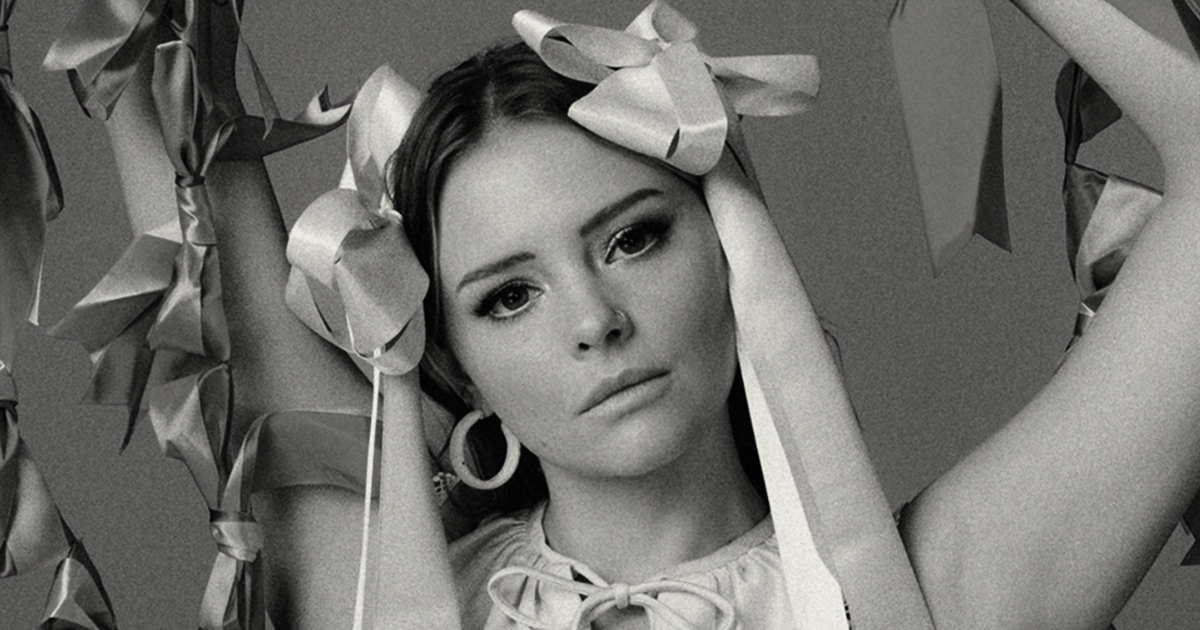
There’s an effortless charm to singer-songwriter Abbie Callahan’s persona when you first encounter her via vertical video. Beautiful and whimsical makeup, adorable wardrobe, hyper-femininity, and a Gen Z polish to her social media presence are all complicated in the most fascinating ways by her music itself. Landing somewhere in between witty and incisive pop country like Kacey Musgraves and gritty, train-hopping Americana such as Sierra Ferrell, you’d be well served not to make assumptions – or to sell Callahan’s songs short based on appearances.

This is not a book you can accurately judge by its cover. Callahan’s songs will reel you in with her sharp, impactful vocals, her deft wordplay and solid hooks, and a wink and sly smile around every lyrical corner. Tracks like “Simon Says” will have your head bobbing before you even realize the devastation and trauma woven through the lyrics. A new, as-yet-unreleased number, “OptiMystic” – debuted, as Callahan tracks often are, on TikTok – lays out her worldview pretty tidily:

I’ve been known to be a little easy on a Saturday
Known to smoke a cigarette and throw up in the alleyway
Checked off greed and lust in a church pew
Had confession in the Red Door bathroom

Who can really say where you can talk to Jesus anyway?
Anyway…

If you were to engage with and enjoy Callahan’s music without any deeper inspection, you’d still come away with plenty. But the real appeal here is that the sweet, sugary veneer on these songs is only to bring you in. It’s the tinges of bitterness, the tannins, the “something much deeper going on below the surface” that will bring you back again and again. However you zoom out or zoom in on Callahan, her lyrics, her process, and the way she brings her songs directly to her listeners there’s subversion, a deliberate and inspired flouting of expectations.

@iamabbiecallahanWho can really say where you can talk to Jesus anyway… anyway🧚🏼‍♀️🔮♬ OptiMYSTIC – Abbie Callahan

Callahan is intentionally leveraging the way she’s perceived outwardly and visually to “Trojan horse” her way of making music into a country industry that’s often loath to platform artists like her, who build fandoms and idiosyncratic styles on hyper-femininity without apology. Like Dolly, Loretta, Kacey, and so many others who’ve come before her in that age-old country tradition, Abbie Callahan is onto something.

We caught up after a gentle spring rain in Napa Valley, as Good Country attended Live in the Vineyard Goes Country and caught Callahan performing as part of the event. Finding ourselves in such a stunning location, we began our interview chatting about country’s relationship to place and how well-suited this music is to the many settings it finds itself in.

I wanted to start by asking you about country’s relationship with place. Country music is always about place – rural places, urban places; farms and ranches; California, Tennessee, Iowa. We’re at Live in the Vineyard Goes Country here in Napa, so I’m thinking about country and place, and I wonder if you think about country’s relationship to place – and about how this music is so appropriate for so many different contexts, whether you’re in Napa or playing a honky-tonk or a festival. How do you think about country’s relationship to place and to land? It’s interesting to be here in a place like this with everybody sharing a few days in such a beautiful setting.

Abbie Callahan: That’s a great question. Usually I think about it in context of place in genre. It kind of is the same thing to me. My music with a band or just with guitar, I can make it fit into whatever genre I want – I feel like that in place, too.

But here [in Napa] it’s spring and the flowers are everywhere, it feels like they are one and the same. Especially my last project, Grossly Aware, with all the flowers – and we have the garden [right beside us] and all that. It feels like this is the perfect spot for me to be.

Two weeks ago we were back where I’m from in Iowa. It was gloomy and rainy and we were playing a bunch of the new stuff. It was, I don’t know, probably a little bit out of place, ’cause it was all fun disco [music]. But maybe it added to [the impact], because it was so gloomy and getting rained out. I don’t know how [my music] relates to place, but I feel like I can make it whatever I want, which is kind of nice. Kind of fits anywhere.

Well, being in California for this interview makes me wanna talk about “Strawberry, California.”

We went there yesterday! We drove through it. It was my first time actually there. We went over the Golden Gate Bridge and I was– I’m from Iowa, so I’m from like, not much. [Laughs] So it’s cool that music can bring you somewhere and you get to see all the things. I don’t think I would’ve been able to see the Golden Gate Bridge and come to California [without music]. Or be in Napa for country music. Napa’s outside of my tax bracket, so it’s nice to be here. [Laughs]

One of the things I noticed when I was listening to “Strawberry, California” to get in the mood for us talking in California is the banjo playing. I love that the banjo is playing the melody along with your voice. And I love that you evoke bluegrass in your music so often. Could you talk a little bit about that song and having banjo in it, and about the bluegrass touchpoints across your catalog?

I was in a rock band that played in downtown Nashville. That’s how I paid for college. I was playing ‘90s grunge, so I’d go home and I want to listen to the opposite. That’s how I found bluegrass – just how simple and deep everything is. It’s different than how I write and talk. It’s so concise and wrapped up so well that I just envy it, in a way. I love listening to it, ’cause I feel like I can learn a lot. But then my setup, my band when I play, is a bluegrass setup. It’s upright bass, me, guitar, fiddle, another guitar. We just added drums, which is a big step.

But that’s when I started listening to bluegrass, ’cause it was like a palate cleanser. I don’t listen to a lot of modern country, because that’s the space I’m in. When I listen to it too much, I feel fatigued from it all. So bluegrass is a nice outlet. It just feels refreshing to listen to. I wasn’t raised on it or anything, so I feel a little bit like an impostor, but I love it so much.

Charlie Worsham played banjo on “Strawberry, California.” He played throughout the whole record, Grossly Aware, on guitar and banjo. “Strawberry, California,” it was tricky to get it right with a band, because of the time changes and how intricate the guitar is. But I pulled it up for him in the studio, he listened to it once, and he was like, “Wow, this is tough.” Listened to it twice, and then had it perfectly. I was like, “What in the world?!” He’s a freak. So good.

I really enjoyed listening to it. And then I also have been listening to your new single, “Drag, Queen.” I love it in so many ways.

It’s a little controversial.

Of course, it’s a little controversial, but also it’s 2026. They can catch up or we don’t need them. [Laughs] I love that, again, you’re subverting expectations. And again, it’s traditional modern country with that big hook, the wordplay is great. The sort of wink and a smile about it. But also I love that it sounds so bluegrassy.

Yeah, it’s the grassiest song I’ll be putting out this year. It’s super grassy. It’s so fun to play live. I played it on tour with Carter Faith this spring. Her audience was so perfect for it, ’cause they love weed and they are awesome. [Laughs] I played it on tour with her and it was probably my favorite song in my set.

I wrote that song last year – last June – and I posted it right away and it’s just been my favorite. I think it’s silly, but it has a lot of layers to it. I had a song, “Marry Jane,” blow up on TikTok. It was my first thing that ever did anything on TikTok, so I got hate for the first time. Which is always an interesting experience. It was all like balding, middle-aged old men being like, “Is this a song about a lesbian or a song about weed??” And I was like, “It’s about both, duh.” [Laughs]

Have you ever heard of an entendre? Yeah, no, you haven’t.

Double it. [Laughs]

[Laughs]

Anyway, it was so funny. But that’s why I wrote it. I was like, “They’ll hate this.”

@iamabbiecallahan Wrote this one yestersay, Marry Jane💌🍃 #maryjane #singersongwriter #nashville ♬ original sound – Abbie Callahan

I also wanted to ask you – femininity and hyper-femininity in country are also traditions. The performance of femininity by folks like Dolly Parton and Loretta Lynn all the way to k.d. lang. I love the way that you inhabit femininity and it’s so clear that you do not feel like it’s a burden, or that it weighs you down, or that it’s something that you could be penalized for. But I wonder how you feel like it’s received – especially on social media, like you mention, TikTok. Do you ever feel like you’re penalized for your femininity?

You know, I think as we’re starting to talk to labels and all that, yeah. I think if I was a man with this amount of monthly listeners and success so far, I would have a deal already. In that way, it’s definitely hindering, but it’s not gonna stop me from anything. I will have more leverage in two years, and that’s fine. [Laughs] But whatever. But because it’s so raw and real and feminine, I feel like my audience is all girls. It’s been really nice. I feel like I can be myself, say whatever I want, and I don’t have to worry about it. [I can] dress however I want – and dress strange – and be something to look at and not just, like, pretty, you know?

And the girls get it. I love it. I don’t think it’s a bad thing at all. It’s what I prefer. …

Another song that really jumped out at me is “Simon Says.”

The production of it started with just me in my room on guitar on TikTok, and then people were like, “I need a full strings version of this. I need a banjo version of this. I need a pop version,” all these different things. When we recorded it for the first time the demo had a synth on it, which is the banjo part. That’s how it started. I knew that wasn’t how it was gonna end, but it was like in demo jail for a year and a half. And I was like, “It has to have that element,” and then it just worked out for the banjo.

I did have a question about TikTok, so it’s interesting to hear you talk about how you’re in the comment section, you’re seeing what people say. It’s interesting to me that you’re responding in your creative process as well. Like what you just said about “Simon Says.” You’re listening to the fans being like, “I need this, I need that.”

If they want an acoustic version I’m like, “If you’ll stream it, I’ll do it.” Without a label right now, that’s been amazing. Something will blow up and in a month and a half or two months later we can have it out. You can’t replace that. It’s been really nice.

How do you feel when you’ve done a bunch of reps of a song, or when you’ve taken it from TikTok, to demo, to recording, to bringing it to an audience – do you feel like the song changes meaning? Do you feel like “Simon Says,” for instance, will always have that tinge of sadness and trauma to you? Or do you feel like the audience takes it, it changes, and then you get up on stage and you don’t feel that anymore? Or does that feeling always stay with you? ‘Cause as a songwriter myself, I feel like I re-traumatize myself every single time I play one of my songs. Is that how it feels to you with a song like that?

I have to write about what I live. I can’t just write to write. I have to put myself through stuff. It’s whatever – “tortured artist,” you know. Every line in there is real, so it’s definitely re-traumatizing.

But I guess it was my first tour, my first time singing it on stage, I was thinking about the writing of it a lot. ‘Cause it’s something so magical, that three people are in a room – or two people or just me – and then now I’m in front of 1,000 people and some of them know the songs. I don’t know, something about that is so special. I wish my co-writers were there to see it. It’s such an intimate thing.

There’s a little bit of a healing moment there.

Totally. It kinda changed what I was thinking about, especially with “Simon” and a lot of the next project. All of it’s co-written, which is different for me. I was just thinking about the people that made it all come to life. When we were in the studio, little ideas that people had. It’s so cool.

So it’s like, less sad now. I guess it depends on the situation. If it’s me on TikTok, I’m getting into the sad headspace. But in person I’m like, “Oh my gosh, this is so fun. My favorite people helped get me here.” I’m like singing “Simon Says” with a pep in my step. Like, what is going on?! [Laughs]


Want more Good Country? Sign up to receive our monthly email newsletter – and much more music! – direct to your inbox.

Photo Credit: Catherine Powell

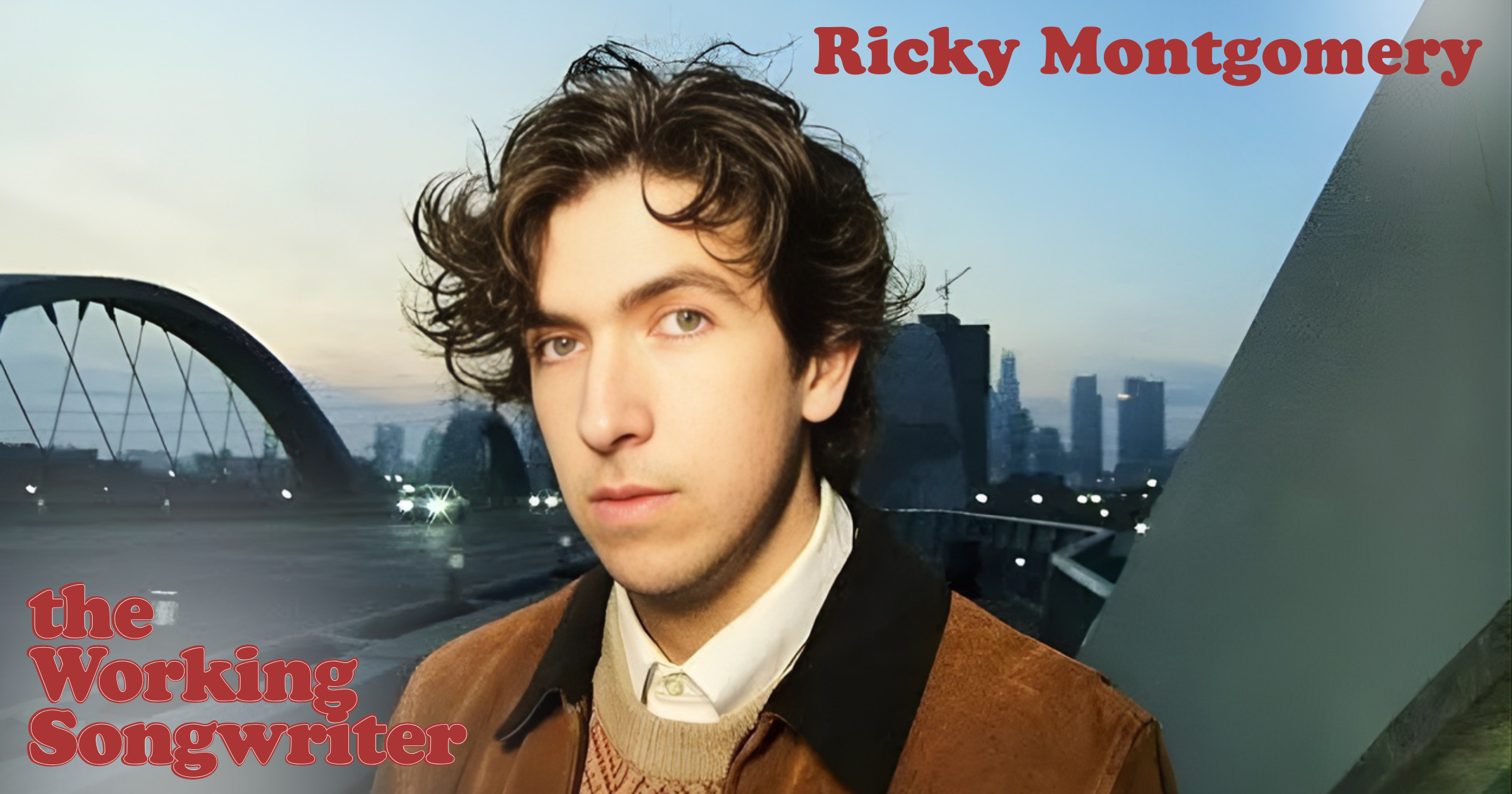
The Working Songwriter: Ricky Montgomery

Our guest this week on the Working Songwriter resides in Los Angeles, but spent many of his formative years in St. Louis, Missouri. Ricky Montgomery first built an audience on Vine in his early twenties before releasing his self-titled debut album in 2016. That bedroom pop album was a cult favorite until 2020, when several of its songs exploded on TikTok, leading to a deal with Warner Records.

LISTEN: APPLE • SPOTIFY • LIBSYN • MP3

Montgomery’s singles, “Line Without a Hook” and “Mr. Loverman,” are RIAA-certified platinum and, all told, his catalog has collected more than a billion streams worldwide. That grassroots support has led to headlining tours with stops at the Wiltern in Los Angeles, Irving Plaza in New York City, and the Pageant in St. Louis, to name just a few.

This interview was recorded nearly 18 months ago and has been delayed due to a snafu on my end, but I’m so glad we get to hear it now. I think you’ll very much enjoy hearing about Ricky’s musical journey through his own words.


Photo courtesy of Prelude Press.

Tucker Wetmore Is Buckled Up for the Ride

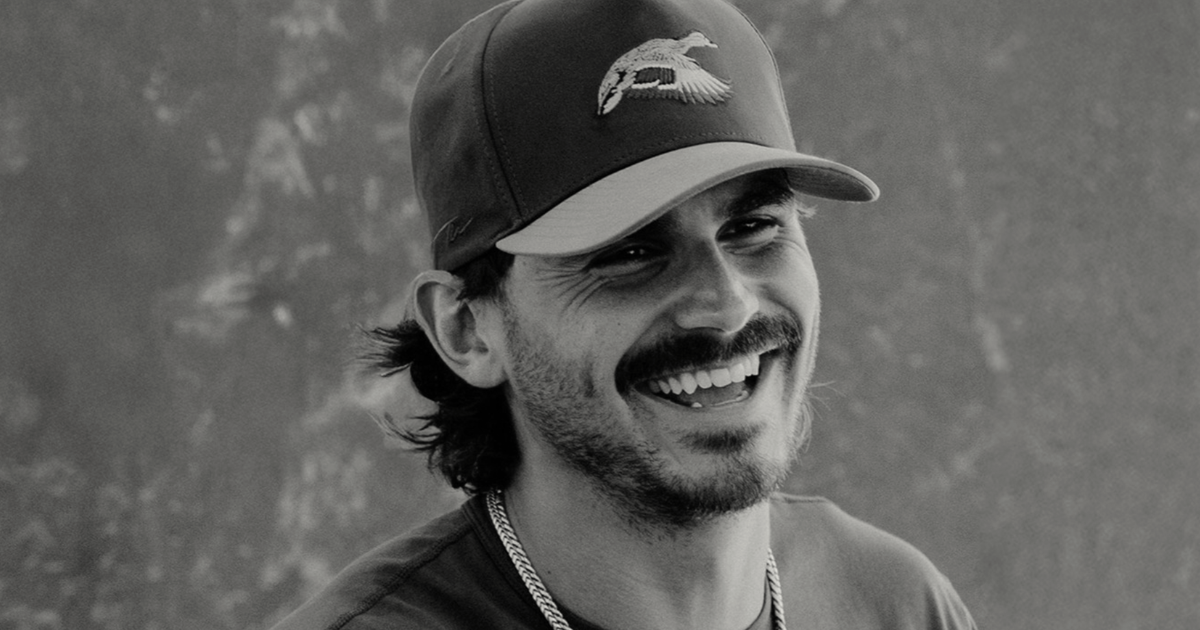
If you’ve read about Tucker Wetmore or listened to one of his many interviews, chances are the following subjects were lobbed his way: women, whiskey, blondes versus brunettes.

When the “star-maker machinery” that is the business of music collides with media outlets in search of headlines and algorithm rankings, it can make or break a promising new artist by reducing them to a pretty face with a clickbait story angle, the whole time steamrolling over the singer-songwriter at the core.

Tucker Wetmore is keenly aware of this and proceeds with caution. He’s affable enough to play along and astute enough to know the game. Peel back the layers and you’ll find a thoughtful, hard-working artist rooted deeply in faith and family and with a sense of public image versus personal values, carefully monitoring how and what he presents.

With multiple hit singles, award nominations, over a billion streams, product endorsements and campaigns, television appearances, endless interviews, the 2024 breakout Waves on a Sunset EP, and 2025’s unstoppable nineteen-track What Not To, Wetmore is taking it all in with cautious abandon, savoring the wins as they come.

It’s been a long, hard-fought road in a story now told countless times: he grew up in a small town, was raised in the church, brought up by his mother when his father walked out on the family. Music became vital at a young age, athletic prowess and four state titles led him to college, a severe football injury sidelined his career goals. Back home, he again threw himself into music, moved to Nashville in 2020, and pursued his dream.

On January 25, 2026, Wetmore added another victory to his timeline – this one particularly special, as it brought with it a lifetime of memories. He performed the National Anthem at Lumen Field during the halftime show at a Seattle Seahawks game, in front of a stadium filled with cheering fans.

He was still on that high when he spoke with Good Country only days after – and days before the launch of his Brunette World Tour. “It felt like a full circle moment,” he says of the halftime show. “I’ve been to Seahawks games growing up. I’ve been in that stadium, screaming my face off, cheering for the ‘Hawks. But to be on the field and playing my songs in front of thousands and thousands of people was absolutely surreal, especially for something as big as the NFC Championship. I’ve pretty much seen every NFC Championship since I was born. I was super nervous, but we got through it and we didn’t mess up too bad, so it was a good time.”

You have the biggest country debut album from a new artist in 2025. When did you realize that things were really taking off and it was time to “buckle your seatbelt, because this is happening”?

Tucker Wetmore: I’d say even before the album. The first time I felt like that was when Kameron Marlowe was nice enough to bring me on tour. I had one song out and I hadn’t even dropped “Wind Up Missin’ You” yet. I remember getting onstage at that first show and people screaming my songs back to me, singing every word to the songs I had teased [online]. It was absolutely insane. I was like, “I should probably buckle up. This is getting pretty real.” That’s when I knew I might have a chance to do this.

Can you ever be truly prepared for this level of success?

There’s definitely ways to prepare for certain situations, but there’s curveballs thrown at you every single day, so there’s no way to prepare for that. To put it in sports terms, learning how to sit back on the curve, wait for it to cross the plate, swing, and hopefully hit it.

We know about fan reactions to “What Not To,” and people relating to it from the perspective in which you wrote it. Have you also heard from fathers whom that song is hitting as hard because of what they didn’t do?

I’ve heard stories at meet-and-greets, people spending a little extra time telling me about how much that song has helped them cope. But I don’t think I’ve heard anything from fathers having that realization. That’s a touchy subject, and I hope it moves some fathers to want to be better.

All I can do with my music is write what I’m feeling, produce it the way I think it should sound, and put it out to the world for people to do what they will with it. One of my goals with that song was hopefully this changes some viewpoints on some fathers, and hopefully it helps people learn. It’s a “glass half full” kind of song. It’s saying, “Even though these things happened to me in my life, I can learn from this and use everything as a lesson,” instead of, “Oh, poor me.”

Have you ever fallen into that mindset?

I think we’re all human and we all do it. Not in a really long time, though.

I look at life as an opportunity. Whether it’s good or bad, it’s always an opportunity to learn and grow. I don’t [fall into it] so much anymore, but I remember being young and being pretty upset about some of the cards I was dealt. Luckily, my mom’s great and my family’s super supportive, I’ve got the best friends in the world that think the world of me, and I do the same for them. So I’ve got good people around me to keep my head on straight.

You had to grow up early when your dad left. What are some life lessons you took from those years that apply to your life and career now?

Growing up, I had four sisters and a beautiful mother, so it was a lot of women in the house, but it taught me a lot of things and I wouldn’t have changed it for the world.

There’s definitely times where I thought, “It’d be really nice to go out with another male and throw the ball out in the yard.” But looking back at it now, I learned so much about how to care for women, and how to be a provider, at a really young age, even though there wasn’t much I could do back then. Now I’m taking all those lessons and putting them into real life, like providing for my family, taking care of them, making sure they’re good mentally and financially.

A lot of things I learned at a young age are translating into my life now. Down the road, when I do find that special someone, I want kids someday. I want to build a family and do it right. And so I’d say I’m prepared for when that day comes because I know what to do and what not to do.

In an interview with Billboard, you said about music, “It saved me. It helped me. It was my therapy.” Let’s talk about how music helped you and how it continues to do so.

Music is, in my opinion, the best form of therapy. I think it’s God’s gift to us to be able to create and sing along, or dance, or whatever it is, to a tune. Music has shaped my mindset so much. I started playing when I was 10 or 11 years old and it shaped the way I cope with things. Instead of getting angry or upset or sad or frustrated, whatever the emotion is, I sit down at my piano and I just play for 30 minutes to an hour.

Being creative and having that creative mind, it runs fast and it runs 24/7. It’s … not a double-edged sword, but there’s a yin-yang to it. Music is the thing that drives me crazy because my mind can’t shut up and stop. But at the same time, I was in a write yesterday and the energy in the room was so great for four or five hours straight. We were smiling and laughing and creating the song. So music is my escape from what music does to my brain, if that makes any sense. It helps me ease the craziness of my mind.

During those earlier periods, when music, as you said, saved you, how dark was the darkness?

I lean very strongly on my faith, even during the dark times, and we all get them. I’m the happiest man in the world most days, but I still have days where the weight of the world feels like it’s compressing my spine, in a sense. It’s definitely been dark at times, but I lean on faith and I lean on God, and I lean on my music and other people’s music. It’s easy to snap out of when you have those avenues that are so moving to the soul or the mind.

Has there ever been a time when your faith wavered, or when you questioned it?

Yes. In college … it sounds wrong, and I don’t mean it in this way, but I kind of put my faith on the back burner. I was focusing on other things instead of the most important thing. I was playing football, I was partying a lot with my buddies, I was drinking every weekend to escape whatever it is. I still drink, but I do it with a solid conscience and it’s more celebratory now. There’s a fine line of focusing on worldly things and keeping your eye on the bigger picture of faith and the blessings that God has for us, because there’s so many.

You are giving a portion of ticket sales from this tour to Face The Fight, supporting suicide prevention and mental health treatment for veterans. Why is this the organization you selected to promote and help?

The first time meeting them, I turned to my manager and I was like, “I want a part of this. Let’s find a way to do something.” We put our minds together and it was, “What if we do ticket sales?” I was like, “Yes, a hundred percent.” It’s a huge thing for me because I’ve got a lot of veterans in my family, a lot of men that served and that have given their life on the battlefield.

My grandpa was like my father figure a lot growing up. He ended up taking his life five years ago. He was a very decorated veteran and one of the best people I’ve ever met, but even though it was so many years later, he couldn’t win that battle in his mind.

I think it’s super important to not just shine a light on it, these people that have given so much for our country and the people in it. It is such a selfless act, especially in the heat of war, when you’re fighting for people that you don’t even know, and doing things that no human should do, in my opinion. And then to come home, and 20 or 30 years down the road you’re still thinking about it, and still in that mental space of, “I can’t escape my mind.”

What [Face The Fight] is doing is amazing. It’s a blessing to be a part of. I think if my grandpa had an avenue like that, or knew of an avenue like that, maybe he’d still be here.

In an interview or podcast, you mentioned that you read the comments–

Sometimes.

You must have a really thick skin, because that can wear a person down.

There’s a lot of keyboard warriors out there. I can read the worst comment in the world and it doesn’t get under my skin at all. At the end of the day, I know who I am. The irony behind it is most of the people saying heinous and nasty things online have never created a song. They’ve never sung a tune. They’ve never sat in a room at 3 a.m. because they can’t sleep and put all their feelings on a piece of paper and tried to put a melody behind it. They don’t get it. They see things at surface level. I’m not going to bash on them or say it’s their fault for that. There’s irony behind it and that’s all I take it as. It’s funny to me. It’s almost comical at times.

@tuckerwetmore This one is getting loud live.. #songofthesummer ♬ Brunette – Tuck

I heard you use the words “build your brand” during a podcast. There’s a lot of image in this industry: wear the tight jeans, pose with your shirt up – you know what I’m talking about. How do you make sure this doesn’t overshadow the craft? As a new artist, do you have the autonomy to say no, to not answer a question, to stop an interview, to not want to take this picture?

While building a brand, and while creating something that is larger than yourself, it is more important to say no than it is to say yes. I definitely have the autonomy of saying no, and I do say no to a lot of things that come across the table. It’s saying yes to the correct things that align with not just the goal of what we’re trying to build, or the pillars that we are building it on, but morally. I account for my faith in pretty much all the decisions I make.

If I could give advice to any artist coming up – and I’m still making my way there – my biggest piece of advice is, “Say no to things that don’t feel right or don’t make you look like you.” I think I’ve done that pretty decently. At the beginning it’s really hard to say no to things, because you want every opportunity there is. But now I’m saying no to a lot more, saying yes to the correct things, and trusting my people. They know who I am and what we all want to build together, and it makes it a little easier.

Earlier you mentioned people reacting to song teasers. Before this career explosion, was there pressure to keep up when “everyone” is teasing songs on social media and the algorithm is bombarding people? It can turn into artists chasing numbers, which can also affect your mental health. How did you ride that storm without falling victim to it?

The grace of God, honestly. That’s a tough thing. It’s easy to compare yourself to others, based on a numerical scale of, “This got a million views, and I just posted one that’s got 150,000, it’s not being shared.” It’s very easy to get into that comparison mindset, but I do think it’s important to keep posting your stuff. Luckily, I’m getting to the point where I don’t have to post all the time. Posting is one of the most taxing things to my brain. I can’t stand just sitting there and making TikToks or taking photos or whatnot.

I realize the weight that a viral video can hold to your career and to a certain song or a project. It’s an easy way for millions of people to engage with what you’re trying to create. It’s a great tool. That’s the word I’ll use for it: social media is a tool. Some people idolize it and can’t go through their day without it. I look at it as a tool for people to share my music and hear my music and get excited about the things I’m trying to do.

We can’t do this without talking about your mother. She is such an integral part of your life and your career. Without her support, how different would your trajectory have been?

I don’t think there would be any trajectory at all, honestly. After I got injured playing football and dropped out of college, I was living back home. I remember having that conversation with her. I was like, “Mom, I really want to chase this music thing.” It was like a sigh of relief from her, in a sense. Her shoulders went down, she took a deep breath, she goes, “Finally. Finally. I’ve been telling you this for years now.”

She helped me pack up all my stuff and move, and she supported me financially the first couple years of me moving to Nashville. I would be living on the street if it weren’t for her – metaphorically living on the street, because she would never let me do that. She believed in me before I even had good songs. She believed in my work ethic and my mind and my creativity. One of the biggest blessings God has given me is a mother who cares and wants to see her kids succeed in whatever dream they have.

And now she’s doing podcasts and talking about your childhood.

Yeah. Somebody needs to rein her back a little bit!

You love being on the lake. Is water also a form of therapy for you?

Oh, a hundred percent. I grew up in a super small town, Kalama, Washington. Because it’s built up on a hill, pretty much wherever you are, you can see the Columbia River. I spent so much time on that river, or on the Kalama River, or at the lakes surrounding. I feel happiest when I’m at the ocean or at the islands.

I’ve got a lake house in Nashville and it’s a great escape for me to go back home and be able to sit there and look at the water. It helps not just my creative mind, but [also] my mental health. Another thing God has given us as natural therapy is the beauty of a body of water. It’s the most simple thing in the world, but I do not take it for granted.

Is it a spiritual place for you as well, a natural church?

Yeah. Anything can be a church, as long as you’ve got the spirit in it!

What’s on your heart as you’re getting ready for this tour?

Excitement. It’s been a couple months since I’ve toured and I’m itching and eager to get back to it. I’ve had a great break. I’ve had a very creative break. I finished writing my second album yesterday. Obviously, things change and I get new thoughts or whatever, but right now I feel pretty confident in the songs we got, and I’m excited to get back on the road and maybe tease or play some of these new ones and see how people like them.

And I’m excited to just be on the road. I feel most alive when I’m in the craziness of it all. It does get taxing at times, but it’s truly a drug to not just me, but pretty much all my artist buddies. It’s a feeling you can’t really explain, getting up on a stage in front of thousands and having people scream your creations back to you. It’s the coolest thing in the world. I’m excited to see the fans and be with my band, my crew, and my team. It’s a family that we’ve built, and it’s going to be cool. I’m excited.

Since you brought it up, before we close, what can you tell us about the next album?

It is sonically one of the coolest things I’ve heard in a long time. I don’t want to give too much away. I’ve been doing a lot of thinking about what I want this next record to be for the last year already. I think about what I get in my truck and listen to, and I’m kind of an older soul. So it’s very ‘70s-influenced and early ‘80s, with the guitar tones and drums and weird, synth-y sounding steel guitar licks. It’s really cool and it’s fresh, and I don’t think anybody’s really doing it right now, which I’m excited about but which is also scary, because I don’t know how people are going to feel about it because it is different.

I was thinking about this yesterday, actually: “Proving Me Right” is the perfect bridge into this next chapter, sonically. It’s not too far leaning over there, but it’s still got the old tendencies in it. If you were to listen to anything that gets you excited about this next record, I’d say “Proving Me Right” is a great start.


Want more Good Country? Sign up to receive our monthly email newsletter – and much more music! – direct to your inbox.

Photo Credit: Chase Foster

Becoming Himself, Mon Rovîa Helps Us All on Our Journeys of Becoming

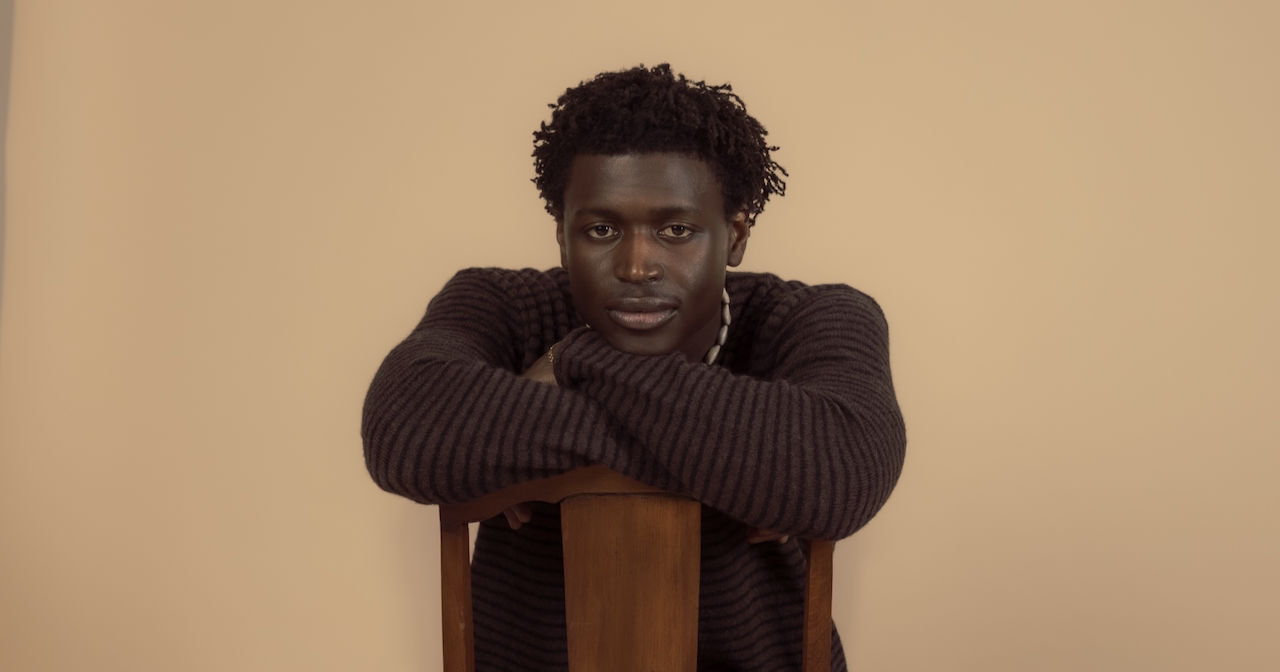
Mon Rovîa has kind eyes. Unassuming and watchful, he’s spent a lifetime reading the room and taking the temperature of the situations he’s found himself in. As a child, he was quiet. These days, he exudes calm. When he speaks or sings, people listen closely. If his eyes are kind, his voice is empathetic. Soft and soothing, it embraces the listener like a warm hug from somebody who knows how it feels to be lonesome and wouldn’t wish it on another. Only a fool would take this kindness for weakness. It’s a vulnerable strength, tempered over time in the fires of resilience.

By now, Mon Rovîa’s backstory almost feels etched into stone. Born in Liberia, on the Atlantic Coast of West Africa, he was adopted by Christian missionaries during the violent bloodshed of the Second Liberian Civil War. He traveled with his new family through the Bahamas, Montana, and Florida, before settling by the grandeur of the Appalachian Mountains in East Tennessee. From a young age, he has lived in complexity, contrast, and displacement, a questing soul searching for meaning, purpose, and his place in this world.

As he reveals in our Cover Story interview, he still hasn’t found what he’s looking for. However, through music, Mon Rovîa has uncovered a trail to walk along. In recent years, his distinctive Afro-Appalachian folk music sensibilities have earned him a devoted audience through social media, regular releases, and touring.

Across his debut album, Bloodline, he offers memoir and testimony, sharing yet more chapters from his remarkable story. Written and recorded in Los Angeles with producer Cooper Holzman, the album crystallizes his early promise into something timeless, sublime, and deeply needed. In late December, he made some time to reconnect with BGS.

This is more of a provocation than a question, but the highest compliment I could give your music is that it makes me feel that if we all listened more closely, there would be less need for questions.

Mon Rovîa: Thank you very much. That is beautiful. I’ll have to dwell on that.

When was the last time you cried?

I cried this year. That’s a crazy question, because I ask my friends at least once a year, “When was the last time you cried?” or “Have you cried this year?” What made you ask me that?

You seem like an emotional guy.

I guess I am. I’ve cried a couple of times this year.

It’s been a big year. How has your life changed over the last 12 months?

It’s interesting. From the outside, your friends and family see your life changing in a lot of different ways as they watch. Going through it as the artist, many things remain the same for me. I still spend a lot of time trying to reach something, and only I know where that satisfaction lies.

People can look at [what’s] outward and say, “Oh, he’s reached something.” The hard part, probably many artists go through this as well, is that deep down, the search always continues for something that hasn’t been answered. I couldn’t tell you what this is.

There’s the question of ego as well. I always think about these people, like Bill Withers, who were able to do what they needed to do before stepping away from the spotlight.

I hope I’m more of a Bill Withers. My personality leans towards silence and not being seen in general. I could see myself disappearing at a certain point. That would be nice.

Do you think there’s an inevitability to the pathway you’re on, or could you have become someone else?

I definitely think there are other things I could have been. I look back at the circle. The start of coming from Liberia as a young kid, surviving the war, being adopted and taken to the States. From there, I could have become many people. Perhaps it would have been sports, or a person who was not well-known, working a 9-to-5 job, clocking in and out. I also think about the choices I made. You could look at some of them and say, “Those were really bad choices,” but each thing is a step, a piece of this road we walk.

In the end, all of it became the better choice, because everything – the good and bad choices on the journey – led me to where I am now.

It’s great to spend a lot of time making and playing music, but everything that happens in between writing or recording songs is just as important.

You’re right. I did odd jobs. I worked the grounds, mowing lawns. I made flower beds. I was in tech recruitment. I worked at restaurants. Getting paid nothing. Getting yelled at more than getting paid. I took it in. I learned. All of these things became different parts of the story. They became different chapters of songs and elements.

I was thinking about what André 3000 said when OutKast were inducted into the Rock & Roll Hall of Fame: “Great things start in little rooms.” I agree with that, but I also think great things start as a response to big expanses.

I spend a lot of time in a little room with a ukulele, just singing into the ether, but I need both: the silence of a little space, the expansiveness of the world, and the opening of that as well.

19th-century Dutch painter Vincent van Gogh had this thing about bringing permanence to the impermanent. A flower will last for a season, but his paintings of those flowers still endure with us today. We can immortalise something through painting, or do the same with song.

I find from the artist’s standpoint that is, perhaps, the goal: to make something that is immortalized, that surpasses your own life, and carries on when you’re no longer here or present. I think that would be the greatest achievement. If there were an end goal to make something that lives on longer than I do, that would probably be the biggest joy of my life as an artist.

What does water mean to your music, and could a river be considered a bloodline?

Water is the source of all things. Rivers remember where the headwaters lie. They know where they come from. They never forget, no matter how far they come from the source. Bloodline for me is exactly that. It’s a reclaiming of remembering. A lot of the time in the States, I tried to forget. I wanted to assimilate into an American way of life that is built on forgetting. Over time, music brought me back to remembering the cornerstone of my life, the headwaters – which are Liberia, West Africa – and the gift of being able to make something out of a lot of pain, turmoil, and uncertainty. So water is crucial.

When I think about your story, how and why you left Liberia, and what has happened since you arrived in the United States, I think about how this was all preceded by an even more complicated story. As you’re reminding us, it goes deeper and deeper.

There’s truth there, and it’s crazy to me, too. I love that you brought this up, because there are a lot of people who live on the land here in America who don’t even have that in their consciousness, don’t even understand the relationship between the two countries in a way that isn’t talked about. It’s complex. The Back-to-Africa movement. Monrovia after President [James] Monroe. It’s embedded in the very fabric of the country of Liberia. A lot of Liberians feel a kinship to America, but they don’t understand that America doesn’t think one bit about that.

A fascinating thing about cultural exchange is how, through the good and the bad, it can create new cultures. It’s so deeply woven into the foundations of country, folk, and bluegrass: the musical techniques, the instruments, everything. I imagine you often meet people who are excited to tell you about different musicians, scenes, and eras from the past.

Yeah, people have. Growing up, I was pretty locked into a religious space. I listened to a lot of Christian music, but I had no idea about mainstream anything. That wasn’t based on living in Liberia either; it was just the family I was adopted into. I’ve been enlightened by things in the past, and people have referred to music. More importantly, I’ve learned some things on my own from Appalachia and folk music. As a Black man, one of the things that kept me away from the [folk music] space for a long time was feeling like it wasn’t mine.

The truth of the matter, as you have brought out so well, is that a lot of these things do come from cultures that have mixed over time. Slaves were brought over from West Africa, but they brought those instruments, sounds, and sang those songs. That’s another thing that has been stolen along the path, whitewashed, you could say. It’s been beautiful to reclaim things as they’ve found me unknowingly. I’ve learned a lot by looking back on that. It’s been super special to know that I do have a heritage in this space. It’s a beautiful thing.

How important is food to your music?

Food? How important is food to my music? Well, as someone who doesn’t eat that much food, I tend to be quite empty when I make songs, play shows and stuff. I don’t know why.

Do you think you fast for your art?

Yeah, I fast for my art. Perhaps I’m more filled by what music brings to me lyrically and sonically. Food, I guess, is a necessity to live, but for the soul, it’s music. You’ve got your body, but then the soul has to be higher. What’s filling that for you? People have to ask themselves that question.

Something I notice everywhere is people looking to country music and the culture that surrounds it for some form of direction. We’re two and a half decades into the 21st century, living in what used to be considered the future, and yet so many people are looking backwards through rose-tinted lenses.

If we look closely, the rose is very much withered. You can look back and romanticize the South, and its culture, as everyone in the States is doing; they love to be cowboys and farmers, but you know the hardships and the pain that this land has brought, right? Let’s look back on that, if we’re also going to look back and romanticize this. The piece of clarity people often miss in the whole system is the truth, the full truth.

The truth is ugly.

The truth is ugly, but I’m wondering, though– at least for me, there was a time when it was ugly, but the acceptance of it in my own life has brought some sense of beauty at the same time. Once you see the truth – which you know well – it will never leave you. That’s why people are afraid of it. That’s why they never look at it. They don’t want that thing to haunt them through time.

You give a lot of yourself through your music. How do you fill your own cup?

Honestly, being in nature. Being back home in Chatt[anooga], and also being very far away from music. That’s how I refill, 100%. When I’m back home, I do little things, like going back to where I started, which is being on TikTok, playing for these people. I didn’t know them. They didn’t know me. But they raised me up. So I give back that time. I’ll never stop doing that. No matter how big Mon Rovîa gets, I’ll always go back to the people in that space. That fills my cup.

Also, playing soccer. I play tons of soccer. Outside of music, it’s my favourite thing in the world. I would probably drop everything to be a professional soccer player.

If you’ve spent time in Europe, Latin America or Africa, you know what time it is. For many people in many parts of the world, soccer is more important than life or death. It is the game.

I never get tired of playing soccer. I play all the time. It’s my favorite thing and a big part of my joy. Also, my community here has been so beautiful to me. Whenever I get to be home for a long time, I’m just preparing to be filled, and then hopefully ready to pour it out when the road calls again.

It’s important for an artist to have a relationship with a place and its people. There is a value in being accountable to a community, and having a community that is accountable to you.

I would agree. They get to ask me questions about things I struggle with on the daily, and how I’m actually doing as an artist. People who don’t know me might say, “Man, touring must be the best thing in the world?” They’ll want to see if it’s just parties and going out every night in big cities. It’s not like that for me, but maybe it is for some artists.

How many years do you think it takes to become an overnight success?

I don’t know. Nobody knows the years someone has been working towards something like this. What’s your answer?

Five to ten, but people won’t always be transparent with you about how long they’ve been trying to get there for.

That’s a good point.

@mon_rovia_boy WBU?! This is “heavy foot,” from my debut album “bloodline” which is finally OUT NOW 🫂 #folkmusic ♬ Heavy Foot – Mon Rovîa

The other thing about being a musician or an entertainer is you’re operating in a space where you can easily spend 25 years being 25.

Yeah, and for some reason, it’s allowed. Maybe that’s why people don’t take musicians too seriously until they become really big. It always just seems like a hobby, or like you’re trying to stay young. I’ve always wondered about that. Even with my work, some people don’t understand that it’s my job. I’ve been fortunate enough to be able to pay some bills and live okay, but they’ll still talk to me as if I’m still looking for the dream. Like, “How’s that going? Are you doing okay?”

But maybe there’s a point: so many people grow older, but their mind and spirit stay the same age. I’m not sure whether our dreams should be all-encompassing. I think it’s good to dream, but when you have that big dream, you need to have little dreams as well, things that can come alongside the bigger picture and also bring life to you, because everything is fleeting, right?

Before we wrap up, I wanted to ask you something. When you think about everything that had to happen for you to arrive at this moment, how does it make you feel?

I’ve actually been thinking about this a lot, the feeling of it. Everyone around me is very happy about the things that have come to pass, but a lot of the time, I still feel a very great loss. I think about my mother, my father, my siblings, whom I have not seen, and everything that had to happen for me to come here, and come to it. I often wonder if I would trade all of that, perhaps, to look at my mother’s face, hear her voice, or remember what she looked like. I think all I can say is that it’s a beautiful sadness I’ll carry forever.

The late French illustrator Jean “Mœbius” Giraud loved to tell these stories that were essentially the same story. They’re all about someone who wants something more than anything, and, upon obtaining it, realizes they don’t want it at all.

I have had many thoughts of laying down the pen in that way. It’s a difficult thing. Joy for me is very elusive. I call it the elusive flower. In moments, I feel it, and it is amazing. A lot of the time, it’s very far from me.

I think that was how Mon Rovîa came to be, through my search for joy in all of these things that have happened. Really, happiness has been the connection with people. Having them relate to the songs, and the songs helping them on their journey to becoming.

My purpose is to focus on the human condition and the realities we all live day in, day out. I’m here to tell that story because it is the only one that is truthful currently. I’ll accept wherever that takes me. If it makes me super poor, great. If it makes me able to live a life aloof in the woods with some land and animals, great. At the end of the day, my path is set, and I walk it the way I must.


Photo Credit: Carter Howe

From TikTok to
Everything I Wanted

Evan Honer opens his new album, Everything I Wanted, with a charge of electric guitar – an unexpected twist for a singer-songwriter who has mostly recorded with a stripped-back sound. And after commanding attention with that blast of energy, Honer carries the listener through a range of emotions familiar to any twentysomething (and beyond). There are breakup songs, of course, but also entanglements with loneliness, self-doubt, and even the relationships that seem to be going well.

Recorded in Honer’s garage studio just outside of Nashville, Everything I Wanted documents a creative moment where sonic exploration may be the biggest priority. However, the fans who discovered Honer in 2022 through a TikTok cover of Tyler Childers’ “Jersey Giant” will likely embrace the songwriting on the new album, with lyrics that reflect a day in the life of someone who’s still figuring things out.

Honer was raised in Surprise, Arizona and excelled in competitive diving at California Baptist College in Riverside. Although a spot on the U.S. Olympic team was within reach, Honer turned instead to a career in music and established his own label, Cloverdale Records. From his home office, Honer called into Good Country to talk about his new album, his relationship with fans, and the road ahead.

I listened to your catalog, and this album seems more electrified than your previous work. Why it was important for you to show another side of your musical approach?

Evan Honer: I felt like the first two albums were… I guess it was what I was into and the production that I was a fan of at the time. I was so new to everything, too. I just thought, “I’m gonna record the guitar, then maybe we’ll have drums.” But I hardly had any drums at all with my first two albums. I guess I just didn’t know the possibilities. And the more I grew as an artist, and thankfully, with the resources that I have, the more things I can do. If I want this exact sound, I know I can do it and I can do it in my garage. My taste has changed. I grew as an artist, and I realized, why not? I can do whatever I want literally.

Are you pretty consistent with your writing routine?

Yeah, most of the time I’m working on something. And it could be one line the whole day, but I sat there for three hours. That’s very common. Now I’m writing with other people more – with artists that I am inspired by. And when I’m back home, it takes a long time. Sometimes it’s sitting with my guitar for hours, and I don’t get anything except a couple words. Or I go backwards and I change everything, then I don’t even have lyrics anymore. I try to do some type of writing every day, but on the road it’s a lot more difficult.

The song “Curtain” captures your relationship with your fans. What does that relationship between artists and audience look like for you personally?

It’s such a difficult thing for me. Recently I’ve been able to enjoy a tour more and not be so affected by it emotionally. On my first tour, I was so not used to how you’re running on no sleep at all and you’re around the same people for a month. You have a bad show, and it feels like your life is over. That is sort of what I wrote [“Curtain”] about, just the ups and downs of being on tour.

I still am upset after a bad show and I don’t know if I ever will not be. In my opinion, a bad show could be, like, one person talking for one song. It was tough for me to realize – and it still is tough for me to realize – that I have such a different perspective on it. There’s my perspective, and their perspective. I felt like I needed to write that song where it’s like, “I’m looking out at you, and I’m just grateful that you guys bothered showing up to hear me scream about my problems.”

And it really helps me, now that I let it. They’re constantly telling me, “Oh, your music means the world to me,” and that is the greatest thing to hear. But them being there is like the whole reason and it means so much to me. That relationship is not one-sided at all. It’s completely: “I need you as much as you need me.”

Listening to “Not There Yet,” I can remember that phase in relationships where it’s like, everybody wants me to be all in, except I’m not sure myself if I’m ready. When you finish a song like that, who is the first person that gets to hear it?

Most of the time, my best friend Blake Abernathy. He was a big reason why I started doing music. When I graduated high school, I went to go sell AT&T Internet and DIRECTV. I moved out to Minnesota with Blake and that’s where we became best friends. We worked together and he shared his music tastes. Tyler Childers was the first person he showed me and I’d never had felt that feeling before, from hearing a true songwriter, someone that makes me feel something.

And from that point, I went down a rabbit hole with my favorite songwriters, like Benjamin Tod, James Taylor, Jim Croce, and so many that I can’t even think of. And that’s how I started and fell in love with writing. From then on, I sent every single song to Blake and he always shoots me straight. He’s always such a big supporter in anything I’m doing, and he always gets it. He’ll tell me, “This is very different, I’m not sure if I like it yet,” or stuff like that.

For the record, can you explain how the “Jersey Giant” video took off?

The first song I ever posted on TikTok was the first song I released, called “How Could I Ever.” I had a good reaction to it and that was literally one of the only songs I had finished. At that point I was like, “Holy crap, I have to write another song because I don’t have any.” Maybe four months later, I was like, “All right, I got a new one.” So, I released “Comfort the Fall” and then “Foolin’ Ourselves,” and maybe a couple other ones, I’m not sure.

Then I released “Jersey Giant” as a cover and it went crazy. Then a bunch of label people were in my email! That was so funny. “Jersey Giant” was a big moment, for sure, but I think the songs that made people come to the shows were from my first and second album, rather than “Jersey Giant.”

@evanhonermusic Don’t know how to play the banjo but i do love this song #dialdrunk #noahkahan #cover ♬ original sound – Evan Honer

I saw you playing banjo and singing a Noah Kahan song, “Dial Drunk,” on a TikTok video. When do you find yourself reaching for the banjo? Is there a certain mood where you think, “Banjo is going to make this better”?

Yeah, there’s a good amount of banjo that I played on this album. I don’t know, I just love the banjo. It’s always so interesting to me to have a song like “Long Road.” It’s not super country. And then you throw in a very country instrument, like a banjo. I love having really country instruments in songs that are not country and have very different melodies than what a traditional country song would normally have. It’s always fun to just throw in a banjo, whenever it feels like it needs it. Maybe I overdo it sometimes. [Laughs]

Do you remember when you first reached for the banjo, or what led you to it?

My grandma actually got me that banjo. I just wanted a new and different instrument to write on, to create new ideas. I think that’s always helpful with piano and banjo. Just writing on a different instrument to hopefully get a different outcome, because sometimes I’m writing on the guitar and it feels like “I’ve written this song already” and I don’t feel excited about it. Now I’m trying to explore every option to write a song, even if it’s writing and producing at the same time.

That’s a scary thing to me. It’s like, we’re writing this song as we’re making it. Normally you have a whole song, or at least how I do it, and you produce it out, and the creative part is producing it. But it’s kind of scary when you don’t have the lyrics. You don’t even know what the chorus is going to be, but you’re already starting to produce it.

Is that because you’re on deadline or just trying to stretch your boundaries? What leads you to a situation like that?

There’s no deadline at all. [Laughs] I’m a fully independent artist, so it’s all up to me when I want to release stuff. I think that’s why I feel like I’ve released a lot more than maybe somebody that kind of started the same time. Three albums in, it’s just me trying to make something different.

I read you released an album the day you graduated from college. Was that like a mission statement? Like, “I’m gonna do this. I’m a musician from this day forward”?

Yeah, pretty much. It’s called West on I-10, because I would go west on I-10 driving back from home to college. Funny enough, the navigational voice would always pop up in my voice memos with, like, “I-10 West.” I had already decided that I was going to do music full-time. I was a diver in college and I originally made plans with my coach to do my fifth year and go for the Olympic trials. That was tough, making that big change. First, my dad was very much like, “Wait, are you sure you want to do this?” But now he’s the biggest supporter ever. There was just a lot of uncertainty and releasing that album on the day I graduated just felt like the most normal thing for me. All those songs I’d written in college are now on that album, and I felt like then I can move on to whatever else.

What goes through your mind now when you hear this new album in its entirety?

This is always tough for me. In January when I recorded it, listening through the album, I’m, like, incredibly stoked on it. And I still am, but it’s a different type of stoked now. I’m stoked that it’s out and I don’t have to sit on these songs anymore. I can move on to what I’m liking now. Because right now, my taste has already changed, where I’m into different production styles, I’m into different, really weird lyrics, or whatever it is. I’m in a different spot now.

That’s always an interesting thing to see how delayed the music industry is. Even if I’m independent, it still takes time to do all these things. So that’s always a hard thing for me, but I’m so happy that it’s out, and I’m so happy that we recorded that way, just 18 straight days of recording. That helps with the cohesiveness of it. I’m really proud of it, and I’m really proud that it’s my third album, and I’m excited to make something else.


Photo Credit: Harrison Hargrave

Gimme That Old-Time
Non-Monogamy

At times frowned upon or occasionally slandered, covers are as deep-rooted as the songs and the emerald valleys that have produced them.

Indeed, covers stir discussion, spark research, and add another patch to the great heart-sewn embroidery of music. Fashioned in a similar vein to the original – that’s flattery. When a song circles across genre divides, well, that’s an enriching voyage.

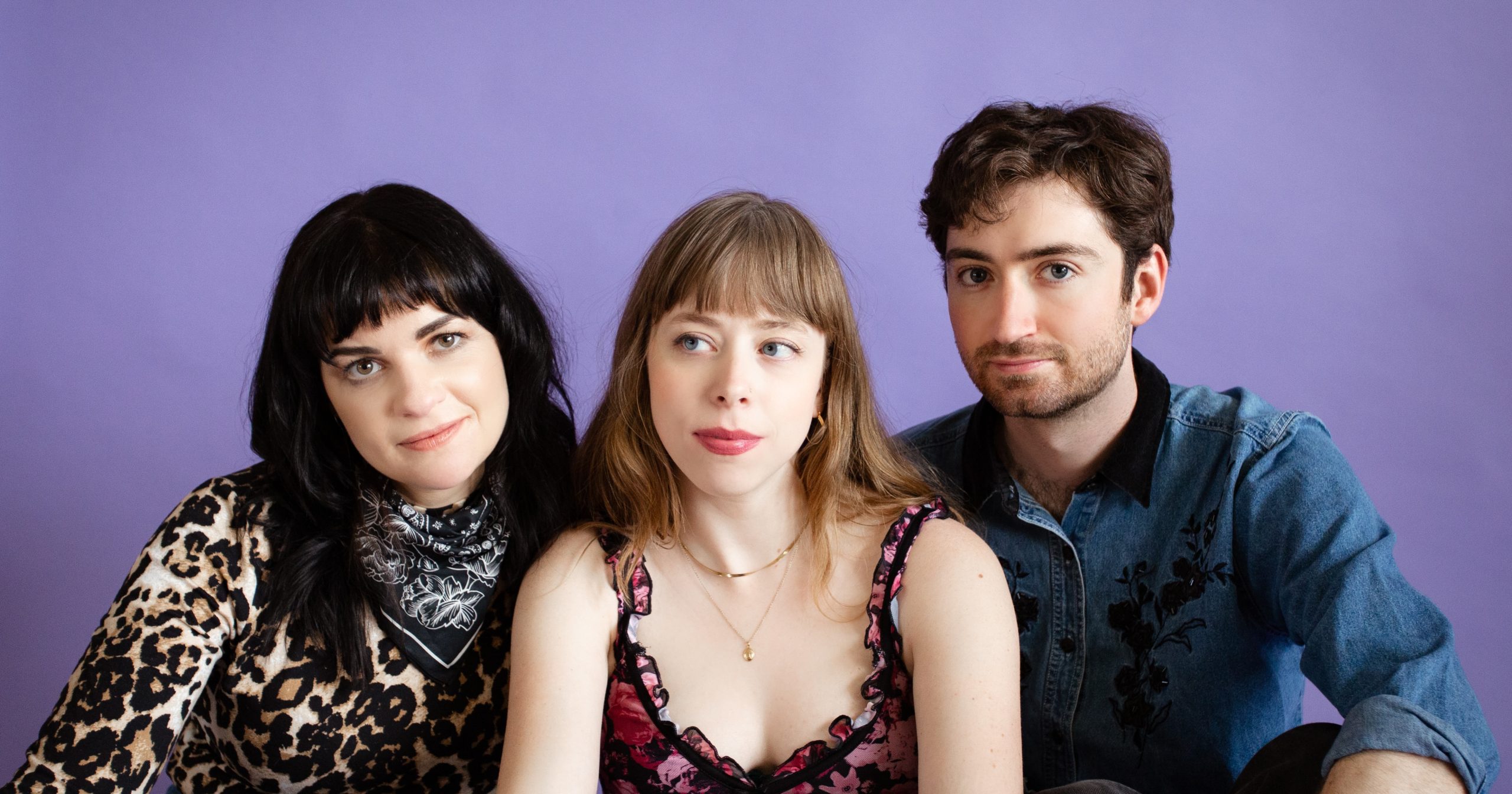
The members of Kissing Other pplRachel Baiman and folk duo Viv & Riley – see their endeavor not just as an individual artistic sojourn but as a larger opportunity to establish a collective conversation. Here, they’ve taken a handful of mostly rock and pop songs and blended, marinated, and sautéed them in unfamiliar flavors. The end results turned out nearer to their own identities.

“I grew up playing traditional Appalachian style,” said Riley. “This is not that!”

Baiman is a sincere and dogged lyricist, with a harmonious ear and a top contender’s punch. She grew up in Chicago, with a factory-made violin in her hands and an insatiable curiosity for why and how music could conform and contort to her swiftly evolving moods. Somewhere along the line, she started getting serious about music and purchased a John Silakowski five-string fiddle on a lengthy installment plan. She arrived in Nashville at age 18, riding fragile finances. Slogging on foot, lugging her fiddle in a hard, cumbersome case, she lacked the extra dollars to hail a taxi. Her odd jobs were many: dog walking; catering; reading novels and writing summaries for a sociology professor; she once even held a job organizing a comedy contest. But a fearless, tenacious sense of purpose compelled her to stick with music.

Pondering all of these circumstances in her heart, Baiman released several persuasive projects, including Shame (2017) and Common Nation of Sorrow (2023). Riley Calcagno, one half of the contemplative folk duo Viv & Riley, added stringed support and pre-production assets to one of Rachel’s albums.

Subsequently, Baiman asked Riley and Vivian Leva (the other half of the duo) if they’d be willing to join her on tour, where long hours on the road were spent in between gigs consuming, swapping, and contemplating music. Baiman’s traditional background taught her how to fully perceive a recording – whether an old fiddle tune or multi-generational, passed down ballad, or even a contemporary pop song – to not only hear it superficially, but to visualize its promise. Through prolonged stretches of asphalt and expressway, she’d oftentimes wonder what she, if given the opportunity, could bring to a certain song.


@kissing.other.ppl♬ original sound – kissingotherpplband

“The idea stems from Rachel’s musical generosity and curiosity and the extended times in those van rides,” said Riley. “Eventually, the songs included were the ones that we’d all individually had been listening to and were moved by. Songs that had stopped us in our tracks at different realms of our lives. Songs that hit us emotionally or otherwise… spontaneously contributed in the week that we recorded them.”

Some of Riley’s earliest memories are of his father’s fondness of traditional music. His father played the guitar, fiddle, mandolin, and banjo. At age 3, the younger Calcagno expressed interest in the fiddle. Though he was raised in an unrelentingly urban environment in the heart of Seattle he was never far from the folksy hospitality of music: square dances, jams, and potlucks. At the Wintergrass Music Festival in Bellevue, Washington, he formed connections with musicians originating from the sparsest, most countrified swaths of the state.

“I discovered an authentic-feeling bluegrass scene in the state and an old-time rural music scene on the West Coast that was kept going by people living in cities,” he explained, “and I don’t see that at all as contradictory.”

Like many other kids his age who grew up in Seattle, beginning in middle school, Riley burned liberal hours listening to local indie rock, though the attachment he had made with traditional music would override all else. He met Vivian Leva at a music camp in the Seattle area which emphasized the cultural importance of preserving long-standing traditions.

“I was a fan of Viv’s parents’ music,” said Riley. “We started playing music right away. Viv is a gifted songwriter. We started passing ideas back and forth. That was eight years ago.”

Vivian Leva was born and raised in Lexington, Virginia, in the Shenandoah Valley close to the abounding cultural and geographical influences of Charlottesville, Roanoke, and the Blue Ridge Mountains. It’s a small town with a deep worship of bluegrass and old-time narratives.

“Before I was born, it was a big hub of old-time traditional music,” said Viv. “Young people moved here for the rich, blossoming scene. My dad came here at 18 and stayed forever.”

Viv’s father, too, took a particular interest in the fiddle, traveling to neighboring counties and states to observe and jam. Her mother sang and guitar-picked, emulating and scrutinizing the local and regional ballads she had fallen in love with. They attended old-time fiddler’s conventions as a family. And when her parents formed a duo and headed out on the highway, sometimes she would share in such jaunts first-hand.

“When I was little I went on tour with them for a bit,” said Viv. “As a teenager, I was playing in my dad’s bands. As a kid he would bring me up to sing a song on stage.”

Certainly, music has long filled the souls of Rachel, Viv, and Riley with good things – and Kissing Other ppl is a remembrance of affection as much as it is a representation of impression. Indeed, Baiman said that Kissing Other ppl is a natural extension of her – and her counterparts’ – inquisitiveness, their attempt to understand the mysterious processes of expression, meaning, and memory.

“In reality,” said Rachel, “I don’t think any band or musical project should attempt monogamy, because you miss out on so many opportunities to learn and grow and bring new inspiration back to your main role.”

Similar to Rachel, Viv finds original songwriting to be a sacred, mysterious place to dwell. But she also believes that covers are a part of the whole process of an artist’s maturity, the recognition of the music of one’s friends, mentors, neighbors, and across-the-board community.

“There can be a stigma about covers,” she said. “You can’t make it your own. You are not creative enough to make your own music. It’s a shortcut. It’s a cop out. But as someone who has written a lot of songs and released a lot of records of original music, and plans to do so in the future, I don’t see it that way. It is an acknowledgment of how being inspired by other people’s music is such an important part of creating your own music. You can’t make your own music in a vacuum.”

“Anytime that you are playing a song, you are creating it again in the moment, and re-interpreting in your own way,” added Riley. “Whether it is a cover or an old traditional song, you still have the power to sing it and do it in a way that really moves someone.”

Baiman said the intuitive, empathetic nature of the type of music she plays requires that she be an attentive observer as well as a cordial, broad-minded learner – prerequisites for a collaboration of this sort.

“I think that having a background in old-time and fiddle music in general really prepares you to be a musician who listens,” said Rachel. “If you approach any musical situation with the mindset of, ‘Can I do something to help support the group musically here?’, that goes a long way.

“Old-time really prepares you for the idea that your best contribution might be not to play at all. The bar is really high for joining in, you have to make sure you’re adding something that isn’t already there, and you’re not dragging down the groove. That’s part of the etiquette of informal jamming and it translates to professional playing.”

A fine cover such as the group’s rendition of Wilco’s “Ashes of American Flags” not only illuminates a previous desire, elevating or enriching it with brand new urgency, but in some fashion it obliges the total re-evaluation of the original.

“There are people who are not able to handle ‘Ashes of American Flags’ because of the context, or they come from a different generation, or they don’t like Jeff Tweedy singing it,” said Riley. “Why not give a song like that another chance or give it another life? If you have a song that’s fun, or one that hits hard, emotionally, lyrically, or harmonically, maybe you can add to it, instead of just burying it on a playlist.”

Riley notes that many of the greatest records and biggest chart sellers are in fact cover-centric productions, though they might not have been advertised or promoted as such at the time. Many great albums are rife with songs written by others, sometimes entire roomfuls of songwriters on Music Row. Many memorable albums, such as Bob Dylan’s 1962 self-titled debut, only have a small number of originals; among the traditional folk and blues arrangements, Dylan’s had but two.

Indeed, Kissing Other ppl simply builds on a long tradition of artists rearranging songs that they like and then reinserting them back into the public sphere of approval.

“We seem to be obsessed with originality in our current moment and society,” said Riley. “But we are also at a time when art and – the pursuit of it – is less funded and less valued monetarily than ever. So many of the great records that we love are cover records. Ours isn’t heavy-handed.”

Perhaps one sterling example of a cover album that marvelously nudged old material into fresh fields was Tim O’Brien’s Red on Blonde, on which O’Brien grabbed a handful of Dylan songs, tinkered with their framework, and dragged them into bluegrass brightness. Many of these songs have stuck around since the album’s release in 1996 and bluegrass buffs routinely call out titles such as “Señor (Tales of Yankee Power)” and “Farewell Angelina.”

One of the record’s most memorable tracks is a rendition of Jason Molina’s “Hold On Magnolia,” which draws out the spookily and eerily beautiful essence of the inscrutable artist’s mystifying original. Rachel’s fiddle punctuates the abstract stylishness with characteristic splendor and aplomb.

“Jason Molina [1973-2013] was one of the greatest songwriters,” said Riley. “He grew up in Lorain, Ohio, and he went to Oberlin College, where I went. He had a rough life and died of alcohol-related complications. He left so much amazing music behind… if even one person hears our version and goes and listens to his records then it is a job well done.”

Alluding to Molina, Viv noted the deferential nature of covers and their special reward.

“That’s the cool element of doing a record of covers,” she said. “You can inspire people with that special song that resonates and if they haven’t heard of that artist, they can go back and listen to their work.”

On both “Hold On Magnolia” and “Ashes of American Flags,” Viv found herself in the new position of playing the drums. She sensed the two songs required the presence of drums and their inclusion was inspired by her simple desire to test the unfamiliar.

“One of the incentives I had to go to guitar lessons when I was younger was that my teacher would let me play drums for the last ten minutes of the lesson,” said Viv. “During COVID, Riley surprised me with a drum kit. He got an electric guitar. We were having fun during the lockdown in our basement. We were doing less folk music, and experimenting with instruments outside of the immediate folk genre. So, I took a crack at it.”

“I think it is a testament to the spirit of making the record that we felt comfortable putting her on the drums,” added Riley. “[Producer] Greg D. Griffith made the snare drums sound huge and awesome, adding a big element to the tracks.”

One song that Viv introduced to the project was “Born to Lose” by Waylon Payne, and the diversity in these respective arrangements is startling: Payne’s original was supported by a complete country band; the new offering is sagaciously stripped down, extracting every syllable of bitterness, sorrow, self-loathing, and private turmoil from the lyrics.

“I had been particularly into this artist, Waylon Payne,” said Viv. “His vocals are really fascinating to me. His ornamentation is really incredible. I spent a lot of time trying to figure out what he was doing. I was definitely interested in trying to get his vocal ornaments similar, because I think that they are really beautiful.”

The spacey, moody “Where’d All the Time Go?” by Doctor Dog was another one of Rachel’s proposals.

“That is a fun song to do as a trio, because of its echoing harmony parts,” said Viv. “I would have never picked that song for myself to learn. That’s what made it challenging. It took me outside of my vocal comfort zone, and that was a fun challenge for me.”

The name of the band, Kissing Other ppl, is a teasing affirmation of one of the pop songs covered on the album, a soft, mischievous Lennon Stella song released in 2020.

“It has a fun and flirty vibe,” said Riley, “but it also gets to something funny and true about relationships. It captures the lightness of the experience of playing music and hanging out, and not taking yourself too seriously. It was Rachel’s idea and she stuck with it. It is awkward and funny, and why not? Life is short.”

Baiman said the namesake reveals a good-natured admittance of the diversionary quality of art.

“Coming from two different projects that are based in original music and collaborating on cover songs,” said Rachel, “we chose the band name as a playful nod to the idea that we were cheating on our own projects by trying something different and new.”

The trio intends to take their reincarnated versions on the road. Beyond that they have no fixed plans to continue – or, for that matter, discontinue – sewing and hemming their skills and interests together.

Indeed, sustained in its own special love and humility, kissing other ppl expresses not just innovative lyricism and beautiful buzzes, but a powerful sense of understanding. What Rachel, Viv, and Riley all agree on is that the genre or style of its communication is less important than the nourishing energy and want that necessitated its assembly.

“In the end, a lot of the songs are ambiguous,” said Viv. “It is hard to say exactly what some of the songs are about. We are not spelling out what you should be thinking or feeling. It’s just cool to see how other people are able to communicate things in totally different ways than how you would communicate them. But somehow it still hits you.”


Photos courtesy of the artist.

Basic Folk: Olive Klug

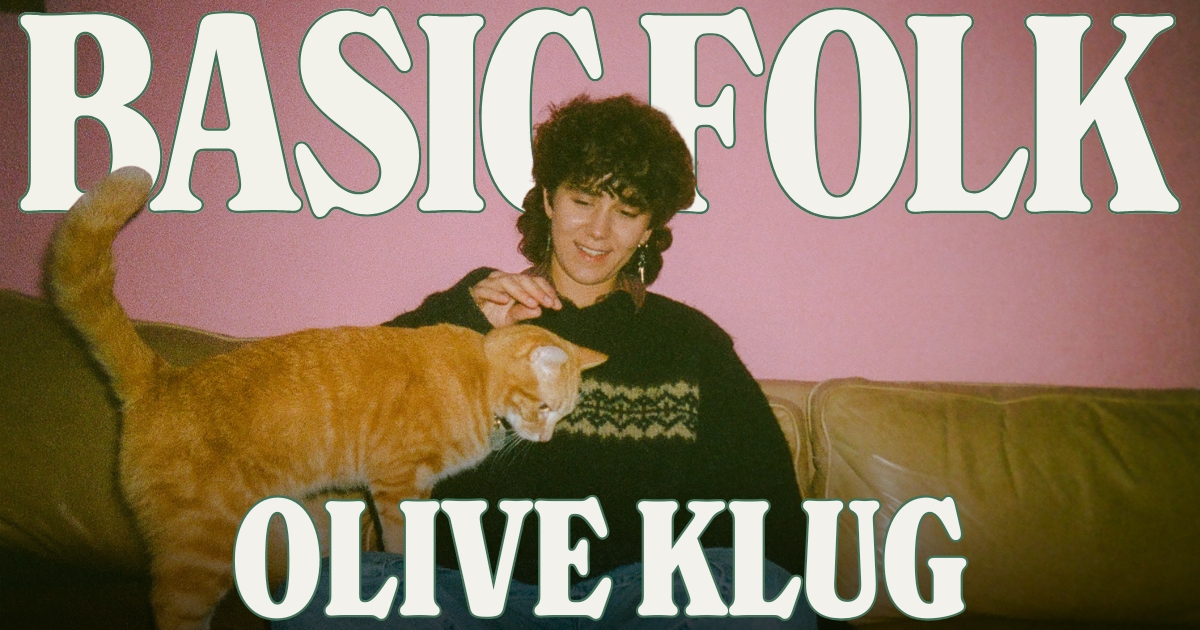
Olive Klug and I recorded this interview in my closet while they were in Portland, Maine, to play a show. Along with their band Cori, Haley, and Payton they stayed with us and it was a real pleasure to be around them for a few days. You can tell that Olive is at their best around their band and it is a true collaboration on stage. Shoutout to the whole crew for leaving such a remarkable impression on me and my wife and for assembling some baby furniture while they were staying at our house.

In our conversation for Basic Folk, Olive takes us on a journey through their musical upbringing, exploring their childhood influences, including their father’s eclectic taste in ’60s and ’70s rock and folk. Olive discusses their love for Joni Mitchell and Taylor Swift, which inspired them to learn guitar and develop their own musical tastes. They provide insights into their early internet presence on platforms like YouTube and Tumblr, and how these shaped their creative expression and online identity.

LISTEN: APPLE • SPOTIFY • AMAZON • MP3

Olive also touches on their experience of transitioning to a music career, going viral on TikTok, and the emotional and practical challenges that come with it. Additionally, they delve into how their psychology background and neurodiversity inform their songwriting, live performances, and day-to-day life. Our conversation wraps up with thoughts on the productive chaos of touring, the importance of community in the folk world, and their aspirations for long-term, sustainable growth in the music industry. Everyone belongs at the Olive Klug show. They leave their glow wherever their travels take them.


@oliveklugThe gay cowboys keep leaving nashvillea title=”♬ original sound – Olive Klug” href=”https://www.tiktok.com/music/original-sound-7519310944065817375?refer=embed” target=”_blank” rel=”noopener”>♬ original sound – Olive Klug


Photo Credit: Alex Steed

Sawtooth
Country Soul

To say Kashus Culpepper’s life has changed over the last five years is an understatement. A former state champion wrestler, firefighter, and EMT, the Alabama native developed a raspy, smoke-and-voodoo vocal while stationed in Spain with the U.S. Navy in 2020, forced to pass the pandemic in his bunk. Since then, he’s knocked over one milestone after another.

With a distinctive mix of country, blues, Southern rock, and soul, the 27-year-old cites Robert Johnson, Bill Withers, and Hank Williams as inspirations and is now bringing his roots-renegade instincts to mainstream fans. Despite only releasing his first official track in June of 2024, the music industry short-timer has earned big-time appreciation.

That includes the respect of heroes like Elton John and John Mayer, a Grand Ole Opry debut, tour dates around the country, and inclusion on 2025 “artist-to-watch” lists at GRAMMY.com, Apple, Billboard, Pandora, and more. Culpepper just finished a run of dates with Leon Bridges and he’ll hit the road with Whiskey Myers in June before joining tours by Sierra Ferrell, Darius Rucker, and others later on in the summer. It would all be overwhelming, if he had time to think about it.

“I’ve just been taking it day by day,” Culpepper tells Good Country with a hearty laugh, waiting to perform at a community festival in Arkansas last month. “I think that’s the best course of action. Don’t think too far in the future and just take each show, each writing session, each recording session one at a time. Just pray everything works out and keep going. … Because when things started happening, I was like, ‘Oh, snap.’”

We wanted to get to know Culpepper before anything else “happens,” and figure out what’s fueling the hype. As it turns out, this all-natural talent is just going with the flow.

I read that you didn’t even start playing guitar until you were in Spain for the Navy, right? What made you want to do that?

Kashus Culpepper: Yeah, in Spain we got shut down and I didn’t have nothing else to do, man. I mean, literally I was bored out my mind. It’s a different type of boredom, because during COVID you couldn’t do nothing. It’s not like you can just go outside or go to a bar or hang with your friends. We couldn’t do nothing. So this was a weird point in my life and my buddy had a guitar in the barracks. I was like, “Well, this is a perfect time. I literally have nothing to do.” I just went on YouTube and looked up covers I wanted to learn. Music has always been something I go back to whenever life is hard. So I resorted back to music and that ended up leading me to learn guitar, eventually learn to write songs.

Thank God for YouTube, huh?

Shout out Marty Schwartz!

You seem to have a lot of diverse tastes, but that bluesy, soulful country thing – why did that speak to you?

I think maybe that’s just my music taste. My first taste of music was gospel, and I’m from Southern Alabama, so gospel there, it’s really rootsy already. It already sounds like a folk song. And the way they sing it sounds so bluesy, like old Son House type of vibes. From there I got into blues music outside of church. I got into country music and R&B and folk music a little. I’m all over the place when I listen to music. I can go from Allman Brothers to a Conway Twitty song really quick.

But I know you like John Mayer and all that stuff, too, right?

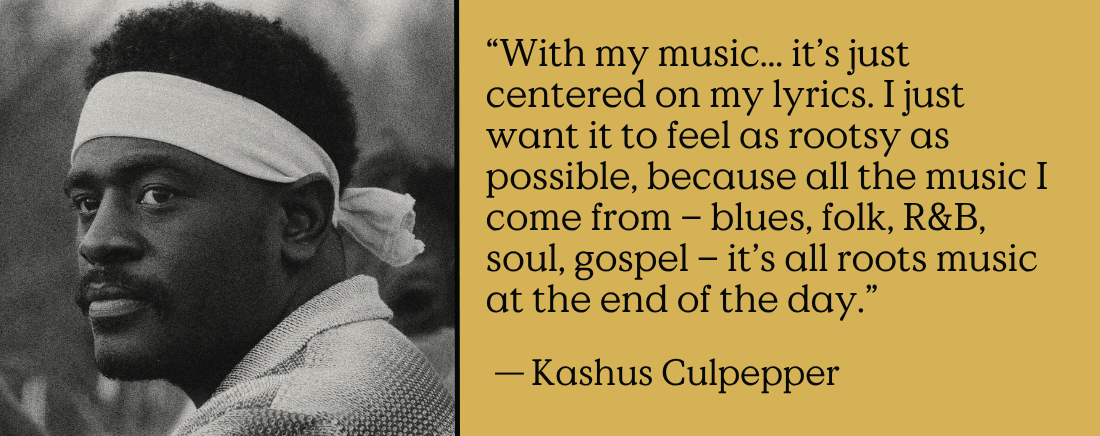
Yeah, yeah. I mean, I love so many of those rock artists, ZZ Top, Led Zeppelin, Skynyrd. People ask me all the time my influence and I’m just like, “Bro, it’s so hard to name everybody.” John Mayer was a huge thing for me. Recently I went back to Norah Jones, I’m like, “Man, I used to love this record.” But with my music, at the end of the day, it’s just centered on my lyrics. I just want it to feel as rootsy as possible, because all the music I come from – blues, folk, R&B, soul, gospel – it’s all roots music at the end of the day.

Your voice is so good at expressing these really raw emotional states, I think. Is that how you are naturally? Or does that only come out in your music?

Most of the time? Honestly man, it’s just with the music. It’s hard to open up to the people. I think for me music has been great, just to express how I actually feel through my singing and my lyrics. I don’t usually just tell people.

So you’re from Alabama. After the Navy, did you go home and keep playing?

I got out the Navy in 2022 and by that point I already had gigs booked on the Mississippi Gulf Coast. I was booked at all these casinos, all these bars. I was booked out for a year in advance. I got out and went straight to full-time doing cover band shows pretty much for another year, until I literally couldn’t take any more of it. Then that’s when I decided I really want to write songs. Literally, I decided “I’m going to move back home to save as much money as I can and move to Nashville.” I was home for maybe a week or two and posting a lot on TikTok and I remember I was in my mom’s living room. I posted a TikTok, I went out because I had an interview for a job, I got back home, and it had reached 100,000 views. From there it was just, “Oh, snap. It’s going on.”

@kashculpeppermusic Replying to @Casey Wayne One week till “Man of His Word” drops! Appreciating all the support on this one❤️ Pre-save link in bio🔥 #country #singersongwriter #original #kashusculpepper #newmusic #livemusic #countrymusic #countrymusiclover #tour #soul #newcountry ♬ original sound – Kashus Culpepper

That’s awesome. Congratulations on how that all turned out. I think one reason for it might be that your music seems so unconventional, almost untamed. Maybe because you did it on your own? Do you feel like fans are hungry for that?

I think so. We talked about John Mayer. John Mayer is kind of like that. He’s all over the place. Sometimes he’ll do a blues song and then straight up pop, and then an R&B song with Leon Bridges. I think people just love that from artists. Artists just being artists. Just do whatever the song feels like. That’s how I feel with songs.

“A Man of His Word” is super soulful, with lots of that gospel influence and a big raspy vocal. Tell me about being the man a girl deserves. Where’s that theme coming from?

I wrote that song with Natalie Hemby and at the time we was just talking about life. The song is from a perspective of a guy looking into a girl and she’s going through hardships, because she don’t have a man of his word. She’s drinking a lot, doing a whole bunch of stuff. The song has a lot of me in it. I grew up with a single mother and you don’t know how those things can affect you without having somebody in your life you can trust. You get the feeling you can’t really trust nobody, because that’s not part of your life, and that leads to mental health problems or substance abuse. You don’t even notice it at the time, until you look back and you’re like, “Dang, that’s why I feel that way.”

After that comes “Broken Wing Bird” with Sierra Ferrell and it’s on the opposite end of the spectrum. Very threadbare and folky, right?

Oh man. So I’m a huge fan of Willie Nelson. One of my favorite songs is “Funny How Time Slips Away” – I just love so much the crooner era that he was doing – and I wanted a song that felt like that.

I wrote the song about somebody that’s not really good for you and you just keep taking ‘em back regardless, because you love them and no matter what they do, you’re always going to. So she’s like my broken-winged bird – no matter what she does, she’s flying back and I’m always going to help her out and then she’ll probably be on her way again.

It’s been good getting to know you a little. Big picture, what do you hope people take away from your music?

I think overall, I hope they can see I’m just an artist trying to express the way I see things, and I hope in some way they can find music that can fit every part of their life. Whether they’re trying to have a good time out partying, or if they want to soak into the sadness of a lover they lost, I just hope my music can fit some aspect of their life. And I hope they can enjoy it.


Photo Credit: Cole Calfee

Sign up here to receive Good Country’s email newsletter direct to your inbox.

Dualities & Disorientation: Olive Klug is Older, Wiser, and Still Feels Like a ‘Lost Dog’

“If the world is my oyster I’ve been poking at it with a plastic fork,” sings Olive Klug on “Taking Punches from the Breeze,” the first track off their second album, Lost Dog, which released April 25. Klug writes with a mesmerizing combination of levity and intensity about a slightly off-kilter world. Through closeups on minute, funny, and revealing moments in life, they illustrate how schisms can be beautiful, too, if you see them right.

Though often joyful and whimsical, Lost Dog isn’t always rosy. On it, Klug works through immense life and perspective shifts. Their takes on breakups – “The butterflies have all got broken wings” (“Cold War”) – and depression – “When my friend hangs up / and my mind turns gray” (“Opposite Action”) – are refreshing not for their angst but for their realism. But nowhere is their combination of playful, revealing storytelling more evident than on “Train of Thought,” their love letter to their neurodivergent brain.

There’s a train in the sky in the middle of my mind and it’s flying off a one-way track
And they try to button up my suit and tie in an attempt to hold me back
But I’m this strange old conductor wearing pearls and a backwards baseball cap…

Klug grew up in Oregon and studied psychology in college, intending to work towards a master’s degree and career in social work. Not long after graduation, the COVID-19 pandemic hit and they lost their job. Like so many others, Klug ended up at home, on TikTok. There, music took off fast, and their song “Raining in June” scored them an audience. From there, life hit warp speed – a record deal, a move, a music career, a new relationship – and then it fell apart.

Now older and recalibrating, they’re releasing their second album, Lost Dog (their Signature Sounds debut), about aging with a neurodivergent brain, leaning into their differences, and coming to terms with not having everything figured out.

Your first album, Don’t You Dare Make Me Jaded, came out in 2023 and now we’re talking about your new album, Lost Dog. You’ve lived a lot of life between recording the two albums and you’re clearly writing from a different place this time around. What’s changed for you between those two projects?

Olive Klug: I was 23, 24 when I really started to pursue music as a career. I was not particularly young, but I was kind of naive in the music industry world. I blew up pretty quickly after giving it a go and then moved to LA and signed a record deal. When I look back, I had a lot of hubris, I was very self involved. I was living in LA. It was very exciting. I thought “I’ve made it.” I was making all my money off of music. [But] I was dropped from that record label directly after the release of that album, Don’t You Dare Make Me Jaded, which I think now is kind of like funny and ironic and is hilarious.

That’s funny, “Damn, I said don’t.”

So I was dropped from that label and I also went through a breakup. I had these two years of riding this crazy high and then everything came tumbling down at the same moment. I realized that that whole era of my life was a little bit gilded; that relationship wasn’t right for me, that record label wasn’t right for me. But I looked like I had it together on the outside.

All of that made me dig pretty deep into what I wanted out of my life. It was a moment of soul searching and a moment of having to believe in myself, understand who I was, and motivate myself to keep going in music, because there was nobody around me believing in me anymore.

The past two years have been this wild journey of figuring out what I want, figuring out who I am, and maturing and leaving that hubris behind – and [leaving] that life behind. Since that happened, I moved to Nashville, Tennessee, I recorded a bunch of songs, I wrote a bunch of songs. I bought a van. I now live in my van, but I still don’t really have things totally figured out. I’m still lost at times. I think that’s the reality for a lot of people my age.

I’m in my late 20s now and I think that this album is really about the moment that I woke up. I was 27 and things were less figured out than they were when I was 24. That’s where the Lost Dog title comes from, feeling like I am getting older yet I am still feeling like a lost dog, wandering around the country.

There is so much pressure in this world to have it figured out or to be one specific way, and it feels like you’re pushing back on that and saying you don’t have to do that if it’s not right for you.

I’m not really trying to make a statement. My first album, I tried to tie all of my songs up in this neat little bow to be like, “Here is the message that I want to send with this song.” This next album is much more unfiltered. It’s just what came out of me. This is my experience. I’m not trying to reassure anybody with these songs.

You’ve said that this album is about aging as a neurodivergent free spirit. Particularly talking about “Train of Thought,” where you’re leaning into the chaos you feel inside your brain sometimes, instead of trying to hide it. What about that experience felt like what you needed to write about on this album?

I spent my adolescence trying hard to fit in. I had my little secret moments at home. But at school and in my regular life, I got good grades. I dressed up in a way that I thought would be rewarded [at] school. I still was very [much] conforming to my gender, and I tried really hard to be “normal.” I was scared of what would happen to me socially if I did not try to fit in, even though there was this part of me that really wanted to be different.

It wasn’t until my adulthood that I felt the freedom to experiment more with my identity and experiment more with rejecting those norms. I think that’s totally the opposite of what a lot of people experience. A lot of people, when they’re a teenager, they rebel and they dress really crazy and they try to be as weird and challenge the norms as much as possible. I didn’t start doing that until maybe even slightly after college. Since then, it’s been a deep spiral down into allowing myself the freedom to really be myself.

I didn’t understand that I was neurodivergent. I didn’t understand that my brain worked a little differently than other people. Now I’m like, “Well, what do I have to lose? I’m just going to be totally myself.” Having this community of people who are my listeners and fans who really like that about me, and who really celebrate that about me, has been really healing. I think that a lot of artists and writers are neurodivergent in some way and the superpower of it is that’s what allows us to write the way that we do. That’s what [“Train of Thought”] is about, allowing myself to stop trying to put myself in a box and let the chaos of my mind roam totally free.

I’m curious about “Taking Punches from the Breeze,” which is you letting yourself wander in a different way. There are these great lines in there like, “…If the world’s my oyster I’ve been poking at it with a plastic fork.” I don’t think anybody has ever presented that concept before in that way.

I wrote that one living in an apartment in LA by myself. And I love living alone. It’s like the best for my creative flow. But I was really sad. It was in the aftermath of that breakup and being dropped from the record label where I wrote these songs. “Taking Punches From the Breeze” was one of the first ones I wrote. That and “Cold War” were the beginning of this Lost Dog era, so to speak. I got really high one night, to be so honest with you. I was in my apartment and I had just gone on– you know when you have your first date after a breakup? I was on this first date after a breakup. I feel like I am pretty good at asking other people questions and I was asking this person all these questions. Then they would turn around and ask me those questions and I’d be like, “God, I don’t know what I’m doing right now.”

When I’m doing shows, I’m like, “Oh, I’m a Gemini. That’s why this album is the way it is.” I think it’s true, it’s about holding a lot of dualities. A constant disorientation is what I’ve really felt for the past two years. But there’s a lot of fun and joy and possibility in that constant disorientation. It can be hard at the same time.

The other side of the duality, or another part of the duality, is “Opposite Action,” where you’re really pretty down in the middle of the album. Tell me about writing that song.

That was also in that time. I think it was late summer, I was in my apartment in LA feeling weird. I was a psychology major, and I learned about DBT [Dialectical Behavioral Therapy]. That song borrows from a DBT concept called opposite action. I remember having questions about it when I learned about it. But it’s basically the concept that you do the opposite of what your instincts are telling you to do: If you are feeling particularly depressed, you’re supposed to take a deep breath and try to do the opposite. So if you wake up and you want to lay in bed all day and do nothing, you’re supposed to force yourself to go out and be social, go to the park, go to the beach.

I was like, “I’m gonna go to the beach, even if it’s by myself. I’m gonna try to plant things in my backyard.” It was all these things that I was trying to do to make myself feel better, but then feeling really frustrated, because I was taking good care of myself and I still felt bad.

How the song really started was, as a touring musician, so many of the things that people tell you to do to establish some sort of stability and happiness are just impossible to do. Growing plants is something that I would love to be able to do. I can’t do that, because I’m not at my house most of the time. I came back from a trip or a show or something and I had tried to grow jalapeños and tomatoes in my little back patio area. They had died.

That to me is one of the things that really sticks out about your music. You have this way of dialing in on these minute observations. Is that how your brain works all the time? Is that how you’re seeing the world?

I don’t know, maybe. I don’t know how people see the world differently or not. But my writing does feel sort of matter of fact to me oftentimes. So maybe that is how I see the world.

It’s matter of fact, but it’s really joyful.

I think a lot of Lost Dog is coping with those decisions I can’t really take back. If I had gone down that traditional path, if I had gone to grad school, become a therapist, I would have health insurance right now, I would have job security right now. There would be a lot of things that I would have right now that I lack in my life. It is scary to be even a semi-successful musician. I have no certainty. It’s really, really hard to feel any sense of stability or certainty. And to not have any health insurance and to not have any benefits, and all of that stuff, it can be really scary. I wish that small working artists had that. It makes me feel like I’m never going to be able to really have a family, if I go keep going at this rate, I am never going to be able to go to the dentist.

That’s the thing that I really wish more people understood. You’re looking at this artist on stage every night and you relate to their music, they’re still on the road maybe 200 days a year. They don’t have that personal life stability. They don’t have that health insurance often. Even if you think they’re well known, the margins are so crummy and what it takes is so intense.

But if I had not taken this risk, I would always wonder what would have happened. I’m really glad I took the risk. It’s such an incredible payoff. One thing that I can always feel when I’m on stage every night is I have the most fulfilling career ever. That is something that I will never question.

People are like, “I want to have a job that has meaning and that feels aligned with what I’m good at and who I am.” Every night I go on stage, I’m getting paid to do the thing that I feel like I am meant to be doing and that is really worth it. Maybe one day that will include some stability.

And just like that, we’re back to dualities.

Yes, exactly.


Photo Credit: Alex Steed

For Indie-Folk Sensation Mon Rovîa, ‘Atonement’ is Just the Beginning

(Editor’s Note: Read our January 2026 interview with Mon Rovîa about his new album, Bloodline, here.)

When one really digs below the surface of Mon Rovîa, there’s this intricate kaleidoscope of self, this winding path where the road to the here and now for the singer-songwriter has truly been one of restless resilience, dogged passion, and spiritual curiosity.

The rising artist has already lived this whirlwind existence of trials and tribulations, but also one of triumph and transcendence. Born in the West African country of Liberia, Mon Rovîa (taking his stage name from Liberia’s capital city) was adopted by Christian missionaries and taken from his homeland in the midst of an extremely violent and daunting civil war,

From there, Mon Rovîa bounced around the United States in a highly religious household, one where he wasn’t exposed to modern culture or the endless depths of music, either new or old. But, nonetheless, he fostered many existential questions about his unfolding life, with one main query in the forefront: Who am I?

The intricate nature of Mon Rovîa became heavy and tumultuous within his heart and soul, these deep layers of internal conflict. Being an immigrant in America. Being a Black man raised in a white family. Being adopted with no sense of his biological parents. And being filled with survivor’s guilt about leaving Liberia.

Yet, it was writing in his journals that launched the long process of healing and understanding within Mon Rovîa. Those words, thoughts and emotions soon took shape as songs, all while he began to learn to play the ukulele, guitar and other instruments. Add into that, his continued exploration of recorded music itself.

What has resulted is this unique tone, a vibrant crossroads of indie-folk, Americana, and shoegaze pop stylings, with many viewing Mon Rovîa as a talented rising voice in the Afro-Appalachian folk scene.

Fast-forward to 2025, where Mon Rovîa has become a very popular star on TikTok, yet his soothing sounds and melodies echo far across the massive social media platform. Several studio EPs have been released to wide acclaim, with the latest, Act 4: Atonement, putting a period on this chapter of his art – his eyes now aimed at the unknown horizon of his intent, head held high and optimistic.

When you’re looking out the window these days – in terms of your career, where the music’s going, and also where you’re going – what are you seeing?

Mon Rovîa: From even last year, I think things have accelerated a lot faster than I would’ve hoped in music, to be honest. It still seems really fresh though. It’s a lot of taking in the new fans and a lot of the joy that’s come with the acceptance of the music on a broader scale. At times, I wonder if I was really prepared for all of it, because a lot of these songs and a lot of the roadmap was written from a place of deep sadness and things that I was going through at the time. It’s crazy when you get to the place of living the thing you hoped for and realize that, “Oh man, there’s longevity that needs to be tied along with it now, since it’s becoming something that people are really desiring.” But, I’m very thankful. I try to be truly in tune with my energy and spirit. The world is super heavy and I tend to feel it a lot.

As things get crazier for you, expectations may shift and things change. How do you keep that piece of you that’s honest and real intact in your music?

A lot of it is, for me at least, having perspective. I know that’s easier said than done. But, being able to understand that you’re doing what you love and to be honest with whatever it is you’re presenting. Write what you know, write what you feel.

Your popularity soared through TikTok and now you’re playing more live shows. Has that been an interesting transition in being face to face with your fans that normally see you from behind a screen?

Absolutely. It’s totally different. I’m a pretty quiet, shy person. So now, transitioning to moving from the screen and having that barrier, that river that can divide, all the little things that come into play when you’re face to face? It was a little bit scary at first, especially with the first couple tours we did. With being in front of a crowd, the most important piece I think that I’ve learned now is the stories that I’m telling are the tales of my journey with each song. As I play music, that’s helped me become a lot more confident onstage, because I know what I’m speaking about and I know what the songs are about. It’s not this kind of idleness and just good music to listen to. I try to take the listener a little bit deeper, and that’s fun for me to do that. It creates a lot more fun. I’m just not someone that likes to be in front of a lot of people or be the center of attention, to be honest. I prefer writing things in silence, being in my room and contemplating.

@mon_rovia_boy To those alchemizing your traumas… this is “to watch the world spin without you” 🫂 #folkmusic #mentalhealth #derealization ♬ To Watch The World Spin Without You – Mon Rovîa

With all of this going on, you’re also on this journey of finding yourself and figuring out who you are, where you came from, and where you’re going.

I think every adopted kid eventually hits the point where they want to know so many different things about their life, their story, what their background was. And that’s what was happening to me around the time of [my 2021 album] Dark Continent. And that’s even before we were taking this route of Afro-Appalachia. But, it led me to dive deeper into music and I just happened to be [living in Chattanooga, Tennessee]. Being in this area helped me to dive deeper into where all this music kind of came from and the history [behind folk, bluegrass, and Americana]. So here I am, just a Liberian refugee, but somehow in the perfect hands of history learning from where I was, not necessarily anything else. It is a very full circle moment.

That’s got to be a lot to wrestle with as you get older and you become your own person. I mean, there’s a lot of layers there.

So many layers. But don’t forget, there’s that layer of being the Black kid in a white missionary Christian family. And then the experience of growing up Black in that private school kind of world, having no tie to the African American experience. Being exiled as well from that group, because I didn’t have the same upbringing. I was always looked at as being a white Black person, a Black person that spoke white, because I spoke pretty properly. Kids that have my experience are very lonely, you know? There’s not really a place you fit, because you don’t fit with the white kids because you’re Black in their eyes, clearly. And then the African Americans don’t accept you because you don’t know their world either.

It was a very tough upbringing. I was very quiet and I watched a lot. I learned how to be what I am in social settings, how to relate to [others] and keep things to myself a lot, just try to fit in as best as possible. It was tough. It was lonely. Music didn’t really come to me as Mon Rovîa until 2018, and that’s when I really started to take music a little bit more seriously. [Growing up], it was more of an outlet. It was just a fun thing I did with my brothers. I didn’t think of a career or me being good at it, because nobody said I was good at music or writing music. My friends did like my writing. They thought I was very clever, but I didn’t consider it for myself at that time. I just did it.

With this period of your life and career, it seems Act 4: Atonement seems like the end of the beginning of this chapter of your music and your journey.

Yeah. That’s what Atonement is. It’s the end of the beginning. Everyone is a hero in this story of life. So, everyone has their hero’s journey, whatever that is to them. Some don’t make it to becoming the hero, which is a tragic thing. And some do, but everyone has that journey in their life. For me, this atonement ending is the start of what I am now. I think it gets me to this place where I’ve gone through a lot of difficult things. Hopefully now, in my next chapters of Mon Rovîa, whatever that is, I can atone to the people – people that are hurting and going through different things. The point is, I can hopefully now be some kind of light to these people, where I can tell them things I’ve learned along the way. And hopefully it helps them through their things and through their time. That’s the important piece of what atonement is – the knowledge then turns hopefully to wisdom.

Have you been back to Liberia at all?

The last time I was there I was 10 or so. But, I’m supposed to go back next year to see my sister and brother. They still live there.

Have you tracked down your parents?

My mother passed away during the war and my father also did. I keep in contact with my sister, and that’s only recently. Growing up, these people were not in my thoughts. I tried to forget a lot of these things and just assimilate to American culture. It wasn’t until I was older that that guilt set in where I realized, “Man, I hadn’t even thought about anybody else in my country or the gift that it is to be chosen,” because it could have been my sister or brother that was chosen to come to America. I was just picked out of the group of them like, “Hey, he should go with this missionary family.” So, a lot of those things didn’t even come to my mind until I was older, to really see how much time I wasted absolutely doing nothing for anyone else but myself in this place. At that time, I was going through a lot of different vices and dealing with a lot of different bad things. I was constantly drinking and deep into my depression and lack of understanding of what my purpose was at all.

Or who you are.

I didn’t know who I was. I didn’t really know my past and history. I had glimpses of it from just some things my adopted parents had told me. But, I hadn’t dove into it until I contacted my sister and heard the real thing, the truth of it all. The goal is to go back [to Liberia] and try to get some colors from my native country and, and just, you know, spend some time with people that I haven’t seen in a long time and learn. The last time I went was really difficult. When I was there, it was in the middle of the second civil war and we ended up staying longer than expected because the child soldiers had taken over the capital city of Monrovia. It was a really scary time and that was the last memory of Liberia during the conflict. That’s a whole other cathartic piece of my journey, to [once again] step foot on that soil. I think once I step foot on that soil, I’ll probably weep. A lot of things have been bottled up and lodged into different areas of my body, [and will be] released onto the continent. But, not until I go there. My story won’t end until I go back. That’s a major piece.

You have such an interesting perspective, because I think a lot of times people in this country take things for granted, where they’ve either never traveled out of this country or they’re not from other countries. I would surmise that you probably see things that are beautiful in this country that a lot of us don’t acknowledge.

Yeah. There’s so much beauty in this country. Through all of the tirades against each other, there is still so much goodness. I mean, being able to walk out your door and be able to get anything you want at a store that’s there and not be–

Afraid to go for that walk.

Not afraid to go, yeah. Not afraid to go on that walk knowing I might not come home today, and there’s many countries like that currently. People don’t even have that freedom to go out their door and just see something and or go walk in the woods.

Or make an album.

Or make an album. It’s crazy to me that we forget so easily the good things when times are tough. And when times are tough, you think that the good won’t come back again. Man’s memory is so short and it’s really the plague.

That’s really what kills us all is that our memory is terrible. In times of famine, you never think good will come again. So, you lose hope. But, everything’s cyclical as well. Good comes back and hard times come again. And then you weathered the bad time before, but you forget that you weathered it, so you suffer. That’s us. That’s humanity.


Photo Credit: Glenn Ross