BGS 5+5: Chris Pandolfi

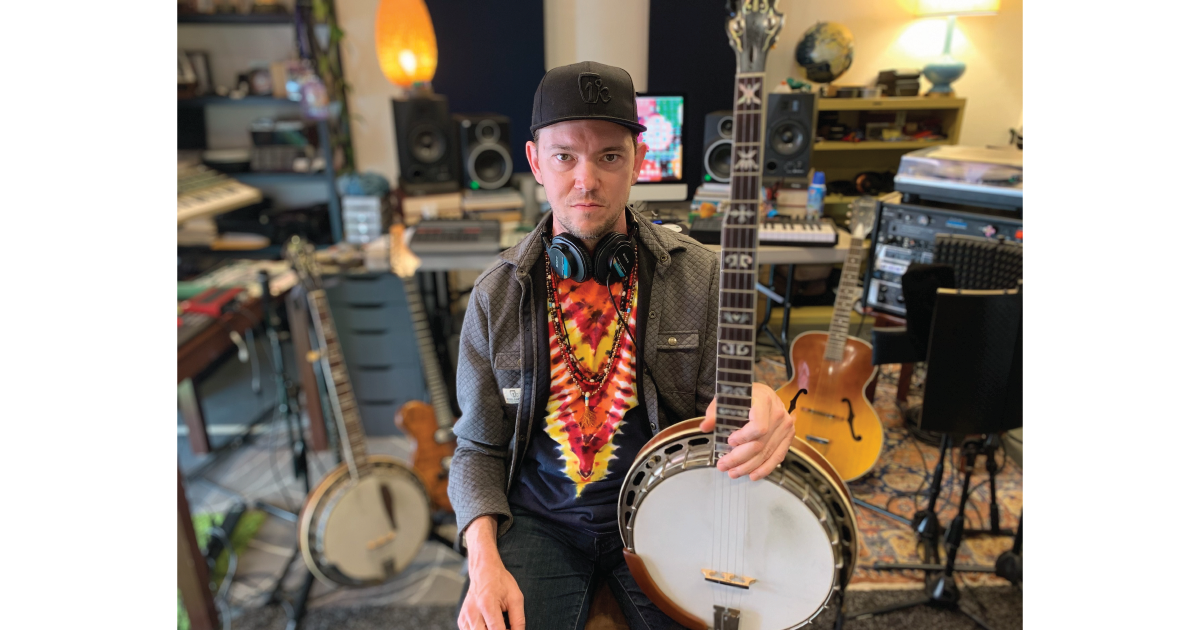
Artist: Chris Pandolfi
Hometown: Golden, Colorado
Latest Album: Trance Banjo
Personal nicknames: Panda

Which artist has influenced you the most … and how?

From one perspective, this is a really tough question for me because there are many sides to my music, and many influences that have factored in really heavily at different periods. But from another perspective, it’s easy. I wouldn’t be playing the banjo if it wasn’t for Béla Fleck. I discovered the Flecktones in high school and was just blown away in every possible way. It was a moment of pure inspiration, and after a handful of shows all I wanted to do was learn how to play the banjo. That was the start of my journey as a musician, and none of that happens had I not discovered Béla’s music.

But his influence doesn’t end there. He’s a legendary improviser on the instrument, and that’s a big part of what the Stringdusters do. But maybe even more importantly, he’s made his mark by recontextualizing the banjo, combining it with so many eclectic sounds and bringing it to many new genres. That’s a big goal of mine as well, and that’s very much inspired by Béla. He didn’t leave too much undiscovered territory! But the bigger your imagination, the more territory there is to explore, and I love that challenge.

What’s your favorite memory from being on stage?

I have many great memories of being on stage, but the night that we played in Covington, Kentucky, in the summer of 2019 stands out. It was an electric show, and the moment we walked off stage we all sort of simultaneously decided that we had just made a live album. That has only happened a handful of times in our career, even though we have had many gratifying shows. But this was one of those stand out nights where something connected on a deeper level. It seemed like everything we did just hit the crowd with maximum power, and then they were feeding us with so much energy and emotion. That’s what can happen at a show. It can happen any night, even when a venue is not packed out, and that possibility is one of the great thrills of this career. On a night like that, everyone there is an equal participant in the performance. There’s no divide between the performers and the crowd, and the possibilities are endless.

What other art forms — literature, film, dance, painting, etc — inform your music?

I get inspiration from a lot of places, but books and visual art are high on that list. I love artists and writers who surprise you. It may not inspire a specific melody or song, but it definitely stokes the idea inside me that anything is possible, and with imagination and creativity you can always find new paths to travel. Lately, I have really enjoyed the work of Clyfford Still. Still was an American, abstract painter whos work is bold and stunning. There’s a beautiful museum dedicated to his work here in Denver, and it turned me into a big fan.

I also love reading science fiction, mainly because the imagination factor of good sci-fi is off the charts. I read a trilogy of books in recent years called The Three Body Problem by a Chinese author named Cixin Liu that blew my mind. The story is gripping and endlessly creative. Two song titles on my new record, Trance Banjo, are references to that trilogy, both from the second book, Dark Forest, which is my favorite. Great art of any kind transports you to a place that feels very free, where there’s no strong sense of self. I get a lot of inspiration from that feeling.

What rituals do you have, either in the studio or before a show?

Playing music is one challenge, but performing is a whole other hill to climb. When I am getting ready to play live or record, I always try to spend some time with my instrument (15-45 minutes or so) playing really mindfully and getting in the zone. That zone of being deeply focused on the music has seemed like a mystery at points in my career, and will forever be elusive in some way. But there is also something methodical about it, and that’s where practice comes in. When I practice I spend some time focusing on more mechanical elements, a new technique, transcribing or that sort of thing. But ultimately, I want to devote a good chunk of every practice session to building that zone. A good practice session should be like a meditation. The more time you can log in that focused zone, the more you know what it feels like and the easier it will be to conjure up in a performance setting. It’s a lifelong journey, and it certainly keeps you humble! But it’s not magic, it just takes practice.

If you had to write a mission statement for your career, what would it be?

I think my most consistent goal is to sound like myself as a player, and craft music that is unique as a producer. Bluegrass is the banjo’s native territory, and a common goal among proficient bluegrass players is to study and copy the styles of the early masters. For banjo players, that’s Earl Scruggs, and I would give anything to sound like Earl! There is so much great knowledge there, and so much expression as well. It’s a bedrock element of the instrument that practically every great player has a deep knowledge of.

While I have spent much time working on the fundamentals of Earl’s style, that is more of a starting point for me, and not an end-game. There are times on stage when I really try to emulate that older sound. But when it comes to crafting my own style and my own music, I try to use those old school bluegrass rudiments — timing, power, tone — but then add my own voice as well. The same goes for producing. It’s all about identifying and connecting with sounds that move you, and then using your imagination to grow from there and utilize those tools to bring your own vision to life.


Photo credit: Chris Pandolfi
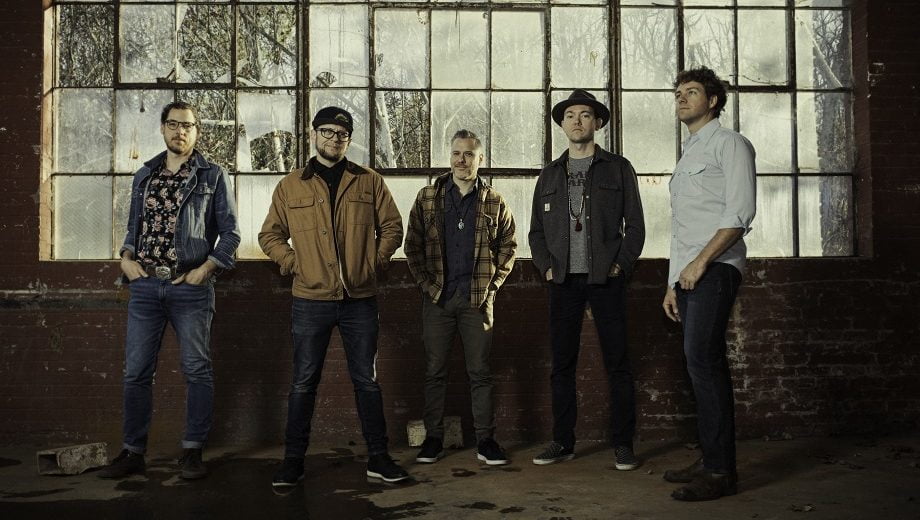
The Infamous Stringdusters Look to the Light on ‘Rise Sun’

The Infamous Stringdusters’ new album Rise Sun acts as an invocation. Across 13 tracks, the band — consisting of Andy Falco (guitar), Chris Pandolfi (banjo), Andy Hall (Dobro), Jeremy Garrett (fiddle), and Travis Book (double bass) — summon the light, which is all the more astonishing considering they tend to formulate their ideas individually before bringing them to the table. When the band came together to record the follow-up to 2017’s Grammy-winning Laws of Gravity, they found themselves interested in sharing a similar message: about hope, about love, about light.

As Book explains, “I only get to sing so many songs a night; I only get to record so many songs in a lifetime. What do I want those to look like? What am I trying to do here? Do I have the opportunity to raise the vibration? Do I have an obligation? I mean, these are the existential questions that I’m going through and we’re all going through as we’re making this record. That’s why it’s so oriented towards the light. It’s the opposite of Dark Side of the Moon.”

As with past albums, Rise Sun is dazzlingly energetic. But there’s also a sense of time—that strange paradox wherein it speeds up as it runs out—threading the project. It can be heard in Garrett’s swift, almost giddy fiddle on the opening title track, Pandolfi’s pacing banjo on “Truth and Love,” and the band’s shared meter, chiming as a mystical grandfather clock on “Planets.” The Stringdusters recorded the album in order, framing the songs with melodic interludes that bring the whole affair closer to the feel of their energetic live shows. As the band gets older and time ebbs, there’s still much to say — new messages that spread a little light.

BGS: You’re a bluegrass band famous for not coloring within the lines, so to speak. How do you set about stretching those boundaries in ways that make sense to both you and your fans?

Book: Our band can be challenging to listen to because it’s not one-dimensional. You’ve got four guys that sing, and every song sounds a little different, and certainly the way I approach every song is as though it’s its own universe. The people who are into our band, they’re ready to go wherever. If you’re into one singer or one style, you’re not going to get very much of that when you come to our show.

The album’s message revolves around wanting a better world, and so many songs involve some theme of light. Since you all write individually, how did you all cohere around that? Was it all kismet?

That’s what happened. It comes out of the culture of our band. We all live in different places, and this last couple of years has been transitional for all of us—in terms of our personal lives and our professional lives. We’re all firmly entering into the second half of our lives, and growing personally and spiritually, and digging in a little more deeply.

I think, for everybody, when that election went the way that it did, it tilted the axis of everyone’s awareness. When we would get together, we’d get into talking about real shit. It came as no surprise to me that when we all showed up with these song ideas, there were these themes emerging. We’re like a family oriented towards positivity and good attitudes and making everyone’s lives better, so when we go home, that pattern continues.

The band is no stranger to political fare, as with “This Ol’ Building.” And it’s not that any one track on Rise Sun feels overtly political, but what’s the band’s response to those listeners who want artists to keep art and politics separate? That seems nearly impossible nowadays.

Every act is political, I think. Why would an artist’s life be any different? Certainly, an artist has an opportunity—essentially a responsibility—to give voice to the larger questions, the larger existential crises of the culture.

Artists certainly can broadcast messages of humanity, of commonality at a time of particular divisiveness.

I can’t speak for the other guys, but when I was younger I thought it was really trite when I’d see an artist accept an award and they’d give it all up to God. I was like, “No, that’s you.” But as my awareness expands, and my gratitude for being alive increases, it seems there is a concept that I can much more closely identify with, where the idea that songs and concepts, so many of them, are already in existence. “Rise Sun,” for example, is a perfect example. I didn’t write that melody. I brought it into form, but that melody is almost timeless—it’s like gospel music. It’s not like I’m standing here, like, “God gave me that song,” but I brought it into form.

That’s the way I see the artist’s role. There is some responsibility and ownership over bringing this stuff into form, but these are concepts and ideas that everybody’s thinking about. Not everybody necessarily has the same angle on it, or the same opinion—not everybody is oriented towards the light—but these larger philosophical ideas, it’s all part of the collective consciousness. So for an artist, of course it’s political; if you’re doing anything and it has any intention or meaning, it’s political.

You all worked with Billy Hume again. What did that feel like, to return to the studio with him?

This one, we did in Denver. We recorded another record with him years ago, Silver Sky. It’s almost like Rise Sun is the third record in that.

Like a trilogy.

Yeah almost. Silver Sky is a really great record—it’s got that Billy Hume sound. He was more of a producer on that. He was more of an engineer on the last two records. Billy is incredibly skilled, and he has a great ear, and his work ethic is insane. He’ll work 16 hour days and never complain. The tone is great and it’s sort of a no-brainer—I’d assume we’d make another record with him.

Andy Falco said you guys don’t use click tracks and you don’t layer a lot during the production process. Do you record live to track?

Yeah, it’s great. These days, we get everything by the second or third take. A big part of it is preparation. We spend a lot of time figuring out how things are going to go before we go into the studio so we can reduce stress. Some bands go in and do all their figuring out in the studio. We have five people intimately entwined in the music, so like to check out everything, and see how it feels to play a song in this key, or tweak the arrangements. For us, sometimes it had a tendency to suck the life out of things, but recently it feels much more like we’re able to get things down, and then go into the studio and not be worrying, but just be deep in it and free-flowing and capture the best performance.

You chose the songs in order before you recorded them. How did that shift the recording process?

It was genius. What it meant was it took us a little bit of time to pick up speed. The opening track “Rise Sun” maybe would’ve been better if we tracked it the third day, but what it does mean is that the record has a very linear feel. We put a bunch of segues in there. It’s sort of like the live show, where a bunch of songs flow into other songs with musical interludes. I’m inside the record, but every time I get through the record and get to “Truth and Love” I start crying. It feels like I watched a Star Wars movie.

Well, talk about a heavy track. That one asks some real hard-hitting existential questions.

I get to the end and I’m overwhelmed by it.

“Planets” is such a standout, too, and I know your wife Sarah Siskind co-wrote that. The interlude that comes in around the 5:30 mark is so striking. Can you explain that moment?

We knew it was a good sonic opportunity, letting it all space out. That was a live take, that was us jamming, and then we overdubbed a little bit of piano.

You were talking about the collective unconscious earlier, but I think you all tapped into something cosmic there.

That wouldn’t surprise me, either—functioning on the astral plane. There’s a lot going on in the world that we don’t understand, or that we can’t quite quantify or make sense of, and it’s all very interesting. The way that things unfold and even just the making of a record is such an interesting combination of all kinds of random circumstances that leads to it. It’s all remarkable and amazing, and we’re all feeling really grateful to be putting this record out right now.

My First IBMA

Ahead of this year’s annual gathering of bluegrass lovers at the IBMA’s World of Bluegrass festival in Raleigh, North Carolina, we asked some of our favorite players to recount a memory of their first time attending the illustrious event. Here’s what they told us:

Chris Pandolfi (Infamous Stringdusters)

“While my first IBMA was certainly exciting, driving roundtrip by myself from Boston for several days of nothing but jams and live music, it was my second IBMA that will always be my most memorable. It was a more formative, purposeful mission — my first trip there as an aspiring ‘professional musician,’ even though I wouldn’t necessarily describe my agenda as ‘professional.’ I had no formal engagements, no hotel reservation, no tickets, no real money to spare, and no worries about any of it. We were there to make music, meet new people, and tap into that magical, living art form that we all know as bluegrass.

The seeds of the Stringdusters had been planted, but we needed to find a few more players, and IBMA was the universal meeting place for anyone serious about the music. So when Travis Book sauntered off the elevator, no shoes and a backpack full of beer, we knew we had a good candidate on our hands. I also met Jeremy for the first time that year at IBMA, and it was definitely the first time that we five jammed together as a group, which was memorable, to say the least. That trip was a key part of the advent of the Infamous Stringdusters, which has become my passion and my life’s work.

Though our main purpose was to get a band going, we were also there as fans. I loved the sound. I was there to chase that passion, and just as important as meeting my bandmates was the ability to get that much closer to the music. I didn’t need a plan to know that making the pilgrimage to IBMA would be worth it, and it most certainly was, as there is no better place to connect with bluegrass.”

Casey Campbell

“I’ve been lucky enough to attend IBMA’s World of Bluegrass all my life. There are so many pictures of me as a baby and little kid running around Owensboro and Louisville. However, I didn’t really start making memories until the event came to Nashville in 2005. At that point, I was starting to get into playing music and discovering that there was more to WOB than just the hotel hallway jams. Thanks to Deanie Richardson and Kim Fox, I joined the Kids on Bluegrass program the following year, and my world opened up as I met these incredible young musicians like Molly Tuttle, AJ Lee, Cory & Jarrod Walker, Seth Taylor, Tyler White, and more. In fact, the majority of the folks I met during my Kids on Bluegrass tenure are still kicking ass across the bluegrass and acoustic music scenes today.

It has been such a joy over the past 10 years to watch so many other great musicians come through that program and find their groove in the musical world. I look at kids like Presley Barker and Giri Peters (who are way better than I ever thought of being at their age) and think that, without Kids on Bluegrass, those two might not have crossed paths for another decade. Of course, there will always be plenty of hallway jamming, exhibit hall perusing, and more hallway jamming, but one of my favorite World of Bluegrass memories will always be in the rehearsal rooms with those other musicians my age and thinking 1) I’ve found my people, and 2) Shit, I need to go home and practice!”

Michael Stockton (Flatt Lonesome)

“The very first year I attended IBMA was in 2008. I believe it was called Fan Fest at the time, and it was still at the convention center in Nashville, Tennessee. I had been hanging out with a few friends through the day on the Friday of that weekend. I worked up an appetite from all of the jamming I had been doing, so I went up to the Quizno’s that was on the top floor of the convention center and got myself a sandwich. Lucky enough for me, as I was walking into the grand ballroom, the Lonesome River band was taking the stage. Being that I was very new to bluegrass, I had no idea what I was in for. I can vividly remember sitting in the very back row of the hall, enjoying my sandwich and the music.

The part of the story that stands out the most, though, is from the last song on their set. They ended with the song ‘Them Blues’ (still one of my favorite LRB songs to this day), and they were getting after it! The song got around to the second banjo break where Sammy hangs on the seven note for the first few measures, and I came unglued! I completely forgot that I had a sandwich sitting in my lap and, when I heard that break for what was the first time in my life, I couldn’t help but jump up out of my seat and holler as loud as a I could! I spilled my sandwich, chips, and coke all over the floor, and I don’t regret it one bit. That was one of the first times I really pictured myself on stage. I put myself in Sammy’s shoes and told myself that I wanted to make someone spill their sandwich one day.

Fast forward to 2017: Flatt Lonesome has won four IBMA awards, and we are nominated again for Vocal Group of the Year and Entertainer of the Year. I never would have dreamed, back in the days of spilling sandwiches, that I would share the stage with my heroes. IBMA has been invaluable for me as a young musician. IBMA is where my dream to play professionally was cultivated, and it’s where that very dream has come true.”

Bronwyn Keith-Hynes (Mile Twelve)

“My first IBMA was wonderful and bizarre and totally exciting and, at one point, I found myself playing a set with two of my biggest heroes. I ran into Peter Rowan at the breakfast of the Super 8 I was staying in, and he recognized me because I’d played fiddle for him once before up in Boston. He told me to come to his set later that day and play fiddle, and I thought it was odd that he hadn’t found a fiddler yet, but I was happy to show up and play, so I didn’t ask any questions. Then I got there and realized he did already have a fiddler and it was Michael Cleveland — one of my biggest fiddle heroes. That was my first time meeting Michael and, once I got over my initial terror of playing in front of him, playing fiddle on stage with him and Peter was one of the coolest moments I can remember from any IBMA I’ve been to.”

Sierra Hull

“I went to my first IBMA when I was nine years old, when I was invited to be part of the Kids on Bluegrass showcase. I had never been to a bluegrass festival of that size before — anything I had ever been to had been very small, local festivals. Seeing a crowd of 1,000 people would have seemed like more than 10,000 to me. I was so excited to see IIIrd Tyme Out; they were my favorite band at the time — they’re still one of my favorites — and Steve Dilling took me under his wing the whole week.

One night, he brought me up to a hotel suite to meet Earl Scruggs. I couldn’t believe I was getting to meet him! Earl wasn’t picking while I was up there, he was just hanging, but they had me get out my mandolin to play some for him. I had only been playing for about a year and I didn’t know a whole lot yet; I just knew a few fiddle tunes. At one point, I remember Earl asking me, ‘Can you play “Pike County Breakdown?”‘ And I said to him, ‘I don’t believe I’ve ever heard that one.’ I couldn’t believe Earl Scruggs had asked me to play a song I didn’t know so the first thing I did when I went back to my mandolin teacher was tell him the story. I said, ‘You’ve gotta teach it to me! Next time I see Earl I need to know this song.’ My teacher just said, ‘You know he wrote that, right?’ Needless to say, I was super embarrassed, but I learned it! That definitely got me into learning more and more fiddle tunes. I had to be ready the next time Earl asked what I knew!”


Photo credit: Joerg Neuner via Foter.com / CC BY-ND

WATCH: TRAD PLUS, ‘Blind’

Artist: TRAD PLUS (Chris Pandolfi of the Infamous Stringdusters)
Hometown: Denver, CO
Song: "Blind"
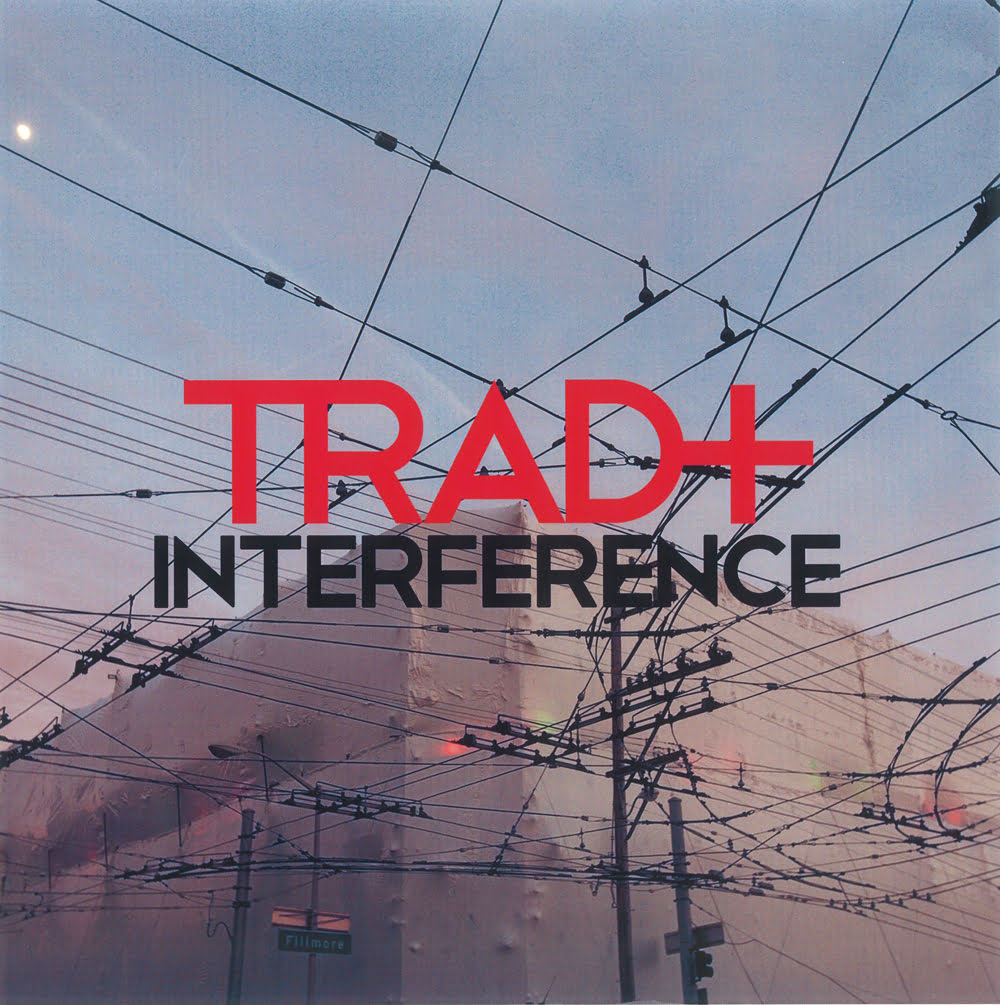
Album: Interference

In Their Words: "'Blind' is one of my favorite tracks from the record. Like a lot of TRAD PLUS music, I used some samples and live vocals to create a deep bed of sound for the melodies to sit atop. Those melodies evolve as the tune moves along, as do the sounds underneath, to create a musical journey from one place to another, as opposed to the more repetitive forms that are so common in acoustic music. And, at the heart of it all, is the natural tone of the banjo.

I shot the video last Winter in some beautiful places in Puerto Rico, and then laid on some editing effects to create a more psychedelic imagery that fits the vibe of the music." — Chris Pandolfi

MIXTAPE: Chris Pandolfi


When Chris Pandolfi took to the stage at last night’s IBMA Awards in Nashville, he was ready to take things a little off script.  ‘Presenting an award in T minus 45 mins. I plan to throw a wicked curve at the teleprompter operator.‘ he Tweeted from backstage.  Really, though, that’s how the Infamous Stringdusters’ banjo man seems to live his life: a little off script.  Panda’s not one to play by the rules, even though he understands them thoroughly.  Take for instance his band’s annual festival, The Festy, which launches it’s third year in Nelson County, Virginia next weekend, October 5-7.  Unsatisfied with the structures and lineups of other music festivals, Chris and the ‘Dusters set out to create their own take on the festival experience.  Or consider Pandolfi’s blog, where, after writing his Bluegrass Manifesto in April 2011 about the shifting state of the genre, brought the hot topic to the tip of everyone’s tongue.  His decision to face the debate about The Future of Bluegrass head on lead him all the way to the keynote speaker podium at last year’s IBMA conference.

And to top it all off, Chris also has an excellent and eclectic taste in music, as evidenced in his contribution for The Sitch’s latest MIXTAPE

Track:  Ragged Wood
Artist:  Fleet Foxes

‘These guys blew up when this album came out, but it took me a while to really get into it. Something clicked and I just fell in love with their sound, rich with reverb and rambling gang vocals. It all sounds so grandiose, not to mention the song, which really takes you on a journey through a number of real dynamic changes, but it really works. I love them because they sound like a band really following their own muse.’


Track:  The Weight
Artist: The Band

‘When Levon recently passed away, we all dusted off some old Band material. This song just gives me chills once it settles in and Levon starts to sing. I can’t think of a more perfect group of musicians than these guys. We are lucky that they found each other. The body of work they left behind is really pure, like the sound of American history or something like that. I love all their music, and this tune is not an obscure one, but it’s just so perfect.’


Track:  Feel It All Around
Artist:  Washed Out

‘Ernest Greene (aka Washed Out) has a really cool thing going on. The name fits the music well, with it’s washy, wooly quality, reminiscent of an earlier era especially in its production value. His songs are so simple and catchy, but they set a great vibe and fill the air in this amazing way. I love his music.’


Track:  Peri’s Scope
Artist:  Bill Evans

‘Bill Evans is my favorite improviser ever, and I always come back to his music especially if I want a good jazz fix. This album is one of my favorites, representing the other-worldly trio that Evans did a lot of work with (Scott Lafaro and Paul Motion). It’s insane how well they play together, and on top of it all is Evans’ beautiful and fluid piano playing. His improvising is so stellar–always so full of thought and feeling, never a misused note.’


Track:  Black Tin Box  
Artist:  Miike Snow

‘These guys are a really unique band–cool songs with lots of unique production ideas. Two of the three guys are heavyweight producers so the dynamics and sonic properties really move around a lot. A lot of their tunes are pretty dancey but this one is real mellow, featuring some cool vocals from Lykke Li. I love the dreamy vibe and the simplicity of it all.’

For more info on The Festy, visit www.thefesty.com.  You can learn more about Chris Pandolfi, his music, and his other activities through his blog, chrispandolfi.com