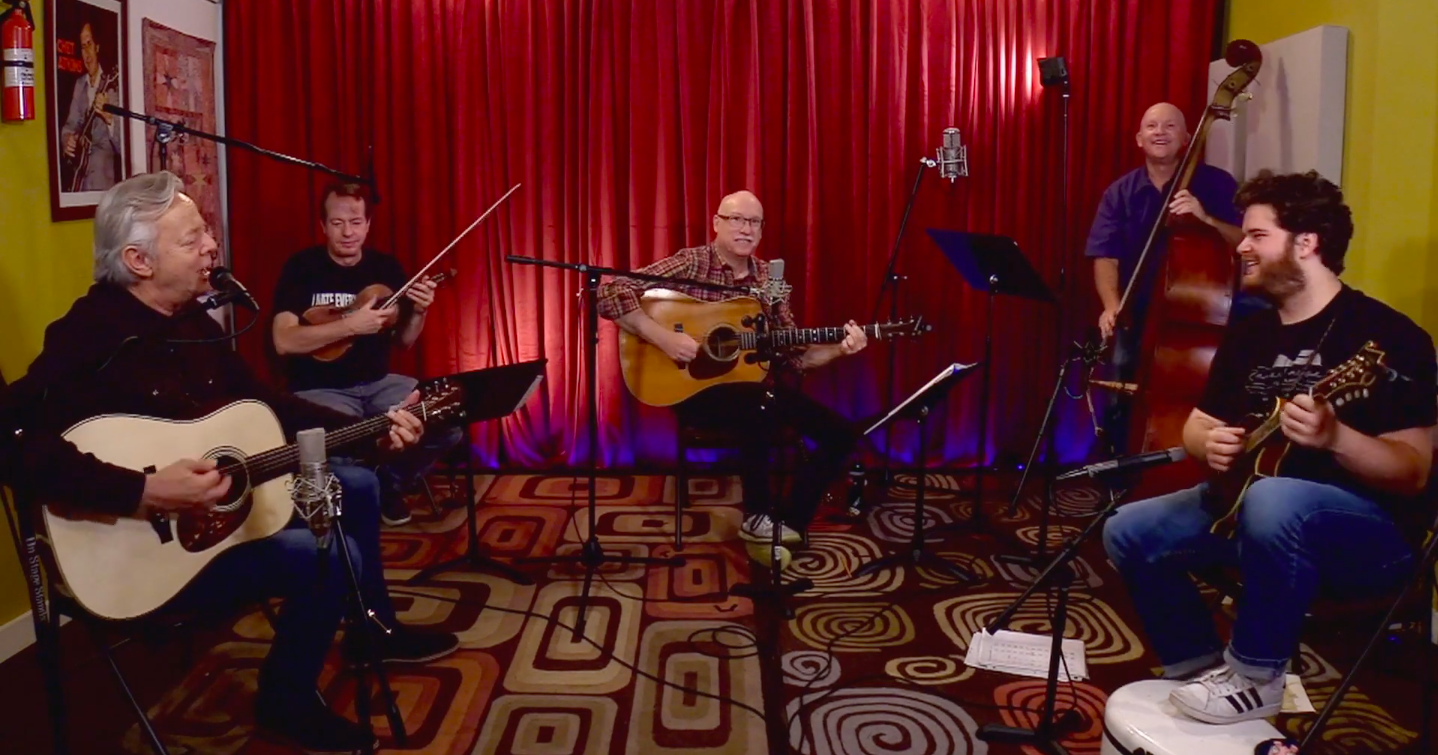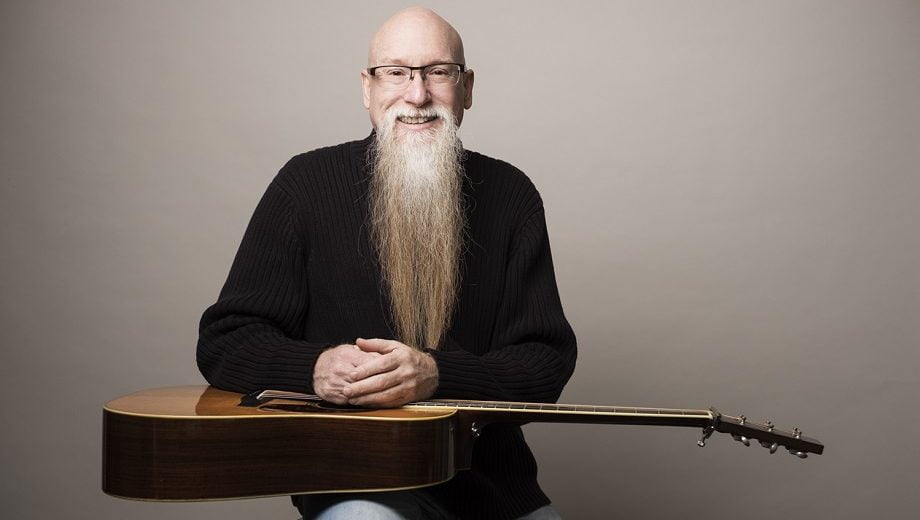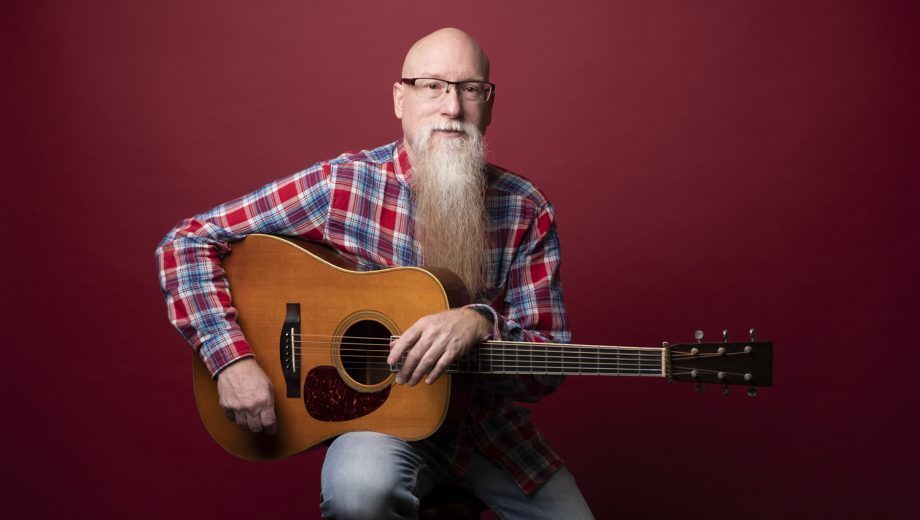
12 Mandolinists We Know You’ll Love

The mandolin’s role in music has changed a lot over time and with its steady pace of change comes a constant flow of new players. Nobody plays or interprets music in the same way as anyone else, bringing plenty of new ideas and explorations.

There have been many different eras of mandolin playing in bluegrass. Ranging from the classic Bill Monroe style to David Grisman to Chris Thile – and, lately, a more string band sound is being popularized by players like Andrew Marlin. And of course, there are countless other mandolin eras beyond and in between.

The mandolin has also been used in many other genres besides bluegrass; it lends itself to genres such as Choro, jazz, classical, and pop. The mandolin even fills major arenas. There have been a lot of folks making incredible music on the instrument and though this is just a starting point, here are 12 mandolinists who you might not be familiar with, but we know you’ll love!

Jean-Baptiste “JB” Cardineau

Franco-American mandolin virtuoso Jean-Baptiste “JB” Cardineau is currently Boston-based, having graduated from Berklee College of Music. JB’s mandolin playing delves into many genres such as bluegrass, classical, old-time, and some traditional French music, too. His style is quite adventurous; he dives deep into the old-school Monroe ways, looking towards Frank Wakefield for much inspiration. JB has spent a lot of time touring with different bands, such as the Ruta Beggars, as well as his own project, JB and Cardineau Sin. As well as being an incredible instrumentalist, JB is also a gifted songwriter. Above is one of JB’s original tunes, “Si Tu Vois Ma Mandoline.” This tune blends the more traditional French style with bluegrass influences.

Ian Coury

Raised in Brazil’s capital, Brasília, Ian Coury is a masterful, well-respected 10-string mandolinist currently based in Boston. Growing up playing Choro, Ian pushes the boundaries of the genre, writing original music that has won him “Best Instrumentalist” awards from the National FM Radio Festival (2020) and second place in Brazil’s eFestival (2021). He has shared the stage with renowned musicians such as Hamilton de Holanda and Armandinho. In 2019, Coury enrolled at Berklee College of Music and later earned his master’s degree from the program. Here is Ian playing an original composition entitled “Solando no Limbo” for Mandolin Mondays.

Maddie Witler

Originally from and based in California, Maddie Witler is a phenomenal musician. Primarily known for her mandolin playing, Maddie is also an incredible guitarist and banjoist. Having also attended Berklee College of Music, Maddie was a founding member of the Boston-based bluegrass group the Lonely Heartstring Band. Maddie also used to tour with powerhouse GRAMMY-nominated band Della Mae. In 2022, Maddie released her debut solo album, Astronaut, a truly incredible compilation of all original songs and tunes from Maddie. In this video, Maddie is joined by Jacob Jolliff at Mandolin Camp North shredding on a classic bluegrass tune by Frank Wakefield, “New Camptown Races.”

Jesse Appelman

Jesse Appelman is both a gifted mandolinist and tune writer. Based in California, Jesse frequently tours with the Sam Grisman Project, as well as his own group, Jesse Appelman’s West Coast Stringband Project. His debut album, Where We Go, which was released in February, is a collection of original tunes and select cover songs and was produced by John Mailander. His tunes are mellow yet groovy, capturing anyone listening. This clip is Jesse’s rendition of “The Hills of Isle Au Haut” joined by Eli West and Patrick M’Gonigle.

Ethan Setiawan

An Indiana native who now makes his home in Maine, Ethan Setiawan is an incredible mandolinist and tunesmith. Ethan was the 2014 National Mandolin Champion, and in 2017 was the first place winner of the Rockygrass mandolin contest. He is also a graduate from Berklee College of Music, and has also done some teaching there, too. Ethan has toured with bands like the Acoustic Nomads, Corner House, and currently tours with both his duo Hildaland and his own group, Ethan Setiawan and Fine Ground. He has released a few albums of his instrumental music, Flux (2018), Gambit (2023), and Encyclopedia Mandolinnica (2025). Bringing in elements of bluegrass, classical, jazz, and Scottish music, Ethan makes his own sound and brings his listeners along for the story. Enjoy a recording of Ethan playing his original tune, “Uncrossed.”

Korey Brodsky

Originally from Connecticut and now based in Asheville, North Carolina, Korey Brodsky is both a talented mandolinist and guitarist. Yet another of our mandolinist picks who studied at Berklee College of Music, Korey has toured all over. In 2021, he joined Boston bluegrass band Mile 12 and he’s traveled and recorded with artists such as Jody Stecher, the Tray Wellington Band, Nefesh Mountain, the April Verch Band, and more. Above, Korey plays a beautiful take of a Karl Suessdorf and John Blackburn tune, “Moonlight in Vermont.”

Megan Cody

Originally from Colorado and now living in New York City, Megan Cody is a killer mandolinist as well as an incredible guitarist and singer. Fronting the band the Cody Sisters alongside her younger sister Maddie, Megan’s mandolin approach is playful and thoughtful. Megan tours year round with the Cody Sisters and frequently plays all over New York City. Here is a recording of the Cody Sisters playing a medley of a few songs and tunes.

Casey Campbell

A rare Nashville native, Casey Campbell is a fourth-generation bluegrass musician. An extraordinary mandolinist, Casey has performed with musicians like Bryan Sutton, Chris Stapleton, Vickie Vaughn, Becky Buller – and the list goes on! Casey was the 2017 winner of the IBMA’s Momentum Award for Instrumentalist of the Year. He has a duo mandolin album that was released back in 2017, Mandolin Duets: Volume One, which features Casey playing with various masters of the mandolin. In the video above, Casey is joined by Sam Bush as the two play a Jethro Burns tune in honor of Sam called “Sam’s Bush.”

Michael Prewitt

Originally from Kentucky, Michael Prewitt spent many years touring with the iconic bluegrass band Special Consensus. In 2024, he released his debut album, The Peerless Mountain Sessions, and then followed that up later that year with an incredible album of all original music, Something He Can Handle. Michael currently tours around the country with his own band, Michael Prewitt & CrunchGrass Supreme. The video above features one of Michael’s original songs, “Winnipeg” played by Prewitt with CrunchGrass Supreme.

Thomas Cassell

From Southwest Virginia, Thomas Cassell now resides in Nashville. A a founding member of the band Circus No. 9, he currently tours with the Wood Box Heroes and performs as a sideman with many other groups. Thomas has won many awards – he was the 2021 National Mandolin Champion and in 2020 he won the IBMA’s Momentum Instrumentalist of the Year Award. Thomas fronts his own band as well and has a few of his own albums out, Voyager (2018), What You Need to Prove (2022), The Never-Ending Years (2024), and he has a forthcoming album soon to be released! The video above is of Thomas’ new single, “Ramblin’ Heart,” featuring Tim Stafford. This is the first single off his upcoming album, so stay tuned.

Lauren Price Napier

Based out of Owensboro, Kentucky, Lauren Price Napier is a talented mandolinist and singer who digs deep into Monroe-style mandolin playing. Fronting the traditional bluegrass band the Price Sisters with her twin sister Leanna, Lauren has been nominated for multiple awards from the IBMA, such as Momentum Vocalist and Momentum Instrumentalist of the Year in 2019 and 2020, respectively. Lauren brings her own spin to playing traditional Monroe-style mandolin while also sticking to the roots of the genre. Above is a video of Lauren playing one of her original tunes entitled, “Tuel’s Landing.”

Tristan Scroggins

Tristan Scroggins is a GRAMMY-nominated mandolinist who also won the IBMA’s Momentum Instrumentalist Award in 2017. He spent years touring with his dad’s band, Jeff Scroggins and Colorado, but he also has a duo with violinist Alisa Rose called Scroggins & Rose and recently toured full time with Missy Raines & Allegheny. In 2019, he released an all-instrumental EP featuring his style of mandolin crosspicking called Fancy Boy. Tristan also has an ongoing, multi-volume project with fiddler George Jackson recording 100 of the most popular old-time tunes called Old Time 100. Tristan currently tours with Bronwyn Keith-Hynes. Here, Tristan is joined by fiddler Ellie Hakanson playing a bluegrass tune, “Ashland Breakdown.”


Photo Credit: Lead image (L to R), Jesse Appelman by Giant Eye Photography; Lauren Napier Price by Jay Strausser; Thomas Cassell by Scott Simontacchi.

Award-Winning Bassist Vickie Vaughn Is Ready to Travel On

If you’ve listened to bluegrass made in the last decade, odds are you’re not only familiar with but absolutely enamored by the utter powerhouse that is Vickie Vaughn. Named the IBMA Bass Player of the Year thrice in a row (2023, 2024, & 2025), Vaughn has established herself as more than a class act – she’s an integral anchor of today’s bluegrass scene and beyond. Presently touring with the acclaimed all-women supergroup Della Mae, Vickie has a slew of accolades under her belt, having sung background vocals with Patty Loveless, toured with High Fidelity, and collaborated with just about every esteemed bluegrass musician under the sun.

November 21, 2025 saw Vaughn set sail unto uncharted waters with the release of her debut full-length solo album, Travel On. Released by Mountain Home Music Company, Vaughn deploys an all-star cast to bring her dynamic compositions to light. The record features guest vocals from Ronnie McCoury, Casey Campell on mandolin, Wes Corbett on banjo, Cody Kilby on guitar, Dave Racine on drums, harmony vocals from Justin Hiltner, Lillie Mae, and Frank Rische, and fiddle from Deanie Richardson, who also serves as the record’s producer.

Travel On champions Vaughn as its frontwoman, a role she hasn’t chronicled in studio since her six-song EP came out a decade ago. Her songwriting is full of dynamic abundance, from the deeply stirring gospel song “The Pilot,” to the absolutely raging “Sleepin’ in the Rain” to the emotive and heartfelt “Mama Took Her Ring off Yesterday.” Vaughn manages to strike a full range of emotions throughout the album’s thoughtful arc, a narrative bound by her buoyant relationship to both rhythm and melody alike.

Ahead of the album’s release, BGS had the unmatched pleasure of sitting down with Vickie Vaughn for a chat about Travel On, music, machinations, musicianship, and more.

Congratulations on the album release! I want to hear all about Travel On, but I’m wondering if you’d be able to take us back to the start for a bit and tell us about your personal musical history.

Vickie Vaughn: Oh golly! I started really early because of my cousins, who I adored growing up. I really looked up to them and they were just great singers who sang all the time and could play piano and guitar. I grew up in a Baptist church. When I was little, maybe six years old, the preacher’s wife found out that I could sing, so she asked me to come sing in the choir. I grew up singing in church and then when I was nine years old, back in Kentucky where I’m from, I got hired as a background vocalist. I know it sounds insane – I’m so normal now, but I was like a freak kid! I could hear harmony and sing every part. When the guy running the Kentucky Opry found that out, I was hired as a kind of novelty act at nine years old. I was there every weekend from when I was nine to when I moved out at 17 as a resident female vocalist and background vocalist.

As for the instrument side of things, my parents had me play classical piano and I hated it so much. I honestly got into bluegrass kind of late for a bluegrass musician – around 14. You know, Sierra Hull, Kimber Ludiker – they started when they couldn’t speak words, but I was a little late to the game. I would go to these bluegrass jams and there would be a bass there, but nobody would be playing bass. So I would pick it up, and I could add decent rhythm, stay on beat, learn the open chords. But then I started taking lessons from this guy named Scottie Henson. He traveled with the Grand Ole Opry touring band back when that was a thing. He was a banjo player, but he taught me how to play bass, which is incredible.

When I was 17, I moved to Nashville to go to Belmont and I was a classical vocalist there. I moved to commercial vocals my junior year and bass was a hobby. I got involved in the bluegrass ensemble and that’s kind of how I got known as a bass player in school. And then I got hired by a touring band from a girl I knew from bluegrass ensemble. The rest is history!

As you were growing up drenched in music, do you recall any songs that particularly sparked inspiration or curiosity for you as a child?

I remember when I was in the car with my dad, I used to love the music he listened to. Mama would always listen to Southern gospel and that was just not my jam. I remember telling Dad, “I hate the stuff that mom listens to.” And he was like, “Oh god, me too.” And I just remember thinking, “You’re so cool, Dad.” Once, we were listening to a classic rock station and the freaking “Wreck of the Edmund Fitzgerald” came on – I know there are all these memes about it now. But I remember having a moment with him in the truck where I was just like, “What is this?” And he was like, “Oh yeah, it’s a true story.” And I was like, “Get out!” That one really struck me.

Another one, which isn’t really a song, but there was this radio station, the local country station – 93.3 WKYQ. On the weekends, starting at 10 p.m. on Fridays and Saturdays, there was a radio program called the Outlaw Hours, and they would play stuff like Waylon Jennings, Merle, Steve Earle, Charlie Robison. It was outlaw music, edgier rootsy stuff, even some edgier bluegrass stuff. I remember riding in the car back from the Kentucky Opry and I’m just like, “Daddy, let’s listen to Outlaw Hours.” He was like, “You like that stuff??” Because I was little, and you know, a lot of that was not appropriate for a child to listen to, but I just loved it.

I can totally see how that influence carries through into your music today.

Well, I liked the subject matter. It wasn’t all about love. I don’t really like to write songs about love. There are already a lot of songs about love. I don’t have anything unique to say about love. I have something unique to say about the way I process a hangover. Or my faith! My faith is so individualistic and personal. If I feel like I don’t have a new idea, I’m not gonna write it or sing about it.

What is the songwriting process like for you? How did you go about selecting the songs on this album?

This might sound silly too, but do you ever walk around the house and just sing about what you see? So many of my songs come out that way. Like with “Bottle of Wine” – I collect wine, so I always have some on hand. Then it was the day after a breakup and I was super hungover, because I had decided to just drink about it. I walked out of my bedroom and I saw all these empty bottles of wine on the coffee table. And I thought, “I don’t want to see another bottle of wine. Maybe I’ll write that into a song when I’m feeling better.” That’s how most of my songs come out, the hook will come to me and then I’ll just expand on it. Sometimes I like to co-write, like with Thomm Jutz, we co-wrote “Bottle of Wine.” But then “The Pilot,” a song about my faith, I wrote by myself. Faith is so, so personal. Even if a person of faith and I could agree on some fundamental levels, my faith and my walk are so different than literally anyone else’s. So I had to write my own unique faith-based song.

Then “Mama Took Her Ring Off Yesterday” I co-wrote with Deanie Richardson. I brought that idea to her because my dad passed and he was one of my best friends in the world. He hated sappy sad songs, so I didn’t want to write that. I knew I needed to write a song, then I went to visit my mom about three months after he passed. We went to a Mexican restaurant and she slid her left hand over past the chips and salsa, showing me that she took her ring off. I support her and everybody grieves differently, but I still told her I thought it was early for that. But she’s bootstrap Kentucky and she was like, “We have to move on. Life doesn’t stop.” I was just left thinking, “Wow, Mama took her ring off yesterday. That’s the moment I need to write about.” I took it to Deanie because she knew my dad and knows my mom and she really walked with me through my grieving process.

That one turned out so beautifully! I’m curious – you’ve had an extremely successful bluegrass career for a number of years. What made now feel like the right time to put out a solo album?

The awards. Women always apologize for winning and here I am, apologizing for saying “my awards,” but that’s really what it was. People are paying attention. If I’m gonna write a song, I don’t want it to hit deaf ears. Making a record is such an expensive and painstaking process and your heart and soul go into it. After my dad died – well, he was such a cheerleader for me. And an inspiration – he just inspired me. If I was feeling bad about something, I felt like if he believed in me, then I could do it, you know? I didn’t believe in myself without him for a long time, so I couldn’t do it. Especially in the music industry, you can’t do shit if you don’t believe in yourself. It’s too hard. So I waited a while until I felt like there were enough people who believed in me and then I believed in myself. That’s when I felt like I had the energy and the belief to make a record that people would actually hear.

That makes a ton of sense. How do you feel like your relationship to music has changed now that you’ve taken on the role as captain of a project?

This is the first time I’ve ever made a full-length record that’s my own and not just playing on somebody else’s. And of course, Deanie is producing it, but being in control of the material and the direction of the record – it’s funny that you ask, because I almost didn’t realize the direction of the record until it was done. I realized after I heard it all in one setting. The concept is vulnerable joy.

Working on anybody else’s record and supporting them in that way – especially with the bass, which is such a big vibe creator as an instrument – I never felt like I could choose, or was confident enough to choose, the direction. But finally, here I am in my mid-30s, and I’m ready. It was so fun taking the reins artistically, getting to sign off on every bit of it. Every choice I felt in my heart. I was able to say, “If this doesn’t scream Vickie as fuck Vaughn, then I don’t want it!” I would rather not make a record [any other way]. Because when I was younger, I made EPs that I thought other people would like. That was the point for me. But now I’ve traveled around and I know what works. I know what an audience likes to hear; that base is covered. The process of just having to make it totally “me” – that was my favorite part.

How did you go about choosing the community to help you out with bringing this record to life?

So the engineer, Sean Sullivan, I’ve worked with him for a long time on other people’s records, and then I did a small project with him that never got released. This might sound nitpicky, but I feel like the sound engineer in a recording process makes one of the biggest differences. It’s hard when there’s too much input – that’s the producer’s job. But I wanted to work with Sean because he’s so efficient, he’s quick and he has such a calm spirit. He gives direction or a suggestion so seldom that when he does I really take it to heart.

And then, as for Deanie Richardson, my producer, I always knew that she was an amazing musician, but this is the first time that I have really been enamored with her production abilities. It’s the first time I’ve worked with her as a producer. She has taken each song and made it into my record. I would come to her with just bass and vocals, and she would just shape each song and make them each sound different. She’s a freaking genius! And she’s totally unafraid to just be herself. She’s an unashamed woman and that’s the energy I wanted in my record.

The band on the record is all folks that I’ve known and played with here in town. I didn’t want there to be anybody on the record I hadn’t played with or loved or traveled with. Because it’s my first record and I know me, and I know that I would be self-conscious if there was a stranger in the room. And then Justin, my best friend, he just matched my freak so hard on there. We have such a beautiful community.

It’s so beautiful how y’all uplift and support each other! How is it feeling for you to finally have this piece coming out into the world?

I’m terrified, but I don’t know – I kind of like that! I like a challenge. If I’m not scared, then I don’t care. I’m really excited to hear what folks think about it. I want to see what songs touch people and learn from that. And I’m really excited for Deanie to be introduced as a producer, and for everybody to see her talents in that area. I’m really excited to learn from the release. I’ve learned so much in the process already, because there’s so many firsts, and I’m excited for the reception of this record to influence my next. That one will be even more me. I never want to stop growing!


Photo Credit: Laura Schneider

PHOTOS: Remembering Bluegrass Hall of Famer Bobby Osborne

The bluegrass community is collectively grieving two major losses as both Jesse McReynolds and Bobby Osborne – two revered and iconic Bluegrass Hall of Fame-inducted mandolinists and Grand Ole Opry members who helmed first-generation bluegrass bands with their brothers – have passed on. McReynolds, who was 94, died on Friday, June 23 at his home in Nashville with his wife, Joy, at his side; Osborne’s death was announced on social media early Tuesday, June 27 – he was 91. Both pickers were two of the sole survivors of bluegrass’s first generation. They leave enormous musical legacies that will live on, surely into infinity.

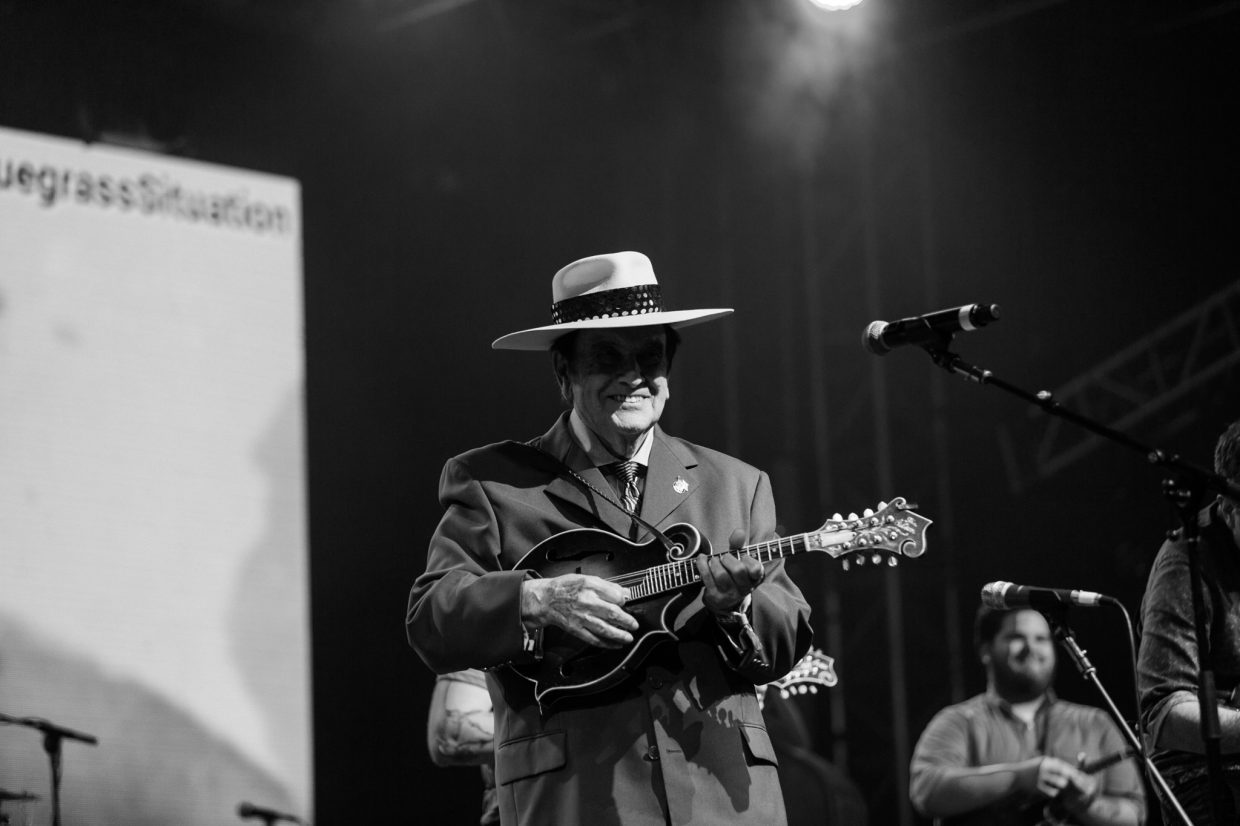
In 2017, the Bluegrass Situation team had the incredible honor of inviting Bobby Osborne to join our super jam at the world-famous Bonnaroo music festival in Manchester, Tennessee. To our delight, he said yes.

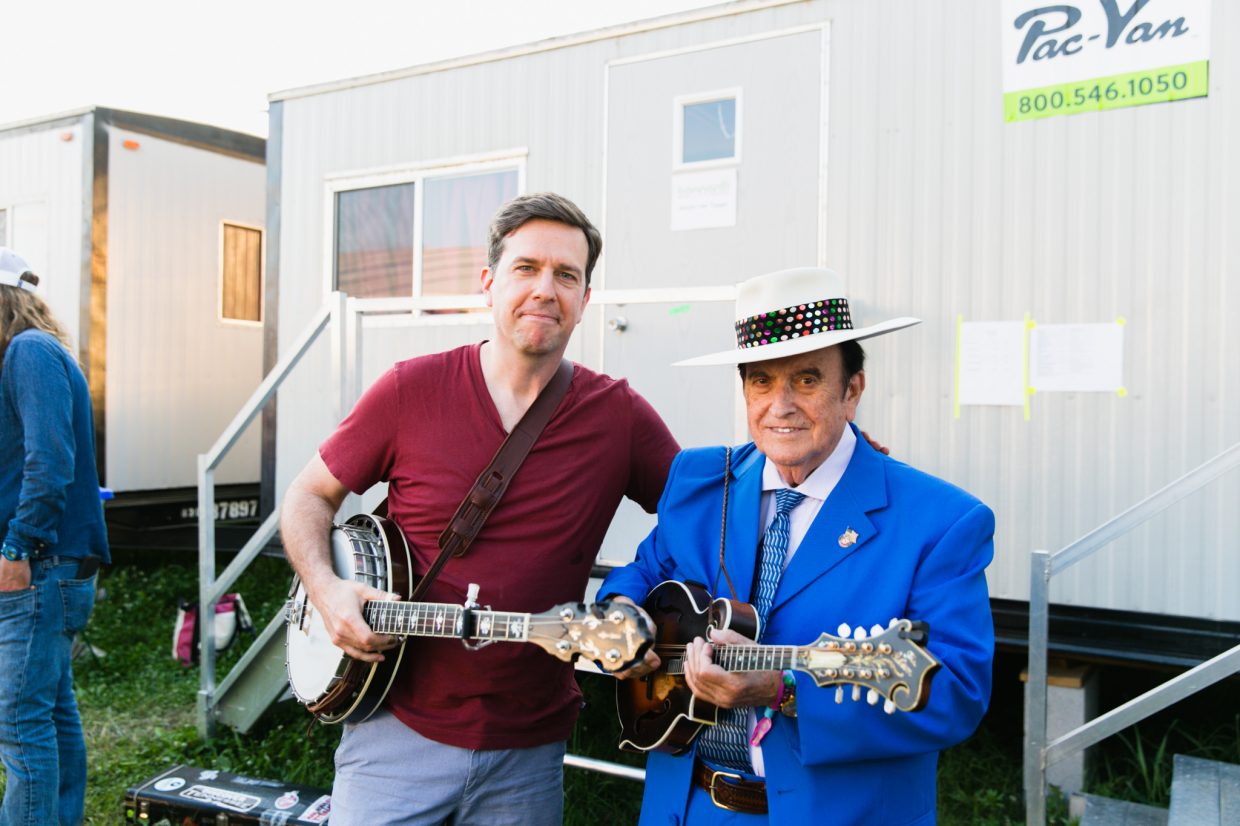
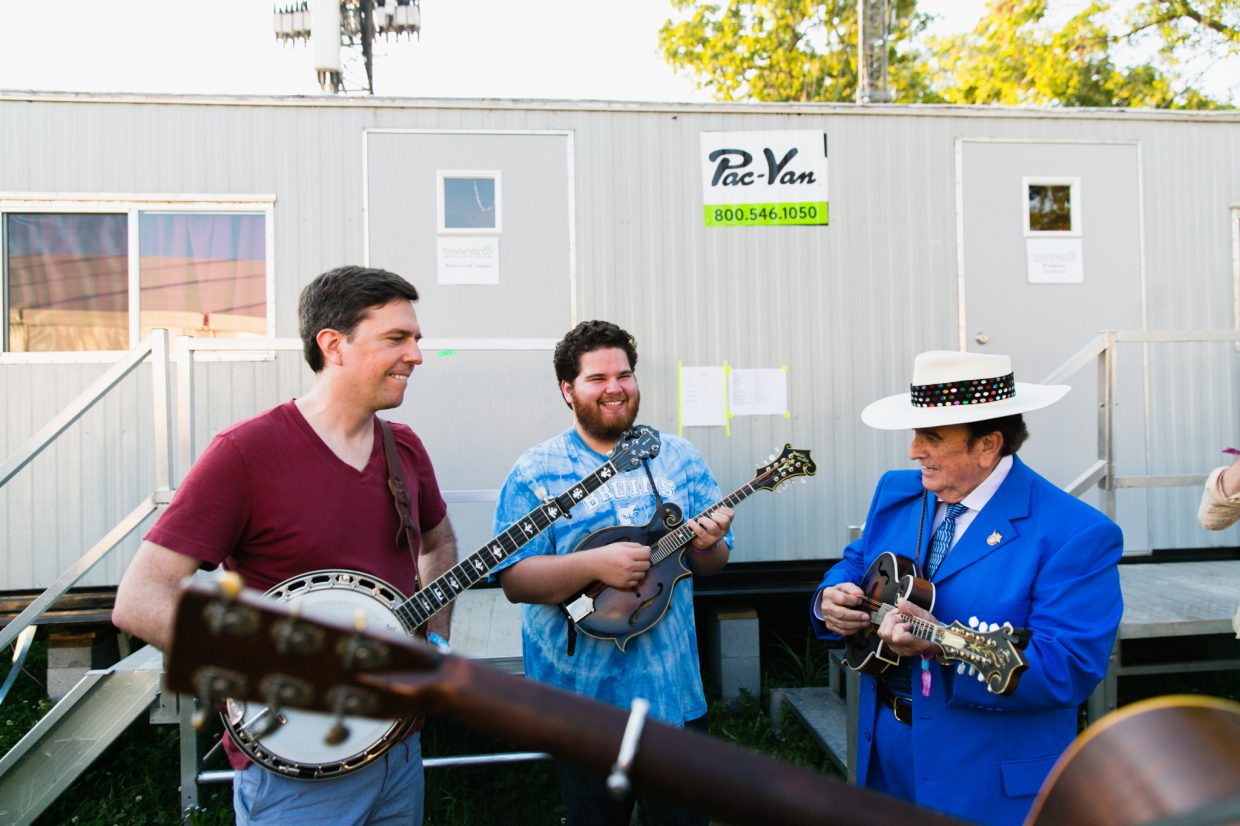
BGS co-founder Ed Helms and Bobby Osborne

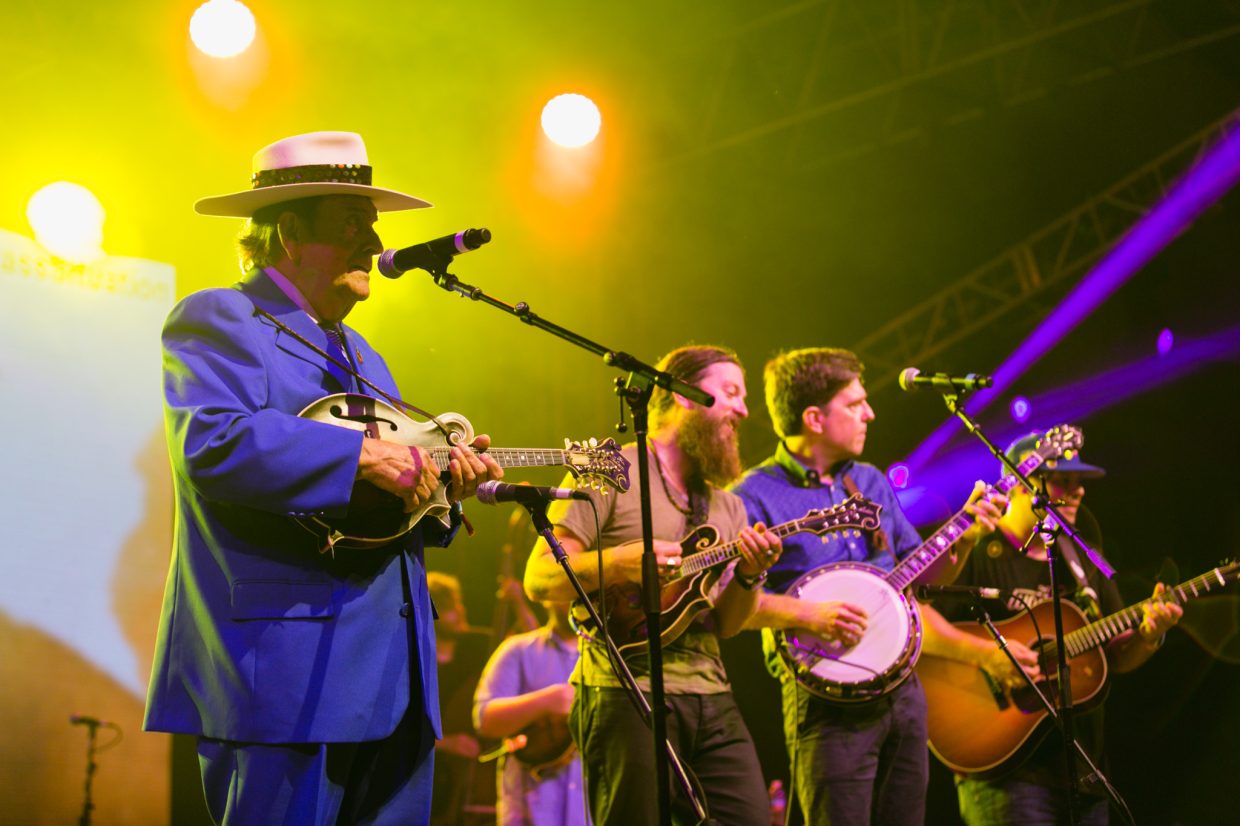
Over more than ten years of creating and holding space for roots music in our industry, there are so many moments of which we are so proud. But one of the most memorable and meaningful BGS achievements from the past decade was hearing 20,000+ audience members and fans, packed into That Tent, roar unfathomably loud for the iconoclastic voice that made a hit of “Rocky Top” – and so many others.

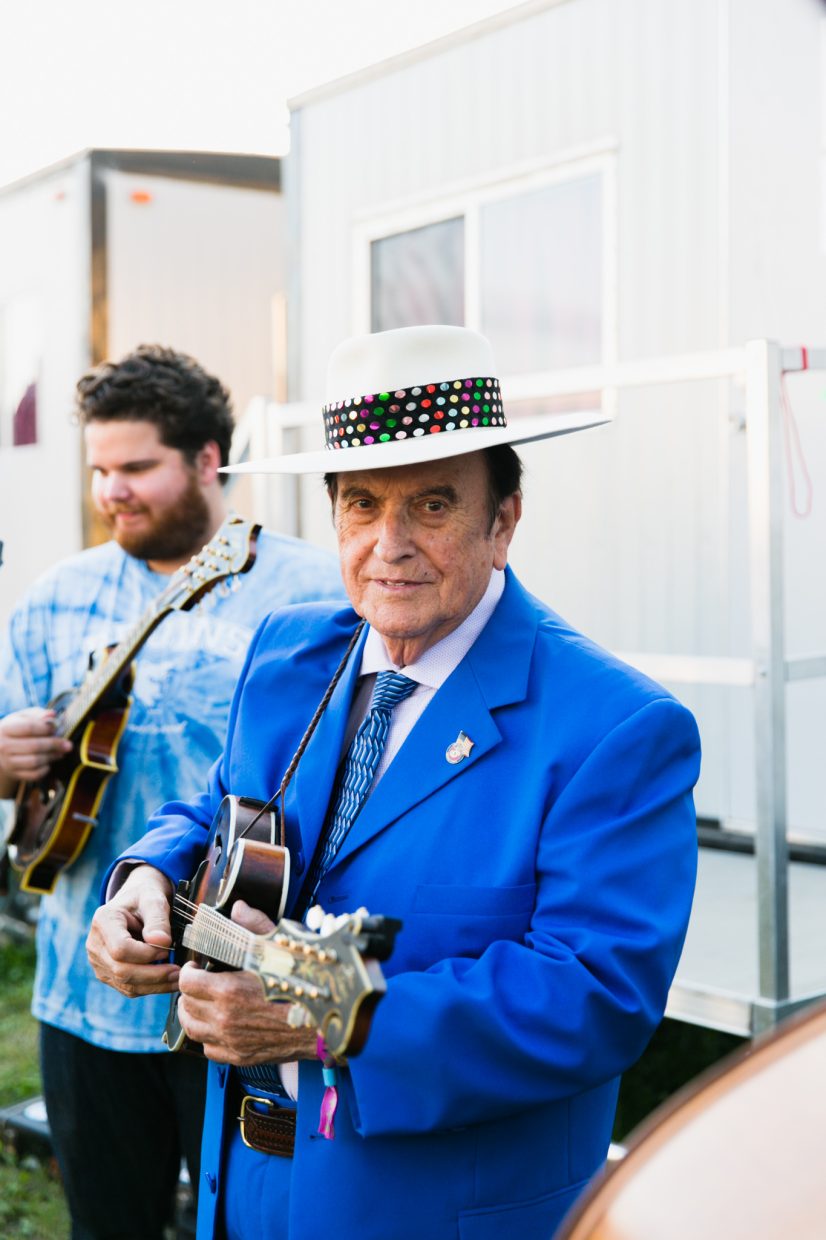
That day, Bobby seemed to bask in the limelight. He was kind, down-to-earth, approachable, and seemed genuinely tickled at the fanfare and excitement that orbited him and his sharp, technicolor suit and sparkly hat. After a storied career that landed him and his brother, Sonny, in so many widely variable musical contexts, from the obscure to the mainstream, Bobby was perfectly at home at Bonnaroo. His audience knew it, and they ate it up. We all did.

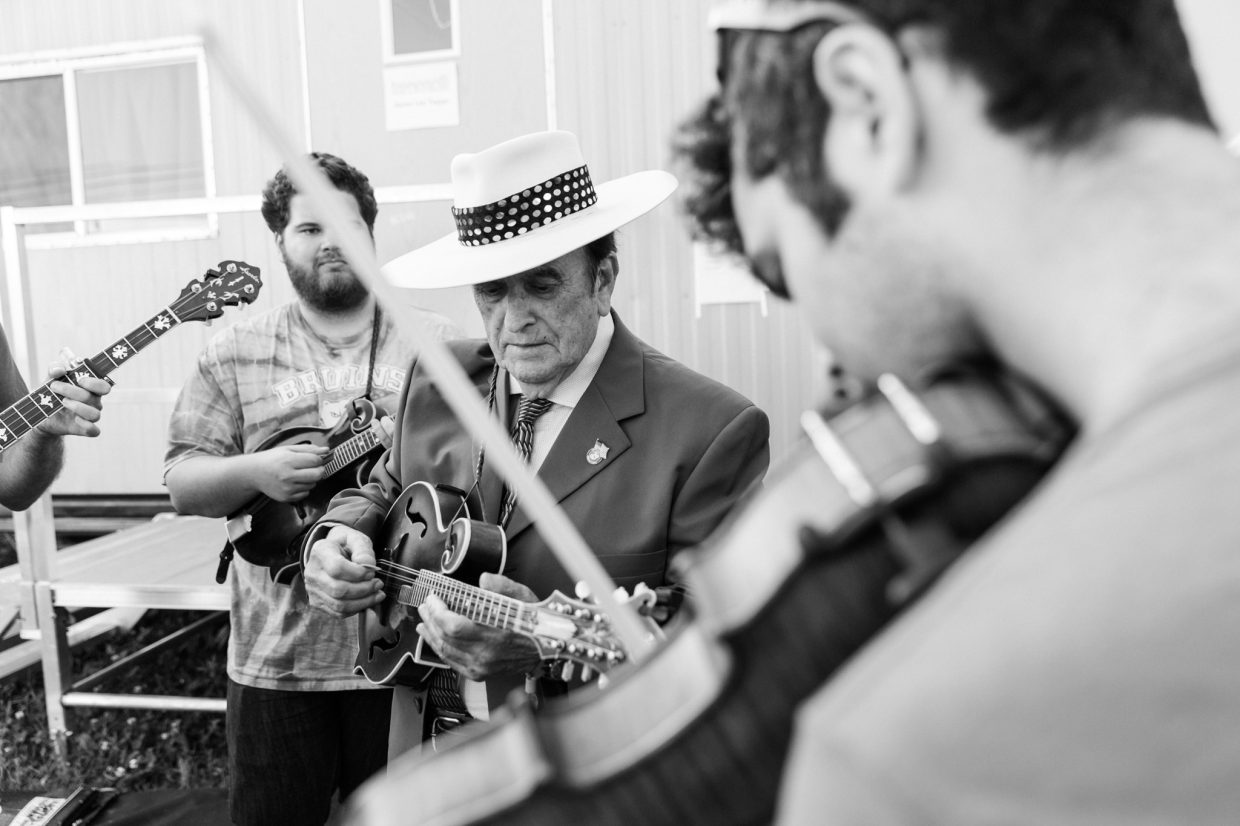
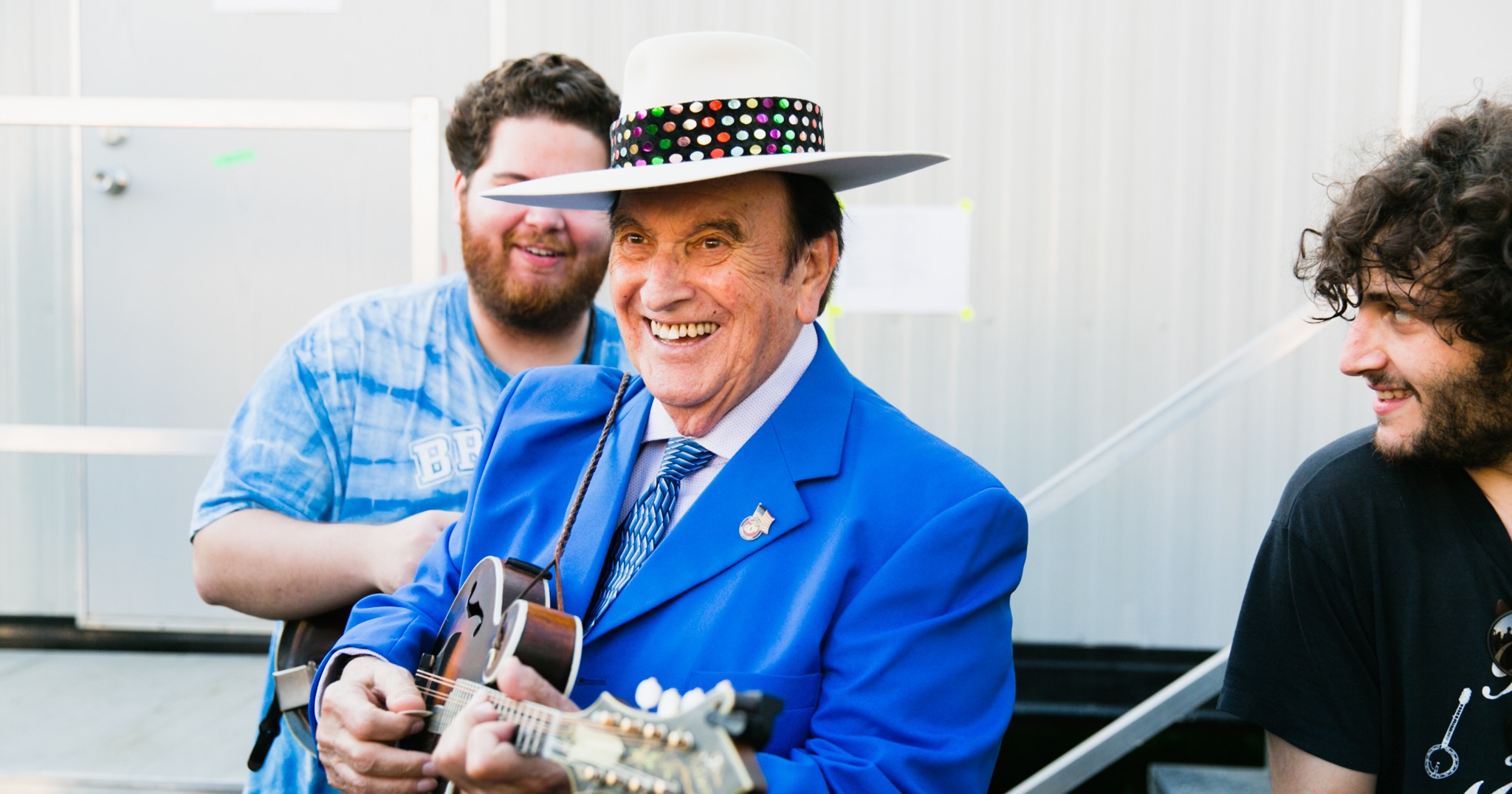
Bobby Osborne with Casey Campbell (background) and Mike Barnett (foreground)

In light of his passing, the entire BGS team is holding gratitude for his kindness, generosity, and, most of all, for his music. Rest in peace to one of the most important and impactful first generation bluegrass music makers, Bobby Osborne.

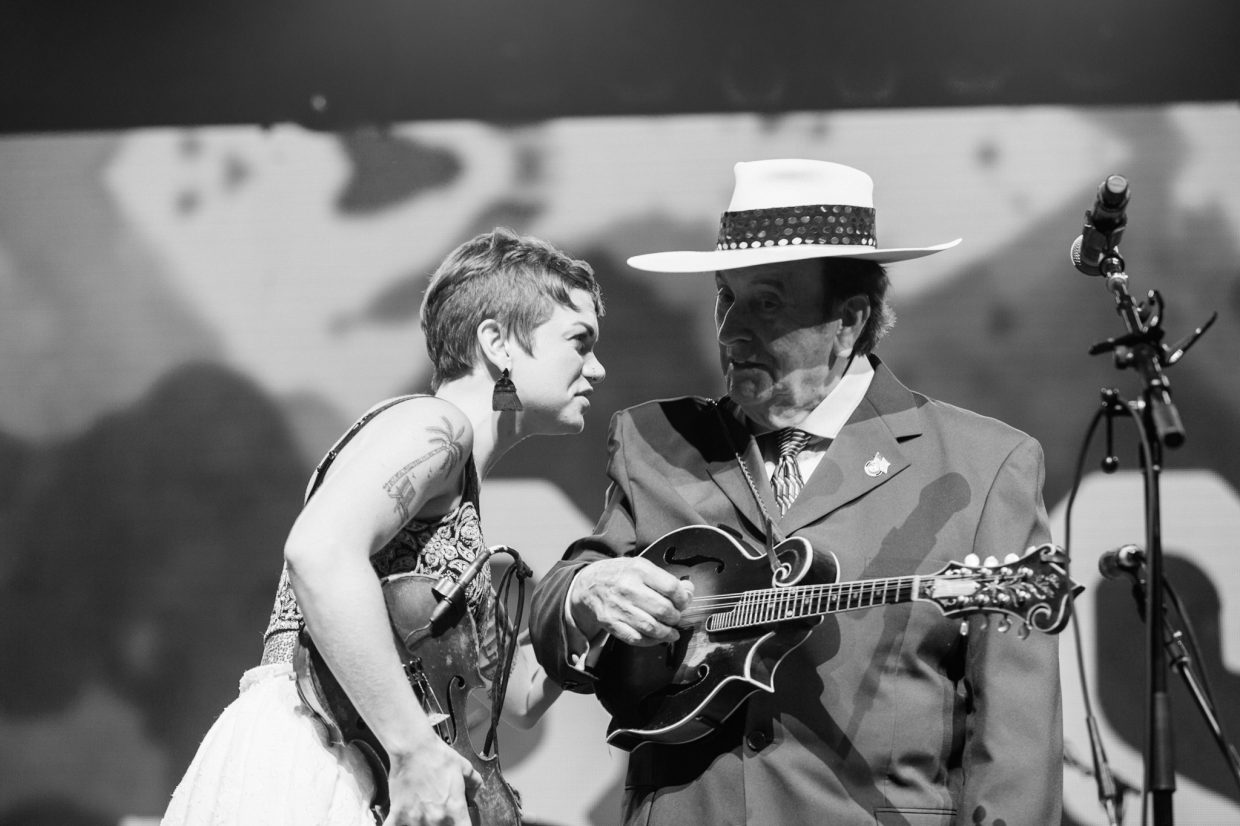
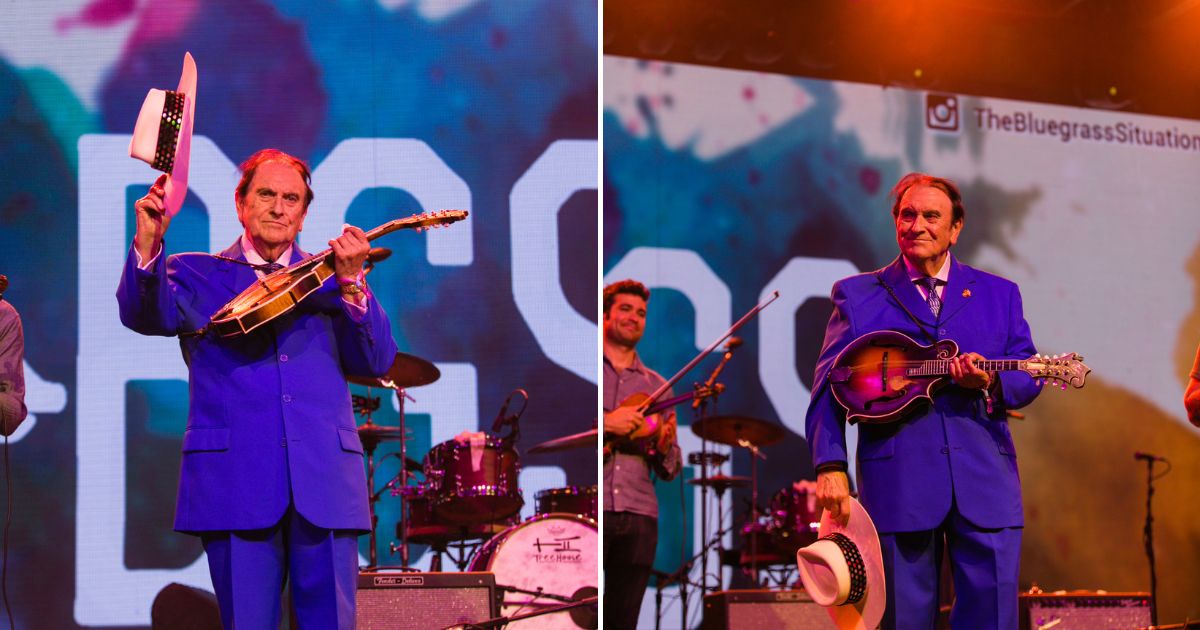
We hope you’ll enjoy these back stage and performance photos, shot by Elli Lauren Photography, from Bonnaroo 2017 and the BGS Super Jam at That Tent.

Bobby Osborne, Paul Hoffman, Ed Helms, and members of Greensky Bluegrass and Bryan Sutton’s house band.


Lillie Mae and Bobby Osborne share a laugh on stage prior to their duet.


Bobby Osborne
Ed Helms, Casey Campbell, Bobby Osborne, and others


Bobby Osborne and Casey Campbell (background)


Bobby Osborne closes his 2017 Bonnaroo appearance with a bow and a tip of his hat.


All photos: Elli Lauren Photography for BGS

WATCH: David Grier & Tommy Emmanuel Shred “Workin’ Man Blues”

Flatpicker David Grier and his band have missed the stage in recent months, itching to perform with the regularity they once did. Luckily, the good folks at Nashville TuneStream have given them a stage from which they can perform safely and deliver their golden musical product to audiences around the world.

A weekly residency was established for Grier and co. at the livestream production company earlier this year, and we at BGS have been watching. If you haven’t yet had the privilege of seeing David Grier work his magic live, we strongly encourage you to do so at the next safe opportunity — though streams will certainly stand in until that point! A purist and traditionalist of sorts, Grier isn’t quite a household name, but you’d be hard-pressed to find a better flatpicker in the world. As a testament to his musicianship, Grier’s band is always loaded with heavy-hitting instrumentalists, this time including Stuart Duncan, Casey Campbell, Dennis Crouch, and renowned virtuosic guitarist Tommy Emmanuel.

Emmanuel leads the band through Merle Haggard’s “Workin’ Man Blues.” The train gets off to a powerful start, but Grier and Emmanuel derail the ensemble and venture off into a delightful guitars-only playground near the song’s end. During this pseudo-guitar duel, the rest stop entirely and share laughs with one another, as amused as we viewers at the mini guitar hero battle. The David Grier Band is scheduled to perform weekly for Nashville Tunestream, so watch this performance as a teaser and, if you can, support the band by tuning in!


Guitarist David Grier Steps Out as a Lead Singer, Too

David Grier gets asked all kinds of questions.

He’s asked about his phenomenal cross-picking guitar techniques, which put him among the greatest bluegrass/folk players of the last several decades, talked about in the same breath with Doc Watson, Clarence White, and Tony Rice.

He’s asked about his dad, Lamar, who played banjo with Bill Monroe. Yeah, that Bill Monroe, the Father of Bluegrass.

He’s asked about Clarence White’s brother Roland, the Kentucky Colonels mandolinist who was an early teacher of his. And of course he’s also asked Clarence, Grier’s big influence, who brought bluegrass guitar into the rock age with the Colonels and then, on electric guitar, powered early country-rock with the Byrds.

He’s asked, maybe too much, about his beard, a prodigious gray broadsword of whiskers stretching from chin to navel, an abstraction of which is the signature feature of his silhouette, featured on his T-shirts and other merch.

But one thing the D.C.-raised, Nashville-based musician is never really asked about: His singing. And for good reason. He’s never done it.

“It’s always been, ‘Why don’t you sing? You play guitar!’” he says, an irrepressible joviality marking his droll drawl.

Somehow, he sighs, people often seem to think that simply because he plays guitar he ought to sing too.

“I know I play guitar,” he says, more amused than exasperated. “I never donated any time toward [singing]. I tried once or twice through the years. Just like anything else, I gave it five or ten times and stopped.”

Until now.

His new album, Ways of the World, features five songs with him on lead vocals. That’s a first. In his career going back to the early ‘80s and covering ten solo albums now, several side projects (Psychograss, Helen Highwater Stringband), and hundreds of guest spots and sessions, he’s never stepped out as a vocalist before.

And in a rather bold move, he puts his lead vocals alongside some noted vocal talents: Maura O’Connell, Tim O’Brien, Shad Cobb, Andrea Zonn, and Mike Compton. What’s more, he’s feels pretty good about it.

“I do,” he says. “I know later I won’t, because every time I think something’s perfect, I listen to it later and go, ‘Gee, why didn’t I hear that before?’”

So the next question comes naturally: “Why now?”

“It was the Helen Highwater Stringband,” he says. “Three or four years ago they said they needed another singer for a vocal trio. They looked at me. I said, ‘I don’t sing!’ They said, ‘You do now!’ I went, ‘Wow.’ They were encouraging. It was helpful. All that went into account and then I did it on stage. People weren’t running for the exits, so this is good. And it just kept going.”

If he was going to sing, he needed words, and he dove right into that as well. Songwriting was another new challenge.

“I’d written the first two lines: ‘I’m afloat on the great big waves of the ocean, I drift on the ways of the world,’” he says of the title song, with Zonn singing with him, which opens the album. “I thought, ‘Hell! That’s going to be a song!’”

But he thought he’d need help and, while heading out for a five-and-a-half-week tour in South Africa, he went to a friend to have him finish it. That didn’t happen. So with two off-days he set to it himself.

“I finished it in an Airbnb on the beach in South Africa,” he says.

It was a whatever-it-takes approach to songwriting. “Dust Bowl Dream,” with harmonies by O’Brien, came from a bar bet for a round of drinks with some Nashville buddies as to who could write the best song in a week.

“I wasn’t even going to write a song,” he says. “Thought I’d just buy drinks for the buddies. But I had this melody that was lonesome and I thought, ‘Well, dust bowl is lonesome.’ Wrote the words in an airport, wrote the verse, chorus, second verse. I thought it was great. Got to the hotel later that day and started playing. First verse was great, second was great, last verse was horrible! I wrote another and that was worse. I went back to the first version I wrote and thought, ‘If I don’t sing it, that’s great.’ So I talk through it, like Bill Anderson would. It’s a recitation, and I think it really helped the tune. You feel it more.”

Now, all you who savor every splendiferous Grier guitar lick, dread not. The five songs featuring vocals are accompanied by eight sparkling instrumentals, and the ones with singing also feature, of course, his spectacular picking.

The heartfelt vocal numbers are surrounded by a selection of wryly titled original picking showcases (“Waiting on Daddy’s Money,” “The Curmudgeon’s Gait,” and so on) and sparkling interpretations of, or variations on, old fiddle tunes (“Billy in the Lowground”). And playing with Grier is a stellar cast of associates: a core of Casey Campbell on mandolin, Stuart Duncan on fiddle, Dennis Crouch on bass, with John Gardner on drums for some songs, and banjo from Justin Moses and Cory Walker. What’s more, there’s electric guitar by Bryan Sutton on one song (“Dustbowl Dream”) and on “Farewell to Redboots,” there’s trumpet by Rod McGaha — something perhaps even more surprising than Grier’s singing.

“For me having a trumpet on a song is brand new,” he says. “I just heard it in my head that way and imagined it that way. But having it happen was amazing.”

The whole experience, it seems, was liberating in a way that led Grier to try some different approaches to his picking, as if the pressure was off to make the album completely about that. The result is a rich, engaging tone throughout.

“I think on this record there’s less flash, just for flash’s sake,” he says. “Less, ‘Watch what I can do! Watch! This is hot!’ This is more reined in for a bit. Some of the solos are simplistic, and in my mind harken back to the beginnings of bluegrass music.”

He cites the intro to one song, “Dead Flowers,” an original, not the Rolling Stones song.

“That’s as basic as you can be,” he says, noting that it happened that way in the moment when he was caught off guard. “I got in the studio and thought someone else would kick it off. ‘Who’s gonna kick it off?’ Crickets. ‘You start it.’”

On the other hand, he also found himself spontaneously taking some other unexpected directions in “Red Boots.”

“There are three solos in that,” he says. “First one of me, then the horn, then me again. The first one’s just the melody, nothing fancy. The melody is cool. But the last solo is completely different, a little bit of Wes Montgomery, some string-bending in there. Just popped out! I’d never played that before. Every time I’d played that song it was just the melody, ‘cause I’m generally sitting here playing by myself. In the studio it was, ‘Well, I’ve done that. I want to do something different.’ I like that. Fresh and exciting. Note by note. Not the boring same old thing.”

And that’s the thread of the whole album.

“A lot of improvisation on this record,” he says. “From my viewpoint, it’s playful. All in the vibe. Not some hot lick thrown in just to show I can play a hot lick.”

Not that he isn’t proud of his playing here.

“There’s things in there people might want to learn when they hear it,” he says.

And speaking of learning, one more question: Has he ever tried fingerpicking?

Grier sighs.

“That’s another thing maybe I gave five minutes.

Well… given what he said about singing, stay tuned for the next album.


Photo credit: Scott Simontacchi

Gimme a Breakdown: 10 Tunes to Get You Going

Breakdowns are the barn-burning, breakneck, slapdash stalwarts of bluegrass and old-time traditions. They can be banjo songs, mandolin songs, fiddle songs — but every single one is truly a dancing song. Sometimes, all you need is an up-tempo bluegrass tune to get you going, so here are 10 breakdowns that will help you avoid any/all other types of breakdown.

“Foggy Mountain Breakdown”

Of course we had to lead off with this icon! Earl Scruggs’ most popular instrumental, for sure. It may be overplayed, but going back to Earl’s original reminds us why it’s ended up getting so many miles. It deserves the recognition and repetition, that’s for sure.

“Shenandoah (Valley) Breakdown”

It’s like “Boil Them Cabbage Down” but fast fast fast. This one goes by two names because with a tune so nice, they named it twice. Alan Munde gives it the melodic treatment, but you’ll notice his bouncy melody-driven take doesn’t lose a single ounce of drive. That’s Munde for you.

“White Horse Breakdown”

Casey Campbell and Mike Compton give “White Horse Breakdown” an incredibly tasty mando duo treatment, juxtaposing their distinct approaches to traditional, Monroe-style mandolin. This one just lends itself to duos, whether fiddle/banjo, mando/mando, or whatever combination you fancy!

“Crucial County Breakdown”

Béla Fleck and his illustrious Drive band (Sam Bush, Jerry Douglas, Tony Rice, Mark Schatz, and Mark O’Connor) turn the breakdown format on its ear for this newgrass-meets-traditional take. A nice reminder of why Béla and Drive are absolute essentials in the modern bluegrass canon.

“Blue Grass Breakdown”

The best example of a mandolin-centered breakdown, this one was named before bluegrass had been combined into one word — before the genre itself existed! The Father of Bluegrass himself, Bill Monroe, wrote the tune and kicks it off as only he can. It’s like “Foggy Mountain” but with F chords!

“Champagne Breakdown”

It’s a decadent, indulgent, wild one that registers only barely as a breakdown as we know them — I mean, modulations?! — but the Country Gentlemen were always about pushing the envelope and this delightful tune surely does that. You never quite know where it’s going to go next and that, my friends, is what breakdowns are all about.

“Pike County Breakdown”

All I can tell you is, make sure you get that signature lick right in the A part or the jam circle might give you some sidelong stares. Scott Vestal nails it on this recording, of course — along with Aubrey Haynie, Wayne Benson, Adam Steffey, Barry Bales, and Clay Jones. STACKED. Clean, hard-driving bluegrass. It’s what the world wants.

“Old & In The Way Breakdown”

In 1973, Jerry Garcia, David Grisman, Vassar Clements, Peter Rowan, and John Kahn coalesced as Old & In The Way, becoming one of the most influential bluegrass ambassador bands in the history of the music. Jerry Garcia shows his five-string chops quite well on this tune, which also goes by the name “Patty on the Turnpike.” But then it wouldn’t be a breakdown, now would it?

“Snowflake Breakdown”

And now, a fiddlin’ breakdown. Breakdowns are an integral part of fiddle contests — contests often require each contestant to play a tune considered a “breakdown” during competition. This one, performed by Bluegrass Hall of Famer Bobby Hicks, is often heard in contest situations, if not for the unexpected chord changes, simply because emulating Hicks never hurt anyone in a fiddle competition. No one really wonders why that is, either.

Dawggy Mountain Breakdown”

Written by David “Dawg” Grisman, “Dawggy Mountain Breakdown” doesn’t just sound familiar because of its purposefully malapropistic name, it’s also the theme song for NPR’s incredibly popular radio show, Car Talk. The show’s hosts, Click and Clack the Tappet Brothers (AKA Tom and Ray Magliozzi), were/are big bluegrass fans and especially fans of Dawg and his music. It’s a beautiful little bluegrass easter egg on public radio — which are much too few and far between, if you ask me.

“Girl’s Breakdown”

(Edited to add:) Thank you to a commenter on social media for pointing out that, as is much-too-easy to do in bluegrass, our list of breakdowns didn’t include a single woman! Alison Brown, one of the world’s premier banjo players, even penned a satirically-titled tune to skewer this sexist paradigm in bluegrass. Y’all have heard “Earl’s Breakdown” plenty, it’s time for a dose of “Girl’s Breakdown.”


My First IBMA

Ahead of this year’s annual gathering of bluegrass lovers at the IBMA’s World of Bluegrass festival in Raleigh, North Carolina, we asked some of our favorite players to recount a memory of their first time attending the illustrious event. Here’s what they told us:

Chris Pandolfi (Infamous Stringdusters)

“While my first IBMA was certainly exciting, driving roundtrip by myself from Boston for several days of nothing but jams and live music, it was my second IBMA that will always be my most memorable. It was a more formative, purposeful mission — my first trip there as an aspiring ‘professional musician,’ even though I wouldn’t necessarily describe my agenda as ‘professional.’ I had no formal engagements, no hotel reservation, no tickets, no real money to spare, and no worries about any of it. We were there to make music, meet new people, and tap into that magical, living art form that we all know as bluegrass.

The seeds of the Stringdusters had been planted, but we needed to find a few more players, and IBMA was the universal meeting place for anyone serious about the music. So when Travis Book sauntered off the elevator, no shoes and a backpack full of beer, we knew we had a good candidate on our hands. I also met Jeremy for the first time that year at IBMA, and it was definitely the first time that we five jammed together as a group, which was memorable, to say the least. That trip was a key part of the advent of the Infamous Stringdusters, which has become my passion and my life’s work.

Though our main purpose was to get a band going, we were also there as fans. I loved the sound. I was there to chase that passion, and just as important as meeting my bandmates was the ability to get that much closer to the music. I didn’t need a plan to know that making the pilgrimage to IBMA would be worth it, and it most certainly was, as there is no better place to connect with bluegrass.”

Casey Campbell

“I’ve been lucky enough to attend IBMA’s World of Bluegrass all my life. There are so many pictures of me as a baby and little kid running around Owensboro and Louisville. However, I didn’t really start making memories until the event came to Nashville in 2005. At that point, I was starting to get into playing music and discovering that there was more to WOB than just the hotel hallway jams. Thanks to Deanie Richardson and Kim Fox, I joined the Kids on Bluegrass program the following year, and my world opened up as I met these incredible young musicians like Molly Tuttle, AJ Lee, Cory & Jarrod Walker, Seth Taylor, Tyler White, and more. In fact, the majority of the folks I met during my Kids on Bluegrass tenure are still kicking ass across the bluegrass and acoustic music scenes today.

It has been such a joy over the past 10 years to watch so many other great musicians come through that program and find their groove in the musical world. I look at kids like Presley Barker and Giri Peters (who are way better than I ever thought of being at their age) and think that, without Kids on Bluegrass, those two might not have crossed paths for another decade. Of course, there will always be plenty of hallway jamming, exhibit hall perusing, and more hallway jamming, but one of my favorite World of Bluegrass memories will always be in the rehearsal rooms with those other musicians my age and thinking 1) I’ve found my people, and 2) Shit, I need to go home and practice!”

Michael Stockton (Flatt Lonesome)

“The very first year I attended IBMA was in 2008. I believe it was called Fan Fest at the time, and it was still at the convention center in Nashville, Tennessee. I had been hanging out with a few friends through the day on the Friday of that weekend. I worked up an appetite from all of the jamming I had been doing, so I went up to the Quizno’s that was on the top floor of the convention center and got myself a sandwich. Lucky enough for me, as I was walking into the grand ballroom, the Lonesome River band was taking the stage. Being that I was very new to bluegrass, I had no idea what I was in for. I can vividly remember sitting in the very back row of the hall, enjoying my sandwich and the music.

The part of the story that stands out the most, though, is from the last song on their set. They ended with the song ‘Them Blues’ (still one of my favorite LRB songs to this day), and they were getting after it! The song got around to the second banjo break where Sammy hangs on the seven note for the first few measures, and I came unglued! I completely forgot that I had a sandwich sitting in my lap and, when I heard that break for what was the first time in my life, I couldn’t help but jump up out of my seat and holler as loud as a I could! I spilled my sandwich, chips, and coke all over the floor, and I don’t regret it one bit. That was one of the first times I really pictured myself on stage. I put myself in Sammy’s shoes and told myself that I wanted to make someone spill their sandwich one day.

Fast forward to 2017: Flatt Lonesome has won four IBMA awards, and we are nominated again for Vocal Group of the Year and Entertainer of the Year. I never would have dreamed, back in the days of spilling sandwiches, that I would share the stage with my heroes. IBMA has been invaluable for me as a young musician. IBMA is where my dream to play professionally was cultivated, and it’s where that very dream has come true.”

Bronwyn Keith-Hynes (Mile Twelve)

“My first IBMA was wonderful and bizarre and totally exciting and, at one point, I found myself playing a set with two of my biggest heroes. I ran into Peter Rowan at the breakfast of the Super 8 I was staying in, and he recognized me because I’d played fiddle for him once before up in Boston. He told me to come to his set later that day and play fiddle, and I thought it was odd that he hadn’t found a fiddler yet, but I was happy to show up and play, so I didn’t ask any questions. Then I got there and realized he did already have a fiddler and it was Michael Cleveland — one of my biggest fiddle heroes. That was my first time meeting Michael and, once I got over my initial terror of playing in front of him, playing fiddle on stage with him and Peter was one of the coolest moments I can remember from any IBMA I’ve been to.”

Sierra Hull

“I went to my first IBMA when I was nine years old, when I was invited to be part of the Kids on Bluegrass showcase. I had never been to a bluegrass festival of that size before — anything I had ever been to had been very small, local festivals. Seeing a crowd of 1,000 people would have seemed like more than 10,000 to me. I was so excited to see IIIrd Tyme Out; they were my favorite band at the time — they’re still one of my favorites — and Steve Dilling took me under his wing the whole week.

One night, he brought me up to a hotel suite to meet Earl Scruggs. I couldn’t believe I was getting to meet him! Earl wasn’t picking while I was up there, he was just hanging, but they had me get out my mandolin to play some for him. I had only been playing for about a year and I didn’t know a whole lot yet; I just knew a few fiddle tunes. At one point, I remember Earl asking me, ‘Can you play “Pike County Breakdown?”‘ And I said to him, ‘I don’t believe I’ve ever heard that one.’ I couldn’t believe Earl Scruggs had asked me to play a song I didn’t know so the first thing I did when I went back to my mandolin teacher was tell him the story. I said, ‘You’ve gotta teach it to me! Next time I see Earl I need to know this song.’ My teacher just said, ‘You know he wrote that, right?’ Needless to say, I was super embarrassed, but I learned it! That definitely got me into learning more and more fiddle tunes. I had to be ready the next time Earl asked what I knew!”


Photo credit: Joerg Neuner via Foter.com / CC BY-ND

MIXTAPE: Casey Campbell’s Mandolin Masters

With his latest release being Mandolin Duets, Vol. 1, who better than Casey Campbell to put together a Mixtape of mandolin masters for us? No one. That’s who. He has studied them all — and played with many — so take his carefully selected collection to heart (and ear).

Bill Monroe & Doc Watson — “Watson’s Blues”

Where else to begin but with the Father of Bluegrass, Bill Monroe. There are hundreds of recordings to choose from, but I’ve always been a big fan of this duo album of Bill and Doc Watson entitled Live Recordings 1963-1980: Off the Record Volume 2. It features some great duet singing from Bill and Doc, as well as a bevy of short, sweet, and to-the-point instrumentals. I am partial to “Watson’s Blues” not only because this particular recording features the writer (Bill) and the inspiration for the tune (Doc), but also because it is a bluesy little number (and I like my bluegrass to be bluesy).

Ronnie McCoury — “McCoury Blues”

Ahhh … it was the mid-2000s. MySpace was all the rage, and we had yet to discover fidget spinners, stick basses, and Netflix. You know, the good ol’ days. I came across “McCoury Blues” while scouring through Rhapsody (the Spotify before Spotify existed), and, in my opinion, it is a 21st-century take on “Watson’s Blues” with Ronnie’s smooth tremolo and Del McCoury’s powerhouse guitar runs. More importantly, this song led me to the Bluegrass Mandolin Extravaganza album. This project, spearheaded by Ronnie and David Grisman, is a mandolin goldmine including Ronnie, David, Sam Bush, Ricky Skaggs, Buck White, Frank Wakefield, Bobby Osborne, Jesse McReynolds, and Del McCoury on rhythm guitar. Of course, growing up in the bluegrass world, I had heard all of these players before, but this album was my introduction to the concept of musical style and the intricate differences between musicians. Throughout my mandolin obsession, I have continually returned to this album to draw inspiration (read: steal licks). If there is one album I would recommend to any mandolin fan, it would be Bluegrass Mandolin Extravaganza.

Mike Compton & David Long — “Tanyards”

If you haven’t picked up on the pattern yet, I’m a big fan of duet recordings. A large part of that came from this album by mandolin masters Mike Compton and David Long. My mother picked me up from middle school in her silver PT Cruiser — yes, we were that cool — with a copy of this album in the passenger seat. We listened to it on the way home, then I listened to it again, and again, and again. Mike and David have such fluid playing styles, and you would be hard-pressed to find other players that could replicate the chemistry on this album. This track does a great job of showcasing each player and also letting the two intertwine as they swap licks. It is one of my favorite albums of all time.

Ricky Skaggs & Kentucky Thunder — “Crossing the Briney”

Adding a little Irish flair to the list, here is a song that starts out bare and ends with a full-on orchestra with all of the bells and whistles (literally). This song is featured on Ricky Skaggs’s Instrumentals albums and, in my opinion, is the standout hit. I mean, where else can you hear instrumentation like this, AND a kickass Andy Leftwich fiddle solo in the middle? This song also opened my mind to how to take what is essentially a pretty standard Irish fiddle tune and raise it to a new level. Admittedly, Ricky doesn’t really get to stretch out on this tune, so it’s not the best representation of his great mandolin playing. But don’t worry: He is one of the best players mixing modern and traditional styles together, and there are plenty of great examples on this album.

The Whites (Buck White) — “Old Man Baker”

Buck White is a national treasure. Not only is he one of the sweetest humans I’ve ever had the honor of spending time with, but he is also one of the swingin’-est mandolin players you will come across. Whether he is kicking up his heels as a special guest with the Grand Ole Opry Square Dancers or playing mandolin on one of his many iconic albums with the Whites, there is no doubt he has a huge smile on his face and joy in his heart. This tune, written for fiddler Kenny Baker, is one that I often play when I am warming up on the mandolin. It’s a tough tune, for sure, with plenty of pinky work and string-jumping, but it is undoubtedly the most fun song on this list to play. Buck’s playing is just like his personality: bouncy, memorable, and always tasteful. If you are at all interested in hearing some Texas Swing mandolin playing, check out more of his catalog.

Strength in Numbers (Sam Bush) — “Texas Red”

Picking one song from the Strength in Numbers album is like picking a favorite child. People in the music business like to throw around the word “supergroup” for every other band, in hopes that it will create some kind of buzz or increase sales. Strength is one of the few occasions where the term accurately applies: Sam Bush, Béla Fleck, Jerry Douglas, Mark O’Connor, and Edgar Meyer. Between the late ’70s and mid-’80s, each of these trail-blazing musicians had helped to established a new frontier of acoustic music. Here they are, together in their prime, with one of acoustic music’s most influential instrumental albums of all time. PS: This album is Sam Bush Rhythm 101. Class dismissed.

David Grisman & Doc Watson — “Kentucky Waltz”

When I am teaching lessons or at a camp, it is without a doubt that I’ll get asked about mandolin tremolo. What is it? How do I do it? How do I make it better? All of these questions (and more) can be answered with Doc & Dawg’s version of the “Kentucky Waltz.” It is one of the most beautiful, simplest recordings of a mandolin and guitar I have come across. For the uninitiated, David Grisman is an icon in the mandolin and acoustic music worlds, heavily influencing today’s top mandolin players like Sam Bush, Ronnie McCoury, and Ricky Skaggs. With dozens of must-have albums spanning throughout his 50-year career, David led the way to the frontier of “new acoustic music” during the ’70s and ’80s. Even today, at 72, he is still going strong. touring with the David Grisman Bluegrass Experience, the David Grisman Sextet, and as a duo with Del McCoury. Despite all of his ground-breaking compositions and albums, when it comes to keeping it simple and making the most of a melody, David is still the king.

Radim Zenkl — “Memory of Jaroslav Jezek”

I couldn’t consider this list finished without introducing you to something a little outside the box. For his Galactic Mandolin album, Czech Republic mandolinist Radim Zenkl (pronounced Ra-deem Zeen-kl) experimented with different mandolin tunings for each song. Because a mandolin has four sets of strings (eight total), it is normally tuned GG-DD-AA-EE. This particular tune has the mandolin tuned in minor thirds. When I first heard this tune, I felt like it was a crazy of mixture of big band jazz and harp music, or something I might’ve heard on the original Nintendo version of The Legend of Zelda. I’m kind of mesmerized by its weirdness.

Andy Statman — “Pale Ale Hop”

While we are spending some time outside the box, now would be a good time to introduce you to Andy Statman. If there is a musical genre out there, Andy has covered it: bluegrass, jazz, Irish, klezmer, rock ‘n’ roll, etc. “Pale Ale Hop” showcases his rockin’ mandolin playing, transforming into something you might hear at a surf-rock dance party in the ’50s. My favorite thing about Andy is that, for all of his experimental compositions, he is a true student of all music and can play the most traditional bluegrass style you could imagine, then turn around and play a John Coltrane solo. If you’re interested in more of Andy’s left-of-center music, check out his earlier LPs, like Flatbush Waltz or Nashville Morning, New York Nights.

Jethro Burns & Tiny Moore — “Flickin’ My Pick”

Here is a classic album with two of the best jazz and swing mandolin players of the past century. Jethro Burns is known primarily as one half of Homer & Jethro, one of the great country comedy duos of the 1930s-60s. Despite all of his joking around, Jethro was a serious musician, playing anything from classical to bluegrass. On this particular song, he is playing the acoustic mandolin and taking the second solo. The other player you’ll hear is Tiny Moore, a pioneer of the electric mandolin. Tiny played with Bob Wills & His Texas Playboys and Merle Haggard’s band, the Strangers. Together, these two legends recorded Back to Back, which would become one of the definitive albums for jazz mandolin enthusiasts.

Norman Blake — “Valley Head”

Getting back to the roots of old-timey mandolin music, here is a tune written and played by Norman Blake. Although he is known mostly as one of the great bluegrass guitarists, both Norman and his wife Nancy are great mandolin players and have recorded quite a bit of mandolin music over the years. Similar to the “Kentucky Waltz” earlier on this list, the thing I love about Norman’s playing and this track, in particular, is the simplicity. Sure, this tune might have a lot of notes, but Norman sticks to the melody the entire way through, letting the song speak for itself. For those interested in more of Norman and Nancy’s mandolin playing, check out Natasha’s Waltz, an album that features a slew of great mandolin tunes.

Chris Thile — “Watch ‘At Breakdown”

Sometimes you’ve got to give the kids what they want … and they want Chris Thile. Between his work with Nickel Creek, Mike Marshall, the Punch Brothers, Michael Daves, the Goat Rodeo Sessions, Edgar Meyer, Jon Brion, Béla Fleck, and Brad Mehldau, among others, Chris has traversed just about every inch of the musical landscape. As if that weren’t enough, he is now the host of A Prairie Home Companion, collaborating with a new lineup of musical guests every week, including Jack White, Jason Isbell, Lake Street Dive, and more. With such a long and diverse resumé, he has become one of the most popular and influential mandolin players in the realm of Bill Monroe, David Grisman, and Sam Bush. “Watch ‘At Breakdown” is the starting track on Chris’s How to Grow a Band album, and shows off his bluegrass chops, while hinting that there are no bounds to his abilities.