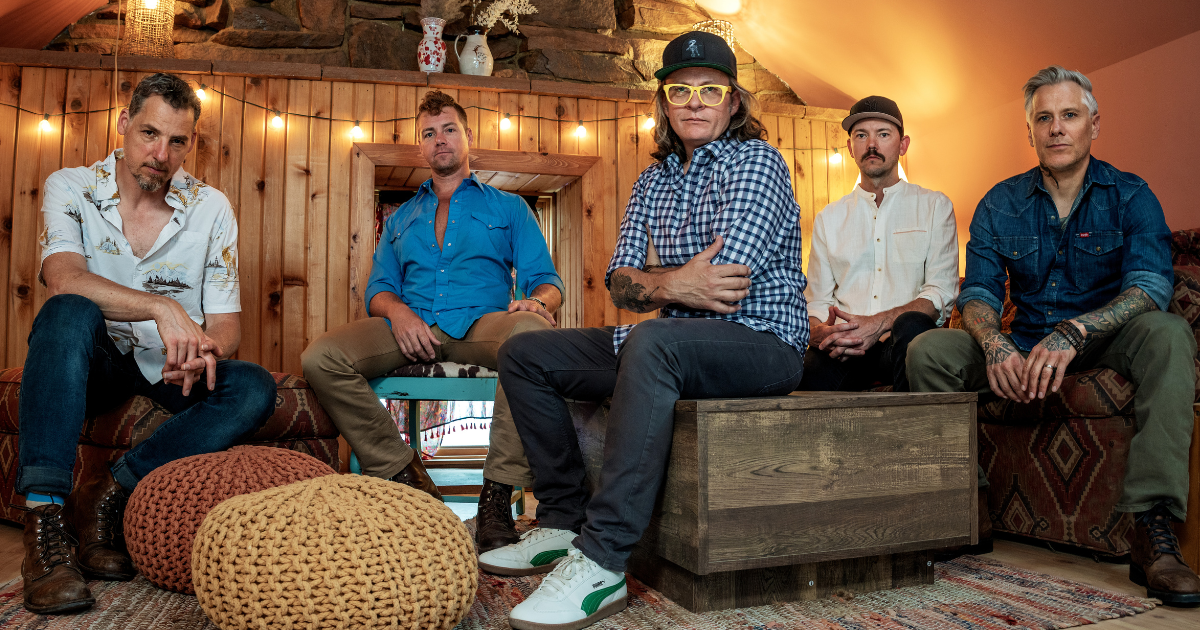
An Oral History of the Infamous Stringdusters

BGS was founded 14 years ago and from the very beginning, we’ve been covering, collaborating with, and cheering on the Infamous Stringdusters. Our first posts about the group published to our site in 2013 – not even a year after our launch – spotlighting banjoist Chris Pandolfi’s Bluegrass Manifesto, the band’s only-four-years-old marquee event The Festy Experience, and their most recent album at that time, Silver Sky. Now, in 2026, they’re not only our Artist of the Month for the second time, they’ll be headlining our stage at Bourbon & Beyond this September, too. But, our love for the band – and the many partnerships we’ve built together – began, like most, back in 2007 with their now iconic debut album Fork in the Road and a banner year for the group at IBMA’s World of Bluegrass and the IBMA Awards.

Back then, when the Stringdusters took home trophies for Song of the Year (“Fork in the Road”), New Artist of the Year, and Album of the Year, perhaps no one – not even the band themselves – would have predicted the seismic, existential impact they would end up having on bluegrass and the as-yet-unnamed subgenre thereof: jamgrass. Twenty years on, the Stringdusters celebrate their duo of decades with 20/20, an album of 20 songs celebrating 20 years of defining and redefining bluegrass and jamgrass.

For our Artist of the Month coverage, BGS and Good Country co-founder Amy Reitnouer Jacobs sat down with all five members the Infamous Stringdusters for a wide-ranging conversation of a band that epitomizes bluegrass, jamgrass, and psychedelic string band music in the 2000s.

First of all, again, I wanna just thank you for doing this. We are so thrilled to have you guys as our Artist of the Month and congratulations on 20 years of the ‘Dusters.

I wanna start this with Panda actually, and this is not gonna be just an oral history interview, but I think, looking back on 20 years, it feels appropriate to start from the beginning. So let’s talk about origins and start back at Berklee [College of Music], if that’s cool. Tell us a little bit about the beginning of the band.

Chris Pandolfi: I arrived at Berklee in 2001, which was the year that Andy [Hall] had just left Boston for Nashville. I first met Critter [Chris Eldridge] through Zach Hickman, who was playing in Josh Ritter’s band. He went to Oberlin [University] with Critter. We got together and we were playing, and Zach had some free studio time at a spot in New Hampshire and we were gonna go record some music, just for fun. Our careers were not underway in any way, shape, or form. We didn’t have any grand designs here. We were just gonna go record some music and have some fun.

Then, on the precipice of this recording, we went down to the Cantab Lounge to meet this guy named Andy Hall. We went there and–

Andy Hall: [It was] The Plough and Stars.

CP: The Plough and Stars! Andy was playing–

AH: I don’t remember exactly if I was playing or if you were playing.

CP: And the next day we were in New Hampshire at this recording studio and we made this EP called Stable Horse. Essentially, Andy was already living in Nashville, so around that same time, he had met Jeremy [Garrett] and they were playing together. It was that recording session that got the wheels turning for me. Like, “Oh, we could do this thing with other people our age,” and not fall into the very sort of common thing in bluegrass where you get hired by someone else and you’re essentially a sideman.

We were recording and teeing things up, and we all had other gigs at that time. It was me, Andy, Jesse [Cobb], Critter, and Alan Bartram from the Del McCoury Band. But that was my earliest memory of “We could start a band with our contemporaries.” And Zach Hickman, I give him credit, he facilitated that.

I don’t even think we had the name “Stringdusters” yet. Alan got the offer to go play with Del McCoury and we had met Travis [Book] at IBMA, so we called him up and he came and lived in my driveway for a few months. True story.

Travis Book: You can really get away with a lot if you park your car in someone’s driveway and then try to stay outta the way.

So Andy and Jeremy, what are the origins of you guys starting to play together?

AH: Was it Ronnie Bowman? Was that the first time? I was in Ronnie Bowman’s band and the fiddle player and Ronnie had a bit of a falling out while we were on the road and–

CP: We were all at a festival, so we scooped up Jeremy and he got on the bus with Ronnie Bowman!

Jeremy Garrett: Yeah, I definitely knew about you two beforehand. And, of course, in bluegrass everyone’s a fan of Ronnie Bowman. He’s such a crooner and such a cool cat. I definitely had plenty of experience before, but this was like one of my first major Nashville gigs. And it was eye-opening very quickly that, as a sideman, it’s pretty limiting.

The conversations I remember started happening pretty fast in the back rooms: “Hey, let’s maybe consider doing something of our own. Long-term, how can we make this happen?” But it was just like whispers. I remember going to IBMA – that’s where I met Chris Pandolfi and he blew me away with his melodic banjo playing style and this futuristic sound that he had. I’d really never played with that before, because I came from a very traditional side of bluegrass.

CP: Didn’t I give you a copy of my record? I remember you telling me that.

JG: Yeah. And I listened to that record all the way home from IBMA – I’ll never forget – and my dad was riding with me. I was just like, “This guy’s awesome.” Overall, it felt like all of us coming together through our connection in Nashville and these music parties that used to happen on the reg. I don’t know if they still do. We would have huge jam sessions, especially at Panda’s Pad. There’d be 20-30 people all gathered up in somebody’s backyard, picking. And it was almost every night. So you can’t help but get tight and start seeing the writing on the wall, the possibilities, through those kind of connections.

CP: These days in Nashville are so different. It’s so much “cooler” now. There’s so many young people playing bluegrass and when you hear about a lot of the socializing in Nashville, it’s a lot of young musicians. When we were having these parties, it was a real diverse mix of ages. You had Sam Bush there, you had Scott Vestal, you had Ronnie Bowman, and the McCourys. We were the young cats around and there wasn’t a very vibrant young scene. We were intermingling with a lot of the elder statesmen of bluegrass.

That’s a really special time in Nashville. I can remember that’s when I started hanging out in town and there was like a magic in the air. That intergenerational mix doesn’t organically seem to be happening as much, but maybe it is and I’m just not invited to parties anymore.

So Travis, were you coming to Nashville from Colorado? Where were you before then?

TB: Yeah, I was living in Durango and Anders Beck from Greensky [Bluegrass] and I started playing music together in maybe 2002. There were gigs and we were learning this music and then Andy Thorn and some other friends – that’s Leftover Salmon – they just showed up in a music store one day. Andy was probably 19 on college break and we hung out with him for three days straight. When he went back to North Carolina, we called him up. We’re like, “Dude, you gotta come back! We gotta make a band! We’ll play RockyGrass, you’ll win the banjo contest, we’ll win the band contest.” Anders and I were like, “We can see the future, but we need Andy Thorn,” because he was such a compelling musician and just such a natural. Still is.

We started this band called the Broke Mountain Bluegrass Band with Jon Stickley, who’s also a visionary in our music. We were all picking and almost entering that same path as Leftover Salmon or Yonder [Mountain String Band]. We were already doing this like hippie bro band, just loving playing music and camping and playing festivals and going to hot springs and just fucking around. It was brilliant.

But then we went to IBMA, which at the time was the best way to show off your band and position yourself in the context of the larger [bluegrass] world. Try to get some gigs and go party your absolute brains out for a week. We were pretty rough around the edges, but one night I stepped off an elevator and Chris Eldridge came around the corner. [He] was like, “We need a bass player for this jam. Will you come jam with us?” I went into this little alcove and it was essentially the Stringdusters. It was Critter and Pandolfi and Andy Hall and Jeremy and Jesse Brock. I was just hanging out, holding on for dear life. I’m partying, I have a backpack full of beer, I have no shoes on, and I looked around and all my band mates were just there sitting along the hallway floor listening to the jam.

Andy’s partner at the time, Janice, said, ” Do you ever think about moving to Nashville?” I just laughed. Absolutely not. But I had fixed myself in their mind and once they exhausted all the possibilities of people who could play bass in Nashville – at least this is my understanding – they dug into their collective consciousness and called me up to audition. They’re like, “We think you’re the guy. When can you move to Nashville?” So I went out there to work on Fork in the Road that summer. What was this, 2004? Am I right, guys?

AH: I think that would’ve been 2005.

TB: Yeah, you’re right. 2005. [I] moved out there in September and lived in this guy’s driveway. It was kinda wild.

Falco, I promise we’re getting to you. We’re almost there!

In pretty quick succession though, you’ve got the core crew with Critter and Jesse [Cobb] at that time, you record the album, and get signed to Sugar Hill. And then things just start happening! Can you walk me through the time between recording and the IBMA Awards in ’07?

CP: There’s a lot of extremely disorganized touring. We’re driving around in two cars. I still have the notebook from the gigs – we were getting paid a few hundred bucks a night, maybe a thousand on a good night. Doing everything that we could.

We didn’t have grand designs on anything. The IBMA Awards was a really big moment for our band. Thinking back, it was a moment of legitimacy, of just getting [to] one of the hardest things as a band, which is the collective feeling that this thing is gonna stick together. That’s the peril of starting a band with players who you think are really good: at any time anyone could get hired away for something. But we were playing gigs, we were loving life, we were working on our music, and we were poor as could possibly be. I just remember the IBMA Awards as a big moment of solidity, of that feeling like we could really do this, we could really be in this for a long time.

TB: There was that first summer we had a couple of big anchor gigs, but a lot of it was really just driving around and killing time in between these anchors and hoping that we could reach the right audiences. I think that the big bluegrass scene was ripe for some young pickers who were taking it seriously and committed to each other.

JG: Yeah, getting gas in the tank right off the bat was huge for us, that’s for sure. And we spent a lot of time in between those gigs just going to be in the wilderness and spending time together. I don’t know, for lack of a better way of explaining it, [we were] bonding like a band.

But man, when you’re a real band and you’re not just like a frontman or whatever, you’ve got a real synergy with other guys in a group. It’s special. And I feel like a lot of what brought us together and [what] makes us as tight as we are now was those off times where we were discovering our lives and just doing cool stuff like that. Creating this thing together.

I do need to know who came up with the name. Where did the name come from?

CP: Ben Eldridge.

AH: Yeah!

CP: We were working with a list of pretty mediocre names and Ben came up with “Stringdusters.” After 20 years, I can say there’s a lot of bad band names out there, but the Stringdusters – I think it’s a cool band name and it suits us.

All right. Now we bring Falco into the mix. So how did you get mixed up in all this? Tell us your origin story.

Andy Falco: So, Critter fell off the back of a truck and I got picked up – no! What happened was, I’d known Pandolfi and Andy Hall from the Northeast bluegrass scene. I was playing with this guy, Buddy Miriam, who’s on Long Island, and who actually was friends with Bill Monroe because he got struck by lightning at the Berkshire Mountain Bluegrass Festival, which of course was Grey Fox. And Monroe found out about it and reached out and they became friends. So he learned a lot of mandolin directly from Monroe.

My brother was getting into bluegrass and was like, “You should come to this bluegrass festival.” I went up there and saw Doc Watson and really got into playing bluegrass. ​I moved to Nashville maybe a year after Panda and Critter did. Andy Hall was already playing in Dolly Parton’s band. And I had met Jeremy, actually by accident, at SPBGMA. My first time in Nashville, some guy came up to me and said, “Hey man, how are you doing? How’s everything been?” I was like, “Great. This is my first time in Nashville. Everything’s been great.” Then he stopped and said, “Man, I thought you were someone else.” And he says, “Come meet my son.” That was Jeremy’s dad, and that’s the first time I met Jeremy.

When I moved to Nashville, these guys were starting the band. I was watching them doing their sets at IBMA. It was killer. Then when Critter left, they asked if I’d be in. I wasn’t gonna start until September and one month later was the IBMA Awards. So I just joined the band and here they are, winning all these awards.

JG: I would like to say, I’ll never forget your first gig. You killed it harder than literally anybody I’ve ever worked with to this day. Absolutely stepped into the role and blew it away. And it was very obvious at that moment that he was the right man for the job, for the Stringdusters.

AF: I had big shoes to fill with Critter – and Critter and I were friends. In fact, I knew Critter before I met anybody in the Stringdusters. We met at seven o’clock in the morning on the last day of IBMA, when we’d pick all night and our door was open. And here comes Critter with his guitar.

CP: Critter introduced us.

AF: Yeah.

CP: He said to me, “Do you want to go hear the fastest guitar player alive?” And I said yes.

AF: I worked with Critter, too. Critter was very supportive of coming over when I was preparing to join the band, showing me the parts that he played on the record. So I had a really good foundation, thanks to Critter, of what he had done. Then I was able to put my stamp on it.

So what is that pivot then? You all mentioned the kind of shift that occurred, moving you away from traditional bluegrass and more towards jamgrass. How did you find your own sound? What was the decision to pivot?

AH: I remember a specific show where we decided we were gonna try and extend some [of the] set. I think it was the Animus Theater in Durango and it was a Colorado bluegrass crowd, which was more of a dancing crowd. They were used to more diverse sounds. I don’t remember, we were just like, “Let’s try and put a jam in this one song,” or whatever. So we’re playing, we’re jamming, and we’re extending whatever song it was. The whole crowd was just dancing. The energy was feeding back and forth and it was like, “Whoa! This is so much more exciting,” in contrast to everyone sitting silently and clapping in between songs. We made a choice one night and we saw the crowd just light up and dance and lose themselves in the music, and that fed our energy.

CP: Also, we were into that stuff.

AH: Yeah.

CP: But we hadn’t really made that connection yet. The real moment that I remember is we opened three shows for Railroad Earth. We played the 9:30 Club. We played Theater of the Living Arts and, I think, and we played Burg Williamsburg, when our van broke down and we showed up last minute. Those are the gigs that I referenced in the Bluegrass Manifesto. When I did the IBMA keynote that grew out of that, it really referenced those. I remember a few shows, too, where we would come off stage and we’re like, “Oh my god, that jam. Let’s do that again.”

We played these shows with Railroad Earth and it connected some dots that didn’t connect automatically, even though we had Grateful Dead, Phish, playing all the time. We were really coming from that IBMA buzz and awards. And, like anything, it took some time to discover, [it took] some experience. That was when some real change started happening around our business. Then the music really followed that trend.

JG: I’ll say, you guys, don’t forget about the Zeltfestivals. They were beyond anything that I personally had ever experienced. We went out and these people were going absolutely bonkers for our music – they had barricades out there and stuff. I’d never seen any of that at a bluegrass show. To me, that was fire in the tank.

AF: I think that also a big part of that is just, I know for myself, not growing up playing bluegrass music and then getting turned onto it by Garcia and Grisman and people like that. But I think it was just like when I started learning bluegrass. There’s a way that you have to do it and then, finally, you get to a certain point where all these dots are being connected, where you start to let these other influences come out, because you start to get more comfortable as a band. You start to allow that like, “Yeah, why can’t we do it? Why can’t we mix these things?” Even just as individual players. Why can’t you play this style? Blending these kind of jammy elements and these rock elements and then seeing how it worked.

You all have such varied individual projects and influences. Do you still think that you’re shifting your sound? What are you listening to and is that influencing what you’re doing?

AH: It’s definitely influencing what we’re doing. I think, to Falco’s point, I feel like I’m allowing [in] more and more of my original influences that I grew up with. I was a metal dude in high school. I think the older I get, the more I enjoy letting in who I am.

AF: Getting away from the “that ain’t a part of nothing” bullshit, right? Like, what? Who’s to say, right?

JG: Yeah, at the end of the day it’s art and you gotta let that lead itself, if you’re a true artist. Otherwise, you’re doing a preservation society kind of thing in the bluegrass world. For the longest time, I felt we were all paying homage to this awesome music, but we’re not letting it breathe like it should sometimes. It’s very fun to be an artist and be able to have the permission to just kinda let it flow, which is what we let ourselves do. We let the art dictate what we did, and we were true to ourselves in that way. That was something that served us very well. Still does.

You all live in different places now. I know the band is not as centered in Nashville as it used to be, but you did talk about the off-times and how that bonded the group early on. How do you stay bonded as a band now? How have things shifted? Being a decentralized band, how has the writing recording process changed for y’all over the last 20 years?

JG: I think that’s an important point. Yes, we’ve changed a lot over the years, but we’ve been able to stay tight because of those early formative years when we were all just broke traveling around in a band. I didn’t have any brothers growing up, but these guys are definitely my brothers and they know more about me than anybody else in this world. To allow each one of us to have the freedom to live where we wanna live and come together the way that we want to come together, I think that has been really one of the main things that have kept us together.

Over the years we’ve all developed little side things outside of the band. I think that’s been healthy. For me, I like to do my own solo music, music that I write and I like to perform – and stuff that wouldn’t necessarily fit within the confines of the Stringdusters. But I still want to get that art out there. We continue to challenge each other. Music can be competitive in a not-healthy way. But I feel like we do it in a healthy way, in the sense that we drive each other to just be the best that we can be at what we do.

CP: I got married last fall and in the run up to my wedding, one of my aunts asked me, “Are all your bandmates gonna be there?” In my mind I had this moment where I was like, “Are my band mates gonna be there?” You might as well ask me if my family is gonna be there! It’s just life at this point. After 20 years, it’s cool to observe the level to which you become each other’s family.

That’s the definition of community and you don’t think about these things when you’re going into this life, but there are some incredible unintended consequences. That informs the music and that informs all the life experiences too.

And here we are, 20 years later. That’s pretty cool.


Explore more of our Artist of the Month coverage of the Infamous Stringdusters here.

Photo Credit: Daniel Milchev
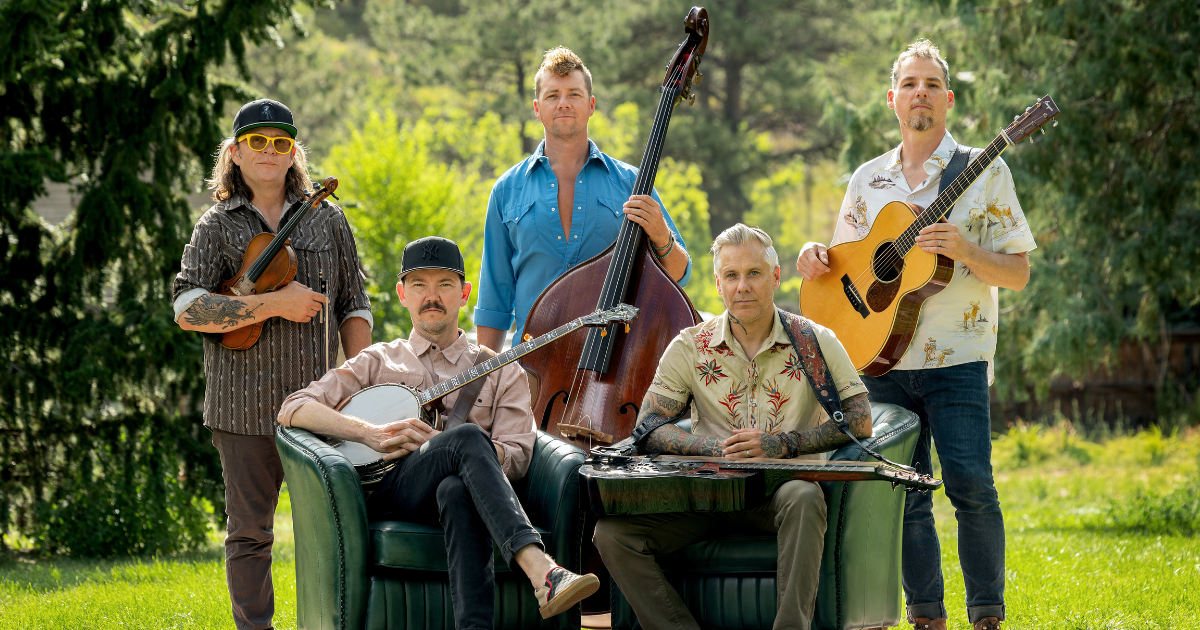
Two Decades of ‘Dusters Discography

With over a dozen studio credits and even more EPs and live albums to their name, the Infamous Stringdusters have been one of the most persistent forces in bluegrass and roots music ever since staking their claim with 2007’s Fork In The Road.

Even as members changed in those early years, the band quickly found its core – Andy Hall (Dobro), Andy Falco (guitar), Jeremy Garrett (fiddle), Chris Pandolfi (banjo) and Travis Book (bass) – and rapidly began homing in on a sound that’s equal parts traditional and progressive bluegrass with a touch of country, jam, and other influences along the way. That variance has led to each of the band’s recordings having a distinctly different flavor than its predecessors, from the harmonious bluegrass symphony of Silver Sky to the feature-rich Ladies & Gentlemen, hope-fueled Laws of Gravity and Rise Sun to the somber Toward the Fray.

“Making a record that sounds like the Stringdusters isn’t the challenge,” Book told me in 2022 for No Depression. “The challenge is seeing just how deep we can get on each song in order to make it the best, most authentic version of itself it can be. This requires us all setting aside our egos, being open to suggestions, and trusting one another to create the best music as possible.”

In celebration of our Artist of the Month, we take a look back on the Stringdusters’ sonic evolution and essential tracks from their two decades in service of bluegrass and the song.

“Fork In The Road” – Fork In The Road (2007)

On their emphatic 2007 debut, Fork In The Road, the band – then comprised of eventual Punch Brother Chris Eldridge (guitar) and Jesse Cobb (mandolin) alongside Book, Garrett, Hall, and Pandolfi – quickly struck a chord with bluegrass aficionados on songs like “No More to Leave You Behind” and the album’s title track. The latter of which positions the band’s fiddle maestro front and center as his high-pitch croon carries the weight of being at a crossroads. Whether it’s a hypothetical take or one rooted in the group’s own musical experiences, it’s safe to say the path the ‘Dusters have taken since has more than paid off with a legacy 20 years strong and counting.

“Magic #9” – Things That Fly (2010)

The band show off their picking prowess on the whimsical “Magic #9,” a track that resulted in their first-ever GRAMMY nomination at the 53rd annual awards in 2011. While the ‘Dusters can thrash and sing bluegrass harmonies with the best of them, songs like this also showcase the group’s knack for crafting their own instrumental compositions. Their tunes pack just as much story and emotion – if not more – into a three-and-a-half minute burst than most of their counterparts with vocalized accompaniment. Coincidentally, the GRAMMY the song was up for was not in a bluegrass category, but rather for Best Country Instrumental Performance. Given the band’s penchant for string music, unreal levels of improvisation, and the consistently inconsistent award nominations process, it’s the least bit surprising, if not even a bit fitting.

“Rockets” – Silver Sky (2012)

The song that first unlocked my captivation for the Infamous Stringdusters (and still my favorite to this day) is “Rockets.” It was around the time the album it’s included on, Silver Sky, dropped that I began seeing the band in concert for the first time and this song was always a staple. The uplifting temperament and optimistic nature of Book’s vocals combined with the meticulous instrumental timing – from Garrett’s fiddle interjections to Pandolfi’s hard-driving banjo backbeat and Hall’s slick Dobro tones – culminate in a joyous, borderline spiritual experience every time I hear it.

Because of this and other tracks on Silver Sky like “Fire,” “Night On The River” and “Walking On The Moon” I consider the record without a doubt their most essential project to date. Although, as you’ll see, the great tunes haven’t slowed down in the years since.

“Still the One” (featuring Nicki Bluhm) – Ladies & Gentlemen (2016)

The ‘Dusters’ 2016 effort Ladies & Gentlemen stood out for many reasons – most notably its more folk-leaning bluegrass numbers and star-studded list of collaborators ranging from Mary Chapin Carpenter and Lee Ann Womack to Sara Watkins and Jennifer Hartswick (Trey Anastasio Band). However, the most frequent collaborator from the record was Nicki Bluhm. Her contribution on “Still The One” blossomed into frequent support songs on the road performing not only that track, but several other cuts from the breakthrough album. It wound up taking the band’s already spectacular knack for partnering with others to another level. As for the song itself, “Still the One” is a powerful rallying cry about a love that persists even when heavy rain, or life’s difficult moments, try to get in between and tear you apart.

“Gravity” – Laws Of Gravity (2017)

After a decade of slinging bluegrass, country, and roots-adjacent bangers, the ‘Dusters finally reached the musical mountaintop with their 2017 album, Laws of Gravity, which earned them their second GRAMMY nomination and first-ever win for Best Bluegrass Album. Central to that accomplishment was the album’s de facto title track “Gravity,” an anthemic adventure.

Similar to the aforementioned “Still the One,” the song focuses on the story of two inseparable lovebirds charting out a future life of memories together, even if they don’t know exactly when, how or why it will all happen. Most important to them though is the memories being made in the current moment, whether that be together, at a Stringdusters show, or something entirely different.

“Rise Sun” – Rise Sun (2019)

With the lead and title track to their 2019 album Rise Sun, the Infamous Stringdusters make a late entry to folk music’s stomp-clap party, combining the early 2010s trend with heated string music like few 2010s contemporaries could muster. The track also features a noticeably hopeful hue set in motion by the metaphor of a rising sun not only spawning a new day, but bringing change and the opportunity for a fresh start, as well. In that sense, the band had no idea how much hope people would need the following year, when COVID shut down the world. The result of which inspired the band’s next original entry to this list. But first, the ‘Dusters pay homage to the father of bluegrass…

“My Sweet Blue Eyed Darling” – A Tribute to Bill Monroe (2021)

The bluegrass ballad in pole position on Bill Monroe’s 1977 album Sings Bluegrass, Body And Soul, was “My Sweet Blue Eyed Darling,” a track that holds the same spot on the Stringdusters’ 2021 recording, A Tribute to Bill Monroe. On it, Pandolfi leads the way with his steady, blistering banjo while Garrett and the others hit home on the signature high and lonesome harmonies that Monroe is legendary for.

Fittingly, this collective album honoring the bluegrass legend wound up earning the ‘Dusters their third GRAMMY nomination in 2022, though they came up short to Béla Fleck’s My Bluegrass Heart. Their foray into recording covers isn’t anything new for the band, who later went on to record a Flatt & Scruggs tribute along with a series of Undercover EPs (more on that later) in addition to weaving other folks’ material into their live sets on a nightly basis.

“Pearl Of Carolina” – Toward the Fray (2022)

While the Stringdusters’ members call many places home, there may not be a more appropriate individual place with which to associate the band than Western North Carolina. Touching on that connection to the Old North State, Book sings about love and longing to return home on “Pearl of Carolina.” The song’s title stems from an intro script he was crafting for his musical talk show podcast, The Travis Book Happy Hour, as a way to describe the region.

In addition to being grounded in a person or place, similar to “Gravity” or “Still the One,” “Pearl of Carolina” is also a reminder to search for the places and small things in life that bring you joy. While much of Toward the Fray takes on a darker tone, “Pearl” stands out as a burst of much-needed normalcy on a project otherwise finding inspiration in a world of disarray.

“Touch Of Grey” – Undercover, Vol. 3 EP (2024)

The band has covered a bevy of artists on their Undercover series of EPs, from Tom Petty to The Highwaymen, The Cure, and ZZ Top, but none fit the band’s style and sound (with the exception of the Monroe and Flatt & Scruggs stuff, perhaps) than their rendition of The Grateful Dead’s “Touch of Grey” on Undercover, Vol. 3. Released in 2024, the ‘Dusters’ take on the Dead’s most commercially successful hit combines the best of both groups, further adding to the song’s timeless nature – a message that, 40 years after its original release, feels just as relatable and relevant as ever.

“Working Man Blues” – 20/20 (2026)

Much of the Infamous Stringdusters’ journey over the past two decades has been inhabiting the role of blue-collar road warriors playing anywhere for anyone who would have them. With that in mind, there’s no more fitting song to kick off their next album, 20/20, than “Working Man Blues.” The band sings about a man clocking in before sunrise and doing hard labor all day before clocking out and heading to the bar in search of fun. It’s a combination of rugged, resistant, and rowdy that embodies the Stringdusters’ entire sound and ethos for 20 years now – and, if we’re lucky, will continue for another 20 more (and then some).


Continue exploring our Artist of the Month coverage of the Infamous Stringdusters here.

Photo Credit: Daniel Milchev
Artist of the Month: The Infamous Stringdusters

During the Infamous Stringdusters’ recent holiday gig at The Orange Peel in Asheville, North Carolina, the storied venue was packed out with jamgrass freaks, the performance itself a kickoff of sorts for the band’s 20th anniversary in 2026. I found myself standing sidestage when show opener Bronwyn Keith-Hynes came up next to me. A smile emerged on her face taking in the band and the audience.

“The Stringdusters made me want to start a band,” the GRAMMY-winning fiddler said, turning to me. “The Fork In The Road album was the most influential modern bluegrass album for me when I was at Berklee.”

Keith Hynes’ sentiment conjured numerous memories and moments I’ve been lucky enough to be a part of when it comes to the ‘Dusters. The first time I ever laid eyes and ears on them, it was the 2008 Targhee Bluegrass Festival in Alta, Wyoming. I was 23 years old and a rookie reporter for the Teton Valley News, based just down the mountain in Driggs, Idaho. By that point in my life, both personally and professionally, I was diving deep into the jamgrass world – the intersection of ancient tones, psychedelia, improvisation, and a collective love of the Grateful Dead.

The initial spark of the modern jamgrass movement was lit by Yonder Mountain String Band, Leftover Salmon, and the String Cheese Incident, all three acts coming into the national spotlight by the end of the 1990s. A musical template had been formed, and the ‘Dusters would emerge in the early 2000s to throw gasoline onto that melodic fire, ultimately becoming a missing link (alongside Greensky Bluegrass) between jamgrass originators, those ‘90s propagators, and folks currently carrying the torch into new, exciting realms: Billy Strings, Sierra Ferrell, Molly Tuttle, Sierra Hull, and more.

“That’s what’s so beautiful about bluegrass music, in particular,” Stringdusters fiddler Jeremy Garrett told me recently. “You pass it on to the next generation and they take it and they do their thing with it. Luckily for us, we were around at a time that [that] was very important, and a transitional time in the industry.”

In 2010, a couple of years after my introduction to the band at Targhee, when I returned to my native North Country of Upstate New York, I found myself covering a show at the intimate Showcase Lounge at Higher Ground in Burlington, Vermont. I was there to see the ‘Dusters once again. Their sound and energy immediately transported me back to the Rocky Mountains that I missed dearly. (Sharing the bill was another rising jamgrass act, Trampled by Turtles.)

I remember walking away from that gig feeling in awe and refreshed with a genuine feeling that something was happening. Something was on the horizon when it came to bluegrass and string band music. This wasn’t a traditional bluegrass band in matching suits, standing like statues. It was a rock show with acoustic instruments. Baseball caps and long hair, grins ear-to-ear. More provocative than standstill, more vibrant than just going through the motions of what past generations were instructed to do.

“Being able to showcase our own songs, in our own way, [our] writing skills, and making the decisions on what was chosen to play and how to play it [were] foremost for most of us at the beginning,” Garrett says. “Over time, we realized that we were actually growing a community. And after all these years, that honestly has become the most important part, the most important thing that we could possibly do.”

What I witnessed in Wyoming and Vermont years ago is what I’ve continued to experience with the Infamous Stringdusters, in person and in method, from Florida to Colorado and beyond. They set the pace then for where we stand with jamgrass right now, built on a full-throttle approach, one which remains sonically elusive as well as paying homage to the architects of bluegrass and those who broke from the pack and made something all their own.

Aside from the talents of the Stringdusters, either as individuals or the sum of their parts, you also have a unique setup. Alongside founding members, banjoist Chris Pandolfi and Dobroist Andy Hall, who emerged from the prestigious Berklee College of Music in Boston, you have the tradgrass pedigree of Garrett, who was born and raised in a traveling family bluegrass band hailing from Idaho. This fusing of road-tested grit and grace with conservatory-style techniques is at the heart of what this group does best: jam.

All of which circles back to the Asheville Orange Peel performance in late 2025. There were tightly knit melodies and freewheelin’ improvisational explorations. They broke down the invisible walls between themselves and the audience, maintaining a two-way street of momentum, energy, and inspiration from both sides of the microphone – a vortex of sound and scope, all revolving around a deep sense of community.

“The band is stronger than ever and making some of the best music we’ve ever made,” Garrett says. “But, the thing I see that is the most important being carried on is that community factor. We certainly didn’t invent that, but we took note and applied the philosophy to our scene, and hopefully the next generation realizes how important that piece is.”

Ultimately, this 20th anniversary celebration for the Infamous Stringdusters is a culmination of a tried-and-true effort to bring this hallowed music into the unknown and unfolding musical landscape of the 21st century. With their upcoming album, 20/20 (out February 13 via Ameriana Vibes) they continue their efforts to break new ground and forge ahead, together, whatever the next 20 years hold for jamgrass and the ‘Dusters.

The Infamous Stringdusters are our Artist of the Month. Below, enjoy our Essential Infamous Stringdusters playlist and stay tuned as we share brand new and archive content on the ‘Dusters throughout the month of February here on BGS – and across our social media channels. Like our exploration of their 20-year discography or our oral history of the band featuring all five members in conversation.


Photo Credit: Daniel Milchev

Travis Book Happy Hour: Casey Driessen

Casey Driessen is simply one of the most inventive fiddlers on planet earth. I first saw him perform in his trademark red shoes with Tim O’Brien and have had the honor of performing with him in Woody Platt’s backing ensemble, The Bluegrass Gentlemen.

Casey is friendly and open-minded, but I get the sense he doesn’t suffer fools and I was admittedly a little intimidated going into this session. I knew that I’d be stretched musically and I really was. However, he and River cultivated a musical situation where presence and attention were all that was needed. We shared an unforgettable night of music that reminded me what Tuesday’s at 185 King Street are all about.

LISTEN: APPLE • SPOTIFY • STITCHER • AMAZON • MP3

This episode was recorded live at 185 King Street in Brevard, North Carolina, on December 3, 2024.


Photo Credit: Ken Voltz

Editor’s Note: The Travis Book Happy Hour is hosted by Travis Book of the GRAMMY Award-winning band, The Infamous Stringdusters. The show’s focus is musical collaboration and conversation around matters of being. The podcast includes highlights from Travis’s interviews and music from each live show recorded in Brevard, North Carolina.

The Travis Book Happy Hour is brought to you by Thompson Guitars and is presented by Americana Vibes and The Bluegrass Situation as part of the BGS Podcast Network. You can find the Travis Book Happy Hour on Instagram and Facebook and online at thetravisbookhappyhour.com.

Travis Book Happy Hour: Chris Eldridge

Chris Eldridge and I met when I stepped off of an elevator with my bass at the International Bluegrass Music Association’s convention in 2004. The Infamous Stringdusters were forming in Nashville at the time and they needed a bass player for the jam that night and, it turned out, for the band in general. We spent the first two years of that band traveling and making music together and Chris is still one of my favorite musicians and humans. A member of Punch Brothers and Mighty Poplar, he’s also made a couple great records with guitarist Julian Lage and plays in a duo with his wife Kristen Andreassen. Our conversation started when he arrived at my house and didn’t end until he pulled out of the driveway the next day, but we’ve captured some of the best parts here for the podcast.

LISTEN: APPLE • SPOTIFY • STITCHER • AMAZON • MP3

This episode was recorded live at 185 King St in Brevard, NC on November 12, 2024


Photo Credit: Laura E Partain

Editor’s Note: The Travis Book Happy Hour is hosted by Travis Book of the GRAMMY Award-winning band, The Infamous Stringdusters. The show’s focus is musical collaboration and conversation around matters of being. The podcast includes highlights from Travis’s interviews and music from each live show recorded in Brevard, North Carolina.

The Travis Book Happy Hour is brought to you by Thompson Guitars and is presented by Americana Vibes and The Bluegrass Situation as part of the BGS Podcast Network. You can find the Travis Book Happy Hour on Instagram and Facebook and online at thetravisbookhappyhour.com.

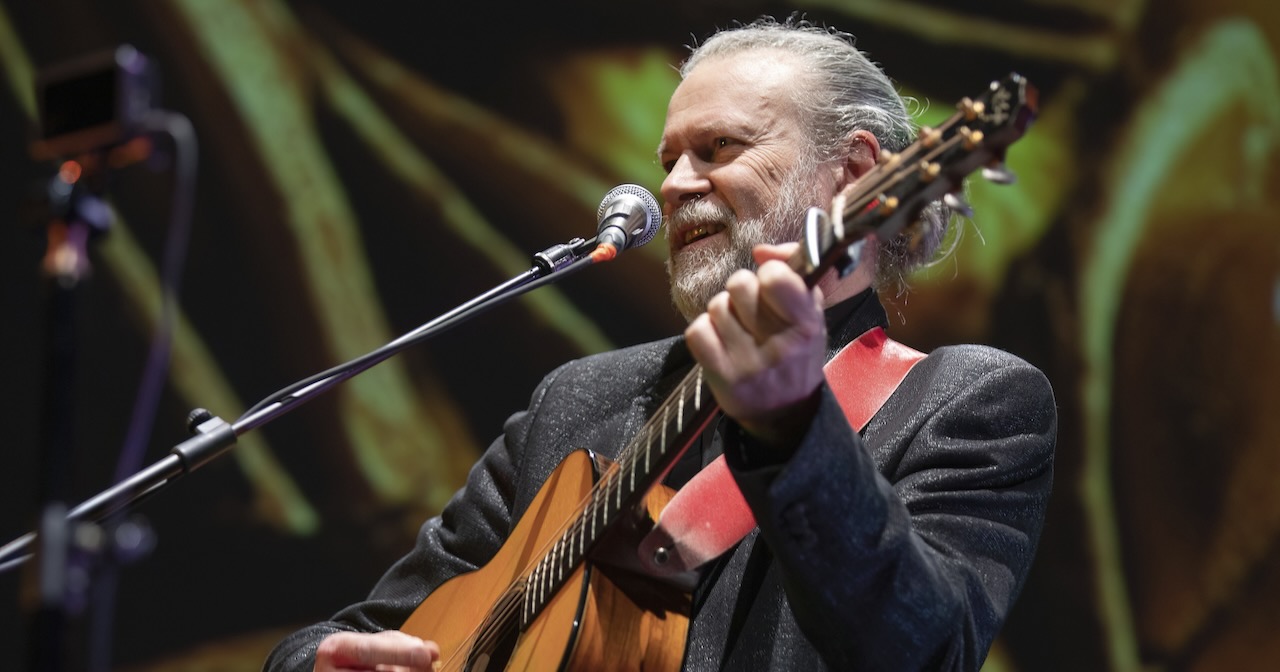
A True Original, Italian Guitarist Beppe Gambetta is a Bluegrass Innovator

Most listeners would probably attribute the incredibly unique musical approach of guitarist Beppe Gambetta to his country of origin. Being a native of Genoa, Italy, he certainly brings a global and European folk flair to his bluegrass and old-time inflected six-string compositions. But it would be shortsighted to simply credit that truly original voice to mere geography.

Gambetta is an instrumentalist who always works with intention. Developed over a lifetime of playing and cultural cross pollination, his style exists in the fertile ground somewhere between a triangulation of Norman Blake, Doc Watson, and Django Reinhardt. He’s learned from, recorded, collaborated, and performed with so many of “greats” such as these across several generations of American roots music virtuosos. Gambetta is a bluegrasser through and through, but he’s also so much more.

His latest album, Terra Madre (released in April 2024), is a lovely continuation of his lengthy and harlequin catalog of recordings. It’s bilingual, cinematic, and thoughtful, while also impassioned and brash. But he’s never a one-note musician, so the collection is artfully subtle at the same time. Gambetta doesn’t just know this intersection – aggressive and gentle, bold and subdued – it’s as if he lives there. It’s his address.

Perhaps most of all, Gambetta is a perfect representation of how an individual can bring himself into a generational folkway and established aural tradition such as American roots music, while simultaneously preserving his selfhood and his singular point of view. Our email interview, like the new record, is a perfect representation of Gambetta’s melting pot style – and the way he uses the entire earth, terra madre, as his medium.

The title track  of Terra Madre is cinematic and vibey, with a bit of funk and a dash of charming silliness. I love that it starts with the sound of footsteps, grounding the listener on terra madre herself. Can you talk a bit about the song, its title, and how being embodied on earth, on this rock hurtling through space, inspires your music and songwriting?

The song “Terra Madre” is the most dramatic of the album: the footsteps are from a couple of escaping refugees, the song is about their dreams. They meet with friends and jump the border wall in the dark of the night with fear, pain and hope. We don’t know the exact story, the place where it happens is also unknown in order to represent a ubiquitous pain that can be found all over the world.

It was hard to express these extremely dramatic sentiments only with acoustic instruments, but the use of the flatpicking style with strong bass lines and heavy strums turned out to be a good tool. I used a regular guitar but also a low bouzouki guitar and few slide guitars “prepared” with special strings and tunings. As you noticed, I added the sound of the escaping steps in order to ground the listener to the earth and with drummer Joe Bonadio we decided not to use the snare drum in order to create a more “suspended” atmosphere only with toms and cymbals.

How much of the earth’s current worries are in this album? How much did the planet’s current state of being inform the song itself?

The album’s general concept is related to the cry of pain that rises from our Earth and to the right of musicians to dream about a better world in moments of darkness. In the different songs there are dreams for a better life, for peace, repentance, friendship through music, adventure, forgiveness, survival of minority cultures, redemption, dreams to win, rage, envy, hate, and more.

In a period where leaders and politicians in charge are not able to resolve conflicts and crises there is a need for every other category to give a positive contribution. Probably scientists, philosophers, historians, theologists will give important contributions, but also artists can do their part.

I’m sure that even in modern times there is still a strong power that comes from folk songs and I decided to write my songs in different languages. For different reasons the album is totally self-produced and if you self-produce you need to put more love, passion, time, and money using all your resources.

“Sit and Pick with You” is certainly the stand out track on the album. Can you talk a bit about that song, its meaning, and how important the community aspect of this music is? Because, truly none of us would exist as pickers in bluegrass and string band music without folks – whether friends or peers or heroes or legends – to sit and pick with.

The inspiration for the song came to me during a California tour. I wrote it in order to celebrate some musical encounters with legendary fathers of the music – David Grisman, Dan Crary, Peter Rowan – dear friends who, at the end of their careers, continue to hold high the torch of beauty. I wrote the song with the sounds of the 1930s in mind, with a guitar riff inspired by “The Wildwood Flower” or “Jimmy Brown the Newsboy,” because I believe it is a timeless sound that can still speak to people’s hearts and move them.

I decided to sing the song as a duo, like an old brother duet. I first asked Norman Blake by sending him a handwritten letter in pencil, as we used to do in our correspondence in the 1980s. The reply was really kind, also handwritten by Nancy and signed by Norman, who thanked me for the thought and encouraged me in the project, but at that time Norman felt that his voice was not at the right level to appear on an album.

Luckily, my friend Tim O’Brien was available to sing it and did it with a perfect vintage-style rendition. Then David Grisman added his unmistakable signature [sound] on mandolin. Dan Crary played guitar in harmony, taking advantage of the depth of his “long neck” guitar tuned down a tone. The final touch to the quartet’s sound came from bassist Travis Book.

The positive meaning of the song is felt by many fans who identify with the sentiments it expresses: The joy of getting together and the friendship that comes from the beauty of music. Many began to incorporate it into their jam sessions with friends, as it happened at the Walnut Valley Festival campground in Winfield, Kansas, a gathering place for music lovers par excellence. I received many requests for the guitar part and finally now I distribute the tablature at all my concerts. For sure, this is the standout track of the album and it got a very special recognition and attention. It was number one in the Folk DJ chart in June and July and still now it is present in the top positions.

Your approach to the guitar – and really, to music and composition and picking in general – is totally unique. You have a voice all your own on the instrument. I think a lot of listeners on this side of the Atlantic would attribute that to your being Italian, but I think that’s a bit shortsighted and simplistic. How have you cultivated your particular style and how do you keep your music and creativity fresh and innovative, to yourself and to your listeners?

I wanted to develop my own particular voice, starting from the style of the American fathers and filtering in the influences gained during my tireless journey on the road that has given me particularly formative encounters, not only in Italy but in the whole world. It took time and attention, choosing and adding to my style drops of beauty from different sources, trying to limit the obvious “Tony Rice mania” and using ideas also from Dan, Norman, Clarence and much more.

For sure, all my studies about old Italian music and generally my natural Italian aesthetic sense and passion for melody has influenced my style. The work that I did in researching and studying the “Italian string virtuosi” and performing the albums Serenata and Traversata (produced with David Grisman) left an important mark in my playing.

Studies and stylistic research in flatpicking can go in different and almost opposite directions. On the one hand, the virtuosity of breathtaking phrasing combined with speed and improvisation – the shiver in your spine that you start to feel when you listen for the first time to “Black Mountain Rag.” On the other hand, the search for expressive techniques and melodies that touch the listener’s soul – the passion and tenderness of “Church Street Blues” in Tony Rice’s version is the perfect eye-opener to the expressive potential of flatpicking beyond mere circus performance.

This second aspect, probably underestimated in the current scene, is the one that fascinated me the most. I worked a lot to learn to play slow (using tremolos, partial strummings, crosspicking, and “separate crosspicking” on two, four, five, six strings, string jumps, crosspicking to obtain grace notes, etc.).

Rhythmic tension and speed, however, continue to fascinate me; it was fun to develop the licks of my tune “Chipmunk,” an instrumental that describes the run of New Jersey’s fastest pet on the front porch of our Stockton home, using down-down-up on two strings at 162 beats.

The secret of the freshness of my style stays in continuing to be excited by both creating something new and playing something old, and in sharing this happiness every day with my wife Federica! Often before taking the stage I revive the memory of those who helped me and believed in my art (Mama Gambetta first of all) and this gives me a strong power. Even if I am close to my seventieth birthday I continue to be ready and happy to do my job.

I also think your shows are so stunning and one-of-a-kind, too. You do so much with just a guitar, your voice, and your stories. How do you keep your show engaging and interesting, when you have so few variables or so few inputs? Do you find such a stark set up to be limiting or empowering or…

Standing in front of an audience with one guitar, a voice, and a pick is certainly a big challenge. That is why I have been working over the years to create a show that I can take to audiences around the world and to distant places. I try to speak to people’s hearts and maintain my authenticity, deciding to minimize the use of excessive volume, technology, and sound effects, avoiding wiggles and winks, and simply presenting myself as I am, as if I were playing acoustically in a living room.

An artist who influenced me in this direction was John Hartford, for whom I opened a concert in Ohio many years ago and I was inspired by his charisma in communicating alone with the audience. Over the years I have studied singing, learned how to narrate and create special atmospheres with the use of open tunings and different languages, and also to joke with the audience with “Old World” irony. Not to mention “Gino,” the name I gave to my pedal loop, which I always use sparingly and treat as an old cousin who travels with me and accompanies me with his guitar.

In music, limitations are often a source of creativity; Django Reinhardt invented amazing phrases using only two fingers of the left hand, blues harmonica players got missing notes by inventing bending, and so on. In flatpicking, the strong limitation is the inability to play two distant strings at the same time as you would do easily with fingers. The effort to overcome this limitation has always forced me to invent creative solutions.

Can you tell us the story or stories behind “Saint James Hospital”?

In 2023, on the centenary of Doc Watson’s birth, in addition to visiting his grave and playing a tune for him, I decided to rearrange some of the master’s songs so that I could celebrate him on many occasions, because Doc was my most important influence and changed my artistic life.

Doc was a giant because he invented a fresh repertoire for the acoustic guitar and developed a unique and engaging way of building a show. Among the various songs of his repertoire, “Saint James Hospital” represents his extraordinary ability to discover and rearrange true gems of beauty. “Saint James Hospital” comes from ethnomusicologist Alan Lomax’s earliest field recordings, when he was first allowed to record the prisoners in a Huntsville, Texas, jail in 1933. Among the various prisoners was James Baker, known as “Iron Head,” and from this seemingly dangerous character came a song with a refined and touching melody that spoke of repentance, redemption, and a dream of a better end of life.

For me it was a challenge to create a new arrangement after Doc Watson’s and Tony Rice’s masterpieces. I decided to invent a new interlude using many guitars in different tunings and I completed the arrangement on the high register with the arpeggio of a Cuban tres. The result was well-rewarded because also “Saint James Hospital” appeared for many months on the Folk DJ charts.

What’s next for Beppe Gambetta? What should folks be watching out for?

One of the reasons I continue to be active and innovative with so many projects is because I am lucky enough not to have a retirement plan! It’s a joke that tells the truth: The anxiety of having to keep working for a long time feeds my creativity and helps my determination to invent new music, new productions, new events and embark on new journeys.

Future projects fortunately are many, first of all the upcoming tours in America and Europe in support of Terra Madre.

Besides touring, an event I’m very excited about will happen on February 15, 2025 in Mendocino, California. It will be a reunion concert with Dan Crary, who just turned 85. We will celebrate his legacy and more than 30 years of touring as a duo. On May 15-16-17, 2025 there will be the 25th edition of my Acoustic Nights, a thematic concert series with international artists on the stage of the Teatro Nazionale in Genoa, Italy, an event that we conceived with [my wife] Federica and made grow over the years. The edition number 25 promises to be a beautiful big party with a large audience of friends who will come from far away to celebrate.

Also, in Italy, I produced two different plays with actors and script, one related to my autobiographical book, Declarations of Love, and the other related to songs about legendary bandits.

Among the American projects I would like to mention, the trio show about Italian virtuosi of the early 20th century with Mike Guggino and Barrett Smith (members of Steep Canyon Rangers). It is a “side” project that is growing over the years and for the first time we will take it to a festival, Wintergrass, in 2025.

With the Folk Project in Morristown, New Jersey, we started an annual event, the New Jersey Guitar Summit, an educational full-immersion event with a final concert (held in October). And also in New Jersey on January 11 and 12 we will have my “home concerts” with guest Bruce Molsky at the Prallsville Mills in Stockton, New Jersey.

If there were any picker, living or passed, that you could sit and pick with today, who would it be and why?

In this respect I am very fulfilled, because one of the greatest joys of my artistic life is that at different times I was able to play “Salt Creek” with Doc Watson, Norman Blake, Dan Crary, and Tony Rice, four fathers of the music I love.

Of course, if I had the time machine, I would also choose to play “Salt Creek” with another great father of flatpicking, Clarence White, who I never met because he died young in a car accident. Using the same time machine I would certainly travel to Paris to play with Django Reinhardt, then I would move to Argentina to make music with the tanguero Roberto Grela. In Portugal it would be wonderful to meet the Portuguese guitar passion of Carlos Peredes, while in Italy I would certainly love to meet the early 20th century virtuoso Pasquale Taraffo, the inspiration for so much of my research.

The most enjoyable jam session of the last few years was with guitarist Cameron Knowler, a young picker who amazed me by cultivating and carrying forward into modern times the sounds of Riley Puckett and Norman Blake, a sign that among the new generations there is a refined aesthetic sense that goes beyond fashions and gives us hope for the continuation of the forgotten beauties of the past.


Photo Credit: Giovanna Cavallo

Travis Book Happy Hour: Caitlin Krisko

I had heard of Caitlin Krisko, but I’d never really heard her until she took over the stage at the Floydfest Buffalo Jam a few years ago. I’d finished up my part of the show and had headed out into the crowd to unwind and watch the proceedings. Every time Caitlin stepped up to the mic the ensemble struggled to match her soul and intensity. It wasn’t even fair, really. She owned that show that night and she owned the interview and music during the Happy Hour, too. It was Caitlin’s show, Aaron and Tommy and I were just along for the ride!

LISTEN: APPLE • SPOTIFY • STITCHER • AMAZON • MP3

This episode was recorded live at 185 King St in Brevard, NC on August 13th, 2024.

This episode is brought to you by Thompson Guitars and is presented by Americana Vibes and BGS as part of the BGS Podcast Network.


Photo Credit: Aaron Austin

Editor’s Note: The Travis Book Happy Hour is hosted by Travis Book of the GRAMMY Award-winning band, The Infamous Stringdusters. The show’s focus is musical collaboration and conversation around matters of being. The podcast includes highlights from Travis’s interviews and music from each live show recorded in Brevard, North Carolina.

The Travis Book Happy Hour is brought to you by Thompson Guitars and is presented by Americana Vibes and The Bluegrass Situation as part of the BGS Podcast Network. You can find the Travis Book Happy Hour on Instagram and Facebook and online at thetravisbookhappyhour.com.

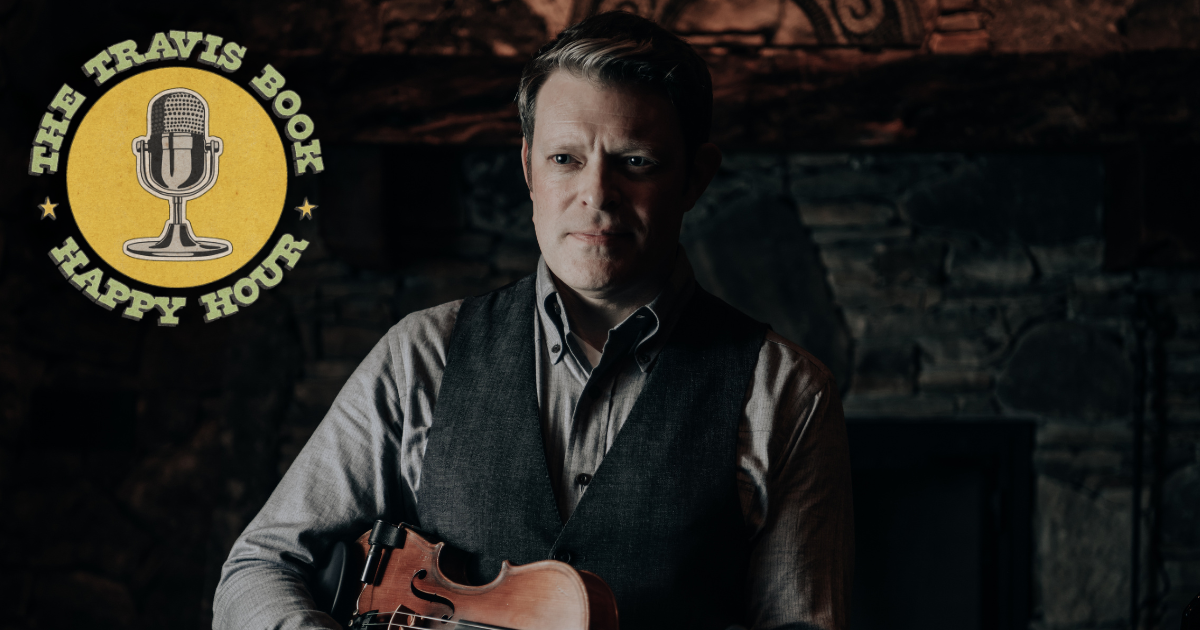
The Travis Book Happy Hour: Luke Bulla

Nashville in the mid-2000s was full of aspiring bluegrass musicians from my generation. People were starting bands, landing gigs as sidemen, and living in large, cheap houses on the east side of town. Almost nightly we’d gather at picking parties that sometimes more closely resembled what you’d see at a fraternity. One of the people I met and played with during these heady years was Luke Bulla. I was in awe of his professionalism and his palmarès and was struck by his calm demeanor. It had been almost 15 years since we’d last played together and I was delighted when he reached out about joining me for the Happy Hour.

LISTEN: APPLE • SPOTIFY • STITCHERAMAZON • MP3

This episode was recorded live at 185 King Street in Brevard, North Carolina on May 5, 2024.


Editor’s Note: The Travis Book Happy Hour is hosted by Travis Book of the GRAMMY Award-winning band, The Infamous Stringdusters. The show’s focus is musical collaboration and conversation around matters of being. The podcast includes highlights from Travis’s interviews and music from each live show recorded in Brevard, North Carolina.

The Travis Book Happy Hour is brought to you by Thompson Guitars and is presented by Americana Vibes and The Bluegrass Situation as part of the BGS Podcast Network. You can find the Travis Book Happy Hour on Instagram and Facebook and online at thetravisbookhappyhour.com.

Photo Credit: Nicola Gell

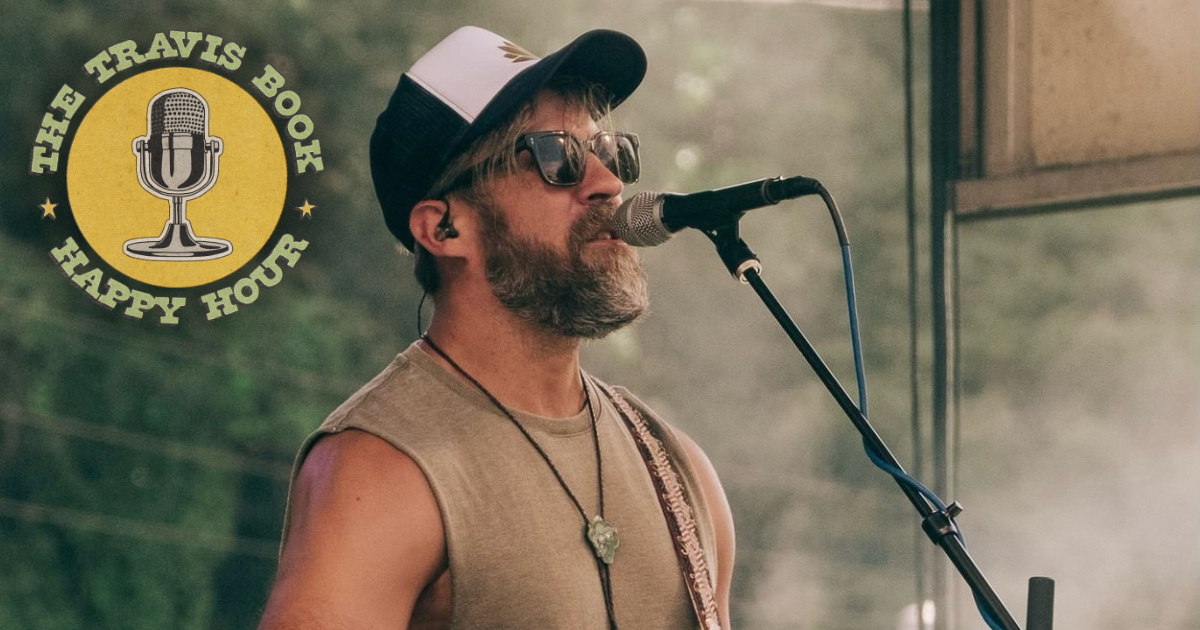
The Travis Book Happy Hour: Dan Lotti (Dangermuffin)

Dangermuffin’s Dan Lotti writes songs and sings them in a way that makes me feel like everything is going to be just fine. Originally from Folly Beach, South Carolina, much of the band now makes their home in Asheville – but their music retains the laid-back beach vibe of its roots on the Carolina coast.

Positive, inquisitive, conscious and grateful, Dan Lotti is the kinda guy you wish would call you up to have a pint or take a walk in the woods. He’d probably make an amazing neighbor, too. He’s been at the top of my list since I launched this whole Happy Hour thing and it was great to finally get to spend the afternoon with this incredible human.

LISTEN: APPLE • SPOTIFY • STITCHERAMAZON • MP3

This episode was recorded live at 185 King Street in Brevard, North Carolina on September 10th, 2024.

Timestamps:

0:06 – Soundbyte
0:54 – Intro
2:08 – Intro by Bill K.
3:07 – “Waves”
9:10 – “We Push Mountains”
14:23 – “Thanks for bringing most of the band”
15:43 – “Western Skies”
18:48 – “Cicada”
25:13 – Interview
42:27 – “Sarsaparilla”
46:28 – on “I Will Never Forget”
47:17 – “I Will Never Forget”
52:25 – “Big Suit”
57:32 – Outro


Editor’s Note: The Travis Book Happy Hour is hosted by Travis Book of the GRAMMY Award-winning band, The Infamous Stringdusters. The show’s focus is musical collaboration and conversation around matters of being. The podcast includes highlights from Travis’s interviews and music from each live show recorded in Brevard, North Carolina.

The Travis Book Happy Hour is brought to you by Thompson Guitars and is presented by Americana Vibes and The Bluegrass Situation as part of the BGS Podcast Network. You can find the Travis Book Happy Hour on Instagram and Facebook and online at thetravisbookhappyhour.com.

Photo Credit: Ken Voltz

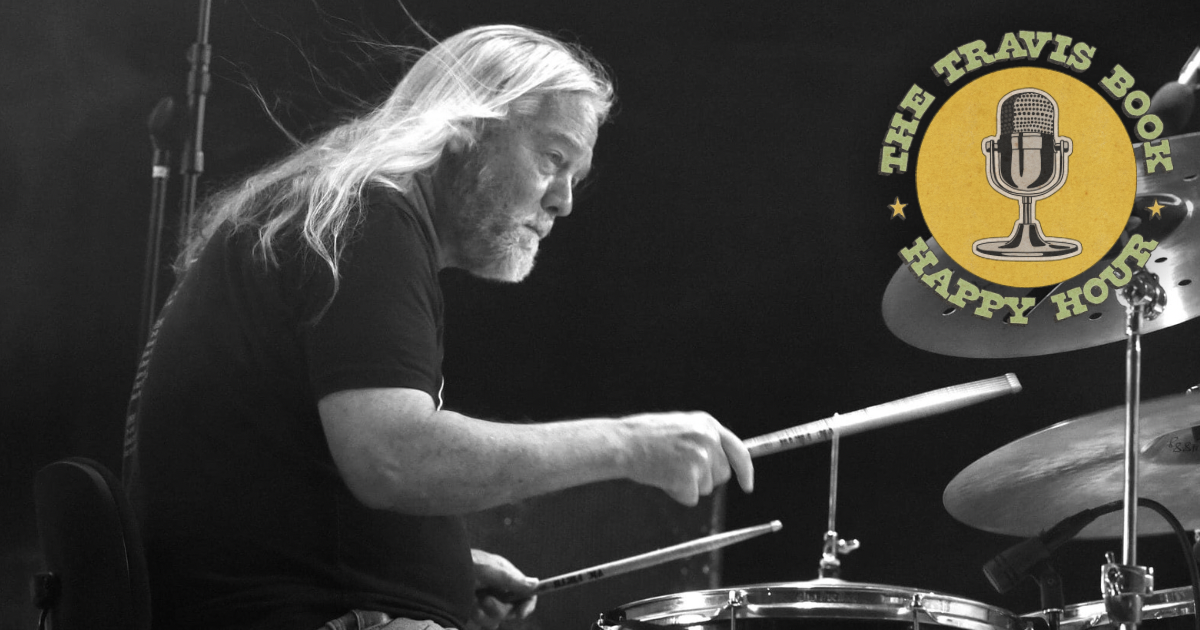
The Travis Book Happy Hour: Jeff Sipe

Drummers don’t always get a lot of love or attention. But, mention the name Jeff Sipe to nearly any musician and their eyes light up. Also known as Apartment Q258, he was a founding member of Aquarium Rescue Unit with Colonel Bruce Hampton (which also counted Otiel Burbridge of Dead & Company and Jimmy Herring of Widespread Panic among its members). I first heard him via early Leftover Salmon bootlegs and he’s toured with Tedeschi Trucks Band, Trey Anastasio, and Warren Haynes. Regarded as one of the best drummers alive, he’s also just a normal guy who lives down the street from me and who says “yes” pretty much any time I ask him to join me on a gig. Words really don’t do him justice; he’s just so wonderful and kind and supportive; I can hardly believe my good fortune getting to make music with him.

LISTEN: APPLE • SPOTIFY • STITCHERAMAZON • MP3

This episode was recorded live at 185 King Street in Brevard, North Carolina on April 4th, 2023.

Timestamps:

0:06 – Soundbyte
0:42 – Intro
2:15 – Intro by Bill K.
3:26 – “Mercy, Mercy, Mercy”
10:37 – “A Little Too Much”
16:00 – “I Am A Pilgrim”
22:30 – “Once I Knew You”
29:17 – Interview
46:10 – “Summertime”
48:30 – “Minor Blues”
55:34 – “Back Home”
1:01:50 – Outro


Editor’s Note: The Travis Book Happy Hour is hosted by Travis Book of the GRAMMY Award-winning band, The Infamous Stringdusters. The show’s focus is musical collaboration and conversation around matters of being. The podcast includes highlights from Travis’s interviews and music from each live show recorded in Brevard, North Carolina.

The Travis Book Happy Hour is brought to you by Thompson Guitars and is presented by Americana Vibes and The Bluegrass Situation as part of the BGS Podcast Network. You can find the Travis Book Happy Hour on Instagram and Facebook and online at thetravisbookhappyhour.com.

Photo Credit: Alan Grossman Photographyn