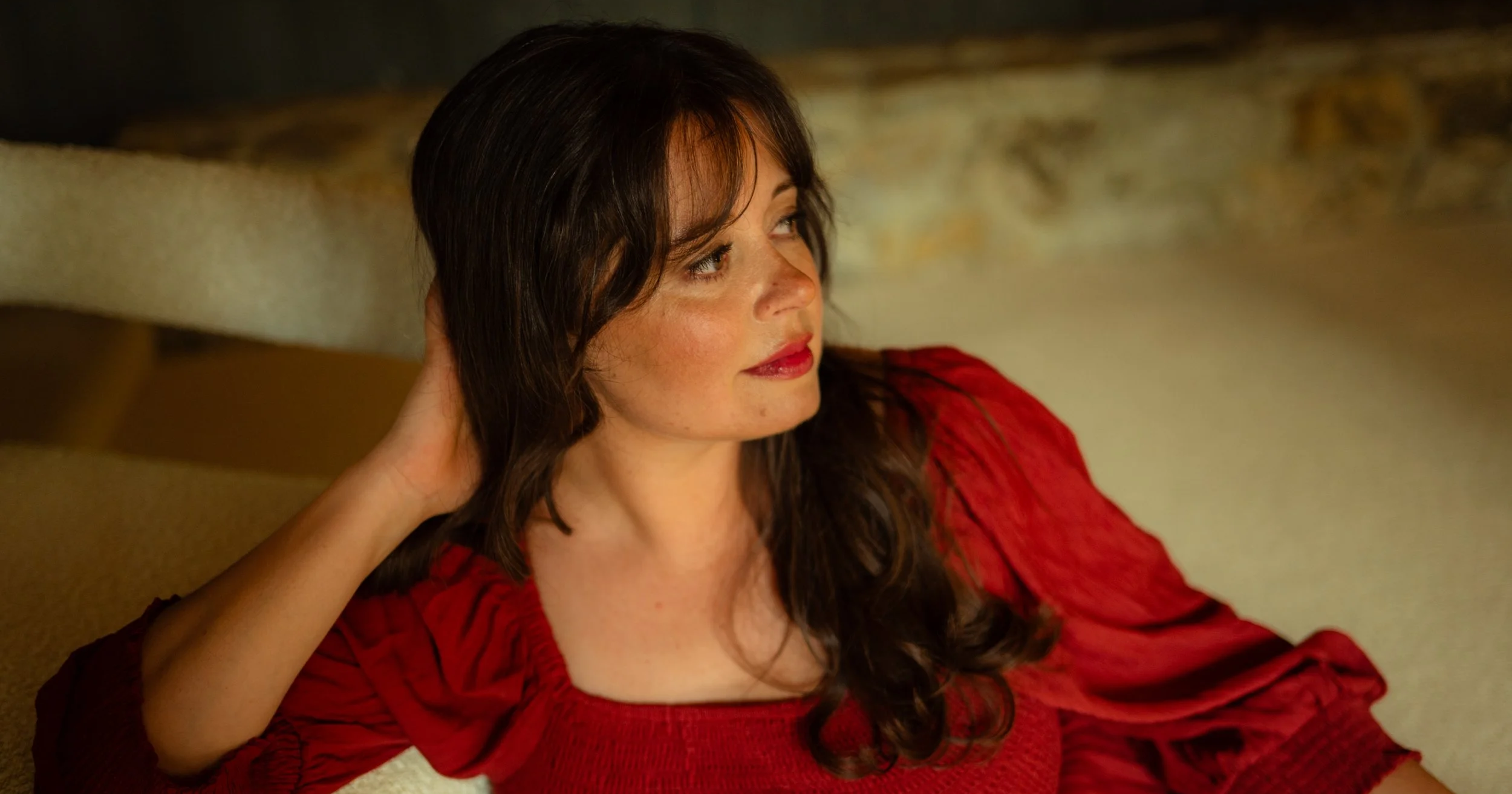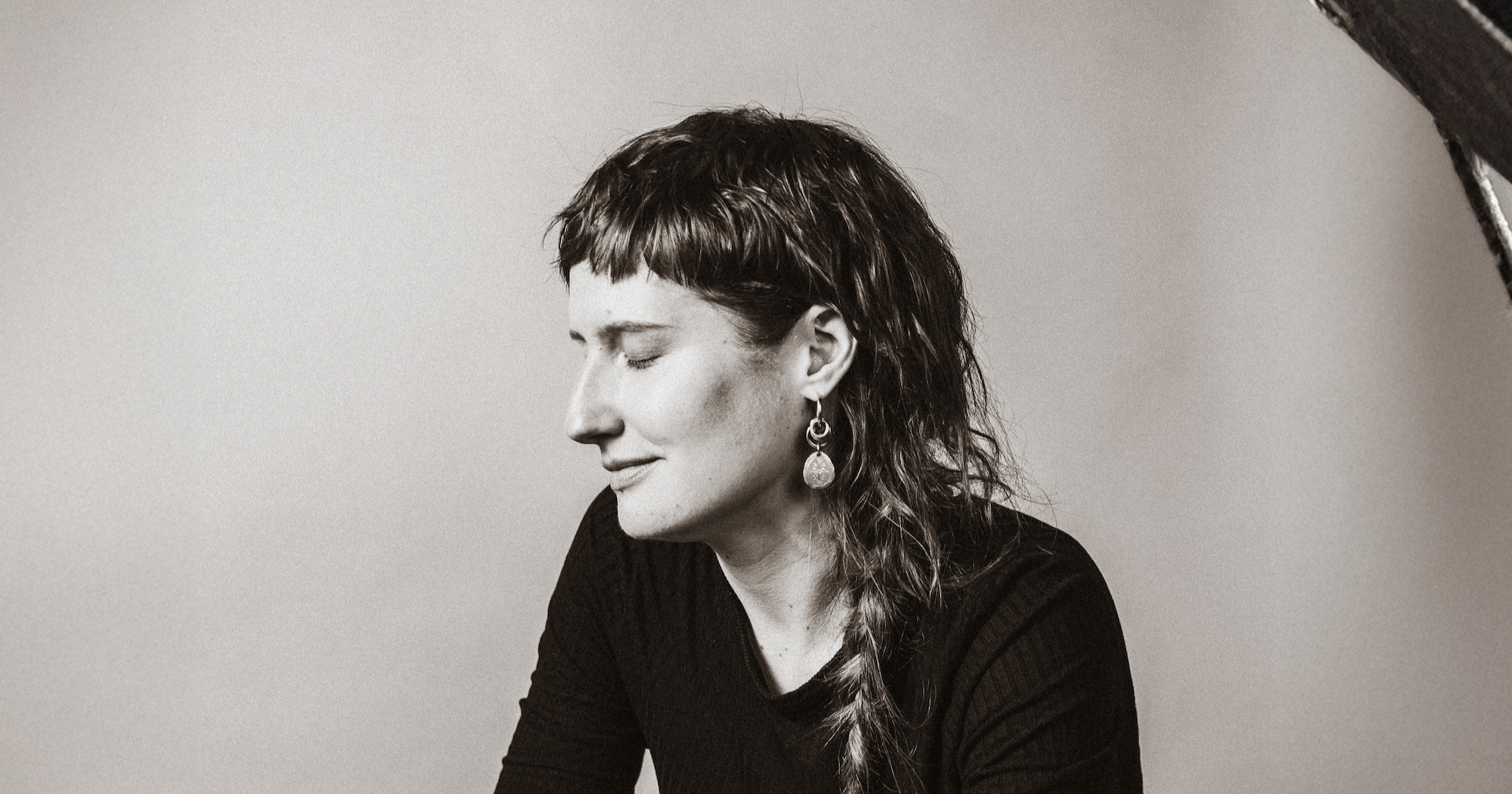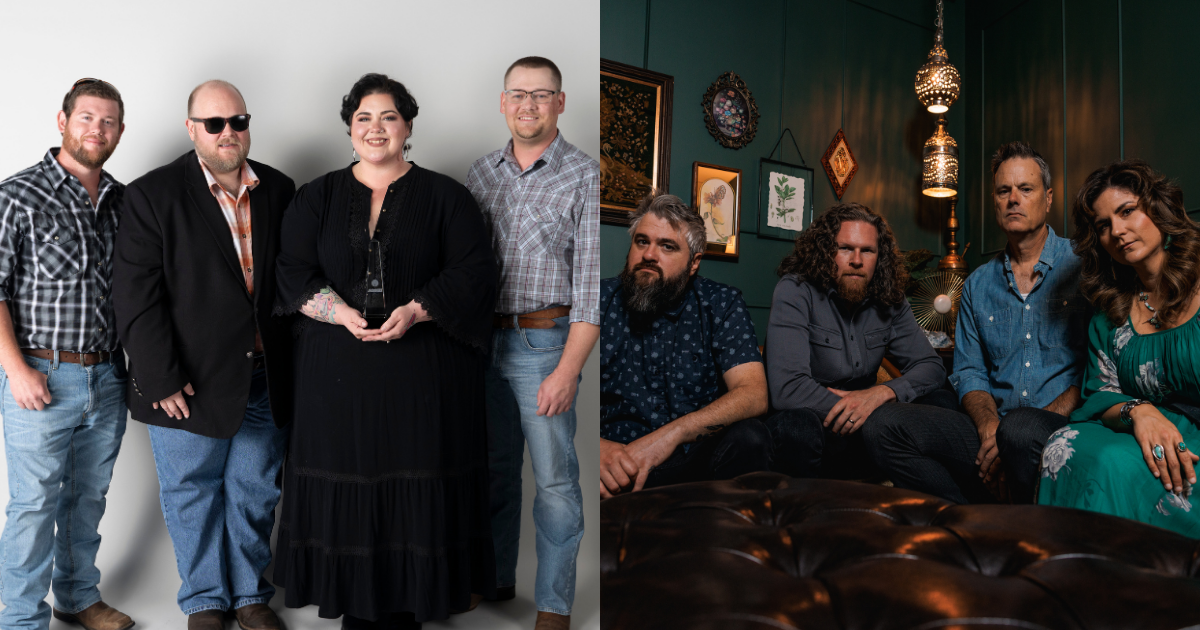
Joshua Burnside’s It’s Not Going To Be Okay is an Absolutely Shattering Album

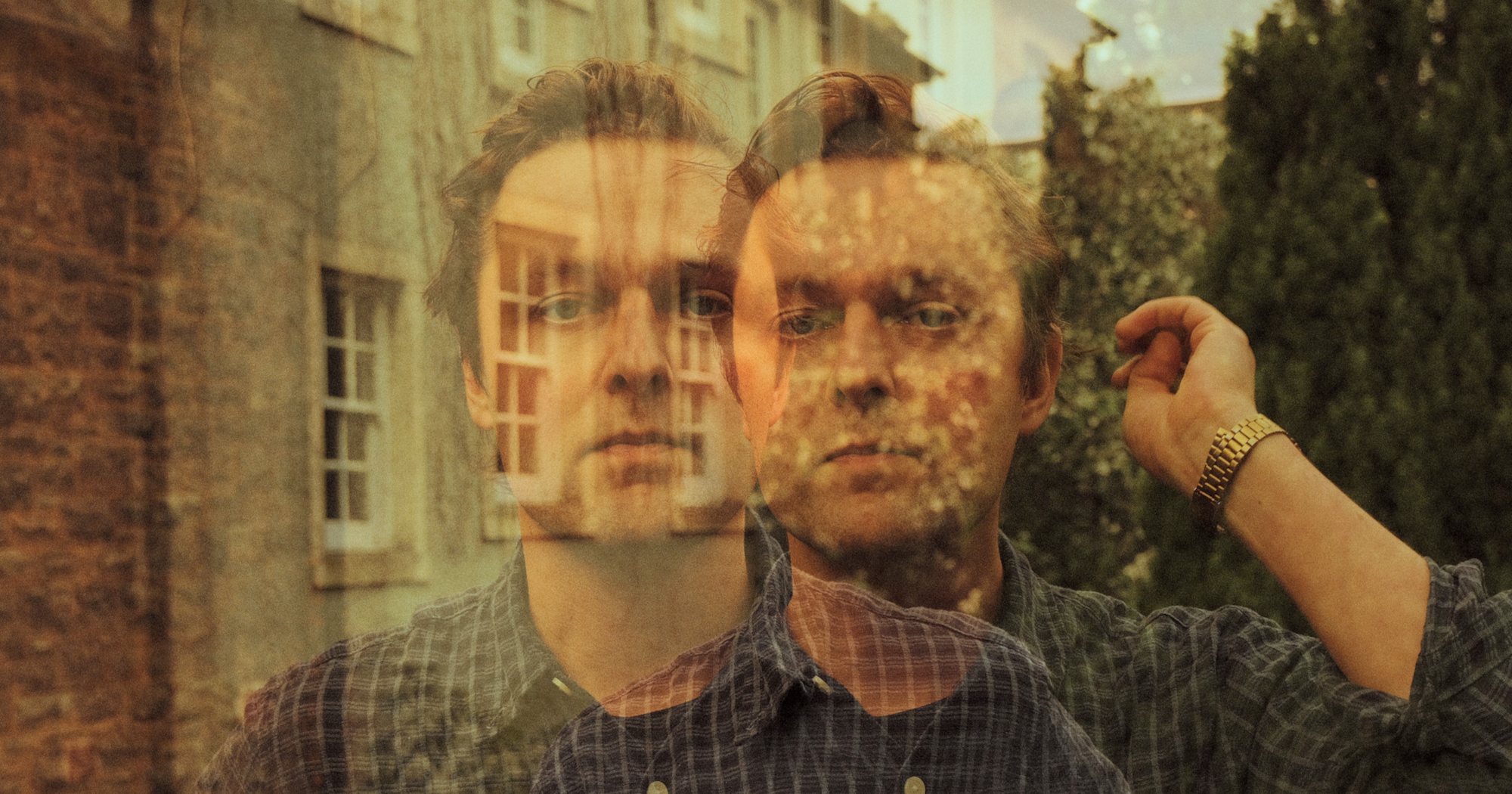
Irish folksinger Joshua Burnside has always shown an affinity for expressing grief, once calling it the reason he began writing songs as a precocious 13-year-old. He’s 36 now, and that sense of grief has never felt as overt as it does on his latest music. Burnside’s It’s Not Going To Be Okay is absolutely shattering, an album that more than lives up to its title. Written and recorded in the wake of the death of Burnside’s best friend Dean Jendoubi, who died of a drug overdose in August of 2024, the album is a bittersweet requiem.

Burnside’s previous albums combined Irish folk with electronic flourishes, worldly rhythms, and elements of sonic collage. His multi-layered experimentation reached a peak with 2025’s Teeth of Time, a record that felt like a major statement and milestone. Barely a year later, It’s Not Going To Be Okay could almost be his Nebraska move – bare-bones stark with minimal embellishment, focused on unadorned voice and guitar in the service of deep, deep mourning.

It’s a state of mind where everything brings back memories of the departed, like the opening of “The Last Armchair”:

Oh, the last armchair you ever sat on
Before you overdosed
Is the one I sit in every morning
To eat my egg and toast…

Ahead of the album’s release on March 20, 2026, we caught up with Burnside for a Zoom interview about his musical past, present and future plans.

It’s Not Going To Be Okay is quite a title. How did that come to be the name of this body of work?

Joshua Burnside: These songs are about the inevitability of pain, suffering, and death, which is what I was dealing with while accepting the loss of my friend. But it was at least a little bit tongue-in-cheek, too, such a ridiculously depressing statement to make. I thought it would be funny in a way. In Northern Ireland, we have a very strong sense of gallows humor. So I was drawing on that a wee bit. I don’t think it’s supposed to be taken literally.

How did you and Dean Jendoubi first meet?

Our paths crossed briefly in school and then we met playing music. Formed a band with a few other people. He and I were maybe 14 and got on immediately. Then there was a trio when we were 16. He played drums, I played guitar, and another friend played bass. We didn’t really gig, just played for the fun of it at his parents’ house. He was a great musician and songwriter himself. His music is amazing and beautiful and weird and dark, like him in many ways. He released a few EPs. The last one is called Skin Hunger and I sing on one of those tracks. Recorded in his mum’s greenhouse, our summer shed 10 years ago.

Since it’s been not much more than a year since Teeth of Time was released, when did you make It’s Not Going To Be Okay?

My sense of time has been so terrible the last few years. It was maybe a few months after Dean passed away in 2024, which is strange to say now. So, end of 2024 is when I started writing and recording and I finished it up autumn of 2025. I was recording it as I was writing it, and the last song I wrote was “It’s Not Going To Be Okay.” It was in the last month of making the record that that one happened.

Is it unusual for you to be working ahead like that, on the next record before the last one was even released?

It’s not typical. It was five years between Teeth of Time and Into the Depths of Hell. That one was a similar dark-humor title, but then COVID hit not long after I’d written those songs. That was some strangely perfect timing. So no, it’s not really normal for me to write and record this quickly. But I just felt an urgency, because one of the main ways I’ve always processed painful feelings is writing and singing about them.

The songs came quickly and easily. I had not planned to focus on just one topic, but most of what came out happened to be that. It felt natural to have them all together like this, almost like a grief journal. That’s the story. A lot of people thought some songs on Teeth of Time had been about Dean’s passing, but they were all written before that. Some of those songs seem resonant with this new record. That seems to happen to me a lot, I’ll write a song and then it seems like life imitates it. If I were not of sound mind, I’d start to worry about ever writing anything tragic or sad.

Was it your intention from the start for this one to be so sonically spare?

Absolutely. I’d been listening to Bill Callahan and Smog, A River Ain’t Too Much To Love. I love how sparse his records are – guitar and cymbal and voice – and they’re still so alive and rich. So sparse, you hang on every word. His voice is so clear. I wanted to do something like that.

Teeth of Time had a lot going on, so I wanted to go with more of a less-is-more principle. See if I could make the songs simpler, almost minimalist, and keep attention with straightforward and very to-the-point lyrics. So I challenged myself. Before that, I was almost hiding behind production and layered instruments. I’d maybe felt a little insecure. But after all these years, I’m feeling more confident.

What has the response been to this record and these songs?

It’s been interesting. I’ve already been playing a lot of these songs live, and so many people come up afterward to say how they lost a friend, dad, uncle, and how much it means to them to connect with my music in a time of grief. That’s powerful, makes me think it’s worthwhile to make music and do this at all. It’s special. I feel a great responsibility not to take this lightly.

I did send the album to Dean’s family, my family, his closest friends, to make sure it’s okay and wouldn’t upset anyone to put this out in the world. My brother and dad knew Dean as well and they told me they couldn’t finish it at first. Just too painful. It took them a while to come around to it. It’s so raw for people who knew him. A bit of an emotional whirlwind in general.

Touring with a record this intimate and personal seems like it would be challenging. Does it feel like you’re delving into difficult feelings every night?

Actors have an ongoing debate about performance technique, whether you should act an emotion or actually feel it. I think it’s similar to performing as a musician. I don’t know what’s more correct or authentic, but the main thing seems to be to stay present in the moment. Playing these songs does make me revisit those feelings a little bit. But I have to be careful with that because I only have so much emotional bandwidth. In performance, I try to remain as present as possible with the feeling of the song, the melody, sound of the words, and craft of the song, as opposed to tapping directly into the original emotion. Sometimes I’ll do that and it’s powerful. But I can’t do that the whole gig or every night, because then touring would be too much.

How many of these It’s Not Going To Be Okay songs will be in your every-show setlist this go-round?

I’ve been toying with the idea of playing all of it start to finish. I was thinking of it that way while writing these songs, how I wanted to play every track and have it hold up even if it was just me. I need to get into the rehearsal room with my bandmates to see if we can crack it. Would be nice to make some different arrangements with electric guitar and cello. We’re a three-piece most of the time.

What were you listening to while growing up?

Lots of heavier stuff, hardcore and post-hardcore, new metal, funk, grunge. Nirvana, Offspring, Fall of Troy. An endless list of screaming, shouting, loud bands, which I still love. But alongside that, I also got a heavy dose of what mom and dad were listening to – Simon & Garfunkel, Fleetwood Mac, Alanis Morissette. Jagged Little Pill was a favorite of my mom’s and I still love that one. Great pop record.

You’ve often cited the experimental duo The Books as a major influence and the source of some of your experimental tendencies.

I saw The Books playing when I was a student in Manchester 15 years ago and they just knocked my socks off. It did not sound like any music I’d ever heard before. All the sampling and found-sound collaging was just eye-opening, a completely different way of making music. I loved the aesthetic, the sound, the folksiness of banjo and cello with all that. It was just inspired.

I would not think about music the way I do without The Books. I still listen to them all the time, and you can hear their influence on loads of my tracks. “Under the Concrete” has city noises I recorded in a park in Belfast, sirens in the distance. I wanted that song to have the feeling of being set in that park in that city. It felt like that’s where it had to take place emotionally.

After two such vastly different records back to back, what’s next for you?

I don’t know yet. I need a bit of time for gestation and recalibrating why I make music and to try to come at it from a different angle. I’m very excited at the prospect of making something new that goes away from what I’ve done before, something a bit more experimental. That’s where my head is at now. Maybe someplace percussive. At the moment all I’ve got are loose imaginary mental soundscapes, but that’s enough to keep me happy for now.


Photo Credit: Tom Johnson

Foy Vance’s The Wake Is Really a Celebration

The second track on Foy Vance’s new album, The Wake, is simply titled, “Hi, I’m The Preacher’s Son.” Among a beautifully intricate and incredibly serene record dealing with overcoming deep grief and prolonged sorrow, the tune hits at the core theme and genuine emotion offered up within the entire body of work – learning to love yourself as you grow older.

“I am no fortunate son/ I am no favoured one/ I am but a loaded gun/ Fired into a world gone wrong,” the Northern Ireland-raised singer-songwriter rumbles through the song. “Face down in the dirt I learned/ You don’t always get what you deserve/ I can hide, I can try to run/ But I am what I have become.”

Captured by acclaimed British producer Ethan Johns, The Wake closes the door on the artist’s 26-year trek, both physically and emotionally, in dealing with the death of his father – what it means for Vance to let go of the pain and finally set his parent free, and himself, as well, within that process.

This journey began in January 1999 on the Spanish island of Lanzarote. Vance was in the midst of a performance when he slipped into this surreal, overwhelming trance, one that felt like the line was being blurred between reality and the cosmos above. The following day, Vance was informed of his father’s passing from a heart attack the previous evening.

“Only time will tell if I know you well/ Or if I did not know you at all,” Vance ascends on “I Think I Preferred the Question,” a selection from the album that squarely aims to put Vance’s past behind him. “It’s heaven, it’s hell/ It is well/ The spell dispels the more that I talk about it.”

The key to The Wake is the number seven. There’s a reason this chapter of Vance’s existence concludes on the seventh of his albums, all of which were inspired by his father. It’s directly linked to an ancient saying often used by Vance’s father, a traveling preacher, which eventually soaked into his son’s heart and soul: “Give me the boy to the age of seven, and I will give you the man.”

“You’ll be up high on the mountain’s peak/ Seeing everything that you just might seek,” Vance rolls through the final track, “Bathed in Light,” an uplifting tent revival number of redemption and closure. “When it gets time for town again/ I’m gonna tell you how you’ll feel right then/ Like nothing will ever bring you down.”

What Foy Vance has presented with The Wake is a raw and real album of sheer vulnerability and human strength, all wrapped up in melodies of such creative depth and sonic splendor. It’s a ceremonial, hallowed shedding of spiritual skin by one of the great songwriters of our day.

Where’s your head space at right now?

Foy Vance: Very good, the field is open. I feel like I walked a narrow road for 26 years, pretty single-minded and focused on one thing. And I don’t think I was even as aware of that at the time I was coming up on the seventh album, realizing that I’d set out on that journey and that was it. So, as you can imagine, finishing a journey that you self-imposed came with a sense of pleasure. Completing something feels good, but there was a bit of dread also, if I’m honest pretty straightaway. But, as is always the way, the end always reveals the new beginning, you know?

You talk about 26 years since your father passed away. What was that heaviness? Was it the relationship you had with him? Things that weren’t said? Things that could’ve been?

I came out [of the womb] singing. There were tapes of me singing at three years old, shutting my brothers up ‘cause they were singing it wrong, saying “No, I’m doing it well.” Music was huge in my life [growing up]. I had just turned 24 when my dad died. I was already playing music and trying to sing a career in it and trying to write songs. And I moved to Lanzarote to try and get away from the humdrum, the comfort zone of life. At home, it was just too easy to become comfortable. I wanted to go and find some time away from all that to seek songs.

And boy, did I find them, but I didn’t expect to find them the way I did. I think it was all the stars aligned at that moment. The moment my dad died, I’d already begun the song the night before as he was dying, and I didn’t even know that bit until the next day. But, the second I found out, I went back and I wrote the first song that mattered to me, the first song that was healing.

It’s like when those musicians were on the Titanic and they played “Amazing Grace” as it was going down. They weren’t playing that for a fee or for applause. Why were they doing that, Garret? You know what I mean? Therein lies something inherent in music that we’ve all but forgotten for the most part. And I think I had that moment [when my dad died] – everything became clear. I realized I’ve been sort of conning music into trying to make it fit my regime. And the whole time, it’s quietly beckoning me to grow and learn and glean. I’m glad I can pay my rent with [music], but that’s not what this is about. It’s not what music is. It’s not what it means.

Did you know that when your dad died or was it this revelation that came in later years?

No, I think I realized immediately, the second that song came and you realize it can come that way. It was like my antenna was out. A thin space was created between me and my dad. And obviously there’s a lot of things going on when you have that shock of grief, a monumental figure like a parent. I’m sure there are a lot of similarities between bouts of great creative inspiration and bouts of mental instability. Like an episode, if you will. So, I was making all kinds of connections that day. I guess I was grasping at anything to make sense of something and give myself something to hold onto and stick to and walk a narrow road with, and just stay focused. My dad was a big figure, and without him it was sink or swim – music was a vehicle for that.

Was he a tough love, hard to read kind of guy?

No. Tough love with three older brothers, for sure. But not so much with me. I think they wore him down by the time I came along. He was very soft and gentle, but he was a rough man. He was from East Belfast, born in 1945. He came from a tough background.

What is it you’re letting go of this far down the road since his departure?

The fact [the album] is called The Wake, it’s the end of it. Where I come from, [at a wake] you go to celebrate the life of someone, not to commiserate the death. You go and tell stories and you laugh your hole off. You raise pints and you sing songs and you have a wake. I realize it’s not the end of “the grief journey,” it’s the end of a grief journey – it’s never going to go away. I hope it doesn’t, because he’s been my co-writer, and I hope it remains that way. But, it just changed. It’s hard to put my finger on what lifted. Something lifted.

You know, I never went to college, I never even passed my school exams. I just left and got a job, didn’t even show up for the exams. I think this is as close as I’ll feel to walking [at graduation]. Like, setting out on a journey and then completing it and there’s your certificate.

In a short documentary about the album, one of the things you mentioned that really struck me was what your father would say to you, “Give me the boy to the age of seven, and I will give you the man.” How has that statement affected you as you’ve gotten older?

Well, because I have two boys. One of ‘em is still under five and I know that by the age of seven, that’s him – he’s locked and dialed. Whoever he is, it’s in there. I’m aware of that and I want to put as much good information in there as you possibly can, all the strong stuff that will be core beliefs when he grows up. [And] being very careful about how you speak to them, the tone you take, making sure that when they hear your voice in their head and you’re not around, it’s a comforting one, it’s a welcoming one. That all takes time and attention to detail and nuance.

I think it’s the same in work in art, like making those seven albums. It was like the making of me as an artist, I guess in my mind. Give me the artist of the age of seven albums and I’ll give you whoever he is. I guess I was making those sorts of connections in my mind. Like, I will have become whatever I am probably by then, I’ll be settled into something.

I have a lot of solidarity with that statement because it plays into another statement that “you learn most everything you need to know in life in the sandbox.” When you look back at who you were at seven, how much of that person is still who you are?

Garret, I’m 51 now. It’s taken me a long time to wander through some wild places, but I finally got back to [myself]. I was right at seven. You can trust your seven-year-old self.

One of the things I’ve noticed as I’ve gotten older is how much, in certain ways, I’m turning into my father. Do you notice anything like that?

Well, I think that’s what I got caught up with on “Hi, I’m the Preacher’s Son.” No matter how much you get away, try to run away from what your dad did. What I do is not a million miles away. Let’s face it, I’m just not preaching any truth of any sort, just talking about what’s happening, reflecting my own experience here or whatever. But, it’s not a million miles away [from what he did], that you go off and you dig for details and you articulate them. He always spoke in parables and riddles, so it’s not surprising that I became a songwriter.

Well, whether you perform onstage or you’re in a pulpit, you have everyone in that room facing the same direction, and everyone’s in there for a different reason. In the church or at a live concert, they’re focused on what you have to say and hopefully walk away with a better feeling of themselves.

Yeah. I guess the main difference is I’m not trying to sell them anything. I’m there having an experience, too. I’m caught up in the music. I, too, get lost in those two hours that we’re onstage. I go there. You can’t take anyone anywhere you’re not willing to go yourself.

Do you look at The Wake as maybe a death of an ego?

I’ve never really thought about it like that, but yeah.

It’s also a shedding of your own skin.

Yeah. Perhaps every album is a bit of a death of an ego. Putting to bed, marking the end of that journey and heading out into the next one. At the end of The Wake, I genuinely didn’t know if I was just going to take a few years off or what was going to happen. And then, I exploded, just absolutely exploded. By the time I got into the car [at the recording studio] in Bath, [England], and got home, I just wrote for the next two weeks. Endless ideas. What I thought was going to be the end was very quickly becoming a beginning.

It became fuel on the fire.

It really did.

What would your dad think about where you’re at right now?

It’s hard to gauge, because my dad applauded anything I did. If I boiled rice, he’d be calling my mom in to see how well I boiled the rice. He was very proud, so I don’t know if he could handle this. And I think it’s sort of sad that he doesn’t get to see it. But, at the same time, I wouldn’t have it without his passing – it’s the strangest gift I’ve ever been given.

There’s a lot of heaviness with the album. But, it does feel like, at the same token, there’s a big sense of release. It sounds like you’re in a good place right now.

Yes, I am. I’m done commiserating. I’m ready to celebrate. It’s the wake, you know what I mean?


Photo Credit: Gregg Houston

Emily Scott Robinson Stays Hopeful Through the Thick of It

Before embarking on a music career, Emily Scott Robinson worked as a social worker. The two occupations, she says, really overlap with who she is as a person. Talking from her home outside of Telluride, Colorado, Robinson shares that being a performing artist and playing shows has “a similar quality of service to it and connection that being a social worker did…”

“One of the things I loved about being a social worker is being able to help people,” she continues. “[Music] brings me a lot of joy and purpose. I get so much feedback from people that my songs help them. That’s the most important and meaningful thing that my music could do in this lifetime.”

On January 30, Robinson will launch Appalachia, her third release on Oh Boy Records and her fifth album overall. Its 10 tracks reveal her uncanny knack for conveying empathy, comfort, and compassion through a set of songs that explore topics such as a friend’s suicide, a grandparent’s death, her own divorce, and the destructive effects of Hurricane Helene on her home state of North Carolina.

Robinson recorded Appalachia with producer/musician Josh Kaufman (Bonny Light Horsemen, Josh Ritter) in late April and early May of 2025 at his Dreamland Recording Studios, near Woodstock, New York. Having loved his production work on Anaïs Mitchell’s 2022 self-titled album, Robinson wanted to work with him. “I want to make my version of what [Mitchell’s] record is,” she explains. She was thrilled that Kaufman not only was available to produce the album, but was also very excited about working with her.

Robinson’s road to becoming a singer-songwriter began when she was 14, when she went to a “super hippie summer camp,” as she describes it, in northern Michigan. There she fell in love with acoustic music she heard the counselors play at night during “mellow time” – songs by folks like Cat Stevens, Joni Mitchell, Dar Williams, and Ani DiFranco. After camp ended, she learned to play her mother’s old classical Yamaha guitar. Robinson loved to sing, but only played cover tunes whenever she would perform at coffee houses and open mic nights.

Her life changed, in many ways, when she took a Planet Bluegrass Song School workshop in 2014 while working as a social worker in Colorado. Besides learning about the art of songwriting, Robinson also discovered how to make a living as a musician. She quit her social worker job the next year and didn’t look back. “I felt such a strong sense of connection and purpose when I sang for people. Their response was so powerful, and I just thought this really feels like something I should pursue.”

That Robinson has a gift for words feels like a genetic inevitability. Her mother worked as a journalist and her father taught English. As she describes it, Robinson learned how to tell and edit a story from her mother, and how to write in a direct and active style from her father. “My parents taught me how to write… that stuff is burned into my brain,” she states. “I’m my parents’ child.”

2026 represents a significant career moment for Robinson with the new album arriving in January and tours crisscrossing the U.S. throughout the year. She took time out from a snowy winter morning to speak with BGS about Appalachia and the roads she took to make her album.

It has been several years since your last full-length album, 2021’s American Siren. How did this album come into being?

Emily Scott Robinson: It took me about four years to write this record. These are the songs written in the aftermath of a lot of upheaval and change in my life. I went through a divorce in 2021 and then moved away from Telluride the next year. And even though I didn’t move that far – I moved about an hour away – I left the only community that had really been home for me for about a decade.

And there were a lot of endings that felt really sad. Both my grandmothers passed away. [But] I also became a parent. I am now engaged to my partner, who has a nine-year-old son. And that has been amazing. So, my life kind of completely changed. These are all songs written in the thick of that – and [the] surrender and joy and grief all happening at once.

Was there a song that really kickstarted this album?

The first song I wrote for this album – and then it was the only one I had written for like a year and a half – was “Hymn for the Unholy,” which is, of course, the opening track. And that felt like my anthem. I wrote that song [when] I was going through this divorce. It was New Year’s Eve and I just couldn’t even fathom this whole movement of setting plans and goals for the new year when so many things felt like they were ending or becoming really unsure for me. It was the only new song I had for quite a while. And then, in about the last year and a half, I wrote almost all of the rest of the songs.

“Appalachia” I wrote right after Hurricane Helene hit Western Carolina. There were a couple songs that I wrote at a writer’s residency in Texas, [including] “Time Traveler” about my grandmother who passed away. I wrote “Cast Iron Heart” on another songwriting retreat. “And Bless It All” was really one of these songs that emerged that I wrote really quickly, like an homage to this chapter of life [about] raising a kid [and having] parents aging – like my generation is now doing the same.

“The Time For Flowers” is a song that you had for a while. How did that find its way on the album?

“Time For Flowers” is on here because it’s a song that has never lived on a full album. A lot of my fans would come up to me after shows and go, “Which record is ‘Time for Flowers’ on?’” … I released it in 2020 in the summer [during the pandemic as a single] and it grew legs and traveled far and wide. People started to perform it at funerals and with their choral groups and they started to sing it in church and ask for arrangements. It became a song that meant a tremendous amount to a lot of people.

I put a lot of heart and a lot of craft into that song. But the song has taken on its own life and that’s really beautiful for me to be a part of. And it means a lot again in 2025, to people who are living in what feels like an increasingly dark time. I wanted to put that on the album and to sing it in the way that I perform it at my shows, which is just acoustic.

I felt like, on this album, there was a feeling of expressing compassion and forgiveness and reassurance. A message of “finding a sense of strength” not only for yourself, but for listeners as well.

The one cover on the album is “The Water Is Wide” and I was wondering why you chose that old folk song to include.

I love that you wondered that because, to be quite honest, I felt a very strong instinct to put this song on here and I didn’t really know why. Sometimes I just feel a deep sense that needs to happen and so I just trust it and do it. I love that song and I had planned on putting it on there. I think, if I were to explain it on a more logical or grounded level, I would say that I felt that song – as old as it was – still speaks in both a deep and a fresh way. The lyrics strike me as being fresh and a little unusual every time. And it felt very timeless but also fresh, and so I just was drawn to it.

Sometimes I write a song, or I put a song on the record, and I just go, “I will find out later why I had to do this.” But, genuinely, I’ll find out along the way why it is that that song begs to be on this record. Also, Josh Kaufman, my producer, was so excited when I told him I wanted to put that song on there. He loves old folk songs and making them feel a little bit new or breaking them down a little bit and rebuilding them. And so do I, so it just kind of felt like it fit.

“The Fairest View,” which follows “The Water Is Wide,” closes the album. It holds an old folk song vibe although listening to it, you realize that it’s not.

“The Fairest View” was actually not a song that even existed until the last 24 hours that we were in the studio. My friend [songwriter Lizzie Ross] and I have a mutual friend who died before we were in the studio together. He really loved music and had grown up in Western North Carolina. He died by suicide and we were really writing this song for him, and to him. … We finished it the night before the final day. We were in such a great groove of creative flow that this just made total sense

I sent [Josh Kaufman] this voice memo. I think it was like 11:30 at night. I was like, “What do you think about putting this on the album tomorrow?” And he goes, “I dig it. Let’s do it!” He said that there was nothing really like this on the record, but it felt like it still fit sonically, lyrically, and melodically.

What were the important contributions that Josh Kaufman brought to the recording process?

Really the magic of working with Josh – the thing I love the most – is when we first had our first conversation. We were talking about how we work in the studio and he said something along the lines of, “You know, you play the song and we all start just kind of experimenting and playing around on instruments. We’ll know it when we find it, because you can hear it and you can feel it in your body when you have found the thing.” And that for me is exactly how I work creatively and in the studio. I’m comfortable with that kind of workflow and so I was like, “Yep, that’s exactly how I want to work.”

There is a wonderful intimacy to your vocals. I got the feeling I was sitting on a couch and there you were singing from just across the room.

D. James Goodwin, who is the [album’s] recording engineer and who mixed the record, created a specific reverb treatment based on the room in Dreamland, based on the actual recording space. … He started to measure the exact EQ and decay of all these different points in the room and then created his own reverb setting that he calls “the Dreamland reverb setting,” which is just meant to sound exactly how it sounds in the room.

You do a great duet with John Paul White on the track “Cast Iron Heart.” How did he get involved on this project?

John Paul White is a great interpreter of songs, because he doesn’t put too much on them. This is like an acting principle, which is “the more you’re trying to act, the worse it is.” But if you’re allowing the song to come through you, and you’re not getting in the way of that and you’re being honest to that song, then that’s when the powerful performance really happens. And John Paul is experienced enough to really know that.

I knew that I couldn’t have somebody with a fully polished country voice singing this. I wanted it to sound like somebody who had lived. I know John Paul and I know that he has lived and he has a family and he’s been making music for years. He embodies the person singing the song – the actual voice of the narrator of the song – and it was such a gift that he said yes to this. He’s the sweetest, most generous artist and human, so that’s how he got involved.

This is your third release for Oh Boy Records – how did you get involved with them?

I got a message from Jody Whelan [head of Oh Boy Records and John Prine’s son] and he said, “We’re really big fans of yours at Oh Boy and if we can ever help you in any way let us know – we’d love to work with you.” And I was like, “Did I just get offered a record?”

I reached out to Jody and I said, “I would love to talk to you. I have a record that I’m about to make and we should connect.” I’m a huge fan of Oh Boy and John Prine. I signed a fantastically supportive and artist-friendly record deal with Oh Boy. And I go on the record to say that as often [as I can]. … I genuinely hit the jackpot when I signed the deal with Oh Boy. I love working with them. Their heart has been, and always will be, in the right place. I’m really, really lucky.

Are there things you hope listeners take away from the new album, or from your live performances as well?

I hope that people do feel fortified, encouraged, and hopeful when they listen to these songs because this record is about finding those bright spots and finding that hope in the thick of all the other parts of being a human. It’s about leaning on other people and finding that in relationships and in community. I also hope that this record will comfort people who’ve lost somebody they loved recently.

I want this record to be of service to people. I want it to reach them in ways that they need to be reached. I don’t want people to give up hope in this time in history or this time in our country. I don’t want them to give up hope in themselves and each other.

I think we’re increasingly in a corporate media landscape and a very engineered social media landscape that has a lot of voices that say there’s no hope; there’s no reason to fight, it’s too late. And I think the social worker in me and the political activist in me wants to yell, “That’s fucking bullshit!”


Photo Credit: Angelina Castillo

Paul Burch’s Songs for Absence and Guarding Space

The songs for my album Cry Love came like automatic writing, as if exhaled after too long at a high altitude. And they were recorded as if my band, the WPA Ballclub, had known them for a long time.

A common theme thematically and lyrically is absence. Absence can be volatile. The songs that inspired Cry Love have much in common, particularly a sense of space. Bedrock instruments such as bass or drums are absent or played as loops. Sometimes there’s hardly instruments at all.

Our decade since 2020 has been a slow developing picture of things absent or out of focus. First place. Then time. Then people. Then, this year, the absence for me and my family became the loss of a person. Earth, air, sky, salty sea, and sand were thrown amuck. Cry Love and these songs guard that space – that absence – with music. – Paul Burch


A while back, if I remember right, my life was one long party where all hearts were open wide, where all wines kept flowing.

I ran away. O witches, O misery, O hatred, my treasure’s been turned over to you!

I managed to make every trace of human hope vanish from my mind. I pounced on every joy like a ferocious animal eager to strangle it.

So…it dawned on me to look again for the key to that ancient party where I might find my appetite once more.

A. Rimbaud, A Season in Hell


“Paris” – Moondog

The Viking of 6th Avenue, who lost his sight as a boy, spent most of his life performing on the corners between 52nd and 55th street. His compositions and collages made him friends like Charlie Parker, Benny Goodman, and Arturo Toscanini, who testified in court on Moondog’s behalf in his suit against DJ Alan Freed for co-opting “Moondog” for his radio show in Cleveland. Freed lost and apologized on air. This is Moondog’s late in life collaboration with the London Saxophonic. Beautiful.

“If I Lived in a Picture” – The Green Pajamas

The Green Pajamas are from Seattle and, like me, have never been on a major label. But that’s never stopped them from making gorgeous tunes like this one that upon first listen instantly vaulted them to one of my favorites ever.

“Telephone Blues” – Snoozer Quinn

My dear friend, supersonic guitarist and producer Richard Bennett, turned me on to Snoozer Quinn, the lost jazz pioneer who in the ’20s and ’30s scared the wits out of contemporaries Lonnie Johnson and Eddie Lang with his out of this world sound. There are stories of musicians filling hotel rooms and hallways to gander at a Snoozer jam session. Louis Armstrong was a great fan, as well.

Snoozer left the cutthroat NYC scene and went home to Louisiana where he died young from tuberculosis – but not before a musician pal captured him literally in his deathbed. The best part of this story is I turned Tim O’Brien onto Snoozer and Tim turned on his ole pal Bill Frisell. My good deed.

“How Much I Owe” – The Radio Four

All of the Nashboro gospel recordings are beautiful, but I’m especially drawn to the urgency of the Radio Four. Thanks to Jonathan Marx of Lambchop for the introduction. Featuring the great country bassist Lightning Chance, whose credits include Hank Williams and the Everly Brothers – and suggesting the Jordanaires’ “number system” for vocal parts be applied to Nashville sessions.

“Poinciana” – Ahmad Jamal Trio

Recorded live at the Pershing Hotel in Chicago. I especially love “Poinciana” for drummer Vernel Fournier, who reminds me of Nashville great and WPA batteur Justin Amaral. Bassist Israel played on Charlie Christian’s “Profoundly Blue.” Recorded by Chess Records engineer Malcolm Chisholm, who probably cut a session for Muddy Waters the next day.

“Sun Rays,” “Last of My Kind” – Pony Hunt

Jessie Antonick, who performs as Pony Hunt, is a musical gem. I love this live performance of “Sun Rays.” The finger snaps just send me.

I also dig their lovely version of my tune, “Last of My Kind,” which sounds like an alternative version of the WPA Ballclub.

“So Sweet You Are” – Dog On Fleas

I’m sure these lyrics got into my head for songs like “I Won’t Miss My Baby Anymore” and “Braggin'” which share the Willie Dixon “left is right, I may I might” school of playful revelation.

“Ready to Leave” – Emahoy Tsege Mariam Gebru

For me, all of Ethiopian composer and pianist Emahoy Tsege Mariam Gebru’s works are enchanting. But I especially love the album Souvenirs, her first vocal collection. Mississippi Records describes it as “songs of wisdom, loss, mourning, and exile sung directly into a boombox,” which aptly describes my feelings writing Cry Love.

“The Whale Has Swallowed Me” – J.B. Lenoir

Both John Lee Hooker and Mr. Lenoir excelled at sparse blues storying around a hypnotic, looping beat. And a whale of a story it is. The great Fred Below, on drums, powered hundreds of classics at Chess.

(Watch a great live video of J.B. Lenoir performing the song on YouTube.)

“Misery” – Barrett Strong

A hypnotic, menacing tune in which melancholy carries a blade and a broken bottle. Sung from the heart of misery itself by Motown’s first hit artist (“Money”). I love the looping carousel bass line. Los Lobos did a beautiful version, too.

“I Need Somebody to Lean On” – Elvis Presley

Elvis was having a hard time musically and spiritually in the early ’60s but still made some beautiful records. By Doc Pomus and Mort Shuman (“Save the Last Dance for Me”). Elvis sounds inspired and committed with phrasing that evokes a bit of Chet Baker.

“Complex” – Tristen

I’ve been crazy for Tristen’s music since I first heard her perform with a trio in front of Whole Foods (of all places) over a dozen years ago. That was the old Nashville. We both play Epiphone Casinos, which makes us siblings of sorts – members of an exclusive club. I’d like to think so, anyway. “You can have your way until you get in my way.”

“Blow Wind Blow” – Muddy Waters

A great era for Muddy on stage with fiercely driving rhythm courtesy three guitarists and Pinetop Perkins.


Photo Credit: Jim Herrington. Pictured: Paul Burch (L) and Fats Kaplin (R). 

Laurel Premo’s Songs of Grief and Opening

On Halloween, I released an album of griefwork music. Laments features four compositions for solo fiddle and voice born out of an instinctive and spontaneous draw into lamentation when my body demanded it as part of its healing processes.

In both my vocal and instrumental soundings, the role of a traditional lamenter has long been rooted in my identity and how I seek to be of service as a community member who helps others enter into emotion or move through to the other side of an emotion. That work is not limited to sorrow, but can move joy as well. Music can help to bring more aliveness and connectedness to one previously detached, as I’ve been lucky to experience in my work of being a dance musician or a wedding fiddler.

Since my initial education on the topic of “lament” around age 20 while studying in Helsinki, I have held the possibility of a similar role as a guide into or through feeling at the core of my work. It wasn’t until the middle of the last few years, when I had been writing this music on fiddle and voice, wailing music with few words, that I realized I was working with actual lament and that I had found myself knee deep in a river of tradition. So I am here, coming full circle.

Seventeen years later, I returned to research and to listen to archive sources after I had birthed this work, to begin to understand the context of my path, to grab on to some railings, and to move into whatever comes next. I have since come to understand that performative ritualized mourning is a global phenomenon of traditional cultures. While my record is a performance of prepared arrangements and echos of what I experienced in liminal spaces, as opposed to my live lamentation or ritual, it’s my hope that the music can represent the shallows of what is available inside of the great depths of the tradition. (For more reflections on this work, read on via the extended notes booklet for Laments.)

For this Mixtape, I thought back through time to craft a collection of tracks that have been medicinal to me in seasons of heaviness, in times when I needed assistance to reopen a closed self. The tunes span many genres – please take them with open ears and meet them with what they offer. Through different modes, they all have the power to help bring in a glimpse or a full serving of transformation, whether that’s delivered from the quietest breath of the mechanics inside of a piano or from the wall of supportive pressure that is the embrace of the Scottish smallpipes. Three traditional lament forms are featured (Ireland, Scotland, and Peru) nestled here alongside music that I think works in related ways. It is music that helps us enter ourselves. – Laurel Premo

“Riverside” – Tim Lowly

(Listen on Bandcamp.)

This is the first song that came to my heart for this Mixtape, possibly because it was an early memory of the expansive potential of music as a tool in grief. I heard Tim Lowly sing this song at an intimate house concert in Kalamazoo sometime in the 2010-2015 range and his album traveled with me over many touring miles in America that decade. Tim is a painter and writer, and the central protagonist of much of his work has been his daughter, Temma, who has cerebral palsy with spastic quadriplegia. The melody and lyrics in this piece surrender to “slipping down” until they land on some solid new core.

“Pililiù” – Bridghde Chaimbeul

I’ve been very moved by the sounds from Scottish pipes player Bridghde Chaimbeul, who’s just recently completed her first US tour. I listened to her rendition of “Pililiù” during a high intensity breath practice once and it produced an immediate outpouring of tears. Some deep thread of connection existed there. A few months later, while researching vocal roots and lamentation, I recognized that this melody that she had recorded instrumentally is indeed an example of a traditional keening melody. The melody of this lament is a recreation of birdsong of the Redshank. In Scottish tradition, this coastal bird inhabits the liminal space between solid earth and the vastness of the fluid ocean, between known and unknown eternity.

“Body” – Emma Ruth Rundle

A few winters ago Engine of Hell hit me in a heavy way and seemed to be the exact medicine of resonating my own experience that was needed. When music reflects some color of what we’re feeling, it can vibrate our emotional body into become something bigger than we can see and relate to, converse with, question, and be held by.

“Visit Croatia” – Alabaster DePlume

This nostalgic journey is created from patience, deep listening, and real breath. Alabaster DePlume is an English musician and poet.

“Batonebo – Rachan” – Ensemble Ialoni

This is a pre-Christian healing song from an incredible Georgian women’s ensemble. In traditional Georgian belief, “Batonebi” is the name of spirit beings that are the cause of childhood infectious diseases. Songs like this are sung to these spirits, alongside other ritual, to appease them and ask them to leave the sick child so that they may heal. This whole record contains traditional folk song in complex harmony that work as chants for the singer and listener (including the Batonebi spirit audience!).

“My Friend The Forest” – Nils Frahm

Nils Frahm presents deep texture and intimacy here. The flex and breathing of the piano, akin to the live breath of the forest, takes you on a whispering trail of release. Other tracks that have a similar vibe from this record are “A Place” and “Forever Changeless.”

“Gorm” – Susan McKeown

I was introduced to this recording through the master’s thesis of Michelle Collins who investigated the de-ritualization and re-ritualization of keening in contemporary Ireland. This original song from 1996 is written in the traditional form of Irish lament and sings grief related to emigration and grief caused by AIDS. Listen for the traditional cry of “ochón.”

“Nude” – Radiohead

Bringing in some movement now after our ‘set one’ of still listening. Feel the tilt of this waltz gently push you around while the vocals reach and spin.

“Without The Light” – Kelly Joe Phelps

Kelly brings in some sonic reverence here, reaching upward and swimming through memory. “I can see better without the light.” This relaxing into surrender here, perhaps even some praise for the grief in how this song is presented, is an important point in the process. We throw up our hands at the mystery of it all. We sit in awe of the many threads that connect to our heart from all we’ve lived through, from all those we have shared love with. This expression of love – our grief – is actually nourishment towards those living strands that connect us through worlds.

“Vuela Golondrina” – Coral Rojo

Morning light beams through this tune from Chilean vocal ensemble Coral Rojo. The lyrics here speak (again) of birds, both the swallow and the condor, of water, of revolving and renewing time, and the patterns and daily rituals of the natural world healing and waking us to new days. “Cry your sorrows while the mountain range shines as the day arrives.”

“Acid Rain” – Lorn

I’m including this dark ambient, industrial track from Milwaukee artist Lorn to honestly reflect the variety of tunes that do this work for me, personally. Here, bringing in the big guns of bass and synth grit to massage out angst and sorrow stored deep in the muscle. Sometimes you need to order size large.

“Surrender” – Rotana, Superposition

The tunes on this project from Palestinian/Saudi vocalist Rotana and duo Superposition are truly animated prayers and meditations. By that I mean, breathing life, bringing into life, and making alive old and new words. It takes a lot of experience and intention to keep that devotion in your music. Rotana sings codes of freedom.

“Song of Marriage” – Young girl in Huancavalica, Mountain Music of Peru, Vol. 1 

I found this song very recently while listening through a track that shared five-second samples of all of the music on Voyager’s Golden Record (a project that served as a “message in a bottle” for extraterrestrial life led by Carl Sagan in the 1970s). It stuck out to me, even though it was a sweet young voice, I could tell it was some form of blues. Looking up more information about the track, I learned that it was actually lament. Across cultures, in addition to lamentation being used to accompany death, laments are sung quite often to accompany the journey crossing the threshold of entering marriage, as ritual protection in that liminal space, particularly for the bride leaving her family and entering a different life.

“Oh Aadam, sino essitus” – Anonymous, Heinvaker

This project from an Estonian vocal ensemble featuring folk hymns and runic songs was one I listened to a lot in the first summer of the pandemic. The sound is such a balm. A close friend once remarked that this music gave him such pride and hope in what humans are capable of. The actual singing of it, that we are capable of creating this resonance with each other, shows us that we hold such power to shape our world, that we can be positive citizens in the large environment. On our theme today, let this tune speak to the transformation that we lead ourselves on through the journey of grief. We are capable, and we are deeply belonging to this big web of creation.


Photo Credit: Harpe Star

You Gotta Hear This: Red Camel Collective, Wood Box Heroes, and More

It’s not only the end of the week, it’s the end of the month! And that, to us, is scary enough for October 31. Mark the occasion – whether Halloween, the end of the week, or the end of October – with our new music roundup.

Kicking us off, singer-songwriter Sophie Gault releases the title track from her upcoming album, Unhinged, today looking ahead to her full record release in January 2026. Inspired by a stroke of luck playing cards aboard a cruise ship, Gault leans into trusting your gut and doing what feels true – even if others might call that “unhinged.”

Red Camel Collective, 2025 IBMA Award winners for Best New Artist, have unveiled a new music video today for “In The Mexican Sun,” written by hit bluegrass songwriter Malcolm Pulley. Perfect contrast for the cool, rainy days of fall or the quickly approaching shivery weather of winter, “In The Mexican Sun” wasn’t intended to be a bluegrass number, but the Collective make it feel right at home in the genre.

Meanwhile, contemporary bluegrass (and everything else) guitar great Bryan Sutton has a special posthumous duet with Doc Watson that he’s sharing today. The new single, “Working Man Blues,” includes vocals and guitar by Watson and Sutton shares the story of how the Merle Haggard cover came to be.

Experimental old-time and indie musician Laurel Premo shares her new project today, Laments, a thoughtful and deep exploration of grief from a variety of perspectives. A sort of instrumental text painting, “Grief Of The Angler” listens like an entrancing dreamscape as resonant bow strokes and heart-wrenching vocalizations interweave in evocative and inspiring ways.

Bringing us home, Nashville bluegrass-Americana supergroup Wood Box Heroes pay tribute to K.T. Oslin with a video performance of their cover of “Do Ya.'” With fiddler/vocalist Jenee Fleenor on the mic, it’s a lovely homage to a relatively undersung hero of ’80s and ’90s country music. Of course, the track shines with the Wood Box treatment.

There’s plenty to enjoy in our weekly collection of new music, videos, and premieres. You Gotta Hear This!

Sophie Gault, “Unhinged”

Artist: Sophie Gault
Hometown: Nashville, Tennessee
Song: “Unhinged”
Album: Unhinged
Release Date: October 31, 2025 (single); January 23, 2025 (album)
Label: Torrez Music Group

In Their Words: “I wrote ‘Unhinged’ after going on the Outlaw Country Cruise. I was learning to play blackjack and everyone told me I was crazy for doubling down on a 17 – but I did it anyway, and won. That moment kind of summed up everything for me. The song’s about gambling, but really it’s about trusting your gut and doing what feels true, even when the odds are against you. Sometimes the biggest risk is the one that pays off inside. On the way off the boat, this guy stopped me and said, ‘Hey, you’re that unhinged girl from the blackjack table!’ and I thought, ‘Yup, that’s the spirit of the song right there.'” – Sophie Gault


Laurel Premo, “Grief Of The Angler”

Artist: Laurel Premo
Hometown: Traverse City, Michigan
Song: “Grief Of The Angler”
Album: Laments
Release Date: October 31, 2025

In Their Words: “The four pieces on this record each hold a different-sized relationship. The third track, ‘Grief Of The Angler / I Grieve In The Realization Of The Generosity Of Your Gift,’ is sung from a formed deeper intimacy with the ecosystem that I belong to. In my life, my relationship with a form of hunting has been fishing and this piece sings the shared experience of taking another body for nourishment.

“As every relationship deepens, as the bonds are woven together between individuals, there is the opportunity for those threads to hold beings closer together but also to create tension when one leans back. The ties stay connected in both directions and that reciprocity demanded is an exchange for the gift of being able to be closer in intimacy. This piece sings from the moment of gravity of the fisherperson deciding to keep a catch and the energetic blending of beings therein.” – Laurel Premo


Red Camel Collective, “In The Mexican Sun”

Artist: Red Camel Collective
Hometown: Wirtz, Virginia (Johnathan Dillon); Walnut Cove, North Carolina (Tony and Heather Mabe); Oakboro, North Carolina (Curt Love).
Song: “In The Mexican Sun”
Release Date: October 17, 2025 (single); October 31, 2025 (video)
Label: Pinecastle Records

In Their Words: “This tune comes to us from the pen of our buddy Malcolm Pulley. You may recognize that name as he also wrote the hit song ‘In The Gravel Yard,’ which went on to become a bluegrass jam standard. ‘In The Mexican Sun’ is one of those songs that you’re sure you’ve heard somewhere before. The melody seems familiar somehow. It has all the earmarks of a hit tune. This one wasn’t a bluegrass song from its conception, but I believe it was always destined to become one.” – Heather Berry Mabe

Track Credits:
Heather Berry Mabe – Guitar, vocals
Tony Mabe – Banjo, vocals
Johnathan Dillon – Mandolin
Curt Love – Bass
Stephen Burwell – Fiddle

Video Credit: Laci Mack


Bryan Sutton, “Working Man Blues”

Artist: Bryan Sutton
Hometown: Nashville, Tennessee
Song: “Working Man Blues”
Album: From Roots to Branches
Release Date: October 31, 2025 (single)
Label: Mountain Home Music Company

In Their Words: “On the original 2006 release, I would just show up, set my gear up, and we would record. Even in those sessions I had a general idea but not so much of a design on what exactly I needed to get. Once [Doc] got comfortable, he was just starting to talk and show me some different tunes. … He just launched into ‘Working Man Blues,’ out of nowhere! It felt like, ‘I hope I got all that, I hope the tape didn’t run out.’ Then he said at the end of it (and I kept it on the recordings), ‘I just wanted to hear what you did with it.’

“You never knew what you were going to get with Doc Watson – from Crystal Gayle songs and ‘Nights in White Satin,’ certainly all that Doc-abilly stuff and swing tunes – outside of just fiddle tunes and bluegrass and folk ballads and things like that. Certainly Doc Watson was a fan of Merle Haggard and probably knew more Merle Haggard songs than he ever played for anybody. And I don’t know that I’ve ever heard him play it any other place.” – Bryan Sutton

Track Credits:
Bryan Sutton – Acoustic guitar
Doc Watson – Acoustic guitar, vocal


Wood Box Heroes, “Do Ya'”

Artist: Wood Box Heroes
Hometown: Nashville, Tennessee
Song: “Do Ya'”
Release Date: October 31, 2025 (video)

In Their Words: “I heard K.T. Oslin’s ‘Do Ya” on the radio one day and immediately thought, ‘Now that’s a song I’d love to sing.’ I brought it to the guys and when we worked it up together the crowd response was incredible! K.T. has always inspired me – not just because of her artistry, but because her country career didn’t take off until she was in her 40s. I’ve been so blessed with a successful fiddle career, but I’ll admit, there were times I thought about stepping away from singing and letting that part of me go. Starting Wood Box Heroes reignited that spark and this song, in particular, hit me on so many levels. It’s a joy to perform and I hope we can all take a moment to remember and celebrate the great K.T. Oslin.” – Jenee Fleenor

Track Credits:
Jenee Fleenor – Lead vocal, fiddle
Josh Martin – Vocals, guitar
Barry Bales – Upright bass
Matt Menefee – Banjo
Thomas Cassell – Mandolin

Video Credits: Videography by Barry Rice, Steve Anderson, and Andy Jeffers.


Photo Credit: Red Camel Collective by Ed Rode; Wood Box Heroes by Eric Ahlgrim.

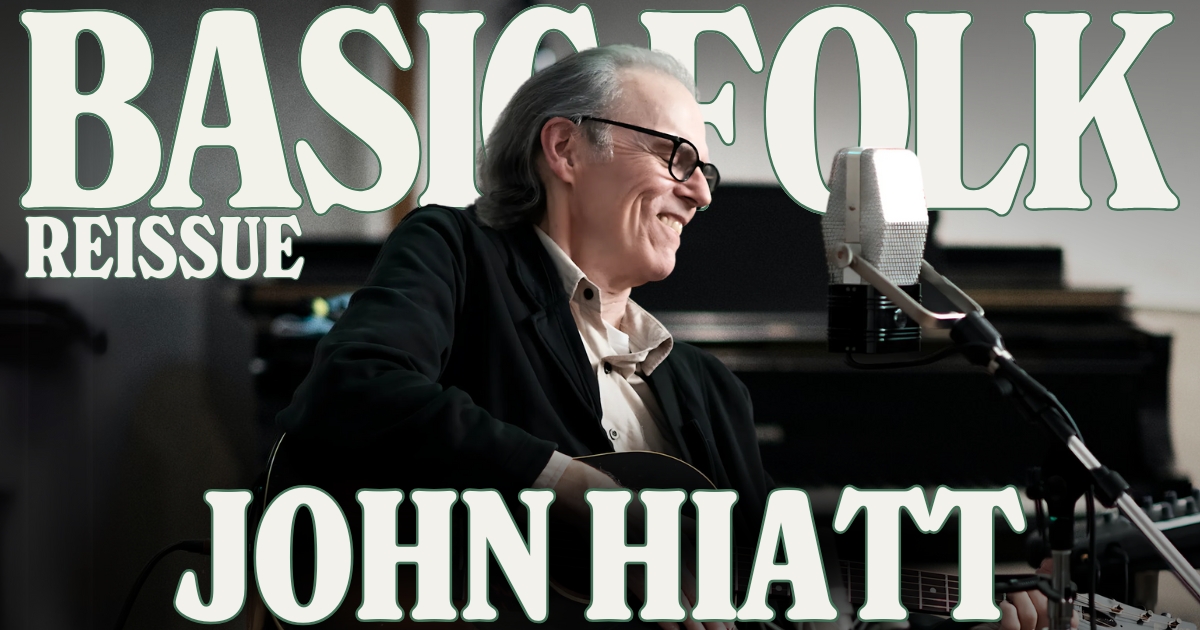
Basic Folk: John Hiatt (Reissue)

(Editor’s Note: Welcome to our Reissue series! For the next several weeks, Basic Folk is digging back into the archives and reposting some of our favorite episodes alongside new introductions commenting on what it’s like to listen back. Enjoy!)

In 2021, John Hiatt released Leftover Feelings (which is still his latest album, by the way), a collab with bluegrass great Jerry Douglas as producer and his band as backup. Hiatt’s digging into some serious past memories for these songs, which include one about his older brother, Michael. Michael died by suicide when John was only nine and it’s only recently that he chose to write about the experience with the track, “Light of the Burning Sun.” Jerry knew that the material was very serious and approached it lovingly with John and band. On Basic Folk, John expands on his grief and talks about giving himself the time and space to mourn. We also chat about the importance of radio in John’s young life: he would listen to WLAC from Nashville as a kid around 11 years old. There was a gospel show on Sunday night and the station would go to a different Black church every week to broadcast services. As
Hiatt has said, “Those gospel shows used to scare the shit out of me.” That opened his world to a completely different way to relate to music, in terms of faith.

LISTEN: APPLE • SPOTIFY • AMAZON • MP3

Hiatt picked up the guitar at 11 years old, partially to cope with the trauma resulting from being an overweight child. This was especially hard because he was a bigger kid at a time when it was rare for a child to be heavier. He discusses how music and, surprisingly, drugs and alcohol helped him overcome his weight issue. Then, of course, the drugs and alcohol led him to new problems in his adult years, requiring overcoming that addiction to live a sober life. John also talks about his kids, which includes musician Lilly Hiatt. Lilly said in an interview once, “I was crying over the fact that my career seemed stalled and I wasn’t the flavor of the month, and Dad said, ‘Lilly, we will never be hip. We’re just not those people.’”

John Hiatt has been a steadfast songwriter since the ’70s who’s written many well-loved songs such as “Have a Little Faith in Me,” “Cry Love,” and, of course, “Thing Called Love.” The writing on Leftover Feelings spans several decades and confronts some of his most vulnerable feelings. To be able to talk to John Hiatt about this project was a sincere privilege and we hope you enjoy!


Photo Credit: Patrick Sheehan

Basic Folk: Kris Delmhorst

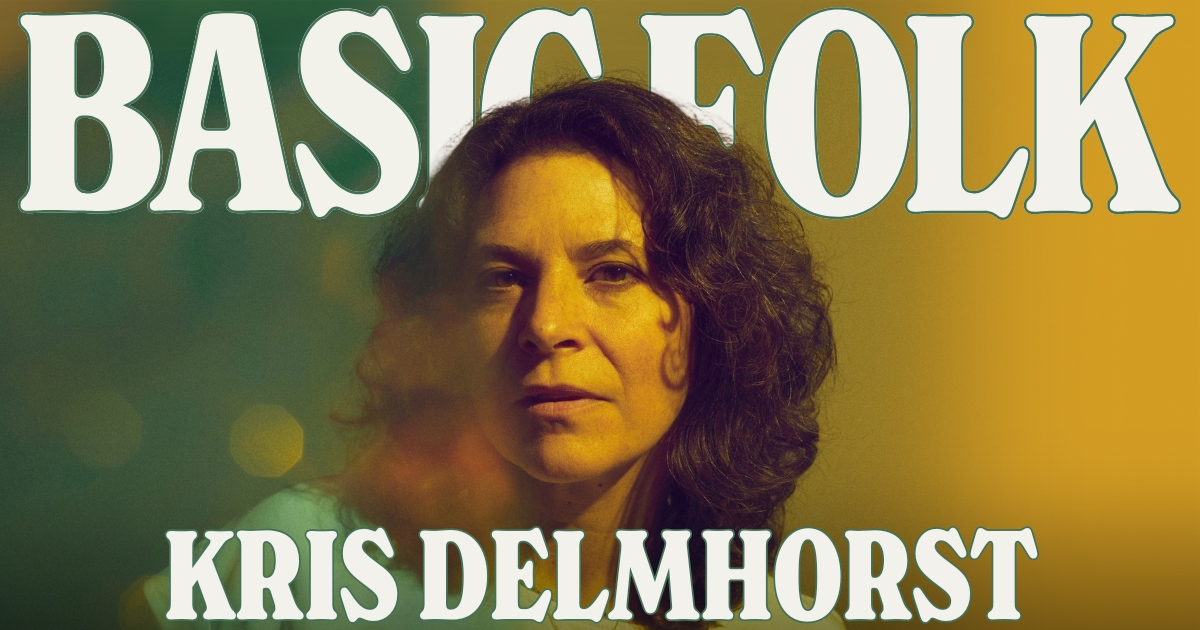
Kris Delmhorst is not a good sleeper. The Western Massachusetts songwriter is usually awake from 2 or 3 a.m. to about 4 or 5 a.m. Sometimes it feels nice and floaty, but other times she is wide awake worrying about anything her brain can get a hold of. This is similar to a feeling with which she ended her tenth record, Ghosts in the Garden, with the song “Something to Show.” Thankfully, she set us straight and explained that, indeed, the track is a hopeful prayer that she will have something to show for all the questioning, trying, pushing through, and general work that she and fellow humans are doing. Too bad it can’t happen in the daylight hours. In our conversation for Basic Folk, we talk about this and the other themes and songs on the new album, like the unbearable emotional density of summer ending, ambient restlessness during destruction, carrying unresolved loves, and, of course, death.

LISTEN: APPLE • SPOTIFY • AMAZON • MP3

Kris experienced a great loss in 2021 with the death of her dear friend and collaborator Billy Conway. Her husband, Jeffrey Foucault, memorialized Billy in his 2024 album, The Universal Fire, which he called “a working wake” for their friend. He appeared on Basic Folk and spoke at length about Billy and what he meant to the Boston music community. I encourage you to listen to that conversation and Jeff’s record. Kris had known Billy for many decades; he produced a couple of her early albums and had been a huge presence in her life. The title track, “Ghosts in the Garden,” addresses Billy’s death, which sounds like it was a beautiful one, something that not very many people experience. He was surrounded by a houseful of friends and family celebrating and keeping him company up until the moment he passed.

There are many types of ghosts on the album: lost loves and past mistakes, roads not taken, and our possible futures, too. It was recorded in rural Maine at Great Northern Sound, which is inside an 1800s farmhouse that must keep its own ghosts. Kris, a great lover of collaboration, brings in many guest vocalists like Rose Cousins, Anaïs Mitchell, Ana Egge, Taylor Ashton, Rachel Baiman, Anna Tivel, and her husband, Jeffrey. I was surprised to learn that she had not actually planned for any guest vocalists. She made the decision, recorded some reference mixes in Maine, and listened on the drive home. She was startled to discover that she heard each guest vocalist on the track with her in the car, which prompted her to write some emails and get them all on the record. The songs want what the songs want, so you better give it to them or else… more ghosts?


Photo Credit: Sasha Pedro

Palmyra Shakes Off Anxieties With Oh Boy Records Debut, ‘Restless’

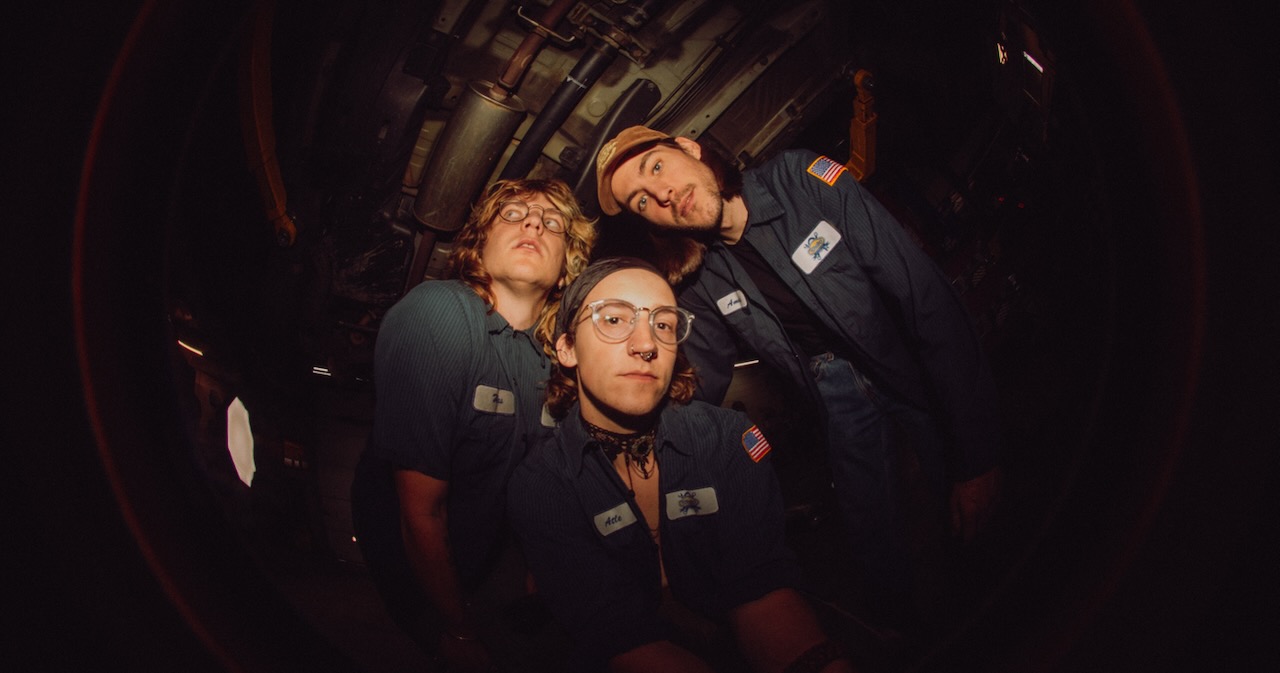
Palmyra is a bit restless. Their emotions knot into a mangled ball, almost suffocating them.

“Early hours in the morning, tossing and turning/ Everyone else in this house is asleep,” Sasha Landon pours into the microphone. “Palm Readers” emerges integral to the band’s new musical chapter. Aptly titled Restless, this album marks their debut with Oh Boy Records. It’s like reintroducing themselves to the world.

The trio – rounded out with Teddy Chipouras and Mānoa Bell – pounces from the get-go. Similar to The Lone Bellow’s tightly wound vocal work, their harmonies exude a vintage richness throughout as they do on the title track and opener. It’s quite evident that they take their work seriously, down to the lilt of their voices as they glide through the air. Palmyra makes you believe they’ve been singing together for decades, their harmonies are so electric and full of life.

“We definitely put a lot of effort into our harmonies. It’s something that always feels super important when we’re arranging a song,” shares Landon. “The three of us weren’t people who sang with others a lot before this band. When we formed, we learned a lot from old recordings of other bands and all sorts of stuff. We did a lot of transcribing harmony early on in the lockdown. The record needed to start with our voices and we wanted that to set the tone for the album.”

Perfectly performed harmonies underpin the album’s emotional currents. The trio builds guilt, frustration, and hope into the project’s backbone to create a coming-of-age story. “There was a moment when we understood what the album was about. There were separate songs that we found homes together through playing them live,” says Chipouras. “‘Palm Readers’ feels great right after ‘Restless.’ And those songs then became a pair. Their energies matched. The coming-of-age narrative emerged from the time period that the songs were written.”

Restless sprouts from the cracks between each song. Where “No Receipt” meanders through sun-caked uncertainty, the cheeky “Dishes” sees the band accepting domestication and finding peace. Along the way, they agonize over being present while time yanks them this way and that – the pressure that comes from being a working musician crushes their shoulders. The album, based on a “period of leaving college, going out on our own, starting a band, going out on the road, and just trying to figure out what the life of a musician looks like,” captures brutal truths of living, loving, and losing time.

Hopping on a Zoom call, Palmyra spoke to BGS about feeling restless, reenergized creativity, and mortality.

What is it about the title track that made sense to be the opener?

Sasha Landon: It made a lot of sense for us to have this song that starts with the three of our voices kicking off the record. Also, it is a song that has a through line to the record from the jump. The emotional center for this record is pretty heavy. And that’s not to say that there’s not a lot of light in the record. I think there’s a lot of fun on it, as well. But the overall emotional center is pretty heavy and restless, felt like a good way to jump into that.

In “No Receipt,” you lament that there just isn’t enough time. As you’ve gotten older, what’s your relationship with time been like?

Mānoa Bell: That’s the central theme of, not only the record, but questions we’re always asking ourselves. Specifically, the last line there about finding those quieter moments has proven to be such a challenge, to put it all to the side. Being an artist is such a consuming experience. Every moment of your day is a part of that journey and it can be hard to have separation from it, which is a really beautiful thing, but frustrating at times as well. You can’t get away from it.

“Can’t Slow Down” deals with a similar thematic thread. How did this one come together?

Teddy Chipouras: This one was a song that I wrote after a couple of years of not writing songs. I don’t think I wrote hardly any songs during COVID. This tune kind of came out all at once after being fed up with not writing anything for a while, and I think we had just gotten off the road. It was kind of like just throwing words at the page of how I was feeling at the time, just feeling exhausted.

That one’s funny, because it was a really big moment for me and I felt very accomplished that I had written something and finished something. I remember being nervous to send it to the band and then really not thinking anything would come from it. I did not think we would be playing that song every night. It’s one of those tunes that has changed meaning, or it means more to me now than it did when I wrote it.

“Buffalo” roots itself in a phone call during a show in Buffalo after one of your friends had taken their own life. Was this song a necessary cathartic exercise?

MB: There are songs that you try to write and then there are songs that you just have to write. I remember very clearly writing the beginning of it and immediately feeling better. It was a very therapeutic experience, not feeling good but feeling better. It’s a song that’s still hard to play. I feel a responsibility to try to connect emotionally with it every time we play it and not just phone it in. Sometimes, when you’re on stage, you’ve done something so many times, there’s a muscle memory aspect to it. But that song never really feels like muscle memory.

When someone dies, you begin questioning your mortality. Did that happen to you?

MB: I think suicide, specifically, when it’s someone who you see yourself in, and someone who you grew up with, makes you wonder what life would be like without them. It’s not just suicide. It’s just about loss and grief. There was never a point where I was like at such a level of grief that I didn’t want to continue living. But it definitely makes you wonder what life will be like moving forward.

The closing track, “Carolina Wren,” feels like a big sigh to let all the things on the record go. Why does it appear as primarily the demo you recorded?

SL: [Producer] Jake Cochran did such a great job of trying to make sure that the songs sonically matched their emotional core and that the version of the song that we were putting out felt really authentic to the lyrics and our live performance of it. This was a tune that I hadn’t played for anyone in the band yet. I wrote it right before we went to the lakehouse [to record] and played it on a whim. I think Teddy was out getting groceries or something and Jake pressed record. Mānoa is holding the bass and I think plays one note on it, and I am playing guitar and singing. We just felt, after hearing it, there was a consensus that that’s how the song is supposed to exist. It’s how it’s supposed to sound.

And Jake helped us get there, too. With some songs, like “Shape I’m In,” for example, we had to be mindful of how many performances we gave it before we exhausted it and weren’t going to get any more. When you have a song that takes a lot emotionally to perform, you can only do it so many times before it loses its meaning, or becomes muscle memory, or just wears you out from overuse. We had one take that felt earnest. It speaks to the song. It honors the song in a good way and it belongs as it is. Then we decided that it made sense as the last tune on the record. It is a nice little breath at the end.

What have been the biggest realizations you’ve had of being working musicians?

MB: I think maybe for me, I’ve learned that there’s kind of an endless amount of resilience needed. You’re constantly faced with just things you need to get through, to solve. I don’t even know if I would call that a music thing, though. I think that’s just like a growing-up thing.

TC: One thing for me is I didn’t realize how hard it would be to find creative time when you’re a full-time creative. We are full-time musicians, we’re on tour a lot of the time, and then we get home and there’s a lot of work to do. It’s almost harder to schedule the creative time than it is to schedule the work. I never thought it would be hard to find that balance.

Did this album change you in any way?

MB: This record showed all three of us that there was another level to get to and that there are endless places of growth that we will find. I think we dug deep as a band and it has continued to be rewarding for those reasons. The further we dig, the better it is. It does just keep getting better.

With the release, the songs no longer belong to you, but the world. What’s that experience?

TC: It will be interesting to see how this one feels, because this one feels bigger than our previous projects. We talk about this a lot with our songs going through different phases of us letting them go. I think the biggest one for me of letting songs go is starting to play them live. We’ve played all of these songs live before for a while. That moment, for me, is the biggest in terms of feeling like releasing full control of it, and it becoming the world’s and not ours anymore.

MB: We haven’t released something at this level before, so I don’t know. I’m excited to see how it feels releasing the whole project. Last year’s release was an EP. I think that if I’m defining what feels different about an EP versus an album, it’s like Teddy saying that this feels bigger than anything before; it’s the amount of energy we put into creating the music – the amount of energy we’ve put into getting it out to people. It’s just like we’re putting so much behind it.

SL: I’m so excited to see, to know that a listener’s first experience of Palmyra could be Restless, that the first thing that they hear is something that of all of the music we’ve put out, we have been proud of, and has been a really good snapshot of where we are at the present time.


Photo Credit: Rett Rogers

Basic Folk: Edie Carey & Sarah Sample

Friends and collaborators Edie Carey & Sarah Sample teamed up in 2014 for their first album, ‘Til the Morning: Lullabies and Songs of Comfort. The pair both had babies and were wanting to do a project that centered around calming music for both children and adults. They were shocked at the album’s reception by adults (AKA non-babies) who listened after experiencing grief, trauma, and huge loss. This type of music certainly had an important place in the world. Now, they have done it again, but with more of a focus on calming music for adults with their follow-up. Lantern In The Dark: Songs of Comfort and Lullabies includes some originals, their first co-write, and new interpretations of songs by Wilco, The Beatles, Cyndi Lauper, and James Taylor.

LISTEN: APPLE • SPOTIFY • AMAZON • MP3

In our Basic Folk conversation, we tackle the concept of comfort and what they experienced in the surprise reaction from their first record. What is a good balance of comfort? It was also a great time to talk about their experiences as touring musicians with young babies. For instance, the types of questions they would get asked that they are sure their male counterparts with young children would not get. They talk about the songs on the album, one of which was written by Edie in the aftermath of her mom’s sudden and recent passing. We wrap it all up, of course, by hearing each of their James Taylor stories and a delightful bedtime-themed lightning round.


Photo Credit: Steve Willis