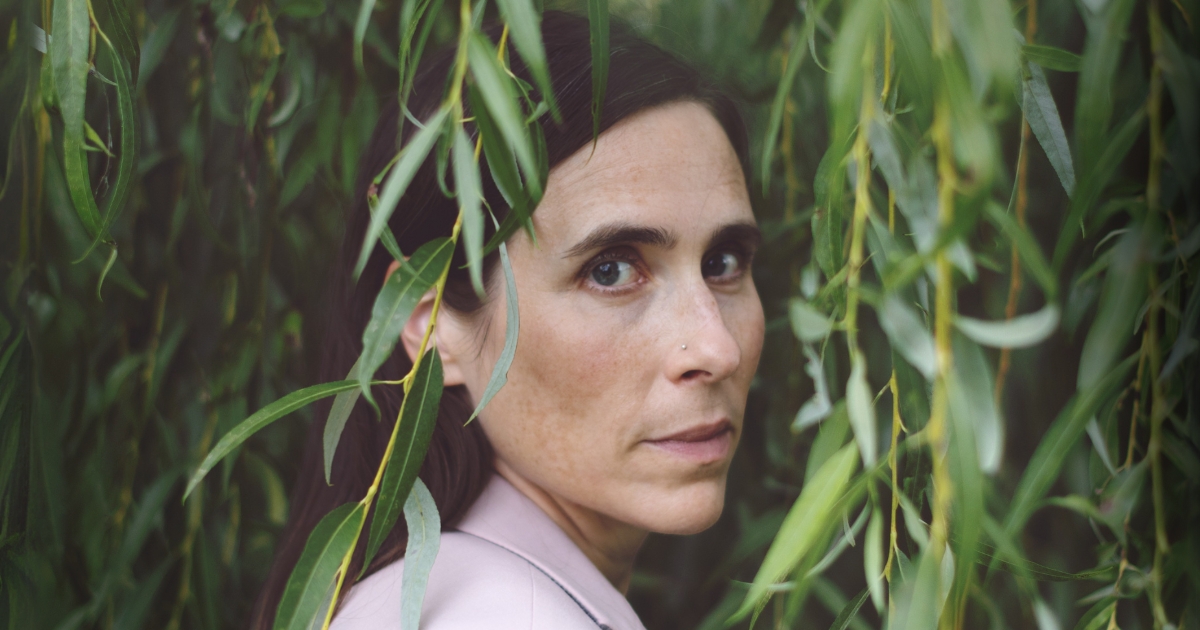
Foy Vance’s The Wake Is Really a Celebration

The second track on Foy Vance’s new album, The Wake, is simply titled, “Hi, I’m The Preacher’s Son.” Among a beautifully intricate and incredibly serene record dealing with overcoming deep grief and prolonged sorrow, the tune hits at the core theme and genuine emotion offered up within the entire body of work – learning to love yourself as you grow older.

“I am no fortunate son/ I am no favoured one/ I am but a loaded gun/ Fired into a world gone wrong,” the Northern Ireland-raised singer-songwriter rumbles through the song. “Face down in the dirt I learned/ You don’t always get what you deserve/ I can hide, I can try to run/ But I am what I have become.”

Captured by acclaimed British producer Ethan Johns, The Wake closes the door on the artist’s 26-year trek, both physically and emotionally, in dealing with the death of his father – what it means for Vance to let go of the pain and finally set his parent free, and himself, as well, within that process.

This journey began in January 1999 on the Spanish island of Lanzarote. Vance was in the midst of a performance when he slipped into this surreal, overwhelming trance, one that felt like the line was being blurred between reality and the cosmos above. The following day, Vance was informed of his father’s passing from a heart attack the previous evening.

“Only time will tell if I know you well/ Or if I did not know you at all,” Vance ascends on “I Think I Preferred the Question,” a selection from the album that squarely aims to put Vance’s past behind him. “It’s heaven, it’s hell/ It is well/ The spell dispels the more that I talk about it.”

The key to The Wake is the number seven. There’s a reason this chapter of Vance’s existence concludes on the seventh of his albums, all of which were inspired by his father. It’s directly linked to an ancient saying often used by Vance’s father, a traveling preacher, which eventually soaked into his son’s heart and soul: “Give me the boy to the age of seven, and I will give you the man.”

“You’ll be up high on the mountain’s peak/ Seeing everything that you just might seek,” Vance rolls through the final track, “Bathed in Light,” an uplifting tent revival number of redemption and closure. “When it gets time for town again/ I’m gonna tell you how you’ll feel right then/ Like nothing will ever bring you down.”

What Foy Vance has presented with The Wake is a raw and real album of sheer vulnerability and human strength, all wrapped up in melodies of such creative depth and sonic splendor. It’s a ceremonial, hallowed shedding of spiritual skin by one of the great songwriters of our day.

Where’s your head space at right now?

Foy Vance: Very good, the field is open. I feel like I walked a narrow road for 26 years, pretty single-minded and focused on one thing. And I don’t think I was even as aware of that at the time I was coming up on the seventh album, realizing that I’d set out on that journey and that was it. So, as you can imagine, finishing a journey that you self-imposed came with a sense of pleasure. Completing something feels good, but there was a bit of dread also, if I’m honest pretty straightaway. But, as is always the way, the end always reveals the new beginning, you know?

You talk about 26 years since your father passed away. What was that heaviness? Was it the relationship you had with him? Things that weren’t said? Things that could’ve been?

I came out [of the womb] singing. There were tapes of me singing at three years old, shutting my brothers up ‘cause they were singing it wrong, saying “No, I’m doing it well.” Music was huge in my life [growing up]. I had just turned 24 when my dad died. I was already playing music and trying to sing a career in it and trying to write songs. And I moved to Lanzarote to try and get away from the humdrum, the comfort zone of life. At home, it was just too easy to become comfortable. I wanted to go and find some time away from all that to seek songs.

And boy, did I find them, but I didn’t expect to find them the way I did. I think it was all the stars aligned at that moment. The moment my dad died, I’d already begun the song the night before as he was dying, and I didn’t even know that bit until the next day. But, the second I found out, I went back and I wrote the first song that mattered to me, the first song that was healing.

It’s like when those musicians were on the Titanic and they played “Amazing Grace” as it was going down. They weren’t playing that for a fee or for applause. Why were they doing that, Garret? You know what I mean? Therein lies something inherent in music that we’ve all but forgotten for the most part. And I think I had that moment [when my dad died] – everything became clear. I realized I’ve been sort of conning music into trying to make it fit my regime. And the whole time, it’s quietly beckoning me to grow and learn and glean. I’m glad I can pay my rent with [music], but that’s not what this is about. It’s not what music is. It’s not what it means.

Did you know that when your dad died or was it this revelation that came in later years?

No, I think I realized immediately, the second that song came and you realize it can come that way. It was like my antenna was out. A thin space was created between me and my dad. And obviously there’s a lot of things going on when you have that shock of grief, a monumental figure like a parent. I’m sure there are a lot of similarities between bouts of great creative inspiration and bouts of mental instability. Like an episode, if you will. So, I was making all kinds of connections that day. I guess I was grasping at anything to make sense of something and give myself something to hold onto and stick to and walk a narrow road with, and just stay focused. My dad was a big figure, and without him it was sink or swim – music was a vehicle for that.

Was he a tough love, hard to read kind of guy?

No. Tough love with three older brothers, for sure. But not so much with me. I think they wore him down by the time I came along. He was very soft and gentle, but he was a rough man. He was from East Belfast, born in 1945. He came from a tough background.

What is it you’re letting go of this far down the road since his departure?

The fact [the album] is called The Wake, it’s the end of it. Where I come from, [at a wake] you go to celebrate the life of someone, not to commiserate the death. You go and tell stories and you laugh your hole off. You raise pints and you sing songs and you have a wake. I realize it’s not the end of “the grief journey,” it’s the end of a grief journey – it’s never going to go away. I hope it doesn’t, because he’s been my co-writer, and I hope it remains that way. But, it just changed. It’s hard to put my finger on what lifted. Something lifted.

You know, I never went to college, I never even passed my school exams. I just left and got a job, didn’t even show up for the exams. I think this is as close as I’ll feel to walking [at graduation]. Like, setting out on a journey and then completing it and there’s your certificate.

In a short documentary about the album, one of the things you mentioned that really struck me was what your father would say to you, “Give me the boy to the age of seven, and I will give you the man.” How has that statement affected you as you’ve gotten older?

Well, because I have two boys. One of ‘em is still under five and I know that by the age of seven, that’s him – he’s locked and dialed. Whoever he is, it’s in there. I’m aware of that and I want to put as much good information in there as you possibly can, all the strong stuff that will be core beliefs when he grows up. [And] being very careful about how you speak to them, the tone you take, making sure that when they hear your voice in their head and you’re not around, it’s a comforting one, it’s a welcoming one. That all takes time and attention to detail and nuance.

I think it’s the same in work in art, like making those seven albums. It was like the making of me as an artist, I guess in my mind. Give me the artist of the age of seven albums and I’ll give you whoever he is. I guess I was making those sorts of connections in my mind. Like, I will have become whatever I am probably by then, I’ll be settled into something.

I have a lot of solidarity with that statement because it plays into another statement that “you learn most everything you need to know in life in the sandbox.” When you look back at who you were at seven, how much of that person is still who you are?

Garret, I’m 51 now. It’s taken me a long time to wander through some wild places, but I finally got back to [myself]. I was right at seven. You can trust your seven-year-old self.

One of the things I’ve noticed as I’ve gotten older is how much, in certain ways, I’m turning into my father. Do you notice anything like that?

Well, I think that’s what I got caught up with on “Hi, I’m the Preacher’s Son.” No matter how much you get away, try to run away from what your dad did. What I do is not a million miles away. Let’s face it, I’m just not preaching any truth of any sort, just talking about what’s happening, reflecting my own experience here or whatever. But, it’s not a million miles away [from what he did], that you go off and you dig for details and you articulate them. He always spoke in parables and riddles, so it’s not surprising that I became a songwriter.

Well, whether you perform onstage or you’re in a pulpit, you have everyone in that room facing the same direction, and everyone’s in there for a different reason. In the church or at a live concert, they’re focused on what you have to say and hopefully walk away with a better feeling of themselves.

Yeah. I guess the main difference is I’m not trying to sell them anything. I’m there having an experience, too. I’m caught up in the music. I, too, get lost in those two hours that we’re onstage. I go there. You can’t take anyone anywhere you’re not willing to go yourself.

Do you look at The Wake as maybe a death of an ego?

I’ve never really thought about it like that, but yeah.

It’s also a shedding of your own skin.

Yeah. Perhaps every album is a bit of a death of an ego. Putting to bed, marking the end of that journey and heading out into the next one. At the end of The Wake, I genuinely didn’t know if I was just going to take a few years off or what was going to happen. And then, I exploded, just absolutely exploded. By the time I got into the car [at the recording studio] in Bath, [England], and got home, I just wrote for the next two weeks. Endless ideas. What I thought was going to be the end was very quickly becoming a beginning.

It became fuel on the fire.

It really did.

What would your dad think about where you’re at right now?

It’s hard to gauge, because my dad applauded anything I did. If I boiled rice, he’d be calling my mom in to see how well I boiled the rice. He was very proud, so I don’t know if he could handle this. And I think it’s sort of sad that he doesn’t get to see it. But, at the same time, I wouldn’t have it without his passing – it’s the strangest gift I’ve ever been given.

There’s a lot of heaviness with the album. But, it does feel like, at the same token, there’s a big sense of release. It sounds like you’re in a good place right now.

Yes, I am. I’m done commiserating. I’m ready to celebrate. It’s the wake, you know what I mean?


Photo Credit: Gregg Houston
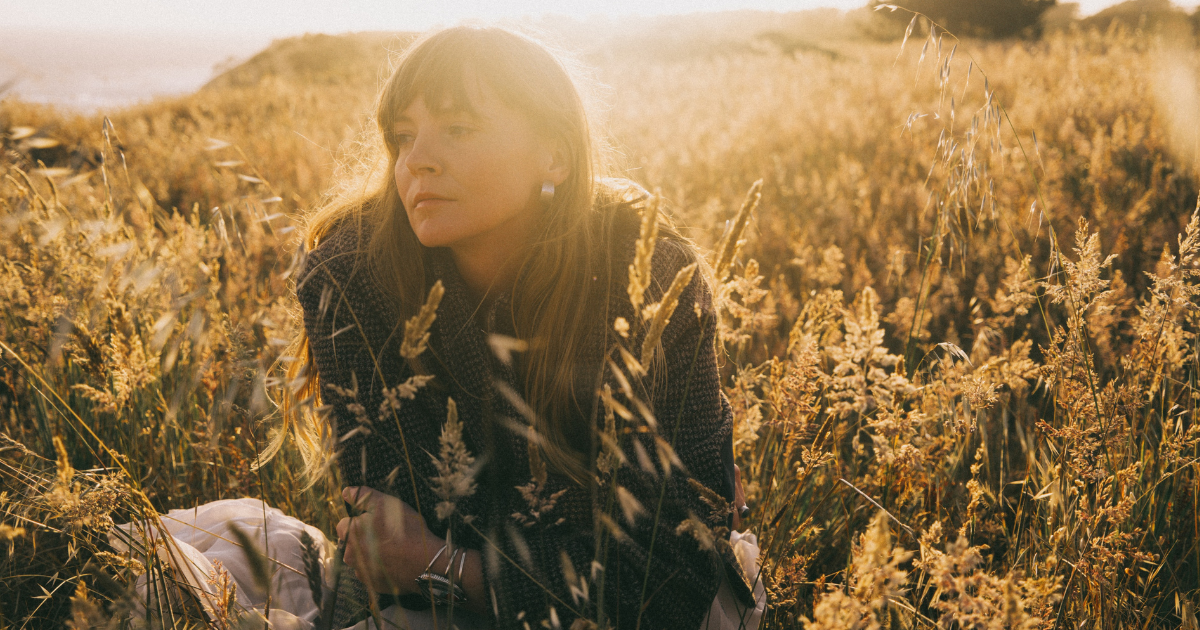
Courtney Marie Andrews Doesn’t Fear Vulnerability

Courtney Marie Andrews’ story begins in Phoenix, Arizona. An only child raised by her mother, she found solace and an outlet for her creativity and imagination in music. She planted her music roots in a self-described “feminist punk band” and began touring while in her teens. Along the way, she recorded a number of albums – best known are Honest Life (2016), GRAMMY-nominated Old Flowers (2020), and Loose Future (2022) – lived in a number of cities, and worked and toured with a number of musicians, including rock band Jimmy Eat World.

Andrews eventually made her way to Nashville, where she now resides. There, she creates music and other art, fueling her soul and inspiration with long walks and her love of animals, bonding with friends’ dogs, and feeding an assortment of “porch animals,” mostly cats, who take up residence outside her door.

In addition to music, Andrews expresses herself through painting and poetry. She has published two collections: 2021’s Old Monarch (2021) and the recent Love Is a Dog That Bites When It’s Scared. Her music, writings, and artwork explore a broad scope of emotions and experiences: loss, grief, fearless love, deep darkness, pure joy, and acceptance of the entire spectrum.

These outpourings are at the essence of her new release, Valentine (out January 16 via Thirty Tigers). Written in the throes of anticipatory grief, the album plummets into the vortex of her trajectory. While the message is raw, the recording is anything but. Valentine is an unfiltered look into Andrews’ heart, filled with waves of sounds and layers of instrumentation.

Among the numerous instruments she plays on Valentine, Andrews is featured on an assortment of guitars and basses, including a 1973 Martin D-28, 1968 Gibson B-45 12-string, 1970s high-strung Japanese Epiphone, Gibson J-45, Epiphone Casino, 1972 Fender P-Bass, 1960s Kay K5915 bass, and 1960s Teisco six-string bass. Longtime friend and colleague Jerry Bernhardt joins her on various instruments, with drummer Chris Bear rounding out the trio. The album was recorded by Michael Harris at Valentine Recording Studios in Los Angeles and produced by Bernhardt and Andrews.

BGS reached Andrews via Zoom for an Artist of the Month conversation.

Has Nashville changed you as a songwriter?

Courtney Marie Andrews: I thought it would deeply shift everything for me, but if anything, it made me want to do other things as well, maybe subconsciously. I started painting and focusing on poetry. But that core sense of self, that songwriter self, will always be with me wherever I go. It’s hard to say how it has shaped me until I’m looking back on my life 20, 30, 40 years from now.

But I will say the community I’ve found here is profound. I’m a Western girl. I’ve lived in Arizona and Seattle up until pretty much my 30s, and I didn’t realize how lonely the West can be. I think that’s apparent in my early work as a songwriter. That subject is throughout the work. When I moved here, I was almost overwhelmed by how much people wanted to hang out. It took a while to adjust and now I can’t imagine it any other way, not having that community to feel into and understand this work, because it is a strange career. So I think more [that] it has affected me personally, but I’ve always continued to write and been on this journey on my own and in my own time.

This is a stripped-down album – only three musicians, including you, and one of them is also your co-producer. Did you know, when the songs were written, that this is how it needed to be done?

I completely funded this album on my own, so if I’m being frank, it was an economical choice. Originally, we would have loved to have a band, but in hindsight, ultimately it created the record it created and I wouldn’t have had it any other way. There’s some power to it being a very condensed group of people, because the focus is a little bit more zoned in, and it becomes a vibe if it’s coming from a few core people, rather than everybody adding their stroke to what you’re doing – which I think is also valid. But looking back, it was probably the best thing we could have done, having Jerry and I playing all the instruments and Chris Bear, of course, on drums.

You played a number of guitars on Valentine. Do the songs determine the guitar, or does the guitar sometimes direct the song?

The songs ultimately lead the way on feeling and vibe. Jerry and I wanted to layer the record. There are a lot of different layers of guitars. We would varispeed one guitar up, so it’s super-high, and then we’d varispeed one guitar lower, so it’s super-low, to create the rounder sound, especially if you’re listening in headphones or on a high-definition speaker system.

But it’s definitely song-driven, whatever the feeling. “Best Friend” is just my guitar and Jerry’s twelve-string. We didn’t go much further than that, because the song was meant to be a bit sparser as far as the depth goes.

“Everyone Wants To Feel Like You Do” is about a certain type of misogyny where it’s, “I do whatever I want and I don’t care about the consequences, nor am I held accountable for the consequences.” The song was written with that feeling, and I thought it would be funny if I played guitar like that, where I didn’t care, so I over-distorted my guitar and played as crazy as I could to assert my power.

How do songwriting, poetry, and painting each fulfill a different side of your artistry and emotions? Is there ever some cross-pollinating?

I wanted to tell the same story with a different perspective, so there is cross-pollinating in terms of the source of the material, where it’s coming from, where I’m at in my life, whatever darkness or lightness I feel. It all sources from the same well of emotion and experience. But there are different ways of telling the same story. I found that when I was songwriting exclusively, I would write the same song over and over again. Whereas if I take a step back, do a different medium, and come back to songwriting, I feel fresher.

Ultimately and forever, I’ll always identify and feel the deepest connection with songwriting. That’s the first thing I fell in love with. It’s the thing I understand the most. But the mystery of these other mediums has really flourished.

There’s a natural through-line between poetry and lyrics. What about painting? Do lyrics sometimes inspire a painting? Does something you create on canvas ever become words in one of the other mediums?

There’s not a lot of crossover. I don’t look at painting like I would look at a page or a song. Painting is, for me, a place to describe emotions that are unexplainable. That’s why painting is so cool. It’s almost equivalent to jazz; it’s more of a feeling that you can’t describe. That was enticing to me. To express myself as a word person who ultimately values words so much, it was important to think outside of the box a little bit. Painting allows that. To not be confined by words is really interesting.

Tell us about your recent Artist in Residence at the Iowa City Songwriters Festival. You performed and did a reading from your new book, but what does “artist in residence” mean at this particular event?

Because Iowa City is a UNESCO World Heritage City of Literature, there’s a heavy college-funded element. I’m not sure if that was their direct funding, but they definitely have more of a collegiate approach to an artist in residence. I’ve done some residencies where they don’t want anything from you. They just say, “Come up and write whatever you want. We don’t care.” But this one was definitely a bit more mentorship-driven. I led a class, a songwriting workshop. I also had one-on-one mentorships with young songwriters, people who are just getting started. They had a packed schedule for me, but it was so lovely.

I think their ultimate goal is to prop up songwriting among the other literature of the world, having songwriting classes in college, and having it there with poetry, fiction, nonfiction, memoirs, memoir writing, and all that. I think that’s ultimately what they’re trying to attain with the residency program. So it was great.

I’ve found that I really love to talk about songwriting in that way. I think that, in our culture, it’s a dying thing, at least from where I’m sitting, to seek out opportunities to learn from elders, from people who’ve been doing it a long time. The more we can do that in our culture, the better off we’ll be. It’s an incredible festival, and I would highly recommend people going. The people who run it are just wonderful.

When you lead workshops and do one-on-one mentoring, is it as much a learning experience for you as it is a teaching experience?

Absolutely. I think to teach is to be a constant student. The moment you feel like you’ve figured it all out … I don’t know if that’s a good thing. Even as I speak about songwriting, I say things that open doors all the time to myself. It’s good to be endlessly curious.

Do you think being an only child contributes to your storytelling ability through songwriting and poetry? Living inside your head, escaping into your own head, in a way that might have been different if you had been surrounded by siblings?

Oh yeah, absolutely. Because I was a latchkey kid, I spent a lot of time alone. If I didn’t have a friend to play with, I had to go into the inner landscape of my mind. That was my way of communicating in a deeper way that I couldn’t quite get in my home life if my mom wasn’t home. I can attribute a lot of my childhood to that. I was a deeply imaginative kid and would create stories all the time. So I think the loneliness also fueled what I do now.

Do you draw from those past emotions when expressing what you’re currently experiencing?

How it manifests is that it’s like a period of reckoning when I’m writing songs. I’m generally alone. I find it very hard to write if I know somebody is even in the next room. I’ve had weird moments in my life where I wrote at soundcheck and stuff, but when I listen back to those things that I’ve written around people, it’s not as dialed in. So when I’m writing, I’m alone and reckoning with the life that I’m leading, or the life of others. It feels like this very quiet thing that needs to happen.

Are you an old-school pen-and-paper writer or have you gone the way of voice memos?

I do both. I exclusively use a green book to write in. It doesn’t matter what color green. They all are green, though, green-colored notebooks, generally the Moleskine variety or that look. I have plenty of them in a pile. [And] I love Micron, the ballpoint art pens. I really don’t like the standard DMV pen. I’m a little bit bougie when it comes to my pens. I like the flow of a Micron. I write and then voice memo. Generally, once I’m done writing a song, I try and always get it down in its unproduced form. I think it’s important to have that, and the phone happens to be the easiest way.

Is playing guitar, just playing, as much a part of songwriting as writing lyrics?

Oh, yeah. I love the guitar. I love open tunings. I love acoustic guitar music, Hawaiian slack key, and classical Spanish-style guitar on a nylon. I love to play and try and emulate that style. And so in certain works, it’s the first thing that happens. There’s many ways to come to a song, but one of them is [to] play a chord progression I like and sing gibberish, and that sometimes leads to a song. In that case, absolutely I need the guitar. But yeah, the instrument can definitely lead the way. It just depends.

When you spoke earlier about adapting to the Nashville community, it brought up the thought that growing up as “an only” maybe affects our social skills to a degree. It can make community something new, as opposed to something you’re used to having around you.

Yeah. I feel that. I have a hard time with small talk for this reason. I want to go immediately for the jugular, as far as intense conversations. I go from zero to a hundred. It’s really hard for me to be like, “Hey, how are you doing?” I feel like such an actor in those circumstances. Of course I’ve learned to do it by way of being a musician – you have to talk to new people every day. But small talk doesn’t do it for me. I have a hard time going in a simple, surface level.

In the bio accompanying this album, you said, “I was in one of the darkest periods of my life and songs were the only way I could reckon with it. I felt cursed and the only mental cure felt like songwriting and painting.” Have you always felt that darkness?

Obviously, as a teenager, I went through a pretty wild part of my life where I felt dark, but I think I actually denied my darkness for a very long time. I lived in a haze of denial and hope, which is a beautiful thing. It can do wonderful things for your mental health. But you also can’t really grow if you’re living in that state.

When I was younger, especially in my early twenties, I always had this hope – “Oh, one day things are going to change.” That denial, that hope, kept me in this holding place, which for a time was really nice, and as a matter of defense and self-preservation, I stayed there for a long time. It wasn’t until I started therapy that I realized I always had this underlying darkness. When I had that, we worked on that, and real things started to happen. Things in life that are so hard that happen to all of us – it became deeply dark and profound to experience that in a more awake state.

How did that help with writing this album?

During a lot of writing this, I was caretaking for my family member who was terminal. If you’ve ever been in that situation, it is all-consuming. The only way I could turn my brain off from that was to write. It wasn’t “I need to write an album.” It was “I need to get back to myself for a moment.” I wouldn’t say it was a conscious decision. It was just I know how I am, and I know that songs are my only way of regulating in these crazy times.

You once said you felt embarrassed by the vulnerability of your songwriting. Where do you draw the line, or do you draw one, between what needs to be said for yourself and what needs to be said for listeners for whom you are the voice? How do you do this and protect your mental health when performing these songs every night?

I’ve always said that once the song is written, it’s not mine. It also transforms for me as I sing it. There are songs I wrote fifteen years ago that I still perform, that have taken on completely new meaning and feel different to me when I sing them. I honestly can’t remember the headspace I was in when I wrote them, or the origin of them, or who I was thinking about, to a strong degree, but I feel differently about them.

As far as what needs to be said, ultimately I try to relate to people, or first myself, and then you put the song out and it becomes a different thing. I try, in an artistic space, to be as true to myself as possible. I try not to put up any walls in that space. As far as my life where I’m not playing music, that’s a different thing. But music is a safe space to say whatever the hell I want to say. That’s the reason it’s such a powerful thing. It’s a safe place for me to communicate. Whatever walls are up in a song are walls that I have up with myself. That’s always very apparent when you write a song. It’s not quite clicking and you’re like, “I’ve got some walls up to my subconscious, clearly.” So the extent to which the boundaries, the walls, are up is truly only the stage at which my heart is at in that moment.

Did that happen with Valentine – the walls, maybe the fear of the vulnerability? It’s deeply personal and powerful, going deeper and deeper into those emotions as your journey is sequenced.

I hate to say it, because I don’t want to sound trite, but making albums, making bodies of work like this, fear is the last thing on my mind. Obviously, natural fears come up: Is it going to be what I wanted, what I envisioned in my dreams? But as far as songwriting and being vulnerable in a song, that’s not the fear. In fact, if I got very close to the heart in a song, it’s generally the ones that I’m like, “That’s a good one. I got there. I got to the essence of this thing I was feeling.”

Being vulnerable in life can be really hard in my personal life, in some ways, and I think that is more where the fear is. But, for whatever reason, the way I direct it is okay in a song, and I’ve made up my mind for that to be true. I don’t know why; I guess it just makes sense to me. Human emotion makes the most sense to me in the backdrop of music.

As far as sequencing, Jerry and I argued quite deeply about the sequencing, but ultimately it did go to a place where once we got the sequence, it was undeniable. Side A and Side B are completely different frames of minds. Side A, you’re fighting for love and you’re desperate. Side B is a resignation – this is how it is, this is how it’s always been, and this is my childhood. By the end, in “Hangman,” you’re just “This is how it is, and you can fight for it or you can walk away.” So the sequencing was purposeful. I wanted it to be a journey. I think records should be like that. They shouldn’t be all one color or palette the whole way through.


Explore more of our Artist of the Month content featuring Courtney Marie Andrews here.

Photo Credit: Wyndham Garnett

Rose Cousins Honors Love in All Its Forms on Conditions of
Love – Vol. 1

One day, as a favor for a friend who was building a recording studio, Rose Cousins wandered through a piano showroom. She had no intention of buying anything for herself, but then she came upon a 1967 Baldwin baby grand. She asked the salesperson about it and was told it already had a buyer. She asked to put her name on a waiting list, though, just in case.

“A few days later,” she said in our recent Zoom interview for BGS, “they called me and said, ‘It’s become available.’ So then I went [back to the store] … and they pulled it into a room so I could play it. I spent a couple of hours with it and then freaked out over the next month. And then ended up buying it as my first real piano.”

Piano had been an early acquaintance for Cousins, when she was first finding her voice as a musician. Growing up on a Prince Edward Island farm, the second of five children in a tight-knit family, Cousins was both poet and athlete. The piano was an early friend to her empathic insides as she began to find her voice amid the bustle of a busy household.

More than twenty years and nine releases into her JUNO Award-winning career, Cousins has long since migrated to Canada’s mainland. Based in Halifax, Nova Scotia, she is one of her country’s finest contributors to her generation of singer-songwriters. Across her career, she has mostly recorded her own songs, often on guitar, but the piano has been a constant presence, both in the studio and her live performances. She has turned to it for pulling the feelings forward in cover songs like Gordon Lightfoot’s “If You Could Read My Mind” and Whitney Houston’s “I Wanna Dance with Somebody.” She has relied on it for original songs that are especially emotionally demanding, such as the devastating “Go First” from 2012’s We Have Made a Spark and “Grace” and “Like Trees” from GRAMMY-nominated Natural Conclusion (2017).

Now, Cousins has reached her tenth release, Conditions of Love – Vol. 1. For it, she has laid her Martin acoustic guitar to the side. From the album’s opening instrumental overture, “To Be Born,” to its final rumination, “How Is This (the last time),” we hear Cousins playing that beautiful old Baldwin. Taken in its entirety, Conditions is a collection of songs that is even more deeply vulnerable than usual, with good reason.

“The sensation of playing a full, real piano of my own and having it in my space,” she says, “it’s kind of like a zone I go into. It’s a very intimate relationship.”

These are strong words coming from an artist who has sold T-shirts at her shows that read “Feelings Welcome” and “Rose Cousins Made Me Cry.” That there might be some deeper well of emotion available to her than she has been willing or able to access on previous projects, might make some listeners nervous. But there is no need for a wellness warning on Conditions of Love – Vol. 1.

Once the listener is “Born” into this album, the first song with lyrics is called “Forget Me Not.” It’s delivered in list form, an ode on spring and, perhaps, a nod toward rebirth.

In 2020, Cousins says, the pandemic lockdown saw her moving neighborhoods. “I got a dog, and that meant I was walking outside multiple times a day. I was walking through, particularly, the spring and summer.” Free of the administrative tasks that pile up when she’s planning for another show or tour, she adds, “It’s like my peripheral vision widened and my top vision heightened and my noticing was so much sharper. I was just noticing things blooming – and when they were blooming. It seems ridiculous, because I’ve lived many, many springs, but I actually haven’t experienced spring in the same place multiple times in many, many years. And here I was experiencing it. … It really was this, like, holy shit [moment]. Like oh, snowdrops are the first thing you see. You see them come up and there’s still snow on the ground.”

For an artist – a poet – who had grown up on an island roaming the woods and the beach and playing outside with her siblings, this return to the city oddly necessitated a return to nature. As the rest of us watched YouTube videos of mountain goats and bears roaming urban neighborhoods the world over quiet from COVID lockdowns, Cousins was developing a kinship with those wild things reclaiming their natural environment, even if just for a moment.

“Sweet fern and knapweed,” she sings. “Lavender and rosemary.”

Perhaps an accident, perhaps a nod to the album’s theme, the flowering plants come in pairs. There is some kind of partnership between, say, the “buttercup and poppy,” though it would take a gardening expertise beyond this writer’s own to specify why. And yet, the casual observer, rekindling a relationship with the earth, can sense it.

“Forget Me Not” shifts when Cousins begins listing trees. “Dogwood and gingko,” she sings as the lyrics evolve into sentences. “The poplar leaves clap as the wind blows.” Nature is spreading its roots and branches. There is more space for more observations, more developed ideas, more potential.

The blossoms open. The bees arrive. The eye draws upward.

By the end of the song, Cousins is simply imploring, “Don’t forget me,” but there is a sense that she is not speaking to a lover or even a friend. This is a dialogue with the earth, with the seasons and sky. She is speaking for and to them as much as she is speaking for and to herself.

“Dogwood was one of the trees that I absolutely fell in love with,” Cousins continues. “I planted one on my property two falls ago. The fall dogwood. I just couldn’t even believe how beautiful it is. … I probably would have seen the dogwood before, but didn’t know that it was called dogwood, you know. I didn’t have a relationship with that tree.” But now she does.

Perhaps one condition of love is first knowing what it is.

Here is where the idea of love’s conditions immediately turns. After all, love is one of the most commented upon musical subjects. Contemporary music typically focuses on the romantic sort – particularly brand-new or just ending. But that is not all Rose Cousins is here for. (The album is not called Conditions of Romantic Love.)

From the first set of lyrics on this album, we are handed an implicit definition of love: It is small and big. It is colorful and everywhere. It is where you may not expect it. It is of the self and of the earth. It emerges at the right time. It withers and hibernates and invisibly readies rebirth.

Perhaps love is always – even when it is not. Yet it can feel so elusive, so impossible to pin down. “Love makes us insane,” Cousins says, while discussing the album’s third track and its first single, “I Believe in Love (and it’s very hard).”

“We’re kind of told that we want it. We kind of do want it. We get into it. We struggle with it. It’s ridiculous. … And it’s like, ‘I want to have this. I’m doing my best out here to try and have this love thing.’ … But then [there’s] the choice between being in a relationship with somebody and working through all the ridiculousness – or being wild and free.”

Which brings us back to the mountain goats and bears wandering cities during lockdown. Back to Cousins walking her dog, noticing flowers and trees. Reacquainting with oneself is part of love, whether it comes in the throes of a long connection with another human, or after such a relationship has come to an end.

Indeed, this juxtaposition between endurance and ending is among the running themes on Conditions. In reality, love does not have a beginning, middle, and end. It is not a story we tell as much as it is an ongoing pursuit of life itself. “There [is] a cycle to every relationship where you come in close, and then you move back, [and then] you come in close,” Cousins says.

“Denouement” is another sort of list song. “Dissonance,” she sings in its final verse. “Elephants. Vigilance. Grand defense.” And as she lists these rhyming words, the inclusion of “Elephants” feels so ridiculous. She is recounting a lovers’ spat, which ends with “dinner mints” as her protagonists presumably leave the restaurant together.

All kinds of love relationships can turn on what we tend to call “elephants in the room.” There are the things we decide to not bring up over dinner – with our families or our lovers or our friends. The times we hurt one another, the grief and fear, the secrets between us. The willingness to hold these things, to let the elephants stand as we take our dinner mints and move on, that gives love room to persist.

“There’s this movie I watched on an airplane on my way back from Calgary in 2023,” Cousins recalls. “It’s just this small Canadian independent film called Wildhood. … There [were] a couple characters who come from tough homes. One of them says, ‘Love has conditions, I guess.’ … And I was like, fuck, it’s exactly that. Does it ever, you know?”

Cousins is careful to clarify that she doesn’t understand her album’s theme as merely a push-and-pull between conditional and unconditional love.

“Conditions, in all of the definitions of ‘conditions,’” she says. “It’s like – what is the weather in this relationship today? What are the guises under which I’m going to be loved and that I belong, or that I will be accepted, or, you know, that I can be vulnerable? There’s no one [condition]. There’s just so many.”

While many of the songs are clearly circling around an understanding of romantic love, there is also the love that exists within a family of origin. Love that is perpetual and yet can feel as though it rests on one or more people behaving a certain way. This love can feel more like a barrier than a connection. Like reaching toward a wall, unable to even see whether the person on the other side is reaching too.

The places where this image resonates most – “That’s How Long (I’ve waited for your love),” “Wolf and Man,” “Borrowed Light” – come in the second half of the disc. If we are to take Conditions as a birth-to-death exploration of love, these are the songs that come with middle age. When we have the same amount of time behind us as we do in front. When we begin to wrestle with familiality and community and our own identity in relation to both. The balance of love between self and others.

“I am borrowing light from the moon, who is borrowing light from the sun,” she sings in the album’s penultimate track.

Perhaps another condition of love is connection and disconnection, the way we use each other, the choice to depend upon another body.

“As we age,” she adds, “if you choose it, there’s a lot of facing oneself that can be really fruitful and deeply painful. And I think that the pandemic did that for me. As glorious as it was to have the ‘Forget Me Not’ experience of … [a] revisited relationship with nature. It also was really arresting in the way that it was holding up a bunch of mirrors.

“Like, where are all these mirrors coming from? I was able to kind of ignore [them before], or didn’t know that they were there, that I needed to look into them, because I was just so busy with work and motion and the next thing. So, as painful as that was, it was a rich ground for growth. And growth is most often painful. I definitely learned a lot about myself during the last four years.”

Cousins pauses before continuing: “I don’t really know how to talk about this.”

Fair enough. The music she’s created, as usual, speaks plenty.


Photo Credit: Lindsay Duncan