MIXTAPE: Janiva Magness’s Folk Is a Four-Letter Word

I have long known that I am, at times, a highly emotional creature. I’m good with that and ever grateful I have the music to help sooth me through it. Folk music has always been a part of that balm and always had a quiet place in me. Although, over time, the definition of what folk music is has changed, depending in part on its popularity. For me, this is a beginning of some of my always and all-time favorite folk music. These tunes contain both comfort and melancholy — for me, two of the “absolute musts” to great folk songs by great artists. — Janiva Magness

Bob Dylan — “If You See Her, Say Hello”

How is it possible to not love this track? Besides, there is no one who can turn a phrase like Mr. Zimmerman. No one!

Blackie and the Rodeo Kings — “Brave”

Steven Fearing of B.A.R.K. has such a soulful voice and tone, then add Holly Cole’s vocal with him, and I find it a haunting tale of deep and abiding love born of infidelity. It is both comforting and stunning.

Joni Mitchell — “Both Sides Now”

An epic song written by a then very fresh Joni Mitchell with so much wisdom, it seemed impossible to come from such a young woman.

Joan Baez — “Diamonds and Rust”

This classic — and at the time controversial — track about Joan and one other very famous folk singer and their love affair remembered.

Gillian Welch — “Look at Miss Ohio”

Just love this song and, though it’s not one of Gillian’s most played tracks, I have worn this out at home, in the car, and everywhere. I love it because it’s about a beauty queen being herself behind the scenes, and doing wrong — grinnin’ all the while.

Taj Mahal — “Corinna”

I have loved this track since first laying my ears on it in the ’70s. Simple folk blues. It don’t get any better than Taj.

Ry Cooder — “That’s the Way Love Turned Out for Me”

A haunting song originally recorded by James Carr, I believe, and then adapted by Ry Cooder. I just love this version because of its fractured vulnerability.

Bonnie Raitt — “Love Has No Pride”

A song penned by Libby Titus and portrayed by Bonnie. Her early ’70s material is incomparable for me really. This tune is a heart broken in two and laying on the floor right in front of you.

Zachary Richard — “No French, No More”

A haunting and, as I understand it, true tale written by Zachary Richard about his upbringing as a young Acadian boy in the swamps and woods of Louisiana, where his native language was French but, once placed in public school, the children were forced to abandon their language and culture for English.

Bobbie Gentry — “Ode to Billie Joe”

A captivating tale of love gone wrong with two teenagers in the rural South. Bobbie Gentry’s painful and almost detached vocal track make it all the more mysterious

Jackson Browne — “My Opening Farewell”

One of the most beautiful and lonesome songs of all time to me. Love and grief. Nuff said.

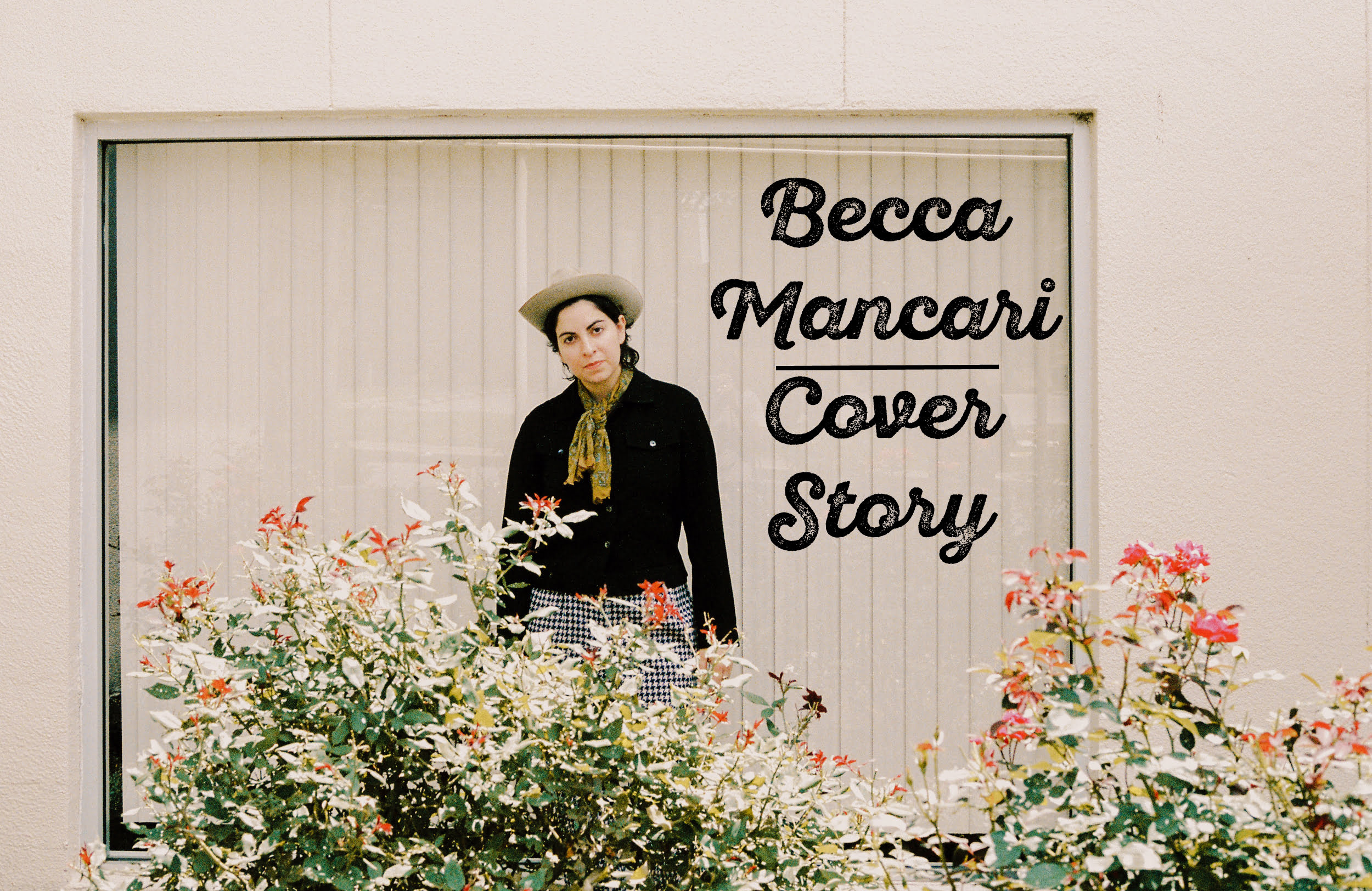
A Lot of Life: A Conversation with Becca Mancari

Becca Mancari may live in Nashville, but the sound she’s developed in her music is anything but “Nashville.” It makes a good deal of sense, though, when you consider Mancari’s earlier life, which included stints in India, the Blue Ridge Mountains, south Florida, and Staten Island.

On her debut album Good Woman, Mancari weaves her myriad life experiences into a lush tapestry of gold-toned tales which, sonically, hew far more closely to dreamy California folk-pop than the tradition-heavy throwback country currently making the rounds in much of Music City’s music scene. In doing so, Mancari has transcended her status as a local favorite to that of a nationally acclaimed artist, songs like “Golden” and “Arizona Fire” earning her nods from major outlets like NPR and Rolling Stone.

Mancari is also one third of one of the most buzzed-about new bands of any genre — Bermuda Triangle. Alongside singer/songwriter Jesse Lafser and Alabama Shakes’ Brittany Howard, Mancari and Bermuda Triangle recently released a single (the Laurel Canyon-esque ballad “Rosey”) and have plans to tour intermittently throughout the rest of the year. 

You have a new solo album. Can you tell me how the album first started to take shape for you?

The album, it’s my debut record. I’ve only had one song out, “Summertime Mama,” and now we have two versions, which I think confused people a little bit. But it’s so great, the idea of the power of one song. I had that one song do its work and time-and-a-half. Everything from Ann Powers featuring us last year with NPR for AmericanaFest — which is huge, she’s been a huge blessing in my life.

I decided I was going to take my time. I met a lot of producers and I just couldn’t get the right vibe. I noticed that this guy — his name is Kyle Ryan — he would be coming to our shows all the time. I know he’s a busy guy. He’s Kacey Musgraves’ band leader, and he’s also deeply involved in her recordings now. But he would just keep showing up and, by the last time, he had a notebook in his hand and was taking notes at my show. I went up to him afternoon and I go, “Hey man, you wanna get coffee?” So we did.

I actually had never really heard anything that he had done production-wise, but everything that he talked to me about, I was on the same page, from inspirations like Tame Impala to the way he is more of a Beatles fan and less of a — and this is not against the Nashville sound or the country way, but I just don’t feel like I fit in that world, and I didn’t want to make a throwback record. I would say he was like another member of our band. Tracking was all done by my live band. The only “studio” musician was a trumpet player that I had come in.

Did y’all do the actual recording in Nashville?

Yeah, we did it over at his studio, which is right behind his house, right close to Mas Tacos. Of course, there’s like a million studios everywhere. He makes gold, man. He’s incredible.

You mentioned how the Nashville sound of the current isn’t necessarily what you’re after or what you do, but it does seem like you’ve still been embraced by that fan base — which, granted, is pretty broad these days. What do you think it is about your music that still appeals to that contingent?

That’s a good question. I don’t know. I feel like we are so much of a family in Nashville, so I feel like that’s kind of playing into it. I have friends like JP Harris or Christina Murray or Margo [Price] — real country musicians — and they listen to other music, too. It’s not the only music they listen to, and I think that what I’ve noticed is that they’ve been excited to come to the shows because they’re like, “Hey, you’re doing something different on that steel. I don’t know what you’re doing, but I really like it.” I think it’s just refreshing, maybe.

I really don’t have any background in country music. I didn’t really listen to it growing up. I don’t know how to play it, even. I do think, though, that I love songwriters, and I’d say my greatest influences, when I was young and still now, are Bob Dylan, Neil Young, even John Prine. To me, these people are able to translate even in the indie world because they’re just great songs. You can kind of do whatever you want, when you have great songs. I let my guys take what I write and put the sounds to it, put the vibe on it, and that’s how we function as a band.

Since you’re an artist crafting such song- and lyric-driven music, do you have a tried-and-true writing process that you follow?

I do the traditional sit down and pull out my guitar and be by myself thing. “Golden” came to me in the night, which is fairly rare. I think one of the things I also like to do is I listen to one record over and over and over again. I was listening to Gillian Welch at the time when I wrote that song, and I just wouldn’t stop listening to it, and there was this one song — I think it’s called “Orphan Girl” and it’s not the same thing at all — but there’s this one note that I keep turning in my brain.

That’s how I kind of take melodies sometimes, where I’m like … it’s not their melody, but it’s a hearing thing. I write a lot as a hearer. I don’t know how to read music. I wish I did, but I don’t. I play it by ear and I always have. I’ve always been really sensitive to sound, so a lot of times, it’s sound. I write better when I’m in the car driving, watching things and hearing things. I also voice memo a lot, then I take it back and figure it out on guitar. So it depends. But a lot of it is from sound, for some reason.

Lyrically, the songs sound like they are very personal. Do you draw very heavily from your own life?

I think I do. I’m in awe of the John Prines of the world who write these stories, but they are very personal. I also try and allow space for somebody else’s emotions and feelings and thoughts. There’s an element of somebody wanting to take it for themselves. But yes, a lot of this record has an overarch of time and life in it. I think it’s just because it’s my first record, too, so there’s a lot of life in this one, including mine.

It sounds like you’ve led a pretty nomadic existence, moving from place to place and seeing lots of things. How do you think that transience, if at all, has influenced you as an artist?

Oh, man. When you grow up with parents like mine that just wanted us to see so much of the world … My first time leaving the country was at 14. Not many people get to do that. I went to Peru when I was a kid and experienced that and saw so much of another part of the world that we aren’t introduced to, oftentimes. I think that has helped me open my eyes to seeing the other side of things, with empathy and compassion, I hope.

It’s easy to forget, in the world that we live in. We become obsessed with our own stuff. But I do think that helped. I was talking the other day in an interview with Ann [Powers], and she was asking me about that. I got to live in India for a while, and my older sister lived there for five years. Just spending time around Hindi culture — which is so different than anything I’ve ever experienced. I can’t explain India. Even the way we made “Arizona Fire,” I feel like there’s an entrancing, kind of dream-like aspect to it where I did get inspired by the hypnotic, circular sound that is in traditional Hindi music. Traveling all over the country, seeing different ways of life, I feel like, if I could tell any young person, I’d say, “Go. Go see everything you can, because it’s going to seep into you.”

Going back to what you said about writing from a place of compassion and empathy … one thing I find myself wondering about anybody who’s releasing a piece of art right now is whether or not the political climate had an impact on those pieces. Did you find yourself feeling influenced by that, when you were writing some of these songs?

Yeah, there’s definitely some social aspects. “Devil’s Mouth” is very personal to me. It has my family involved in it. I had some even — I don’t know what the word is — baggage, or pain, I guess, from feeling like I’m on the outside of things, even being somebody that came out [as gay] pretty young, when it was pretty scary still. Those things are definitely reflected in there.

The current climate that we live in reminds me a lot of when I was little. There’s a lot of fear-based living. And there’s a lot of an idea of pushing us away from people who have really worked hard to be open. And even what happened just recently with DACA … I wrote a song with Bermuda Triangle, another band that I’m in, called “Tear Us Apart,” and it has everything to do with it. It’s actually really emotional for me to even get into right now because it deeply affects my family — my nuclear family of me and my girlfriend — and just the life we have. It’s a lot.

Right now, I feel like I have not even gone to those places yet to figure out how to have a voice. I just talk openly, and I will use my music however to defend people that are in trouble right now. And there are a lot of people that are, and a lot of people that don’t really understand what it’s like to be affected by the Trump administration. I grew up in a Hispanic culture, and it’s a scary time for a lot of us. I’ve been really upset for the last few days. I don’t even know how to explain it right now.

Well, on a more optimistic note, you did mention Bermuda Triangle. I haven’t seen people this excited about a new band in a while. How did y’all first start pulling this project together?

Oh, man. Thank God for the light-hearted things in life. We have serious songs — serious heartbreak, political things — but we are just so about having fun. If you’re ever able to come to a show, it’s just funny. Brittany is hilarious. I like to have a good time, and we’re all truly best friends. I hang out with them all the time. They’re the people I’m spending my life with. So it was just a natural progression. Brittany and I met each other four years ago, and we joke/believe that we met each other in a past life, all three of us. We talked to a psychic and she was like, “Oh yeah, you’ve known each other for forever.” So there’s a little element of mystery and fun and also just true friendship.

For us, what a wonderful time to be together and enjoy each other, and that’s what we want our shows to be like. I don’t know why I’ve read any of this stuff, but I’ve read some haters already, but Brittany is so special to people, and I get that. But the thing is, we’re also special to each other and she understands that. I think the world needs to understand that more, especially with us as women. We celebrate each other. We don’t compete against each other. We push each other to be better, and that’s what this band is about. We really truly love each other, and we really truly believe in each other’s music. We get to demonstrate that in the way we want to and not because we have to survive off this band. We all have our projects. Brittany is going to continue to blow our minds. Jesse has been the most underrated writer in Nashville for years, and I’m just so proud to see her finally get the attention she deserves. I’m just excited that this Triangle is going to give us an open door to have fun, but also to put out some really great stuff. Yeah, we basically met on porches drinking tequila and started playing music.


Photo credit: Zachary Gray

3×3: Violet Bell on Prince, Prince, and Prince

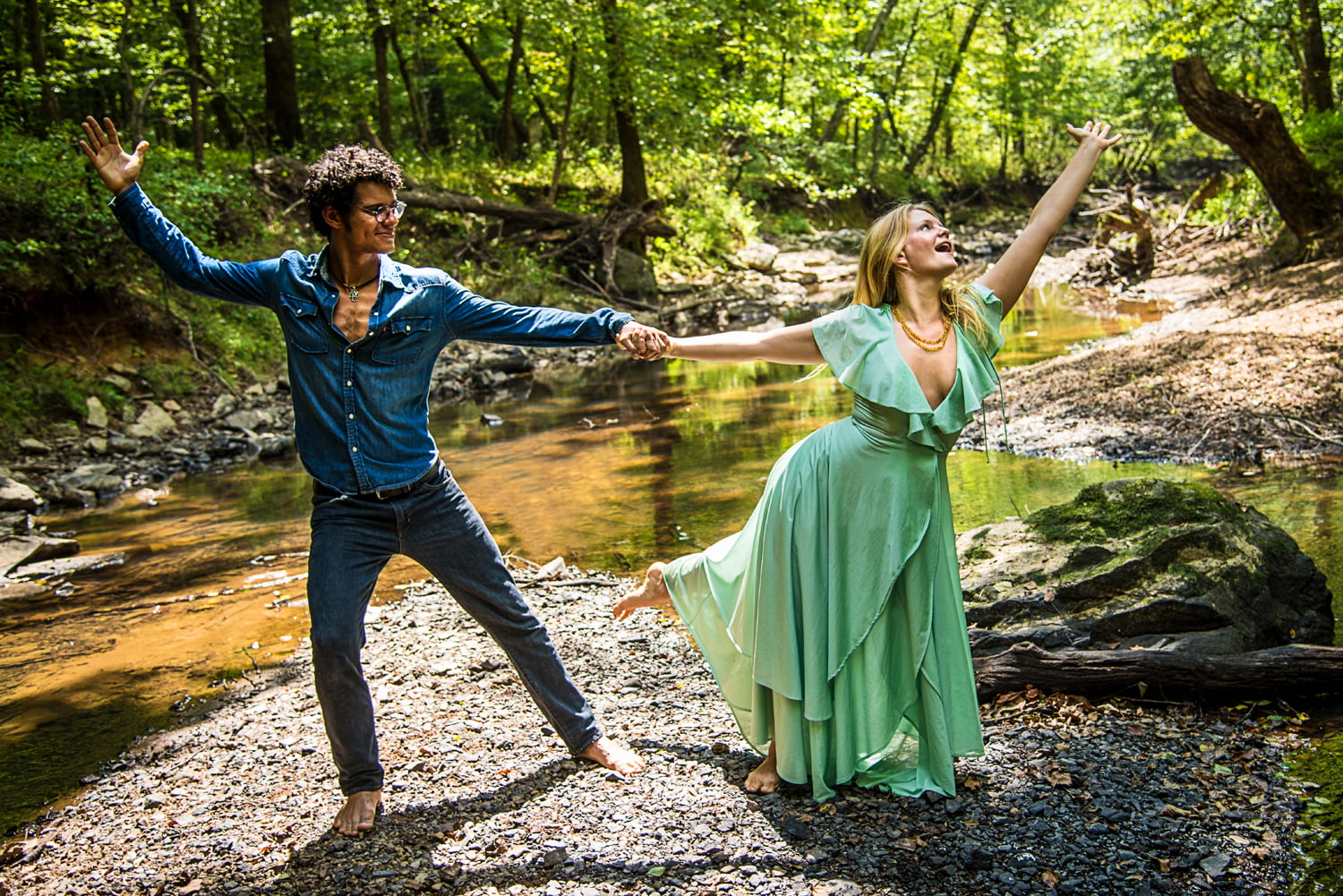
Artist: Violet Bell
Latest Album: Dream the Wheel
Personal Nicknames: “Omar” is ripe for situation-specific nicknames — Showmar on stage, Promar when we’re practicing, Gomar when we’re on the road … the list goes on. Omar’s been introducing Lizzy on stage as the boss with the sauce, Lizzy Ross. Sometimes she also has floss.

rain day

A post shared by Lizzy Ross (@lizzyross) on

What song do you wish you had written?

Omar: “7” by Prince and the NPG, or “Agua” by Jarabe de Palo

Lizzy: This is a tough question. Today, the answer is … “I Was an Oak Tree” by Jonathan Byrd. Omar played with JByrd for a few years, and we both admire his catalog of gorgeous, soulful songs.

Who would be in your dream songwriter round?

Neil Young, Debussy, Nina Simone, JJ Cale, Fela Kuti, Gillian Welch, Lou Reed, Béla Fleck … how many songwriters can we have? The list goes on! Prince! Dolly!

If you could only listen to one artist’s discography for the rest of your life, whose would you choose?

Prince, Prince, Prince. So many different flavors, concepts, and motivations. We love that man’s willingness to go out there into uncharted musical and conceptual territories and bring back some light. Or Béla Fleck. His discography runs the gamut of styles and he’s got music for every emotion.

220 miles to Boyton Beach! Playing at the Living Room tonight, 8-10

A post shared by Lizzy Ross (@lizzyross) on

How often do you do laundry?

We’ve gotten better about it! About once a week now for the both of us! Any longer and the car can get …gnarly. Folding it is the real challenge. As we tour more, what’s the point of having more clothes than we can fit in a duffel bag?

What was the last movie that you really loved?

We both loved Secret of Kells — spectacular Irish music, faeries, ancient secrets buried in dusty old books? Yes, please. Omar loved Hateful Eight. Tarantino films are always full of surprises and nuggets.

If you could re-live one year of your life, which would it be and why?

Lizzy: Maybe next year? I’m excited to find out. It seems the best is yet to come. I have loved being alive, so far, and I’m excited to be here and now. Life keeps unfolding before us, and I wouldn’t change where it has brought me so far!

Omar: Pass.

What’s your go-to comfort food?

We LOVE Pho. On the road, however, all those noodles can make us sleepy behind the wheel. Green curry is a serious contender. On tour, we sometimes eat it every day… sometimes more than once a day! We like the spice. We’re beginning to wonder if we need a green curry intervention.

Kombucha — love it or hate it?

Love it! Fizzy mushroom tea?? Count us in! Before we got so busy touring, we used to make it at home!

Mustard or mayo?

Both! They’re like us: complementary.

3×3: Rising Appalachia on Latin America, Lucky Ages, and Leonard Cohen

Artist: Rising Appalachia
Hometown: Atlanta, GA. The dirty South.
Latest Album: ALIVE
Personal Nicknames (or Rejected Band Names): The band considered the Grassy RootHeads, Squalor, RISE, but Rising Appalachia was the name of our first album and it stuck as the band name 12 years ago.
Leah: L-Dogg, Snake Eyes, Leo, Leah the Lip, Sito, Wakes Talking, chief meteorologist
Chloe: Chlo-Bo, Bo, Boskers, Trisket Biscuit, The Dark Queen, Sito, Pumkin, Pum Pum


Take me to your ocean. Take me to your sea… #FloydFest #risingappalachia #ilovemyfilthydirtysouth Photo @leahsongmusic

A post shared by Rising Appalachia (@risingappalachia) on

What song do you wish you had written?

Leah: “When Doves Cry” by Prince.

Chloe: “Hallelujah” by Leonard Cohen (Doesn’t everyone wish they wrote that damn song?!)

Who would be in your dream songwriter round?

Leah: Gillian Welch, Outkast, Bob Dylan, Sister Rosetta Tharpe, Ani Difranco, Robert Johnson, the Buena Vista Social Club, Lila Downs, Bonnie Rait, Prince.

Chloe: Ani Difranco, Hosier. Nahko. Mos Def. Erykah Badu. Bob Marley. Joni Mitchell.

If you could only listen to one artist’s discography for the rest of your life, whose would you choose?

Leah: Bruce Molsky. Makes me feel home.

Chloe: Ohhhhhhh. That’s a hard one! Probably Bob Marley.


As one of our elders put it last night, We want to put the U.S in a chair in the middle of the room Surrounded by healers, activists, grandmothers, lovers, and children And tell it how good it could be. How it could rise to the occasion of its full potential in the face of white supremacy, the dismantling of Standing Rock, of distasteful leaders and embarrassing media, of capitalism over culture. All these hard working people from all corners of the globe. This land and all its beauty. We have so much more work to do And I know folks are tired. What else is there to do but show up again and again and again and again ? In solidarity with the people of Charlottesville and all others whom work to uplift the story of the south (and this country) May love triumph. . . . #notmysouth #blacklivesmatter #notoursouth #standup #speakout #showup #solidarity #alternateroots

A post shared by Rising Appalachia (@risingappalachia) on

How often do you do laundry?

Leah: What a weird question. Um , whenever the duty is called for. Depends on the show night.

Chloe: All the time. Randomly on the road and we string it all up to dry in the back of the bus, which gets pretty intimate and funny.

What was the last movie that you really loved?

Leah: I almost NEVER watch movies. But I watched an amazing South American film on the plane the other day called Vengo Olviendo that was a beautifully filmed, slow and delicate story about the complexity of human migration. It was excellent.

Chloe: I loved the movie LION that just came out about the boy who got lost in India and found his way back home via Google Maps. Crazy wild true story. Reminded me that technology can be a good thing (I can get a little anti).

If you could re-live one year of your life, which would it be and why?

Leah: Hmmm, I would probably go back to my early 20s, when I was traveling out of a backpack across Latin America learning to play banjo and studying folk music from all over the place. It was such a free and inspired time in my life. Not nearly as weighted as this whole “professional musician” thing. 

Chloe: Year 7. Lucky number, lucky age, the mind is so open and spongey at that time. I’d go hang with my grandparents some more and pick their brains … especially my father’s mother who was a poet.

What’s your go-to comfort food?

Chloe: Thai food all day every day.

Kombucha — love it or hate it?

Leah and Chloe: LOVE ! Although once we got sponsored by a kombucha company and things got a little too fermenty in the van. It has to be handled in the right dosages.

Mustard or mayo?

Dijon

3×3: Ira Wolf on Gillian Welch, Getting Magical, and Grossing Out

Artist: Ira Wolf
Hometown: Missoula, MT
Latest Album: The Closest Thing to Home
Personal Nicknames: N/A

What song do you wish you had written?

“I Can’t Make You Love Me”

Who would be in your dream songwriter round?

Gillian Welch, Ben Gibbard, Sam Beam, Gregory Alan Isakov

If you could only listen to one artist’s discography for the rest of your life, whose would you choose?

Gillian Welch or Iron & Wine


You belong among the wildflowers, You belong where you feel free~

A post shared by Ira Wolf (@irawolfmusic) on

How often do you do laundry?

Every few weeks, or whenever it’s offered on the road.

What was the last movie that you really loved?

Inside Out. It gives me all the feels, and I cry every time.

If you could re-live one year of your life, which would it be and why?

So far 2017 has been the most magical. I traveled to some of my favorite places in the world, spent time with people I care the most for, and recorded my dream album in Nashville.

What’s your go-to comfort food?

Kraft Mac n Cheese with tuna. I promise it’s not gross.

Kombucha — love it or hate it?

Hate it. After seeing a bunch of friends make their own, I’ll never get over the sight of the mother.

Mustard or mayo?

Mustard. Spicy, preferably.


Photo credit: Dennis Webber

Best of: Music City Roots

There really is nothing quite like live music, and what would Wednesday nights be without Music City Roots live from the Factory? If you aren’t lucky enough to be in Nashville, be sure to catch the live stream each week at 7 pm CT. In the meantime, we’ve scoured the MCR YouTube channel to pull together this collection of must see performances you don’t want to miss:

BGS Favorite: Elephant Revival, “Grace of a Woman”

Get ready to sing along to this high-energy song by Elephant Revival. Although no longer a member of this band, Sage Cook’s electric banjo solo is not to be missed, and everyone could use a little more washboard in their lives!

Fresh off the Press: Dori Freeman, “You Say” 

Twenty-five-year-old Dori Freeman made her MCR debut recently with a performance of “You Say.” This live rendition showcases what we at the BGS have already praised Freeman for: an honest voice and lyricism that wrenches right at the heart.

Blast from the Past: Pokey LaFarge, “In the Jailhouse Now” 

Before the Factory, there was the Loveless Café. This 2011 rendition of the blues and vaudeville standard is titled “In the Graveyard Now” on LaFarge’s album Riverboat Soul. The only question we keep asking is why didn’t we learn how to play the harmonica like that!

Seeing Double: The Brother Brothers, “Cairo, IL” 

Part of the beauty of the Brother Brothers lies in the simplicity of their instrumentation and the haunting harmonies that result from the similarity of their vocal tone. Can you tell who is who in this live performance of “Cairo, IL” from December?

The Jam: Nashville Jam, “I’ll Fly Away” 

One of the most popular jams to celebrate the collaborative spirit of Music City is a rendition of the spiritual and bluegrass standard “I’ll Fly Away” performed by host Jim Lauderdale with guests Gillian Welch, Dave Rawlings, Sierra Hull, Liz Longley, Maureen Murphy, and T Bone Burnett. Make sure to watch til the end for an amazing guitar solo by Rawlings on his classic 1935 Epiphone archtop.

3×3: Moonsville Collective on San Luis Obispo, Sriracha Mayo, and ‘Gran Torino’

Artist: Corey Adams & Ryan Welch (of Moonsville Collective)
Hometown: Long Beach, CA
Latest Album: Moonsville II
Personal Nicknames: We usually call Corey “Core” and Ryan “Ry.” I guess we’re too lazy to be bothered with an extra syllable. Matt is “Phantom,” as he wasn’t in any of our band photos for about two years. Dobro Dan is “Dobro Dan” because that’s who he is and what he plays. And Seth is “Tenney,” as his mom added her maiden name on his birth certificate to read “Daniel Seth Tenney Richardson,” though it has become more of a verb lately for some reason …


Pickin’ & Howlin’ @ojaideerlodge #ojaideerlodge #ojai

A post shared by Moonsville Collective (@moonsville) on

What song do you wish you had written?

CA: “Coffee Blues” by Mississippi John Hurt. He and this tune came along at the right time, a long time ago. He’s the real deal.

Who would be in your dream songwriter round?

CA: Lead Belly, Brownie McGhee, Gillian Welch, and Gary Arcemont — the scientist fiddle player from San Luis Obispo. That would be very satisfying. Proper storytellers, proper entertainers.

If you could only listen to one artist’s discography for the rest of your life, whose would you choose?

CA: Probably Bob Dylan. I bought Modern Times on CD when it came out a decade ago or so, and it just knocked me out. He gets a lot of shit for sounding old, but he is old. This record was as intriguing to me as Blonde on Blonde was the first time I heard it, and I know there’s plenty more in between that I can spend some time with.


Dobro Dan / Cow Strap Blvd. #studio #EPII

A post shared by Moonsville Collective (@moonsville) on

What was the last movie that you really loved?

CA: I don’t watch a lot of movies, but the last one that really hung around was Gran Torino. I’ve lived in the same neighborhood my entire life and, if I went into further detail about why the film is so great, I’d have to kick my own ass.

What’s your go-to comfort food?

CA: My wife’s vegetable soup is a warm jacket on a cold day. On the other end of the spectrum, McDonald’s original cheeseburgers.

Mustard or mayo?

CA: Do they not complement each other perfectly on any sandwich? There are days when I opt for the honey mustard. Sometimes it’s the sriracha mayo. The simplest things need not change.

How often do you do laundry?

RW: Whenever the hamper tells me to. I’m still trying to figure out what day is the least crowded down at the laundromat. 

If you could re-live one year of your life, which would it be and why?

RW: The year I was born, of course. I remember the world entrance light being so bright and beautiful and the swirling donkeys above my crib. The comfort of the rocking chair always eclipsed the discomfort of the diaper rash.

Which Whiskey is your favorite — Scotch, Tennessee, Myers, Shivers, or Gentry?

RW: Tennessee, I suppose. Scotch always gives me the shivers, Myers will help you meet the bailiff, and Gentry is just too high-class.

‘Nashville Obsolete’

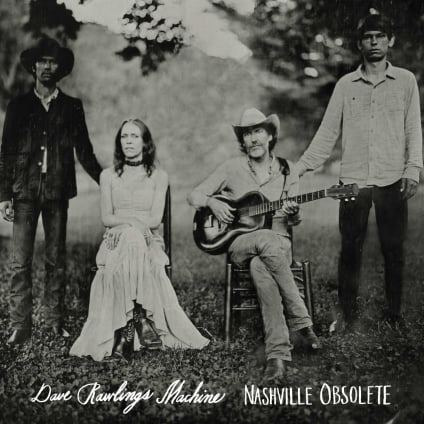
There's a reason why pretty much everything to come from the house of David Rawlings and Gillian Welch immediately goes to the top of every Americana list on planet Earth. They are a pair of formidable talents — artists who precisely evoke the essence of traditional country music yet never sound like Americana mockingbirds.

For this record — a compact set of just seven tunes spanning about 45 minutes — they once again sow the seeds of traditional country, nurture them with modern sensibility, and reap their own unique harvest. There's Nashville in the water and Southern California in the air on "The Weekend," a tune that presents Rawlings and Welch singing harmony from note one. It feels like a 40-year flashback in a Laurel Canyon time machine, with a short stay at Bradley's Barn. "Short Haired Woman Blues," too, has a certain cowgirl-in-the-sand brand of shimmer, a slow-weaving bonfire-on-the-beach sing-along punctuated by gentle string accents. The epic, 11-minute narrative of "The Trip" is a stream of consciousness expedition into the exquisite — their poetry like Dylan, their textures like the Byrds. "The Bodysnatchers" is a supernatural story of supernatural superstitions, the ghosts in the hollow, the monsters under the bed. Rawlings and Welch pick up the tempo for the rail-riding rumble of "The Last Pharaoh," get a bit buttery on "Candy," and shoot for the plaintive soul of the plains on "Pilgrim (You can't Go Home)." 

With Brittany Haas, Jordan Tice, Willie Watson, and Paul Kowert in tow, the team of Rawlings and Welch have made another strong record to add to their growing repertoire.

Gillian Welch: Retracing the Miles of Music

There’s something about looking back at an old photograph — especially a candid one, a moment you didn’t ever know would be dug up and reflected upon some-odd years later — that makes you look at the present differently. Sometimes you recognize long-ingrained mannerisms that still pop up. Other times, you exhale with relief at the fact you’ve kicked a regrettable habit, letting out a smirk or a quick pang of embarrassment at the passing trends you rocked for the cameras or the half-smiles you favored to hide your braces. It’s a pretty personal thing, to take a piece of your life preserved in print and trace the way it led you to where you are now. Gillian Welch’s latest release, Boots No. 1: The Official Revival Bootleg, is the musical incarnation of that kind of endearing deep-dive into the past.

“I hear me before I really sound how I sing,” says Welch of the 21-song release, which is comprised of early demos and unreleased recordings from the time period leading up to her breakout debut, Revival, in 1996. “My voice is in there, but it's just not quite as focused, and there aren't as many miles on me. Dave [Rawlings] and I often talk about being able to hear the miles on a singer. There's just no substitute for the years and the hours and all of the gigs — literally, all the miles.”

For an artist like Welch, whose careful interpretation of bluegrass and gospel music effectively laid the groundwork for today’s thriving Americana scene, rewinding the mileage is all the more rewarding. A 1993 living room tape of “Orphan Girl,” for example, reveals a lighter, higher vocal than the one fans came to know three years later. (It’s a thrill, too, to realize that Emmylou Harris likely decided to record the number based on this very tape.)

“[These sessions] were some of the first times I was ever recorded, and you can hear my influences,” Welch says. This act of retracing early work is one she’s enjoyed as a fan of other artists, too. “I think it's interesting to hear where they started and what they changed. One of the most fascinating things, when you hear really early recordings of singers who you know so well, is that you hear them before they've really become themselves.”

In addition to the novelty of hearing a greener Gillian on the more popular songs from her catalog, Boots No. 1 also boasts songs like “Wichita,” which appeared on set lists and a live DVD but never made a proper album, and “Dry Town,” which was written by Welch but recorded by Miranda Lambert and Nitty Gritty Dirt Band.

“I guess we just didn't feel like they fit in. I don't think we had any agenda, didn't have anything against these songs. We're really album-oriented artists,” says Welch. “This was a great way to have them come out in to the world, because they really make sense in context with Revival.”

The sessions for Revival began in the Summer of 1995 in Los Angeles, bounced down to Nashville in the Fall, and wrapped up back in L.A. at the end of the year. These recordings formed the basis for the archival project — after all, the fact that these forgotten sessions were mixed live was an unusual luxury.

“This is very rare now, and was fairly uncommon in the mid-'90s,” notes Welch. “This would have been how people were making records in the '60s and before. But it was great for this project because it meant that we actually had mixes of takes that never got used, alternate takes. People these days aren't often in that situation.”

Welch had lived in Nashville for about three years when the recordings featured on Boots No. 1 went to tape, mostly performing as a duo with partner Rawlings in small clubs and on writers’ rounds while finding a voice as a songwriter. “We were playing as much as we could,” she says, though the out-of-town gigs were only beginning to roll in.

“I had moved to town with two songs,” she says. “By the time we were going in to make Revival, I was going into the session with something like 35 songs. It had been, for me, an incredibly productive couple of years.”

Specifically, she cites a songwriting competition at North Carolina’s Merle Watson Memorial Festival as the catalyst for better gigs and more credibility as a writer, and the community she found there continued to push her forward.

“After that, people like Peter Rowan, and Tim and Molly O'Brien, and the Nashville Bluegrass Band, all these people suddenly knew who we were and started asking us to open for them. The bluegrass world was really the first place where we got acceptance. That was our home,” she says. “Actually, the night that I met T Bone [Burnett], we were opening for Peter Rowan at the Station Inn in Nashville.”

Burnett was the perfect fit for Welch and Rawlings in the studio, but if the final product he helped to sculpt on Revival sounds like a departure from what listeners hear on Boots No. 1, it’s not because the veteran producer was out to change their sound.

“Dave and I knew what we liked,” says Welch. “We really did, going into it; but even so, it's hard when you're that young and you've never done any recordings to just go in there and do it and feel confidence. He gave us that strength — not even to mention the fact that he knew his way around record-making like crazy. Nothing got put on that record that Dave, T Bone, and myself weren't happy with.”

That attention to detail is as evident today as it was in 1996 and, although each of the songs on Boots No. 1 is its own glimpse into Welch’s roots, each half of the double album stands as its own: a Revival for parallel universes.

“Dave felt very strongly that whatever we made should be playable like a record, not feel like a library project. I felt very strongly the same way,” she says.

These recordings may have been cast aside as the songs themselves evolved into live anthems and borrowed cuts. But to hear them emerge unchanged as puzzle pieces that fit together in such a meticulously curated collection as Boots No. 1 is a compelling message for any artist or maker: that even the less-polished parts of the past can be a vital part of the future.

“I hear a starting place to where we ended up going, and hopefully that's interesting to people. I know, as a listener, it's interesting to me,” she says. “Obviously we play [the songs] a little differently, and our voices are a little different now, but I still understand them, and I think that's because of how we wrote them. We wrote them for them to have everything you need to connect with them, right there.”


Lede illustration by Cat Ferraz.

Josienne Clarke and Ben Walker: Exploring the Spectrum of Melancholy

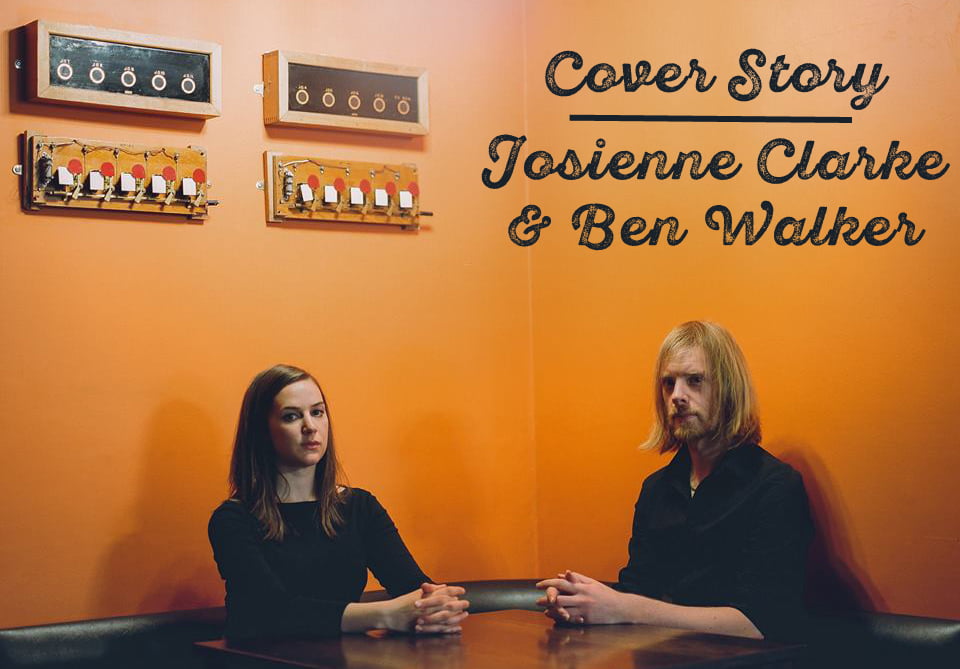
The way British singer/songwriter Josienne Clarke describes herself — as the committed harbinger of melancholy — brings to mind the spirit, if not the letter, of Sir John Everett Millais’s haunting painting “Ophelia.” Capturing Shakespeare’s tragic character mere moments before she drowns herself, Millais positions her against a lush landscape so beautiful it contradicts the melancholy writ large across her face. He captures in a frame life’s duality: how the dark exists within the light, how everything contains at least a piece of its opposite. In music, Clarke captures a similar theme, fascinated as she is with the spectrum of melancholy. She and her musical partner, Ben Walker, have a penchant for sad songs, either penning original compositions or interpreting traditional folk tunes that take advantage of the weighted solemnity in her voice. Walker’s arrangements punctuate her writing without adding too much to what she’s saying or leaving her words so bare they freeze. It’s an approach which won them the 2015 BBC Folk Award for Best Duo.

The pair made their Rough Trade Records debut in 2016 with Overnight, which showcases Clarke’s razor-sharp precision for striking upon despondent moments. Paradoxically, they tend to be happier times. On “Something Familiar,” she mourns the loss of an afternoon spent with her love. “For there’s no way of keeping the day we’ve just had,” she sings at the very end, her voice filling the speakers while Walker’s guitar strikes a final note before falling silent and letting her voice linger. Theirs is a realistic perspective more than a strictly melancholic one. If the only certain thing in life is uncertainty, there’s grace in allowing moments to breathe and to be.

If Clarke’s commitment to melancholy seems like an overly serious tone with which to present an existentially plagued perspective to the world, rest assured both she and Walker have a droll sense of humor regarding the whole thing. After all, anyone touting themselves along such lines needs a bit of grit — and a good laugh — to go along with the image. Laughter can exist alongside sadness, much in the way beautiful moments contain their own end.

Your voice sounds so mature and your subject matter is so somber, which belies your age, I suppose. Did this subject matter find you or did your voice find that subject matter?

Josienne Clarke: I don’t really think that melancholy is the exclusive privilege of older people. I’ve always been drawn to the darker songs. Even as a child, my dad used to play me songs like “Man of the World” by Peter Green, which is really, really sad. So I think it started off with that as a nugget for songwriting, and it seemed quite normal to me that song matter should be quite reflective and sad.

How did you two get linked up, originally?

JC: This is Ben’s story.

Ben Walker: I was playing electric guitar in a number of indie bands around London, and a mutual friend was doing some mixing for us. He had an acoustic guitar in the room, and I had a go on that just because I hadn’t played one of those — it was a Martin — in a while. He basically said, "Well, if you play acoustic guitar, what are you doing playing electric guitar in these bands that aren’t going anywhere?" I didn’t really know who played that music, and he introduced me to Josienne, who was at the time playing guitar for herself.

Josienne: I was playing bad guitar for myself, and I felt like it was holding me back, so I definitely had a vacancy for a decent guitarist.

You’ve described your writing style as being quite economical. I’m curious how you two work together as writers, but also how much revision plays into it.

JC: I realized what I was always trying to do is to condense an idea down to its smallest form, so managing to express an idea — and it’s usually something like the pain of existing, some sort of existential despair — into the smallest amount of words I could manage. And that’s usually the point at which I take the song to Ben, when I’ve got a kind of melodic and narrative idea down, and he gets involved in the harmony, which chords should go underneath where, and extra instrumentation.

BW: Sort of trying to get the song to a point where nothing else needs to be added and nothing else needs to be taken away. If you take something off, you notice it’s gone; but if you add something on, it feels like it’s overloaded, so it’s trying to find that balance. You can be as economical with that instrumentation as Josi is with the writing structure and the lyrical content, as well.

It seems like it adds a certain melodic emphasis to make the words shine that much more.

JC: I have a bit of a personal hatred of songs that go beyond five minutes. If you have a seven-minute song, you’re getting the song form incorrect. It stops being a song; it becomes a symphony of words. I feel like, when I manage to get it two-and-a-half, three, three-and-a-half minutes … done. That’s a successful songwriting endeavor.

So we shouldn’t expect any kind of major jam session from you two?

JC: We may get bored with our current set-up.

BW: We may record a jazz odyssey.

JC: We can never say never.

Like a folk opera of some sort?

JC: Oh yeah: ”Fopera.”

Are you familiar with "Texts from Your Existentialist” on Instagram, which plays off the "Texts from Your Ex” phenomenon? There’s a certain kind of humor that arises when you’re dealing with existential subjects, and I thought of your tour’s hashtag #MagicalMiseryTour. How do you bring a bit of light or humor to being the “harbinger of melancholy”?

JC: We’re both a bit sarcastic by nature, and I’ve always tried to keep to the principle of taking the music really seriously but ourselves not so much. So, in a live performance, that kind of conversation between the songs is of a comic nature, you know — not slapstick, but kind of dry and sarcastic. I started doing it originally because it made me feel more comfortable in a performance, but I realized that it kind of worked for the audience, as well. In 45 minutes to an hour of really intense music, they kind of need a little break between those three-minute nuggets of sadness. It balances it out, so it doesn’t feel you’ve been through some sort of trauma.

BW: You have to put yourself in the seat of an audience member, not just from a performer’s point of view, but if you were going to come along and see this: How would you feel sitting through an hour-and-a-half’s worth of music where you couldn’t laugh, you couldn’t smile, you couldn’t feel that anything you were doing? The amount of concentration needed to sustain that … you need a little relief in there.

JC: [Laughs] It also stops us from looking hideously pretentious.

BW: There’s also the thing where, although we do take some elements from classical music, we never do the kind of gig where everyone has to turn up in suits and sit in perfect silence from beginning to end.

JC: Well, that’s what I mean. It’s not a recital.

Turning to the album itself, one of my favorite lines on “Something Familiar” is when you sing, “There’s no way of keeping the day we’ve just had.” It’s like every beautiful thing contains its opposite or its demise. How do you live with that knowledge of everything disintegrating?

JC: I think everyone has to live with it, and I don’t know how people manage to live with it without being able to write songs about it.

I think people know it to an extent, but they don’t tap into that awareness as often.

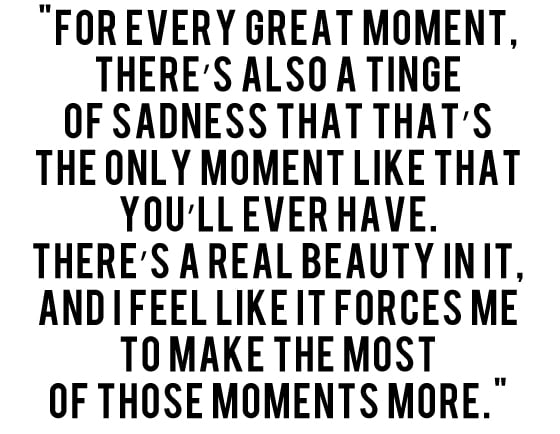
JC: Yeah, maybe I’m the only one constantly banging on about it. That idea has kind of pervaded all of my songwriting in some sense. I just thought of “Silverline” [off Nothing Can Bring Back the Hour]. There’s a line about “for each pound of joy, there’s an ounce of regret,” and it’s that thing where, for every great moment, there’s also a tinge of sadness that that’s the only moment like that you’ll ever have. There’s a real beauty in it, and I feel like it forces me to make the most of those moments more. That knowledge makes me more inclined to cherish the life that I do have.

BW: Until you realize that all things must pass, there are two ways you can approach it: You can make all things last indefinitely. Yes?

JC: I’m just intrigued that you’re involved in this part of the conversation. [Laughs]

BW: I’m just thinking you can sort of embrace it and say, "Well, let’s just try and make everything last forever," or actually you can say, "No, look, we’re just going to enjoy the moment. We know it’s going to end."

You’re not getting attached to any one moment or any one person; you’re able to appreciate them for what they bring and then let it go.

JC: Yeah, I think that’s what we all have to learn to do, and I’m still learning or I wouldn’t still be writing songs about it.

But we tend to get very attached to things and, in turn, get upset when they’re no longer around for various reasons. I think recognizing moments and people for their fleeting nature is quite beautiful. I’ve really been drawn to your lyricism because it touches on that point more than what I’ve heard in a while.

JC: But I think that plays into the overall concept of the album — the cyclical nature — that everything has an element of change built into it. That’s the acceptance you have to make. It underwrites absolutely everything, everywhere, from the seasons to the moon to the tides to the sun. It’s an inevitable part of existence.

You’re not getting any kind of argument from me on that point. Besides your original songwriting, I know you’ve covered Shirley Collins, Kate Rusby, and Jackson C. Frank, among others. What do you look for in someone else’s music?

JC: We never kind of specified that we were folk musicians. That was applied to us, in a way, and we always liked songs — generally sad ones — but those can come from any genre of music. We have quite a wide interest. Our albums have more than just folk songs on them.

BW: Generally, when we’ve found songs that we’ve decided to cover, you actually hear it and go, "Well the sentiment works, the idea works." You start sparking ideas around and going, "Well, it would be great if we tried it like this." It goes from there, really.

JC: I’ll give you a specific example: Gillian Welch’s “Dark Turn of Mind.” I felt they kind of do it as a straight piece of Americana, but I always felt like I could hear a kind of torch song in there somewhere and I guess wanting to try that to see if I could bring that out of it some way. Obviously, I identify massively with its sentiment, to a point that I feel like I would’ve written it, if I feel like she hadn’t got there first. But we’ll say, on a musical level, I could hear another interpretation in listening to it and that’s why that one, specifically, was more compelling than some of her other songs, perhaps.

BW: We’ve never been ones to do a carbon copy of the original, because it already exists. Why would you do it again? So it’s that sort of thing where you reimagine things, or the classic one for us is to learn it, forget it, and then try and re-remember it.

JC: Yeah, you have to feel you have something extra to bring to it. It’s never going to be the original, but you might be able to add something else that makes it a credible interpretation.

That’s why I loved what you did with “Milk and Honey.” It was really something.

JC: That was weird because I don’t know how I thought of it, but I heard the melody and I thought, "Well, this melody will work with ‘Tis Autumn,’ another standard." I’m not sure I could’ve worked it out, technically. I just knew it was, and then Ben is tasked with doing the technical splicing and putting it together.

Like, "Here’s the idea: Structure it and make it work."

JC: Right. “Can you just make this work? Thanks. I know it will. Can you just do it?”

Going back to this Twitter description you’ve given yourself as the "Harbinger of Melancholy" — what do you do if men stop you on the street and ask you to smile?

JC: I find the phrase “Fuck off” is really … or I’ve got a special face. It’s sort of like “meh.” It happens to me quite a lot. People used to come up after the show and say, “Oh, couldn’t you just do one cheery one to fluff it up a bit?” And, obviously, they didn’t get a very good response to that. I was like, “This is what we do. This is what people come for. We’re not going to do happy tunes. If you don’t like it, don’t come. That’s fine.” But we’re not going to change.

As we’ve discussed, you tend to focus on these moments of joy that contain inevitable kinds of sadness. What brings you both joy? What moments do you look for that register in that way?

JC: I guess the weird thing about it for me is performing. It’s really sad music, but nothing makes me more joyful than singing. It’s the sensation of singing something really sad and completely full of joy, which is kind of a bit dark and sadistic and weird.

BW: I think the performance element of it is the thing that brings us both a lot of joy.

JC: And the process of making the album — when I think of putting that thing with that thing and seeing it form, that’s huge fun. Like trying a thing, taking it back off again, putting something else on. The process for us is incredibly joyful; it’s just the subject matter that’s quite sad.