An Opry Celebration of the O Brother, Where Art Thou? Soundtrack

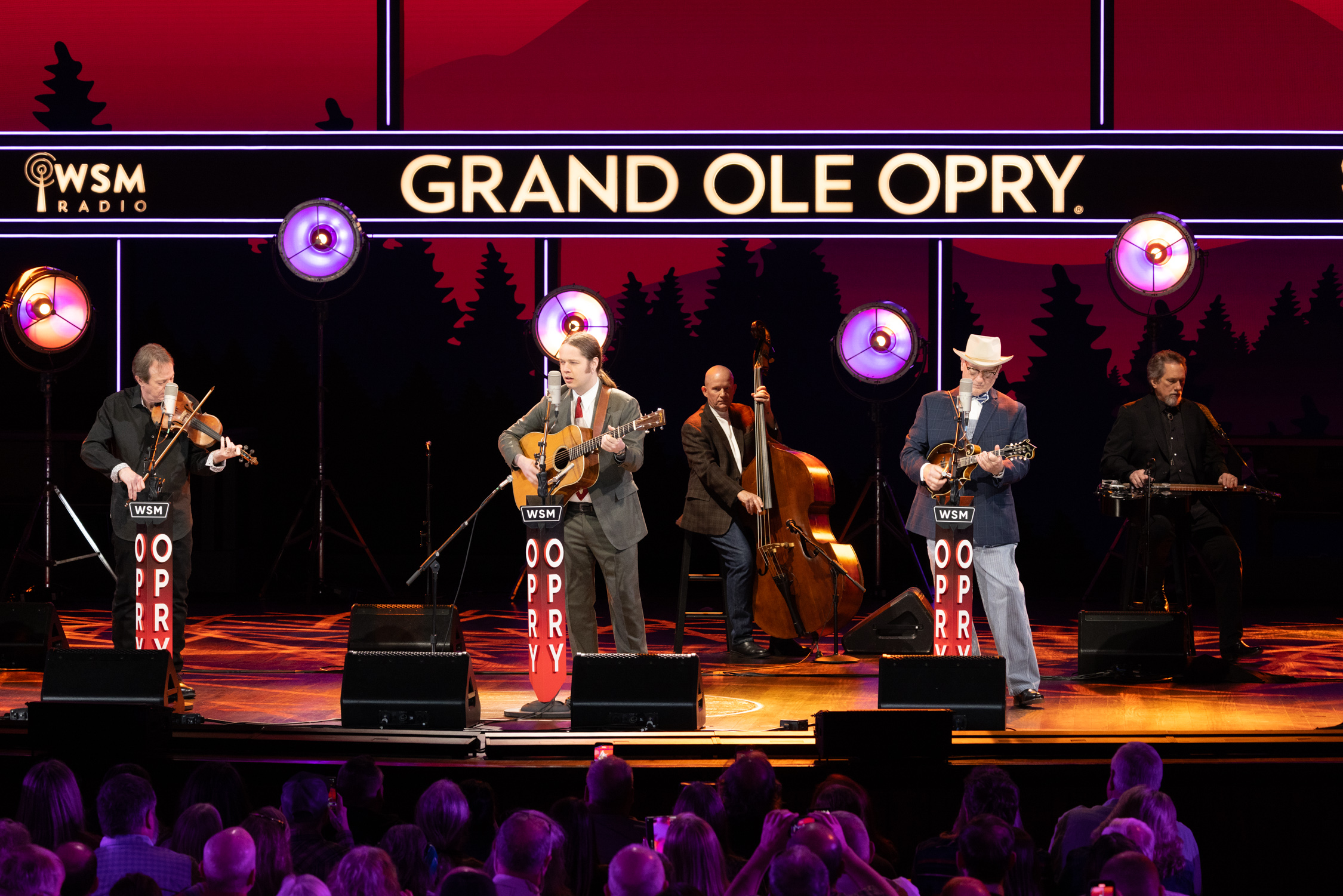
In an all-star acoustic tribute, the timeless music of O Brother, Where Art Thou? rambled across the Grand Ole Opry airwaves for a 25th anniversary celebration on Saturday, February 28.

In some ways, this night in Nashville felt different from a typical Opry show – no drum kit, no square dancers, and not a lot of commercials. On the other hand, it would be hard to find a more suitable place to stage a salute to O Brother than on the world’s longest-running radio show.

The GRAMMY-winning, 8-times platinum soundtrack was performed in its entirety by Opry stars such Alison Krauss, Emmylou Harris, Del McCoury, Old Crow Medicine Show, and the Whites, as well as guest performers like the Alaskan Sunnyside Sisters, the Fairfield Four, the Fisk Jubilee Singers, and Colin Linden alongside contemporary masters like Sarah Jarosz, Billy Strings, and Molly Tuttle. (To put the time frame in perspective, Jarosz was 9 years old when the soundtrack was released, Strings was 8, and Tuttle was 7.)

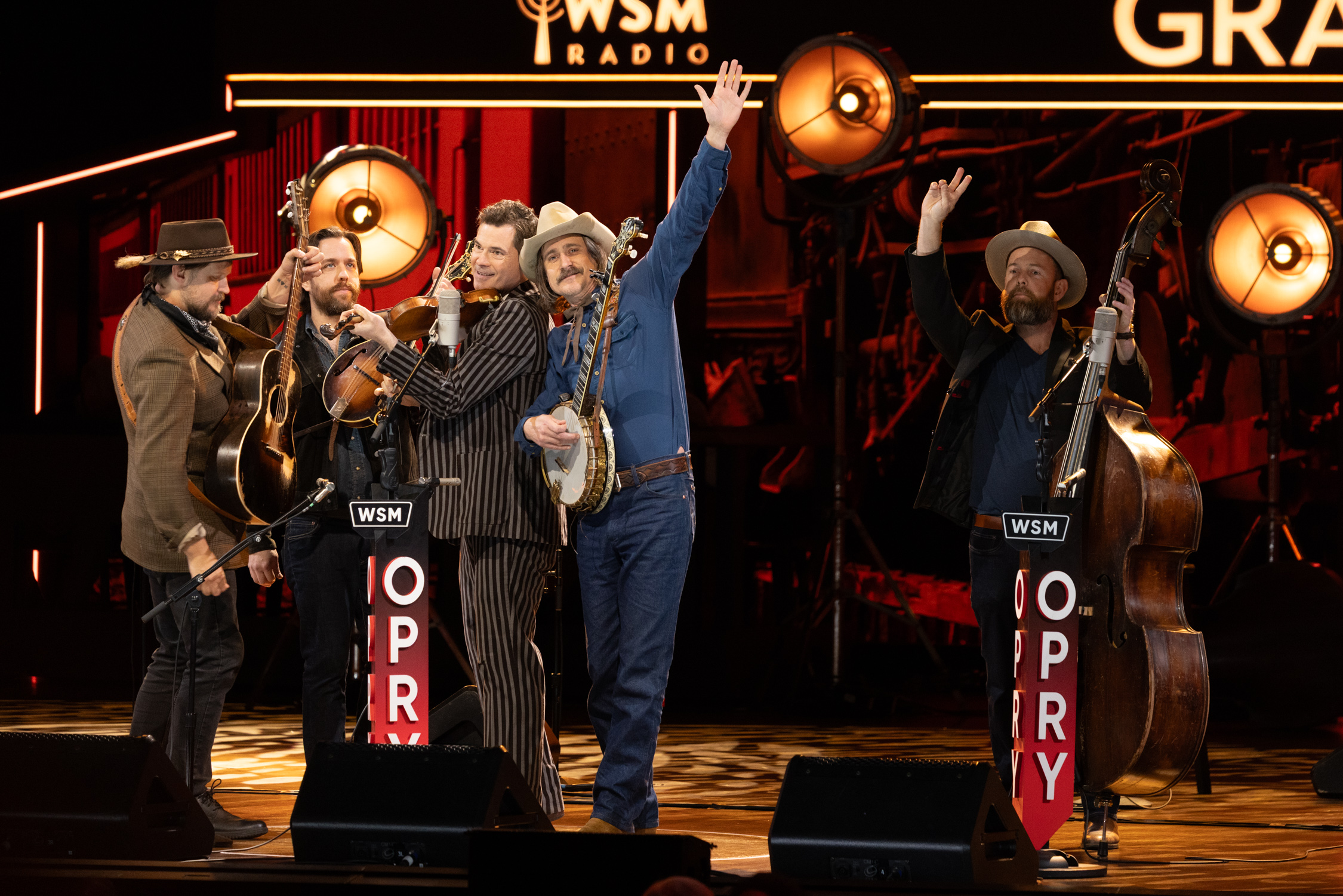
Old Crow Medicine Show perform during the Opry’s tribute to ‘O Brother, Where Art Thou?’

In addition, Chris Thomas King and Tim Blake Nelson also reprised their performances from the film, while the A-list house band was composed of Mike Compton on mandolin, Dennis Crouch on bass, Jerry Douglas on Dobro, Stuart Duncan on fiddle. And what O Brother tribute would be complete without Dan Tyminski delivering “I Am a Man of Constant Sorrow”?

As a bonus selection not included on the landmark collection, Krauss and the Fairfield Four opened the special evening with a lively rendition of “Every Time I Feel the Spirit,” which immediately immersed the audience in that same spirit. After Krauss stepped away, the Fairfield Four performed the soundtrack’s original opener, “Po’ Lazarus,” accompanied only by hand claps. Old Crow Medicine Show roused the crowd with “Big Rock Candy Mountain,” an enthusiastic choice that fit their high-energy demeanor. Bandleader Ketch Secor also co-hosted the event alongside Opry announcers Bill Cody and Mike Terry.

Dan Tyminski sings “I Am a Man of Constant Sorrow” with the evening’s house band.

Backed by the house band, Jarosz engaged the audience to sing along with a perennial favorite, “You Are My Sunshine,” and the sold-out Opry House was happy to oblige. Krauss returned with the Fisk Jubilee Singers for a sterling performance of “Down in the River to Pray,” where the audience sat almost perfectly still in reverent silence. Following the song, Krauss was presented with a commemorative scarf designed by the famed clothier Manuel; all Opry members are receiving the scarf as part of the Opry 100 celebration. The house band then shared an instrumental version of “A Man of Constant Sorrow,” which was a nice touch referencing the handful of variations of the song on the soundtrack.

That soundtrack practically came to life with Colin Linden and Chris Thomas King’s “Hard Time Killing Floor Blues” and The Whites’ “Keep on the Sunny Side.” Jarosz  on mandocello and Molly Tuttle on guitar teamed with the house band for a wonderful take on “I’ll Fly Away.” Emmylou Harris and Alison Krauss then stood on either side of Tuttle for a trio rendering of “Nobody But the Baby.” (Gillian Welch, who sang with Harris and Krauss on the original album, was unable to participate in the show.)

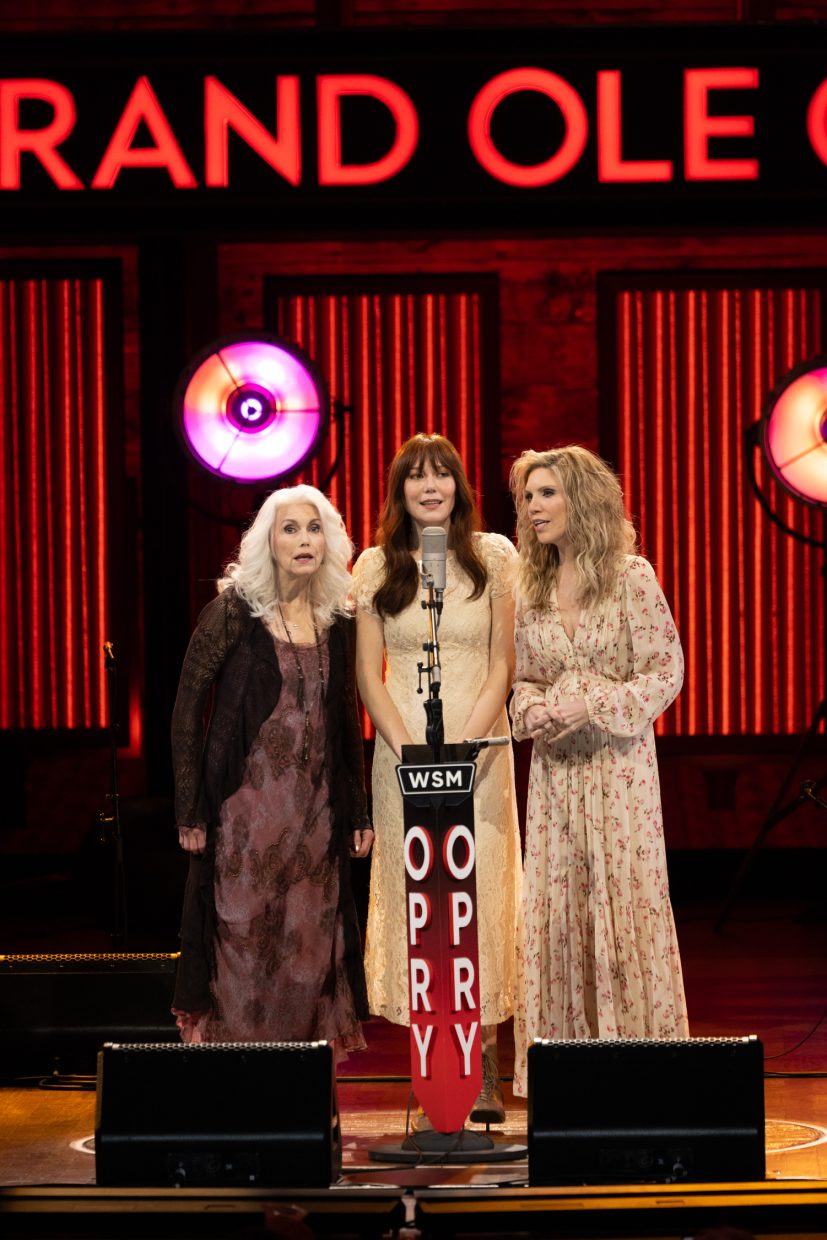
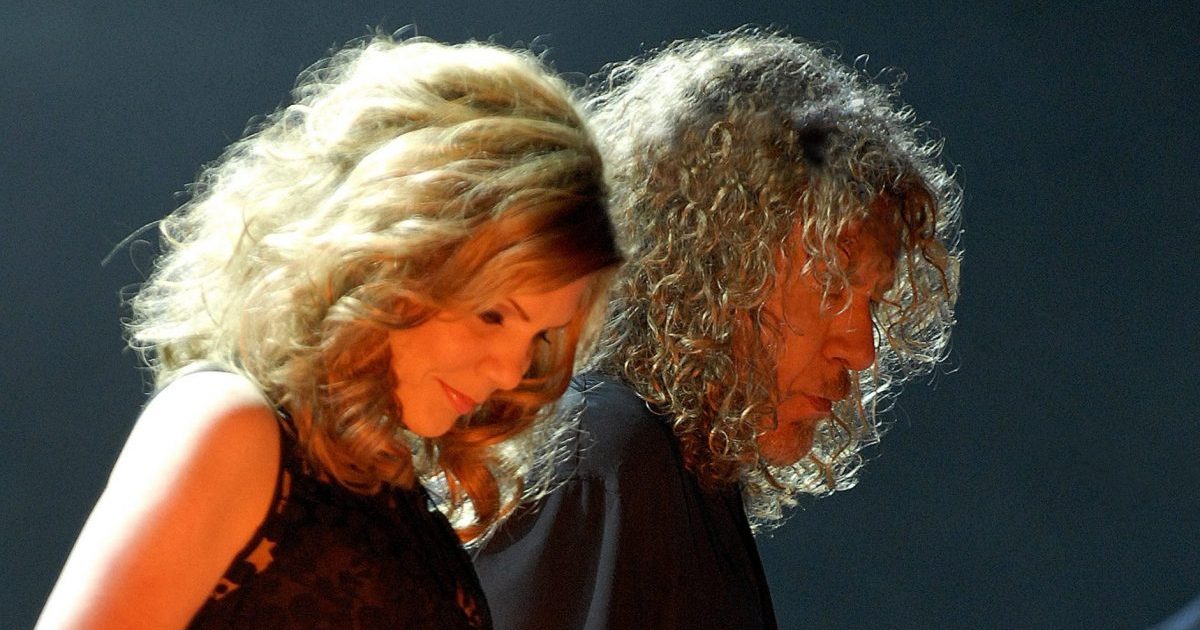
Emmylou Harris and Alison Krauss, both of whom appeared on the soundtrack, are joined by Molly Tuttle for an a capella rendition of “Nobody But the Baby.”

Folks, that’s only the first half!

After decades away from the spotlight, the Peasall Sisters returned to the stage to introduce “In the Highways,” the song they recorded as children; on this night, it was sung by an endearing kid quartet – and viral internet sensations – the Alaskan Sunnyside Sisters. Molly Tuttle returned for the emotional “I Am Weary (Let Me Rest),” which led into bluegrass phenomenon Billy Strings singing “Wild Bill Jones,” which appeared on the 2000 O Brother concert album, Down From the Mountain. Strings then welcomed Dan Tyminski for a duet of “O Death,” which was sung by the late Doctor Ralph Stanley on the soundtrack. (Incidentally, Stanley joined the Opry cast the same year the O Brother soundtrack was released on Lost Highway Records. The newly resurrected label co-presented the show with the album’s award-winning producer, T Bone Burnett.)

Billy Strings takes the stage to sing “Wild Bill Jones” with the house band.

The audience especially loved seeing and hearing one of the film’s stars, Tim Blake Nelson, revive “In the Jailhouse Now” on the Opry stage. Tyminski (who voiced George Clooney’s singing in the film) naturally brought the house down with “I Am a Man of Constant Sorrow,” then Old Crow Medicine Show offered the vivacious “Indian War Whoop,” recorded by John Hartford for the original project. The Fairfield Four also returned to the stage to sing “Lonesome Valley” just ahead of Del McCoury Band’s performance of “Get Down on Your Knees and Pray.” (That one’s not in the film, but it was a terrific addition.)

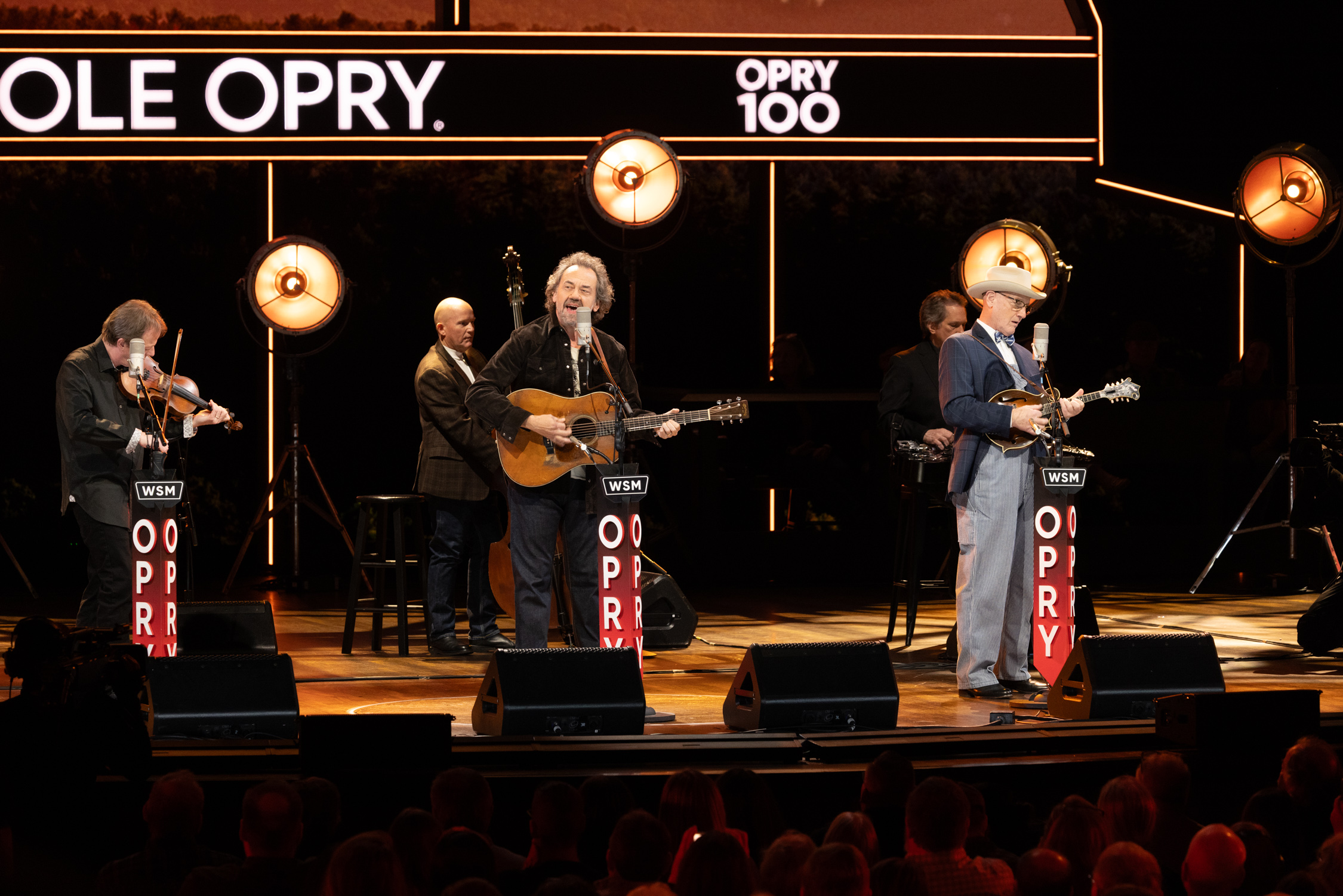
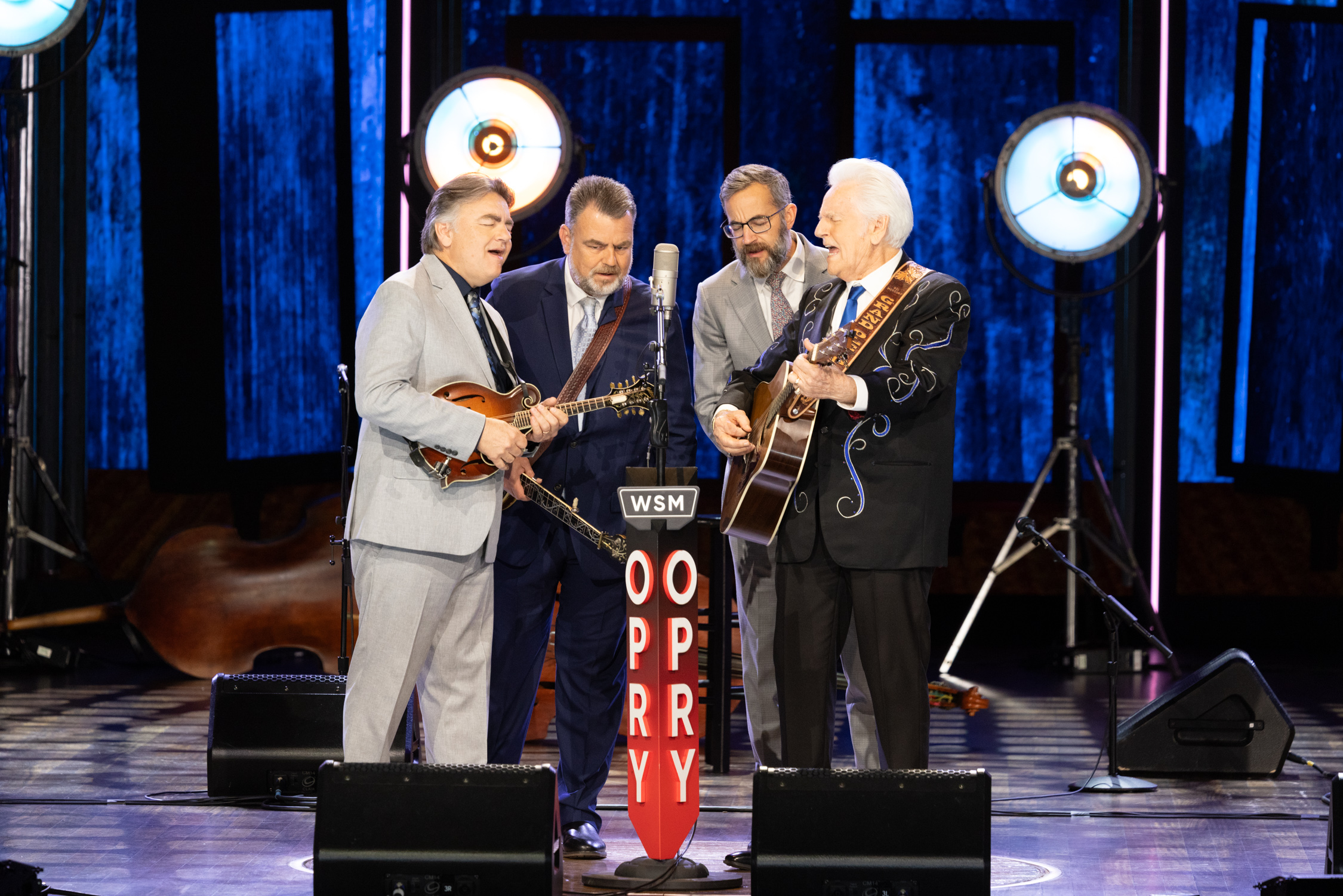
The Del McCoury Band sing “Get Down on Your Knees and Pray” before leading a sing along with the entire cast of performers.

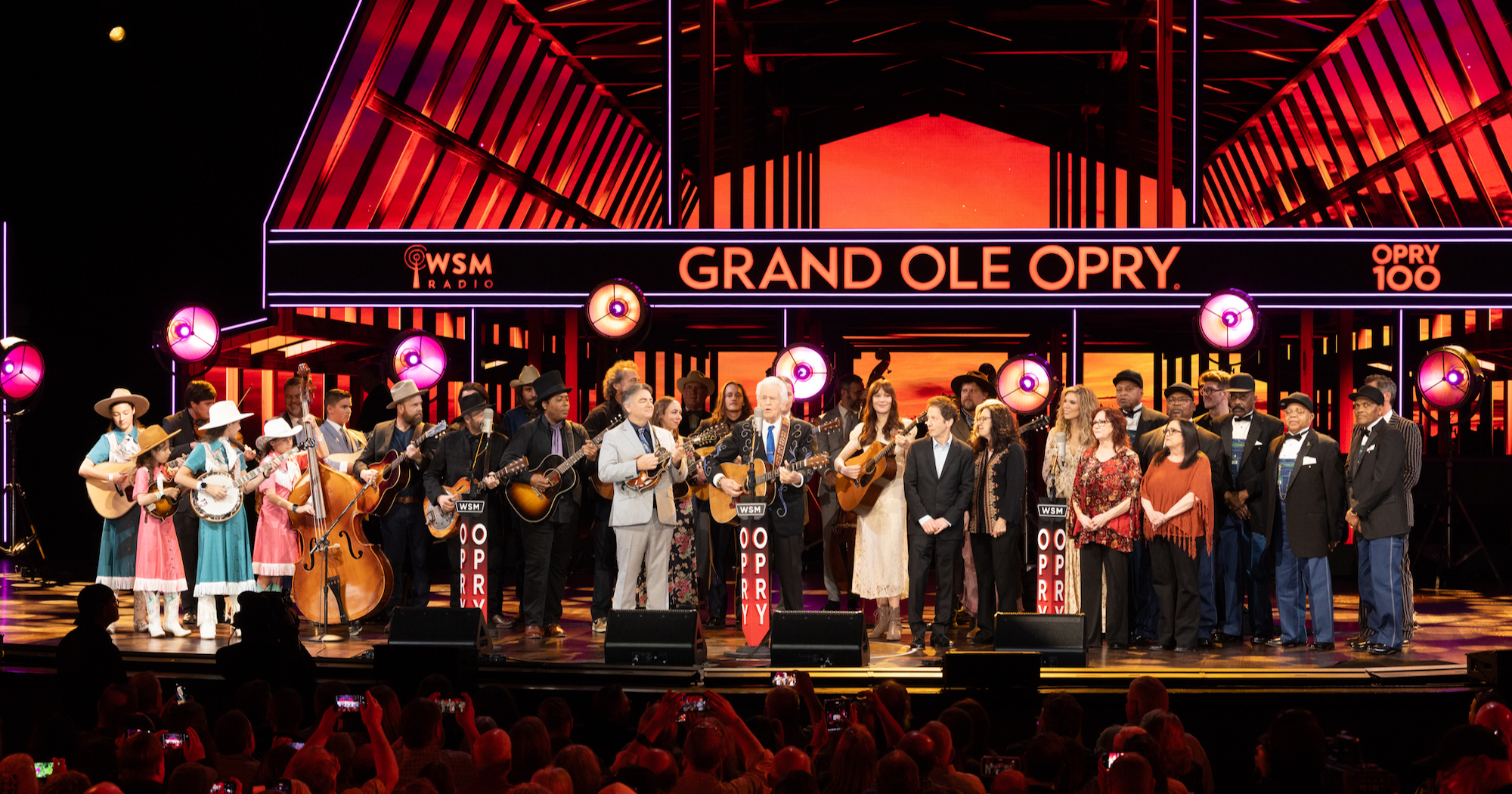
In his brief remarks, Burnett took a moment during a brief speech to acknowledge Denise Stiff, a visionary Nashville manager who recruited many of the musicians for the soundtrack back in the day. But of course, it wouldn’t be a tribute without everyone coming back on stage and singing at the end – in this case, “Angel Band” and a reprise of “I’ll Fly Away.”

Twenty-five years ago, the O Brother soundtrack brought old-time and bluegrass music into the national spotlight. This long-awaited encore underscored the staying power of this classic album.


Photo Credit: All photos by Chris Hollo for the Grand Ole Opry.

Lead Image: The entire cast of the Opry’s O Brother, Where Art Thou? tribute show take the stage to sing “Angel Band” and “I’ll Fly Away” to conclude the evening.

2025 Good Country

What is Good Country?

We wouldn’t ever begin to even try to define it. Good Country is a place. A feeling. A sense of knowing it when you hear it. Whatever you consider to fall under the term or qualify for the moniker, there certainly is plenty of Good Country to be found these days – and especially in 2025.

To wrap up the year in country, we asked our GC contributors not to simply select their favorite country song or album of the year, but to consider that titular question. We gave our writers no parameters or qualifiers for what their picks could be or include, leaving the prompt as open-ended as possible, asking our folks to focus in on the music that stuck with them, whatever the reason or impulse or staying power. Most selections are albums and songs, but some are artists, books, soundtracks, live shows, or other more intangible moments.

The results perfectly illustrate how much easier it is to triangulate the location of Good Country by showing, rather than telling. Spanish-language and Mariachi-infused country fall alongside twangy Mississippian working class messages over hip-hop beats and contemplative singer-songwriter mental health reckonings. Bluegrass pickers can be found beside books and motion picture soundtracks and songs sung in te reo Māori. Smash hits and household names bump up against newcomers and fresh discoveries. It’s all here. It’s all Good Country.

As you scroll, we hope you enjoy the broad, borderless, and endlessly entrancing territory we’ve come to know as Good Country. As we turn the page from 2025 to 2026, we’re proud of the community of folks who love and make Good Country – and beyond excited to hear what they’ll continue to bring to us in the very near future.

Sammy Arriaga, “Before The Next Teardrop Falls”

Freddy Fender’s masterful 1974 hit, “Before The Next Teardrop Falls,” with its Tejano guitar and half-Spanish chorus, is so cemented into the history of the place it was made that it sounds as contemporary as Willie in Austin, and older than the Carter Family, even maybe older than Nashville itself. Recording a cover of it, especially in this era of ICE raids and xenophobic facism, is to argue for a kind of double heartbreak – where the loss of a lover and the oppression of a culture work concurrently. I would have never thought that Sammy Arriaga was capable of this, his previous work was often vapid and derivative, but 2025’s Heart in Texas has an immediate, difficult tenderness.

If Fender’s work has hope that his lover will eventually need him in the same way that country music will need him, then Arriaga’s work is devastating because he knows that he will not be asked to be there at all. – Steacy Easton

William Beckmann, “Por Mujeres Como Tú”

Few things brought me more joy this year than videos of country crooner William Beckmann performing Pepe Aguilar’s “Por Mujeres Como Tú” at Floore’s Country Store in Helotes, Texas, in September. Beckmann was joined by Mariachi Campanas de America, a San Antonio-based group that’s been active in different iterations since 1978.

A native of Del Rio, Texas, Beckmann has made no secret of his bilingual roots – he sang Vicente Fernández’s “Volver, Volver” during his Opry debut in 2023 and included a cover of “Por Mujeres Como Tú” on his major-label debut, Whiskey Lies & Alibis, earlier this year. But this was clearly a special moment, as evidenced by the triumphant expressions on Beckmann’s and the mariachis’ faces and the sounds of the delighted crowd singing along. It offered proof of what many generations of Texans already know to be true: Mariachis make everything better. – Will Groff

Luke Bell, The King is Back

Luke Bell was a country music chameleon like no other. Western swing, country blues, classic country, outlaw, cowboy, trucker songs, and rowdy barroom country – he sounded at home in it all. Enigmatic and tough to pin down, Bell was a quintessential driving force in the Americana and independent country scene as it blossoms now. He also struggled with mental illness and substance abuse, and was found dead at 32, truncating his musical contributions.

Now, a posthumous double album, The King is Back, delivers both Bell’s ineffable joie de vivre and his remarkable songwriting in the most complete form yet. The King is Back’s 28 tracks range from bravado on “Rattlesnake Man,” “Long Gone Love,” and “Cold Stew,” to vernacular country with “Roofer’s Blues” and “Irrigator’s Blues,” and classic country weepers like “Seven and Steady” and the album’s spectacular, tragic closer, “Tiger’s Mouth.” Bell’s songwriting was often stunningly prescient. And on the album’s title track, it’s easy to imagine Bell’s just stepped back on stage with a wink and a grin: “I heard things just ain’t the same without me/ Hold your hats, the party’s on, the king is back,” he sings. This album is as close as it gets. – Meredith Lawrence

Cole Chaney, In The Shadow Of The Mountain

In 2023, as I was wrapping up an interview with music industry counselor JT Nolan about the mental health benefits of playing music, he asked, “Have you heard Cole Chaney? Go to YouTube and listen to ‘Spirit.’” When friends and family turn away, houses of worship slam-lock their doors, and society at large stigmatizes and ostracizes, the broken take refuge in the arts. Sometimes it’s complex work. Sometimes it’s the gentle strumming of an acoustic guitar and a high lonesome refrain: “I want to let go, I don’t want to hurt no more, I want to let go … spirit … I’m tired of holding on …”

A lot can happen in two years. Cole Chaney grew his hair, plugged in, turned up, and released In The Shadow Of The Mountain. The result owes as much to Cobain and Cornell as it does to Doc and Merle. Chaney describes it as “a little bit of a darker album.” That’s saying something, considering the emotional outpouring that is his debut, Mercy. Settled in midway on the new release is a revisited “Spirit,” somehow even more plaintive than the OurVinyl session.

Albums like In The Shadow Of The Mountain, in all its aching beauty, are reminders that while our brokenness may never truly leave us, music is the kintsugi that helps fill its deepest cracks. – Alison Richter

Tyler Childers, Snipe Hunter

Sure, Tyler Childers’ grungy Rick Rubin-produced masterpiece, Snipe Hunter, has been nominated for a GRAMMY Award in the Best Contemporary Country Album, but placing the project alongside releases by fellow nominees Miranda Lambert and Kelsea Ballerini illustrates how limiting this buzzworthy category split really is. To this listener, every single fascinating song on Snipe Hunter is built upon a centuries-old foundation of country and Appalachian tradition.

While the album has certainly had a polarizing effect among those who describe themselves as Childers fans, folks “in the know” inside and outside of the region – be it central or southern Appalachia, Kentucky, the South, or rural haunts in general – found endlessly artful complications and narrations of country (and country-ness) throughout the collection. Childers’ lyrics are all at once demonstrable and fantastic, far-fetched and absolutely grounded in reality. Over the half-year since its release, I find myself returning to Snipe Hunter over and over again to delight in new discoveries and freshly raised eyebrows and first time laughs-out-loud as I find more and more whimsical magic flowing from Childers’ true country pen. You may not see yourself reflected in this EP, but to those of us who do, the sensation is joyous – and addicting. – Justin Hiltner

Madeline Edwards, FRUIT

When Madeline Edwards started turning in songs for her 2025 album, FRUIT, an “industry leader” on her team suggested she package the project as a “grief EP” – a moment of catharsis in the wake of her younger brother’s death that would not distract her from more commercially viable musical pursuits. But the grief songs kept coming and the suits lost faith.

Edwards stuck to her guns and delivered the brilliant concept album independently. The pangs of mourning ring out throughout FRUIT, but so do hard-won determination and joy. Edwards’ range as a storyteller is on marvelous display from the instantly memorable piano ballad “Just A Dream” to the wall of guitars on “American Psycho” and gospel timelessness of “Holy Fire.”

Edwards is at home among the many different shades of contemporary country, while also dipping her toes in soul, rock, indie and her very own brand of classical pop vocals. Somebody please put this multifaceted performer on a massive headlining tour ASAP so we can watch her soar to even greater heights. – Lizzie No

Sierra Hull, A Tip Toe High Wire

With the release of her latest album, A Tip Toe High Wire, Sierra Hull has broken through a new level of national and international notoriety. With a songbird voice and soothing stage presence, the mandolin virtuoso took her deep bluegrass roots and blended it with a heady helping of Americana and indie-folk stylings.

Always cognizant of her traditional bluegrass foundation, Hull continues to use that steady footing to step over musical fences and into new realms of sonic possibilities, as seen with her appearances onstage in recent years with the likes of Slash, Cory Wong, and the Allman Betts Family Revival. If anything, A Tip Toe High Wire is, in many respects, Hull finally arriving into her own space and signature sound, something she’s chased after since she was a young kid playing alongside legends like Alison Krauss, Sam Bush, and Béla Fleck. The album itself is a testament to the unlimited possibilities she possesses and radiates with such ease and pure enthusiasm.

Not to mention, Hull also took home her seventh Mandolin Player of the Year honor at this year’s International Bluegrass Music Association Awards. – Garret K. Woodward

Nicholas Jamerson, The Narrow Way

Those plugged into Kentucky’s music scene will often put Nicholas Jamerson’s songwriting on the same level as that of Tyler Childers, Chris Stapleton, and Sturgill Simpson. With his latest record, The Narrow Way, it’s easy to see why.

On the 12-song project, the singer’s humility shines through as he tackles topics like the bond he’s built with his partner (“One With You”), remaining hopeful in life’s dim moments (“Dark In Every Day”), not taking your time for granted (“Running Out Of Daylight”) and reflecting on moments you can’t get back (“Prater Creek”).

Further recognition of Jamerson’s prowess as a writer can be found in the feature spots littering the project, which range from its producer Rachel Baiman to Ketch Secor (Old Crow Medicine Show), Tim O’Brien, Shelby Means (Molly Tuttle & Golden Highway), and his sister, Emily Jamerson (another artist to keep your eye on). Altogether, The Narrow Way follows the same formula Jamerson has rode to success for over a decade now – serving the song above everything else – and the best part is he’s showing no signs of slowing down. – Matt Wickstrom

KIRBY

@singkirbysing Did you know Mississippi has the most food deserts in America ? A food desert is where residents have limited access to affordable healthy & nutritious food options due to a lack of grocery stores. Spread the word. #fyp #foryou #foryoupage #fypシ #fypppppppppppppp #viraltiktok #viralvideo #fypdongggggggg #singing #relatable #singer #fypage #mississippi ♬ The Man – KIRBY

I spend more time on TikTok than I’d like Good Country’s readers to know, and it seems like most country artists’ content sits on a continuum between “here’s a bonfire scene that cost two million dollars to produce” and “pardon my PJs, the label made me post this :(.”

Mississippi songwriter KIRBY, however, used short-form vertical video as a canvas for her Southern Gothic storyscapes to great effect all year, turning album promotion into an opportunity for site-specific performances. In July, KIRBY posted a lyric video for “The Man,” a song from her then-forthcoming album, Miss Black America. She sings straight to camera in front of the yellow Dollar General sign you see on every block in the hood. Her vocal winks at Ann Peebles and the caption explains the prevalence of food deserts in America.

This fall, clips of “Na$ty” created their own cultural moment on the Black Internet. You kinda had to be there, which is a lesson in itself. On KIRBY’s internet, everything is text and anything can be useful. Hair, thighs, grooves, intertextual comparisons, and accents are thick, and AAVE will not be translated. We are cordially invited to keep up. – Lizzie No

Olivia Ellen Lloyd, Do it Myself

West Virginia native, now New York-based songwriter Olivia Ellen Lloyd taps into a deeper sense of love, heartbreak, liberation, and resilience on her sophomore album, Do it Myself. The release features an all-star band with Dave Speranza on bass, Connor Parks on drums, Duncan Wickel on fiddle, James Woodall on pedal steel, Sarah Glades on percussion, and Mike Robinson as producer – as well as playing guitar and pedal steel.

Lloyd’s storytelling is vivid, emotional, and quite powerful. Listening to both this album as well as her first, it’s beautiful to watch her story unfold in sentimental songs, which have a country twang, but you can also hear influences from other genres. Whether punchy songs or soft ones, all of her music has a groove that makes you want to sing and dance along – while also giving you a space to experience your own feelings, as she does while singing. – Emma Turoff

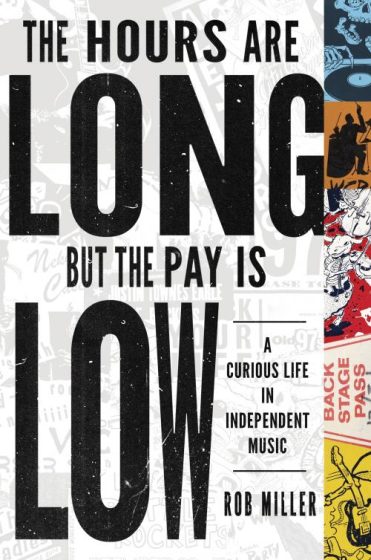
Rob Miller, The Hours Are Long But The Pay Is Low: A Curious Life in Independent Music

A question anyone who pursues a creative life will ask themselves: Why do we take a vow of poverty to put art into the world? As put forth in Bloodshot Records co-founder Rob Miller’s memoir, The Hours Are Long But The Pay Is Low, it’s because not doing it is not an option.

Chicago-based Bloodshot caught the wave of mid-1990s alternative country, releasing seminal works by Old 97s, Waco Brothers, Robbie Fulks, Sarah Shook, and more. Miller comes across as an OCD character straight out of High Fidelity, and his memories of the label’s hardscrabble early days are refreshingly unpretentious.

Bloodshot’s story wasn’t entirely positive. Its original incarnation ended badly amid disputes between Miller and his business partner (the label was ultimately purchased by Exceleration Music, which operates it now under new management). But Miller summarizes the bad-vibes part only briefly, concentrating instead on telling one man’s love story for music. It’s honestly impossible to imagine him doing anything else. And as the cherry on top, Miller dedicates the book to a pair of late friends including Dex Romweber, who he writes “left this world before he could read what his music meant to me.” – David Menconi

Kristina Murray, Little Blue

Little Blue is an understatement. Kristina Murray’s sterling third LP could convincingly have been called “Huge Bummer,” which is coincidentally the mark of a great country record.

“It’s gonna get worse, just give it time,” Murray incants on “Has Been,” a cheekily dour turn-of-phrase that just may stop you in your tracks. (Surely she means it’s gonna get better, right?) Later, on the dreamy “Fool’s Gold,” Murray tries her best at seeing beyond the proverbial grey skies, only to come up short: “It’s just more clouds,” she sighs. Such moments are appropriately slathered in pedal steel, but there’s also a swampy, rock ‘n’ roll groove to tracks like the deliciously jaded “Watchin’ the World Pass Me By” that makes the whole set go down easy. – Will Groff

Drew Parker

My introduction to Drew Parker was his 2020 single “While You’re Gone,” about missing a girl and drinking a gas station PBR while waiting for her to come back. That song had the classic hallmarks of a contemporary country breakup song. Little did I expect the curveball to come five years later.

For over a month earlier this year, Parker teased a big announcement with cryptic social messages like, “Some chapters end. Some chapters begin. This one… isn’t about me. 9•15•25.” The day came and Parker revealed in a short film testimonial that he’s felt God speaking to him, culminating in Parker’s non-religious manager calling and saying Parker should record Christian (country) music. This “moment” stuck out to me not only for the unexpected manner in which Parker revealed his decision, but because it’s obvious this isn’t a creative “phase.”

I don’t see Parker putting together a “token” record about believing and then going back to just girls, beer, and his pickup. Furthermore, Parker exudes unwavering peace about it all – whether he loses fans or faces mean-spirited judgment. There’s tangible risk to this move and there’s something to be said for Parker’s resolve and frankly, his faith in making this change. – Kira Grunenberg

Nathaniel Rateliff & The Night Sweats Live at the Kia Forum

Thinking back on all the great music I saw this year, the concert topping my list is one I saw at Los Angeles’ Kia Forum in February. The amazing triple bill – a solo Sam Beam, Waxahatchee, and headliner Nathaniel Rateliff & The Night Sweats – all delivered dynamic performances. But it was the unexpected parts of the concert that really made it so memorable.

During his set, Rateliff welcomed several special guests: Lucius’ lead singers Jess Wolfe and Holly Laessig, Taylor and Griffin Goldsmith from Dawes, and Grateful Dead bassist Bob Weir. What especially impressed me, however, was how Rateliff generously let his guests take the spotlight – a gesture that conveyed his joy for making music, particularly in a “more-the-merrier” collaborative way.

The Colorado-based Rateliff and his band also made the extraordinary gesture of using the concert to raise funds for victims of Southern California’s January wildfires as well as partnering in a purchase of a mobile food pantry to assist those left homeless by the destructive fires. This night reminded me how musicians can not only create a genuine sense of community through their rousing performances, but also through their inspiring actions. – Michael Berick

Sinners (Original Motion Picture Soundtrack)

Ryan Coogler’s Sinners is the horror film of 2025. It’s been hard to ignore, and for good reason. Michael B. Jordan, who plays double duty as twin outlaws Smoke and Stake, leads the cast which also includes Hailee Steinfeld, Wunmi Mosaku, and Thomas Pang (also known by his stage name, Yao). The film ultimately raked in $367 million in worldwide box office receipts. From its unique spin on vampires to its rootsy, blues-driven music, Sinners excels in celebrating the rich history of Black music and connects the dots between African tribal music to modern day hip-hop and R&B.

Songs like “Travelin’” (a standout moment from newcomer Miles Caton as musician hopeful Sammie) and the mind-blowing time-traveling song “I Lied to You” (paired in the movie with a visual mixing all the styles of Black-made music throughout history) mark the soundtrack as one of the year’s best releases. It’s sure to give the audience a renewed sense of Black history that’s often correlated to specific moments and eras in time. The film and its soundtrack will be talked about for decades as being a vital cinematic moment. – Bee Delores

Ringo Starr, Look Up

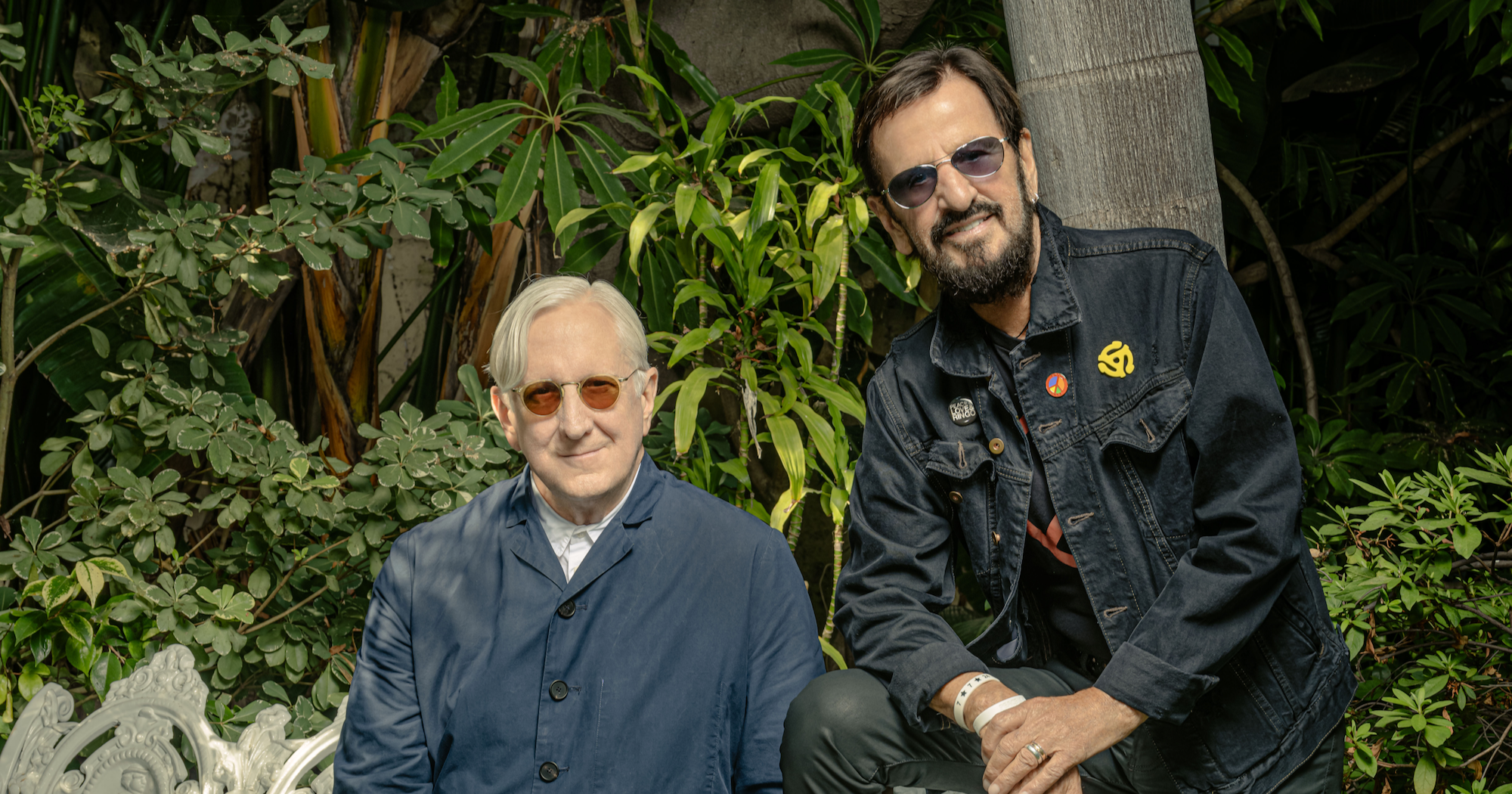
Way back at the beginning of 2025, Ringo Starr reminded us how different the world would look today if not for his love of American roots music. Teaming up with GRAMMY-winning producer T Bone Burnett, Starr’s country album Look Up is a love letter to the sound that drove his imagination.

Over 11 new songs written mostly by Burnett for the occasion, a classic American art form got a British Invasion makeover, with modern masters like Billy Strings, Molly Tuttle, and Alison Krauss joining Starr’s fun. Yet, what made this project a year-end highlight was not just the tunes. It was what they represent. As Starr openly declared, his first musical love was American blues and country. Artists like Lightning Hopkins sparked a creative impulse that would ultimately help redefine pop forever. From releasing music as a self-contained band and writing their own songs, to making youth culture a dominant force, The Beatles would change the world – and who knows? With a different drummer behind the kit, maybe none of it happens. Look Up shows where Starr was coming from. – Chris Parton

Vandoliers, Life Behind Bars

Vandoliers’ fifth studio album, Life Behind Bars, is both joyous and contemplative as the raucous country-punk band dive deep into themes of gender, grief, and sobriety in equal measure. “Dead Canary” blasts eardrums with a Mariachi flavor that barrels full steam ahead, setting the stage for their most impressive record to date. Other essentials such as “Bible Belt” and “Thoughts and Prayers” take aim at the current social and cultural moment, addressing religious fanaticism and how it clouds any sense of empathy.

Songs like “You Can’t Party with the Lights On” and “Valencia,” another Mariachi-intoned moment, are just plain fun. These round out the album into a well-crafted snapshot of the group right now and where they fit into the ever-changing world. Additionally, Vandoliers have never sounded so in tune with one another, vocally and musically, opting for compelling and intricate choices that expand their style without sacrificing what’s made them so good. – Bee Delores

Kelsey Waldon, Every Ghost

As the editor for Good Country and BGS, I listen to hundreds of albums a year, but they rarely stop me in my tracks. That happens even more rarely when album creators are longtime close friends of mine. But despite having met Kentuckian singer-songwriter Kelsey Waldon nearly 15 years ago and adoring all of her LP releases in that time, when Every Ghost first arrived in my email inbox earlier this year, I was floored.

In a world – and industry and genre – absolutely dripping with affectations of country music in lieu of the “real deal,” Waldon’s sixth studio album is dyed in the wool, but unconcerned with meeting those expectations or checking the boxes of trends and salability. These honky-tonking songs are infused with old-time, bluegrass, outlaw, confidence, and Prine-ian philosophizing. Waldon somehow turns introspection and identity into gritty and engaging wit and metaphor, without ever needing to obscure her messages to make them feel artistic or serious or poetic.

Even listeners like myself, who have been in Waldon’s fan club for a decade and a half or who have swapped vegetable seedlings and chicken pics with her, or who have crisscrossed her Ohio river floodplain homeland dozens of times, will learn much more about Waldon, her approach, her sonic loves, and her inner machinations as she pulls back the curtain for all of us on Every Ghost. – Justin Hiltner

Marlon Williams, Te Whare Tīwekaweka

Down here at the bottom of the globe in Aotearoa and Te Waipounamu (the North and South Islands of New Zealand), 2025 has very much been the year of the Māori singer-songwriter Marlon Williams (Kāi Tahu, Ngāi Tai).

Back in April, I interviewed Williams for a Good Country cover story to celebrate his stunning fourth solo album, Te Whare Tīwekaweka (The Messy House) and director Ursula Grace Williams’s equally affecting documentary film Marlon Williams: Ngā Ao E Rua – Two Worlds. Since then, he’s brought his antipodean blend of country and western, folk, rock and roll, and mid-to-late 20th-century pop to audiences across the U.S., UK, Australia, and at home, culminating in taking home the coveted APRA Silver Scroll songwriting award for his single “Aua Atu Rā” in late October.

Written and sung entirely in te reo Māori, the indigenous language of New Zealand, Te Whare Tīwekaweka is a masterful example of how music can use mood and emotion to cross geographic borders and linguistic barriers effortlessly. Even when we don’t speak the same language, we can still find common ground. Sometimes a sense of connection is only a song or two away. – Martyn Pepperell


Photo Credit: Tyler Childers by Sam Waxman; Kelsey Waldon courtesy of the artist; Olivia Ellen Lloyd courtesy of the artist.

Ashley Monroe’s Patchwork Quilt:
Tennessee Lightning

“Let me look at your radar,” Ashley Monroe says, pulling out her phone. “I have all kinds of radar apps on here: 24-hour flight radar, storm trackers…” She types in my location. “Yep, it just popped up red,” she says, forebodingly.

We’re speaking over Zoom about her album Tennessee Lightning and, fittingly, a massive storm is rumbling through New York, with loud thunderclaps sending a jolt through our conversation. Monroe is calling from an apartment in West Nashville, which she rents as a creative space in a building shared by fellow musicians and friends Meg McRee, Ben Chapman, and Lukas Nelson. The weather in Nashville is calm for now, but there’s always the chance another tempest could be brewing.

“For a while there I was like, someone’s gotta get me a bunker. ASAP,” she says.

Tennessee Lightning is her sixth studio album (not including the four she’s released as part of supergroup Pistol Annies alongside Miranda Lambert and Angaleena Presley) and her first since 2021’s Rosegold. The latter found her sloughing off the classic country sounds that defined her early work and embracing trap beats and synthy pop moments. Shortly after the release of Rosegold, Monroe underwent treatment for a rare form of blood cancer, a life-altering experience that she’s still processing. Now in remission, she feels newly awash in creative inspiration, breaking the creative silence that immediately followed her diagnosis.

The resulting album, her second as co-producer with GRAMMY-winning producer and engineer Gena Johnson, is a sprawling, 17-song “patchwork quilt” of songs that range from gritty rockers to moony love songs to bracingly stripped-down piano ballads. It’s less story-song-heavy than her beloved early work, but Monroe says that the album – a mix of new and older originals, along with a few carefully chosen covers – is as personal and revealing as anything she’s ever recorded.

“With every song on this record, I feel and see my own personal story in it,” she says. “Maybe I just didn’t need to put the third parties in this time.”

The release of Tennessee Lightning dovetails with the tenth anniversary of The Blade, Monroe’s GRAMMY-nominated 2015 album, which she recently celebrated with an intimate show at The Basement East and it remains fresh on her mind. She spoke to Good Country about her rootsy new sound, whether it’s safe to call this her Americana turn, and how music helps her weather life’s most painful storms.

I’m curious about the title of the album. It’s interesting, because in many ways, this feels like a homecoming, but then it’s also quite different from your earlier music. How did Tennessee Lightning start coming together?

Ashley Monroe: There’s actually a song called “Tennessee Lightning” that I wrote with Shelby Lynne and Jedd Hughes. It’s awesome, but by the end we had over 25 songs and it wasn’t fitting the album anymore. And at that point, it’s almost like Tennessee Lightning had become me, in a way. It’s just a zap of like, “This is everything. Boom.” Gena Johnson is the co-producer and engineer on this record and a dear friend. The two of us loaded up a ton of gear a couple years ago and rented a cabin in East Tennessee. We went to my dad’s grave, we went to see my Granny and Poppy and drove the back roads in Tazewell, Tennessee. We just immersed ourselves in going back to the roots of it all.

We set up the studio there and she recorded me on the front porch, she recorded me in the yard. We started recording “I’m Gonna Run,” which is a song I wrote in 2004, on the same trip as I wrote “Satisfied” and “Used.” We started with that song, and I was really trying not to overthink anything. I was just letting whatever songs needed to come through, come through. I always say this album is like a patchwork quilt of my life, and that applies to my friends that I’ve asked to play on this record: T Bone Burnett, Butch Walker, Brendan Benson, Marty Stuart, Brittney Spencer, Karen Fairchild. I made a joke the other day, “I’ve called in so many favors, I’m going to have to make new friends to call it more favors.”

I think people may be tempted to call this your Americana record. How do you feel about that?

Great. I’ll take that. Americana has been good to me. A lot of Americana radio stations played “Hands on You” when no one else would, and a lot of other songs. So that’s good company.

Also, I’m from East Tennessee, so no one can really hear my voice and say that I’m not country. It’s just there in the accent and the tenor of it. It’s Appalachia. That’s why I think it’s cool to not do something obvious sometimes, to not cut yourself short or shave the edges off. “I’m Gonna Run” reminds me of when Emmylou did Wrecking Ball, just those weird things she did that I love so much. I’ll take Americana all day.

The sound of this record is quite varied as well.

I guess Tennessee Lightning has different types, but it’s all real musicians, it’s all organic. “Amen Love” I was writing with Ashley Ray and Summer Overstreet, whose dad wrote “Forever and Ever Amen.” We wrote the song for Miley Cyrus, and Ashley’s husband recorded the demo. The song ended up not getting cut, but it just kept haunting me. I always like to do a sexy one, like “Hands on You” and “Wild Love,” so I thought it made sense for the young love part of the record.

Then there’s just me and Marty Stuart and Shelby Lynne on “The Touch,” and that’s as country as anything I’ve done. Gena was really good at getting the raw edges and the breaths and everything. “There You Are” was recorded in one take. It’s just me and the piano. I never did it again in the studio, ever. And then there are other songs that are more polished or have different instrumentation, but Tennessee Lightning to me is like a flash of everything. It’s not just one part; it’s all parts.

I’m wondering if maybe not chasing the country radio thing anymore freed you to explore all these different sounds.

I’m sure it did, even though I will say every label I’ve been on – Columbia, then RCA, then Warner LA and Warner Nashville – I’ve been lucky to have label people who were great at the creative part. My first single was “Satisfied,” which didn’t work, but I love that they chose that. Cris Lacy at Warner was also great at helping me pick songs. I didn’t think anyone would like “Hands on You,” but she heard the work tape and convinced me to record it.

When I got dropped by Warner, I thought to myself, “Now I can do anything.” And it’s been fun to explore. Gena is good about feeling when the spirit is moving through. She knows I like to sing in the dark or with candles. We shut the blinds, and I get to sit in that zone, and she captures it. It’s emotional, it’s raw, and I like recording like that without having to think, “What’s the label gonna say?”

You’ve been called a critical darling pretty much throughout your career. With Rosegold, it seemed like the first time the response was more tentative – warmly received, but not quite as glowing from everyone, particularly the “real country” crowd. Did the response to that record influence your approach to this one?

I really didn’t think about that at all, so that’s interesting. Honestly, though, what I will do next is a honky-tonk record. I know my band, and I know exactly what I’m going to do, which is honky-tonk it to the depths. I haven’t done a live thing like that, and I like switching it up. In my mind, what makes a memorable artist, a true artist, is when everything doesn’t sound exactly the same. Tennessee Lightning just felt like, “What are you feeling? What is it?” It’s cool when art reflects what you’re going through at the time, and for me going back to my roots will always have that earthiness.

I’m thankful for all the great reviews and the “critical darling” thing means a lot, especially as someone who doesn’t win awards or get nominated or included, really, in any circle. I’m okay with that, in a way, because I have a certain confidence — I know I have a gift. I know some people will feel it and some people won’t, but no one can deny I’m doing what I was put on this earth to do. I don’t put too much value on what people think of me, especially now after what I’ve been through. I won’t lose sleep over what a critic thinks.

Another thing that came up with Rosegold was this idea of protecting your joy, of not wanting to feel sadness anymore. Tennessee Lightning has songs that are more cutting – “There You Are” almost feels like it could be on The Blade. It made me wonder if your relationship to your art and this idea of protecting your joy changed between this album and the last one.

You know, when I got pregnant was really the first time I thought, “I’ve got to be careful about what enters here.” That doesn’t mean being delusional or not knowing that things can happen, will happen. Of course, something can always come along and bring you to your knees. But it’s about knowing when everything’s okay and shining a light on it and letting it radiate for a little bit. Rosegold was about hyperfocusing on the good and just letting it beam out for a split second.

I don’t mind if music is sad. I kind of prefer it. With this one, there are some sweet love songs, but also not all these songs are new. “My Favorite Movie” was one Vince [Gill] and I wrote in 2015 around The Blade time. He had it on one of his records, and just never did my version of it. “Hot Rod Pipedream” was written in 2015 or 2016, and “Risen Road” was from around the same time.

Let’s talk about The Blade, which just celebrated its tenth anniversary. You played the album through at a show in Nashville recently. What was it like revisiting those songs?

It was so special because I hadn’t really sung those songs. I’m funny about that – I don’t go back and listen to my old records. It’s not like you forget, but you do move on. Singing those songs, even at rehearsal, I got so emotional.

Did any of the songs in particular hit you differently this time?

I was thinking “I Buried Your Love Alive.” I literally felt thunder. I don’t know how to explain it, but there’s a ghost in that one. “Bombshell,” too. At the show I was thinking about how relevant it still is. I still understand the emotion in that song.

In the commentary you recorded at the time, you mentioned that “Bombshell” could be about a few different scenarios. It struck me that you said it could be about a breakup, but it could be about telling someone you have cancer.

I remember that. I forgot until you started to say that, but it’s so true. It’s that feeling of like, “This is big news, and it’s going to blow up life as I know it.” It was definitely a bombshell, and then I had to tell people I had cancer.

I was diagnosed in 2021, and when I came into Tennessee Lightning, I knew that I had to step back and reflect. I had to look back at the whole picture. I had someone ask me in an interview recently why I didn’t sing about cancer on the album. It’s like, I don’t want to think about cancer. Music to me is my holy, sacred place. Even though I sing about painful things and I can keep those emotions with me, I didn’t want to think about it enough to write a song about it. Maybe it’s that cancer has already robbed so much from me. I mean, it killed my dad. It’s already affected me, my family. Maybe I haven’t fully processed it yet. In a way I’m pretending it didn’t happen.

The only place on the record where I did feel the cancer feeling or acknowledgement of my emotions around it was “Jesus, Hold My Hand.” I used to sing that song when I was really young and feeling scared. I really felt it because when I was really sick, with chemo and everything, I felt as close as I ever have to that feeling of handing it over or surrender. It was like I was leaning on the spirit more than ever before.

The hymn is such a stunning moment, in a way that feels different from what you’ve done before. There are a lot of religious references in your songs, but there’s also this thread of religious guilt, particularly on the Pistol Annies songs “Beige” and “Leavers Lullaby.” There’s a lyric in the latter, “It’s as deep as the water that stains me” that comes to mind. Would you say your relationship to your faith has changed?

I can’t speak for the other Annies, but for me the “bite” in those songs is directed toward the people rather than about the pureness of it. The judgment and sending people to hell thing. I grew up with the Bible Belt and I think Jesus has a sense of humor and a lot of church people don’t. With “Risen Road,” it’s like, “You can read the Bible, quote it verse for verse/ You can steal a pain pill out of Mama’s purse.” And when I say “you,” I mean me, because I would do that. I think there’s something to being humble enough to say, “I can believe in God and still be exactly who I am.”

I wanted to ask about that line on “Risen Road,” which of course caught my attention. Between this song, “Best Years of My Life” and of course “Takin’ Pills,” pain pills have become something of a motif in your work. Why is that?

Well, because I was on pain pills for a long, long, long time. My dad died when I was 13, and at the time I was very straitlaced. All my family lived on the same road, we went to church, nobody cussed, nobody drank, nobody smoked. After my dad died, my mom kind of disappeared with a guy. She had a nervous breakdown, really, looking back. He died in February 2000, and she was gone by June.

Looking back, I was flailing. I was devastated, and my mom wasn’t around, and then my brother started having wild, wild parties and I was like, “Hell, I might as well. Give me a Zigma.” Everyone around me had pills and I’d say, “Give me a pill.” I was probably 14 or 15 and my cousin and I would keep a mirror under the front seat and snort oxycontin. Not oxycodone. Oxycontin. It’s a miracle I’m still alive, because I didn’t even know what that was. I just knew that it numbed me out. And, in all fairness, I needed numbing out. I’m not saying it’s the right thing to do, but sometimes, if you can just stay alive – and thank God I did – these things will get you through.

Honestly, though, I don’t think I was ever hooked on them. I’ve never had trouble giving up something when I know I need to. I was on them in my 20s a lot and I was drinking a lot at the time. And then, you know, I OD’d at Saddle Ranch in LA. Like, they thought I was dead. I was like, “Are you crazy? You survive all of that and then let a pill take you out?” So, after that, I quit taking them. But, you know, I took them after my C-section. I took all of them. I just think different people are wired differently and I do think it’s kind of funny now.

“She’s on the highest dose of Prozac a woman can take.” I was.

“She likes to pop her pain pills with every little ache.” I did.

It’s interesting, what you said about wanting to feel numb, because the songs that you wrote during that time had so much pain in them. They really cut.

Well, music’s always been where I let my pain seep out. When my dad died, I remember holding my guitar and sitting at the edge of my waterbed, and it was like the guitar was saving my life. It was keeping me together. And I still use music like that – I pour out pain that I don’t even know is in there sometimes. The pain pills don’t get you all the way numb. They get you numb for about 25 minutes, and I needed those 25 minutes back then.


Photo Credit: Erika Rock

BGS Receives IBMA Distinguished Achievement Award

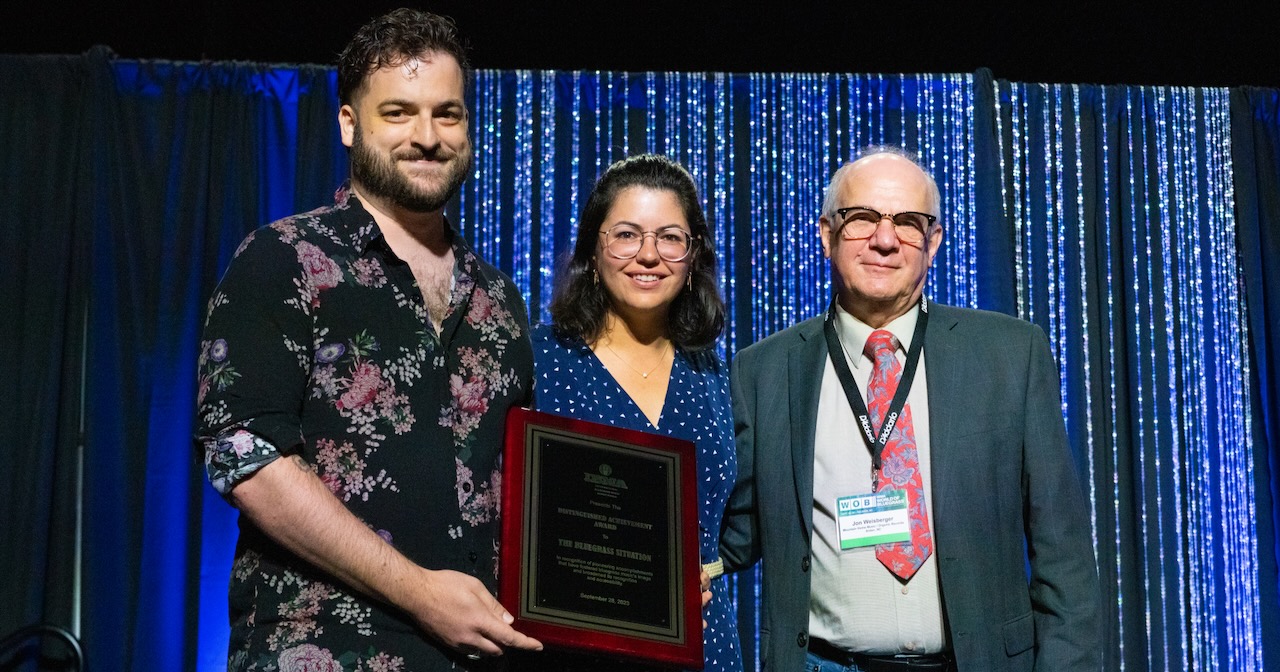
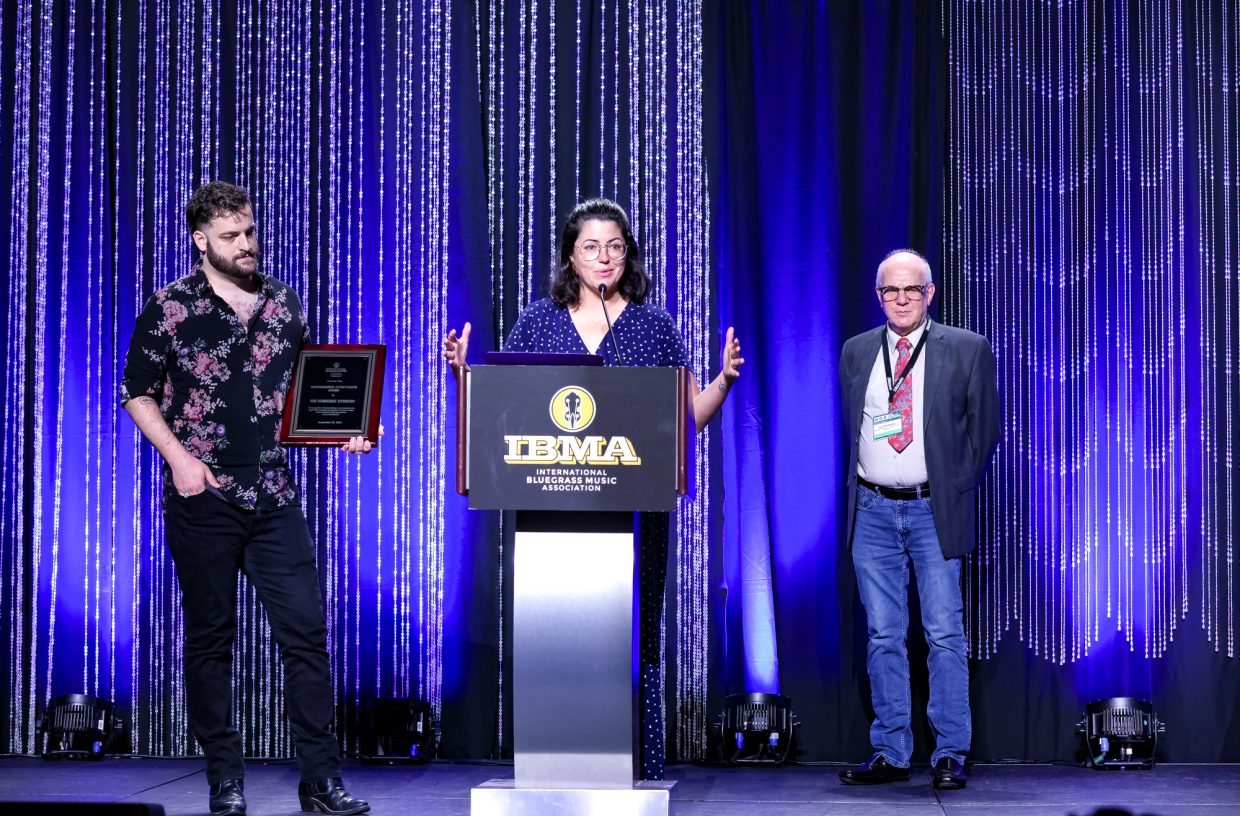
(Editor’s Note: On Thursday, September 28, 2023, BGS contributor, musician, songwriter, and bluegrass industry leader Jon Weisberger presented BGS with IBMA’s Distinguished Achievement Award at the organization’s annual business conference. Below, enjoy Weisberger’s award presentation speech, adapted for print, and photos from the Industry Awards luncheon.)

The International Bluegrass Music Association’s Distinguished Achievement Award was created as the organization’s first honor, just a year after its 1985 founding. Among the first recipients were Bill Monroe, gospel songwriter Albert E. Brumley, and (now-BGS contributor) Neil V. Rosenberg.

After 1991, when the Hall of Honor (now the Bluegrass Music Hall of Fame) was established, the DAA became a way to recognize a variety of accomplishments — a lifetime of achievement for many recipients, but also activities taking place in more compressed timespans, as when the Coen Brothers and T Bone Burnett were recipients in 2001 for the singular act of creating the film, O Brother, Where Art Thou?, and the accompanying soundtrack album. And while most of the recipients are people, some are entities, like WSM’s Grand Ole Opry (2000), the Station Inn (2003), and Bluegrass Unlimited magazine (2016).

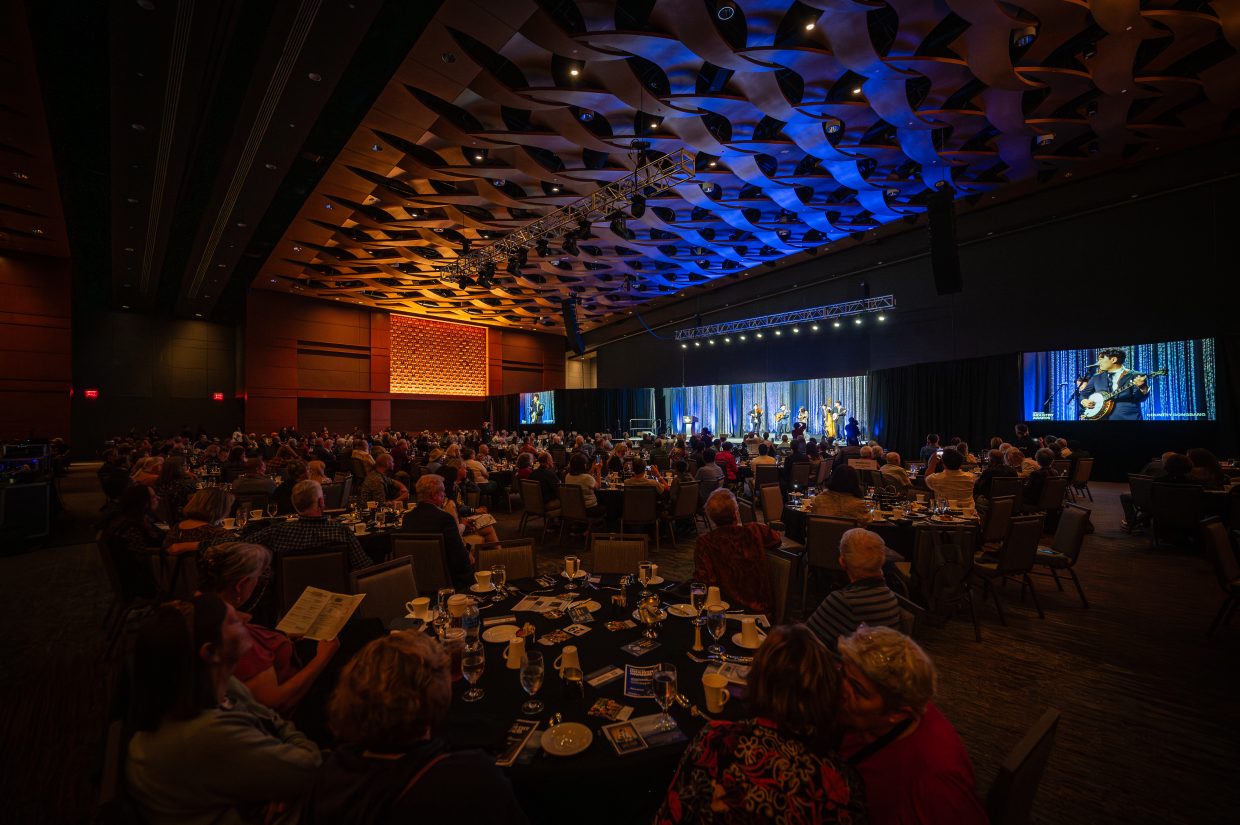
Country Gongbang, of South Korea, perform during the IBMA Industry Awards Luncheon. (Photo by Rob Laughter)

Either way, the award criteria direct the selection committee to consider those who “have fostered bluegrass music’s image with developments that will broaden the music’s recognition and accessibility.” Further, the award criteria state, “Their contributions should be unique given the relative period of time in which they were made and should embody the spirit of one who pioneers or opens new possibilities for the music.” These are descriptions that fit the Bluegrass Situation perfectly.

Having celebrated its 10th anniversary just last year, this site contains an extensive amount of material that recalls a multitude of highlights from that first decade. So rather than recount them, I chose, when presenting the award—an invitation for which I’m deeply grateful — to recognize what Ed Helms, Amy Reitnouer Jacobs, their dedicated staff and many contributors have done to broaden the music’s recognition and accessibility and open new possibilities for the music is to look at why these things are important and how they have met the challenge.

For more than 50 years, bluegrass music has been dependent, for the renewal of its audiences and of its musicians, on exposure beyond its cloistered garden. From The Beverly Hillbillies through the Nitty Gritty Dirt Band’s Circle album through the mainstream success of Ricky Skaggs and Alison Krauss to O Brother and, more recently, artists like Molly Tuttle and Billy Strings, our music has needed not only community-building institutions that cater to those already familiar with it, but a plethora of vehicles that expose new audiences to this music.

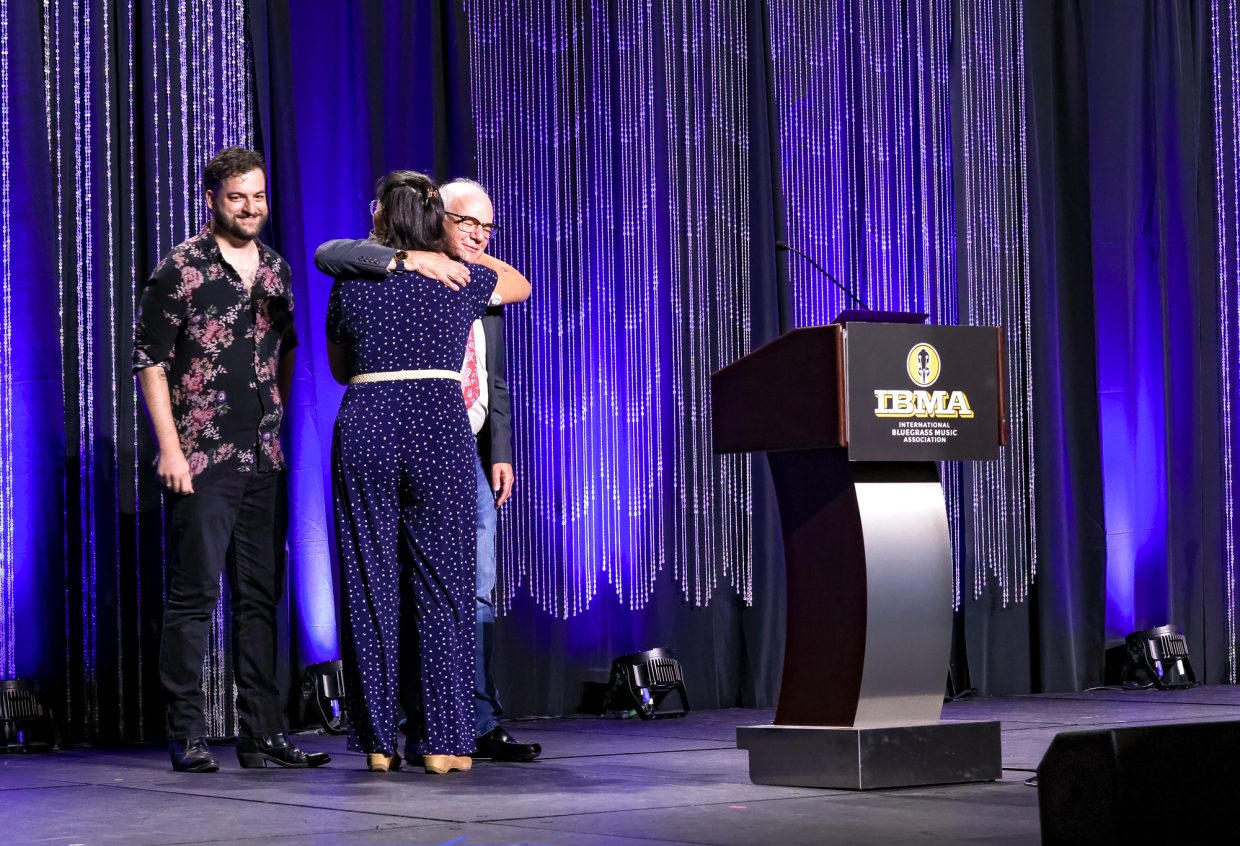
BGS executive director Amy Reitnouer Jacobs reacts to Jon Weisberger’s DAA presentation. Justin Hiltner, managing editor, looks on. (Photo by Willa Stein)

This is how many people, including many in the IBMA, first became aware of bluegrass, and in the past decade, no one has done more to introduce this music to new audiences than the Bluegrass Situation. By covering the broad range of roots music under its “bluegrass” rubric, and by insisting on presenting the full range of bluegrass music and musicians in all their diversity, the Sitch has invited hundreds of thousands into the fold — and the same is true of the events the Bluegrass Situation has organized and sponsored.

Indeed, one of the Sitch’s distinctive contributions has been its dual role as a chronicler of the broad array of bluegrass and related musical artists and as a presenter, bringing the artists and the music they make directly to audiences. Especially through its curated stages at major music festivals, the Bluegrass Situation has introduced thousands — tens of thousands by now — to artists like bluegrass Hall of Famers Ricky Skaggs, Del McCoury, and Sam Bush.

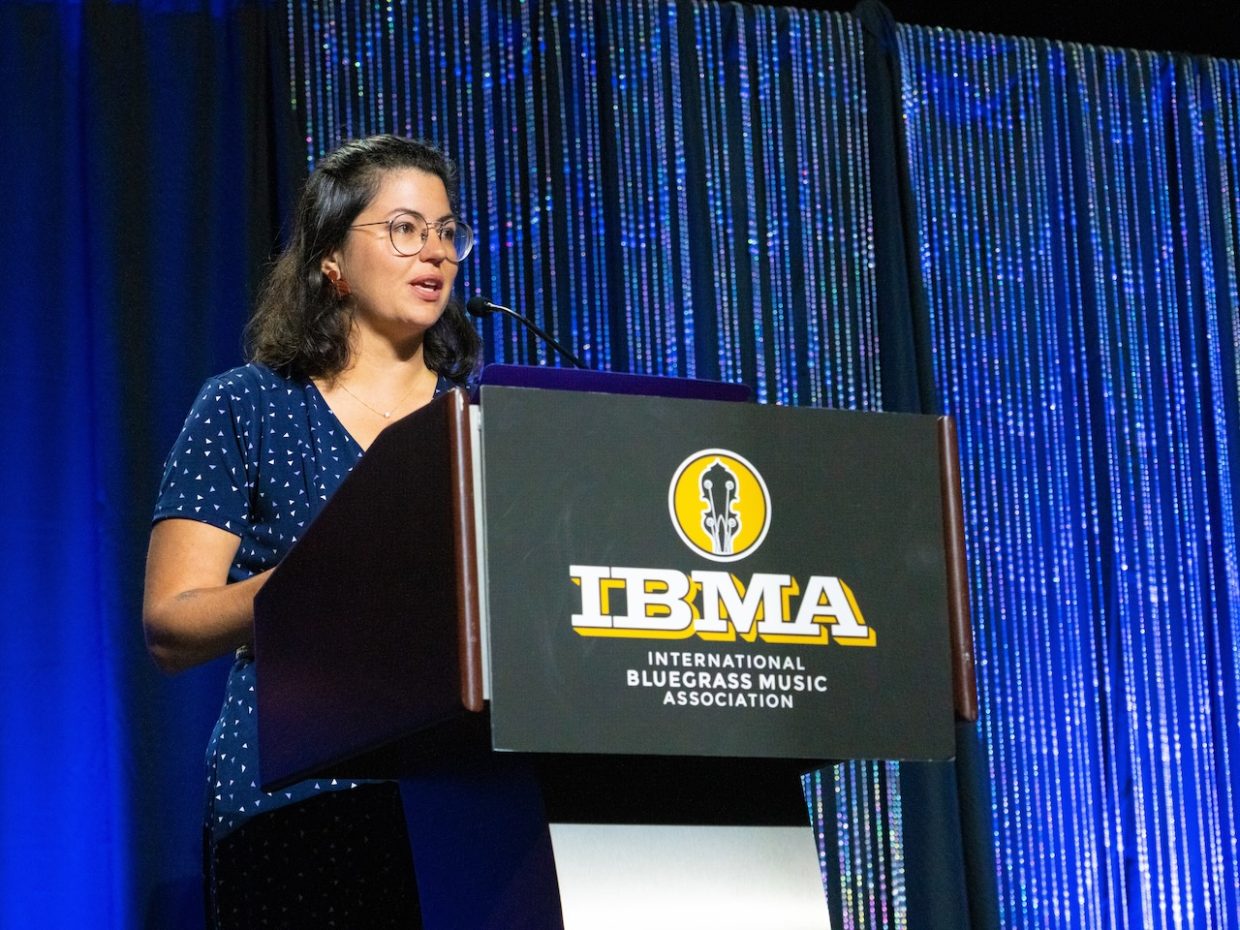
Amy Reitnouer Jacobs speaks to the Industry Awards Luncheon audience. (Photo by Dan Schram)

In this way, the Sitch has spent more than a decade devoted both to the important work of bringing a wide variety of roots music to audiences across the country and around the world, and to the important work of bringing the whole array of bluegrass artists, from Larry Sparks, Junior Sisk, Michael Cleveland, and High Fidelity to the Infamous Stringdusters, Leftover Salmon, Molly Tuttle, and Billy Strings to the attention of those attracted to the Sitch’s website and events by its coverage and presentation of all the other roots music artists within their purview. So, someone who visits the site to read an Allison Russell feature has an opportunity to learn about Lynn Morris, while another who attends the Bourbon & Beyond festival to see The Black Keys might have their ear caught by the sound of Dan Tyminski or The Cleverlys performing on the Sitch’s curated stage.

These are the kinds of connections — and the kind of day in, day out, year in and year out work — that, in the words of the Distinguished Achievement Award criteria, “broaden the music’s recognition and accessibility.” These are the ways in which bluegrass is able to draw in new generations of fans — and new generations of musicians and industry activists, too. For more than 10 years, now, Ed Helms, Amy Reitnouer Jacobs and the Bluegrass Situation have been doing the work, and all of us in the bluegrass community have benefitted from their efforts. It gave me great pleasure to present them with this award.

L to R: Justin Hiltner, Amy Reitnouer Jacobs, Jon Weisberger at the 2023 IBMA Industry Awards Luncheon. (Photo by Willa Stein)

Photos by Rob Laughter, Dan Schram, and Willa Stein as noted; Lead image of Hiltner, Reitnouer Jacobs, and Weisberger by Dan Schram; All photos courtesy of IBMA.

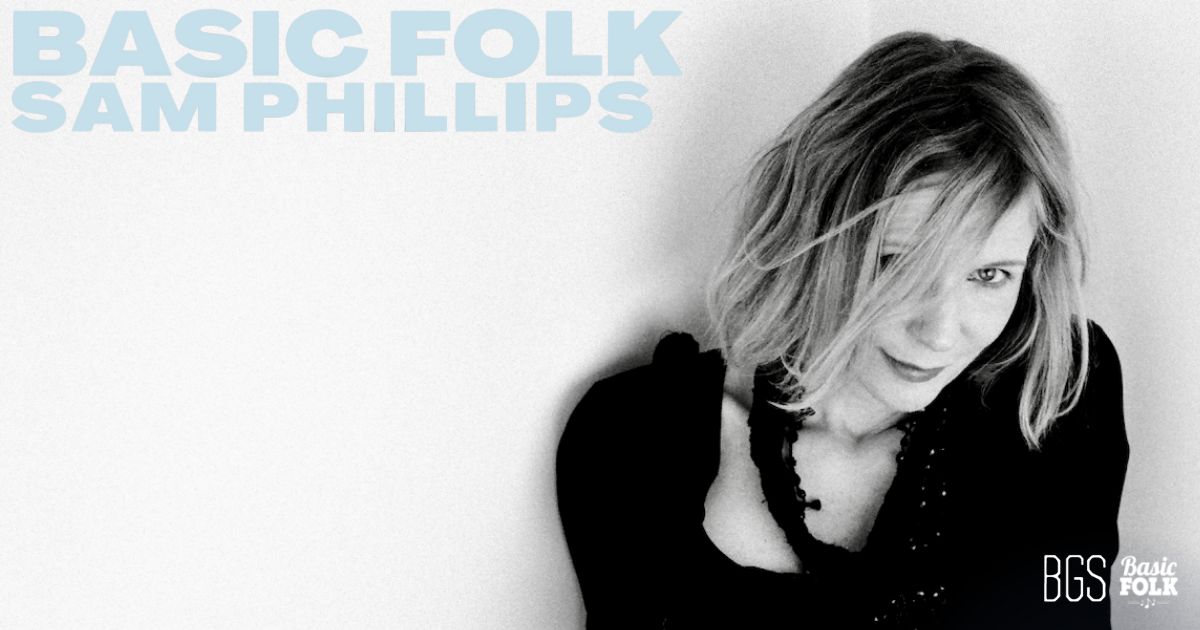
Basic Folk – Sam Phillips

Sam Phillips was born to a family that loved doling out nicknames. She was called “Sam” growing up in a house that was filled with readers. She nurtured her love of philosophy and spirituality by exploring different religions and devouring works by authors like C.S. Lewis and Thomas Merton. Early in her career, she found success as a Christian musician under her real name: Leslie Phillips. She made several albums, but became uncomfortable with her label marketing her as “the Christian Cyndi Lauper.” She also had a desire to write songs that didn’t reinforce people’s religious beliefs. For her final Leslie Phillips album, she worked with future spouse/ex-spouse, T-Bone Burnett, “a fellow Christian with a maverick approach to songs about faith and morality,” and found a kindred spirit. She decided to rebrand and start recording as Sam Phillips. Sam and T-Bone worked together from 1988’s The Indescribable Wow to 2004’s A Boot and a Shoe.

LISTEN: APPLE • SPOTIFY • STITCHERAMAZON • MP3

In our conversation, we talk about Sam’s writing process, which she is always changing up. She comes up with her best ideas when she “turns off the trying part of her brain,” but at the same time, she strongly believes in the power of editing. Sam’s probably best known for composing and performing the score for the beloved Amy Sherman-Palladino series Gilmore Girls, for which she also made a brief appearance on the season finale in 2006. You remember those “La la la’s” while Lorelei and Rory carried around their armpit purses, and drank coffee while wearing those horrible boot cut jeans? That was Sam Phillips! Currently, Sam is working on a new album and she’s taking her time, so don’t rush her, OK?


Photo Credit: Eric Gorfain

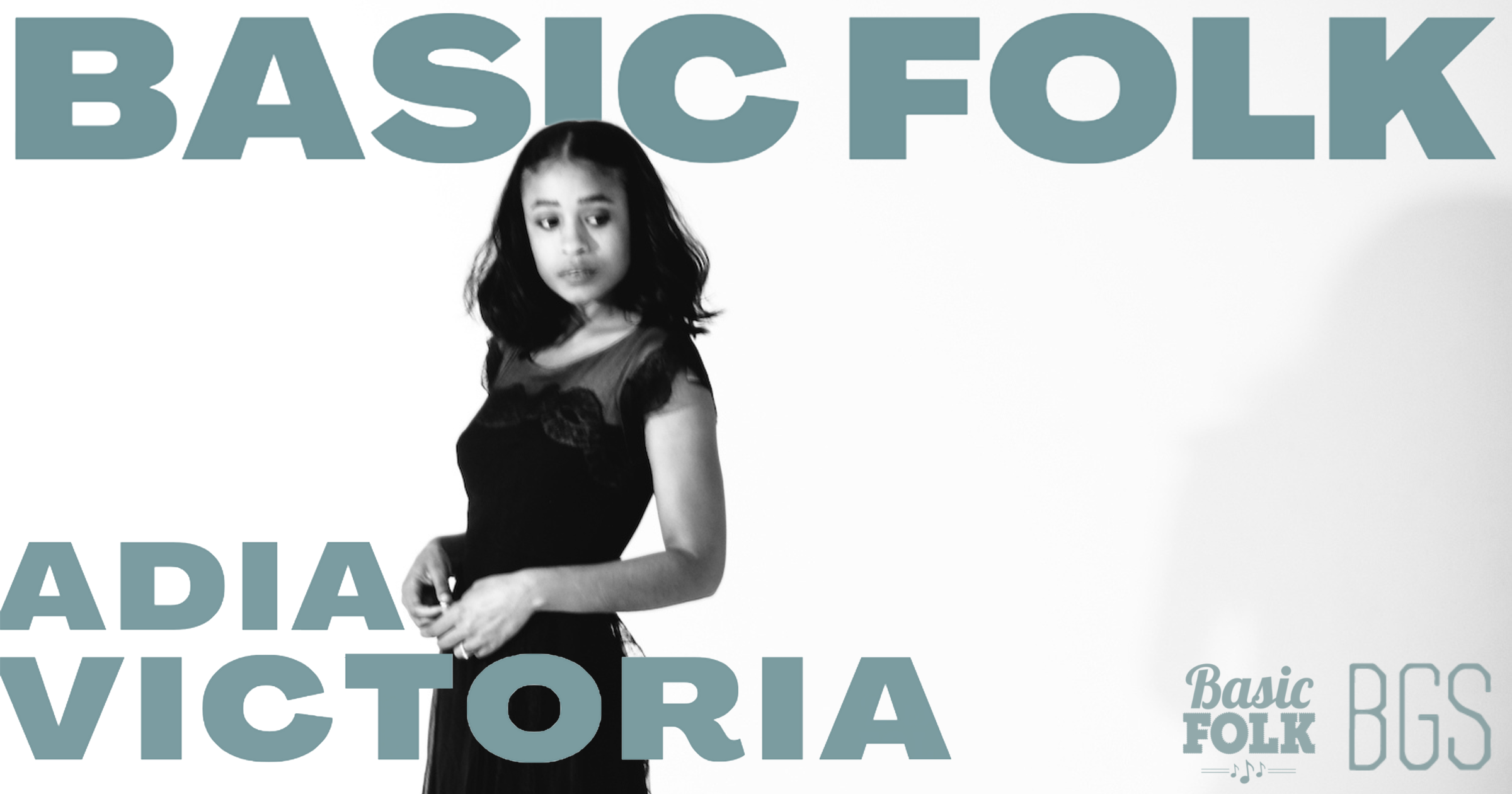
Basic Folk – Adia Victoria

For Adia Victoria, the blues are not just a genre of music or a set of formal elements. She lives the blues. In her life and work the blues are a mode of creating, a river-tradition into which she steps with each performance, and a way back into self-acceptance. Adia has traveled the world and infused her unique songwriting with Paris and New York as much as with her home state of Tennessee.

LISTEN: APPLE • SPOTIFY • STITCHERAMAZON • MP3

Adia has released three studio albums, working with producers like T Bone Burnett and The National’s Aaron Dessner. In her climb to indie stardom she has remained laser focused on interpreting the blues tradition for contemporary audiences.

My conversation with Adia came shortly after we finished a whirlwind North American tour this spring, and it felt like we were back in the tour van just shooting the shit. Transparent and hilarious, Adia challenged me to go as deep in conversation as she does in her songs.


Photo Credit: Huy Nguyen

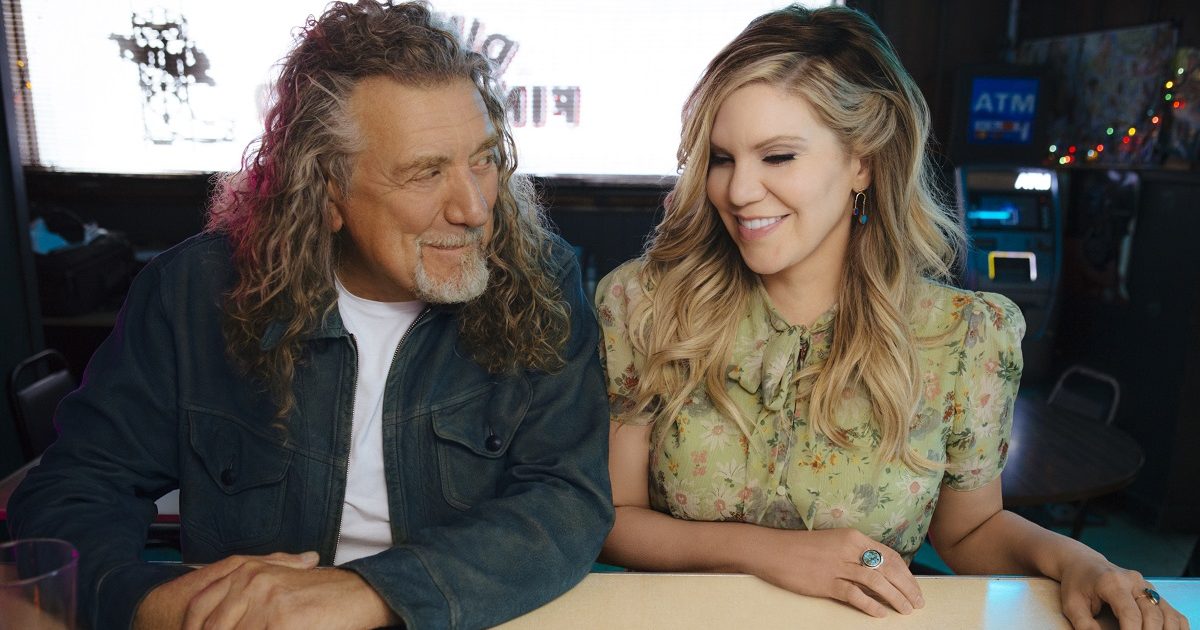
LISTEN: Robert Plant & Alison Krauss, “High and Lonesome”

Artists: Robert Plant & Alison Krauss
Song: “High and Lonesome” (written by Robert Plant and T Bone Burnett)
Album: Raise the Roof
Release Date: November 19, 2021
Label: Rounder Records

In Their Words: “It’s such a far cry from everything I’ve done before. I love the whole kaleidoscope of music that I’ve explored, but this is a place where you can think within the song, you can decide how to bring home an emotion. It’s another blend that we’ve got, and long may we have more of them.” — Robert Plant

“One of my favorite parts of this is the songs and songwriters that I had never heard of. Working with Robert, and with T Bone, is always a great education in music history.” — Alison Krauss

Editor’s Note: Plant and Krauss’ 2007 album, Raising Sand, won six Grammy Awards. Like its predecessor, Raise the Roof was produced by T Bone Burnett, and features twelve new recordings of songs by legends and unsung heroes such as Merle Haggard, Allen Toussaint, The Everly Brothers, Anne Briggs, Geeshie Wiley, Bert Jansch, and more. The collection also includes “Can’t Let Go,” written by Randy Weeks and first recorded by Lucinda Williams.


Photo credit: David McClister

LISTEN: Robert Plant & Alison Krauss, “Can’t Let Go”

Artists: Robert Plant & Alison Krauss
Song: “Can’t Let Go”
Album: Raise the Roof
Release Date: November 19, 2021
Label: Rounder Records

In Their Words: “We wanted it to move. We brought other people in, other personalities within the band, and coming back together again in the studio brought a new intimacy to the harmonies.” — Alison Krauss

“You hear something and you go ‘Man, listen to that song, we got to sing that song!’ It’s a vacation, really — the perfect place to go that you least expected to find.” — Robert Plant

Editor’s Note: Plant and Krauss’ 2007 album, Raising Sand, won six Grammy Awards. Like its predecessor, Raise The Roof was produced by T Bone Burnett, and features twelve new recordings of songs by legends and unsung heroes including Merle Haggard, Allen Toussaint, The Everly Brothers, Anne Briggs, Geeshie Wiley, Bert Jansch and more. The collection also includes a Plant-Burnett original, “High and Lonesome,” and “Can’t Let Go,” written by Randy Weeks and first recorded by Lucinda Williams.


Photo credit: Frank Melfi

A New Generation of Bluegrass Stars Reflect on ‘O Brother, Where Art Thou?’

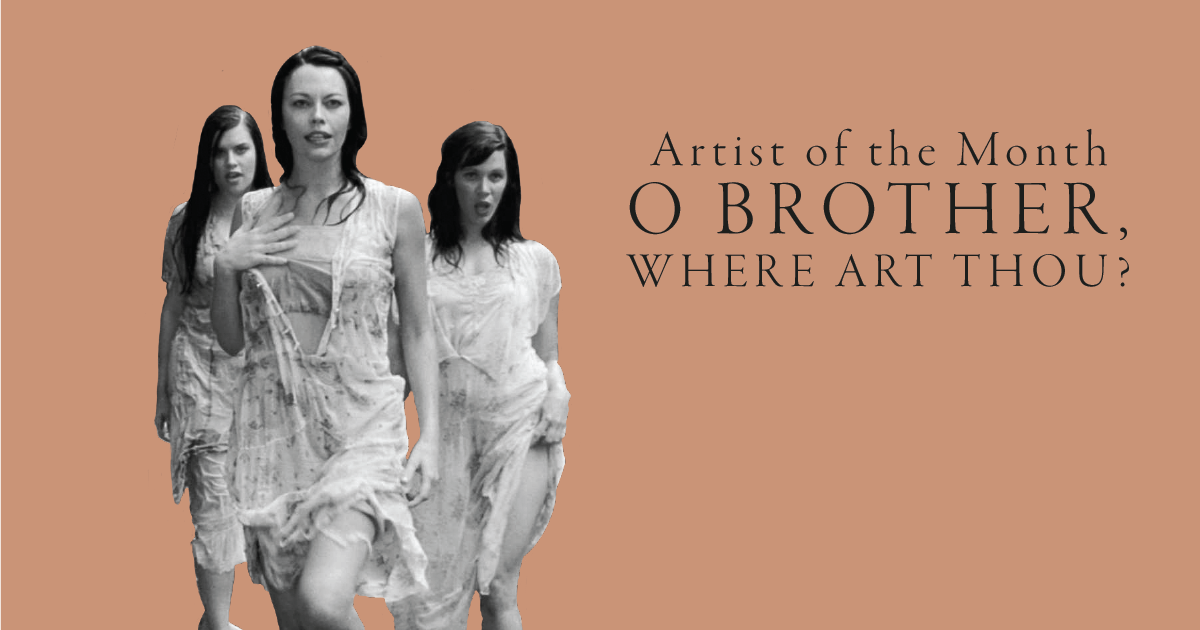
The soundtrack to O Brother Where Art Thou? was a phenomenon in the early 2000s, turning bluegrass musicians into superstars and creating an instant mainstream market for old-time music — from folk to gospel to children’s songs to prison chants to blues and everything in between. To celebrate the twentieth anniversary of its astonishing success and to wrap up our Artist of the Month series, we spoke to several musicians about the impact O Brother and its subsequent tours had on their lives and livelihoods.

Sierra Hull: “I grew up in a little town with maybe 900 people, and there used to be a poster section at the Walmart the next town over. You could flip through the posters and there would be pop stars like Britney Spears and Backstreet Boys. I was always convinced that one day I would find an Alison Krauss poster in there. She was as popular in my little kid brain as Britney Spears. So it was cool when O Brother came out and elevated some of those people who were already giants to me, like Alison and Dan Tyminski and Ralph Stanley.

“I was already playing, but I was too young to be touring yet. By the time Cold Mountain came out [in 2003], I was part of that tour. Alison was part of both soundtracks, and she invited my brother and me to go on that tour. So we got to help celebrate that second wave. I was 12, and it was really the first time for me to be out on tour, travel to so many different places, and play Red Rocks and the Beacon Theater in New York. Standing at the side of the stage and listening to Alison sing to hundreds of people every night every night was one of my favorite memories.

“It was amazing to watch people go crazy over Ralph Stanley every night. He had this dazzled suit jacket that he wore every night. Sometimes he would sit his banjo down while his band played and take that jacket off and throw it to me at the side of the stage. I would get to wear that dazzled jacket at the end of the show when everybody came out on stage. It’s one of the most special musical experiences I’ve ever had.”


Sara Watkins: “O Brother was something we somehow became affiliated with. Nickel Creek had just released our band’s first record on Sugar Hill, after years of doing just little homemade projects. Alison Krauss produced it, which had been out maybe a year and a half when O Brother came out. She was a big part of that soundtrack, of course, so our band was gaining a little bit of notoriety. I remember reading a huge New York Times spread, and we were listed among the people on that scene. We were part of that conversation, despite not having been part of the soundtrack in any way. We were just at the right place at the right time, and the awareness of the bluegrass scene just exploded. We were able to reach a different level very quickly. It was a huge advantage to our career. We already had some momentum, but the soundtrack really put the wind in our sails.

“T Bone Burnett [who produced the album], one of his brilliant skills is finding the right people for the right song. He brought in some incredible musicians in a way that really showed the musicianship in our community and made everyone really proud of our scene. We saw our heroes up there, and it was gratifying to see them celebrated by a huge audience. I remember feeling a new respect for Ralph Stanley with that vocal [on ‘Oh Death’]. That actually turned me on to shape-note singing. Someone told me his delivery was reminiscent of those old communities that did shape-note singing and those old preachers who used to sing that way. I’d never heard anything like it. And to this day, whenever I see Dan Tyminski, I make a point to stick around until he plays ‘Man of Constant Sorrow.’ No way I’m leaving before then.”


Dave Wilson (Chatham County Line): “I remember going with our old bass player to see O Brother in the theater. We snuck a bottle of whiskey in and sat in the back row and just laughed and drank. I remember thinking, ‘Bluegrass has arrived!’ We were already a band and playing small gigs around town, but we weren’t at a place where we had dedicated our lives to it. So it was kismet for us. That record came out, and the scene just exploded. Suddenly we had this huge advertisement out there in the world for the style of music we were playing. We definitely noticed a change. There were more strangers coming to see us play gigs, and they were really excited about it. One side effect was people would yell out for us to play ‘Man of Constant Sorrow.’ They did it enough to make me wonder if they had heard the soundtrack or just seen the movie. But we never played it. We didn’t know how! It would have probably shut them up if we had!

“I really got into the record. There are some badass arrangements on there. And it’s not corny. It’s not super traditional. I love that they reached out to the right people. It could have been bad. They could have gotten Toby Keith or someone like that. Oh god, I don’t even want to think about that! One of my favorite parts is that blues song by Chris Thomas King [a cover of Skip James’ ‘Hard Time Killing Floor’]. It makes for such a special moment. Later, they booked that concert film [Down from the Mountain, recorded at the Ryman Auditorium] at our old classic movie theater here in town, and I remember the boys going to see it and we were all just floored. That was almost bigger than the movie as far as having an impact in the folk music scene.”


Sam Amidon: “People in the folk world can be very protective of the music, which I think is valid. But my inclination is that if I find something I’m excited about, I want to share it. I want people to know about it. To have grown up in a world knowing a lot of the corners O Brother explores, it was beautiful to think about how many people all of a sudden were going to discover these field recordings and these great musicians. And I was thankful because until then, portrayals of traditional music in the mass media had just been so bad and so clichéd or so simplistic. Nothing had depicted this stuff on this scale before. Before then, if you told somebody you played banjo, they would think Deliverance. That was their frame of reference.

“For O Brother to do it without messing it up was a miracle. To see these different corners of American music — beyond just blues and bluegrass as the two major industry terms — was a very positive thing, especially because ‘folk music’ can be such a heterogeneous category. Nobody would even really know what you were talking about if it wasn’t bluegrass or blues. O Brother pointed to all of these different areas. It’s singing games and banjo songs and all these different things. O Brother is weirdly inclusive. It cast a wide net. Nowadays it’s easy to go to the soundtrack and hear more problematic elements of the whole Americana genre thing, but I think it’s good to remember that when it first came along, it was much more nuanced compared to what had come before.”


Woody Platt (Steep Canyon Rangers): “It’s interesting that the twentieth anniversary of O Brother is fairly parallel to the twentieth anniversary of our band. We formed in Chapel Hill, North Carolina, when we were seniors in college, right when the movie came out. We all had been exposed to bluegrass and old-time just by being Carolinians. We all had that music around when we were growing up, but none of us in the band really dove into it until we were in college. We’d only been following that music a few years when the movie came out. I’m not sure we were aware at the time of the impact that the movie and the tour had on bluegrass, old-time, string band, mountain music, but we could feel some excitement when we were playing bars on Franklin Street, which is the main drag in Chapel Hill. But we didn’t really have anything to compare it to. There was no before or after. It was just what we were doing, and that’s all we knew.

“I really enjoyed the movie, but I was a big fan of the album. Hearing Ralph Stanley’s voice in a film, or Dan Tyminski’s, or just seeing people I admired in that movie was pretty incredible. Looking back on it, it was good timing for us to be getting off the ground, and we were having so much fun and finding so much joy in it. The music we were playing had been a small niche, but all of a sudden it had this national interest. I have no doubt in my mind that the awareness of the music was fueled by the movie. It’s a fascinating phenomenon to think about, because it wasn’t marketed in any significant way. It just happened. It was just this thing where people were suddenly into this music.”


Molly Tuttle: “The movie came out when I was seven years old, and I remember my dad showing it to me when I was in grade school. I loved it, and the music really stuck with me because I already had an affinity for bluegrass and old-time music. Seeing it performed in a movie was new and exciting. My dad teaches bluegrass for a living, and when the movie came out, he had an influx of new students.

“It’s had a lasting impact on the popularity of bluegrass music. But I was so young that I didn’t know many of the musicians on the soundtrack by name, so it introduced me to a lot of artists who later became my favorites. And the Down from the Mountain documentary further familiarized me with people like Emmylou Harris and Alison Krauss. Many of those artists, like Gillian Welch and John Hartford, have been big influences on me, and that was my introduction to their music. I’ve performed ‘I’ll Fly Away’ and ‘Angel Band’ a number of times, and I got to do ‘Man of Constant Sorrow’ with Dan Tyminski at the IBMA awards one year.”


Dom Flemons: “I actually saw Ralph Stanley on the O Brother tour in Flagstaff, Arizona, in the year 2000. It was at this random high school. I saw the poster on a telephone pole when I was going to college there. I’d started playing the banjo by that point — six-string and four-string banjo, guitar, and harmonica. I remember the place was really packed out, and he gave this amazing performance. I just loved watching the man at work. When he sang ‘Oh Death,’ he pulled this piece of paper out of his pocket, put on his glasses, and made a joke about how old he was. And he just sang it off this piece of paper and blew our minds.

O Brother was very interesting, and I think it’s still a milestone album for several generations. A lot of the old folks who played those old styles and sang those old songs were starting to pass away, so the soundtrack ended up being a perfect vehicle for getting younger people into the music of the ‘20s and ‘30s. It reminded people of the really good old recordings that were available. That’s where I went. I found the old RCA Victor and Columbia recordings, and that was it for me.

“It’s a perfectly structured record, opening with the prisoners on the chain gang and then it goes to that beautiful ‘Big Rock Candy Mountain.’ And then you get into “You Are My Sunshine” with Norman Blake, and then Chris Thomas King presenting ‘Hard Time Killing Floor.’ That in itself was a revival of Skip James. People talk about Ghost World and Devil Got My Woman, but I think O Brother got it going. People just started casually bringing those songs back in at shows and festivals, and it seemed like a lot more people knew them. Of course they would sing them like the recordings on O Brother. Those are just things I observed before I was a professional musician, and it was amazing to see.”


‘O Brother, Where Art Thou?’ Created an Instant Audience for Old-Time Music

The O Brother, Where Art Thou? soundtrack, which was just starting to pick up momentum twenty years ago this winter, was both a forethought and an afterthought. The Coen Brothers had an idea for a film and even a title borrowed from Preston Sturges’ 1940 comedy, Sullivan’s Travels, but no screenplay. They commissioned T Bone Burnett to assemble a sprawling playlist of old-time music for them to use as writing prompts — original recordings from the first half of the twentieth century as well as new recordings of old songs. He gathered some of the finest vocalists and players, including Emmylou Harris, Gillian Welch, Alison Krauss, and members of Union Station, as well as Norman Blake, Sam Bush, and John Hartford. In various combinations they produced around sixty tracks covering hillbilly plaints, gospel numbers, Protestant hymns, children’s songs, labor songs, even prison songs.

From that pool the Coens selected a handful of tracks that served as the skeleton for their screenplay, which became a Deep South retelling of The Odyssey. As three yokel chain-gang fugitives wander the backwoods and cotton fields and gravel roads of Depression-era Mississippi, they inadvertently become country stars thanks to a hasty version of “Man of Constant Sorrow,” originally recorded in 1917 by Dick Burnett and re-recorded for the film by Dan Tyminski. Along the way they encounter a parade of white-clad Christians singing “Down to the River to Pray,” a blues singer who regales them with a campfire rendition of Skip James’ “Hard Time Killing Floor,” and a KKK klavern performing a Busby Berkley routine in white sheets and hoods.

Whittled down to eighteen tracks, the soundtrack hit stores just a few weeks before the film, and it seemed designed to stand alone as an upscale release. As Luke Lewis, formerly chairman/CEO of Universal Nashville, told Billboard in 2015: “When we were putting it together, a bunch of us said, ‘This is probably going to be a coffee table kind of a CD, where people will leave it around and be proud to have it.’ That turned out to be pretty much true… A lot of people that don’t buy records at all, or buy one a year, bought that record.”

Still, no one figured it would sell any more copies than your typical soundtrack, and certainly no one predicted it would so completely eclipse the film. Its success has been astounding: It has sold nearly 9 million copies, hung around the upper reaches of the Billboard Top 200 for several years, won the Grammy for Album of the Year (beating out Bob Dylan and Outkast, among others), spun off a sequel, inspired a series of tours and live albums, and redefined a massive market for traditional music in America.

Twenty years later, the gulf separating film and soundtrack remains remarkably wide. The former is glib to the point of nihilism, as though every line of dialogue and every camera angle is surrounded by quote marks. The soundtrack, by contrast, is sincere to the point of evangelism, as though these old songs were pieces of secular scripture. The music plays everything straight, while the film can’t keep a straight face. The soundtrack became a phenomenon, while the film sits in the lower tiers of its auteurs’ sprawling catalog.

Both are products of a very particular time: They were released during that short window between two defining events — the hand-wringing spectacle of Y2K and the horrific televised tragedy of 9/11. With the benefit of twenty years’ hindsight, they represent a pop-cultural pivot from the irony that defined the 1990s and much of the Coens’ output to the “New Sincerity” that defined the 2000s.

Why did this niche soundtrack become such a massive hit? Some have credited the popularity of O Brother to fin de siècle jitters and a desire to return to a rosier, more comfortable American past (never mind that the past, especially the 1930s, was never rosy or comfortable). Others have chalked it up to a rejection of the late ’90s pop music excess embodied by Britney Spears and the Backstreet Boys.

Perhaps the best reason for its success is also the most obvious: This is a good album, and an accessible one. It’s a well-curated tour through old-time music, a sampler of rural American traditions that serves as a primer on the subject without sounding like a textbook. All of these different styles are presented with an eloquence that is homespun yet modern: a balance that highlights rather than dampens their charms.

Burnett puts such an emphasis on the human voice that even the instrumental tracks sound a cappella. He wants you to hear the exquisite grain in the voices of Emmylou Harris, Gillian Welch, and Alison Krauss on “Didn’t Leave Nobody But the Baby” as well as the weight pressing on Chris Thomas King as he moans through “Hard Time Killing Floor.” Curiously, Dr. Ralph Stanley had to convince the producer to let him sing “Oh Death” without banjo, which was absolutely the right call. His voice is high and keening, a serious a death, shaken by the very subject he’s singing about.

If there’s a breakout song on O Brother — something resembling a hit — it was this very intense performance, which remains one of the finest renditions of this very odd and oft-covered song. Stanley was 73 years old when the album was released, had been playing since 1946, and was already celebrated as one of the fathers of bluegrass, but O Brother gave his career a considerable boost, introducing him to a significantly wider audience. (That said, it always struck me as deeply disrespectful that the Coens have a Klansman lip-synching Stanley’s performance in the film, as though they feared the words might actually mean something.)

Stanley performed the song a cappella at the 2002 Grammys — imagine anything a cappella at such a glitz-bound ceremony — not long before the soundtrack won Album of the Year. It might have been the climax of the soundtrack’s shelf life, but it kept selling and kept selling. It created an instant audience for old-time music, and upstart string-bands found themselves with readymade audiences, many of them shouting “Man of Constant Sorrow” the way they once might have yelled “Free Bird!” Every artist on the album got a boost, especially Alison Krauss & Union Station, who crossed over from bluegrass to pop and launched a series of hit records with the aptly titled New Favorite in August 2001. Similarly, Welch, Harris, and even Stanley enjoyed boosts in album and ticket sales in the wake of O Brother.

As with any sweeping change, there are new opportunities as well as new losses. The alt-country acts of the 1990s had already lost much of their luster, but roots suddenly had no room for punk anymore. Gone were the dark, twangy experiments like Daniel Lanois’s Americana trilogy — Harris’ Wrecking Ball in 1996, followed by Bob Dylan’s Time Out of Mind the next year and Willie Nelson’s Teatro the year after that. All three proved that roots music could accommodate new sounds, that it could look to the future without completely letting go of the past, and all three stand among the best entries in their artists’ remarkable catalogs.

But O Brother seemed to wipe most of those new avenues away, turning roots music into something largely acoustic, uniform, polite, conservative — beholden to the past and largely dismissive of the present. Watching certain acts riding that wave was like watching Civil War reenactors march on a makeshift battlefield, and ten years later groups like Mumford & Sons and the Lumineers were using roots music to sell arena-size sentiments.

Another aspect of old-time lost in the O Brother wave: politics. Previous folk revivals had a populist bent, extolling the music as the sound of the people and as an expression of a specifically American community. Woody Guthrie and Pete Seeger were branded subversives and communists, while Dylan and his early ‘60s cohort found radical possibilities in Harry Smith’s legendary Anthology of American Folk Music. But no one on O Brother is in any danger of being branded a pinko. The film itself nods to issues of race and class, but without really commenting on them in any serious or specific way. The soundtrack, by contrast, foregrounds songs about yearning, about breaking free of turmoil and hardship to find peace and contentment. Often that can be humorous, as on Harry McClintock’s fantastical “Big Rock Candy Mountain,” but more often it’s poignant, as on Krauss and Welch’s “I’ll Fly Away.” It’s a collection more concerned with needs of the spirit than of the flesh, so any earthly implications are largely ignored.

The roots market that sprang up in the soundtrack’s wake was consequently blanched of anything resembling social commentary, despite there being so much to comment on. That wave of bands might have provided a counterpart to the entrenched political conservatism that defined mainstream country music of the early 2000s, but instead it offered merely escapism.

A few artists did manage to question this rosy thinking about the past, in particular the Carolina Chocolate Drops. They traced strains of Black influence, craft, and contribution to old-time music, which is generally considered to be white, and therefore expanded its historical scope and current impact. As players, however, they injected their songs with no small amount of joy, as though taking great delight in what these old forms allowed them to express. The group’s three primary players — Dom Flemons, Rhiannon Giddens, and Justin Robinson — have carried that particular balance into their solo careers.

Any of the soundtrack’s shortcomings weren’t the fault of the musicians, who play and sing these songs much more beautifully and sympathetically than the film ever demanded. Nor is it the fault of the songs themselves, which obviously spoke to people as clearly in 2001 as they did in 1937. And it continues to speak loudly in 2021: The coffee table product wasn’t designed to bear the burden of the market it created, but the songs still inspire subsequent generations well into a new century, with its own tribulations and hardships.