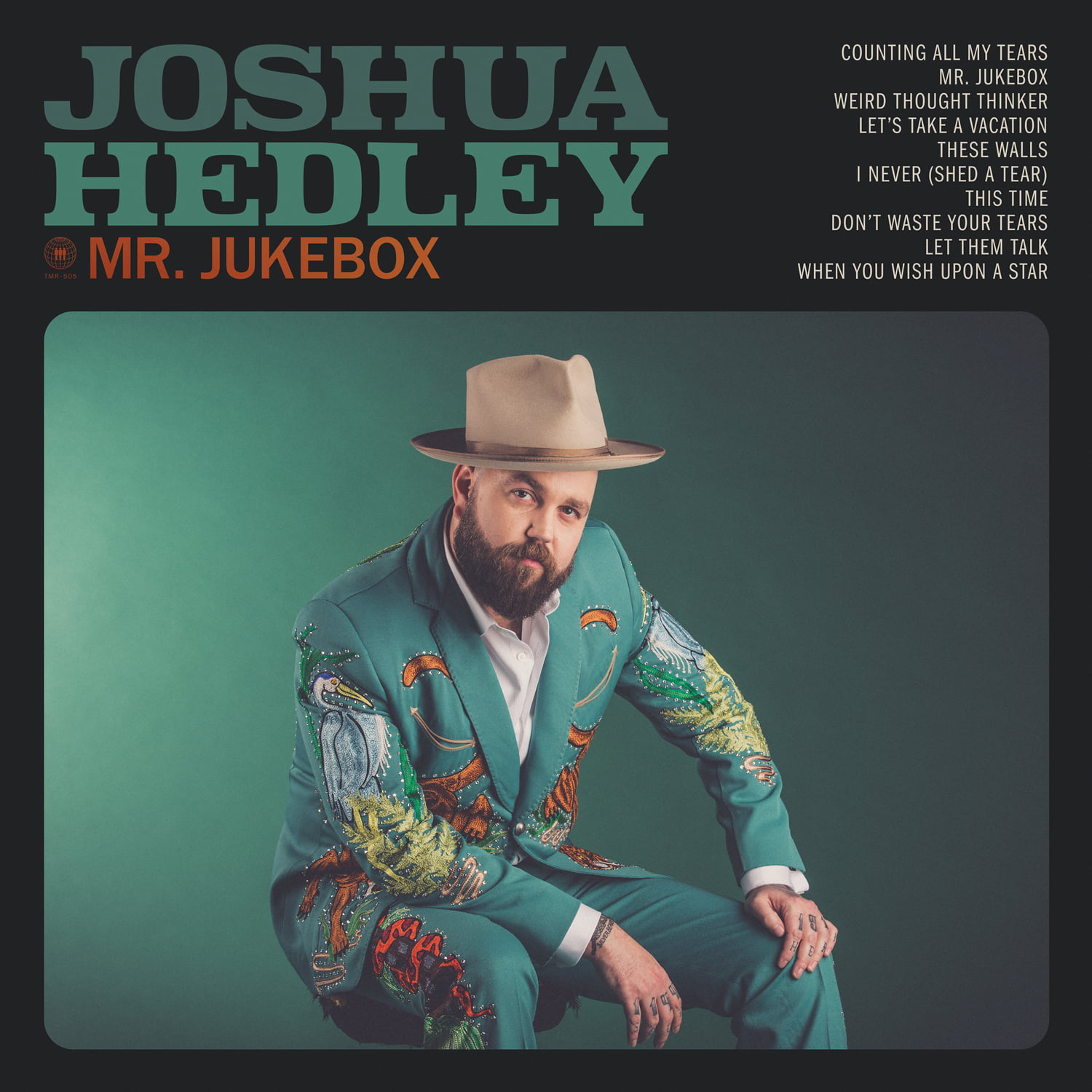
Joshua Hedley, ‘I Never (Shed a Tear)’

We all know the world wide web is a wild, weird, and scary place, but who could have predicted that one morning we’d wake up and the country would be enraptured with clips of the “Yodeling Wal-Mart Boy” — an 11-year-old kid howling out Hank Williams in the middle of a budget superstore? It happened last week, in fact, as America grew captivated by the little man’s vocal flips, sending Williams’ version of “Lovesick Blues” soaring up the download chart. Some genre purists claimed that this meant that we’re hungry for classic country. More likely, it just means we love seeing very young people doing very old things.

But classic country music isn’t an “old thing” — and it shouldn’t be treated as such. You just have to listen to Joshua Hedley and his song, “I Never (Shed a Tear),” to see why. In Hedley’s hands, this weep-and-waltz ballad is the exact opposite of the kitsch throwaway of the Yodeling Wal-Mart Boy. In other words, classic twang is not a meme or a funny viral clip, but a thriving, vital musical force. The magic of Hedley is how universal he makes familiar, gorgeous snaps of ’60s Nashville feel vital and current, not through modernization of the sound itself, but lyrics that stay relevant. “I Never (Shed a Tear)” isn’t a throwback, nor is it futuristic. With lines about love lost and let go — and a bit of romantic denial, too — it’s timeless. Try to find that in the aisles of Wal-Mart.

Canon Fodder: Cowboy Junkies, ‘The Trinity Session’

Roots” is an impossibly broad term that reasonably encompasses every strain of American music, from folk and country and gospel to bluegrass and blues and rock, from hollers, reels, and jigs to ballads, anthems, and laments. That makes for an incredibly diverse catalog of songs and albums that fall under that heading. Each month Stephen Deusner examines an album that lies either in the center — or more often in the margins — of what might be considered the roots canon … if there even is such a thing.

Let’s get the formalities out of the way first: The Cowboy Junkies’ second album was recorded at the Church of the Holy Trinity in Toronto in November, 1987. The church was initially reluctant to let a secular rock group hold sessions there, so the band broke the ninth commandment and bore false witness: They said they were a gospel act called the Timmins Family Singers and they were recording a holiday radio special. Many of the songs were captured with the band playing around one microphone, with Margo Timmins’ vocals broadcast over the church PA. It took either one day or several days, depending on who’s telling the story.

When fans talk about The Trinity Session, they almost always foreground the circumstances of its recording, as though that setting demonstrates the album’s authenticity — as though authenticity were objectively demonstrable. Overshadowing the music, the story of the album has become the album, and even the band is complicit: In 2007, they celebrated their breakthrough’s 20th anniversary by rebooking the same church, inviting some popular fans inside (including Vic Chesnutt and Ryan Adams), and re-recording the album song for song.

The music gets lost in that tale, so that it becomes easy to ignore the mood that the church itself went so far to create. It obscures the fact that this is an album that dramatically rewrites its folk source material, that conceives of personal and professional troubles (touring, romance, the usual) as the raw material for folk tunes, and considers Elvis Presley and the Velvet Underground to be folk artists. For many listeners (including yours truly), it was their first introduction to the folk process, years before Uncle Tupelo and others were revving up the Appalachian tradition to define alt-country. The Trinity Session is a seminal album, if it can ever escape the church.

The Church of the Holy Trinity did do one important thing: It created a sonic palette for these songs, eschewing the clinical silence of the studio for something with an audible ambience. It’s there in the a cappella opener “Mining for Gold,” a cover of a song by the Canadian folkie James Gordon. As Margo voices the worries of someone whose life is spent underground, you can hear the soft rumble in the background, a thousand small things coalescing into a roomy thrum: distant traffic, footsteps, whispers, birdsong, exhalations and inhalations, the bustle of Toronto just beyond the sanctuary. If you wanted to be romantic, you might say it’s the sound of a ghost in the room, a spectral musician accompanying Margo’s performance. But perhaps it’s something more: The entire world hushed so that the singer can get inside her own head for a few precious moments. That sound is the sound of sanctuary.

Reviewing the album in 1989 for Spin, Erik Davis described it as “a combination of Quaaludes and honey.” In this aural soup, the instruments take on lives of their own. Alan Anton’s bass doesn’t enter through your ear; rather, it already exists in your head. The harmonica leaps out of “I Don’t Get It,” almost like a jump scare in a horror movie. Michael Timmins’ guitar solos seem impossibly delicate, especially on “Dreaming My Dream with You.” His sense of timing makes the music all the more immersive; you lean in to hear his notes. Most of all, it’s the way these sounds collide and combine that reinforce the idea of the Cowboy Junkies as a band, which is crucial. They sway into oncoming traffic on “Walking after Midnight,” they swing delicately on “Blue Moon Revisited,” they jam industrially on “Working on a Building.” The church becomes a place of musical communion.

Margo Timmins sings “Mining for Gold” like the song wasn’t written but passed down through generations, and introduces a compelling strategy the band will deploy on most of the songs that follow: It uses the folk tune as a metaphor for band life. The Cowboy Junkies are miners searching for a rich vein of gold, and they persist despite the dangers such an enterprise entails. She may sing of silicosis (and who else could make that disease sound sing-song-y?), but the travails they face are more spiritual than physical. There is a sly nod to fellow Canadian Neil Young, who famously had “been a miner for a heart of gold,” but there are sly nods to so many performers here: the swaggering sex appeal of Elvis Presley on “Blue Moon Revisited (Song for Elvis),” the horrific isolation of Hank Williams on “I’m So Lonesome I Could Cry,” the heroic stoicism of Patsy Cline on “Walking after Midnight,” even the unexpected compassion of Lou Reed on “Sweet Jane.”

These artists are the veins they’re mining, which inform the handful of originals on The Trinity Session, in particular “200 Miles.” At first, it plays like a rounder’s anthem or a trucker song, but it becomes not only a description of life in a touring band but a declaration of intent — an explication of why the Timminses might choose a life on the road: “I got Willie on the radio, a dozen things on my mind, and number one is fleshing out these dreams of mine.” It’s no coincidence that they follow that song up with Waylon Jennings’ “Dreaming My Dreams with You.” “I hope that I find what I’m reaching for, the way that it is in my mind.”

The Cowboy Junkies are not only running toward some dream they can only vaguely define. They are also running from something. Death stalks every song on The Trinity Session, whether in the form of black lung or a car collision or some unknown fate that befalls every one of us. “I want to make sense of why we live and die … I don’t get it,” Margo sings on “I Don’t Get It.” And, just in case you think this album is without humor, she remarks grimly, “I ask my friends if they understand, but they just laugh at me and watch another band.” Music is one means by which we might understand life and death — or at least the Junkies hope so.

Are these songs receptacles for the dead and the doomed? Do they contain the ghosts of Hank, Patsy, and Elvis, and now Lou and Waylon? Nearly every artist they cover has died, which means that, 30 years after it established them as one of Canada’s most daring rock acts, The Trinity Session isn’t so much an album as it is a séance — a means by which they can contact and interrogate the dead.

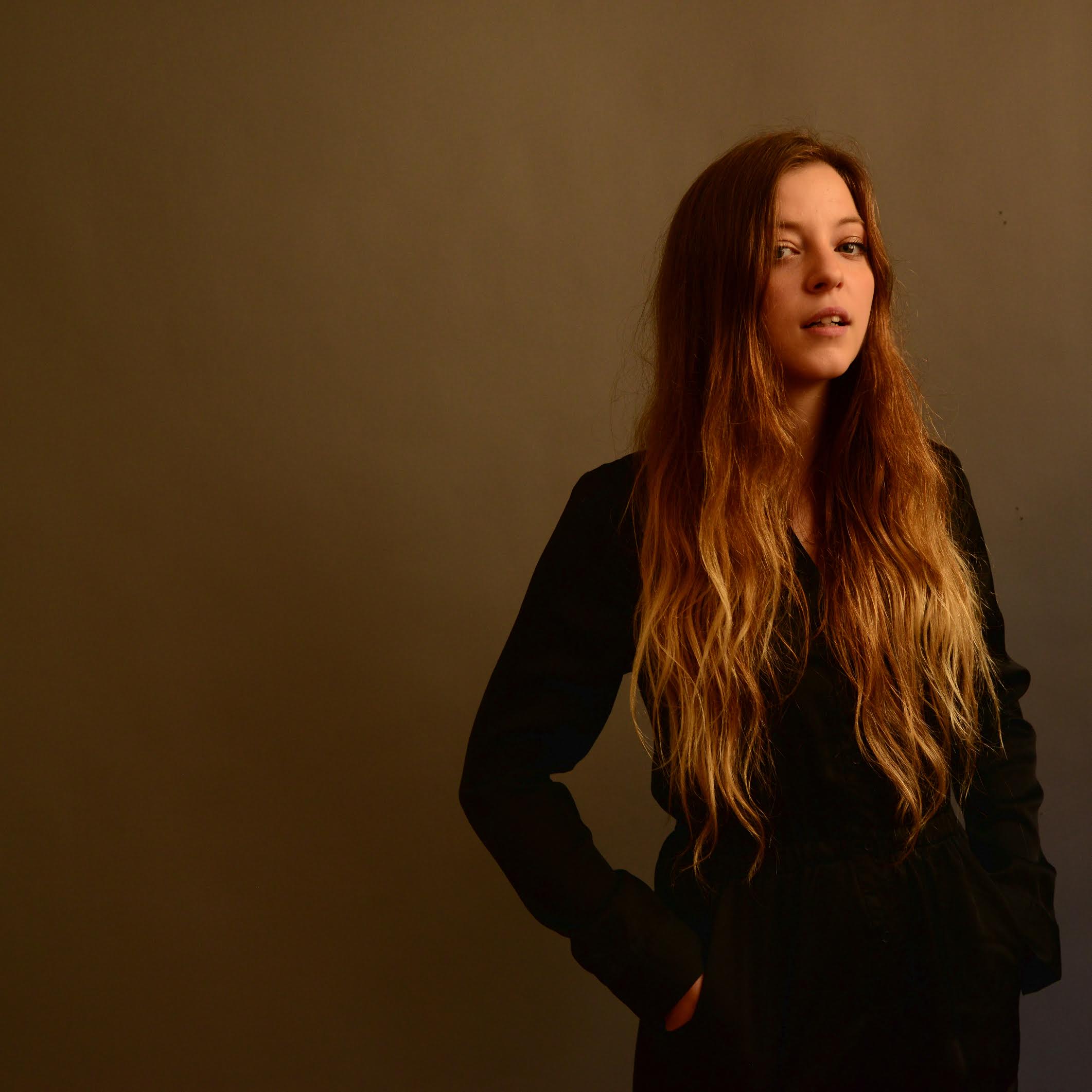
3×3: Jade Bird on Boyfriends, Barbies, and the Bluebird

Artist: Jade Bird
Hometown: London, England
Latest Album: Something American
Personal Nicknames: Jadey … I wish I had something more imaginative … Birdmeister has a ring to it.

If you had to live the life of a character in a song, which song would you choose?

Ooh, great question! Every character seems to have such a bleak ending in the songs I like … I’ve always felt a strange connection to “Look at Miss Ohio.” There’s something about the character’s spirit running from having everything. I suppose any of the girls Ryan Adams or Hank Williams sing about — must be nice to be that doted upon.

Where would you most like to live or visit that you haven’t yet?

Nashville!! Although I’m on my way there soon to play the Bluebird with the incredible Brent Cobb, who I got to know on his tour this side of the Atlantic.

What was the last thing that made you really mad?

If it isn’t a boyfriend … I often get frustrated the most with myself. Generally, not doing the best I can at something really winds me up.


Brooklyn First photoshoot of the trip… as you can see it was a serious affair #jazzhands @shervinfoto

A post shared by Jade Bird (@jadebirdmusic) on

If you had to get a tattoo of someone’s face, who would it be?

Oh wow. I don’t know if I like ANYone that much. If it was do or die, someone with a pretty face, like James Dean or a young Leonardo DiCaprio *swoon*.

Whose career do you admire the most?

Patti Smith or Johnny Cash — both I think are totally authentic through their whole career. The amount of music they put into the world is so inspiring in different ways. Cash’s hundreds of songs and Smith’s real push toward a new sound at that time.

What are you reading right now?

In Cold Blood


What a first meal I literally died and went to heaven after this… #newyorknewyork

A post shared by Jade Bird (@jadebirdmusic) on

Are you an introvert or an extrovert?

Both, I think every artist has a way of being so. I love being on stage more than anything, yet sometimes I very much like to hold up in my room and hide … until food and water is needed … and sunlight. I’m a bit like a plant, really.

What’s your favorite culinary spice?

I can’t cook to save my life, so I’ll go with paprika. On a side note, I don’t like dill .. .or too much coriander — they used to put it on everything in my old school canteen — not good.

What was your favorite childhood toy?

Barbies were definitely leading, at some point, followed closely by a life-sized Siberian husky who I named Shadow. I did used to create an army of my grandma’s ornamental elephants. (You’ve opened a can of worms here!)


Photo credit: Shervin Lainez

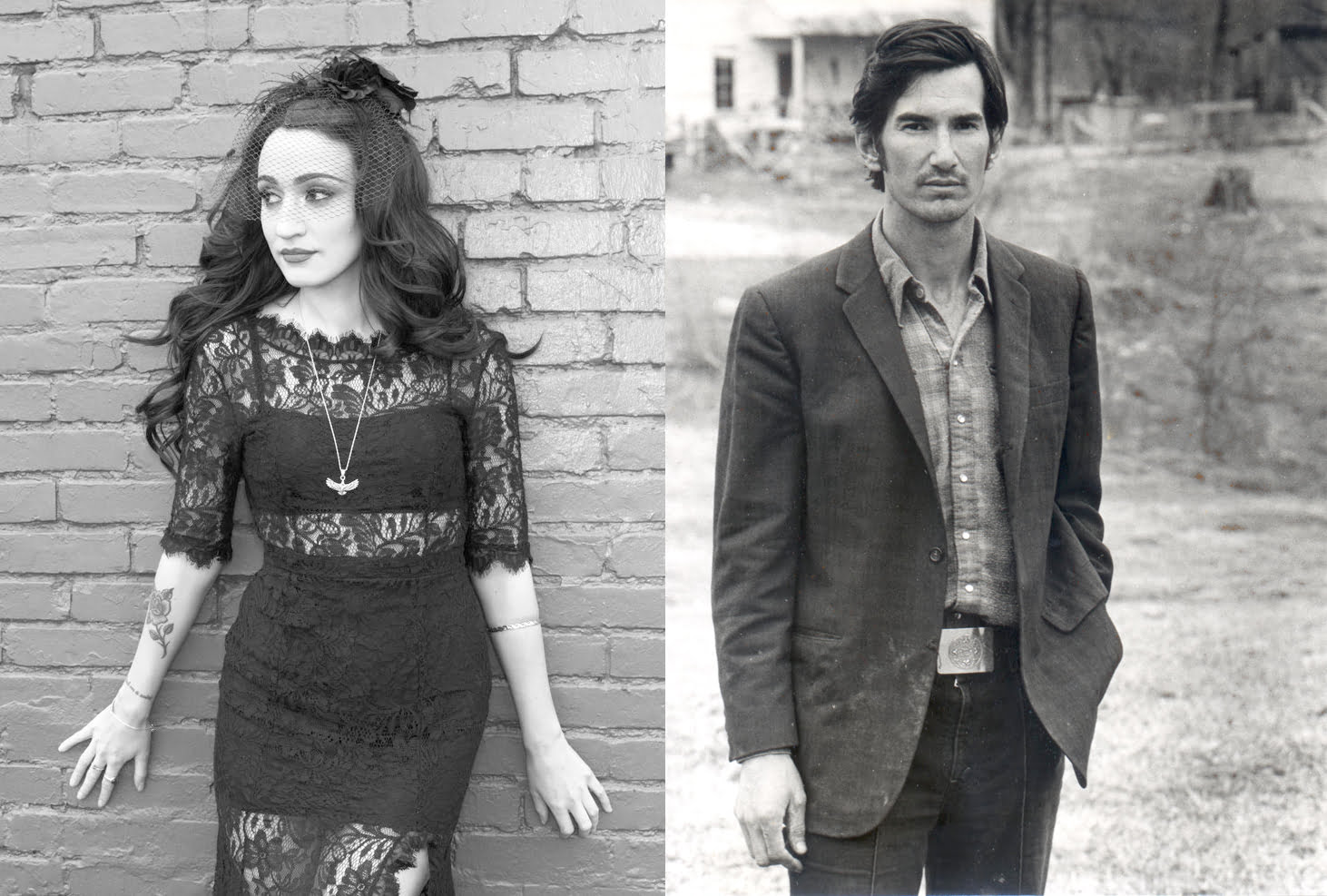
Squared Roots: Lindi Ortega on the Resonating Darkness of Townes Van Zandt

Without question, the legacy of Townes Van Zandt looms large in singer/songwriter circles. Legend has it, Van Zandt all but told Bob Dylan to shove off, when Dylan came knocking on his door wanting to write together. Townes was an immense talent who struggled with depression and substance abuse, and still managed to craft some of the most timeless songs in history. Many of those tunes became immortal while he was still around to see them do so — songs like “Pancho & Lefty,” “If I Needed You,” “Tecumseh Valley,” and more have been covered by Willie Nelson, Emmylou Harris, Lyle Lovett, Steve Earle, Nanci Griffith, Jason Isbell, and numerous others.

Another of his most-treasured and poignant compositions is “Waiting Round to Die,” which has found yet another new life in the hands of Lindi Ortega. On her latest EP, Til the Goin’ Gets Gone, Ortega folds the cover in with her originals like it was her own. She felt compelled to do so because discovering Van Zandt’s catalog broke her through a major writer’s block and reinvigorated her passion for music.   

You didn’t grow up with his music, right? So what was your entry point into his catalog?

I read a lot of biographies and I just kept hearing his name. A lot of my country music heroes had mentioned him. I always thought, “What a cool name, Townes Van Zandt.” And it just stuck in my head. I figured, since a lot of my country music heroes were fans of his, I really should check him out. So, one day when I came back from a tour, I decided to listen to his catalog and, you know how it is when you discover music that you hadn’t known about and there’s a whole well of it to listen to. It was a really incredible experience. I fell in love with his music and his songs and his guitar playing.

There’s so much in his too-short life to latch onto.

Yeah.

Were there aspects of his life that drew you in or was it all about the music for you?

It was really more about the music. That was my definitely my entry point, listening to the words of his songs. His lyrics, specifically, spoke to me. I did watch the documentary, Be Here to Love Me, which I found so sad. I’m sure a lot of that internal darkness resonates in his words and music. And I write a lot of songs that are rather dark and lonely and sad, too, so I guess I felt like I related, in some way. But I’m sure I’ll never understand the demons that he had to deal with in his mind. But, I guess the idea is that songs that come from dark places, all of us humans go through moments that are dark and test us. I think we can all relate to songs in that way. Maybe some of us choose not to go there, but I think we can all relate.

You got a gift from him, in a way, right? Because you were ready to walk away and then you thought, “Maybe I have some more in me.”

Yeah. Definitely. I was going through writer’s block and he became a huge inspiration, songwriting-wise, to challenge myself to be a better songwriter and write more story-like songs. That sort of re-invigorated my love for writing music, in some funny way.

You did “Waiting Round to Die” on your new EP. I hear that and “Til the Goin’ Gets Gone” as sibling songs, or cousins, maybe. Do you hear that?

Absolutely. That’s why I chose to do that particular song as a cover. I was grabbling between that one and “Rake,” because I really like that song, too. But I felt exactly like what you said, that it was a sister song to the song I’d written, so it made sense to put that song on the record. I knew it was going to take the little EP to a very dark space, but … [Laughs]

[Laughs] Yeah. You out-sadded Townes Van Zandt!

I mean, it’s a dark, sad song. The lyrics are very dark. There’s no denying that, so there’s no point in me trying to make it anything other than that. [Laughs] I did: I made a very dark and sad EP, but that’s what I needed to do, at the time. I feel like there are moments for that.

In this day and age, I feel a lot of music is kind of escapist. I feel like the general population in pop music and pop-country, people are trying to escape all the horrible things that are happening in the world and all the dark things that may be happening in their own lives. I get the sense that people want to get out and party, so it’s more like a party music thing that’s happening and not very many people are into this whole idea of embracing dark, sad songs.

But I feel like they are still necessary and people still need them in life because, for me, one of the first dark songs I heard was “I’m So Lonesome I Could Cry” by Hank Williams. When I heard that, it wasn’t like, “Oh, God. Here’s a depressing song!” It was, “Oh, wow. Somebody else feels that same loneliness I feel.” And I felt like I wasn’t alone in my loneliness. That’s why I continue to write songs like that. And I just went there with this EP. It was necessary. I was going through a moment when I was questioning whether I could go on, musically, and I didn’t think I would. I felt sad and disappointed and a little bit devastated, so that’s what came out.

As you just said, the artist’s life is hard enough on its own, then you tack on battles with bipolar disorder and substance abuse with Townes. Was there a lesson or something you found, going into his work, that made you feel you didn’t have it so bad?

For sure. And that’s with a number of musicians I look up to and love who battled with substance abuse problems and depression. I think I read an article once that said creative people often suffer from things like panic attacks and depression and anxiety disorders. For some reason, it seems to go hand-in-hand with people who make beautiful art. Then there’s this whole other side where a lot of people are suffering greatly, but the upside is that we get beautiful songs or beautiful paintings. They help us understand life and the human condition.

So, yeah, it’s really sad to learn about his life and of course there are lessons … I don’t want to have my life end faster than it should. It sort of, in some ways, helps me understand that I need to really appreciate what I do have. There are things I don’t have that might cause me some sadness, but there are a lot of things I do have that I need to appreciate and feel happy about. So it helps me to do that. Some people have a hard time getting to those places because their brains just won’t let them. I’m just so grateful that an artist like Townes Van Zandt, with all of his internal issues, was able to create all of the music that he did. And it’s legendary and classic and will be with us forever. If there’s a ray of light in a sad story, that’s definitely it.
3X3: Amilia K Spicer on the Space-Time Continuum, Bob Dylan’s Throwing Arm, and Whiskey, No Mixers

Artist: Amilia K Spicer
Hometown: Backwoods, PA
Latest Album: Wow and Flutter
Personal Nicknames: Spice

What song do you wish you had written?

“The Weight” — then I would be part of every all-star encore and late-night campfire jam.

Who would be in your dream songwriter round?

I think a festival would be best for my dream songwriter soiree. But let’s say we are gathered for the pre-party in my (quite large) living room. Hank Williams, Bruce Springsteen, David Bowie, Leonard Cohen, Dolly Parton, Curtis Mayfield, Prince, Lucinda, Elvis Costello. Lennon and McCartney are in the kitchen right now, with Merle Haggard and Carole King. Not sure what they are up to. Don’t even get me started about the pick-up game going on in the front yard. All I can say is Bob Dylan doesn’t have much of a throwing arm.

If you could only listen to one artist’s discography for the rest of your life, whose would you choose?

Beethoven.

How often do you do laundry?

I just buy new stuff. Nah! I buy VINTAGE stuff.

What was the last movie that you really loved?

Zootopia

If you could re-live one year of your life, which would it be and why?

Never mess with the space-time continuum, man.

What’s your go-to comfort food?

Vegetable soup and popcorn.

Which Whiskey is your favorite — Scotch, Tennessee, Myers, Shivers, or Gentry?

Yes. And, no mixers.

Mustard or mayo?  

Mustard. Spicey. Of course.

3×3: Jake La Botz on Bertolt Brecht, Blind Boy Fuller, and a Hopeful Amount of Laundry

Artist: Jake La Botz
Hometown: Nashville, but originally from Chicago
Latest Album: Sunnyside
Personal Nicknames: Jake (real name Jakob)


Almost home! #nashvillehereicome #musichwy

A post shared by Jake La Botz (@jakelabotz) on

What song do you wish you had written?

“I Think It’s Going to Rain Today” — Randy Newman

Who would be in your dream songwriter round?

How many in a “round”? I don’t think I’ve been to one yet. I’m going to guess six. Hank Williams, Thomas A. Dorsey, Bertolt Brecht, Skip James, Lou Reed, Henry Mancini.

If you could only listen to one artist’s discography for the rest of your life, whose would you choose?

Blind Boy Fuller


A post shared by Jake La Botz (@jakelabotz) on

How often do you do laundry?

I own approximately two weeks worth of clothes. So, hopefully, not more than two weeks.

What was the last movie that you really loved?

The Lobster

If you could re-live one year of your life, which would it be and why?

You stopped my mind with that one. Sorry, I can’t come up with an answer!


San Diego: playing here at 10pm TONIGHT

A post shared by Jake La Botz (@jakelabotz) on

What’s your go-to comfort food?

Thai or tacos

Which Whiskey is your favorite — Scotch, Tennessee, Myers, Shivers, or Gentry?

The most expensive one. I’m too cheap to buy it. Keeps me sober.

Mustard or mayo?

Spicy mustard


Photo credit: Joshua Black Wilkins

LISTEN: Sunny Sweeney, ‘I Feel Like Hank Williams Tonight’

Artist: Sunny Sweeney
Hometown: Longview, TX
Song: “I Feel Like Hank Williams Tonight”
Album: Trophy
Release Date: March 10, 2017
Label: Thirty Tigers

In Their Words: “I’m so excited that I finally recorded this song. It’s my favorite country song ever, written by the one and only Chris Wall. The melody has gotten me since the first time I heard it years and years ago. I chose not to change the gender, because that’s the way he wrote it. Also, I’ve always loved when a title makes you think the song is going to be about something else.” — Sunny Sweeney


Photo credit: Christina Feddersen

Jade Jackson, ‘Motorcycle’

There’s just something about the art of the musical kiss-off: a song that doesn’t chase or proclaim love, but leaves it shaking its head, trying to trace back its steps to the moment where everything fell apart. For Jade Jackson, this is “Motorcycle,” a moody, sing-spoken minor-key proclamation in the form of a folk song, delivered in a message to a former lover. “My motorcycle only seats one,” she sings to a melody that’s part Western saloon, part Twin Peaks, before riding off confidently into the sunset. It’s this approach, both soothing and subversive, that caught the attention of Social Distortion’s Mike Ness, who produced her debut album. He knows a thing or two, after all, about applying a sort of scrappy punk ethos to a country palate — what we once called “cowpunk,” before the omnipresence of Americana took over. The raspy-voiced Jackson, who grew up in California (the place where that meeting of roots and rage first converged), started writing music at 13, and her taste — part Hank Williams, part the Smiths — comes through loud and clear in her unique combination of deadpan and delicate.

Watch the exclusive premiere of “Motorcycle” here, captured in emotive black and white. Jackson’s debut LP will be out this Spring on Anti-.

John Prine with Holly Williams, ‘I’m Tellin’ You’

Keeping the circle unbroken in country music is a very serious thing — legacy, family, and tradition are not to be taken lightly, with certain last names (Williams, Jennings, Cash, to name a few) holding the most shimmering of golden thrones. There's that legacy, and then there are the interlopers: like a singer/songwriter from Illinois named John Prine who, without any actual geographical or genetic pre-programming, manages to carry in his body some of thickest, most brilliant blood in the business, grabbing a laugh in the same sentence as a tear. Few can blend wit and wisdom like Prine can, often because he takes that storied circle and warps it into loops and figure eights, without ever losing its original foundation.

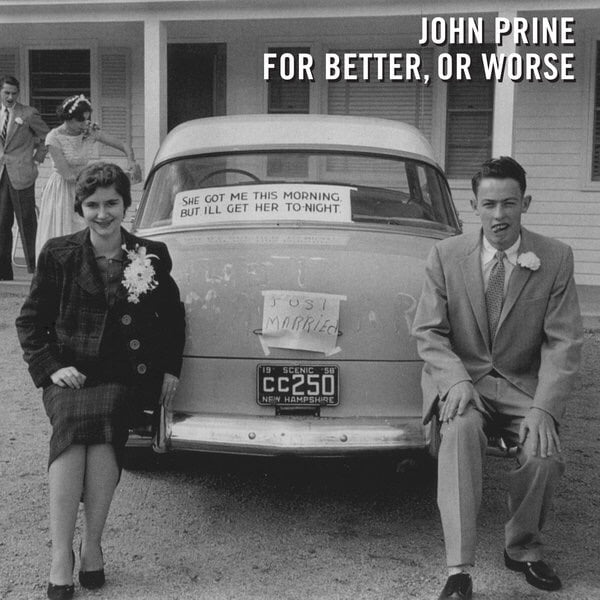
Despite his unparalleled skills as a songwriter, one of Prine's most beloved LP's is 1999's In Spite of Ourselves, a collection of classic country duets that contained only one original: the title track, sung with Iris DeMent, which boasts lines about big balls and underwear-sniffin' while still managing to paint a sincere picture of love enduring, for better or worse. It's a purely Prine move that, on an album of reverence, he still warped tradition to suit his splendors and squeezed sweetness out of a panty-puffer.

Thus it's why his version of "I'm Tellin' You," off For Better, Or Worse — his casual companion to In Spite of Ourselves — is one of the truest examples of how Prine, even when not driven by his own pen, twists and tangles the past in his own tender humor. One of the album's more unassuming little ditties, the duet with Holly Williams bends tradition (Williams, of course, is the granddaughter of Hank and her grandmother, Audrey Williams, used to perform the tune) with the Prine eye, turning it from a solo affair into a push-pull conversation. "You better straighten out, I'm tellin' you," they sing to each other while a mischievous fiddle dances along. Prine saw the charm in those aged words but knew that all love is a two-way street — not just preserving the circle, but turning it into a sphere.

LISTEN: Luke Winslow-King, ‘Heartsick Blues’

Artist: Luke Winslow-King
Hometown: New Orleans, LA
Song: “Heartsick Blues”
Album: I’m Glad Trouble Don’t Last Always
Release Date: September 30
Label: Bloodshot Records

In Their Words: “'Heartsick Blues' is a song about surviving heart break. It’s about realizing something is wrong when your love starts listening to a different kind of music. It's about cheating on the dance floor at a country two-step honky-tonk night with a band called the Wasted Lives.

I included titles of cliché Hank Williams and Tammy Wynette songs in the second verse: 'She's singing "Please Release Me" and "I'm So Lonesome I Could Cry." It's thinking about her "Cold, Cold Heart" that makes we want to die.'" — Luke Winslow-King


Photo credit: Martina Monopoli