Big Richard Takes Big Strides

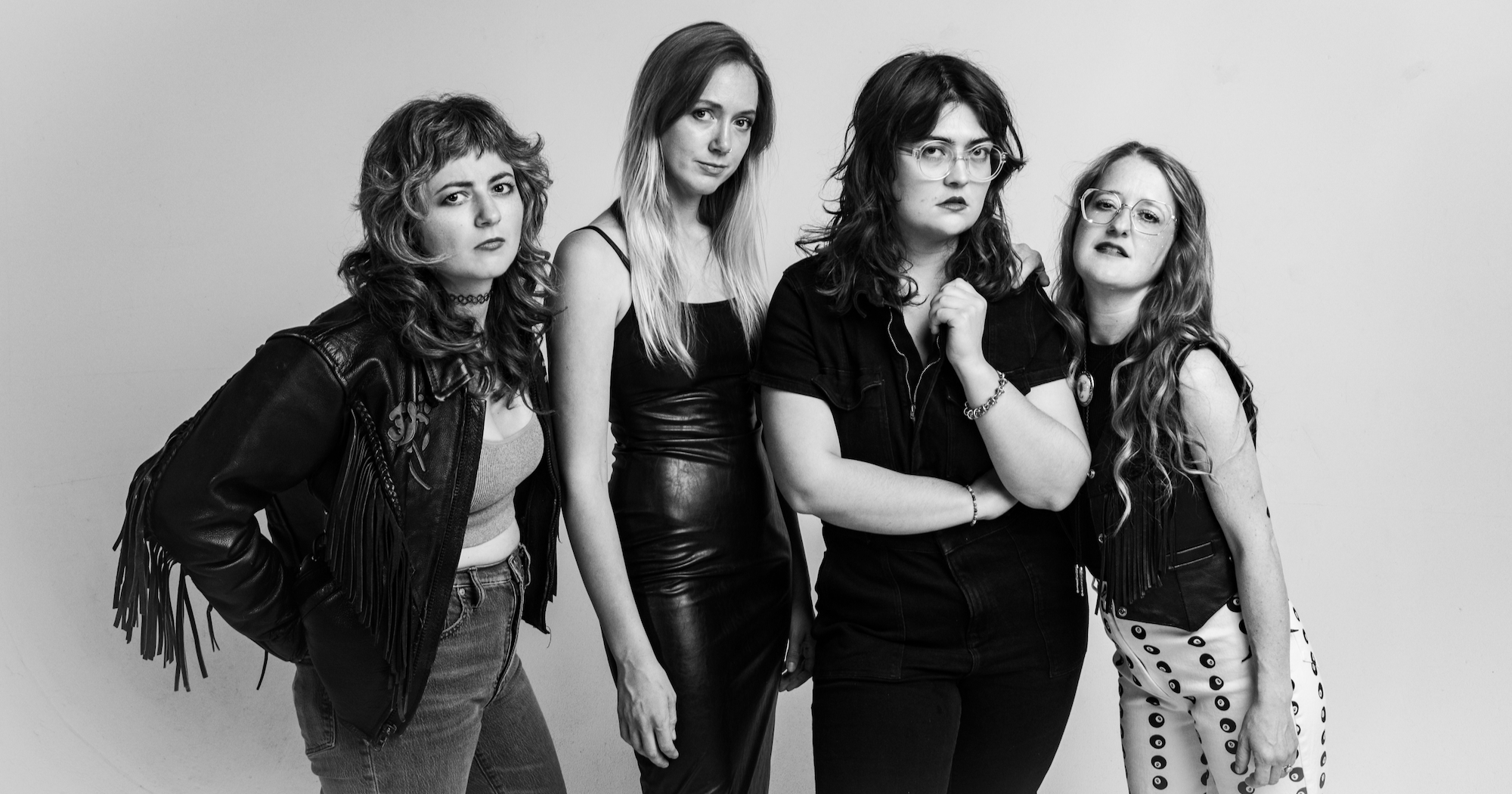
Big Richard is blowing up the bluegrass scene. Their cheeky moniker is a fitting introduction to their mischievous spirit – think four women, leaps and bounds of talent, political acuity, and unrivaled vibrancy. Their magnetism has garnered a true energetic match from their fan base, who are occasionally known to attend live shows with inflatable male genitalia in tow. Everything about Big Richard is its own micro revolution.

Joy Adams (cello), Eve Panning (fiddle), Hazel Royer (bass), and Bonnie Sims (mandolin, guitar) make up the fearsome foursome. Each woman has cultivated a slew of experience in her own right, amalgamating into a supergroup of pulsating passion and prowess. February 6, 2026, saw the release of the group’s sophomore studio album, Pet, via Signature Sounds. A ripe combination of fiddle tunes, originals, and an astute cover or two, Pet was recorded live in an effort to encapsulate Big Richard’s dynamic chemistry. Raw power seeps through every track, their topical lyrics and fiery dispositions bulldozing over patriarchal expectations so often affiliated with the bluegrass legacy.

Big Richard is fierce, loving, and unstoppable. When BGS sat down to ask a few questions regarding their new release, their affinity for one another beamed radiantly through the grainy Zoom screen. Joining from an early morning in the middle of tour, Big Richard arrived to our call piled onto a single hotel bed á la the grandparents from Charlie and the Chocolate Factory.

Their banter electric and punctuated by spurts of laughter, bassist Hazel even delivered a sardonic recitation of a poem from her bedside book before launching into the interview. What followed was a curious exploration of the inspirations and aspirations to which the band meticulously attends.

Congrats on Pet! Can you tell us a little bit about the narrative of Big Richard and why you’re all in the same bed? What brought you here?

Bonnie Sims: We started a band because a festival needed more ladies on their lineup. They called old Eve Panning on the fiddle over there and said, “Hey, you probably know other women, right?” So she took a call, and she called us.

Joy Adams: We were just supposed to play one show, and I remember having a rehearsal and everyone peeing their pants from laughing so hard. We played our festival set and half of it got rained out. So we had all these songs we still needed to play and decided to book another show so we could play them. We also got some hate at that festival – some people were very offended by our name. We were also handing out penis paraphernalia, and we made these puff-paint T-shirts that had a dick with hairy balls playing banjo.

Hazel Royer: People got mad enough that we were like, “Oh, we have to do this again. This is so funny.”

BS: We were like, “Are we rage-baiting middle-aged boomers? Could this be any more fun?” I grew up as a bluegrass kid, and I always had an aversion to some elements of the culture socially, especially towards women. I felt very stifled by it with my personality, so I always said if I was going to be in a bluegrass band, I wanted to feel like I was power-sliding in on my knees with both middle fingers up. I feel like Big Richard does that very well energetically. We are doing that constantly on the scene, on stage, to audiences, to other musicians, to promoters – we try to bring an unexpected vibe.

What is unique about collaborating with an all-femme outfit?

JA: Well when I get my period, they all get their periods. We’ll be halfway through tour and someone will be like, “Okay, when is it coming?”

BS: And I like that you said outfit. It’s mostly about our outfits. We share clothes, we encourage dressing up, we share beds, we like to theme – the chemistry is deep!

JA: We theme all of our outfits. Like last night, we’re staying at a Best Western, so our theme was “Breast Western.”

Eve Panning: I actually showed up dressed just like the drummer in the opening band. But yeah, I guess we’ve all played in bands with men before, and all sorts of other lineups. I personally have loved all of those bands, loved making music with them, and learned a lot. But there is something really special about being in a group with all ladies. There’s just something that I feel like is kind of unspoken and understood.

BS: And I feel like the reception of us often still has some sort of stigma attached to it. Like at gas stations, at venues, people will be like, “Oh, girls, are you traveling alone?” “Ladies, are you sure you’re okay?” And I get to be like, “Yeah, we are! Yeah, that’s right.” I feel like being in this band has fortified my personal independence bone.

Has being politically forward also impacted your reception?

HR: Yeah, definitely. This band has been pretty politically forward since its inception, so we’ve also curated a fan base that understands what to expect. For the most part, people come to our shows because they know that. Last year we had a few shows where people left in anger, but it’s not common.

BS: Even just the name Big Richard is a pretty good litmus test for whether or not you’re able to take a joke. If you get the joke, and if you’re willing to laugh, that’s a really good precursor to deciding if you want to be a part of this party.

What context, interpersonally or globally, informed the particular creation of your album, Pet?

HR: We wanted to create an album. There was Live from Telluride [2022] before I joined the band and then we had Girl Dinner [2025], which was an album we made in the studio. For Girl Dinner, we were all separated sonically, isolated and in booths with headphones so that we could edit things and overdub stuff. I was very new to the band at that point. Our sound was very informed by coming together and creating this new thing.

But for this new album, Pet, we recorded every song live. We wanted to emulate the live sound that we have on stage with each other, because that’s where we feel most confident and powerful as a group. I think it is where we are the most successful musically. And we recorded all live to tape, so everything is analog, which has been awesome.

BS: Big Richard is definitely an energy. A large part of our alchemy together is the energy that the four of us create. And that requires being in the room together, having our voices actually, physically interacting and coming together into things. We wanted to tap into the stuff that feels real. And for us, we’re a live band. We perform shows all the time, and so we’re trying to bring that element into the studio.

What is your process of composing and arranging like?

EP: We’ve done some co-writes, which have been really fun, but a lot of the time someone will bring a song of their own with an idea of where they want it to end up, though our arrangements are also pretty collaborative. Each of us has a distinct flavor that they bring to the band.

What would you say is the most distinctive difference in your respective musicianships?

BS: Eve and Joy were classical kids growing up, and Hazel and I both had dads who played the banjo.

What is it like to bridge that gap?

BS: When Eve writes out her fiddle tunes, I take the music, I go home, and I write every note, and then I practice it. And Joy just somehow immediately has it down – so she bridges it really fast, and I have to build a bridge, piece by piece.

EP: And then when Bonnie or Joy or Hazel is singing a song, and they’re like, “Eve, can you sing the harmony part?” I have to be like, “Guys, how do I make it sound better? How do I sing good?” And then they try and help me out there.

JA: We use our skillsets to fill in the gaps for each other.

BS: And we don’t expect people to know what we know. That’s not a fair thing to put on other musicians. We all come from different backgrounds.

Lots of dynamic abundance!

What did y’all each have on repeat while you were recording Pet?

JA: I was listening to Twain a lot. “The Fox (Yup Yup Yup)” or “The Sorcerer” from Twain.

HR: I was listening to Christian Lee Hutson a lot. “Tiger” is so good.

BS: Probably scream-singing Chappell Roan in my car on the way home.

EP: I had a bit of a phase with The Weepies this summer, because I hadn’t listened much, but then Hazel was putting them on in the van a lot.

HR: They’re so good, too.

Always a good bet. Now, if y’all were in an alternative universe where you were still connected as a group, but you weren’t a band or a musical group, what would you be?

JA: Probably a truck-driving outfit.

BS: Yeah, we’re Ray Bitcher, we’re a truck-driving outfit. Or– can we be the Golden Girls, too? I want to be old ladies with y’all. Oh, and a third thing. We are also a punk band called Hateful Hazel.

Incredible. Is there anything you feel like you’ve learned about yourselves or playing together throughout the process of putting out this album?

BS: This is a collaboration and a democratic process of a band. Putting together Pet, and Big Richard as a whole, is constantly an opportunity to compromise. It’s not about my singular creative vision for any song or any record. It’s about coming together and listening to each other and then having everybody’s input. It ends up being this amalgamation of everybody’s creative juju. Incorporating somebody else’s ideas is a great learning opportunity for any creative.

HR: We also learned that this live recording style works really well with this band. We’d always had a hunch that if we just got in a room together and set up a mic that it’d be the best way to capture our sound. Turns out it’s pretty true.

BS: We learned that we liked dressing up as clowns. Artistically fitting.

JA: Apocalypse clowns, specifically.

Oh yeah, the album art is impeccable. Beyond the clownage, what are y’all each proudest of on this album?

JA: I think we’re just proud that it finally sounds like us on stage. Girl Dinner was very clean, but the live recording on Pet really worked for us.

BS: I do love “Make the World Go Away” as the ending of the record. It’s always such a potent moment in live shows, because a lot of times we’ll go into the crowd and sing it acoustic. The music becomes so tangible – we’re literally standing a foot from somebody, you know, and their face is right by our face, and we’re singing and we’re looking at them. I feel like we can miss music in that realm with performing.

The stage amplifies what we’re doing, but it’s also a barrier. Which, at times, is great because it wouldn’t be successful on the ground in a crowd of 3,000 people, but in a club with 250 or 300 people, you can stand in the middle of it and ask everybody to be quiet while you sing an acoustic song. Those moments are so connected. And I feel like this is how music can reach out and touch everyone. It’s not just for performing and money and clapping and being on a stage. It’s about feeling as humans together. Music is a tool for that.

Was that philosophy a big influence for Pet as a whole?

BS: We’re definitely trying to apply music as medicine. Humanity is missing out on something right now, and music is a tool to help us access our higher selves.


Photo courtesy of the artist.
Big Richard, Big Feelings – Their New Album is a Delicious ‘Girl Dinner’

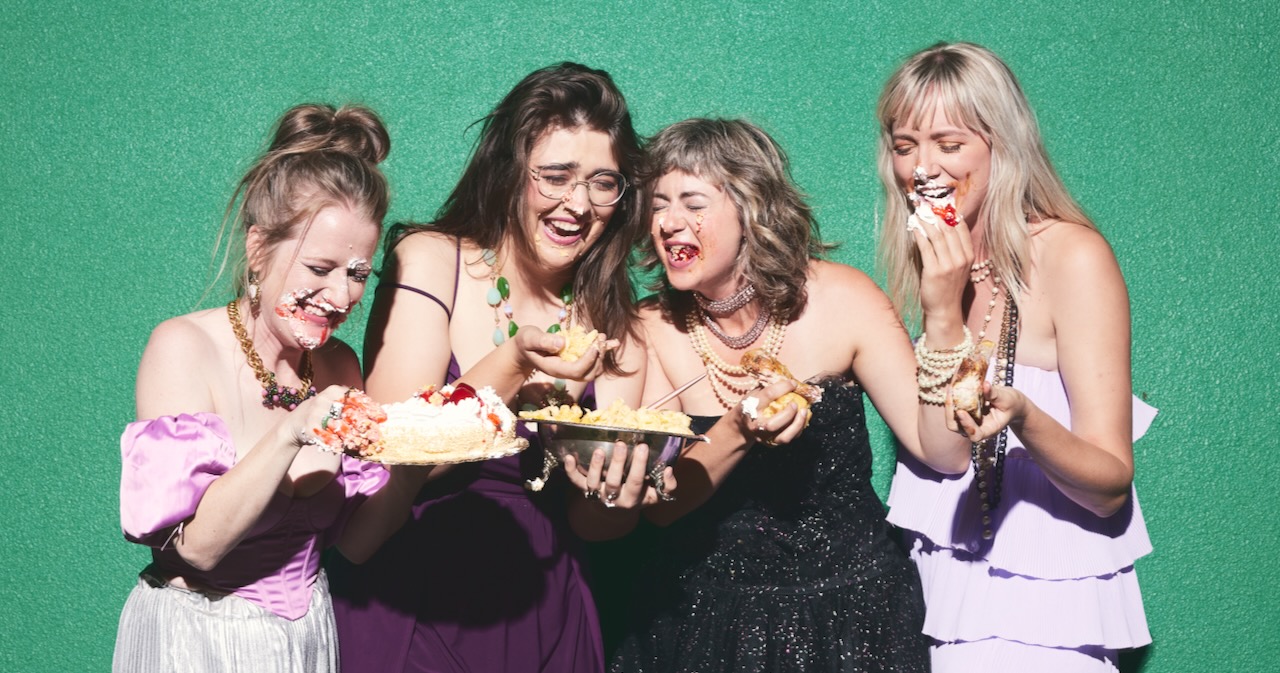
The members of Big Richard – Joy Adams (vocals, cello, banjo, octave mandolin), Eve Panning (vocals, fiddle), Hazel Royer  (vocals, bass, guitar), and Bonnie Sims (vocals, mandolin, guitar) – were seasoned studio and gigging musicians when they met for their first rehearsal. Familiar with one another from Colorado’s thriving music scene, their initial gathering was the result of an offer to assemble a band and perform at McAwesome Festival 2021 in Castle Rock.

Musical and personal chemistry, apparent during practice, was also a given onstage, solidly reinforced by an outpouring of support from fans. There was also a flip side – backlash to the band’s suggestive name and often-bawdy stage banter. This, it turns out, created even more incentive to continue. Big Richard was officially a band.

Their wealth of experience across musical genres – bluegrass, country, jazz, classical, rock, and beyond – opened the door for writing, recording, and performing music that pushes beyond parameters while remaining firmly planted in tradition. It shows on their new album, Girl Dinner (released January 24), produced by the band and recorded with Colorado musician and friend Eric Wiggs at his Vermillion Road Studio.

Technically their second release, following 2022’s Live from Telluride, Girl Dinner represents several firsts for the band: their first studio release, first recording of all-original material, and first with Royer, who joined the ensemble a year ago. According to the musicians, Girl Dinner demonstrates the many sides of Big Richard, everything from stripped-down, quiet instrumentation and harmonies to the blazing solos that define their performances.

When was it obvious that Big Richard would be more than a one-festival project?

Joy Adams: It wasn’t really in the first rehearsal. It was in the reception to the show that we played. Obviously, bluegrass is a jam-based genre; it’s common to sit down with your friends and play tunes. But we felt a crazy chemistry in the way we sang and played together that was apparent from the very first song we played at Bonnie’s house. When we played McAwesome Fest, for starters, our set got rained out, so we didn’t get to play the whole set. We were upset about that. We were looking for another gig just so we could get to the other songs. And we also had a bad reaction to us, too. There were people who were very upset about our name and how crass we were onstage and we got some initial hate mail after that first show. That was the moment – in my head, anyway – where we were like, “Oh, we have something here. If we can ruffle some feathers with this band, we’ve got to do this. This is an important thing.”

When and how did you build the band?

Bonnie Sims: We played that first gig in May 2021, our second gig in September 2021, and we hit the ground running in the beginning of 2022. We booked [Colorado festivals] RockyGrass and WinterWonderGrass right out of the gate, and that gave us a lot of fuel in our tank to want to invest in the creative side, start writing together, start rehearsing more, and really invest in the music, because we had these exciting opportunities to be a part of. Not long after we booked those things ourselves, we signed with Crossover Touring. Our buddy Chandler Holt has been our booking agent from the beginning and has been a huge part of helping us get to lots of festivals and play fun rooms.

Eve Panning: That first year or so was an unexpected influx of gigs. We did a ton of touring and I feel like we were kind of playing catch-up. It’s been really fun in this last year. We’ve all settled into the band a little bit more, and it’s been fun to hear the songs that everybody’s bringing and spend a lot of time working on those. You can hear that in the new album. Live From Telluride had some originals, but we were doing a lot of covers because we were so new as a band. This new album is all originals, and it’s been fun to explore that side of things as well.

How have the sound and dynamic changed since Hazel joined you?

JA: The band has changed so much. Hazel is wonderful. Her attitude is fantastic. She’s an incredible musician who has brought the level of the band up a lot. The arrangements have gotten better, the groove is tighter, and the overall balance of band vibes is wonderful. It’s everything all of us could ever have dreamed of, and I blame Hazel for that entirely. She’s such a lovely person to be around, she writes incredible songs that are deep and moving and exciting, and we’re so lucky to have her in the band. She really saved us.

BS: I agree. Hazel brings such a strong singing voice. It’s really fun to lean into the power she brings vocally, intertwine with that power, and lose ourselves in it. And her original songs are incredible. It’s a natural elevation of maturing as a group and playing together. This is year three going on to year four for the band. It’s a lot different. The pace has been incredible as far as how much time we’re spending making music together. It’s very much like a pressure cooker. It has an effect on the music itself, so the sound has evolved immensely and continues to evolve in an exciting way.

Hazel Royer: Thank you, everybody. That’s so nice. When I joined the band, everyone was, “We want to work. We want to try new things and learn new songs.” We spent two months rehearsing before we played our first gig with me on bass. We looked at the music and we became a band before playing the shows. There was an emphasis on learning new material, and there was a really good excuse to do that because there was a new member and no gigs for a couple months, so we had the space to learn new things. I’m really grateful that I got to be a part of that.

EP: When you only have four people onstage and it’s all acoustic instruments, when 25 percent of the band changes, that’s really significant. That means the sound is definitely going to change. But, like everyone said, Hazel has such a powerful voice, she’s such an accomplished musician, so it’s felt great. It’s felt like a wonderful step up.

HR: I was super-lucky because everyone in this band wanted me to exist as myself. That was the primary thing: “We want you to sing. We want you to write your own songs and bring them to the band.” That’s rare for a new person – joining a band and being like, “We want what you do as embedded immediately.” Additionally, we have a lot of crossover, musically, that we all can draw from. I grew up playing bluegrass and old-time music, and these guys are steeped in that. I also like pop music, and everybody likes that, and I had classical studies, and there’s two people who are very accomplished classical musicians, so there was a lot of crossover that made the integration of myself into the band easier than it could have been.

Let’s talk about the album – the songwriting process, song selection, your goals going into the studio.

BS: Our goal was to present something different than what we presented on our live album, which, like Eve said, was mostly covers. We recorded Live From Telluride after being a band for right at the one-year mark. It was very much the first generation of material. This is our debut studio album, but it’s our sophomore offering as far as the material, in my opinion, because it’s the second stage of the band’s development as far as it’s all original. There’s introspective and thoughtful moments within the songwriting. We have those at shows, but they’re always intermixed with high-energy, raging things where you can hop around and have a really intense, energetic experience. The album, I feel, offers up the soft side of Big Richard, in a way. We have this saying, “Big Richard, big feelings,” and the album is representative of that side of the band, which is, again, usually balanced with this different vibe live. So we took that out and just are doing the original stuff on the record, which is exciting.

Did you write deliberately to explore that softer side, or did the direction become obvious as you were writing?

JA: We didn’t intentionally write a soft album, and I hesitate to call it a soft album, because there are some burning fiddle tunes that Eve wrote and there’s a couple of aggressive songs, mostly coming out of Bonnie’s pen. The album is all over the map. The more lyrical songs were collected over the course of a year playing together. We love these songs so much and they got such a good reception at all of our shows. We did play them out pretty thoroughly before we recorded them, so it was a matter of collecting our favorite songs that we felt hit the emotional depths of “Big Richard, big feelings.” We were really proud of these songs.

HR: To go off of what Joy said, they’re our favorites. We picked them because we all were very passionate and love those songs. There are some soft songs on the album, but there’s a wide variety of things going on there. It is different than our live show by a significant margin. The album, in my view, is a piece of something that’s made out of love. We love this music and we created these arrangements together.

Once the songs were selected, what was the sequencing process?

EP: We had an initial sequence, and then we were limited by how many songs we could put on each side of the vinyl, so we had to take our original idea and rework it. The album starts and ends with songs about saying goodbye, and that hits; that feels like a powerful moment.

HR: We looked at this group of songs as a set list. We wanted to create a listening experience similar to something we would provide at a show, like, how do these songs flow into each other? Are there seamless transitions that we’re able to utilize? That’s how we looked at sequencing the album. And also separating saying goodbye a million times. At the top and the end of the album was important.

BS: Vinyl presents an opportunity for sequencing to have more of a presence again. With digital consumption, people just click what they want and add it to their own playlist. No shade; do your thing with your playlist, but with vinyl you’re going to probably sit and listen to it in the order that we put it in, because that’s the style of listening for a record. So it’s nice to have that opportunity with vinyl.

Tell us about the recording process.

JA: We recorded this album in May 2024, and we had the last master submitted in September or October. Vinyl production takes a little while, so we got the vinyl back in December, which was really exciting. Mixing and mastering is a crazy process that takes so long. That’s the part I’m very obsessed with. I was, unfortunately, the squeaky wheel the whole time, being like, “The bass needs to be half a dB [decibel] higher in this song, in this one section, but not all the other sections.” That was all me. I love the process of recording. We’re not a band that plays a song a hundred times – thank heavens for that. We tend to get things within five takes. Some solos got replayed or re-recorded, little things that got added, studio magic. I’m very proud that this album required basically no tuning and really simple edits.

EP: We also did a lot of tracks without a click. We didn’t go into the studio with a plan as far as which ones we were going to record to a click and which ones we were going to just play. But I think it keeps a lot of life in those songs as well, playing them like we do with a little bit of breadth to them.

HR: This might go without saying, but we tracked the whole thing together. We made basic tracks and there was some soloing, editing, but that was it. Just iso booths, but all four of us live.

The album was self-produced. What does the word “producer” mean to you? Did you experiment much or make changes to the songs while recording them?

JA: Production for this kind of band, to me, means deciding how we were going to record it, which is a very big discussion: are you all in the same room together, are you recording separate, are you recording to a click track, etc. And then, of course, trying to democratically decide what take has the most musical power, because you’re going to sacrifice a little perfection somewhere for the sake of something that’s riveting. That’s always the case. And then making decisions about mixing and mastering. In some ways it would have been nice to have had an external source of nature in the room, like another producer to help us make those decisions, but it was incredibly empowering to make them ourselves, because we have dragged these songs through both the mud and the sky on the touring road.

We had really figured out and dialed in the arrangements in front of thousands of people. We knew exactly what we wanted out of these songs, and so it was liberating to be able to put those down in our way and not have to fight a producer on some decisions. As far as things changing in the studio, not a whole lot changed. We were all playing the instruments that we do. Sometimes Hazel plays guitar or bass, and so we had the ability to have both bass and guitar on some of her tunes, which was really effective. That was one thing that was different than how we usually do it live.

HR: To go off what Joy said, I think the production, as far as the musical side of things goes, really did happen on the road and in rehearsals. We came into the studio knowing our songs, exactly how they go, what we want where, and what we’ve tried and tested a billion times, instead of coming up with arrangements in a studio environment.

The Colorado music scene has been very supportive. How great a part have those audiences played in taking the band to the next level?

BS: The audience has been instrumental in every step and every piece of our success. They are the success, because if they weren’t there, buying tickets and wanting to be at shows, we wouldn’t have a reason to be out touring. We’re grateful to everybody who comes to shows. When we come back to our Colorado hometown vibe, it really keeps us going. It keeps the light on for us, because those are the crowds that lift us up energetically and have been there from day one. Coming back to those audiences fills our tank in a real way.


Find more Big Richard here.

Photo Credit: Jason Innes

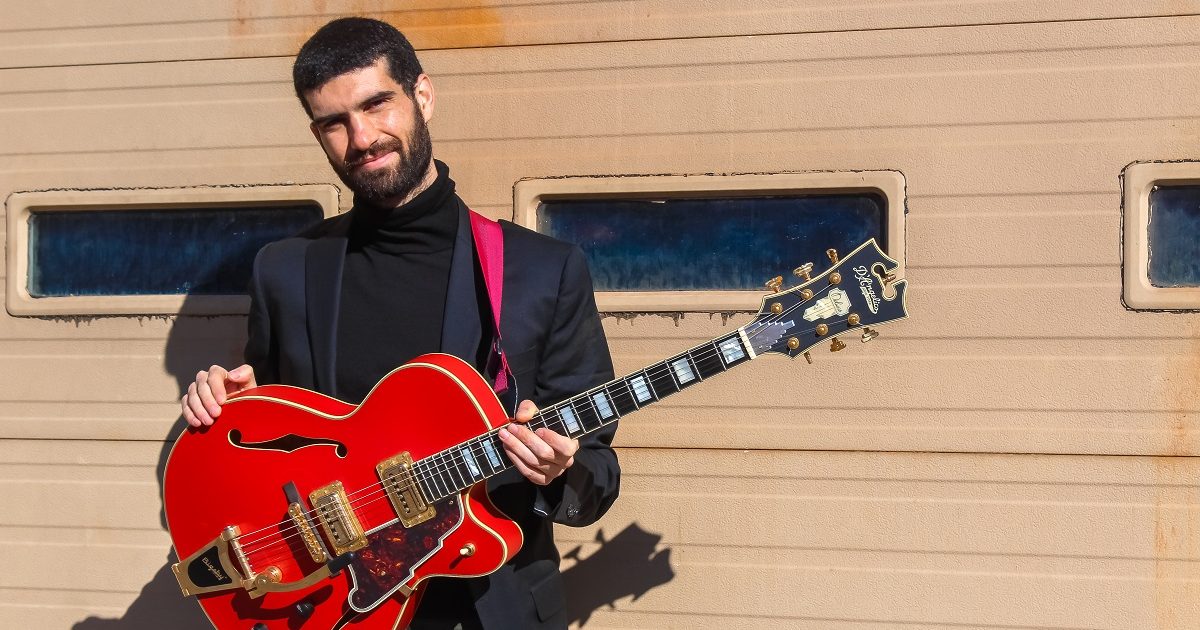
WATCH: Ira Klein, “Jubilee”

Artist: Ira Klein
Hometown: Jerusalem, Israel; Boston, Massachusetts
Song: “Jubilee”
Album: Invisible Treasure
Release Date: Dec 18, 2021
Label: Nine Athens Records

In Their Words: “Inspired by Jean Ritchie’s iconic version, I reimagined this great folk song. I find its lyrics in particular moving and captivating. Supported by the beautiful musicianship of a stellar ensemble (Hazel Royer – vocals; Kevin Barry – lap steel guitar; Maxfield Anderson – mandolin), I tried to create a fresh take of this classic. The result is one of my favorite tracks on my debut EP, Invisible Treasure. When creating my music, I take an open-ended, melting pot approach — my influences come from folk, blues, singer-songwriter music, and jazz. I enjoy using traditional materials such as this one as a springboard for creativity, expanding upon the traditions I love to create my own personal, modern sound.” — Ira Klein


Photo Credit: Emi McSwain