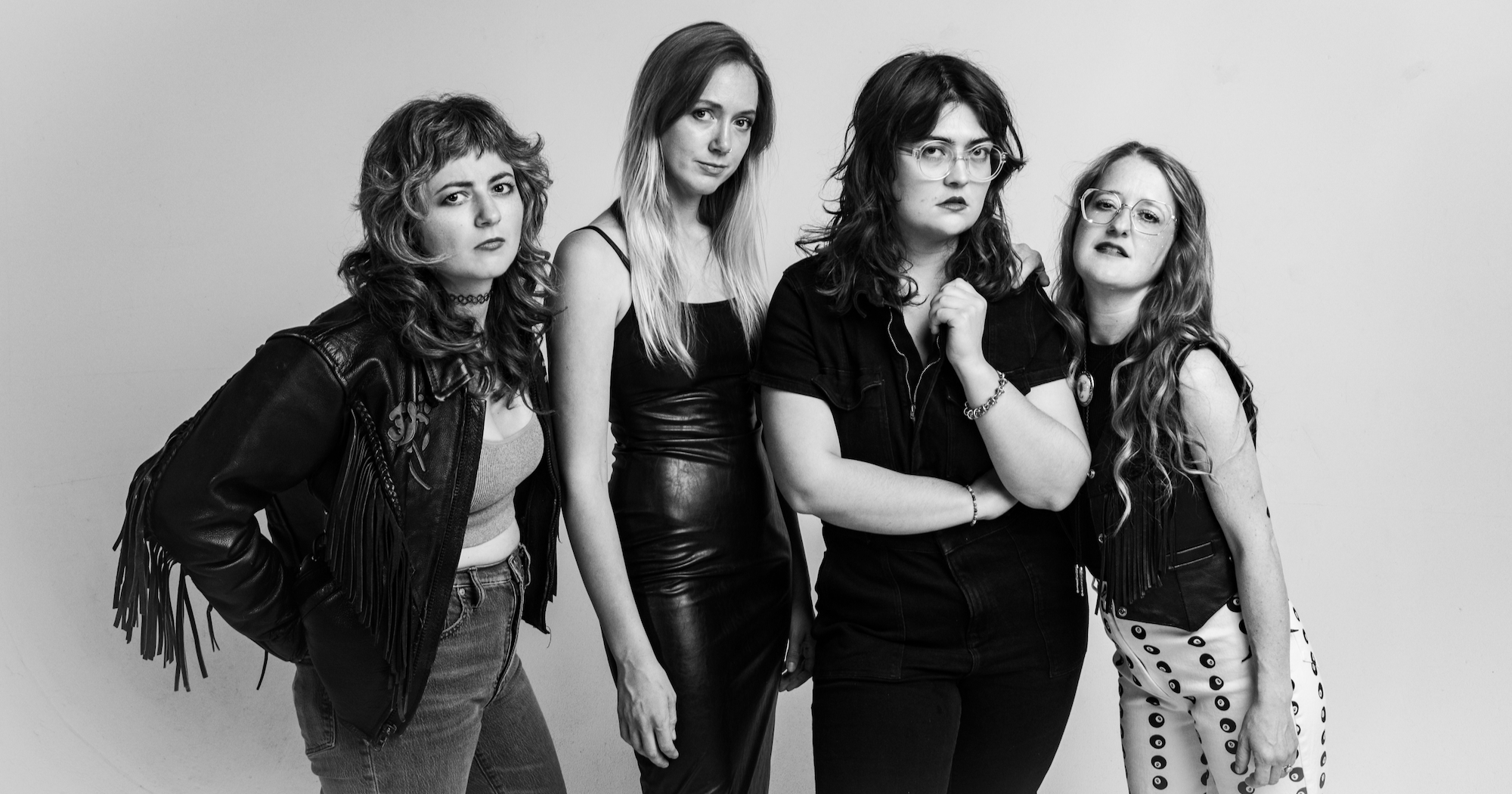
Big Richard Takes Big Strides

Big Richard is blowing up the bluegrass scene. Their cheeky moniker is a fitting introduction to their mischievous spirit – think four women, leaps and bounds of talent, political acuity, and unrivaled vibrancy. Their magnetism has garnered a true energetic match from their fan base, who are occasionally known to attend live shows with inflatable male genitalia in tow. Everything about Big Richard is its own micro revolution.

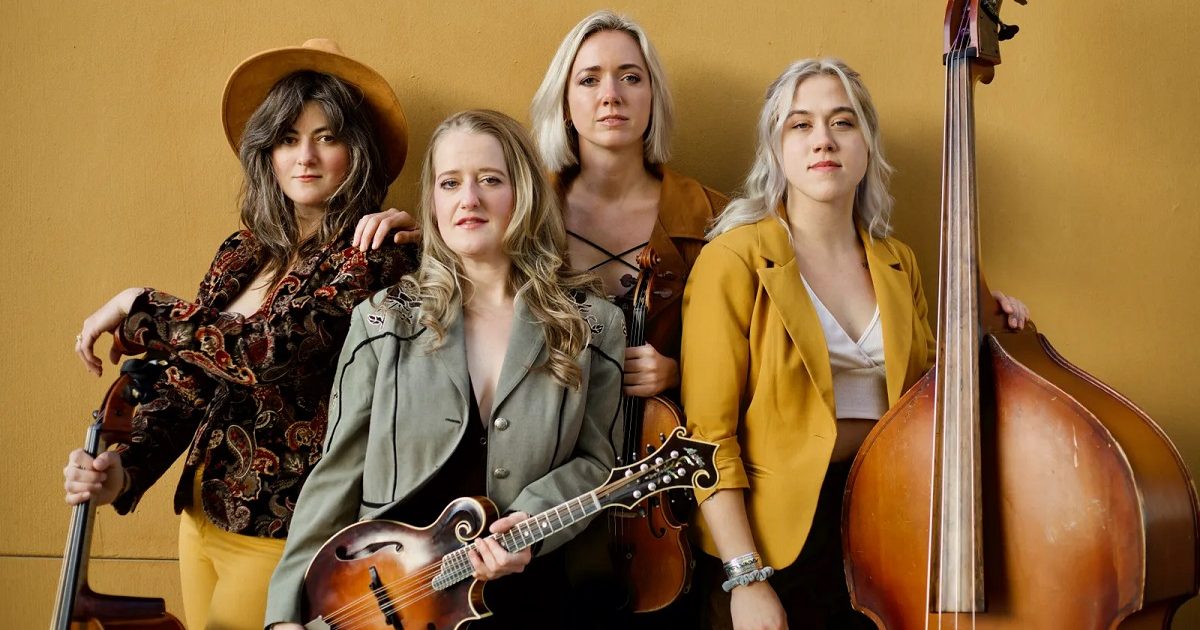
Joy Adams (cello), Eve Panning (fiddle), Hazel Royer (bass), and Bonnie Sims (mandolin, guitar) make up the fearsome foursome. Each woman has cultivated a slew of experience in her own right, amalgamating into a supergroup of pulsating passion and prowess. February 6, 2026, saw the release of the group’s sophomore studio album, Pet, via Signature Sounds. A ripe combination of fiddle tunes, originals, and an astute cover or two, Pet was recorded live in an effort to encapsulate Big Richard’s dynamic chemistry. Raw power seeps through every track, their topical lyrics and fiery dispositions bulldozing over patriarchal expectations so often affiliated with the bluegrass legacy.

Big Richard is fierce, loving, and unstoppable. When BGS sat down to ask a few questions regarding their new release, their affinity for one another beamed radiantly through the grainy Zoom screen. Joining from an early morning in the middle of tour, Big Richard arrived to our call piled onto a single hotel bed á la the grandparents from Charlie and the Chocolate Factory.

Their banter electric and punctuated by spurts of laughter, bassist Hazel even delivered a sardonic recitation of a poem from her bedside book before launching into the interview. What followed was a curious exploration of the inspirations and aspirations to which the band meticulously attends.

Congrats on Pet! Can you tell us a little bit about the narrative of Big Richard and why you’re all in the same bed? What brought you here?

Bonnie Sims: We started a band because a festival needed more ladies on their lineup. They called old Eve Panning on the fiddle over there and said, “Hey, you probably know other women, right?” So she took a call, and she called us.

Joy Adams: We were just supposed to play one show, and I remember having a rehearsal and everyone peeing their pants from laughing so hard. We played our festival set and half of it got rained out. So we had all these songs we still needed to play and decided to book another show so we could play them. We also got some hate at that festival – some people were very offended by our name. We were also handing out penis paraphernalia, and we made these puff-paint T-shirts that had a dick with hairy balls playing banjo.

Hazel Royer: People got mad enough that we were like, “Oh, we have to do this again. This is so funny.”

BS: We were like, “Are we rage-baiting middle-aged boomers? Could this be any more fun?” I grew up as a bluegrass kid, and I always had an aversion to some elements of the culture socially, especially towards women. I felt very stifled by it with my personality, so I always said if I was going to be in a bluegrass band, I wanted to feel like I was power-sliding in on my knees with both middle fingers up. I feel like Big Richard does that very well energetically. We are doing that constantly on the scene, on stage, to audiences, to other musicians, to promoters – we try to bring an unexpected vibe.

What is unique about collaborating with an all-femme outfit?

JA: Well when I get my period, they all get their periods. We’ll be halfway through tour and someone will be like, “Okay, when is it coming?”

BS: And I like that you said outfit. It’s mostly about our outfits. We share clothes, we encourage dressing up, we share beds, we like to theme – the chemistry is deep!

JA: We theme all of our outfits. Like last night, we’re staying at a Best Western, so our theme was “Breast Western.”

Eve Panning: I actually showed up dressed just like the drummer in the opening band. But yeah, I guess we’ve all played in bands with men before, and all sorts of other lineups. I personally have loved all of those bands, loved making music with them, and learned a lot. But there is something really special about being in a group with all ladies. There’s just something that I feel like is kind of unspoken and understood.

BS: And I feel like the reception of us often still has some sort of stigma attached to it. Like at gas stations, at venues, people will be like, “Oh, girls, are you traveling alone?” “Ladies, are you sure you’re okay?” And I get to be like, “Yeah, we are! Yeah, that’s right.” I feel like being in this band has fortified my personal independence bone.

Has being politically forward also impacted your reception?

HR: Yeah, definitely. This band has been pretty politically forward since its inception, so we’ve also curated a fan base that understands what to expect. For the most part, people come to our shows because they know that. Last year we had a few shows where people left in anger, but it’s not common.

BS: Even just the name Big Richard is a pretty good litmus test for whether or not you’re able to take a joke. If you get the joke, and if you’re willing to laugh, that’s a really good precursor to deciding if you want to be a part of this party.

What context, interpersonally or globally, informed the particular creation of your album, Pet?

HR: We wanted to create an album. There was Live from Telluride [2022] before I joined the band and then we had Girl Dinner [2025], which was an album we made in the studio. For Girl Dinner, we were all separated sonically, isolated and in booths with headphones so that we could edit things and overdub stuff. I was very new to the band at that point. Our sound was very informed by coming together and creating this new thing.

But for this new album, Pet, we recorded every song live. We wanted to emulate the live sound that we have on stage with each other, because that’s where we feel most confident and powerful as a group. I think it is where we are the most successful musically. And we recorded all live to tape, so everything is analog, which has been awesome.

BS: Big Richard is definitely an energy. A large part of our alchemy together is the energy that the four of us create. And that requires being in the room together, having our voices actually, physically interacting and coming together into things. We wanted to tap into the stuff that feels real. And for us, we’re a live band. We perform shows all the time, and so we’re trying to bring that element into the studio.

What is your process of composing and arranging like?

EP: We’ve done some co-writes, which have been really fun, but a lot of the time someone will bring a song of their own with an idea of where they want it to end up, though our arrangements are also pretty collaborative. Each of us has a distinct flavor that they bring to the band.

What would you say is the most distinctive difference in your respective musicianships?

BS: Eve and Joy were classical kids growing up, and Hazel and I both had dads who played the banjo.

What is it like to bridge that gap?

BS: When Eve writes out her fiddle tunes, I take the music, I go home, and I write every note, and then I practice it. And Joy just somehow immediately has it down – so she bridges it really fast, and I have to build a bridge, piece by piece.

EP: And then when Bonnie or Joy or Hazel is singing a song, and they’re like, “Eve, can you sing the harmony part?” I have to be like, “Guys, how do I make it sound better? How do I sing good?” And then they try and help me out there.

JA: We use our skillsets to fill in the gaps for each other.

BS: And we don’t expect people to know what we know. That’s not a fair thing to put on other musicians. We all come from different backgrounds.

Lots of dynamic abundance!

What did y’all each have on repeat while you were recording Pet?

JA: I was listening to Twain a lot. “The Fox (Yup Yup Yup)” or “The Sorcerer” from Twain.

HR: I was listening to Christian Lee Hutson a lot. “Tiger” is so good.

BS: Probably scream-singing Chappell Roan in my car on the way home.

EP: I had a bit of a phase with The Weepies this summer, because I hadn’t listened much, but then Hazel was putting them on in the van a lot.

HR: They’re so good, too.

Always a good bet. Now, if y’all were in an alternative universe where you were still connected as a group, but you weren’t a band or a musical group, what would you be?

JA: Probably a truck-driving outfit.

BS: Yeah, we’re Ray Bitcher, we’re a truck-driving outfit. Or– can we be the Golden Girls, too? I want to be old ladies with y’all. Oh, and a third thing. We are also a punk band called Hateful Hazel.

Incredible. Is there anything you feel like you’ve learned about yourselves or playing together throughout the process of putting out this album?

BS: This is a collaboration and a democratic process of a band. Putting together Pet, and Big Richard as a whole, is constantly an opportunity to compromise. It’s not about my singular creative vision for any song or any record. It’s about coming together and listening to each other and then having everybody’s input. It ends up being this amalgamation of everybody’s creative juju. Incorporating somebody else’s ideas is a great learning opportunity for any creative.

HR: We also learned that this live recording style works really well with this band. We’d always had a hunch that if we just got in a room together and set up a mic that it’d be the best way to capture our sound. Turns out it’s pretty true.

BS: We learned that we liked dressing up as clowns. Artistically fitting.

JA: Apocalypse clowns, specifically.

Oh yeah, the album art is impeccable. Beyond the clownage, what are y’all each proudest of on this album?

JA: I think we’re just proud that it finally sounds like us on stage. Girl Dinner was very clean, but the live recording on Pet really worked for us.

BS: I do love “Make the World Go Away” as the ending of the record. It’s always such a potent moment in live shows, because a lot of times we’ll go into the crowd and sing it acoustic. The music becomes so tangible – we’re literally standing a foot from somebody, you know, and their face is right by our face, and we’re singing and we’re looking at them. I feel like we can miss music in that realm with performing.

The stage amplifies what we’re doing, but it’s also a barrier. Which, at times, is great because it wouldn’t be successful on the ground in a crowd of 3,000 people, but in a club with 250 or 300 people, you can stand in the middle of it and ask everybody to be quiet while you sing an acoustic song. Those moments are so connected. And I feel like this is how music can reach out and touch everyone. It’s not just for performing and money and clapping and being on a stage. It’s about feeling as humans together. Music is a tool for that.

Was that philosophy a big influence for Pet as a whole?

BS: We’re definitely trying to apply music as medicine. Humanity is missing out on something right now, and music is a tool to help us access our higher selves.


Photo courtesy of the artist.
You Gotta Hear This: New Music From Sweet Petunia, Big Richard, and More

Your weekly dose of new music is here! You Gotta Hear This.

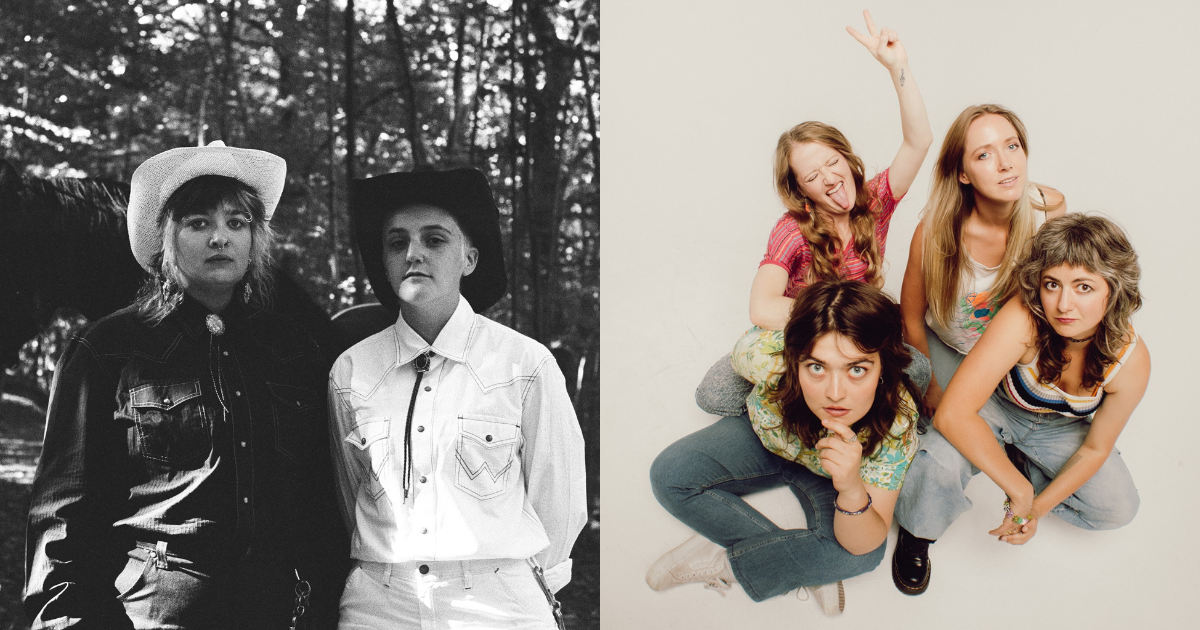
We’ve got a couple of brand new music videos, leading off with Big Richard absolutely smashing a David Olney song, “Millionaire.” To say the track is apropos for this moment in time would be a laughable understatement. The string band/bluegrass supergroup give it their signature impassioned treatment, with energy, conviction, and musicality. Their new music video for the just-released single was shot in and around Salt Lake City. Plus, Boston-based alt-folk duo Sweet Petunia bring us a new music video, as well. Their new, stark indie folk track “Grub” is set to a delightful animated, stop-motion, hand-drawn music video. The song explores identity, embodiment, beauty, and pain, and holds space for solidarity for trans and gender-nonconforming folks.

You’ll also find a music video for Michael Haney’s new cover of a Bruce Springsteen song, “Brilliant Disguise,” rich in Americana rock ‘n’ roll. Haney knew he wanted to record the number because of how it “speaks directly to the heart of the human condition.” Singer-songwriter Kirby Lyle picks up the same mantle on the title track for his brand new EP, Change Is Hard. It’s also a song of solidarity and community, because who is going to save us if we don’t save us? But we are going to save us.

It’s a lovely collection of tracks this week highlighting community, togetherness, and how roots music is built upon both. We hope you enjoy, cause we think You Gotta Hear This!

Big Richard, “Millionaire”

Artist: Big Richard
Hometown: Denver, Colorado
Song: “Millionaire”
Album: Pet
Release Date: January 13, 2026 (single); February 6, 2026 (album)
Label: Signature Sounds

In Their Words: “‘Millionaire’ is a song about the greed and corruption of the rich written by David Olney, originally released in 1991. It is still wildly topical nearly 35 years later, although it might be time to change ‘millionaire’ to ‘billionaire’ at this point.

“We added this song to our setlist just after the inauguration last year and it has become one of the most emotionally charged moments in our sets. For us, this song is a unifying message, because regardless of which side of the line you voted on, we are all on the same side in the great class war. All of us are at the mercy of a very few, who only have their own best interests in mind, and who would never dismantle the systems that hold them in their places of power. It’s up to us to join with our neighbors and tear it down, from the joke that is the insurance industry to the politicians that are openly bought and controlled by corporations.

“We filmed the music video in Salt Lake City, where local fans will recognize many of the landmarks, which include the state capitol building, the offices of the LDS (who currently own more real estate than any other entity in the world), and the fuel refineries that choke the air of that beautiful city.

“We sing this old song with a lot of hope in dark days like these. Our species is brilliant, and more than capable of solving the problems that we have, if we would put the money in the right pockets and put limits on the folks that choose to hoard it.” – Dr. Joy Adams

Video Credit: Wonderstone Films


Michael Haney, “Brilliant Disguise”

Artist: Michael Haney
Hometown: Originally from Columbia, South Carolina; now living in Nashville, Tennessee
Song: “Brilliant Disguise”
Release Date: January 23, 2026
Label: Rock Ridge Music

In Their Words: “I chose to record ‘Brilliant Disguise’ by Bruce Springsteen as an up-tempo rock version, because I’ve always been drawn to the tension and truth in that song. It’s one of his most well-known pieces from a transitional period in his life, and I think it speaks directly to the heart of the human condition — that universal experience of hiding parts of ourselves, even from those we love most. The more you sit with it, the more you realize the song captures something even deeper: how often we don’t truly know who we are in the first place. We walk through life trying to piece together our identities, yet we still build masks on top of that uncertainty — sometimes to protect ourselves, sometimes because we’re afraid of being seen, and sometimes for reasons we don’t fully understand.

“I liked the idea of doing late-’80s Springsteen as if mid-to-late-’70s Springsteen had taken it on, with that raw, energetic edge that defined his early sound. Reimagining it that way let me lean into the emotional conflict at the center of the song — the push and pull between authenticity and self-deception — while giving it the kind of drive that felt truer to my own voice. It’s not a song that’s been covered often, which made it feel like the perfect addition to my catalog: both as a tribute to his songwriting and as a reflection of where I am personally right now, navigating my own questions about identity, honesty, and the parts of ourselves we choose — or struggle — to reveal.” – Michael Haney

Track Credits:
Michael Haney – Vocals
Ben Jackson – Drums, percussion, keys, Hammond B3 organ
Luis Espaillat – Bass
Brian Fechino – Acoustic guitar, electric guitar
Brad Sample – Electric guitar
Kaleb Thomas Jones – BGVs


Kirby Lyle, “Change Is Hard”

Artist: Kirby Lyle
Hometown: Nashville, Tennessee
Song: “Change Is Hard”
Album: Change Is Hard (EP)
Release Date: January 16, 2026

In Their Words: “‘Who’s gonna save us if we don’t save us?’ That’s the line. We are. Us. You and me. Right here in the moment. Every time I play ‘Change Is Hard,’ my soul activates! I’m so full of gratitude that the heart has an infinite capacity when it’s shared, because I can’t express this feeling alone. The music commands a full choir and joyful ruckus of players to lift it up to megaphone level. When the audience engages, our positive energy is ubiquitous! The hope is simple: inspiration toward progress – personal and societal. It’s on us. Be moved. Get better. Make each other better. Together.” – Kirby Lyle

Track Credits:
Kirby Lyle – Lead vocals, guitar, auxiliary percussion, songwriter, background vocals
Kyle Tuttle – Banjo
Keyboard – Jacob Merlin
Erika Nalow – Saxophones
Jordan Perlson – Drums
Background Vocalists: Maya de Vitry, Kyle Tuttle, Ethan Jodziewicz, Anthony Saddic, Brenna, Dana Baker, Emory Major, Noelle McFarland, Rachel Isabella, Sean Donovan, Kimberly Albertson, Laura Stack


Sweet Petunia, “Grub”

Artist: Sweet Petunia
Hometown: Boston, Massachusetts
Song: “Grub”
Album: Foggy Mountain Mental Breakdown
Release Date: January 13, 2026 (single); March 13, 2026 (album)
Label: Righteous Babe

In Their Words: “‘Grub’ is a song about my experience of being trans and the beauty and the pain that come with it. The song came to me almost completely at once. Most of the first verse came out in one fell swoop as you hear it today, but the second verse was inspired by a video of beautiful baby birds crowded into a small nest. I was so jealous of how close and happy they looked — a perfect opposite to reflect the isolation and sense of otherness that I explore in the first half of the song. Maddy and I then spent two hours just playing it over and over and over again until we finally found the perfect duet of banjo and vocals to support the song.

“I feel so lucky to have been able to share this song with so many other trans people through years of performing it live and hear how they connect to it within the context of their own experiences. It feels particularly special to be putting ‘Grub’ out in a time where our rights and lives as trans people are being put in harm’s way in a much more visible way than in the past few years.” – Mairead Guy

Video Credit: Riley Halliday


Photo Credit: Sweet Petunia by JJ Gonson; Big Richard by Rett Rogers.

BGS Class of 2025: Best in Bluegrass

If you’re looking for a definitive, qualitative, and deliberate ranking; a firm and scientific rubric; or an unbiased, sterile reckoning of the best albums made in bluegrass this year, this roundup may not be for you.

Truthfully, as someone who’s worked, been acquainted, and become friends with many of the artists on this list in various capacities – from bio writing to onstage performances to media coverage to pickin’ parties to recordings and beyond – objectivity isn’t something I, personally, could establish anyway. And such year-end or other merit-based lists and collections aren’t all that interesting, are they, if not just to argue with their curation and selections.

I would not even attempt such things, because to me – to many of us – that’s not what bluegrass is about anyway. Bluegrass is about a feeling. It’s about innovation. It’s about virtuosity. It’s about tradition, loving it or retooling it or coaxing it or turning it upside down. It’s about adrenaline and a high pulse – and passing a mason jar around. It’s about feeling downtrodden or alone, shedding tears into that very ‘shine, and wailing along with the high lonesome sound. It’s folk music as much as it’s abject commercial country in “poor people drag.” It’s endlessly interesting and complex, but pretty damn simple, too.

Anyone with even an ounce of sense knows and understands that bluegrass can’t ever be objective. So indeed, why try? Why not acknowledge that bluegrass is always a matter of taste, of preference, of whimsical or capricious or convicted opinion? Bluegrass is always debatable, because, after all, bluegrass is always in the eye of the beholder.

In the eyes – and especially ears – of this particular beholder, these albums released in 2025 were the best, the most memorable, the most engaging. These collections stick to ribs like ham hocks, or stick in your throat like the tastiest clod of emotional peanut butter. They each advance, subvert, perpetuate, or wrinkle our core ideas of what bluegrass is – and what it can be.

Are each and every one of these LPs the best in bluegrass from 2025? Perhaps not… But also definitely yes.

Big Richard, Girl Dinner

In January, we gobbled down a heaping helping of Big Richard energy with the nourishing and nutritious Girl Dinner. The project may have been the band’s album debut, but this Colorado all-women quartet had already been making remarkable waves in the bluegrass, jamgrass, and string band scenes – and each of the members had extensive and glitzy musical resumés before they even convened. With a new album, Pet, on the horizon for February 2026, a signing with Signature Sounds, and an upcoming co-bill tour with fellow femme outfit Della Mae, we can tell this Girl Dinner is set to become an ongoing traveling feast.

Shawn Camp, The Ghost of Sis Draper

I remember attending Station Inn shows in Nashville in the early 2010s and sitting with rapt attention – like Martha’s sister Mary at the feet of Jesus – as Shawn Camp performed his suite of Sis Draper songs with his star-studded bluegrass bands. Often you’d hear just “Magnolia Wind” or just “Sis Draper.” Sometimes he would perform a more complete handful of the tracks he had written, individually and with his hero and mentor Guy Clark, about the mythical roots music figure from his home state of Arkansas. Now, he’s collected the slate of material – what could easily become a musical or multi-disciplinary theatre work of some kind – into one commanding, lovely, and visceral album. These are timeless songs, written and rendered as only Camp could.

Jason Carter & Michael Cleveland, Carter & Cleveland

Every now and again a new collaborative duo album comes along and makes you think, “Oh! This must have been what it felt like when Skaggs & Rice was released.” Or Tone Poems. Or Ralph Stanley and Jimmy Martin’s First Time Together. A monumental occasion, captured for posterity’s sake in the studio. When fiddlers Jason Carter & Michael Cleveland released their duo debut, that was the feeling. History made in the present, a work that will be regarded as seminal ages into the future being enjoyed in real time. Carter and Cleveland have collaborated quite a bit over the decades they’ve known each other, but what a gift to have that musical friendship ensconced forever on this album. We hope there is more to come.

Wes Corbett, Drift

Look, if all modernist banjo players sounded like Béla Fleck and Noam Pikelny, that would certainly be great. But thankfully there are dozens of five-string pickers continuing to expand on the Fleck (and Pikelny and Munde and Keith and Trischka) school of Scruggs-style, each in their own veins. Corbett is one of the best. Though he blends effortlessly into Scott Vestal’s former role in Sam Bush’s band – or into any number of recordings and one-off pick-up bands that boast his playing in newgrass and bluegrass and beyond – Corbett is a true idiosyncratic banjo player and composer. Drift, his latest, often employs traditional techniques as tools for innovation and contemporary tunesmithing. He recalls the great melodic pickers while always sounding first and foremost like himself.

East Nash Grass, All God’s Children

A few years ago, if you had told me the ragamuffin band holding down Monday nights at Dee’s Country Cocktail Lounge in Madison, Tennessee, would in 2025 release an album you’d describe as “heartfelt, contemplative, and intentional,” I would have probably laughed. East Nash Grass were just as jaw-dropping good then as they are now, but with that down-home silliness and clumsy charm all the great bluegrass bands born of indentured residencies have had. All God’s Children finds the band all the way grown up (but not really), and they never forsake their banter-rich, never-know-what-you’re-gonna-get roots. That overlap – of silly and heartfelt and virtuosic and not too serious – is where most (if not all) of the best bluegrass is born, anyway.

Sierra Hull, A Tip Toe High Wire

Every single time Sierra Hull releases a new album, journalists and critics love to talk about how she’s now “found herself” and “found her sound.” This writer, however, disagrees. I first saw Hull perform when we were both in our mid-teens and then as now I knew, wholeheartedly, this is someone who knows who they are. Granted, Hull has done plenty of finding herself along the way, as we all do, but the songs and tunes of A Tip Toe High Wire were obviously not born of someone just locating her voice, musically or otherwise. They don’t feel experimental or out on a limb, they are each solidly in her wheelhouse. They do still push the envelope, though, and they all tell personal stories, draw on individual experiences, and chase those treasured Hull-ian melodies wherever they lead.

I’m With Her, Wild and Clear and Blue

Perhaps all future I’m With Her albums should be made while basking in the “Ancient Light” of a total solar eclipse, given the striking sonic successes of Wild and Clear and Blue. Is that cosmic magic why their second full-length release feels so distinct and metamorphosed from their debut? Is it all the years and personal growth in between recordings? It’s not like they reinvented the wheel, they’re the exact same band – but something feels different here. Whatever the special sauce may be, all of I’m With Her’s offerings over the course of the band’s lifespan have been stellar, but this latest full-length project stands apart. As long as Jarosz, O’Donovan, and Watkins are making music together, we will be unendingly grateful they offer us these recorded windows into their creativity.

Kissing Other ppl, Kissing Other ppl

Bluegrass and old-time birth new projects, bands, and collaborations all the time. Some are purposefully momentary, some are unintentional flashes in the pan, some are such long strings of last names ampersand-ed together you know there’s no future for them. We hope Kissing Other ppl are here to stay. Rachel Baiman and Viv & Riley joined forces on the album – and band – turning mainstream and pop songs into bluegrassy and old-timey string band arrangements that positively vibrate with passion and life. “Sad boi” covers these are not, though you may at times find them subdued or tender or mild. Long may this old-time Americana musical polycule reign.

Cameron Knowler, CRK

If you’ve been craving a contemporary storyteller and poet who utilizes the guitar as their medium – like Norman Blake or Doc Watson or Tony Rice or so many others – I am so pleased to step onto my soapbox to tell you about Cameron Knowler. Also a writer (at times for BGS), archivist, photographer, and visual artist, Knowler’s guitar-centered album, CRK, is almost anything but a “guitar album,” despite each and every composition centering on the instrument. The LP paints vivid and haunting musical portraits of a place Knowler loves, longs for – and despises or begrudges, too – Yuma, Arizona. Knowler wouldn’t even pretend to compare himself to Norman Blake or state that he’s deliberately taking up Blake’s heavy, heavy mantle in the 2020s, but I’m saying he is. Thank goodness.

Bryan McDowell, Bryan McDowell

You may recognize multi-instrumentalist Bryan McDowell from his time performing, recording, and touring with artists like Claire Lynch, Sierra Hull, Molly Tuttle, Alison Brown, and many, many more. He’s an incredibly talented sideman and session player, so when I first received his new self-titled solo album, I imagined the sort of formless instrumental project most pickers with similar resumés create. What a pleasant surprise to find a fully fledged, well-rounded, complete song sequence chocked full of original songs and McDowell’s lovely, honeyed singing voice. (I know Bryan and I didn’t know he sang like this!) It’s on me, really – I shouldn’t have been surprised at all – but McDowell’s skill set is clearly no longer just geared towards backing others up. I am looking forward to seeing what’s next.

Shelby Means, Shelby Means

Speaking of artists ready to step out of the role of sideperson or session musician. Bassist, singer, and songwriter Shelby Means’ debut solo album is fantastic. Since departing Molly Tuttle’s Golden Highway, Means has already built striking momentum as an artist unto herself, and the quick success of her album has played a huge role in that. With originals, tasteful (and surprising) covers, and a star-studded roster of pickers – Tuttle, Ron Block, Michael Cleveland, and more – the project certainly doesn’t feel like a debut. And it shouldn’t, Means has crisscrossed the country and the globe for decades, she’s more than ready to step to the center of the stage. She’s done it before, she’s doing it again – and now a lot more frequently, I’d bet.

The Onlies, You Climb the Mountain

All the best bluegrass is old-time these days. (I say that over and over again, here’s what it means.) While mainstream bluegrass sounds more like ‘90s country played by a bluegrass string band, or jamgrass, or “MASH” – all of which depart greatly from the 1945/1946 sound of its origin – modern old-time becomes more and more of an audio swatch of essential parts of what bluegrass used to sound like and used to include. One album this year that epitomizes this phenomenon is the Onlies’ You Climb the Mountain. Is it phenotypical bluegrass? Oh, no. It’s not. But it also has plenty of textures and tones endemic to original bluegrass that are becoming increasingly rare in its modern forms. I shouldn’t sell the Onlies short, though, they aren’t here because they’re “better bluegrass” than bluegrass, or more authentic, or more “real.” They’re here because this album is excellent, on its own terms.

Danny Paisley, Bluegrass State of Mind

Danny Paisley is celebrating 50 years of bluegrass with his latest album, Bluegrass State of Mind. Still looking for new challenges and trying to add fresh sparkle to his dyed-in-the-wool traditional sound, the new LP includes Dobro (for the first time), drums (sacrilege!), and a bit of an Americana lean. (Don’t you dare call it “grassicana.”) To BGS readers, the project will most likely sound like straight down the middle bluegrass of the highest order. Longtime fans of Paisley & the Southern Grass, though, may notice that very sparkle Danny has been chasing, as he targets new audiences and still sets new goals, five decades into his career as a bluegrass tradesman. It’s the family business.

Missy Raines & Allegheny, Love & Trouble

Missy Raines is one of the winningest musicians in the history of IBMA, amassing 10 Bass Player of the Year trophies over the years and and a handful of honors in other categories, as well. She may have won her biggest prize, though, when she landed on her latest band lineup, Missy Raines & Allegheny, a few years ago now. Her second album with the group, Love & Trouble, continues building upon the chemistry and collaboration that dripped from 2024’s Highlander. They often rise to the occasion of my preferred nickname for them, Mashy Raines & Allegheny, but they remain a consistently dynamic group capable of gritty, barn-burning bluegrass and contemplative and emotive slow burners, just the same.

Red Camel Collective, Red Camel Collective

They began as Junior Sisk’s backing band, and like many of the great “spinoff” bluegrass bands of yore – Quicksilver (Authentic Unlimited), the New South (American Drive), and many more – Red Camel Collective have quickly shown they’ve got the chops to take the same route. Their debut self-titled album was released earlier this year and was made at Sisk’s suggestion – and with his blessing. (He regularly steps off the stage at his own shows to spotlight the Collective and their music, as well.) This band of lifelong pickers have clocked so many miles playing bluegrass and executing the visions of others that, when charting their own course as Red Camel Collective, they’re able to sound exactly like themselves. It’s tough to sound singular in modern, radio-inclined bluegrass. But Red Camel Collective do. Is that why they won New Artist of the Year at the IBMA Awards this fall? It sure ain’t coincidence.

Sister Sadie, All Will Be Well

Sister Sadie’s All Will Be Well is like dropping the needle on a 45-minute bluegrass therapy session. I don’t say it flippantly or sarcastically; it is indeed shocking the level of earnest contemplation, processing, emoting, and growth evident in the songs on this album. At the same time, when you hear the tracks played down at a bustling bluegrass festival or a packed rock club or a subdued listening room, they never feel twee or try-hard or sodden with greeting-card level sentiments. They never feel heavy, actually – this is fun, often hilarious, party-ready music. Dance-along music. Shout-along songs. You’ll laugh, you’ll cry. (At the vocals alone.) These are real human ideas, thoughts, and feelings set to bluegrass. Imagine.

Larry Sparks, Way Back When

How does this album seem like it could have been pulled from any year, any decade of Bluegrass Hall of Famer Larry Spark’s sceptered career? Because it could have been, damnit. He’s Larry Sparks. Way Back When sounds warm and live, like listening to tape or vinyl over earbuds or cell phone speakers. Like being in the room with that resonant, vibrant, and patinated voice. The material is timeless, but never tired or lost in retrospection. Sparks is obviously making bluegrass in the present, as he always has. He just sounds exactly like this. And the way he talks about making music – as he did in a BGS interview set for publish in January 2026 – you can tell, for him, it’s essential to inhabit the present and inhabit the song. Bluegrass really is his calling, and we’re all all the better for it.

Billy Strings & Bryan Sutton, Live At The Legion

One of the best bluegrass albums of the year? Of course. One of the best live shows and tours of the year? Doubly, triply, quadruply of course. You’d think it would be brain-melting to listen to hours of two acoustic guitars and an electric bass pick through bluegrass, fiddle tunes, and Doc Watson classics, but it was divine. Trance-like – not with eyes glazed over, but on the edge of your seat. I wasn’t at that show at the Legion when they tracked the album, but was lucky enough to catch their show this fall at the Ryman in Nashville. If you weren’t so fortunate, don’t worry, ‘cause this isn’t an incredibly exclusive club. This record really does capture all that’s ineffable of being “in the room.” (No one is surprised.) Turns out, you can actually bottle and sell it, if you’re these two. Now if only you could buy the skillset, too…

Thompson the Fox, The Fox in Tiger’s Clothing, vol. 1 & vol. 2

Maybe once a year I trip over or into a new music discovery that gets me so excited I start getting annoyed with myself from having to hear me recommend them over and over again. With Thompson the Fox, it never got annoying (not to me, at least) and the excitement of turning folks onto their music still hasn’t worn off. So here we are, again. If this is your initiation, don’t thank me, thank the people who sent Thompson the Fox my way. Jazz, newgrass, bluegrass, bebop, ragtime, and oh-so-many more styles and textures combine in a completely fresh and distinctive form. I’ve never heard new acoustic music quite like this, yet it’s clearly rooted in that tradition. The simple math of xylophone, banjo, bass, and drums doesn’t quite math, but this group sounds resplendent, rich, and fascinating. Takumi Kodera on banjo is a revelation and Rie Koyama (xylophone), Akihide Teshima (bass), and Tomohito Yoshijima (drums) complete the Tokyo-based ensemble.

Cristina Vane, Hear My Call

Cristina Vane exists at an intersection of roots music that far too few inhabit, because very few can manage there. Vane can. She does blues, bluegrass, old-time, country, and Americana. Sometimes blended, sometimes compartmentalized. She’s got short-form, short-attention-span, vertical-video appeal for days, but her songs are never vapid or playing to any kind of commercial common denominator. Her instrumental skills and the passion for learning and song collection across roots and folk genres that she exhibits bring it all together. I’d not want to subject either woman to the corniness of comparing one to the other, but for folks who love Sierra Ferrell and are looking for more artists in a similar roots-meets-mainstream space, Cristina Vane can do it. She is doing it.

Vickie Vaughn, Travel On

Vickie Vaughn has won IBMA Bass Player of the Year for three years in a row and on the heels of that remarkable accomplishment, she’s released her debut full-length solo album, Travel On. Produced by Deanie Richardson of Sister Sadie, it’s Vaughn’s first recording under her own name released in 10 years. Original songs and covers are packaged in a sound that’s always trad bluegrass, but often infused with a dash of Osborne Brothers from the ‘80s or Jim & Jesse with a drum kit. It’s an Earl Scruggs Revue sort of flair, troubadour-steeped bluegrass-country. And it’s divine.

To conclude this long yet non-exhaustive and surely myopic list of the best bluegrass albums of 2025, let me leave you with this gentle reminder. What’s bluegrass and what’s best are always in the eye – and the ear – of the beholder.

What was your favorite bluegrass album of 2025? Let us know on social media. We hope you discover some new music to love in our BGS Class of 2025 and we can’t wait to make new discoveries with you, too.


BGS Staff contributed to this list.

Photo Credit: Shelby Means by Hunter McRae; Shawn Camp by Neilson Hubbard; Sierra Hull by Spencer Showalter.

10 of Our Favorite Roots Cellists

Though an uncommon encounter in the roots music scene, the BGS team will always applaud a roots, folk, bluegrass, or old-time cello moment. With velvety, rich tones and a unique percussive capacity, the cello deepens the flavor of every tune it encounters. While not considered a traditional bluegrass instrument, it carries an ancestry boasting many folk interweavings – and its proximity to both the upright bass and fiddle grant it a certain amount of creative leverage while integrating into roots music.

The cello’s undefined yet familiar positionality allows cellists an unconventional playing ground for innovation; without the same distinctly canonized roots traditions as say, the fiddle or the banjo, cellists can access a broadened range of textures and styles.

This list, though it is by no means comprehensive and is curated in no particular order, pays tribute to some of our favorite cellists in a variety of roots music contexts.

Leyla McCalla

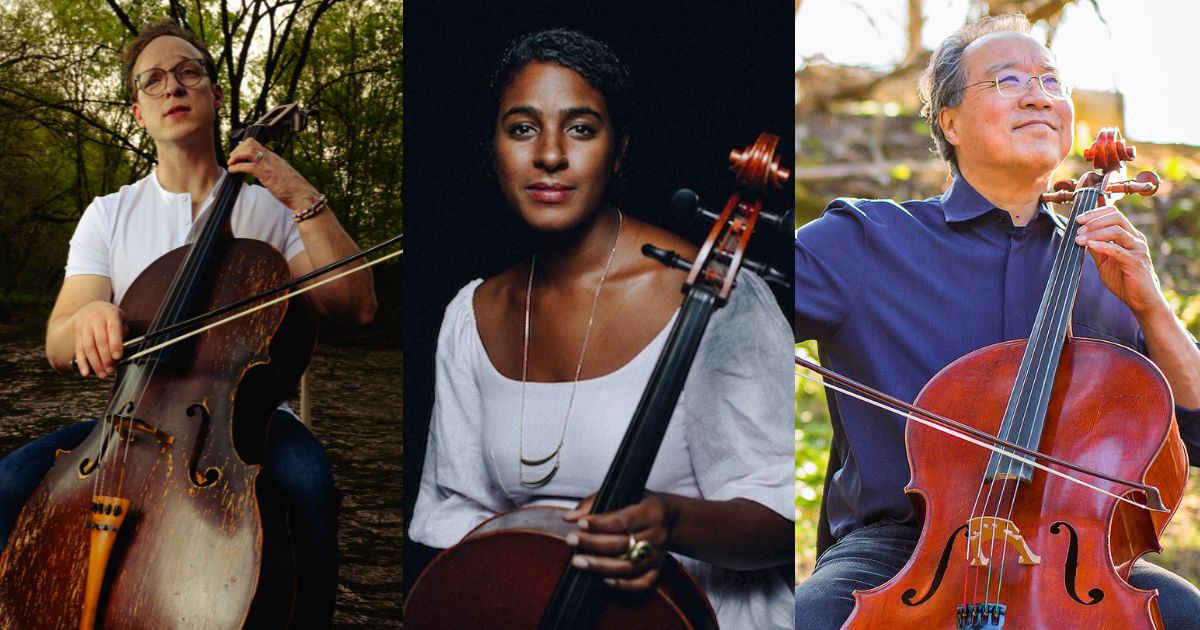
A prolific multi-instrumentalist and multilingual singer, Leyla McCalla’s impact on the roots music scene continues to be nothing short of profound. An alumna of the GRAMMY-winning Black string band the Carolina Chocolate Drops and founding member of Our Native Daughters (alongside Allison Russell, Rhiannon Giddens, and Amythyst Kiah), McCalla also has five solo releases under her belt. She is the daughter of two Haitian immigrants and activists and her work is widely informed by Afrofuturist thinkers and Afro-diasporic musical influences. The 2022 recipient of the People’s Voice Award by Folk Alliance international, McCalla’s work has been recognized time and again for her deep commitment to ancestral study and social change.

More Leyla McCalla content here.

Mike Block

Ever seen a cellist perform standing up? If you have, they’ve probably heard of Mike Block. Among the inaugural wave of cellists to perform using a strap, Block was the first cellist to ever perform standing at Carnegie Hall and he did so using his own patented creation, the Block Strap.

Sonically, Block has also explored an expanded range of motion, as he is well known for his cross-cultural collaborations. While BGS fans may know him best from the Mike Block trio, his acoustic string band with Joe K. Walsh and Zachariah Hickman, Block also tours with an electric trio called Biribà Union, a duo with Indian tabla player Sandeep Das, a six-piece American/African fusion band, and the Silk Road Ensemble, a collective formerly spearheaded by fellow cello luminary Yo-Yo Ma. Block, astoundingly, has also released 20 albums of his own music, in addition to recording, performing, and arranging for other musical giants such as Miley Cyrus, Elton John, Raffi, and more.

Yo-Yo Ma

Perhaps one of the most renowned cello players of all time, Yo-Yo Ma is widely recognized for his feats in classical music. His discography includes over 120 albums (19 of which earned GRAMMYs), both paying tribute to the classical Western canon and forging revolutionary cross-cultural connections. One of our personal favorite examples here at BGS is Ma’s participation in the Goat Rodeo Sessions, a stellar 2011 collection of classical and Appalachian entwinements featuring Ma, Stuart Duncan, Edgar Meyer, and Chris Thile, with vocals from Aoife O’Donovan showcased as well. The result is nothing short of breathtaking – truly an original fusion of soundscapes that remained unparalleled until the supergroup’s release of their sequel album, Not Our First Goat Rodeo (2020).

Read our exclusive 2020 interview with Yo-Yo Ma on Not Our First Goat Rodeo.

Monique Ross

Hailing from Milwaukee, Wisconsin and now based in Nashville, cellist Monique Ross is one half of the dynamic sibling duo SistaStrings. She and her sister, Chauntee Ross (violin), blend their classical training with gospel, R&B, and folk influences to yield music that once again proves the age-old wisdom that there is nothing quite like sibling synastry. The pair’s vocal and instrumental prowess enrapture with both distinctive emotive execution and precise relationality. Both also perform as members of Brandi Carlile’s touring band and Carlile will serve as the producer for their upcoming project currently in the works.

Find more Monique Ross and SistaStrings here and here.

Larissa Maestro

Larissa Maestro is a Filipinx multi-hyphenate talent based out of Nashville, Tennessee. Named “Instrumentalist of the Year” at the 2022 Americana Music Awards, Maestro was the first cellist and the first member of the AAPI community to receive that honor. A composer and activist as well as a musician, Maestro arranges chamber music, co-founded a community orchestra (The Nashville Concerto Orchestra), and often fundraises for non-profit organizations through their craft.

Maestro’s ability to weave lush string arrangements into a vast array of genres positions them as a highly coveted collaborator, having worked alongside the likes of Hozier, Margo Price, Gillian Welch & David Rawlings, Ms. Lauryn Hill, John Legend, Allison Russell, and more as well as fronting and collaborating with various projects and bands.

Natalie Haas

Known for her impeccable traditional cello playing, Natalie Haas keeps centuries of Celtic traditions ablaze. She and Scottish fiddler Alasdair Fraser have toured together for twenty-three years, reviving and reimagining the tradition of cello/fiddle duets, popular in 18th and 19th century Scottish dance music. Though historically these duets featured a droning cello and melodic fiddle, Haas’s curiosity coupled with her virtuosity explore the cello as a dynamic instrument, capable of harmony, melody, percussion, and every blended iteration thereof. As Peter Winter once said, “Natalie basically wrote the book on the cello’s place in Celtic music.”

Read more about Natalie Haas and her collaboration with her sister, Brittany, here.

Ben Sollee

Ben Sollee is a Kentucky-based cellist and activist whose interdisciplinary work seeks to connect and elevate his communities. His most recent solo album, The Long Haul, interpolates both American influences and inspirations from the global south to deliver a dynamic album that, in part, processes the many griefs he faced during COVID’s inaugural years while maintaining a buoyant sense of resilience and growth. In addition to his innovative cello playing, Sollee works as a composer, having scored several films and the podcast “Unreformed.” Sollee has also recently helped spearhead a non-profit called Canopy to support local Kentucky businesses mindful of having a positive social and environmental impact on their community.

Read more about Sollee and The Long Haul here.

Nancy Blake

A pioneer for glimmers of cello in the modern American roots landscape, Nancy Blake is a cross-genre hero. Nancy began her relationship to the instrument at age 12 and grew up playing cello in the Nashville Youth Symphony. On a fortuitous day in 1972, her band Natchez Trace opened up for prolific picker Norman Blake. The two eventually married, and Nancy aptly fused her cello playing into Norman’s musical landscape. She also picked up several other more traditional roots instruments, such as guitar, fiddle, and upright bass, appearing on many of Norman’s releases throughout his career.

Joy Adams

Dr. Joy Adams is a versatile multi-instrumentalist, vocalist, composer, songwriter, and educator from Washington state who currently resides in Denver. While you may know her best from her extensive touring with Nataniel Rateliff, Darol Anger, and the all-women powerhouse group Big Richard, she has accrued a sprawling list of collaborators throughout her career. From recording on the Emmy award-winning soundtrack of The Queen’s Gambit to performing with the likes of Chick Corea, Kenny Loggins, Ben Folds, Waxahatchee, and more, Adams weaves energetic innovations into each of her collaborations.

Read our recent interview with Big Richard on their brand new album, Girl Dinner.

Casey Murray

Like many of our favorite cellists, Casey Murray is a talented educator in addition to their performance and compositional ventures. A Berklee grad based in the luscious roots scene of Boston, Murray finds much inspiration in blending Celtic, old-time, folk, classical, and improvisational sensibilities – like in their work with forward-looking string band Corner House. They particularly enjoy providing musical accompaniment for contra dances around the New England area, an exercise of their keen attunement to the rhythmic possibilities the cello has to offer.

Of course, even with ten incredible entries, our list of roots cellists barely scratches the surface of this vibrant community in folk, bluegrass, and beyond. With plenty of examples – like Rushad Eggleston, Nathaniel Smith, Kaitlyn Raitz, and many more – still to pull from, we’re already prepping a Part II to our roots cello exploration. Who would you include?


Photo Credit: Ben Sollee courtesy of Big Hassle; Leyla McCalla by Noé Cugny; Yo-Yo Ma by Austin Mann.

Big Richard, Big Feelings – Their New Album is a Delicious ‘Girl Dinner’

The members of Big Richard – Joy Adams (vocals, cello, banjo, octave mandolin), Eve Panning (vocals, fiddle), Hazel Royer  (vocals, bass, guitar), and Bonnie Sims (vocals, mandolin, guitar) – were seasoned studio and gigging musicians when they met for their first rehearsal. Familiar with one another from Colorado’s thriving music scene, their initial gathering was the result of an offer to assemble a band and perform at McAwesome Festival 2021 in Castle Rock.

Musical and personal chemistry, apparent during practice, was also a given onstage, solidly reinforced by an outpouring of support from fans. There was also a flip side – backlash to the band’s suggestive name and often-bawdy stage banter. This, it turns out, created even more incentive to continue. Big Richard was officially a band.

Their wealth of experience across musical genres – bluegrass, country, jazz, classical, rock, and beyond – opened the door for writing, recording, and performing music that pushes beyond parameters while remaining firmly planted in tradition. It shows on their new album, Girl Dinner (released January 24), produced by the band and recorded with Colorado musician and friend Eric Wiggs at his Vermillion Road Studio.

Technically their second release, following 2022’s Live from Telluride, Girl Dinner represents several firsts for the band: their first studio release, first recording of all-original material, and first with Royer, who joined the ensemble a year ago. According to the musicians, Girl Dinner demonstrates the many sides of Big Richard, everything from stripped-down, quiet instrumentation and harmonies to the blazing solos that define their performances.

When was it obvious that Big Richard would be more than a one-festival project?

Joy Adams: It wasn’t really in the first rehearsal. It was in the reception to the show that we played. Obviously, bluegrass is a jam-based genre; it’s common to sit down with your friends and play tunes. But we felt a crazy chemistry in the way we sang and played together that was apparent from the very first song we played at Bonnie’s house. When we played McAwesome Fest, for starters, our set got rained out, so we didn’t get to play the whole set. We were upset about that. We were looking for another gig just so we could get to the other songs. And we also had a bad reaction to us, too. There were people who were very upset about our name and how crass we were onstage and we got some initial hate mail after that first show. That was the moment – in my head, anyway – where we were like, “Oh, we have something here. If we can ruffle some feathers with this band, we’ve got to do this. This is an important thing.”

When and how did you build the band?

Bonnie Sims: We played that first gig in May 2021, our second gig in September 2021, and we hit the ground running in the beginning of 2022. We booked [Colorado festivals] RockyGrass and WinterWonderGrass right out of the gate, and that gave us a lot of fuel in our tank to want to invest in the creative side, start writing together, start rehearsing more, and really invest in the music, because we had these exciting opportunities to be a part of. Not long after we booked those things ourselves, we signed with Crossover Touring. Our buddy Chandler Holt has been our booking agent from the beginning and has been a huge part of helping us get to lots of festivals and play fun rooms.

Eve Panning: That first year or so was an unexpected influx of gigs. We did a ton of touring and I feel like we were kind of playing catch-up. It’s been really fun in this last year. We’ve all settled into the band a little bit more, and it’s been fun to hear the songs that everybody’s bringing and spend a lot of time working on those. You can hear that in the new album. Live From Telluride had some originals, but we were doing a lot of covers because we were so new as a band. This new album is all originals, and it’s been fun to explore that side of things as well.

How have the sound and dynamic changed since Hazel joined you?

JA: The band has changed so much. Hazel is wonderful. Her attitude is fantastic. She’s an incredible musician who has brought the level of the band up a lot. The arrangements have gotten better, the groove is tighter, and the overall balance of band vibes is wonderful. It’s everything all of us could ever have dreamed of, and I blame Hazel for that entirely. She’s such a lovely person to be around, she writes incredible songs that are deep and moving and exciting, and we’re so lucky to have her in the band. She really saved us.

BS: I agree. Hazel brings such a strong singing voice. It’s really fun to lean into the power she brings vocally, intertwine with that power, and lose ourselves in it. And her original songs are incredible. It’s a natural elevation of maturing as a group and playing together. This is year three going on to year four for the band. It’s a lot different. The pace has been incredible as far as how much time we’re spending making music together. It’s very much like a pressure cooker. It has an effect on the music itself, so the sound has evolved immensely and continues to evolve in an exciting way.

Hazel Royer: Thank you, everybody. That’s so nice. When I joined the band, everyone was, “We want to work. We want to try new things and learn new songs.” We spent two months rehearsing before we played our first gig with me on bass. We looked at the music and we became a band before playing the shows. There was an emphasis on learning new material, and there was a really good excuse to do that because there was a new member and no gigs for a couple months, so we had the space to learn new things. I’m really grateful that I got to be a part of that.

EP: When you only have four people onstage and it’s all acoustic instruments, when 25 percent of the band changes, that’s really significant. That means the sound is definitely going to change. But, like everyone said, Hazel has such a powerful voice, she’s such an accomplished musician, so it’s felt great. It’s felt like a wonderful step up.

HR: I was super-lucky because everyone in this band wanted me to exist as myself. That was the primary thing: “We want you to sing. We want you to write your own songs and bring them to the band.” That’s rare for a new person – joining a band and being like, “We want what you do as embedded immediately.” Additionally, we have a lot of crossover, musically, that we all can draw from. I grew up playing bluegrass and old-time music, and these guys are steeped in that. I also like pop music, and everybody likes that, and I had classical studies, and there’s two people who are very accomplished classical musicians, so there was a lot of crossover that made the integration of myself into the band easier than it could have been.

Let’s talk about the album – the songwriting process, song selection, your goals going into the studio.

BS: Our goal was to present something different than what we presented on our live album, which, like Eve said, was mostly covers. We recorded Live From Telluride after being a band for right at the one-year mark. It was very much the first generation of material. This is our debut studio album, but it’s our sophomore offering as far as the material, in my opinion, because it’s the second stage of the band’s development as far as it’s all original. There’s introspective and thoughtful moments within the songwriting. We have those at shows, but they’re always intermixed with high-energy, raging things where you can hop around and have a really intense, energetic experience. The album, I feel, offers up the soft side of Big Richard, in a way. We have this saying, “Big Richard, big feelings,” and the album is representative of that side of the band, which is, again, usually balanced with this different vibe live. So we took that out and just are doing the original stuff on the record, which is exciting.

Did you write deliberately to explore that softer side, or did the direction become obvious as you were writing?

JA: We didn’t intentionally write a soft album, and I hesitate to call it a soft album, because there are some burning fiddle tunes that Eve wrote and there’s a couple of aggressive songs, mostly coming out of Bonnie’s pen. The album is all over the map. The more lyrical songs were collected over the course of a year playing together. We love these songs so much and they got such a good reception at all of our shows. We did play them out pretty thoroughly before we recorded them, so it was a matter of collecting our favorite songs that we felt hit the emotional depths of “Big Richard, big feelings.” We were really proud of these songs.

HR: To go off of what Joy said, they’re our favorites. We picked them because we all were very passionate and love those songs. There are some soft songs on the album, but there’s a wide variety of things going on there. It is different than our live show by a significant margin. The album, in my view, is a piece of something that’s made out of love. We love this music and we created these arrangements together.

Once the songs were selected, what was the sequencing process?

EP: We had an initial sequence, and then we were limited by how many songs we could put on each side of the vinyl, so we had to take our original idea and rework it. The album starts and ends with songs about saying goodbye, and that hits; that feels like a powerful moment.

HR: We looked at this group of songs as a set list. We wanted to create a listening experience similar to something we would provide at a show, like, how do these songs flow into each other? Are there seamless transitions that we’re able to utilize? That’s how we looked at sequencing the album. And also separating saying goodbye a million times. At the top and the end of the album was important.

BS: Vinyl presents an opportunity for sequencing to have more of a presence again. With digital consumption, people just click what they want and add it to their own playlist. No shade; do your thing with your playlist, but with vinyl you’re going to probably sit and listen to it in the order that we put it in, because that’s the style of listening for a record. So it’s nice to have that opportunity with vinyl.

Tell us about the recording process.

JA: We recorded this album in May 2024, and we had the last master submitted in September or October. Vinyl production takes a little while, so we got the vinyl back in December, which was really exciting. Mixing and mastering is a crazy process that takes so long. That’s the part I’m very obsessed with. I was, unfortunately, the squeaky wheel the whole time, being like, “The bass needs to be half a dB [decibel] higher in this song, in this one section, but not all the other sections.” That was all me. I love the process of recording. We’re not a band that plays a song a hundred times – thank heavens for that. We tend to get things within five takes. Some solos got replayed or re-recorded, little things that got added, studio magic. I’m very proud that this album required basically no tuning and really simple edits.

EP: We also did a lot of tracks without a click. We didn’t go into the studio with a plan as far as which ones we were going to record to a click and which ones we were going to just play. But I think it keeps a lot of life in those songs as well, playing them like we do with a little bit of breadth to them.

HR: This might go without saying, but we tracked the whole thing together. We made basic tracks and there was some soloing, editing, but that was it. Just iso booths, but all four of us live.

The album was self-produced. What does the word “producer” mean to you? Did you experiment much or make changes to the songs while recording them?

JA: Production for this kind of band, to me, means deciding how we were going to record it, which is a very big discussion: are you all in the same room together, are you recording separate, are you recording to a click track, etc. And then, of course, trying to democratically decide what take has the most musical power, because you’re going to sacrifice a little perfection somewhere for the sake of something that’s riveting. That’s always the case. And then making decisions about mixing and mastering. In some ways it would have been nice to have had an external source of nature in the room, like another producer to help us make those decisions, but it was incredibly empowering to make them ourselves, because we have dragged these songs through both the mud and the sky on the touring road.

We had really figured out and dialed in the arrangements in front of thousands of people. We knew exactly what we wanted out of these songs, and so it was liberating to be able to put those down in our way and not have to fight a producer on some decisions. As far as things changing in the studio, not a whole lot changed. We were all playing the instruments that we do. Sometimes Hazel plays guitar or bass, and so we had the ability to have both bass and guitar on some of her tunes, which was really effective. That was one thing that was different than how we usually do it live.

HR: To go off what Joy said, I think the production, as far as the musical side of things goes, really did happen on the road and in rehearsals. We came into the studio knowing our songs, exactly how they go, what we want where, and what we’ve tried and tested a billion times, instead of coming up with arrangements in a studio environment.

The Colorado music scene has been very supportive. How great a part have those audiences played in taking the band to the next level?

BS: The audience has been instrumental in every step and every piece of our success. They are the success, because if they weren’t there, buying tickets and wanting to be at shows, we wouldn’t have a reason to be out touring. We’re grateful to everybody who comes to shows. When we come back to our Colorado hometown vibe, it really keeps us going. It keeps the light on for us, because those are the crowds that lift us up energetically and have been there from day one. Coming back to those audiences fills our tank in a real way.


Find more Big Richard here.

Photo Credit: Jason Innes

LISTEN: Jeremy Garrett, “How Low” (feat. Bonnie Sims)

Artist: Jeremy Garrett
Hometown: Loveland, Colorado
Song: “How Low” (featuring Bonnie Sims)
Release Date: July 7, 2023
Label: Organic Records

In Their Words: “‘How Low’ is a cover of a solo artist named José Gonzalez. He describes the song as being about ‘mindless consumerism.’ I fell in love with the vibe this song encompasses and had a vision to see what it would be like to produce the song as a bluegrass-type ensemble piece. I brought in a couple of special guests for this one — Bonnie Sims of Taylor and Sims, Everybody Loves An Outlaw, and Big Richard is my singing partner (and she tears it up!) I also had Ryan Cavanaugh guest on banjo. I hope you dig it!” – Jeremy Garrett


Photo Credit: George Trent Grogan, Mountain Trout Photography

WATCH: Big Richard, “Try Me One More Time” (John Hartford Cover)

Artist: Big Richard
Hometown: the Front Range in Colorado
Song: “Try Me One More Time”

In Their Words: “‘Try Me One More Time’ is a song by the legendary John Hartford, one that I learned at a young age from my mother. One of the only existing recordings of him playing it is an old YouTube video posted in 2014 but recorded much earlier because the man died in 2001. The video consists of him playing fiddle, singing, and clogging along with not one, but TWO upright bass players, which in many situations would be sinful, but when it’s Gene Libbea, Roy Huskey Jr., and John Hartford trying to make a silly point, it’s anything but. I grew up playing upright bass and met Gene back when I was a youngster — he and my mom were pals. He told me to be mindful of the length of my quarter notes and I never forgot it. I tend to lean into the swingy side of bluegrass when I’m picking songs to lead, and this one is the perfect mix of that and a whole boatload of fun to have with my friends in Big Richard.” — Emma Rose, Big Richard


Photo Credit: Natalie Jo Gray