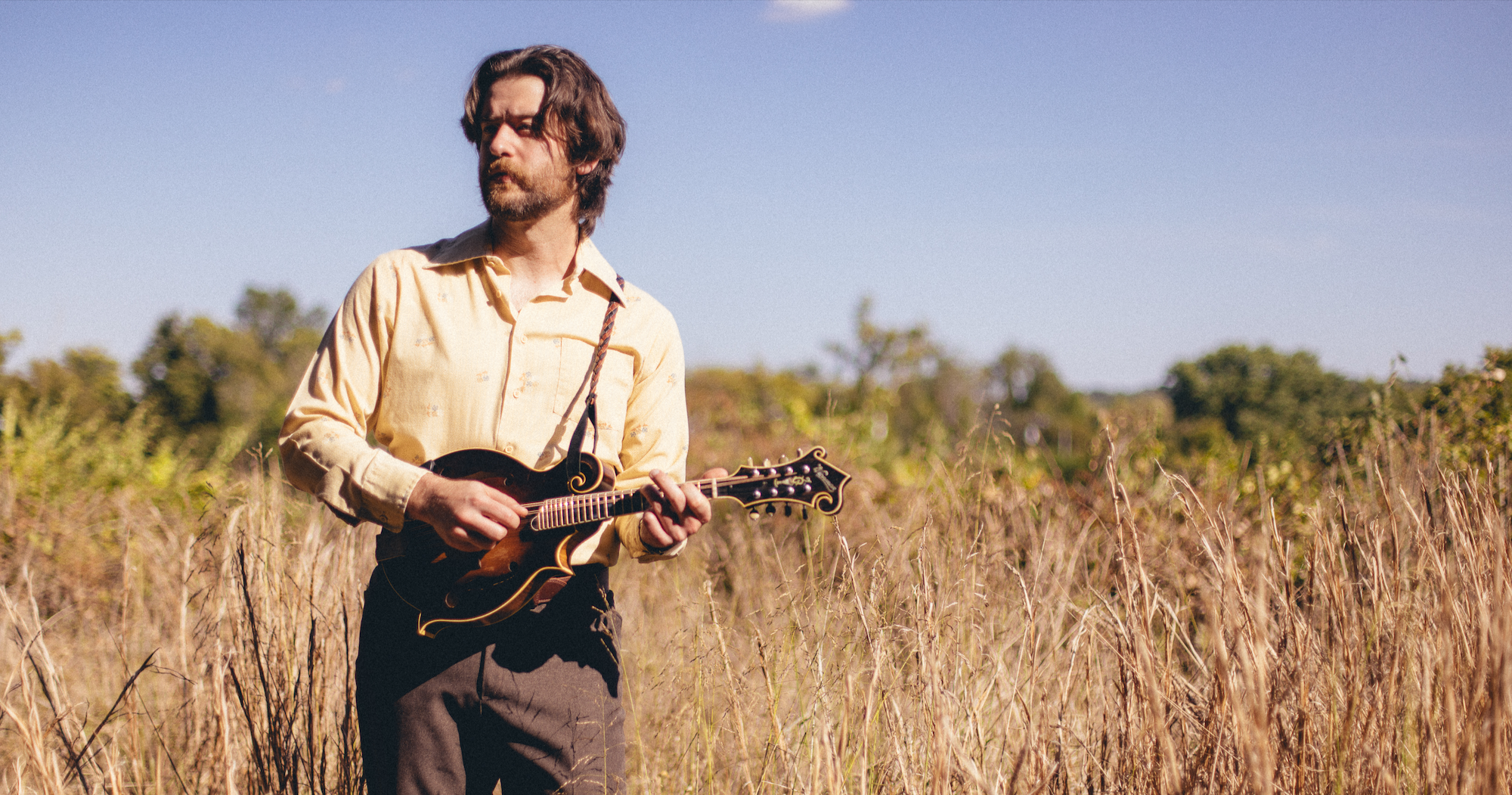
Jarrod Walker is Much More Than Just a Sideman

You know Jarrod Walker because for nearly 10 years he’s been Billy Strings’ mandolinist. But within the tight-knit bluegrass community, Walker has been a well-known and sought-after sideman for much longer. Before going on the road with Strings, he did stints touring with Claire Lynch, Missy Raines, Rebecca Frazier, and more, and he got his start in the rich bluegrass landscape of Florida, gigging with his brothers – including East Nash Grass banjoist Cory Walker – in a family band, the Walker Brothers.

Beloved for his taste, virtuosity, and a cleanliness to his picking unparalleled in modern bluegrass mandolin – except perhaps by his childhood friend and peer Sierra Hull – Walker enjoyed a reputation pre-Billy Strings that holds strong now, as he’s gone from being a humble bluegrass sideman and session player to having nearly 50,000 followers on Instagram and a niche fandom of his own within the greater Billy Strings Cinematic Universe. His song “Red Daisy,” recorded and performed by Strings and co-written with longtime friend and fiddler Christian Ward, has garnered more than 10 million streams and was awarded IBMA Song of the Year in 2022. (Though, shockingly, Walker has still never even been nominated for Mandolin Player of the Year by IBMA.)

Earlier this month, Walker took yet another step toward the limelight and away from the increasingly reductive “sideman” title. He released Nighthawk, his debut solo album, a fascinating and artful collection of bluegrass and string band-centered Americana that demonstrates the incredible depth and breadth of skills he has developed since his Lynch and Raines touring days. All but one of the 13 tracks are Walker originals – many co-written with Ward, who also plays fiddle on the project – and all but the two instrumental tracks are sung by Walker, as well. His vocals are thoughtful and intricate; he’s clearly put in plenty of time and energy into crafting an equal level of virtuosity with his voice as an instrument.

For a picker who’s remained booked, busy, blessed, and performing on stage hundreds of times a year on average for the greater part of two decades, it’s notable that Walker has launched Nighthawk and, with it, shown the remarkable level of growth and development he’s undertaken simultaneously, right under our noses. An impeccable sideman has blossomed into a fully-fledged, intentional, and multi-faceted artist. Even if, like me, you’ve been fortunate enough to call Walker your friend and a collaborator over those years, this is a revelatory, infinitely expressive body of work – surprising if not at all unexpected.

This isn’t an album meant to capitalize on Strings’ rabid audiences and pick up some extra spending money at the merch booth. This isn’t a vanity project or simply a mandolin record – or a hobby with which to spend time and keep him occupied when he’s not on the road with his main gig. No, it’s clear that with Nighthawk Jarrod Walker is telling the world exactly who he is, what he does, how he thinks, and what he sounds like. And it sounds damn good.

I wanted to start by talking about how you kick off the album with “Miles on My Shoes” and how the first single released was “Nighthawk,” the title track. Both of those tracks, to me, feel like straight-ahead, traditional bluegrass. I was curious about this being the audio “swatch” that fans and listeners first get of this album and about what you’re trying to communicate to them by the first track and the first single being pretty much straight-down-the-middle trad bluegrass.

Jarrod Walker: It took a long time to decide what to put forth as the first single, and same goes for the first track on the album. But I did feel like there was a certain expectation of me putting out a record and there being bluegrass elements to it. I wanted to reassure people that there would be some bluegrass elements. And, like you said, those two tracks are probably the most straight-ahead bluegrass tracks on the album. But the rest of the album is very different. The second single, [“Cordova Street Blues”] is very different from the first track or the first single. I think it was somewhat a conscious decision, but also just listening to people around me and seeing what they thought.

For no particular reason both of the singles that came out wound up being the two songs that Billy Strings sang background vocals on. It just worked out that way. We decided not to do the whole “featuring Billy Strings” route, because then that puts such an emphasis on [what’s] really just background vocals. But of course you could put “featuring Jake Stargel” or “featuring Christian Ward” [on it] by the same regard, ‘cause it’s not a true feature or whatnot.

But yeah, Cordova Street is a street in St. Augustine, [Florida] where I’ve spent a lot of time. I have some family who still live down there and some deep family roots going back to a store in the main part of town, which is now the historic district, called Denmark Furniture. It was probably very misleading to people, because I don’t think they sold Danish furniture. [Laughs] I think it was just American furniture with my mom’s maiden name, which is Denmark – and it’s my middle name. I’ve spent a lot of time down there and it’s inevitable that some St. Augustine imagery would make it into one of these songs. “Cordova Street Blues” is more of a dreamscape, ethereal kind of track, which is entirely different than the first single, “Nighthawk,” which is more or less just a Stanley Brothers-style bluegrass song.

It’s funny that you say “dreamscape,” because I was already drawing parallels here between single one “Nighthawk” and single two “Cordova Street” and track one “Miles on My Shoes” and track two “Leaving Canaan’s Land.” What I wrote in my notes for “Leaving Canaan’s Land” is “it’s like an Americana dreamscape” – especially with that groove and its pacing. So I see this parallel with the singles and also with the sequence: “here’s what you’re expecting, here’s where we’re going eventually.” Bluegrass, then beyond. You’re immediately showing people the continuum on which you’re creating music, sonically.

The groove differences between “Nighthawk” and “Cordova” or “Miles on My Shoes” and “Leaving Canaan’s Land” are incredible, too. It’s the best kind of whiplash from barn-burning, leaning-forward bluegrass to this sort of languid, lazy river, chill, floating vibes. Can you talk a little bit about that?

I’ve always liked the contrast and the juxtaposition between something, like you said, very bluegrass and something that offsets that. It’s like sometimes I wear camouflage and then I wear a tie-dye T-shirt. “Who the hell is this person?” I like to do that musically sometimes, too.

There are a lot of songs on the record that I wrote with just a guitar. It was more of a folky kind of approach. But then I decided to get drums and percussion and pedal steel on nearly the entire record and that really shaped these songs into something that I hadn’t imagined before – in a very positive way. I think it’s turned out how I would’ve wanted it to, ultimately. But it wasn’t necessarily a conscious decision. I think I just have that mentality throughout a lot of aspects of my daily life.

The variety also makes the album listen by really quickly. You have so many different textures and so many different style points and references. But, when I listen through the whole thing, to me it still feels like a bluegrass album. It reminds me of Jim & Jesse when they had pedal steel and drums in the band. Or a lot of those bluegrass bands from that golden age of bluegrass where they still were calling themselves country – the Osborne Brothers, Ricky Skaggs, J.D. Crowe and the New South.

Oh, for sure. I feel like I have never been afraid to introduce some drums or exterior, non-traditional bluegrass instruments into the mix. Like you said, I think it just adds some texture. And I love the early bluegrass where they were still figuring out and shaping the sound. There’s so much snare drum in Jimmy Martin music. And like you said, the Osborne Brothers, Jim & Jesse – and listen to J.D. Crowe and the New South’s first record. There’s steel, there’s piano, there’s drums and percussion. By that definition a lot of people, on paper, would consider it not a bluegrass record. But of course it’s one of the classics that everybody thinks of.

I think it was the reason that I put drums on nearly everything. But I made the decision after things started shaping up and I heard the songs that were more folk-oriented coming together. They would’ve been incomplete without drums. I wanted to use drums as glue for the record and to offer some cohesion. The pedal steel served that same purpose, too. Spencer Cullum is a fantastic steel player. And Jamie Dick is playing drums on this. They’re both coming from a different musical background, so it kinda makes everybody else think on their toes. Everybody has to adjust a little bit in order to accommodate each other, and I think everybody being a little bit out of their element gives it a certain freshness that it might not have had otherwise.

I was struck by how your voice sounds so good and confident. You’ve always been a singer, but on this record I hear so much more personality in your voice and I hear more of your musical point of view – in your voice as an instrument, instead of your voice just being something you also do. How did you feel in the process of getting to the point where you’re singing on all but two of these tracks? Your voice sounds really dynamic, even when you’re shifting between trad bluegrass and those slower, grooving songs. It doesn’t sound like you’re intimidated by the space that’s left for your voice to inhabit. It really feels confident and self-possessed.

Oh, thank you. I think you’re right, most people see me playing on stage and think of me more or less as a sideman. That’s what I have done for years. But behind the scenes, I have been writing a lot of songs, and when I have written those songs oftentimes they are sung by Billy Strings. So the outlet was not necessarily available to me.

A lot of these were songs that I threw into the mix over the years with Billy and they wound up getting passed on for one reason or another. For some of them that’s the case, others I was holding onto for a record. But this was really just an opportunity to work that muscle. And myself, if I’m going to listen to a record, most of the time I prefer to listen to lyrical music in some shape or form. Having written all these songs, it was like, “I’m not gonna get somebody else to sing these songs.”

So, over the years it has been something that I’ve worked on, and I guess somewhat behind the scenes. This project was very informative. I might have died a thousand ego deaths in the vocal booth. [Laughs] … It’s been just like playing an instrument. You learn things about it over the years. Now I listen to some of the singing [on the record] and I’m like, “Oh, I wish I would’ve done this differently,” but that’s the name of the game. I think, ideally, I will not look back 20 years from now and be like, “This is the best thing I ever did.” ‘Cause hopefully I continue to improve, love it for what it is, and move on from it. …

We tried to leave everything as live as possible, which– emphasis on “live as possible.” Because sometimes you hear something and it’s so wrong you have to change it. There are some moments where I could have probably taken a better mandolin solo than what I left on the record. But you just start going down a very deep, dark rabbit hole when you start chasing the perfect solo. If I can live with what I played in the moment, it’s probably gonna come across as a more real representation anyway. There’s something that you lose when you try to perfect things.

I want to talk about the songwriting, because in a similar way to noticing the development of your vocals I think your songwriting is really great. It doesn’t feel “try-hard” or contrived. So many of these songs are about movement, traveling, covering ground, putting miles underneath your feet. That’s not entirely surprising, given the last eight to 10 years of your life being you doing exactly that. Can you talk a little bit about the songwriting process and the inspirations for the songs? And that sort of overarching theme of movement and traveling – and that sort of loneliness and longing that comes with that?

Most of the songs that I’ve written in the past 10 years have been with Christian Ward, who’s playing fiddle on the album. Early on we would just get together and spend the entire day trying to just come up with a verse. We would work on things maybe to a fault. Extensively. But through doing that I think we found a rhythm where we were able to get things done a little faster. He and I both like and hate many of the same things.

I don’t think it was a conscious decision to write songs that are involving movement, but like you said, it does make sense. That’s how they turned out. Oftentimes I’ll just see a pond and I’ll say, “Oh, I could make a chorus using the word pond.” And then, “What rhymes with pond?” That’s how it takes shape. Generally I don’t start with, “I wanna write a song about leaving home on the next train” and that’s what it turns into. Most of the time when I start writing something it turns into something vastly different than what I originally imagined.

For me at least, I’ve only written one song – as far as I remember – where I wrote the music before I wrote the lyrics. … Almost always it’s just an object or a singular thought that winds up turning into a song. That song that I wrote with Christian called “Red Daisy” was kinda the same way. It’s a very simple song, melodically and lyrically, but it more or less sprung from that.

So maybe you knew this question was coming, but we gotta talk about “Nighthawk,” not just from the perspective of it being a song about longing, existential dread in the middle of the night. But also, to me, nighthawks – as a group of birds – I always equate them with Florida. Florida’s one of the only places you see them during the day when they’re migrating; it’s where I’ve had some of my favorite experiences with whip-poor-wills or chuck-will’s-widows, out in the middle of the Everglades and you hear them booming their song in the middle of the night.

When I saw the lead single/title track come out I immediately drew a line from that song to Florida – I have a feeling I’m making that connection up, but I wanted to ask you about that song, the inspiration of it, and if there is any reference here to all the nightjars – nighthawks – in Florida. [Laughs]

When I lived in Florida, I didn’t know different bird species – other than maybe a Bald Eagle and a turkey. [Laughs] So unfortunately, I probably have seen a bunch of them and didn’t realize that I was looking at them. I probably wrote it off as something else. But the way that I found out about nighthawks was through this book called The Dictionary of Obscure Sorrows. Little did I know these were made-up definitions [in the book]. When I first was thumbing through this book I was just like, “Oh, this could make a good bluegrass song.” Nighthawk – it sounds a little macabre, a little gothic. One of the pillars of my songwriting is that I can’t write a joyful song. So I was like, “This is perfect.”

When I first started writing that song, I was trying to make it more of a vibey song. Eventually, I was just like, “This works better just as a bluegrass song.” Sometimes I want to expand my horizons and try to do something entirely different, but ultimately, the world that I know the best is bluegrass and a lot of times it’s very difficult to write a good bluegrass song. It can be very challenging and there’s also such a precedent and such a box that you seemingly – at least from my experience – have to write within. You can’t talk about modern technology or you have to pretend a little bit. It’s a little bit of cosplay.

With those kinda songs, I try to make them as authentic as I possibly can. Which oftentimes is just being a little bit more ambiguous and not as direct in the songwriting. These lyrics – “nighthawk, just an old memory” – that’s very vague. But I come to find out the word nighthawk was associated more or less with that famous painting. I was writing with somebody one day and I was like, “I just wrote this song called ‘Nighthawk.’” He was like, “Oh yeah, like the painting.” I totally had seen the painting, but didn’t know the name of it. It’s called Nighthawks.

I probably should have done some research before completing the song. [Laughs] Truth be told, I thought it was just a hawk. Which is very logical of me to assume, right? But then I found out it’s its own species of bird. I had to make sure when I was having all the artwork drawn – I was like, “Hey guys, just want you to know a nighthawk is not a hawk. Don’t draw a hawk. Here is the silhouette of a nighthawk. Let’s do something like this.” ‘Cause I knew somebody like you would be out there and would catch it instantaneously!

Oh man, I would’ve been so happy to “Um, actually…” you. It would’ve been the first thing I said on this interview! [Laughs]

That’s what keeps me honest! [Laughs] I just downloaded the Merlin app [for identifying birds by song and call], which I had never heard of. It’s great! …

It’s so hard for me to try to write a song without including either a bird or a flower or trees. I want to get to a point where I can write about any given subject and just talk about that thing. But once you put birds or trees or flowers or mountains into a song, it’s like, “Okay, now we’re getting somewhere.”

I think my favorite track on the album is “Cold Daylight.” I love the groove of it, I love the feel of it. I love the long, extended vocals. But the thing that jumped out at me is that this must really be a bluegrass record, because you reference a bluegrass song in one of the songs!

Which is against the rules. [Laughs]

Since when?! You sing about “True Life Blues” – again you’re talking about lonesomeness and that same sort of existential feeling, sitting around a fire, singing “True Life Blues.” Can you talk to me a little bit about that song and where it came from?

Jarrod Walker: That particular song was maybe the best example of a song that I just wrote in more or less typical, boom-chuck, medium tempo bluegrass, folky, singer-songwriter [style]. It bored me at first, just the way that the chords were, the way that they laid, didn’t resonate with me. I revisited the song and tried to imagine it with drums – this was a couple weeks before actually going into the studio – then I fell in love with that song again.

I think the idea for this was just another example of some word association. Like, daylight is generally warm, but what if you call it cold? That’s where that came from. It was a challenging one to get the groove of [right], but it wound up being one of my favorite tracks on the record, too. It was probably the toughest vocal to lay down.

It feels pretty exposed vocally.

Yeah, it is. Like I said, being in that vocal booth is no joke. Singing the line that’s, “Pass the bottle around the fire and sing those ‘True Life Blues,'” I was a little hesitant to reference another bluegrass song within a bluegrass song – to do the bluegrass inception thing. But I was like… “Gillian Welch does it. I gotta give myself a pass to do that.” It adds another dimension, another layer. If you just said “singing those blues” it wouldn’t have the same effect. And most people don’t even know what the song “True Life Blues” is. It also just works as a phrase. it doesn’t necessarily have to be a song, so it kinda works on a couple levels.


Photo Credit: Jesse Faatz
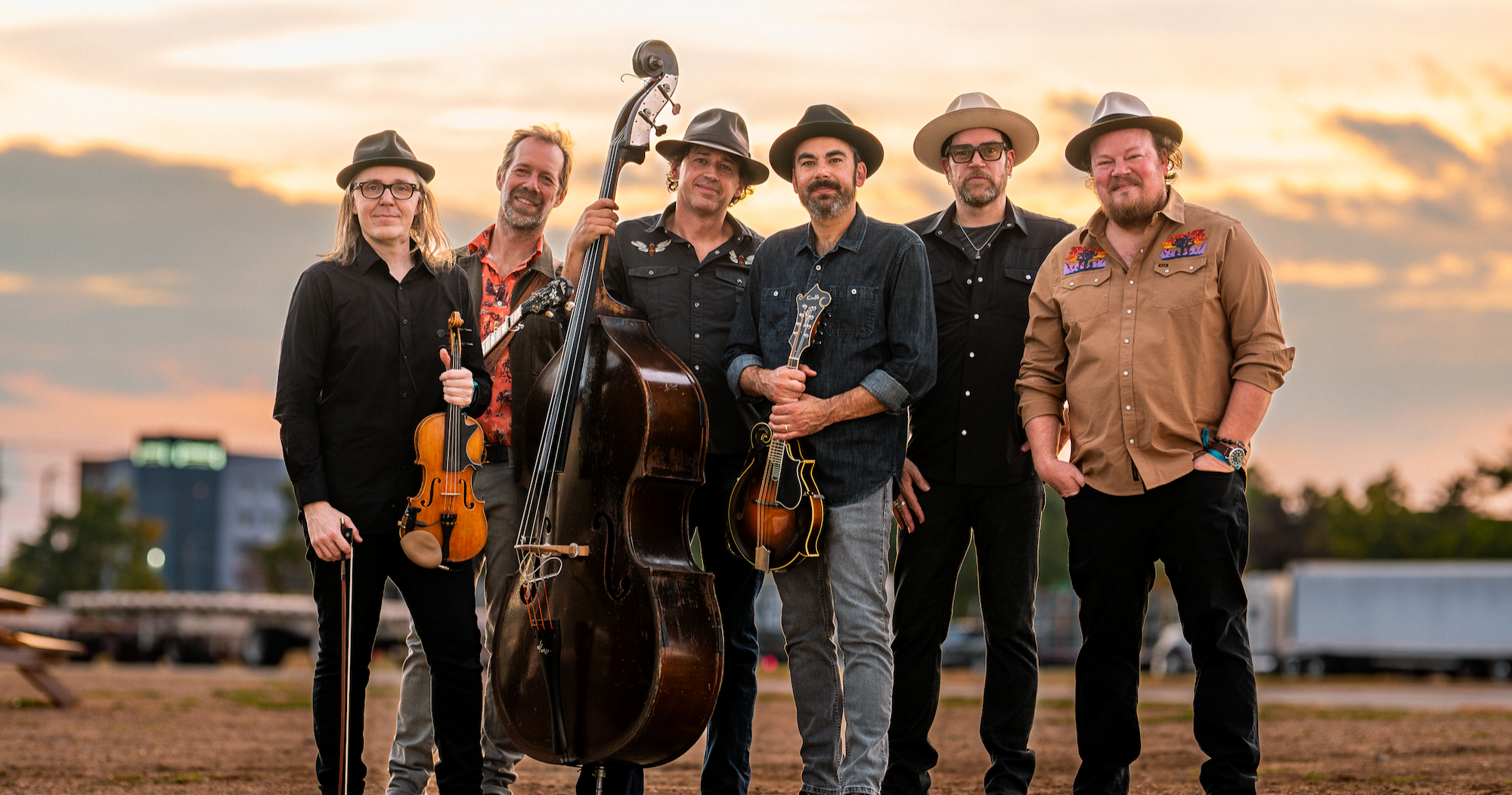
Steep Canyon Rangers Are “A String Band Again”

Twenty-six years into its life as a band, the Steep Canyon Rangers get back to basics on Next Act, unplugging their amps and instruments in favor of an acoustic setup with minimal percussion. It marks a return to the foundations that first set the group up for success.

Releasing May 22, Next Act is the second studio effort to feature guitarist and vocalist Aaron Burdett, who joined the Rangers in 2022 following the departure of founding member Woody Platt. In addition to appearing on their 2023 album, Morning Shift, Burdett is part of the Rangers’ 2024 live record, which features several of his own compositions, too.

Alongside the band’s other members – Graham Sharp (banjo), Mike Guggino (mandolin), Nicky Sanders (fiddle), Mike Ashworth (percussion, Dobro), and Barrett Smith (bass) – Next Act brings Burdett into the fold even more, with six tracks written or co-written by him. “Roll of the Dice” catalogs Burdett’s early days traveling with the band and “Hard Times” finds him reflecting on adversity and how moments that once felt overwhelming can later soften in memories.

According to Ashworth, the growing role of Burdett in the band is simply a carryover of having multiple voices contributing to their songwriting over the past decade, with Sharp being the other primary force of late.

“Aaron came into that role really well with a bunch of his own material while also taking lead on some of the stuff Graham had written as well,” Ashworth explains. “After incorporating more of his own stuff on that live record, the next step was to up the ante even more on this album by bringing even more of his older work into the studio.”

Steep Canyon Rangers’ Mike Ashworth and Barrett Smith caught up with BGS to delve into how books inspired two of the album’s songs, how a road trip instigated “Halfway To Reno” featuring Edie Brickell, what remains on the group’s bucket list, and more.

How did Aaron’s level of involvement on this record grow compared to Morning Shift?

Barrett Smith: It feels like Aaron has always been here – he just fits with us so well. He’s become such a close friend and a great person to work and make art with. We’re just excited with everything having to do with the band right now, and Aaron is a big part of that. Things went well when we worked together on Morning Shift, even though we were considerably less worn-in and stable than we are now on this album. We’re really cooking right now and feel great together as a group.

Mike Ashworth: From a relationship standpoint, things have gelled much further than I’d ever hoped. It does feel like Aaron’s been a member for more like 10 years, not three. On this record you can see the band in more of a way that feels like a group that’s sure of itself. The last time we were in the studio we arranged in more of a rock ‘n’ roll style where everybody reinforces the same rhythms, but on Next Act we gave everyone a lot more room to explore their own parts. It’s indicative of how much we trust each other now and how much growth artistically the band has seen in the last few years.

BS: Another good indicator of the growth is that on Morning Shift we worked with a producer, Darrell Scott, even though we enjoy and produce ourselves really well. But then when Next Act came along, we felt like we had enough chemistry together that we could move forward without an outside producer this time. Doing that allows us more space to bounce ideas around and feed off each other, which we feel like is our greatest superpower as a band.

As well as y’all work together, it’s hard to pass up a collaboration with someone like Darrell Scott when it presents itself!

MA: I imagine it’d be hard to come into a band like this and produce, because oftentimes we have to be careful to not already be done with everything. As a result, we intentionally leave certain things unarranged or on the table to give them something to do or else we’ll just wind up taking everything away from them.

BS: I remember Darrell, a number of times, looking around and saying, “Y’all are pretty weird with how you do things.” One time when we were recording, I remember him stopping and asking us if we always had so many opinions about each song that we communicated to each other. Eventually he started telling us to just “shut up and play” – that was one of the catchphrases of our studio time together. [Laughs] If you have an idea, we want you to be confident that it’s going to be heard. There’s a lot of trust in the whole system.

MA: Another thing Darrell pointed out was, “Y’all really care so much about the story.” He’d never heard an entire band comment on the lyrics and stories behind each song like we do – whether it’s where to punch things up or down or when to add harmonies.

That’s the cool thing about this new record. It delves even more into that exploratory realm of the band trying to sell the story – and the whole band, not just one singer, absorbing what it’s all about.

Tell me about naming the album Next Act. Is that a nod to this full circle journey that’s brought you back to being more of a traditional string band?

MA: The intention was twofold, but that was definitely a part of it. As the title of the song, it’s about picking yourself up, moving into a new phase of life, and embracing change. However, Next Act for the band is us reflecting on our change and growth and the ability to reveal what our potential is at any given moment. Because of that it became a pretty conscious decision to make it the title of the record.

BS: On Arm In Arm [in 2020], it was fun getting to mess around in the studio with organs, electric guitars and all these special guests – it was like our own mini-Brian-Wilson-like experience. But on this record, we wanted to bring it back home and return to being a string band again. Because of that, this new record doesn’t have any electric instruments on it. There is percussion, but it’s not a full drum set. We’ve been doing a lot more stuff around one mic at our live shows recently and feel like these new songs are very representative of that.

MA: We’ve all had amps and drums buzzing around our heads for years, so we wanted to remind ourselves that this thing still starts around a campfire and can always come back to that. I don’t think fans will know what to call what we’re going to do on any given night, because even we won’t [know] until we see the room and start to feel the vibe of the city and people there. Doing this record has allowed us to rediscover the foundation of what we are when you strip everything away. That’s been a really cool and unnerving process to get out from behind all the extra noise and see that when you take those things away, the art is still really good.

There’s a couple songs on this record – “Back of Beyond” and “Circling the Drain” – that were inspired by books, Barbara Kingsolver’s Demon Copperhead and Horace Kephart’s Our Southern Highlanders, respectively. With that in mind, how would you say literature informs the band’s songwriting, not only with this record, but overall as well?

MA: Graham actually wrote both those songs, but I do want to speak about Demon Copperhead, because we all just absolutely loved that book. We’re not just a band, we’re also a close circle of friends, and with that comes shared mutual interests, like books. I’m so glad that Graham is my friend, because he can write things that I wish I had the ability to say. But once something is written, whether it be a book or a song, it doesn’t belong to [the writer] anymore, it belongs to you, [the reader/listener]. That’s the really cool thing about art.

I love that Graham is a voracious reader because we wind up getting a lot of great songs out of it, like these two. Damon [Demon Copperhead’s protagonist] is such a wonderful, resilient character that reminds me so much of people I grew up with – and I’m sure Barrett would agree.

BS: As a writer, artist, and creator, I think it’s a good habit to have different areas you pull inspiration from to keep you out of a rut. For Graham a big one is literature. Demon Copperhead threw all of us for a loop as it was getting passed around the bus. When we found out he was basing a song off it we jumped right on it.

As for “Back of Beyond” and Our Southern Highlanders, I think that book is essential reading for any Western North Carolinian. “Back of Beyond” was simply a term that came from meaning the middle of nowhere out in the country, in a place where you can go for days without seeing anyone or speaking a word.

“Back of Beyond” is a song that’s been lingering with y’all for several albums before finally getting recorded now. What made Next Act the right spot for it to land?

BS: During my time in the band, I would say that “Back of Beyond” is the biggest survivor, in terms of songs that have stuck around and taken on many different forms before finally making it onto a record. We actually wanted to include it on Morning Shift, but Darrell Scott didn’t think it would be a good fit, so we didn’t. We may have even called that album “Back of Beyond” if it had been on it. But when that happened, we knew it would reappear on our next record. After it missed the cut we all really wanted it for this one, which is why we call it a survivor.

I was also curious about the song “Halfway to Reno,” which came from a roadtrip you [Mike] had with Aaron from California to a gig in Reno, Nevada. Is that right?

MA: That’s right. I think Aaron was behind the wheel that day. From my view, he’s someone that is more influenced by an experience or feeling than anything else, which he can then take like putty and mold into a piece of art. That’s the beauty of being in this band, these guys will come up with these nuggets – and if it hits the Steep Canyon grinder and comes out the other end still in one piece, then they’ll take it and finish writing it.

Then when we were mixing that song we kept envisioning a high voice on it, but couldn’t figure out exactly who to ask to fill the role. Then we sent it to our dear friend Edie Brickell and she ended up putting the icing on the cake. The song is about one lover trying to get back to the other and the little things that you carry through your day – especially when you’re separated by distance – that keep you tied to home. She really understood the assignment and put this beautiful piece on top of the tune that I absolutely love.

How did the opportunity to work with Edie on the tune come about?

MA: We first met her over a decade ago through Steve Martin. He would send her banjo ideas and she’d send them back to him with lyrics over them. That quickly evolved into a fantastic record produced by Peter Asher called Love Has Come For You in 2013. But touring together is where we really befriended her, during late nights on the bus and in the dressing room. I remember being drawn in by her spontaneity and creativity and the way that she can write a song in the moment about that moment. It’s almost like a fortune teller.

Since that first encounter we’ve recorded many times together through the years and she’s become not just one of my favorite female artists, but one of my favorite artists, period. She’s just so heartfelt every time she adds to something. It comes from a real place and that’s harder and harder to find these days.

Speaking of Steve, what did it mean to have him featured with you on “Heart’s the Only Compass”? I think this is his first time on an album or single with you since 2020’s “California.”

BS: It’s always a huge honor any time we’re able to work with Steve. He’s an iconic American art figure, so to have the opportunity to create with him is a treat. When we decided we wanted clawhammer banjo on that tune we tossed a few other names around first, but it all came back to Steve, because the prowess he has on the instrument is second to none.

From what I understand, you reconstructed “The Kindest Thing” in the studio at the behest of Nicky. Tell me about that process and how the final song differs from what you were initially going for?

BS: That song took on a bunch of different forms in the studio, as our songs often do. At one point it had this Don Williams, cool country kind of feel and Nicky heard that pretty late in the game, but didn’t care for it. Instead he kept talking about “Going to California” by Led Zeppelin, which led to Mike Guggino kicking off this riff similar to the one in that song that wound up setting the foundation for what the song eventually turned into. Ultimately, it was a good decision on Nicky’s part.

Steep Canyon has been together for 26 years now. With that in mind, is there anything that remains on your musical bucket list?

BS: The band hasn’t won a GRAMMY since I’ve been a part of it, so I’d love to see that happen – maybe even with this album. [Laughs] Aside from that, it’s hard to think of specific venues, not that there aren’t any, but because we’ve gotten to play so many of our dream places already. My bucket list is mainly just keeping on and continuing to discover and hone my role in this band.

What has bringing this album to life taught you about yourselves?

MA: I thought I’d become more patient as I became older, but I actually think I’m becoming less. [Laughs] In all seriousness, this session taught me to slow down again. I kept wanting to schedule and have it done sooner rather than later, but instead, the cycle for this record was one of the longest we’ve ever endured. In the end I think it’s exactly what it wanted and I’m grateful for how it got me to take it easy and be more in the moment.

BS: Even though we’ve been playing together for so long, working on this record brought me a new level of comfort and trust with the band. I have more faith in the people in the band, what we’re doing and my place in it than ever before, which is such a good feeling. I’m really enjoying where we are right now and am excited to see how we keep building upon it.


Photo Credit: Jay Strausser

Our Jamgrass column is brought to you in partnership with Preston Thompson Guitars.

Yonder Mountain Never Meant to Change the Bluegrass Landscape, But They Did

Following instructions for listeners to Get Yourself Outside in 2022 and declaring they’re heading Nowhere Next in in 2024, jamgrass torchbearers Yonder Mountain String Band have reached their zenith on Good As True.

Released March 27, the collection finds the band embracing the skill sets of its newest members Nick Piccininni (mandolin, vocals) and Coleman Smith (fiddle) more than ever, as they dissect the human condition through nine tracks highlighting everything from falling in and out of love (“Brand New Heartache”), to confronting regret (“Blind”), and frustrations with today’s political climate (“The Lie”).

During a recent phone call, bassist Ben Kaufmann spoke with BGS about working Piccininni into the writer’s room, lessons learned from touring, how former band member Jeff Austin’s spirit sticks with him, and more.

This is your third album having Nick in the writer’s room with you, Adam [Aijala], and Dave [Johnston]. What has that evolution of bringing him into the fold there been like?

Ben Kaufmann: Yonder has always had its own special sound. There’s a very specific energy and communal taste with the music that we’ve been tapping into collectively for so long. Nick had already been writing for a while before coming aboard [for 2022’s Get Yourself Outside], so once we got him up to speed with our style we realized how intuitive he is. He has his own understanding of what a Yonder Mountain song is, which has made it fun when it comes to overhearing him workshopping songs or when we swap ideas backstage and on the bus.

We also knew, with recording time on the calendar, that we’d need more material. For most of Yonder’s lifespan we’ve had four writers – going all the way back to the days with Jeff, so it only made sense to give Nick the same opportunity when we saw what he could do. After putting songs from all of us “through committee,” a bunch of his wound up being cut [recorded] these last handful of years.

It’s especially important because Nick is such a wonderful singer. He’s great at everything he does, which is really inspiring to be around. He’s really stepped into his own as a featured vocalist and as a mandolin player. It’s been fun encouraging him to cultivate his own voice while also hearing him take the reins on some of Yonder’s oldest, most beloved songs.

What’s most satisfying for me with this band is writing my own songs, playing them with the band, and having people who are ostensibly there to hear the music enjoying it. There’s no better feeling than that and we wanted Nick to feel it too, since he’s currently in what seems to be a really prolific time of his life for songwriting. He’s the perfect fit for what we do. I’m so grateful he came into our lives and continues to enjoy making music with us. Being in a touring band isn’t for everyone, but everything with Nick has felt very natural from the start.

You just mentioned touring life, which I know the band touches upon with the song “Long Ride.” Do you have any good tips or wisdom you’ve picked up from your 28 years on the road with this band?

It’s like two hours of the greatest time of your life, every day, followed by 22 hours sitting in an airplane. [Laughs] In all seriousness, it’s been very different depending on the time in my life we’re talking about. I’ve handled it really well, but I’ve also handled it terribly. I’ve made mistakes and overcome them, but I’m sure I’ll make even more. When I was young I felt invincible. I’d drink too much and do all the drugs – not to the point of turning disastrous, but I lived that life. Doing that ages you so much faster than otherwise, and touring in general is already not easy.

Because of that I’ve spent so much time, energy, and money working on my personal growth through therapy and reading about ways I am deficient and could improve, to realize my full potential. A massively important part of my life is having a deep curiosity for how to be a better person, which is something I’d like to think I’d still be doing even if I worked in an office or at a place like FedEx. I don’t even know what else I’m qualified to do at this point except survive on the road.

What’s helped me through it all is paying attention to the people around me, investing in myself, and embracing the group dynamic so we can create the highest possible energy state and vibe. Essentially, don’t be a dick! [Laughs]

Lyrically, this record deals a lot with relationships, communication, and the fallout that can occur when those two things break down. With songs like “The Lie” and “One To One Another” this seems to deal partly with politics, but were there any other factors that motivated this direction on the record?

Not in the sense that we spoke about it ahead of time. We didn’t say, “Hey, we’re going to do a record so let’s write about A, B, and C.” A lot of our songwriting is done individually, but there still are some collaborative opportunities for us to get together, as well. As we got closer and closer to our recording dates and the song started being developed, [that] was when we first noticed those common themes. At the same time, I’m not surprised when common themes like this do emerge due to being on the road together and living the same life a lot of the time. When you’re seeing, doing, and talking about the same things regularly it’s easy to have a lot of synchronicity between what we’re writing about and creating.

Ultimately, we’re at our best when we’re writing about our own experiences and what we know. With “The Lie,” I like to think about Jesus, [and] all the bad actors in our world, many of which wield immense power. It makes me feel helpless at times as a bass player and musician – like, what am I supposed to do? It’s an overwhelming predicament, and that song for me speaks to that feeling of, “How did we get here?” It’s also very empowering to sing a song that speaks truth to something like that.

“The Lie” was also one of the songs that got my explicit vote when it came to making the cut for the record. When it came to sequencing, I also wanted that to be one of the first songs you hear when you put the needle down on your vinyl or press play.

“Blind” seems to be a song about regret, mental health, and realizing too late how much someone truly mattered. Have you ever thought about how that tune and what it’s describing relates to your fallout over a decade ago with the late Jeff Austin?

To this point I hadn’t connected that song with how I engage with Jeff’s spirit, but maybe I will now. His spirit and my thinking about him happens at every show. As time has passed, I’ve found that the thoughts I have about him that stick out are all the good times we had together, which wasn’t always the case for us. It was a deeply challenging and complicated relationship we had together and it wasn’t wonderful at the end, which is ultimately why we stopped playing together.

But as time passed, and with his passing – which remains one of the most tragic things I’ve experienced in my life – I became more and more crushed that he didn’t get the help that he needed. I don’t think he knew how important he was to so many people. I think more and more fondly of his spirit, energy, and memory with each passing day.

That original version of the band really changed bluegrass music by building a bridge between it and the jam world. What it did was really powerful, so it’s very interesting trying to think back and conceptualize what it was that we accomplished because we didn’t mean to do anything – we were just trying to play music the best we could.

As I look at it – especially as far down the road as we are now – I see the scene that’s developed from it and all the people doing amazing things with the music as a result. It’s all very humbling, and Jeff was a huge part of that. There’s never going to be anybody else like him, good and bad. We had a pretty complicated relationship – we were the best of friends for a while until we weren’t – but I always have and will love him.

One of my favorite moments on the record is the 17-minute jam on “Barroom Feather.” How did it come about?

One of the things that’s always interested us once we were able to start accessing the data is what our most-streamed song is, for better or worse. [Laughs] What we found is our most-streamed song is a cover of “Dancing In The Moonlight,” which is a good song, but not an original like I wish it was. Then our second most-streamed song is a tune called “Midwest Gospel Radio” that’s an instrumental from our self-titled record. On the album, when we first released it, the song was only two and a half or three minutes long, but along the way someone else released a nine-minute version that’s gotten millions of streams and is now second on our list of top songs.

It got me reflecting on our version and how comfortable we all were in the studio recording it, so when Dave brought us this song we pivoted from doing a shorter, “radio edit” version [that you also hear on Good As True] to something much longer. We recorded a couple takes that way, allowing ourselves to exist in that space and jam a bit, and I couldn’t be happier with the spaces and textures we came up with. It has this time-travel, hypnotic space-time warp thing about it that we were really psyched about. It works really well as both a more streamlined song and as a long jam like what we end the album on, so I’m excited to see how people listen to and engage with it.

You’ve been touring with Yonder for 28 years now. What continues to motivate you nearly three decades in?

First and foremost, I love music. That will never change. I also have a 14-year-old son that I love more than anything in the world. Music is part of the fabric of my flesh, blood, and spirit – I simply don’t know what else I’d be doing if not for it. I’m so blessed that this weird little music project called Yonder Mountain String Band happened, because looking back it doesn’t make much sense. Going from that to seeing what bluegrass music has become, having schools and colleges now devoted to bluegrass music, to [the] elevation of the music’s degree of technicality and musicianship, has been mind-blowing. None of that was the case when we were starting out in the ‘90s. We loved bluegrass music but were a lot more beholden to the spirit of the Grateful Dead than we were Bill Monroe, but we still wanted to play it.

I look at it in the sense of me being good at what I do, but by no means am I the best bass player around. None of us were the best at what we did and when you put it all together it goes against all the laws of physics, mathematics, and common sense. But two plus two equaled five for that one moment in time. I can’t tell you why, but it did and here we are now.

As a result, I get to live this extraordinary musical life that’s navigated some big ebbs and flows. That, along with all the fans who’ve embraced our music through the years and found us in different ways, is what keeps us going.


Photo Credit: Lead image by Robin Vega; alternate images by Mountain Trout Photography, Trent Grogan

Our Jamgrass column is brought to you in partnership with Preston Thompson Guitars.

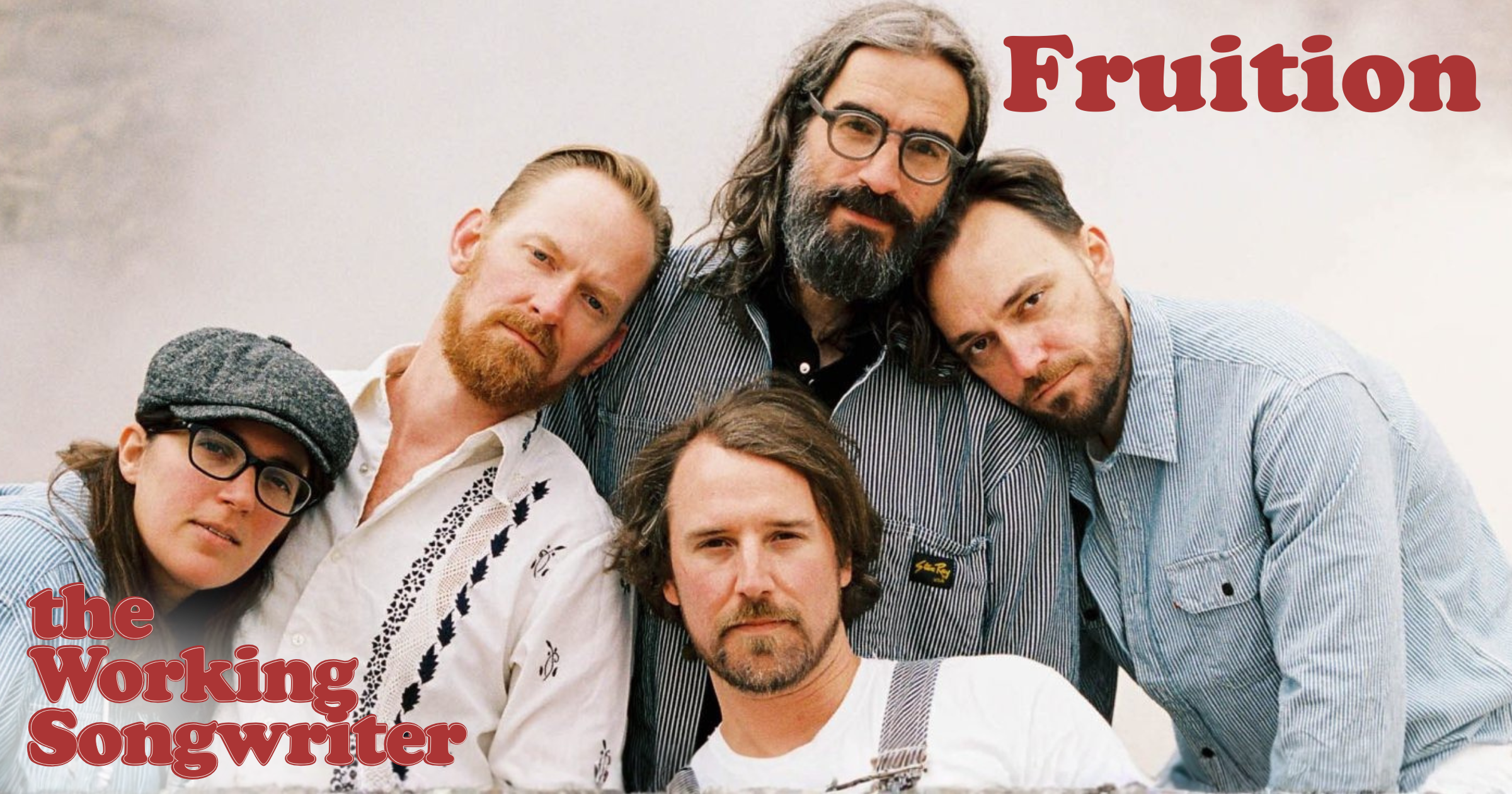
The Working Songwriter: Fruition

Our guests this week got their start busking on the streets of Portland, Oregon, but it wasn’t long before their popularity pulled them onto the open road. Jay Cobb Anderson and Kellen Asebroek are pivotal and founding members of roots music band Fruition. They have toured with Greensky Bluegrass, the Infamous Stringdusters, Yonder Mountain String Band, and many others and have appeared at iconic festivals such as Telluride Bluegrass Festival, WinterWonderGrass, and the Northwest String Summit.

LISTEN: APPLE • SPOTIFY • LIBSYN • MP3

Fruition’s 2018 release, Watching It All Fall Apart, debuted at #3 on the Billboard Bluegrass Albums Chart. Billboard said, “Fruition have matured into one of America’s most compelling roots acts” while Rolling Stone Country noted, “The trio’s harmonies are as tight as anything coming out of Nashville.” No Depression declared that they’re “a band whose chemistry feels lived-in and wholly authentic.”

I got a chance to catch up with them a while back to hear about their musical journey so far.


Photo Credit: Kaja Sigvalda

Magoo on Taking Chances and Giving Up Second Guessing

Magoo has been lighting up Colorado’s vibrant and crowded jamgrass scene since 2022. Their collision of string band music with danceable beats, jazzed up instrumental breaks, and anthemic lyrics rooted in rock has led guitarist Erik Hill to coin the phrase “bluegrass with lasers” to describe their sound and style.

After turning heads with two volumes of Magoo The EP in 2023 and 2024, the band – now comprised of Dylan Flynn (Dobro), Courtlyn Bills (mandolin), A. Denton Turner (bass), and Hill – have finally unleashed their full-length debut, What A Life. The 10-song compilation sees the upstart group of pickers contemplating everything from the sacrifices of a life lived on the road, the places that have transformed us, and how our stories are all connected.

Across 52 minutes of run time, the musicians rip their way through meandering jams that flow freely from one song to another as if it was a live show, an approach Hill says was intentional to keep the album from feeling sterile.

“Our live shows and recordings are very important to us, so it was imperative that this album not feel so copy and paste or cut and dry like studio projects often can be,” explains Hill. “I think we landed on a nice, organic feel that stretches the songs out, but not as much as we do when you see us live. In that sense, it serves as a good bridge between the two.”

During a free-flowing conversation with the band inside the green room at The Burl in Lexington, Kentucky, midway through their winter tour, Magoo spoke about the DIY approach to What A Life, Telluride’s significance to the group, near-death experiences, and more.

Why was now the right time to release your debut record?

Erik Hill: We had all the songs that we wanted to record. With the EPs we released previously, we basically recorded the couple originals that we had at the time along with a few covers. Eventually we started collecting a nice set of original music and figured it was time to do a full-length album.

Denton Turner: A big part of it is just having all the parts in place, from our management to booking people, so we can hit the road full speed. But in order to do that right it was important we have an album out to go with it – we needed a product to market. That was a big motivator for us this year, having an album to really kick in the door and make the most of our 100+ shows this year. Getting those other pieces in place on our team gave us ample time to focus on recording. When you’re trying to do everything it’s easy to half-ass it all, so having them by our side allows us to focus on and tackle what we love – the music – head on.

And with What A Life you opted to tackle it in your own DIY studio. Tell me about that experience?

Courtlyn Bills: I’ve made about 80 records in the past, but for this one everything was set up special just to make this album. I was moving and had my dad drive up a bunch of equipment from Texas, including my console he’d been holding in storage that was previously owned by Prince.

EH: Sessions were scattered throughout the month when we weren’t touring. Any time we were able we’d try getting over to Courtlyn’s to bang out a tune or two.

CB: There were a lot of 4 a.m. sessions. The coffee pots were flowing! The only big difference from one session to the next came on the jams, which we decided to use our pedal boards on and mic them up simultaneously. The only other thing is that I changed the action in my mandolin near the end of some tunes, which is why my mandolin sounds a bit thicker to close out three songs. There was a lot of us repeatedly asking each other, “How does your instrument sound?” Because there’s no turning back now, so no pressure. [Laughs]

DT: Even though we’re coming from touring and going straight into recording and back to touring – which seems hectic in a way – it’s nice for me doing [songs] one at a time. Being in a studio can be a grueling, tedious process, so having the luxury of being able to do it ourselves when it made sense for us was nice. We were able to just focus on one song or two songs at a time and give them all our attention. It didn’t feel like we were on the clock and paying by the hour with the pressure to get it all done quickly. Instead we were able to focus on banging out a song then hitting the road and discussing what next song we want to do and develop next before coming back being ready to give that song the attention it deserves, which was a lot of fun.

Courtlyn, you mentioned having a deep catalog of producer credits already. Has it always been a goal of yours to record your own band’s projects?

CB: I first started working in a studio when I was 15, mostly with younger artists that have less developed material, which I love. However, what I don’t love recording is my own music, which is why I never made a record for myself up to this point. But the cool thing about Magoo is, even though I write for and sing a lot with them, it feels like I’m working for a band and not myself. Knowing that removed a lot of the pressure of it being a make or break thing because I could trust my dudes. If they said something was good I wouldn’t question it, I’d just say, “Let’s move on!”

If I’m not mistaken, the only song you didn’t record at the DIY studio was “Angel Of Telluride,” which you flew to Nashville to knock out with its feature artist, Sam Bush. How’d that one come about?

CB: That connection came about through Jeff Fasano, an amazing photographer who used to shoot the rock band I was in prior to Magoo. Whenever we first met I had just started playing mandolin and I remember him telling me that he could see into my soul and could tell that playing it was my destiny, not rock music. I knew he was also close to Sam, so when I eventually wrote “Angel Of Telluride” I did it to be a Sam Bush song.

One day Jeff emailed Sam about the song and once he realized we were a real band and not full of shit he gave me a call and said he’d be honored to be a part of it. When we got to recording, I remember asking him if he wanted a producer credit on the song and he turned it down even though he was still effectively acting as a producer, because every freaking note, chord change, and tone shift he hit was spot on.

DT: Sam actually beat us to the studio the day we recorded. We wound up spending the entire day hanging out with him. It reminds me of a line in “What A Life” – “Buy the ticket, take the ride.” You only get one life, so don’t shy away from taking chances and shooting for the stars. Who knows, you might just wind up at a studio in Nashville recording with one of your heroes. Working with Sam never would’ve happened if we hadn’t taken the chance, and I’m so glad we did. I hope it inspires others to bet on themselves and their abilities too.

That song also holds a lot of significance given what the Telluride Bluegrass Festival has meant to the band, notably how you wound up bringing Courtlyn into the fold. Can you tell me about that?

Dylan Flynn: Erik, myself, and my Uncle Paul [Flynn] were the original Magoo and would regularly attend and pick around at festivals like Telluride, Rockygrass, and Tico Time. Then a few years ago Courtlyn, still new to bluegrass at the time, stumbled into our campsite. We ended up picking all week, through the night until 8 a.m. each day.

Then at one point when we were watching Greensky Bluegrass perform I remember him turning to me and saying, “I want to be in your band” and I responded, “I just met you like five minutes ago. Let me talk to the guys about it first.” [Laughs] But after spending all that time with him there and seeing not just how his brain works, but also how far along he was as someone still new to bluegrass, it was a no-brainer. In the weeks after Telluride it dawned on us that he was the missing piece we needed, not just as a player but as a person as well.

We rode with that lineup for about a year until my Uncle Paul decided he wanted to step away from music to travel the world – he’s actually rooting us on from Thailand right now. But when he departed, Denton was presented to us by a mutual friend. Similar to Courtlyn, after being introduced he tagged along to play several gigs before we formally asked him to join us long-term.

DT: I still remember them proposing to me and making it official with a Slim Jim ring. I still have mine and see it every day. It’s on the bus sitting on the butter tray in our fridge. [Laughs]

Sounds like you’re preserving it like one of those Big Macs you see in a museum that’s unchanged after 20 years!

Switching gears now – Courtlyn, what led to your move from the rock world into bluegrass?

CB: I was seeing the String Cheese Incident and going to festivals like Hulaween a lot, but I still didn’t quite love or understand bluegrass yet. I come from a really progressive and heavy world of jazz fusion, metal, and radio rock, but once I started hearing Cheese do more bluegrass-leaning songs I started falling in love and learning how to do them myself.

Then in 2019 – still prior to picking up a mandolin – I ingested DMT for the first time. When I did, I remember a friend who’d been telling me for years that even though I didn’t know it, that I was a mandolin player. [He] put a 1916 Gibson A[-style mandolin] into my hands and told me to shred. I don’t know how to explain it besides it being like “Dr. Strange,” but with numbers. It was that moment I became a mandolin player.

From there I formed a Celtic band and began plugging away with that, all the while realizing I had to get this bluegrass thing figured out. Bluegrass is one of the most prominent genres in the counterculture-ish scene that I loved being a part of, from String Cheese people to Deadheads and Spreadnecks and beyond. One day I sat myself down and said bluegrass is gonna have to be it – you are married to bluegrass now. Then I started going online and listening to pickers like Ricky Skaggs, Sierra Hull, Jarrod Walker, and David “Dawg” Grisman, slowing down YouTube videos to learn their breaks. That was about it. Once I learned what was going on in bluegrass musically, then it was obvious that these guys and gals are monsters. To be able to create such a back pocket with no drums on that mash grass stuff – there’s nothing like it.

You’re right, there is nothing like it! With that in mind, is that what your song “What A Life” is about – taking chances and being grateful to make a living making music?

CB: The melody and chorus for that song came together really quickly one day in my buddy’s living room. At that time in my life, the songs I was writing didn’t hold a lot of meaning or significance, so I wanted this one to be profound. The last verse really says it all: “What a life/ Is what I thought before I got swallowed by the tide/ Something felt amazing/ But I knew it wasn’t on the other side.”

I had a near-death experience when I was 19 and that is where I take a lot of the song’s inspiration from – although in the beginning I try to get cute talking about grandpas and other relatives and how their actions and memories have impacted the person you are in this very moment. Despite how insignificant those stories may seem to you right now, the fact that they were passed down and made it to you means they must’ve been pretty big moments in their and your family’s history.

So even though something like hopping into a stranger’s car and hauling ass to Telluride may not seem significant to anything other than the present moment, it’s so much more than that. We’re all connected in the climb and the work we put in together to build the memories we cherish. If none of us were here, what would be the point?

DF: …There’d be no life at all. That’s my favorite line in the entire song: “If none of us were here there’d be no life at all.” [Laughs]

A big part of the musical life and memories in your Colorado stomping grounds are its vibrant jamgrass community, a talented and tight-knit group that reminds me a lot of the Kentucky scene I’ve been fortunate to grow up in. What are your thoughts on the scene there and where Magoo fits into it all?

EH: We’re pretty lucky to call Colorado our home base. It’s certainly a breeding ground for a lot of great bands and even better music fans. People that love our type of music are everywhere in Colorado, no matter what town you’re in. From Denver to Boulder and up in the mountain towns, people want to hear that jam music, bluegrass, or a mix of both. It keeps us constantly busy and buzzing with new ideas to explore.

DF: We also have so many friends who are a part of great bands like Clay Street Unit, Tonewood String Band, and The Fretliners. I have more friends in my life now than ever before because of the community that we’re building. It’s also funny too – like one day I was driving home and saw [the Infamous Stringdusters’] Andy Hall in my neighborhood and am in awe, only to find out he lives half a mile down the road. My number one Dobro inspiration is Andy Hall, so having him so close by is a testament to just how unbelievable the music scene is in Colorado right now.

CB: There’s just something about being above 8,500 feet [elevation] that pushes people to their limits, whether it’s climbing a mountain or writing a song. The special thing about Colorado is the people here are making music for their friends. They’re making music for their little community to get together and have a good time. Someone like Vince Herman isn’t out there writing a song to have a number one hit. He’s writing a song so his family and his homies can get in front of the stage and throw down and feel comfortable and have the time of their lives, which is exactly what we’re getting to do now.

All: What a life!

What has bringing this album to life taught you about yourselves?

EH: Doing this album DIY style, we had to learn to trust ourselves and say, “Hey, this is really good.” You can sit here and nitpick each part and each take fucking forever, but at the end of the day what we have is really good, good enough to put out for people.

DT: For me, it’s in line with the phrase “what a life,” to take the chance and take the ride, call Sam Bush, whatever. I hope it inspires others the way it inspired me. When I met these guys, I lived three and a half hours away on a good day, but I saw what was going on and wanted to be a part of it. That meant getting in my car and driving to Denver multiple times a week to practice and learn the material. People thought I was crazy, but if you want something, you’ve got to go for it and give it your all. When you do that, amazing things can happen.

This whole experience has been a case in point of that, especially with the Sam Bush thing and making that call. We didn’t sit there and second guess ourselves about it and look at what happened. It’s always worth your time to give it a shot. You never know where the ride will take you. For me, that’s what this is all about.


Photo Credit: Jeff Fasano

Max Allard Wrote a Banjo Concerto

The banjo, a sonic staple of folk and bluegrass, has often been left to its established devices in traditional circles or, more optimistically, among contemporary newgrass like Punch Brothers, the Infamous Stringdusters, and New Grass Revival, which included the genre-bending banjoist himself, Béla Fleck. Still, some musical spaces, like classical performance and composition, remain largely devoid of the banjo despite its lengthy and socially complex history, global presence, and tonal variety. Thankfully, between artists like Fleck, Noam Pikelny, John Bullard, and others, classical compositions have had a chance to shine on the instrument, paving the way for next-generation players to embrace and mix the traditions of classical writing with the distinct sound and musical capabilities of the banjo.

One such figure rising to the occasion is composer and artist Max Allard. A recent graduate of Oberlin College’s Conservatory of Music, the Chicago native is a champion of many cultures and genres in his work, which Allard describes as “an unclassifiable mix of bluegrass, jazz, new acoustic, classical, and pop.”

Allard has brought his stylistic openness to every facet of his artistry, including a duo with his brother Otto Allard; a bluegrass ensemble he co-founded, EZRA, that includes mandolinist Jacob Jolliff, guitarist and composer Jesse Jones, and bassist Craig Butterfield; and his touring support of Michigan-based bands Full Cord and Westbound Situation and Virginia-based band the Hackensaw Boys. Another instance finding him pushing banjo boundaries was his collaborative performance with fellow banjoists Bill Evans, BB Bowness, Cassidy Beentjes, and Matt Flinner in an adventurous arrangement of “In C,” the iconic composition by American minimalist composer Terry Riley, as part of a commissioned work series at the 2025 FreshGrass Festival.

Many of these ambitions grew alongside or after Allard’s studies, giving him several creative contexts in which to nurture his knowledge of classical forms and styles. One of the most impactful of these opportunities was part of Allard’s collegiate work itself: A Concerto for banjo and mixed ensemble. Encouraged by his EZRA bandmate and Oberlin professor Jesse Jones, Allard wrote his single movement work in 2023, giving the world premiere with the Oberlin Contemporary Music Ensemble under conductor Tim Weiss in December 2024. Though the piece has long since debuted, Allard’s vision for what the concerto would accomplish and what the experience of writing it revealed to him along the way remain ongoing sources of inspiration and guidance as Allard continues to write and perform for anyone who wants to listen. (Watch a video of Allard’s Concerto below.)

BGS recently spoke with Allard over the phone, discussing the many branches of his work as an artist and composer. We dive into how each stylistic space blends with his classical training, where he sees the banjo’s place in classical performance, his thoughts on cross-genre efforts by other artists, and more.

How would you describe the journey around your Banjo Concerto and its compositional process?

Max Allard: I had anticipated [the piece] for a while. I had gotten into Oberlin College as a composition major and part of the reason I chose Oberlin is because composition faculty member [Jesse Jones] comes from a background of playing bluegrass. He plays mandolin, some banjo, and guitar so I knew that I would have someone in the faculty on my side to help me, to know where I was coming from and to help guide the path forward in terms of a study and a pedagogy that I had not been taught before. So Jesse told me, “I think it would be great for your work here at Oberlin to culminate into a banjo concerto.”

I had the plan of approaching the banjo as a concert instrument – and as a concert instrument with the supporting ensemble. To do that, I had to get away a little bit from the folk aspects of the banjo in terms of a composition process, while still embracing those same aspects in terms of style.

[The concerto] sort of started as a banjo draft. And something I think is interesting to mention is that people have compared my banjo playing before to piano players and it’s a very valid comparison, because I take a lot of inspiration from piano players like Keith Jarrett, Chilly Gonzales, and many European classical composers like Sergei Rachmaninoff and Frédéric Chopin. I have long thought of the banjo as a very capable instrument to take solo composition very seriously on. I had to find ways to creatively think about which instruments to give various roles to. The nice thing was that I got to pick the makeup of the ensemble. I knew I wanted to have celesta. I wanted to have clarinet, flute with piccolo – there were certain sounds I knew I wanted to include.

I had very specific ideas about which instrument fulfills which role. It’s definitely a string-heavy piece and I’m a huge fan of writing for strings. So I had known that this piece would provide me the depths that the banjo doesn’t always have. I thought, “I can fill out these luscious piano-like chords that I usually like to write on the banjo, with the help of the supporting string section that has a much broader range than the banjo has by itself.” It was actually really liberating for me, because having an ensemble with a very diverse range – not just timbre-ly, but sonically and in terms of highs and lows – I had many options. It was a really great blank canvas for me to further explore creativity without some of the limitations of the banjo, be it physical or range related, or what have-you. I was able to basically apply my banjo knowledge and compositional tendencies to a blank slate, which presented a lot more opportunities.

What are your thoughts on the banjo’s “place” in classical music?

The banjo has a very checkered, problematic history and there’s a lot of moral debate that I’ve witnessed amongst people about what the banjo’s role is. It has had many different roles – a lot of it actually being erased. We talk about the problematic history of the banjo being used for minstrelsy but we actually forget about the banjo’s history of being used in parlor music. For a long time, the banjo actually had a role being played in parlors and social events, and even playing classical music.

I find it funny when people sort of criticize the banjo these days because the reputation has been ruined so much. People tend to think of the banjo with the film Deliverance. That film sort of ruined the reputation of the banjo as being this hillbilly folk instrument that’s not taken seriously. Unfortunately, that stereotype still exists, so people sort of scoff at banjo players who want to elevate the instrument into a certain concert environment.

I think all instruments can be used however people want. It’s like the artist has a final say in how they want to showcase their instrument. But for me, I think I’ll always still want to pay my respects to the traditions of the banjo. And as I said, the banjo has, throughout history, been used in a variety of different contexts. What I try to do is bridge the gap of pedagogic composition and folk music. If we’re talking about my banjo concerto, I want to write well-written concert music but [avoid creating] a totally contrived piece of music that just tries its best to fit the banjo in with an ensemble. I want to at least take my understanding of bluegrass, folk music, and old time music and still amalgamate it with concert music.

What do you find you learn most from other banjo players who have thrived in the classical space like Noam Pikelny, Béla Fleck, John Bullard, and others?

Broadly speaking, if [banjo players] want to put our instruments in the classical space, we need to do our best to understand the way the classic musicians think – really get in the minds of classical musicians. If one, as a banjo player, wants to pursue classical music, it behooves them to get at least a decent understanding of concert music. And I think most banjo players [like Fleck, Pikelny, Bullard] who have attempted that absolutely do have a different understanding. I just think the understanding of how deep it actually goes, what details go into really good concert music – it just takes a long, long time to master. And I am nowhere close to mastering it. But I at least have an understanding of how little I knew before attending [Oberlin].

Are there any aspects of Terry Riley’s “In C” that were especially challenging to capture with this banjo-centric arrangement?

I should give a shout out to Cassidy Beentjes, who did all this arranging – a really good pedagogue of the banjo. In terms of limitations though, the key [was one]. With the banjo’s natural key being G major, we took the piece down to a G-major tuning, so it makes much more sense to play the piece in G, especially since we want to achieve certain overtones. We could have played in C with a C tuning, but a lot of complexity would have arisen from playing in a foreign tuning. We were already uncomfortable in the first place, you know, with a piece of music like this, because banjo players don’t get the opportunity to do something like this very often, so we were careful.

What aspect of your musical identity does EZRA help you to fulfill that you don’t necessarily achieve in the same way with other pursuits?

I’d say it’s a good opportunity to write for a smaller acoustic ensemble where there’s a good understanding of not only folk and bluegrass, but also classical and jazz music.

It makes a big difference when you’re writing for people who you’re friends with – writing for people you know. You want to give people roles that you know they’re going to enjoy doing and that they do well. When I write for EZRA, it’s definitely much more stripped down and basic than if I were writing something like the banjo concerto. Because with the banjo concerto, I give very specific instructions, I supply a whole score with those specific instructions for everyone to read from. And when I’m writing for EZRA, usually I’m just writing lead sheets, just chords with the melody. In terms of arrangements, that can be discussed in the studio.

It’s funny though, because anytime we’ve recorded a record, we’ve had such limited studio time that we have to get our act together in just 72 hours or so and make our arrangements studio-ready. But again, that’s freeing for me, because I can write more vague ideas, stuff that I would not feel as intrepid writing with a big ensemble. When I’m with EZRA, I can just do whatever the heck I want and know that we can get away with it in some way. It’s also definitely a great opportunity for me to write contemporary folk music that is absolutely rooted in folk and bluegrass but also has all these other influences. A lot of Béla Fleck influence, a lot of classical music as influence – all kinds of stuff. It’s definitely a very special opportunity for me.

What’s the most unique aspect about the duo you perform in with your brother? How do you both approach playing together?

I guess the main thing that stands out is just the brotherly synergy. My brother is the easiest musician to play with because we know each other so darn well. Not much has to be planned – there’s almost never any stress. We’ve played plenty of gigs where we haven’t rehearsed at all beforehand and it goes pretty well just because we can glance at each other a certain way and know exactly what we mean musically. We’ve also played gigs where like a half hour has gone by and the whole thing is improvised. We just weave sounds together and it’s great.

It’s great to have a brother who plays music because it’s just that very intense, personal connection that one has with their sibling. You know each other so well that no communication really has to be done verbally. In general, playing with my brother is just very fun because we make crazy, spontaneous decisions and do ridiculous things that we would not do in any other setting.

Do you think the folk and bluegrass communities could better embrace the banjo being a genre-versatile instrument? And do you think that schools or community spaces are the best starting place to initiate that shift?

If I were talking to a banjo player who wants to get into classical music, I would say you can learn just as much by surrounding yourself with the right people. I think the most viable option is to try to meet some people who come from that background. And it can be any background. Like, say you want to get into a certain style – find musicians who can do that and try your best to talk to them, befriend them, whatever you can, and surround yourself with that. I think community is always important in the arts. Definitely, it’s very important to surround yourself with people – not even not necessarily like-minded people – but people who have very different experiences and very different backgrounds. Personally and musically in any way.

I think the bluegrass culture and scene could definitely benefit from opening themselves up a little bit. I think sometimes we forget that bluegrass has a very progressive foundation to it. Even Bill Monroe valued when he heard New Grass Revival. He was supportive of it, supportive of all those people who were taking bluegrass in a different direction. So I think it’s very progressive by nature. And music has always evolved and always will evolve and it has to sort of be accepted.

I think the banjo is actually in a very good place right now, because we’ve never had so many banjo players. It’s very good because the banjo is becoming popular for the right reasons – not necessarily gimmicky reasons, with banjos being used in pop music – but it’s being taken seriously amongst musicians from all different types of backgrounds. Broadly speaking, I don’t have too many complaints. I think it’s in good hands.


Photo Credit: Tanya Rosen-Jones

Big Richard Takes Big Strides

Big Richard is blowing up the bluegrass scene. Their cheeky moniker is a fitting introduction to their mischievous spirit – think four women, leaps and bounds of talent, political acuity, and unrivaled vibrancy. Their magnetism has garnered a true energetic match from their fan base, who are occasionally known to attend live shows with inflatable male genitalia in tow. Everything about Big Richard is its own micro revolution.

Joy Adams (cello), Eve Panning (fiddle), Hazel Royer (bass), and Bonnie Sims (mandolin, guitar) make up the fearsome foursome. Each woman has cultivated a slew of experience in her own right, amalgamating into a supergroup of pulsating passion and prowess. February 6, 2026, saw the release of the group’s sophomore studio album, Pet, via Signature Sounds. A ripe combination of fiddle tunes, originals, and an astute cover or two, Pet was recorded live in an effort to encapsulate Big Richard’s dynamic chemistry. Raw power seeps through every track, their topical lyrics and fiery dispositions bulldozing over patriarchal expectations so often affiliated with the bluegrass legacy.

Big Richard is fierce, loving, and unstoppable. When BGS sat down to ask a few questions regarding their new release, their affinity for one another beamed radiantly through the grainy Zoom screen. Joining from an early morning in the middle of tour, Big Richard arrived to our call piled onto a single hotel bed á la the grandparents from Charlie and the Chocolate Factory.

Their banter electric and punctuated by spurts of laughter, bassist Hazel even delivered a sardonic recitation of a poem from her bedside book before launching into the interview. What followed was a curious exploration of the inspirations and aspirations to which the band meticulously attends.

Congrats on Pet! Can you tell us a little bit about the narrative of Big Richard and why you’re all in the same bed? What brought you here?

Bonnie Sims: We started a band because a festival needed more ladies on their lineup. They called old Eve Panning on the fiddle over there and said, “Hey, you probably know other women, right?” So she took a call, and she called us.

Joy Adams: We were just supposed to play one show, and I remember having a rehearsal and everyone peeing their pants from laughing so hard. We played our festival set and half of it got rained out. So we had all these songs we still needed to play and decided to book another show so we could play them. We also got some hate at that festival – some people were very offended by our name. We were also handing out penis paraphernalia, and we made these puff-paint T-shirts that had a dick with hairy balls playing banjo.

Hazel Royer: People got mad enough that we were like, “Oh, we have to do this again. This is so funny.”

BS: We were like, “Are we rage-baiting middle-aged boomers? Could this be any more fun?” I grew up as a bluegrass kid, and I always had an aversion to some elements of the culture socially, especially towards women. I felt very stifled by it with my personality, so I always said if I was going to be in a bluegrass band, I wanted to feel like I was power-sliding in on my knees with both middle fingers up. I feel like Big Richard does that very well energetically. We are doing that constantly on the scene, on stage, to audiences, to other musicians, to promoters – we try to bring an unexpected vibe.

What is unique about collaborating with an all-femme outfit?

JA: Well when I get my period, they all get their periods. We’ll be halfway through tour and someone will be like, “Okay, when is it coming?”

BS: And I like that you said outfit. It’s mostly about our outfits. We share clothes, we encourage dressing up, we share beds, we like to theme – the chemistry is deep!

JA: We theme all of our outfits. Like last night, we’re staying at a Best Western, so our theme was “Breast Western.”

Eve Panning: I actually showed up dressed just like the drummer in the opening band. But yeah, I guess we’ve all played in bands with men before, and all sorts of other lineups. I personally have loved all of those bands, loved making music with them, and learned a lot. But there is something really special about being in a group with all ladies. There’s just something that I feel like is kind of unspoken and understood.

BS: And I feel like the reception of us often still has some sort of stigma attached to it. Like at gas stations, at venues, people will be like, “Oh, girls, are you traveling alone?” “Ladies, are you sure you’re okay?” And I get to be like, “Yeah, we are! Yeah, that’s right.” I feel like being in this band has fortified my personal independence bone.

Has being politically forward also impacted your reception?

HR: Yeah, definitely. This band has been pretty politically forward since its inception, so we’ve also curated a fan base that understands what to expect. For the most part, people come to our shows because they know that. Last year we had a few shows where people left in anger, but it’s not common.

BS: Even just the name Big Richard is a pretty good litmus test for whether or not you’re able to take a joke. If you get the joke, and if you’re willing to laugh, that’s a really good precursor to deciding if you want to be a part of this party.

What context, interpersonally or globally, informed the particular creation of your album, Pet?

HR: We wanted to create an album. There was Live from Telluride [2022] before I joined the band and then we had Girl Dinner [2025], which was an album we made in the studio. For Girl Dinner, we were all separated sonically, isolated and in booths with headphones so that we could edit things and overdub stuff. I was very new to the band at that point. Our sound was very informed by coming together and creating this new thing.

But for this new album, Pet, we recorded every song live. We wanted to emulate the live sound that we have on stage with each other, because that’s where we feel most confident and powerful as a group. I think it is where we are the most successful musically. And we recorded all live to tape, so everything is analog, which has been awesome.

BS: Big Richard is definitely an energy. A large part of our alchemy together is the energy that the four of us create. And that requires being in the room together, having our voices actually, physically interacting and coming together into things. We wanted to tap into the stuff that feels real. And for us, we’re a live band. We perform shows all the time, and so we’re trying to bring that element into the studio.

What is your process of composing and arranging like?

EP: We’ve done some co-writes, which have been really fun, but a lot of the time someone will bring a song of their own with an idea of where they want it to end up, though our arrangements are also pretty collaborative. Each of us has a distinct flavor that they bring to the band.

What would you say is the most distinctive difference in your respective musicianships?

BS: Eve and Joy were classical kids growing up, and Hazel and I both had dads who played the banjo.

What is it like to bridge that gap?

BS: When Eve writes out her fiddle tunes, I take the music, I go home, and I write every note, and then I practice it. And Joy just somehow immediately has it down – so she bridges it really fast, and I have to build a bridge, piece by piece.

EP: And then when Bonnie or Joy or Hazel is singing a song, and they’re like, “Eve, can you sing the harmony part?” I have to be like, “Guys, how do I make it sound better? How do I sing good?” And then they try and help me out there.

JA: We use our skillsets to fill in the gaps for each other.

BS: And we don’t expect people to know what we know. That’s not a fair thing to put on other musicians. We all come from different backgrounds.

Lots of dynamic abundance!

What did y’all each have on repeat while you were recording Pet?

JA: I was listening to Twain a lot. “The Fox (Yup Yup Yup)” or “The Sorcerer” from Twain.

HR: I was listening to Christian Lee Hutson a lot. “Tiger” is so good.

BS: Probably scream-singing Chappell Roan in my car on the way home.

EP: I had a bit of a phase with The Weepies this summer, because I hadn’t listened much, but then Hazel was putting them on in the van a lot.

HR: They’re so good, too.

Always a good bet. Now, if y’all were in an alternative universe where you were still connected as a group, but you weren’t a band or a musical group, what would you be?

JA: Probably a truck-driving outfit.

BS: Yeah, we’re Ray Bitcher, we’re a truck-driving outfit. Or– can we be the Golden Girls, too? I want to be old ladies with y’all. Oh, and a third thing. We are also a punk band called Hateful Hazel.

Incredible. Is there anything you feel like you’ve learned about yourselves or playing together throughout the process of putting out this album?

BS: This is a collaboration and a democratic process of a band. Putting together Pet, and Big Richard as a whole, is constantly an opportunity to compromise. It’s not about my singular creative vision for any song or any record. It’s about coming together and listening to each other and then having everybody’s input. It ends up being this amalgamation of everybody’s creative juju. Incorporating somebody else’s ideas is a great learning opportunity for any creative.

HR: We also learned that this live recording style works really well with this band. We’d always had a hunch that if we just got in a room together and set up a mic that it’d be the best way to capture our sound. Turns out it’s pretty true.

BS: We learned that we liked dressing up as clowns. Artistically fitting.

JA: Apocalypse clowns, specifically.

Oh yeah, the album art is impeccable. Beyond the clownage, what are y’all each proudest of on this album?

JA: I think we’re just proud that it finally sounds like us on stage. Girl Dinner was very clean, but the live recording on Pet really worked for us.

BS: I do love “Make the World Go Away” as the ending of the record. It’s always such a potent moment in live shows, because a lot of times we’ll go into the crowd and sing it acoustic. The music becomes so tangible – we’re literally standing a foot from somebody, you know, and their face is right by our face, and we’re singing and we’re looking at them. I feel like we can miss music in that realm with performing.

The stage amplifies what we’re doing, but it’s also a barrier. Which, at times, is great because it wouldn’t be successful on the ground in a crowd of 3,000 people, but in a club with 250 or 300 people, you can stand in the middle of it and ask everybody to be quiet while you sing an acoustic song. Those moments are so connected. And I feel like this is how music can reach out and touch everyone. It’s not just for performing and money and clapping and being on a stage. It’s about feeling as humans together. Music is a tool for that.

Was that philosophy a big influence for Pet as a whole?

BS: We’re definitely trying to apply music as medicine. Humanity is missing out on something right now, and music is a tool to help us access our higher selves.


Photo courtesy of the artist.

An Oral History of the Infamous Stringdusters

BGS was founded 14 years ago and from the very beginning, we’ve been covering, collaborating with, and cheering on the Infamous Stringdusters. Our first posts about the group published to our site in 2013 – not even a year after our launch – spotlighting banjoist Chris Pandolfi’s Bluegrass Manifesto, the band’s only-four-years-old marquee event The Festy Experience, and their most recent album at that time, Silver Sky. Now, in 2026, they’re not only our Artist of the Month for the second time, they’ll be headlining our stage at Bourbon & Beyond this September, too. But, our love for the band – and the many partnerships we’ve built together – began, like most, back in 2007 with their now iconic debut album Fork in the Road and a banner year for the group at IBMA’s World of Bluegrass and the IBMA Awards.

Back then, when the Stringdusters took home trophies for Song of the Year (“Fork in the Road”), New Artist of the Year, and Album of the Year, perhaps no one – not even the band themselves – would have predicted the seismic, existential impact they would end up having on bluegrass and the as-yet-unnamed subgenre thereof: jamgrass. Twenty years on, the Stringdusters celebrate their duo of decades with 20/20, an album of 20 songs celebrating 20 years of defining and redefining bluegrass and jamgrass.

For our Artist of the Month coverage, BGS and Good Country co-founder Amy Reitnouer Jacobs sat down with all five members the Infamous Stringdusters for a wide-ranging conversation of a band that epitomizes bluegrass, jamgrass, and psychedelic string band music in the 2000s.

First of all, again, I wanna just thank you for doing this. We are so thrilled to have you guys as our Artist of the Month and congratulations on 20 years of the ‘Dusters.

I wanna start this with Panda actually, and this is not gonna be just an oral history interview, but I think, looking back on 20 years, it feels appropriate to start from the beginning. So let’s talk about origins and start back at Berklee [College of Music], if that’s cool. Tell us a little bit about the beginning of the band.

Chris Pandolfi: I arrived at Berklee in 2001, which was the year that Andy [Hall] had just left Boston for Nashville. I first met Critter [Chris Eldridge] through Zach Hickman, who was playing in Josh Ritter’s band. He went to Oberlin [University] with Critter. We got together and we were playing, and Zach had some free studio time at a spot in New Hampshire and we were gonna go record some music, just for fun. Our careers were not underway in any way, shape, or form. We didn’t have any grand designs here. We were just gonna go record some music and have some fun.

Then, on the precipice of this recording, we went down to the Cantab Lounge to meet this guy named Andy Hall. We went there and–

Andy Hall: [It was] The Plough and Stars.

CP: The Plough and Stars! Andy was playing–

AH: I don’t remember exactly if I was playing or if you were playing.

CP: And the next day we were in New Hampshire at this recording studio and we made this EP called Stable Horse. Essentially, Andy was already living in Nashville, so around that same time, he had met Jeremy [Garrett] and they were playing together. It was that recording session that got the wheels turning for me. Like, “Oh, we could do this thing with other people our age,” and not fall into the very sort of common thing in bluegrass where you get hired by someone else and you’re essentially a sideman.

We were recording and teeing things up, and we all had other gigs at that time. It was me, Andy, Jesse [Cobb], Critter, and Alan Bartram from the Del McCoury Band. But that was my earliest memory of “We could start a band with our contemporaries.” And Zach Hickman, I give him credit, he facilitated that.

I don’t even think we had the name “Stringdusters” yet. Alan got the offer to go play with Del McCoury and we had met Travis [Book] at IBMA, so we called him up and he came and lived in my driveway for a few months. True story.

Travis Book: You can really get away with a lot if you park your car in someone’s driveway and then try to stay outta the way.

So Andy and Jeremy, what are the origins of you guys starting to play together?

AH: Was it Ronnie Bowman? Was that the first time? I was in Ronnie Bowman’s band and the fiddle player and Ronnie had a bit of a falling out while we were on the road and–

CP: We were all at a festival, so we scooped up Jeremy and he got on the bus with Ronnie Bowman!

Jeremy Garrett: Yeah, I definitely knew about you two beforehand. And, of course, in bluegrass everyone’s a fan of Ronnie Bowman. He’s such a crooner and such a cool cat. I definitely had plenty of experience before, but this was like one of my first major Nashville gigs. And it was eye-opening very quickly that, as a sideman, it’s pretty limiting.

The conversations I remember started happening pretty fast in the back rooms: “Hey, let’s maybe consider doing something of our own. Long-term, how can we make this happen?” But it was just like whispers. I remember going to IBMA – that’s where I met Chris Pandolfi and he blew me away with his melodic banjo playing style and this futuristic sound that he had. I’d really never played with that before, because I came from a very traditional side of bluegrass.

CP: Didn’t I give you a copy of my record? I remember you telling me that.

JG: Yeah. And I listened to that record all the way home from IBMA – I’ll never forget – and my dad was riding with me. I was just like, “This guy’s awesome.” Overall, it felt like all of us coming together through our connection in Nashville and these music parties that used to happen on the reg. I don’t know if they still do. We would have huge jam sessions, especially at Panda’s Pad. There’d be 20-30 people all gathered up in somebody’s backyard, picking. And it was almost every night. So you can’t help but get tight and start seeing the writing on the wall, the possibilities, through those kind of connections.

CP: These days in Nashville are so different. It’s so much “cooler” now. There’s so many young people playing bluegrass and when you hear about a lot of the socializing in Nashville, it’s a lot of young musicians. When we were having these parties, it was a real diverse mix of ages. You had Sam Bush there, you had Scott Vestal, you had Ronnie Bowman, and the McCourys. We were the young cats around and there wasn’t a very vibrant young scene. We were intermingling with a lot of the elder statesmen of bluegrass.

That’s a really special time in Nashville. I can remember that’s when I started hanging out in town and there was like a magic in the air. That intergenerational mix doesn’t organically seem to be happening as much, but maybe it is and I’m just not invited to parties anymore.

So Travis, were you coming to Nashville from Colorado? Where were you before then?

TB: Yeah, I was living in Durango and Anders Beck from Greensky [Bluegrass] and I started playing music together in maybe 2002. There were gigs and we were learning this music and then Andy Thorn and some other friends – that’s Leftover Salmon – they just showed up in a music store one day. Andy was probably 19 on college break and we hung out with him for three days straight. When he went back to North Carolina, we called him up. We’re like, “Dude, you gotta come back! We gotta make a band! We’ll play RockyGrass, you’ll win the banjo contest, we’ll win the band contest.” Anders and I were like, “We can see the future, but we need Andy Thorn,” because he was such a compelling musician and just such a natural. Still is.

We started this band called the Broke Mountain Bluegrass Band with Jon Stickley, who’s also a visionary in our music. We were all picking and almost entering that same path as Leftover Salmon or Yonder [Mountain String Band]. We were already doing this like hippie bro band, just loving playing music and camping and playing festivals and going to hot springs and just fucking around. It was brilliant.

But then we went to IBMA, which at the time was the best way to show off your band and position yourself in the context of the larger [bluegrass] world. Try to get some gigs and go party your absolute brains out for a week. We were pretty rough around the edges, but one night I stepped off an elevator and Chris Eldridge came around the corner. [He] was like, “We need a bass player for this jam. Will you come jam with us?” I went into this little alcove and it was essentially the Stringdusters. It was Critter and Pandolfi and Andy Hall and Jeremy and Jesse Brock. I was just hanging out, holding on for dear life. I’m partying, I have a backpack full of beer, I have no shoes on, and I looked around and all my band mates were just there sitting along the hallway floor listening to the jam.

Andy’s partner at the time, Janice, said, ” Do you ever think about moving to Nashville?” I just laughed. Absolutely not. But I had fixed myself in their mind and once they exhausted all the possibilities of people who could play bass in Nashville – at least this is my understanding – they dug into their collective consciousness and called me up to audition. They’re like, “We think you’re the guy. When can you move to Nashville?” So I went out there to work on Fork in the Road that summer. What was this, 2004? Am I right, guys?

AH: I think that would’ve been 2005.

TB: Yeah, you’re right. 2005. [I] moved out there in September and lived in this guy’s driveway. It was kinda wild.

Falco, I promise we’re getting to you. We’re almost there!

In pretty quick succession though, you’ve got the core crew with Critter and Jesse [Cobb] at that time, you record the album, and get signed to Sugar Hill. And then things just start happening! Can you walk me through the time between recording and the IBMA Awards in ’07?

CP: There’s a lot of extremely disorganized touring. We’re driving around in two cars. I still have the notebook from the gigs – we were getting paid a few hundred bucks a night, maybe a thousand on a good night. Doing everything that we could.

We didn’t have grand designs on anything. The IBMA Awards was a really big moment for our band. Thinking back, it was a moment of legitimacy, of just getting [to] one of the hardest things as a band, which is the collective feeling that this thing is gonna stick together. That’s the peril of starting a band with players who you think are really good: at any time anyone could get hired away for something. But we were playing gigs, we were loving life, we were working on our music, and we were poor as could possibly be. I just remember the IBMA Awards as a big moment of solidity, of that feeling like we could really do this, we could really be in this for a long time.

TB: There was that first summer we had a couple of big anchor gigs, but a lot of it was really just driving around and killing time in between these anchors and hoping that we could reach the right audiences. I think that the big bluegrass scene was ripe for some young pickers who were taking it seriously and committed to each other.

JG: Yeah, getting gas in the tank right off the bat was huge for us, that’s for sure. And we spent a lot of time in between those gigs just going to be in the wilderness and spending time together. I don’t know, for lack of a better way of explaining it, [we were] bonding like a band.

But man, when you’re a real band and you’re not just like a frontman or whatever, you’ve got a real synergy with other guys in a group. It’s special. And I feel like a lot of what brought us together and [what] makes us as tight as we are now was those off times where we were discovering our lives and just doing cool stuff like that. Creating this thing together.

I do need to know who came up with the name. Where did the name come from?

CP: Ben Eldridge.

AH: Yeah!

CP: We were working with a list of pretty mediocre names and Ben came up with “Stringdusters.” After 20 years, I can say there’s a lot of bad band names out there, but the Stringdusters – I think it’s a cool band name and it suits us.

All right. Now we bring Falco into the mix. So how did you get mixed up in all this? Tell us your origin story.

Andy Falco: So, Critter fell off the back of a truck and I got picked up – no! What happened was, I’d known Pandolfi and Andy Hall from the Northeast bluegrass scene. I was playing with this guy, Buddy Miriam, who’s on Long Island, and who actually was friends with Bill Monroe because he got struck by lightning at the Berkshire Mountain Bluegrass Festival, which of course was Grey Fox. And Monroe found out about it and reached out and they became friends. So he learned a lot of mandolin directly from Monroe.

My brother was getting into bluegrass and was like, “You should come to this bluegrass festival.” I went up there and saw Doc Watson and really got into playing bluegrass. ​I moved to Nashville maybe a year after Panda and Critter did. Andy Hall was already playing in Dolly Parton’s band. And I had met Jeremy, actually by accident, at SPBGMA. My first time in Nashville, some guy came up to me and said, “Hey man, how are you doing? How’s everything been?” I was like, “Great. This is my first time in Nashville. Everything’s been great.” Then he stopped and said, “Man, I thought you were someone else.” And he says, “Come meet my son.” That was Jeremy’s dad, and that’s the first time I met Jeremy.

When I moved to Nashville, these guys were starting the band. I was watching them doing their sets at IBMA. It was killer. Then when Critter left, they asked if I’d be in. I wasn’t gonna start until September and one month later was the IBMA Awards. So I just joined the band and here they are, winning all these awards.

JG: I would like to say, I’ll never forget your first gig. You killed it harder than literally anybody I’ve ever worked with to this day. Absolutely stepped into the role and blew it away. And it was very obvious at that moment that he was the right man for the job, for the Stringdusters.

AF: I had big shoes to fill with Critter – and Critter and I were friends. In fact, I knew Critter before I met anybody in the Stringdusters. We met at seven o’clock in the morning on the last day of IBMA, when we’d pick all night and our door was open. And here comes Critter with his guitar.

CP: Critter introduced us.

AF: Yeah.

CP: He said to me, “Do you want to go hear the fastest guitar player alive?” And I said yes.

AF: I worked with Critter, too. Critter was very supportive of coming over when I was preparing to join the band, showing me the parts that he played on the record. So I had a really good foundation, thanks to Critter, of what he had done. Then I was able to put my stamp on it.

So what is that pivot then? You all mentioned the kind of shift that occurred, moving you away from traditional bluegrass and more towards jamgrass. How did you find your own sound? What was the decision to pivot?

AH: I remember a specific show where we decided we were gonna try and extend some [of the] set. I think it was the Animus Theater in Durango and it was a Colorado bluegrass crowd, which was more of a dancing crowd. They were used to more diverse sounds. I don’t remember, we were just like, “Let’s try and put a jam in this one song,” or whatever. So we’re playing, we’re jamming, and we’re extending whatever song it was. The whole crowd was just dancing. The energy was feeding back and forth and it was like, “Whoa! This is so much more exciting,” in contrast to everyone sitting silently and clapping in between songs. We made a choice one night and we saw the crowd just light up and dance and lose themselves in the music, and that fed our energy.

CP: Also, we were into that stuff.

AH: Yeah.

CP: But we hadn’t really made that connection yet. The real moment that I remember is we opened three shows for Railroad Earth. We played the 9:30 Club. We played Theater of the Living Arts and, I think, and we played Burg Williamsburg, when our van broke down and we showed up last minute. Those are the gigs that I referenced in the Bluegrass Manifesto. When I did the IBMA keynote that grew out of that, it really referenced those. I remember a few shows, too, where we would come off stage and we’re like, “Oh my god, that jam. Let’s do that again.”

We played these shows with Railroad Earth and it connected some dots that didn’t connect automatically, even though we had Grateful Dead, Phish, playing all the time. We were really coming from that IBMA buzz and awards. And, like anything, it took some time to discover, [it took] some experience. That was when some real change started happening around our business. Then the music really followed that trend.

JG: I’ll say, you guys, don’t forget about the Zeltfestivals. They were beyond anything that I personally had ever experienced. We went out and these people were going absolutely bonkers for our music – they had barricades out there and stuff. I’d never seen any of that at a bluegrass show. To me, that was fire in the tank.

AF: I think that also a big part of that is just, I know for myself, not growing up playing bluegrass music and then getting turned onto it by Garcia and Grisman and people like that. But I think it was just like when I started learning bluegrass. There’s a way that you have to do it and then, finally, you get to a certain point where all these dots are being connected, where you start to let these other influences come out, because you start to get more comfortable as a band. You start to allow that like, “Yeah, why can’t we do it? Why can’t we mix these things?” Even just as individual players. Why can’t you play this style? Blending these kind of jammy elements and these rock elements and then seeing how it worked.

You all have such varied individual projects and influences. Do you still think that you’re shifting your sound? What are you listening to and is that influencing what you’re doing?

AH: It’s definitely influencing what we’re doing. I think, to Falco’s point, I feel like I’m allowing [in] more and more of my original influences that I grew up with. I was a metal dude in high school. I think the older I get, the more I enjoy letting in who I am.

AF: Getting away from the “that ain’t a part of nothing” bullshit, right? Like, what? Who’s to say, right?

JG: Yeah, at the end of the day it’s art and you gotta let that lead itself, if you’re a true artist. Otherwise, you’re doing a preservation society kind of thing in the bluegrass world. For the longest time, I felt we were all paying homage to this awesome music, but we’re not letting it breathe like it should sometimes. It’s very fun to be an artist and be able to have the permission to just kinda let it flow, which is what we let ourselves do. We let the art dictate what we did, and we were true to ourselves in that way. That was something that served us very well. Still does.

You all live in different places now. I know the band is not as centered in Nashville as it used to be, but you did talk about the off-times and how that bonded the group early on. How do you stay bonded as a band now? How have things shifted? Being a decentralized band, how has the writing recording process changed for y’all over the last 20 years?

JG: I think that’s an important point. Yes, we’ve changed a lot over the years, but we’ve been able to stay tight because of those early formative years when we were all just broke traveling around in a band. I didn’t have any brothers growing up, but these guys are definitely my brothers and they know more about me than anybody else in this world. To allow each one of us to have the freedom to live where we wanna live and come together the way that we want to come together, I think that has been really one of the main things that have kept us together.

Over the years we’ve all developed little side things outside of the band. I think that’s been healthy. For me, I like to do my own solo music, music that I write and I like to perform – and stuff that wouldn’t necessarily fit within the confines of the Stringdusters. But I still want to get that art out there. We continue to challenge each other. Music can be competitive in a not-healthy way. But I feel like we do it in a healthy way, in the sense that we drive each other to just be the best that we can be at what we do.

CP: I got married last fall and in the run up to my wedding, one of my aunts asked me, “Are all your bandmates gonna be there?” In my mind I had this moment where I was like, “Are my band mates gonna be there?” You might as well ask me if my family is gonna be there! It’s just life at this point. After 20 years, it’s cool to observe the level to which you become each other’s family.

That’s the definition of community and you don’t think about these things when you’re going into this life, but there are some incredible unintended consequences. That informs the music and that informs all the life experiences too.

And here we are, 20 years later. That’s pretty cool.


Explore more of our Artist of the Month coverage of the Infamous Stringdusters here.

Photo Credit: Daniel Milchev

ANNOUNCING: Bourbon & Beyond’s 2026 Lineup is Here

Danny Wimmer Presents has announced the full lineup for the 2026 edition of Bourbon & Beyond, the world’s largest music and bourbon festival. Held September 24-27 at the Kentucky Expo Center in Louisville, Kentucky, the hugely popular event – which attracted more than 200,000 attendees in 2025 and boasted more than $40 million in local economic impact that year alone – will include headline performances by Foo Fighters, Queens of the Stone Age, Mumford & Sons, Kacey Musgraves, Chris Stapleton, the Red Clay Strays, Dave Matthews Band, and Hootie & the Blowfish. Passes are on sale now; view the full lineup poster below.

For our eighth consecutive year, BGS will return to Bourbon & Beyond to curate and present the Bluegrass Situation Stage inside the mouthwatering Kroger Big Bourbon Bar tent. Over four days, Thursday to Sunday, the BGS Stage will include performances by some of the most exciting and buzzworthy bands in bluegrass, Americana, jamgrass, and folk. Headlining acts on our stage will include mandolinist and GRAMMY nominee Sierra Hull, psychedelic jamgrassers Kitchen Dwellers, our current February Artist of the Month the Infamous Stringdusters, and the expansive sonic universe of Daniel Donato’s Cosmic Country. Other performers on the BGS Stage include Wood Box Heroes, Magoo, Shelby Means, Rainbow Girls, Meels, Caleb & Reeb, and many more. See our full BGS Stage lineup below.

Though we tend to stay close to our own stage during Bourbon & Beyond – we’re partial, what can we say! – each year the DWP team does an excellent job of spreading roots music, country, bluegrass, and Americana across the event’s five stages. This year, we’re excited to catch performances by so many of the artists and musicians included on the lineup, from Charley Crockett, the Red Clay Strays, Mumford & Sons, and Kacey Musgraves to Langhorne Slim, Maoli, Paula Cole, Kaitlin Butts, Clover County, S.G. Goodman, the Devil Makes Three, Palmyra, Amos Lee, Max McNown, and many more. Plus, we’ll be sure to catch Kentuckian viral sensations the Creekers while on-site.

Music isn’t the only draw, of course, as bourbon, food, and fellowship are equally tempting alongside the superlative roster of bands and artists. Hundreds of bourbon labels from dozens of distilleries will be on sale or available for tastings as well as impeccable food by local chefs and celebrity culinary personalities. Catch cooking and beverage demonstrations at the Fork & Flask stage curated by Kroger or enjoy bourbon panels and workshops at the Bourbon Experience. Our team, partial to tiki vibes and tiki drinks, will be sure to stop by the Jim Beam Black Tiki Barrel Bar over the course of the weekend, as well.

BGS has been proud to partner with Bourbon & Beyond and Danny Wimmer Presents ever since the festival’s very first iteration more than eight years ago. We are so excited to return to Louisville to celebrate bluegrass, roots music, bourbon – and beyond! – with you all in 2026. Buy your passes now and check out our full BGS Stage lineup below. We’ll see you at the Big Bourbon Bar in September.

The 2026 Bourbon & Beyond Bluegrass Situation Stage Lineup

Thursday, September 24

Wood Box Heroes
Mason Via
Magoo
Sierra Hull

Friday, September 25

Fireside Collective
Rainbow Girls
Shelby Means
Kitchen Dwellers

Saturday, September 26

The Fretliners
Meels
The Infamous Stringdusters

Sunday, September 27

Vickie Vaughn Band
Caleb & Reeb
The Steel Wheels
Daniel Donato’s Cosmic Country


All artwork courtesy of Bourbon & Beyond and Danny Wimmer Presents.

Somethin’ About Train Songz

What first began as a locomotive and string music meme page has transformed into one of the most quirky and beloved sources of independent journalism in roots music, one zine at a time.

Founded by Anthony “The Conductor” Perasso and James “Promontory Paul” Lucey in July 2023, Train Songz has since grown its community to over 28,000 Instagram followers and more than 1,200 paid subscribers. Readers collectively contribute anywhere from $33-$99 per year (or $11 per copy), with three to four issues published per year. The latest, eighth edition features a 44-page interview with Billy Strings’ bassist Royal Masat.

The interview for Masat is a full circle moment for Train Songz, which began with a Billy-centric focus before expanding to feature other bluegrass acts like Mountain Grass Unit, East Nash Grass, and Valley Flower. In fact, it was a Billy Strings show in Bridgeport, Connecticut, attended by Train Songz co-founders (that they rode the train to themselves, no less) where the concept for the then-meme page first came together.

“At the show Billy was wearing a hickory-striped railroad hat that someone (who we’ve since connected with on Instagram) threw up on stage a few shows prior, as trains were passing by the stage,” recalls Perasso.

“I tweeted from my personal account a photo of Billy with the hat on and the caption ‘Train Songz,’ which was a Trey Songz pun – like if Trey Songz is Trey Songz, then Billy Strings is Train Songz,” Perasso laughs. “Four days later, I locked down the @train_songz username and posted our first meme.”

After publishing some popular Billy and Grateful Dead inspired memes, Train Songz began transitioning to a zine in December 2023, while Perasso was home for the holidays and more sedentary than usual after recovering from multiple surgeries. No stranger to producing print media, having previously worked on a satirical newspaper while in college, he says the zine quickly filled a void left empty since graduating in 2017. Now two years in with eight installments of the printed zine, Train Songz has grown into a thriving community bigger and wilder than Perasso, Lucey, and the rest of the core team – including Liza Chaplin (art/design) and Mitchell “Brakeman” Harbin (writer/editor) – could have ever imagined.

Original artwork by Morganne Allen from ‘Train Songz’ Vol. 7, Summer 2025.

“Beyond my personal penchant for print, Train Songz was gathering a community of wooden-instrument-music enjoyers, so print felt like a natural extension of that vibration,” Perasso continues. “And from a more boring media strategy point of view, print (and email!) offers you a direct relationship with your audience that algorithms can’t get in the way of and platforms can’t take away. So for both those reasons, a Train Songz zine felt like a perfect move.”

After wrapping up production on the eighth installment of the zine, the Train Songz crew spoke with BGS via Zoom about the zine’s origins, how they first discovered Billy Strings, the publication’s next steps for growth, and more.

Y’all use pen names in the zine (except for Liza). How did each of you come up with your alter egos?

James Lucey: Before I get to that, I’ll just add that leading up to this interview we all debated if we should do this as ourselves or go by our pen names. It’s been an interesting dynamic, [navigating] who are we in relationship to the zine [and] what the zine is in relationship to us and our audience. We made the zine to try and participate in some way in the broader conversation about modern-day bluegrass music; we’re not the face of the zine, we’re just the people that are powering it.

But regarding my pen name, “Promontory Paul,” he’s the voice of the Old Tune Review, which is one of the core pieces of the zine. In it we pick a handful of old songs [and] dive deep into [their] history through independent research. It’s born out of the idea that these old songs are still being played today and still resonate in some way. In some ways it’s like a time machine, because you’re feeling the same emotions that someone felt hundreds of years ago when they wrote these things. So it’s cool to dive in and see what the actual genesis of those songs are.

[Paul’s] the guy who runs that, but we also feature him in a little recurring cartoon series that sees him playing banjo and getting into all kinds of crazy adventures. “Promontory” is a reference to the Promontory Summit, which was the final completion [point] of the first transcontinental railroad in Utah, when the Union Pacific Railroad and the Central Pacific Railroads (which had been building from Nebraska and Sacramento, respectively) finally met.

This effectively connected the old world with the new one, sort of like what we do with the zine.

Mitchell Harbin: My name actually came out of the fact that a brakeman is a role on an actual train – he’s the guy that pulls the brakes. It was actually during the production of the zine’s third issue that I had come aboard to help with proofreading and copy editing. There were a couple of times in that process where James and Anthony were like, “Alright, we’re good to go, ready to launch” and I would pump the brakes and say, “Whoa, hold up.” Which is what eventually spawned the name idea.

Liza Chaplin: I’m still working on mine. [Laughs] It’s an ongoing thing that I’ve been thinking about, but so far I haven’t gotten anywhere with it. At first I decided to put my own name on it to use as a portfolio-building mechanism, but now with how the zine has grown it feels very silly to still have my actual name on it.

Anthony Perasso: “The Conductor” came to be when James and I were talking about taking the meme page offline [and moving] into print form with our first issue. We made a decision that Train Songz was the name of the publication and brand and community – or whatever vibration of people who value the same kind of music as we do, cultivating this eponymous meme page.

As the person who had started the meme page, I didn’t want Train Songz to be seen as an individual, as in, “That’s Anthony, he’s Train Songz.” Our desired outcome would be: “That’s Anthony, he’s The Conductor for Train Songz.” That allowed Train Songz [to be] less a single being and more of a vehicle for those involved. Pun intended. (A mentor even recommended to me that the title of The Conductor be something that can be passed on from individual to individual, like the Pope or the President. Time will tell if we get to that point!)

A Billy Strings train songs data visualization from ‘Train Songz’ Vol. 5, fall 2024.

What was Promontory Paul’s role in this latest issue of Train Songz given its focus on the Royal interview?

AP: Paul’s column still exists in the newest zine, but he went about it in a really cool way. The idea began with our third edition, when we gave Promontory Paul an entire section to write about old bluegrass songs regularly covered by the likes of Billy, the Sam Grisman Project, and whatever other bands we listened to or saw live that quarter. So we’d cite where we heard it played before diving into a history lesson and where it came from.

Then, for this issue with Royal, we took that Old Tune Review and instead of songs we heard out in the wild made it all about songs that he mentioned during the interview. Throughout the interview there are little interjections from Promontory Paul – almost like Clippy, the office assistant on Microsoft Word. It’s been fun to take these gimmicks that worked for us a year ago and apply them to the restrictions presented by this long-form interview. Royal gave us so much that we wanted to give him the entire issue, but we’re still going to sprinkle in the ethos of what our readers are familiar with and what we like to do, which is to connect something that’s happening in the present day – like the recent Billy Strings and Bryan Sutton tour with Royal – to the past. It’s been really fun connecting with folks like that through the zine. It’s almost like Paul’s on a time-traveling train or something. [Laughs]

We send surveys out to our subscribers after publishing each issue and Promontory Paul’s history lessons are always towards the top when it comes to [readers’] favorite parts of the zine. It’s also been a cool way to make note of the fact that it’s not just us behind the scenes who are enjoying this. It really speaks to how much we respect the audience that we have and how that drives us to create the best issue possible every quarter.


View this post on Instagram


A post shared by Royal Masat (@royalmasat)

I saw recently that Royal left a copy of Train Songz #7 at the NPR Tiny Desk following the session he recorded there with Billy. What did seeing that mean to y’all?

AP: He’s been a follower of ours for a long time and brought that copy of the zine to NPR on his own after reaching out to us to subscribe about a year ago. We knew he’d been reading along for a while, so once this tour came up with him, Bryan, and Billy, it just seemed like the perfect thing for the zine to cover. It was important for us to capture the combination of old and new in those shows dedicated to Doc and Merle Watson and T. Michael Coleman and featured the King of arena-grass playing these smaller rooms of 400 to [2,200] people with one of the most preeminent guitarists alive in Bryan Sutton.

It took us a second to come around to the idea, because we’ve been very cautious about not becoming a Billy Strings-exclusive fan zine. We want to serve the broader ecosystem, but that tour was something we couldn’t pass up, especially with Royal being a reader. Once we did reach out, he blew us out of the water with the time he put into it. His interview with Mitchell ended up being over 4,000 words that he sent us by email after wrapping up a tour in Europe. Once that wrapped I remember him sending us a literal tome – he took it very seriously and his responses were so thoughtful.

The final result almost looks like a children’s book with the way Liza designed it. None of that would be possible without our paying supporters, who make it possible for us to work with the 17 artists we partnered with on this issue to bring it even more to life with quirky illustrations that tie back to things Royal said, like throwing in an illustration of a medieval horse with a knight in shining armor where Royal refers to his bass as his trusty steed. I like to refer to what she does as “Andy Warhol-ing.” [Laughs]

Inset artwork by Sara Dennis from the 8th and most recent edition of ‘Train Songz.’

I know you just mentioned not wanting to become exclusively a Billy Strings fan zine. However, I’m curious to hear when and how y’all first encountered his music?

LC: The first time I saw Billy was at RiverRock, a free festival on Brown’s Island in Richmond in 2019 before he blew up. I had heard of him prior to that, but after seeing him live I became absolutely mesmerized. I didn’t like bluegrass for the longest time, but something clicked with me when I saw Billy and was like, “Oh, this is what I want to keep following and chasing.”

MH: In college, I was a huge Deadhead and Phish fan and was consumed by the jam world. Then I heard about Billy on some Facebook groups and message boards, talking about how he covers The Dead really well.

I moved to Boston shortly thereafter and the first month I was living there Billy played at the Wang Theater. I wound up buying a ticket and went without having listened to his music at all beforehand and was absolutely blown away. To me, it was like a psychedelic Dead or Phish show combined with bluegrass, which in hindsight probably hit on the homesickness I was feeling at the time, because I had been around bluegrass before, but wasn’t really interested in it when I was living in the South. From there, I jumped down the rabbit hole into more old-time bluegrass, which is when I started playing the music myself. So I attribute my musical pursuits now to that moment and think that is probably true of other people, too.

JL: I remember [going down] a YouTube [rabbit] hole in 2020 and coming across a set of Billy playing Doc Watson tunes. It may have been Royal’s first gig with him. I just so happened to be in a bit of a bluegrass moment at the time I found that video of Billy and was instantly hooked, resulting in me digging even deeper. I was already a Deadhead as well, so I loved his covers of those songs too. Then I worked my way to his original stuff – which is also sick – and I have YouTube to thank for it!

AP: I remember James, “Promontory Paul,” showing me Billy for the first time. Like most of the bands I like, I channel my music taste through him. When we first got into him there was still a lot of remote work going on, so we’d listen to Billy while doing that or even while we were playing games like Fortnite. I started listening to a lot of The Dead in order to try to get to the point where I could listen and name the year the show came from. But over time Billy started taking more and more of the market share of my listening time away from the “What year is this Grateful Dead show from?” project.

What are your next steps for continuing to grow Train Songz?

AP: We occasionally host concerts (the next one is February 12, 2026 with The Asheville Mountain Boys), and have captured audio recordings – which we call Tiny Train Sessions – in the past, but we look at them more as a marketing tactic than a growth mechanism.

My day job is a social media manager and doing that I’ve noticed that the best way to get a lot of views on Instagram is to post reels, because they [are served] to non-followers and new followers first. We could post a bunch of concert clips and other things to build our audience, but we intentionally opted to not do that because we’re firm believers that things that grow slow last a long time. We don’t want to gatekeep or make it hard to find us, but rather [hope folks will] find us organically through a friend sharing one of our memes or sending you a copy of the zine itself. I want the first point of contact to be someone who’s already within our ecosystem that really digs it and turns you onto it, one person at a time.


All visuals, artwork, and zine scans courtesy of Train Songz. Learn more about artists Morganne Allen and Sara Dennis.