Big Richard Takes Big Strides

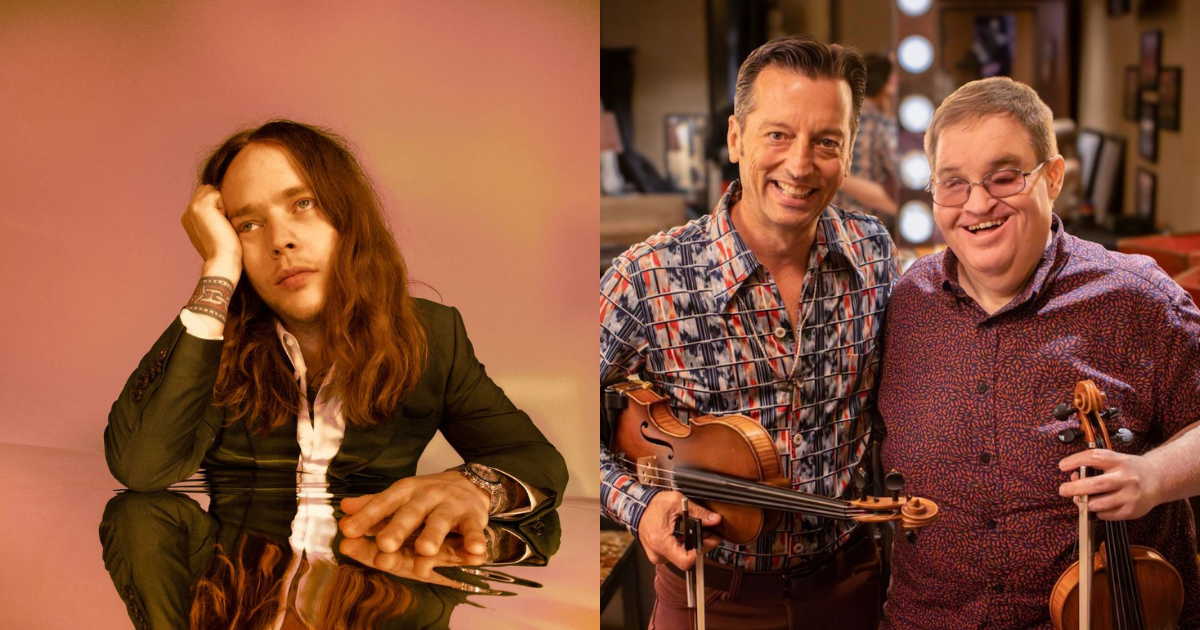
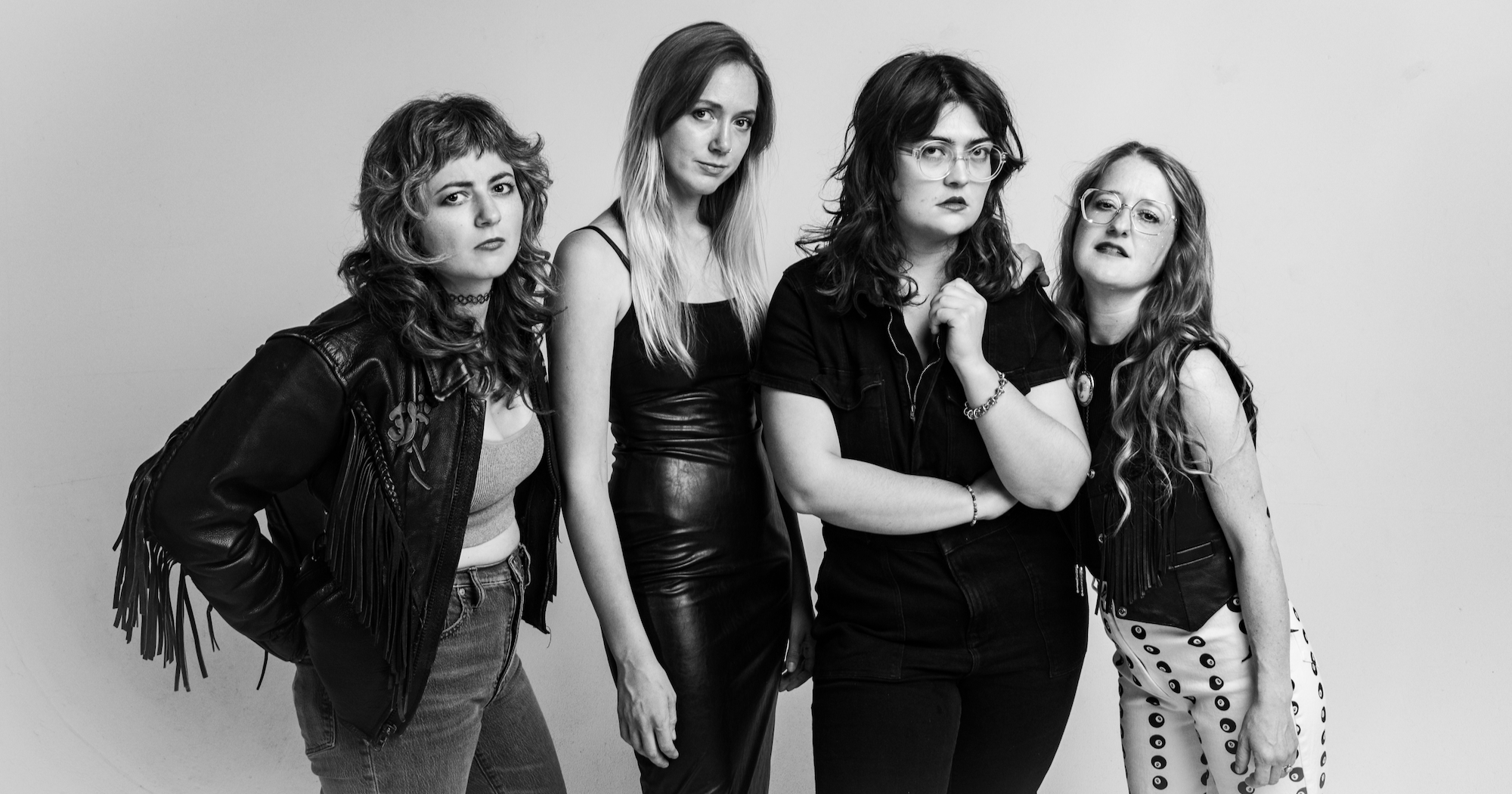
Big Richard is blowing up the bluegrass scene. Their cheeky moniker is a fitting introduction to their mischievous spirit – think four women, leaps and bounds of talent, political acuity, and unrivaled vibrancy. Their magnetism has garnered a true energetic match from their fan base, who are occasionally known to attend live shows with inflatable male genitalia in tow. Everything about Big Richard is its own micro revolution.

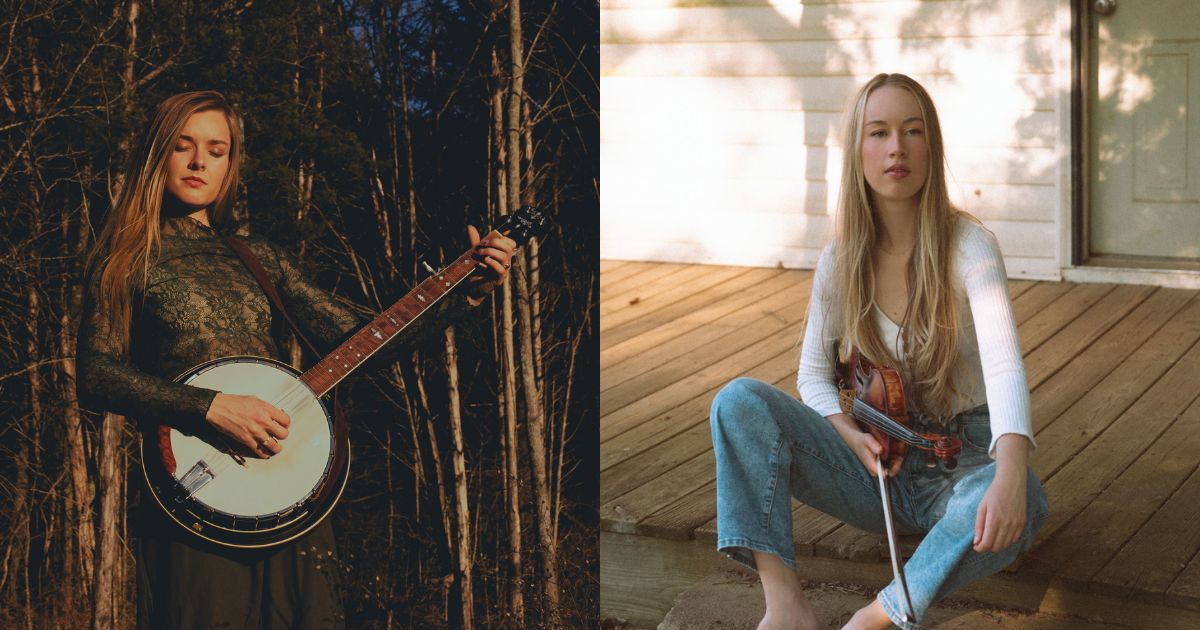
Joy Adams (cello), Eve Panning (fiddle), Hazel Royer (bass), and Bonnie Sims (mandolin, guitar) make up the fearsome foursome. Each woman has cultivated a slew of experience in her own right, amalgamating into a supergroup of pulsating passion and prowess. February 6, 2026, saw the release of the group’s sophomore studio album, Pet, via Signature Sounds. A ripe combination of fiddle tunes, originals, and an astute cover or two, Pet was recorded live in an effort to encapsulate Big Richard’s dynamic chemistry. Raw power seeps through every track, their topical lyrics and fiery dispositions bulldozing over patriarchal expectations so often affiliated with the bluegrass legacy.

Big Richard is fierce, loving, and unstoppable. When BGS sat down to ask a few questions regarding their new release, their affinity for one another beamed radiantly through the grainy Zoom screen. Joining from an early morning in the middle of tour, Big Richard arrived to our call piled onto a single hotel bed á la the grandparents from Charlie and the Chocolate Factory.

Their banter electric and punctuated by spurts of laughter, bassist Hazel even delivered a sardonic recitation of a poem from her bedside book before launching into the interview. What followed was a curious exploration of the inspirations and aspirations to which the band meticulously attends.

Congrats on Pet! Can you tell us a little bit about the narrative of Big Richard and why you’re all in the same bed? What brought you here?

Bonnie Sims: We started a band because a festival needed more ladies on their lineup. They called old Eve Panning on the fiddle over there and said, “Hey, you probably know other women, right?” So she took a call, and she called us.

Joy Adams: We were just supposed to play one show, and I remember having a rehearsal and everyone peeing their pants from laughing so hard. We played our festival set and half of it got rained out. So we had all these songs we still needed to play and decided to book another show so we could play them. We also got some hate at that festival – some people were very offended by our name. We were also handing out penis paraphernalia, and we made these puff-paint T-shirts that had a dick with hairy balls playing banjo.

Hazel Royer: People got mad enough that we were like, “Oh, we have to do this again. This is so funny.”

BS: We were like, “Are we rage-baiting middle-aged boomers? Could this be any more fun?” I grew up as a bluegrass kid, and I always had an aversion to some elements of the culture socially, especially towards women. I felt very stifled by it with my personality, so I always said if I was going to be in a bluegrass band, I wanted to feel like I was power-sliding in on my knees with both middle fingers up. I feel like Big Richard does that very well energetically. We are doing that constantly on the scene, on stage, to audiences, to other musicians, to promoters – we try to bring an unexpected vibe.

What is unique about collaborating with an all-femme outfit?

JA: Well when I get my period, they all get their periods. We’ll be halfway through tour and someone will be like, “Okay, when is it coming?”

BS: And I like that you said outfit. It’s mostly about our outfits. We share clothes, we encourage dressing up, we share beds, we like to theme – the chemistry is deep!

JA: We theme all of our outfits. Like last night, we’re staying at a Best Western, so our theme was “Breast Western.”

Eve Panning: I actually showed up dressed just like the drummer in the opening band. But yeah, I guess we’ve all played in bands with men before, and all sorts of other lineups. I personally have loved all of those bands, loved making music with them, and learned a lot. But there is something really special about being in a group with all ladies. There’s just something that I feel like is kind of unspoken and understood.

BS: And I feel like the reception of us often still has some sort of stigma attached to it. Like at gas stations, at venues, people will be like, “Oh, girls, are you traveling alone?” “Ladies, are you sure you’re okay?” And I get to be like, “Yeah, we are! Yeah, that’s right.” I feel like being in this band has fortified my personal independence bone.

Has being politically forward also impacted your reception?

HR: Yeah, definitely. This band has been pretty politically forward since its inception, so we’ve also curated a fan base that understands what to expect. For the most part, people come to our shows because they know that. Last year we had a few shows where people left in anger, but it’s not common.

BS: Even just the name Big Richard is a pretty good litmus test for whether or not you’re able to take a joke. If you get the joke, and if you’re willing to laugh, that’s a really good precursor to deciding if you want to be a part of this party.

What context, interpersonally or globally, informed the particular creation of your album, Pet?

HR: We wanted to create an album. There was Live from Telluride [2022] before I joined the band and then we had Girl Dinner [2025], which was an album we made in the studio. For Girl Dinner, we were all separated sonically, isolated and in booths with headphones so that we could edit things and overdub stuff. I was very new to the band at that point. Our sound was very informed by coming together and creating this new thing.

But for this new album, Pet, we recorded every song live. We wanted to emulate the live sound that we have on stage with each other, because that’s where we feel most confident and powerful as a group. I think it is where we are the most successful musically. And we recorded all live to tape, so everything is analog, which has been awesome.

BS: Big Richard is definitely an energy. A large part of our alchemy together is the energy that the four of us create. And that requires being in the room together, having our voices actually, physically interacting and coming together into things. We wanted to tap into the stuff that feels real. And for us, we’re a live band. We perform shows all the time, and so we’re trying to bring that element into the studio.

What is your process of composing and arranging like?

EP: We’ve done some co-writes, which have been really fun, but a lot of the time someone will bring a song of their own with an idea of where they want it to end up, though our arrangements are also pretty collaborative. Each of us has a distinct flavor that they bring to the band.

What would you say is the most distinctive difference in your respective musicianships?

BS: Eve and Joy were classical kids growing up, and Hazel and I both had dads who played the banjo.

What is it like to bridge that gap?

BS: When Eve writes out her fiddle tunes, I take the music, I go home, and I write every note, and then I practice it. And Joy just somehow immediately has it down – so she bridges it really fast, and I have to build a bridge, piece by piece.

EP: And then when Bonnie or Joy or Hazel is singing a song, and they’re like, “Eve, can you sing the harmony part?” I have to be like, “Guys, how do I make it sound better? How do I sing good?” And then they try and help me out there.

JA: We use our skillsets to fill in the gaps for each other.

BS: And we don’t expect people to know what we know. That’s not a fair thing to put on other musicians. We all come from different backgrounds.

Lots of dynamic abundance!

What did y’all each have on repeat while you were recording Pet?

JA: I was listening to Twain a lot. “The Fox (Yup Yup Yup)” or “The Sorcerer” from Twain.

HR: I was listening to Christian Lee Hutson a lot. “Tiger” is so good.

BS: Probably scream-singing Chappell Roan in my car on the way home.

EP: I had a bit of a phase with The Weepies this summer, because I hadn’t listened much, but then Hazel was putting them on in the van a lot.

HR: They’re so good, too.

Always a good bet. Now, if y’all were in an alternative universe where you were still connected as a group, but you weren’t a band or a musical group, what would you be?

JA: Probably a truck-driving outfit.

BS: Yeah, we’re Ray Bitcher, we’re a truck-driving outfit. Or– can we be the Golden Girls, too? I want to be old ladies with y’all. Oh, and a third thing. We are also a punk band called Hateful Hazel.

Incredible. Is there anything you feel like you’ve learned about yourselves or playing together throughout the process of putting out this album?

BS: This is a collaboration and a democratic process of a band. Putting together Pet, and Big Richard as a whole, is constantly an opportunity to compromise. It’s not about my singular creative vision for any song or any record. It’s about coming together and listening to each other and then having everybody’s input. It ends up being this amalgamation of everybody’s creative juju. Incorporating somebody else’s ideas is a great learning opportunity for any creative.

HR: We also learned that this live recording style works really well with this band. We’d always had a hunch that if we just got in a room together and set up a mic that it’d be the best way to capture our sound. Turns out it’s pretty true.

BS: We learned that we liked dressing up as clowns. Artistically fitting.

JA: Apocalypse clowns, specifically.

Oh yeah, the album art is impeccable. Beyond the clownage, what are y’all each proudest of on this album?

JA: I think we’re just proud that it finally sounds like us on stage. Girl Dinner was very clean, but the live recording on Pet really worked for us.

BS: I do love “Make the World Go Away” as the ending of the record. It’s always such a potent moment in live shows, because a lot of times we’ll go into the crowd and sing it acoustic. The music becomes so tangible – we’re literally standing a foot from somebody, you know, and their face is right by our face, and we’re singing and we’re looking at them. I feel like we can miss music in that realm with performing.

The stage amplifies what we’re doing, but it’s also a barrier. Which, at times, is great because it wouldn’t be successful on the ground in a crowd of 3,000 people, but in a club with 250 or 300 people, you can stand in the middle of it and ask everybody to be quiet while you sing an acoustic song. Those moments are so connected. And I feel like this is how music can reach out and touch everyone. It’s not just for performing and money and clapping and being on a stage. It’s about feeling as humans together. Music is a tool for that.

Was that philosophy a big influence for Pet as a whole?

BS: We’re definitely trying to apply music as medicine. Humanity is missing out on something right now, and music is a tool to help us access our higher selves.


Photo courtesy of the artist.
Life Is a Magic Accident and Della Mae Say Make the Best of It

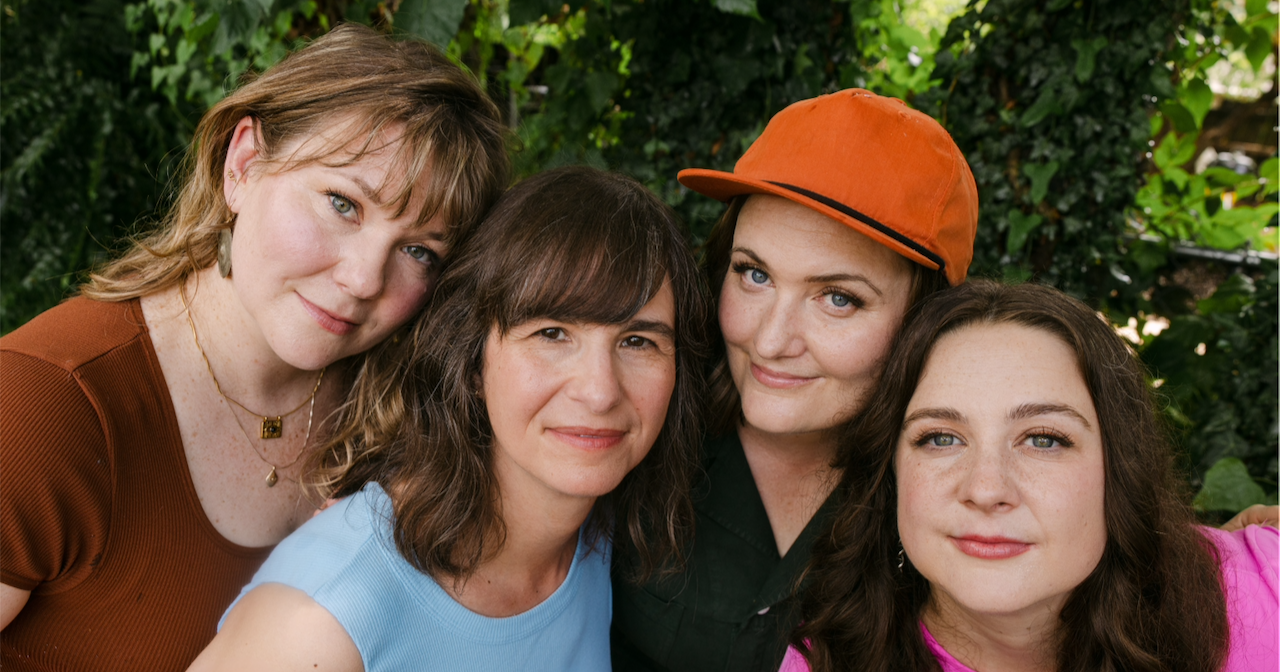
Fifteen years ago, bluegrass band Della Mae’s vocalist Celia Woodsmith wrote her future self a letter. She was 25 years old, burned out on trying to make it in Boston’s rock scene, and reeling from the loss of her father.

“If you can just die, why would you be doing something that you didn’t love to do?” she asked.

Her answer – and her hopes for her future self, which Woodsmith wrote into that letter – inspired the title track and underlying message of the band’s new album, Magic Accident, which marvels at the improbability of existence. As Woodsmith sings on “Magic Accident”:

We all start with something
No one comes from nothing
It took a millennia to get you here
You’re a magic accident, the way that fate bent
With a little carbon and gravity
Carbon and gravity

“Our life is just a series of these little accidents – my parents meeting, their parents meeting. And it’s a beautiful and magical thing that we’re all here right now. It’s a beautiful and magical thing that Della Mae is here,” Woodsmith says. “That’s the basis behind that song, and it’s the basis behind how I think about a lot of my life. It’s just a beautiful accident that I’m here at all. So I might as well enjoy it and do the best thing, the best that I can, while I can.”

Magic Accident, as an album, a song, a concept, and a band ethos, celebrates following one’s own path. All four members of Della Mae – Woodsmith, founder and fiddler Kimber Ludiker, guitarist Avril Smith, and bassist Vickie Vaughn – lost their fathers prematurely, which bonds them as a band and altered how each woman sees the world. And making it as one of the few all-women bluegrass bands inherently required the Dellas to push boundaries and carve out space for their lives and stories.

“If I could talk to the little girl inside of me/ I’d let her know the world ain’t what it seems/ And if she would listen/ Could I keep her safe from making my mistakes?” the band wonders on “My Own Highway,” the album’s second track. Later, they remind the next generation of the same sentiment in “Out Run ‘Em,” written by Smith (co-written with Caroline Spence) for her pre-teen daughter, advising, “If you go with the crowd, you can’t out run ‘em.”

Indeed, all of Magic Accident listens like a set of love and advice letters to the band’s younger and current selves.

“I don’t think we could have written this album as young women. This is an older, wiser woman sort of thing,” Woodsmith says.

Elsewhere on Magic Accident, the band appreciates life’s small, sweet, desperately important moments. “Nothing at All,” which Woodsmith wrote with Spence, is a gentle appreciation of love that’s aged comfortably, while “Little Bird,” which the pair also wrote, relishes slow days and simple life joys.

“What do they say? One of the biggest forms of revolution is having joy in spite of what’s going on around you,” says Vaughn, about including these kinds of emotional interludes on the album. “And sometimes, the little things are all we have right now, whenever all this bullshit is happening.”

These songs would not be confused with light subject fare, though. The weight and wisdom of lived experience grounds Magic Accident in conviction and clarity, even when it may appear uncomfortable. “Family Tree,” a furious track driven by producer Alison Brown’s banjo picking and Ludiker’s fiddle, explores what it takes to break harmful generational cycles. “What You’re Looking For” ends a relationship that no longer serves the narrator. On the album’s only cover, Bruce Robison’s “Lifeline,” Vaughn on vocals (with Mary Bragg on harmony), reaches a hand down to anyone struggling to find their footing in the buffeting of life.

“The weight has become unbearable,” Woodsmith says. “We speak our minds and we fight for the things that we think are right; we all feel strongly about a lot of the same things, like women’s rights. But that can be a heavy load to bear and to sing constantly night after night.

“Sometimes we choose not to sing some of these songs that we believe so strongly, just because it’s become hard to bear that weight. I think this album lets us see the light a little bit.”

Though it’s full of interpersonal songs, on the final track of Magic Accident Della Mae zooms out to consider the state of the world. Sonically bluegrass and lyrically a protest, “Takes All Kinds” – co-written by Vaughn and singer/songwriter Melody Walker – asks the world to consider its future, as well:

Oh, the politicians who write the laws
(Oh, lord it takes all kinds)
They say they stand for the underdog
(Oh, lord it takes all kinds)

But then they take my rights away
(Oh, lord it takes all kinds)
For a greenback dollar at the end of the day
(Oh, lord it takes all kinds)

Ludiker started Della Mae in part out of frustration with how few women she saw on concert bills and in bluegrass bands. “After talking with a lot of people, it was pretty clear that maybe those bands also wouldn’t hire women for various reasons; I eventually got the idea to start my own band,” she says.

“My brain just wouldn’t accept the fact that [otherwise] maybe I wouldn’t have some of the [same] opportunities that I would have if I was a boy.”

To that end, Della Mae has been part of building a more inclusive, supportive community in bluegrass. Indeed, Woodsmith joined the band soon after writing herself the letter that inspired “Magic Accident.” At the time, she planned to quit music and join the Peace Corps. Instead, 15 years on, Della Mae has produced six studio albums (including their GRAMMY-nominated This World Oft Can Be on Rounder Records) and toured over 30 countries with the U.S. State Department music diplomacy program.

Della Mae is, by their own estimation, the longest-touring all-woman bluegrass band. Which would prove, as they put it on their website, “once and for all, that a band of all women is not, nor has ever been, a mere novelty.”

“Hopefully we can inspire other little magic accidents,” Woodsmith says. “Like other women or other young people who want to play, who see us at the right time in their lives to push them forward to playing music, and to step outside of their comfort zones and do something they thought might be impossible.”


Photo Credit: Laura Schneider

See the Winners of the 2025 IBMA Bluegrass Music Awards

Tonight, September 18, 2025, the International Bluegrass Music Association held their 36th Annual IBMA Bluegrass Music Awards at the Soldiers and Sailors Memorial Auditorium in Chattanooga, Tennessee – the organization’s first awards show presented in their new host city.

The IBMA Awards are designed to be peer-to-peer, voted on by the professional membership of the IBMA, performers, artists, industry professionals, broadcasters, and beyond. As a result, the show this year – which was hosted by the hilarious and talented duo of Steve Martin and Alison Brown – was an evening celebrating mutual admiration, mentorship, sharing, and the diverse ways all of this music’s creators celebrate tradition, and the innovation at its core. That phenomenon has been a hallmark of the IBMA Awards over all of their 36 years. Through the many categories there were a wide array of winners from across generations, styles, and levels of notoriety.

Bluegrass’s most prominent artist at the moment, Billy Strings, took home the night’s highest honor, Entertainer of the Year – his fourth such trophy. Alison Krauss, who recently returned to the road with a brand new album, Arcadia, for the first time in 14 years, received her fifth Female Vocalist of the Year award, her first since 1995. Jason Carter & Michael Cleveland received three awards for their superlative debut album together and its songs including Album of the Year, Song of the Year, and Collaborative Recording of the Year.

Women were represented in force across the many categories this year, remarkable given the sheer number of years where women nominees were absent entirely or merely counted in the single digits. Along with Krauss winning Female Vocalist women took home trophies in many more categories: Gospel Recording of the Year (Jaelee Roberts; writer, Kelsi Harrigill); Instrumental Recording of the Year (Kristin Scott Benson, Gena Britt, Alison Brown); Banjo Player of the Year (Kristin Scott Benson); Bass Player of the Year (Vickie Vaughn); Fiddle Player of the Year (Maddie Denton); and Mandolin Player of the Year (Sierra Hull).

During the IBMA Bluegrass Music Awards, the 2025 class of Bluegrass Music Hall of Fame inductees were honored with speeches, plaque presentations, and incredibly special musical performances. This year’s inductees include Hot Rize, The Bluegrass Cardinals, and Arnold Schultz, the first Black person to ever be elected to the hall, the association’s highest honor, since it was begun in 1991.

IBMA’s World of Bluegrass business conference and IBMA Bluegrass Live! festival continue in Chattanooga through Saturday, September 20. Get more information on the event and purchase tickets for Bluegrass Live! here. Below, check out all of the winners at this year’s 2025 IBMA Bluegrass Music Awards.

(Winners denoted in bold.)

ENTERTAINER OF THE YEAR 

Alison Krauss & Union Station
Appalachian Road Show
Billy Strings
East Nash Grass
The Del McCoury Band

SONG OF THE YEAR 

“5 Days Out, 2 Days Back” – Alison Brown, Steve Martin, Featuring Tim O’Brien
Songwriters: Steve Martin, Alison Brown
Producers: Alison Brown, Garry West
Label: Compass Records

“Big Wheels” – Authentic Unlimited
Songwriter: Jerry Cole
Producer: Authentic Unlimited
Label: Billy Blue Records

“Coal Dust Kisses” – The Grascals
Songwriters: Susanne Mumpower, Jerry Salley
Producer: The Grascals
Label: Mountain Home Music Company

“My Favorite Picture of You” – Darin & Brooke Aldridge
Songwriters: Darin Aldridge, Brooke Aldridge, Dennis Duff
Producers: Darin Aldridge, Mark Fain
Label: Billy Blue Records

“Outrun the Rain” – Jason Carter & Michael Cleveland
Songwriters: Terry Herd, Jimmy Yeary
Producers: Jason Carter, Michael Cleveland
Label: Fiddle Man Records

ALBUM OF THE YEAR 

Arcadia – Alison Krauss & Union Station
Producer: Alison Krauss & Union Station
Label: Down the Road Records

Carter & Cleveland – Jason Carter & Michael Cleveland
Producers: Jason Carter, Michael Cleveland
Label: Fiddle Man Records

Earl Jam – Tony Trischka
Producers: Tony Trischka, Lawson White
Label: Down the Road Records

Highway Prayers – Billy Strings
Producers: Billy Strings, Jon Brion
Label: Reprise Records

I Built a World – Bronwyn Keith-Hynes
Producers: Brent Truitt, Bronwyn Keith-Hynes
Label: Sugar Petunia Records

VOCAL GROUP OF THE YEAR 

Alison Krauss & Union Station
Authentic Unlimited
Blue Highway
Sister Sadie
The Del McCoury Band

INSTRUMENTAL GROUP OF THE YEAR 

Billy Strings
East Nash Grass
Michael Cleveland & Flamekeeper
Molly Tuttle & Golden Highway
The Travelin’ McCourys

GOSPEL RECORDING OF THE YEAR 

“Blue Collar Gospel” – Jerry Salley Featuring The Oak Ridge Boys
Songwriters: Rick Lang, Bill Whyte, Jerry Salley
Producer: Jerry Salley
Label: Billy Blue Records

“Dear Lord” – Darin & Brooke Aldridge
Songwriter: Daniel Davis
Producers: Darin Aldridge, Mark Fain
Label: Billy Blue Records

“Even Better When You Listen” – Joe Mullins & The Radio Ramblers
Songwriters: Rick Lang, Mark BonDurant
Producer: Joe Mullins & The Radio Ramblers
Label: Billy Blue Records

“He’s Gone” – Jaelee Roberts
Songwriter: Kelsi Harrigill
Producer: Byron House
Label: Mountain Home Music Company

“Wings of Love” – Authentic Unlimited
Songwriters: Jesse Brock, Stephen Burwell, Jerry Cole, Eli Johnston, John Meador
Producer: Authentic Unlimited
Label: Billy Blue Records

INSTRUMENTAL RECORDING OF THE YEAR 

“Bluegrass in the Backwoods” – Jason Carter & Michael Cleveland
Songwriter: Kenny Baker
Producers: Jason Carter, Michael Cleveland
Label: Fiddle Man Records

“The Drifter” – Danny Roberts
Songwriter: Danny Roberts
Producers: Danny Roberts, Andrea Roberts
Label: Mountain Home Music Company

“A Drive at Dusk” – Authentic Unlimited
Songwriter: Jesse Brock
Producer: Authentic Unlimited
Label: Billy Blue Records

“Kern County Breakdown” – Jason Carter & Michael Cleveland
Songwriter: Buck Owens, Don Rich
Producers: Jason Carter, Michael Cleveland
Label: Fiddle Man Records

“Ralph’s Banjo Special” – Kristin Scott Benson, Gena Britt, Alison Brown
Songwriter: Ralph Stanley
Producer: Alison Brown
Label: Compass Records

NEW ARTIST OF THE YEAR 

AJ Lee & Blue Summit
Bronwyn Keith-Hynes
Jason Carter
Red Camel Collective
Wyatt Ellis

COLLABORATIVE RECORDING OF THE YEAR 

“5 Days Out, 2 Days Back” – Alison Brown & Steve Martin Featuring Tim O’Brien
Songwriters: Steve Martin, Alison Brown
Producer: Alison Brown, Garry West
Label: Compass Records

“A Million Memories (A Song for Byron)” – Darin & Brooke Aldridge Featuring Vince Gill
Songwriter: Vince Gill
Producers: Darin Aldridge, Mark Fain
Label: Billy Blue Records

“Cora Is Gone” – Bobby Osborne & C.J. Lewandowski Featuring Rob McCoury, Billy Strings
Songwriter: Mac Odell
Producer: C.J. Lewandowski
Label: Turnberry Records

“Outrun the Rain” – Jason Carter & Michael Cleveland, Jaelee Roberts, Vince Gill
Songwriters: Terry Herd, Jimmy Yeary
Producers: Jason Carter, Michael Cleveland
Label: Fiddle Man Records

“Ralph’s Banjo Special” – Kristin Scott Benson, Gena Britt, Alison Brown
Songwriter: Ralph Stanley
Producer: Alison Brown
Label: Compass Records

MALE VOCALIST OF THE YEAR 

Billy Strings
Dan Tyminski
Del McCoury
Greg Blake
Russell Moore

FEMALE VOCALIST OF THE YEAR 

AJ Lee
Alison Krauss
Brooke Aldridge
Jaelee Roberts
Sierra Hull

BANJO PLAYER OF THE YEAR 

Alison Brown
Gena Britt
Kristin Scott Benson
Ron Block
Tony Trischka

BASS PLAYER OF THE YEAR 

Barry Bales
Mike Bub
Missy Raines
Todd Phillips
Vickie Vaughn

FIDDLE PLAYER OF THE YEAR 

Bronwyn Keith-Hynes
Jason Carter
Maddie Denton
Michael Cleveland
Stuart Duncan

RESOPHONIC GUITAR PLAYER OF THE YEAR 

Andy Hall
Jerry Douglas
Justin Moses
Matt Leadbetter
Rob Ickes

GUITAR PLAYER OF THE YEAR 

Billy Strings
Bryan Sutton
Cody Kilby
Molly Tuttle
Trey Hensley

MANDOLIN PLAYER OF THE YEAR 

Alan Bibey
Jesse Brock
Ronnie McCoury
Sam Bush
Sierra Hull

MUSIC VIDEO OF THE YEAR 

“5 Days Out, 2 Days Back” – Alison Brown & Steve Martin Featuring Tim O’Brien
Songwriters: Steve Martin, Alison Brown
Producer: Alison Brown, Garry West
Videographer: Joseph Spence
Label: Compass Records

“A Million Memories (A Song for Byron)” – Darin & Brooke Aldridge Featuring Vince Gill
Songwriter: Vince Gill
Producer: Jenny Gill
Videographer: Travis Flynn
Label: Billy Blue Records

“Big Wheels” – Authentic Unlimited
Songwriter: Jerry Cole
Producers: Bryce Free, Kyle Johnson
Videographer: Bryce Free
Label: Billy Blue Records

“Gallows Pole” – Appalachian Road Show
Songwriter: Traditional, arr. Barry Abernathy, Jim VanCleve, Darrell Webb
Producer: Steve Kinney
Videographer: Steve Kinney
Label: Billy Blue Records

“Tennessee Hound Dog” – The Grascals
Songwriter: Felice Bryant, Boudleaux Bryant
Producer: Ty Gilpin
Videographer: Nate Shuppert
Label: Mountain Home Music Company

“The Auctioneer” – The Kody Norris Show
Songwriters: Leroy Van Dyke, Buddy Black
Producer: James Gilley
Videographer: Nate Wiles
Label: Rebel Records


Photo Credit: Billy Strings by Dana Trippe; Jason Carter & Michael Cleveland by Emma McCoury.

Alison Brown Carries on the Legacy of Louise Scruggs

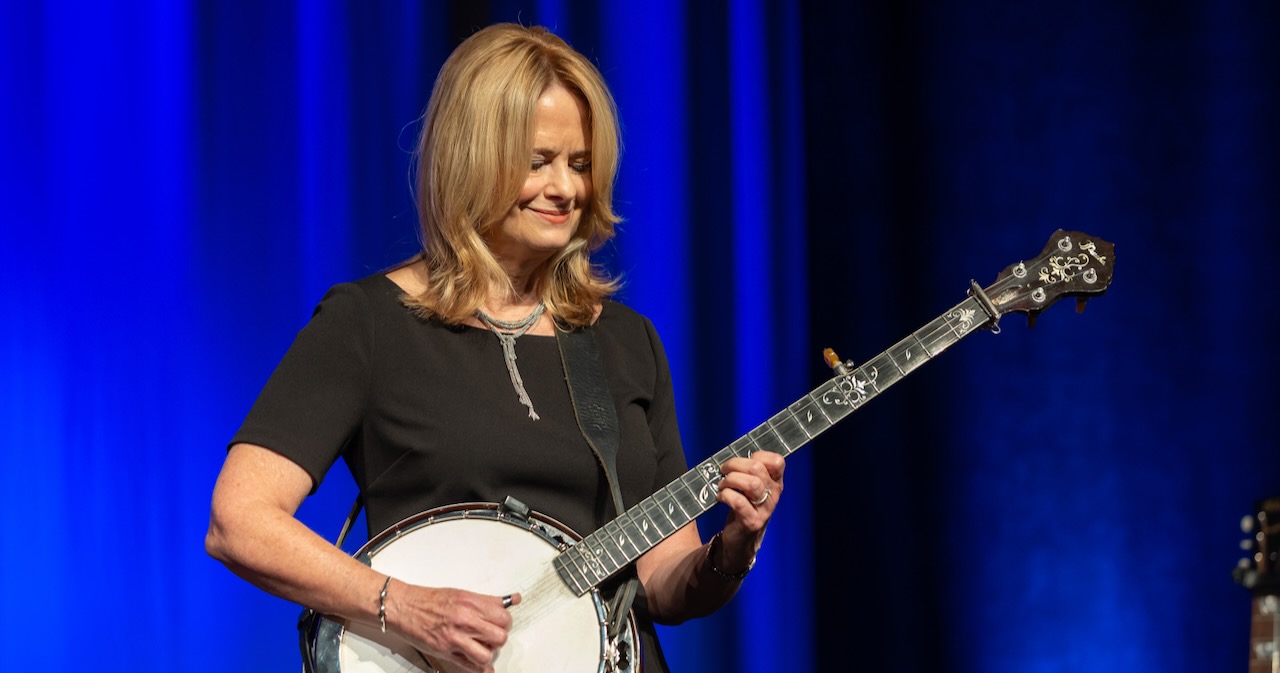
Alison Brown heard Earl Scruggs playing on the Foggy Mountain Banjo album when she was 10 years old – and it changed the course of her life. More than 50 years later, Brown is the newest honoree at the Country Music Hall of Fame and Museum’s Louise Scruggs Memorial Forum.

Yes, the circle really is unbroken.

Brown has received countless awards throughout her career as a groundbreaking banjo player. This time, however, she will be recognized for her many contributions to the business side of music.

The museum states that “The Louise Scruggs Memorial Forum recognizes a music industry leader who continues the legacy of trailblazer Louise Scruggs, a formidable businesswoman who set new professional standards in artist management.”

Michael McCall, CMHOF’s Associate Director of Editorial, said, “We always try to look at the people who are important in country music, but who the public may not know about.”

The forum began in 2007 with a mission to acknowledge Louise Scruggs’ remarkable contributions in light of the fact that “women don’t always get the recognition they should,” McCall said. “The forum is a way to shine lights where they don’t always shine.” Brown is the 17th honoree.

Default icon

Marty Stuart once told writer Jon Weisberger that Louise Scruggs “was to the business what Lester and Earl were to the music.” While performing with Bill Monroe, the “Father of Bluegrass Music,” Earl Scruggs introduced audiences to the three-finger style that we now think of as bluegrass banjo. That driving syncopation was one, possibly the primary, feature that separated bluegrass from the other forms of what was then called “hillbilly music.”

Decades later, bluegrass banjo players, almost without exception, cite Earl Scruggs as a primary influence.

While Louise’s impact isn’t as widely known, she was an equal force in the music industry. She turned the management of bluegrass artists from a casual afterthought to a profession. And her instincts and cultural awareness started ripples that are still expanding today as bluegrass, folk, and country meet in the land of Americana.

Louise was born in 1927. Shortly before she died in 2006, she told The Tennessean, “My mother worked her fingers to the bone, and my daddy did, too, and I didn’t want to go out in a field chopping corn.”

She developed office skills to fulfill a desperate determination established during the Great Depression to escape farm life. Those abilities set her on a path that in some ways changed the trajectory of bluegrass music. At the time, the bluegrass world was totally male-dominated on both the entertainment and business sides.

“But Louise was so good at what she did,” McCall said, that she was a total success. She overcame any resistance with her “integrity, and by being both hard and fair in business.”

Earl Scruggs and Lester Flatt started an immensely successful band in 1948. But it wasn’t just Lester’s voice and Earl’s banjo that made Flatt & Scruggs household names. It was Louise.

Louise had been working as a bookkeeper when she fell for Earl Scruggs, seeing him on stage as a member of Bill Monroe’s Blue Grass Boys. After marrying Earl, Louise initially stayed home to raise their three children. In 1955, she took over management of Flatt & Scruggs, becoming the first female manager and booking agent in the music industry.

In addition to excelling at contract negotiation and other financial aspects of talent management, Louise was a visionary. She pursued the potential of various media previously untapped by bluegrass, as well as navigating shifting cultural trends.

When Louise negotiated with CBS for use of “The Ballad of Jed Clampett” and appearances on The Beverly Hillbillies, the sound of bluegrass banjo was heard in living rooms across the nation – well beyond the coverage of the Grand Ole Opry. The theme song to Petticoat Junction kept the momentum going.

With “Foggy Mountain Breakdown” featured in the popular film Bonnie & Clyde, banjo teachers were inundated with requests to take new students.

Louise established Earl as part of the folk revival when she booked him into the first Newport Folk Festival. New York City audiences opened their ears and hearts to Flatt & Scruggs when the band appeared at Carnegie Hall. Louise also encouraged these revered bluegrass musicians to incorporate songs written by contemporaries like Bob Dylan and Johnny Cash; Earl even made some recordings with saxophonist King Curtis.

Flatt didn’t appreciate the expanded repertoire and he split from Earl in 1969. Louise quickly helped form the Earl Scruggs Revue with their sons, a “beyond-bluegrass” ensemble enthusiastically received on college campuses and at festivals. They performed with acts like Steppenwolf and The Byrds and they appeared at a major anti-Vietnam War demonstration in Washington, D.C., in 1969.

Default icon

The Country Music Association’s CEO Sarah Trahern said of Louise, “She was blessed with charm, intelligence, a puritan work ethic, and a wonderful sense of humor.”

The same can be said about Alison Brown, the 2025 honoree. To say Alison Brown is admired as a banjo player hardly touches the music community’s regard for her talents.

Once she heard Earl play at age 10, Brown never let up on the banjo, winning contests at a young age and working across her entire career to expand the banjo’s role in acoustic music.

She was the first woman to receive an Instrumentalist of the Year award from the International Bluegrass Music Association on any instrument. She has won GRAMMYs and has been nominated for others and she is in the Banjo Hall of Fame.

Kristen Scott Benson, six-time IBMA Banjo Player of the Year – the second woman to receive the honor – recalls hearing Brown’s Simple Pleasures CD. “It was the first time I had ever heard any banjo playing outside the bluegrass realm. I was completely fascinated and my ears were opened to a whole new world of writing and playing.”

These days Brown frequently writes and performs with fellow banjo player Steve Martin and receives rave reviews for numerous other collaborations.

When Brown graduated Harvard with a history degree, she faced the question of what to do next. Realizing that neither the humanities nor banjo playing were money makers, she adopted the attitude of, “A girl’s gotta eat, right?”

She was accepted into UCLA business school and spent three years in investment banking. Then Alison Krauss beckoned her back to professional banjo in the early days of Union Station.

This eventually led her to performing with Michelle Shocked and to meeting her husband-to-be, Garry West. Cut to an Alison and Garry discussion in a Stockholm café about the elements of a good life. They still have the napkin on which they jotted words like performing, recording, having a label, a studio, publishing – and family. That was how the idea for an independent record label was born.

Small World Music began with the goal of distributing music by little-known artists they heard while on tour. Initially, they worked with a tiny Australian company, promoting six products in their catalogue.

“There was a video called ‘Coral Sea Dreaming’ that was visual music – beautiful scenes of coral reefs, set to a new age soundtrack,” Brown described. She and West thought it would be perfect for the Nature Store chain, but the buyer ignored their overtures.

So, Brown said, “We started calling Nature Stores and saying that we’d heard about this amazing video called ‘Coral Sea Dreaming’ – did they have it in stock?” And a few days later, the buyer called them.

“That was one of the first big things that helped our cash flow, leading to the launch of Compass.”

While she had been happy to leave the dry work of entry-level investment banking, she appreciates the knowledge she acquired there and in business school. “Like how to put together a business plan and the financial projections to support it. It also gave me paper credibility,” with investors.

Compass Records has evolved to become one of the most respected independent labels in the industry, specializing in niche markets like Celtic, folk, bluegrass, Americana, jazz and many varieties of roots music.

Default icon

The business environment Brown entered when she started Compass Records in 1995 was a far cry from the all-male world that Louise Scruggs operated in.

“I’m a firm believer that we all stand on the shoulders of the people who have come before us. And that’s incredibly true for me as a woman in business. I’ve never had to deal with those kinds of challenges [being undervalued or ignored] as a female.”

Brown and West planned their lives so they could start a business, support their love of music, and raise two children – building in the resources they needed for balance and family time. Technology and changing gender roles made all that possible in a way that wasn’t available in the 1950s. But while she didn’t encounter the same challenges as Louise Scruggs, she finds herself facing more profound obstacles.

“The digital transformation has changed the music business, maybe more than any other industry,” she said. “How do you exist in an ecosystem where you’re creating music and having to give it away for free?”

Brown was recently elected president of the Nashville Chapter of the Recording Academy. She has assumed a leadership role in promoting the rights of artists and labels and she is a determined advocate for equality of broadcast royalties – more important than ever when “streaming pays a third of a penny per stream.”

“That’s a rate conceived by the Copyright Board before people knew that a stream wasn’t a small river,” she said. “I feel like this is a critical time for creators, and I fear that, with so many people in Washington in the pocket of big tech, creators’ interests could very easily become marginalized in this race for AI.

“It’s a precarious moment, but at the same time, I feel like some of the best roots music and bluegrass music that’s ever been made is being made now, and I think it will stand the test of time.

“I think that cultivating your community is the key to succeeding – knowing who your fans and supporters are and making sure they know who you are. And now we have the tools to connect directly with our audience, which we didn’t have when we started 30 years ago,” Brown said.

She also reminds fans that, “If you want to support the artists, buy physical product. That’s still where the artists can make some money.”

Default icon

Marian Leighton Levy, who started Rounder Records in the 1970s along with two partners, knows the challenges of an independent label. And she is well aware of how much more competitive the industry has become in the face of consolidation; artists’ ability to produce their own product; and the devastating effect of streaming on creators’ incomes.

Levy said of Brown, “She’s one of the few people who’s been a top-level musician, someone who knows her way around the studio as an engineer and a producer, has started and been running a record company with Garry and somehow or other had as balanced a life as one can have while doing all of those things. And she’s been doing remarkably well for a very long time – it is just incredible what she’s accomplished.”

At the Hall, McCall lauds Brown not only for her success with Compass, but with all the ways she contributes to the industry – from participating in IBMA to the Recording Academy to the Country Music Hall of Fame and Museum itself.

Brown feels deeply honored to be recognized at the Louise Scruggs Memorial Forum, “having been called Girl Scruggs for so much of my childhood.”

“Louise was such a wonderful, influential force in roots music, being acknowledged as following in her footsteps is incredibly meaningful.”

She sees the forum as a great contribution to the business of music by acknowledging how far the industry has come.

“One of the things that I think is so exciting about the moment that we’re living in is that women are peppered throughout the ecosystem in a way that wasn’t the case 50 years ago. We have women promoters, artists, DJs, running record labels. Now we have this golden opportunity to create the reality that we want to live in, and we can do that by supporting each other.”


Photo courtesy of the Country Music Hall of Fame & Museum.

Celebrating Women’s History Month: Sister Rosetta Tharpe, Laurie Lewis, and More

Our partnership with our friends at Real Roots Radio in Southwestern Ohio concludes as we wind down our weekly celebration of Women’s History Month. We’re proud to have brought you four collections of a variety of powerful women in bluegrass, country, Americana, folk, and elsewhere who have been featured on Real Roots Radio’s airwaves each weekday in March, highlighting the outsized impact women have on American roots music. You can listen to Real Roots Radio online 24/7 or via their FREE app for smartphones or tablets. If you’re based in Ohio, tune in via 100.3 (Xenia, Dayton, Springfield), 106.7 (Wilmington), or 105.5 (Eaton).

American roots music, historically and currently, has often been regarded as a male-dominated space. It’s certainly true of the music industry in general and these more down-home musics are no exception. Thankfully, American roots music and its many offshoots, branches, and associated folkways include hundreds and thousands of women who have greatly impacted these art forms, altering the courses of roots music history. Some are relatively unknown – or underappreciated or unsung – and others are global phenomena or household names.

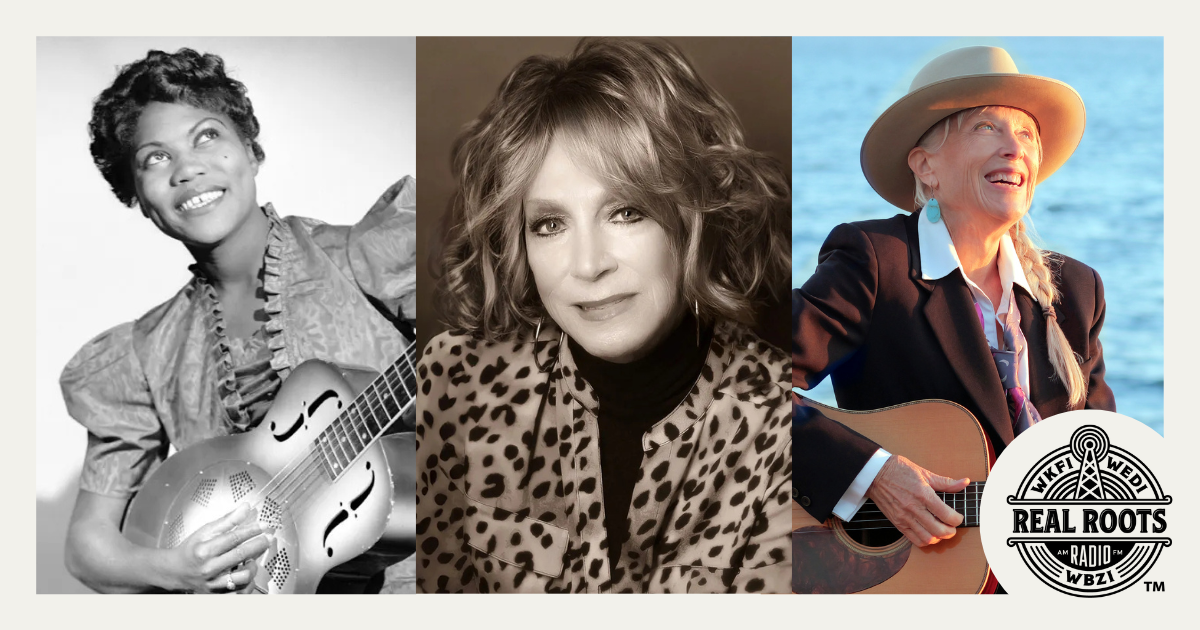
Over the last few weeks, radio host Daniel Mullins, who together with BGS and Good Country staff has curated the series, has brought you just a few examples of women in roots music from all levels of notoriety and stature. Week one featured Dottie West, Gail Davies, and more. Week two shone a spotlight on Big Mama Thornton, Crystal Gayle, Rose Maddox, and more. Week three, paid tribute to Emmylou Harris, Wild Rose, Mother Maybelle, and more. This final installment of the series celebrates Laurie Lewis, the Coon Creek Girls, Amanda Smith, Sister Rosetta Tharpe, Petticoat Junction, and Jeannie Seely.

Plus, you can find two playlists below – one centered on bluegrass, the other on country – with dozens of songs from countless women artists, performers, songwriters, and instrumentalists who effortlessly demonstrate how none of these roots genres would exist without women.

Laurie Lewis (b. 1950)

A GRAMMY-winning singer, songwriter, and fiddler, Laurie Lewis is a California native who has been blazing trails in bluegrass for over four decades. She became enamored with folk music after attending the Berkeley Folk Festival in her youth – she has since made an indelible mark on American roots music with her work in bluegrass and beyond!

Whether leading her band, Laurie Lewis & The Right Hands, performing solo, or collaborating with her pal Kathy Kallick – with whom she helped found the Good Ol’ Persons in 1970s, pushing norms in the process – Laurie’s soulful vocals and skilled fiddle work have made her a standout in bluegrass for a lifetime. Her songwriting paints vivid pictures of love, loss, and the land, while her honest voice pulls at the heartstrings, earning her two IBMA Female Vocalist of the Year awards.

Her recording of “Who Will Watch the Home Place” was named IBMA’s Song of the Year in 1994 and has touched hearts for generations. It’s a certified bluegrass classic and is still a staple on bluegrass radio programs. Another beloved composition, “Love Chooses You,” has been recorded by Laurie, Jeannie Kendall, Kathy Mattea, and more.

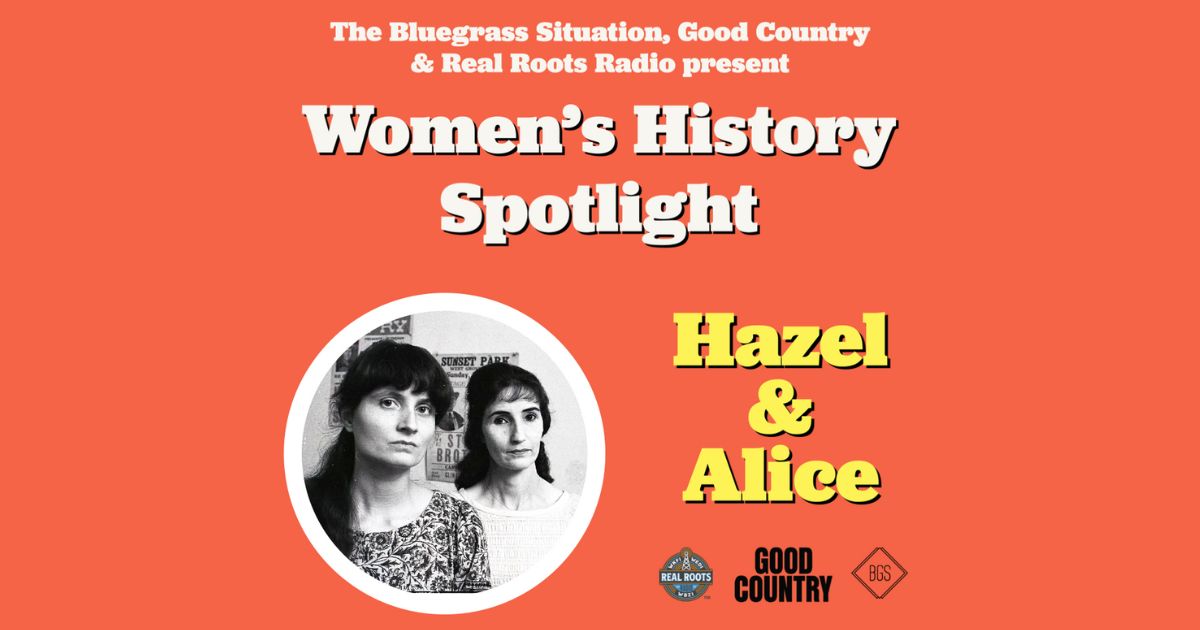
Laurie Lewis isn’t just a performer – she’s a mentor, a producer, and a keeper of the bluegrass flame, not only by encouraging the next generation of bluegrass music makers, but also by shining a light on significant voices of the past like Vern & Ray and Hazel & Alice. This West Coast bluegrass leader was honored by the IBMA with their Distinguished Achievement Award in 2024.

Suggested Listening:
Love Chooses You
The Bear Song
I’m Gonna Be the Wind

The Coon Creek Girls (active 1937 – 1957)

We’re heading back to the 1930s with an all-female string band that made history, the one and only Coon Creek Girls! It was 1937 when talent scout and radio pioneer John Lair formed the Coon Creek Girls for the Renfro Valley Barn Dance radio show on the airwaves of Cincinnati’s WLW. Led by the talented Lily May Ledford on banjo alongside her sister Rosie, Esther Koehler, and Evelyn Lange, these ladies brought high-energy mountain music to the masses.

Their popularity on radio brought opportunities to tour around the Midwest and even record in Chicago. They didn’t just play, they broke barriers! In 1939, First Lady Eleanor Roosevelt selected the Coon Creek Girls to perform at the White House for President Franklin D. Roosevelt and the King and Queen of England. A hillbilly band of women? Unheard of at the time! But they proved talent knows no boundaries.

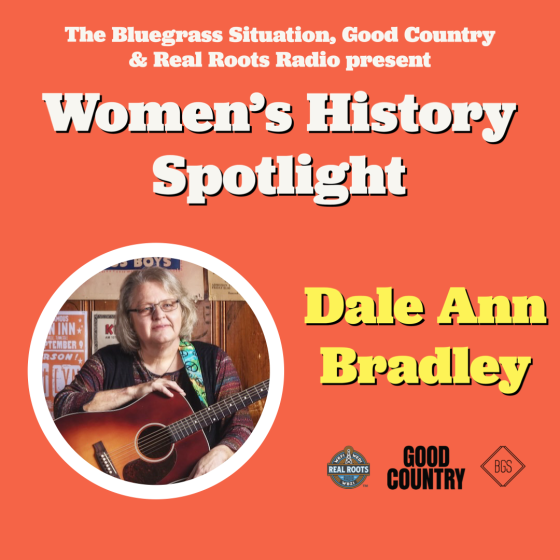
The Coon Creek Girls would be an influence on folks like Cathy Fink, Suzanne Edmondson (of The Hot Mud Family and Dry Branch Fire Squad), and even Pete Seeger. While the historic group would disband in the 1950s, John Lair would revive their legacy decades later by helping pull together another all-female bluegrass band to again perform at the Renfro Valley Barn Dance (which had relocated to Mount Vernon, Kentucky, becoming a popular country music tourist destination for decades). With the blessing of Lily May Ledford, this new act was called The New Coon Creek Girls and would make music consistently for nearly twenty years, helping springboard the careers of Pam Perry and Pamela Gadd (of Wild Rose), Wanda Barnett, Vicki Simmons, Deanie Richardson, Dale Ann Bradley, and more.

The Coon Creek Girls inspired generations, proving women belonged in country and bluegrass. Their legacy lives on in every banjo-pickin’ girl who follows in their footsteps!

Suggested Listening:
Flowers Blooming In The Wildwood
Banjo Pickin’ Girl

Amanda Smith (b. 1975)

Amanda Smith’s voice soars like the mountains of West Virginia from which she comes. She has been a force in the bluegrass world for years. Amanda met her husband Kenny in the mid ’90s at a Lonesome River Band concert (he was playing guitar with LRB at the time). Not only did Kenny fall in love with Amanda, but he fell in love with her voice as well.

Kenny would leave LRB at the turn-of-the-century and he and Amanda would form the renowned Kenny & Amanda Smith Band, a duo celebrated for their tight harmonies and masterful musicianship. They were named Emerging Artist of the Year by the IBMA in 2003 and they haven’t slowed down since. With a sound built on Amanda’s gripping vocals and Kenny’s exquisite guitar work, they have been a staple of the bluegrass world for nearly twenty-five years, racking up many #1 hits on bluegrass radio and frequently seen on stages across the country – both as a duo and with the Kenny & Amanda Smith Band.

Their band has also introduced bluegrass audiences to some of the top pickers of today’s generation, including Jason Davis, Zachary McLamb, Cory Piatt, and Alan Bartram (Amanda’s brother-in-law). Whether delivering beautiful ballads or bluegrass barnburners, Amanda’s voice is one of the most beloved in the genre today, leading to multiple awards, including the IBMA Female Vocalist of the Year honor in 2014. From festival stages to radio waves, Amanda Smith continues to leave a lasting mark on bluegrass.

Suggested Listening:
Feeling of Falling
Mountain Top

Sister Rosetta Tharpe (1915 – 1973)

The Godmother of Rock ‘n’ Roll, Sister Rosetta Tharpe was one of the most influential artists of the 20th century. Born in 1915, Tharpe was shredding on an electric guitar before rock even had a name! With a gospel heart and a rock and roll soul, she fused spirituals with electrifying riffs, paving the way for Chuck Berry, Elvis, and even Jimi Hendrix. Her hit, “Strange Things Happening Every Day,” was one of the first gospel songs to cross over to mainstream charts and is pointed to by many as the first rock and roll record, proving that faith and fiery licks could share the stage.

The juxtaposition of performing her powerful gospel songs in smoky barrooms is the stuff of legend. Her gospel hits like “This Train,” “Down by the Riverside,” “Up Above My Head,” and “The Lonesome Road” are still revered and helped shape the musical identity of artists as diverse as Johnny Cash, Elvis Presley, Tina Turner, Jerry Lee Lewis, Rhiannon Giddens, and more. Despite being a woman in a male-dominated industry, she didn’t just break barriers – she smashed them! Sister Rosetta Tharpe was posthumously inducted into the Rock and Roll Hall of Fame in 2018.

Suggested Listening:
This Train
Up Above My Head

Petticoat Junction (active 1988 – 1998)

A bluegrass festival mainstay of the ’80s and ’90s, Petticoat Junction was a popular all-female traditional bluegrass band that helped open doors for some of today’s “girl groups” like Della Mae and Sister Sadie. In fact, there are several direct connections between Sister Sadie and Petticoat Junction. Not only was Sadie banjoist Gena Britt a member of Petticoat Junction (primarily playing bass), but reigning IBMA Female Vocalist of the Year Jaelee Roberts has followed in her mother’s footsteps. Andrea Mullins Roberts was an anchor of Petticoat Junction’s sound with her rich, traditional voice and strong guitar playing before becoming a respected booking agent, manager, and behind-the-scenes businessperson in today’s bluegrass industry.

One of the most celebrated lineups of Petticoat Junction featured Robin Roller (banjo) and Gail Rudisill-Johnson (fiddle) alongside the aforementioned Andrea and Gena. This particular four-piece ensemble released a pair of great albums for Pinecastle Records in the early ’90s, in addition to touring heavily at festivals from coast-to-coast. Deriving their name from the popular ’60s sitcom (whose theme song would be a hit for Flatt & Scruggs), their heartfelt vocals and instrumental prowess shone brightly, whether on original songs or on material from the likes of Jimmy Martin, Reno & Smiley, Flatt & Scruggs, and more.

In addition to continuing to open avenues for other all-women bands, Petticoat Junction’s influence is still being felt in the 21st century as they’ve influenced acts like Flatt Lonesome and Starlett & Big John.

Suggested Listening:
I’d Miss You
Lift Your Eyes To Jesus

Jeannie Seely (b. 1940)

From the bright lights of the Grand Ole Opry to the heart of country music, today we’re tipping our hats to “Miss Country Soul,”  Jeannie Seely! Born in Pennsylvania, but a Nashville star through and through, Jeannie Seely made history in 1966 with her Grammy-winning hit “Don’t Touch Me,” an envelope-pushing and controversial song due to its featuring a woman expressing sexual desires. With her bold style, unmistakable voice, and trailblazing spirit, she became a beloved icon in country music.

Seely shattered barriers, becoming the first performer to wear a miniskirt on the Opry stage (among other fashion trends she helped bring to country music), being the first woman to host an Opry segment, and fiercely advocating for women in country. Jeannie’s also a respected country music songwriter, writing hits like “Leavin’ and Sayin’ Goodbye” (Faron Young), “He’s All I Need” (Dottie West), “Enough to Lie” (Ray Price), and more; folks like Merle Haggard, Rhonda Vincent, Connie Smith, Ernest Tubb, and Little Jimmy Dickens have recorded her songs over the years.

More than 50 years later, Jeannie is still gracing the Grand Ole Opry stage, holding the record for the most Opry performances ever – 5,200+ appearances and counting! Just as Dottie West encouraged her when she was a young country artist, Jeannie is constantly investing in the future of country as a dear friend and mentor to her Opry sisters, like Carly Pearce and Rhonda Vincent, and even to the young bluegrass band, Cutter & Cash and The Kentucky Grass. She proves that true country never fades. So here’s to Jeannie Seely – an icon, a trailblazer, and a country legend who continues to shine!

Suggested Listening:
Can I Sleep In Your Arms
So Far, So Good” (featuring The Whites)


Photo Credit: Sister Rosetta Tharpe from the Michael Ochs Archives; Jeannie Seely by Cyndi Hornsby; Laurie Lewis by Irene Young.

Celebrating Women’s History Month: Dottie West, Gail Davies, and More

Our partnership with our friends at Real Roots Radio in Southwestern Ohio continues as we move from Black History Month to Women’s History Month! This time, we’ll bring you weekly collections of a variety of powerful women in bluegrass, country, Americana, folk, and elsewhere who have been featured on Real Roots Radio’s airwaves each weekday in March, highlighting the outsized impact women have on American roots music.

You can listen to Real Roots Radio online 24/7 or via their FREE app for smartphones or tablets. If you’re based in Ohio, tune in via 100.3 (Xenia, Dayton, Springfield), 106.7 (Wilmington), or 105.5 (Eaton).

American roots music, historically and currently, has often been regarded as a male-dominated space. It’s certainly true of the music industry in general and these more down-home musics are no exception. Thankfully, American roots music and its many offshoots, branches, and associated folkways include hundreds and thousands of women who have greatly impacted these art forms, altering the courses of roots music history. Some are relatively unknown – or under-appreciated or undersung – and others are global phenomena or household names.

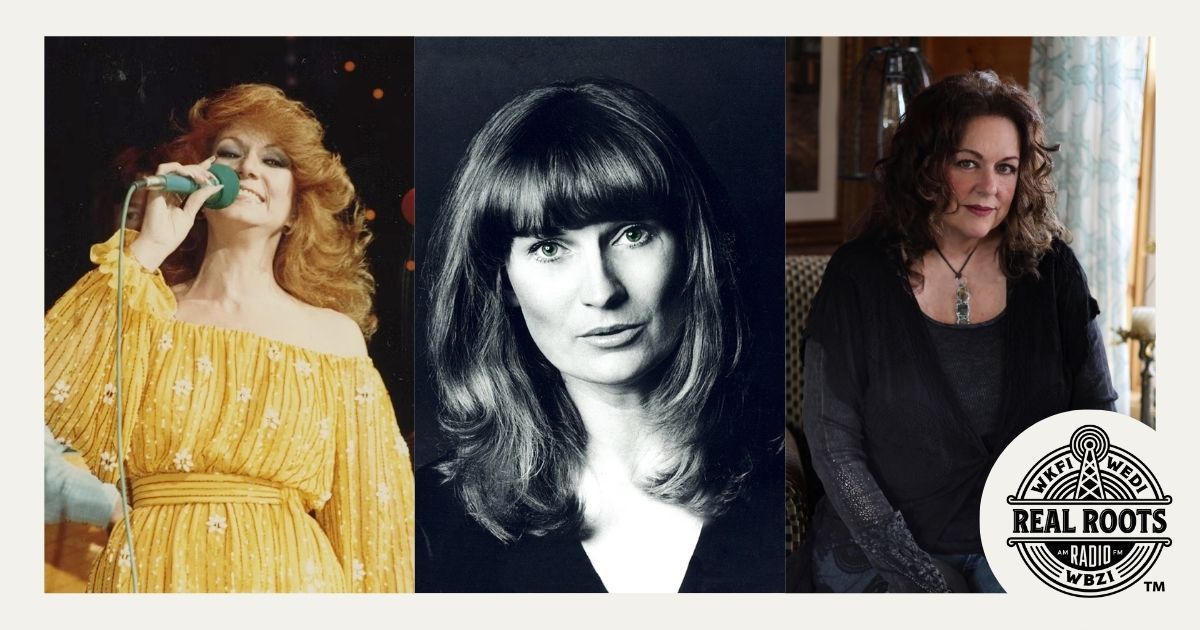
Over the next few weeks, we and RRR will do our best to bring you examples of women in roots music from all levels of notoriety and stature. Radio host Daniel Mullins, who together with BGS and Good Country staff has curated the series, kicks off March featuring Dottie West, Girls of the Golden West, Donna Ulisse, Gail Davies, and Cousin Emmy. We’ll return next week and each Friday through the end of the month with even more examples of women who blazed a trail in roots music.

Plus, you can find two playlists below – one centered on bluegrass, the other on country – with dozens of songs from countless women artists, performers, songwriters, and instrumentalists who effortlessly demonstrate how none of these roots genres would exist without women.

Dottie West (1932 – 1991)

She was a trailblazer, a storyteller, and a country music legend. Dottie West – born Dorothy Marsh in the small town of Frog Pond, Tennessee – rose to fame with her rich voice and heartfelt songs. Her childhood was heartbreaking, due to physical and sexual abuse at the hands of her alcoholic father. As a teenager, she testified against her father, aiding in his conviction and sentencing on charges resulting from his continued sexual abuse of her and her siblings.

After high school, Dottie received a music scholarship to pursue her passion. It was her songwriting that really helped build in-roads for her in the music business, particularly after Jim Reeves had a top three hit with Dottie’s song, “Is This Me.” In 1965, she made history as the first female country artist to win a GRAMMY with her original composition, “Here Comes My Baby.” Its smash success also led to her becoming a member of the Grand Ole Opry.

From then on, Dottie became a force in Nashville, penning hits and performing alongside legends like Jim Reeves, Don Gibson, Jimmy Dean, and Kenny Rogers. Her duets with Kenny melted hearts, but her solo career soared, too, scoring twenty-five Top 40 country hits as a solo artist spanning three different decades. Songs like “A Lesson in Leavin’” proved she was unstoppable.

Part of Dottie’s legacy is that of friend and mentor. Pointing to Patsy Cline’s encouragement of her own career, Dottie West would help build up aspiring performers like Jeannie Seely, Steve Wariner, and more. She also helped transform the image of the female country star, with a sexy wardrobe full of flash and glamour. Dottie would be one of the first country artists to find success in writing commercial jingles as well, most notably, Coca-Cola’s use of “Country Sunshine.” But tragedy struck in 1991 when a car accident on the way to the Grand Ole Opry cut her life short at the age of 58.

Though gone too soon, Dottie West’s voice still echoes through country music. She was posthumously inducted into the Country Music Hall of Fame in 2018.

Suggested Listening:
A Lesson In Leavin’
Here Comes My Baby

Girls of The Golden West (active 1930s to 1960s)

Before there was Dolly or Patsy, there were the Girls of the Golden West! Sisters Mildred and Dorothy Good burst onto the country music scene in the 1930s, blending sweet harmonies and cowboy spirit into radio gold on Chicago’s WLS, home of the National Barn Dance. Alongside early radio stars like Gene Autry, Patsy Montana, and Bradley Kincaid, Girls of the Golden West were one of the most popular country acts of their era.

Taking their name from a popular opera, these Illinois farm girls also developed a compelling backstory for audiences – telling radio listeners they were from Muleshoe, Texas. Embodying the “western” in “country & western,” their cowgirl stage clothes helped add some girl power to the infatuation with cowboys and the Wild West at that time. Their signature song, “Will There Be Any Yodeling in Heaven?,” showcased their angelic voices and signature yodeling style, making them fan favorites on The National Barn Dance.

By the late ’40s, they would relocate from Chicago’s WLS to Cincinnati’s WLW, where they would be part of such iconic programs as the Renfro Valley Barn Dance and the Boone Country Jamboree. Unlike many country acts of the time, these trailblazing women wrote much of their own music, proving that female artists belonged in the spotlight. Their songs, filled with adventure, heartache, and the open range, paved the way for generations of country music legends, including Kitty Wells, Jean Shepard, and The Davis Sisters. Though their fame faded after World War II, their influence never did. So next time you hear a classic country duet, remember – Mildred and Dorothy Good were there first. The Girls of the Golden West were true pioneers of country music.

Suggested Listening:
Lonely Cowgirl
Round-Up Time In Texas

Donna Ulisse (active 1991 to present)

Donna Ulisse is a powerhouse singer, songwriter, and storyteller whose music blends traditional bluegrass with heartfelt country roots. Originally from Hampton, Virginia, she made her mark in Nashville as a country artist before fully embracing her love for bluegrass.

Donna arrived in Nashville in the early ’80s, working as a harmony vocalist. Her first recording session when she hit town was on a Jerry Reed album. By 1990, she was signed to Atlantic Records, where she released her debut album, Trouble at the Door. This great country album yielded two charting singles for Donna and landed her guest spots on Hee Haw, Nashville Now, and more. But Donna had a knack for mountain melodies – heck, Ralph Stanley & The Clinch Mountain Boys played at her wedding (her husband, Rick, is a Stanley after all).

Donna began gaining traction as a songwriter and released her first album of original bluegrass in 2007. Since then, she hasn’t looked back. With a voice as rich as the Appalachian hills and lyrics that paint vivid pictures of life, love, and faith, Donna has penned songs for top artists like Del McCoury, The Grascals, Darin & Brooke Aldridge, and more. Her song, “I Am a Drifter” was recorded by Volume Five and was named Song of the Year by the International Bluegrass Music Association in 2017. Donna has multiple Bluegrass Songwriter of the Year honors under her belt, as well.

But it’s her own albums – filled with soul-stirring melodies and award-winning songwriting – that truly showcase her artistry. Hits like “Back Home Feelin’ Again,” “Come to Jesus Moment,” “When I Go All Bluegrass on You,” and “Livin’ Large in a Little Town” have made her a beloved mainstay on bluegrass radio and at bluegrass festivals nationwide. Whether she’s performing on stage, writing timeless tunes, or inspiring the next generation of songwriters, Donna Ulisse is a true gem in bluegrass music.

Suggested Listening:
Trouble At The Door
When I Go All Bluegrass On You

Gail Davies (b. 1948)

She wasn’t just another voice on the radio, she was the first female record producer in country music history. Let’s tip our hats to a native of Broken Bow, Oklahoma and a trailblazer in country music: Gail Davies!

Originally a session singer, Davies sang on records by Glen Campbell, Hoyt Axton, Neil Young, and more. Through this experience she befriended Joni Mitchell, whose producer taught her about record production. In the mid-’70s she worked alongside Roger Miller and started her songwriting journey. Her song, “Bucket to the South,” would be covered by Lynn Anderson, Ava Barber, Wilma Lee Cooper, and later recorded by Gail herself.

In the late ’70s and ’80s, Davies broke barriers. She released her self-titled debut album in 1978. Though successful, she was dissatisfied with the production, changing labels in order to produce her own records – much like Willie Nelson and Waylon Jennings had done earlier in the decade. This made Gail Davies country’s first female record producer. The result was stellar, yielding her first top ten hit, “Blue Heartache.”

Gail crafted a unique sound that blended traditional country with fresh, innovative production. Hits like “Grandma’s Song” and “I’ll Be There (If You Ever Want Me)” put her on the map, proving she had the talent and the vision to shape her own career. But Gail wasn’t just making music – she was making history, paving the way for women in Nashville to take creative control of their work, inspiring hitmakers who would follow in her wake like Suzy Bogguss, Kathy Mattea, Mary Chapin Carpenter, and Pam Tillis.

Davies would also produce albums for others as well, being hired as the first female Music City staff record producer in 1990. Over the years she would record with Emmylou Harris, The Whites, Ricky Skaggs, Dolly Parton, and even Ralph Stanley. With over a dozen albums and a career spanning decades, her impact still echoes through country music today. So here’s to Gail Davies – a pioneer, a hitmaker, and a legend.

Suggested Listening:
Grandma’s Song
I’ll Be There (If You Ever Want Me)

Cousin Emmy (1903 – 1980)

Have you ever heard of Cousin Emmy? If you haven’t, you’re missing out on a true legend of the Appalachian music scene. Born Cynthia May Carver in the heart of Kentucky, Cousin Emmy was the daughter of sharecroppers and a pioneering force in old-time radio and country music.

In the 1930s, her voice rang out across the airwaves captivating listeners with her mountain spirit and stunning talent. She became the first female to win the National Oldtime Fiddlers’ Contest in 1935 and fronted her own band and radio show by the end of the decade. A true trailblazer for women in bluegrass, she didn’t just play – she performed. Known for her skillful banjo playing and unforgettable voice, Cousin Emmy brought Appalachian culture to the masses on major radio stations in Wheeling, Knoxville, St. Louis, and Chicago, leading her to be signed to Decca Records.

Cousin Emmy was featured in Time magazine in 1943, informing its readers that her popular St. Louis radio program drew an average of 2.5 million listeners every Sunday morning. From live shows to classic radio broadcasts, she influenced generations of musicians, including Grandpa Jones (whom she purportedly taught how to play old-time banjo) and Bobby Osborne, who heard her recording of “Ruby” on jukeboxes when he was a youngster. It would later become the debut single for The Osborne Brothers, and remained one of their signature songs, solidifying its status as a bluegrass standard.

Emmy would eventually move to L.A., where she would raise the children she adopted while continuing to perform locally. As the Folk Revival emerged in the early ’60s, the New Lost City Ramblers heard Cousin Emmy performing at Disneyland and encouraged her to join them on record. That session introduced her to a new generation of fans and led to appearances on the folk circuit, including the infamous 1965 Newport Folk Festival. She passed away in southern California in 1980, at the age of 77. Remember the name: Cousin Emmy — a powerful personality and hillbilly star.

Suggested Listening:
Ruby, Are You Mad At Your Man?
I Wish I Was A Single Girl Again


Want more Good Country? Sign up on Substack for our monthly email newsletter full of everything country.

Listen to Real Roots Radio online 24/7 or via their FREE app for smartphones or tablets.

Photo Credit: Dottie West courtesy Country Music Hall of Fame & Museum; Gail Davies courtesy of the artist; Donna Ulisse courtesy of Turnberry Records.

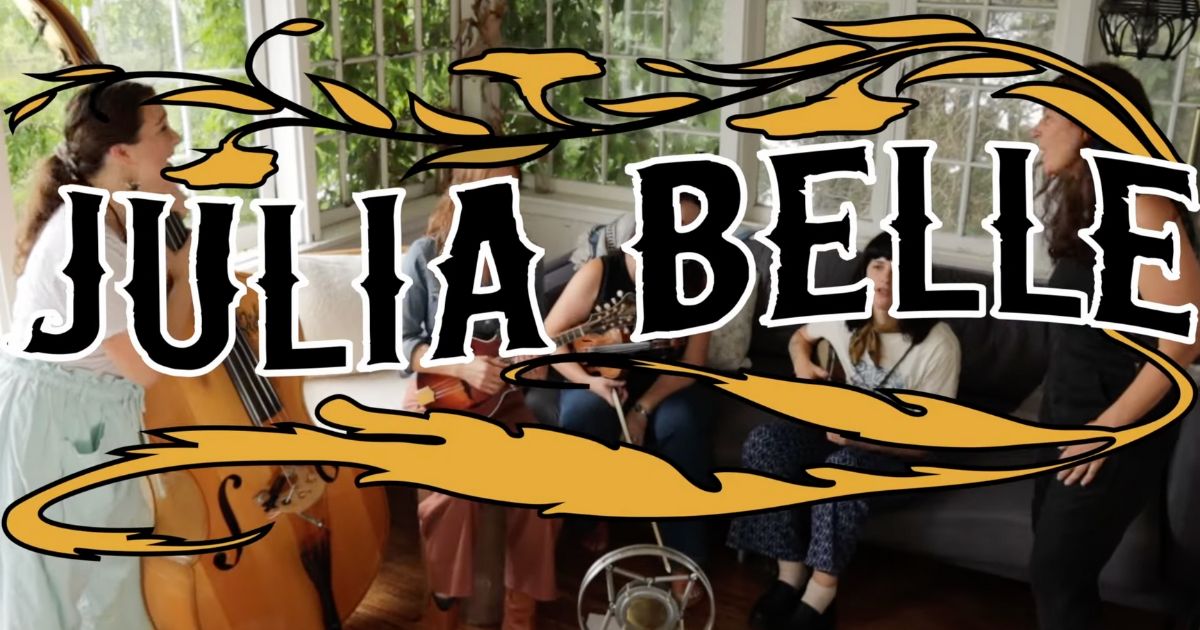
A Women’s Lib Boat: John Hartford Fiddle Tune Project’s ‘Julia Belle’ Embarks

A quarter century removed from his passing, John Hartford’s music and overarching legacy may have a stronger hold on bluegrass and American roots music than ever before.

From modern-day stars like Billy Strings and Sam Bush playing his songs in front of thousands each night, to popping up in books, old-time jams, workshops, films, and other functions, Hartford’s songs are officially a part of the Americana zeitgeist.

This trend continues on Julia Belle: The John Hartford Fiddle Tune Project Volume 2. Released February 28, the follow-up to 2020’s inaugural installment of the Fiddle Tune Project features another 17 songs from the always grinnin’, GRAMMY award-winning, steamboat-loving singer – this time performed entirely by women. Nearly 50 artists, musicians, and singers feature throughout, ranging from Rachel Baiman, Phoebe Hunt, Ginger Boatwright, Brittany Haas, and Deanie Richardson, to Allison de Groot, Della Mae, The Price Sisters, Uncle Earl, Kathy Mattea, Alison Brown, and Sierra Hull.

According to Julia Belle co-producer Megan Lynch Chowning (who was joined in that role by Sharon Gilchrist and Katie Harford Hogue, John’s daughter), once the decision was made to move forward with an all-women cast it came time to narrow down who to include on it–something that was as much of a dilemma as it was “an incredibly cool revelation.”

“We decided about halfway through to just make it a reality rather than a selling point,” she jokes. “It’s in the same spirit of whenever you open up a record from the Bluegrass Album Band, nobody says, ‘Wow, what a great all-male band that is!'”

Ahead of Julia Belle‘s release, Harford Hogue, Lynch Chowning, and Gilchrist spoke with BGS about their involvement in the project, preserving John Hartford’s legacy, and favorite moments from recording.

(Editor’s Note: The following are three separate conversations combined into one and edited for brevity.)

Nearly 50 artists are involved in Julia Belle. How did you go about deciding who to include on the project and which songs they’d play on?

Sharon Gilchrist: It was really important for us to have a multi-generational presence on this record. One of Katie’s personal wishes for the album was that every artist on the record have some personal connection to Hartford. With it being an all-female record, I was also curious to find women who had actually worked with or had some kind of rapport with him. For example, Laurie Lewis, Kathy Kallick, and Suzy Thompson are all on “Champagne Blues” and were all peers of Hartford’s back in the day. Ginger Boatwright actually inspired the song that John wrote which she sings on, “Learning to Smile All Over Again.”

In addition to the sheer number of people involved, I love how you also really allowed them to lean into their own creative tendencies while at the same time staying true to the style and spirit of John Hartford.

Katie Harford Hogue: Since Volume I the whole premise of this album series has been to choose artists that play this vein of music or consider my dad a mentor or someone they look up to. We hand them the book [John Hartford’s Mammoth Collection of Fiddle Tunes] and tell them to choose the tunes that speak to you, then come to the studio and put them through your filter.

For me to tell an artist how to do art – why would I do that? The whole point of being an artist is that you’re putting yourself into it and are using your own expressions, your own metaphors, and your own way of relating to the music. So we wanted their expression in it and the really cool thing is that Dad comes through no matter what we do. His DNA is in these tunes and there’s no way to get them out, not that we would ever want to. Having people come in and just go for it was risky, but an incredibly fun way to make an album.

Megan Lynch Chowning: A lot of the tones, audio, and overall vibe check comes from Sharon, who has been a John Hartford fan her entire musical life and is somebody who is so incredibly in tune with the sounds and feel that comes from his songs. She worked tirelessly listening to everybody’s work before they came in to record to get an idea of what’s going to help each person be the best possible version of themselves while they’re here.

Then there’s the issue of none of these songs – at least the fiddle tunes – having any chords assigned to them. When John wrote them there were no chord progressions, so every artist had to write their own. That in itself was a big part of people getting to take each song in their own directions. It was amazing to watch over and over again, and Sharon handled it all like an absolute rock star.

While some people’s legacy fades over time, it seems like John Hartford’s only grows stronger. What are your thoughts on that and how this project aims to further propel that legacy forward?

KHH: I’ve heard it said before that the way he communicated wasn’t limited to a particular generation. I don’t know if it was the way he thought about things or if some of the ways he did things were more universal. … You can go back to the masters of music and art – da Vinci, Bach – and their methods of creativity are still very valid now, they simply don’t go out of style.

When you hone into the foundation of it the relevancy goes with it, because everyone’s just going back to what’s real, which is what I think my dad also did. He was very true to the way he made music and the way he thought. A lot of people trying to make a career might stop and think, “What does the public want?” or “What do the masses want and how can I provide for them?” There’s nothing wrong with that, but there is another way to do it, making the music you want to make and not worrying whether or not it’s commercially viable.

That being said, “Gentle On My Mind” [Hartford’s most successful song, written in 1966] was very helpful in allowing him to do that full-time. Most everyone else has to get a full-time job and do the music on the side to stay true to themselves, but he got the best of both worlds in that way. He was able to take the success of that song and then go do his art with his heart and soul in it. I mean, who else writes about steamboats? Who else would write about the things that he wrote about and try the things he did on stage or just go out on a limb? And it all worked! In a way, everything aligned for him. That’s why I think he continues to be so relevant – he took a big risk and it paid off.

MLC: In the very first meeting the three of us had to discuss Volume II, preserving and carrying on the Hartford legacy was the focus of what we were trying to accomplish. On any given day you’ve got Billy Strings and Sam Bush playing John Hartford songs in their live shows. The biggest takeaway I have from this whole thing is John Hartford’s unceasing dedication to learning. He started transcribing and learned to write standard notation after he was diagnosed with cancer and instead of saying, “Oh no, I’m sick and this is going to slow me down,” he took it as a sign to move forward and learn a bunch of new things. That’s what led to him becoming obsessed with the fiddle, traditional styles and all that. That to me is the whole message behind these albums, that there’s so much more to do and so much more to write, play and learn. That’s been the most inspiring thing about being a part of this project.

SG: He was both a student and innovator of traditional music who forged his way forward by not sounding anything like anybody else. John is one of the largest beacons shining the way forward on how you do that.

What were your favorite moments from recording these songs? I personally can’t get enough of “Spirit of the South.”

KHH: What was so fun for me about these sessions was that even in rehearsals everyone was shredding. Upon walking in the room you’re hit with this energy and you just want to jump in. It was so exciting talking with everyone and feeling their joy around each song. Then there were the stories from Ginger Boatwright and Kathy Chiavola – both good friends of my dad – and Alison Brown telling me about his influence over her on the banjo.

Not being a musician, that all fed me, because that was a part of my dad’s life that I wasn’t necessarily connected with very much when he was alive. But now I can hear his music and I can see what he was doing and it just has a whole different impact on me. I’ve now had my own kids, raised them, done some things, and can relate more to what he was doing, so every time someone comes back to the studio and records a song, tells a story or talks about his influence, it feel like there’s a drawing of Dad and everyone’s going in and adding details that I hadn’t known about before or that just flesh out the picture that little bit more.

MLC: One favorite was getting Katie’s mom and John’s first wife, Betty, to sing on “No End of Love,” which is a song that John wrote for her. She is an incredible musician who first met John when they were both up for a radio show slot in the St. Louis area. After they got married Betty put her singing career on hold to manage the family, so being able to get her in the studio to sing that song with Katie and her granddaughter Natalie [Hogue] on guitar and hearing her voice – which has been on hold for a long time as she lives other aspects of her life – gave me chills. To me, stuff like that is the essence of folk music and why we do what we do in terms of keeping these songs and traditions alive.

Megan, didn’t you play John’s Tambovsky & Krutz violin on “No End 0f Love”? What was that experience like?

MLC: I actually have John’s fiddle here at my house and play it in the John Hartford Fiddle Tune Project live show, so I’ve been handling it for a while now. Talk about chills – it’s the fiddle he used the last five or so years of his life. It was his main fiddle for the “Down From the Mountain” shows and The Speed of the Old Long Bow record. It’s actually the fiddle on the cover of that album. Katie called me last year out of the blue and said she was moving houses and had taken the fiddle from one closet to another before questioning why it was there in the first place and not in my hands being played at these shows.

To play it on [“No End of Love”] was funny, because it sounds a lot different than my fiddle even though both were set up by the same person. It always felt comfortable to play, but the first few months I had it it was kind of dead from sitting in a closet for two decades. Since I’ve been playing it regularly it’s really come to life. Just the metaphorical part of this fiddle coming to life at the same moment these tunes are being brought into the world is special. It’s how I believe everybody who has the opportunity to be involved in traditional music should be thinking about it. We should constantly be honoring the stuff that came before us while also bringing it into new spaces.

Katie, you mentioned not being too connected to your father’s music when he was still alive, but what do you remember most about those times?

KHH: People saw his stage persona when he was out, but even when he was home he was still playing. He didn’t go home and just say, “Oh, I’m tired of that.” He played some more. “Obsessive” is not too strong a word to use when it came to the way his brain worked about music or art. It would be Thanksgiving or Christmas and he’d be working out melodies in the living room with Benny Martin simply because they enjoyed it.

Later on, my wedding reception was held at my dad’s house and we had originally set up music on a sound system so as not to burden him, but he, my brother, and my uncle ended up all grabbing their instruments and playing as a trio for it. He wasn’t a musician because he was trying to be famous; he was a musician because he couldn’t not be one. As much as his right hand was a part of him, his fiddle and his banjo were a part of him too.

What has working on The John Hartford Fiddle Tune Project taught you about yourself?

MLC: These experiences have taught me that I’m capable at parts of this job that I previously shied away from. I grew up as a contest fiddler; that was my background. Because of that I was very good at learning specific arrangements of things and then executing them with precision. While that’s all great and fine – one: it’s not a very good living, and two: it’s not all that great for having a very broad musical vision or sense of yourself. That’s why I started playing bluegrass and working for country artists. My skills and musicianship both expanded, but working on these albums – both as a player on Volume I and as a producer/player on Volume II – I’ve learned much more about my internal ability to hear things I didn’t know that I could hear and to make decisions I didn’t know I could make.

It reminds me of this exercise that John Hartford used to do with people at his jams or in his band – called the “window exercise” – where everybody who’s playing has to do something different than everybody else and then has to change that thing every eight bars. If you’ve got five or six people sitting around in a circle, one person can be chopping, one person can be playing longbows, melody, harmony, shuffle pattern… but only for eight bars. It requires you to not only come up with new things, but also be aware of what everyone else is doing simultaneously.

It was a musical brain exercise he invented that we teach at our workshops and sometimes even at the live show. To me, working on these albums has been like a real-life window exercise. It feels like even from beyond the grave John Hartford is challenging me to go bigger, be more creative, and more aware all the time. He’s just expanded who I am as a musician and what I now know that I’m capable of that I didn’t know I was capable of before. It’s weird to be grateful to someone who’s been dead for 25 years, but that’s how I feel because I’m a different person and a different player than I was before I started this.

SG: It showed me the importance of being hands-off with other people’s musicianship and to give them every opportunity to bring as much of themselves to any project as possible. That’s when you’re going to get the best music out of somebody. This project was a lesson in learning to do that, but also knowing when to jump in and direct or provide guidance when necessary.

Katie did a great job of that as well. This whole project is her brainchild and was a huge undertaking and the coolest part is the way she’s doing it. She’s doing it just like her dad. He would be so honored and pleased to see her fostering that in his own tunes and giving others the opportunity to share in and carry on that tradition.

KHH: I was a stay-at-home mom when my kids were born and poured a lot into them growing up, but once my youngest got to high school I began backing off and looking to do some of the things I’d been putting off. Coincidentally, the fiddle tune project was coming to fruition around the same time.

It was like walking out on a limb – especially as an older woman – to go out and start on some of these things not having been in the industry or corporate world in quite a while, but I did it. I have learned so much about not just the music industry, but things like how to use computer software like Photoshop and Illustrator and doing video for social media. It’s a lot of fun and something I’m very proud to be able to say that I did. I want to encourage other women to do the same. Don’t worry about what other people are saying, what you’ve done before, how old you are or what stage of life you’re in – don’t let anyone devalue your experience. If you’ve got an idea, go do it!


Two Women on the Cutting Edge of Bluegrass’s Future

At whatever level you may be plugged into the online bluegrass scene, you have surely heard, seen, or scrolled into content by Bronwyn Keith-Hynes and Brenna MacMillan. These two young, talented pickers are part of a vibrant and blossoming community of traditional musicians and folk artists that includes folks like Cristina Vane, Victor Furtado, Hilary Klug, Wyatt Ellis, and many more.

What makes these creators stand apart, especially Keith-Hynes and MacMillan, is that they aren’t just shoehorning social media into their art-making and creative processes to move up Music City ladders and check abstract music industry boxes. Instead, they’ve intentionally demonstrated how powerful, engaging, and charming content can be when it’s made with art, creativity, tradition, and joyful, cooperative generation as its focal points. Instead of bending over backward to construct virality and lean into transient socials trends, they let their talent, their songs, and their communities do all the talking.

In May, Keith-Hynes released her second solo album, I Built a World, her first project to center songs and her recently-developed, impressive vocals. Drawing on musicians and pickers from her immediate circle and her main gig – Molly Tuttle & Golden Highway – as well as tapping notable country stars and bluegrass legends, the project finds Keith-Hynes at her most confident and unbothered. This is a fiddler-singer-front woman who has found her voice – literally, through work, practice, and vocal lessons as well as figuratively, not satisfied to craft a career on bowing the fiddle alone.

@bronwynmusic Somehow Tonight [Earl Scruggs] SPBGMA stairwell jam!!! Our favorite acoustics for sweet harmonies 😇 🎻: Bronwyn Keith-Hynes 🪕: Brenna @Brenna MacMillan 🎸: Danielle Yother #spgbma #bluegrass #indoor #festival #nashville #harmonies #womeninmusic #banjo #guitar #fiddle #fridaynights #weekend #fyp #stairwellsinging #explore #foryou #bluegrasstiktok ♬ original sound – Bronwyn Keith-Hynes

Later this year, MacMillan will release her debut solo album. Its lead single, “What’s to Come,” features Ronnie McCoury and is indeed a harbinger for the superb album to follow. This project, which highlights MacMillan’s prolific songwriting and features her musical community fleshing out the band, is built directly upon the successes she, Keith-Hynes, and others have found on the internet. Eschewing labels, management, or traditional roll outs, MacMillan will release the project herself, with funds raised on GoFundMe, bringing the music directly to her consumers on her own website and socials channels without “middle men.”

So, not only are MacMillan and Keith-Hynes innovating on ideas around what it means to be a side person, a career picker, and multi-hyphenate, professional traditional musicians, they’re taking all of their expertise as online brands and businesswomen to find success for themselves, on their own terms. They’re focusing on what matters, centering their communities, and making incredible, superlative music at the same time.

BGS connected with MacMillan and Keith-Hynes together via video chat to talk about their unique approaches to making albums, content, and music, while highlighting the deep and tight-knit “bluegrass influencer” circle they’ve each helped create since moving to Nashville and putting their all into bluegrass.

I wanted to start by talking about community and musical community – one of the reasons why I wanted to have you both in conversation with each other is how you each rely on, draw from, and center your musical communities in what you create. It may look like these are solo projects that you’re making, but they’re clearly not solitary projects – and they don’t really feel like vanity projects, either. from the outside looking in either. It really feels you’re making music with other people so you can make music with other people. Could you talk about your work, your solo albums, and working in your communities?

Bronwyn Keith-Hynes: Yeah, I think first and foremost, me and Brenna are good friends and we just ended up being drawn together. We both moved to Nashville around the same time and ended up doing a lot of things together and had a lot of similar interests. That’s cool to find. I haven’t found that many women who have my same interests until I moved to Nashville and then all of a sudden I felt like there was a whole bunch. It’s been really awesome to find that.

First of all, I’m just such a fan of so many people, and I wouldn’t want to make music any other way. My project was based around songs from my community, which was really special to me. It was like a little nerve wracking reaching out to friends and people I respected to be like, “Do you have a song that you’re not going to record that I could record?” But, thankfully, a lot of people did – including Brenna – and I ended up recording one of her songs. And, she sang on it and it was awesome!

I feel like I couldn’t do it alone. I know my strengths and then I know other people’s strengths and I want to make sure we’re all [drawing on our strenghts]. I don’t know if singing is my strength, but it’s something I feel passionate about and feel driven to do for whatever reason. I know the things that I want to put out in the world; I want to make sure the music I’m making has the best parts of myself, but then the best parts of everyone else who’s playing on it.

I think that folks who aren’t just straight white men in this industry, we realize from the get-go that we have to have others with us. We have to do it together. Otherwise we’re not going to go the distance. I feel that in both of your music, as well. But Brenna, I wonder what that question brings up for you, as you’re thinking about and positioning your album to release as well?

Brenna MacMillan: It’s funny, because when Bronwyn asked about songs that I had, I had like a bunch and at that time I wasn’t even thinking about [making] an album at all. I think it was maybe like a couple months later that I decided, based on my friends that kept being like, “You should record some of these songs!” And I was like, “I guess…” I wasn’t thinking about it at all whatsoever.

Then that’s another way like to get my songwriting out there, too. And why wait for someone to come to me for songs if they don’t even know that there are songs? Besides my friends, which is who I first would want to do my songs anyway. It’s funny, because obviously it’s really cool putting out your own music, but I still get more excited when “Riddle” comes on than when “What’s to Come” comes on. [Laughs] That is so cool!

Someone else’s vision for your song, it’s like the coolest thing ever to me. Because, I know what my brain comes up with so it’s not shocking, but someone else’s ideas around something that you wrote – it’s like the coolest thing ever, and I guess that’s why I love the community. I feel like community is like the word that I say way too much, but I do I love it. For Bronwyn, Cristina [Vane], Hilary [Klug], Emily, and Mallory, to some extent back in 2018, we all were moving to town around that time and then 2020 hit and I think that’s when we all got a little closer, because we were all bored and wandering around. I took a lot of walks with my friends, individually, we tried to stay across the path from each other, but I think those bonding moments brought us closer. We were like, “Let’s get coffee” or “let’s get dinner,” and then we ended up making a video or something and it all evolved into great friendship, plus people online being like, “Oh, we like to hear you guys play together!”

@brennamacbanjo Friday night with Lester Flatt! #bluegrass #harmonies #sisters #womeninmusic #fyp #banjo #fiddle #musicians #foryou #friday #weekend #vibes #flatt #scruggs @bronwynkeithhynes @cvanemusic ♬ original sound – brennamacbanjo

One of the things I love most about that whole community of content creators – you’re talking about Cristina Vane and a lot of these other folks you create with here in Nashville – it never feels like you’re trying to shoehorn bluegrass into contemporary content creation. It really seems that making bluegrass music and making roots music with your friends is the impetus, and then you made it fit into social media – instead of vice versa. Like, it’s happened organically and from a community standpoint first, and not just from “I have a social strategy. I have a five year plan.” Do you agree or disagree?

BM: Oh yeah, I agree. There’s not much strategy that’s happened in here. There’s not a lot of that going on. [Laughs]

And yet, I can tell you objectively from the outside looking in, y’all are still operating with 110% more strategy in mind than most of bluegrass. [Laughs]

BKH: I feel like Brenna and I have both talked about – correct me if I’m not saying this right, Brenna – wanting social media to serve us, rather than for us to serve social media. The end goal, for at least for both of us, is not like to become a social media star, it’s to have it serve us, to get our names and our music out to more people.

BM: Yeah! And it felt like it was very random that social media took off for me. I was just like, “Where are you guys coming from? Why do you want to hear me kick off a J.D. Crowe song like every day?” But at the same time, it has its own frustrations and that’s when me – and I think a bunch of the other girls that do this side by side with their music careers – we’re like, “We’re going to have this, but only if it makes sense for helping promote our live gigs and any projects we’re doing.” But as soon as I get nasty comments, or this, or that I’m like, “Oh, I will literally just get off of this app if it’s going to go this direction.” I just block people and then keep going.

I want an audience who will appreciate the things that I want them to appreciate. I think that I’ve trained my audience, too. Basically I shoved it in there, “You are going to listen to this slow song and try to enjoy that. And if you don’t, then I’m going to take you [out of my following]…” Because there have been some people who think that I am a content creator on there, and I’m like, “No, I play music and I took an hour out of my day and posted this video and we’re lucky that happened. Now I’m on my way to a gig and I don’t need some [negative] comment.” But you could come to a live gig and request a song!

Brenna, one of the things I love about your upcoming album and the messaging around it is that you’re really doing  a direct-to-consumer business model and roll out. You’re being like, “Y’all can come to me. You already know how to find me, so this is where you can find the music, too.” I think it’s amazing and again, it’s the cutting edge of what the future of bluegrass will be while it’s also so fucking trad. It’s like back in the day, when bluegrass music required taking the car battery out of the car to play a show in the high school auditorium and then putting the battery back in to drive to the next high school auditorium.

It’s like you’re doing that in the 21st century. You’re being a DIY bluegrass musician, but in 2024. Can you talk a little bit about the direct to consumer model you’re using with your album roll out?

BM: I was like, I need to build a website so that there’s everything in one place – I remember why I did it, too, because there are a bunch of fake accounts. I knew I needed something out there to be authentic and to have all of my official links. That was literally my number one goal with the website. So now, here’s the link to my website, you can find my YouTube channel, my Facebook, my Instagram, my TikTok from there. And you’re going to know you’re in the right place. I’ve basically just started to try to push everything to my website and go from there to everything else, even if it’s taking you back to Instagram. Because [the website is] where everything’s going to happen, so that you know that it’s me instead of some person scamming you. I guess with that in mind, I started trying to link everything, like in my stories, when I’m talking about anything coming up, I just say, “Go to my website!”

Bronwyn, I wanted to ask you again about community and about bringing your circle, your scene into your album. I love all of the features on your album and I also love that it doesn’t just feel like you’re reaching for a Collaborative Recording of the Year nomination. 

[All laugh]

But I wanted to know how it felt to you, as you were thinking about who you wanted to have on the record and why you wanted to have them on the record?

BKH: I’m glad to hear you say that it feels like it’s in service of the music, because that was definitely my intent. It was the funnest part of [recording the album], for me. I did kind of make those decisions after the tracks were done and I’d done my vocals. I just didn’t know how it was going to turn out until I heard it. Then I would brainstorm with Brent [Truitt], and Jason [Carter], and whoever about who to get on it. Dudley Connell was somebody I was really excited about and I’d never met him. I didn’t know him. Someone just gave me his number, I called him up and left him a nervous voicemail. But yeah, he turned out to be the sweetest guy ever – and he’s a bluegrass hero, I love all those Johnson Mountain Boys records.

It’s crazy especially being a new singer, I haven’t heard my voice recorded much ever. Then to hear my voice with all these other voices that I know and I’ve heard a lot – to hear like that combination for the first time – it was like very surreal!

What was it like working with Dierks [Bentley]? We all know his bluegrass pedigree and his connections to the Station Inn and to the McCourys and that he’s always had one foot so solidly in bluegrass, but y’all would have gotten to know him and got to spend some time with him on the road with Molly Tuttle & Golden Highway, too. I wondered how how that conversation happened and also what it felt like to you to have someone who has gold records and platinum records collaborating with you on your record?

BKH: I grew with his Up On The Ridge album, it was literally one of the first bluegrass albums I heard around my college years.
I was obsessed with it and I thought it was so cool. It got me into listening to the more trad stuff, but I’d always loved his music and then being Jason [Carter’s] partner, and Jason and he were friends even before he was famous. So they’ve been friends from the get go.

I’d met him a few times through Jason and then again when we were on tour [opening for him], that was cool. ‘Cause I felt like we could meet [more as peers], not just because I’m somebody’s partner. But now, this is my gig and this is your gig. And you’re asking us to sit in every night. I felt a little bit more comfortable to make that ask. He just came into Brent’s studio one day and tracked it in under an hour. He’s great! Very quick.

Brenna, talk to me a little bit and if you have features on your upcoming album – and if you can’t talk about them yet, that’s totally fine.

BM: I know, I was trying to think of what I should say – I don’t know, I’m the one in charge! But let me check, I don’t know if Brenna wants to tell all that yet. [Laughs]

At the very least, we can talk about Ronnie [McCoury] and “What’s to Come.” Ronnie’s one of my favorites. Talk a bit about, again, bringing in community and bringing in the scene that already surrounds you.

BM: The core band in the studio was [Mike] Bub on bass and Jake Stargel on guitar. Me, I played banjo on four or five of the tracks, but I have been writing a lot on clawhammer lately and I know that I’m not good at it, so I had Frank Evans come in for those and then I had Cory [Walker] play on a couple very last minute. I was thinking, it’s just going to be better if he does it.

When the special guests ideas popped in my brain, I was thinking, “Do I want special guests to be like my friends, my age, or like people that I really are like heroes of mine? Is this the time to ask them? I don’t know.” Nobody knows who I am, but that’s okay. I had met Ronnie a handful of times in kind of settings where it was like, “I’m here with so and so” and I’m just a little curmudgeon. [Laughs]

“What’s to Come,” it’s like a reflective life song. I know that I sound like a small baby when I sing, and I was thinking of someone with an older sounding voice. Like wanting ancient, lonesome vibes so that there could be old and young together, pondering about life. If you’re young or if you’re old, you still ask all the same questions about life.

Also, [Ronnie’s] gritty mandolin playing. I love it so much. Jarrod Walker played on most of the core mandolin stuff, but he happened to be out of the country that session. I was like, this is perfect! But it’s funny, because I didn’t even know if Ronnie was going to bring his mandolin! [Laughs]

To wrap up, here’s a question I had for both of you, because you’re both musical shape shifters. You move in and out of musical contexts so easily; you’re both side people, you’re both front people, you’re both social media brands. How do you maintain your senses of self?

BKH: I feel like I can’t get away from myself! I don’t feel like I ever even think about that. The only way I’ve struggled with that a little bit, or thought about that more, is doing the solo projects. That’s where I’m like, “Wow. OK. What would Bronwyn do next?” But I think I know what I like and I know what I want to do. I’m just like, “How am I going to do that? I need to figure that out.

BM: I think similarly, I don’t really think about it that much. I think I know what I like, too. And I know what I don’t like. From the get go, I’ve very much just been myself online. I come home from the lab job and do a video with dark circles [under my eyes] and grunge and smelling like hemp trash. That’s what I established from the beginning. So now, I feel comfortable being myself.

Pretty much everything has been my own ideas and, it’s funny, because ten of my eleven songs are originals on the album, three of which are co writes, but hearing it come to life in the studio with other people, it still ended up being what I thought it should be. Which is weird, because there’s no way that I could bring some of these musicians into the studio who are eons beyond what I could imagine, but they knew exactly what the track needed. It does sound like me still and what my vision would have been if I had expressed it [all myself].

BKH: I feel like I’m like more myself these days than I’ve ever been. I feel like for a while, starting out in bluegrass, I had a lot of ideas of what a woman in bluegrass needed to look like, or be, or act like. In the last couple years, maybe inspired by being with Molly in Golden Highway, I feel like I’ve been able to let a lot of that stuff go – about how I should dress and whatever. Now, I embrace the things I actually like.


Photo Credit: Brenna MacMillan by Sophie Clark; Bronwyn Keith-Hynes by Alexa King Stone.

Women’s History Spotlight: Ola Belle Reed, Loretta Lynn, and More

Each year, March is Women’s History Month, and BGS, Good Country, and Real Roots Radio partnered all last month to highlight a variety of our favorite women in country, bluegrass, and roots music with our Women’s History Spotlight.

Each weekday in March at 11AM Eastern (8AM Pacific) on Real Roots Radio, host Daniel Mullins has been celebrating a powerful woman in roots music during the Women’s History Spotlight segment of The Daniel Mullins Midday Music Spectacular. You can listen to Real Roots Radio online 24/7 or via their FREE app for smartphones or tablets.

Then, each Friday we’ve hosted a recap here on BGS featuring the artists highlighted throughout the previous week. No list is comprehensive, but we hope to feature some familiar favorites as well as some trailblazers whose music and impact might not be as familiar to you.

Let’s look back at March and the vibrant history of women in roots music with our final edition of our Women’s History Spotlight, featuring Elizabeth Cotten, Patty Loveless, Ola Belle Reed, Alison Krauss, and Loretta Lynn.

Elizabeth Cotten

Born in 1893, this North Carolina native had a profound impact on American roots music. While she learned how to play the guitar as a child, and even then began writing songs, she shelved her musical dreams and became a domestic worker, but fate had other plans for Elizabeth Cotten. Decades later (in her sixties), she became a housekeeper for the Seeger family following a chance encounter at a department store. The Seegers, of course, are known through roots music circles for the family’s reputation as talented musicians and respected musicologists, featuring Mike Seeger of the Bluegrass Music Hall of Fame, Peggy Seeger, their half-brother Pete Seeger, and more. With the family’s love for music, Elizabeth dusted off her guitar, which she hadn’t touched in decades.

The Seeger family was blown away by Elizabeth’s talent. She had a unique approach to the instrument, due to her being left-handed she would play the instrument upside-down, resulting in the strings being inverted, and allowing her to play the melody with her thumb and the bass lines with her fingers. Additionally, her signature style including some unique alternating bass lines, a technique which is now referred to as “Cotten-style.” Mike Seeger would record Elizabeth for Smithsonian Folkways, introducing her music to the world, including her original composition, “Freight Train,” which has been covered countless times, including by Bob Dylan, Joan Baez, Mac Wiseman, Jim & Jesse, Doc Watson, and more! Other hits of Elizabeth’s include “Shake Suagree” and “Oh Babe It Ain’t No Lie,” which have been recorded numerous times throughout roots music. With the popularity of the Folk Revival, Elizabeth would perform with acts such as Muddy Waters and Mississippi John Hurt, and would eventually win a Grammy in 1984, before passing away at the age of 94 in 1987.


Patty Loveless

The pride of Elkhorn City, Kentucky and a 2023 inductee into the Country Music Hall of Fame, Patty Loveless was a leader of country music’s new traditionalist movement of the ’80s and ’90s, which also saw many successes for fellow Kentuckians Ricky Skaggs, Dwight Yoakam, The Judds, and Keith Whitley. The daughter of a coal miner, Patty’s neo-traditional sound was mixed with rock and roll attitude and plenty of mountain soul. Over 40 of her singles reached the Billboard Country Singles charts, including “On Down The Line,” “Timber, I’m Falling In Love,” “I’m That Kind of Girl,” “Blame It On Your Heart,” “Here I Am,” and dozens of others.

Like many country artists (especially women), Patty’s commercial success declined at a time when the artistic quality of her music did not. Her stunning rendition of Shawn Camp’s “The Grandpa That I Know” from On Your Way Home moved my father to tears for years, and I know that he was not alone in that. For many, her pair of Mountain Soul albums are still essential listening. On these projects, she celebrates her Kentucky roots with bluegrass-flavored albums littered with special guests including Earl Scruggs, Del McCoury, Travis Tritt, Ricky Skaggs, and more. Patty’s six minute-plus interpretation of the Darrell Scott-penned hit, “You’ll Never Leave Harlan Alive,” has haunted listeners for over 20 years. Even if it never tickled the Billboard Country Singles chart, there’s a reason Chris Stapleton recruited Loveless to perform the anthem with him during the 2022 CMA Awards — because it still showcases her mountain soul at its finest.


Ola Belle Reed

Picking up the clawhammer banjo as a youngster, Ola Belle Reed brought the music she heard growing up in Grassy Creek, North Carolina with her when her family migrated to the Maryland-Delaware-Pennsylvania area. Ola Belle Reed would entertain Appalachian migrants in the region with various bands, winning them over with her powerful mountain music. (She even turned down an offer to join Roy Acuff’s Smoky Mountain Boys!) The region’s Appalachian population supported Ola Belle, founding a few of the region’s more popular music parks over the ensuing decades, including New River Ranch in Rising Sun, Maryland and Sunset Park in West Grove, Pennsylvania.

Ola Belle Reed would find a new audience on Wheeling, West Virginia’s WWVA in the 1960s. In addition to presenting Appalachian music to new audiences, her legacy includes many original songs that sound as old as the hills. Songs like “High On A Mountain,” “I’ve Endured,” and “You Led Me To The Wrong” have been recorded by Del McCoury, Marty Stuart, Tim O’Brien, Robert Plant & Alison Krauss, Jason Carter, and more! Ola Belle Reed suffered a stroke in 1987. The following year, she became the first woman to be recognized with a Distinguished Achievement Award by the International Bluegrass Music Association. She passed away in 2002.


Alison Krauss

One of the most Grammy-awarded artists of all time (27 trophies and counting), Alison Krauss’s angelic voice has taken bluegrass to new heights, while she has become one of the most transcendent vocalists of her generation, branching into country, Americana, adult contemporary, rock, and more. A member of the Grand Ole Opry (the historic radio program’s youngest cast member at the time of her membership) and the Bluegrass Music Hall of Fame (currently the youngest Hall of Famer), Alison was a bit of a violin prodigy as a youngster, becoming enamored with bluegrass when she was exposed to bands like J.D. Crowe & The New South and The Bluegrass Album Band under the tutelage of John Pennell.

She recorded her debut album for Rounder Records when she was just a teenager and by the time she reached adulthood, she blossomed into a full-blown roots music star. The success of her solo albums and records with Union Station returned bluegrass to mainstream country circles at a time when it was desperately needed, providing a shot in the arm for the genre and introducing legions of new fans to the music. Krauss joins names like Flatt & Scruggs and The Osborne Brothers as some of the handful of artists to take bluegrass into the mainstream consciousness. Her ethereal voice has also resulted in highly touted collaborations with Robert Plant, James Taylor, Kenny Rogers, Brad Paisley, Shenandoah, Don Williams, and more.


Loretta Lynn

Country music’s most awarded woman artist, Loretta Lynn completely broke the mold. Nashville had had “girl singers” before, and there had even been female artists singing songs about women’s issues, but often they had been written by men (a la “It Wasn’t God Who Made Honky Tonk Angels.”) To have a woman artist singing songs about women’s issues written by a woman was absolutely groundbreaking, and frankly, it intimidated many men in the industry. While now beloved country standards, Loretta sang controversial songs about a wife’s right to say “no” (“Don’t Come Home A Drinkin’ (With Lovin’ On Your Mind)”), birth control (“The Pill”), the stigma attached to divorced women (“Rated X”), beating the tar out of women chasing after her husband (“Fist City”), and more. Coincidentally, all of the songs I just mentioned hit number one even though they were banned by some country radios stations – except “The Pill” which peaked at number five.

In addition to songs that connected to women, her heartfelt numbers about growing up in poverty in Butcher Hollow, Kentucky endeared her to fans as well and instilled a sense of pride in folks with similar backgrounds — “They Don’t Make ‘Em Like My Daddy Anymore,” “You’re Looking At Country,” and the autobiographical “Coal Miner’s Daughter.” Her vulnerability in not only openly dealing with issues in her own marriage, but unpacking her own mental health on the big screen with the Coal Miner’s Daughter biopic opened the country music industry’s eyes to so many issues that women were wrestling with behind closed doors until Loretta Lynn. Loretta continued making fabulous music late in life (check out “Miss Being Mrs,” where she sings about being a widow), until her passing at the age of 90 in 2022. For these reasons and more – and with all due respect to Kitty Wells – there’s a reason that many country music enthusiasts view the late Loretta Lynn as the Queen of Country Music (myself included).

For our final bonus video as we conclude this fun series, here is the story behind Loretta writing “You Ain’t Woman Enough.” Loretta was as real as it gets!


Women’s History Spotlight: Hazel & Alice, Dale Ann Bradley, and More

March is Women’s History Month, and BGS, Good Country, and Real Roots Radio have partnered to highlight a variety of our favorite women in country, bluegrass, and roots music with our Women’s History Spotlight.

Each weekday in March at 11AM Eastern (8AM Pacific) on Real Roots Radio, host Daniel Mullins will be celebrating a powerful woman in roots music during the Women’s History Spotlight segment of The Daniel Mullins Midday Music Spectacular. You can listen to Real Roots Radio online 24/7 or via their FREE app for smartphones or tablets.

Then, we will have a Friday recap here on BGS featuring the artists highlighted throughout the previous week. No list is comprehensive, but we hope to feature some familiar favorites as well as some trailblazers whose music and impact might not be as familiar to you.

This week’s edition of our Women’s History Spotlight features musicians and artists like IBMA Award winner Dale Ann Bradley, the legendary Dolly Parton, Bluegrass Music Hall of Fame inductees Hazel Dickens & Alice Gerrard, early country hitmaker Kitty Wells, and Kentuckian-West Virginian Molly O’Day. Tune in next week for the final installment of our Women’s History Spotlight!

Dolly Parton

You knew it was coming. You can’t tell the story of country music (or American pop culture) without Dolly Parton. Growing up in Sevier County, Tennessee, she is not just the Queen of the Smoky Mountains, but quite possible the Queen of the Universe (if there was such a ridiculous title). Her rags-to-riches story will continue to be told and re-told for generations. Aside from her beautiful voice and philanthropic work (the millions of books that she gives to children through Dolly Parton’s Imagination Library is her proudest achievement), there are numerous other aspects about Dolly Parton that are remarkable.

Her business acumen is frequently praised, but it still bears repeating. Aside from her numerous endeavors (including Dollywood), it’s often worth remembering that she fought to regain control of her own career and decision-making from Porter Wagoner after her star began shining brighter than his scope of influence. (Remember, it was the ending of this business relationship that was the impetus behind Dolly writing one of her most famous songs, “I Will Always Love You.”) Call it a business decision or just genius, but Dolly’s ability to juggle embracing her role as an undeniable sex symbol and avoiding being labeled as “unwholesome” by conservative crowds has to be one of the most difficult tightrope walks in American entertainment.

Vanity Fair’s 1991 article “Good Golly, Miss Dolly did a deep dive into the dichotomy of Dolly’s role as a sort of clean sex symbol: “Dolly, in her openness, demystifies sex. ‘One of the things that makes the image work is that people understand that I look one way, but am another, that there’s a very real person underneath this artificial look,’ she theorizes. ‘It’s not like I am a joke. People can laugh at me, but they don’t make fun.’ … Indeed, Dolly Parton has become the billboard for sex without being the product itself.”

It is the way that she ensures that the “very real person” that is Dolly Rebecca Parton doesn’t get lost in the glitz, glamor, and boob jokes that is part of the reason why she is so endearing and universally beloved by folks from all walks of life; in a world where polarization is en vogue, Dolly is one of the few topics on which everyone agrees! She epitomizes the best of us.


Hazel Dickens & Alice Gerrard

Members of the Bluegrass Music Hall of Fame, Hazel Dickens & Alice Gerrard were an unlikely pair who blasted down doors for women in bluegrass. Hazel hailed from the mountains of West Virginia, while Alice was from across the country in Seattle, Washington. Alice attended Antioch College in Yellow Springs, Ohio, where she was exposed to folk and bluegrass music. While a student there, she helped coordinate bringing The Osborne Brothers to the Antioch campus, making history as the first major bluegrass concert held on a college campus! After college, she wound up in the D.C. area, becoming active in their flourishing bluegrass scene, where she became friends and musical partners with Hazel Dickens – who had moved to the region with her family to find factory work years earlier.

Hazel & Alice became some of the first female bluegrass bandleaders and recorded some classic albums for Smithsonian Folkways and Rounder Records before embarking on successful solo careers by the mid-’70s. With Hazel’s mountain sound and Alice’s more folk-oriented sensibilities, their music appealed to both traditional bluegrass fans and those who were being introduced to the genre via the Folk Revival. Their original material which highlighted a woman’s perspective were critical in bringing a voice to women in the bluegrass canon. Decades later, their music and legacy is still rippling across American roots music, with artists as diverse as Rhiannon Giddens and Dudley Connell still celebrating their influence and impact.


Molly O’Day 

Born Lois LaVerne Williamson, country pioneer Molly O’Day was born in Pike County, Kentucky. She would become a popular radio star in West Virginia by the early 1940s, eventually leading Molly O’Day & The Cumberland Mountain Folks. Her band crossed paths with Hank Williams on the radio circuit and Molly even sang quite a few of his songs on radio and later in the recording studio. Molly learned “Tramp On The Street” from Hank Williams and it would land her a recording contract with Columbia Records. (Fun Fact: Her band at the time of her first Columbia recording session featured a young Mac Wiseman on bass!)

In an era when the term “hillbilly music” was still commonly used, Molly’s music, retroactively, could have country and bluegrass labels applied to it. Her powerful voice felt just as at home on an ancient balled like “Poor Ellen Smith” as it did on soul-stirring gospel songs like “Matthew 24.” By the early 1950s, Molly and her husband grew weary of life in the limelight and essentially retired from the music business, both dedicating their life to ministry. She would record a few gospel albums for some small record labels in the ensuing years, but her final album was released in 1960. She would pass away in the late 1980s, but she left a mark on country music and earned the respect of her peers at a time when the list of female country pioneers was relatively short.


Dale Ann Bradley

Revered as one of the most heartfelt bluegrass singers of her generation, this Kentucky songbird’s career started in earnest as a member of the Renfro Valley cast in her home state of Kentucky. The Renfro Valley Barn Dance was an extremely popular barn-dance style radio program in the 1930s and it spurred the creation of Renfro Valley as a country music entertainment destination in Kentucky. This helped kickstart the careers of folks like Steve Gulley, Jeff Parker, Dale Ann Bradley, and more by the 1990s.

While at Renfro Valley, Bradley would eventually join The New Coon Creek Girls, one of bluegrass’s only “all-girl” bands at the time, and aptly named after The Coon Creek Girls, a pioneering female string band of the 1930s who also started on The Renfro Valley Barn Dance.

Dale Ann’s soulful voice, largely influence by the Primitive Baptist tradition which she grew up around, quickly gripped the bluegrass world, leading to a successful solo career for the last three decades. In addition to recording songs that hearken to those familiar with mountain people and mountain ways, the appeal of Dale Ann’s voice has led her to adapt songs from outside of the genre to her style of bluegrass, tackling tunes from Tom Petty, Bobbie Gentry, The Grateful Dead, Jim Croce, and everyone in-between! Her diverse material has led me (and many others) to the conclusion that no matter the material, if Dale Ann is singing it, I already know I’m going to like it!


Kitty Wells

Hailed as the original Queen of Country Music, Kitty Wells hit a massive reset button on the role of women in country music after the massive success of her breakthrough hit, “It Wasn’t God Who Made Honky Tonk Angels.” Written by J.D. Miller, it was penned as the antithesis of Hank Thompson’s hit, “The Wild Side of Life.” After writing the song, the search began for a woman to sing it. Kitty Wells had pursued a country career, to little avail, and had essentially consented that maybe it wasn’t in the cards for her, when she was contacted to record the song. “It Wasn’t God Who Made Honky Tonk Angels” would become the first Number One hit by solo female in country music history, and its status as one of the most iconic country songs of all time only grows.

This explosion of success led to many other hit records by Kitty Wells, and opened the doors for those who would follow in her wake like Jean Shepard, Loretta Lynn, Dolly Parton and more! You can’t celebrate Women’s History Month without honoring the gal who famously sang the line, “It’s a shame that all the blame is on us women!” (Still kind of bummed that Margot Robbie didn’t sing that line in Barbie. Seems like a missed opportunity to me!)

As an added bonus, here’s another cool version from 1993, where Dolly Parton, Loretta Lynn, and Tammy Wynette recruited Kitty Wells to join them on a new version of this country classic on their collaborative album, appropriately entitled Honky Tonk Angels.