3×3: Elephant Revival on Colorado, Karaoke, and What They Almost Named the Band

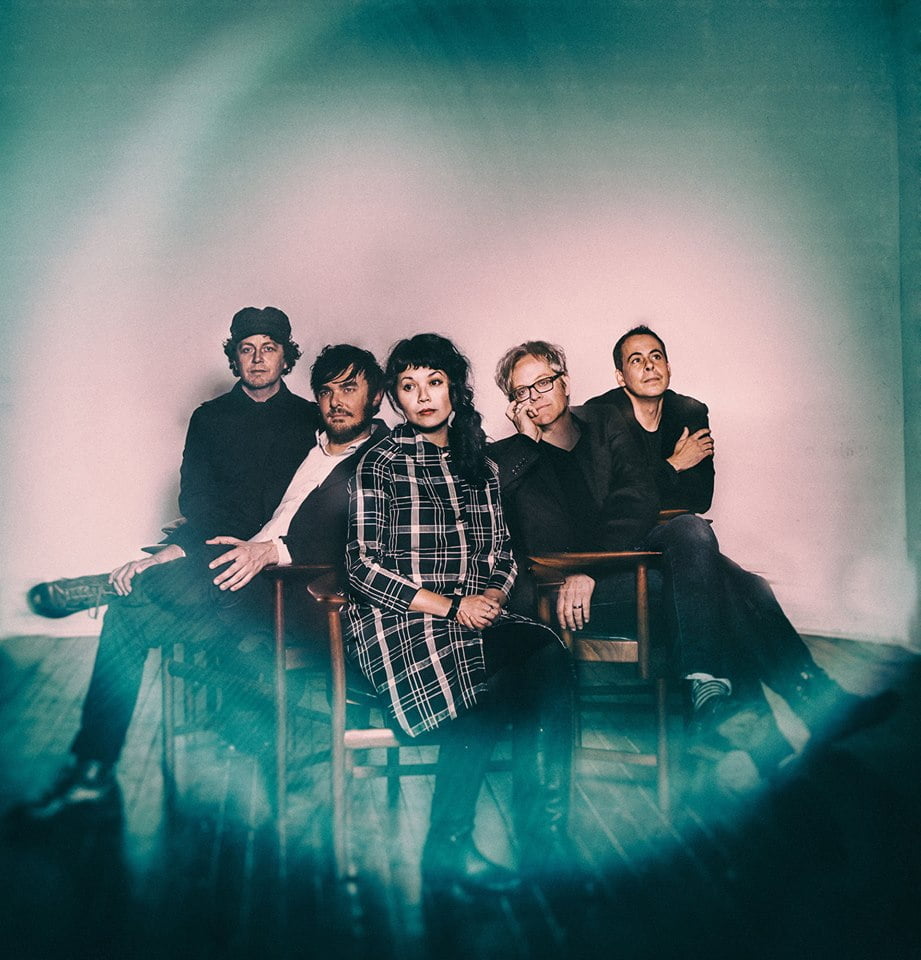
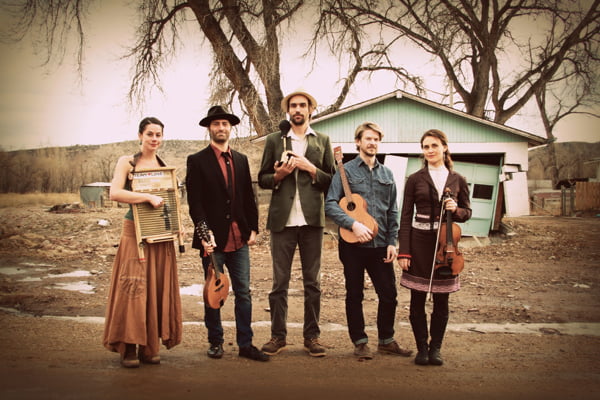
Artist: Elephant Revival
Hometown: Nederland, Lyons, & Boulder, CO
Latest Album: Sands of Now
Rejected Band Names: It’z Evolving, Rippin’ Britches 🙂


Thanks to @onthedlphoto for this great shot of our set at Red Rocks!

A photo posted by @elephantrevival on

What was the first record you ever bought with your own money?
Dango: Guns n’ Roses – Appetite for Destruction
Daniel: Bob Dylan – Live at Carnegie Hall
Bridget: Foo Fighters (self-titled)

If money were no object, where would you live and what would you do?
Dango: I’m very content living where I do and playing with Elephant Revival. Nederland is very beautiful, and it's a unique community full of interesting people. That said, I love the Oregon coast and Brevard, NC. Not to mention, many places overseas I have yet to be — such as the Isle of Skye.
Daniel: There are so many places I have yet to go, so in my finite knowledge, I’d probably buy some land in Colorado and buy a bunch of solar panels and a Tesla battery. Then I’d build a monolithic dome and a separate music studio and have it all be powered by the sun. I’d invest in an organic heirloom seed bank, buy some chickens and goats, and hire some friends to help grow some food.
Bridget: I would live in the mountains just outside of Boulder, up high and near the river. I would play music locally and teach kids for free!

If your life were a movie, which songs would be on the soundtrack?
Dango: I’d create a mix-tape of Penguin Café Orchestra, Balmorhea, and Michael Nyman.
Daniel: "Tangled Up in Blue" and "The Times They Are a Changin’" by Bob Dylan, "Girl in the War" by Josh Ritter, "Born at the Right Time" and "You’re the One" by Paul Simon, "Hold On" by Tom Waits
Bridget: All the music of Béla Fleck, "Ripple" by the Grateful Dead, anything off Blue by Joni Mitchell

What brand of jeans do you wear?
Dango: Levi’s
Daniel: I have two pairs of jeans — Levi's and Kenneth Cole.
Bridget: I hardly ever wear jeans, but when I do, they are stretchy.

What's your go-to karaoke tune?
Dango: Don't do Karaoke
Daniel: "Redemption Song"
Bridget: "Stay" by Lisa Loeb

What's your favorite season?
Autumn

Kimmel or Fallon?
Yes & Colbert

Jason Isbell or Sturgill Simpson?
Both of them passing songs around the fire

Chocolate or vanilla?
Dango: Swirl
Daniel: Chocolate
Bridget: Chocolate


Photo credit: Angie Barnes

Squared Roots: Jill Andrews on the Heart and Mind of Joni Mitchell

Pretty much every singer/songwriter today counts Joni Mitchell among their heroes. If they don't, they should. From her 1968 debut to her 2007 finale, Mitchell's talent has been both steadfast and elusive — remaining constant even as it evolved. Her early records (Blue, Clouds, Ladies of the Canyon, Court & Spark) showcased a craft so fully formed and so emotionally mature that they continue to stand as high marks in her career … if not in music as a whole.

By the mid-'70s, Mitchell needed more than acoustic music could offer and she branched out into jazz alongside Charles Mingus, Jaco Pastorius, Wayne Shorter, and other legends of the form. Having issued 10 studio albums in 11 years, Mitchell's output slowed in the '80s and '90s, with only six releases spread across those 20 years, including the Grammy-winning Turbulent Indigo in 1994. At the turn of the century, Mitchell won another Grammy for Both Sides Now, the concept album that follows the arc of a relationship as told through jazz songs performed by Mitchell with an orchestra. Two years later, Travelogue paired her own songs with an orchestra and, in 2007, Shine shone as her last-released collection of original material prior to her retirement from music.

As one of the singer/songwriters who count Mitchell as a hero, Jill Andrews found inspiration in her early acoustic albums. That influence wasn't exactly obvious on Andrews' first band project, the everybodyfields, or even on her solo sets, including her latest release, The War Inside. But it's in there, in her DNA, just as it is in all the other singer/songwriters who have come along over the past 45 years.

So that I know who I'm dealing with here … what's your favorite Joni record? This is going to determine a lot.

Blue. I feel like that's the most obvious one, but … There are several that I hadn't really listened to, so I've been listening to them. And, still, that's my favorite … by far, I would say. But I think Ladies of the Canyon is really good, too. What about you?

Early on, in my early 20s, I was all about Clouds . I mean, Blue is fantastic. No question. But, like you said, it's the obvious one. Then Court & Spark got me, particularly after … I'm guessing you've seen the wonderful documentary about her on Netflix.

No, I haven't, actually.

Oh my goodness. It's called Woman of Heart and Mind. I watched that a couple of years ago and listened to Court & Spark for about two weeks straight … nothing else.

Oh, nice! Is it a documentary about her whole life of just that era?

Her whole life. What's fascinating to me about her is that the music industry never knew quite what to do with her … and that's true of most artists who color outside the lines. It's amazing that their art ever gets documented and distributed.

Yeah. And she did so well, record sale-wise, for a really long time. The ones, to me, that weren't the most obvious still sold so well. And it's interesting to think that, if she were trying to do what she did in the '70s now, I wonder how different of an experience that would be for her.

Starting in 1968, when she was 24, she made nine albums in 11 years.

That is insane!

Clouds at 25 and Blue at 27. Today, artists that age are sitting naked on wrecking balls to get attention.

When you think about that, that is so true! [Laughs] Have you seen the live BBC videos she did in 1970?

Yeah, some of them.

She's wearing this pink dress and her skin is the most flawless skin I've ever seen in my life. I can't even believe how flawless it is. You know there was nothing making her look better, except maybe a little makeup … but she barely had any makeup on. She was just singing and playing guitar. She didn't need a single other thing. It was just her doing that and it was so good. It was songs from Ladies of the Canyon and some songs from Blue. It's just so simple.

It's tempting to wonder where the Joni Mitchell of this or that generation is, but really, the original is perfect and timeless. Do we need another one?

I mean … not really, but at the same time … I'm interested in the simplicity of all of that. It's actually caused me to think a lot because I've been thinking about what my next record is going to be. I'm so over the moon about this new one that came out, but I finished it a while back, so I've been thinking about my next one for a while. I've been working on a couple of things at home and a lot of it is pretty simple … a lot of my vocals stacked up, one on top of another, used as another instrument. I don't know … it's not necessarily as simplistic as just a guitar and vocal, but it's definitely more simple for me.

Well, the setting that she used was simple, but her phrasing, melodies, lyrics … all of that was very complex. That kind of talent can't really be learned, but have you spent time really studying the craft of her songs?

In high school, I definitely listened to a lot of her stuff. That was before I was a musician, really. I didn't play an instrument. I remember, specifically, when I was dreaming about being a musician, that I wanted to be like her. The reason I wanted to be like her was that I wanted to be able to play an instrument really well. I wanted to be able to sing really well. And I wanted to be able to write my own songs. That was the triad for me.

So you might as well aim for the absolute highest! [Laughs]

[Laughs] Yeah. Exactly. I guess I haven't really studied her craft, necessarily. But I have listened to her stuff a lot and just been a big fan. Her lyrics are so interesting. In general, they're all slice-of-life lyrics. You can see her in the story, almost every time — standing on a street corner in “For Free.” You can see her in so many of the songs. I just love that. The imagery is so beautiful.

Not that she ever made pure folk music, but that's just too small of a genre to contain her, so it's no wonder she gravitated toward the complexity of jazz. Are you a fan of that phase, as well?

I've listened to some of that stuff, but I wasn't as drawn to it, to be honest. I've listened to Court & Spark. I've listened to Hissing of Summer Lawns. I wasn't particularly drawn to either of those records, but I do really like Hejira.

Interesting …

Yeah. I don't know what it is. I think the melodies drew me in more, on Hejira. I love “Coyote” so much. That song is amazing.

Undercover Angel: An Interview with Shawn Colvin

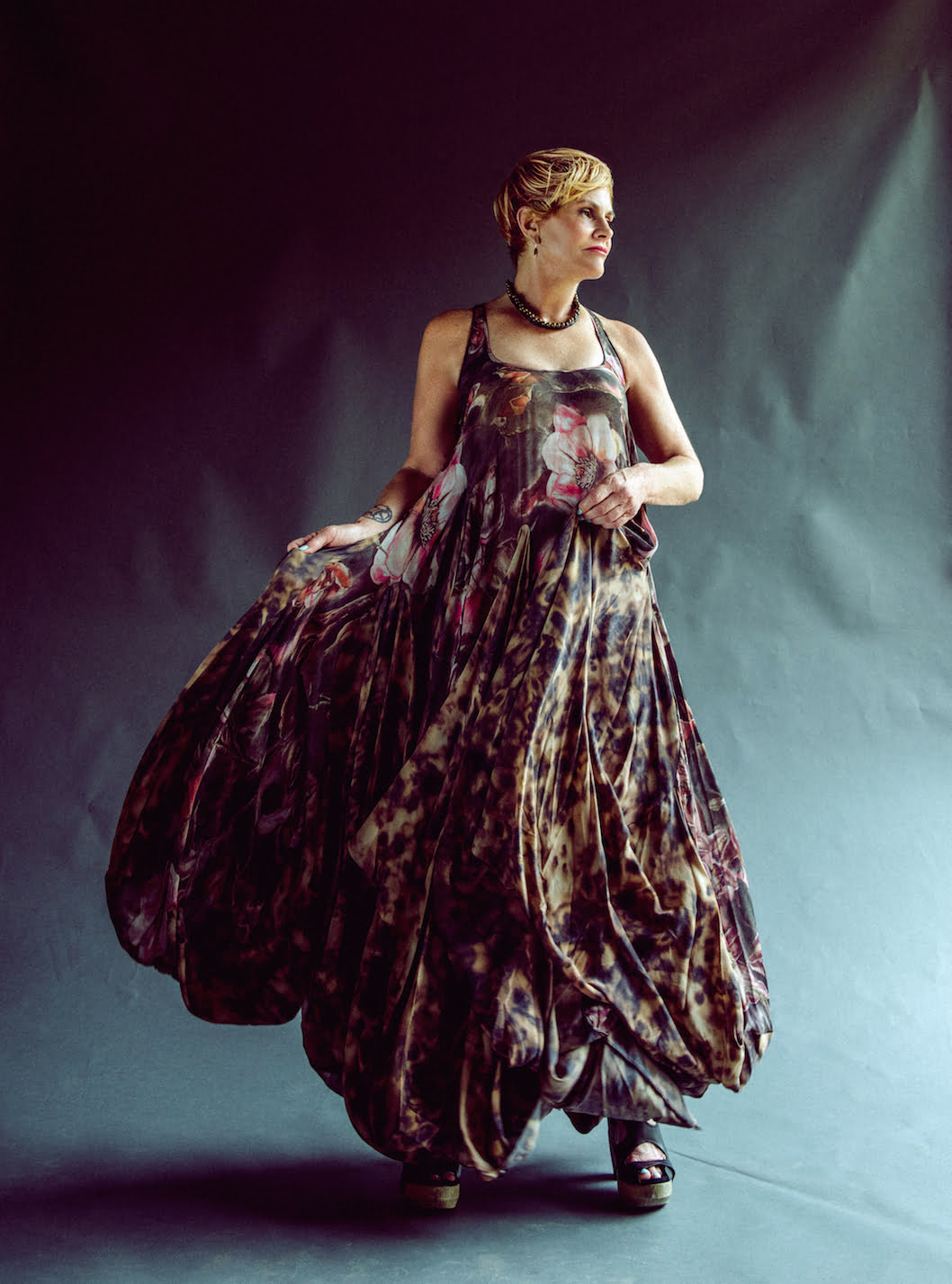
Perhaps inspired by “Tiny Dancer,” Shawn Colvin originally wanted to be the seamstress for the band … not the leader of it. But she eventually got out front and sang a bunch of cover tunes until she found her own voice as a songwriter. Several decades later — and amidst six albums of originals — Colvin has never abandoned her love of the cover and has just released her second batch of interpretations, Uncovered. On it, she turns to some of her very favorite writers — Bruce Springsteen, Tom Waits, Paul Simon, Neil Finn, and Stevie Wonder. As disparate as the originals may be, Colvin's tender touch turns them into a cohesive collection as she steps effortlessly into the songs, making them as much her own as any cover artist can.

I've waited a long time to discuss this with you: You were part of one of the best moments of my life. After one of your shows at McCabe's in 1991, Susanna Hoffs and I — along with a few other friends — went upstairs to say hi to you. And you were sitting there …

Was that when Joni [Mitchell] was there? Yeah, I remember that.

Yeah. It was Joni, and Larry Klein and David Baerwald. They split off to play guitars. But we just sat at Joni's feet as she told us stories and sang us songs. It was amazing.

I know. That was a great night. I have photos from that night.

Do you?

Yeah.

Oh wow. I remember we were sitting on the floor and you elbowed me, at one point, and mouthed something like, “Can you believe this?” But what you didn't realize was that you were part of the awe, as well, because we were all so in love with Steady On. It was like, “Holy crap, we're sitting here with Shawn and Joni?!”

Aw. No. I didn't know that. [Laughs] That was a pretty big deal for me, too.

Have you ever covered one of her songs … other than at that tribute concert so many years back?

Many times in my former life as being a bar singer, yeah. I did nothing but cover her songs. So I had to kind of get away from it a little bit because I was a good copy cat.

So is it kind of just too close to home for you now to put her on one of your records?

It would kind of be sacrilege. I don't know that I … I would do it. I just don't know that I could bring anything new to it.

Yeah. Even knowing that you started out in cover bands, the obvious question is … Why does one of the best songwriters of her generation — meaning you — make a covers record?

I made my living doing covers and I got pretty good at it. And I had some special ones. It's part of what I do. I like being a cover artist and trying to bring something different to stuff. I wouldn't do it if I was just doing wedding band duplicates. [Laughs] I enjoy it.

What's different about the creative rush or release you get from covering songs, from the rush of doing your own tunes?

Well, I don't cover a song unless I love it. There's some satisfaction there. And, like I said, if I can turn it around on its ear just a little bit — even if not seriously musically, then emotionally — that's creative about it for me. And the joy of singing the song is always a big deal.

I think you probably answered this with your glorious take on “Naïve Melody,” but is there any song you can't bum the hell out of?

[Laughs] No. I can bum the hell out of any song. On this record, I did “Baker Street” which I don't think people normally think of as a bummer song. But I managed to do it.

[Laughs] Oh, you totally did. Maybe you'll have to try Pharrell's “Happy” at some point, just to really prove that you can do it.

Yeah. You never know. [Laughs]

When you approach a cover song, is it more about letting the song into you or putting yourself into the song? Or is it dependent on the piece?

I'm not sure. I kind of learn the song as it originally is, at first. Well, there are some exceptions. Like “Naïve Melody,” I got the lyrics down and had to immediately change it. I didn't really learn it as it was, but most of the time I do. Then, it doesn't sound genuine because I'm just copying. So I try to find a mood or … I guess I try to find a way into it.

Is finding a connection with the storyteller or the character part of that, too?

Yes!

Or is just being a great song enough?

Yes. Definitely. I haven't really taken an inventory. But if there's not a main character or if it's not in first-person, then I guess I'm just capturing the mood. I did a … oh, no, that's first-person, too. I was going to say, I did a cover of Gnarls Barkley's “Crazy” and the reason I did it was because it was a very personal song, lyrically, I thought.

Yeah. I'd agree. Okay … We have to talk about Neil Finn for a minute.

Okay.

Why … how … what is it that makes him so great to you?

Well, that's like saying what makes … I don't know … what makes the Beatles great? He's just a special, special artist. Amazing songwriting. Just a great pop sensibility and also crosses over into folk and rock. A singer that's got that kind of … He's a New Zealander, but there are some similarities in the accents — it's certainly not American — of British, Australians, and New Zealanders, in my opinion. He's just sort of John Lennon-esque to me. The way the words are pronounced, even the way he sings. He's just a great pop singer and an amazing songwriter. And Crowded House was the perfect vehicle for it.

I was so glad to see you pull a tune from Together Alone because, as much as I love Woodface and the first record, I go back to Together Alone a whole lot.

That's what happened to me. After Woodface, I was almost reticent to buy Together Alone because I thought, “Well, it can't measure up.” [Laughs] And, then, I got so deeply into it that it became my favorite.

Mine, too. I wore myself out on Woodface, as I think a lot of people did. But there's something so satisfying about Together Alone.

Mm-hmm. It's a deep one. Yep.

Okay. Totally switching gears … There are two things I think you understand that a lot of artists don't: The first is the importance of a great producer. I still remember the first time I listened to A Few Small Repairs. I'd pulled into my carport coming home from Tower Records. “The Facts About Jimmy” came on and I just sat there, mesmerized, thinking, “This is everything I want. This is what music is supposed to sound like.”

Wow. Thank you.

Obviously, [John] Leventhal gets a lot of credit for that, down to his guitar riff. But do you feel like the art of the producer is something that's gotten lost in the GarageBand era?

Mmmm … You know what? I'm not as in touch as I should be. [Laughs] There's so much music out there and I'm not exposed to a lot of it. I'll admit it. Through my daughter, I hear stuff. I think there's some great songwriting out there. I don't know if the art of the producer is lost. I know a lot of people are prone to produce themselves. And I just don't have a desire to do that. I don't want to be that close to it. I like collaboration. John, specifically, is also a co-writer with me. So, oftentimes, that production is part of what I first heard when I would write the lyrics. Now, “The Facts About Jimmy” I wrote the lyrics independently of any music. Then I listened to some things that he had and I decided it would match up well with that piece.

Gotcha. The second, I think you have down pat, is the job security of being able to go out on the road and play thoroughly engaging solo shows.

Yeah. Thank you.

There are a lot of people who will go see you any time you come through their town. And I think that's another bit of lost art — engaging with the audience. Kind of Performance 101.

Yeah. It's what I cut my teeth on. I remember living in Carbondale, IL, and going to the arena — I don't even remember what the arena was called — and seeing Simon & Garfunkel with no band, James Taylor with no band …

In an arena …

In an arena. To me, at the heart of the writers that I loved who had production on their records, which was almost all of them — Joni, Jackson [Browne], James Taylor, Paul Simon … I always mention the same ones when there are so many. But at the heart of it was guitar and vocals. It took me a long time to realize, “Well, that's what I can do.” That's what I learned and that just seems to make sense, it seems to call to me. It seems to be what I'm good at.

Well, I've seen you do it everywhere from McCabe's to … what is that theatre in Northampton, right there on the main drag? The Calvin?

Right. Yeah, the Calvin.

Seems like you can hold a room, no matter how big or small.

Thank you. Yeah. [Laughs] I try.


Photo credit: Alexandra Valenti