12 Fantastic Merle Haggard Covers

April 6 would have been Merle Haggard’s 89th birthday – and was also the tenth anniversary of his death. So, before these anniversaries get too far in the rearview mirror, I wanted to take a moment to remember one of country music’s all-time legends – and one of the great singer-songwriters in all American popular music.

One lesson of Haggard’s career is that you best honor your musical heroes, not only by playing their records at home or talking up their influence in interviews, but by continuing to perform their songs – on stage and in the studio. Merle released tribute albums to Jimmie Rodgers, Bob Wills, and Elvis Presley, and across his catalog cut at least an album’s worth of Lefty Frizzell songs.

Since his death, it’s been nice to see how often Merle’s musical contemporaries and descendants have taken Haggard’s model to heart, recording his songs and even releasing entire Merle Haggard tribute albums.

In recognition of his ongoing legacy, I’ve chosen 12 of my favorite cover versions of songs by Merle Haggard. I shared a kind of companion piece to this list last week, at No Fences Review, pulling choices from the 20th century only. Now, for Good Country, I’m focusing my dozen picks on Hag covers from this century.

I could assemble similarly strong lists every week for months without running out of possibilities. But these dozen Hag covers are among the very favorites.

“You Don’t Have Far to Go” – Candi Staton (from His Hands, 2006)

Co-written with trucker-song specialist Red Simpson, “You Don’t Have Very Far to Go” was the earliest of Merle’s songs to have legs. Recorded more than a couple dozen times through the years (including three versions from Hag himself), it’s proven a special favorite of first-name-basis country women. Bonnie and Connie, Rosanne and Lucinda, and others all seem to sing the song directly to some toxic asshole: “If I’m not crying, you’re not satisfied.”

My favorite reading of the song in that way is by Candi Staton. She became renowned for her disco and gospel recordings, but when first establishing herself as an R&B star circa 1970, it was with striking country soul takes on hits by Tammy Wynette and Patsy Cline. Decades later, she deploys Merle’s old song to deliver a master class in soulful, thought-by-thought phrasing. Staton sounds fragile and beaten down yet, by the end, her tone hints she may finally have had enough.

“Hungry Eyes” – Leona Williams (from Leona Williams Sings Merle Haggard, 2008)

Leona Williams may be best known as Haggard’s third wife, but she’s a tremendous artist in her own right, a country music lifer who played bass behind Loretta Lynn in the 1960s, enjoyed a solo career worth tracking down, and wrote or co-wrote chart toppers “You Take Me for Granted” and “Someday When Things Are Good” for Merle in the early ‘80s.

Leona’s version of “Hungry Eyes,” from her superb 2008 Haggard tribute, always stops me in my tracks. In the verses, she sounds haunted by her parents’ long-ago struggles. At each chorus, she gulps and springs to the top of her range, once again meeting her mother’s dissatisfied gaze. “She only wanted things she really needed!”

“The Running Kind” – Marty Stuart & His Fabulous Superlatives (from The Marty Stuart Show, c. 2009 or 2010)

“The Running Kind” is both one of country music’s great declarations of independence and, for Haggard, a great self-own: Merle boasts that he’s always on the run from one thing or the other even though, “I know running’s not the answer” to anything. The sentiment can serve as a kind of thesis statement for the Hag’s own restless life and career, so it’s ironic that my favorite version of the song isn’t Merle’s but this live cut from Marty Stuart. From an episode of the singer’s television series, Stuart and his Superlatives rage noisily and headlong, while staying absolutely controlled, through Merle’s tune. The solos from Kenny Vaughan and Stuart are my idea of Telecaster heaven.

“Ramblin’ Fever” – Tanya Tucker (from My Turn, 2009)

My pick for the best-ever “Ramblin’ Fever” is this version by Tanya Tucker. Riding an outlaw thump spiked by country disco high-hat, Tucker honors a musical hero, a former paramour, and a kindred rambling spirit. To that end, she loves it when some good-lookin’ fella rubs her back, but what really turns her on comes in the a.m. when she can drink a cup of coffee before leaving. The series of guitar solos that play out the final 1:20 here sound like she’s already out the door.

“How Did You Find Me Here?” – k.d. lang (from Sweet Relief III: Pennies from Heaven, 2013)

“How Did You Find Me Here?” was among Merle’s finest new songs of this century. From 2010’s I Am What I Am, Merle sings the number like a grim but grateful gospel ballad – his savior has come for him in his grave. “Thank you, Lord,” he prays at the close.

k.d. lang’s spare, ethereal reading feels less straightforwardly religious but, if anything, more spiritual. She’s desperately alone, at her nadir, but now someone – a lover or friend, her sponsor or her community – has seen her for who she is, taken her in. Lang’s contralto sounds bleary-eyed and dumbfounded, but she gains strength as she goes, ready to move on up.

“I Think I’ll Just Stay Here and Drink” – Suzy Bogguss (from Lucky, 2014)

Back in 1989, one of Suzy Bogguss’ earliest charting singles was a cover of “Somewhere Between,” still my favorite version of that great Haggard ballad. So my expectations were unreasonably high for Lucky, a full-length Merle Haggard tribute that she released in 2014. But the album’s a gem straight through, and I especially recommend her take on “I Think I’ll Just Stay Here and Drink.”

Most versions of Merle’s boozy romantic complaint have been done by rowdy dudes who sound like they’re slamming shots while ordering their fourth pitcher ahead of passing out. Bogguss, by contrast, comes off country-jazz cool, sipping a good bourbon and commiserating with herself in some dark corner. Don’t wait up. She’s going to be here awhile.

“Shelly’s Winter Love” – Lonesome River Band (from Turn on a Dime, 2014)

Merle’s most haunting song is about depression: Shelly’s depression each winter, the narrator’s the rest of the year round when the sunshine’s lured her back to town. This Lonesome River Band rendition from 2014 is the most haunting I know. Brandon Rickman sings beautifully but frighteningly too, and LRB’s pacing, like seasonal affective disorder set to a melody, reflects the long, slow days of a long dark winter. Midway through, Sammy Shelor’s banjo plunks a drip, drip, drip, that quickly gathers to a stream. A thaw’s coming; spring is on the way. It won’t be long now…

“A Working Man Can’t Get Nowhere Today” – Rob Ickes & Trey Hensley (from Before the Sun Goes Down, 2015)

This was a savvy cover choice by Rob Ickes, 15-time winner of the IBMA’s Resophonic Guitar Player of the Year award, and Trey Hensley, the association’s pick for Guitar Player of the Year in 2023. For one thing, the song is an underappreciated gem of the Haggard songbook, recorded maybe not even half a dozen times since Merle had a hit with it in 1977. More importantly, this Hag number lets Ickes and Hensley trade elegantly exhausted solos while tapping into a perpetually frustrating and common condition: Working your ass off every day to to put food on the table yet still coming up short. Hensley moans, “I’ll still be deep in debt the day that I fall dead.”

“Some of Us Fly” – Bonnie “Prince” Billy (from Best Troubador, 2017)

Merle’s “Some of Us Fly” served as the concluding track to his underrated release Chicago Wind, from 2005, and featured a guest vocal from Toby Keith. Because both men had already experienced such heights in their career, the message of each chorus – “Some of us fly but all of us fall” – comes off a little like superstars performing their humility. But where Haggard and Keith share hard-won wisdom, Bonnie “Prince” Billy casts a spell. With his duet partner, Irish singer/flutist Nuala Kennedy, he surrenders to a mystery.

On the remarkable 2017 Haggard tribute album, Best Troubador, Billy (AKA indie songster Will Oldham) and Kennedy whisper their way through Merle’s song in cautious harmony, their hands clutched tightly. The whole performance feels so fragile a strong wind might blow it way.

“Today I Started Loving You Again” – Eli “Paperboy” Reed (from Down Every Road, 2022)

Eli Reed specializes in making over all manner of roots-adjacent material into cool, committed soul music. Down Every Road does that for the Haggard songbook with thrilling results straight through. (A duet between Eli and Sabine McCalla on Merle’s most covered song, “Today I Started Loving You Again,” was inspired by a famous, but officially unreleased, 1969 version by Buck Owens and soul singer Bettye Swann.)

I especially appreciate Reed’s take on Merle’s celebratory kiss-off “I’m Bringing Home Good News,” which he relocates from Merle’s dusty, country-rocking San Joaquin all the way down to Louisiana for some funky Tony Joe White-styled swamp.

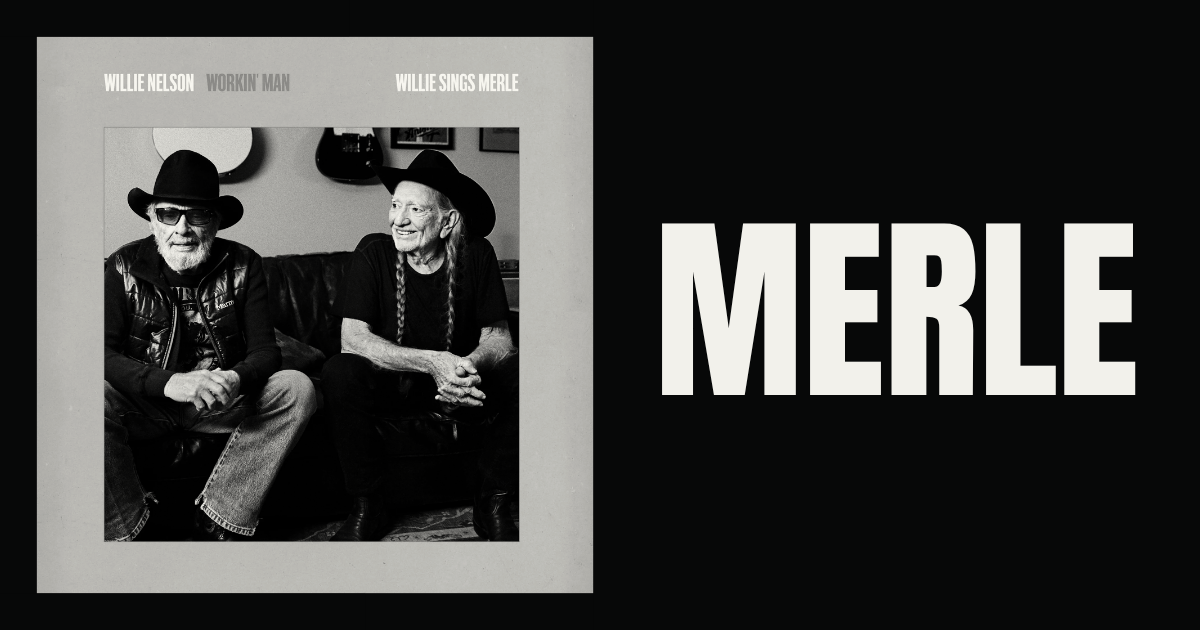
“Workin’ Man Blues” – Willie Nelson (from Workin’ Man: Willie Sings Merle, 2025)

One of Hag’s signature hits, “Workin’ Man Blues,” is usually framed as a purely blue-collar anthem, but it’s good to remember he identified the song as a blues. Having to work to survive while hoping your body holds out as long as you’ll need it is something to be cursed more than celebrated.

From last year’s Workin’ Man: Willie Sings Merle, a 92-year-old Nelson delivers his friend’s lines with a bit of a slur, weary and resigned but also grateful still to be working, to be on the road again until he runs out of road. Similarly, Willie’s arrangement sheds Merle’s Elvis-y fanfare for some hard, use-it-or-lose-it swing. “Play it, little sister,” he says, introducing one of the hot-jazziest solos in the career of the late Family band pianist Bobbie Nelson. Willie’s solos up top and midway through, meanwhile, are things of singular beauty, guitar work that sounds like play but refuses to hide the callouses and the miles. “As long as my two hands are fit to use…”

“Daddy Tried” – Jade Jackson (single, 2026)

Merle’s “Mama Tried” has been covered well over 100 times since he wrote it for the Killers Three soundtrack in 1968. But the song’s indelible ascending chorus and its universal theme – Merle sings it as if he’s as proud of defying his mom as he is remorseful for disappointing her – have encouraged people to use the song in all kinds of ways. Country comic Don Bowman parodied it as “Pappa Tried” as early as 1969 and more recently Angeleena Presley was clearly in conversation with Merle’s classic when she released “Mama I Tried” in 2017. As was Keith Urban when he sampled its lick for “Coming Home” in 2023.

Jade Jackson grew up in a small Cali town between Bakersfield and the Pacific, and her updated, gender-flipped take on Merle’s tale sounds just like that: Her voice feels a little dusty and a little sunny. Switching out Merle’s locale from “prison” to “Nashville” is funny because those two aren’t at all alike, but also because maybe they’re a little alike. For sure the ache in her voice reveals her as another singer-songwriter in a long line of kindred spirits to Merle; she’s going to go her own way, no matter her dad’s good advice.


David Cantwell is the author of The Running Kind: Listening to Merle Haggard, the co-author of Heartaches by the Number: Country Music’s 500 Greatest Singles and the co-creator of No Fences Review. His byline has appeared at Rolling Stone Country, The New Yorker, Slate, and No Depression, among other publications.

Photo Credit: Workin’ Man: Willie Sings Merle on Legacy Recordings

10 Sonically Diverse Covers of Lucinda Williams Songs

Befitting Lucinda Williams’ stature as one of the greatest songwriters of modern times, she might be the most covered artist this side of Bob Dylan (who, as far as I can tell, might be the only major artist never to have covered one of her songs).

From “Are You Alright?” to “You Can’t Rule Me” and all points in between, Williams’ catalog is broad, deep, and multivalent, with lavish emotional content to dig into. Truly, the woman’s body of work contains multitudes.

Where she’s coming from is no mystery, because Williams has always been generous about showing off her own influences and idols. She has covered too many other artists’ songs to count, by the likes of Dylan, Nick Drake, Howlin’ Wolf, and more. She has also done multiple tribute albums in her Lu’s Jukebox series, covering the Beatles, the Rolling Stones, Tom Petty, and even Christmas songs, among others.

There’s almost too much to choose from, but here is a small sampling of what other artists have done with Williams’ songs over the years – focused more on stylistic departures than faithful readings.

“Passionate Kisses” – Saintseneca (2014)

It’s hardly surprising that a great deal of this list of covers will come from 1988’s breakthrough album Lucinda Williams, starting with this forthright statement of purpose. The obvious “Passionate Kisses” cover choice would be Mary Chapin Carpenter’s 1993 hit version, which put both women on the map. But let’s go more left-field with the sprawling, atmospheric grandeur of the cover by Ohio indie-folk band Saintseneca. It’s never sounded more wide-open cinematic, to the point that I kind of can’t believe no one has put it onscreen yet. Cue opening credits.

“Bus To Baton Rouge” – Amos Lee (2023)

This Philadelphia-born soul man thinks enough of the Williams oeuvre to have covered 12 of her songs for an album, Honeysuckle Switches: The Songs of Lucinda Williams. Williams’ original appeared as the penultimate track of her 2001 release, Essence. The lyrics yield up the title phrase of Lee’s tribute LP, and it makes a stunning album-closer here.

“Side of the Road” – Ben Folds (2005)

In Williams’ hands, “Side of the Road” conveys stoic resolve on her 1988 self-titled joint. North Carolina native virtuoso Ben Folds transposes it to winsome piano pop for his 2005 solo album Songs For Goldfish, and the transition works beautifully.

“Change the Locks” – Tom Petty (1996)

Originally titled “Changed the Locks” on her eponymous album, this is in the conversation for Williams’ greatest songs. Her version coursed with undercurrents of the sort of domestic violence that would inspire a woman to, well, change her locks. So it’s interesting that so many men have taken a crack at this song in the decades since, including Silos, Vampire Weekend, Rostam, and Elvis Costello. But maybe best of all is Tom Petty, who recorded it for the soundtrack to 1996’s She’s The One, getting the defiance just right.

“Joy” – Bettye LaVette (2005)

As good as all of Williams’ records have been, it wasn’t until 1998’s GRAMMY-winning Car Wheels on a Gravel Road that she finally got herself a gold record. “Joy” was a high point, equal parts angry and exuberant. Still, powerhouse soul woman Bettye LaVette took it to a whole new level with a swamp-blues rendition on her 2005 comeback LP, I’ve Got My Own Hell to Raise.

“Abandoned” – The Lemonheads (2019)

While The Lemonheads’ troubled leader Evan Dando is a decidedly problematic figure, there’s no denying his taste in covers. The Lemonheads have released two volumes of cover collections with good, bad, and ugly songs by everyone from Townes Van Zandt and Yo La Tengo to Florida Georgia Line and GG Allin. From 2019, Varshons 2 also features a fuzz-toned version of Williams’ very forlorn “Abandoned” (yet another Lucinda Williams song).

“Concrete And Barbed Wire” – Bella White (2022)

There has always been a stateliness to the Car Wheels on a Gravel Road track “Concrete And Barbed Wire,” which was in Canadian songbird Bella White’s onstage setlist years before she released a studio version on 2024’s Five For Silver. The song’s waltz tempo makes a perfect fit for bluegrass – recorded live at the Green Mountain Bluegrass and Roots Fest in Vermont.

“Metal Firecracker” – Mary Lou Lord (2015)

Everybody’s favorite busker, Mary Lou Lord is best-known for solo deconstructions of songs from the indie-rock canon. But on her 2015 LP Backstreet Angels, Lord goes full-band indie-rock for “Metal Firecracker” (which Williams originally cut on Car Wheels on a Gravel Road). Lord sounds dreamy to Williams’ earthiness – but both versions come down to, “All I ask, don’t tell anybody the secrets I told you.”

“People Talkin’” – Hurray For the Riff Raff (2012)

Maybe the acid test of a song’s worthiness is how well it holds up if stripped all the way down to voice and quiet strumming. As if there could be any doubt, Williams’ “People Talkin’” (from 2003’s World Without Tears) is superb in this guitar-and-fiddle version that Hurray For the Riff Raff recorded in a London kitchen for an edition of “notes from mt. pleasant.”

“Fruits of My Labor” – Waxahatchee (2021)

“Fruits of My Labor” seems like a song that’s still going to be played around campfires a century from now. Its structure and vibe bear passing resemblance to that classic spiritual, “A Change Is Gonna Come,” and it’s been covered numerous times since first appearing on Williams’ 2003 LP World Without Tears – fine, fine versions by Margaret Glaspy, Mia Dyson, and Rostam, among others. But Waxahatchee (Alabama-born Katie Crutchfield) gets closest to the song’s soul with her cover from 2021’s Saint Cloud +3 album.

“The Last Time” – Lucinda Williams (2021)

We’ll break the format here at the end and give Williams herself the last word, showing everyone how one pays proper cover homage. From her 2021 tribute LP, You Are Cordially Invited…A Tribute to the Rolling Stones, “The Last Time” is a song with a long and winding road behind it. Originated by the Blind Boys of Alabama, it was famously covered by the Staple Singers in 1961. Four years later, the Stones fit it with a snarling lead-guitar hook that took it out of church – and here Williams moves it right on over to the honky-tonk.


Continue exploring our Artist of the Month coverage of Lucinda Williams here.

Photo Credit: Mark Seliger

Six of the Best Alison Krauss Covers

Alison Krauss has been recording and releasing music with her band, Union Station, for longer than she’s been able to legally drink or vote. Along the way, she’s been a key influence in the lives and careers of countless other musicians, many of whom have recorded and performed covers of their favorite Alison Krauss material.

Famously signing with Rounder Records when she was just 16, Krauss has spent the past four decades offering inspiration to multiple generations of artists spanning many genres, from bluegrass and country to Americana, folk, and beyond. She’s collaborated with fellow legends like Dolly Parton, Neil Young, and Robert Plant, and her list of honors includes not one, not two, but 27 GRAMMY Awards. In fact, she’s the fifth-most GRAMMY-awarded musician of all time, across all genres and categories.

As we highlight the vibrant legacy of Alison Krauss & Union Station, our Artist of the Month, in celebration of Arcadia, their first album in over a decade, we’re carving out some space for the performers who have skillfully and reverently covered Krauss and her music over the years. From big names and bluegrass stalwarts to some less expected artists that land a bit further off the beaten path.

While not all of our selections are Alison Krauss & Union Station originals, you can tell each of these musicians have been distinctly inspired by Krauss and her musical legacy. The internet is chock full of Alison Krauss covers, and we think these are six of the best.

“Whiskey Lullaby” – Kaitlin Butts and Flatland Cavalry

Originally released by Brad Paisley on his 2003 album, Mud on the Tires, “Whiskey Lullaby” was penned by Jon Randall and Bill Anderson and remains one of Krauss’s most popular songs as a featured guest artist. This cover by country phenoms Kaitlin Butts and Cleto Cordero of Flatland Cavalry – and featuring multi-instrumentalist Kurt Ozan on Dobro – infuses fresh grit and intimacy into the somber sensitivity of the original. While it’s hard to compete with Krauss’s bright, soaring vocals, Butts honors them well while staying true to her own rich vocal timbre.

We also recommend checking out this version where Paisley and Krauss perform the track at Carnegie Hall back in 2005.

Plus, the pair recently reunited on the special Opry 100: A Live Celebration TV broadcast to perform the song, as well. It was one of our favorite moments from the event.


“The Boy Who Wouldn’t Hoe Corn” – Dan Tyminski

You might know Dan Tyminski as the voice of Ulysses Everett McGill (AKA George Clooney’s character in O Brother, Where Art Thou?), but he was also a longtime member of Alison Krauss & Union Station. In 2001, Tyminski arranged and recorded a version of “The Boy Who Wouldn’t Hoe Corn” for the band’s album New Favorite.

In this video recorded for BBC Four, Tyminski leads the charge, belting this stunning rendition of the American folk traditional. While admittedly not a cover in the truest sense of the word (since Tyminski also sings lead vocals on the original), we couldn’t help but include this heart-stopping performance with Jerry Douglas, Russ Barenburg, Aly Bain, and more.

Tyminski performs the song as a member of Alison Krauss & Union Station in this equally impressive video from a 2002 performance in Louisville, Kentucky.

Tyminski left AKUS before the release of Arcadia and has been replaced in the band and on the recordings by bluegrass veteran Russell Moore. Still, Tyminski does appear on Arcadia on a couple of tracks and he also co-wrote “The Wrong Way.”


“My Love Follows You Where You Go” – Lori McKenna

Another unconventional cover, Lori McKenna co-wrote “My Love Follows You Where You Go” for Alison Krauss, but she didn’t record or release it herself until 2013. Alison Krauss & Union Station had recorded and released it on their acclaimed 2011 album, Paper Airplane.

This offbeat love song captures the richness and complexity of Krauss’s singing and performance style; hearing McKenna perform it adds another layer of depth. McKenna wrote the track with Barry Dean and Liz Rose as a bittersweet love note to her children. She shared her feelings about it with American Songwriter in 2013: “I was able to sing it pretty well. Not as beautifully as Alison Krauss, of course. But I’m happy that one made my record because it is such a message to our kids.”

Watch AKUS performing the number on a live television performance from 2011:


“Let Me Touch You For A While” — Mary Spender

Mary Spender isn’t too well-known in the American bluegrass scene, but she’s an acclaimed British singer-songwriter and YouTuber. Guitarist Magazine even called her “one of the most dynamic, expressive young British singer-songwriters working today.” She’s one of many young musicians who draws inspiration from Alison Krauss.

Spender has one of those rich, soulful voices that makes you stop and catch your breath when you first hear it. It’s hard to anticipate and it’s also very distinct from Krauss’s light, angelic voice. But in this cover of “Let Me Touch You For A While,” Spender offers a simple yet jaw-dropping performance that boldly honors the original while taking things in a unique direction. Accompanied only by her guitar, Spender brings a sultry, driving energy to the song’s emotional complexity and leans into her impressive vocal range.

Originally recording the track in 2001 for New Favorite, it would go on to become one of their most recognizable hits. Krauss & Union Station performed “Let Me Touch You For A While” alongside Jerry Douglas at the Opry 100 celebration last month.


“No Place to Hide” – Adam Steffey

If you’re a diehard AKUS fan, you’ll definitely recognize Adam Steffey’s name; he’s another past member of Union Station from 1990 to 1998. Here, Steffey and his own band (including Tyminski) give a raucous rendition of “No Place to Hide,” a song Steffey recorded with Union Station on So Long So Wrong (1997). A straightforward “mash” bluegrass track, “No Place to Hide” booms and rolls with the band’s strong vocal harmonies and tight, effortless timing.

Here’s a much earlier live version of the song that’s got a more traditional bluegrass sound by Krauss and band:


“The Lucky One” – Jessica Willis Fisher, Gavin Trent

One of Krauss’s major country hits, “The Lucky One” was originally released on New Favorite in 2001. That same year, it won two GRAMMY Awards: Best Country Song and Best Country Performance by a Duo or Group. This stripped-down cover by Jessica Willis Fisher and Gavin Trent honors Krauss’s voice and musicianship in a way few other musicians can. Fisher has a similarly bright, soprano voice, and she can definitely hold her own on the fiddle, which she’s been playing since she was a child. As soon as you start listening, it’s clear Fisher is inspired by Krauss and this rendition serves as a fitting tribute.

A lifelong musician, Fisher has received praise from CMT, American Songwriter, and Billboard, and she’s worked with some of the same songwriters who write for AKUS – but it’s still possible you’ve never heard of her. Fisher has intentionally stayed out of the public eye in recent years (despite releasing her debut solo album, Brand New Day, in 2022) due to significant personal trauma tied to her family history. Fisher now uses the trauma she’s endured to help others heal, both through her music and her writing.

Alison Krauss & Union Station performed “The Lucky One” live on CMT in 2005:


Explore more of our Artist of the Month content on Alison Krauss & Union Station here.

Photo Credit: Randee St. Nicholas

LISTEN: Matt the Electrician, “Do You Believe In Love”

Artist: Matt the Electrician
Hometown: Austin, Texas
Song: “Do You Believe In Love”
Album: Do You Believe In Love/Walking on a Thin Line
Release Date: October 6, 2023

In Their Words: “Growing up in Sonoma County in the early ’80s, Huey Lewis & The News were a really big deal, they were hometown heroes. And though the album Sports contains the bulk of their hits, and was much beloved to be sure, the first hit from the album Picture This was huge! ‘Do You Believe in Love.’

“It popped back into my head a few months back, and I couldn’t get it out. I became obsessed like I was 11 years old again. And I wanted it to be covered. And I wanted it to be a covered by a bluegrass band. But I couldn’t convince anyone I knew to do it. So I just had to do it myself. And so, purely for the fun of it, I enlisted the help of some of my favorite pickers here in Austin, Texas: Tony Kamel (guitar, vox), Trevor Smith (banjo), Noah Jeffries (fiddle), and Andrew Pressman (bass), and I went into the studio, and recorded both ‘Do You Believe In Love’ – and a version of ‘Walking on a Thin Line’ from Sports as a B side for the ‘digital 45.'” – Matt the Electrician


Photo Credit: Kathie Sever

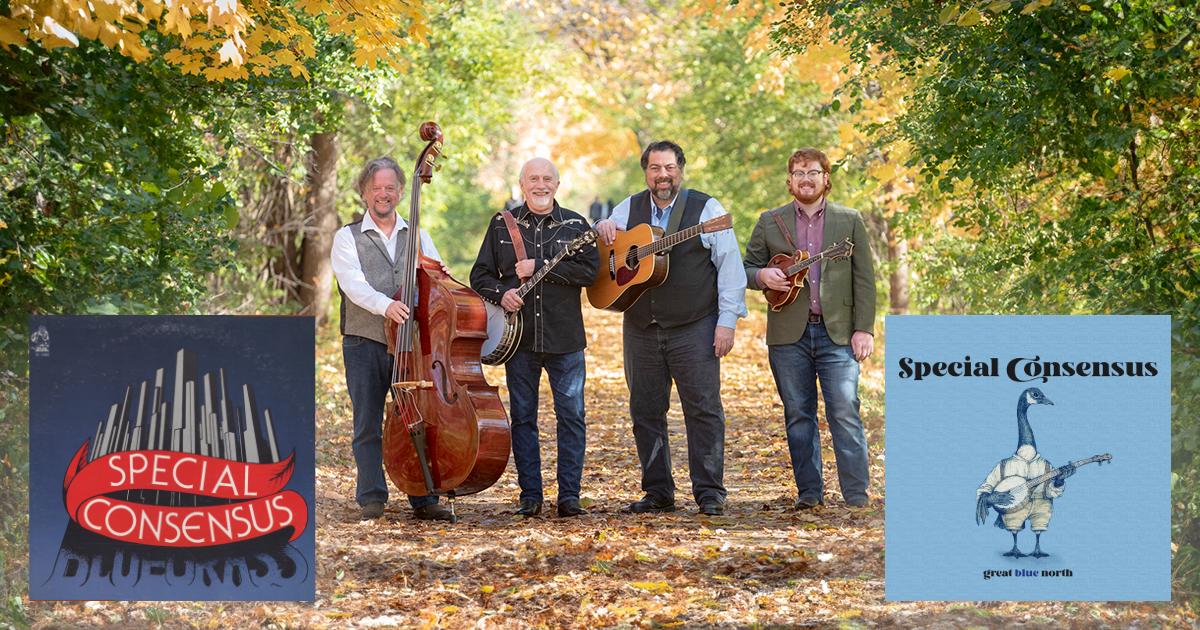
First & Latest: Special Consensus’ 40+ Year Career

(Editor’s Note: BGS is excited to debut a brand new column and feature series, First & Latest, which examines the discographies of artists, musicians, and bands by comparing and contrasting their first album against their latest album.)

Chicago-based, long-running bluegrass outfit Special Consensus have been making records since 1979, when they released their debut, self-titled album. Since then, they’ve put out about 20 records – and they’ve criss-crossed the country and the globe spreading their modern-yet-traditional, hard-driving sound. Banjo player Greg Cahill, who is also a bluegrass industry leader and community builder, is the band’s sole remaining original member and, across those decades, has been the linchpin, the keystone of what has become a true legacy act.

To mark the occasion of their latest release, Great Blue North (released May 12 on Compass Records), we compare and contrast the band’s debut record with this new project with Cahill – it’s First & Latest, from BGS.

What goes through your mind when you hear a song from that first record, like “Like a Train?”

Greg Cahill: I cannot believe it was so long ago! This was our first time in a recording studio and we knew nothing about the process of making a record. It was truly a complete learning experience and we had a wonderful engineer who was a master at finding the exact place to punch in, and he even manually lined up and spliced the ¾” tape on one of the songs so we could use the first part of the one pass and the second part of a later pass. The album is pretty basic and far from top notch, but we did our best and actually sold a good number of that vinyl record.

At that point, did you ever think this band would have such longevity?

We had no idea about where our journey would take us. Special C actually formed sometime in 1973 – two of us were grad students and two had full time jobs. By 1975, I had finished my masters degree and was playing in local pubs and venues while working a full time job in social work, and all I wanted to do was play the banjo. It was 1975 when bass player Marc Edelstein and I decided we wanted to try playing full time – to play and tour as much as possible to get this bluegrass bug out of our system and go back to “real” jobs/life in a couple years. The other two members decided not to join us for this ride, so we found a guitar player and a mandolin player and quit our day jobs to devote full time to playing music. Marc left the band a few years later but the plan didn’t work for me – the bluegrass “addiction” only became stronger. I just “kept on keepin’ on” with no set time limit on my musical journey and now here I am today, never dreaming I would still be going strong with no set end time.

What do you think has been the key to your spanning the decades in bluegrass – besides yourself, that is!

I have been most fortunate to have had some great musicians/people in the band over the years – and still do have wonderful bandmates. Of course I have experienced the ups and downs of playing full time – it was always worrisome when a band member left or when there were slow times but we always found side jobs and teaching opportunities to keep us moving forward. I guess I am just too stubborn to even think about not playing because I love making music so much.

There’s an energy, a drive, even in this earliest recording that you’ve continued to carry with you. Where do you think that comes from? It reminds me of classic Seldom Scene and Johnson Mountain Boys, like you’re always leaning a bit forward into the groove.

I found bluegrass music through folk music (Kingston Trio; Peter, Paul and Mary; Limelighters, etc.) and eventually Pete Seeger – whose music prompted me to buy a long-neck 5-string banjo and then a 6-string guitar and then a 12-string guitar. I played in a folk trio with friends in college, and one day I heard “The Ballad of Jed Clampett” and immediately knew I had to learn how to play the bluegrass banjo. I found the Earl Scruggs book and was obsessed with playing the banjo every free moment of my life and it was his drive and perfect tone and timing that overwhelmed me. Then I heard J.D. Crowe and he became my model and eventually my mentor of sorts, even before I ever met him. This was in the early 1970s. New Grass Revival also grabbed my ear, and I spent hours trying to learn J.D. solos but also Courtney Johnson licks, determined to not lose the drive when playing non-Scruggs/Crowe licks because at that time many folks felt that Scruggs style playing was the only “right” way to play the 5-string. It has always been about the drive for me – and I learned that from J.D. as well – he always had drive, even on slow songs that he played with superb finesse.

“The Singer” feels like that classic move of a bluegrass band playing a country song, can you talk a bit about what you remember about choosing that track and recording it?

We were city boys playing in big city pubs and venues where the general public had no idea what bluegrass music was. Although we always loved the traditional bluegrass songs and tunes, we felt we had to play some material that the general public might recognize and eventually really like our brand of bluegrass music. So we included old rock songs, country songs, and jazzy swing songs in the repertoire along with the traditional songs. I would say we actually became more traditional over the years, because we were building a local and then national and then international audience while maintaining a varied repertoire.

When I heard “The Singer” I immediately wanted to include that song in our repertoire – the song is so well written, the words are so poignant, especially knowing that Neal Allen wrote the song about his father Red Allen and also that Neal died of pneumonia while on the road. As Bill Monroe would say, “It’s a powerful number.”

Now, about the latest album, Great Blue North, what inspired you to cross the Great Lakes for this album and do Canadian bluegrass?

We are so fortunate to be on the Compass Records label and especially to have Alison Brown as our producer. When we begin preparations to record, the four of us and Alison begin our search for new material. We are basically on a bi-annual release schedule with the label and one of the songs Alison thought would be a good song for us to include on our 2020 release was “Blackbird,” written by the great Canadian songwriter/singer/guitar player J.P. Cormier. We loved the song but as we gathered material for that release the theme shifted to featuring a nod to Chicago, where the band has been based since beginning in 1975, because 2020 was the 45th band anniversary. Hence the 2020 “Chicago Barn Dance” release. We knew we would record “Blackbird” at some point, and after the pandemic shut-down we wanted to let folks know we were still alive and well and anxious to get back on the road, so we recorded “Blackbird” and Compass released it as a single. As we began the search for material for a new recording, Alison mentioned that it might be a good time to give a nod to our Canadian friends — since we have played there so much over the past three decades — and we all agreed. We then decided to include only songs written by Canadian writers and also to ask many of our Canadian musician friends to perform with us on some of the tracks.

Do you think being such a long-running Midwestern-based group informed the new album for you? And your connections to this material?

I think we may have had more opportunities to tour in Canada because of our Midwestern base. We did not play the big festivals when we first began touring there – we played shows for bluegrass associations and community centers in Toronto, Ontario (only an 8+ hour drive from Chicago), Winnipeg, Manitoba (13+ hour drive) and Calgary, Alberta (25-hour drive). We would head directly to Toronto or work our way through Minnesota to the Canadian gigs, which helped us get invited to the festivals. We also learned about the Canadian songwriters through so many of the great Canadian musicians whom we met and became friends with through this networking.

To me, a throughline between your first and latest albums is the arrangements, the way your band is always playing as a tight-knit ensemble, not just a handful of instruments sounding simultaneously. Where do you get the inspiration for the way your individual parts play off of and dialogue with each other?

I think we have always been focused on the power of tight and interesting arrangements. This again goes back to the fact that because we are from Chicago – not a bluegrass hub in the eyes of the general public – we had to make sure to keep the attention of the audience and not have songs begin to all sound alike. The arrangements give the band the opportunity to be more creative and to showcase the tight vocal and instrumental harmonies. I have always wanted an outside/non-band member producer to give us an objective opinion about the sound, the material and the performance. We have always had very good producers and I must say that Alison Brown is a phenomenal producer who has brought the band to another level. From our perspective, she basically considers each song on our recording to be unique and “special” – there are no “filler” tracks, and we spend however much time necessary to make each track stand out.

“Snowbird” will go down as one of Special C’s tastiest cover songs, do you have favorite covers from across the years? It’s kind of a hallmark of your band!

Although we try not to be seen as a cover band, we have chosen to cover some songs from artists that we feel we can make sound like a bluegrass song, and especially sound like a Special C song. We have been most fortunate to have been given some great songs by many great songwriters over the years and we have also chosen some songs from other genres that we thought we could have fun recording and that our fans would enjoy hearing. “Snowbird” was one of the first songs on our list once we decided on the Canadian theme after recording “Blackbird” – my wife had suggested that song many times and now it seemed like the perfect song to feature Greg Blake’s fabulous voice. Some of the covers we have done on past recordings include “Viva Las Vegas,” “Ramblin’ Fever,” “Dream of Me,” “I Cried Myself Awake,” “Big River,” “Sea of Heartbreak,” “Looking Out My Back Door,” “Sweet Home Chicago,” “City of New Orleans,” our entire Country Boy: A Tribute to John Denver recording, “Alberta Bound” and several other songs on the Great Blue North release.

I must say, that as the years pass so quickly and the time between the first record and the current recording becomes so long I realize how fortunate and blessed I have been to be able to keep making music with so many wonderful musicians/people/friends. At times I have felt that the first recording was below the professional level but because of this interview and going back to listen to it, I now truly understand that we can only do our best throughout this journey, be thankful that we are able to keep growing and learning and appreciate our accomplishments no matter how insignificant they may seem at any given time.


Photo Credit: Jamey Guy

WATCH: Taylor Ashton ft. Rachael Price, “Time After Time” (Cyndi Lauper Cover)

Artist: Taylor Ashton ft. Rachael Price
Hometown: Brooklyn, New York (by way of Vancouver, Canada)
Song: “Time After Time”
Album: Pizza Tickets
Release Date: March 24, 2023
Label: Signature Sounds

In Their Words: “Rachael and I mostly keep our musical lives separate, but we’ve been asked to sing at a few friends’ weddings and ‘Time After Time’ is a song we love to sing in that context. I love the pining chorus contrasted with the cinematic dream logic of the verses of this song, I feel like I could live an entire lifetime just inside the phrase ‘suitcase of memories.’ I have so many memories of this song — singing it at weddings with Rachael, singing it by myself on NYC subway platforms when I had just moved here and didn’t know anybody, hearing it on the radio as a kid, catching the music video on MuchMusic. We made a quick-and-dirty video of it shortly after the beginning of lockdown in 2020, and people seemed to really like it, so we thought it deserved a proper recording.” — Taylor Ashton


Photo credit: Desmond Picotte

WATCH: Sean Rowe and Alisa Amador Cover Tom Waits on ‘Can I Eat This?’

In each episode of the new series Can I Eat This?, singer-songwriter and avid forager Sean Rowe is joined by a musical guest with whom he ventures out into the woods surrounding the artfully designed grounds of AutoCamp’s Catskills resort where wild food abounds. In addition to finding, harvesting, and preparing their haul, Rowe and his guest record a song together. In the second episode, he performs Tom Waits’ “Hold On” with Alisa Amador.

“You really never know what kind of chemistry you’re going to have with another artist on set,” Rowe says. “I’d never performed with Alisa before and in fact, hadn’t even met her before she showed up for the shoot! I love the risky element of improvisation where you just don’t know what to expect, but Alisa’s positive energy on the set was palpable and infectious.”

Among other wild foods-based programs, which tend to be serious in tone with an emphasis on survivalist themes, Can I Eat This? stands out. Rowe’s enthusiasm is infectious and welcoming to anyone who wants to learn more about this increasingly popular pursuit. The developing interest in foraging can be attributed to a number of factors including a flood of books and documentaries detailing the alarmingly negative health and environmental impacts of America’s fast-food/factory-farmed-based diets. Also, after more than two years spent in an emotionally-charged state of isolation, many are seeking out the space and quiet serenity of nature. Taken in combination, the series is a gentle and inviting respite from modern life and provides viewers with relatively simple methods of making positive changes in their lives.

Editor’s Note: Watch Episode 1 with musical guest Taylor Ashton.

LISTEN: Aoife O’Donovan, “Drover” (Bill Callahan Cover)

Artist: Aoife O’Donovan
Hometown: Newton, Massachusetts
Song: “Drover” (Bill Callahan Cover)
Release Date: January 9, 2023
Label: Yep Roc Records

In Their Words: “In 2011, Bill Callahan released Apocalypse, a collection of seven perfectly-crafted songs. As a longtime fan of his music, released both under his own name and as SMOG, I was immediately smitten with the record. There was something about the solitude in his voice that gripped me.

“I’m an obsessive listener. I once spent the entire four-hour drive from Boston to New York, listening to ‘One Fine Morning’ on repeat. I bought a ticket to his show at Lincoln Center and went by myself — I didn’t want to sully my experience with any social obligation whatsoever. Pure music.

“While holed up in the studio in 2021 after we had just finished mixing Age of Apathy, I came up with my own arrangement of ‘Drover,’ the lead track on Apocalypse. I play every instrument — guitars, keys, bass — and sing all of the vocals. I had so much fun recording this song and hope you enjoy listening to it.” — Aoife O’Donovan


Photo Credit: Omar Cruz

WATCH: Olivia Ellen Lloyd, “West Virginia My Home” (Hazel Dickens Tribute)

Artist: Olivia Ellen Lloyd
Hometown: Shepherdstown, West Virginia
Song: West Virginia My Home (Hazel Dickens Tribute)
Release Date: December 14, 2022

In Their Words: “Country Roads? Never heard of her. The truest anthem for West Virginians, especially for those of us who left home, is and always will be ‘West Virginia My Home.’ Hazel’s melancholy ballad about love and loss of place is as timeless as it is beautiful. I discovered this song when I first moved away from West Virginia over ten years ago, and it has followed me ever since. I performed this song right before moving to Nashville with a crew of some of my favorite Brooklyn-based musicians and dear friends. This recording reminds me of the community and friendships I forged in my time in New York City, and of my deep roots back in West Virginia.” — Olivia Ellen Lloyd


Photo Credit: Sam Guilbeaux

WATCH: Bruce Springsteen, “Do I Love You (Indeed I Do)”

Artist: Bruce Springsteen
Hometown: Freehold, New Jersey
Song: “Do I Love You (Indeed I Do)” (originally performed and written by Frank Wilson)
Album: Only the Strong Survive
Release Date: November 11, 2022
Label: Columbia Records

In Their Words: “I wanted to make an album where I just sang. And what better music to work with than the great American songbook of the Sixties and Seventies? I’ve taken my inspiration from Levi Stubbs, David Ruffin, Jimmy Ruffin, the Iceman Jerry Butler, Diana Ross, Dobie Gray, and Scott Walker, among many others. I’ve tried to do justice to them all — and to the fabulous writers of this glorious music. My goal is for the modern audience to experience its beauty and joy, just as I have since I first heard it. I hope you love listening to it as much as I loved making it.” — Bruce Springsteen


Photo Credit: Danny Clinch