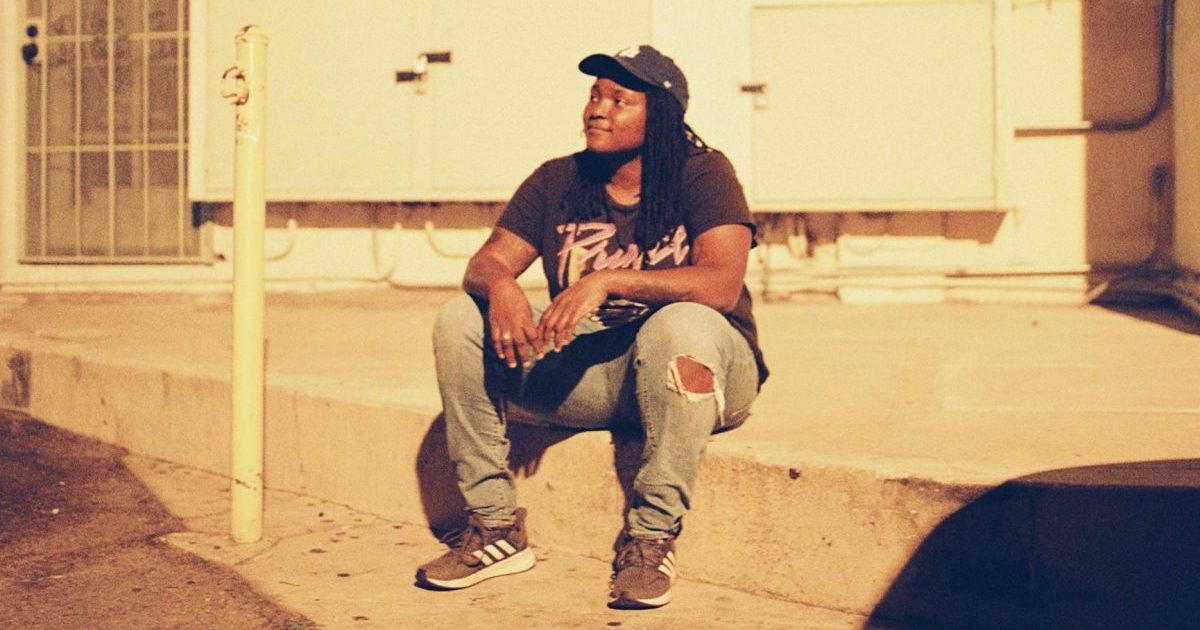
By Defending Her Own Happiness, Joy Oladokun’s Determination Pays Off

It was far from a given that Joy Oladokun would settle on her present path as a singer-songwriter of pensive folk-pop. She absorbed an array of musical models earlier in life — those that culturally linked her family to their Nigerian roots; reflected the rural pride of her peers in agriculture-rich Arizona; united her evangelical congregation in upward-aimed worship; and offered various styles of self-expression, emotional catharsis or social critique.

But on her texturally varied second album, in defense of my own happiness (vol. 1), much of which she self-produced, she sketches the distance between where she stands, sorting out her sources of pain, anxiety, and pleasure, and what she’s chosen to leave behind. Throughout, she’s exploring knotty interiority with warm yet watchful vulnerability. Oladokun paused her daily songwriting schedule to talk with BGS about how she made her way here.

BGS: After your parents immigrated to the U.S., did they maintain an attachment to traditional or contemporary Nigerian music and share it with you?

My parents came here in the ‘80s, so the Nigerian music they listened to growing up is definitely still a part of their everyday life today. I think one of my first introductions to the guitar was this Nigerian artist named King Sunny Adé, just these crazy, cascading, arpeggiated guitar riffs. They’re not as in touch with contemporary Nigerian music, but Nigeria had a pretty rich and interesting musical history.

You’ve said in past interviews that you grew up in an Arizona farming town that prized folk and country music. What role did that music actually play in community life?

There is not a music scene to speak of in Casa Grande, Arizona, that is for sure. My high school was big into Future Farmers of America. Lots of big trucks and dairy farms, that vibe is the vibe of my town. Some of the country I wasn’t very interested in, but I had a short fascination with ‘90s country. I mean, Martina McBride, Alan Jackson, Brooks & Dunn, it’s a lot, but in a good way. Everyone around me was listening to ‘90s country.

And my dad, for some reason, has an affinity for country-gospel music. He has all these records of Johnny Cash or Charley Pride, all these different people singing old country-gospel standards. So there’s this dusty, Southwestern country sound that I also grew up around that I think is the country that I gravitate to now, more than the big trucks and farms.

Along with hearing King Sunny Adé’s playing, you’ve said that seeing concert footage of Tracy Chapman with acoustic guitar in hand really caught your attention. What was it about those moments that moved you to pick up the instrument yourself?

I was always a really shy and reserved kid, and pretty smart, but had a hard time focusing or applying myself for long amounts of time. I think what I found in myself when I saw the guitar and decided to learn, and what my family saw in me, was a determination that hadn’t been applied to anything else ever.

I just know that the gift of self-expression that it’s given me has been pretty lifesaving. King Sunny Adé and Tracy Chapman, those are two very different expressions of how to use the guitar and how to make music, but they both took the inner workings of themselves and the world around them, and they expressed it through the music they made. I think that’s pretty dope and especially appealing to a kid who has a hard time talking.

Since you were so shy, how did you wind up playing music in front of a congregation?

If you wanted to get me to do anything as a kid, convince me that it would make God happy, or if I didn’t do it, God would be upset. That’s a pretty good motivator to any kid, but especially for me. I think I was so driven because I was so enmeshed in Christian culture. I was driven by this narrative of, “You need to do something big with your life and you can’t just spectate. You have to participate.” I honestly think had I been a little atheist in middle school, or had language been different, I maybe wouldn’t have ever done it or stepped on a stage. But I think it was the, “I feel this duty to use my gift for something bigger than myself.”

What did it take for you to leave behind what you thought might be a lasting career path in praise & worship music?

I often laugh at how much my adult life parallels my mother’s. Growing up, she would always tell this story about how her dad really wanted her to be a teacher. She spent a year or so teaching school and freaking hated it. So she became a nurse and she still does that to this day. I think I honored the thing that is spiritual in myself by working at a church and by falling in line and doing the thing for as long as I did. When I realized, “OK, I’m queer. There’s no getting around that. And I maybe don’t believe these things politically or theologically that I sometimes said on a day-to-day basis.”

I just got to a place where it became more important for me to live a life of integrity on all fronts than to keep up appearances or do what I thought God or my parents or my old boss wanted me to do. When I left, I made the decision pretty much on my own. And in circles like that, that is a no-no. I think the reason I did step into it by myself, though, is because I have to live this life. I would rather pursue something that feels more authentic to me. And once that decision was made, then the career decision was easy. I honestly tie it back to hearing my mom every day since I was born tell the story of how she made that decision for herself.

These days you’re signed to the Nashville office of a publishing company, operating in a world with its own customs and practices when it comes to being creative and collaborative. How’d you adjust to things like co-writing?

I honestly don’t think the worlds are that different, or maybe just people are the same. I do write a considerable amount by myself, so co-writing was maybe the biggest leap that I’ve made into discomfort. To me, even if I have a bad session, there is something that can be learned or gleaned or laughed about from it. If someone has a bad ego during a write it’s, “OK, I’m not going to work with that person again.”

You chose a loaded title for this album, in defense of my own happiness (vol. 1). What were you getting at?

Every time I post something on Instagram or Twitter or Facebook that someone from my past dislikes, I hear about it. I didn’t realize that that was a strange practice until I was talking to my girlfriend. She was like, “That’s so bizarre that people you worked with five years ago still feel the need to tell you that they’re disappointed in you, or say that they’re praying that you’ll become straight again one day.”

It is the source of a lot of my anxiety, to be honest. I don’t regret anything that I am or anything that I’m doing, but there’s this part of me that wants to defend that who I am is good. So many of the songs we ended up picking for the album speak to that. I think the idea of in defense of my own happiness is, it’s maybe an open letter to all these people.

Also it’s a letter to myself saying, “You deserve this life. You deserve to have a girlfriend who loves you and live in a beautiful house, and you deserve to be working a job that you enjoy. You’ve made mistakes, but none of that disqualifies you from what you found.” The album is literally just, “Please let me live.”

As much as I hear you insisting on your right to happiness on the album, I can also hear you sitting with your melancholy, and not hurrying past it.

I don’t know that there’s any other way to actually be happy or healthy without acknowledging how you’ve been hurt in the past, who you’ve hurt in the past, acknowledging the things that you don’t understand or the things that scare you, and sitting with them. I’ve been doing a lot of meditation, because it’s 2020 and the world’s on fire. I was reading a quote about how emotions and our thoughts, we should entertain them as friends, as opposed to treating them as these things that we can’t control. I do feel like melancholy is like a friend that I entertained on this record.

That definitely applies to your song “Who Do I Turn To?” Tell me about the choice you made to phrase the chorus as one long, uncomfortable, unresolved question.

I credit the open-endedness of it to Natalie Hemby, who I wrote the song with. I am a big fan of open-ended things, but I think I wanted an answer. I wanted to write a protest song. I think Natalie could see in my face just the heaviness and the sadness. I was, like, four months old when the LA riots happened, and the fact that we’re still marching for the same thing in 2020 is so bizarre. It’s so heartbreaking. Black people have been showing up for themselves from the beginning of time, countless Civil Rights leaders and movements.

Even to this day, you can point to people like Angela Davis that are alive and doing the work. But we are a minority group, so we cannot be the only people doing the work to protect and honor our lives, especially in this climate. It became open-ended because it’s like, “You keep saying that it’s not your fault, but you let your grandpa make racist remarks while I’m at dinner.” There’s all these little actions and behaviors that play into it. Leaving it open-ended just allows people to think and reflect.


Photo credit: Shannon Beveridge
New Movement Music: A Black American Soundtrack of Struggle and Protest

For Black Americans, this day, Juneteenth, has long been a celebration of the momentous historical event of emancipation from slavery — and the nearly two and a half years it took for that news to reach all enslaved peoples in this country. Juneteenth is belatedly gaining wider recognition and arrives at a time of reckoning with systemic patterns of white supremacy, especially police brutality, that remain deeply entrenched.

Like many waves of national protest before it, the uprising in the wake of the deaths of George Floyd, Breonna Taylor, Ahmaud Arbery, Tony McDade and many others has spurred the creation of its own soundtrack, and the following list spotlights the contributions of seven roots-savvy, Black music makers. Some draw on lessons learned from how songs gave spiritual succor to those on the front lines of the 1960s Civil Rights struggle, with righteously raised fists and declarations of passion and purpose. Others opt for expression that feels far more personalized or particular, articulating an adamantly complex range of emotions and letting profoundly unsettled, and unsettling, questions hang in the air. All of them are fleshing out their own vivid, timely incarnations of movement music.

Leon Bridges specializes in sophisticated soul, sometimes artfully retro in presentation and other times landing at the thoroughly contemporary end of that musical lineage. His new song “Sweeter” is an example of the latter, two minutes and 50 seconds during which his buttery vocals glide over a lean drum machine pattern, delicate, gospel-dusted bits of guitar, keyboard, piano and bass and Terrace Martin’s saxophone figures. Bridges’ words land with the devastated finality of a black man whose life is leaving his body, taken from him by police. “I thought we moved on from the darker days,” he sings, his cadence fluttery and tone ruminative. “Did the words of the King disappear in the air, like a butterfly?” The blame-laying next line arrives in a burst: “Somebody should hand you a felony.”

Then, Bridges elongates his phrasing with righteous indignation, before steadying himself to spell out the loss: “‘Cause you stole from me/my chance to be.” The elegance he chose gives his performance subtly striking, emotional heft. “From adolescence we are taught how to conduct ourselves when we encounter police to avoid the consequences of being racially profiled,” Bridges wrote in a statement. “I have been numb for too long, calloused when it came to the issues of police brutality. The death of George Floyd was the straw that broke the camel’s back for me. It was the first time I wept for a man I never met. I am George Floyd, my brothers are George Floyd, and my sisters are George Floyd. I cannot and will not be silent any longer. Just as Abel’s blood was crying out to God, George Floyd is crying out to me.”


Chastity Brown has been honing her ability to create space for emotional resistance within her songs for a while now. She draws on the pointed, confessional potential of folk and soul and the digital texturing techniques of contemporary pop and hip-hop, while depicting the patient pursuit and safekeeping of self-knowledge as a sign of strength — one that differs wildly from the sort of dominance modeled by systemic power.

In her new song “Golden,” created on her iPad in her garage studio and shared with the world this week, Brown sounds willfully unhurried singing over a skittery programmed beat: “I’ve got joy, even when I’m a target/If ya think that’s political, don’t get me started/You know I’m golden and I flaunt it.” That savoring of selfhood is in striking contrast to the furious question she circles around during the chorus: “Why have I got to be angry?”

In the artist notes accompanying the song, Brown explained that she began writing it when her nephew was beaten by four white cops while walking home in Harlem, mere weeks before George Floyd died in her adopted hometown. “This collective trauma that black, indigenous, immigrant, and queer/trans folk feel is real,” she spelled out. “It’s every god damn day. Yet, we still thrive and flourish in our nature beauty, we still have swag and songs for days. We still have wild and wondrous imaginations like we are all the children of Octavia [Butler]. …This is for me, my people, and the UPRISING to defund police here in Minneapolis and thereby set a new standard for how communities want to be protected.”


Shemekia Copeland, one of the brightest stars in contemporary blues, has been deliberate for years about broadening her repertoire and approach to encompass countrified styles, singer-songwriter song sources and statement-making folk and soul sensibilities and, in the process, positioning herself in the midst of roots music discourse. That’s the insightful perspective she brings to her just-released “Uncivil War,” whose string band style accompaniment boasts the contributions of Sam Bush and Jerry Douglas.

Coming from Copeland, and delivered with measured, dignified vibrato, the simple flipping of the name of the nation’s most notorious war to “uncivil” slyly strips a veneer of respectability from the racist and romanticized Lost Cause religion. She strikes a tone of weary but resolute optimism throughout. “It’s not just a song,” she clarified in a statement. “I’m trying to put the ‘united’ back in the United States. Like many people, I miss the days when we treated each other better. For me, this country’s all about people with differences coming together to be part of something we all love. That’s what really makes America beautiful.”


Kam Franklin, on her own and with her Houston horn band The Suffers, has the wide-ranging musical instincts, imagination, nerve, and ear for earthy verisimilitude to make big statements while zeroing in on small interactions. A couple of weeks back, she posted a brand new, self-recorded song fragment to SoundCloud, a platform well suited to off-the-cuff expression, and with it, this comment: “I saw a photo of Breonna Taylor with her homegirls earlier today, and it gutted me. I won’t forget her. I wrote this birthday song for her, her friends that wondered where she was before the news came out, and everyone that loved her.”

Titled “Happy Birthday Breonna,” it’s a pensive, sinuous bit of ‘70s soul that drives home the fact that Taylor was ripped from a web of close relationships. The first, and only verse, lands like a voicemail from a friend who grew worried when she couldn’t reach Taylor. Franklin’s graceful trills and softly insistent phrasing have an understatement that suggests fretful preoccupation. Then she moves into a point-counterpoint refrain, murmuring birthday wishes to Taylor in her breathy upper register and making a devastating declaration beneath: “You should be here.”


Singer-guitarist and actor Celisse Henderson began work on writing, recording, and filming a video for her song “FREEDOM” four years ago, following the slayings of Philando Castile and Alton Sterling, and watched as black deaths and protest momentum multiplied before she finally completed and released her project earlier this month.

In a message on her website, Henderson explained, “I, along with millions of people, watched video footage of these unarmed black men losing their lives in the most horrific ways. The truth that these unjust deaths revealed about our country, including the systemic failings of our criminal justice system, became my personal call-to-action. Then the 2016 election night happened, and the results added a whole new layer to the purpose of this song and project. Now, almost four years later, too little has been done, and the story remains the same. With the horrific and unjust killings of Ahmaud Arbery, Breonna Taylor, and George Floyd weighing heavily on our hearts and minds, it is time to release ‘FREEDOM’ as a rallying cry and a call to action to stand up and fight for our freedom.”

Historic footage of the March on Washington that opens the clip is a reminder of the buoying role that spirituals played in the Civil Rights movement of the 1960s, and serves the narrative function of positioning Henderson to measure the too-meager progress for Black Americans since. The track is gospel-schooled and hard-rocking, powered by a thunderous, syncopated drum pattern and grinding electric guitar attack. With gospel fervor and a touch of theatrical flourish, Henderson summons a spirit of urgency and extends a broad welcome to all who are affected or disturbed by injustice.


Joy Oladokun, a Nigerian-American singer-songwriter who’s quietly carving out her place in Nashville’s professional songwriting community with introspective, melancholy warmth, steered a co-writing appointment with Natalie Hemby toward an expression of grief. The result was “Who Do I Turn To?” a naked airing of fear and distrust.

Oladokun’s reedy, plaintive performance is accompanied only by minimal piano chords. She spends the chorus adding up horrifying realizations that lead her to a resounding question: “If I can’t save myself/If it’s all black and white/If I can’t call for help/in the middle of the night/If I can’t turn to god/If I can’t turn to you/Who do I turn to?” Her voice subtly catches on the word “help,” as though knowing that life-giving protection is unavailable to her constricts her breath. Oladokun underscored the importance of the chorus lyrics to an interviewer: “[I]t’s illustrating that I don’t trust the police since I’m black. I don’t trust the police enough to know that they would think I’m not robbing my own home. I don’t think a lot of people understand what that is like. The feeling sucks.” In a separate statement she summarized her intent: “I wanted to write a firsthand account of how I feel and the question black people like me ask when this happens over and over again while nothing changes. I want it out now to help an already traumatized people cope, heal, and put words to their struggle.”


Wyatt Waddell, a young Chicago music-maker who’s been expertly, wittily, and self-sufficiently arranging home recordings of classic covers and singer-songwriter soul originals for the past few years, wrote “FIGHT!” as an anthem of admiration and uplift for young, Black Americans putting their bodies on the line in the streets and facing off against police force to agitate for change. “This song is me looking at what’s happening and what I’d tell the people protesting,” he specified in a statement. “I had to look outside of myself at what’s going on and how people are being affected. Hearing people’s fears, anxieties, and watching everything happening on TV really helped me write the song. I hope that it can be an anthem for my people as they’re fighting for a better America.”

Waddell begins with gospel-style repetition, creating a call-and-response pattern made up of his own layered vocals over a churchly foot stomp and hand clap groove: “There’s already so much pain/So much pain/So much pain/There’s already so much pain/And there ain’t nothin’ else we can do.” It seems like he could be building up to a confession of helplessness; instead, his funky refrain is bolstered by a sense of resolve and inevitability: “Nothin’ to do but fight.”


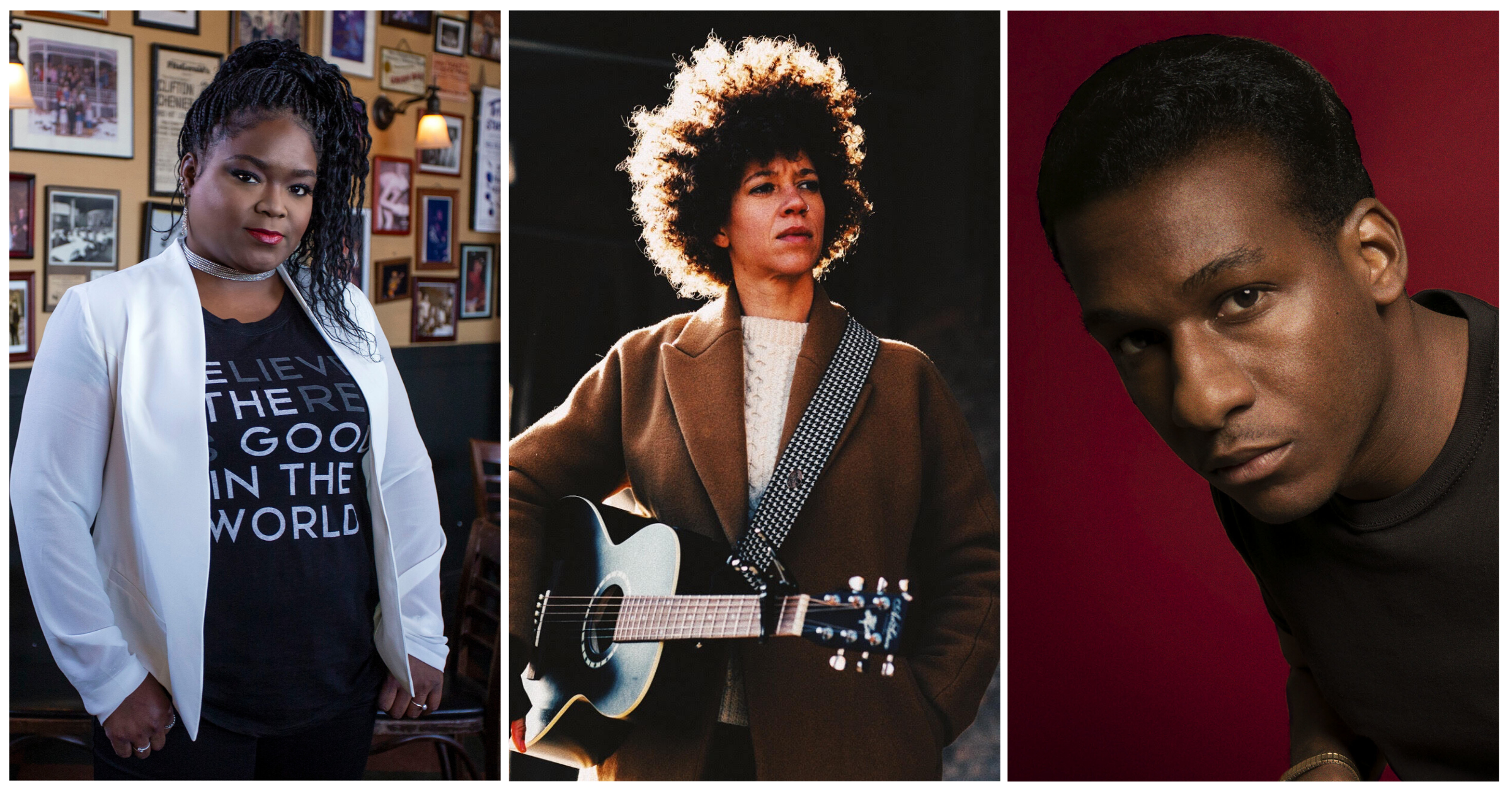
Photo credit: (L to R) Shemekia Copeland by Mike White; Chastity Brown by Wale Agboola; Leon Bridges by Jack McKain.