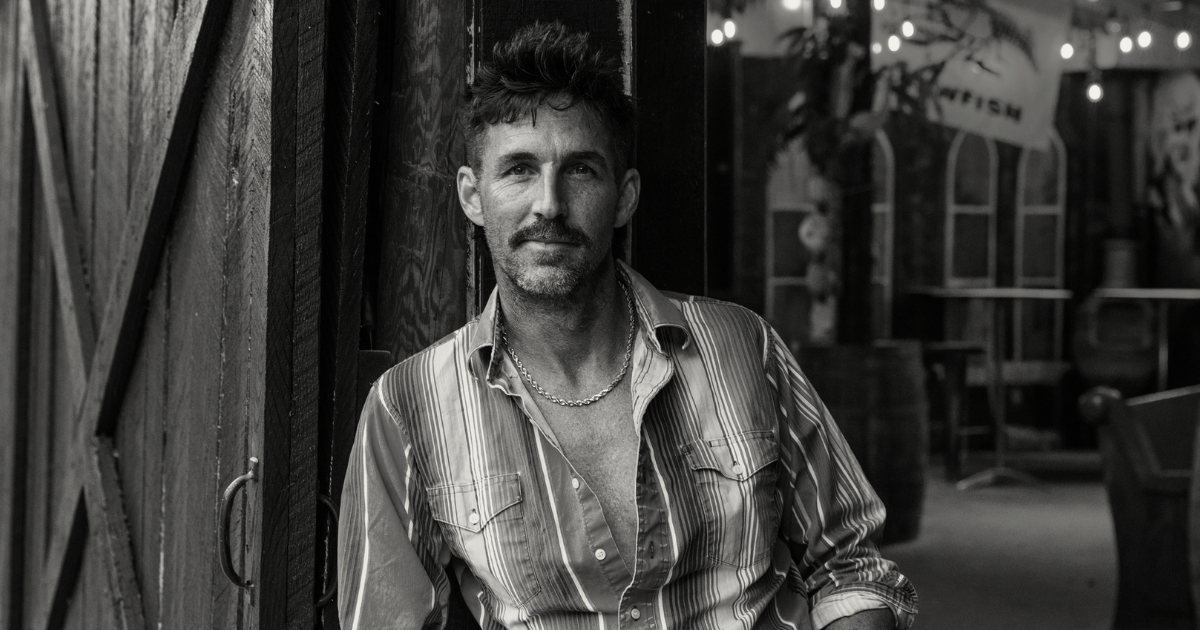
Jake Owen Started Bro Country. His New Album is Anything But

Depending on who you ask, Jake Owen might be responsible for the very first bro country song. His 2011 hit “Barefoot Blue Jean Night” wasn’t the first party-ready ode to Southern summers and ice-cold beer, but its slick mix of country signifiers and stadium-rock production – courtesy of Joey Moi, best known for producing Nickelback and later Morgan Wallen – proved highly influential, arguably paving the way for crossover smashes like Florida Georgia Line’s “Cruise” and Blake Shelton’s “Boys ‘Round Here.”

“Never gonna grow up, never gonna slow down,” Owen sang on his signature hit, neatly summing up the youth-obsessed ethos of the bro country era. Now 44 and newly independent after 20 years on RCA Nashville and later Big Loud, he’s singing a different tune.

“I’ve made a lot of records that had a fantasy, ‘Remember when we were young?’ kind of feel to them,” Owen told Good Country. “What feels good about this new record is that I can listen to it and feel like I’m listening to my life right now. It’s very real.”

Dreams to Dream, Owen’s eighth studio album and his first with Shooter Jennings producing, is a sharp left turn for an artist known for hits like “Beachin,’” “I Was Jack (You Were Diane),” and “American Country Love Song.” Earlier this year, Owen decamped to LA amid the wildfires, leaving the comfort of Nashville behind in search of creative truth and a more organic sound. The result is one of the year’s best and most surprising country albums, which trades bro-ish bravado for world-weary introspection and a classic-country sensibility.

The title track is a rollicking, country-rock statement of purpose that name-checks Hank Williams, Jr. and establishes the stakes: “I’ve been down, but I ain’t no quitter/ ‘Bout to get up on my feet/ ‘Cause I still got dreams to dream,” Owen sings in the rousing chorus. On the Troy Jones-penned “Wouldn’t Be Gone,” he muses about leaving stardom behind to work in a hardware store. (“I already know a thing or two about hardwood floors,” goes the song’s best line.) Other standouts include “Chill of December,” a Haggardian expression of winter loneliness, and “The One I Did It To,” a doleful admission of romantic wrongdoing.

In a Q&A, Owen spoke to Good Country about teaming up with Jennings, defining authenticity on his own terms, and why he doesn’t shy away from his bro country past.

This album is a departure from the sound that you’re best known for. What made now the right time to do an album like this?

Jake Owen: My life has always been about timing and believing that I’m supposed to be where I am. The album’s called Dreams to Dream and it came about because I was in this interesting place in my life where I’ve had a record deal for 20 years and, all of a sudden, I’m doing something on my own. Which felt kind of like freedom, but also felt very scary.

For a long time I was focused on the more commercialized songs that would work on radio, since I was on a major label, and I felt like this is the time to make the kind of record that I’ve always really loved. I’ve always tried to follow my heart and what my intuitions have told me. They haven’t always been right, but I definitely follow them.

What was it like working with Shooter Jennings?

He really exceeded my expectations. I expected to go out there and make a record, but I didn’t know I would leave there with an awesome new friend and somebody that really believed in me as a person with dreams and a purpose and things they wanted to say. He was so encouraging to me. I felt safe with him, which is a weird way to put it, I guess. But you need people to pat you on the back and tell you that you’re doing the right thing.

It also was at a time when – I’m not ashamed to say it – there were not a lot of people ringing my phone in Nashville to tell me they were proud of 20 years of what I’d done in my career and 11 number one songs. Kind of weird, right? But the one guy that was calling me and applauding me and telling me that I could do way better, bigger things in my life than what I’d already done was Shooter Jennings. Out of all people, right? That says so much about how much he loves music and believes in people. I think you’d probably hear that same answer from anybody else that he’s worked with.

The second song on the album, “Them Old Love Songs,” is a Waylon Jennings cover. Why did covering Waylon make sense for this record?

Well, there was no part of me going out there that thought I would do any covers. But Shooter and I just talked about life and music out there, and he was saying that his dad always would cut cover songs for fun when he came off the road. Shooter would encourage me, each night or whenever we were done with the session, to do some covers and just have some fun. With that one in particular, I was nervous to ask Shooter, because it felt a little cliché. I wondered how many people work with him and have wanted to do that or if he’s offended by that.

But I always loved that song and the album that it’s on, Are You Ready for the Country. It’s pretty wild, because that album starts off really rocking, and then it goes into that. To me, if you listen to that song, the lyrics say, “I wish I had a true fine woman/ Let her rock me all night long/ And maybe we could get it together/ Like people do in them old love songs.” I’ve been singing that my whole life and it’s still the way I dream of love. And then, going back to the first verse, it says, “Nobody cares where I’m going, all they know is I’m coming back.” I don’t think anybody cared that I was going to make a record with Shooter. Nobody really even knew.

Also, one of the reasons Shooter and I decided to make this album was our love for the Hank Williams Jr. record, The New South, that his dad actually produced. Hank moved to Alabama to make that album, I think it was in 1977, and said he needed to get out of Music City because he wanted to go make his kind of music with his friends. And I felt the same way. Like, here I am going to LA to make a record with Shooter, and he’s encouraging me like Waylon encouraged Hank. So recording that Waylon song, with Shooter producing it, it just felt right.

You recently celebrated the 20-year anniversary of moving to Nashville and signing your first record deal with RCA. You made a post referring to “the highest of highs and lowest of lows” in your career. Could you tell me about some of those highs and lows?

Yeah, well, first off, thanks for even acknowledging that, which I think is important to the reasoning behind this whole record in general. I would start off by telling you that the highest high for me was just moving to Nashville and knowing that something was ahead of me. When I left college, I left my twin brother and a lot of my friends and my entire family at home in Florida. I still look back on that guy, and I’m like, “What the fuck was I thinking?” But I guess I just had to chase it. And then getting to Nashville and immersing yourself with people that are so much better than you are, I just didn’t have that where I was in college in Tallahassee. I kind of felt alone. Getting a record deal was also a big part of that, feeling like I had accomplished part of what I came here to do. And then I spent the next seven years having to figure out how to keep the guys in the band paid and the buses rolling on the road and how to get my first number one song. Everybody thinks that’s the easy part once you sign the record deal, but it really wasn’t. It was a rude awakening.

And I went through a divorce. I got married, I had a kid. It’s like the classic country song shit, man. I think that was a big low for me, having to leave my family to go on the road. I had been very successful from my dreams that I chased, but the one thing that I probably desired the most, outside of music, was a family life. The one thing that I’ve never been good at and I haven’t figured out is that real solid relationship in life, building love and trust, and that bothers me a lot. It bothers me that I can be good at a lot of other things, and that is the most important thing to me, and I haven’t been so great at it.

You were a major player in the bro country era, which is now having this sort of nostalgic reappraisal. I’m thinking of the HARDY and Ernest song “Bro Country,” which is an ode to that time in country music. When you think about that era, what goes through your mind?

It’s funny, because I don’t know that anybody has said this before, but I’ll tell you right now: I started that shit. Everybody wants to shy away from bro country or whatever, but I invented that shit. And yeah, I am proud, in a way. I remember being at a time in my career where I had a record deal for seven or eight years and I had a couple songs that had done all right, but I was feeling like I was gonna lose my record deal if I didn’t try to do some different shit. And I didn’t have a producer at the time. I’d left Tony Brown, who was great. And he’s like, “Hey, man, you should meet this guy, Joey Moi. I think he’d be great for you.”

Joey obviously came from Nickelback and all that. At the time, no different than when I left Tallahassee for Nashville, everybody was like, “Dude, what the fuck are you doing?” So here’s a guy now from Nickelback who’s gonna try out making country music on me, which was probably a crazy thing, too. It wasn’t that I was trying to sell out. If anything, I look back and I’m like, “Dude, I had the balls to just do something different at the time.”

“Barefoot Blue Jean Night” was our first release and it had all of these claps and stomps and loop shit. It ended up being the most-played song of the decade [according to Country Aircheck]. I have the plaque on my wall. It was a major, major changing point in my life and career, because it worked. Not only did I keep making those songs for the next few years, but it influenced a shit-ton of people.

I think a lot of people might want to avoid that association. It’s kind of like the way that ‘80s rock and roll gets shit on sometimes, but there are still people in their cars cranking it to 11, right? If you look back at my early career, the songs I was writing were very country, because that’s what I always loved. I went on tour with Brooks & Dunn and Alan Jackson. So when all of a sudden, years later, all of the people that were my heroes were like, “I hate this kid,” it kind of hurt my feelings. But I always knew in my heart that I would get back to what brought me to the table.

Among the detractors you alluded to, people who are into more traditional-sounding country music, there’s this idea that pop-country or bro country is inauthentic. What do you think is “authentic” country music?

Authenticity is the ability for artists to take any type of music and just make it their own. Johnny Cash never shot a man in Reno. But it was a huge song for him. George Jones didn’t write “He Stopped Loving Her Today,” but he owns that song. Stardust is the biggest album Willie Nelson ever released and he didn’t write a single song on it. And he’s one of the greatest songwriters of all time. Authenticity isn’t about where somebody’s from or how they grew up. If you own what you’re doing, and you deliver it in a way that’s believable, I think that’s authentic.

I’m thinking now of this back-and-forth you had with Jason Isbell a couple years ago about artists writing their own songs.

Yeah, dude. That guy. I love Jason Isbell, that’s what’s crazy. Some of the artists that I love the most just spout off at the mouth. The other day I said something about Zach Bryan. I love that guy’s music too, right? He’s amazing, and he’s also uber successful – selling 120,000 tickets or whatever, which I could never even fathom. And Jason is out winning GRAMMYs on top of being an incredible guitar player, so much more talented than I could ever dream of being. But I don’t understand why guys like that will take the time on shit on someone else’s music.

That’s never made sense to me and it’s always made me want to just ask that question directly to them. Which is what I did to Jason. I was just like, “Dude, I’m not going to get into an argument with you over Twitter, so give me your number. I’m going to just call you and have a conversation about why you feel this way.” He and I had a great conversation. And he was very cool to acknowledge and entertain my questioning behind why he would just spout at the mouth about stuff like that. We both ended it at the time – and this was years ago, when I was drinking, or maybe he was – he’s like, “Dude, we should catch a beer sometime.”

So, to go back to the authenticity thing, there’s so many people that are so great at a lot of things. One of my absolute favorite artists right now is Charley Crockett and he does that, too. I wonder, sometimes, I’m like, “Why are you guys all trying to prove to one another that you’re more authentic than the next guy?” Sorry, you can tell I’m getting tense talking about it. But I’m confused by it, because those guys make some of my favorite music and it bothers me that they feel the need to try to blow somebody else’s candle out in order to make their already blazing one shining brighter.

I wonder if part of you wanted to prove to that type of person that you could make one of these really rooted, quote-unquote “authentic,” hardcore country records.

I think it was about proving to myself what my intuitions are and what my beliefs have always been about what’s right for me. I also really needed somebody to tell me that what I was doing was the right decision, and Shooter never wavered. He was constantly telling me, “Dude, this is it. You’re going to open up a Pandora’s box for your career in ways that I don’t think you’ve seen before.” I will say that it’s definitely opened my eyes to a lot of things and a lot of people reached out to me that have never reached out to me before.

One of my favorite songwriters, artists, people I’m a huge fan of is Brandy Clark. I think she’s incredible and just a brilliant songwriter. And she happened to be in LA when I was there and stopped by to see Shooter. She called me after and I just started crying. Because she was like, “Jake, I’m so happy for you. Like, I hear you in this.” It was just so fulfilling to hear that from her. She didn’t have to do that, but I was so moved by it.

I’m grateful for people that don’t think about music from a standpoint of judgment, but look at it as a possibility of something greater.


Photo Credit: Spidey Smith
Loretta Lynn Receives a CMT Tribute by Brandi Carlile, Keith Urban, and More

One of the most beloved performers in country music history earned an eloquent and emotional tribute in a live CMT taping titled Coal Miner’s Daughter: A Celebration of the Life & Music of Loretta Lynn. Presented without commercials at the Grand Ole Opry House in Nashville on Sunday night (October 30), the broadcast offered tributes from Little Big Town, Darius Rucker, and many other artists who admired her. Enjoy a few musical highlights below.

Editor’s Note: Two additional CMT commercial-free encore airings on Wed., Nov. 2 at 8p/7c & Sun., Nov. 6 at 11a/10c.

Brandi Carlile sings “She’s Got You,” which Loretta Lynn also recorded as a 1977 tribute to her late friend, Patsy Cline. Carlile returned to the stage to perform “Coal Miner’s Daughter” with The Highwomen and guest Brittney Spencer.


Alan Jackson sings “Where Her Heart Has Always Been,” a song he originally composed for his mother. He told the audience that Lynn always reminded him of his own mother, and that he felt the song’s message applied to Lynn, too.


Margo Price is one of many female artists who admired Loretta Lynn for her songwriting ability and tell-it-like-it-is approach to lyricism. With a pure country delivery, she sang one of Lynn’s most controversial hits, “The Pill.”


Lynn’s granddaughter Emmy Russell joined Lukas Nelson for “Lay Me Down.” Lynn recorded the ballad with Lukas’ dad, Willie Nelson, in 2016. Russell also recalled how Lynn would often bring her from side stage to sing a few songs.


George Strait, the King of Country Music, saluted a fellow member of country music royalty with “Don’t Come Home A-Drinkin’ (With Lovin’ on Your Mind).” The feisty single, which Lynn co-wrote, became her first No. 1 country hit in 1967.


Tanya Tucker kept it country for her homage to Loretta Lynn, singing “Blue Kentucky Girl.” Although Lynn didn’t write the song, it perfectly captured her own Kentucky roots, and became one of her earliest hits on Decca Records in 1965.


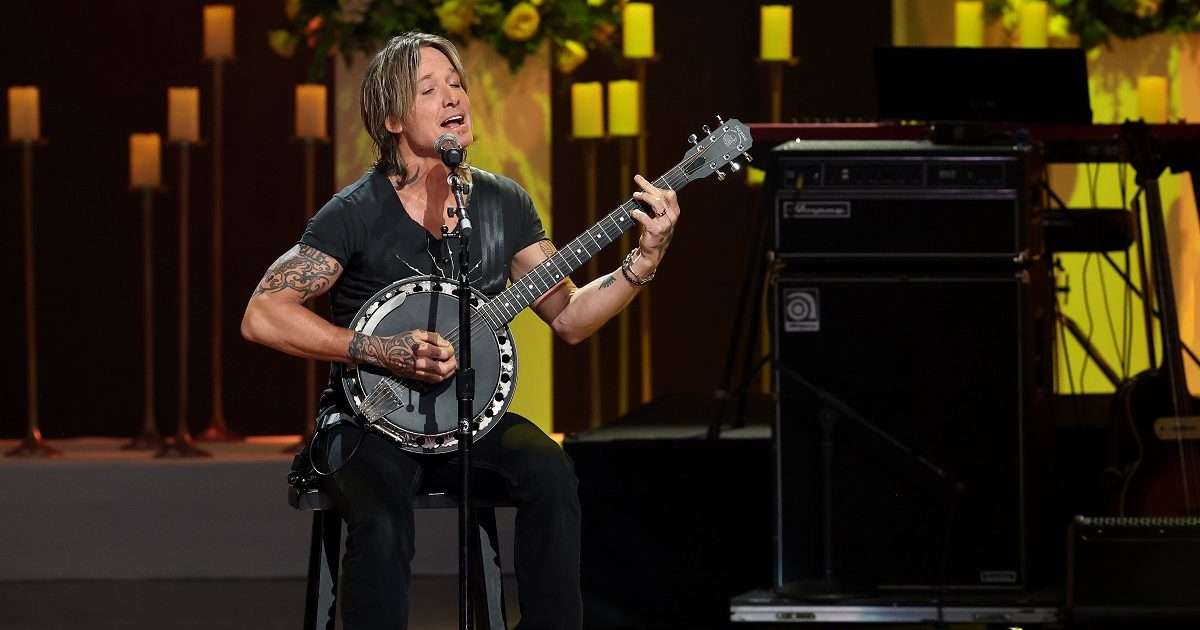
Keith Urban carried his Ganjo to the Grand Ole Opry stage to deliver a charming rendition of her 1971 hit, “You’re Lookin’ at Country.” Urban also shared a playful voicemail and reminisced about being her date at an awards show.


Jack White revived the title track of Van Lear Rose, one of Lynn’s best-loved and most acclaimed albums. As the 2005 project’s producer, White helped bring Lynn back into the spotlight and shared the Grammy for Best Country Album.


Photo Credit: Terry Wyatt/Getty Images for CMT

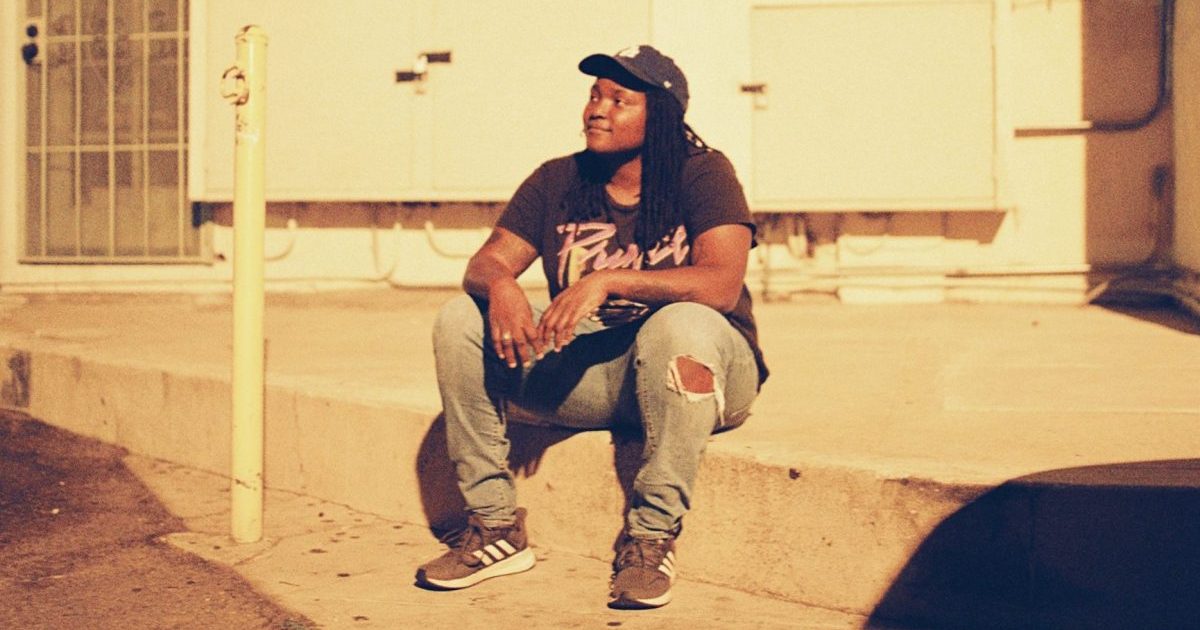
By Defending Her Own Happiness, Joy Oladokun’s Determination Pays Off

It was far from a given that Joy Oladokun would settle on her present path as a singer-songwriter of pensive folk-pop. She absorbed an array of musical models earlier in life — those that culturally linked her family to their Nigerian roots; reflected the rural pride of her peers in agriculture-rich Arizona; united her evangelical congregation in upward-aimed worship; and offered various styles of self-expression, emotional catharsis or social critique.

But on her texturally varied second album, in defense of my own happiness (vol. 1), much of which she self-produced, she sketches the distance between where she stands, sorting out her sources of pain, anxiety, and pleasure, and what she’s chosen to leave behind. Throughout, she’s exploring knotty interiority with warm yet watchful vulnerability. Oladokun paused her daily songwriting schedule to talk with BGS about how she made her way here.

BGS: After your parents immigrated to the U.S., did they maintain an attachment to traditional or contemporary Nigerian music and share it with you?

My parents came here in the ‘80s, so the Nigerian music they listened to growing up is definitely still a part of their everyday life today. I think one of my first introductions to the guitar was this Nigerian artist named King Sunny Adé, just these crazy, cascading, arpeggiated guitar riffs. They’re not as in touch with contemporary Nigerian music, but Nigeria had a pretty rich and interesting musical history.

You’ve said in past interviews that you grew up in an Arizona farming town that prized folk and country music. What role did that music actually play in community life?

There is not a music scene to speak of in Casa Grande, Arizona, that is for sure. My high school was big into Future Farmers of America. Lots of big trucks and dairy farms, that vibe is the vibe of my town. Some of the country I wasn’t very interested in, but I had a short fascination with ‘90s country. I mean, Martina McBride, Alan Jackson, Brooks & Dunn, it’s a lot, but in a good way. Everyone around me was listening to ‘90s country.

And my dad, for some reason, has an affinity for country-gospel music. He has all these records of Johnny Cash or Charley Pride, all these different people singing old country-gospel standards. So there’s this dusty, Southwestern country sound that I also grew up around that I think is the country that I gravitate to now, more than the big trucks and farms.

Along with hearing King Sunny Adé’s playing, you’ve said that seeing concert footage of Tracy Chapman with acoustic guitar in hand really caught your attention. What was it about those moments that moved you to pick up the instrument yourself?

I was always a really shy and reserved kid, and pretty smart, but had a hard time focusing or applying myself for long amounts of time. I think what I found in myself when I saw the guitar and decided to learn, and what my family saw in me, was a determination that hadn’t been applied to anything else ever.

I just know that the gift of self-expression that it’s given me has been pretty lifesaving. King Sunny Adé and Tracy Chapman, those are two very different expressions of how to use the guitar and how to make music, but they both took the inner workings of themselves and the world around them, and they expressed it through the music they made. I think that’s pretty dope and especially appealing to a kid who has a hard time talking.

Since you were so shy, how did you wind up playing music in front of a congregation?

If you wanted to get me to do anything as a kid, convince me that it would make God happy, or if I didn’t do it, God would be upset. That’s a pretty good motivator to any kid, but especially for me. I think I was so driven because I was so enmeshed in Christian culture. I was driven by this narrative of, “You need to do something big with your life and you can’t just spectate. You have to participate.” I honestly think had I been a little atheist in middle school, or had language been different, I maybe wouldn’t have ever done it or stepped on a stage. But I think it was the, “I feel this duty to use my gift for something bigger than myself.”

What did it take for you to leave behind what you thought might be a lasting career path in praise & worship music?

I often laugh at how much my adult life parallels my mother’s. Growing up, she would always tell this story about how her dad really wanted her to be a teacher. She spent a year or so teaching school and freaking hated it. So she became a nurse and she still does that to this day. I think I honored the thing that is spiritual in myself by working at a church and by falling in line and doing the thing for as long as I did. When I realized, “OK, I’m queer. There’s no getting around that. And I maybe don’t believe these things politically or theologically that I sometimes said on a day-to-day basis.”

I just got to a place where it became more important for me to live a life of integrity on all fronts than to keep up appearances or do what I thought God or my parents or my old boss wanted me to do. When I left, I made the decision pretty much on my own. And in circles like that, that is a no-no. I think the reason I did step into it by myself, though, is because I have to live this life. I would rather pursue something that feels more authentic to me. And once that decision was made, then the career decision was easy. I honestly tie it back to hearing my mom every day since I was born tell the story of how she made that decision for herself.

These days you’re signed to the Nashville office of a publishing company, operating in a world with its own customs and practices when it comes to being creative and collaborative. How’d you adjust to things like co-writing?

I honestly don’t think the worlds are that different, or maybe just people are the same. I do write a considerable amount by myself, so co-writing was maybe the biggest leap that I’ve made into discomfort. To me, even if I have a bad session, there is something that can be learned or gleaned or laughed about from it. If someone has a bad ego during a write it’s, “OK, I’m not going to work with that person again.”

You chose a loaded title for this album, in defense of my own happiness (vol. 1). What were you getting at?

Every time I post something on Instagram or Twitter or Facebook that someone from my past dislikes, I hear about it. I didn’t realize that that was a strange practice until I was talking to my girlfriend. She was like, “That’s so bizarre that people you worked with five years ago still feel the need to tell you that they’re disappointed in you, or say that they’re praying that you’ll become straight again one day.”

It is the source of a lot of my anxiety, to be honest. I don’t regret anything that I am or anything that I’m doing, but there’s this part of me that wants to defend that who I am is good. So many of the songs we ended up picking for the album speak to that. I think the idea of in defense of my own happiness is, it’s maybe an open letter to all these people.

Also it’s a letter to myself saying, “You deserve this life. You deserve to have a girlfriend who loves you and live in a beautiful house, and you deserve to be working a job that you enjoy. You’ve made mistakes, but none of that disqualifies you from what you found.” The album is literally just, “Please let me live.”

As much as I hear you insisting on your right to happiness on the album, I can also hear you sitting with your melancholy, and not hurrying past it.

I don’t know that there’s any other way to actually be happy or healthy without acknowledging how you’ve been hurt in the past, who you’ve hurt in the past, acknowledging the things that you don’t understand or the things that scare you, and sitting with them. I’ve been doing a lot of meditation, because it’s 2020 and the world’s on fire. I was reading a quote about how emotions and our thoughts, we should entertain them as friends, as opposed to treating them as these things that we can’t control. I do feel like melancholy is like a friend that I entertained on this record.

That definitely applies to your song “Who Do I Turn To?” Tell me about the choice you made to phrase the chorus as one long, uncomfortable, unresolved question.

I credit the open-endedness of it to Natalie Hemby, who I wrote the song with. I am a big fan of open-ended things, but I think I wanted an answer. I wanted to write a protest song. I think Natalie could see in my face just the heaviness and the sadness. I was, like, four months old when the LA riots happened, and the fact that we’re still marching for the same thing in 2020 is so bizarre. It’s so heartbreaking. Black people have been showing up for themselves from the beginning of time, countless Civil Rights leaders and movements.

Even to this day, you can point to people like Angela Davis that are alive and doing the work. But we are a minority group, so we cannot be the only people doing the work to protect and honor our lives, especially in this climate. It became open-ended because it’s like, “You keep saying that it’s not your fault, but you let your grandpa make racist remarks while I’m at dinner.” There’s all these little actions and behaviors that play into it. Leaving it open-ended just allows people to think and reflect.


Photo credit: Shannon Beveridge

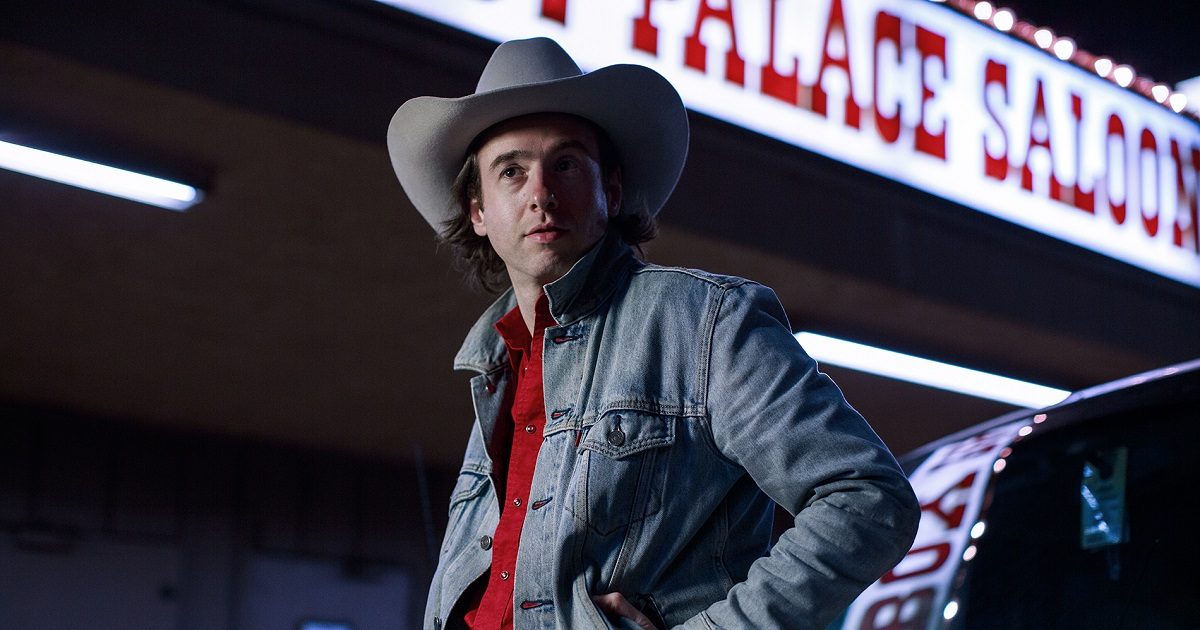
LISTEN: Elijah Ocean, “Good Clean Livin'”

Artist: Elijah Ocean
Hometown: Los Angeles, California
Song: “Good Clean Livin'”
Album: Blue Jeans & Barstools
Release Date: May 1, 2020

In Their Words: “I wrote this song a few years back while working a casino in Las Vegas. It started from a snippet of a conversation I overheard and ended up being about an addicted gambler who finds salvation through the modern American dream. I originally recorded a version for my barn record, but it didn’t make the cut. So I wound up recycling the pedal steel (played by my good friend Philip Sterk in Nashville) and re-tracking everything else in my home studio in LA. I was basically trying to find some middle ground between The Byrds and Alan Jackson.” — Elijah Ocean


Photo credit: Sean Rosenthal

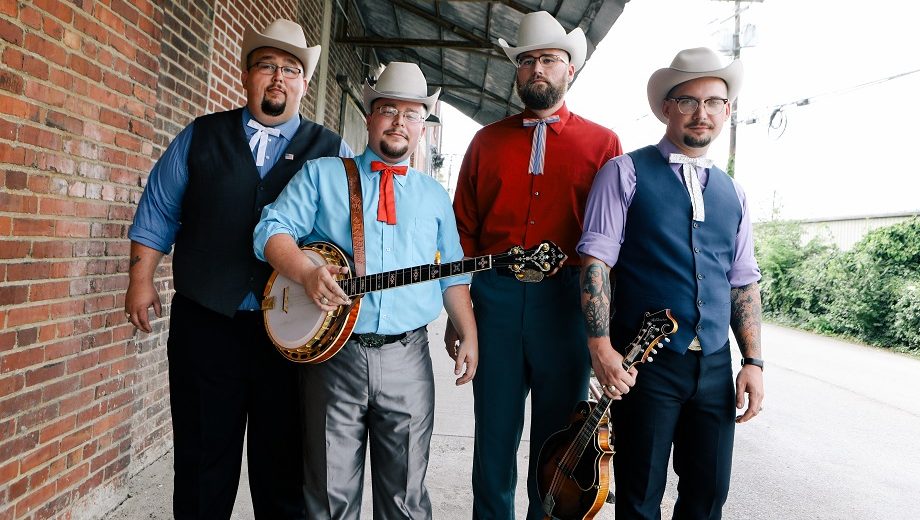
The Po’ Ramblin’ Boys Make Old-Time Music New

Plenty of artists find a day job while they work on their careers in music. CJ Lewandowski found a career in music while working his day job. A mandolin player and singer, he was working at Ole Smoky Distillery in Sevierville, Tennessee, and would frequently fill in as musical entertainment when a hired act fell through. Eventually, the distillery approached him about forming a band, and the Po’ Ramblin’ Boys were formed.

“There’s never really been a plan,” jokes Lewandowski, who says that regular hours on stage helped the longtime friends tighten up fast as a band. “We play the music that we like, and we happen to have some songs that we’ve written.” That no-plan plan has gotten them pretty far. In 2018, the group won Emerging Artist of the Year at the IBMA awards and in August they released their Rounder Records debut, Toils, Tears, and Trouble. They’ll also appear at Bourbon & Beyond festival in Louisville, Kentucky, on September 20.

The twelve-song album includes fan favorite “Old New Borrowed Blue,” an original, as well as inventive interpretations of songs by legends and unsung genre heroes alike. The band’s Stanley Brothers-inspired take on Roy Acuff’s “Searching for a Soldier’s Grave” is right at home alongside the Boys’ rendition of “Bidding America Goodbye,” made popular by Tanya Tucker. And “Next Train South,” originally recorded by Dub Crouch, Norman Ford & The Bluegrass Rounders in 1974, pays homage to the bluegrass tradition of Lewandowski’s native Missouri.

But as much as the Po’ Ramblin’ Boys have found solace in the bluegrass sounds of generations past, Lewandowski says he’s most inspired by the potential in the genre’s future. “I’m excited about the possibilities: the possibilities of where we can take it, the possibilities of who we can meet, and the possibilities of who we can influence,” he says. “I just hope we’ll be able to leave our mark on bluegrass as much as bluegrass has left its mark on us.”

Lewandowski opened up to The Bluegrass Situation about the role music played in his upbringing, how their days as a house band helped the Po’ Ramblin’ Boys find their footing, and why old-time music will never fade away.

BGS: What first brought you to bluegrass?

Lewandowski: I found bluegrass when I was a teenager, at a time in my life when it felt like everything was leaving me. I was a mama’s boy, and my mom passed away when I was ten. Then I had some other folks, family members, pass away. Things were changing within myself as well. I was trying to discover myself, and all this other stuff was piling up on me, too.

I found bluegrass music at that time, and along with it, I found a bunch of friends. I was never somebody with a bunch of friends in my own age bracket, and all these folks playing music around home here were thirty, forty, fifty years older than me, but I related to them. My grandpa died around that same time, too, and he was a pretty big influence on me, so I found some folks that became grandfather figures to me. They took me under their wings.

One thing I say a lot is that bluegrass has always been there for me. It’s been my medicine. It’s helped me through all those hard times, and put me in a lot of good situations, too. It’s a constant — it’s always there.

For Toil, Tears, and Trouble, you recorded several songs that were written or made popular by other artists — “Bidding America Goodbye,” “Cold Hard Truth” — as well as less-known songs by Missouri bluegrass artists. Why?

There’s a lot of great material out there. You could take a really popular song and completely change it and make it your own, or you could take a song that doesn’t even sound like it would apply to your music — the songwriter might not even know what bluegrass music was, but the song is great — and we can put our bluegrass touch to it and make it something that works. We like to pay homage to people of the past, but we want to start our own past as well, carve our own little niche out.

We’ve got songs on the album that have never been recorded before, by anyone, and that doesn’t mean they have to be written in-house by the band. “Hickory, Walnut, & Pine,” “Next Train South”– most people have never heard of them. It’s cool to dust off those songs, to pay homage to someone who might have not been in the limelight as much as Jim & Jesse, or the Osborne Brothers, and then add our own influence.

So obviously you’ve been inspired by bluegrass, but I’m sure you haven’t been entirely insulated from other kinds of music. You recorded a gospel album a few years ago, in fact. What other genres of music have impacted the way you sound?

Gospel has always been a part of all of our raisin’s. Country, of course, has influenced us too. If we all weren’t playing bluegrass music, we’d probably be out playing old country stuff. We all like steel guitar, and we all like twin fiddles. We all really like ’80s and ’90s country a whole lot, too — Alan Jackson, Randy Travis. We’ve been called honky-tonk bluegrass. And you never know where you’re gonna find something new.

With your job as the house band at the distillery, you logged more hours of stage time than most bands do in years of their careers. How do you feel like that experience benefited you?

We were playing anywhere between five to ten hours a day, sometimes seven days a week, [we] were teaching people about bluegrass music and entertaining them at the same time — and working day jobs. It was almost like a paid practice. We learned pretty quickly that imagery was a huge part of the show. We started in bib overalls, and then we’d go to summer suits, with our hair styled, and then we’d go to the cowboy hats for the springtime.

There’s always been a progression. There has to be something. You have to realize that a lot of the folks who came into that distillery didn’t know what bluegrass was, and they left with a sense of it. We were exposing new people to bluegrass music, which has always been a goal of ours. It was an education for them, but an education for us as well — all the while, we were getting tighter as a group. We spent over a year and a half solely playing at that distillery, with no intentions at all of traveling or anything. It allowed us to hone in on a lot of things together.

You often hear people describe your music as “old-time.” What does that mean to you?

The music that we play is the music that we were raised up on. There’s always been a progression to bluegrass music, since the very beginning of it. You can look at when Flatt & Scruggs came on the scene — key changes, tempo changes, five-string banjo roll, all that crazy stuff. So over the recent years of bluegrass music, it’s progressed, but it’s progressed somewhat faster than we — the band, I mean — may have wanted it to.

So we rewound the progression a little bit and found where we thought the music should be in this time. Some people would say that there’s stuff older-sounding than what we’re playing. And then a lot of people say that there’s stuff that sounds newer than what we’re playing, of course. People can take it however they want to, because everyone has a different definition of traditional, everyone has a different definition of old-time, or old-fashioned, everyone has a different definition of progressive music, as well. So we kind of keep it simple and say that we play bluegrass. [Laughs]

Are there any aspects of bluegrass music that you think it’s particularly important to try to preserve, or that you worry are vanishing?

Excuse my language, but I think that’s a big ol’ crock of shit. This music has been around for a long time, and it’s bigger than it ever has been. Yes, everywhere has their own definition of bluegrass and how they want to play it and how they want to present it. And there’s a lot of freedom in that. Just look at Bill Monroe: He evolved until the day he died. I’d tell anybody, just play the music that you love, and if you’re true to yourself and true to your music, the music can’t die. It won’t die. It’ll never die.


Photo credit: Amy Richmond

22 Top Country Duos

Country music was made for duets. Not only because those tight, tasty harmonies are a foundational aspect of the music, but also because country accomplishes heartbreak — and every other make and model of love song — better than almost any other genre. (Thought quite possibly better than all other genres.) It just makes sense to have two singers, one to play each role in a lost, soon-to-be-lost, or (rarely) divine, never-perishing romance. But the format isn’t restricted to lovers or their placeholders, it can just as seamlessly fit heroes and acolytes, parents and children, siblings, peers, fellow pot smokers, and on and on.

Take a scroll through these twenty-two country twosomes:

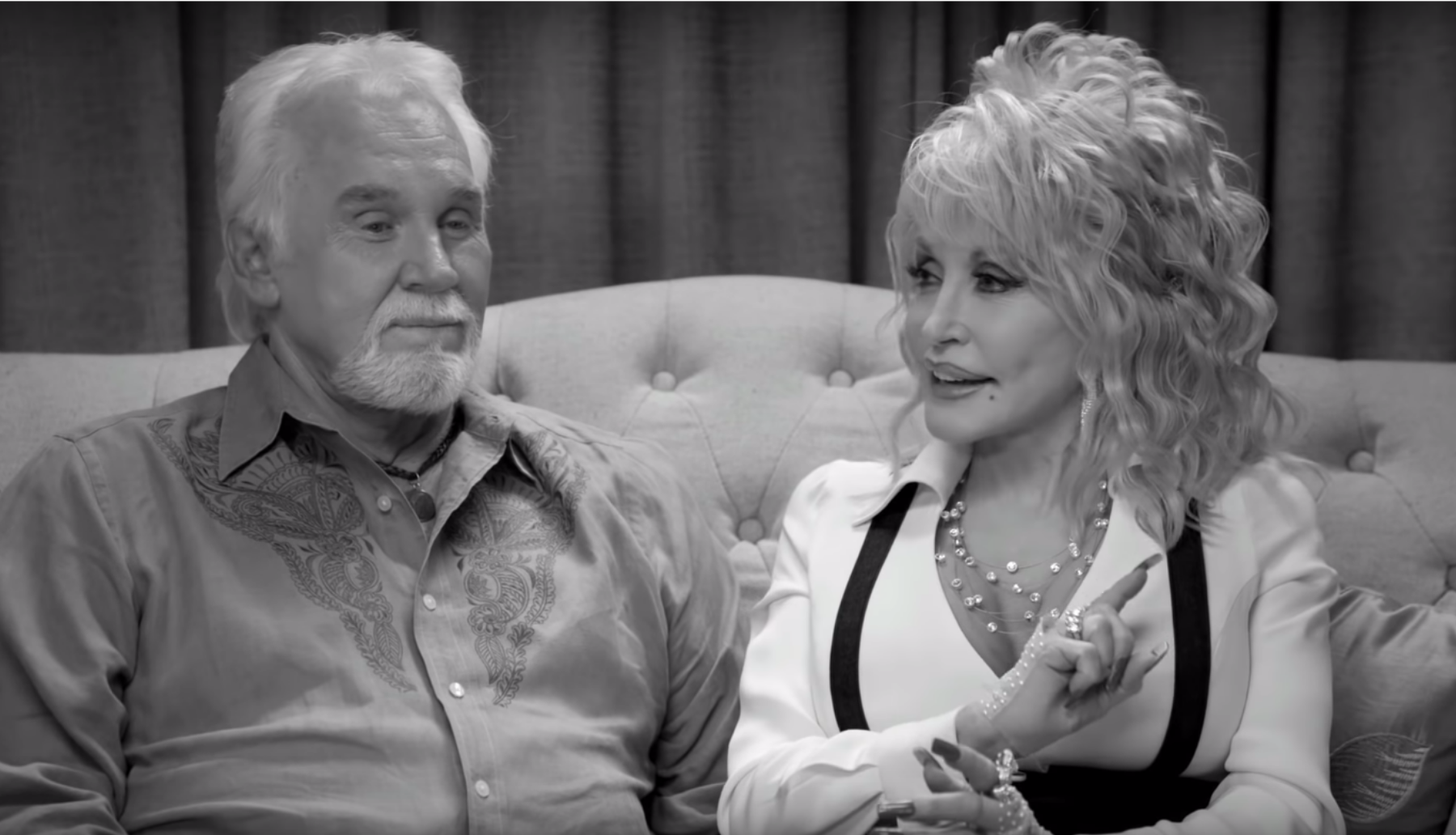
Kenny Rogers & Dolly Parton

We couldn’t have this list without these two. They should be the start, middle, and end of any definitive list of country duos. So we’ll just make the easy choice and kick it all off with Kenny and Dolly — that extra intro about their friendship and the years they’ve known each other? Swoon.

Loretta Lynn & Conway Twitty

After saying what we did about Kenny & Dolly we knew this pair needed to come next — so as to not rile anyone. Out of countless duets we could have chosen, how could any top “You’re The Reason Our Kids Are Ugly?”

Willie Nelson & Ray Charles

For inexplicable reasons people tend to forget Ray Charles’ incredible forays into country. His collaborations with Willie are stunning for the extreme juxtaposition of their voices and styles — they feel and swing so distinctly and differently, but all while perfectly complementary. “Seven Spanish Angels” ranked a very close second to this number in our selection process.

Glen Campbell & John Hartford

The most-recorded song in the history of recording? It’s said “Gentle On My Mind” holds that honor. And goodness gracious of course it does. Here’s its writer and its popularizer and hitmaker together.

Lee Ann Womack & George Strait

Together, Lee Ann and George were beacons of the trad country duet form, especially in the ’90s and early 2000s. This one from the jewel in the crown of Lee Ann’s discography, Call Me Crazy, is crisply modern, but with decidedly timeless vocals.

George Jones & Tammy Wynette

A broken, country fairy tale of a love story, George and Tammy’s relationship was infamously fraught, but damn if that didn’t just make their duets ever more… ethereal. Which doesn’t justify that Tammy Wynette kinda pain, to be sure, but it does remind us that if country can do anything better than all other genres, it can be sad.

Reba McEntire & Linda Davis

One of the best country songs, duets, and music videos EVER MADE. Theatrical and epic and a little silly and downright catchy and Rob Reiner and… we could go on forever.

Tanya Tucker & Delbert McClinton

Tanya is back with a brand new album and its well-deserved level of attention has been helping to re-shine the spotlight on her expansive career. Forty top ten hits across three decades. Who does that? Here she duets with Delbert McClinton on their 1993 hit, “Tell Me About It.”

Alan Jackson & Jimmy Buffett

Hey, if this has to be stuck in our heads for the rest of the month, it should be stuck in yours, too. Fair’s fair. It’s only half past [whatever time it is], but we don’t care.

Johnny Cash & June Carter Cash

One of the most recognizable duos in the history of the genre, immortalized not only in their discography but in a film adaptation of their love as well, Walk the Line. We all know “Jackson” as familiarly as the ABC’s, so here’s a slightly lesser-known beaut. (Keep watching til the last verse for an adorable bit from June.)

Eric Church & Rhiannon Giddens

Country is at its best when it surprises us. This collaboration is certainly, on the surface, unexpected, but the message of the song isn’t the only way these two artists can relate to each other. Over the course of their careers they’ve both fought their way from the fringes to the centers of their respective scenes. More of this, please.

Dolly Parton & Porter Wagoner

Dolly got her start with Porter Wagoner on his television show in the 1960s. They can certainly be credited with pioneering, popularizing, and epitomizing the country duet format. One of her most famous hits, “I Will Always Love You,” was written for Porter as she lamented leaving their act to go totally solo. (We’re a little glad she did.) You can tell they sang this song just a few gajillion times together, give or take.

Pam Tillis & Mel Tillis

Father/daughter duos in country aren’t as common, but they certainly aren’t unheard of. Pam and Mel are a perfect example. (The Kendalls are another.)

Patty Loveless & Ralph Stanley

Patty Loveless received the first ever Ralph Stanley Mountain Music Memorial Legacy Award in 2017 at Ralph’s home festival, Hills of Home, in Wise County, Virginia. Patty and Ralph were longtime friends and collaborators during his lifetime and even through her mainstream country success she referenced bluegrass and Ralph as influences — and she cut a few bluegrass records as well.

Alison Krauss & James Taylor

It’s. Just. Too. Good. Like butter. Like a warm bubble bath. Like floating on a cloud. Two voices that were meant to intertwine.

Charley Pride & Glen Campbell

These two were made to sing Latin-inflected harmonies together, weren’t they? Charley Pride gets overlooked by these sorts of lists all too often. But dang if he didn’t crank out some stellar collaborations, too!

Gram Parsons & Emmylou Harris

“Love Hurts” and boy, if Gram and Emmylou don’t make you believe it heart and soul and body and being. The definitive version of this Boudleaux Bryant song? Perhaps.

Willie Nelson & Merle Haggard

Icons being icons. And friends. And amazingly talented, ceaselessly musical comrades. You love to see it. (We could’ve/should’ve chosen “Pancho & Lefty.” We did not.)

Vince Gill & Amy Grant

There are quite a few reasons why the Ryman Auditorium basically hands this husband and wife duo the keys to the place each December. Basically all of those reasons are evident in this one. It’s fitting that this video came from one of those Christmas shows, too.

Dolly Parton & Sia

Dolly literally outdoes herself, re-recording “Here I Am” for the original soundtrack for her Netflix film, Dumplin’, after she first cut the Top 40 country single in 1971. Clearly she and Sia have much more in common than an affinity for wigs; their soaring, acrobatic voices seem so disparate in style and form until you hear them together. Listen on repeat for the best therapeutic results.

Robert Plant & Alison Krauss

[Insert entire Raising Sand album here, because how could we ever choose?] Lol jk, here’s “Killing the Blues.”

Carrie Underwood & Randy Travis

Cross-generational, meet-your-hero magic right here. Little did we know what was in store for Carrie Underwood then. But the way Randy looks at her up there, you can tell he knows she’s goin’ places.