You Gotta Hear This: New Music From Swamp Dogg, Allison Russell, and More

Another week, another batch of excellent new roots music! You Gotta Hear This…

There’s plenty of Good Country to enjoy below, as we kick things off with Dallas Burrow’s brand new track, “Underdog.” In his heart of hearts, Burrow has always considered himself something of an outsider. He channels the angst and emotion of being an underdog through the rocking, passionate crescendo of the gritty country track. Then we immediately follow that up with more from similar sonic territory, as Whey Jennings and Karen Waldrup join forces on a song they co-wrote, “Damned If I Stay.” We’re sharing the new video for the number, a thoughtful Outlaw-steeped ballad that was begging for the duet treatment – which Jennings and Waldrup execute very well. It’s as relatable as it is personal.

In bluegrass (or from nearby!), banjoist Max Wareham launches his new album, If The Cosmos Were Whiskey…, today. To celebrate, we’re sharing the music video for “Closer To You,” as cosmic and enchanting as the record title. It’s experimental string band music that falls somewhere in the nebulous territory between neo-folk, indie, and trance. The psychedelia of jamgrass, but more deliberate and “slowed down.” When you read Wareham’s inspiration behind the track, these connections make even more sense.

Also arriving directly from the magical musical cosmos is a new track from the ethereal Allison Russell. Timed for release on Juneteenth, “Black Lavender” features Brittney Spencer and is a song about extending grace, comfort, and care – and the importance of community to lift each other up. “We saved this song for Juneteenth for a reason,” she explains. “Black women have been showing up for each other in this way as long as we’ve been here, and we can’t stop, won’t stop now!” Listen to the timely track below.

You’ll also want to hear new music from an Americana legend Swamp Dogg. His new album, Swamp Dogg Contemplates The Afterlife, is out today. But the Dogg doesn’t want you to be too concerned that our roundup selection, “Final Approach” is about mortality. “‘Final Approach’ uses an airliner metaphor, but it’s more about a homecoming than dealing with the end of life,” he explains via email. “[But], I’m OK with this ‘final approach,'” he continues. “I’ve been blessed and that’s something to sing about.” The song is smooth, grooving, and dripping with Swamp Dogg’s personality.

It’s all right here on BGS and You Gotta Hear This!

Dallas Burrow, “Underdog”

Artist: Dallas Burrow
Hometown: New Braunfels, Texas
Song: “Underdog”
Album: Modern Day Vagabond
Release Date: June 17, 2026 (single); September 25, 2026 (album)
Label: 40 Below Records

In Their Words: “Like the character Dally from The Outsiders – a rebel through and through – in my heart of hearts, I’ve always felt like a little bit of an outsider, an outlier, an underdog, but I always found that, on some level, to be a point of pride. It gives you a unique perspective when you’re on the outside looking in. That’s the basic spirit of this song, though it was also inspired somewhat by my own experiences within the music business, where so many people are telling you who they think you are and how things ought to be done. Usually in some attempt to conform you to their vision of who you ought to be, when each of us, ultimately, has our own path.

“I grew up listening to hard rock and metal as a kid, before I got into the more restrained approach of the singer-songwriters who I have come to love and admire. But there’s always something in me that, at some point, wants to dig in, let loose, and rock out, so it was very liberating for me to lay this track down. It gave me a chance to scream my heart out a little bit in the song’s crescendo; a guttural catharsis that is hard to achieve through any other means except rock ‘n’ roll.

“The band really brings this one to life: Mark Tokach’s searing electric guitar, Larry Chaney’s booming distorted baritone, Kullen Fox’s fiery B3 organ track, Katie Shore providing her tastefully avant-garde harmony part in the chorus, legendary producer Mike McClure on second acoustic guitar, and Adam Odor on bass, and finally Cameron Martin from my touring band on drums, who comes from a rock ‘n’ roll background – and who were all chomping at the bit to rock this one out.” – Dallas Burrow


Whey Jennings & Karen Waldrup, “Damned If I Stay”

Artist: Whey Jennings
Hometown: West Texas
Song: “Damned If I Stay” with Karen Waldrup
Album: Baptized By Fire
Release Date: June 18, 2026 (video/single)
Label: Dirt Rock Empire

In Their Words: “‘Damned If I Stay’ is about being caught between staying and leaving when both choices hurt. It’s that tension a lot of people don’t talk about. This song called for a duet and Karen’s voice added the contrast that helped bring the full emotion of the story to life.” – Whey Jennings

“Writing this song with Whey Jennings was such a career highlight for me. He is such an emotional singer and that’s what this song needed. I have such a special friendship with Whey and it’s incredible to see that friendship spotlighted on such a personal song for both of us from our own life experiences.” – Karen Waldrup

Video Credits: Director/producer – Gio Gotay.


Allison Russell, “Black Lavender”

Artist: Allison Russell
Hometown: Montreal, Quebec, Canada
Song: “Black Lavender” with Brittney Spencer
Album: In The Hour of Chaos
Release Date: June 19, 2026 (single); July 10, 2026 (album)
Label: Fantasy Records

In Their Words: “We are swimming in rivers – flash floods! – of adrenaline right now. ‘Black Lavender’ is a song about extending grace and soothing comfort to a chosen sister… the kind I have trouble extending to myself. But the beautiful thing is, she’s the same way – and she gives it all back and some. Brittney Spencer is a voice for all the ages who we need right now. We saved this song for Juneteenth for a reason. Black women have been showing up for each other in this way as long as we’ve been here, and we can’t stop, won’t stop now! Incomparable . That’s what we all are, you know? Precious… magical.” – Allison Russell

Video Credit: Directed by Athena Kulb.


Swamp Dogg, “Final Approach”

Artist: Swamp Dogg
Hometown: Portsmouth, Virginia
Song: “Final Approach”
Album: Swamp Dogg Contemplates The Afterlife
Release Date: June 19, 2026
Label: S-Curve Records

In Their Words: “‘Final Approach’ uses an airliner metaphor, but it’s more about a homecoming than dealing with the end of life. That’s something that’s inevitable, but the life I’ve lived has been truly fulfilling and I remain both hopeful and thankful. I cite some of the music pioneers – Sam Cooke, Otis Redding, and Chuck Willis – who went before their time. While I’ve come as far as I have for as long as I have, and that’s something spiritually uplifting. The great work of those guys lives on and so do I, which is why I’m OK with this ‘final approach.’ I’ve been blessed and that’s something to sing about.” – Swamp Dogg


Max Wareham, “Closer To You”

Artist: Max Wareham
Hometown: Boston, Massachusetts
Song: “Closer To You”
Album: If The Cosmos Were Whiskey…
Release Date: June 19, 2026

In Their Words: “I wrote this one thinking about 8th-century Chinese mountain poets and Milarepa, the Tibetan yogi who sang his way to enlightenment in a cave, which is either the most pretentious thing you’ll read this week or the most honest. There’s a figure wandering through it, searching for something that keeps shape-shifting: person, place, idea. The song refuses to say, and that refusal is the whole point. To me, it has the patience of something that’s been waiting a long time.

“Chris Sartori, formerly of Twisted Pine, plays an inspired bass part like he’s keen on the trail of this ghost. Give it a listen and see what you think you’re looking for.” – Max Wareham

Track Credits:
Max Wareham – Banjo, vocals
Jack Holland – Guitar
Chris Sartori – Bass
Karl Helander – Percussion
Lily Sexton – Harmony vocals

Video Credits: Grant Bouvier


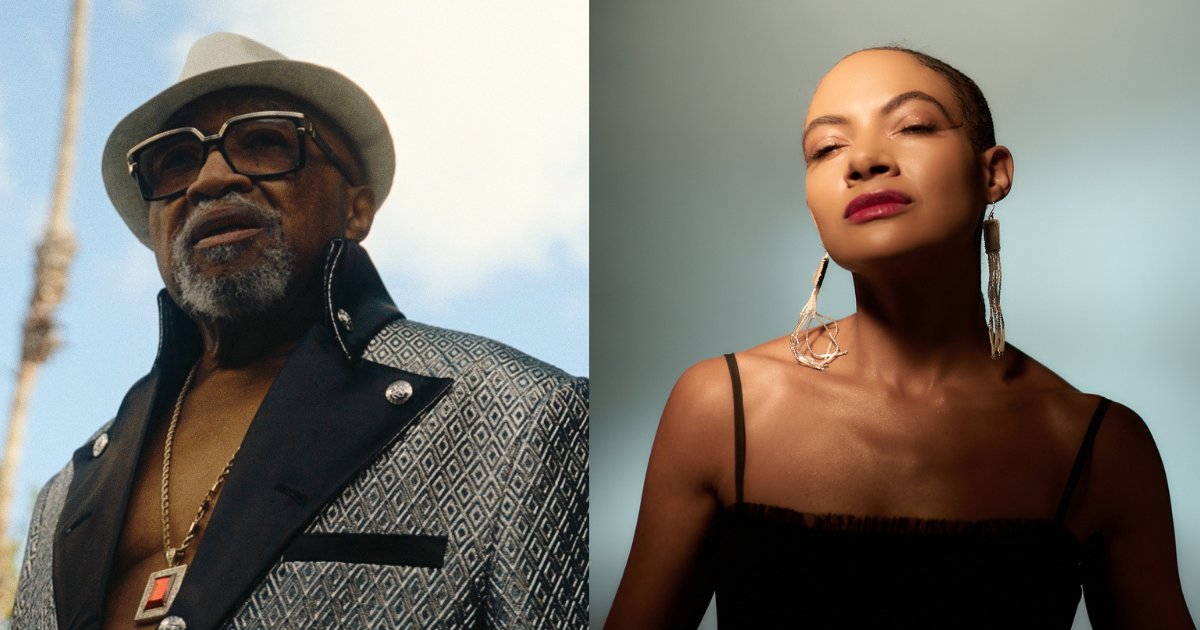
Photo Credit: Swamp Dogg by Cooper Davidson; Allison Russell by Mason Poole.
Mavis Staples Finds a Place to Call Home in Frank Ocean’s “Godspeed”

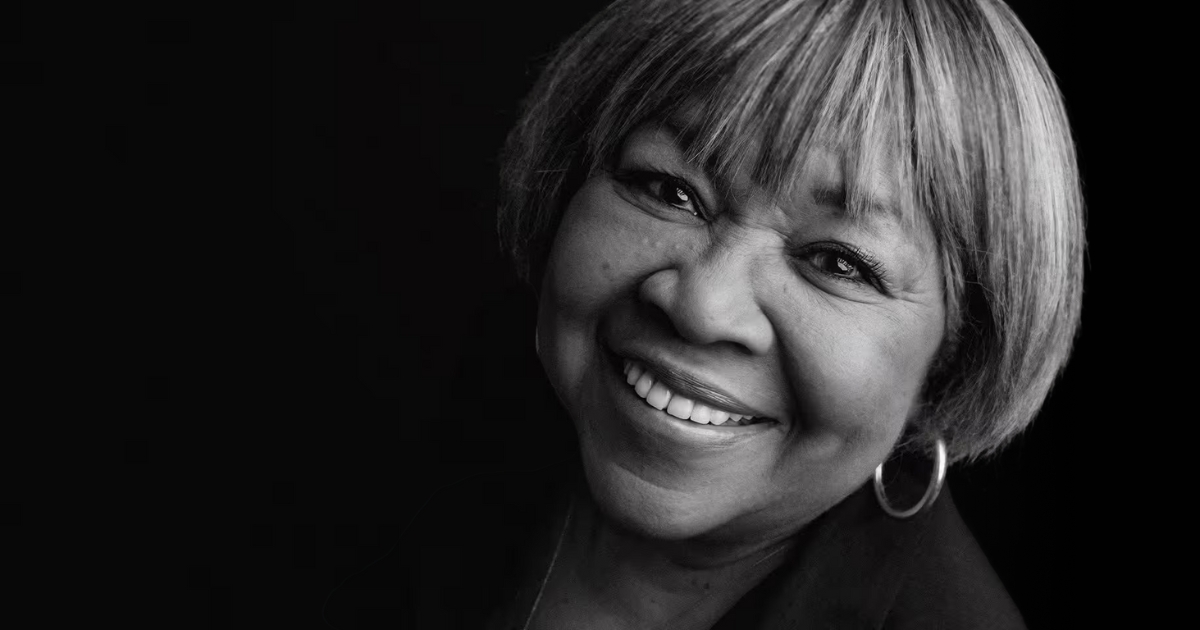
Mavis Staples counts herself among the legion of Frank Ocean fans and she’s just released her rendition of “Godspeed” as a sign of her admiration. Of course Staples is an iconic voice of her generation through her groundbreaking music with the Staple Singers on “I’ll Take You There,” as well as the family group’s participation in the 1960s civil rights movement alongside Dr. Martin Luther King Jr. For this heartfelt track, Staples and producer Brad Cook bring in songwriter and Youth Poet Laureate Kara Jackson for spoken word vocals.

Channel Orange was my first introduction to Frank Ocean and I was just amazed at the writing and soulfulness coming from his voice,” Staples said. “And I loved Blonde when that record came out. That first line in ‘Godspeed’ of ‘I will always love you’ just crushes me every time I hear it… or sing it. It’s just such a beautiful song and he sounds amazing on it so I was a little nervous if we could pull it off. I was honored to sing his words.”

This weekend in Canada, Staples will sing at jazz festivals in Ottawa, Toronto, and Montréal before crossing back over the border for shows in Knoxville, Tennessee, and Brevard, North Carolina. After a number of American concerts in July, she’ll pause just long enough to celebrate her 86th birthday. Then she’s bound for dates in Norway, the Netherlands, and Sweden in August, with even more stops scheduled throughout the U.S. through early October.

Yes, she’ll take you there… but only if you can keep up. Check out the Rock & Roll Hall of Fame member’s cover of Frank Ocean’s “Godspeed” released by ANTI- Records below.


Photo Credit: Myriam Santos

New Movement Music: A Black American Soundtrack of Struggle and Protest

For Black Americans, this day, Juneteenth, has long been a celebration of the momentous historical event of emancipation from slavery — and the nearly two and a half years it took for that news to reach all enslaved peoples in this country. Juneteenth is belatedly gaining wider recognition and arrives at a time of reckoning with systemic patterns of white supremacy, especially police brutality, that remain deeply entrenched.

Like many waves of national protest before it, the uprising in the wake of the deaths of George Floyd, Breonna Taylor, Ahmaud Arbery, Tony McDade and many others has spurred the creation of its own soundtrack, and the following list spotlights the contributions of seven roots-savvy, Black music makers. Some draw on lessons learned from how songs gave spiritual succor to those on the front lines of the 1960s Civil Rights struggle, with righteously raised fists and declarations of passion and purpose. Others opt for expression that feels far more personalized or particular, articulating an adamantly complex range of emotions and letting profoundly unsettled, and unsettling, questions hang in the air. All of them are fleshing out their own vivid, timely incarnations of movement music.

Leon Bridges specializes in sophisticated soul, sometimes artfully retro in presentation and other times landing at the thoroughly contemporary end of that musical lineage. His new song “Sweeter” is an example of the latter, two minutes and 50 seconds during which his buttery vocals glide over a lean drum machine pattern, delicate, gospel-dusted bits of guitar, keyboard, piano and bass and Terrace Martin’s saxophone figures. Bridges’ words land with the devastated finality of a black man whose life is leaving his body, taken from him by police. “I thought we moved on from the darker days,” he sings, his cadence fluttery and tone ruminative. “Did the words of the King disappear in the air, like a butterfly?” The blame-laying next line arrives in a burst: “Somebody should hand you a felony.”

Then, Bridges elongates his phrasing with righteous indignation, before steadying himself to spell out the loss: “‘Cause you stole from me/my chance to be.” The elegance he chose gives his performance subtly striking, emotional heft. “From adolescence we are taught how to conduct ourselves when we encounter police to avoid the consequences of being racially profiled,” Bridges wrote in a statement. “I have been numb for too long, calloused when it came to the issues of police brutality. The death of George Floyd was the straw that broke the camel’s back for me. It was the first time I wept for a man I never met. I am George Floyd, my brothers are George Floyd, and my sisters are George Floyd. I cannot and will not be silent any longer. Just as Abel’s blood was crying out to God, George Floyd is crying out to me.”


Chastity Brown has been honing her ability to create space for emotional resistance within her songs for a while now. She draws on the pointed, confessional potential of folk and soul and the digital texturing techniques of contemporary pop and hip-hop, while depicting the patient pursuit and safekeeping of self-knowledge as a sign of strength — one that differs wildly from the sort of dominance modeled by systemic power.

In her new song “Golden,” created on her iPad in her garage studio and shared with the world this week, Brown sounds willfully unhurried singing over a skittery programmed beat: “I’ve got joy, even when I’m a target/If ya think that’s political, don’t get me started/You know I’m golden and I flaunt it.” That savoring of selfhood is in striking contrast to the furious question she circles around during the chorus: “Why have I got to be angry?”

In the artist notes accompanying the song, Brown explained that she began writing it when her nephew was beaten by four white cops while walking home in Harlem, mere weeks before George Floyd died in her adopted hometown. “This collective trauma that black, indigenous, immigrant, and queer/trans folk feel is real,” she spelled out. “It’s every god damn day. Yet, we still thrive and flourish in our nature beauty, we still have swag and songs for days. We still have wild and wondrous imaginations like we are all the children of Octavia [Butler]. …This is for me, my people, and the UPRISING to defund police here in Minneapolis and thereby set a new standard for how communities want to be protected.”


Shemekia Copeland, one of the brightest stars in contemporary blues, has been deliberate for years about broadening her repertoire and approach to encompass countrified styles, singer-songwriter song sources and statement-making folk and soul sensibilities and, in the process, positioning herself in the midst of roots music discourse. That’s the insightful perspective she brings to her just-released “Uncivil War,” whose string band style accompaniment boasts the contributions of Sam Bush and Jerry Douglas.

Coming from Copeland, and delivered with measured, dignified vibrato, the simple flipping of the name of the nation’s most notorious war to “uncivil” slyly strips a veneer of respectability from the racist and romanticized Lost Cause religion. She strikes a tone of weary but resolute optimism throughout. “It’s not just a song,” she clarified in a statement. “I’m trying to put the ‘united’ back in the United States. Like many people, I miss the days when we treated each other better. For me, this country’s all about people with differences coming together to be part of something we all love. That’s what really makes America beautiful.”


Kam Franklin, on her own and with her Houston horn band The Suffers, has the wide-ranging musical instincts, imagination, nerve, and ear for earthy verisimilitude to make big statements while zeroing in on small interactions. A couple of weeks back, she posted a brand new, self-recorded song fragment to SoundCloud, a platform well suited to off-the-cuff expression, and with it, this comment: “I saw a photo of Breonna Taylor with her homegirls earlier today, and it gutted me. I won’t forget her. I wrote this birthday song for her, her friends that wondered where she was before the news came out, and everyone that loved her.”

Titled “Happy Birthday Breonna,” it’s a pensive, sinuous bit of ‘70s soul that drives home the fact that Taylor was ripped from a web of close relationships. The first, and only verse, lands like a voicemail from a friend who grew worried when she couldn’t reach Taylor. Franklin’s graceful trills and softly insistent phrasing have an understatement that suggests fretful preoccupation. Then she moves into a point-counterpoint refrain, murmuring birthday wishes to Taylor in her breathy upper register and making a devastating declaration beneath: “You should be here.”


Singer-guitarist and actor Celisse Henderson began work on writing, recording, and filming a video for her song “FREEDOM” four years ago, following the slayings of Philando Castile and Alton Sterling, and watched as black deaths and protest momentum multiplied before she finally completed and released her project earlier this month.

In a message on her website, Henderson explained, “I, along with millions of people, watched video footage of these unarmed black men losing their lives in the most horrific ways. The truth that these unjust deaths revealed about our country, including the systemic failings of our criminal justice system, became my personal call-to-action. Then the 2016 election night happened, and the results added a whole new layer to the purpose of this song and project. Now, almost four years later, too little has been done, and the story remains the same. With the horrific and unjust killings of Ahmaud Arbery, Breonna Taylor, and George Floyd weighing heavily on our hearts and minds, it is time to release ‘FREEDOM’ as a rallying cry and a call to action to stand up and fight for our freedom.”

Historic footage of the March on Washington that opens the clip is a reminder of the buoying role that spirituals played in the Civil Rights movement of the 1960s, and serves the narrative function of positioning Henderson to measure the too-meager progress for Black Americans since. The track is gospel-schooled and hard-rocking, powered by a thunderous, syncopated drum pattern and grinding electric guitar attack. With gospel fervor and a touch of theatrical flourish, Henderson summons a spirit of urgency and extends a broad welcome to all who are affected or disturbed by injustice.


Joy Oladokun, a Nigerian-American singer-songwriter who’s quietly carving out her place in Nashville’s professional songwriting community with introspective, melancholy warmth, steered a co-writing appointment with Natalie Hemby toward an expression of grief. The result was “Who Do I Turn To?” a naked airing of fear and distrust.

Oladokun’s reedy, plaintive performance is accompanied only by minimal piano chords. She spends the chorus adding up horrifying realizations that lead her to a resounding question: “If I can’t save myself/If it’s all black and white/If I can’t call for help/in the middle of the night/If I can’t turn to god/If I can’t turn to you/Who do I turn to?” Her voice subtly catches on the word “help,” as though knowing that life-giving protection is unavailable to her constricts her breath. Oladokun underscored the importance of the chorus lyrics to an interviewer: “[I]t’s illustrating that I don’t trust the police since I’m black. I don’t trust the police enough to know that they would think I’m not robbing my own home. I don’t think a lot of people understand what that is like. The feeling sucks.” In a separate statement she summarized her intent: “I wanted to write a firsthand account of how I feel and the question black people like me ask when this happens over and over again while nothing changes. I want it out now to help an already traumatized people cope, heal, and put words to their struggle.”


Wyatt Waddell, a young Chicago music-maker who’s been expertly, wittily, and self-sufficiently arranging home recordings of classic covers and singer-songwriter soul originals for the past few years, wrote “FIGHT!” as an anthem of admiration and uplift for young, Black Americans putting their bodies on the line in the streets and facing off against police force to agitate for change. “This song is me looking at what’s happening and what I’d tell the people protesting,” he specified in a statement. “I had to look outside of myself at what’s going on and how people are being affected. Hearing people’s fears, anxieties, and watching everything happening on TV really helped me write the song. I hope that it can be an anthem for my people as they’re fighting for a better America.”

Waddell begins with gospel-style repetition, creating a call-and-response pattern made up of his own layered vocals over a churchly foot stomp and hand clap groove: “There’s already so much pain/So much pain/So much pain/There’s already so much pain/And there ain’t nothin’ else we can do.” It seems like he could be building up to a confession of helplessness; instead, his funky refrain is bolstered by a sense of resolve and inevitability: “Nothin’ to do but fight.”


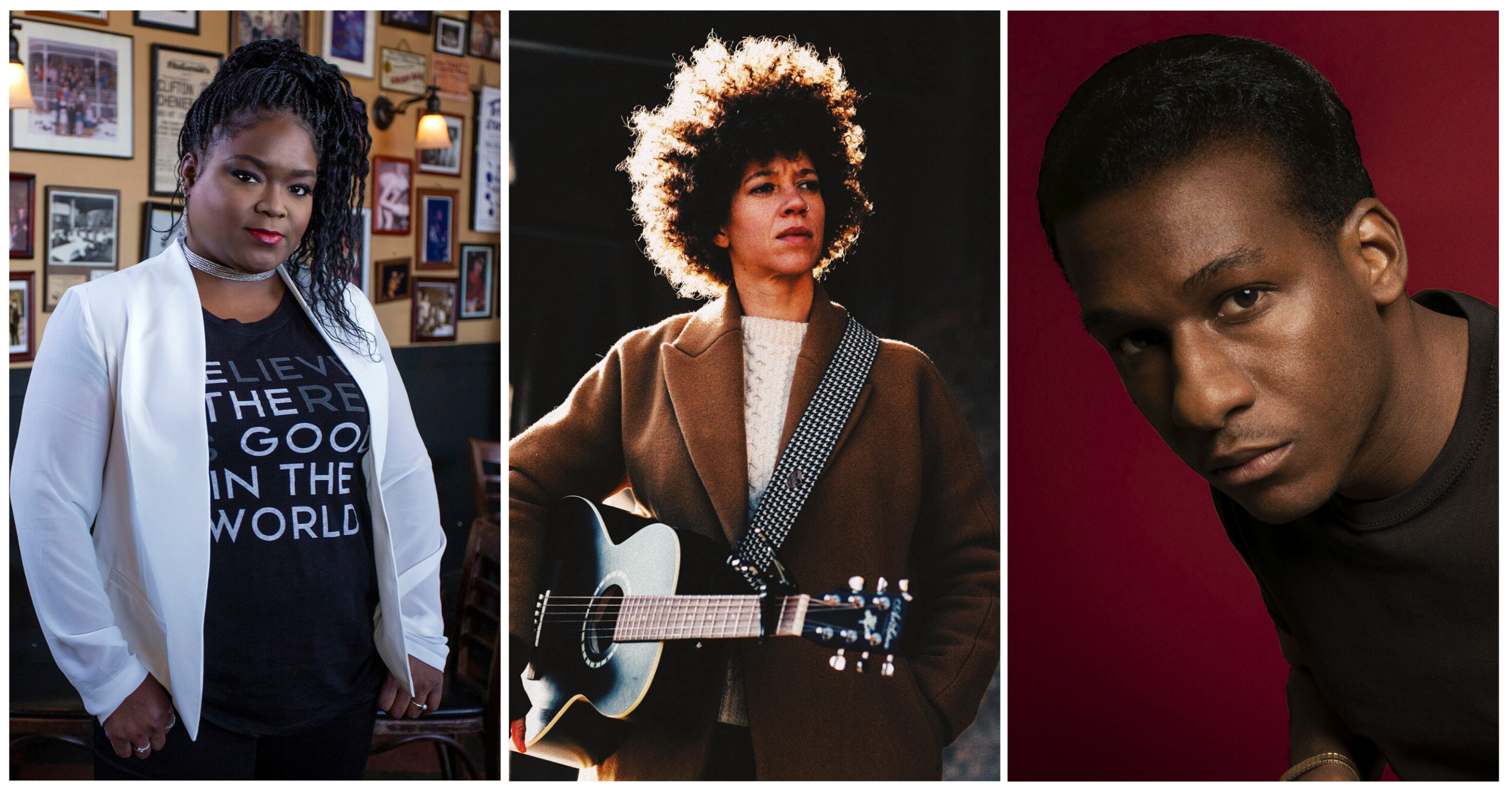
Photo credit: (L to R) Shemekia Copeland by Mike White; Chastity Brown by Wale Agboola; Leon Bridges by Jack McKain.