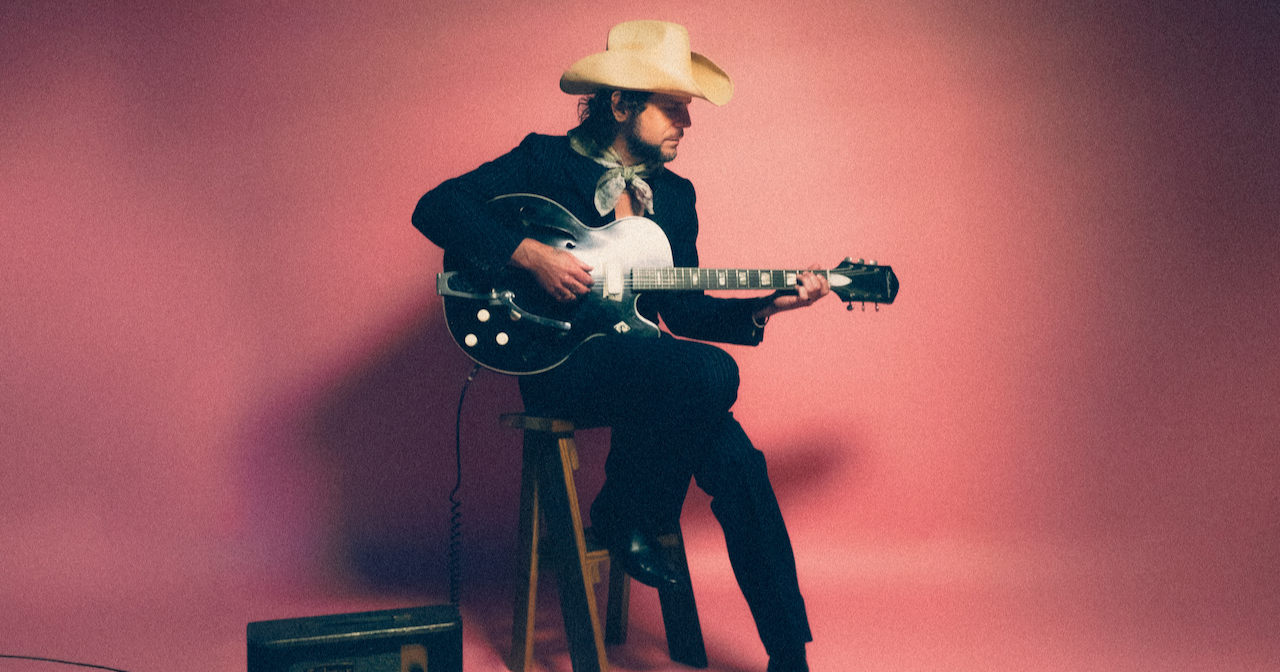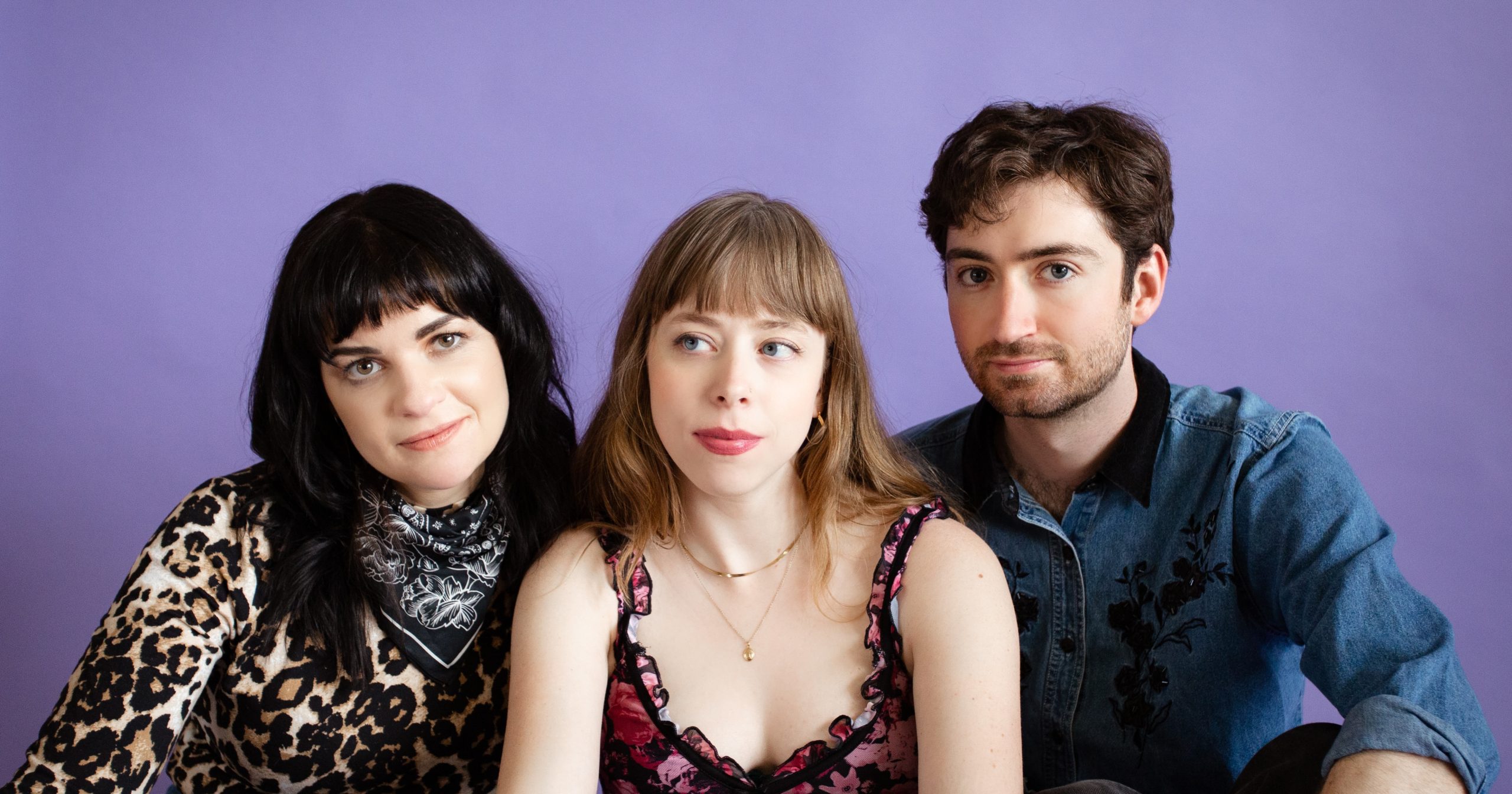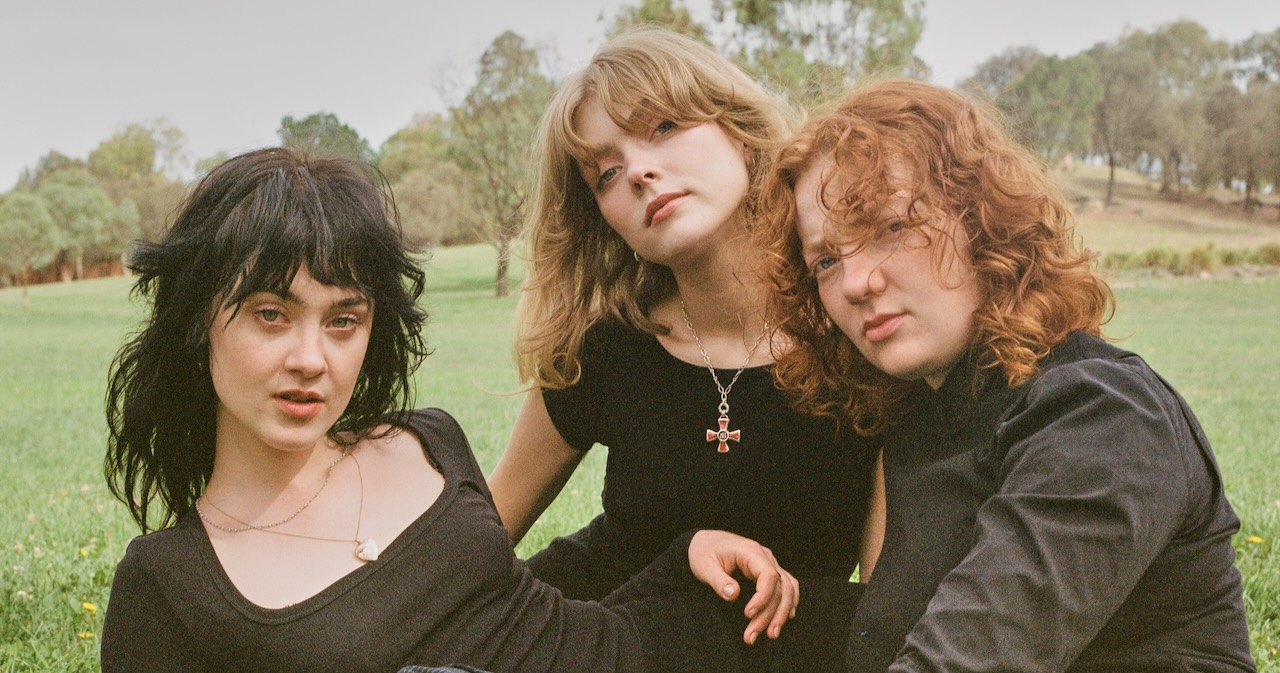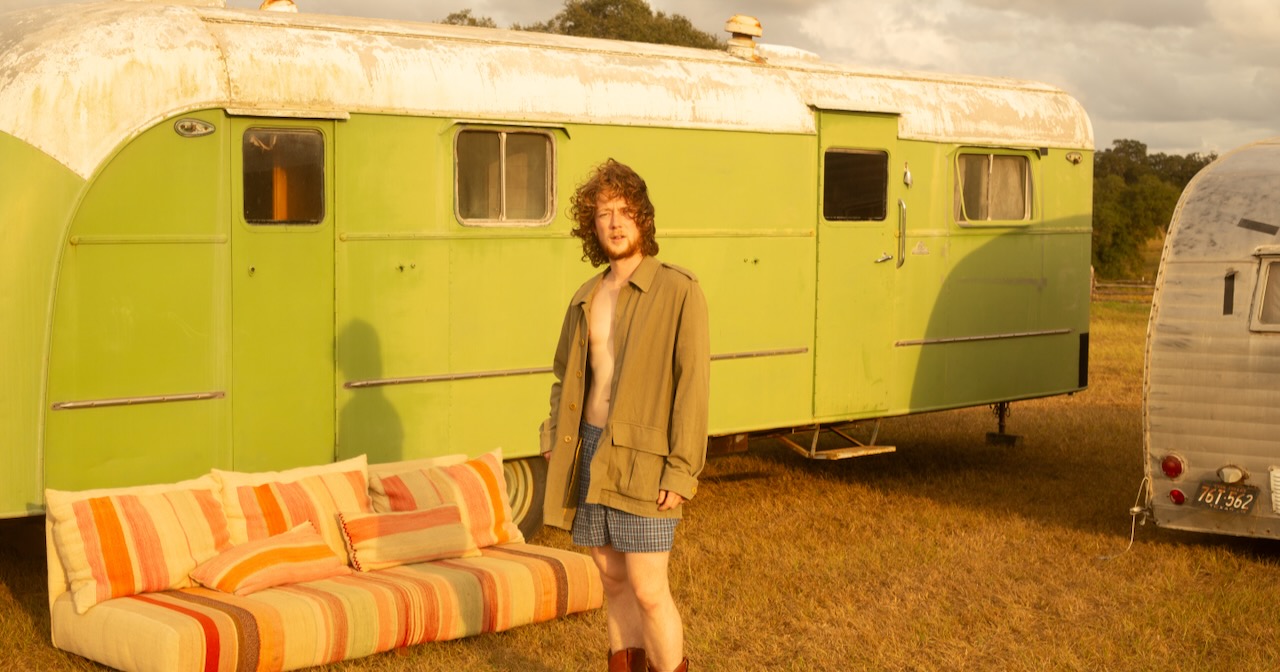
Unplugging Made Josiah and the Bonnevilles’ As Is Possible

By now, Josiah Leming is a master of reinvention. In the early 2000s, he signed a major label deal, then went indie for a while. Some of his albums leaned on his rock influences; others were more folk-oriented. He’s released a healthy number of covers projects, but can write songs as well as anybody who’s been in the business for 20 years. Leming also recorded under his own name before rebranding himself as Josiah and the Bonnevilles. And he’s about to be all over the map, literally, when he launches his Redline North American Tour in May with openers Max Alan and Brenna MacMillan.

Josiah and the Bonnevilles’ base should only grow with As Is, out May 8 on Rounder Records. Returning with a more electric approach, Leming co-produced the album with Konrad Snyder.

“It was important to me that the album sound different, but not so different that people don’t recognize it,” Leming tells BGS. “That was actually a pretty tough thing to do, because it’s easy to change things and really turn them on their head, but to have it still feel like it came from the music that came before it was something I thought a lot about.”

A proud native of Morristown, Tennessee, and now living in Nashville, Leming caught up with BGS to talk about how he picked up the banjo, the positive results of listening to Ralph Stanley, and how Jack Reacher helped him define his relationship with his fans.

I noticed the first line of the first song on the new album is, “I’ve been staying out and off the internet,” and after listening to the album a couple times, I realized that’s an important line for this whole record. Was there sort of a recentering, or a desire to disconnect, maybe, as you went into this album?

Josiah Leming: It was a huge part of it. And I still struggle with it a little bit, because the reason I got to where I am now is because I embraced the internet, I embraced social media, and I shared my life with people, day in and day out. I was 33 years old, fighting and scrapping to have a place, making music as a living. But I found as we got toward the end of 2024, the things that I was doing to sustain the level that I was at were coming directly at the cost of the essential thing that goes into the music.

Like, things had never been better. My shows were as big as they’d ever been. Everything was cooking on all cylinders, but I didn’t have any new songs that I was very excited to share. I needed to completely cut myself off from that world of the promotion cycle and the daily posting. … I have always written so autobiographically, and it would have been very easy for me to write an album about the struggles of the road or an album that would make a lot of sense to me. But I started thinking about 13-year-old Josiah in Morristown, Tennessee, and that guy doesn’t care what it’s like to be in Tulsa on a Thursday night, and maybe you’re a little lonely. Like, I gotta cut deeper to the core of this thing that’s not just about me.

That took me 30 or 40 songs to write out all of that stuff, to get to where I could look a little deeper for the meaning and the songs that somebody would understand if they weren’t a touring musician. That was the ultimate goal for me with the record, to make something where people don’t think about me when they listen to it. They can maybe just put it on in the garage. When I put on Ralph Stanley or AC/DC in the garage, I don’t think about Angus Young or Malcolm Young or Brian Johnson. I think, “Damn, this is an awesome day. This is a soundtrack to my life.” And I hope I have done that somewhere on this album.

How much of an influence did your Appalachian roots have on this album?

It’s really interesting. So the bio for the album was written by an author named Silas House. We had a chat and he actually asked me a similar question. He was like, “It feels Appalachian, even though it isn’t that obvious.” I think that’s because of the language I use that I grew up with. I think a lot about when I write, “Would my dad understand it?” My dad’s a simple, working-class man. So if things get too complicated, lyrically, then I want to change that to make it simpler.

That’s a lot of it, and I really went into the deep phase with Ralph and a lot of older stuff. That really changed my perspective on how I see myself in this industry. It’s very easy to start to get into this race to the top, and you’re looking at analytics, and you want more monthly listeners and all this stuff. Listening to bluegrass, and Ralph Stanley especially, all that kind of disappears, and it just becomes about the raw emotion of it. Which is what I fell in love with in the first place, when it felt like I had to do music.

How did Brenna MacMillan get involved with the project?

I was tracking a demo to a different song, a song I love but that’s very strange. And I was like, “I really want a banjo player.” Back in the day, I used to use Craigslist to find background singers because I love finding new people. So I put up an Instagram story and somebody sent me Brenna’s account. I watched one video and I thought, “This is just like lightning in your veins.” She’s so awesome. The energy in the banjo and the voice. And we had connected but it didn’t work out that particular moment.

So when it came time where I wanted banjo on the record, I hit Brenna up again because we’d exchanged numbers. She came in, and she’s just amazing. She doesn’t know how good she is. She’s been tour managing the band East Nash Grass, which I love. I’ve been listening to them a ton right now. I was like, “We need you in the band.” So now she’s in the band, she’s touring with us, and she’s going to open up the shows. I’m so excited for people to hear her.

When did you first pick up the banjo?

My grandpa gave me a banjo. He loved George Jones. He was a hard-drinkin’, George Jones-lovin’, bluegrass-lovin’ guy. He had a banjo and a Dobro he gave me, and I fiddled around with that. And then, all of us guitar players, when we find the six-string banjo, we’re so pumped because we don’t have to learn all these new chord shapes. So, it’s been a couple of years that I’ve been adding in the six-string banjo on things when I play, and I still play that on “Redline.” I am using the finger picks now, rather than my nails. So I feel like I’m starting to cross the bridge… if I can learn some shapes on the real banjo, maybe I can do some damage one day.

In “Redline,” it seems like you’re writing for the people you grew up with. People in your life who have hope, but it’s just hard. Who do you have in mind when you write a song like “Redline”?

It makes me emotional, honestly. I think about my dad all the time. It’s like I have all this… it’s not anger, but there’s very strong feelings. While I’m doing very well in my career, it’s better than it’s ever been, most people that I know are not winning in this modern world. Where everything is through the phone, and it’s the only way to access social circles. It’s the only way sometimes to order a damn McDonald’s sandwich. And there’s just this barrier, there’s this divide.

I see it with my dad, and my grandparents, just being left behind. And also working people. We shot the video for “Hell Without the Flames” down in Colombia, because that’s where all these jobs have gone, and now they pay these people even less than they paid before. So there’s just something that I can’t get out of my brain. I think about it all the time. That’s an important song to me. We love playing it. The band loves playing it. So I appreciate you asking that, it means a lot.

You’re welcome, and this may be a good segue to ask about “You’ll Never Leave Harlan Alive.” I found your version when I was going through your Country Covers EPs. It tells a similar story, about how grandma and grandpa had to keep working to live. Why did that song pull you in?

I probably heard that song first on Justified and I think that would have been the Darrell Scott version, the original. And I had always loved it. I mean, that’s just one of the best songs ever made. Talking with Silas about it, or anybody from the region, it’s so complicated because there’s so much pride. I like to think that there’s so much pride in working for so little, but these people are exploited over and over again. We don’t have aspirations of gold palaces or island complexes, so we’ve just been consistently taken advantage of, because we have this value system that’s a lot different. It makes you sad, sometimes it makes you angry, and sometimes it also makes you proud, and it’s really complicated feelings around all of it.

But it also seems like it’s important for you to share the music that you like. You’re writing songs that you want your audience to relate to. You’re covering songs to maybe introduce the music you like to your fans. You’re bringing musicians you like out on tour with you. Your fans can tell what you’re into through the company you keep. Is that part of your creative vision, to share with your audience who you’re listening to and what you like?

I think so, yeah. I was thinking recently, I always had service jobs growing up. I would serve tables or I would bartend. As I get older, I just see myself as having a responsibility. I think I had the responsibility to get off the internet for a year to write the best album that I could, rather than perpetuating my brand with songs that sounded similar. I feel like I have a responsibility to have the upbeat songs in the set list. If people are flying into town or driving 10 hours, it’s my responsibility to give them an experience.

There’s a great quote that I love from the Jack Reacher books. I love anything like James Bond, Reacher, or Tom Clancy. I love that stuff. But the author of Jack Reacher has a great quote about a handshake. And to make a handshake work, there’s got to be the hand on the other side that shakes back. I think about that in everything I do these days, since I read that. I wouldn’t get a lot of benefit out of just making music that I love and putting it out in the world if there’s not that hand on the other side. So I am at the point in my life where I think about those people that I’m looking at when I play live, and there’s a responsibility to me to weave what I’m excited about into what I hope will connect with them.


Want to see Josiah and the Bonnevilles live at the Fonda Theatre in Los Angeles on May 21, 2026? Enter to win tickets here!

Photo Credit: Sam Desantis
Sweet Petunia Grew Into Their Foggy Mountain Mental Breakdown

Little did Mairead Guy and Maddy Simpson know upon enrolling in Greg Liszt’s 21st Century String Band ensemble at Berklee College of Music that the course of their musical careers were about to be forever altered. Upon being paired up for a rehearsal by chance, Mairead and Maddy unearthed their musical synastry quickly. The two wove a vocal blend of sibling-like precision and their musical instincts coalesced with ease. After several jam sessions, the inevitable was clear – Mairead and Maddy were meant to make music together. With banjos in hand, the two joined forces to establish the cherished Boston alt-folk duo, Sweet Petunia.

2026 sees Sweet Petunia unfurling its petals even further – on March 13, the duo released their inaugural LP, Foggy Mountain Mental Breakdown via Ani DiFranco’s Righteous Babe Records, their first release since their 2021 EP, Lovingly. Laden with ripe lyrics and expansive sonic landscapes, Sweet Petunia harvests new growth with 12 tracks navigating dynamic emotional thresholds and lyrics that cover themes from gender identity to toxic relationships to heartbreak and beyond.

BGS was elated to sit back down with Sweet Petunia and discuss all things Foggy Mountain Mental Breakdown.

We last got to chat in 2024 for One to Watch. What has the shape of the last two years looked like for y’all?

Maddy Simpson: Lowkey pretty crazy! We started working with a booking agent and got hooked up with our label, Righteous Babe. We’re also in talks with a manager, so we’ve kind of legitimized in that way. I think the last time we spoke we didn’t have any of that.

So exciting! How has that changed the scope of your project?

Mairead Guy: They’ve been doing this so much longer and the range of people that they can connect us with is so vast compared to what we’ve been able to build so far, which is really cool.

MS: Yeah, it’s interesting to have other perspectives to bounce off of, too. The team is very thoughtful in many ways and they think of things that we would have never thought of. It does feel like this has legitimized the record and the band in a big way. Not that we weren’t legit before, but now we’re thinking about things on a much wider scale.

Speaking of which, congratulations on the new record! What about this moment in time do you feel like influenced the birth of Foggy Mountain Mental Breakdown?

MS: Truly, once we started working with the label, we just wanted to get it out as quickly as possible. March just worked best for them to slot it in, so we went with it!

MG: And March 13th must be a cosmically good day to put out an album, because we have a couple friends putting out albums that same day – Anjimile and Grace Givertz.

How fortuitous! So what was it like putting this album together? How was it different from the process for your EP, Lovingly?

MS: We recorded Foggy Mountain Mental Breakdown essentially four years ago at this point. It was our first try recording a full-length album and we did it in a kind of hybrid format – some in a couple different home studios, and then an actual recording studio. It was the first time we really brought in additional people to play on it, which was cool. We were much more thoughtful about the arrangements and the production and all that. It was the biggest thing we’ve ever done, and it was a lot, but it was incredible to see how it all turned out.

MG: We definitely learned a lot about what works and what doesn’t and what we want for next time. Even if all that was the only thing that came about from this process, it would have made it worth it.

Could you say more about what you learned?

MS: I think we both grew a lot. I learned a lot more about what I wanted and how I want things to sound. It was really awesome to work with some really close friends of ours; I learned more about collaborating, which was really cool. I also learned that it takes a really long time to put out a full-length record. Even once it’s finished, it takes quite a while, which I already knew in theory, but then to live it – it can take years sometimes, which is crazy.

MG: I feel similarly. It is cool to have the time to dedicate to thinking about the way that you want things to sound in their recorded form. That was great to learn about, especially differentiating between the ways in which that can be helpful and then also the ways in which you can get stuck in a loop of overthinking.

Now I have to ask, the title of the album is Foggy Mountain Mental Breakdown, and I’m curious if there’s anything you’d like to say about the influences behind that – Earl Scruggs, mental health, etc.?

MG: We thought it was funny! We were around a lot of bluegrass at the time – I think we came up with it at a bluegrass festival, and then a lot of our songs are pretty sad. There was sort of this trend where a lot of people were giving their projects jokey names that were plays on words, like Dolly Spartan or Chet Faker. Stuff like that was popular at the time.

MS: And it’s a little bit of an “if you know you know” vibe, because nobody knows “Foggy Mountain Breakdown” unless you play roots music and if you do, it’s the most old news bluegrass song. It’s like “Free Bird.” But then normal people have no idea what it means, which is kind of silly. It’s also a nod to our origins. Though we never really played bluegrass music, for the first three or so years that we were a band, we were almost exclusively around traditional roots music and a lot of those people were playing bluegrass. It is a huge part of our band, even though we’re more so old-time people, we love bluegrass.

The folks over at BGS definitely catch your drift!

So on FMMB, there’s a ton of lush instrumentation — what was that like? How did you find the additional musicians for all of these orchestrations?

MS: Most of the people that played on the album were people that we knew who were friends and musical collaborators of ours already. We know a lot of musicians, so it was pretty easy to put a lineup together. For example, we knew Lucy Nelligan – who plays all the fiddle on the album – from college and had played with her before. It was really a no-brainer to just have her come in and track a bunch of fiddle, just letting her go and do whatever she was gonna do. It’s cool to have that trust built with people where you know they’re going to produce quality tracks. We’re lucky that we are around so many amazing and talented musicians.

“Wilting” is the track with all the woodwinds and that was really cool because our producer, Leah Gutman, found a bunch of people to play on that session. All those people are now friends of ours, though at the time we didn’t really know any of them that well. It’s wonderful to see how our relationships have grown over time with the people that live in our community and play in our scene. For “Wilting,” our friend Christian Schmidt, who’s my roommate, played flute, but then our friend Brendan Wright from the band Tiberius was playing clarinet. And Miles Chandler from Clifford came in and played, our friend Nate Scaringi and our friend Maria – all these people that we’ve gotten to know over the years, but they were virtually strangers when they came in and tracked that song.

Do y’all have any dream collabs?

MS: Dolly Parton. Sabrina Carpenter got to do it, so…

Oh, and Willie Nelson! I’d really love to play Luck Reunion.

MG: Paul Simon. Or like, Simon & Garfunkel 30 years ago. When they reunited at Central Park we could’ve opened. Or Rhiannon Giddens would be cool.

MS: Gillian Welch and Dave Rawlings would also be awesome.

What track on the album do you each feel a deepest kinship to? Or is that like asking a parent to choose their favorite child?

MS: Hmm. I really like how “In David’s Living Room” turned out. I really love all of the auxiliary stuff that happens. I remember when Leah and I were cooking on that, I was just very excited with the direction that track was going in, because it felt like our indie moment in a record that’s pretty traditional. Though there’s other moments like that too, I think that’s my standout right now.

MG: For me, it’s probably “Grub.” That’s just one of my favorite songs that we’ve ever worked on together. You know, there’s a lot of songs on the album that, because they’re so old, don’t necessarily feel as relevant to where I am now, but “Grub” is one that I feel very protective of. The flute that Christian put on it is just so beautiful. It was also really fun to record — we did it on a 4-track while sitting on Maddy’s washer-dryer. Plus my roommate, Riley Halliday, made a beautiful stop-motion puppet music video for it.

Oh, tell me more about the music video.

MG: Yeah, so my roommate Riley – they’re an incredible visual artist, and they are really good at making puppets. We came to them about three years ago, probably, and asked them if they’d be interested in making this video. They did a combination of stop-motion, claymation, hand-drawn animation, and puppets that they built completely themself. They handbuilt everything and made this perfect video that I feel just represents the song so well.

Talented friends seriously make the world go round! Was there anything outstandingly difficult about making this album?

MG: Well, I was living in Maine at the time, so I was commuting down every weekend. In terms of life, it was great for me to be down there every weekend, but it definitely made things take a little bit longer. And it was harder, for sure, because we couldn’t just pop in really quick and do something. Everything had to be planned out pretty far in advance.

MS: Yeah, that was tough. Also, it’s really expensive to put out a record. Often it’s something most people can’t do unless they crowdfund or save up hella money for. For us, it just took a lot of saving and being very smart with money – and lowkey we ran out of money in the process. So if anyone wants to buy some merch!

A hypothetical for you – if you each could wake up tomorrow having mastered any instrument, what would it be?

MS: I’ve actually been thinking about this a lot lately, because I kind of want to learn how to play the drums. Our friend Andre M is so crazy on the drums. He has this beautiful technique – it’s very beautiful to watch him play. Every time I see his band, I’ll have like one Miller High Life and then I’ll be like, “I’m gonna do that!” So yeah, I’d definitely love to learn how to play the drums better.

MG: I always thought that I maybe have the vibe of a bass player, so that could be fun. Maybe we’ll start our drum and bass era – we could be a drum and bass duo.

I’d so be here for that. How would you each sum up FMMB in five words?

MG: College angst and bad dreams.

MS: Lowkey sad, but it’s chill.

Okay, y’all killed that.

So what’s coming up for y’all? Where can the good people find you?

MS: We are going on an album release tour in April. We’ll be out for most of April and the beginning of May all over the place – the Northeast and the South. We’re so excited to be playing five dates supporting Ani DiFranco. Our full list of tour dates is out now. Come through!


Photo Credit: JJ Gonson

Langhorne Slim Takes Chances and Rocks Out

For more than 20 years, Langhorne Slim’s folk-leaning songs and rebellious nature have captivated crowds across the world. That trend continues on his ninth studio album, The Dreamin’ Kind, which takes a page out of Dolly Parton’s book and pivots toward rock ‘n’ roll in what’s arguably his most eye-opening collection of songs to date.

Out January 16 on Dualtone, the album is something Slim had long desired to make, finally coming to fruition after he had the opportunity to open for Greta Van Fleet at a show in Connecticut in 2021. The moment came mere months after having dropped what would be his debut on the Billboard Hot 200, Strawberry Mansion. But according to Greta’s bassist Sam F. Kiszka – who produced The Dreamin’ Kind – that wasn’t the band’s introduction to Slim. They’d been fans of his long before.

“I remember hearing Lost at Last, Volume 1 for the first time and it absolutely resonated with me,” Kiszka said in a press release. “[Slim] has the conviction of a hundred singers. He puts his entire body and soul into it. I listen to ‘The Way We Move’ and I think, ‘That’s a rock ‘n’ roll song, right there.’ Rock ‘n’ roll isn’t a sound, necessarily. It’s an energy, and he’s got it.”

Although the production takes on a strong Greta Van Fleet flavor on songs like “Haunted Man” and “Loyalty,” The Dreamin’ Kind also mixes in Slim’s folk-fueled identity as well, painting a sonic canvas that shows both where he’s come from and where he’s headed. Others, like “Strange Companion” and “Rickety Ol’ Bridge,” bring stylings together, with fuzzed out guitar licks and backbeats that portray a more folk-oriented stomp and clap mentality.

Ahead of the holiday season and a weekend run of shows opening for comedian Jordan Klepper (more on that below), Slim spoke with BGS about what inspired his foray into rock ‘n’ roll, how a letter inspired one of its songs, and how working with Greta Van Fleet’s Sam Kiszka and Daniel Wagner pushed him creatively.

What was your motivation for making the pivot to rock ‘n’ roll this deep into your career?

Langhorne Slim: It’s been a dream of mine for a long time. Some of the songs are definitely more of a departure from what I’ve previously done than others, but I don’t think that’ll come as a surprise to people who’ve been following me for a while now. Our live performances have always taken a page out of punk rock and rock ‘n’ roll, in addition to soul and folk music – genres be damned. Regardless of what it sounds like, most people just want to be moved by music.

When I first got started, I was playing a certain way, then a record deal followed and before you know it you’re forming an identity. But I eventually reached a point where I still loved my folky songs, but if I met new people or a fresh opportunity came about that would push me creatively, then let’s go for it! As I’ve grown older and built a family I think more and more about the identity I’ve built and what else is there when I start peeling back those layers – what else do I want to express? How might I want to use my voice or the instrument I play differently?

Rock ‘n’ roll was the natural progression of that, so when I became friends with Sam and Daniel from Greta Van Fleet, I think they saw that in me. From then on there was no pressure, we were just in it to have fun.

So this is something you’ve been wanting for a while, you just needed to find the right people to work with for everything to fall into place?

I’d been talking to a couple friends and people I admire about how when I made [2005’s When The Sun’s Gone Down] I wanted something at the crossroads of bluegrass and punk rock, like the Violent Femmes. I didn’t necessarily want to copy their sound, I just felt a kindred thing with their influences. So with [The Dreamin’ Kind], in my mind I was going for a garage rock meets gospel thing. I wouldn’t say that’s what the record actually became, but how I collaborated with Sam and everyone else for this record was so different from how I’ve worked in the past.

I liken it to a pitcher in baseball. As artists we sometimes focus too much on our strengths or “strong arm,” but I’ve only got so much time to live and I’m hungry to create. Before music my first thought ever about creating something had to do with building robots. With that in mind, the possibilities are endless when you think about all the people you could potentially collaborate with and the different creative bursts that could come from each.

That reminds me of something Ketch Secor told me in an interview a few months ago – “I am a container of multitudes.” It sounds like you’re the same way?

Ketch has been doing Old Crow for even longer than I’ve done my thing. I’m not somebody that says I don’t care if it lands, because I do, but most importantly I want my longtime supporters who’ve been so good to me to connect with this record. I’m not the first songwriter or creative person to say you can’t do the same stuff over and over, and I won’t be the last. At the end of the day, the power of music comes from the wonder and awe it provides us, so if what I’m doing doesn’t give me that same feeling then I’m not doing my job for the people, the energy and whatever else provides groove, melody and beauty in the form of music.

Another way you’ve pushed yourself outside your comfort zone lately has been on your gigs opening up shows for comedian Jordan Klepper. How did that connection come about and what have you learned from playing to a comedy show crowd?

I first met Jordan because my best friend Joel is a cameraman for The Daily Show. Jordan went on to officiate his wedding and through that Joel turned him onto my music. From there, we hit it off at the wedding and about a year later I got an email from Jordan about coming out and opening a few shows for him, which I was thrilled to do because, like you said, it’s out of my comfort zone. I knew there’d be a lot of people in the crowd not familiar with who I was.

That mix of excitement and fear reminds me of early in my career living in New York City, when I became friends with Eugene Mirman, a well-known comedian best known right now for his work as Gene Belcher on Bob’s Burgers. He had a comedy show on the Lower East Side that he’d invite me to be a regular musical guest on, so I did have experience playing comedy shows where nobody knew me. [Laughs] At one point Eugene invited me to play on a comedy tour that included him and a few other comedians who went on to make it big, like David Cross. They’d do their sets then I’d come out with my little hat and funny outfit and the entire crowd would start laughing thinking they were in for some musical comedy, but I was just playing my regular songs.

It was a tough place to break through at, but it taught me a lot. Jordan’s crowd is a little different though, because there’s people in the audience who actually know who I am, which is nice. I also try to cater the songs I play to his show to make them more topically relevant. It seems to be resonating so far – the reception I’ve received at the shows has been wonderful and beyond expectation.

It’s such a treat being on tour with a comedian, because when I’m on the road with another band I’ve found that I can’t watch them without analyzing and thinking how I could pull off what they’re doing. It’s hard to not put oneself in it, whereas watching a comedian it’s a lot easier to sit back, because it’s the same monologue and jokes. It’s how they’ve mastered the art of timing to add emphasis and help the joke land. It’s really fun to observe because I’ll just be sitting there laughing rather than wondering how I’d tell that same joke since it’s not the art form I do.

Sounds like a dream come true, which is also the name of one of the album’s songs. Is that a tune about manifesting the vision you have for your future, or are you unpacking something entirely different there?

You’re spot on. I wrote a letter to somebody, because my partner and I were thinking of moving out of the city and getting this country property, but it was way more than we could afford – I didn’t even know if they were gonna let our raggedy butts in there to take a look at it! So I wrote a letter to this woman and at the end I wrote, “It might be a long shot, but without a dream you can’t have a dream come true,” which also pulls a bit from Hammerstein’s “Happy Talk” (“If you don’t have a dream/ How you gonna have a dream come true?”).

On more general terms, it’s a song about casting aside your doubters and anything else in life that tells us to conform or dims the fire burning within us.

Like you said, you might not have gotten the house, but at least you got the song!

I look back now and there’s songs where I may not have gotten the girl (or in this case, house), but I did get the song, and that’s lasted longer than any relationship probably would. [Laughs]

Songs are like little miracles in that way.

While “Dream Come True” is all about looking ahead, you seem to be looking back on “Stealing Time” – which I’ve interpreted as a song about cherishing your moments with others and not taking them for granted. Is that the case?

There’s some reminiscing I’m doing on that one, too. Being a fairly new dad and sober man, I’ve noticed that being present and giving myself to and receiving somebody else’s time or energy is so rewarding. It’s so easy nowadays to run from our emotions and thoughts, which I used to do a lot with alcohol and drugs and all of us do now with our phones. There’s so many different ways that manifests and plays in my mind.

That song is also a phenomenon of love and infatuation and how one’s heart can be so on fire for somebody that closes theirs off to you. It’s like [Gotye’s] song “Somebody That I Used To Know” in that way.

Another song I wanted to ask about is “Haunted Man,” which to me comes off as the most Greta Van Fleet-sounding track on the album. What was the process for bringing it to life?

That song is the most collaborative that I did with those boys. It was also the tune that I fought Sam on the most, as far as not thinking it’d be a good fit [for the album]. Even after recording it, I didn’t think we’d include it as one of the dozen tracks, but Sam insisted I sit on it. Once all the songs were done I remember walking around my neighborhood pushing my son Silver in his stroller, listening to the songs, and making a mixtape of what stuff went well together. It was then when my perspective on the song changed and we decided to include it. Since then, the song has grown to become one of the most-liked tracks among our friends, which made me both happy and sad at first due to my ego. It’s easily the most different song on the record from what anybody’s heard me do before.

You just mentioned not thinking “Haunted Man” would make the cut onto the album. Does that mean you have extra material recorded we might hear more of sometime down the road?

For the basic tracks we spent nearly three weeks in the studio, with the first half with the Greta boys – me, Sam, Daniel, my dear friend Casey McAllister [who plays keys in my band], and multi-instrumentalist Cameron Neal [who mainly played electric guitar]. That portion was supposed to be the “rock” record, then for the second half I brought in my longtime band, The Law, to record a bunch of different stuff.

The plan was for them to be two separate records, but we wound up mix-matching a bit. Because of that, we have a bunch of leftover stuff we captured that I hope will be on my next record.

What has the experience of bringing this rock ‘n’ roll record to life taught you about yourself?

Do what scares you. See what else is there and burning inside you, don’t be afraid to take chances and rock out. I just want to keep making music that moves me and inspires other people. I never want to feel like I’m stagnant or compromising parts of myself.

I want to kiss the spirits in the way I feel they’ve kissed me so that I can give my all to the music.


Photo Credit: Kate LaMendola

Gimme That Old-Time
Non-Monogamy

At times frowned upon or occasionally slandered, covers are as deep-rooted as the songs and the emerald valleys that have produced them.

Indeed, covers stir discussion, spark research, and add another patch to the great heart-sewn embroidery of music. Fashioned in a similar vein to the original – that’s flattery. When a song circles across genre divides, well, that’s an enriching voyage.

The members of Kissing Other pplRachel Baiman and folk duo Viv & Riley – see their endeavor not just as an individual artistic sojourn but as a larger opportunity to establish a collective conversation. Here, they’ve taken a handful of mostly rock and pop songs and blended, marinated, and sautéed them in unfamiliar flavors. The end results turned out nearer to their own identities.

“I grew up playing traditional Appalachian style,” said Riley. “This is not that!”

Baiman is a sincere and dogged lyricist, with a harmonious ear and a top contender’s punch. She grew up in Chicago, with a factory-made violin in her hands and an insatiable curiosity for why and how music could conform and contort to her swiftly evolving moods. Somewhere along the line, she started getting serious about music and purchased a John Silakowski five-string fiddle on a lengthy installment plan. She arrived in Nashville at age 18, riding fragile finances. Slogging on foot, lugging her fiddle in a hard, cumbersome case, she lacked the extra dollars to hail a taxi. Her odd jobs were many: dog walking; catering; reading novels and writing summaries for a sociology professor; she once even held a job organizing a comedy contest. But a fearless, tenacious sense of purpose compelled her to stick with music.

Pondering all of these circumstances in her heart, Baiman released several persuasive projects, including Shame (2017) and Common Nation of Sorrow (2023). Riley Calcagno, one half of the contemplative folk duo Viv & Riley, added stringed support and pre-production assets to one of Rachel’s albums.

Subsequently, Baiman asked Riley and Vivian Leva (the other half of the duo) if they’d be willing to join her on tour, where long hours on the road were spent in between gigs consuming, swapping, and contemplating music. Baiman’s traditional background taught her how to fully perceive a recording – whether an old fiddle tune or multi-generational, passed down ballad, or even a contemporary pop song – to not only hear it superficially, but to visualize its promise. Through prolonged stretches of asphalt and expressway, she’d oftentimes wonder what she, if given the opportunity, could bring to a certain song.


@kissing.other.ppl♬ original sound – kissingotherpplband

“The idea stems from Rachel’s musical generosity and curiosity and the extended times in those van rides,” said Riley. “Eventually, the songs included were the ones that we’d all individually had been listening to and were moved by. Songs that had stopped us in our tracks at different realms of our lives. Songs that hit us emotionally or otherwise… spontaneously contributed in the week that we recorded them.”

Some of Riley’s earliest memories are of his father’s fondness of traditional music. His father played the guitar, fiddle, mandolin, and banjo. At age 3, the younger Calcagno expressed interest in the fiddle. Though he was raised in an unrelentingly urban environment in the heart of Seattle he was never far from the folksy hospitality of music: square dances, jams, and potlucks. At the Wintergrass Music Festival in Bellevue, Washington, he formed connections with musicians originating from the sparsest, most countrified swaths of the state.

“I discovered an authentic-feeling bluegrass scene in the state and an old-time rural music scene on the West Coast that was kept going by people living in cities,” he explained, “and I don’t see that at all as contradictory.”

Like many other kids his age who grew up in Seattle, beginning in middle school, Riley burned liberal hours listening to local indie rock, though the attachment he had made with traditional music would override all else. He met Vivian Leva at a music camp in the Seattle area which emphasized the cultural importance of preserving long-standing traditions.

“I was a fan of Viv’s parents’ music,” said Riley. “We started playing music right away. Viv is a gifted songwriter. We started passing ideas back and forth. That was eight years ago.”

Vivian Leva was born and raised in Lexington, Virginia, in the Shenandoah Valley close to the abounding cultural and geographical influences of Charlottesville, Roanoke, and the Blue Ridge Mountains. It’s a small town with a deep worship of bluegrass and old-time narratives.

“Before I was born, it was a big hub of old-time traditional music,” said Viv. “Young people moved here for the rich, blossoming scene. My dad came here at 18 and stayed forever.”

Viv’s father, too, took a particular interest in the fiddle, traveling to neighboring counties and states to observe and jam. Her mother sang and guitar-picked, emulating and scrutinizing the local and regional ballads she had fallen in love with. They attended old-time fiddler’s conventions as a family. And when her parents formed a duo and headed out on the highway, sometimes she would share in such jaunts first-hand.

“When I was little I went on tour with them for a bit,” said Viv. “As a teenager, I was playing in my dad’s bands. As a kid he would bring me up to sing a song on stage.”

Certainly, music has long filled the souls of Rachel, Viv, and Riley with good things – and Kissing Other ppl is a remembrance of affection as much as it is a representation of impression. Indeed, Baiman said that Kissing Other ppl is a natural extension of her – and her counterparts’ – inquisitiveness, their attempt to understand the mysterious processes of expression, meaning, and memory.

“In reality,” said Rachel, “I don’t think any band or musical project should attempt monogamy, because you miss out on so many opportunities to learn and grow and bring new inspiration back to your main role.”

Similar to Rachel, Viv finds original songwriting to be a sacred, mysterious place to dwell. But she also believes that covers are a part of the whole process of an artist’s maturity, the recognition of the music of one’s friends, mentors, neighbors, and across-the-board community.

“There can be a stigma about covers,” she said. “You can’t make it your own. You are not creative enough to make your own music. It’s a shortcut. It’s a cop out. But as someone who has written a lot of songs and released a lot of records of original music, and plans to do so in the future, I don’t see it that way. It is an acknowledgment of how being inspired by other people’s music is such an important part of creating your own music. You can’t make your own music in a vacuum.”

“Anytime that you are playing a song, you are creating it again in the moment, and re-interpreting in your own way,” added Riley. “Whether it is a cover or an old traditional song, you still have the power to sing it and do it in a way that really moves someone.”

Baiman said the intuitive, empathetic nature of the type of music she plays requires that she be an attentive observer as well as a cordial, broad-minded learner – prerequisites for a collaboration of this sort.

“I think that having a background in old-time and fiddle music in general really prepares you to be a musician who listens,” said Rachel. “If you approach any musical situation with the mindset of, ‘Can I do something to help support the group musically here?’, that goes a long way.

“Old-time really prepares you for the idea that your best contribution might be not to play at all. The bar is really high for joining in, you have to make sure you’re adding something that isn’t already there, and you’re not dragging down the groove. That’s part of the etiquette of informal jamming and it translates to professional playing.”

A fine cover such as the group’s rendition of Wilco’s “Ashes of American Flags” not only illuminates a previous desire, elevating or enriching it with brand new urgency, but in some fashion it obliges the total re-evaluation of the original.

“There are people who are not able to handle ‘Ashes of American Flags’ because of the context, or they come from a different generation, or they don’t like Jeff Tweedy singing it,” said Riley. “Why not give a song like that another chance or give it another life? If you have a song that’s fun, or one that hits hard, emotionally, lyrically, or harmonically, maybe you can add to it, instead of just burying it on a playlist.”

Riley notes that many of the greatest records and biggest chart sellers are in fact cover-centric productions, though they might not have been advertised or promoted as such at the time. Many great albums are rife with songs written by others, sometimes entire roomfuls of songwriters on Music Row. Many memorable albums, such as Bob Dylan’s 1962 self-titled debut, only have a small number of originals; among the traditional folk and blues arrangements, Dylan’s had but two.

Indeed, Kissing Other ppl simply builds on a long tradition of artists rearranging songs that they like and then reinserting them back into the public sphere of approval.

“We seem to be obsessed with originality in our current moment and society,” said Riley. “But we are also at a time when art and – the pursuit of it – is less funded and less valued monetarily than ever. So many of the great records that we love are cover records. Ours isn’t heavy-handed.”

Perhaps one sterling example of a cover album that marvelously nudged old material into fresh fields was Tim O’Brien’s Red on Blonde, on which O’Brien grabbed a handful of Dylan songs, tinkered with their framework, and dragged them into bluegrass brightness. Many of these songs have stuck around since the album’s release in 1996 and bluegrass buffs routinely call out titles such as “Señor (Tales of Yankee Power)” and “Farewell Angelina.”

One of the record’s most memorable tracks is a rendition of Jason Molina’s “Hold On Magnolia,” which draws out the spookily and eerily beautiful essence of the inscrutable artist’s mystifying original. Rachel’s fiddle punctuates the abstract stylishness with characteristic splendor and aplomb.

“Jason Molina [1973-2013] was one of the greatest songwriters,” said Riley. “He grew up in Lorain, Ohio, and he went to Oberlin College, where I went. He had a rough life and died of alcohol-related complications. He left so much amazing music behind… if even one person hears our version and goes and listens to his records then it is a job well done.”

Alluding to Molina, Viv noted the deferential nature of covers and their special reward.

“That’s the cool element of doing a record of covers,” she said. “You can inspire people with that special song that resonates and if they haven’t heard of that artist, they can go back and listen to their work.”

On both “Hold On Magnolia” and “Ashes of American Flags,” Viv found herself in the new position of playing the drums. She sensed the two songs required the presence of drums and their inclusion was inspired by her simple desire to test the unfamiliar.

“One of the incentives I had to go to guitar lessons when I was younger was that my teacher would let me play drums for the last ten minutes of the lesson,” said Viv. “During COVID, Riley surprised me with a drum kit. He got an electric guitar. We were having fun during the lockdown in our basement. We were doing less folk music, and experimenting with instruments outside of the immediate folk genre. So, I took a crack at it.”

“I think it is a testament to the spirit of making the record that we felt comfortable putting her on the drums,” added Riley. “[Producer] Greg D. Griffith made the snare drums sound huge and awesome, adding a big element to the tracks.”

One song that Viv introduced to the project was “Born to Lose” by Waylon Payne, and the diversity in these respective arrangements is startling: Payne’s original was supported by a complete country band; the new offering is sagaciously stripped down, extracting every syllable of bitterness, sorrow, self-loathing, and private turmoil from the lyrics.

“I had been particularly into this artist, Waylon Payne,” said Viv. “His vocals are really fascinating to me. His ornamentation is really incredible. I spent a lot of time trying to figure out what he was doing. I was definitely interested in trying to get his vocal ornaments similar, because I think that they are really beautiful.”

The spacey, moody “Where’d All the Time Go?” by Doctor Dog was another one of Rachel’s proposals.

“That is a fun song to do as a trio, because of its echoing harmony parts,” said Viv. “I would have never picked that song for myself to learn. That’s what made it challenging. It took me outside of my vocal comfort zone, and that was a fun challenge for me.”

The name of the band, Kissing Other ppl, is a teasing affirmation of one of the pop songs covered on the album, a soft, mischievous Lennon Stella song released in 2020.

“It has a fun and flirty vibe,” said Riley, “but it also gets to something funny and true about relationships. It captures the lightness of the experience of playing music and hanging out, and not taking yourself too seriously. It was Rachel’s idea and she stuck with it. It is awkward and funny, and why not? Life is short.”

Baiman said the namesake reveals a good-natured admittance of the diversionary quality of art.

“Coming from two different projects that are based in original music and collaborating on cover songs,” said Rachel, “we chose the band name as a playful nod to the idea that we were cheating on our own projects by trying something different and new.”

The trio intends to take their reincarnated versions on the road. Beyond that they have no fixed plans to continue – or, for that matter, discontinue – sewing and hemming their skills and interests together.

Indeed, sustained in its own special love and humility, kissing other ppl expresses not just innovative lyricism and beautiful buzzes, but a powerful sense of understanding. What Rachel, Viv, and Riley all agree on is that the genre or style of its communication is less important than the nourishing energy and want that necessitated its assembly.

“In the end, a lot of the songs are ambiguous,” said Viv. “It is hard to say exactly what some of the songs are about. We are not spelling out what you should be thinking or feeling. It’s just cool to see how other people are able to communicate things in totally different ways than how you would communicate them. But somehow it still hits you.”


Photos courtesy of the artist.

BGS 5+5: Folk Bitch Trio

Artist: Folk Bitch Trio
Hometown: Melbourne, Australia
Latest Album: Now Would Be A Good Time (out July 25, 2025)

(Editor’s Note: Answers have been supplied by Gracie Sinclair.)

What’s your favorite memory from being on stage?

A memory that will forever glow in my mind is one from our first ever show. We were 18, 18, and 17, and it was at the Merri Creek Tavern in Northcote, Naarm / Melbourne on the 17th of December. We now consider it the FBT Birthday.

The tavern has a tiny back room that fits about 50 people, with a little red curtained stage that is as wide as the narrow room. We all had good amounts of stage experience under our belts by that time doing other things, but it was all of our first times performing anything that we had written. The adrenaline, vulnerability, and one pint in my 17-year-old whip frame held us all up in the air. I knew secretly in my heart that we were on to something special then. Even if no one else in the room had liked it. It’s also now still the set of my stage performance dreams where I am running around looking for Jeanie and Heide, late to start our set…

What rituals do you have, either in the studio or before a show?

We have the ritual of locking in. What this intangible act is changes depending on the situation, but it means that when we go in to sing together we are aligned. This can look like having a special sing backstage, or watching a movie on the couch together at night. But we don’t really compromise on being a unit before we do anything.

What has been the best advice you’ve received in your career so far?

I had a very influential teacher when I went to a performing arts school for my last two years of school, who one day in the middle of a lesson said to our class – and at the time she was mainly talking to classical pianists and violinists, etc. Rather impromptu she said: “Don’t do music if you think you can do anything else. Don’t do it if you think you want to or could become a teacher or a doctor or a lawyer. Do it if and because it’s the only thing you can do.”

That has always stuck with me. I feel like she was speaking about the matter of the heart. (Would I, deep down, be secretly disappointed later in life if I hadn’t chosen working in music performance avenue?) But also she was speaking about playing to your strengths.

The further that we get into this career the more I resonate with this thought. Music performance, music writing, and the ability to creatively collaborate are all strengths that we have, but also the ability to be away from home for long times, be performers on stage and in front of the camera, run the show and run the business. All the aspects of being in a band that you wouldn’t expect, we also excel at.

I’m an excellent bartender, but I have the rare seed in me which loves to be on stage and bring everyone together. So that is the card I will play.

Does pineapple really belong on pizza?

I think Jeanie and Heide disagree with me on this one. Yes. Apologies to Italy. It’s a perfect abomination. Thank you Canada for that one, it’s very popular in Australia. People will outwardly rag on it and then you’ll see them having a slice later. I prefer it without onion. Think of a really nicely done one, with proper ham instead of shredded. It’s good!!

What’s one question you wish interviewers would stop asking you?

We get asked about our name. A lot. We get it. We love it. We are glad it seems to influence our reputation preceding us. I think sometimes the humour of it evades people, but most people get it. It was a joke that stuck because it’s simply the truth, but we are all three interesting musicians who have a lot to say about our craft and its annoying when we get less time to talk on that.


Photo Credit: Copper Taylor-Bogaars

Jack Van Cleaf’s Contemporary Inspirations Playlist

One of my most consistent sources of inspiration, when it comes to writing and recording my own songs, is the music of my friends and contemporaries. JVC is an album made amongst friends and the songs were written, if not with their direct help, by the grace of a friend’s emotional support or a colleague’s awe-inspiring set during a time of my life that otherwise felt lonely and lifeless.

In the spirit of that, here’s my Mixtape of 12 songs from contemporary inspirations of mine, whether I know them well or not at all, many of them local to the Nashville scene. – Jack Van Cleaf

“Afterlife” – Joelton Mayfield

This playlist is in no particular order, except maybe when it comes to this song. “Afterlife” was my most-streamed song last year, and Joelton Mayfield is one of the few artists I’ve considered dropping everything for and driving eight hours to catch a set (particularly when he opened for Robert Earl Keen in Winston-Salem). I’m lucky to be close enough in his orbit to catch most of his shows in Nashville, and they never cease to amaze me. If I want my faith in the importance of music restored, I go see a Joelton Mayfield show.

“Laughing Out Loud” – Ethansroom

I’ll never forget when my best friend sent me this song he just wrote. I was holed up in a motel next to my restaurant job in Carlsbad, California, while my family was all down with COVID. He sent me this as a voice memo and I listened to it as I was getting ready for bed; then I listened to it again. It gripped me from the get-go and it still amazes me. I have the privilege of playing nearly every show and recorded track I’ve ever put out alongside Ethan Fortenberry. His musical prowess is only rivaled by his capacity for love, as evidenced by his latest record. This song will always be one of my favorites.

“Lying Lately” – Emma Ogier

Emma Ogier is opening on tour for us this May and it is no exaggeration to say I feel lucky to see her in venues this size while it’s still possible. Emma’s brother, Aidan, also an extremely talented player and writer, is a good friend and introduced me to her music when he invited me to their show in San Diego, when I was living there. Anyone who has seen Emma live knows how powerful her performances are. Songs like this, and the trove of unreleased music I’ve heard her play, keep me inspired and constantly on the edge of my seat for the next line she delivers.

“Groundhog Day” – Nic Fair

I saw Nic play a Halloween set at the East Room just over a year ago and I’ve been itching to see another show of his since. His vocal runs will stun you first, but directly after that you’ll be immersed in his lyrical world of unexpected images and keen metaphors as exhibited in “Groundhog Day,” one of my personal favorites that I remember clearly from that Halloween show.

“Tomatoes” – Briston Maroney

Briston Maroney has just come out with an amazing new album. I was lucky enough to get the sneaky link and I’ve listened to it front-to-back over and over again for the past few weeks. To me, JIMMY seems like a perfect balance between where Briston’s been and where he’s going. I hear familiar traces of songs like the ones on “Carnival” while enjoying something totally brand new: like the narrative moment in this song when Briston talks about “picking out his grave at the graveyard” – it’s fresh and I’m addicted to it. I’ve felt very fortunate to have lots of meaningful conversations with Briston about life and art over the years; he continues to inspire me as a friend and from a distance, as an outside observer of his brilliant work.

“co-pilot” – Val Hoyt

I pursued Jack Schneider, guitar virtuoso and tape enthusiast local to East Nashville, to record my live acoustic album because of his work on Val Hoyt’s Muscle Spasms. This record is full of beautiful songs, masterfully written and recorded. Val’s guitar performances coupled with his unique melodic and lyrical approach to songwriting stops me in my tracks. This song has me singing along in my car every time it finds its way, inevitably, to my monthly playlists. It’s the lyrics and Val’s vocal performance that get me, but Jack Schneider’s guitar solo being possibly my favorite acoustic guitar solo I’ve ever heard doesn’t hurt, either.

“Camcorder (recovered)” – Macho Planet

It’s no secret to most of the indie singer/songwriter scene in Nashville, but Macho Planet’s ‘Still, You Don’t Joke About It’ is near flawless. It’s an album I come back to again and again and hold in the highest regard as a blueprint for a successfully crafted full-length record. I find a new gem every time. “Camcorder” could be considered the hit off the record, boasting the most streams. It was my gateway song into Austin’s music, and it functions as a great introduction to an equally magnetic catalogue of songs that will remain special to you long after the first listen.

“Ovid” – Annie DiRusso

I had been bumping the singles to Annie DiRusso’s debut album, Super Pedestrian, for months leading up to its release; it was no surprise to press play on her record on release day and be greeted by this rock masterpiece. The opening line draws me right in (still have no idea what it’s about) and the very relatable reprise keeps coming back again and again every time I hop in the car. It’s one of those lyrics that leaves me surprised I haven’t heard it before, because it feels timeless: “Always looking for something to change my life/ Never wanna hear nothing to change my mind.”

“Heaven Is” – Melanie MacLaren

Melanie does an incredible job of writing Americana songs that carry the torch of greats like Gillian Welch while bringing something totally new, fresh, and honest to the table. Her lyrics are a well-balanced mix of captivating imagery and straightforward truth telling. “Heaven Is” is an awesome example of her ability to make a listener enjoy a song that forces them to face their own mortality.

“high achiever” — Charli Adams

Charli sang on one of the songs on my record, JVC. She lent her voice to the bridge of the second song, “Piñata.” I asked her to do this because Charli’s voice is one of my favorites in the singer-songwriter world. It’s completely unique to her, incomparable to anyone else I can think of. On top of this, Charli’s long been an inspiration to me in her songwriting. Her EP, nothing to be scared of, is a vulnerable look at childhood and self-growth that spares not difficult topic. “high achiever” is one of my slow-burning favorites.

“I Like to Worship the Devil” – Dan Spencer

This man is a master of writing lyrics that engage a sense of humor while still remaining totally sincere and heart-wrenching. Some of the best theological lyrics I’ve heard, put forward so casually, come from Dan Spencer’s songs. This one gets me singing along every time. (Dan’s voice is probably the only one that can get me to sing, full-heartedly at the top of my lungs, “Pissed my pants and shit the bed.”)

“Neighbors” – Future Crib

I was fortunate enough to see Future Crib at their album release show at The Blue Room in Nashville, just a couple weeks before I played mine there. I don’t hesitate to say that they may be the best band we have today. The love amongst the members and in the music they make is so palpable that it’s hard not to feel. Every time I see a show of theirs I feel I’m a part of something important. The performance of this one at their release show, and the energy in the crowd, was particularly memorable.


Photo Credit: Sam Lindsay

On Her Debut Solo Album, MUNA’s Katie Gavin Searches for Connection and Finds It

On the album cover for singer-songwriter Katie Gavin’s solo debut album, What A Relief, she sits half-dressed in the middle of her shiny, sage-green bedspread with various clothes and possessions strewn around her and the floor; even the cat stands awkwardly mid-sit or stand, it’s hard to tell. The immediacy of this messy in-between moment conveys the intimacy Gavin reaches to again and again on the album.

I want you to see me
When you’re not looking
I want you to fuck me
When we’re not touching

The album’s opening track, “I Want It All,” exhumes a lust for connection so all-consuming she knows already, “I’m gonna lose my mind / I’m gonna lose…” But it’s also Gavin’s thirst for and attention to these acutely relatable moments of humanity that render the album enticing.

“I’m really hungry for connection. And I think that in putting out songs that express that, or putting out images that express that, and having it met with understanding gives me that experience of like ‘we’re all humans having a human experience,’” Gavin says. “I want to push myself in terms of what I allow other people to see.”

Much of Gavin’s career has been with pop band MUNA (who opened for Taylor Swift’s Eras Tour earlier this year). Solo, Gavin sheds her dazzling pop-star persona and the trappings of MUNA’s spectacular auditory and stage presence, retaining their honesty and emotional precision. What A Relief, which was produced by Tony Berg, is a collection of 12 songs Gavin wrote on the side over the past seven years. With them, and a clarity born of self-assurance and yearning for connection, Gavin pulls up a chair to settle in for a heart-to-heart with her audience.

“Some days you do your best / Some days you do what gets you out of bed…” Gavin sings on “Casual Drug Use,” possessing an inscrutable ability to pinpoint reality neatly and poignantly. That realism remains throughout the album, which unfolds as a masterful look at the human condition through the micro view of Gavin’s relationships with the world, herself, and others. Many times, she sounds so thrillingly close to the microphone it’s as if she’s singing right into your ear.

As she winnows down her experiences to a few kernels of truth, Gavin deliberately and deftly seeks accessibility and relatability without catering to weirdness or discomfort simply to make a point. “I am pleased with the same chords, over and over, as long as there’s a story and someone is saying something compelling,” she explains.

Her lack of pretense serves as shorthand for her palpably raw portraits of life: “But I think this is as good as it gets, my love/ I think this is as good as it gets/ Pray to god that you think that it is enough…” she sings in “As Good As It Gets” – which features guest vocals by Mitski – about a relationship that is not always a fairy tale. It’s an acknowledgement that you can both love someone and be underwhelmed by them, at least some of the time.

“‘As Good As It Gets’ reflects this big question that I’ve had for a long time, and I still have about what is reasonable to expect from a romantic relationship. And how good is it supposed to feel?” she says.

Elsewhere on the album, in “Sanitized,” Gavin carefully takes a wet washcloth to the bottoms of her dirty feet, afraid to stain her lover’s clean bed (“I lie perfectly still so I don’t mess up my hair/ I’m a sanitized girl, I clean up for you my dear”); or promises not to stalk her ex online, except “once in a while I’ll wanna know if you’ve died,” as she muses in “Keep Walking.”

Growing up in Illinois, Gavin’s parents gave her free reign to explore music and she gravitated unsurprisingly to pop music, entertaining preteen love for the Spice Girls and Samantha Mumba, and teen obsessions with Riot Grrrl, Gravy Train, and the Weepies’ “Gotta Have You.” She also gravitated toward queer, explicit music (Gavin is queer, but was in the closet at the time). When she started writing her own music as a teenager, her mother introduced her to Imogen Heap and her father stoked her folkie music interests with Jackson Browne and Jim Croce.

Gavin’s broad musical tastes inform her writing of course. In the case of What A Relief, she draws particularly on her love for John Prine’s flawed, human characters, and perverse, weirdo songster Loudon Wainwright III whose Attempted Mustache remains one of Gavin’s favorite albums.

“It’s the same magic that’s in a lot of John Prine songs, where these people aren’t afraid to talk about what real people experience in their real lives, even if it’s really silly, and then really mixing that with the profound.”

Silly mixed with the profound is perhaps the best possible description of Gavin’s own music. In the middle of the album, Gavin drops the bluegrass-folk portrait “Inconsolable,” about generational baggage’s impact on our well-being. Wrapped around a divinely-gratifying fiddle melody (she brought in Nickel Creek’s Sara and Sean Watkins to add a little extra bluegrass cred to the track) the song is first and foremost a reflection on learning to be vulnerable while falling in love.

It’s an experience that feels every bit as familiar as Gavin’s messy bed, but in a way that seems to make sense for the very first time – the gift of a stellar songwriter. More than that though, “Inconsolable” is a study in the way tiny moments elevate Gavin’s songs through her allegiance to the balance between silly and unvarnished experiences. We’ve all curled up on the couch hesitant to show how we’re really feeling.

But I’ve seen baby lizards running in the river
When they open their eyes
Even though no one taught them how or why
So maybe when you kiss me I can let you
See me cry
And if we keep going by the feeling
We can get by

Mid-verse, Gavin pivots from the endearing image of baby lizards learning to swim to emotional vulnerability in a fledgling relationship with the blockbuster realization that salvation and connection again might just come from that blind leap of trust.

Gavin’s quest for an honest examination of emotional intelligence stems in part from time spent with her grandparents, two of whom she lost in the last few years. Soaking up their stories, she thought about how much they endured and how many times older generations weren’t afforded a chance to be heard, or to feel their feelings.

Elders teach both by omission and by passing the torch. In “The Baton,” What A Relief’s anthemic third track, dedicated to the lineage of socially and generationally inherited womanhood, Gavin outlines her understanding of resilience as it passes from mother to daughter. Imagining what she’d say to her own daughter, Gavin also reaches to the wisdom from generations before her:

I’d pass her the baton and
I’d say you better run
‘Cause this thing has been going
For many generations
But there is so much healing
That still needs to be done

Not for rebellious reasons, but rather to instill a deep love of self, by the end of the song, Gavin’s come out the other side as her own mother.

“It’s a sense of learning, a sense of ownership and agency and learning to really listen to myself and trust myself, like if I’m going into a situation that I’m nervous about,” she explains. That’s a transformation not unlike her experiences writing the album, which she started when she was 24 and concluded at the age of 31: “You’re kind of moving from this archetype of maiden to mother.”

“I’m aware of a younger part of me that might be nervous and might have needs,” she says. “I often talk to her and say, ‘I got you, you’re coming home with me.’ And, ‘You don’t need to worry that I’m gonna forget about you or give you away to somebody else, or make you tap dance for somebody else.’”

Part of mothering yourself is finding your pitfalls and learning to prevent them. For Gavin, that includes thinking about addiction a lot, well beyond drug use.

“I can get addicted to a lot of different things; I can get addicted to different processes; I can get addicted to people; and I can get addicted to looking at furniture on Facebook marketplace,” she says. “I was thinking about this idea that when we as humans get stuck in the process of addiction, the things that make us feel good, and our actual relationship with the world gets smaller and smaller.”

That idea became the song “Sketches,” wherein Gavin distills addiction into a two-dimensional study of self reduction. In a simple acoustic guitar and cello-accompanied track, she imagines her character reduced to a sketch by an overbearing relationship: “That the deeper I’d go/ The smaller I’d get…” until she takes back control, painting herself back to size.

“The process of recovery has been really one of expansion, learning that I can feel intimacy and connection and pleasure and joy from so many different experiences in life and from so many different people,” Gavin says. “And there’s something that just feels very profound about that for me in this time.”

Even when it comes to writing about climate change, Gavin filters her stories through our relationships to one another. It feels more effective than shaming people for not recycling, she says. In “Sparrow,” she ruminates on the dangers of the quick fix, hoping in vain for the song of a sparrow in spring, only to discover that the tree it would perch on has died of a cure applied rashly and without thinking.

But perhaps Gavin’s most profound relationship moment on the album comes when she eulogizes her dog in “Sweet Abby Girl.”

“She’s taking up most of the mattress/ Can’t imagine being so un-self conscious/ She’s pushing her back up against my legs…” Abby becomes a foil for Gavin’s insecurities, as throughout the song she considers the vulnerability within unqualified love for another being.

Buried late in the album, “Keep Walking,” its penultimate track, reveals Gavin’s raison d’être: “What a relief / To know that some of this was my fault.” Superficially, it’s a breakup song. But it’s also a relief for Gavin’s to put these songs into the world, to share another side of herself, and forge new connections with listeners.

Fundamentally, we get through hard times by laughing with our friends, Gavin says. As she’s matured as a songwriter, she’s been drawn to including those moments of levity in her songs. Invariably, they feel like the best of conversations with friends and lend themselves well to What A Relief’s stripped-down, singer-songwriter format.

“There was just something funny about this idea of putting out this part of me that had up until this point been unexpressed; it does feel like a relief to just let it out,” Gavin says. “I like the sentiment in the song … ‘what a relief to know that some of this was my fault,’ which is just agency. I haven’t behaved perfectly, and that gives me some space to have compassion and forgiveness for you.”

“Real life” is such a tired phrase. Gavin’s version, though, feels scintillatingly, comfortingly relatable, and like her messy bedroom, gives the listener agency to let go and just be, too. What a relief.


Photo Credit: Alexa Viscius

MIXTAPE: A Soundtrack of Life for Another Glory’s Nathan Trueb

Growing up in a musical family, I was exposed to a lot of different sounds from an early age – a lot of them, not by choice. I had a dad who preferred country radio and led gospel music at our church. My mom played classical and Civil War songs on the piano daily while I played with my toys. Next were two older siblings using seniority to lord over the dials at every chance – they also both played classical piano.

As I got older and carved away at my own musical sensibilities, these dictates became accidental influences to the soundtrack of my life and shaped who I have become as a songwriter and musician. This playlist includes some early influences along with music that has turned me on for one reason or another, which I’ll do my best to explain. Thank you to everyone who has helped shape the soundtrack of my life so far, especially my family and mentors. – Nathan Trueb, Another Glory

“Surfer Girl” – The Beach Boys

Some of my earliest memories growing up involve the Beach Boys. I remember the Endless Summer cassette tape and its painted album cover distinctly. We would listen to it on road trips and I remember my dad and his friends playing guitars and singing these songs. My older brother got really into the Beach Boys and I remember he loved this song. Even though he told me he didn’t know why, but it made him sad. It also became my 2-year-old daughter’s favorite song and band.

“Why Not Me” – The Judds

As much as I didn’t want to like country music, it started to become harder to make excuses as to why just as soon as I started to play the guitar and take music more seriously. If you were to ask anyone in my grade school what music they liked, the only acceptable answer was, “Everything BUT country.” The more discerning my ear became I couldn’t deny the masterful playing and even, dare I say, “shredding” of the players on these then-contemporary records. The other thing that country brought to the table were some perfectly crafted, three-minute-and-twenty-nine second pop masterpieces like this one. Although I couldn’t show it outwardly to my family, I was rocking out on the inside.

“Black Cadillac” – Lightnin’ Hopkins

We used to go over to my uncle’s house from time to time when my mom was at work. On one visit, around the time when I had just started playing guitar, I found out my uncle played a left-handed acoustic guitar that I really admired. I also had no idea that he had been learning some blues and showed me a few licks and we jammed together. He had a few records laid out and this one leaped into my hands. He put it on and I couldn’t believe my ears. The voice, the guitar, the storytelling and humor. I did that thing where I didn’t let go of the record until my uncle suggested I take it home. I still play that same copy to this day.

“Going to California” – Led Zeppelin

I owe the most to my brother as a musical influence – I guess just influence in general. He was always there with the next record I needed to hear. It was a pipeline from his friends to him, him to me, and then me to my friends. I’ll never forget the day that he played me Led Zeppelin and it completely blew my mind. Growing up in a conservative household, I had never heard anything like it and everything changed after that. I became obsessed with Led Zeppelin like people get obsessed with Harry Potter or WWII. “Going to California” came to me around the time of first loves and I really got it. “Sell the Farm” off of the Another Glory record is a direct hat-tip to this song. I love the way it made me feel and how it still transports me to long phone calls in my attic room in the summer time.

“Michelle” – The Beatles

My first memorable crush was named Michelle. She was my sister’s friend and would visit our house often. We grew up on a farm and that meant that my brand of flirting was often hurtling cow pies at my sister’s friends. Somehow that first love was unrequited.

I remember a trip to the Puget Sound where my brother loaned me his Beatles 1962-1966 disc (the red one with the whole apple/cut apple on the compact disc), popping it in the Discman, putting the headphones on, and listening to that song over and over. I loved it, but it made me sad. Now I knew how my brother felt when he listened to “Surfer Girl.” I sing this song to my daughter and it’s still amazes me that they wrote it. Like, how? I’m sure there’s a story about it somewhere, but I don’t think I really want to know. My wife and I have been together since high school and the first time I visited her bedroom she had every single Beatles album in a dedicated, spinning CD tower.

“Naptown Blues” – Herb Ellis

My mom was driving me to school one day my freshman year and I had the local jazz radio station on, 89.1 KMHD. I think playing the guitar a lot when I was homeschooled for a couple years took me on a trajectory from Led Zeppelin to Steely Dan to trying to understand jazz by listening to the radio. This song came on as she dropped me off. I said, “I don’t know what this is, but I want to play like that.” Bless her heart, she must have written it down as the DJ read that title after the song ended (in their soft, publicly-funded morning voice), because I unwrapped this CD for my next birthday and I remember listening to it while I went to sleep until I had every part memorized.

“Don’t Think Twice, It’s Alright” – Bob Dylan

Speaking of girlfriends, my first real girlfriend in high school had an older brother who was a Dylan fanatic. I remember looking through his 72-disc Case Logic CD case. I opened up the first page, Dylan. Second page, Dylan. The entire thing was filled with Bob Dylan. He asked me if I was a fan and I remember saying, “not yet.” For some reason I had a feeling I might be someday.

Well, I don’t remember how, but when I moved out of my folks’ place this song hit me like a freight train. Dylan’s influence is so obvious in any modern music, especially when you are a guy fingerpicking a guitar, but we have to give credit where it’s due. I’d like my old girlfriend’s brother to know that I finally crossed the Rubicon.

“My Funny Valentine” – Bill Evans & Jim Hall 

I’ve had a few guitar teachers in my life and had the pleasure of taking some lessons in college from Jerry Hahn. He had his own books and I think was a big fan of Jim Hall. He turned me on to this record and this style of walking bass with chords. He also taught me to keep a list of “must-have” or “must-find” records in my wallet for the record store. I still have a list to this day in my notes. He said this one should be on there. Years after taking from him, I found an original copy somewhere in California. This is one of my all-time favorite records.

“Run That Body Down” – Paul Simon

I got pretty into this record at some point and into Paul Simon’s writing in general. I used to have two enormous PA speakers that we used for band practice in my basement. Late at night I would sit between them and listen to music very loud. This song was on and the guitar solo caught me by surprise. I looked up the song to find out who played the solo. It was my old teacher, Jerry Hahn!

I ran into him at a jazz club not too long after and asked him about it. He recalled it perfectly and said he turned down the offer to come to the studio because he was “too busy.” They kept calling, so he went and remembered being frustrated. Take after take, Paul wasn’t getting what he wanted. Finally Jerry took the solo in a totally different direction, against his good sense, with the wah pedal and all. After the take Paul exclaimed, “That’s it!”

“One Mo’Gin” – D’Angelo

After listening to all of the Motown one can get their hands on, you start to wish there was more. Or, that it continued to evolve into modernity with class and style instead of flaming out, morphing into disco dances by designer drugs. Like when your parents started “raising the roof.” At some point you just have to put it down, like Old Yeller. Then decades later someone comes along who has filled themselves to the brim with that old tonic and others that had filled up on the same, and it comes spilling out in biblical proportions in a perfect statement. Voodoo is that album. D’Angelo is that prophet. I have listened to this record so much in my life that it’s hard to state exactly what influence it has had on me. “Fool For You” was a song written a long time ago and it was a direct attempt to do something in that vein.

“I Don’t Know” – Nick Hakim

As you get older it gets harder to get the same high from music that you did when stuff first really freaked you out – or maybe that’s just me. So, when you find that something or someone, it might become an instant obsession. Nick Hakim had that effect on me. I loved everything he was doing; it was so different, sonically, than most of the bedroom pop stuff or neo-soul. It felt like a modern psychedelic Voodoo, but also just heartbreakingly beautiful. His ability to mix his jazz-school-kid sensibilities with gospel and indie-rock set a high bar and still does.

“The Only Thing” – Sufjan Stevens

It seems that everyone has a favorite Sufjan. His prolific list of albums seem limitless in their scope and bending of genres. The only Sufjan for me is Carrie & Lowell. I don’t think there is an album that equals it in creating a soundtrack for sadness, grief, regret, love, life, and death – at least not that I have found. His lyrical imagery seems to be divinely inspired and it’s hard to pick one part of the song, so I’ll quote the first words:

The only thing that keeps me from driving this car
Half-light, jack knife into the canyon at night
Signs and wonders: Perseus aligned with the skull
Slain Medusa, Pegasus alight from us all

“The Magician” – Andy Shauf

This song came on the radio while I was driving in Portland over a bridge with a view of the river and the city behind it. (I often remember an exact time I heard a song with perfect clarity. Maybe everyone does? “Mo Money Mo Problems” I was passing the Chevron on Molalla Ave., Oregon City, circa 2001.)

After the 8-bar intro to this intriguing new single on the local indie radio station, I nearly crashed my car. I instantly remember being like, “OKAY!” and banging my head when the beat dropped. It’s a perfect song to me and a perfect recording that is perfectly produced. You can’t say that about every song you love.

“If I’m Unworthy” – Blake Mills

Every guitarist sooner or later was exposed to Blake Mills. A friend of mine turned me onto his first album early, before all the hype, and I quickly became a fan. His songs and voice weren’t typical and were totally unique to him. I had watched a lot of videos of him playing and he quickly became the best living guitarist that I was aware of.

His long-awaited sophomore album was finally announced. When he came to town to support the record he was booked in a small room, seated. His name was so unknown I couldn’t find anybody to go with me. I also had inside knowledge that his then girlfriend, Fiona Apple, was likely to make an appearance. So I stood silently in line to the sold-out night and kept my mouth shut.

During his set, I popped out to the bar to get a drink and bellied up to the bar. I let the woman to my left go ahead of me. It was Fiona Apple. She laughed when I nearly spit out my drink. “If I’m Unworthy,” in the moment it was released, became the new “guitar song” for guitar nerds. Every single guitarist has to learn it, as a rite of passage; like Stevie Ray Vaughan or “Sweet Home Alabama.” The song is a snapshot of the Blake Mills that revolutionized guitar once again and then quickly retired, confounding dad-rockers with little tube amps and glass slides adorned to their fingers. Will the real Blake Mills please stand up?

“Body” – Julia Jacklin

MLK & N Fremont, near the Chevron. That’s where I first heard this song. Maybe I only have autobiographical, photographic memories of songs if they involve a gas station, specifically Chevron. We were riding in a friend’s Subaru, which we always drove around in. A peace-sign necklace swinging from her rearview mirror, rain hitting the windshield, the music always blasting. I had never heard the song before and I was all-in from the downbeat. Such a heavy song and so personal.

Julia’s lyrics make you feel like it was you yourself on that Sydney tarmac. And the haunting question, “Do you still have that photograph?/ Would you use it to hurt me?” Like the photograph, the song is naked and circles around a singular progression, building tension until finally quietly cracking open for some light at the end.

“I guess it’s just my life, and it’s just my body…” which, on the first listen, could sound sarcastic, but on the repeat she sounds relieved or at least vindicated. And of course it is probably both. The progression gives hope that this chapter of her life, or ours, is closed. In my experience, that is what a lot of good songs do: close a chapter for the artist and the listener.

“Are You Looking Up” – Mk.Gee

Not a secret any more. Still mysterious, but not just the guitar-guy in the Dijon video. Still shy, but now he’s in the spotlight. The leap from his 2018 album to Two Star & the Dream Police might as well have been a tightrope walk over the Grand Canyon. I loved the old stuff, but when I saw the live video of “Are You Looking Up” with Mk.gee hanging out of a tour bus or train car – whatever it was – I nearly fell out of my chair. I had a hard time explaining why to some who just heard Doogie Howser synths.

His way of playing might not sound outwardly complex or groundbreaking, but in my opinion, it is. Everything about the homespun, demo-quality recordings reminds of me of how a Wu-Tang record sounds completely superior to anything else on MTV at the time, not due to its polish, but rather its grit. Mike’s voice has the perfect dichotomy of rasp and softness. He has a unique ability to sing almost indecipherable lyrics over such memorable melodies that the words could be an afterthought, not unlike Bon Iver.

I had the pleasure of meeting Mike when he came through Portland. He is shy and a lot of lyricists seem to guard their lyrics due to insecurity, but the lyrics are so good, too. I see Mk.gee as the new guitar gunslinger with his outlaw jacket as his cape. He’s single-handedly doing for guitar what The Mandalorian did for Star Wars.


Photo Credit: Ryder Medeles

The Stories and the Storyteller Behind ‘Stelth Ulvang and the Tigernips’

Stelth Ulvang is a storyteller, but as he shares in our conversation, if it hadn’t been for a broken mast on a famous sailboat years ago, his stories might have found a different outlet than music.

Since then, his musical life has unfolded from one wave to the next. From playing with established bands like The Lumineers or his own projects like Heavy Gus to finding pick-up bands in different towns, he is fast and prolific. His latest effort, Stelth Ulvang and the Tigernips, is a ten-song opus, cut in New Orleans by The Deslondes (a band he indeed met through a friend). A self-declared autumnal record, Ulvang grapples with death with a lilting cover of Echo & the Bunnymen’s “Killing Moon” and guides the listener along his travels in “What Three Dogs.” The (mostly) live recordings lend themselves to the raw emotion of the storytelling.

BGS spoke to Stelth Ulvang over Zoom from his home in Bishop, California.

How’s your life?

Stelth Ulvang: Well, we just got back from a family vacation, and our 3-year-old hates us for trying to explain jet lag to him.

It sounds like you were on a real adventure. Where all did you go?

Greece, Turkey, and the Republic of Georgia. We have a friend there that is a wild, wild, Wild West woman.

She won this great horse race, and she’s really into cooking over big fires. She won the Iron Chef competition there. She’s a pretty versatile human, but pretty wild. So it was fun to have a friend in these places. We had friends in Greece and we had friends in Turkey. But we didn’t have instruments. My wife and I play a lot of music together, so we’ve always traveled with instruments, and this time we refused to.

I’ve just been recording all last year. I’m sitting on three records of recordings and trying to just put out one of them right now.

Nice. That’s awesome. Do you write alone, or do you and your wife write together sometimes?

I normally write alone. I have a hard time writing with others. I just haven’t had enough practice with it. With our other project, Heavy Gus, we will bring songs to the table and then we’ll intermingle and edit them together. But for the most part, it always comes from one voice or another. We haven’t sat down and said, ”Let’s write a song.” I find it harder. It’s more vulnerable than the other parts of a relationship, I find. After like sexual or intimate vulnerabilities, I found writing music together was like by far the last tier.

Well, not to make it about me. But I write music with my husband. Co-writing and the kitchen are the only places we fight.

Oh, yeah, totally. It can get really impassioned. You are just opening yourself up on the table in this way, and it can just go so quickly to feeling under attack about this very personal thing.

You’re very prolific. Sounds like you got a lot of stuff in the pipeline to release.

When The Lumineers stopped touring, I kind of just rallied and tried to get everything done. I did a lot of the writing on the road with the band. There was a lot of downtime in hotels. For a long time, I was recording in hotel rooms with my phone on voice memos and stuff like that. But then I got into using Garageband on my cell phone and making more produced tracks. I released a record like that.

Ultimately, I found that my favorite thing to do was to find a band. If we have a few days off in a town, I find a band and go into a studio somewhere and see if we can just record five tracks. So that’s what I kept doing around the States during this Lumineers tour for the past three years. I had written all these songs over COVID. So we’d be in Cincinnati for three days and I’d find a band and record five songs.

When you say “find a band,” what do you mean?

I mean whip a band up. Ideally, find a band that plays together and they’re down to just like learn a song of mine.

Are you meeting them at a show or are these people that you’re like friends of friends with online?

Yeah, sometimes friends of friends, people that I’ve never played with. But for this record, Stelth Ulvang and the Tigernips, this is all people that I had never met. A friend who was going to be on the record but then left for a tour was like, “Well, they’re good people, you’re in good hands.”

It was fun to just use real old gear, old vintage mics and run it all through tape. We recorded everything live. Singing it live, that’s something I’m not as used to. But with this band from New Orleans, the magic was quick to come.

Did you know you wanted to cut it to tape before you headed down there? Or was that circumstantial?

That was circumstantial. It’s funny with tape right now, because obviously, everything just gets digitized. I was trying to think, “Is there a way that we can keep this off of ever touching digital?” And it’s almost impossible. You know it’s possible, but it feels impossible.

With the record I made on my cell phone, I only released it on cassette tape for a while, which was the reverse. So I should have tried to be true to form and release it just on vinyl and tape in analog form. But it’s 2024.

Well, tell me about self-releasing music. What does that feel like in 2024?

It’s like I finally figured out the releasing stuff. I’ve had help through Emily Smith, with the Alt-Country Show. There was a lot of logistical stuff that I was getting new anxieties about – a lot of social media.

You think you have it all figured out and then it’s just all about being a content creator. I feel like an old man. It’s so complex, but it’s true. I finally kind of figured out how to self-release and self-book shows and now that almost feels like an obsolete skill set. I’m doing a whole tour around the Northeast on this record for a few weeks and booked everything myself. Amazing that it like came naturally, just writing people and asking for help. But yeah, the content is a skill set that I forgot to put my 10,000 hours in on.

I feel that. For the tour, is the band that played with you on this album from New Orleans going?

No, they’re all gonna be in Spain at a sick residency that they do every year. The band goes to Spain once a year. They’ve done it for 3 years. Now this will be, I think, their fourth year. And there’s a huge following in Seville of American country and folk.

It’s interesting that country music is getting big. But in Europe right now, it’s getting huge and friends who do country tours in the States are having much more success in Europe right now.

It also feels like the genre is broadening. There’s obviously the stuff at the top of the pyramid that, depending on your ears, can be exhausting. But there’s more room for more kinds of country.

In that realm, I don’t know that I like the song for what it is, but “Old Town Road” by Lil Nas X – to have a gay Black man put out a track at the top of the country charts, I think opened up the the floodgates to be like, “Anything goes.” I think that is an extraordinary gift to any realm of music, to do something so left field and find success for it. So bless Lil Nas X for that and maybe only that.

What’s a Tigernip?

What is a tigernip? I don’t know. I forgot. … I was just trying to think of something that wasn’t a Google trope. But I wanted the combination of very quick, ferocious, and sweet. We recorded half of the album in the space called the Tigerman Den so I was starting to call it “the Tiger Men.” But there were women in the project. I think I said “Tiger Dicks” at some point, and everyone was like, “What the hell is wrong with you?”

But then, something about a tigernip kind of sounded like a tiger lily or catnip.

I wanted it to be clear that the band that recorded on this record was actually a band and it wasn’t me just doing like solo songs. And how much the album was influenced by these relationships that we had over a very short few days. So, that’s why I was really set on trying to find a band name for us.

There’s a frequent revisiting in the songs on this album to the theme of water. And I read that at one point you sailed from Hawaii to Seattle. Since you have this connection to water, I’d like to know about that sail and if you have an everyday connection to water?

It’s funny, I don’t necessarily buy into astrology, but being an Aquarius, I am appalled that it’s not a water sign. I feel completely more watery than airy. [My birthday is] the very last day of Aquarius before Pisces, which is a water sign. So maybe that’s why I’m compelled to lean into the water sign. And my Chinese zodiac is the tiger.

Back to the sailing trip! I did not want to play music before this time in 2008. I met this musician who invited me on this sailing trip and I just wanted to go on an adventure.

Meaning you didn’t want to play music in your life, or you needed a break from it?

I was playing in high school and I tried to go to college for it. I didn’t like it and I dropped out. I just wanted to travel. I had gone on a bike trip, I was hitchhiking a lot, and I was riding trains everywhere. If music could help me travel, I was open to it.

I traveled to Hawaii to pick up this boat that was famous in National Geographic because of this teenager, Robin Lee Graham, trying to sail it around the world in one go. He left his boat in California and it got moved to Hawaii. I had somehow signed up with a buddy that I barely knew to travel with this boat from Hawaii up to Bellingham, Washington, where it was going to sit in a boat museum for its historical significance.

At the time, this was the youngest boy ever to sail around the world alone. The record has since been broken by a young woman. [The boat] had so much repair work that had to be done on it. So we’re in Hawaii for like five weeks, during which I got arrested for shoplifting some food at Sam’s Club, because we’d run out of all of our money that we had saved up to do this journey. I decided, “Screw it. We’re we’re just gonna skip the court date, I’m gonna get on this boat and we’re gonna sail.” So we bail on this court date, establishing a nice bench warrant that I had to deal with much later on. We make it a week out and the mast busts, and we had to get rescued. And I have never sailed extensively since then.

While we’re at sea my buddy had this mandolin. We sit there, and we’re just trading verses back and forth, writing this kind of silly song as this joke idea that we’re these stranded pirates. We’re just coming up with lyrics. We get towed back to Hawaii; I was really nervous about going to jail. We go to the airport and beg these flight attendants to basically put us on standby to get us back to the States. The only flight that they could put us on was one that went up to Seattle. We’re like, well, “We can hitchhike home from there.”

So, we go up to Seattle and we have no money, not even bus fare, to get to my friend’s house that lived in North Seattle. So we sit in the airport and we play this song, making up words on this mandolin with a little hat out [for tips], just for bus fare. As soon as we get the bus fare, we leave and we’re at our friend’s house. We tell him the story and he’s like, “You know, we’re having a show tomorrow night. You guys should play your song at this show that we’re having in our basement.”

That was the first show essentially that I ever played. By the end of the trip, we traveled for another couple of weeks back to Colorado, we’d written an entire album’s worth of stuff. As soon as we got back to Colorado we already had a band name. We had all the songs ready to record and all of a sudden I was a musician again.

Wow! All because of a broken mast. That’s wild.

SU: The boat was called the Dove. And the book that was about the boat is called Dove. So we called our band Dovekins. Never looked back.


Photo Credit: Rachel Deeb

Basic Folk: Lisa Loeb

Looking back at her wildly successful and always adventurous career up to this point, it feels inevitable that Lisa Loeb was always going to be a songwriter. But young Lisa probably could have done any creative job well. She grew up surrounded by music, yes, but she also had a passion for theater and got her degree in comparative literature. It was her theater and film side hustles that led Lisa to her first big break. Lisa’s friend Ethan Hawke shared her song “Stay” with Ben Stiller, who included the song in the soundtrack for the film Reality Bites. “Stay” was a massive hit and Lisa was the first-ever artist to have a Number 1 hit on the Billboard charts without a recording contract.

LISTEN: APPLE • SPOTIFY • AMAZON • MP3

The second act of Loeb’s career is the main focus of our Basic Folk conversation. This chapter in the book of Lisa Loeb is all about… children’s music! As her latest album, That’s What It’s All About, demonstrates, Loeb has managed to keep playfulness and curiosity at the center of her life well into adulthood. She has figured out the delicate balance of making music for kids that adults can relate to as well. Happy memories of music from her own childhood, as well as nods to her elders, make this new record a sonic storybook that listeners of all ages will enjoy.


Photo Credit: Juan Patino