Doc Watson: Live Moments and Memories

While the late great Arthel “Doc” Watson released scores of albums over the course of his career, he only made the main Billboard charts once and peaked at a modest 193 (for his 1975 album, Memories). But Watson made a far bigger mark as a performer, often in some unusual settings — from the most prestigious concert stages down to humble living rooms.

Even though Watson wasn’t a huge record seller, few artists in the history of American music ever generated more transcendent moments. He remains revered as one of the best flatpick guitarists of all time, and MerleFest (the festival he founded in memory of his late son) stands as an essential acoustic-music event.

Here are some of Watson’s signature moments of performance, captured for the ages. (Listen to the playlist below.)

“Roll In My Sweet Baby’s Arms” – The Three Pickers: Earl Scruggs/Doc Watson/Ricky Skaggs, 2003

We begin with a collaboration between Watson and his fellow North Carolina legend, master of the bluegrass banjo Earl Scruggs, with the old Flatt & Scruggs warhorse “Roll In My Sweet Baby’s Arms” — the closing track from the live album they recorded together in Winston-Salem in 2002. The picking is as hot as you’d expect, especially on this track where Ricky Skaggs urges a solo by calling out, “Try one, Doc!” He gets gone.

“Railroad Bill” – Legacy, 2002

Legacy was the Grammy-winning retrospective album Watson made with his longtime, late-period accompanist David Holt, with songs and stories going all the way back to his earliest days playing music. The package includes a live show recorded in Asheville, North Carolina in 2001, with one of his best-ever versions of the Etta Baker Piedmont blues classic “Railroad Bill.” Watson could indeed play about as fast as a runaway train, and this features some of his swiftest guitar runs ever captured.

“Corrina” – Doc Watson and Gaither Carlton, 2020

Watson’s newest release is this live recording of some of his earliest shows in New York City, 1962 in Greenwich Village, when he was one of the rising stars of the budding folk revival. Watson performs here with his father-in-law, the renowned old-time fiddler Gaither Carlton. But what’s really notable is that Watson is playing banjo in the old style rather than guitar. It turns out he was almost as formidable on five strings as six.

“Tennessee Stud” – Nitty Gritty Dirt Band’s Will the Circle Be Unbroken, 1972

This Americana landmark captured a revolutionary moment, an intergenerational, country-rock summit with the Dirt Band on one side and the country/folk/bluegrass establishment on the other. And it wasn’t live onstage, but live in the studio, with the tape machine left running to record between-song conversations. That captured some of Watson’s priceless homespun pearls (“That’s a horse’s foot in the gravel, man, that ain’t a train!”), as well as what stands as his definitive recording of this stately, well-worn standard. “Tennessee Stud” made Watson a star all over again to yet another generation of roots-music enthusiasts.

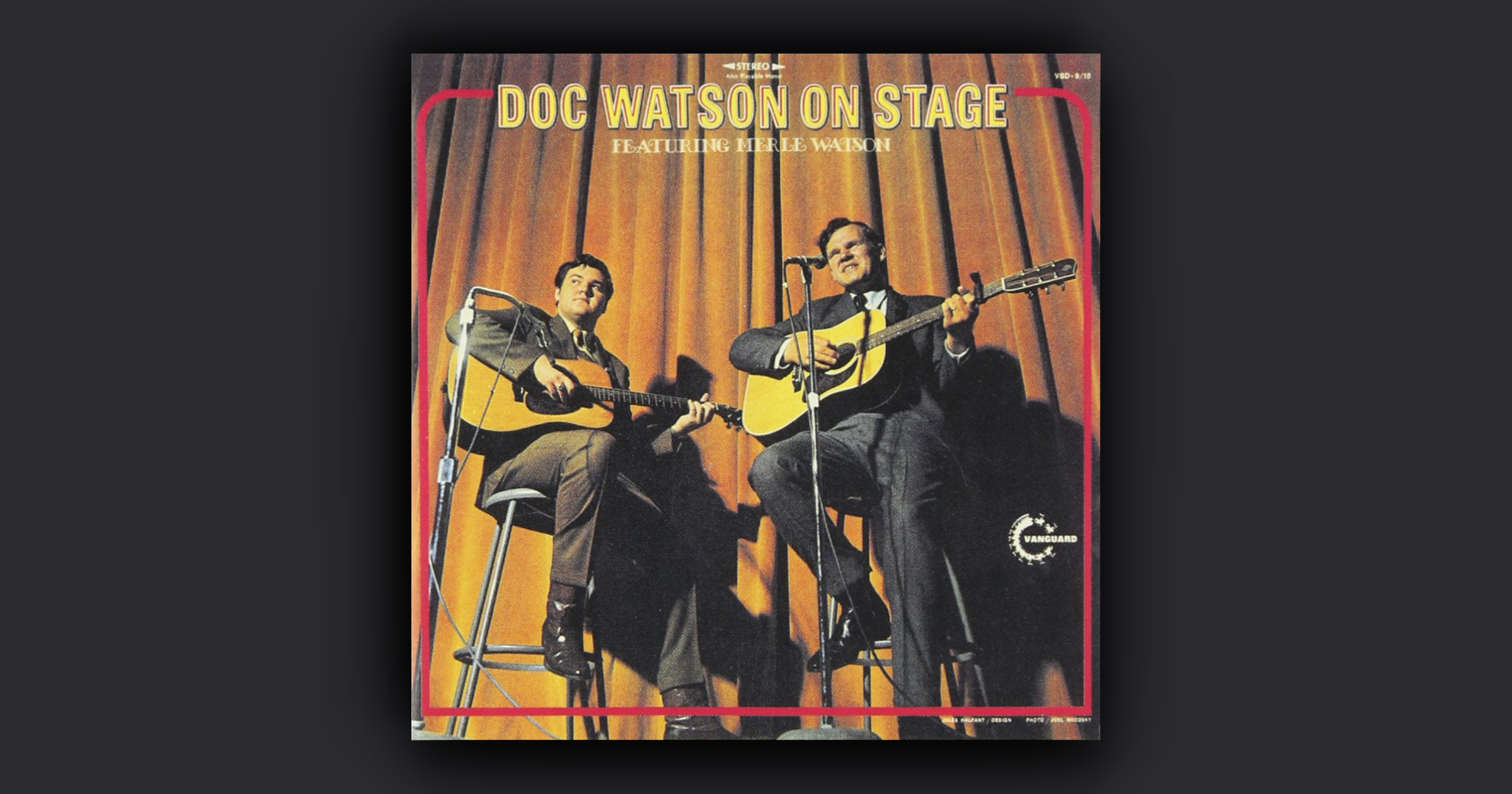
“I Am a Pilgrim” – Doc Watson on Stage, featuring Merle Watson, 1971

Watson had many fine accompanists over the years, but none better than his son Merle, who was always on Doc’s wavelength. Ever modest, Doc always claimed that Merle was the better player. He was, of course, wrong about that, but Merle was a great picker in his own right. Recorded live at Cornell University, this is an excellent version of the old spiritual that also appeared on Circle. “I Am a Pilgrim” would remain an evolving onstage set piece for Doc over the years. After Merle’s tragic death in 1985, Doc would customize the lyrics in performance: “I’ve got a mother, a sister and a brother and a son, they done gone on to that other shore.”

“Blue Smoke” – Doc Watson at Gerdes Folk City, 2001

Another track drawn from one of Watson’s early-period excursions up to New York City, this was recorded during 1962-63 engagements at the legendary Gerdes Folk City nightclub. And this cover of the instrumental by Merle Travis (for whom Doc named his son) is aptly named. When he really got to cooking, Watson could play guitar so fast he just about left a vapor trail.

“Every Day Dirt” (from The Watson Family, 1963)

Ralph Rinzler, the musicologist who first discovered Doc in the early 1960s, recorded this album live at the Watson family homestead in North Carolina. It captures some of what life must have been like growing up singing and playing with Doc; son Merle, wife Rosa Lee and father-in-law Gaither Carlton are among the relatives present. “Every Day Dirt” shows off just how personable a vocalist Watson could be, although as always the real draw is the obligatory killer guitar-picking.

“The Cuckoo Bird” – The Watson Family, 1963

From that same recording, Doc plays guitar accompanied by his son Merle on banjo, covering the old Clarence “Tom” Ashley song that appeared on Harry Smith’s epochal Anthology of American Folk Music. Thanks to the familial radar that comes when blood relatives play together, the instrumental interplay is perfect. This is also a great example at Watson’s mastery of the art of call-and-response between his guitar and voice.

“What Would You Give in Exchange for Your Soul?” – Bill Monroe and Doc Watson, Live Recordings 1963-1980: Off the Record Volume 2

Watson’s modesty was such that his natural inclination was to regard himself as a sideman — even though he was rarely if ever not the best picker and singer in the room. But he plays the role of foil perfectly here, vocally as well as instrumentally, to Monroe’s rippling mandolin and high lonesome tenor on this live version of the first song The Father of Bluegrass ever recorded.

“Wabash Cannonball” – Doc Watson on Stage, featuring Merle Watson, 1971

Before he started playing guitar, Watson’s first childhood instrument was actually a harmonica, which he wore out so fast from playing it so much, his parents had to give him another one at Christmas. A new harmonica became a perennial favorite gift. This version of the venerable folk-music classic features Watson blowing a mean harmonica and his descending runs on guitar are also a thing of beauty.

“Your Lone Journey” – Steep Canyon Rangers’ North Carolina Songbook, 2019

We close with a bit of a wild card, in that it’s a performance by someone else. But it’s one in which the presence of Watson’s spirit looms large enough to be felt. “Your Lone Journey” is a song that Doc and Rosa Lee wrote, and it bids a poignant farewell to a loved one at the moment of death. It is performed here by Watson’s fellow North Carolinians Steep Canyon Rangers, recorded on the main Doc Watson Stage to close out the 2019 MerleFest.


Editor’s Note: David Menconi’s Step It Up and Go: The Story of North Carolina Popular Music, from Blind Boy Fuller and Doc Watson to Nina Simone and Superchunk will be published in October by University of North Carolina Press.
Doc Watson & David Grisman, “Watson Blues”

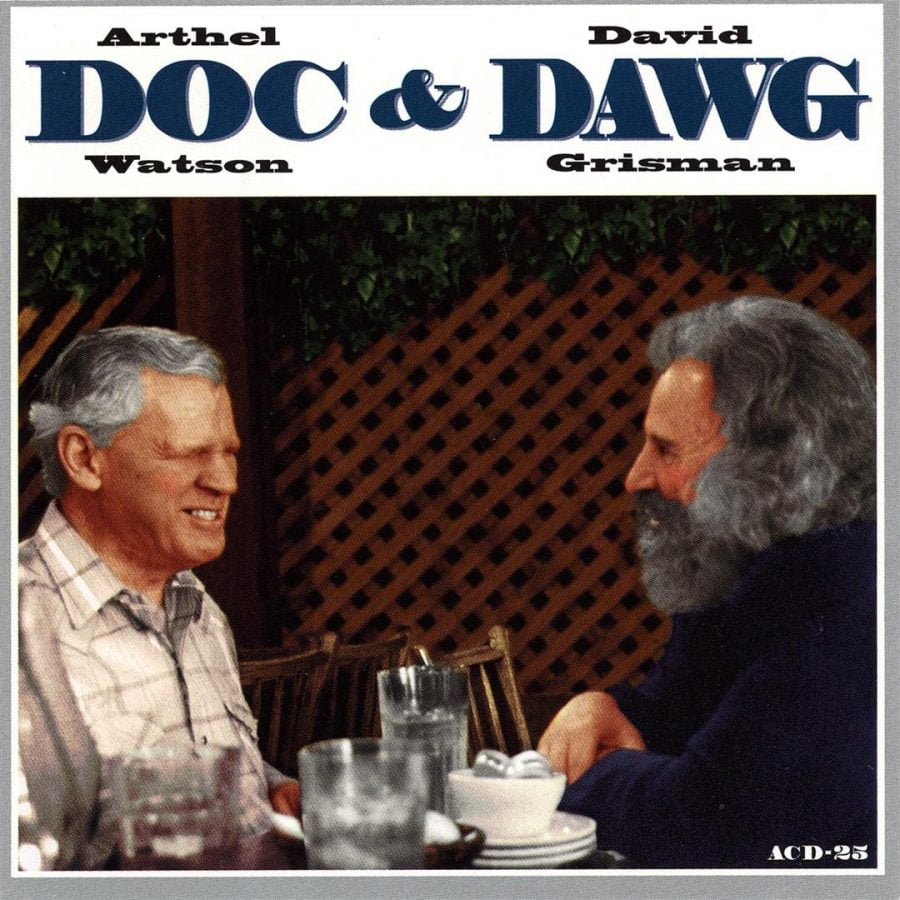
It’s fitting that this week, leading up to the 32nd year of MerleFest in Wilkesboro, North Carolina — a festival named after Doc Watson’s late son, Merle — that for Tunesday Tuesday we spend a few minutes with a song named after Doc himself. Bill Monroe wrote “Watson Blues” (or “Watson’s Blues,” as it’s also called), naming it after his friend and premier flatpicker, and the two performed it live and recorded it together on more than one occasion. This version with David “Dawg” Grisman, though, showcases the effortless way that Doc could keep up with and quietly, subtly innovate alongside musicians and artists who were much more famous for roaming further afield.

What’s additionally striking about this particular recording is how simple and focused the track is. Doc’s steady, unwavering hand pushes the song along at a perfectly breezy clip, matching the mellow, round, warm, huggable tones from his flattop. Meanwhile, Dawg plays the roll of Big Mon convincingly, peppering his signature, wacky, jazz-inflected phrases only rarely, choosing instead to let the tune stand on its own. Stuart Duncan’s plaintive twin fiddling is the icing on this tasty, minimal, “Watson Blues” cake.

If you’re headed to MerleFest this weekend, make sure this track is on your driving playlists to/from the festival — and be sure to check out our 2019 MerleFest preview for tips and tricks for the weekend. And, finally, make sure you stay tuned after the 3:52 runtime of “Watson Blues” passes — Doc, Dawg, and Jack Lawrence give us an incredibly tasty version of “Bye Bye Blues” to wrap up the album. It’s an acoustic pickin’ heroes encore.

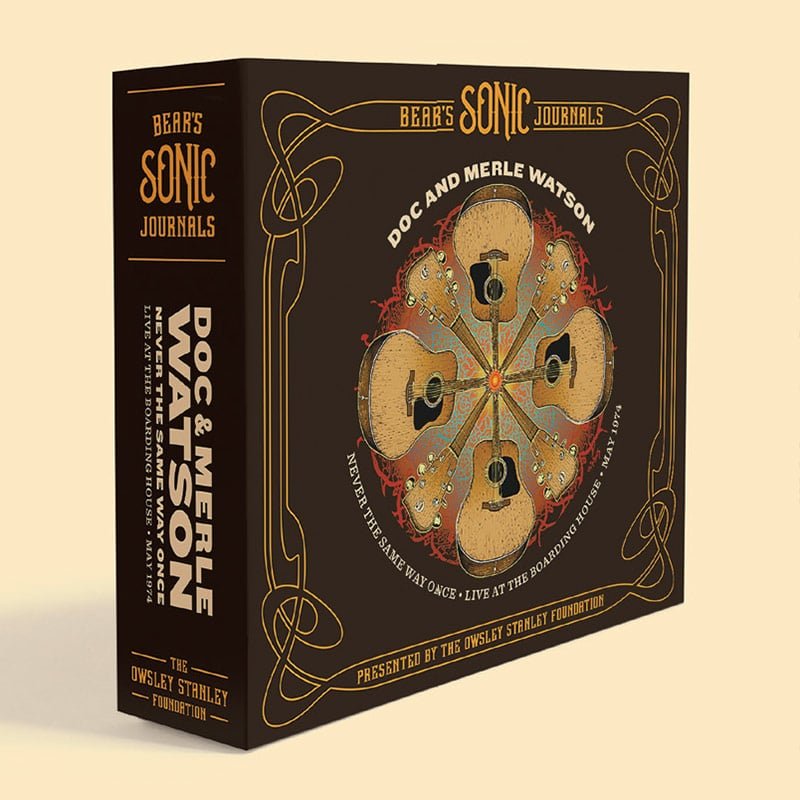
Doc & Merle Watson: Play ‘Never the Same Way Once’ on New Box Set

Owsley “Bear” Stanley was a hero of the psychedelic counterculture, notorious for both his production of high quality LSD and his engineering work for the Grateful Dead. (He built their famed concert sound system, known as the Wall of Sound.) But his contributions extended far beyond the psychedelic revolution. By plugging his recorder directly into the sound board and placing microphones on and around the stage, he became a transformative force in the landscape of capturing music. Upon his death in 2011, he left behind 1,300 reel-to-reel tapes of shows he recorded in venues around San Francisco in the 1960s and ‘70s. Last month, the first of these recordings — known as Bear’s “Sonic Journals” — was introduced to the world in the form of a seven-disc box set titled Doc & Merle Watson: Never the Same Way Once. Released by the Owsley Stanley Foundation, a non-profit organization founded by Bear’s son, Starfinder Stanley, the box set captures Doc and Merle’s four-night stint at the Boarding House in San Francisco in 1974.

“The idea is that this is all preserved for future generations to discover,” says OSF board member and executive producer of the box set, Hawk Semins. “Our primary mission in real time is to keep these [tapes] from disintegrating, from deteriorating and being unlistenable and, thereby, having lost an important segment of modern American musical history.”

The OSF’s preservation efforts are dedicated to digitizing all of Bear’s reels. So far, 200 reels have been digitized with the help of their Adopt-A-Reel program, in which anyone can pick a show to have preserved in their name for $400. Once a show is selected, the Grateful Dead’s sound engineer, Jeffrey Norman, pulls the tape, follows a digitizing protocol approved by field experts, and returns the tape back to the archive.

“We have a policy that we do not recreationally listen to any of the reels. We treat each reel as though the time that we preserve it is going to be the last time it’s going to ever be played because we don’t know what condition it’s in until we start running that reel,” Semins says. “I don’t want anybody to think we’re just sitting there with our headsets on enjoying all this great music to ourselves. We don’t listen to it until it gets digitized. We don’t know what’s on the reels until it actually gets digitized and we play it back.”

As a dedicated Doc Watson fan, Semins had some sway when it came to selecting Doc and Merle’s shows for universal release. His fandom aside, Semins says the decision can also be attributed to the combination of sound quality and the caliber of Doc and Merle’s playing. Plus, the arrival of Doc in San Francisco is not without historical significance. Psychedelic musicians — including the Grateful Dead — held Doc in high esteem for his authenticity.

“There’s a 40-year gap between the time that that original roots music was being played and the time it was being archived and resurrected by Alan Lomax at the Smithsonian. Compared to medicine, it is like treating erectile dysfunction before and after Viagra. So we’re looking back 40 years, at this moment in time, and archiving this particular juncture of this icon of roots music going out to psychedelic San Francisco and letting it all hang out,” Semins explains. “And it shows in the looseness. I mean, the playing is tight, but in the looseness of the atmosphere, the attitudes. Doc’s clearly having fun, and, you know, he’s always charming, but there’s an ease.”

Bear most likely met Doc at the Marin County Bluegrass Festival a few days before these shows took place.

“Picture the two of them sitting down at a table having a hushed conversation where Owsley hands Doc a microphone and explains to him the process that he’s going to use and why he thinks it’s important for him to record the show and getting Doc’s buy-in on recording,” Semins explains. “That’s an unusual situation, right? Who but Owsley in 1974 could show up at a venue and say, ‘I wanna record you,’ and have that artist from a totally different idiom, not with the Grateful Dead, not with their scene, listen to him, hear him out, be persuaded to say, ‘Yeah?’”

Watson’s long-time friend and bassist, T. Michael Coleman, recalls watching this conversation in the liner notes of the box set. As he puts it, when he listens to the box set, he hears “a legend recording a legend.” Wrought with unique elements, Never the Same Way Once is an essential addition to Watson’s catalog. These shows mark the first time he played songs like “Hound Dog,” “Chicken Road,” and “Doggone My Time,” and his virtuosity is palpable. When the OSF debuted the box set at MerleFest this year, listeners immediately honed in on Watson’s energy.

“We started taking pictures of people listening to the headset that we brought and we’d put on ‘Black Mountain Rag’ from disc seven, and they’d look real serious and all of the sudden their eyes would pop up,” Semins recalls. “[Doc] gets so fast at the end of that ‘Black Mountain Rag’ that he ends up in a place where he doesn’t expect and it starts cracking him up …He laughs and he turns to Merle and he goes, ‘I don’t know what I done there,’ and then he starts noodling around with the guitar and he goes, ‘Oh I see, I see.’ It’s incredible.”

The OSF applied the same care and precision that Bear took while recording when they produced the rest of the box set. In addition to material provided by Coleman, the accompanying 16 pages of liner notes includes contributions from guitarist David Holt and the most contemporaneous photographs of Doc and Merle taken just three days before these shows. Sketched by Starfinder Stanley and adapted into cover art by Mike DuBois, the cover features Doc’s famous guitar, nicknamed “Ol Hoss,” multiplied and arranged in a circular design.

“This juxtaposition of the roots music meets psychedelia, it goes right to what we were trying to accomplish with the cover art,” Semins says. “That’s Ol Hoss as a sort of kaleidoscopic, psychedelic Appalachia meets West Coast. The idea was this is what happens when worlds collided, and the design … we call it Gallagher Mandala for the Gallagher guitar.”

When it came time to find the perfect name to encompass this momentous release, Semins and company took a note from Coleman. “We had no intention initially of ever doing a seven-CD box set as our first release, but we heard the stuff and we couldn’t decide what to choose,” Semins says. “And so we ran this by T. Michael Coleman, and we said, ‘Should we be concerned that you guys played “Tennessee Stud” all four nights?’ And T. Michael said, ‘Shoot, we never played “Tennessee Stud” the same way once, let alone four times!’”


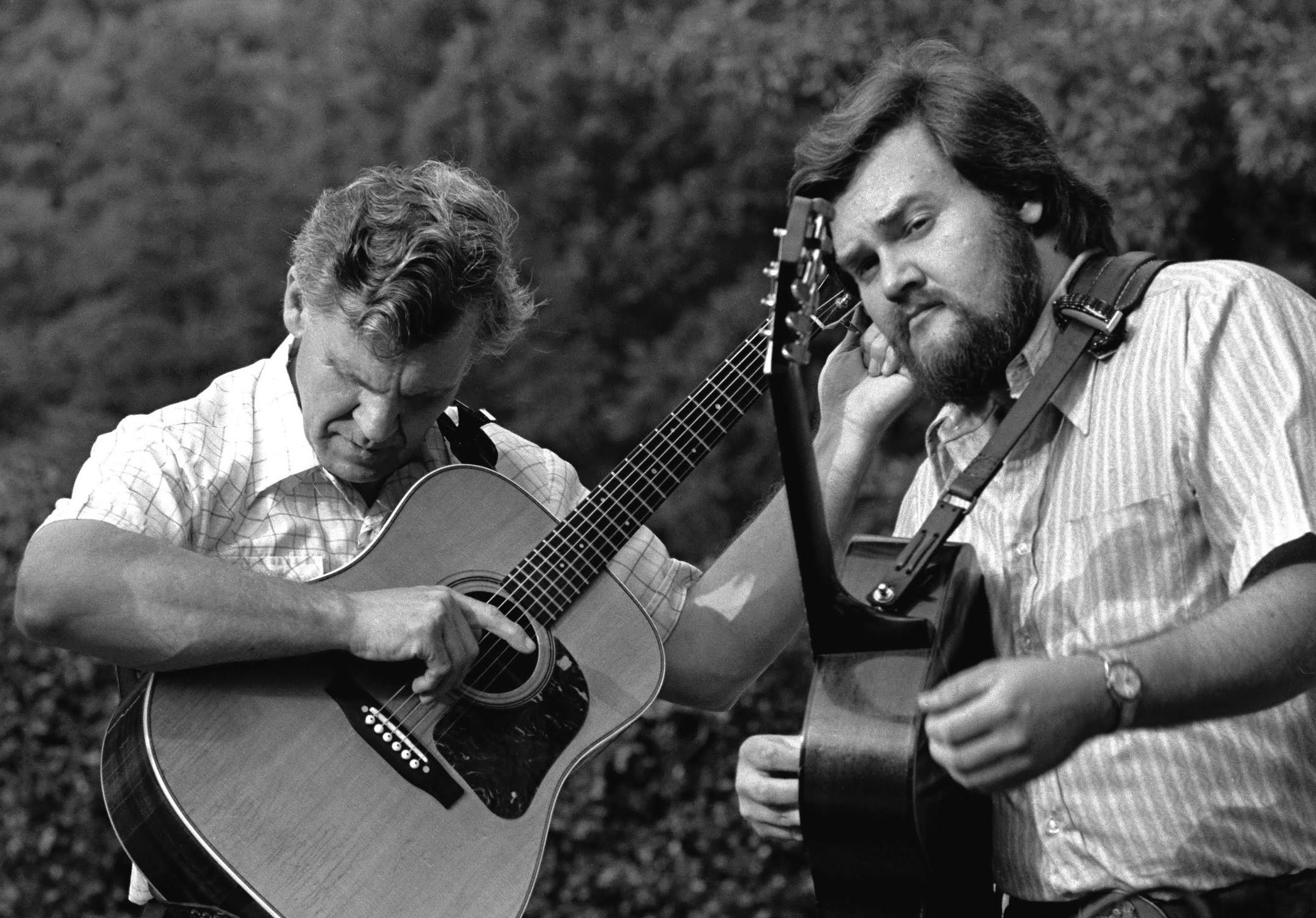
Photo credit: Jim Morton