LISTEN: The Smoking Flowers, “Just Out of Reach”

Artist: The Smoking Flowers (Kim & Scott Collins)
Hometown: Nashville, Tennessee
Song: “Just Out of Reach”
Album: Snowball Out of Hell
Release Date: June 21, 2019

In Their Words: “We’ve been sitting on the song ‘Just Out of Reach’ for a few years actually, not knowing where it fit in with our repertoire. When we decided to release an acoustic album we felt it was the perfect timing for this ‘sad’ song. This song really gives Kim a chance to shine on a country-esque vocal, something she rarely gets to highlight with us primarily being a rock band.

“Our nature as songwriters is typically to write alone, so when a friend suggested hooking us up to write with Savannah Welch while we were visiting Los Angeles we decided maybe it was time we stepped out of our box and try the co-writing thing. It was a lovely and fairly quick writing session. Honestly, we can’t remember how far we even got with the writing with her because we ended up enjoying each other’s company and chatted as much as we worked. Savannah is a lovely human.” — The Smoking Flowers


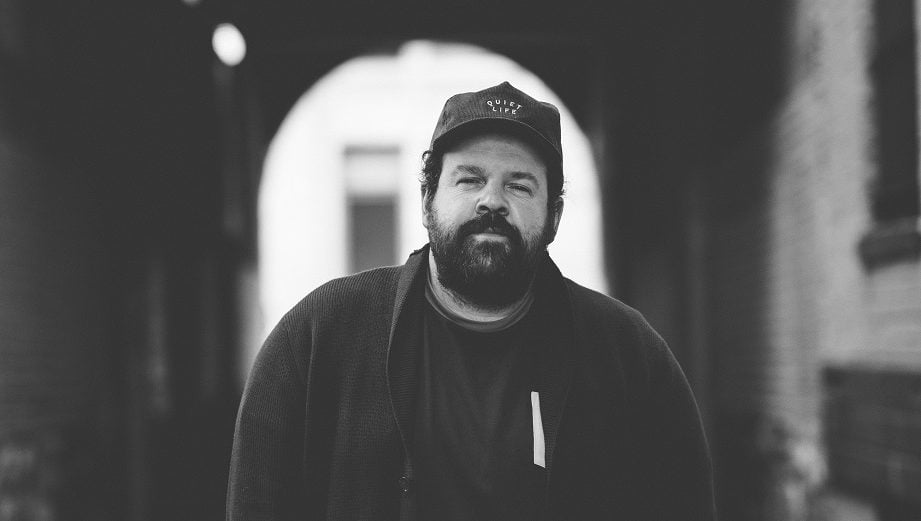
Photo credit: John Botkin

WATCH: Donovan Woods, “Great Escape” (Acoustic Version)

Artist: Donovan Woods
Hometown: Toronto/Nashville
Song: “Great Escape” (Acoustic Version)
Album: The Other Way
Label: Meant Well

In Their Words: “‘Great Escape’ is a song about wanting to be taken seriously. That feeling of starting a new relationship and hoping that your partner is taking it as seriously as you are. On the original record it was a pretty grand, sweeping thing, and here in its new iteration it’s much more contemplative and intense. I think this version better captures the mood of the idea and the desperation of hoping that you’re not just a lark.” — Donovan Woods


Photo credit: Joey Senft

LISTEN: Irene Kelley, “Highway Back to You”

Artist: Irene Kelley
Hometown: Nashville, Tennessee
Song: “Highway Back to You”
Album: Benny’s TV Repair
Release Date: May 10, 2019
Label: Mountain Fever Records

In Their Words: “David Starr and I started writing together about two years ago. A friend had the notion that David and I might be a good team and that has proven to be very true. We started out on the day we wrote ‘Highway Back to You’ with a melody that I had and a first part of the verse that David brought. We just let the song take us to where we ended up. A song about asking for a second chance. The highway is always a great metaphor for an emotional journey. This one is full of love, sentiment and hope. The musicians nailed the track and Ronnie Bowman’s harmony vocal is a perfect finishing touch. It is one of my favorite songs to sing on Benny’s TV Repair.” — Irene Kelley


Photo credit: Anne Goetze

LISTEN: Austin Plaine, “What Once Was”

Artist: Austin Plaine
Hometown: Nashville, Tennessee
Song: “What Once Was”
Album: Stratford
Release Date: May 17, 2019
Label: Blaster Records

In Their Words: “Sometimes as we get older we forget some of our favorite moments from the past. Then years can go by and you wonder where it all went. These are little vignettes of things remembered, but understanding the past is what got you to the present. I’m steeped in nostalgia and fortunate to have any memories at all. I look back fondly knowing it will never return.” — Austin Plaine


Photo credit: Kevin Condon

LISTEN: Sarah Spencer, “Little One Bedroom”

Artist: Sarah Spencer
Hometown: Nashville, Tennessee
Song: “Little One Bedroom”
Release Date: April 12, 2019

In Their Words: “‘Little One Bedroom’ is about being lazy in love. I wrote it for my husband — more accurately, the first part of the song is for him. By the bridge, we’ve moved away from our life together just a bit, and into fiction, because I wanted to tell a certain story. So it’s all autobiographical up to that point. But the song makes me think of cold Sunday mornings with him, wanting to stay in bed all day. That kind of free day where you don’t have to do anything for anyone else except just be in love with each other. I’ve pitched this song to other artists quite a few times but I’m glad it never stuck. It’s always been an important one to me. And I’m thrilled that Todd Lombardo’s beautiful arrangement gets to be shared now.” — Sarah Spencer


Photo credit: Sarah Spencer

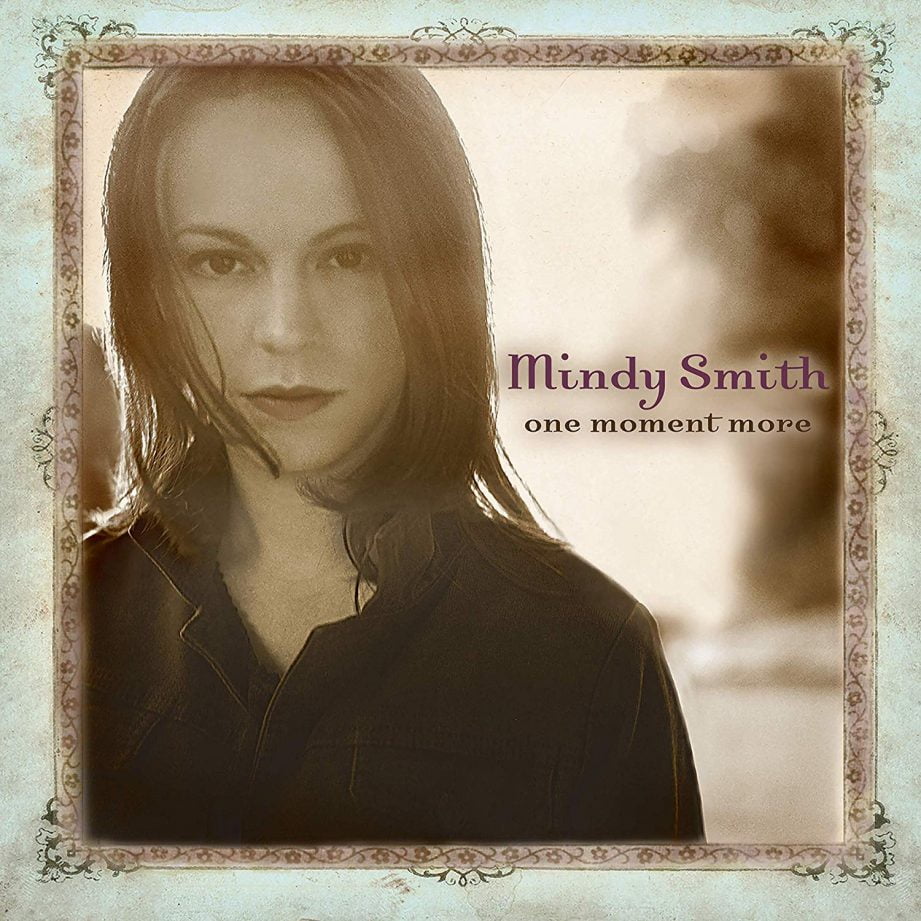
Canon Fodder: Mindy Smith, ‘One Moment More’

I didn’t want to hear “Come to Jesus” in 2004. As the first single from Mindy Smith’s debut album, One Moment More, it’s a gentle pop hymn, delivered in the voice of a parent comforting a child. “Oh, my baby, when you’re prayin’,” Smith sings, “leave your burden by my door. You have Jesus standing by your bedside to keep you calm, to keep you safe, away from harm.” With a subdued roots accompaniment, Smith follows that child throughout her life, documenting her changing emotional needs as well as her changing relationship with her beloved parent. Her vocals lack twang, but they have a steadiness that seems to arise from the certainty of her faith that mother and child will be united in the next life. “Here in heaven we will wait for you arrival, here in heaven you will understand.”

Smith was writing from experience. In 1991 her mother died of cancer — a loss so cataclysmic that she and her father found it too painful to live in their small Long Island hometown. So they headed south, and Smith enrolled at Cincinnati Bible College (now Cincinnati Christian University), although she has said that decision was motivated by her desire to connect with some of her mother’s old acquaintances. When she released One Moment More thirteen years after her mother’s death, Smith filled it with songs of loss, recovery, and renewal. On “Raggedy Ann” she compares herself to a childhood doll whose seams are fraying and whose stuffing is coming out. On “Angel Doves” she reassures herself that “God is soaring above a world that is running out of love.” Musically, she melds several traditions and styles, from contemporary country to contemporary Christian, into a sound that never announces its ambitions or lets them interfere with her lyrics.

I didn’t want to hear any of it at the time. In 2004 I was still raw from a similar loss, the death of my father in 2002 after a long battle with brain cancer. I watched as one of the sharpest minds gradually lost his ability to speak or communicate in any way. I watched as one of the most generous hearts I’ve ever known lost his ability to recognize his sons. A church deacon and a small-town lawyer, he died just a few short months before the birth of his first grandchild and namesake, which seemed too cruel for me to comprehend. It shook me to my core, and I struggled to reconcile the God I had heard about in my small-town Southern Baptist church with the God who would strike down a good, humble man like my father. It felt like there was too much chance and chaos in the world for it to be overseen by a loving God, and I admit I grew angry and resentful.

Even two years later, the consolations that Smith sings about in “Come to Jesus” — namely, the promise that we will meet our loved ones in heaven — sounded cheap. I was tired of empty reassurances designed to rush someone through his grief, to dam up those messy emotions so others wouldn’t feel uncomfortable. I was sick of having people clasp my shoulder sympathetically to tell me that everything happens for a reason. The idea that we could not possibly understand anything in this life, that we must wait until the next one to get any satisfactory answers, hit my ears with a vulgar dissonance. Ungenerous to all others in my confusion, I rejected what I thought were easy excuses and nursed my own angers and sadness. It felt righteous, in a peculiar way, and honest.

“Come to Jesus” is fifteen years old in 2019, and I am fifteen years older. Now when I hear the song, I listen with very different ears. I listen as someone whose life and livelihood involve absorbing all kinds of music constantly, which means that I hopefully have a better sense of Smith inhabiting and innovating these different genres. More crucially, I listen as someone who has grown spiritually and emotionally, who has further processed the tragedy of my father’s death, who has shed so much of that anger that once seemed so essential to survival. I can hear Smith’s song not as a litany of spiritual excuses, but as an expression of someone still grieving, still trying to work through the mayhem of grief in the hope that she might locate some essential truth of life. Her truth is different from mine, but it sounds like she had something healthier than anger to sustain her. And I can be moved by her song now in a way I couldn’t when I was younger.

So it was only in the last few weeks that I finally listened to One Moment More in its entirety and made it to the title track, which closes the album. That might have been too much for my 15-years-ago self to hear. It’s a song about leavetaking, general enough that it could be sung to a lover or a friend or anyone whose departure would upend someone else’s life. But we know it’s not that. We know that is song is about her mother, which makes the chorus sound even more desperate: “Oh, please don’t go,” Smith sings, that faithful steadiness having left her voice. “Let me have you just one moment more.” There is no poetry in that lyric, which only makes her pleading more powerful. It sounds more direct, more desperate, the emotional need stronger than pen and paper could hold.

The composure Smith shows on “Come to Jesus” has eroded into uncertainty. “Tell me that one day you’ll be returning, and maybe, maybe I’ll believe.” It’s that extra “maybe” that sells the sentiment, that conveys her struggle to maintain her faith. Ultimately, the arc of One Moment More veers from certainty to doubt, which seems unusual. Most albums, especially Christian or country albums from this era, would rather end on a note of certitude and firm belief, because the story of overcoming tragedy is attractive and reassuring. But Smith knows you never truly recover from grief. It grips and marks you for the rest of your life. We will mourn our parents until we die, and at this point in my life, that idea is inexplicably comforting.


Photo credit: Fairlight Hubbard
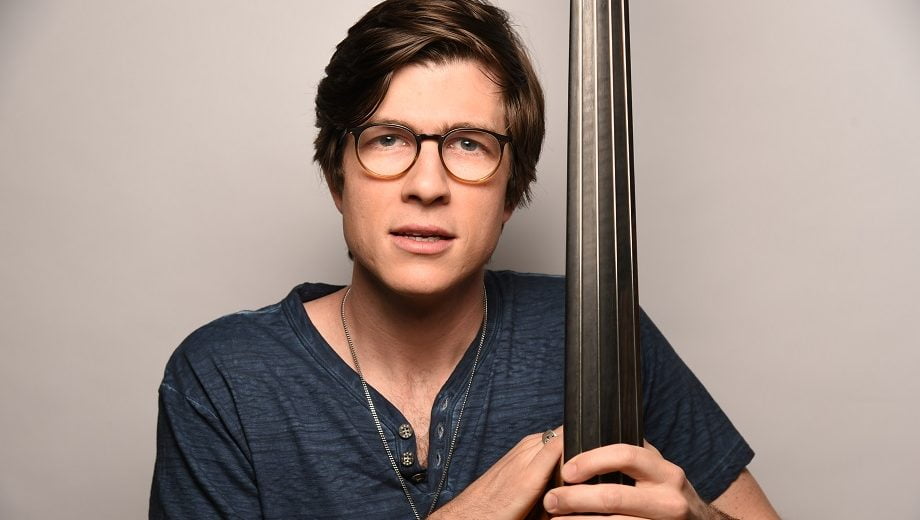
BGS 5+5: Scott Mulvahill

Artist: Scott Mulvahill
Hometown: Friendswood, Texas (near Houston)
Latest album: Himalayas
Personal nicknames (or rejected band names): I played one show as “Scott Hill” towards the end of college. I was self-conscious about my rather different last name, but after that I just decided to embrace it. If Jake Gyllenhaal can do it…

What’s your favorite memory from being on stage?

A few years ago, I played a show in Nashville where I gathered a bunch of friends to cover all of Paul Simon’s Graceland album, which is one of my desert island records. It was as fun as it sounds!! But we had a moment of true magic when the power went out in the building. Everyone in the room gathered in and gave us light from their cell phones, and we sang the song “Homeless” acoustically — just my upright and about 10 singers, no PA [system]. It was so powerful, and a moment of chaos was turned into something beautiful. We actually captured it all on video and it’s on YouTube. After we finished the song, the power miraculously came back on and we finished the show. That was such a great moment that I recorded that arrangement of that song and included it on my album.

What’s the toughest time you ever had writing a song?

I just finished a new one that I re-wrote about five times. Eventually I had verses in a decent form, and I ended up writing the chorus with my brilliant friend Ben Shive. At that point it was good, but still not quite there, so I took it into a co-write with the great Beth Nielsen Chapman, and we edited it line by line and she made it so much stronger. So that was a long process, but worth it because I think the end result is pretty special. I’m excited to record it.

What rituals do you have, either in the studio or before a show?

I don’t believe in pre-show rituals, besides a very simple warm-up of singing or playing just about anything. I’ll sing a few notes, noodle on bass, mostly just relax. If I had some elaborate ritual that I depended on, I think that would be a mental crutch more than a help. I’ll hear singers talk about certain warm-up routines, or how dairy will throw you off, how you must drink honey, and stuff like that. I want to get my technique and experience to a level where I’m not worried about things like milk ruining my show. Was it really the milk?

If you had to write a mission statement for your career, what would it be?

To always get down to the truth, to find the edge of my abilities, and try to spend as much time there as possible. A song can’t be too vulnerable or too personal in my opinion. The more personal and vulnerable, the more distinct and powerful it’s likely to be. People are looking to artists to be brave in their music, to speak truths from their own angle, and that’s my goal.

How often do you hide behind a character in a song or use “you” when it’s actually “me”?

At times I’ve done this without knowing it; I’ve written songs that feel powerful, and only half-way through writing it do I realize that it’s about me and my real-life events. I almost never purposefully write characters, and I wish I could… it’s a different approach that I just don’t know how to do convincingly yet. So my songs to date are almost all autobiographical. And that doesn’t prevent them from being relatable for people. For almost every song I sing, I have a person in mind that I conjure while I sing the song, and that helps me re-enter the emotional space of when the song was written. For songs that are about real events, I want them to feel as real as possible for the audience.


Photo credit: David Dobson

WATCH: Lydia Luce, “Tangerine”

Artist: Lydia Luce
Hometown: Nashville, Tennessee
Song: “Tangerine”
Album: Azalea

In Their Words: “I started taking contemporary ballet classes at the Nashville Ballet where I met Erin Kouwe who teaches these amazing classes. We started chatting about doing a creative project together and I sent her my recent record Azalea for her to pick a song to create a choreography to. She picked my song, ‘Tangerine.’ Erin does a lot of work with Nashville’s contemporary ballet group called New Dialect. She hired several incredible dancers most of which are or have been in this group.

“The videographer/editor David Flores also a member of New Dialect. It was so lovely getting to work him because he knew what he wanted to see in our movements as an incredible dancer. Both Erin and I feel the importance of cross collaborating between artistic genres. Nashville may be known as a music city but there is an abundance in variety of arts here and I’d love to find new ways to keep collaborating with other types of artists.

“I wrote ‘Tangerine’ with Ian Fitchuk and Todd Lombardo last year. We were sipping on some Tangerine La Croix when inspiration struck. Todd is an incredible guitar player and he started playing the part that you hear on the track. Ian picked up a banjo and started using it percussively and that’s actually the sound that drive the song in the recording as well. It worked so well when we were writing it we decided to track it that way.

“‘Tangerine’ has a similar story to Dolly Parton’s song, ‘Jolene.’ The narrator is comparing themselves to this enchanting Tangerine character who she assumes has this great power of seduction that she doesn’t have. In the bridge she is asking her lover, ‘If I were more like her, would you look at me the same way?'” –Lydia Luce


Photo credit: Kane Stewart

WATCH: Runner of the Woods, “Acadiana Girls”

Artist: Runner of the Woods
Hometown: Nashville, Tennessee
Song: “Acadiana Girls”
Release Date: March 5, 2019
Label: Twinpost Music

In Their Words: “Who doesn’t love watching a bunch of accordions being smashed to bits? I wanted to celebrate the release of our new single, ‘Acadiana Girls,’ with a video depicting the chaos that ensues when children discover a stash of prized instruments. Acadiana is the Cajun region of Louisiana and the home of the song’s narrator. With its rich musical heritage, cuisine, and close family ties, it’s a place he loves deep down but needs to leave for now. This need to escape from Lafayette, Louisiana, ties in with the video’s theme of accordions being destroyed. I can definitely relate to this as an accordionist who loves Cajun music but also writes tunes for different genres. I feel that same push-pull between the urge to write original songs and the need to perform traditional music that never fails to pack a dance floor. That said, smashing these instruments with my two sons is probably the most fun I’ve ever had!” — Nicolas Beaudoing, Runner of the Woods


Photo credit: Michael Ernst

LISTEN: Lovers Leap, “Love Is Gonna Live”

Artist: Lovers Leap
Hometown: Nashville, Tennessee / Asheville, North Carolina
Song: “Love Is Gonna Live”
Album: Lovers Leap
Release Date: April 19, 2019
Label: Indidog Records

In Their Words: “This song was written by our band members Joel and Shelby during the early days of their courtship, while Joel was living on James Island, South Carolina. Joel was renting an old farm house that had fallen into disrepair, and he was noticing the similarities between his neglected home and his broken heart. The song is a hopeful plea, that love could once again inhabit that old house. The lyrics draw on a deeply personal experience, but began to feel like a political anthem during the run-up to 2018 mid-term elections, with the lonely house symbolizing our broken, loveless political system. The Lovers Leap recording captures a joyful performance with Joel and Shelby swapping lead vocals, Mary chiming in on the choruses, and Billy’s dobro taking flight during the bridge.” — Lovers Leap


Photo credit: Steve Atkins