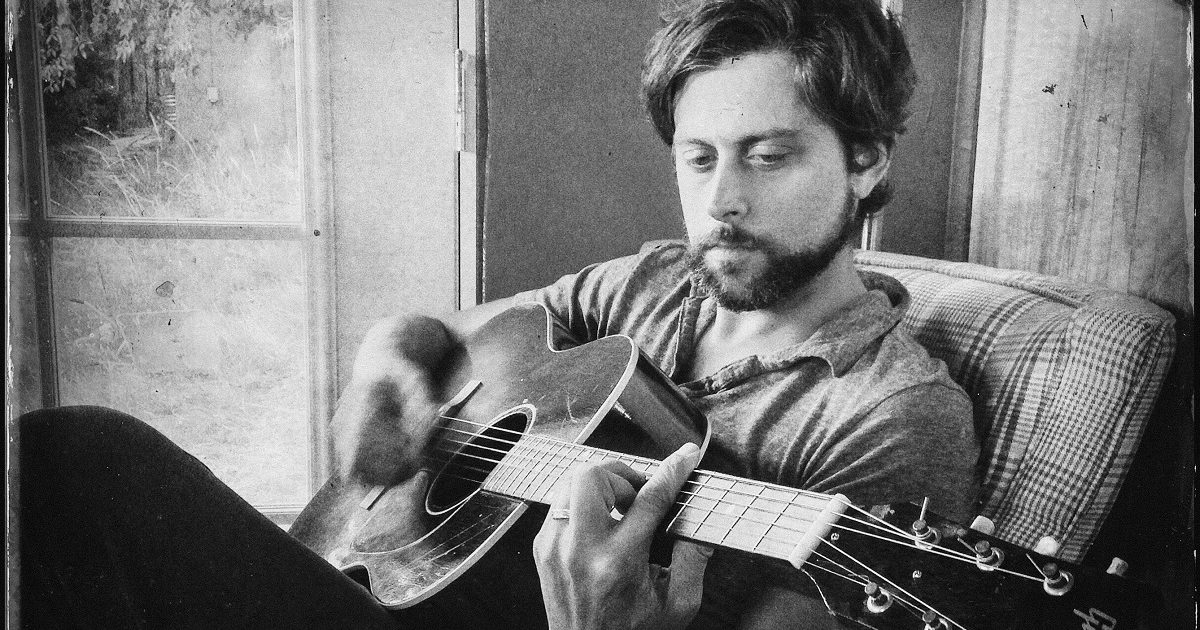
BGS 5+5: David Berkeley

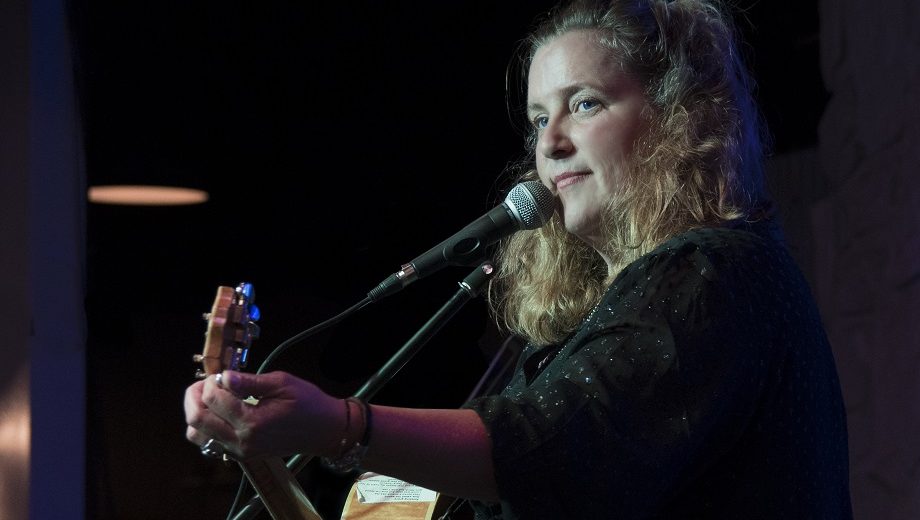
Artist: David Berkeley
Hometown: Santa Fe, New Mexico
Latest albums: Oh Quiet World and The Faded Red and Blue
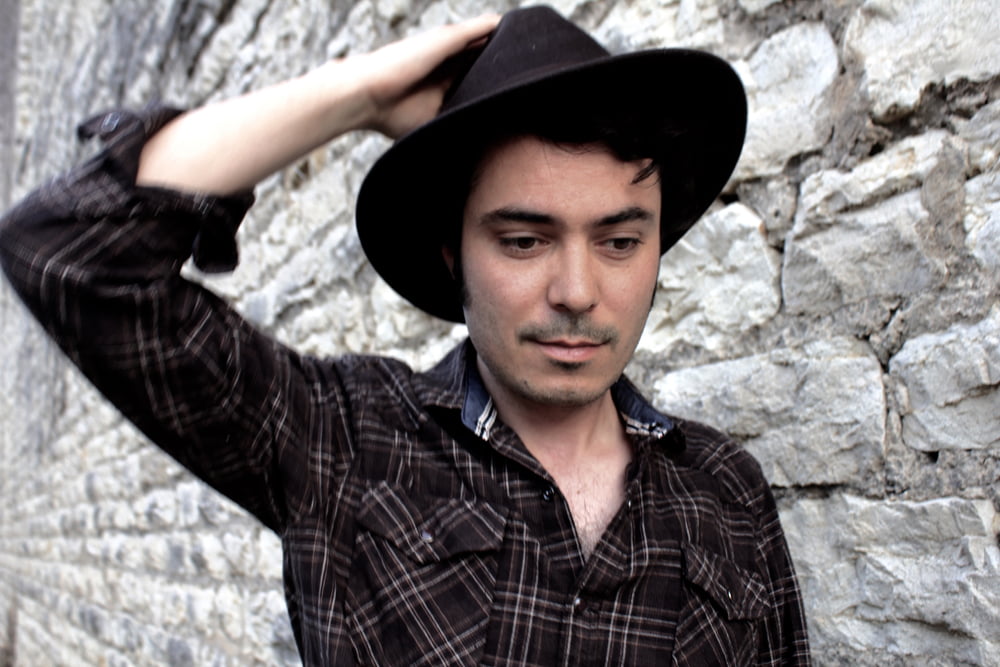
Personal nicknames (or rejected band names): Shaggy (You can’t really tell it from this young, put-together, dashing picture, but I’m not always the best at “grooming.”)

What’s your favorite memory from being on stage?

I once played a show that was accessible only by boat (or a treacherous daylong hike). I was living at the time on the island of Corsica with my wife and our 2-year-old son. We met a couple who produced shows in this magical roadless village on the water. The actual concert was in a big Moroccan tent, but the show was also projected onto the outside of the tent so that people could watch from their boats. My wife and our boy threw our gear onto this little motor boat that was waiting for us at an unmarked dock, jumped aboard, and off we whizzed across the water. Eventually an old crumbling tower came into view, and we came into this beautiful little harbor with olive trees growing and donkeys milling about.

The hosts let us stay in his bohemian guest house looking out onto the Mediterranean. We were treated like royalty. They fed us delicious local cuisine (like wild boar, really strong cheese, figs, and fresh Clementines). We drank cold rosé from grapes grown nearby. Like all the shows I played during that year, I tried to talk only in French, which caused a lot of fairly awkward moments where I inadvertently insulted the audience or told incoherent stories. Sometimes I’d just let a string of words trail off when I realized I had no more vocabulary to pull from. I made up for it with the biggest smiles I could muster, and I dove into each song with a wave of relief. I’ve played a lot of memorable shows in some incredible spots, but that show was hard to top.

What other art forms — literature, film, dance, painting, etc — inform your music?

Good poetry probably influences my writing the most (bad poetry, the least). A good poem can slow down your perceptions and teach you to focus on the beauty and meaning in the small scale and the ordinary. It reminds you of how incredible words can sound when chosen and placed with intention. This year, though, my family and I were living in Madrid and I was trying to read in Spanish. Therefore I didn’t get through as many pages as I might have wished (as my Spanish isn’t what it should be). So lately, I’ve been more influenced by the energy on the Spanish streets, by the sounds from the outdoor bars and mercados, by the clear Iberian light on the colored buildings and in the alleyways.

I wrote and recorded this new album at a time when my family and I were in a kind of mourning after having left Madrid so abruptly. We were attempting to figure out what our world was going to look like during a pandemic, and I wanted to write songs that articulated the hope that a shutdown might actually help us, might crystallize what actually mattered, what we really need to live and be happy and to thrive as a society and an ecosystem. So though literature has long been one of my biggest influences, this project was determined more by place and circumstance.

What’s the toughest time you ever had writing a song?

The closing song on my last release, The Faded Red and Blue, is called “This Be Dear to Me.” I wrestled with her for months. The EP is political. It released just before the midterm election in 2018, and each song tried to tackle one of the main issues of the day (immigration, gun violence, Trump, etc.). But I wanted the last song to rise above the fray. I wanted it to be a kind of political love song. Instead of trying to describe the many problems that were plaguing our country, I wanted to aim higher and think positively, and so I tried to list some of what I find most vital, to articulate what is really worth fighting for.

I filled pages and pages of things I love, writing maybe fourteen verses full of examples I believed were universally important. Eventually (and lucky for listeners), I edited it down to four verses. I suppose the thought was that if we could remember some of the things that we all (regardless of our politics) need and love, then maybe we could return to more surface squabbles with a deeper connection and respect for what matters and even for each other. It took a lot out of me to finish the piece. The song is like a kind of hymn or prayer, and singing it kind of feels like praying.

Since food and music go so well together, what is your dream pairing of a meal and a musician?

I love food so much. And I particularly like waiting to eat until after a show. Somewhere toward the end of a concert I get this major rush when I remember that I’m going to have a big meal after it ends. Sometimes I’ll order Thai or Indian food to the venue and set up a table right onstage after the venue clears out. But that’s not what you’re asking. You want some sort of dream meal/musician combo.

How about a seaside table on the Galician coast (north/northwest coast of Spain) with my wife, probably no kids in the picture yet. Local wine. Seafood just pulled out of the water. For some reason Neil Young is there. But it’s Neil Young from 1971. Huge sideburns. Maybe he just walked the Camino de Santiago. He pulls up a chair. We share our food with him. He’s very hungry after the long walk and so is really grateful for the platters we pass him. Then he notices my guitar and asks if he can borrow it and play us his new material. He plays through Harvest as the sun dips into the Cantabrian Sea.

How often do you hide behind a character in a song or use “you” when it’s actually “me”?

All the time. Well, not so much with my solo work, but I have had a side project, which for the past few years up until the days of Corona had become a primary project, called Son of Town Hall. My British bandmate Ben Parker and I have created a whole fictitious world where we dress in shabby Victorian clothes and travel from show to show by a junk raft that we built. The entire show — every song and every word we say — is in character. Oddly, though, the costumes and the backstory have allowed us to sometimes be even more honest and open than we might otherwise have been comfortable being. The show is very funny. But, despite the artifice, when we are talking about big things (which we do a lot in our show), like the human condition, say, we mean it.


Photo credit: Kerry Sherck

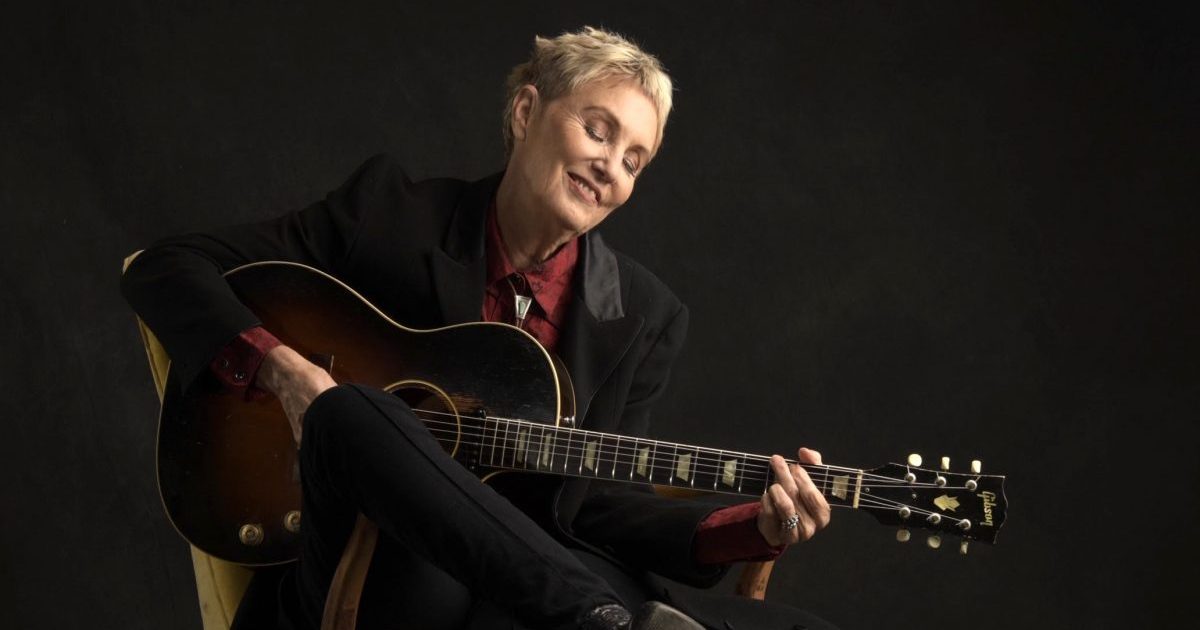
WATCH: Eliza Gilkyson, “Beautiful World of Mine”

Artist: Eliza Gilkyson
Hometown: Austin, Texas
Song: “Beautiful World of Mine”
Album: 2020
Release Date: April 10, 2020
Label: Red House Records

In Their Words: “I wrote this song in Taos, New Mexico just looking out the window of my home there. My son Cisco, who produced the lyric video, wanted to make it seem like a day walking in the mountains, from sunrise to sunset. I think when you feel deeply connected to the natural world then you also become protective of it and willing to fight for it. This song and the video are meant to inspire that commitment to care for and protect our beautiful world.” — Eliza Gilkyson


Photo credit: Rodney Burseil

WATCH: Michael Henry Collins, “More Years With You Than Not”

Artist: Michael Henry Collins
Hometown: Taos, New Mexico
Song: “More Years With You Than Not”

In Their Words: “As I get older, I seem to be trying to make peace with the fact I will not live forever. To have more years than not with someone you love as a witness to your life, well I imagine can be a powerful reflection. One that delivers gratitude, empathy and peace. A real chance to find the center and present in the sense of an entire lifetime. I guess the whole song is just a coin thrown into the wishing well. Not only wishing more years than not with someone, but that it delivers all that.” — Michael Henry Collins


Photo credit: Matt Shaver

LISTEN: Susan Gibson, “Imaginary Lines”

Artist: Susan Gibson
Hometown: Wimberley, Texas
Song: “Imaginary Lines”
Album: The Hard Stuff
Release Date: October 4, 2019
Label: ForTheRecords

In Their Words: “This song started with the chorus as simple and repetitive as it is. I think it started when I was driving looking at the double yellow line and how that is just kind of agreement between people. ‘In order that things go smoothly and everyone can get where they’re going, I agree to not cross that line.’ I was thinking of all the examples of those social contracts and sometimes actual contracts that we think are ironclad but maybe they are not. Jana Pochop (one of my favorite writers) and I had a day off in Taos, New Mexico and we finished the song.” — Susan Gibson


Photo credit: Bill Ingram

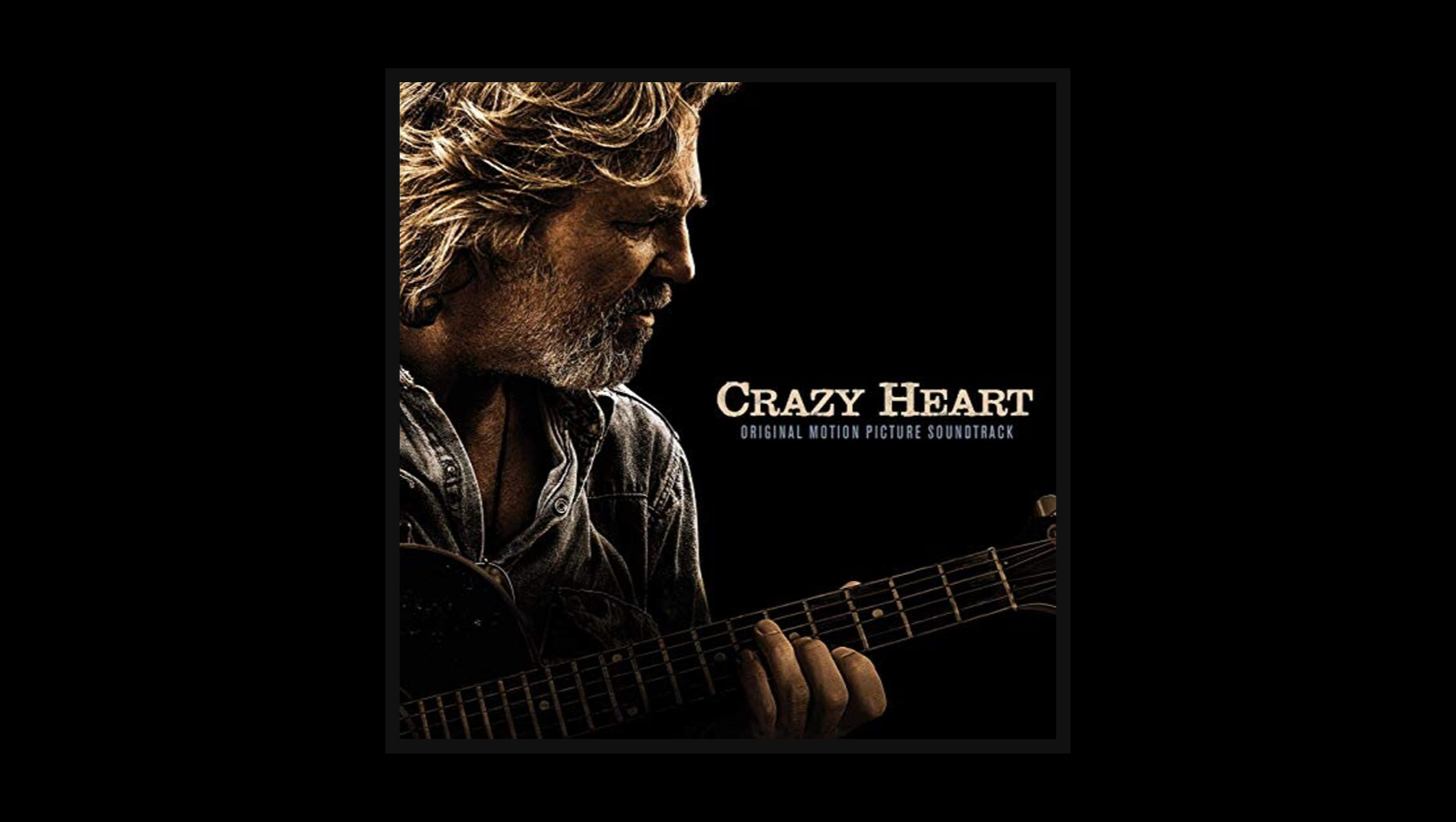
Ten Years After ‘Crazy Heart,’ Ryan Bingham Comes Around to “The Weary Kind”

When Ryan Bingham accepted an Academy Award in 2010, he looked like he was on top of the world. Amanda Seyfried and Miley Cyrus announced that his song “The Weary Kind,” from the film Crazy Heart, had beaten two compositions by Randy Newman, and he took the stage with producer/co-writer T Bone Burnett, thanking his wife (“I love you more than rainbows, baby”) before showing gratitude to the cast and crew. It was a modest and heartfelt speech, not to mention a rare moment when roots music is given a prominent platform and one of the most prestigious awards in any art form.

A decade later, however, Bingham admits he was in a dark place, unable to enjoy the honor or the opportunities that came with it. “It was pretty tough when that film came out,” says the New Mexico-born/Los Angeles-based singer-songwriter. “A lot of people didn’t know that my mother had passed away just before it came out, and my father passed away soon after. People kept asking me to play that song all the time, and they kept saying, ‘Aren’t you happy about winning an Oscar? You must be having the best time of your life.’ But it was actually one of the hardest things I’ve ever been through. I didn’t know how to talk about it, and I was depressed.”

A downcast tune that captures his mood at the time, “The Weary Kind” is one of those songs that doesn’t sound like it was written; rather, it sounds like it’s been haunting dive bar jukeboxes for decades, even if it dispels any romance that might cling to such locations. “This ain’t no place for the weary kind,” Bingham sings, his voice tender as a bruise. “This ain’t no place to fall behind.”

There’s a danger to this place he’s describing, which might be one of the cramped bars depicted in Crazy Heart or might be something more figurative, like down in the dumps, but the song isn’t exactly grim. Bingham manages to locate a small, precious kernel of hope: “Pick up your crazy heart and give it one more try.”

When asked by the press about the inspiration for the tune, he didn’t talk about his parents or their hard lives. “I would just tell them it was the film and the character,” Bingham says, referring to the main character, a washed-up outlaw country singer named Bad Blake. Played by Jeff Bridges (who won the Best Actor Oscar), Bad drives his trusty Suburban to shows around the Southwest, playing to a handful of aging fans while trading off the notoriety of a few dusty hits from decades ago. A barely functioning alcoholic, he bristles against all opportunities to crawl out of his rut, convincing himself that his knockabout life is somehow noble. In the novel he meets a tragic end, but in Cooper’s film Bad finds a possibility of salvation.

“The Weary Kind” is a remarkable piece of songwriterly ventriloquism, not only showing the obstacles Bad faces but how he feels about them. Cooper devotes several scenes to showing Bad writing those lines, picking out the melody on his guitar, searching diligently for the perfect rhyme. Rarely do movies give so much time and attention to the mundanities of the creative process, but the act of writing that song in the film is a transformative endeavor, a means of confronting his demons and embracing a future that has scared him for so long.

Bingham, however, could find no such solace in the tune. “I was trying to find my place in the world, and I’ve always struggled with my identity — where I was from and what I wanted my music to do. I hadn’t figured that out yet, and I was afraid of getting pigeonholed. I was young and rebelling against notoriety and fame and all that. It was all too heavy for me to bring up without breaking down. People just didn’t know, and that wasn’t their fault. How could they have known?”

Crazy Heart was a modest hit at the box office and a major hit during awards season, but it has proved surprisingly durable and influential over the last decade, too. It provided the template for Bradley Cooper’s remake of A Star Is Born last year, in which the actor-director played a much younger, somehow more grizzled version of Bad Blake. It also put outlaw country in front of a mainstream filmgoing audience, creating a space for such similar fare as Ethan Hawke’s Blaze (about the singer-songwriter Blaze Foley, who was partly an inspiration for Bad Blake).

Since winning an Oscar, Bingham has released four albums, including this year’s roadhouse-ready American Love Song. And he has continued acting, with a role in Cooper’s 2017 western Hostiles and a recurring part on the Paramount Network series Yellowstone, starring Kevin Costner and Wes Bentley. As Crazy Heart’s influence has grown, Bingham’s relationship with its theme song has softened, and he’s learned to embrace “The Weary Kind” and to appreciate its impact on his fans.

“I’ve grown up and grown more comfortable in my own skin. I’ve dealt with family stuff, so it’s been easier to get back into playing that song for people,” he says. To commemorate the tenth anniversary of the film, Bingham spoke with BGS about his impromptu audition, the film’s original downer ending, and growing up in the pool halls and dive bars of New Mexico.

BGS: When you think back on that time, what stands out to you most?

RB: The thing that always stands out to me is the script. I hadn’t written any songs for TV or film before. In fact, the songs that I’d been writing tended to be very personal — about things I’d gone through in my own life. But reading this script and looking at this other character allowed me to get out of my own skin and put myself in the shoes of someone else. I got to live vicariously through them and tell their story through the songs, and at the same time I was able to relate some of my own experiences as well.

And you’re not just writing for a character, but you’re writing for a character as he goes through this ordeal and tries to get his life together.

When I first read the script, the ending was different. They found him dead in a ditch outside some bar. It was really gloomy, so when I was writing that song, I was thinking about this poor son of a bitch dying by the side of the road somewhere. Then they changed the ending later on. I think the original ending was in the novel that Thomas Cobb had written, but I’m glad they changed it.

What kind of direction did you get from Scott Cooper or music supervisor T Bone Burnett?

None at all. I had met Scott just one time. He contacted me and said he was looking for some songs, so I met him for lunch and he told me about the project. I hit the road right after that, and he told me to read the script and let him know if I was inspired to write anything.

When I got home a few months later, I recorded this tune I’d been working on, and I called him up to ask where I should send it. I was just looking for an address, but he said he happened to be in L.A. visiting T Bone Burnett and asked if I could just bring it by.

So I drove over there to drop it off, and T Bone answers the door, all seven feet of him, and says, “Why don’t you come in and play it for us?” It was him and Scott and Jeff Bridges and Stephen Bruton and some other people. So I play him a little bit of the recording, and T Bone says, “That’s cool but can you play it for us yourself?” He gave me a guitar and sat me down on the couch, and I’m like, “Aw fuck, here we go!”

That sounds like a trial by fire.

It was. I wasn’t even sure I could remember it! But they liked it and unanimously decided to use it. I ended up hanging around with them and working on more songs for the film. I think from that point on I was over at T Bone’s house every day writing with those guys.

Did you have people in mind while you were writing? I see Townes Van Zandt and Blaze Foley in the character of Bad Blake.

I had a ton of people in mind. Where I’m from out in Hobbs, New Mexico, right on the Texas border, there are a lot of those characters out there, and one of them in particular was my father. He was very much a character like Townes or Bad, so I wrote the song thinking about my father and his situation.

When I was growing up, he would drag me into these old pool halls and bars. I was barely old enough to see over the bars, but he and his friends would give me quarters for the jukebox or the pool table. They’d all get drunk during happy hour and then I’d drive them all home. I grew up in those rough roadhouse places, and then when I got into writing songs, I discovered all these songwriters from that area, like Townes and Guy Clark and Joe Ely and Terry Allen and Billy Joe Shaver.

Those guys took me under their wing in a big way. I don’t know how many times I’d go see them play a show and they’d invite me up to play a song and introduce me to their audience. They really helped me out a lot and encouraged me to play. I was this young kid from a little town in the middle of nowhere, and I had no direction or any kind of formal lessons. I didn’t have anybody to teach me anything, so those guys were really important to me.

Was your father a musician?

He wasn’t. He was just a straight-up ol’ boozer who worked in the oilfields. My dad and uncles were all cowboys and roughnecks. When I was a kid, I used to go to these junior rodeos. My dad would haul me around on weekends, and it was always long drives on desolate roads. There was always the piss jug in the van. That translated into my own music later on when I started playing in a band and spending a lot of time on the highway. It was a lifestyle I had lived as a kid. So I could relate to that aspect of Bad Blake when I read the script.

Is that why you were cast as his backing band in those early scenes? How did that happen?

I had a show in Los Angeles at the Troubadour, and Scott came out to see me and my band the Dead Horses play. He said, “You guys gotta be in this thing!” He wanted to cast us as the backing band in the bowling alley. We were really just a bar band playing around in these roadhouses and honky-tonks in Texas, but we had just started coming up to the West Coast to play. We would play at bowling alleys, bars, backyard parties — anywhere anyone would let us play.

Did you ever work as somebody else’s pickup band?

I’d never done that before. I didn’t get into playing music until later on, and for the longest time it was just me and a guitar. Once I started getting gigs in these bars, they wanted you to have a band, so the whole experience of playing in a band was still new to me. I’d never been a side player for anybody or played in a backing band. That was new to me.

But some of my friends who were playing with me in the Dead Horses had been in backing bands, so they knew the deal. And I thought about those guys who’d mentored me when we did that scene where Bad Blake was giving advice to his band. He’s not passing down the torch, but those guys were always giving a little bit to the younger guys, showing them how you do it. There was a bit of that in those scenes.

It almost felt like he was trying to warn them away from that troubadour life.

You bet. I think about guys like Townes who lived a very hard, sad life, and that’s something I’ve always been cautious about. You don’t have to do it that way. You don’t have to be sad to write a good song. I’ve known a lot of songwriters who felt like they needed to live that lifestyle in order to create, and I grew up around that with my old man and my mother as well. That was something I knew I didn’t want to do, and I’ve always tried to get away from that stuff. There’s gotta be a better way or else you’re going to end up in a ditch somewhere.

Crazy Heart seems to suggest that that’s the easy way out. It’s easy to embrace that self-destructive side of it.

And that lifestyle too is so easy to slip into when you’re in a bar every night. You’ve always got people bringing you drinks and wanting to party with you. It’s hard to get away from it when it’s always around you.

Did writing for this character and this project change the way you write?

It didn’t really change the way that I approach songwriting, but it definitely exposed my music to so many people who might never have even heard it. It opened up a lot of doors for me to play in other places. We were this bar band from Austin, and a lot of those places we played early on… people went there to get drunk and dance and have a good time. They didn’t go to sit down and listen to a folk singer performing sad, quiet songs.

We were caught in between some of those things, with a lot of people coming out to our shows to hear that one song they knew from the film. But the rest of our set was full of loud rock ‘n’ roll and barn-burning honky-tonk songs. Our fanbase grew, but some people didn’t know what it was all about. So it was an interesting time, with fans getting to know what I was doing and me trying to figure out what they wanted. It was an interesting challenge because at the same time I just wanted to be myself and grab hold of whatever identity I had.

That has to be even tougher when you’re writing songs about your own personal experiences.

I had been around these older people who’d been playing for a long time, and they told me constantly that you have to have something to say in the song. You have to be truthful with people and be truthful about how you feel. So I’ve always felt an obligation to wear my heart on my sleeve when I’m writing songs. I need to be vulnerable, which is a way of carrying on that tradition.

“The Weary Kind” has started showing up in your sets recently. What has it been like to revisit the song?

I’ve been playing it a lot more these days. I’ve managed to deal with my family stuff, so it’s been easier to play that song for people. It’s still very emotional for me, but it’s different now. I think what brought it back for me was hearing stories from all these fans who have their own experiences and tell me how they relate to the song, how it’s helped them deal with certain things.

That was really inspiring, and now I sing it because I realize how much it means to people who come to the shows. I try to be respectful of that. If that song means something to them, then that’s a good thing for all of us — and a bit of a healing process for me as well. I can sing that song and not suppress all those emotions. I can get it all off my chest.

It makes for some heavy shows, especially when it’s just me and a guitar. I’ve played that song with four or five people in the front row just bawling. I’ve come to realize that the more I can give them, the more they give back to me. And they understand when there’s a rough night and I can’t play song. They know why.
 

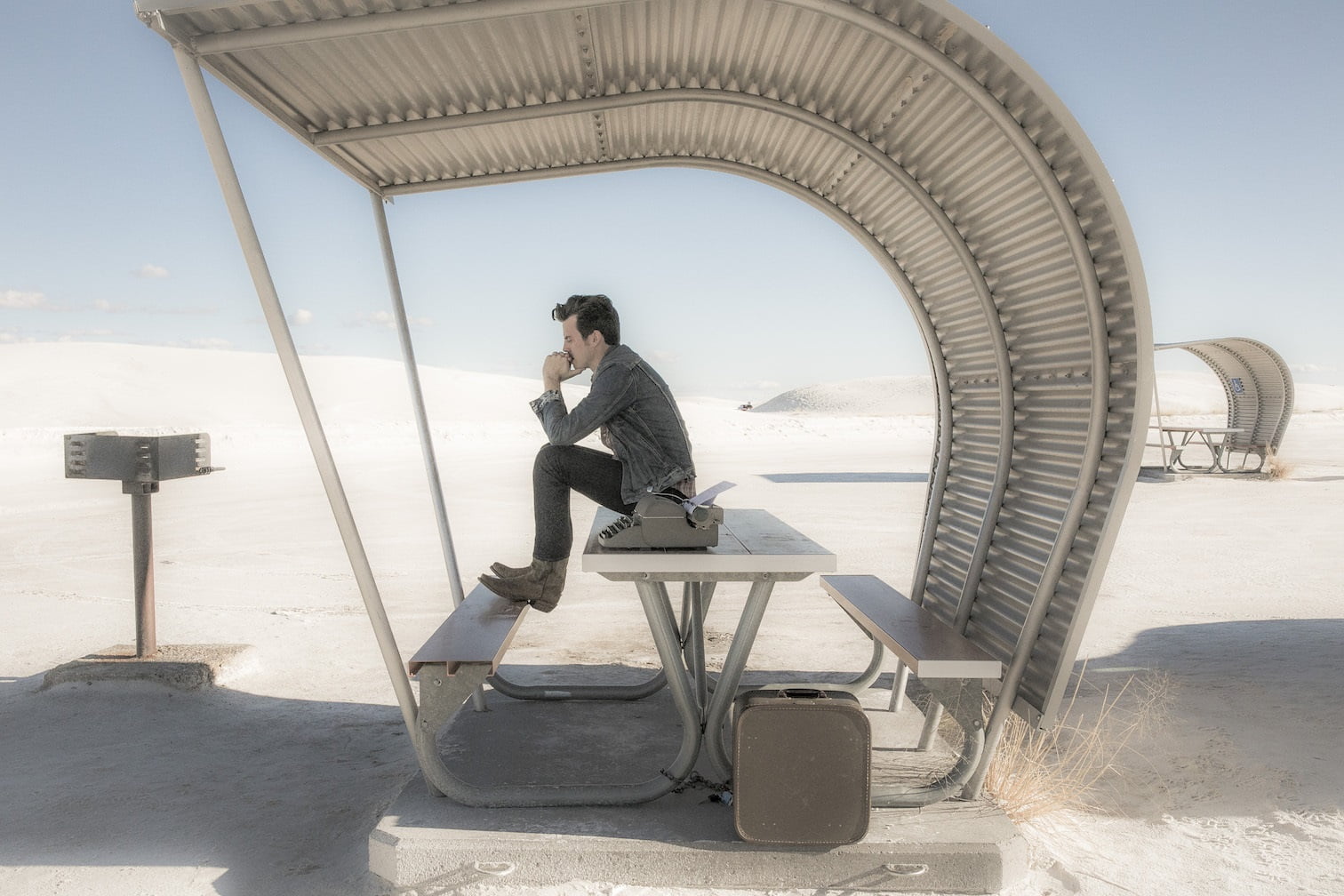
BGS 5+5: The Last Tycoon

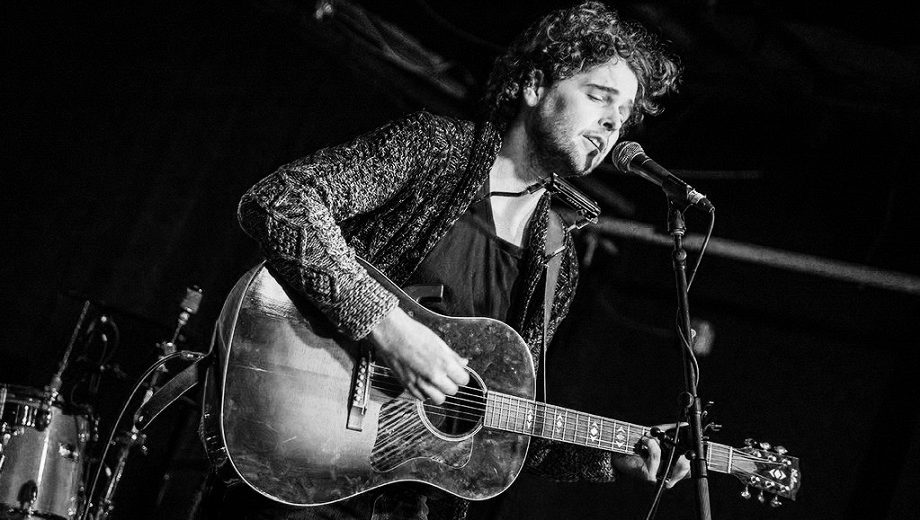
Artist: The Last Tycoon
Hometown: East Atlanta, Georgia
Latest album: Oppenheimer Blues
Personal nicknames (or rejected band names): Johnny G’s Atomic Rock ‘n Roll Orchestra, Johnny Arkansas, John Gladwin

What’s your favorite memory from being on stage?

One night I was playing in Stockholm, Sweden, at a club in the oldest part of the city called Gamla Stan. The building was about 500 years old and the stage was in a little alcove with a few tunnels. It was winter and snowing heavily.

In the middle of the set an old Swedish guy in an overcoat was hanging around an alcove on the side of the stage. We were playing a blues tune and he jumped on stage and produced a harmonica and started to play a solo. We laughed and rolled along with it as he blew over a few choruses. The song ended, and the crowd erupted in applause and laughter. He said something to me in Swedish I didn’t understand, jumped off the stage and walked out into the cold Stockholm night.

I assumed that he was a friend of one of the other bands, but after the gig we realized neither the bands nor crowd had a clue who the man was. He just walked through the club with a harmonica in the right key, had a moment in the spotlight and left never to be heard from again. It was incredible. Often the best parts of gigs are the parts you don’t plan.

What other art forms — literature, film, dance, painting, etc — inform your music?

As a songwriter, I look for inspiration in all types of art forms – not just music. Anything can spark an idea for a song if you know where to look. The new album, Oppenheimer Blues, started while I was in New Mexico working on a TV pilot for CBS, and films became a constant frame of reference during the writing and recording of the album. I watch a film nearly every day. When I’m writing, sometimes a character can start off in a song and end up in a screenplay I’m writing – or vice versa. There isn’t much difference between the rhythm of a song and the rhythm of a script.

Since this record was born on a New Mexico film set, and this is a 5+5 piece, here are five films that inspired Oppenheimer Blues:

Hiroshima Mon Amour
Dr. Strangelove: Or How I Learned to Stop Worrying and Love the Bomb
Ace in the Hole
Night of the Hunter
Paris, Texas

What’s the toughest time you ever had writing a song?

There is craft in songwriting, but craft only gets you so far. Sometimes a song just takes time and you must give it space to grow. If a song doesn’t work, I don’t beat my head against the wall trying to make it. Instead, I try to find an oblique approach to coax it out of the ground.

The song on Oppenheimer Blues that was the trickiest to finish was “Lincoln County Oracle.” The song was inspired by the Oracle at Delphi from Greek history. A young woman would be selected to live in a cave, dance herself into a reverie and decide things of cultural, spiritual and political importance. I thought it would be great to put her into a 21st century trailer park in New Mexico. I had the tune but couldn’t get the verses to work, so I decided to write a screenplay for a short film based around the character. It took a little while but after finishing the script I was able to go back and complete the song.

Which elements of nature do you spend the most time with and how do those impact your work?

Oppenheimer Blues sprouted out of the New Mexico desert. I spend a lot of time camping and hiking out in the desert. Sitting under the stars on an ocean of dirt is a great place to do some writing. There’s a reason painters like Georgia O’Keeffe have been coming to the New Mexican desert for a century or more – there’s simply no place like it.

I often ran the trails on Sandia Mountain in Albuquerque and in the Jemez Mountains outside of Los Alamos while writing the record. We shot the music videos for the album on the Rio Grande Gorge in Taos, the Galisteo Basin outside Santa Fe and the White Sands National Monument in Alamogordo. Each place has its own unique look. It’s hard to explain to friends from the East Coast how compelling dirt and rocks can be to look at. But if you hang around long enough in the desert, you begin to notice that none of it looks alike and every sunset is more incredible than the last.

How often do you hide behind a character in a song or use “you” when it’s actually “me”?

I don’t mind having characters in my songs. If every song was autobiographical, then we would only have songs about writing songs (which I acknowledge is a popular subgenre in some corners of Nashville). Songs can have elements of yourself as well as characters that give you freedom to explore scenarios you could never in real life.

The opening track on Oppenheimer Blues is a song called “Where Shadows Grow.” It’s written from the perspective of a murderer who is driving across the desert. A friend of mine wanted a title song for a film he was making, so I gladly put on the black hat for that track. Unfortunately, the movie never got finished but I got a great song out of it. And honestly, it’s just more fun playing the bad guy sometimes.


Photo credit: Melanie Rosenthal

WATCH: Max Gomez, ‘Make It Me’

Artist: Max Gomez
Hometown: Taos, NM
Song: “Make It Me”
Album: Me & Joe
Release Date: September 22, 2017
Label: Brigadoon Records

In Their Words: “This song is an important one to me. It tells a tale as common as the hearts we break. The underlining message is positive and hopeful. In the video we shot, we went with a less-is-more approach. We captured some of the surrounding beauty in and outside of where I live in Taos, New Mexico. We filmed in the dead of winter. We wanted real snow and we got it.

The bottom line is the song. The song tells any story you want it to, but to me it tells of true love. The undeniable, scared-to-lose-it kind of love that can’t be faked. The rarest kind.” — Max Gomez


Photo credit: Kim Hays

Fideo Seco: Comfort Food Across Time

My grandmother was a horrible cook. She had many fine qualities, but cooking was not one of them. In her kitchen, nothing was ever cooked enough.

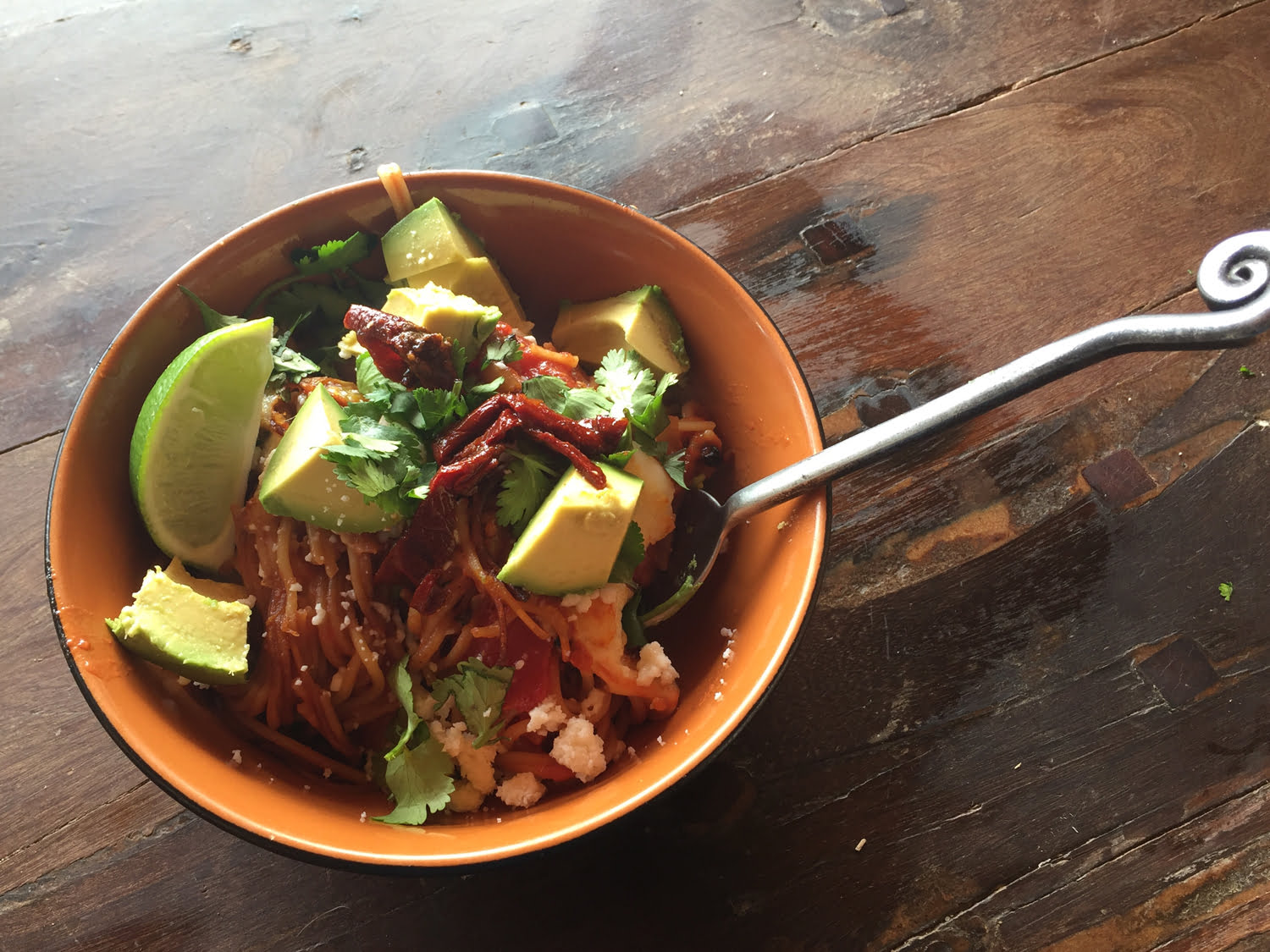
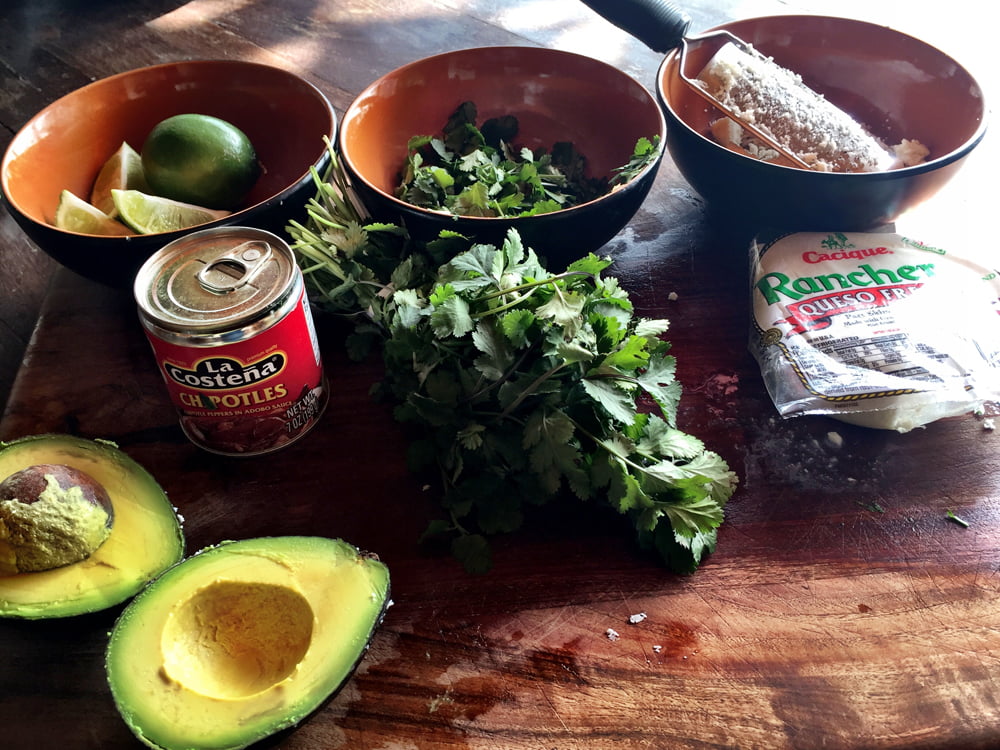
There was one dish, however, that I remember as always simply satisfying and consistently good — sopa seca de fideo. I remember this dish as a regular at every family gathering of four or more. Actually, everyone in my family had a version of it and, in some ways, that is the nature of it — flexible, open to interpretation, simple, and inexpensive. Basically, fideo is Mexican pasta, probably most familiar served in a soup as in sopa de fideo. Fideo seco leans toward casserole and can be made as a side or main dish, vegetarian or not. In Mexico, the sauce is most often made with chipotle, guajillo, and passilla chile. The version my New Mexico family made uses just green chile that is served and added to just about anything and everything in New Mexico. When preparing this dish for friends, I offer several bowls of garnish on the table for everybody to add as they wish — cilantro, lime, julienned chipotle chile, crumbled queso fresco or cotija cheese, and avocado. The recipe is easily cut or multiplied, depending on how many you want to serve and if you want to serve it as a main dish or a side dish.

All the fideo standard bearers in my family are gone now, so I often turn to this dish as an easy comfort-bearing memory food and continue to add my own little twists each time. In my grandmother’s time, most everything came out of a can. That is perhaps the key difference in my version. The basic ingredients are onions, tomatoes, green chile, and fideo — basically, vermicelli pasta somewhat similar to angel hair pasta. My preferred version of the pasta is coiled into little nests. The packets I buy are “La Moderna: Mexico’s #1 Pasta,” but if you don’t have a Mexican grocery accessible, it is fine to use straight vermicelli and break it into shorter pieces.

Luckily, I have gardeners in my tribe, so I am able to use tomatoes that my friend Bill grew and put up at the end of the last growing season, onions from the year-round growers' market, and green chile purchased in a fresh-roasted bushel in September and packaged in the freezer to get me through to the next growing season.

What sets fideo seco apart from other pasta dishes is that you first fry or toast the dry pasta, which gives it a bit of a nutty flavor.

Ingredients
(Serves 6 with leftovers)

Olive or Canola oil
1 large yellow onion sliced
2 packets of Fideo (La Moderna 6.3 oz each)
1 large yellow onion
Tomatoes Approximately 16 oz. (I do this to taste and it depends on whether you use fresh, canned or preserved garden tomatoes).
green chile (I chopped up 10 medium hot chiles . Heat is good but the flavor is most important to me).
vegetable or chicken stock
salt and pepper to taste
Garnishes as desired and available — avocado, cilantro, lime, cotija and/or queso fresco cheese, chipotle chile

Directions

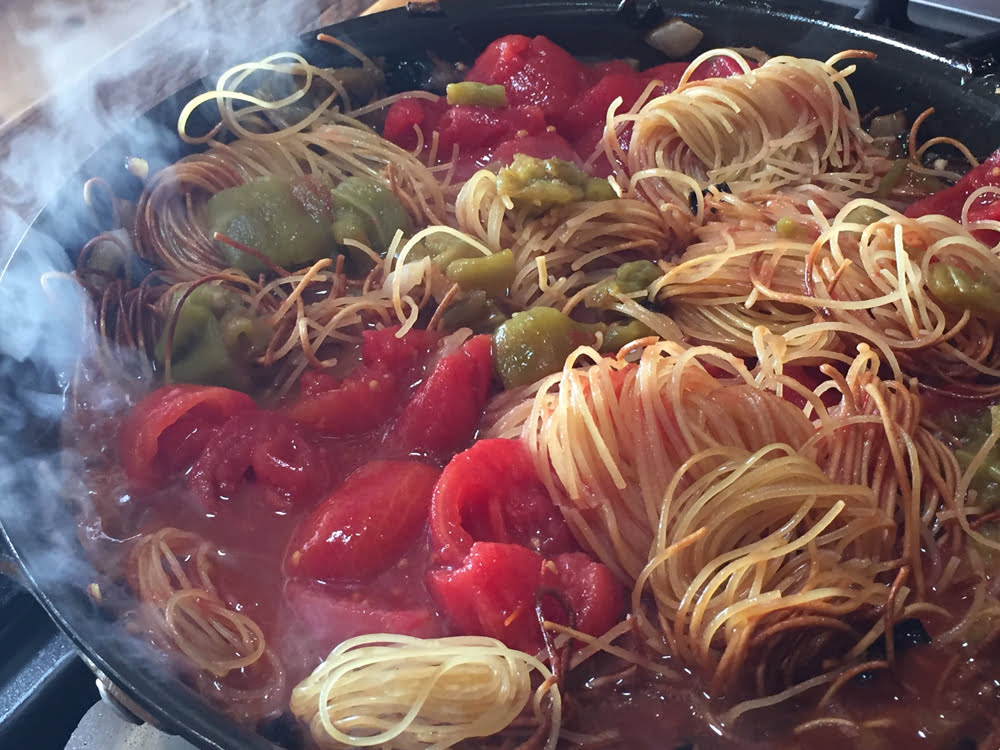
Heat 1/3 cup oil in the pan (just enough to cover the bottom of your pan). Add slices of onion — cooking the onion beyond translucent until brown around the edges adds another layer of flavor. I put the onions in first to give them a head start toward browning and then push them to the side when adding the pasta.

Add the pasta and brown it on both sides. Once both the pasta and onion are browned, add a little of the juice from the tomatoes to stop the browning process. Add the tomatoes and chile. Some people prefer to purée the chile and tomato together, but I like them chunky. This would also be the time to add cooked shredded chicken, if you want to go in that direction. Add vegetable or chicken stock, as needed. The amount will be determined by how much juice you have from the tomatoes. You want the combined liquids to just cover the pasta. Let it all simmer together on the stove for about 10 min.

At this point, put the whole shebang in an oven-safe baking dish and bake it at 350 degrees until the liquid has been absorbed (approximately 15-20 min) and the pasta is tender. I prefer this method because I add cheese to the top for “melty” deliciousness and the dish is then transportable (remember the part about family/friend gatherings) and easily refrigerated for leftovers. Some folks prefer to just simmer it on the stove until the liquid is gone.

Making this dish always puts me in the company of my nana and the extended family gatherings at which this dish always appeared. If it was a birthday, a Mariachi band sometimes made an appearance. When sentimentality prevails, the cooking tunes shift with them. I cooked to a Nicaraguan duo, Guardabarranco (Katia and Salvador Cardenal). I knew them some years back, when the label I worked for distributed their album Si Buscabas (If You Were Looking). The title track is on my “most beautiful songs ever written” list.

Traveler: Your Guide to Santa Fe

In Santa Fe, New Mexico, the winter holiday is a holiday like no other. The oldest U.S. capital — and the third largest art market in the country — Santa Fe sits at 7,000 feet above sea level at the most northern point of the Camino Real trading route. Settled as a Spanish Colony in 1610, the area was home to the Tewa Pueblo People for centuries before. Much has been written about Santa Fe … the art, the light, the culture, the geography — all of which go toward making a Santa Fe holiday a rare and memorable experience.

Getting There
Santa Fe is about 45 minutes north of Albuquerque, the most likely place to fly into. Rent a car and head north on I-25 or take the Sandia Shuttle which departs from the Albuquerque Sunport hourly from 8:45 am to 11:45 pm — reservations recommended. Santa Fe also has an airport with very limited commercial service from Dallas/Ft. Worth and Phoenix (American Airlines) and Denver (United Airlines). Another option for getting to and from Santa Fe is to take the Rail Runner from Albuquerque to the Santa Fe Depot. While the train departures are frequent, the shuttle bus to and from the airport is infrequent so I would consider a taxi to and from. You know you are almost there when you come up over the last hill and see the jeweled lights of the town at the base of the Sangre De Cristo mountains.

Lodging

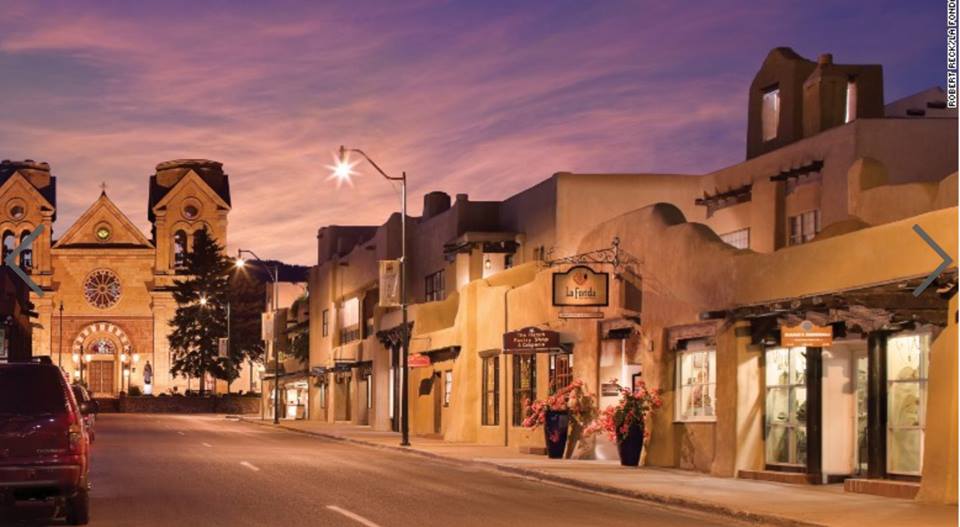
Photo courtesy of La Fonda Hotel.

For maximum holiday impact, stay within walking distance of the Plaza, the heart of historic Santa Fe. To be car-free and on foot allows for exploration of hidden lanes and alleys. If it snows, all the better. The stars are within reach, and the air is crisp and scented with piñon and cedar wood from the kiva fireplaces warming most adobe structures.

La Fonda Hotel is an iconic and classic hotel built in 1922 sitting just off the Plaza. Another historic property slightly off the beaten path up Palace Avenue, covering six acres and comprised of a series of adobe casitas, is La Posada Hotel, while St. Francis, on the southern side of the Plaza, is the oldest historic hotel. A little farther afield and one of the best deals in Santa Fe is the El Rey — a classic southwestern motor court on the original Route 66. Of course, there are vacation rentals aplenty, if you want that “I live here” experience.

Celebrations

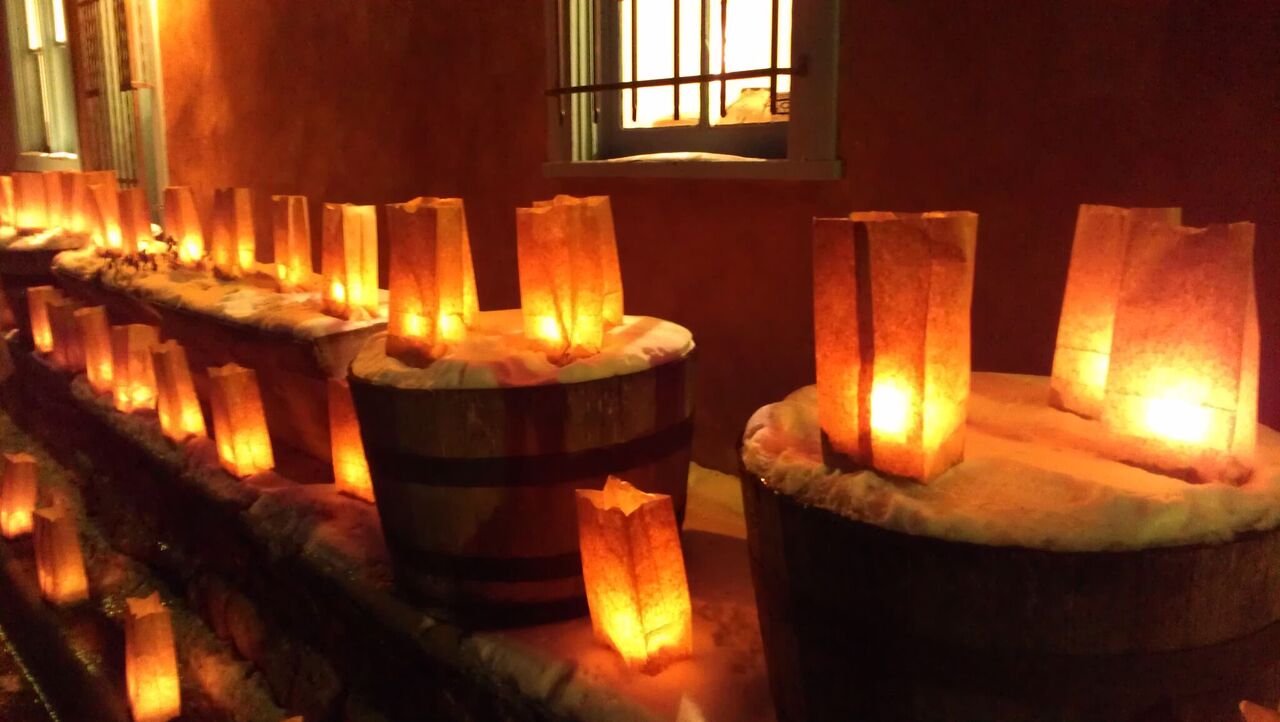
Photo courtesy of Melissa Howden.

The Spanish colonization of Santa Fe means celebrations have a generous Catholic imprint. However, it is the prevalence of firelight that sets this holiday experience apart from others. Buildings, homes, and streets are outlined with farolitos — lunch-sized paper bags filled with sand and lit from within by votive candles. Little do you know, as you drive north on I-25, you will cross an important border pretty much delineated by La Bajada Hill. To the north of La Bajada Hill, the little light bags are called farolitos. To the south, they are referred to as luminarias. The history of both derives from the night before Christmas, when they lit the way for Mary and Joseph as they searched for a place to stay before their baby was born, and/or to light the way for the Christ child.

For a true display of farolito (and luminaria) magic, head to Canyon Road on Christmas Eve. The community comes out to stroll, join or listen to carolers, warm hands and chat over the luminarias (in this case bonfires) and revel in the company of one another.

Las Posadas translates to lodging or accommodations, and it is a traditional celebration joining Spanish folklore and Christian tradition in which people re-enact Joseph and Mary’s search for a place to stay on Christmas Eve. Joseph and Mary are followed by the community, and they proceed from door to door and are turned away, all the while taunted by devils on rooftops. You don’t need to be a believer to join in this centuries-old tradition. This year, the community event is scheduled for December 11, though many churches in the region have their own throughout the season.

The Glow Event at the Santa Fe Botanical Gardens brings music, nature, food, and drink together in a particular kind of holiday glory.

Make sure your schedule allows for a visit to one of the nearby pueblos for Christmas Eve and Christmas Day dances. As the original people of this land, the pueblos of the Rio Grande Valley generously welcome visitors to many of their dances and celebrations which are exquisitely beautiful. These are prayerful celebrations, not tourist entertainment. As a good guest, one is sure to go away changed by the majesty and an unrivaled glimpse into a living ancient culture.

Food and Drink

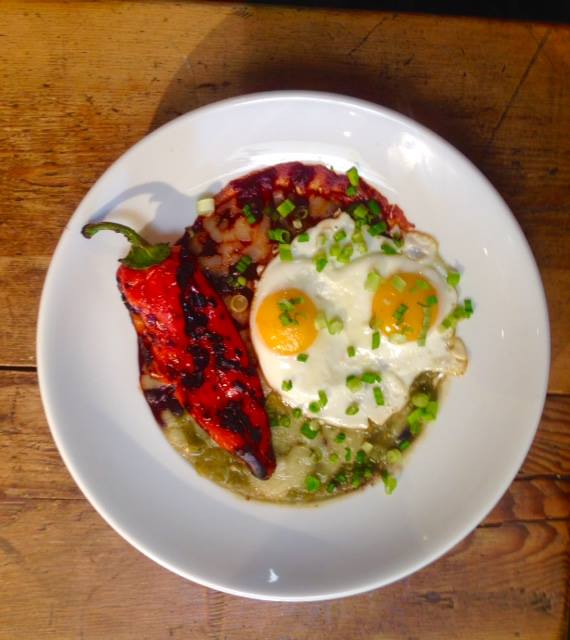
Photo courtesy of Café Pasqual's.

Santa Fe attracts both diverse and adventurous chefs and eaters, and it is hard to keep up with the latest and greatest in town. Breakfast at Café Pasqual’s — named after San Pasqual, the patron saint of kitchens and cooking — has been a favorite for almost 40 years. This is organic, noble food lifted up by tradition. If you like a good diner, the Plaza Café is one of Santa Fe’s oldest restaurant and fits the bill with windows on to the plaza. The chile is hot, the sopaipillas made to order, and the coffee cup always full. On the old Route 66 — and not far from the El Rey if you stay there — the Pantry is a classic café with good food, friendly people, families, and deal makers. Be prepared to wait. It’s just like that.

Lunch calls for the Shed. Perhaps one of the most known and visited restaurants in Santa Fe, it is much-beloved by visitors and locals, alike, as it has been owned by three generations of the same family. Try the Blue Corn Green Chile Chicken Enchilada. Vinaigrette is a “Salad Bistro” in a charming adobe. Owner Erin Wade grows much of the produce on her 10-acre farm in Nambe and each salad can be customized with protein or not. For those not salad-inclined, there are soups, sandwiches, and specials, as well as a revolving beer and wine list. Eat Your Peas is a favorite with its sweet green peas and lettuce with crunchy bacon, a white mushroom sauté, and Asiago cheese with a tart vinaigrette. Shake Foundation is a traditional drive-up with a modern twist, preserving the classic green chile cheese or no cheeseburger with local hormone and antibiotic-free beef and turkey, and shakes from natural, organic, and hormone-free Rasband Dairy in Albuquerque.

Dinner at La Boca guarantees a good meal with a small plate selection of seasonal goodness influenced by the Spanish Tapas tradition. If you are lucky, you might hit a night when local fave Nacha Mendez is playing. Chef Joseph Wrede began his distinguished, award-winning career in Taos, New Mexico, with the first and second incarnations of Joseph’s Table. He is an artist in all ways, combining traditional and contemporary cuisine into something uniquely memorable and Joseph. Locally sourced, divinely prepared, and lovingly presented, the fare at Radish and Rye is abright new-ish addition to the Santa Fe restaurant scene — with an extensive bourbon list, to boot!

Before or after dinner, make a point of going to the La Fonda Bar. Try to make it on a night when Bill Hearne and his trio play. It's a combo of honky-tonk, country swing, and slick guitar licks. Whatever the make-up, it is a joyous event with couples popping up to two step and swing. It doesn’t matter if you are a dancer or not, this is distinctive and evocative Santa Fe action.

Things to Do

Photo courtesy of the Georgia O'Keeffe Museum.

Must-hit museums include the Georgia O’Keeffe Museum, the New Mexico History Museum, and IAIA Museum of Contemporary Native Arts. Doubletake is one of the greatest consignment store experiences ever. Todos Santos Chocolates in Sena Plaza is a tiny chocolate shop of wonder known for chocolate confections in the shape of Milagros covered in silver and gold leaf. If you have a weakness for cowboy boots, there is no place better to oooh and aaah than Back at the Ranch.

One last thing about Christmas in New Mexico. Three particular dishes are required for the holidays: tamales, posole, and biscochitos.

Strictly speaking, tamales are not New Mexican; rather, they are a Mesoamerican dish to which New Mexicans have added their own twists. A tamale is made of a corn masa/dough then stuffed with any combination of cheese, chile, meat, and vegetables then wrapped in a corn husk and steamed. Families have their over versions of Christmas Tamales that, in some cases, include a special chile or a sweet tamale version. Posole is a hominy stew — usually made for celebrations — with pork and garnished with shredded cabbage, chile peppers, onion, garlic, radishes, avocado, salsa, and/or limes.

Finally, biscochitos — an anise and cinnamon cookie which are traditionally made with lard. Every family has their particular twist and take on the recipe, which is most often learned in the kitchen with an abuela or tia passed down by oral tradition. They are also the New Mexico State Cookie.

Photo courtesy of Melissa Howden.

Here is a basic recipe to try:

Ingredients

1 ½ cups lard, chilled*
1 cup plus 3 tablespoons sugar
2 eggs
2 teaspoons anise seeds
4 cups all-purpose flour
2 teaspoons baking powder
½ teaspoon salt
About 3 tablespoons brandy, whiskey, or brandy.
2 teaspoons ground cinnamon

Directions

Preheat oven to 350°F. Beat lard and one cup sugar in a bowl until fluffy. Add eggs and anise seeds, and beat until very light and fluffy. Sift together flour, baking powder, and salt. Add to creamed mixture, along with the brandy. Mix thoroughly to make a stiff dough.

Place dough on a long piece — about three feet — of waxed paper at one end. Bring the long end over the top, and press to about one inch or slightly less in thickness and refrigerate until chilled.

Roll out dough between waxed paper to just under ½ inch thickness. Cut with flour-dusted cutters into your preferred shape. Combine the three remaining tablespoons of sugar and the cinnamon into a bowl; Some people dip the unbaked cookies into the cinnamon sugar, some sprinkle after just baked.

Place cookies on ungreased baking sheets. Bake 10 to 12 minutes or until tops of cookies are just beginning to brown. Cool cookies on wire racks.

*You can substitute Crisco or butter for the lard, but you will sacrifice crispness and taste. You can also substitute the whiskey or brandy with a juice or milk, but again, it’s a different cookie with changes.


Lede image photo credit: Larry1732 via Foter.com / CC BY.

A Minute in Albuquerque with the Handsome Family

Welcome to "A Minute In …" — a BGS feature that turns our favorite artists into hometown reporters. In our latest column, the Handsome Family's Rennie Sparks takes us on a tour of the weirder sights around her hometown of Albuquerque, New Mexico.

"Albuquerque, New Mexico, has been our home for almost 20 years," Sparks says. "We always have a breathtaking sunset and endless blue skies. We also have a lot of abandoned strip malls and mysterious signage. We call it Western Gothic." 


This was a Vietnamese restaurant, a Mexican restaurant, a Chinese buffet and a drive-thru bank. What wonders will we get next? I saw a group of kids pounding their book bags on another kid in this parking lot once.


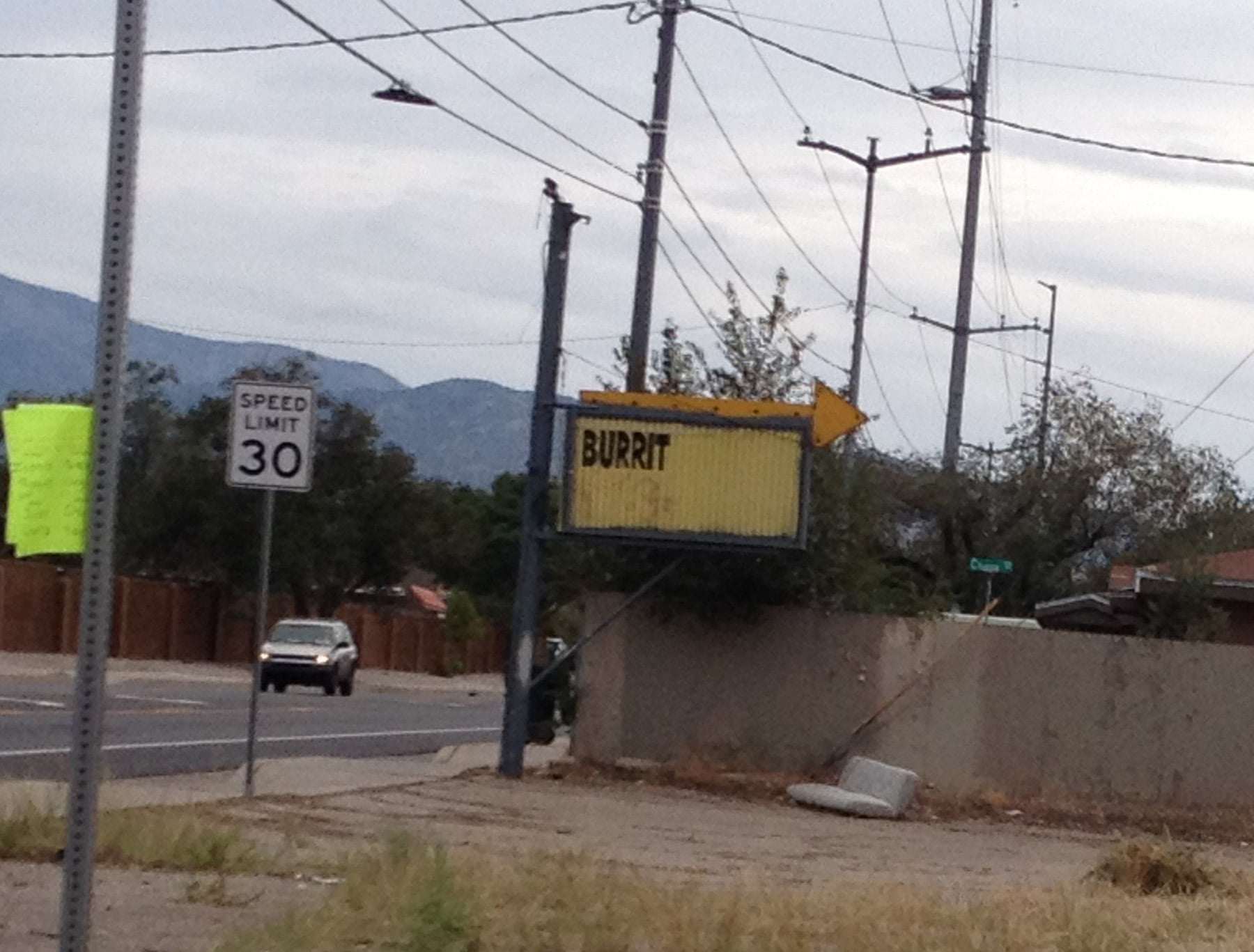
Brett and I are at the point of starting a new religion inspired by this next sign. I kid you not. This sign has been this way for 17 years. I often lie awake at night and wonder what tragedy happened before the entire "burrito" could be spelled.


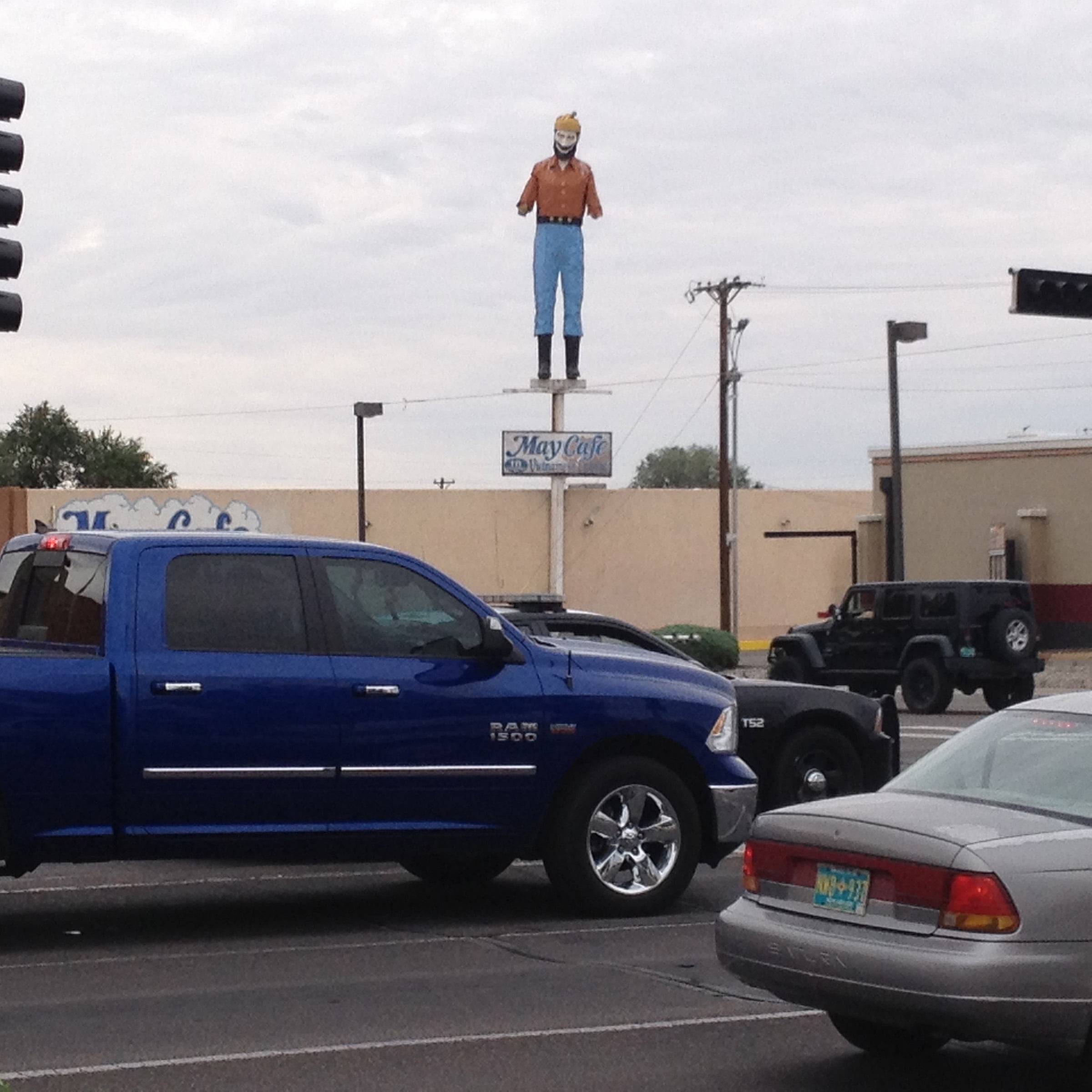
Many Western towns have these old lumberjack statues over hardware stores, but only in Albuquerque has he been repainted with such a magical grin, standing handless over a Vietnamese restaurant. Great spring rolls.


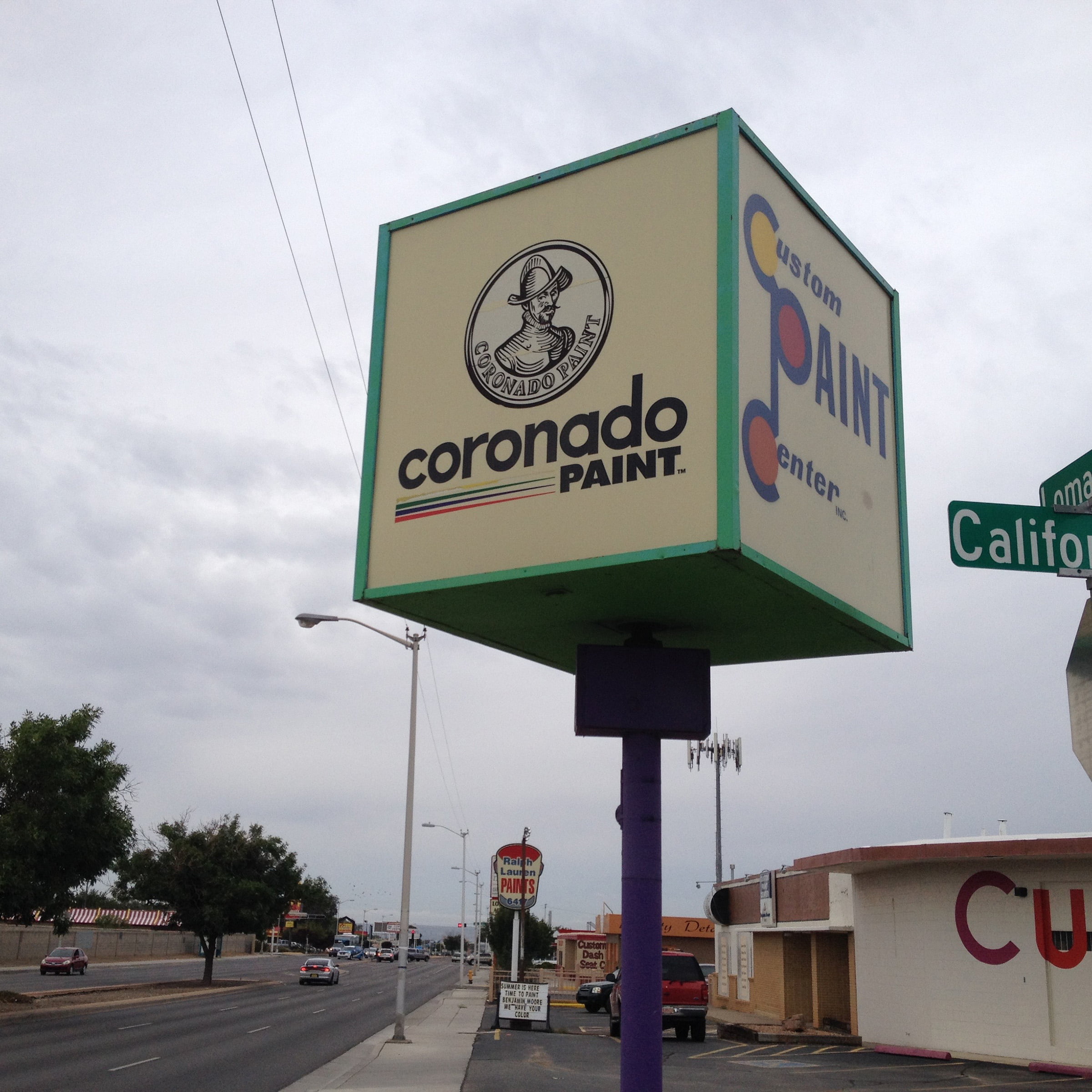
Our origins are not forgotten in Albuquerque. Many people here proudly claim their relationship to Francisco Vázquez de Coronado, the conquistador who marched through here in the 1600s looking for a city made of gold.


Lede photo courtesy of the artist