I started playing with Parker McCollum in January 2025, right as I was putting the finishing touches on my brand new album, Attachment Theory. I had never done this before, touring with another artist in their band, singing behind someone else’s vision on that scale, but it was one of those things that aligns at exactly the right moment for reasons you can’t fully explain. And I said yes. What I didn’t know then was that I’d end up singing on the record that just received an ACM Album of the Year nomination, right as my third solo album released into the world.
Attachment Theory is about the psychology of how we connect – with other people, with ourselves, with the stories we tell about who we are. And there’s something quietly poetic about the fact that I was learning what it meant to fully serve someone else’s artistry at the exact same time I was relaunching my own. Balancing those two things, being completely present in Parker’s world while holding onto the artist I was becoming, turned out to be even more joyful than I could have anticipated.
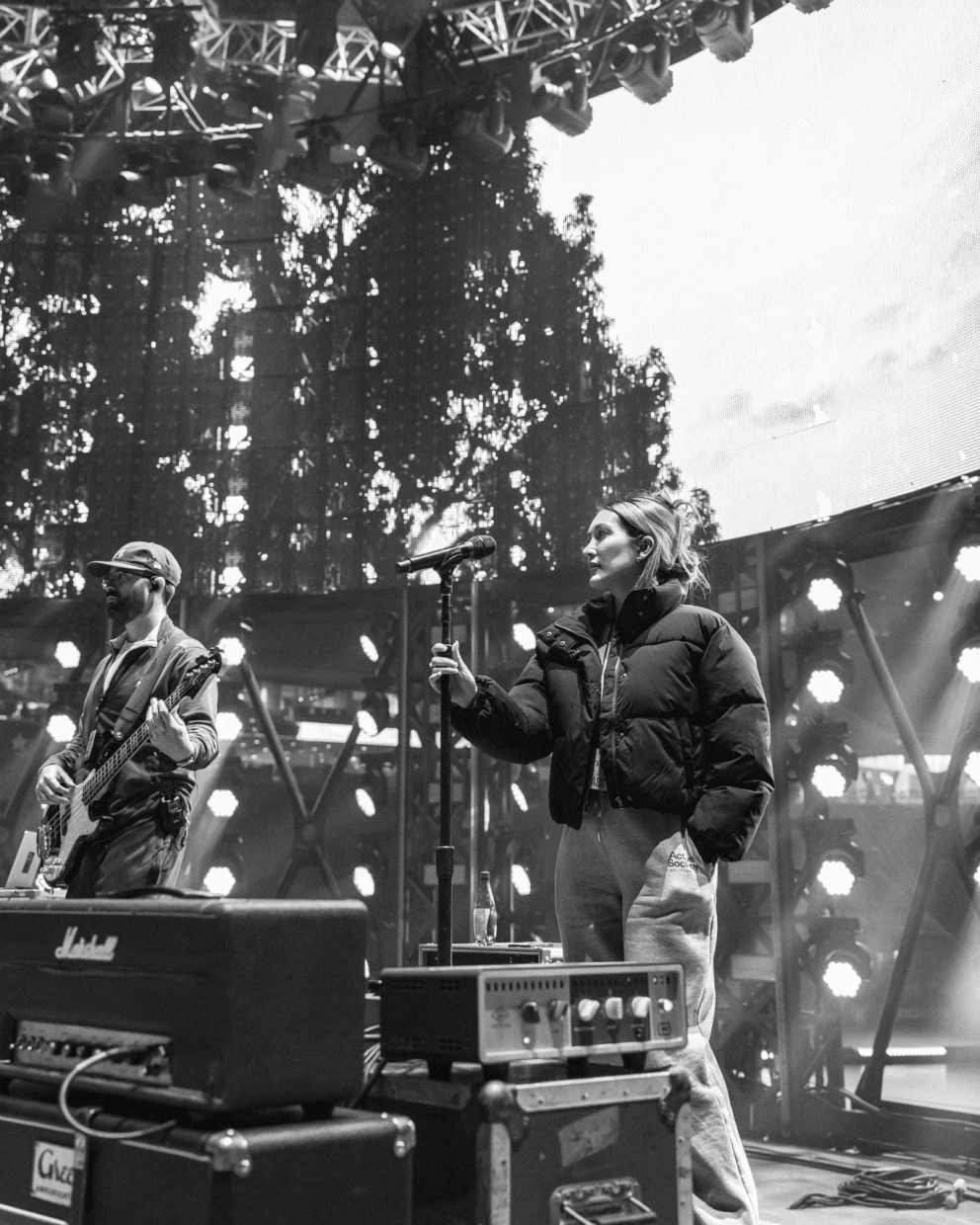
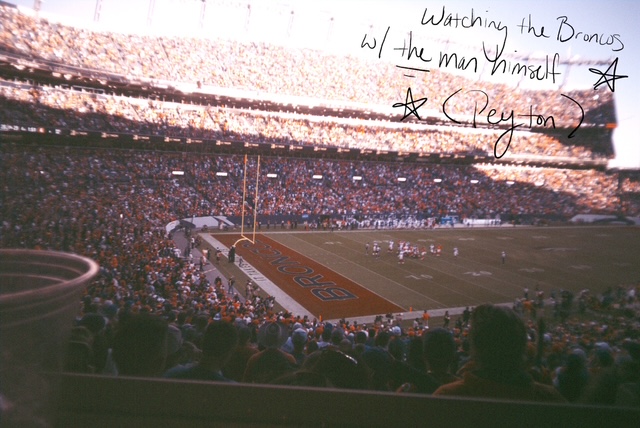
What you’ll see in these photos is the full picture of what life on the road actually looks like, from the hours before load-in and the quiet of side-stage to the moments under the lights in front of thousands of people. It is the main stage and the in-between, the green room conversations and the roar of a sold-out arena, the experience of a garage country artist navigating someone else’s world while simultaneously building her own. –Aubrie Sellers
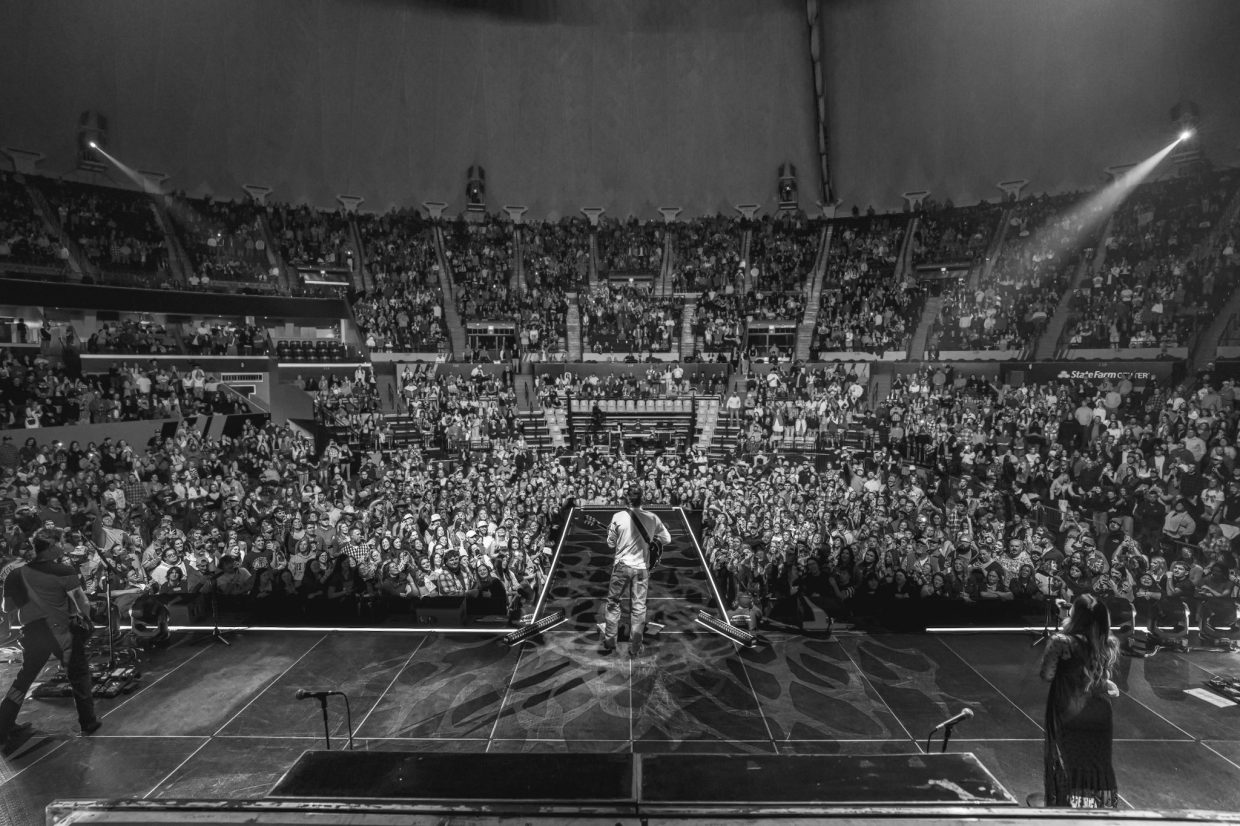
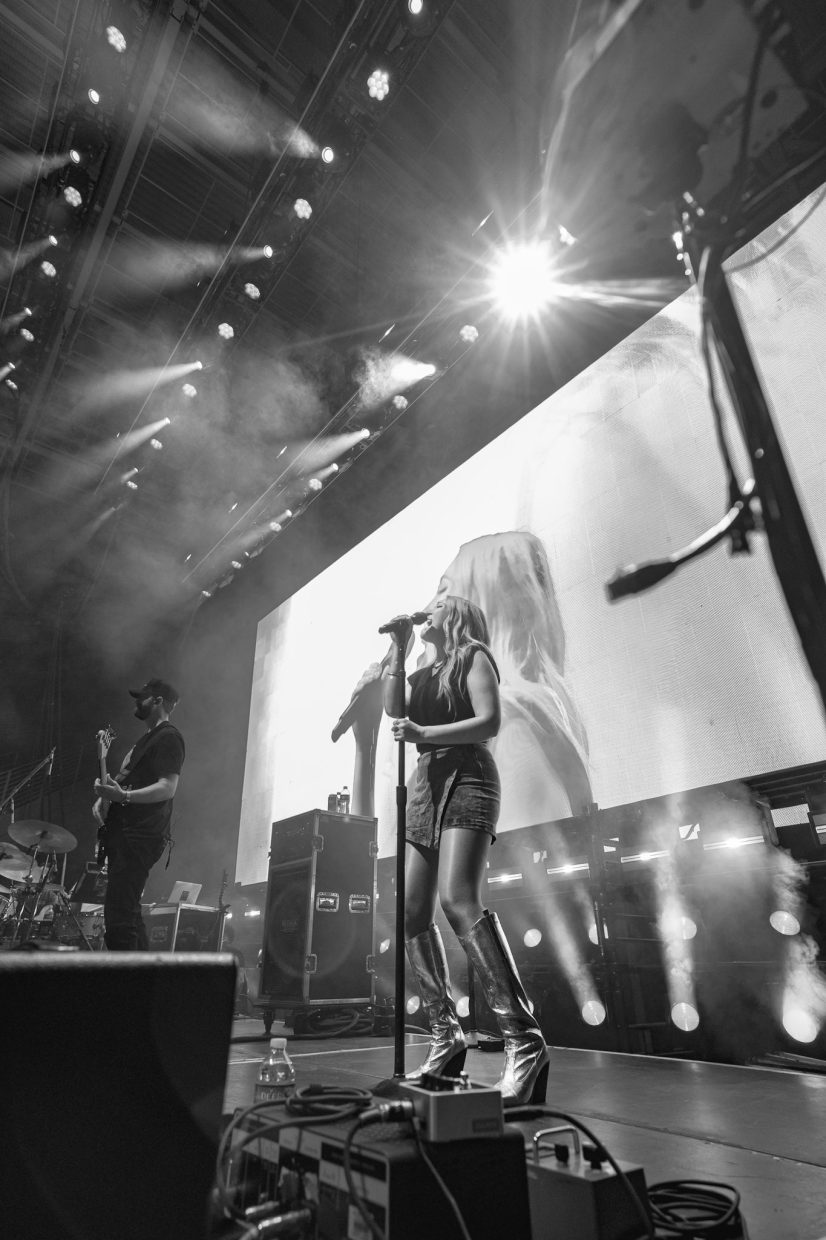
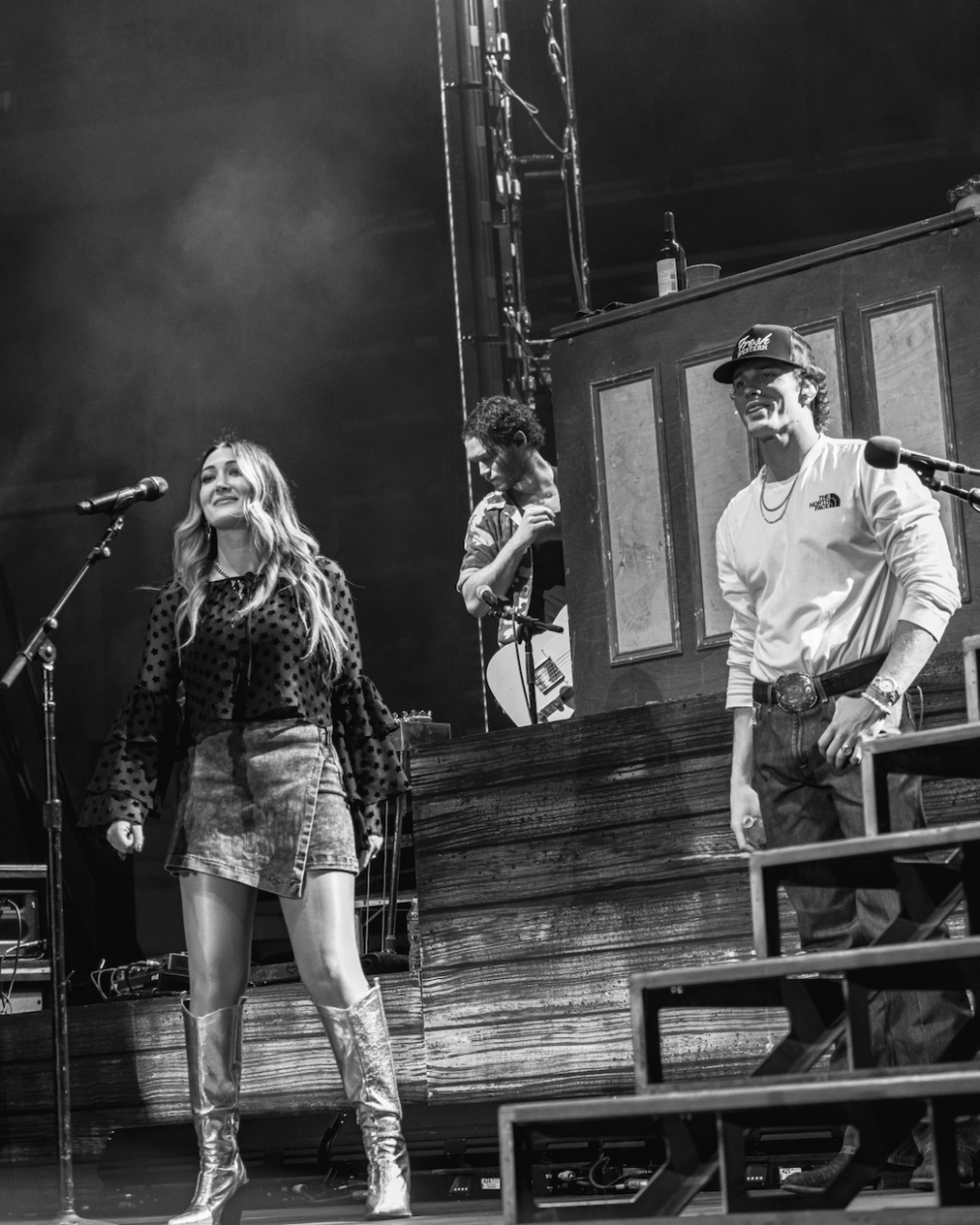
Aubrie Sellers (lower right) on stage with Parker McCollum (center) performing to a packed arena. (Shot by Chris Kleinmeier.)
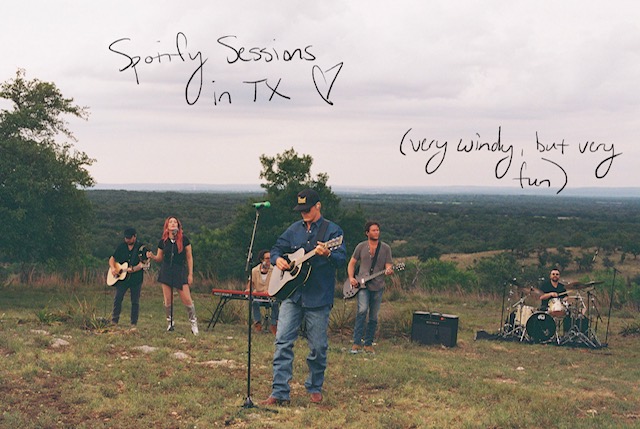
Parker McCollum and band shooting video for Spotify OUTSIDE in Austin, Texas. “Very windy, but very fun,” as Sellers describes it. Watch their performance of “My Blue” below.
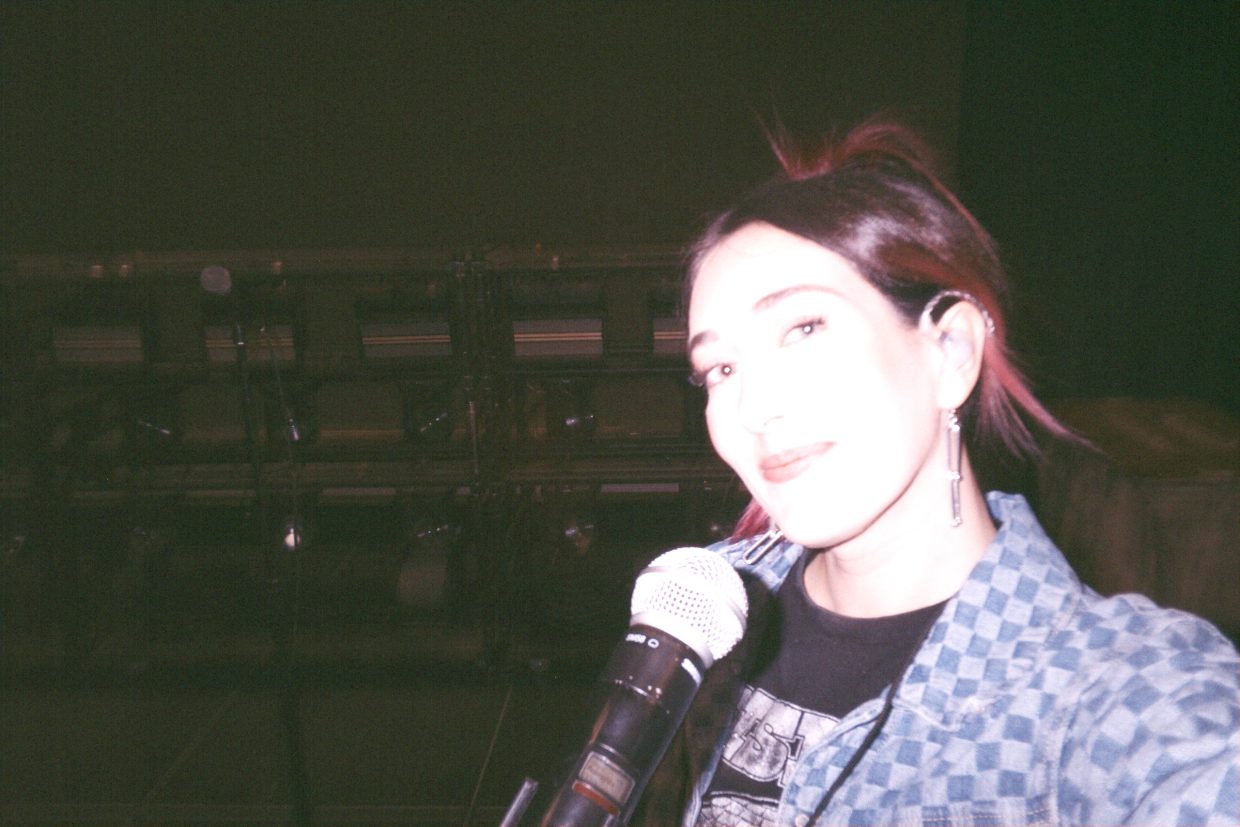
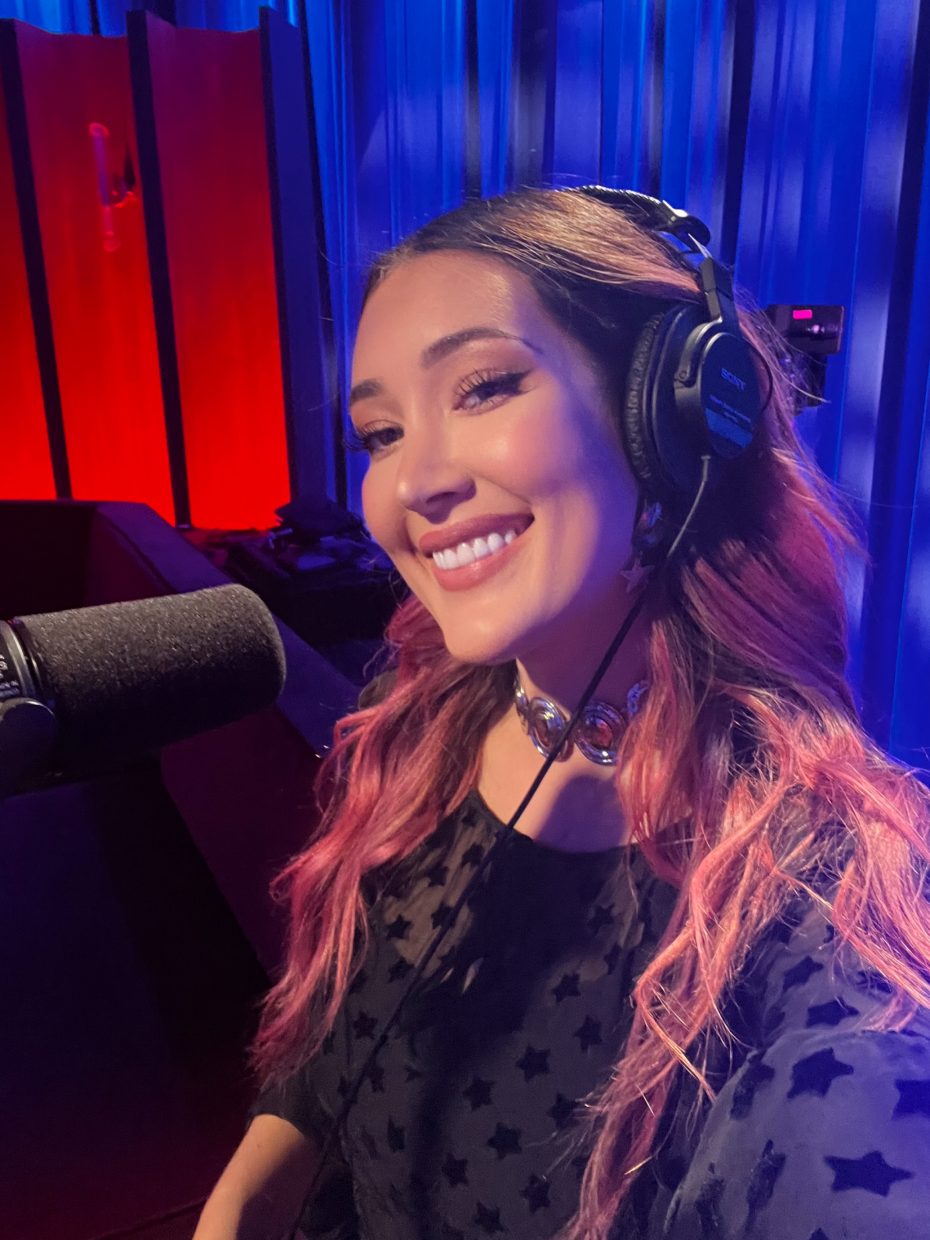
A candid tour selfie.
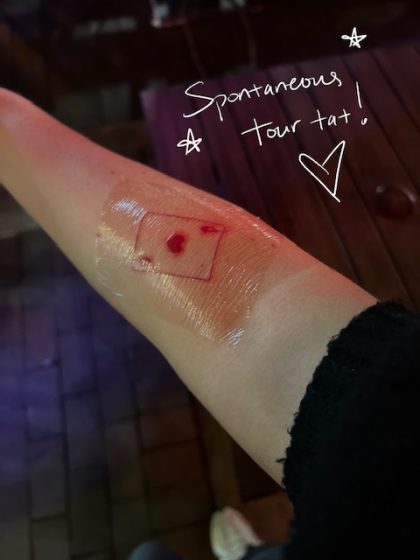
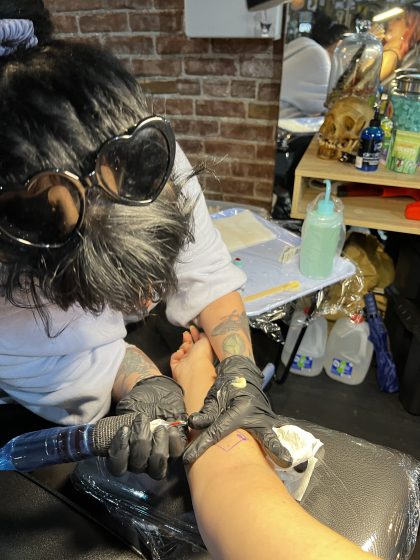
Spontaneous tour tattoos are always a good idea. Results above, action shot mid-inking below.
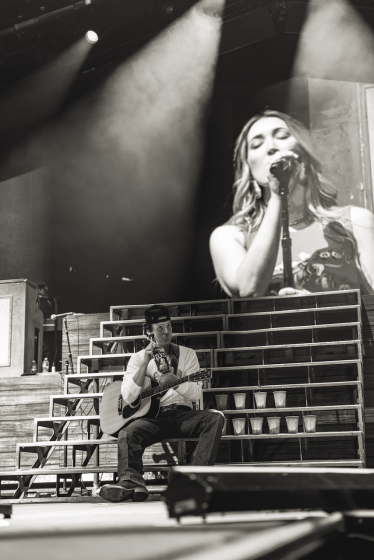
Sellers seen on the jumbotron live at a McCollum performance. (Shot by Chris Kleinmeier.)
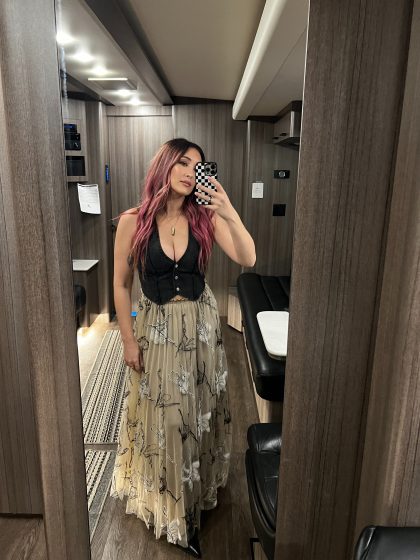
Last looks at the evening’s wardrobe.
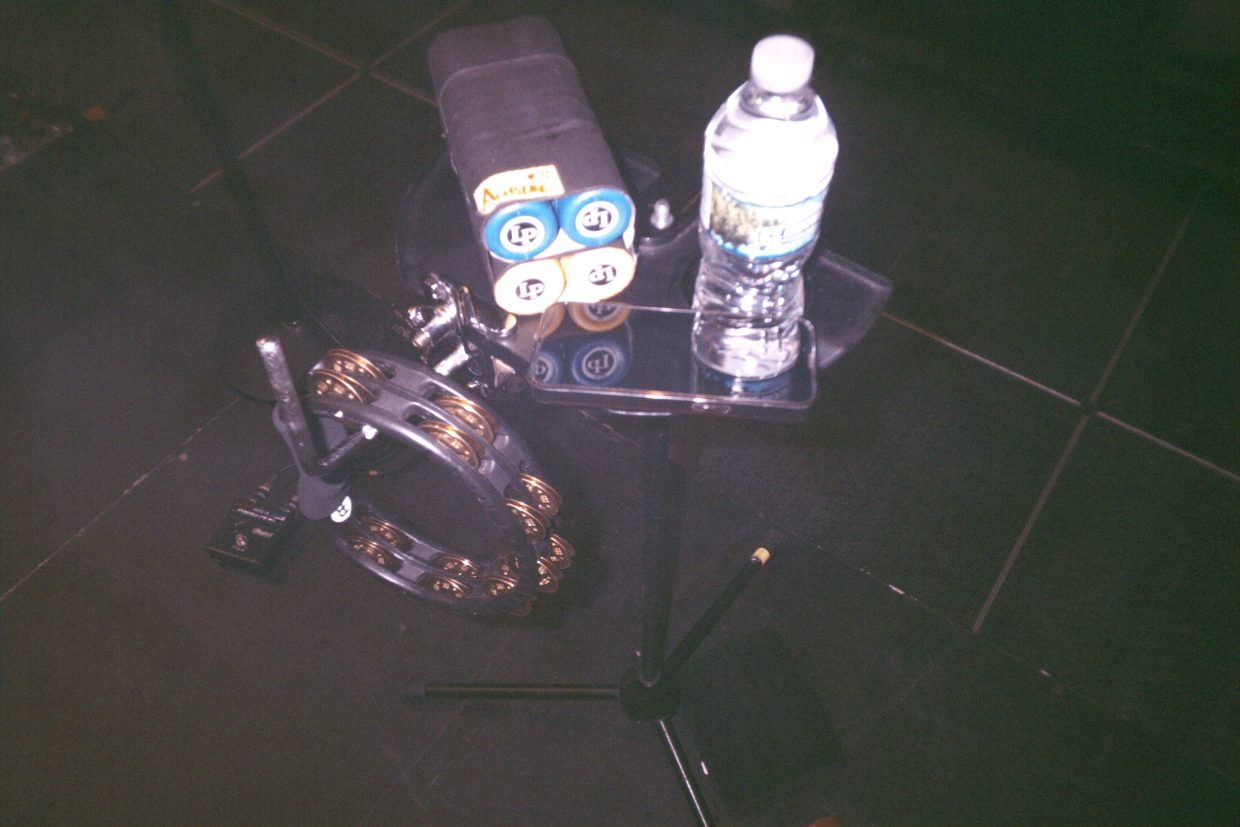
“This rig is my stand when I play with Parker, with my shaker and tambourine.”
(Shot by Chris Kleinmeier.)
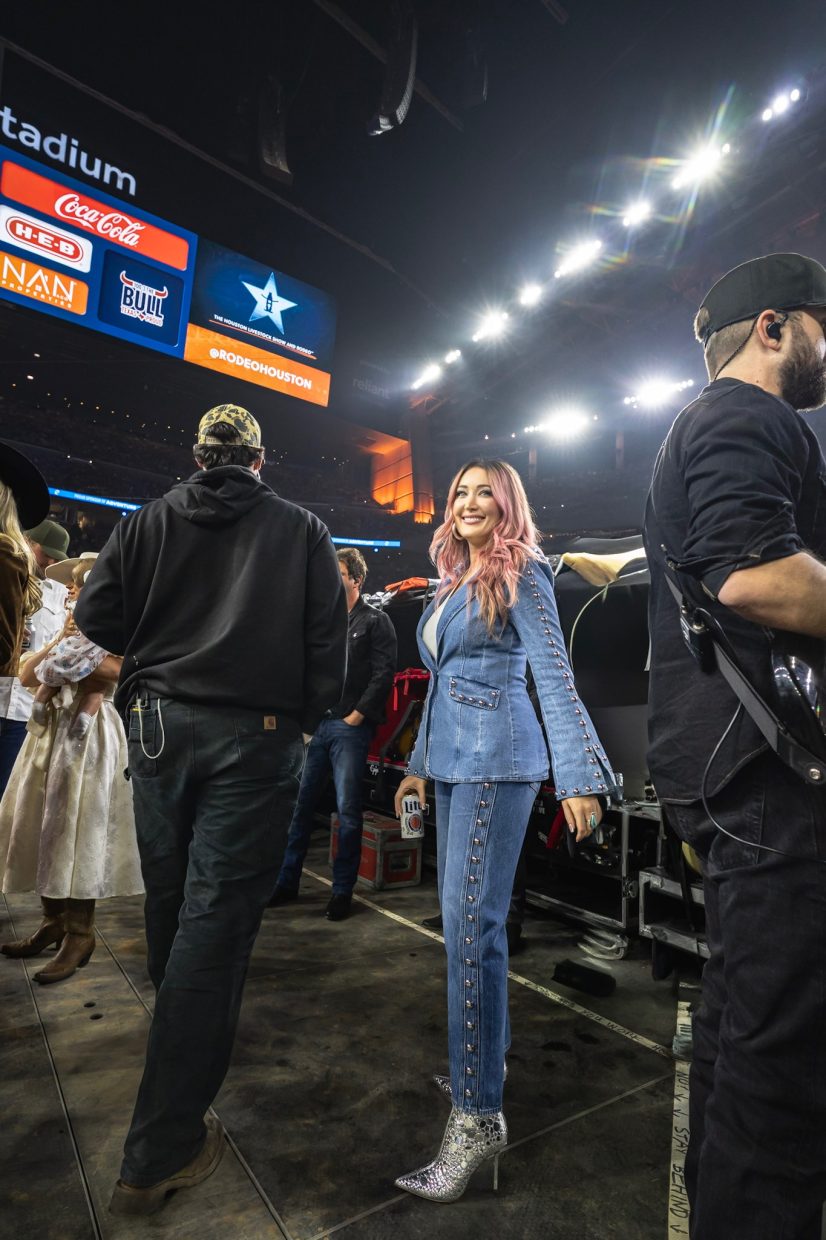
At the world famous Houston Rodeo. (Shot by Chris Kleinmeier.)
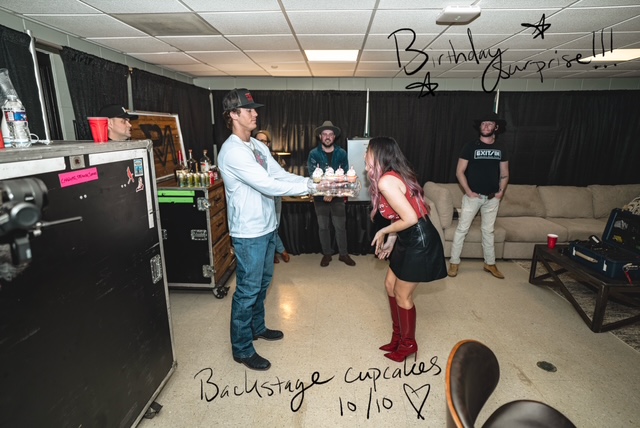
Life doesn’t stop when you’re on tour! A backstage birthday celebration. (Shot by Chris Kleinmeier.)
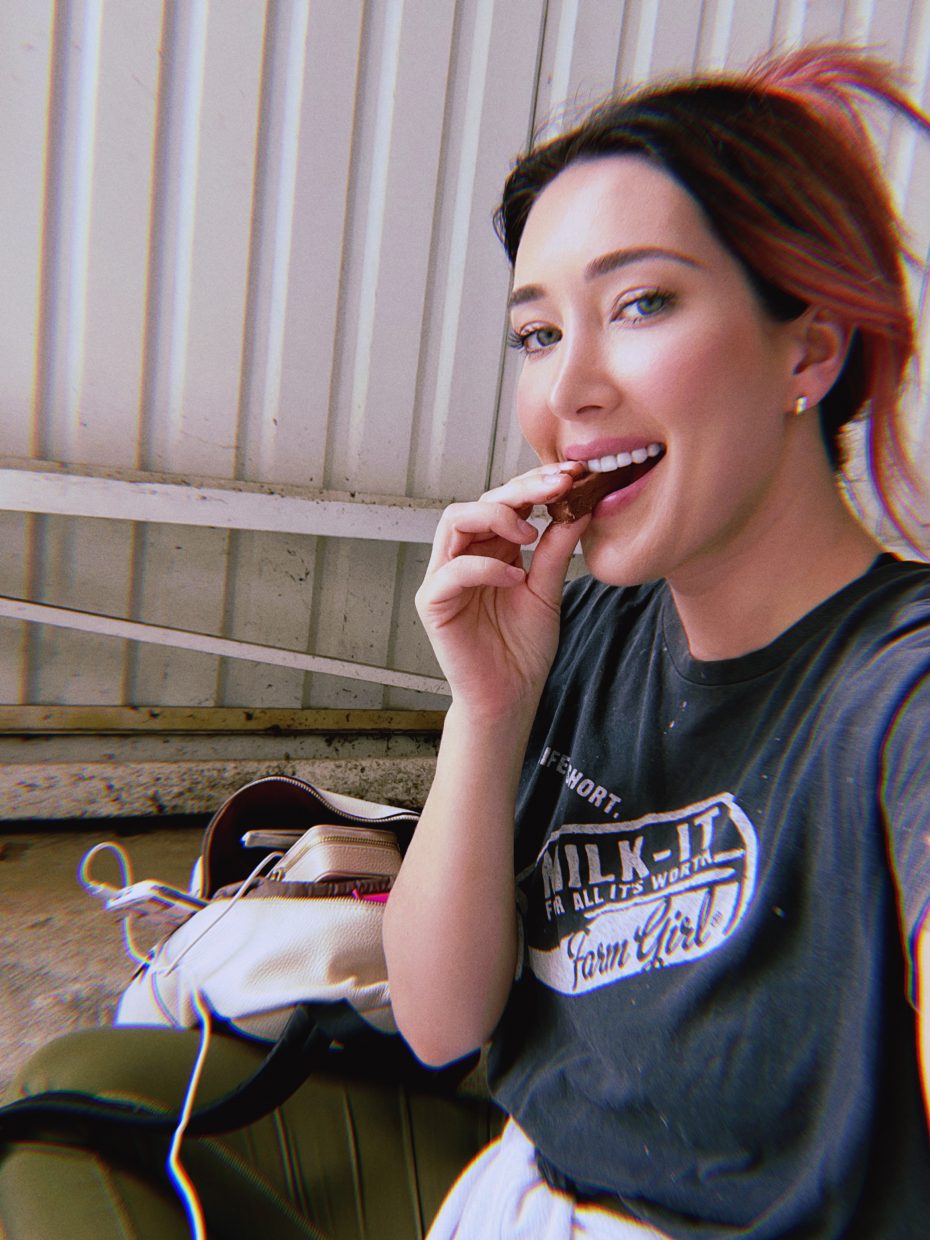
“Reese’s Sticks are my absolute favorite candy. I was sitting in the airplane hangar waiting for the plane and they were melting everywhere, because there was no AC!”
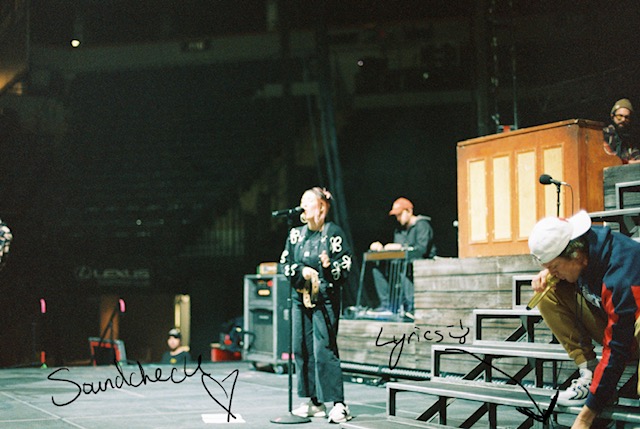
One soundcheck out of many.
(Shot by Chris Kleinmeier.)
(Shot by Chris Kleinmeier.)
“This was for an Apple Music session with Parker.”
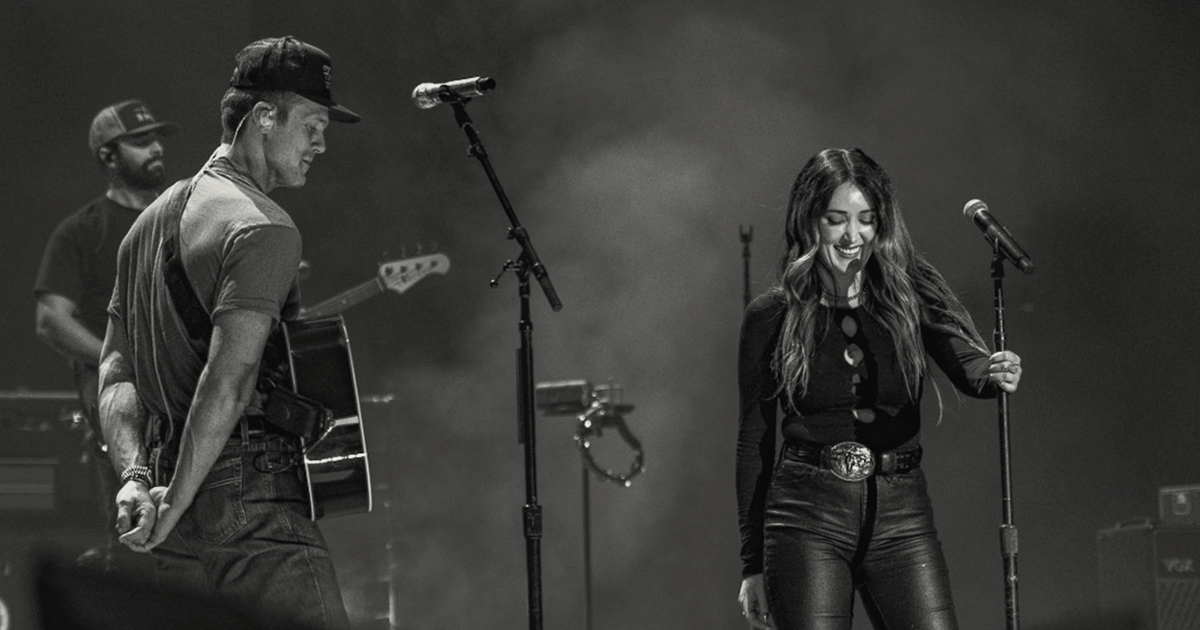
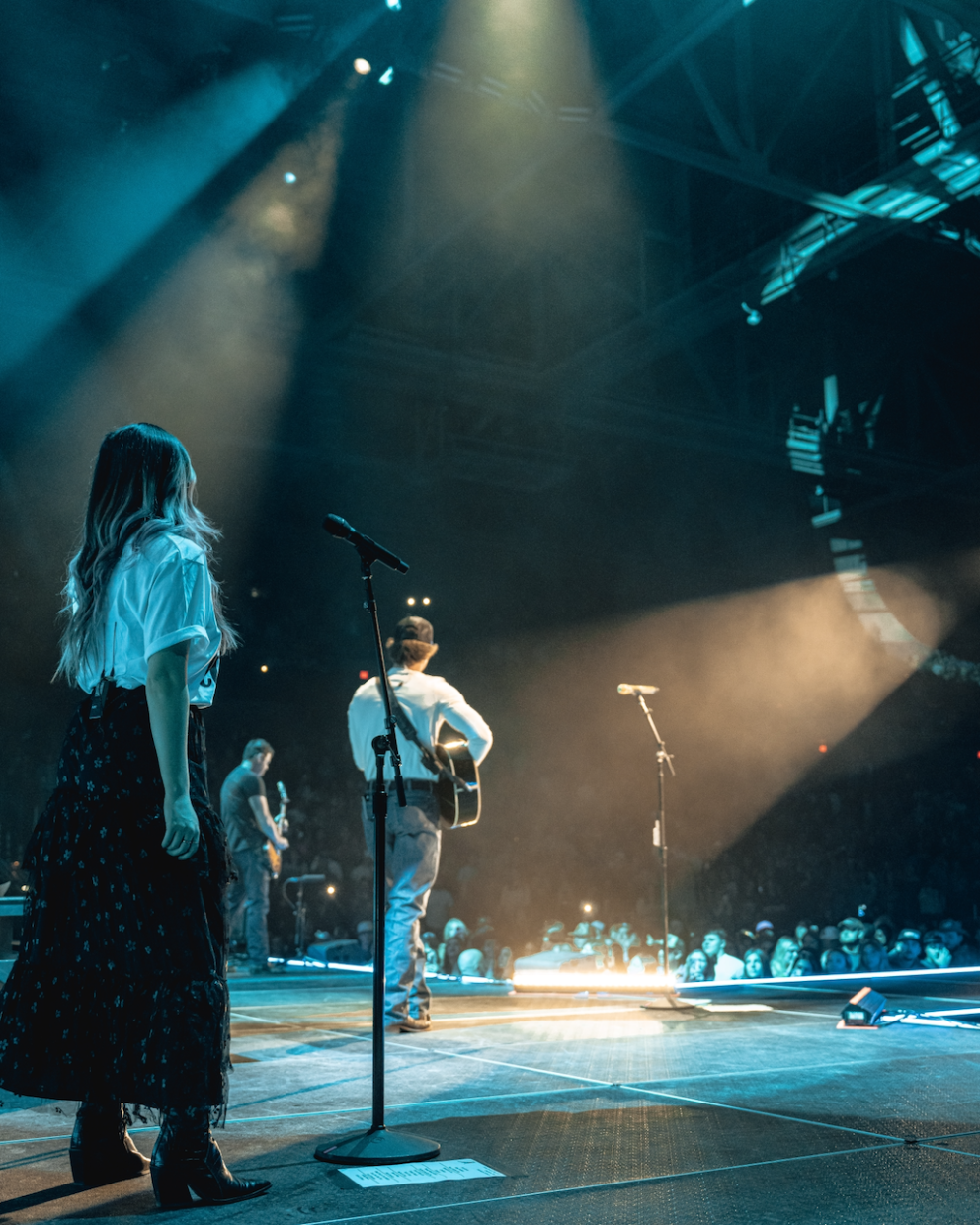
Aubrie Sellers and Parker McCollum on stage. (Shot by Chris Kleinmeier.)
Catch Aubrie Sellers on tour now performing Attachment Theory, or with Jade Jackson, or with Parker McCollum – more information here.
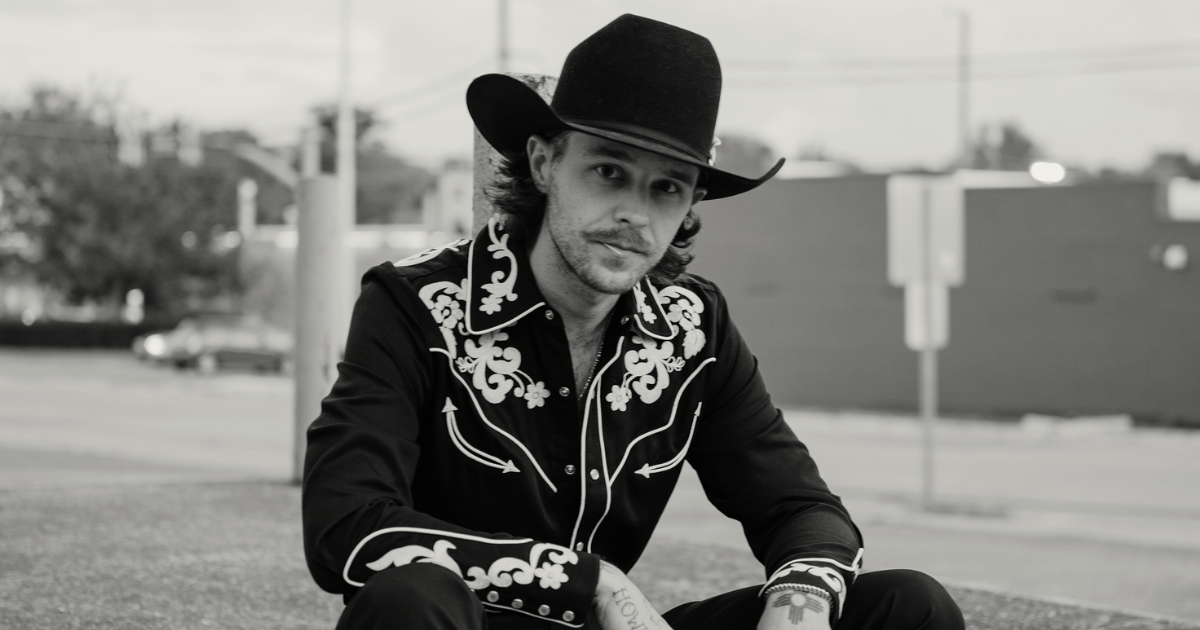
All photos courtesy of Aubrie Sellers. Candids shot by Aubrie Sellers, professional shots and live photography byChris Kleinmeier. Lead image by Chris Kleinmeier.
A few years ago, Tyler Halverson had a near-breakthrough hit with his track “Mac Miller,” a song more spoken than sung about the too-soon-departed hip-hop star and how Halverson felt about him. It was a modest song, and a discreet one, a mumbled ode to a kind of masculinity, arguing in favor of a wide and expansive country aesthetic. When he sings about the cowboy killer in the first verse of the song, there is some ambivalence there: Is it the cowboy doing the killing or the cowboy being killed? And, is it an actual cowboy or the larger myth of the West?
The West here is a distinct category from back when country used to be C&W, before the W for western was dropped. Halverson knows more about that W than most other twentysomethings. He grew up in a small town in South Dakota, surrounded by farmland and ranchland. Basically anything that could be done with cattle in the Dakotas, Halverson or his family have likely done. There might be some dissonance here, that ode to Mac Miller perhaps at expense to these country bona fides, but his parents loved listening to music as much as they loved working with cattle. He tells stories about driving around in a truck with his folks playing rock, rap, and country in their truck and making sure that he saw live shows in all those genres.
Music and rodeo are two kinds of performance, two ways of big action, and both boast big audiences – but songs about rodeo are often about the idea of the West. There are songs about small towns by people who haven’t lived in small towns for decades, or whose ideas of small towns are more about commuter suburbs an hour from Atlanta.
The small town is reflected in a kind of fascist excess lately and the rodeo has been stripped of any of its working class parts. What’s left is a kind of stadium tour. If local and small rodeos abstract the actual tasks of ranch hands (roping, tying, cutting cattle, breaking broncos), the overtaking of the Professional Bull Riders Tour made spectacle of that abstraction. Halverson has noted that middle ground between the rodeo and the cattle lots – and has also noted where the music business overlaps with these concerns, though he has not reached PBR or stadium tour levels himself. Yet.
Listening to Halverson’s many songs about the rodeo on his brand new album, In Defense of Drinking (released February 13, 2026 via CmdShft), they are another kind of cowboy killer. One of the best things about his song about Mac Miller was how artful it was displaying the boredom of driving around a small town, the anomie of a blank Saturday night, of being on the aux cord flipping through songs, trying to find something to listen to, trying to find something to do.
So, when Halverson returns to the cowboy killer idea in “Fort Worth Losing,” a song about heartbreak in the stockyards that slices through the myth of the West with a surgical precision, the song bucks, guitars roaring. Then, almost instead of a chorus, a guitar break arrives sounding like an outtake of “Ghost Riders of the Sky.” The mix of failure, heartbreak, heartland rock, and cowboy songs adds to the great tradition of Texas-shaped heartbreak. (It’s less goofy than George Strait’s “All My Exes” and more serious than Mark Chesnutt’s “Going Through the Big D,” but you could two-step to all three.)
“Forth Worth Losing” is one of three rodeo songs on the album; there is a reprise of “Beer Garden Baby,” this time with Parker McCollum – a rollicking and tender song which reminds a potential hookup of the differences between those who ride and those who play music for those riders. The musicians get paid, never out of the money. For all of its joviality, there is an undercurrent of playful cruelty. The musician asks the barrel racer, “Who’s going to pay for your Coors tonight, honey?” They still have tonight – to drink, to smoke dope, to fuck, to play music, and play at being a cowgirl or a cowboy.
The carpe diem nature of these dual performances is made even clearer with “Eight Second Ride,” a tense ballad which notes that “the time between is a long comedown.” Describing the comedown, about “rodeo queens, go around dreams,” and then eventually noting that the lack of money and the melancholy of that comedown doesn’t matter as much as the “eight second high.” His point punctuated with a squall of harmonica.
If “Beer Garden Baby” is a gender-reversed argument about the intersections of musicians and riders, the idea is made deeper and sadder on the heartbreaking “Like the Rodeo,” where Halverson asks, “Could she ever love me, like the rodeo?” He’s telling the listener that the musician and the rider have the same kind of itinerant circuit, one which might never develop into any kind of permanence. Though, on the next song, he makes the suggestion that wanting “cows and cowboy babies” might result in that Dakota grassland. That the cattle of the rodeo might lead to the cattle of the range, in a personal song made more poignant when realising this might be what his parents have done.
These rodeo songs have a kind of modesty, a small softness, that could be considered sober. And though at least one of them is about drinking, the soberness of the sound could also mark a move away from the partying done by the rowdy boys who sing about the events which Halverson sings.
In the ballad “In Defense of Drinking,” which rests on a double entendre that would make ‘70s countrypolitan singers proud, the narrator’s lover leaves him because he’s an asshole who drinks. It’s not the booze’s fault, but the fault of the person who drinks. The soberness continues on the last song of the album, “Son, Brother, Believer.” He sells the cliché from the first line, “I know these hands are made for praying,” but there is a lovely line about rolling joints with the Book of James. The song is about not wanting to disappoint his mother and not wanting to go to Hell, but there is a weariness and a sadness about the realization. Like how his rodeo songs strip away the large-scale spectacle for the one-on-one intimacy of after the show; this Jesus song is about giving up everything for the Lord. The number is threaded by a poignant, almost weeping harmonica, correcting the raucous instrumentation of “Eight Second Ride.”
The modesty of the record, especially the ballads, marks the conversation I had with Halverson for Good Country, a back-and-forth where the silences are as telling as the insights – and where Halverson is only willing to speak for himself. If In Defense of Drinking kills that cowboy, it’s one where the cowboy can’t speak for anyone but their own experience, and also one which foregrounds the eight second ride, the dance after, and the smoke at the back of the chutes.
I know that you have talked about listening to the radio in your parents’ truck and how that can help explain the eclecticism of your work, but I am wondering also about where you first heard Mac Miller. Does his work still influence this album?
Tyler Halverson: Me and my parents were like big concert junkies. They were going to everything… and were kind of just around music a lot. And then we would show cattle all over the country and that’d be at kind of fairs and festivals and stuff like that. So there would always be concerts going on there as well. I feel like it was just [that] we’re kind of always around it.
What was it like working with Wade Forster – you’ve mentioned that touring the rodeo and touring music are similar, can you talk a little bit about that? I love how smart the rodeo songs are on this album, and how careful they are in their metaphors. I know you rode for a while, how directly does the riding undergird the writing?
I mean, I think the rodeo and the music hustle is kind of the same thing, just in the sense of you’re not making no money sitting still. You got to keep going to the next one. Kind of the fun part of it, too, is that it’s like singing, starting out. You’re playing every shithole bar that you can find that lets you sing for four hours for a couple hundred bucks. It’s the same thing for rodeo in some small town that’s not paying out, too. Well, it’s the same kind of progression and build up, I think. I think just being around that – like my dad’s side was all horses and rodeo. My mom’s was all cattle and farming – the whole thing on both sides of that. It’s just a whole big gamble. If you’re gonna ride, you don’t know if that show is going to sell out, or if anyone’s gonna come. I think it’s all that.
There are two drinking songs on this album or perhaps anti-drinking songs [“In Defense of Drinking” and “Son, Brother, Believer”], but they are also in some ways about sobriety. Do you think there is a reconsideration of what drinking means in country right now or do the songs function as a kind of reconsideration?
Yeah, I mean, I think I can’t really speak for anybody else, and what’s going on right now, but I think for myself, you know, when you’re playing, we’ve played 115, 120 shows the last couple years, and you can get a little carried away [with] the party… every damn night.
And then that trickles right back home to me, so I think it was just a little like, I don’t know, sober enough, and a little realization. But it’s not all one big party, you know. Take care of yourself a little bit when you’re off the road.
Marissa Moss and Natalie Weiner of Don’t Rock the Inbox have talked about you as connecting to a revived Texas scene, and I know that you spent a year there, not in Nashville. How was that time? Do you consider yourself part of that scene, and also how was the Bob Wills festival?
Yeah, it was like a year or two. [It] was good for me to kind of reset and, I mean, at the time, we put “Beer Garden Baby.” That was kind of going off in Texas. So it was nice. It was a good timing for that, to be there, to play … I think I was just a little upset and fighting with Nashville at the time. I think Texas was great for just kind of reassuring me that we’re … doing it all right and we’re on the right track. It was a good little pressure, breath, fresh air, I think.
That town [Turkey, Texas] itself was just like 300 people. The dogs that get dropped off at the Allsup’s gas station by random truckers and shit like that, like there is nobody there. My phone didn’t work. I lived a block away from… Hotel Turkey [which] was owned by Bob Wills. There’s a huge history and music scene there in itself. That hotel’s got music every weekend, year-round.
So there’s always this kind of like, little transient hippie hole, people stopping in and out. It’s cool for that, just meeting people and then getting out of Nashville and being around people that were just having normal everyday conversations. …You can’t meet a stranger in Turkey, Texas. Whoever’s at the bar that night you’re sitting by, you’re gonna be friends with them. It’s gonna be just fine, but it was refreshing to kind of hear people with real jobs, real problems, and real things going on in life and collecting from that.
You grew up in Canton, South Dakota, right? About 30 minutes from Sioux Falls?
30, 40 minutes south of Sioux Falls.
How was growing up in Canton?
I grew up in a small town. Like, my family, my mom and dad were probably about the only ones living in town. Everybody else was out in the country… So I kind of grew up with the best of both worlds, I guess. I mean, during the week, I’d be hanging out in town skateboarding with my friends and all that and causing trouble. Then we’d go out to the farm on the weekends and we were just out there working cattle or going to a cattle show.
It’s kind of nice being able to have both, and I think that kind of helped frame a lot of music – like my taste and my phrasing. The things that I have just by hanging out with the kids in town and a bunch of my friends. Like my neighbor was in this punk band for a long time. So I didn’t pick up an acoustic guitar. How about my skateboard, electric guitar, and I had a mohawk? And then I’d show up at a cattle chute with that. I was just a misfit the whole time.
Thinking about working with members of Muscadline Bloodline [as producers] – I always think of them as a little outsider, too. How did that process work? How did you get them involved in the album?
Well, Gary Stanton, he found a clip of “Beer Garden Baby” way back in the day when I was [sending it] ‘round and he’s actually the one that reached out and said we should make a record. That’s where the first record came from. And then we made another one with Eddie Spear. I was kind of missing the sound that was going on with the first record, I guess, after that, and decided to go back with them.
I just think that they’re great, Gary and Ryan [Youmans] as the other producers. We’ve just always been pretty collaborative on sound and what we’re trying to go towards. I think they understand my crowd and what I’m trying to do, maybe sometimes a little better than I do. It was an easy choice to go with them. I look up to Muscadine a lot and what they’re doing independently. I just really trust Gary with the sound of what we’re trying to do. They’re doing it all on their own and busting their asses and making it happen.
In our eyes and to our ears, there’s no better family of musical genres to usher in the holiday season than roots music. Bluegrass, Americana, old-time, country, blues, and beyond – they’re all perfectly suited for the coziest time of year, for togetherness, for parties and gift-giving and cookie icing. Whether you celebrate Christmas, Hanukkah, Kwanzaa, or Winter Solstice – or even if you feel like opting out of the ruckus altogether – there is roots music for you.
Each year, we like to share our picks for the rootsiest time of the year in BGS Wraps, a weekly collection of songs, videos, albums, shows, tours, and events that celebrate the season. We share a few of our favorites, mostly brand new but often classics and timeless selections, too. Plus, we collect all that we can into a running playlist so you’re ready when the family or party hands you the aux cable.
We hope you enjoy BGS Wraps and tune in the next week as we continue our series celebrating the holiday season. (Catch up on week one here.)
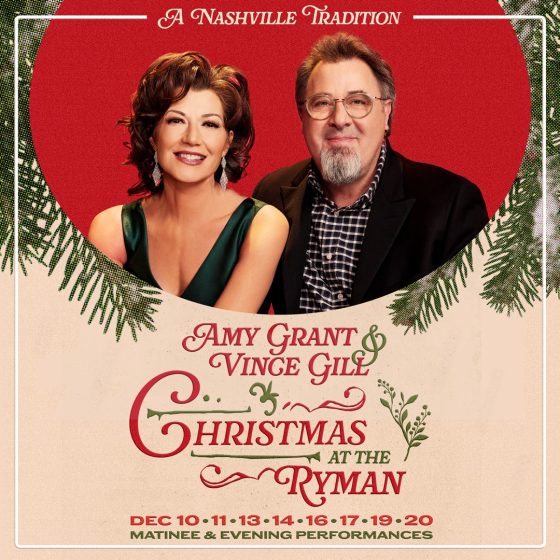
Christmas at the Ryman, Amy Grant & Vince Gill
“When I Think of Christmas” I think of Amy Grant and Vince Gill holding down the holiday fort with their iconic annual Christmas at the Ryman series. This year, they’ll offer 12 performances over eight days at the lauded venue known as the most famous former home of the Grand Ole Opry and the birthplace of bluegrass. Grant and Gill epitomize Music City and how tightly knit this town and its music creators are. There are sure to be plenty of memorable and one-of-a-kind moments across their holiday residency. Limited tickets are still available, so secure yours today. The series begins today, Wednesday, December 10 and concludes on December 20.
“Joy,” Kirby Lyle
Nashville-based songwriter and multi-instrumentalist Kirby Lyle is joined by Maya de Vitry on a brand new seasonal track, “Joy.” Featuring trickling banjos, fiddles, cellos, and guitars in a cozy and grooving 6/8 time, “Joy” feels like a folk holiday mantra, with Lyle and de Vitry singing in a call-and-response style perfect for the often ecclesiastical vibes of this time of year. “Joy” centers the feelings of working class and downtrodden folks in the holiday season, finding radical hope not through toxic positivity but through intention and community. It’s both a sonic and rhetorical antidote for those weary of capitalism and consumerism masquerading as togetherness and holiday cheer.
“Merry Christmas, Baby,” Miko Marks
Does Christmas give you the blues? Well, the blues can cure your holiday blues, too – as evidenced by Oakland-based artist and singer-songwriter Miko Marks’ brand new rendition of “Merry Christmas, Baby.” With twangy resonator guitar and whining harmonica, Marks’ ensemble stomps their way through the deep-pocketed number. The classic form and chord progression are as comforting as Christmas cookies and a mug of hot cocoa, and Marks’ soaring and soulful voice is more than angelic enough for the season.
“Santa Claus Is Coming to Town,” Parker McCollum on CMA Country Christmas
Young country superstar Parker McCollum performed a quintessential classic, “Santa Claus Is Coming to Town,” on this year’s primetime broadcast of CMA Country Christmas. Flanked by thousands of twinkle lights and backed by brass, strings, and background vocalists, McCollum wore a crisp white “Fresh Western” trucker cap as he brought his trademark country energy to the beloved carol at Belmont University’s Fisher Center for the Performing Arts. If you missed the original broadcast of CMA Country Christmas on December 2 and the encore broadcast on December 9, don’t worry – you can stream CMA Country Christmas via Hulu or Disney+. The single version of the track is also available exclusively via Apple Music.
“Every Season,” MORGXN
On the opposite end of the mainstream country continuum from bro country and country trap you have artists like MORGXN innovating on the genre in similar sonic ways, but without the genre cognitive dissonance, toxic masculinity, or petty litmus testing of the other end of the spectrum. See how much fun, engaging, and innovative country can be with pop and electronic influences from other territories than what we most commonly find on the country airwaves? “Every Season” is the first holiday release from MORGXN, an original song that draws as much upon rootsy textures and tones as crisp and modern software sounds.
We always love when we find new seasonal music that’s inclusive of everyone’s faiths and traditions, too, so we’re especially excited to add “Every Season” to our holiday playlists this year.
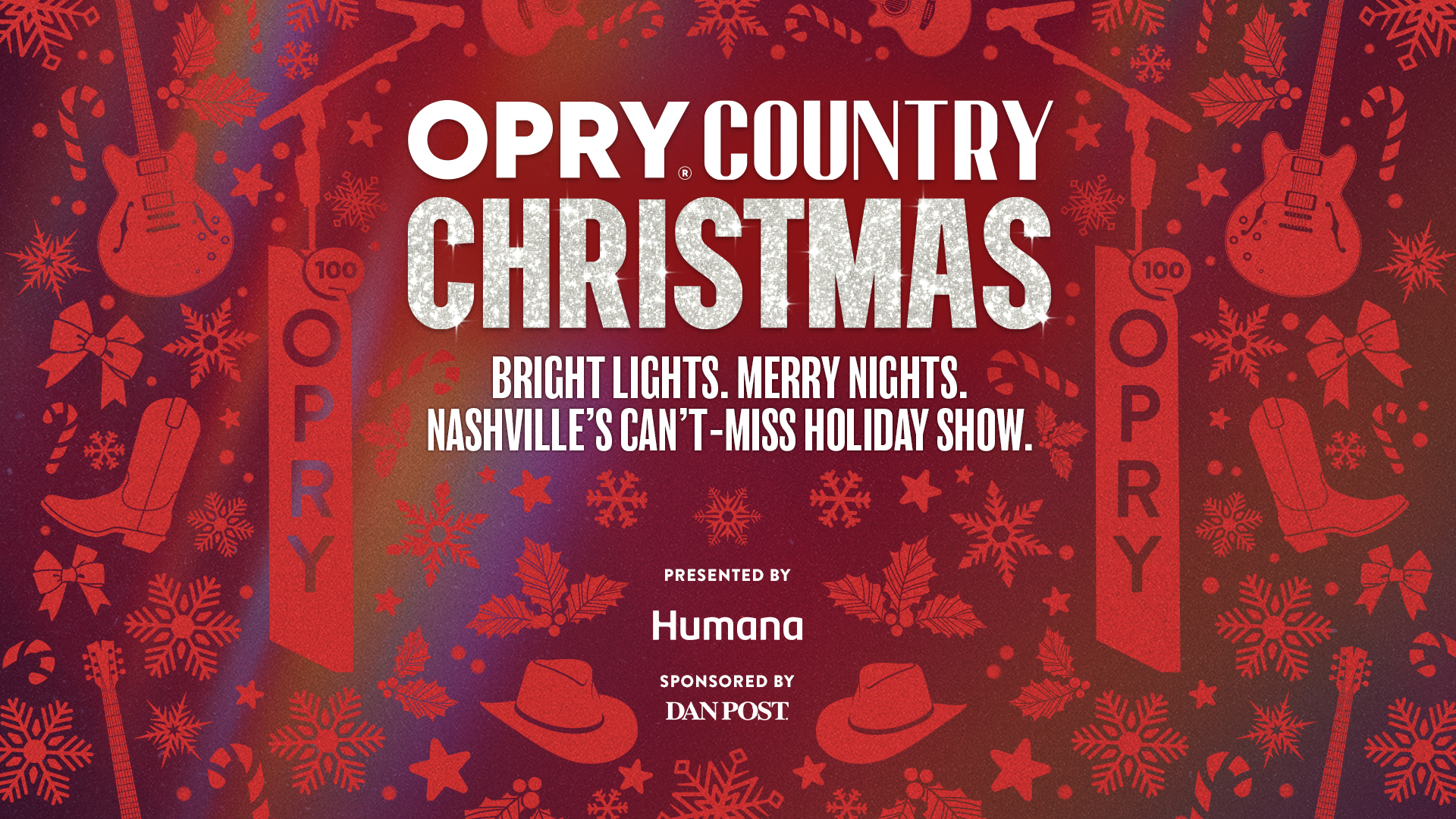
Opry Country Christmas
Are you also devastated our Opry 100 Artist of the Month series concluded already? Here’s your solution, as mere days after the Grand Ole Opry’s special 100th Anniversary shows on November 28, Opry Country Christmas began in earnest at the Grand Ole Opry House on November 30. The festive, star-stacked shows will continue through December 23, each performance featuring Opry members the Gatlin Brothers, Riders In The Sky, Mandy Barnett, and Charlie McCoy plus varying special guests each night like Connie Smith, Marty Stuart, Maddie & Tae, the Isaacs, Ricky Skaggs, Marcus King, and many more.
If you’re nearby or traveling to Nashville this December, get your tickets and more info here. Not able to make it in person? Stream Opry Country Christmas on WSM Online and the Opry’s digital platforms, or listen like we do most often, over the good ol’ fashioned airwaves at 650 AM. When you hear Country Music Hall of Famer Charlie McCoy wail through a medley of Christmas carols on his harmonica, you’ll be glad you did.
Snow Globe Town, Brad Paisley
Brad Paisley’s brand new country Christmas album, Snow Globe Town, was inspired by him being asked by Hallmark Channel to write and record music for their brand new A Grand Ole Opry Christmas movie. Paisley has already taken his festive songs to The Tonight Show Starring Jimmy Fallon and NBC’s “Christmas in Rockefeller Center” – and the album rose rapidly to the very top of the Billboard Current Country Album chart, scoring a No. 1 while it landed on their Top Country Albums and Holiday/Seasonal Albums charts, too. With his signature croon and hearth-hot telecaster licks, Paisley offers brand new numbers and favorite classics. Snow Globe Town has been called “unmistakably Brad” and we certainly agree.
Wrapped in Paper, Sofia Talvik
We’ve enjoyed featuring Swedish singer-songwriter Sofia Talvik’s holiday songs in BGS Wraps over the years. Now, she’s collected all of her Christmas singles and tracks since 2018 into a new holiday album, Wrapped in Paper. The project also includes three brand new tracks, two originals – “Merry Christmas, Adios, So Long” and “Let Peace be the Song” – as well as her version of “Silent Night.” “Let Peace be the Song” is more than apt for the uncertain and extreme times we find ourselves living in. Seemingly a response to the attention economy of social media and the sensationalism of the news cycle, Talvik calls for peace – the true meaning of this season, regardless of faiths or traditions – while wars, conflicts, and political frays are fought all around us. If only peace could be the gift we all give each other this year.
Heart of the Holidays, Tenille Townes
A new three-song EP from singer-songwriter Tenille Townes, Heart of the Holidays, is inviting, cozy, and classic. The collection’s title track is warm and jazzy, with round hollow-body electric guitar tone that feels like a comforting hug. The drum kit shuffles along as Townes gives us an excellent track for all kinds of wintry holiday celebrations. “I love writing and singin Christmas songs,” Townes said on social media, “because it brings out all the jazzy, cozy melodies.” The project continues with “Auld Lang Syne” – preemptively add that to your New Year’s playlist now! – and a lovely three-part harmony rich version of “Go Tell It On The Mountain” featuring Caylee Hammack and Fancy Hagood rounding out the vocal trio. It’s a perfect fit for BGS Wraps!
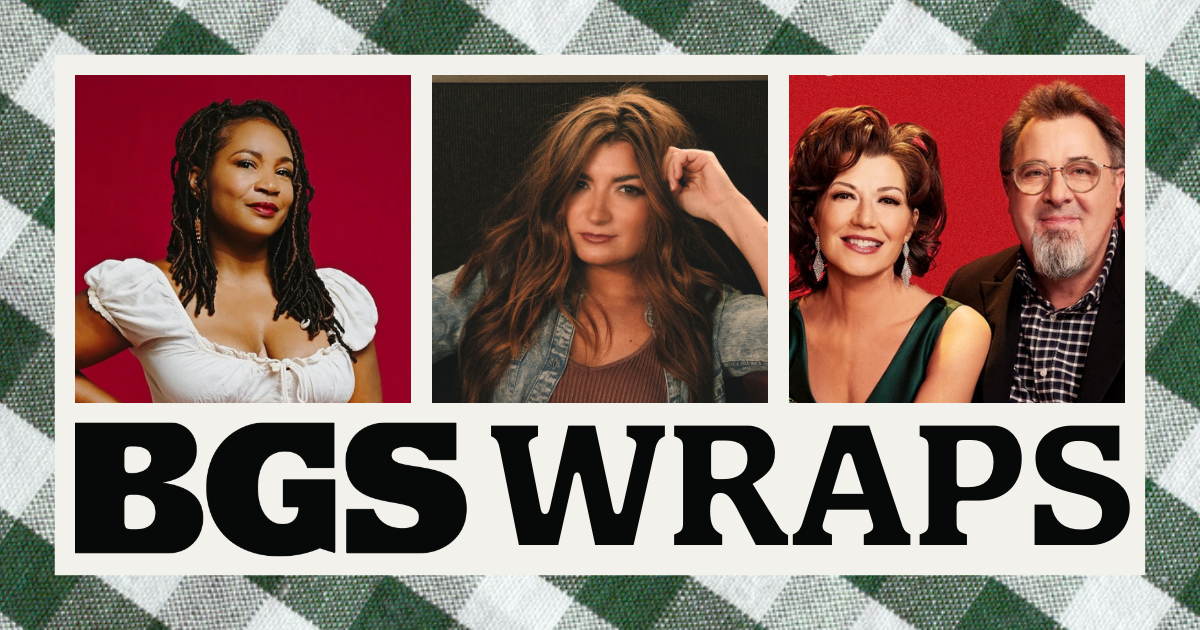
Lead Image: Miko Marks by Karen Santos; Amy Grant & Vince Gill by Robby Klein; Tenille Townes by Robert Chavers.
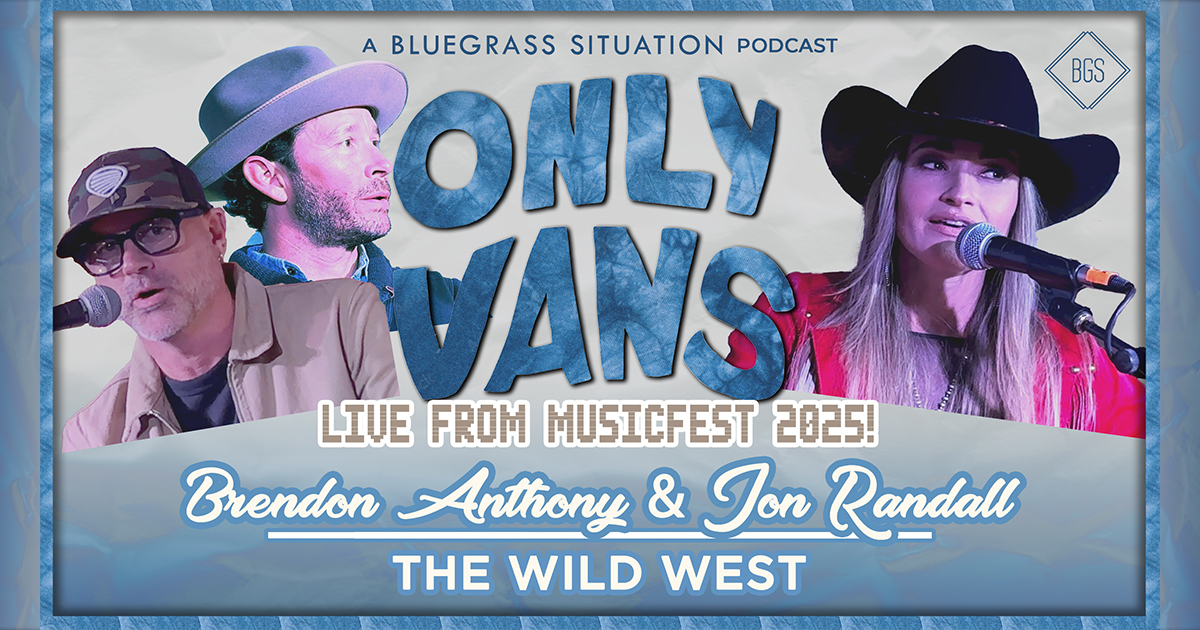
This is one of the more serious – and important – conversations I’ve had so far on Only Vans and I was lucky enough to get to have it with two good friends. Brendon Anthony is the newly named VP of Big Loud Texas and a brilliant fiddler. Jon Randall is a hit songwriter, producer, and co-founder of Big Loud Texas. We talk about things like the Texas music scene, the politics of live music, product versus legacy, and the impact of AI.
Here is another Only Vans recording in front of a live audience at MusicFest at Steamboat in Colorado. Thank you so much to John Dickson and everyone at MusicFest for making this happen!
Today I am joined by two amazing human beings that I’ve known for over a decade (and a half…?), Brendon Anthony and Jon Randall. Brendon Anthony has recently been named the Vice President of Big Loud Texas, which is a record label that was founded by Randall and Miranda Lambert. It is a branch of the Big Loud record label that has artists such as Lambert, Hardy, and Hailey Whitters to name a few. Before that, Brendon was the director of the Texas Music Office and was instrumental in the creation of BMI Texas and the Texas Music Incubator rebate program, which supports music venues in Texas with over $20 million in tax rebates. We talk about a lot of other great things Brendon has done for Texas music and music-friendly communities, and even I was fascinated by it and learned something new. You can also find him playing fiddle on stages with people like Pat Green!
Jon Randall, co-founder of Big Loud Texas, has some hits you may know as a songwriter, including “Whiskey Lullaby,” “Tin Man,” and many of your favorite new Hold My Beer Volume II tracks by Wade Bowen and Randy Rogers. His producer credits are equally impressive: Dierks Bentley, Parker McCollum, Miranda, Jack Ingram, Pat Green – you get the picture.
These two guests are funny, down-to-earth, approachable, and they truly care about art in the midst of a time I’ve been referring to as “The Wild West” of music. When Jon also called it “the Wild West,” I almost fell off my chair with validation. Don’t forget to subscribe and share this episode!
Thank you so much again to Jon and Brendon and to Dirt Trail Entertainment for sponsoring these very special and very cold MusicFest episodes. Thanks to our show sponsors, Hand Drawn Pressing & CH Lonestar Promo, too!
This website uses cookies to improve your experience. We'll assume you're ok with this, but you can opt-out if you wish.AcceptRejectRead More
Privacy & Cookies Policy
Privacy Overview
This website uses cookies to improve your experience while you navigate through the website. Out of these, the cookies that are categorized as necessary are stored on your browser as they are essential for the working of basic functionalities of the website. We also use third-party cookies that help us analyze and understand how you use this website. These cookies will be stored in your browser only with your consent. You also have the option to opt-out of these cookies. But opting out of some of these cookies may affect your browsing experience.
Necessary cookies are absolutely essential for the website to function properly. This category only includes cookies that ensures basic functionalities and security features of the website. These cookies do not store any personal information.
Any cookies that may not be particularly necessary for the website to function and is used specifically to collect user personal data via analytics, ads, other embedded contents are termed as non-necessary cookies. It is mandatory to procure user consent prior to running these cookies on your website.