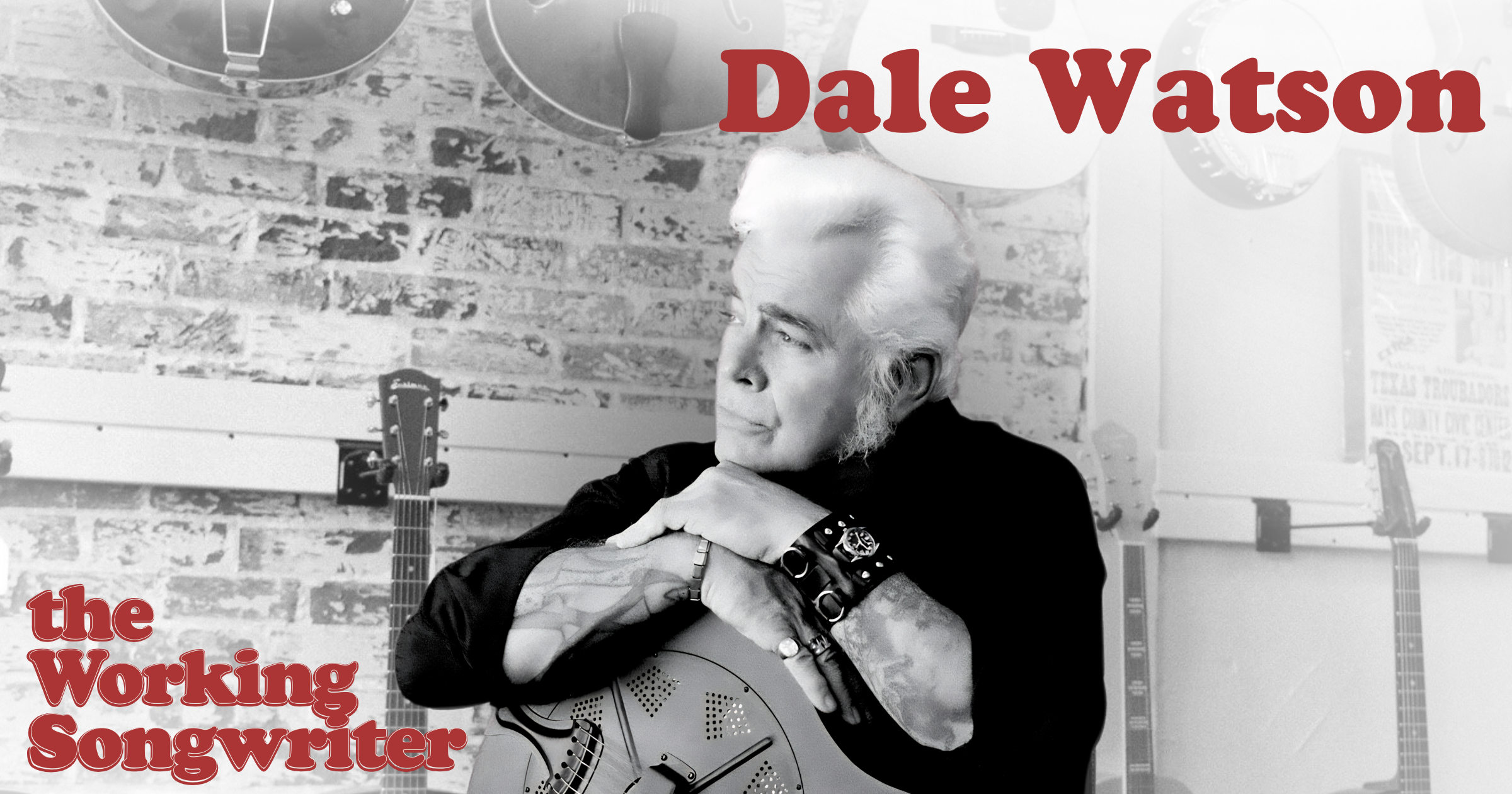
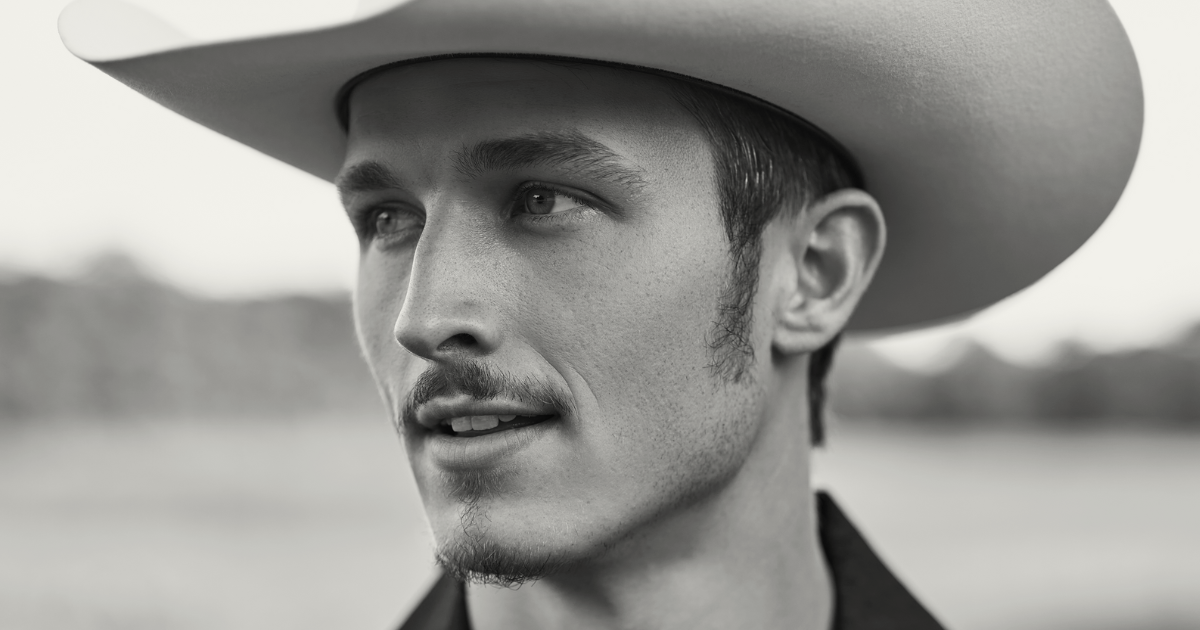
Our guest this week was born in Birmingham, Alabama, but, just like Davy Crockett, got to Texas as soon as he could. Dale Watson began his musical career playing the clubs of Houston before decamping to Austin and becoming a fixture in the live music capital of the world. The music machine in Nashville never fully embraced Watson’s traditionalist combination of Western swing, rockabilly, and country, but he’s built a devoted cult following the world over on his own. It’s a style of music that he calls “Ameripolitan.”
Watson has toured with all the greats: Merle Haggard, Johnny Cash, Willie Nelson, and Kris Kristofferson. He’s appeared on The Late Show with David Lettermen, Jimmy Kimmel Live!, and of course Austin City Limits. He’s performed at Stagecoach, Bristol Rhythm & Roots, and a host of other festivals.
He was a 2005 Austin Music Hall of Fame inductee and he was awarded the title of Texas State Musician in 2007. He founded the Ameripolitan Music Awards in 2014. The Austin Chronicle calls him their “local honky-tonk hero” and Saving Country Music says that “Dale Watson is all about keeping the honky-tonk traditions alive.”
I got a chance to catch up with Watson a few months ago to hear about his musical journey so far.
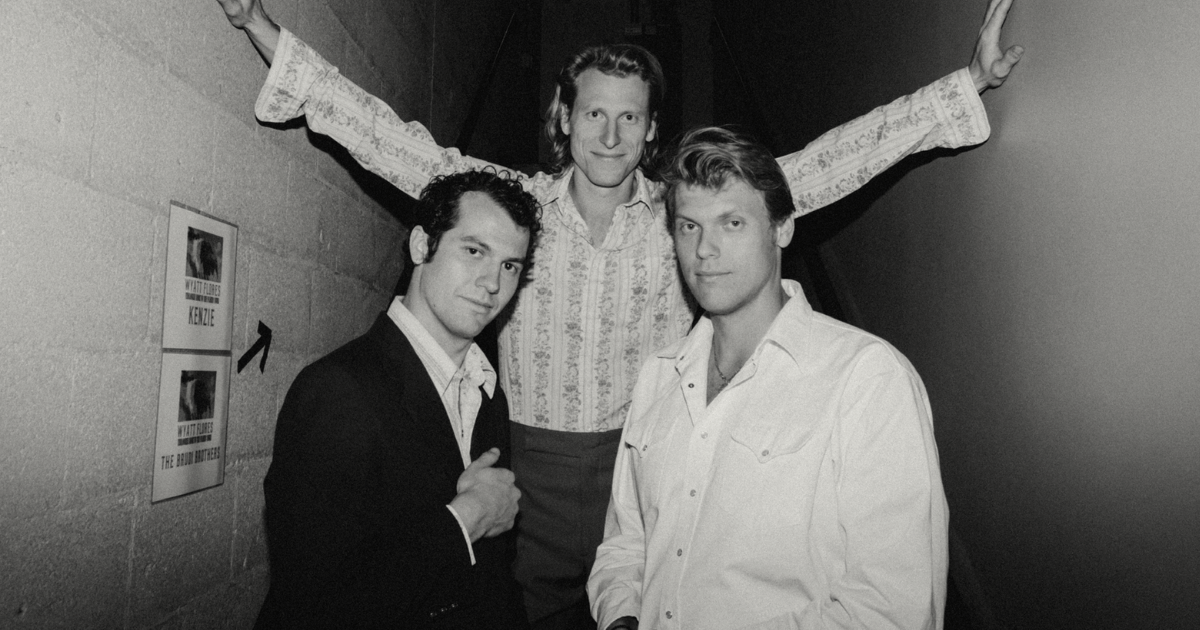
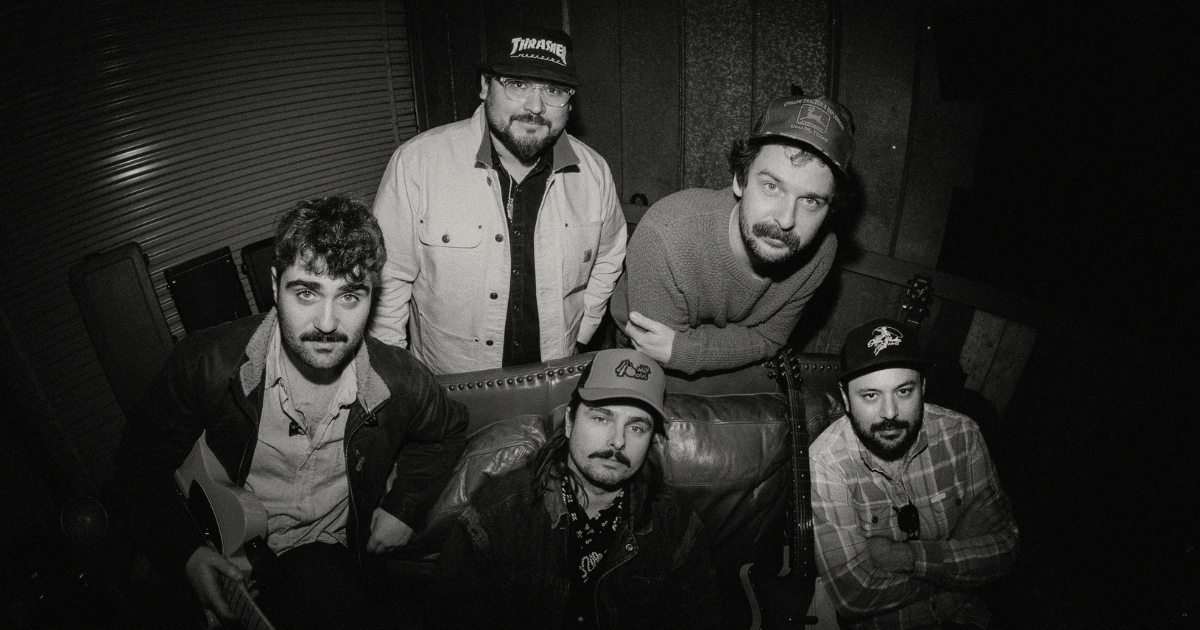
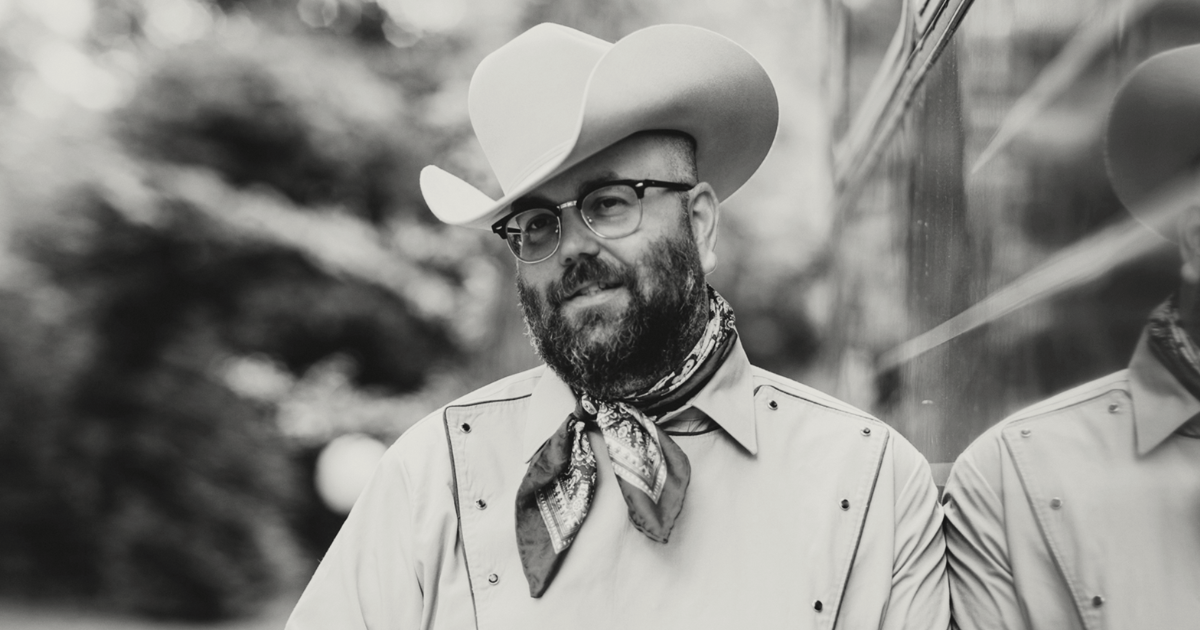
With three-part sibling harmonies and acoustic arrangements that harken back to the music of the 1940s, the Brudi Brothers are still somehow right in step with the modern era.
Seattle-based brothers Johannes, Conrad, and George Brudi charmed millions on social media with “Me More Cowboy Than You,” a catchy and clever number written after a winter trip to San Francisco. In the midst of tech workers in puffy L.L. Bean jackets, the brothers couldn’t help but notice the occasional random guy in 1960s cowboy attire. The anachronism naturally lent itself to some gentle ribbing. Who among us hasn’t seen someone, camera in hand, doing a country fit check?
When “Me More Cowboy Than You” took off on TikTok in January 2025, the Brudi Brothers already knew how to sing loud and hold a crowd, giving them a runway to a touring career. They’ve signed business deals with Mom and Pop Records and CAA, but they’re still leaning toward the DIY aesthetic. (For example, their best friend from school is their tour manager; he even built out a trailer for them.)
In the summer of 2025, the brothers broadened their audience on bills with fellow former busker, Sierra Ferrell. They’ll join her on dozens of dates this summer, too. Last November, the band made their Nashville debut at the Ryman Auditorium on a bill with 49 Winchester and Noeline Hofmann. While the brothers weren’t familiar with the history of the venue, being from the Pacific Northwest, they are well-versed in the golden era of country music.
“Being in the back of the Ryman, we saw all these photos of these legends of the national country scene from the ‘50s and ‘60s and ‘70s,” Conrad Brudi says. “In the photos, you can see that you’re standing in the same doorway as the photo was taken. That was pretty exciting.”
Already this year they’ve opened select concerts for The Head and The Heart, headlined a club tour, and confirmed a pair of hometown dates in Seattle warming up the crowd for Kacey Musgraves. They’ve also brought in one of their favorite folk musicians, Eleni Govetas (violin and percussion) to tour with them, adding not only musical dexterity, but also a hint of instrumental mystique.
Good Country tracked down the Brudi Brothers by phone somewhere in Ohio, as they spent a day off driving to their next gig to promote their new Dark and Stormy EP.
When you hear the phrase “dark and stormy,” you might think of that literary line, “It was a dark and stormy night.” Or you might think of a rum cocktail. Now it’s the title of your EP released in April. What was it about that phrase that kind of sparked your interest?
Conrad Brudi: Actually a dream that Eleni was having. She was talking in her sleep while we were camping, and she said, “Who’s your Mr. Handsome Darkened Prairie?” – a weird character in her dream that was like a sexy version of Mr. Clean. I woke her up, like, “What’s going on?” And she said, “It was like this sexy, bald guy on a burnt prairie.”
[The title] “Mr. Handsome Darkened Prairie” would be a little bit too avant-garde. So I just changed it and wrote a song about a guy we used to busk with who died, from the perspective of his dogs. This guy was a real piece of work. Basically, there were some girls that liked him, but mostly just his dogs liked him. And I figured his dogs must miss him. So I wrote that song sort of about these two dogs who stuck with him despite the fact that he was kind of a bad guy.
You’ve been performing since you were young, right? How old were you when you started?
CB: We have been doing this since we were teenagers. I was 16 or 17 when I started. George was 14. So we have over a decade of busking and learning traditionals and standards and all these folk songs of jazz and ragtime, and bluegrass standards. We busked a lot in Europe. We were, at times, one of very few American acts in a city at that time. For much of our busking career, we’ve been sort of a novelty in town. And so coming back to America, it was daunting, not knowing how we would be accepted in the actual American music community.
How did you get linked up with Sierra Ferrell?
CB: It was just being part of the same busker circuit. All of her friends are buskers or in that community, so we know so many people who busked with her in various groups that she was part of or leading. We’ve sort of missed [crossing paths with] her for years now, but we’d always known about her and saw her online stuff and heard stories about her. So we met her on the first of May last year, officially, and we played a show with her in Albuquerque on May Day.
George Brudi: But how we got linked up is a lot less romantic than just happenstance. It was our agent who linked us up.
CB: We had been told by bookers before that we should sign with their booking agency because we could play with people like, say, Sierra Ferrell.
That’s a good pitch, right?
CB: We said, “Nah, we’ll pass on this one.” They’d say, “I guess you’ll never play with Sierra Ferrell.” So we ended up playing with her anyway.
At the Exit/In show in Nashville, you played “Moon Over Montana,” and it’s not that often you hear a Jimmy Wakely shout-out. What made you want to record that song for this EP?
CB: It’s one of those songs that does well busking, and we enjoy singing it. And it’s a fun, three-part harmony tune. Then you have that cool violin part for it. So, it was sort of thrown in last minute, actually. We were trying other songs because we wanted to put one cover on the EP. We were trying all these other things. We tried recording “Goin’ Up the Country” and we didn’t really like that. Then we tried “Moon Over Montana.” It came out naturally and sounded much better than anything else that we had tried, cover-wise, that session.
Listening to that song on the EP, you’re an impressive whistler. How did you learn to whistle?
CB: From cowboy movies, like The Good, The Bad and the Ugly. Ennio Morricone, “The Ecstasy of Gold.” I loved whistling that when I was a kid. That was my favorite movie, and we had really good acoustics in the bathroom where we went to school. That’s where I learned to whistle.
At that show in Nashville, you were playing originals, but you pulled out a Lonnie Johnson song and a Lead Belly song and a Sons of the Pioneers song. How did you discover this wealth of music? Where did you hear about these older artists?
CB: Our grandparents. We lived with our grandparents, and our grandpa was a Dixieland banjo player and harmonica player. Also our dad had a lot of CDs, and played fiddle and guitar. We just grew up with it. Some of it was the atmosphere we were in that led us to discover the kind of music we actually related to, as opposed to just listening to whatever our friends in school were listening to, the Top 40 or something. I think all of us have an aversion to music that doesn’t feel good to us. I don’t know how else to say it.. We all don’t listen to a whole lot of music, but when we do listen, we’ll obsess over one artist or one song or one album. And so it’s not necessarily a wide breadth, but it’s a deep trench. [Laughs]
George, when did you gravitate towards playing the upright bass?
GB: It was a little more than a year ago, right before we played “Me More Cowboy.” I was telling Johannes that I should get an upright bass and we should sing into one microphone. The bassist standing in the middle, then two guitars on the side, and we sing three-part harmony. And then I got the bass without really realizing you actually have to learn how to play upright. So, this last year, I’ve been trying as fast as I can to figure out how to play the instrument.
How did that go for you? Did you pick it up pretty quick?
GB: I think I picked up the basic technique of it quickly, then I plateaued really heavily. I’m slowly digging myself out of it, because it’s hard to make notes, but to have them be in tune is the harder part.
How did “Me More Cowboy Than You” change the game for you?
GB: It’s the reason why we’re able to tour now and why we have a record deal and all that stuff. It’s like, that’s to thank for it. But I hope that it’s seen as a jumping off point, and isn’t just like the thing that people recognize, and then they’re like, ”All right, moving on.”
Are you getting that vibe? It seems like it fits in pretty well with a general show.
CB: It’s more of our concern that the suits will see it that way. “Well, write another hit,” you know? … There was even a write-up in a big magazine that put an article out saying that “Me More Cowboy Than You” was clearly about our experience in Nashville. I looked into it. The writer was from London. It was just sort of him guessing.
I noticed as soon as you played that song in Nashville, all the phones came out. “The flickering screens,” right on cue. It’s got to feel good to have a song that everybody’s excited to hear. What is it like to travel the country with a song that people love?
GB There’s nothing really to compare it to. We played the Ryman last November and when we played that song, looking at the stained glass windows and the crowd of people in the beautiful theater, that was a pretty cool moment to realize, like, “Wow, this is the reason why we’re here.”
Jo Dee Messina wants to know where the real cowboys are.
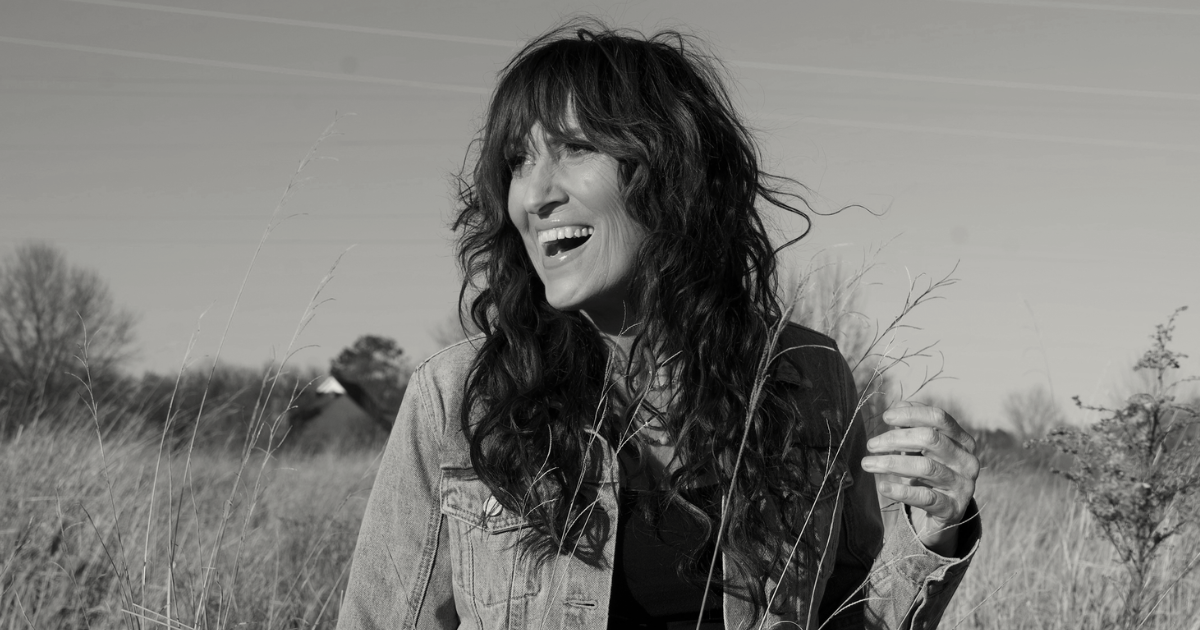
“Well, are they in some greener pastures?” she asks on “Where the Cowboys Ride,” a spicy sendup of Tecovas-rocking poseurs and a standout on Bridges, Messina’s first album in over a decade, out June 5.
Sometimes cheeky, often affecting, Bridges condenses a lifetime of lessons into 12 tight tracks. Whether she’s taking a narcissistic partner to task (“It’s All About You”), warning about the dangers of self-medication (“Message in a Bottle”) or setting the record straight on scripture (“The Jesus I Know”), Messina explores life’s complexities with her signature mix of grit and hard-fought joy.
Lead single “Some Bridges” is a power-pop-country belter that recalls the triumphant highs of 1998’s I’m Alright, which spawned three consecutive No. 1s and cemented Messina as one of the leading voices of country pop’s golden age. Like “Bye Bye,” Messina’s indelible ode to putting “a lead foot down on my accelerator” and leaving a bad relationship in the rearview, “Some Bridges” reminds listeners that self-preservation sometimes means burning things down.
“You have to learn to forgive, but do you go back to that abusive situation?” she says. “Do you go back to that addiction? You don’t have to subject yourself to these things.”
Jo Dee Messina is our Artist of the Month for June 2026. She sat down with Good Country to talk burning bridges, her “sweet” relationship with Ella Langley, and what she hopes fans will take away from this new era. Check out our interview and don’t miss our Essential Jo Dee Messina playlist below, too.
Why was now the right time to put out new music?
Jo Dee Messina: Because it was done. [Laughs] I’ve been writing a lot with people, and [my co-writers] are just so encouraging. We’d write a song and they’d be like, “Man, you should record this.” It happened so many times, and I was like, “Well, I think I’m at a stage right now where I have time I can dedicate to a project,” releasing the songs and a tour schedule to support it. It just seemed like the right time.
Do you feel like you’ve gained confidence as a writer as your career has gone on?
I’ve always been a songwriter. I do believe that in the last few years, my songwriting has had time to develop and I’ve written a lot more. I’ve had more time to write, so I’ve had a lot more content.
To hear songs like “Some Bridges” on the radio kind of brings tears to my eyes, because it’s like, I actually wrote this. I actually wrote the songs on this record.
“Some bridges are meant to burn” is a great lyric. Do you feel like you’ve had to burn bridges in your career?
I wouldn’t say career. But with life, sometimes there are situations that aren’t beneficial, or jobs or that really take the life out of you. I think everybody has experienced that. And it doesn’t have to be heavy. It could just be like, “I feel like my talents aren’t being used, and so I’m going to move elsewhere.”
With that song, we were in the writers’ room, and somebody brought up the idea that you can’t be burning bridges. But what if they’re meant to burn? What if that bridge leads you to pain and abuse, or to a job that sucked the life out of you? Forgiveness is for us, we’re not built to carry the weight of unforgiveness, but you can forgive from the other side of the bridge.
“Where the Cowboys Ride” is such a fun song. Did that song come out of any experience in particular?
It’s funny, because it’s not portrayed in the song, but the truth of that song is that a friend of mine went down to Lower Broadway [in Nashville] one weekend and came back and had his foot in a sling. I’m like, “What is the deal? What happened?” And he’s like, “I wore my cowboy boots down to Broadway this weekend.” I was like, “I’ve never seen you in cowboy boots. You wear sneakers every day.” But he dressed the part.
There’s a line in the song about how you don’t see them around here on a Friday night. I want to see the guys that are slinging dirt for a living. I want to meet the guys that will lay their life down for their family. All the things that a true cowboy does.
Everyone’s certainly throwing on the cowboy boots right now. Any theories as to why country music is having such a moment?
Country music tells the story of life. The messages don’t change as far as the relatability to different generations. Dolly Parton wrote “I Will Always Love You” in the ’60s, and then it came back in the ’90s, and people are still cutting it. You ask seven-year-olds and they know that song because their parents are singing it. With some songs, the emotion and the life story behind them doesn’t go out of style.
Of course, some of your older songs have been getting renewed attention as well. You recently performed “Lesson in Leavin’” with Ella Langley at the Ryman Auditorium, and then the two of you interviewed each other at Country Radio Seminar (CRS). Can you tell me about your friendship with her?
That started off with us messaging each other online. She sang “Lesson in Leavin’” on TikTok, and I reached out to her. We talked about writing together, but then life got crazy. Then when she played the Ryman she reached out to me and was like, “Hey, do you want to do this deal with me?” And then she did CRS and asked if I wanted to do that.
I think it’s just a mutual admiration. I’m really proud of what she’s doing and how she’s handling it. We both know Jesus, and we both love Jesus, and so I’m able to have that connection with her, and just say, “Hey, if you need prayer, I’m here. If you need a safe space, I’m here.” It’s a sweet friendship.
“If He Knew Jesus” is one of a couple songs on that album that takes up the topic of faith. What’s the backstory behind that song?
I’ve been a single mom for a while, and it’s difficult because you can’t split yourself up. Especially if you have more than one child, you can’t go to one’s recital at school and one’s hockey game, so one of them is always missing something. Someone had asked me if I would ever consider dating somebody, and my first response was that he would have to love Jesus. And so in these conversations with other moms is where we came up with the line, “If you knew Jesus, there’d be no raising these babies alone.”
I started to cry in the writing room when we wrote that. I was like, “That’s the saddest thing,” and then I went on to other examples: “He wouldn’t crush you beneath all that he did,” all of the hurt and pain and abuse and whatever, where Jesus raises us up. He protects us, and He cares for us, and He puts us first, and He dies for us.
What’s the best thing someone can tell you about what your music means to them?
I think, “It gave me hope. It made me not feel alone.” That would be the greatest thing. “It made me not feel alone in my situation,” whether it’s a happy situation, a lonely situation, a feisty situation, because the songs cover everything. Keep in mind the enemy tries to separate us so we feel alone, and when we’re alone, all sorts of crazy things go through our brains.
Who’s the enemy?
Satan. It’s like, if you get alone, your mind starts going, “Why am I alone? Oh, because nobody likes me, or I’m not good enough.” All these crazy thoughts go through your head, and so you don’t start to think, “Wow, I’m beautiful, and I’m worth it, and I’m treasured.” That’s why it’s called the enemy of who you really are and who God created you to be. He’s working against it.
Are there experiences you’ve had in life where you felt like you were alone?
I think we all have. So I just want to be sure that people know you’re never alone. Even if you don’t see another person in the room, you’re still not alone. Period. God’s word tells us you can never go too high, too low. He’s there. We just have to open our hearts and see it.
I work with teenagers and I remember a teenager saying, “I don’t even think my parents hear what I say.” It was such a sad statement, and it inspired the song “Can Anybody.” In my inner circles, I’ll call that song “The Teenager’s Lament,” because they all feel invisible. It’s why they’re doing things on social media and hanging out with certain people. It’s why they sometimes don’t talk to their parents.
That’s where the first verse came from, and then the second verse came from myself: “I’ve got a history of trying to save myself/ But God, if you’re listening/ I’m screaming out for help.” That’s me. I’m a doer, and I have a history of thinking, “I’ll fix it, I’ll fix it, I’ll fix it.” But there are some things I can’t fix. You can’t fix someone else’s health or their mental state. After my mother had anesthesia, she was confused, and I couldn’t fix that. I tried and drove myself crazy. I’d made her photo albums, and I made her song playlists, and, and I couldn’t do it. She was still confused. It made me realize the humanity of myself and the limits of a human.
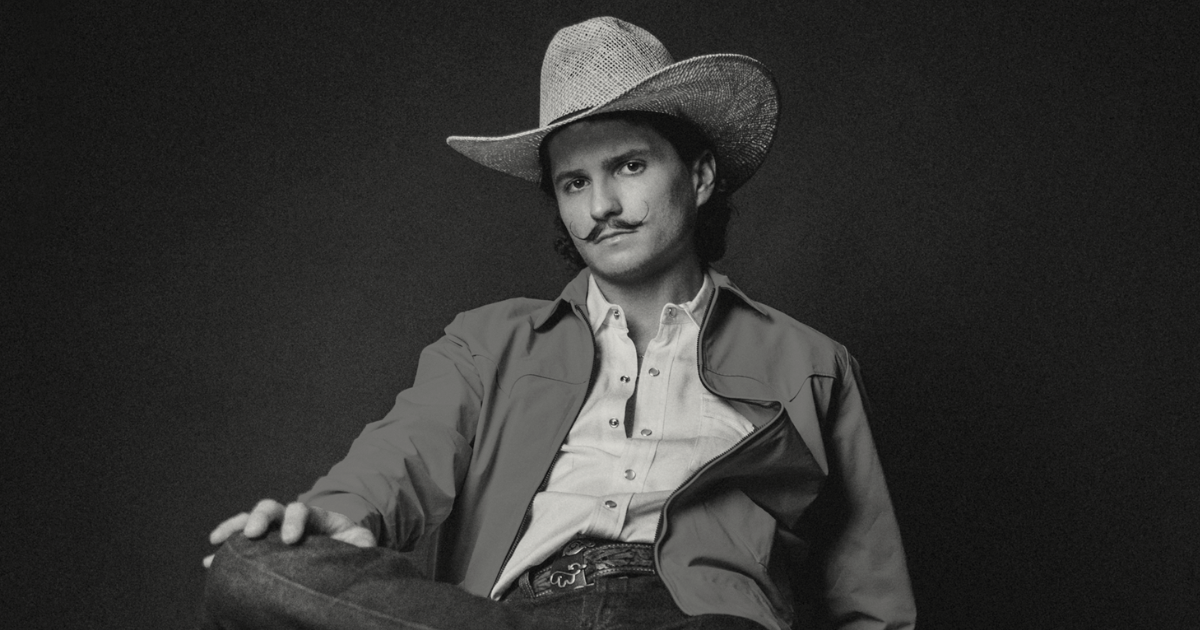
After years of building up a fan base through high-energy shows and viral social media posts, nobody is more ready for Braxton Keith’s debut album than… Braxton Keith. Raised in Midland, Texas and living in Nashville, Keith is only half-kidding when he says he’s probably listened to the new project five thousand times. Now he’s eager to hear what everybody else has to say.
His fans won’t be surprised that Real Damn Deal sounds like country through and through. Released on Warner Records on May 15, the album picks up the momentum of Keith’s gold-certified 2024 single “Cozy” and the unlikely embrace of his reverent cover of George Strait’s “The Chair.” Although he was skeptical about re-recording it, Keith found that his take on “The Chair” is serving as a gateway for his younger fans into the trenches of classic country.
Keith co-wrote a majority of the songs on the new album, but also included compelling material by Country Music Hall of Fame member Roger Miller, Americana all-star Jim Lauderdale, and some of Music Row’s most creative writers – such as Jessie Jo Dillon, Tony Lane, Liz Rose, and Morgane and Chris Stapleton, among many others. In this interview with Good Country, Keith talks about discovering country’s legends through his grandparents, learning to love the English language because of dyslexia, and hearing those inescapable ’90s country comparisons.
On this album, “Under Them Neons” sets the scene of a night in a country bar. It has a reference to Keith Whitley in it, too. He had a bluegrass pedigree, as you know, before he became a country star. Did you ever get interested in bluegrass?
Braxton Keith: I would say I have always been interested in bluegrass. Now I, by no means, am a bluegrass picker or anything of that sort, but I’ve always been interested in bluegrass, for sure. It’s such an interesting form of country music, I’d say. Very intricate, and it’s really cool to just watch. In fact, “I Ain’t Tryin’” on this record is written by Brice Long, Carson Peters, and Will Jones, and Carson is a bluegrass picker. He plays in a bluegrass band [Carson Peters & Iron Mountain] and opens up for us every once in a while.
How did you get introduced to Keith Whitley’s music?
Keith Whitley’s probably always been in the background for me. But definitely through listening to whatever was on the radio, listening to my grandparents’ old records and stuff. Keith Whitley has definitely been one that I’ve known about for a long time. I would say him, George Strait, Marty Robbins, and Ronnie Milsap … all the deep divers that you got to go in and figure out yourself.
Is that what you did? Figured it out for yourself?
I just tried to figure out what I liked the best. I really was attracted to these older artists because of the storytelling, but also they have a technical skill about their writing – and their melodies. Some of their melodies are pretty insane that I was trying to emulate, longing to hear again, or to make new.
You say you were listening to your grandparents’ records. Were they vinyl records?
Yes, sir. I don’t remember how old I was, but I remember sitting down and listening to Marty Robbins for the first time and Porter Wagoner. I remember hearing “The Carroll County Accident” and just thinking, “What is this? This is a whole different type of music that I’ve never even experienced before.” I think I was like 13, maybe even younger than that.
Every time we went over there, the Grand Ole Opry was on TV, or CMT was on at least, so we were always exposed to it. I guess I just didn’t realize what was going on until I got a little bit older. I got an iPod, and I think it was the Shuffle. It didn’t even have a screen. You just had to know what your songs were. That was the first time I really got interested in checking out music for myself. I didn’t have to listen to exactly what my parents were listening to anymore.
My mom was a big ‘80s rock person. She really didn’t like country music very much at all, because it’s very sad, she thinks. [Laughs] And my dad was listening to country music, but just whatever was on the radio. He wasn’t very specific in what he liked to listen to.
I’d read that your brothers were athletic, but you were not. However, you had musical talent. Is that accurate to say?
I would say, yeah. I tried to be athletic. I wanted to be, but they definitely had a leg up on me, on the sports and stuff. When I was a little kid we did this thing called Greater Midland Football League. From when you’re in third grade to when you’re in sixth grade you can go after school and do a football program. I never got to do that, because in third grade I actually figured out I was dyslexic. So, every day after school, I would go to classes and learn about the English language, which is probably why I ended up liking writing. So it all works out in the end. I was just a couple years behind when it got to football.
When you were learning about the English language, did you like to read too?
No. That was my big deal, that I struggled – I still do struggle – with reading. It just takes me a little bit longer and I have to really slow down and be thinking about what I’m reading to understand it. I like audiobooks a lot. Anything that I can do where I’m listening to somebody else read helps. But I would say I just liked writing. Before it was songs, I liked writing essays or whatever the assignment was. I’ve always liked writing. Coming up with my own stuff.
Did you play instruments during this time?
Yeah, absolutely. I played piano since I was in kindergarten, and I ended up playing for a while. I played for six to seven years and then I ended up quitting piano. I started piano because I loved Elton John. He was my big inspiration behind music when I was really young. I really wanted to learn “Crocodile Rock” and my piano teacher just wouldn’t let me do it. So I was like, “Man, I gotta go do something else.”
That was about the time I started picking up guitar, because my little brother was playing guitar at the time. So I was like, “Well, I’ll just go to lessons with him.” I started picking it up, got my first guitar, and never looked back. He doesn’t play anymore, but we started out together picking “Hotel California.” I remember us just sitting there for hours trying to get that thing down.
On this album, “Wind Blows” reminds me of how country music sounded in the ’90s. It reminds me of a Tim McGraw deep cut. What do you like most about “Wind Blows”?
I like the story it tells. You know, I grew up in Midland, Texas. And if there’s anything we know about Midland, it’s that there’s a lot of wind blowing in Midland. It’s kind of telling the story of how, when I lived in Midland, Midland was the end of the earth to me. There was nothing else there. And once I left, I never looked back. I went to Angelo [State University in San Angelo]. I’ve moved to San Antonio and Nashville, and we’re traveling all over all the time, just running and gunning. And the road keeps on going, you know? It’s cool to reminisce on the past, but my time in Midland’s gone and it ain’t coming back. That’s kind of what “Wind Blows” means.
Do you like it when people use the ’90s country comparison? Do you think that’s flattering? Or do you have an opinion when people say you sound like ’90s country?
I don’t have an opinion. The thing is, I don’t know if I’ve ever labeled it, which is funny to me. … You’ve heard the record. I would say it’d be very hard to pin that as ‘90s country. I would say that there’s some ‘90s elements in there, but there are elements from a lot of different dates in country music within that. I would just say we’re country, and we’re just trying to be country.
Well, you do start with a Western swing tune on this record.
Absolutely. Have you heard Jake Worthington’s new record? He has a song called “My Home’s in Oklahoma” and that one is a Western swing song. I heard that one after I’d been on a big Bob Wills kick. I just came back from Houston. Most of the rides that I do, I try to listen to different music every time. I was listening to a bunch of Bob Wills. When I heard that Jake Worthington swing tune, it was like, “Oh, son, we’ve got to have a Western swing tune on this record!”
So we called in Brice and Carson. That’s when Carson’s bluegrass magic came out. They ended up writing that beautiful “I Ain’t Tryin’” Western swing song. You couldn’t ask for a better song to start this record off. It’s upbeat, gets you in there. We’ve been ending the set with “I Ain’t Tryin’” lately, and it’s really fun. The crowds dig it. It’s a good one to just swing around to.
Did you ever get pursued to be on The Voice or American Idol or shows like that?
Not until after I was already pursuing this pretty heavily, and at that time, I was trying to stay away from those avenues. I’ve heard some nightmare stories about their contracts and how you are allowed to put out music after the show. And I just kind of knew where we were going. That’s the cool thing about being a Texas artist. There’s so many other Texas artists that are running around on the road, booking their own shows, that you can just learn from some of those guys. That’s basically what I did.
Jake Worthington [who was on The Voice in 2014] had a long talk with me about what he thought about TV and the way that it impacted his career. At that time in my career, I just didn’t think that it was necessary for me to do anything like that. I definitely think it helps put your name out there a lot more. But it also can have some hindrances sometimes.
How did you find the Roger Miller tune, “Am I All Alone (Or Is It Only Me)”?
I do believe Jamey Johnson was talking to William Beckmann one day and telling him, “Man, that’s such a great tune. You should cut that on your next record.” And then me and William ended up going and having a couple drinks, which turned into a bunch of drinks. And he was like, “Man, I listened to this song, and I’m kind of thinking about cutting it.” So I started listening to it. I was like, “Yo, are you gonna cut that song? Because if not, I’m cutting it. Like, I’m going to the studio tomorrow. I’m cutting it.” He was like, “Yeah, go ahead.” So we ended up putting it on the record. It’s one of my favorite songs to play live. It’s one of my favorite songs on the record. It’s such a beautiful song. Every time that I hear it, I’m like, “That is such a well-written song.”
Are there other songs on your record that you would like people to know about?
I would say the only other thing that we didn’t talk about is, there’s a Mae Estes collab on there, “Hurt by Heart.” I met Mae on the road about two years ago, like, less than 100 miles south of Canada somewhere, at a festival. She was singing and just blew me away. Her voice is so beautiful. She has such a great classic timbre to her voice that I knew I needed her on this record.
We’d been looking for a duet piece for a long time. Ended up writing “Hurt by Heart” [with Trent Tomlinson and Scotty Emerick] and pitched it to her. She came over to the studio one day, dressed and ready for a show that she had in Nashville somewhere. She cut her part in 10 minutes and then I spent the next two hours trying to make my part sound as good as hers. [Laughs] I just can’t brag on Mae enough. The audience that hasn’t heard Mae should definitely check her out. Her music is really good.
You’re surrounding yourself with good people. You got Mae Estes, William Beckmann, Jake Worthingon… It’s refreshing to see this new generation cheering each other on.
That’s the way you gotta do it, man. We’re all in this together. Everybody needs to be cheering each other on and helping everybody out. That’s the way I see it.
Want more Good Country? Sign up to receive our monthly email newsletter – and much more music! – direct to your inbox.
There’s little to no stage banter when the Droptines play a show, with the Austin, Texas-based band sometimes cramming 30 songs into a 90-minute set. However, as their new album, Drought Flower proves, they still have plenty to say. Their original songs touch on broken relationships (“Old Tricks”), family grief (“Mamaw,” featuring Sarah Jarosz), and losing loved ones to addiction (“What Ate My Friend”). As a nod to classic country, there’s often a little bit of clever wordplay to offset the drama, too.
Named for the downturned deer antlers that are prized by hunters, the Droptines (rhymes with “stop signs”) first took shape with an EP release in 2019. Lead singer-songwriter Conner Arthur has since guided the group through indie albums, relentless touring, and now their debut set on Big Loud Texas, the label founded by Miranda Lambert and Jon Randall. The five-piece band hasn’t yet moved into a tour bus, though. Instead, they travel in a retrofitted school bus with upgrades that would impress any road musician. (It sleeps 10 people and has a bathroom, two air conditioners, and a built-in trailer space.)
Growing up in the Texas Hill Country town of Concan, Arthur watched countless musicians play at his family’s venue, House Pasture Cattle Company, during the summer season of city folks floating the Frio River. But the rest of the year, when nothing was really going in town, influenced him just as much.
“I learned how to be alone in Concan,” Arthur says. “I learned how to clear my mind and ignore my hunger pangs. But I would always watch and study people. Especially because if you’re driving through Concan in, say, January, and you see a car that you don’t recognize or someone you don’t recognize, you’re shocked and you want to go talk to them. You’re just caught in your own little village for so long. Having an outside perspective from my little narrow worldview was very, very important to me.”
A few days ahead of a full slate of tour dates (and just before stocking the school bus), Arthur called into Good Country to talk about what inspired the new music.
For people who haven’t been to the Texas Hill Country, how would you describe it?
Conner Arthur: The drama of the limestone bluffs, the crystal clear waters of the Frio River – man, it’s hard not to have a religious experience every other day. Especially when it rains and the floodwaters start moving. Everything there is so dramatic and explosive and chaotic. From the summer to the off-season, you have three months of complete and utter chaos, then the rest of the year is just silent. There are some days where I’d walk out and just sit there looking at River Road waiting for a car to drive by. And I was starting to freak out, thinking that I was the last person on Earth.
More than likely I think that made its way into my personal life. It’s just a large juxtaposition, and a dichotomy of high highs and low lows. But I learned how to handle it, growing up there. We didn’t get internet or cell phone service until 2012, and that’s a great way to grow up. My backyard was 200,000 acres. I could ride horses without hitting a fence line for miles. I wish that more people had that upbringing. I wish that I could provide that for my kids.
If you didn’t get the internet until 2012, then you got to experience live music at your family’s venue before the cell phones in the air and people documenting every show.
Oh yeah. The funny thing about House Pasture is [that] it’s changed hands but it stayed in the family. My biological father and my uncle started it. They failed, so my grandpa bought it from them. And then it was kind of a “break even” type of venue. It was just an addendum for someone who’s gonna go down to Concan and float the Frio anyway. Like, “Oh, we can go see so-and-so.” I mean, I’ve got scars all from being this tall and women ashing cigarettes out on my collarbone. Not on purpose!
I learned more about what I didn’t want to be, seeing the evolution of the Texas country scene come through there. I saw that evolution get commercialized in the mid-2000s, like 2005 and 2006. But when I was a little guy, I got to see the Great Divide. I got to see Gary P. Nunn. I got to see John Conlee. I got to see Earl Thomas Conley. I got to see all these really high-class acts. Reckless Kelly is still one of my favorites from that era. Robert Earl Keen, the list goes on. Even if I didn’t like it, the song’s going to be in my head. It is still red dirt Texas country. I still know every word to all these other musicians’ stuff that I’m not a fan of, because it’s just ingrained in you. You can’t avoid it in that environment.
What were you doing before you jumped into music?
I was in construction throughout high school and I’ve gone back and forth over the years when I needed money. But when I was 18 years old, my mom pretty much gave me an ultimatum. She said, “If you don’t go to college, you’re cut off.” And I was like, “Well, I don’t really care. I don’t like ultimatums.” So I grabbed my banjo and I hitchhiked the country for about a year and a half.
I got back home, and that was like going 90 miles an hour into a brick wall. The fantasies in my head were dashed out by my mom’s disappointment. She said, “You’re gonna have to get a job.” So I went back to construction for a little bit, then I joined up in the oil field. I was an oil field mechanic for about two years, and I said, “I’m not going to die out here in the Eagle Ford Shale.” So I made a decision. Just to give me some more confidence, I went to the bluegrass program in Levelland, Texas, at the [South Plains] College. I did that for two years and went home and knocked out our first EP with David Beck.
I knew you played the banjo, but I didn’t know that you had studied bluegrass.
Dillon [Sampson], our bass player, and I both went to South Plains and he’s way more of a bluegrass cat than I, but my story about how I got into playing banjo is just kind of happenstance. My older brother came into some money when we were young, and I won’t go into the details on how he got it, but it was burning a hole in his pocket. He bought this Deering Goodtime open-back banjo and it was sitting in the back of his truck. I was about 14 and I had plenty of guitars floating around the house. And I had a piano, but I never really broke through on it because it was just an instrument for me to get a song out.
I don’t know if it was the open tuning or just the fact that it’s hard to not have a good time playing banjo, but I broke through on it. I could start developing an understanding of music theory and scales. I don’t know why it made sense in my mind that it was less intimidating than 72 keys or six strings. You go down that road, and then are you a gimmick banjo player or are you good? That’s what led me to South Plains. I’m not going to disrespect the institution of bluegrass or the instrument of banjo. I’m going to do my best to play it. But I need to play more. I need to stay on it, because that is not a bike. Your agility and endurance of playing the banjo collapses if you’re not tickling it once or twice a day.
Is that the same for writing with you? Do you need to consistently write, or can you put that away for a while and come back to writing?
I’m always kind of writing in my head and building concepts, then I’ll scribble it down. I’ll more than likely lose the piece of paper I scribbled it down on, but I’ve always said if it’s worth remembering, then I’ll remember it. But I probably lost a thousand songs that way. It’s like a floodgate. I sit around and I’ll have an idea, and I’ll get a quarter way through it, blah, blah… But it’s not until the band all sits down in a room and we all have the intention to write, and these things just… “Boom!” There goes the dam.
In several of your songs, there are references to pills or addiction. On this record, you have “What Ate My Friend.” That’s a reality for a lot of people. When you’re tackling a heavy topic like that, how do you get into that headspace, knowing you’re going to jump into something serious?
A lot of that, it’s lived in for sure. I’ve had men that came before me that did it so I didn’t have to. Back to, I know what not to do now. And my brother Landry being one of them. I lost him to all that shit a couple years ago. He and I were Irish twins. The same thing happened to my biological dad’s brother. At the same age, the same exact circumstance, and they both died on their birthday.
“What Ate My Friend,” I can’t even remember writing that one, but I know that I showed up with all of it, and that’s rare. I have this band to lean on, but I showed up with every bit of that. This was all here. It’s not just about my brother, but a couple friends I have. Just like, “I know you’re on meth, dude, but why is it making you a liar?” Like, you can be honest with me, just tell me. It’s getting in the way of our friendship if you’re going to turn into a liar.
I thought there was a nuance, kind of, what I refer to as the days of country gold, the wordplay of like, “She’s Acting Single (I’m Drinking Doubles).” That’s so important in country and bluegrass music – that play on words – and that one is like, “Hey man, what’s eating at you?” All right, what’s the extreme of that? “What ate my friend?” I thought it was pretty decent, but yeah, that’s a rough one, you know, but it’s real, unfortunately. It’s real for a lot of people. And I hate that. I hate that anybody has to suffer.
You’ve been around music from the time you’re a kid, and now you’re doing this full time. What has surprised you the most about this career path that you’re on?
The main one is that there’s viability. I said this in an interview before, but I just thought playing music was a good excuse to be a loser. And then to see it all pan out! It starts to feel like work, but work is good, especially if it bears fruit, which it is, and it’s starting to even more so. But to be able to build a foundation for my future family off of the back of these songs, that right there is top tier, number one, the most important thing. I can’t be more grateful for that and the blessings that God’s given us. Just having people come religiously to your shows, and singing words, it gives you faith in live music, for sure. It is a little shocking to me, at the end of the day that I didn’t make all this up.
Want more Good Country? Sign up to receive our monthly email newsletter – and much more music! – direct to your inbox.
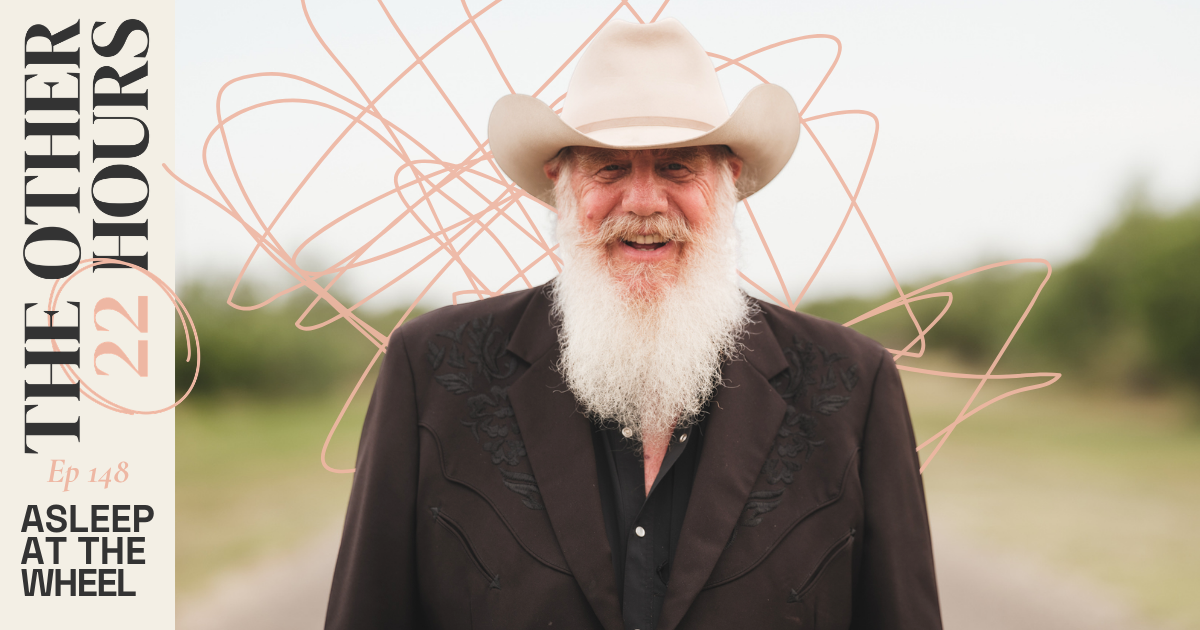
Ray Benson is an absolute pillar of American music, a nine-time GRAMMY winner whose band, Asleep at the Wheel, has defined Western swing for over half a century. In this episode of the Other 22 Hours, we talk with Ray about the “geographical imperative,” rebuilding his career from a broke-down bus to a musical institution, and the delicate balance between the craft of music and the business of image. This is an exploration of longevity, team building, and the importance of finding a “moral compass” in leadership.
Since the very beginning of the cowboy genre, cowboy songs and cowboy poetry have been closely related. Many of the best-known traditional cowboy songs started out as poems and many cowboys have recited song lyrics as poetry. The first man to collect cowboy songs was a New York-bred cowpuncher named Jack Thorp. As Thorp observed in his book, Pardner of the Wind: “Cowboy songs were always sung by one person, never by a group. I never did hear a cowboy with a real good voice; if he had one to start with, he always lost it bawling at cattle, or sleeping out in the open, or tellin’ the judge that he didn’t steal that horse.”
That old-time cowboy singing was mostly done a cappella, as there were not many guitars to be found on the trail drives or in the cow camps. It also seems that there was a fine line between “singing” and “reciting.”
This tradition of setting cowboy poems to music has continued to the present day. My old friend and mentor Don Edwards was master of this. He taught me that if you find an old poem or a set of lyrics with no music, then you just make up your own tune and make your own song out of it. That’s part of the cowboy songster tradition. – Andy Hedges
“The Strawberry Roan” – Harry Jackson
This is the most famous of all bronc ridin’ songs and one of the most famous of all cowboy songs. It was originally written as a poem by Curley Fletcher in 1914. The original title was “The Outlaw Broncho.” Rumor has it that Fletcher wrote the poem about a bronc ride made by the legendary cowboy artist and writer Will James.
Even though the poem became one of the most recorded cowboy songs of all time, Curley Fletcher never made a dime off of it due to unscrupulous copyrighters and publishers. This recording by Harry Jackson is a great example of the old-time unaccompanied style of cowboy singing.
“Sierry Petes” – Gail Steiger
“Sierry Petes” was written as a poem by Arizona cowboy Gail Gardner in 1917. It’s been set to music many times and is better known as “Tying Knots in the Devil’s Tail.” Many folks have failed to give proper credit to Gail Gardner and have also failed to get the words right. This is the original version recited by Gail Gardner’s grandson, Gail Steiger.
“Sierra Peaks” – Ian Tyson
A fun version by the great Ian Tyson with a corrupted title, some incorrect words, and a modern beat. Ian Tyson revitalized cowboy music in the 1980s with both his versions of traditional cowboy songs and his original compositions.
“The Dixie Cowboy” – Taylor’s Kentucky Boys
Montana cowboy D.J. O’Malley published a poem entitled “After the Roundup” in the Miles City Stock Grower’s Journal in 1893. It became known as “When the Work’s All Done this Fall” and a 1925 recording by Carl T. Sprague sold over 900,000 copies. I’ve always loved this obscure version by Taylor’s Kentucky Boys with an alternate melody.
“The Long Road West” – Don Edwards
Henry Herbert Knibbs was a poet, novelist, hobo, and owner of a violin repair shop. He never earned a dime as a working cowboy, but his poetry entered the oral tradition of working cowboys. “The Long Road West” speaks to the kinship between cowboys, hobos, and sailors. It was set to music by the great Don Edwards.
“The Old Cowman” – Andy Hedges & Brenn Hill
In his book Classic Cowboy Songs, Don Edwards tells the story of how he fell asleep reciting this poem one night and woke with the melody in his head. This song is more relevant now than when it was written, over 100 years ago. I recorded this version with my pard Brenn Hill for my 2023 album of cowboy duets entitled Roll On, Cowboys.
“Spanish is the Lovin’ Tongue” – Michael Martin Murphey
Originally written as a poem entitled “A Border Affair” by Charles Badger Clark. I think that Michael Martin Murphey plays the definitive version of this song. And it was also the first song that Murph sang onstage at the National Cowboy Poetry Gathering in Elko, Nevada, when he showed up at one of the early gatherings. It always reminds me of All the Pretty Horses by Cormac McCarthy.
“The Westerner” – Andy Hedges
I found the “The Westerner” in Charles Badger Clark’s 1915 book Sun & Saddle Leather. The poem speaks to the values of folks who live in the rural West. I hope that my melody does it justice. It is the title track of my new album.
“Shadow on the Cutbank” – Trinity Seely
This is a modern-day poem set to music – the poem by horseman, cowboy, and poet Joel Nelson, and the melody by horsewoman and singer-songwriter Trinity Seely. The poem is Joel Nelson’s answer to the historians who have written the cowboy off as a vanishing breed.
“Hitting the Trail Tonight” – Buck Ramsey
“Hittin’ the Trail Tonight” was a signature song for the late great Texas cowboy singer and poet Buck Ramsey. Originally written as a poem by classic cowpuncher poet Bruce Kiskaddon, folklorist and musician Hal Cannon set this one to music sometime in the mid-1980s. I asked Hal about this piece and he told me that he “always felt there is something about Kiskaddon’s words that feel good in the mouth as they come out.” This one will have you singin’ along.
A few years ago, Tyler Halverson had a near-breakthrough hit with his track “Mac Miller,” a song more spoken than sung about the too-soon-departed hip-hop star and how Halverson felt about him. It was a modest song, and a discreet one, a mumbled ode to a kind of masculinity, arguing in favor of a wide and expansive country aesthetic. When he sings about the cowboy killer in the first verse of the song, there is some ambivalence there: Is it the cowboy doing the killing or the cowboy being killed? And, is it an actual cowboy or the larger myth of the West?
The West here is a distinct category from back when country used to be C&W, before the W for western was dropped. Halverson knows more about that W than most other twentysomethings. He grew up in a small town in South Dakota, surrounded by farmland and ranchland. Basically anything that could be done with cattle in the Dakotas, Halverson or his family have likely done. There might be some dissonance here, that ode to Mac Miller perhaps at expense to these country bona fides, but his parents loved listening to music as much as they loved working with cattle. He tells stories about driving around in a truck with his folks playing rock, rap, and country in their truck and making sure that he saw live shows in all those genres.
Music and rodeo are two kinds of performance, two ways of big action, and both boast big audiences – but songs about rodeo are often about the idea of the West. There are songs about small towns by people who haven’t lived in small towns for decades, or whose ideas of small towns are more about commuter suburbs an hour from Atlanta.
The small town is reflected in a kind of fascist excess lately and the rodeo has been stripped of any of its working class parts. What’s left is a kind of stadium tour. If local and small rodeos abstract the actual tasks of ranch hands (roping, tying, cutting cattle, breaking broncos), the overtaking of the Professional Bull Riders Tour made spectacle of that abstraction. Halverson has noted that middle ground between the rodeo and the cattle lots – and has also noted where the music business overlaps with these concerns, though he has not reached PBR or stadium tour levels himself. Yet.
Listening to Halverson’s many songs about the rodeo on his brand new album, In Defense of Drinking (released February 13, 2026 via CmdShft), they are another kind of cowboy killer. One of the best things about his song about Mac Miller was how artful it was displaying the boredom of driving around a small town, the anomie of a blank Saturday night, of being on the aux cord flipping through songs, trying to find something to listen to, trying to find something to do.
So, when Halverson returns to the cowboy killer idea in “Fort Worth Losing,” a song about heartbreak in the stockyards that slices through the myth of the West with a surgical precision, the song bucks, guitars roaring. Then, almost instead of a chorus, a guitar break arrives sounding like an outtake of “Ghost Riders of the Sky.” The mix of failure, heartbreak, heartland rock, and cowboy songs adds to the great tradition of Texas-shaped heartbreak. (It’s less goofy than George Strait’s “All My Exes” and more serious than Mark Chesnutt’s “Going Through the Big D,” but you could two-step to all three.)
“Forth Worth Losing” is one of three rodeo songs on the album; there is a reprise of “Beer Garden Baby,” this time with Parker McCollum – a rollicking and tender song which reminds a potential hookup of the differences between those who ride and those who play music for those riders. The musicians get paid, never out of the money. For all of its joviality, there is an undercurrent of playful cruelty. The musician asks the barrel racer, “Who’s going to pay for your Coors tonight, honey?” They still have tonight – to drink, to smoke dope, to fuck, to play music, and play at being a cowgirl or a cowboy.
The carpe diem nature of these dual performances is made even clearer with “Eight Second Ride,” a tense ballad which notes that “the time between is a long comedown.” Describing the comedown, about “rodeo queens, go around dreams,” and then eventually noting that the lack of money and the melancholy of that comedown doesn’t matter as much as the “eight second high.” His point punctuated with a squall of harmonica.
If “Beer Garden Baby” is a gender-reversed argument about the intersections of musicians and riders, the idea is made deeper and sadder on the heartbreaking “Like the Rodeo,” where Halverson asks, “Could she ever love me, like the rodeo?” He’s telling the listener that the musician and the rider have the same kind of itinerant circuit, one which might never develop into any kind of permanence. Though, on the next song, he makes the suggestion that wanting “cows and cowboy babies” might result in that Dakota grassland. That the cattle of the rodeo might lead to the cattle of the range, in a personal song made more poignant when realising this might be what his parents have done.
These rodeo songs have a kind of modesty, a small softness, that could be considered sober. And though at least one of them is about drinking, the soberness of the sound could also mark a move away from the partying done by the rowdy boys who sing about the events which Halverson sings.
In the ballad “In Defense of Drinking,” which rests on a double entendre that would make ‘70s countrypolitan singers proud, the narrator’s lover leaves him because he’s an asshole who drinks. It’s not the booze’s fault, but the fault of the person who drinks. The soberness continues on the last song of the album, “Son, Brother, Believer.” He sells the cliché from the first line, “I know these hands are made for praying,” but there is a lovely line about rolling joints with the Book of James. The song is about not wanting to disappoint his mother and not wanting to go to Hell, but there is a weariness and a sadness about the realization. Like how his rodeo songs strip away the large-scale spectacle for the one-on-one intimacy of after the show; this Jesus song is about giving up everything for the Lord. The number is threaded by a poignant, almost weeping harmonica, correcting the raucous instrumentation of “Eight Second Ride.”
The modesty of the record, especially the ballads, marks the conversation I had with Halverson for Good Country, a back-and-forth where the silences are as telling as the insights – and where Halverson is only willing to speak for himself. If In Defense of Drinking kills that cowboy, it’s one where the cowboy can’t speak for anyone but their own experience, and also one which foregrounds the eight second ride, the dance after, and the smoke at the back of the chutes.
I know that you have talked about listening to the radio in your parents’ truck and how that can help explain the eclecticism of your work, but I am wondering also about where you first heard Mac Miller. Does his work still influence this album?
Tyler Halverson: Me and my parents were like big concert junkies. They were going to everything… and were kind of just around music a lot. And then we would show cattle all over the country and that’d be at kind of fairs and festivals and stuff like that. So there would always be concerts going on there as well. I feel like it was just [that] we’re kind of always around it.
What was it like working with Wade Forster – you’ve mentioned that touring the rodeo and touring music are similar, can you talk a little bit about that? I love how smart the rodeo songs are on this album, and how careful they are in their metaphors. I know you rode for a while, how directly does the riding undergird the writing?
I mean, I think the rodeo and the music hustle is kind of the same thing, just in the sense of you’re not making no money sitting still. You got to keep going to the next one. Kind of the fun part of it, too, is that it’s like singing, starting out. You’re playing every shithole bar that you can find that lets you sing for four hours for a couple hundred bucks. It’s the same thing for rodeo in some small town that’s not paying out, too. Well, it’s the same kind of progression and build up, I think. I think just being around that – like my dad’s side was all horses and rodeo. My mom’s was all cattle and farming – the whole thing on both sides of that. It’s just a whole big gamble. If you’re gonna ride, you don’t know if that show is going to sell out, or if anyone’s gonna come. I think it’s all that.
There are two drinking songs on this album or perhaps anti-drinking songs [“In Defense of Drinking” and “Son, Brother, Believer”], but they are also in some ways about sobriety. Do you think there is a reconsideration of what drinking means in country right now or do the songs function as a kind of reconsideration?
Yeah, I mean, I think I can’t really speak for anybody else, and what’s going on right now, but I think for myself, you know, when you’re playing, we’ve played 115, 120 shows the last couple years, and you can get a little carried away [with] the party… every damn night.
And then that trickles right back home to me, so I think it was just a little like, I don’t know, sober enough, and a little realization. But it’s not all one big party, you know. Take care of yourself a little bit when you’re off the road.
Marissa Moss and Natalie Weiner of Don’t Rock the Inbox have talked about you as connecting to a revived Texas scene, and I know that you spent a year there, not in Nashville. How was that time? Do you consider yourself part of that scene, and also how was the Bob Wills festival?
Yeah, it was like a year or two. [It] was good for me to kind of reset and, I mean, at the time, we put “Beer Garden Baby.” That was kind of going off in Texas. So it was nice. It was a good timing for that, to be there, to play … I think I was just a little upset and fighting with Nashville at the time. I think Texas was great for just kind of reassuring me that we’re … doing it all right and we’re on the right track. It was a good little pressure, breath, fresh air, I think.
That town [Turkey, Texas] itself was just like 300 people. The dogs that get dropped off at the Allsup’s gas station by random truckers and shit like that, like there is nobody there. My phone didn’t work. I lived a block away from… Hotel Turkey [which] was owned by Bob Wills. There’s a huge history and music scene there in itself. That hotel’s got music every weekend, year-round.
So there’s always this kind of like, little transient hippie hole, people stopping in and out. It’s cool for that, just meeting people and then getting out of Nashville and being around people that were just having normal everyday conversations. …You can’t meet a stranger in Turkey, Texas. Whoever’s at the bar that night you’re sitting by, you’re gonna be friends with them. It’s gonna be just fine, but it was refreshing to kind of hear people with real jobs, real problems, and real things going on in life and collecting from that.
You grew up in Canton, South Dakota, right? About 30 minutes from Sioux Falls?
30, 40 minutes south of Sioux Falls.
How was growing up in Canton?
I grew up in a small town. Like, my family, my mom and dad were probably about the only ones living in town. Everybody else was out in the country… So I kind of grew up with the best of both worlds, I guess. I mean, during the week, I’d be hanging out in town skateboarding with my friends and all that and causing trouble. Then we’d go out to the farm on the weekends and we were just out there working cattle or going to a cattle show.
It’s kind of nice being able to have both, and I think that kind of helped frame a lot of music – like my taste and my phrasing. The things that I have just by hanging out with the kids in town and a bunch of my friends. Like my neighbor was in this punk band for a long time. So I didn’t pick up an acoustic guitar. How about my skateboard, electric guitar, and I had a mohawk? And then I’d show up at a cattle chute with that. I was just a misfit the whole time.
Thinking about working with members of Muscadline Bloodline [as producers] – I always think of them as a little outsider, too. How did that process work? How did you get them involved in the album?
Well, Gary Stanton, he found a clip of “Beer Garden Baby” way back in the day when I was [sending it] ‘round and he’s actually the one that reached out and said we should make a record. That’s where the first record came from. And then we made another one with Eddie Spear. I was kind of missing the sound that was going on with the first record, I guess, after that, and decided to go back with them.
I just think that they’re great, Gary and Ryan [Youmans] as the other producers. We’ve just always been pretty collaborative on sound and what we’re trying to go towards. I think they understand my crowd and what I’m trying to do, maybe sometimes a little better than I do. It was an easy choice to go with them. I look up to Muscadine a lot and what they’re doing independently. I just really trust Gary with the sound of what we’re trying to do. They’re doing it all on their own and busting their asses and making it happen.
For anyone cheering on the mainstream country return of classic roots musicianship, Spencer Hatcher is a name to remember. Joining the likes of Zach Top and even Billy Strings, he’s a new country artist with some decidedly old-school tendencies and a deep foundation in bluegrass.
Having dropped his debut EP, Honky Tonk Hideaway, in November 2025, the Virginia native planted his flag for two-stepping rhythms and hot-blooded twang. Hatcher got his start in a family bluegrass band; over six tracks, his rich Shenandoah Valley vocal stands center stage, flanked by boundless barn-dance energy and timeless emotional heft. But with a thriving TikTok fanbase and a steamy, slow-dancing debut at country radio (“When She Calls Me Cowboy”), his style goes beyond nostalgia. It marks a shift in possibility, with room for roots artists in the commercial country space.
Speaking with Good Country a few weeks into his first promotional radio tour, Hatcher filled us in on his bluegrass beginnings and why they will always be his baseline. Plus, he opens up about the mainstream return of roots country, TikTok-ing back when it was “a dancing app,” and where he sees his music evolving.
Lately it seems like the foundational stuff from bluegrass and classic country is making a mainstream comeback, and you’re part of that. Do you have any sense of what is driving it?
Spencer Hatcher: I think that it’s like anything, I do believe in a full-circle moment – everything comes back into style. In this case, I’m overjoyed that the traditional sound is coming back. I’ve always called that “real country music,” and that’s just the stuff that all my heroes played. Growing up, I didn’t even know what modern country music was. I thought George Jones was modern. I thought that Johnny Cash and Waylon Jennings were modern, and then I found out that stuff was 30 years old 20 years ago.
You grew up on a farm in Virginia, right? Shenandoah Valley?
Yes, sir.
How did you get your country education?
A lot of it was just literally how I was raised. It’s what I lived by. I don’t know if everybody lives by what they sing, but I certainly do. I remember at a very early age, probably 6 or 7 years old, I learned how to drive a tractor and I’d be out in the fields every day working with my dad and running cows, and we had some goats. That’s just been my lifestyle. It’s what I love, still today. Growing up on a farm in the Shenandoah Valley right there at the Blue Ridge Mountains, and coming from a small town, that’s what home is to me. I had a lot of bluegrass around me, of course, in the Blue Ridge Mountains, and a lot of old-style country music. So that’s what we listened to, and sang, and jammed to on Friday nights.
You had a family bluegrass band. What drew you all into that music? I mean, this would’ve been in the 2000s. It wasn’t really in fashion.
It’s a fair statement to say that, in the 2000s, bluegrass was probably at an all-time low as far as popularity goes. But in my hometown, you wouldn’t really know that. There were jams, and what attracted me to it was definitely my dad. I can remember my dad sitting there watching me and my brothers play, and he’d be either playing the guitar or playing the banjo and singing. Growing up, I wanted to be like my dad, and so I picked up the banjo at 12 years old and started playing that, and I was just absorbed in it. That was the moment that music really took me over.
I just wanted to play the banjo, and so that’s what I did for three years straight. Friday night wasn’t spent with my friends at football games. It was at the local jam session where the average age was probably 75 years old. … Then my younger brother Connor decided to pick up the bass fiddle and that was history. From there, we started a band and we started playing everywhere we could.
Early on, you and Connor made bluegrass and country life seem fun on TikTok and you ended up with a pretty big following. What made you want to start posting?
I’d seen some friends do it in college and I admired their confidence. I was never into social media. I had it, but I didn’t post. It wasn’t an interest I had. But after I graduated college in 2019, I decided to move back home in March as COVID had hit, and I said, “I’m going to go back home and see about just playing country music.” I didn’t really know what I was going to do. I had a business degree. I was maybe going to be a financial advisor or something, but music was what I wanted to do. It’s what I did all through college, too. I was in four bands in college, and I just had this infatuation with becoming a country performer. I wanted to add that into my bluegrass shows.
So, I did the only thing I thought I could, and I decided to turn on a camera and sing a song. It took about six weeks for me to work up the courage to finally post that video. … And the fifth one is the one that went viral. It only took five videos and it was insane.
Wow, that’s pretty fast. And I think it’s cool that something so modern as TikTok can have so much fiddle playing and traditional lifestyle on there.
Back then in 2020, TikTok was still a dancing app, and I hadn’t seen any [country lifestyle] stuff on there yet. I was like, “Well, I’m going to show people how we live around here and just be myself.” I would oftentimes just turn the camera on and just let it roll.
Let’s talk about where you’re at now. You’ve got this country career going and it’s a little different from the bluegrass stuff, right? I mean, do you see a difference?
Yes, sir. There definitely is. But I guess you could say [I take] a very bluegrass, old-fashioned approach. I play as many shows as I can, just like the guys in bluegrass do and always have. … Of course, yes, the music is different, but I do believe that you can hear some bluegrass influence in my country music. It’s real country music. What we do in the studio, we can directly replicate on stage, and that’s how it is in bluegrass music. That’s how I wanted my country music to be.
I’ve got a fiddle, I’ve got a pedal steel, I’ve got guitars. Every single show I still play bluegrass. And maybe the difference between country music and bluegrass is that country is a little bit more polished, a little bit more produced. But I don’t like a tremendous amount of production. I don’t have anything faking my songs like bass loops or autotune or anything like that. If you come to a show, you get what you hear online.
Honky Tonk Hideaway is your debut EP. What did you want it to be like?
There was definitely a lot of thought and planning that went into the EP. And the song itself, “Honky Tonk Hideaway,” was a very exciting song. I’ve been calling it a barn burner. It’s one that makes you want to get up and dance, and that’s one thing that I hold pretty highly at my shows. I want people to just have fun and dance and have a good time. They did back in the day – you watch Urban Cowboy and everybody’s dancing, everybody’s cutting up and having fun. I don’t know if that’s been lost over the years, but I know that at my shows, a lot of people feel like they can get up and be themselves.
Did you have much of a hand in the songwriting, or are these outside cuts that you fell in love with?
All of these songs right now have been outside cuts, because basically I came to [Nashville in] July of 2024 and it was immediately like, “We need to get to the studio, let’s start getting some music.” There have been songs floating around Nashville for 30 years and they’re just stacked up – things people wrote years and years ago. There’s a song that I’ve not released yet, but it was written in 2009, so for 16 years it’s just been laying in a folder and nobody’s cut it until I came to town. And I’m like, “Man, I love this. This is country music.”
That’s a lot of what these first couple songs that people are getting to hear are. But since I’ve been in town, I’ve been doing a lot of writing and we’re very excited about the songs that I’ve gotten to write. I think we’re going to see a lot more Spencer Hatcher songs coming in the future.
There’s a lot of gold out there that’s still yet to be mined, I suppose.
Yeah, I mean, it was amazing. My producers would reach out to some of the really big companies and say, “Hey, we’ve got a new artist in town that’s looking for songs like George Strait would cut, or Joe Diffie or Keith Whitley or Merle Haggard, so send us what you got.” And we would get these folders of 50 songs and you just go through it and listen and listen.
Tell me about the single, “When She Calls Me Cowboy.” It’s got some of that Keith Whitley thing going on, in my opinion. Why did you want that to be the first single at country radio?
To me, that’s a very special song. … If anything, I compare it to maybe a Conway Twitty song, because it’s pretty intimate, but it certainly isn’t a Conway Twitty song. … It’s very country, very traditional. I love the melody, I love the words, and it’s relatable. I would say a lot of people can relate to a song like that.
I was thinking the same about “Cold Beer and Common Sense.” I feel like everybody has been saying they wish for more of that these days. What’s the sentiment behind the song?
Man, that message is just so powerful and it’s one I wish the entire world could listen to and live by – and not necessarily the cold beer part. As far as common sense and everybody getting along, regardless of what side of the fence you stand on, regardless of your political party, that’s one thing a lot of people want – to make it about politics. It’s like, “This is not a political song.” You’ve got to listen to the words. It’s about no matter what your beliefs are, everybody should be able to sit at a table and laugh and have fun and get along. I’ve always believed that there needs to be so much more of that in the world. And that’s honestly why I’m in music, is because music spreads joy. It spreads smiles.
Want more Good Country? Sign up to receive our monthly email newsletter – and much more music! – direct to your inbox.
As one of Nashville’s key classic-country connoisseurs, fiddle maestro Joshua Hedley has long been a musician of many hats. In 2018 his first solo album Mr. Jukebox tapped 1960s-style countrypolitan. 2022’s Neon Blue embraced the lush warmth of the ‘90s-era format, and he regularly thrills crowds with cover sets from across time at the famed Nashville honky-tonk, Robert’s Western World. Yet with his new album All Hat, Hedley dons the metaphorical cap he’s long obsessed over – the wide-brimmed stetson of his Western Swing heroes.
A titan of twang and perhaps Broadway’s finest down-home devotee of the traditional arts, All Hat finds the lifelong Bob Wills fan going back to his roots. Produced by Western Swing icon and Asleep at the Wheel founder Ray Benson, the album captures the upbeat joy of an eminently danceable (yet often overlooked) country style, which Hedley has been loving and learning since he was 8 years old.
Over 11 tracks of old-style originals, he celebrates a genre defined by jaunty rhythms and euphoric solos meant to keep a crowd dancing long into the night. With an already-respected resumé, Hedley still calls All Hat his “pièce de resistance,” and feels Western Swing deserves its due in this era of cultural callbacks.
“It’s definitely not seen the renaissance that say bluegrass or the outlaw country sound have,” he laments.
Joshua Hedley spoke with Good Country about the new album, the differences between Western Swing and other country styles, and what it’s like to be produced by one of your heroes. Plus, he explains how “getting stoned and playing country music” is the best cure for creative burnout.
Your new album is called All Hat. But that term is famously used to describe posers – and you don’t fit that bill when it comes to country. So why are you calling it All Hat?
Joshua Hedley: Well some people disagree, man. [Laughs] I don’t know what constitutes “not a poser.” I would think playing country music since you were 8 would take care of that, but apparently not.
Really?
It is what it is. I don’t really give a shit, but it was just kind of poking fun at myself and those criticisms. I just think it’s funny. But honestly, for the album, I was working on a different album. I was writing for something else and I was on the road with Asleep at the Wheel and Brennen Leigh – we were doing a package show tour together – and I was just hanging out with Ray. He was like, “You ought to let me make a record on you.” I’ve been wanting to do another Western Swing album for a long time and I was just like, “This is it.” When Ray Benson wants to make a record on you, you make a fucking Western Swing record.
It came out really great. I’m enjoying it for sure. I wonder, how are you feeling about your craft these days? Like you said you’ve been doing this since… well, your whole life really.
Man, I’m feeling good about it these days. This album in particular has been just a joy all the way around. Writing – it was really fun. Recording – it was really fun. Playing these songs live is super fun, and it’s something I’ve been needing. You get pretty burned out when you do it this much. I come off the road and I go back to playing music just at home. When you play like that, you get burnt out hard – and I was really burnt out. This record is kind of pulling me out of the burnout.
That’s interesting. I’ve been watching you at Robert’s Western World for years and it’s always felt like you had that dialed in. I mean, you’ve earned the respect of everybody in the field, and you could probably be making a more commercial play, but it seems like you’re more inspired to make music with your friends and do small residencies. Is that a more satisfying life?
Definitely. I’ve done a lot of touring and all of that, but when I’m really having fun is when I’m down at Robert’s or Dee’s [Country Cocktail Lounge] or Skinny Dennis. I’ve been playing these solo acoustic shifts at Dee’s, it’s just two hours a week and I just sit there with my guitar and get stoned and play country songs. It’s kind of empty in there, and I get to do whatever I want. I forgot how much fun I have doing that, so I’ve been leaning more towards playing at Robert’s and doing the honky-tonk thing lately, just because at the end of the day, you got to do what makes you happy. If I was going to do something I wasn’t enjoying, then I could get a desk job and probably make a lot more money than I make doing this.
Maybe.
I wonder, do you ever feel like you know a secret that some of your peers are missing? I mean, when you talk about that burnout phase, and being able to sit down and just get stoned and play country music, is that a secret hack of the lifestyle?
I don’t know about a hack or anything like that, but for me, I am having the most fun when I am playing covers and just singing old songs that I really love. You hear a great song on the radio and the feeling that you get from hearing that song? Imagine the feeling you get from singing it. That’s my jam.
You’ve been calling All Hat your “pièce de resistance.” And I cannot speak French, so I can’t say that phrase. But how do you figure?
I love country music in all its forms – well… maybe not all its forms. But most of its forms. Western Swing has always been my very favorite thing to play and sing, and I actually made a tribute to Bob Wills when I was 15 with Buddy Spicher and his band up here in Nashville.
What? Really?
Yeah, it’s all Bob Wills covers, and a lot of ’em, I think probably I learned them from Asleep at the Wheel. … It’s just always been on my mind that I should write one of these instead of just doing Bob Wills songs, and always wanted to do it. And then getting to do it with somebody like Ray and with the players who are on the album – guys I’ve looked up to my whole life. I don’t know, it’s just the vibe was in the room and this record came out better than I could ever imagine.
Tell me a little bit about your songwriting on this one. What do you do differently when you’re writing a Western Swing tune?
Oh yeah. It is actually quite different because a lot of those melodies come out of the pop world. And when I say pop, I mean like ’30s and ’40s pop.
Like the original pop.
The original pop. Big band music and stuff like that. Country’s very structured, at least the classic kind that I do to where you’re verse, chorus, turnaround, chorus, outro, something like that. It’s real regimented and formulaic and it’s a different approach to writing Western Swing. A lot of those songs are just one verse, and then you play a bunch of solos, and then you just repeat that verse and take it home, which is a very jazz standards thing to do.
I guess I never thought of that.
Like on “Fresh Hot Biscuits.” I kind of approached that how Bob and them would approach “Ida Red” or something, which is really just a fiddle tune that he wrote words to. I leaned into borrowing old lines from old blues songs and tried to find some of those old lines. Like in “All Hat” – “I know a gal up over the hill/ She won’t do it, but her sister will.” That line’s as old as time.
Right. So the structure, is that because it’s made for dancing?
Yeah, the vocal is secondary a lot of the time, and the lyrics certainly are. It’s more about dancing and the whole thing evolved out of square dance culture and callers where there weren’t lyrics to the songs. It was just a guy telling you what to do on the dance floor. The lyrics are kind of secondary to the overall vibe, and the musicianship is really a big part of it, too.
I did want to ask you about “Stuck in Texas” because that one’s got Ray on it. It’s got that jumpy beat, and a little bit of yodeling in there, too. Where did that one come from?
I had wrote several songs that had really similar chord progressions at that time. I had written them in a row, and I was trying to get out of that. And I’m also trying to push myself on guitar to write outside of three chords, four chords. I just kind of came up with that. I was thinking about the Sons of the Pioneers when I wrote that song, wanting a real good guy, cowboy-movie cowboy. Thinking about Gene Autry and stuff. Then it was just a no brainer for Ray to step in on. Mr. Texas.
What’s it like to be produced by a guy like Ray Benson? Is it different than playing in his band?
It is different than playing in his band because his band is his brainchild and he knows exactly what he wants it to sound like. I think he recognized that this was my brainchild and we all kind of did it together. Ray, he kind of choreographed a lot of it being like, “We should throw the ensemble part here and twin this,” and “We got to have fiddle on the intro,” that sort of thing. But a lot of it was just a group of guys that play together all the time getting together and playing these songs. And what happened was just natural.
You said somewhere in your bio that you grew up playing fiddle with guys who were in their 50s and 60s, and learning from them. I just wonder, is that what you aspire to be one day?
Yeah, definitely. There’s actually this kid Nash [Grier] that comes down to Robert’s whenever Brazilbilly plays and it’s always a treat. He’s like six or seven years old and he’s a really great fiddle player. He comes up and he sings “Hey, Good Lookin'” and he plays “Orange Blossom Special” behind his back – all the little things I used to do when I was his age. Now that I’m 40 years old, I’m like, “Man, look at that little guy.” It really brings back memories. I was that kid and I love seeing a new generation embracing all this stuff. It’s really special to get to pass it on.
What you hope people take away from this one. I know it’s a labor of love for you and a lot of fun to do, but what do you hope people get from this thing? Do you want to spark a revival?
I don’t know about any revival, but I hope people have fun with it. I hope that they don’t take it too serious. Music can get so heavy these days, and I get it. But I want to remind folks that you can just keep it light and make a great record. Sometimes it’s nice to just dance, to just do some two-stepping, learn how to polka and not be so serious all the time. It’s all fun. That’s why we got into this. So I just want people to remember to enjoy themselves.
Photo Credit: Joshua Black Wilkins
This website uses cookies to improve your experience. We'll assume you're ok with this, but you can opt-out if you wish.AcceptRejectRead More
Privacy & Cookies Policy
Privacy Overview
This website uses cookies to improve your experience while you navigate through the website. Out of these, the cookies that are categorized as necessary are stored on your browser as they are essential for the working of basic functionalities of the website. We also use third-party cookies that help us analyze and understand how you use this website. These cookies will be stored in your browser only with your consent. You also have the option to opt-out of these cookies. But opting out of some of these cookies may affect your browsing experience.
Necessary cookies are absolutely essential for the website to function properly. This category only includes cookies that ensures basic functionalities and security features of the website. These cookies do not store any personal information.
Any cookies that may not be particularly necessary for the website to function and is used specifically to collect user personal data via analytics, ads, other embedded contents are termed as non-necessary cookies. It is mandatory to procure user consent prior to running these cookies on your website.