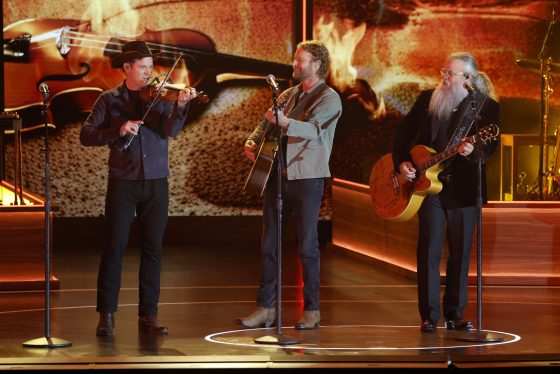
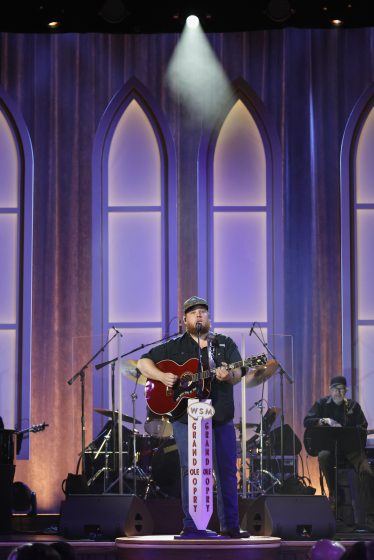
In our eyes and to our ears, there’s no better family of musical genres to usher in the holiday season than roots music. Bluegrass, Americana, old-time, country, blues, and beyond – they’re all perfectly suited for the coziest time of year, for togetherness, for parties and gift-giving and cookie icing. Whether you celebrate Christmas, Hanukkah, Kwanzaa, or Winter Solstice – or even if you feel like opting out of the ruckus altogether – there is roots music for you.
Each year, we like to share our picks for the rootsiest time of the year in BGS Wraps, a weekly collection of songs, videos, albums, shows, tours, and events that celebrate the season. We share a few of our favorites, mostly brand new but often classics and timeless selections, too. Plus, we collect all that we can into a running playlist so you’re ready when the family or party hands you the aux cable.
We hope you enjoy BGS Wraps and tune in the next week as we continue our series celebrating the holiday season. (Catch up on week one here.)
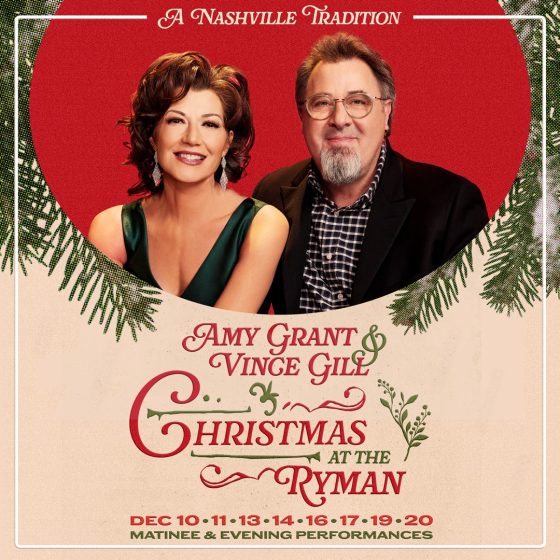
Christmas at the Ryman, Amy Grant & Vince Gill
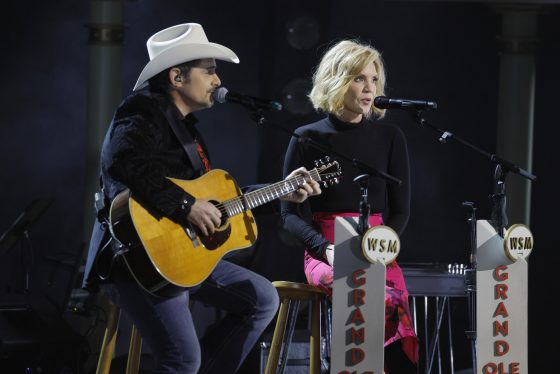
“When I Think of Christmas” I think of Amy Grant and Vince Gill holding down the holiday fort with their iconic annual Christmas at the Ryman series. This year, they’ll offer 12 performances over eight days at the lauded venue known as the most famous former home of the Grand Ole Opry and the birthplace of bluegrass. Grant and Gill epitomize Music City and how tightly knit this town and its music creators are. There are sure to be plenty of memorable and one-of-a-kind moments across their holiday residency. Limited tickets are still available, so secure yours today. The series begins today, Wednesday, December 10 and concludes on December 20.
“Joy,” Kirby Lyle
Nashville-based songwriter and multi-instrumentalist Kirby Lyle is joined by Maya de Vitry on a brand new seasonal track, “Joy.” Featuring trickling banjos, fiddles, cellos, and guitars in a cozy and grooving 6/8 time, “Joy” feels like a folk holiday mantra, with Lyle and de Vitry singing in a call-and-response style perfect for the often ecclesiastical vibes of this time of year. “Joy” centers the feelings of working class and downtrodden folks in the holiday season, finding radical hope not through toxic positivity but through intention and community. It’s both a sonic and rhetorical antidote for those weary of capitalism and consumerism masquerading as togetherness and holiday cheer.
“Merry Christmas, Baby,” Miko Marks
Does Christmas give you the blues? Well, the blues can cure your holiday blues, too – as evidenced by Oakland-based artist and singer-songwriter Miko Marks’ brand new rendition of “Merry Christmas, Baby.” With twangy resonator guitar and whining harmonica, Marks’ ensemble stomps their way through the deep-pocketed number. The classic form and chord progression are as comforting as Christmas cookies and a mug of hot cocoa, and Marks’ soaring and soulful voice is more than angelic enough for the season.
“Santa Claus Is Coming to Town,” Parker McCollum on CMA Country Christmas
Young country superstar Parker McCollum performed a quintessential classic, “Santa Claus Is Coming to Town,” on this year’s primetime broadcast of CMA Country Christmas. Flanked by thousands of twinkle lights and backed by brass, strings, and background vocalists, McCollum wore a crisp white “Fresh Western” trucker cap as he brought his trademark country energy to the beloved carol at Belmont University’s Fisher Center for the Performing Arts. If you missed the original broadcast of CMA Country Christmas on December 2 and the encore broadcast on December 9, don’t worry – you can stream CMA Country Christmas via Hulu or Disney+. The single version of the track is also available exclusively via Apple Music.
“Every Season,” MORGXN
On the opposite end of the mainstream country continuum from bro country and country trap you have artists like MORGXN innovating on the genre in similar sonic ways, but without the genre cognitive dissonance, toxic masculinity, or petty litmus testing of the other end of the spectrum. See how much fun, engaging, and innovative country can be with pop and electronic influences from other territories than what we most commonly find on the country airwaves? “Every Season” is the first holiday release from MORGXN, an original song that draws as much upon rootsy textures and tones as crisp and modern software sounds.
We always love when we find new seasonal music that’s inclusive of everyone’s faiths and traditions, too, so we’re especially excited to add “Every Season” to our holiday playlists this year.
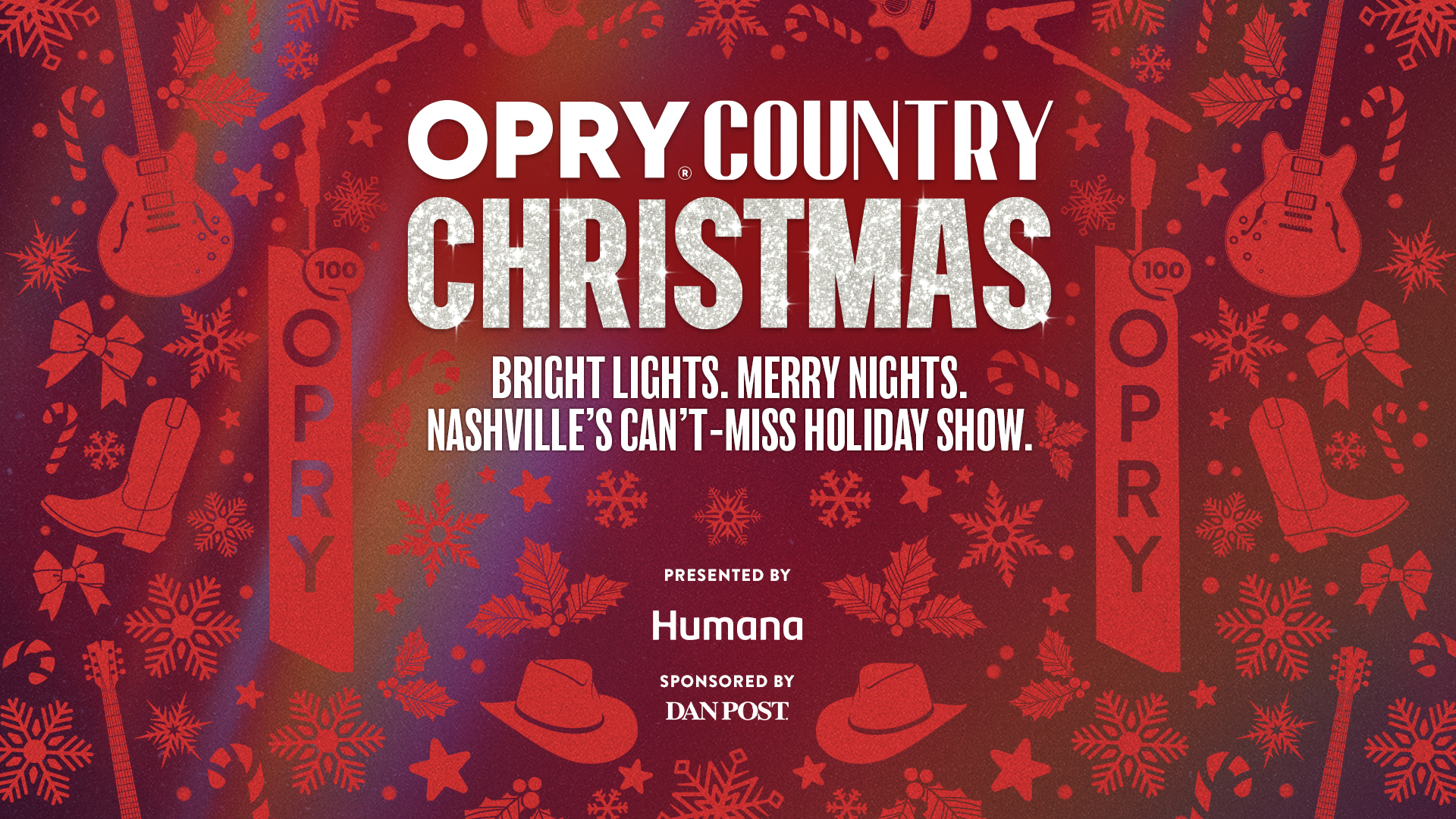
Opry Country Christmas
Are you also devastated our Opry 100 Artist of the Month series concluded already? Here’s your solution, as mere days after the Grand Ole Opry’s special 100th Anniversary shows on November 28, Opry Country Christmas began in earnest at the Grand Ole Opry House on November 30. The festive, star-stacked shows will continue through December 23, each performance featuring Opry members the Gatlin Brothers, Riders In The Sky, Mandy Barnett, and Charlie McCoy plus varying special guests each night like Connie Smith, Marty Stuart, Maddie & Tae, the Isaacs, Ricky Skaggs, Marcus King, and many more.
If you’re nearby or traveling to Nashville this December, get your tickets and more info here. Not able to make it in person? Stream Opry Country Christmas on WSM Online and the Opry’s digital platforms, or listen like we do most often, over the good ol’ fashioned airwaves at 650 AM. When you hear Country Music Hall of Famer Charlie McCoy wail through a medley of Christmas carols on his harmonica, you’ll be glad you did.
Snow Globe Town, Brad Paisley
Brad Paisley’s brand new country Christmas album, Snow Globe Town, was inspired by him being asked by Hallmark Channel to write and record music for their brand new A Grand Ole Opry Christmas movie. Paisley has already taken his festive songs to The Tonight Show Starring Jimmy Fallon and NBC’s “Christmas in Rockefeller Center” – and the album rose rapidly to the very top of the Billboard Current Country Album chart, scoring a No. 1 while it landed on their Top Country Albums and Holiday/Seasonal Albums charts, too. With his signature croon and hearth-hot telecaster licks, Paisley offers brand new numbers and favorite classics. Snow Globe Town has been called “unmistakably Brad” and we certainly agree.
Wrapped in Paper, Sofia Talvik
We’ve enjoyed featuring Swedish singer-songwriter Sofia Talvik’s holiday songs in BGS Wraps over the years. Now, she’s collected all of her Christmas singles and tracks since 2018 into a new holiday album, Wrapped in Paper. The project also includes three brand new tracks, two originals – “Merry Christmas, Adios, So Long” and “Let Peace be the Song” – as well as her version of “Silent Night.” “Let Peace be the Song” is more than apt for the uncertain and extreme times we find ourselves living in. Seemingly a response to the attention economy of social media and the sensationalism of the news cycle, Talvik calls for peace – the true meaning of this season, regardless of faiths or traditions – while wars, conflicts, and political frays are fought all around us. If only peace could be the gift we all give each other this year.
Heart of the Holidays, Tenille Townes
A new three-song EP from singer-songwriter Tenille Townes, Heart of the Holidays, is inviting, cozy, and classic. The collection’s title track is warm and jazzy, with round hollow-body electric guitar tone that feels like a comforting hug. The drum kit shuffles along as Townes gives us an excellent track for all kinds of wintry holiday celebrations. “I love writing and singin Christmas songs,” Townes said on social media, “because it brings out all the jazzy, cozy melodies.” The project continues with “Auld Lang Syne” – preemptively add that to your New Year’s playlist now! – and a lovely three-part harmony rich version of “Go Tell It On The Mountain” featuring Caylee Hammack and Fancy Hagood rounding out the vocal trio. It’s a perfect fit for BGS Wraps!
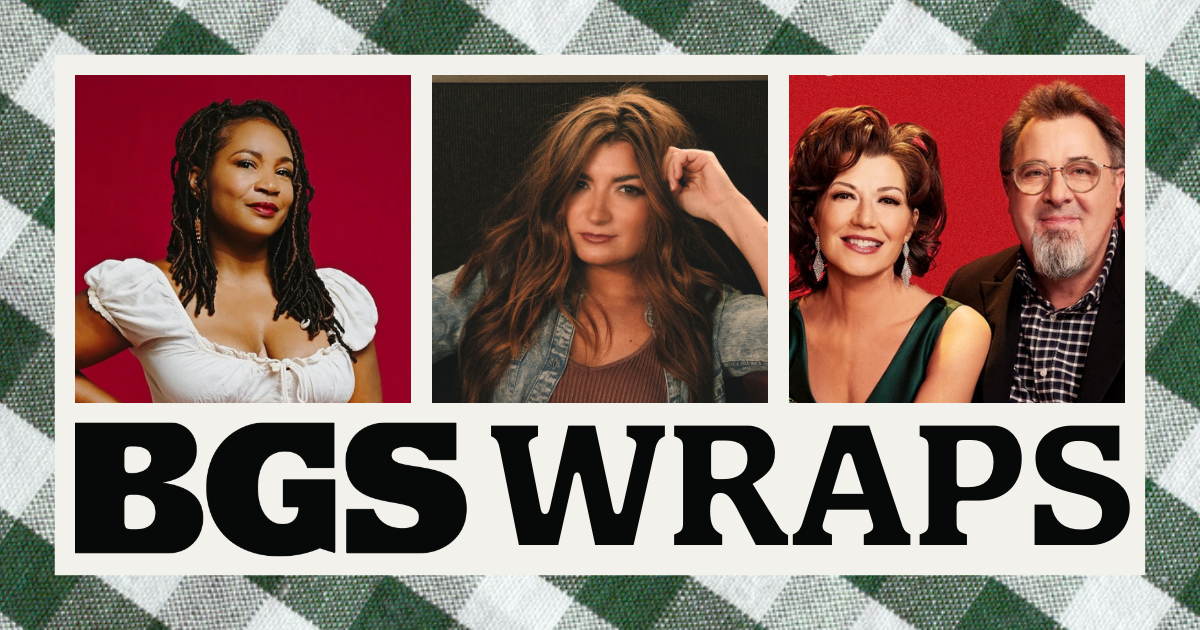
Lead Image: Miko Marks by Karen Santos; Amy Grant & Vince Gill by Robby Klein; Tenille Townes by Robert Chavers.
In 1925, world leaders were signing the final treaties coming out of WWI; Congress authorized work on Mt. Rushmore as a national memorial; the Scopes Trial was held in Tennessee; and the first patent on radio transmission was only 28 years old.
And, in 1925, WSM first broadcast its barn dance – soon to become the Grand Ole Opry.
One hundred years later, the Grand Ole Opry is the world’s longest-running radio program. After a century that saw changes unparalleled in world history, audiences are still drawn to the Opry. Every week thousands make the pilgrimage to the Grand Ole Opry House in Nashville while others tune in around the world. The show continues to inspire new generations of performers to aspire to step “into the circle” on the Opry House stage.
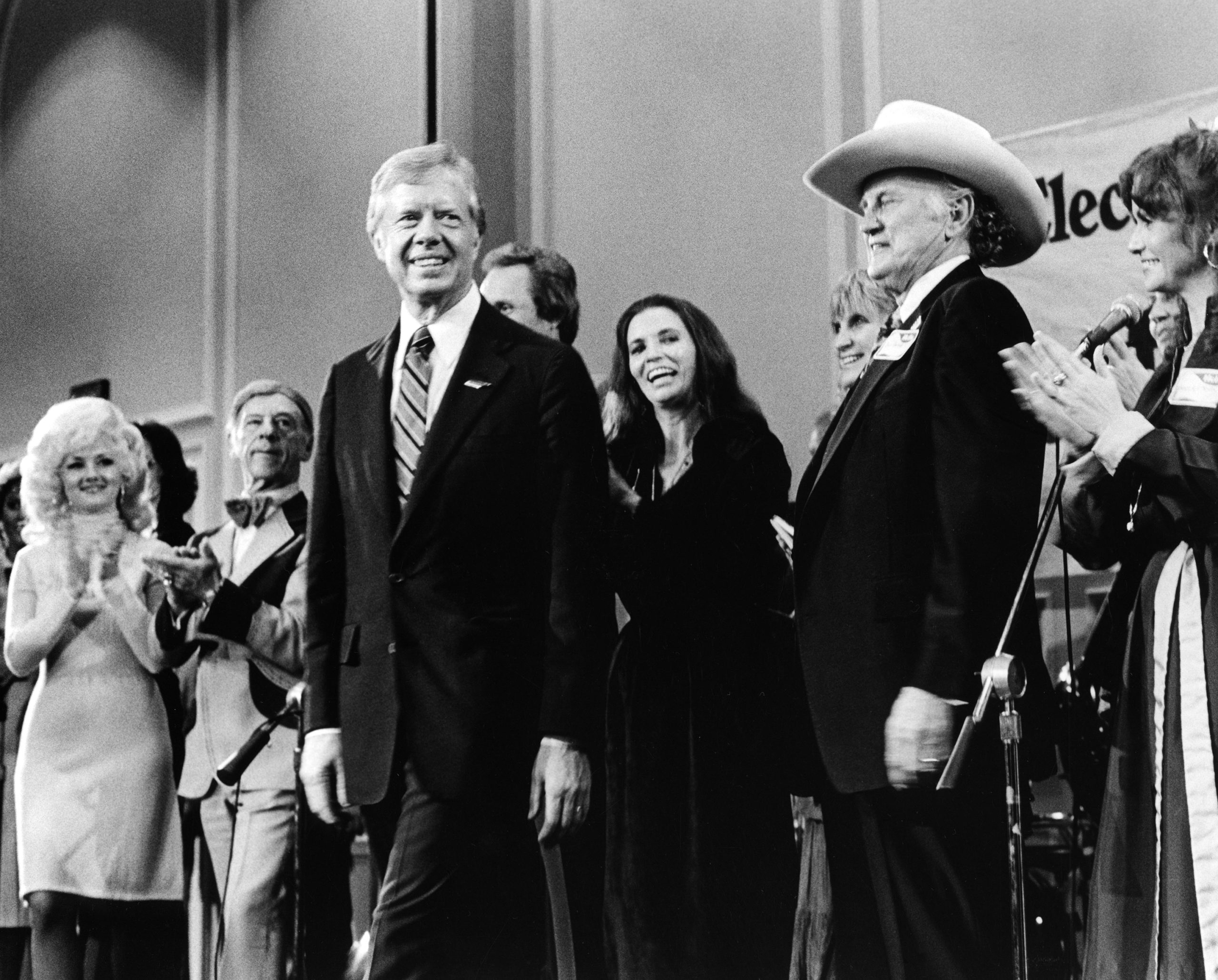
President Jimmy Carter on the Grand Ole Opry stage with Kelly Foxton, Hank Snow, Mel Tillis, June Carter Cash, Skeeter Davis, Bill Monroe, Jeannie C. Riley, and others on October 9, 1980. Photo courtesy of Ryman Hospitality Properties.
In The Beginning Was Insurance
In the 1920s, Edwin Craig was watching radio stations emerge across the nation – and seeing the money-making potential for sponsors and owners. He convinced Cornelius Craig, his father and founder of the National Life and Accident Insurance Company, that a radio station could sell a lot of insurance.
Soon, the fifth floor of the company’s downtown Nashville building held a radio studio. The call letters WSM stood for “We Shield Millions,” the company’s motto. A program that would become the lifeblood of country music started as a way to promote life insurance.
The hiring of George D. Hay away from Chicago’s WLS was the beginning of the WSM Barn Dance. The 30-year-old who called himself The Solemn Old Judge and started every show with a steamboat whistle would set the tone for much of the Opry’s 100 years – including its name.
Which all started with a clash of cultures.
Some upper-crust Nashville residents complained the only radio they could hear on weekends was string band programming from the dominant WSM station. In response, WSM began carrying the syndicated “Music Appreciation Hour.”
The Barn Dance slot followed the classical program, and Hay, not one to pass up a good line, said, “For the past hour, we have been listening to music largely from Grand Opera, but from now on, we will present ‘the Grand Ole Opry.”
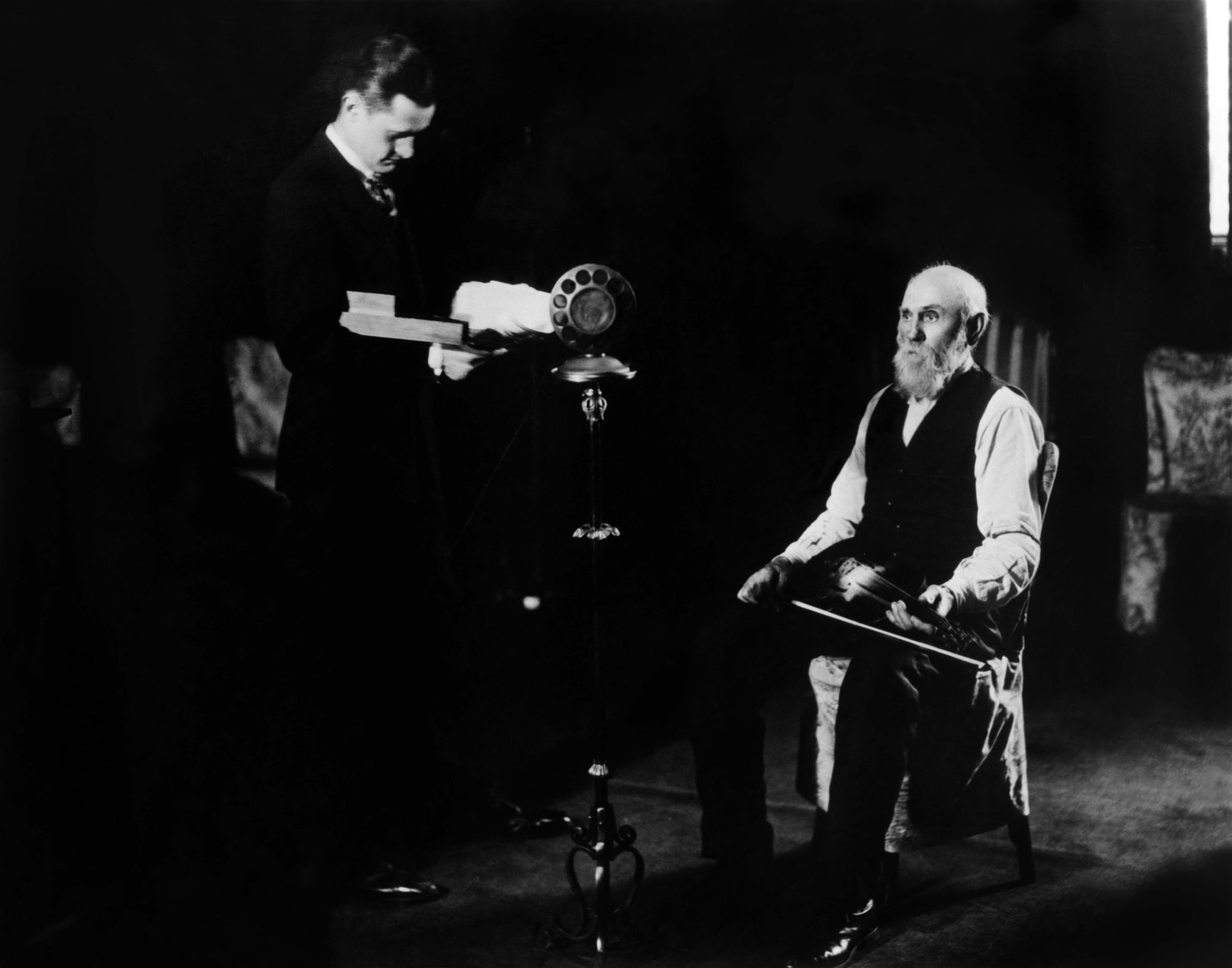
George D. Hay is pictured at microphone with a whistle and Uncle Jimmy Thompson is seated in this 1925 photograph from when the Grand Ole Opry was still the WSM Barn Dance. Photo courtesy of Ryman Hospitality Properties.
For years, the Shield Men – door-to-door National Life and Accident insurance salesmen carrying the company’s shield logo – introduced themselves as representing the Grand Ole Opry. They would even listen outside windows to see who was tuned in to the Opry – and who would be a likely customer.
The earliest WSM shows relied on local talent, running heavily toward fiddlers and string bands. But Hay would invite whoever he thought the audience would like.
DeFord Bailey, a Black musician grounded in both the blues and old-time string band music, became a regular, wowing audiences with his harmonica. Kitty Cora Cline, the first female soloist, performed on hammered dulcimer, and Fred Shriver played the accordion. Uncle Dave Macon on his banjo with Sid Harkreader on fiddle and guitar set the stage for the comedy that would remain central to the Opry’s success, with songs like, “Keep My Skillet Good and Greasy.”
A Beacon
As the recording industry grew, the variety of musicians available to the Opry grew, as well. The show began featuring brother duets, cowboy music, Western swing and solo crooners. Bill Monroe & the Blue Grass Boys were featured stars for decades.
Opry singers expressed the joys of new romance, the happiness of Sunday dinner on the lawn, the sorrow of lost love, and the loneliness of leaving home. Audiences across America listened – and related. The Opry became a focus of family life.
Dolly Parton, like many rural listeners, grew up without electricity. Her family faithfully listened to the Opry on a battery-powered radio. Waylon Jennings’ dad would hook their radio to the car battery. Jeannie Seely’s family would pile in the car and drive up a hill until they could get the signal. Opry history is filled with stories of musicians who listened as children – and dreamed of growing up to perform, like their idols, on the iconic stage.
Opry member Dierks Bentley, who gracefully moves between country and bluegrass, told BGS, “Being invited to join at all is the biggest honor – especially for me, personally. I grew up listening to all the Opry greats on the radio with my dad, so becoming a member is like having the ultimate backstage pass to see the best musicians in the world. And to be invited by Marty Stuart … hands down, it was one of the coolest nights of my life.”
Dan Rogers, the Opry’s senior vice president and executive producer, said the Opry has always been a place to celebrate the good times and be uplifted during the tough times. “Think about,” he said, “the folks who tuned in on Saturday nights during World War II. That was their only source of entertainment throughout the week.” Minnie Pearl, with her signature “How-dee,” and Roy Acuff gave them respite from war news.
On the first show after the 9-11 attacks in 2001, Rogers said, “Our background singers sang an a cappella version of ‘God Bless America.’ And one by one, the people in the audience stood and sang along. And I remember thinking, I bet everybody tuned in across the country is singing along to ‘God Bless America.’”
The Opry’s response to the COVID-19 crisis created desperately needed connection during a frightening time of isolation.
Just a week after deciding that live audience shows weren’t safe, Opry staff arranged a pared-down streaming production with no audience and a skeleton crew. Longtime cast members Bill Anderson, Jeannie Seely and Connie Smith held down the first night alongside Mandy Barnett, Michael Cleveland & Flamekeeper, and Sam Williams.
For the second weekend of restrictions, veterans Vince Gill, Marty Stuart, and Brad Paisley sat on stools spread out across the stage and pulled off what Rogers called “a beautiful, beautiful show.”
Watching from his office, Rogers started reading comments from grateful listeners. For months, people marked their calendars to tune in. They wrote, “I’m in Europe. I set my alarm. It’s 2 a.m. here, but I wanted to experience this with a community.”
Marty Stuart, Vince Gill, and Brad Paisley perform for an empty Grand Ole Opry House during the COVID-19 lockdowns in 2020. Photo by Chris Hollo, courtesy of Ryman Hospitality Properties.
Kathy Mattea, the newest Opry inductee, feels those connections whenever she performs there.
People may have sung along to her hit “18 Wheels and a Dozen Roses” in their car or in the shower, but at the Opry, she says to BGS, “Here’s your chance to sit with an audience and sing this song that everybody knows. Nobody knows who the person next to them voted for and it doesn’t matter at that moment.”
“The Ellis Island of Country Music”
In the early days of radio, what was called hillbilly music was as limitless as the range of a 50,000 watt radio station. And the Opry remains dedicated to maintaining those wide open spaces.
Garth Brooks and Trisha Yearwood, in their forward to the book 100 Years of the Grand Ole Opry, refer to the show as the “Ellis Island of Country Music – a place where all are welcome.”
Contemporary country often has been accused of being homogenous and limited. But despite the factors that have controlled commercial country, the Opry maintains its open-arms attitude. Rogers said, “The two core tenets of an Opry show are celebrating the past, present, and future of country music, and also showcasing multiple genres under the country music umbrella.”
In any show, he said, “You might have something that’s on the top 20 of the country charts today. And you’ll have country classics. You might have a contemporary Christian song, Americana string music, or even something from outside the genre by somebody who just happens to be a country music fan or was influenced by country music.”
In 1974, the R&B-oriented Pointer Sisters included an original country song, “Fairytale,” on their second album. The cross-over hit earned them an invitation to the Opry stage, where they became the first Black group to perform.
Ringo Starr appeared for the first time in 2025 and James Taylor’s debut on November 11 will be remembered as a big part of the 100th anniversary celebration.
And, Rogers said, “Because we can do it, it’s fun to take a chance on a new artist.”
Before his first Opry appearance in July 2022, Zach Top had no hits to his name. But Rogers remembered the programming team saying, “You don’t see an artist like that every day. It sure feels to us like our audience would absolutely eat that guy up!” Today, Top’s music is everywhere.
Bluegrass has been a staple since before it had a name and it has never lost its place on the stage. Bentley and Del McCoury played “Roll on Buddy, Roll On” when the Grand Ole Opry House first reopened after the 2010 flood closed its doors for months.
Charlie Mattos is a 10-year veteran Opry announcer and longtime co-host and producer of WSM’s morning show. He said that on any given night, a portion of the Opry House audience “may truly have never seen a bluegrass band play.”
“And when Del McCoury and the boys finish with an incredible instrumental,” Mattos continued, “or Sister Sadie blisters the stage … the enthusiasm that comes out of that crowd, the immediate standing ovation for the insane musicianship that they have just witnessed …” Mattos said, “it blows their minds.”
Mattea said, “Bluegrass is front porch jazz – the virtuoso playing and the vocals and the harmonies and the trading off of licks. That’s how I fell in love with bluegrass.” And the Opry exposes millions to that brilliance.
A Good-Natured Riot
The Opry show is a complex set of acts and sets requiring precision planning, flexibility, and good nature on the part of the announcers – and commitment on the part of the performers. Rehearsals are brief or non-existent. Timing is everything.
Borrowing a phrase from George D. Hay, the Opry is still sometimes called a “good-natured riot.”
Mattos said, “When you come to see the show live, you see it all. The set changes. The artists leaving as the announcer sends them off. You can see the stage crew out there and usually in 90 seconds they can completely swap things around.”
But while reading a commercial during set changes, Mattos may notice the stage manager giving the “stretch” signal. He might have to keep talking for as long as four minutes – a millennium in radio time.
Sometimes the commercials themselves become the entertainment.
The first time Glad Wags sponsored an Opry segment, Chuck Morgan was announcing. While he stood off-stage reading the dog food commercial, house bassist Bill Linneman came up behind him and started barking. “By my last year there, there were like 20 people behind me going at it,” Morgan said. (The consensus is that Connie Smith does a great chihuahua imitation.)
A Family
Jeannie Seely – who racked up nearly 5,400 performances on the Grand Ole Opry before her passing in August 2025 – remembered it was more than the music that fueled her desire to join the Opry: “That’s hearing these people, like Mr. Acuff and Minnie [Pearl] and Jimmy Dickens and all of them, coming together every week,” she says in 100 Years of the Grand Ole Opry. “They always sounded like they were so glad to be together. They picked on each other and joked, and I thought, that’s just like a family.”
And they were family. When the plane Jim Reeves was aboard crashed in a wooded Nashville suburb, Marty Robbins and Ernest Tubb joined the search party, as did the elegant Nashville socialite Sarah Ophelia Colley Cannon – known as Minnie Pearl.
Opry star Jean Shepard was expecting her second child with husband Harold “Hawkshaw” Hawkins when Hawkins died in the plane crash that also killed Patsy Cline and Cowboy Copas. After months feeling adrift, as Shepard was quoted in the 100 Years book, “I looked down my driveway one day and here come two big black limousines full of the so-called ‘higher-ups’ from the Grand Ole Opry. They said, ‘We want you to come back to the Grand Ole Opry.’ And it really meant a lot to me.”
The family feeling is no accident. In earlier years, Opry members had to perform a specified number of Saturday nights a year. While there’s no set number today, Rogers said they look for a sense of commitment in new members. “It truly is about that relationship,” he said.
Rogers quoted Mattea, upon her invitation to become a member, saying, “These people treat you like family, no matter what.”
One of Mattea’s favorite Opry memories involves a bass player who toured with her. “He was sitting on a stool, playing and singing some old Western swing chestnut, and suddenly Riders in the Sky leaned into the dressing room in full regalia and started singing harmony.
“He was gobsmacked. He felt it was the highlight of his life,” she said.
Bluegrass performer Kody Norris’ music is influenced heavily by first- and second-generation bluegrass. But the band’s preference for flashy suits dates back to a family-friendly welcome Norris received 25 years ago.
His parents took nine-year-old Kody backstage at the Opry, “and I met Bill Anderson. And he had on a red rhinestone suit. That’s the first one I ever saw up close, where I could touch it.”
Later that day, upon meeting his equally rhinestone-clad hero, Porter Wagoner, young Kody got so excited he spit out his chewing gum. Wagoner graciously grabbed two Opry-logoed napkins, one of which the little boy used for his gum. The other one the grown Norris still keeps in perfect condition.
The Circle is Unbroken
In 1974, the Opry left its revered home of decades, the Ryman Auditorium, to move to the deliciously air-conditioned 4,400-seat Grand Ole Opry House.
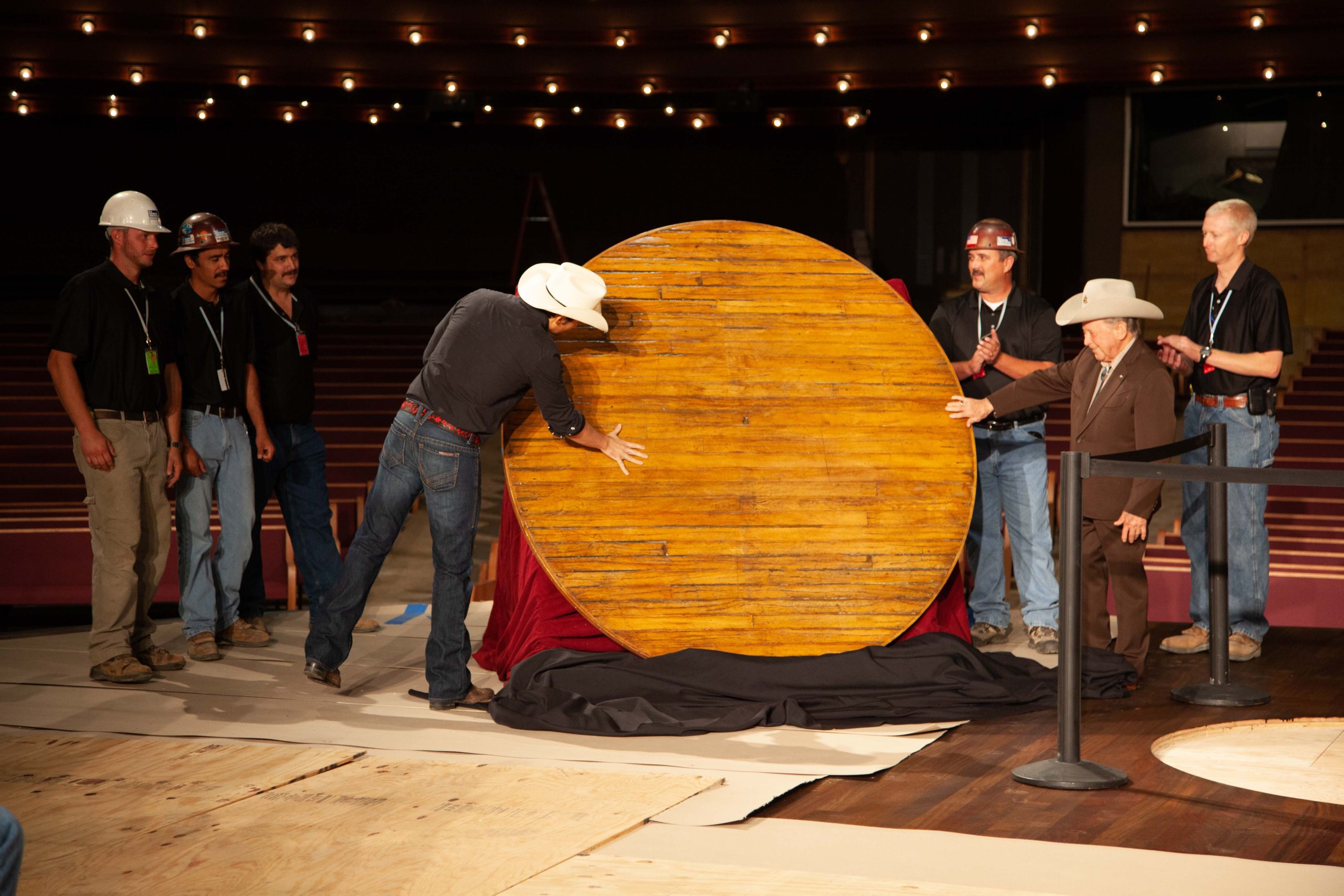
To honor its longtime home, the Opry crew cut a circle out of the Ryman stage and inset it in the new Opry House stage. The circle symbolizes the Opry’s continuity, respect for the past, and optimism for the future.
Mattea experienced that sense of a completed circle on the day she became an Opry member.
“Suzy [Bogguss] was there. We’ve toured together and sung on each other’s records. She’s my closest artist friend, and she was the only one at the ceremony who was not a member. And I thought how generous it was of her to be there.
“So, while I was overflowing with celebration, to get to invite my friend to the party publicly in the name of the Opry was the sweetest gift. It was a moment I’ll never forget, and I’m going to be there for her induction, too.” Bogguss will officially be inducted as an Opry member in early 2026.
Braid Paisley and Little Jimmy Dickens return the Circle to the Opry stage after the 2010 flood. Photo courtesy of Ryman Hospitality Properties.
Join The Celebration
There’s nothing low-key about the Grand Ole Opry – so in the classic Opry spirit, fans have had plenty of opportunity to celebrate the centennial all year long.
Earlier this year, NBC broadcast a three-hour anniversary special, with dozens of stars ranging from Reba McEntire to Jelly Roll to The War and Treaty. The Opry also took the show to London’s Royal Albert Hall for the very first time. You can stream clips of these and other Opry events on YouTube and social media.
With the Virgin Music Group, the Opry has produced the album Opry 100, Country’s Greatest Songs (released November 7). Among the unforgettable recordings are Vince Gill singing his heart-rending “Go Rest High on That Mountain,” Dolly Parton singing “I Will Always Love You,” and Ashley McBryde covering the classic “Your Cheatin’ Heart.” You can order the album from the Opry site.
Craig Shelburne, Brenda Colladay, and Opry members and employees collaborated on 100 Years of the Grand Ole Opry, a book filled with anecdotes and photos that vividly illustrate the Opry’s remarkable history. And to teach your children well, there’s also a new childrens’ picture book written by Emily Frans and illustrated by Susanna Chapman. Find them in your local bookstore.
And, on November 28, 2025, the official 100th anniversary of the Grand Ole Opry we all hold dear, the Opry is celebrating with two huge birthday party shows featuring country stars and Opry members like Vince Gill, Ricky Skaggs, Trace Adkins, Dailey & Vincent, Bill Anderson, Jamey Johnson, Marty Stuart, and many, many more. Tickets are available here.
Of course, the celebrations will continue in 2026.
“The Opry is the core and soul of country music,” Bentley said. “It’s a place where the past, present and future of our genre all come together. There isn’t anywhere else like it.”
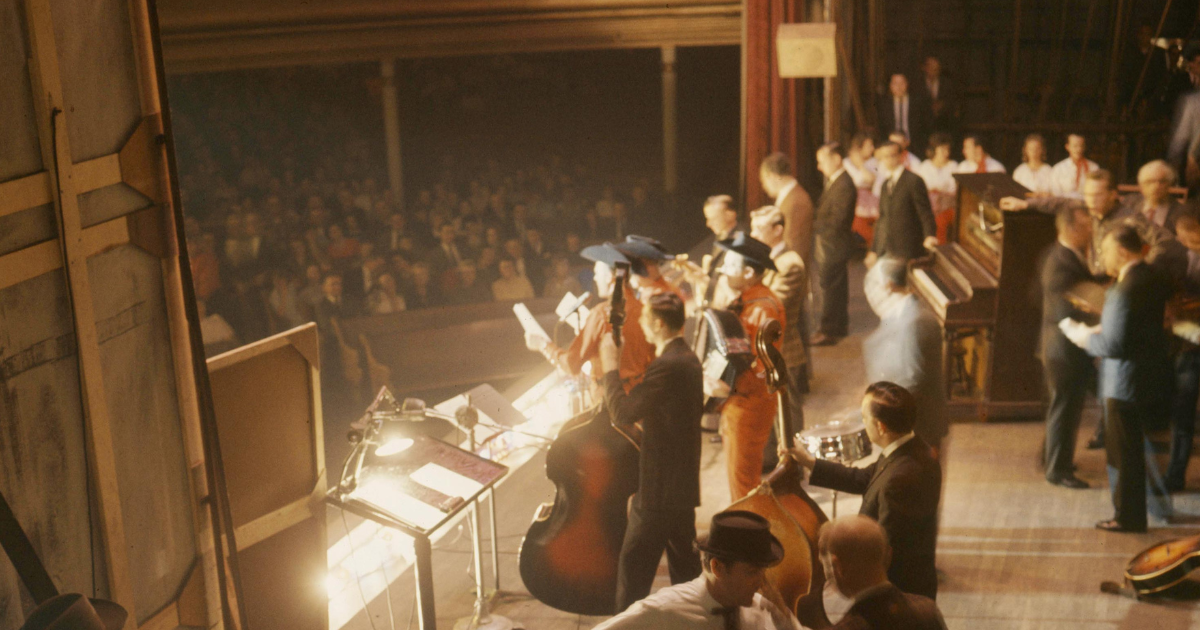
All photos courtesy of Ryman Hospitality Properties, credits and attributions as marked. Lead image: Bill Monroe & the Blue Grass Boys and the Opry Square Dancers take the Opry stage at the Ryman Auditorium in the 1960s.
Alison Krauss has been recording and releasing music with her band, Union Station, for longer than she’s been able to legally drink or vote. Along the way, she’s been a key influence in the lives and careers of countless other musicians, many of whom have recorded and performed covers of their favorite Alison Krauss material.
Famously signing with Rounder Records when she was just 16, Krauss has spent the past four decades offering inspiration to multiple generations of artists spanning many genres, from bluegrass and country to Americana, folk, and beyond. She’s collaborated with fellow legends like Dolly Parton, Neil Young, and Robert Plant, and her list of honors includes not one, not two, but 27 GRAMMY Awards. In fact, she’s the fifth-most GRAMMY-awarded musician of all time, across all genres and categories.
As we highlight the vibrant legacy of Alison Krauss & Union Station, our Artist of the Month, in celebration of Arcadia, their first album in over a decade, we’re carving out some space for the performers who have skillfully and reverently covered Krauss and her music over the years. From big names and bluegrass stalwarts to some less expected artists that land a bit further off the beaten path.
While not all of our selections are Alison Krauss & Union Station originals, you can tell each of these musicians have been distinctly inspired by Krauss and her musical legacy. The internet is chock full of Alison Krauss covers, and we think these are six of the best.
“Whiskey Lullaby” – Kaitlin Butts and Flatland Cavalry
Originally released by Brad Paisley on his 2003 album, Mud on the Tires, “Whiskey Lullaby” was penned by Jon Randall and Bill Anderson and remains one of Krauss’s most popular songs as a featured guest artist. This cover by country phenoms Kaitlin Butts and Cleto Cordero of Flatland Cavalry – and featuring multi-instrumentalist Kurt Ozan on Dobro – infuses fresh grit and intimacy into the somber sensitivity of the original. While it’s hard to compete with Krauss’s bright, soaring vocals, Butts honors them well while staying true to her own rich vocal timbre.
We also recommend checking out this version where Paisley and Krauss perform the track at Carnegie Hall back in 2005.
Plus, the pair recently reunited on the special Opry 100: A Live Celebration TV broadcast to perform the song, as well. It was one of our favorite moments from the event.
“The Boy Who Wouldn’t Hoe Corn” – Dan Tyminski
You might know Dan Tyminski as the voice of Ulysses Everett McGill (AKA George Clooney’s character in O Brother, Where Art Thou?), but he was also a longtime member of Alison Krauss & Union Station. In 2001, Tyminski arranged and recorded a version of “The Boy Who Wouldn’t Hoe Corn” for the band’s album New Favorite.
In this video recorded for BBC Four, Tyminski leads the charge, belting this stunning rendition of the American folk traditional. While admittedly not a cover in the truest sense of the word (since Tyminski also sings lead vocals on the original), we couldn’t help but include this heart-stopping performance with Jerry Douglas, Russ Barenburg, Aly Bain, and more.
Tyminski performs the song as a member of Alison Krauss & Union Station in this equally impressive video from a 2002 performance in Louisville, Kentucky.
Tyminski left AKUS before the release of Arcadia and has been replaced in the band and on the recordings by bluegrass veteran Russell Moore. Still, Tyminski does appear on Arcadia on a couple of tracks and he also co-wrote “The Wrong Way.”
“My Love Follows You Where You Go” – Lori McKenna
Another unconventional cover, Lori McKenna co-wrote “My Love Follows You Where You Go” for Alison Krauss, but she didn’t record or release it herself until 2013. Alison Krauss & Union Station had recorded and released it on their acclaimed 2011 album, Paper Airplane.
This offbeat love song captures the richness and complexity of Krauss’s singing and performance style; hearing McKenna perform it adds another layer of depth. McKenna wrote the track with Barry Dean and Liz Rose as a bittersweet love note to her children. She shared her feelings about it with American Songwriter in 2013: “I was able to sing it pretty well. Not as beautifully as Alison Krauss, of course. But I’m happy that one made my record because it is such a message to our kids.”
Watch AKUS performing the number on a live television performance from 2011:
“Let Me Touch You For A While” — Mary Spender
Mary Spender isn’t too well-known in the American bluegrass scene, but she’s an acclaimed British singer-songwriter and YouTuber. Guitarist Magazine even called her “one of the most dynamic, expressive young British singer-songwriters working today.” She’s one of many young musicians who draws inspiration from Alison Krauss.
Spender has one of those rich, soulful voices that makes you stop and catch your breath when you first hear it. It’s hard to anticipate and it’s also very distinct from Krauss’s light, angelic voice. But in this cover of “Let Me Touch You For A While,” Spender offers a simple yet jaw-dropping performance that boldly honors the original while taking things in a unique direction. Accompanied only by her guitar, Spender brings a sultry, driving energy to the song’s emotional complexity and leans into her impressive vocal range.
Originally recording the track in 2001 for New Favorite, it would go on to become one of their most recognizable hits. Krauss & Union Station performed “Let Me Touch You For A While” alongside Jerry Douglas at the Opry 100 celebration last month.
“No Place to Hide” – Adam Steffey
If you’re a diehard AKUS fan, you’ll definitely recognize Adam Steffey’s name; he’s another past member of Union Station from 1990 to 1998. Here, Steffey and his own band (including Tyminski) give a raucous rendition of “No Place to Hide,” a song Steffey recorded with Union Station on So Long So Wrong (1997). A straightforward “mash” bluegrass track, “No Place to Hide” booms and rolls with the band’s strong vocal harmonies and tight, effortless timing.
Here’s a much earlier live version of the song that’s got a more traditional bluegrass sound by Krauss and band:
“The Lucky One” – Jessica Willis Fisher, Gavin Trent
One of Krauss’s major country hits, “The Lucky One” was originally released on New Favorite in 2001. That same year, it won two GRAMMY Awards: Best Country Song and Best Country Performance by a Duo or Group. This stripped-down cover by Jessica Willis Fisher and Gavin Trent honors Krauss’s voice and musicianship in a way few other musicians can. Fisher has a similarly bright, soprano voice, and she can definitely hold her own on the fiddle, which she’s been playing since she was a child. As soon as you start listening, it’s clear Fisher is inspired by Krauss and this rendition serves as a fitting tribute.
A lifelong musician, Fisher has received praise from CMT, American Songwriter, and Billboard, and she’s worked with some of the same songwriters who write for AKUS – but it’s still possible you’ve never heard of her. Fisher has intentionally stayed out of the public eye in recent years (despite releasing her debut solo album, Brand New Day, in 2022) due to significant personal trauma tied to her family history. Fisher now uses the trauma she’s endured to help others heal, both through her music and her writing.
Alison Krauss & Union Station performed “The Lucky One” live on CMT in 2005:
After 14 years, one of the biggest and most well-known bluegrass bands in the history of the music, Alison Krauss & Union Station, have returned with a brand new studio album, Arcadia. Released on March 28 to the delight of bluegrass and AKUS fans the world over, the collection doesn’t merely pick up where the group left off with 2011’s Paper Airplane. Instead, Arcadia soars back through the band’s deep and mighty discography landing somewhere, sonically, between So Long, So Wrong (1997) and Lonely Runs Both Ways (2004) – in other words, this iconic bluegrass band made a bluegrass album.
Alison Krauss & Union Station, by many measures, are one of the most prominent bluegrass bands to ever emerge from the genre. With the smashing success of her late ’90s to 2010s projects with Union Station and the incredible momentum behind their particular blend of bluegrass, “mash,” easy listening, country, and adult contemporary, Krauss catapulted to roots music notoriety, becoming a household name. She’d lend her voice to the blockbuster Coen Brothers film O Brother, Where Art Thou?, tour with Willie Nelson and Family, make two smash hit records with rock and roll legend Robert Plant, back up Shania Twain, duet with artists like Dolly Parton, Andrea Bocelli, Kris Kristofferson, Cyndi Lauper, Ringo Starr, and countless others. Was bluegrass, which Krauss had called her musical home since she was a pre-teen fiddle contest phenom, merely a springboard into fame and notoriety?
Of course not. This is the idiom in which Krauss has made most of her art; this is a second language – or perhaps, a first – and the fluency and virtuosity Krauss and her band have displayed are two of the most important bluegrass exports that registered and resonated with the masses who would become her fans. Krauss’s crystalline and powerful voice, sensitive and deliberate deliveries, endless grit, and one-of-a-kind skill for song curation only bolstered the electric, engaging charm of the bluegrass bones endemic in her artistry. It’s no wonder that this iteration of bluegrass ended up becoming arguably the most mainstream and most recognizable in the U.S., if not the world.
So, Krauss spread her wings and flew, carrying those bluegrass sensibilities – however overt or subtle – into everything she made. Whether the clean and country Windy City or the soulful and rockin’ pair of Raising Sand and Raise The Roof with Robert Plant, or the easy and romantic Forget About It, she had new horizons to run towards. But she always brought bluegrass with her. To arena tours, giant amphitheaters, sheds, pavilions, the biggest festivals, and beyond. By the time Paper Airplane took off, many in bluegrass regarded AKUS as bluegrass’s zenith, its peak, its maximum. Would anyone ever go further, achieve more, or play to larger audiences? This, after all, is the woman and band who up until they were bested by Beyoncé herself boasted more GRAMMY wins than any other artist in the organization’s history. Who could ever top them?
Well, it turns out Alison Krauss & Union Station weren’t just blazing a trail only they could trod down. Arcadia, fourteen years on from their most recent studio release, enters a universe – a resplendent ecosystem, a vibrant economy – that wouldn’t have existed if not for this band creating the factors that would allow it to exist. Folks like Billy Strings, Molly Tuttle, Sierra Ferrell, Tyler Childers, Zach Top, and many more have raised the roof on what’s possible for bluegrass and bluegrass-adjacent artists, what heights they can achieve, and what genre and style infusions are acceptable and marketable.
But AKUS and Arcadia, especially by returning to many of the musical markers from their ’90s and ’00s offerings, reenter the world that they created not as legacy artists or sceptered elders. They seem to be quite happy to consider themselves among these fresh giants in or around or from bluegrass as peers, contemporaries. Legends in their own rights, yes, and with a mythical gravitational pull to all of these acts and musicians they have inspired across generations, but Arcadia doesn’t feel stoic or mothballed, or almighty and shrouded by clouds high atop a sacred mountain. There’s mash that sounds direct from the halls of SPBGMA at the Music City Sheraton, there’s tender, longing romance, there’s rip roarin’ fiddle, there are transatlantic touches, there’s a dash of dystopia, and plenty of that iconoclastic melancholy for which Krauss has become known. There’s also a new voice in the mix, IIIrd Tyme Out’s frontman Russell Moore, who sings lead on four of the album’s ten tracks, filling the “big shoes” of former member Dan Tyminski.
In short, Alison Krauss & Union Station may be roots music royalty, but their status has in no way dulled their dynamism. They could rest on their laurels, but Krauss and her cohort are clearly still staring down fresh, new horizons. Could there be a new wind in their sails, as they embark alongside this new class of arena-ready, large scale bluegrassers? Has a tacit permission been given to return to their essential roots? Or maybe it’s just a matter of time. When bluegrass is in you, in the soil from which you grew, it has a tendency to ooze out all along or all at once. That trail of ‘grassy touches is what got Alison Krauss & Union Station here in the first place, and it’s what will bring them through the next fourteen years, too. Whatever sounds, songs, and stories occur between.
Alison Krauss & Union Station are our April 2025 Artist of the Month. Our 3+ hour Essentials Playlist below covers their entire discography, as well as Krauss’ own releases and other collaborations. Stay tuned for exclusive content coming later this month – like our interview with Alison about the album, powering through dysphonia, how she collects songs, and more. Plus, we have a collection of Six of the Best Alison Krauss Covers and our discography deep dive for beginners and longtime fans alike. Don’t forget about our exclusive Toy Heart podcast interview with Alison hosted by Tom Power or our recent interview with Russell Moore himself about how excited he is for this brand new gig. We’ll be diving back into the BGS Archives for all things AKUS, so follow along on social media as, for a month at least, we’ll be a proud Alison Krauss & Union Situation.
If you missed the Grand Ole Opry’s no-holds-barred 100th birthday party and live television broadcast extravaganza on NBC, we’ve got your recap right here on BGS.
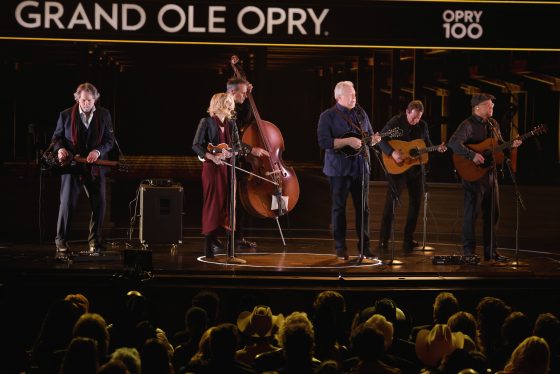
Hosted by Blake Shelton at the historic Grand Ole Opry House in Nashville, Tennessee, Opry 100 included performances by artists like Vince Gill, Alison Krauss & Union Station, Lainey Wilson, Brad Paisley, Ashley McBryde, Reba McEntire, Dierks Bentley, Garth Brooks, Trisha Yearwood, and many more. The primetime broadcast and streaming concert is just one event among an incredible, chocked-full effort by the Opry to celebrate their centennial – officially November 28, 2025 – throughout the entire calendar year.
Over the two-hour broadcast, there were dozens of show-stopping moments, from the brash, bold, and sensational to tender, intimate, and heart-wrenching performances. Good country of all varieties was on display from a wide array of artists at all levels of notoriety.
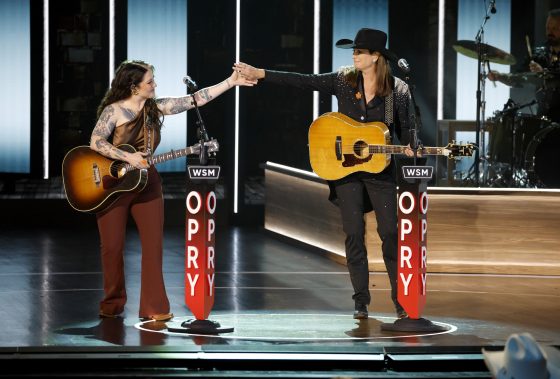
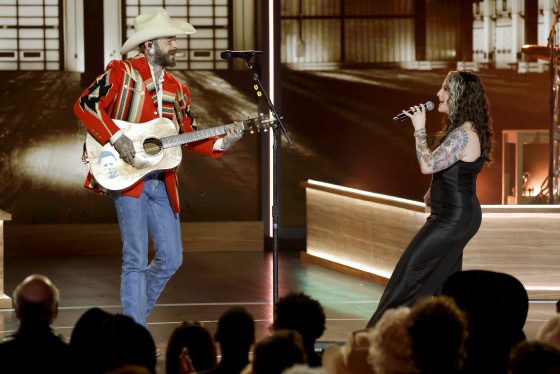
The War and Treaty sang alongside Steven Curtis Chapman and Amy Grant; Vince Gill reunited with his old pals Jeff Taylor and Ricky Skaggs; Ashley McBryde brought the house down alongside superstar country newcomer Post Malone and elsewhere in the show, ’90s stalwart Terri Clark; Lainey Wilson shared the stage with country picker and renaissance man Marty Stuart; husband-and-wife Trisha Yearwood and Garth Brooks were on hand; and Brad Paisley and Alison Krauss reunited for their 2003 smash hit duet, “Whiskey Lullaby.”
The show wrapped with a stunning full cast tribute to Dolly Parton, who greeted the Opry House audience via video and gave her sincere regrets for not being able to appear at the event. (Parton’s husband of 58 years, Carl Dean, recently passed away.) Dozens of the evening’s star artists took to the stage to pay tribute to Parton by singing her most famous hit, “I Will Always Love You,” a perfect, soaring sing along to close the momentous show.
There are truly too many once in a lifetime collaborations, songs, moments, and performances from Opry 100 to list, but we’ve collected a few of our favorite moments so you can relive this once-in-a-lifetime – or once-in-a-century – show! Get your fix by traveling through a few of our own favorite moments from Opry 100: A Live Celebration below.
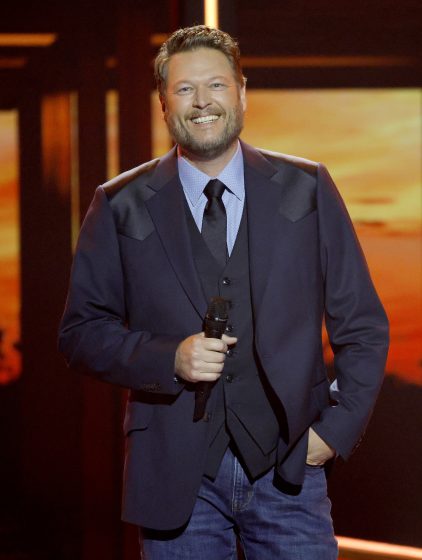
Blake Shelton Hosts
Country superstar, award winner, and television personality Blake Shelton was a more than qualified host for Opry 100: A Live Celebration. Of course, he also gave a rousing performance of Joe Diffie’s “Pickup Man” to the delight of everyone in the crowd who find somethin’ they like in a pickup man. It wouldn’t be a celebration of country or the Opry without a truck mention.
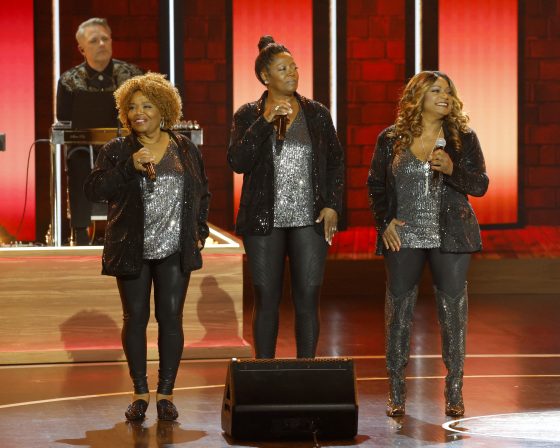
Nashville’s Own, the McCrary Sisters
Nashville’s favorite, in-demand singing siblings, the McCrary Sisters were on hand for Opry 100, too. It’s certainly not their first time on the hallowed Opry stage, but in the centennial context their appearance reminds of the legacies of similar groups who blazed trails at the Opry before them – like the Pointer Sisters – and those who’ve followed in their footsteps, like the Shindellas and Chapel Hart.
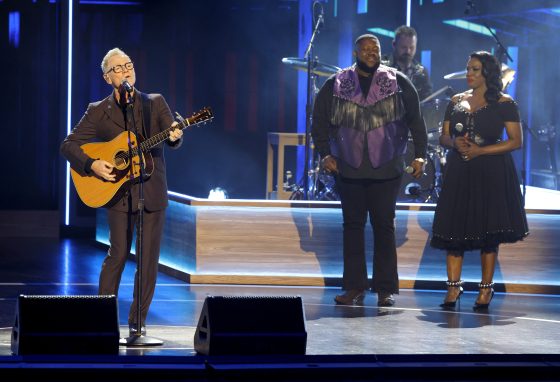
Steven Curtis Chapman and the War and Treaty Share a Sacred Moment
Grand Ole Opry member and contemporary Christian singer-songwriter Steven Curtis Chapman was joined by Americana/soul/country duo the War and Treaty for his performance on Opry 100.
Lainey Wilson and Hall of Famer Marty Stuart Duet
One of the biggest names in country at the moment, former GC and BGS
Artist of the Month Lainey Wilson was joined by bluegrasser, fiery picker, and Country Music Hall of Famer Marty Stuart backing her up on mandolin. They perform “Things a Man Oughta Know” from her huge 2021 album, Sayin’ What I’m Thinkin’, which many regard as her breakout release.
Ashley McBryde with Post Malone and Terri Clark
Ashley McBryde had multiple stellar moments during Opry 100, including these two prime duo performances. One with ’90s country star Terri Clark and another with a superstar newcomer to the genre, Post Malone. Her song selection with Postie was impeccable, too, taking the Opry 100 down to “Jackson” to mess around.
Trisha Yearwood with Garth Brooks and Reba McEntire
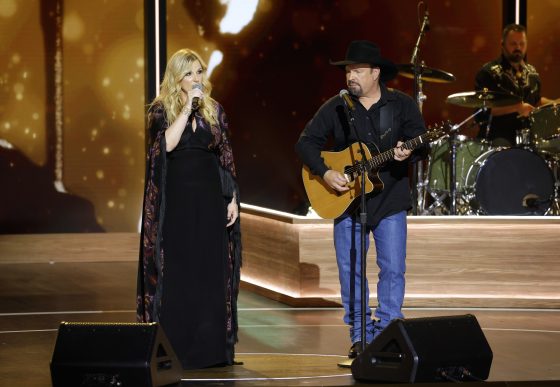
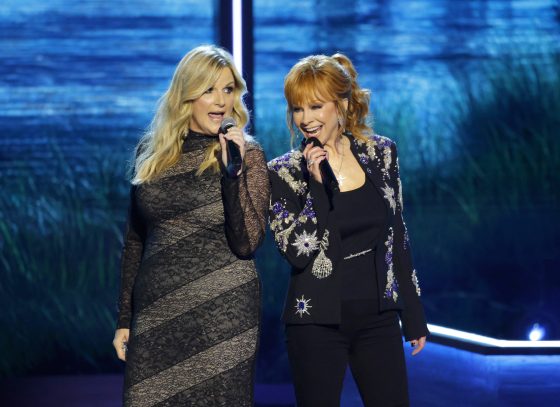
Country has boasted many amazing artist couples, but who better to take the Opry 100 stage than Trisha and Garth? Trisha also appeared with Reba McEntire to perform “The Night the Lights Went Out in Georgia,” a track that has been a huge generation-spanning hit for McEntire.
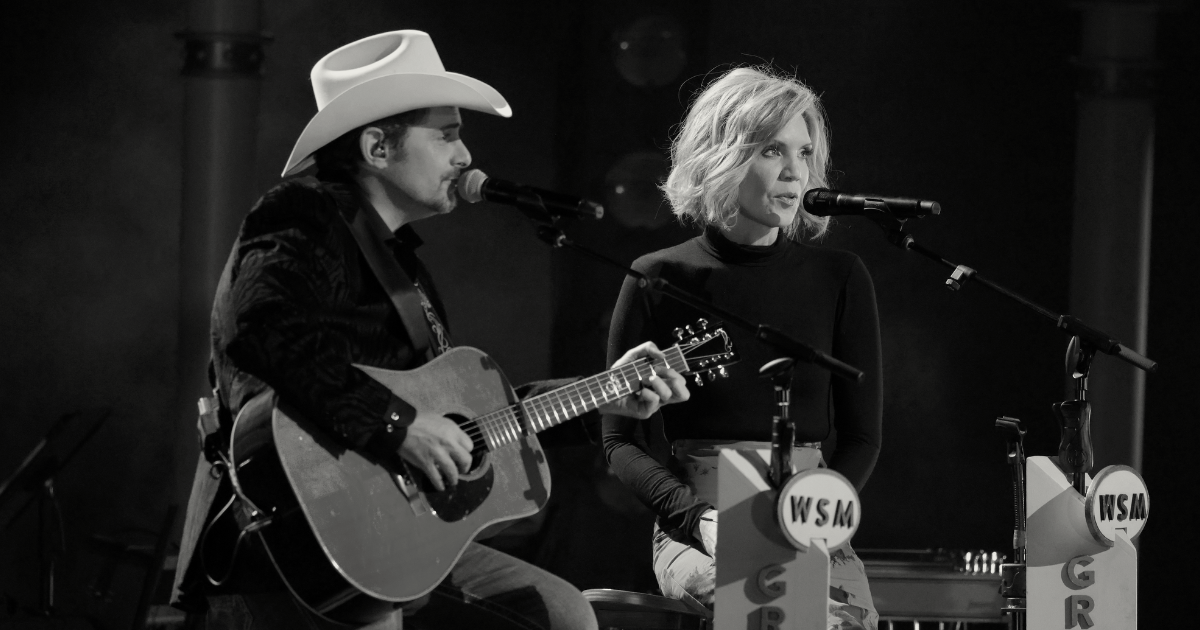
Brad Paisley and Alison Krauss Reunite
An iconoclastic example of a tear-jerker country story song, Paisley and Krauss’s recording of “Whiskey Lullaby” was released in the 2000s, but has had immense staying power. It shines from the Opry 100 stage in its simple and stripped-down styling. Is anyone a better duet partner and harmonizer than Alison Krauss? Perhaps not. Certainly a highlight among all of the many highlights of the broadcast
Alison Krauss & Union Station Perform, Too
On the precipice of their first album release in over 14 years, Alison Krauss also brought her band Union Station – including newest member,
– to the Opry 100 stage. Introduced by the Queen of Bluegrass, Rhonda Vincent, AKUS performed a hit from a prior era, “Let Me Touch You for Awhile” off 2001’s New Favorite. Their brand new project, Arcadia, releases March 28.
Country Music Hall of Fame Inductee, Vince Gill
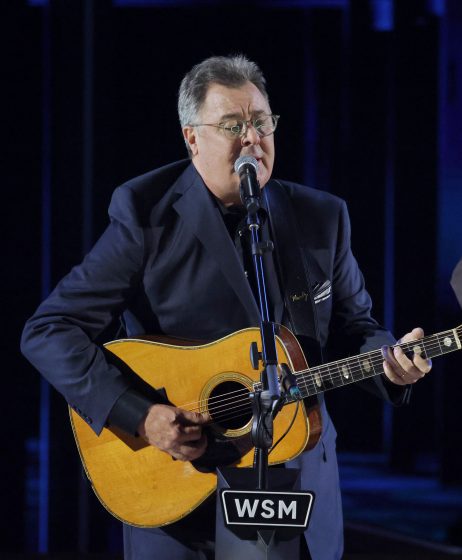
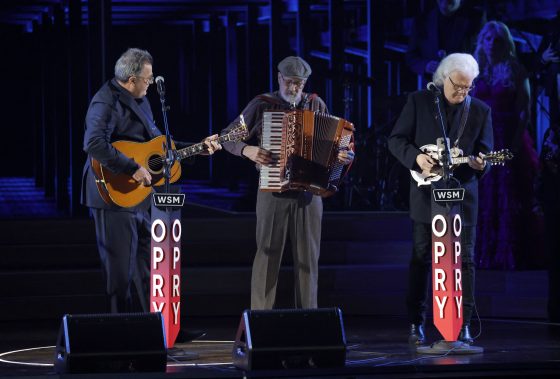
It wouldn’t have been a complete lineup for Opry 100 without Vince Gill! The Country Music Hall of Famer was joined by his old friends Jeff Taylor on accordion, Sonya Isaacs, and fellow inductee Ricky Skaggs, to sing perhaps his most famous song, “Go Rest High on that Mountain.” An impactful and inspiring number, the original has been a comfort to thousands of fans and listeners experiencing their own losses and grief. Of his deep-and-wide catalog of music, there’s not a better choice for an evening like Opry 100.
Ketch, Dierks, and Jamey
An Opry member trifecta, Dierks Bentley, Jamey Johnson, and old-time and bluegrass fiddler Ketch Secor (of Old Crow Medicine Show) paid tribute to the Charlie Daniels Band with a perfectly honky-tonkin’ medley of “Drinkin’ My Baby Goodbye” and, of course, “The Devil Went Down to Georgia.” From the sidewalks of Lower Broadway to the Grand Ole Opry stage, Charlie Daniel’s impact on country is indelible.
Luke Combs’ Mother Church Moment
From the hallowed stage of the Ryman Auditorium, the most famous former home of the Grand Ole Opry, one of the most popular singers in all of country, Luke Combs, performed George Jones’ “The Grand Tour,” as well as “Hurricane,” for Opry 100. With more than 800 million streams (on Spotify alone), “Hurricane” is one of his biggest hits from his 2017 album, This One’s For You, which has been certified double platinum by RIAA.
This long list of our favorite Opry 100 moments is still, somehow, merely the tip of the country iceberg. Stay tuned as the Grand Ole Opry continues their 100th birthday celebration all year long.
All photos courtesy of the Grand Ole Opry; credit Getty/Jason Kempin.
Lead image: Brad Paisley and Alison Krauss perform “Whiskey Lullaby” live at Opry 100.
Want more Good Country? Sign up to receive our monthly email newsletter – and much more music! – direct to your inbox.
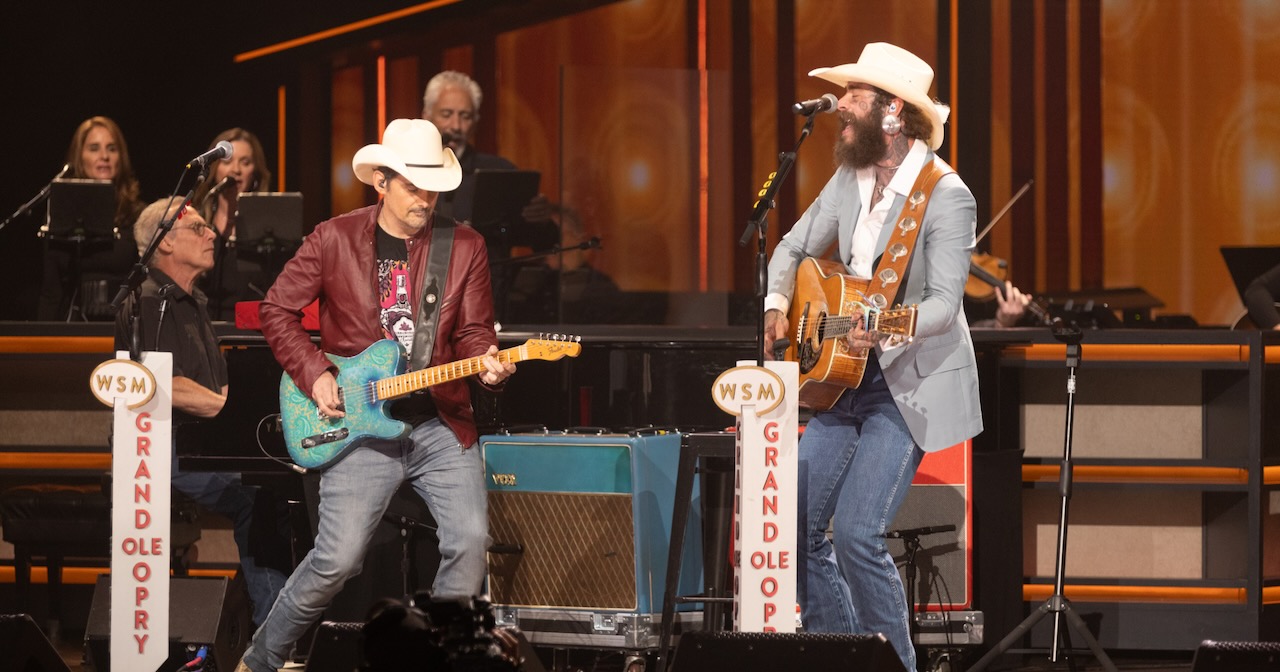
Back in August 2024, in tandem with the release of his earth-shaking country debut, F-1 Trillion, Post Malone took to the heralded Grand Ole Opry stage for the very first time. The special edition show, “Post Malone & Friends Live at the Opry,” was filmed for an Opry Live and Circle Now livestream broadcast and featured performances by Malone, Lainey Wilson, Vince Gill, Brad Paisley, The War and Treaty, and many more.
As usual, the incredible Opry content team was backstage and on hand for the momentous evening, capturing Malone’s debut as they do for each artist who takes to the stage, stepping into “the circle” – the inset portion of stage taken from the Ryman Auditorium in downtown Nashville and installed into the floorboards of the Grand Ole Opry House. Hundreds, if not thousands, of iconic artists, musicians, and celebrities have strode the hallowed circle.
“Stepping into the circle today is very much like the Super Bowl,” Malone says in the video released last week. “It’s terrifying, but it’s so exciting – and I’m ready to rock.”
And rock he did, bringing the drive and swagger of his mainstream background onto the Opry stage, packaged in rugged, honky-tonkin’, and fun F-1 Trillion vibes. The video showcases just how excited and even giddy Malone is to share in the legacy of the Opry. It’s a common, nearly universal feeling for every artist – of every level and every genre –who has stepped onto that stage.
With words and thoughts from Wilson, Gill, and Post Malone himself, the video includes sweet backstage moments, clips of once-in-a-lifetime performances, and a heaping helping of the welcome and hospitality of the Grand Ole Opry family. It’s a testament to how open and warm this genre can be to newcomers and visitors in these styles – when it wants to be.
Double-, triple-, quadruple-threats are not uncommon in country music, not in the least. It’s a frequent occurrence, tripping over or into a country artist that’s a songwriter, vocalist, multi-instrumentalist, writer, thinker, and so much more. In fact, until more recent decades, wearing many hats was seen as a sort of prerequisite to making hillbilly music. After all, this is “just” country music, it’s got a wide and deep DIY tradition, and the folks who make it often have to also load in the gear, sell the merch, post on social media, and produce the albums, play the demos and scratch tracks, write the lyrics, and otherwise steer the creative ship.
Some of the most successful artists and most original voices in country music are perfect examples of how multifaceted skill sets translate directly to star power. You may not need to be a Telecaster shredder to make it onto the radio or you may not need to be able to pick like Mother Maybelle to make a living, but if you can back up your songs with mighty playing, it certainly translates with audiences.
From Chet Atkins, Dolly Parton, and Wanda Jackson to Charlie Daniels, Willie Nelson, and Bonnie Raitt, here are just a few legendary examples of hugely successful country artists who are or were excellent musicians and instrumentalists, too.
Chet Atkins
A record company executive, producer, and pioneer of the “Nashville Sound,” Chet Atkins was also a one-of-a-kind guitar picker, renowned across the globe for his unique style – which was inspired by Merle Travis. Atkins certainly made “Travis picking” his own, arguably eclipsing all of his predecessors and continuing to influence guitarists today. An inductee of the Country Music, Rock and Roll, and Musicians’ Halls of Fame, Atkins’ impact is hard to understate and his resume includes work with Dolly Parton, Elvis Presley, Hank Snow, Waylon Jennings, and countless others.
DeFord Bailey
One of the first superstars of the Grand Ole Opry, DeFord Bailey was a world-class harmonica player who was also the first Black performer on WSM’s fabled stage. Some sources also credit Bailey as being the first musician to record music in Nashville. However you approach his career and music, Bailey was a seismic presence in the earliest days of country. Born in 1899, Bailey faced constant racism, bigotry, and marginalization on the Opry, in Nashville, and as he traveled and performed. He passed away in 1982 and was posthumously inducted into the Country Music Hall of Fame in 2005.
Glen Campbell
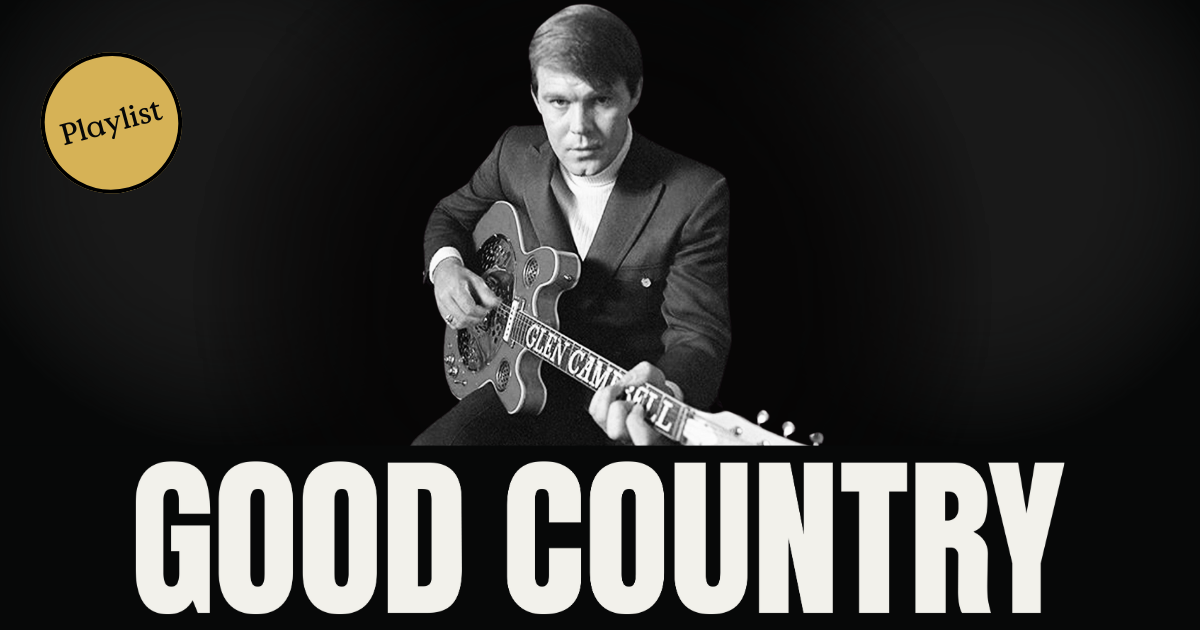
Even at the highest heights of Glen Campbell’s superstardom, he refused to let his superlative instrumental skill take a backseat to his roles as frontman, songwriter, Hollywood actor, TV star, and tabloid veteran. Campbell’s approach to country music as a true multi-hyphenate celebrity bridged generations, connecting the hardscrabble, DIY generations where multiple skills were necessary to make a living to the modern era, where he helped pave a way for famously multi-talented picker/singer/writers like Vince Gill and Brad Paisley to not be pigeonholed as one thing or the other.
Ray Charles
Any conversation around or collection of superlative country pickers and musicians would be glaringly incomplete without the inclusion of Ray Charles. His incursions and experimentations in country music are many and infamous. His 1962 album, Modern Sounds in Country and Western Music is routinely listed as one of the best country albums of all time. He’s worked with and performed with Willie Nelson, Merle Haggard, Ricky Skaggs, Travis Tritt, Johnny Cash, Glen Campbell, and many, many more. Plus, his country forays demonstrate a deep, holistic understanding of the genre. Charles is a quintessential country multi-hyphenate and country-soul in the modern era would feel especially lacking without his seminal contributions to that tradition.
Charlie Daniels
It’s hard not to wonder what young, hippie, “long-haired,” Vietnam War-opposing fiddler Charlie Daniels would have thought of his older self, and his more harebrained and often hateful beliefs later in life. But the controversial and outspoken musician, at all points of his career, was a picker’s picker. Over the course of his life he performed and recorded with Earl Scruggs, Bob Dylan, Leonard Cohen, and many more. But his chief contribution to American roots music may just be his fiery, unhinged fiddling on “The Devil Went Down to Georgia.” Just wander down Lower Broadway in Nashville on any given Saturday night to feel the impact of that particular show-stopper. In this clip, he chats and performs “Uncle Pen” with Scruggs and Del McCoury.
Vince Gill
That buttery voice, that stank-face inducing chicken pickin’, that high, lonesome sound – Vince Gill is all at once country and bluegrass, Nashville and Oklahoma, western swing and old-time fiddle. Whether with The Eagles, preeminent pedal steel guitarist Paul Franklin, the Time Jumpers, or so many other outfits, bands, and iterations, Gill is simply right at home. Because, at his core, he’s just a picker. He may play arenas, but he knows he belongs at 3rd & Lindsley or the Station Inn. Or Bluegrass Nights at the Ryman. A quintessential picker-singer-frontman, Gill continues to define the myriad ways country stars can maintain their selfhood and personality – instrumentally and otherwise – even in their wild successes.
Merle Haggard
Speaking of chicken pickin’, country’s most famous Okie was a shredder, too. A sad song, a glass of (misery and) gin, a Telecaster, and the Hag – that’s all we need, right there. Merle’s playing style, even at its most technical and impressive, was simple and down to earth. You could tell he cut his teeth playing bars, fairs, and honky tonks. You could almost hear him pulling himself up by his bootstraps as he played.
Wanda Jackson
The Queen of Rockabilly has been slaying rock and roll, hillbilly music, and the guitar for more than seventy years. In 2021 she released her final album, Encore, when she was 84 years old. It features her signature passion and fire – and performances by Elle King, Joan Jett, Angaleena Presley, and more. Jackson has been representing the vital contributions of women to rockabilly and rock and roll for her entire career, just as often commanding the stage with her growly, entrancing voice and her powerful right hand.
Willie Nelson
Who would Willie Nelson be without Trigger? Without a tasty, less-is-more, nylon-string guitar solo? For decades, Nashville, Music Row, and guitar players around the world have been emulating his particular sound as a guitarist – whether they know it or not. Sure, he’s a hit songwriter, a star and front-person, a collaborator of Snoop Dogg and Frank Sinatra, and a connoisseur of fine bud, but perhaps more than all of these accomplishments, Willie is an impeccable picker. He can hold his own with the best of the best, because he is the best of the best.
Brad Paisley
Brad Paisley’s fame crested at perhaps the perfect time for him in country music, combining a rip-roarin’ guitar playing style with a sound that was entirely trad while carrying touches of the bro country wave that was about to inundate the genre. As such, he was able to build a career on the diversity of his skill set, before Music Row and the power behind it began prioritizing music that didn’t need to be musical and voices that didn’t need to be singular. Luckily, Paisley is both those things and more, and despite the many eyebrow raising moments across his career, our faces more often show shock at his mind-bending skill as a guitarist than anything else.
Dolly Parton
How is it that Dolly Parton can play so many instruments so impeccably with those iconic acrylic nails!? Nowadays, you are just as likely to hear Dolly performing to a track – yes, she does lip sync and pantomime playing along with recordings – but don’t get it twisted, she absolutely can play a passel of instruments from her beloved “mountain music” traditions. She plays guitar, banjo, auto-harp, dulcimer, and has even been known to pick up a bedazzled saxophone from time to time – though we can’t guarantee she actually knows how to play that one, we’re still blown away.
And what about thatone viral video with Patti LaBellewhere they play their acrylics like washboards? Dolly can make music with just about any instrument.
Bonnie Raitt
How many people do you think enjoy Bonnie Raitt’s soulful blues and Southern rock sounds without knowing she’s also often the one playing the guitar solos and making that bottleneck slide weep? Raitt is a Grammy winning songwriter, a fantastic vocalist and song interpreter/collector, and – above all, in this writer’s opinion – a superb guitar picker, especially playing slide. She can hold her own with just about anyone, and she has. Her phrasing and use of melodic space demonstrates that she’s been honing her craft for her entire life. That taste can’t be taught, it has to be found. Boy, has she found it.
Marty Stuart
Marty Stuart’s long, fabulous, superlative career began with him filling the role of sideman for such luminaries as Lester Flatt, Johnny Cash, Vassar Clements, and Doc Watson. He plays guitar and mandolin, working up his chops as a youngster with pickers like Roland White as his mentors. When his solo career took off after his Columbia debut in the mid-eighties, his ear for fine picking remained present throughout his music – however far afield from those early bluegrass and country days he may have traveled, stylistically. Whether bringing in psychedelic surf sounds or Indigenous flavors of the American West, Stuart’s catalog of music centers virtuosity that’s never gratuitous. And his band, the Fabulous Superlatives, featuring crack guitarist Kenny Vaughan and multi-instrumentalist Chris Scruggs, represent a high level of picking prowess, too.
Tedeschi Trucks Band
By many measures, Derek Trucks is the world’s foremost living slide guitarist, but don’t overlook powerhouse vocalist and co-band leader, Susan Tedeschi in order to venerate Trucks! Both started playing as youngsters – Trucks when he was a kid and Tedeschi when she attended Berklee College of Music. These two are guitar and blues royalty, helming one of the most impactful modern blues and Southern rock orchestras on the planet. They’re consummate musicians, knowing just how to surround themselves by players who support and challenge, both. Even with their laundry list of personal accomplishments, together, Tedeschi & Trucks – who are also married – are so much greater than the sum of their parts.
Keith Urban
Keith Urban brings a scruffy, down to earth guitar playing style to his polished and glam mainstream country sound. Yes, even as far away as Australia, having instrumental chops means having country currency. When he moved to Nashville in the early ‘90s, with a few Australian radio hits and awards under his belt, he immediately found work as a side musician and co-writer in Music City. It wasn’t long until his star ascended stateside, too – and then, as quickly, around the world – bolstered by arena-ready guitar. Now readying his first album since 2020, Urban shows no signs of slowing down, with the music or the picking!
This website uses cookies to improve your experience. We'll assume you're ok with this, but you can opt-out if you wish.AcceptRejectRead More
Privacy & Cookies Policy
Privacy Overview
This website uses cookies to improve your experience while you navigate through the website. Out of these, the cookies that are categorized as necessary are stored on your browser as they are essential for the working of basic functionalities of the website. We also use third-party cookies that help us analyze and understand how you use this website. These cookies will be stored in your browser only with your consent. You also have the option to opt-out of these cookies. But opting out of some of these cookies may affect your browsing experience.
Necessary cookies are absolutely essential for the website to function properly. This category only includes cookies that ensures basic functionalities and security features of the website. These cookies do not store any personal information.
Any cookies that may not be particularly necessary for the website to function and is used specifically to collect user personal data via analytics, ads, other embedded contents are termed as non-necessary cookies. It is mandatory to procure user consent prior to running these cookies on your website.