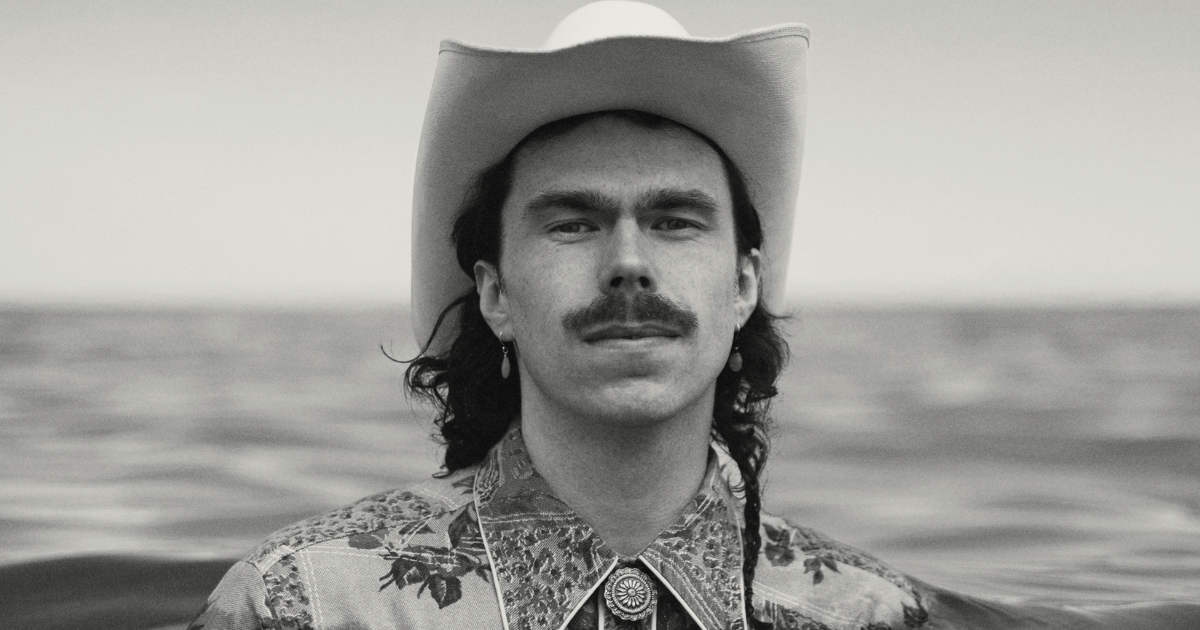
Lots of people are taking a shine to Boy Golden lately. Radio stations in Canada sent his populist pop single, “Suffer,” to the top of the modern rock chart. He produced William Prince’s 2025 album, Further from the Country, which recently received a Juno nomination in the Contemporary Roots Album category. And he’s among the new additions to the esteemed Telluride Bluegrass Festival lineup in June.
Offstage, Boy Golden is Winnipeg-based musician Liam Duncan. (His mother’s maiden name is Goulden, so he conjured the stage name Boy Golden.) In addition to jumping across genres, he’s also crossing the Canadian/American border this spring, with dozens of U.S. tour dates to promote his new album, The Best of Our Possible Lives. Duncan recorded the project in Los Angeles with fellow Winnipeg guitarist Austin Parachoniak, producer Robbie Lackritz, and cream of the crop LA studio players.
Duncan called in to Good Country to talk about making the new record, though the conversation also gravitated toward his abiding love for bluegrass music.
“Suffer” has been a big hit for you in Canada. What do you remember about trying to get “Suffer” to sound the way you wanted it to sound? Was it hard to come up with that song?
Boy Golden: No, that was a quick one. I sat down and wrote it all in one chunk. I remember it taking about an hour, maybe. But then I did make several demos of it, and throughout that process, I did edit it a fair bit and experimented with different lyrics and arrangements. By the time I got to the studio, I was really confident in the foundation, the bare bones of it. I could trust the musicians there, and they nailed it.
On that song, Pino Palladino plays the bass, which is really cool because he’s a legend, and then Abe Rounds is on the drum kit and he’s a really great drummer and musician. We had a few drummers we were thinking about asking, but I listened to Abe’s solo album – which is called The Freedom to Make Mistakes – and his percussive sensibilities on percussion instruments, beyond just the drum kit, were so spot on. It made it an easy decision, because I really wanted a lot of percussion on this album.
Why is that?
A lot of records that I love have a lot of percussion, first off. I was listening to a lot of Ry Cooder. I was listening to a lot of Paul Simon. The percussion on those records is fantastic. But also I was thinking about the first record I made as Boy Golden and I really went overboard with the percussion on that album. I hadn’t listened to it in years, I was in a store in Portland, and the guy running the store put on my song while I was in there. I was like, “Oh gosh, this is really great!” [Laughs]
I went back and listened to the record and I was like, “I should do that again,” because the records that I made between that first one and this one were way more stripped back. I made both of them on different types of 8-track tape machines so there’s just not as much room to go crazy with it. And I knew I was gonna have the freedom to do anything on this record.
The album before this one [For Eden] had a lot of banjo. Are you still grabbing the banjo from time to time?
Oh, yeah. I made a demo yesterday that has a bunch of banjo on it. And I spent the Christmas holidays just shedding some old-time, which is a really fun thing to do and does not bother my family much!
When did you pick up the banjo originally?
When did I pick up the banjo… 2020? 2019? Somewhere in there. It wasn’t, like, always a thing, but I’ve always loved bluegrass, and I’ve always listened to a fair bit of bluegrass, but I was just in a big phase. And I think part of it was, I was like, “I am never going to be a good enough guitar player to really play bluegrass, so maybe I should try a different instrument.”
You included “The Year Clayton Delaney Died” on that first record. Is Tom T. Hall somebody that you gravitated toward?
Yeah, particularly his bluegrass record, The Magnificent Music Machine. It’s such a good album! Something I love about that album is, a lot of bluegrass is pretty dry, and that record is not. It just sounds like a bunch of people playing in a big room, like maybe a church or something. I don’t know how it was recorded, but I love the energy on that record.
What are some of your other favorite bluegrass records?
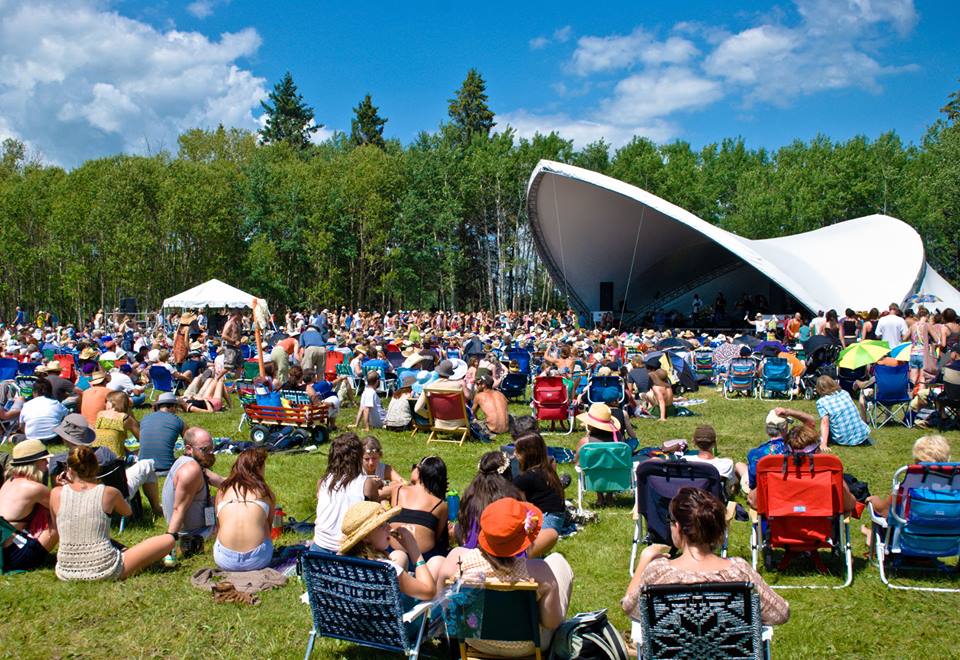
My favorite bluegrass records are the Bluegrass Album Band’s Volumes I through III. [Laughs] They’re my favorite. I love a lot of what’s going on in the old-time scene right now, like Nora Brown and Stephanie Coleman. And I love playing music acoustically with friends. I love sharing songs that way. I grew up going to the Winnipeg Folk Festival, and that was where I was first exposed to bluegrass, and it has been a lifelong love. And I feel like it does make its way into my music, even though I write kind of pop songs or something. I like to produce in all sorts of different ways, but on each song on this album, I tried to have at least one element that felt distinctly rooted in roots, whether that was a guitar part or a banjo part or a pedal steel or whatever. I just tried to always have some sort of grounding in the roots.
Reading up on you, I found that you were a Gillian Welch fan.
Yeah, I saw Gillian and Dave for the first time this [past] year at Winnipeg Folk Fest. It was very emotional for me. I cried a lot because I had a friend pass away right before we made this record. We had made a record together, me and this friend, and one of the songs was called “I Dream an Ocean,” which was inspired by “I Dream a Highway.” We would just bond over those records so much. … I could cry right now thinking about listening to Gillian and Dave when he was here. It was super affecting and really gorgeous.
I’ve enjoyed the videos that you put out so far and I think visuals must be really important to you. Can you talk about the concept of the video for “Cowboy Dreams”?
Yeah. I had a couple pretty specific visual references. One of them was the Brazilian tune “Águas De Março,” which has a great video you can find of Elis Regina and Antônio Jovian duetting that song together on an old stereo capsule mic. You can put [that mic] off-axis and then you can both sing into it. Anyways, it’s just a really beautiful video, and I love watching it because they have such chemistry. Me and my friend Cat [Clyde] have a great creative chemistry as well. We wrote that song together and made the demo together. So, I thought we could basically steal that concept and make it a little more cinematic by putting a 360-degree dolly camera around it. I love that shot.
The other one was a killer Sade video that’s all in black and white, and she’s galloping on a horse bareback, which is beyond my skill level, and it’s just so cool. Cat’s a really good rider. I was not a great rider. I’m still not a great rider, but I took a bunch of riding lessons leading up to that video shoot and got myself to the point where I could gallop comfortably. The ranch where we shot the horse stuff is run by some friends of mine, and they gave me, like, a Cadillac of a horse, so it was super easy.
You’re riding a horse in that video and you’re in Lake Winnipeg on your album cover. I’m assuming you’re pretty outdoorsy. Do you like the great outdoors?
I do, yeah. Yes sir. There are references to the natural world in my writing a fair bit.
Say you’ve got a free afternoon, what would you do?
Well, right now in the winter, I go cross country skiing. I go a couple times a week, usually. And I love cross country skiing, because it’s very meditative once you get into the flow and if the conditions are good – kick, glide, kick, glide. … And you can get into the woods with it, which is what I like about it. I mean, you can’t downhill ski where I live, because it’s just flat, but on cross country, you don’t need a lift pass. You don’t have to pay any money, usually. Maybe a trail fee of like $5 but once you get going, you can get onto this trail and you’re in the woods in the middle of winter. It’s a pretty special experience, not something everyone gets to enjoy, or even maybe realizes is as wonderful as it is. You know, to be out in the woods in the middle of winter, it’s sweet. And in the summer, I like to hike. I like to backpack.
That reminds me of the song “Blue Hills” from one of your past records. That one seems more of a country-leaning song to me. What inspired you to write that song?
I was thinking about being in high school actually. The town I grew up in is called Brandon and Brandon famously has hills [laughs] in Manitoba and they’re called the Blue Hills of Brandon, ostensibly because from a distance, they kind of look blue, I guess. And I was under the impression when I wrote that song that I had a great aunt or some ancestor who had written an old song called “The Blue Hills of Brandon.” I found out later from my dad that I must have made that up, because I don’t! That person who wrote that song is not my ancestor.
But either way, at the time, I thought she was, so I was like, “I’m gonna write my own version,” which I thought would be really special. I was thinking about high school, I was thinking about my late grandma and grandpa. Thinking about how those really early memories of love are so tangible, no matter how old you get. That’s why I say, “It’s the only thing I know to be true.” It’s like, that early love just was true.
When did the spark start for you as a songwriter?
I always wanted to write songs, but I was really blocked until I was about 21 or 22. And then I had a relationship end. It’s a common story, and I think I was so heartbroken that I didn’t really care if I wrote anything bad. And then it was like a spiritual revelation for me.
Had you been on stage a lot before that moment?
Yeah, I toured with my high school band all over. We played over 600 shows together. I’ve been in some sort of band with friends since I was like 14, so it’s been a lifelong thing. But I kind of thought I would just be a producer. To be honest, I never really thought I’d end up doing this.
When did you turn the corner? When did you decide, “All right, let’s make it happen”?
I guess when I had enough songs. And then I made a record that came out under my own name, which you can’t really find anymore. And then I came up with the Boy Golden character and idea and had a bunch of songs that I felt like were in the Boy Golden world. And ever since it’s been an obsession.
Photo Credit: Best of Our Possible Lives album cover