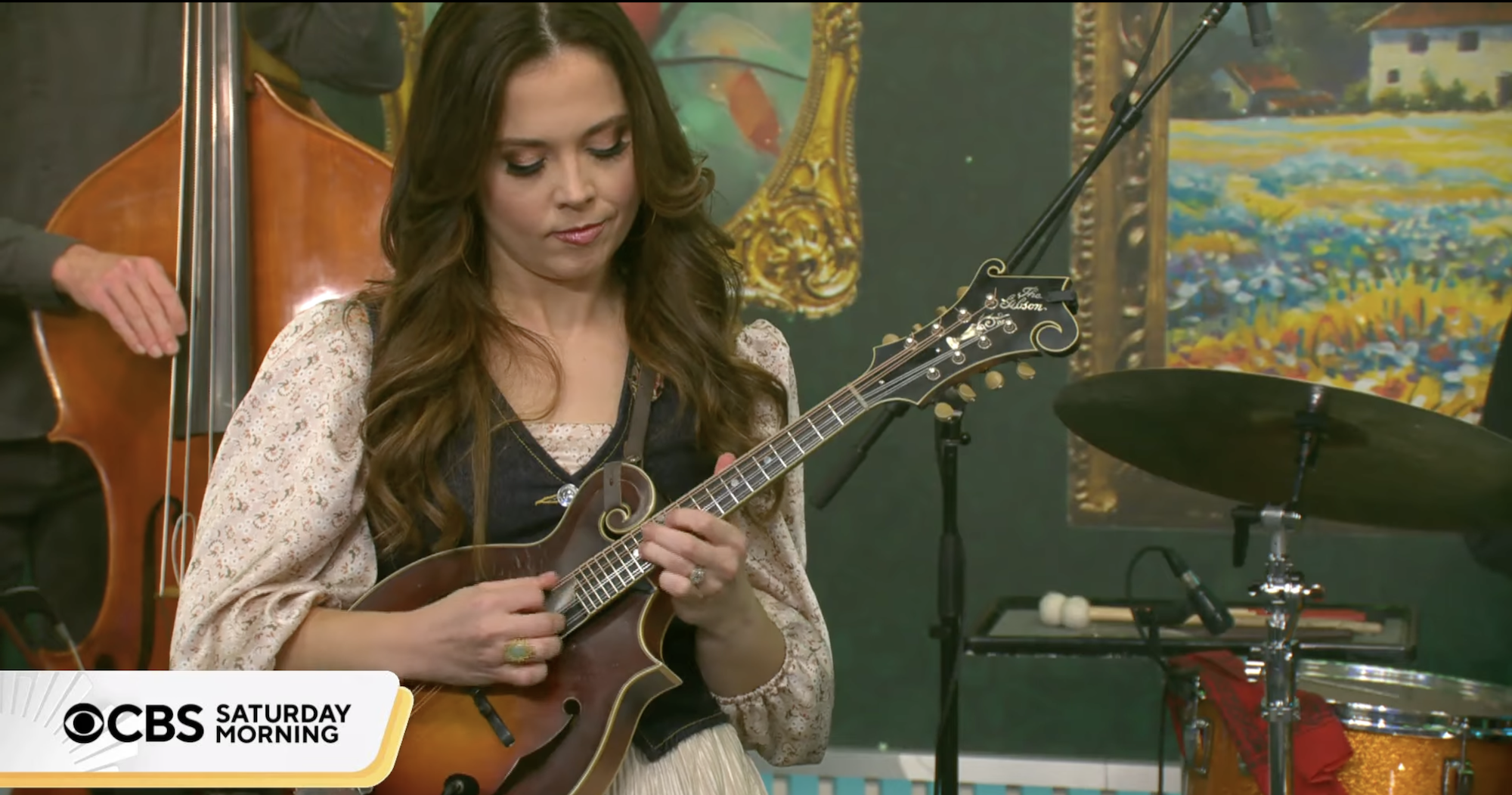
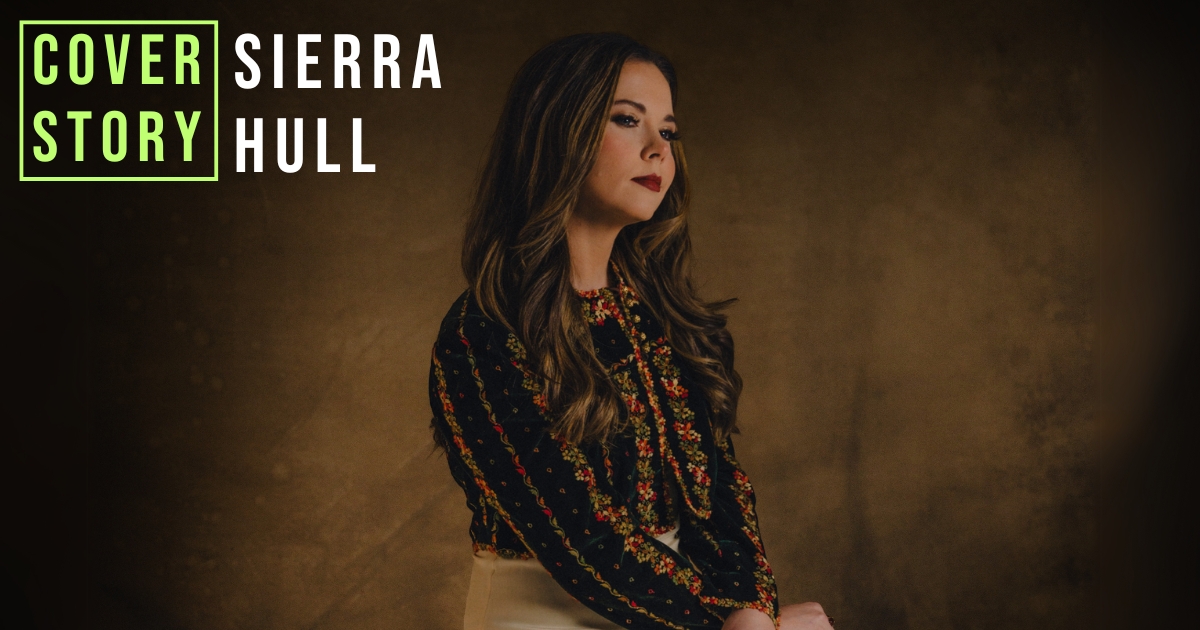
On Saturday, December 13, mandolinist and singer-songwriter Sierra Hull brought music from her latest GRAMMY-nominated album, A Tip Toe High Wire, to CBS Saturday Morning for a three-song Saturday Session. With Erik Coveney (bass), Avery Merritt (fiddle), Mark Raudabaguh (drums), and Shaun Richardson (guitar), Hull performed three tunes: “Lord, That’s a Long Way” from A Tip Toe High Wire, which is nominated for Best Instrumental Composition, as well as “Stomping Grounds,” a tune by Béla Fleck and Victor Wooten, and “Movement 3,” a Hull original from an upcoming release. Watch all three numbers right here, on BGS.
Announcing the appearance on social media, Hull pointed out the serendipitous rarity of performing three instrumentals for her Saturday Sessions. “We were originally scheduled to play all three of our GRAMMY-nominated songs – ‘Boom,’ ‘Spitfire,’ & ‘Lord, That’s A Long Way,'” Hull explained on Instagram. “However, by this past Saturday morning, my voice was gone. The worst laryngitis I’ve ever had despite feeling great otherwise! Doctor’s orders was vocal rest and no singing for a few days (which I honestly couldn’t have even had I tried). I was super bummed thinking we’d have to cancel, but my publicist spoke with the show producers and in a very rare exception we are told, they let us come play 3 instrumentals on the show!”
Of course Hull could pull off three engaging and exciting instrumentals. Though of her two prior planned songs, “Boom” is nominated for a GRAMMY for Best Americana Performance and “Spitfire” for Best American Roots Song, the three tunes the group did perform still show the immense depth and breadth of Hull and band’s technical prowess and dynamic range. Plus, each of the selections showcase various creative inputs and outputs for Hull; “Stomping Grounds” isn’t just pulled from the catalog of Hull producer, mentor, and collaborator Fleck, but also from the set lists of her frequent touring colleague Cory Wong. “Movement 3” is a delightful harbinger of musical eras yet to come, a discursive and flowing composition that pulls as much from the Chris Thile school of mandolin as jamgrass, newgrass, and more crunchy roots music climes. “Lord, That’s a Long Way” is one of the tentpoles of the new album, a staple of her live shows over the past year and into the future, surely.
Hull’s appearance on CBS is just the latest in an impressive outlay of accomplishments and accolades in 2025. Not only is she nominated for four awards at the 2026 GRAMMYs – including for Best Bluegrass Album for A Tip Toe High Wire – Hull also appeared with her band on NPR’s Tiny Desk, made our own 2025 Good Country year-end list, announced two of her own signature model Gibson Mandolins, and is currently wrapping up a holiday tour appearing with Béla Fleck & the Flecktones. We’re sure 2026 will hold even more impressive musical moments for Sierra Hull, but in the meantime enjoy these CBS Saturday Morning performances by one of the most talented groups in bluegrass, Americana, and roots music today.
Check out our feature interview on A Tip Toe High Wire from earlier this year here.
The traditional path of a musician’s career would say that gaining a record label’s approval reflects a certain level of accomplishment and stature. That’s a good thing, right? It can be, but what makes for the right fit to a musician’s career – whether with a label or as an independent artist – largely depends on how a person wants to navigate the ebbs and flows that come with making music for a living.
Just over five years removed from her fourth full-length album, 25 Trips, the aforementioned fork in the road is exactly the juncture at which Hull recently found herself. Now bearing her fifth full-length album, A Tip Toe High Wire, the Nashville-based mandolinist and songwriter decided that the extra work of an independent release didn’t scare her.
In fact, Hull is someone who keeps busy – “I’m not good with time off,” she says – and A Tip Toe High Wire may turn out to be her most true-to-form album to date. From her collaborators – Béla Fleck, Tim O’Brien, Aoife O’Donovan, Lindsay Lou, Ronnie Bowman, Justin Moses, Ethan Jodziewicz, Geoff Saunders and more – to her co-writers, to production, arrangements, and underlying theme, every aspect of the record evokes Hull’s concentrated instincts as a musician, composer, and experienced public artist.
These songs let the rest of us know just a little more about the “who,” “how,” and “why” behind the music and how it fits into Hull’s life and of the lives of those she holds dear. It’s a multifaceted expression of individualism and independence while also being nowhere near a display of isolated work – truly a balancing act of coexisting contrasts.
BGS spoke with Sierra Hull by phone ahead of a packed tour, about the significance of going independent, embracing new ways of songwriting, how her perspective of making music has changed, and more.
How would you describe where you were creatively, between the release of 25 Trips and leading into this new independent recording?
Sierra Hull: Part of it is that I didn’t really have the opportunity to go out and tour 25 Trips. When things were starting to open up [after the pandemic shutdown], I put together this band that I’m touring with and was able to think about what I wanted the music to feel like on the heels of [COVID]. I tried to think about songs that would would feel fun to stand on a stage and perform, you know? And I think some of the context of moving into [A Tip Toe High Wire] was thinking about that.
[25 Trips] was also my last record as part of my Rounder Records contract. A Tip Toe High Wire just felt like this new chapter. And having fresh songs that I had started to write, having been inspired by the time off the road to write music, I kind of leaned into that. I was loving playing with this band and I felt like I had the freedom to not necessarily have outside chatter in my ear about what the next thing needed to be. It felt like an opportunity to just make music that I felt excited by and capture it. At first I wasn’t sure if it was going to become a record, or a single, or what it might be. But the further we got into it, I would just continue to book sessions that we could get in the studio and record in between all the touring.
I feel like [being independent] gives me more of an opportunity to have a direct offering and connection to my fans in a way that maybe I couldn’t have in another scenario, and it feels really important for me to have that in this moment.
How has your perspective of the music and album making process changed? What kind of goals did you set for yourself in this new career chapter?
I don’t know if my goals felt different, because the goal for me has never been to try to chase a particular thing or to please a certain kind of entity. But at the same time, when you’re independent, you get to call all the shots, you know? You decide when you’re recording, how you’re recording, when the music gets released, how it gets released, all that kind of stuff. It’s kind of like a difference of me deciding what’s on the puzzle pieces and then figuring out how to put the puzzle together, rather than just somebody handing you a puzzle and the picture is there already.
I often say, “If I was only making music for me, I could do that anytime I want.” I can sit at home in a room by myself and enjoy music that way. But I think that we as artists and performers, we create and we make stuff because we want to be able to share with people. We want to be able to share a common emotional experience with people. It’s the struggle between trusting yourself, and being vulnerable enough to receive the good things and knowledge that other people around me have to offer.
In deciding, “I’m going to do what I want to do,” it almost prompts the question, “Wouldn’t she have that figured out already?” It’s a nice reminder that there’s no timeline to connecting with self-discovery.
It’s funny, because I feel like it’s one of those things with every album I’ve made. [People say,] “She’s finally coming into her own” – it’s like that every chapter! But the truth is, that’s the human story at any level. You can be coming into your own your entire life. you know? It looks different at 16, and it looks different at 20, it looks different at 25, and it looks different now in my 30s.
There is a certain amount of weird calm that I feel about more things in my life and I think part of that is when you work hard throughout your 20s and there’s such a grind taking place. For me, I love the grind. I live for the work part of all this. Like I said, I’m not really good at just sitting around doing nothing so I’d rather be working than not. But at the same time, I need to not clench my hands too tightly around the thing that is my art and my career. So much of this is out of my control. People will like it or they they won’t and it’s about trying to find some peace and asking myself, “Do I feel like I’ve done my best?” And how much that really matters, instead of being as validated by the praise one receives. We all long for that – I’d be lying if I said I didn’t, too. But I think there’s just a little bit less worry about that. It kind of feels like age gives you that.
What about your songwriting approach did you change for A Tip Toe High Wire?
I think songwriting is always such a journey. This was the first record that has been primarily made up of my touring band. Some of the songs were written and then performed live before we even recorded them in the studio – not all of them – but a good chunk of them have been road-tested, which is an interesting way of [developing a song]. “Lord, That’s a Long Way,” I wrote that tune because I literally was imagining in my mind the way it would feel to play this live with this band. It’s a different kind of approach when you’re thinking that way. I imagine one instrument kicking it off and then another one joining in on that same riff and kind of building the opening. In this way, sometimes you can almost hear it and feel it in a live experience before you’re even finished writing a song.
“Muddy Water” is a beautiful song with an equally beautiful sentiment about staying true to oneself. How does this mentality applies to your experience as an artist?
I think part of it is about trying to not become jaded by [the life of a musician]. If you’re doing something over and over and it kind of becomes your world, it’s easy to get burned out. I’m always trying to make sure that I don’t get burned out and am finding ways to be inspired. So much of that is about keeping a positive mindset and trying to keep an open mindset to the inspiration around us. The other thing that I’ll say is, I’ve gotten to do so much collaborating over the last few years. That’s been a big part of my musical world and I feel like it’s been really broad-reaching too, in ways that I’m inspired.
Stepping out on tour with Cory Wong – that’s a fun time. It’s way different than what I do, but it’s a fun time. Going to make music with Béla Fleck – that’s about really getting in the weeds and rehearsing and working hard on incredibly complex instrumental music. Getting to go join Sturgill Simpson on something, it’s about not over-rehearsing the songs and making sure there’s something about the freshness of maybe one or two takes in the recording studio. That’s why I love collaboration. Being part of something that’s not yours, but you’re kind of part of it so you’re getting to learn and grow and experience and have that excitement rub off on you.
Several of the songs on A Tip Toe High Wire – “Red Bird,” “Haven Hill,” “Spitfire,” “Lord, That’s a Long Way” – nod to the matriarchs of your family. How would you describe where and how music fit into their lives and shaped each of their relationships with you and how you remember them?
Music was part of everyday life. My whole family is very much rooted in the backwoods of Appalachia, the boonies of Tennessee, as far back as I know. Not a lot of money, no college degrees, but such smart, strong characters and people with a wealth of knowledge and grit and toughness and all that. I think music was a way that they were able to cope and have it be part of their way to pass the time. More a way of life than trying to dream of being a performer.
I remember my Granny singing when I was a kid, hearing her sing in church, and I know [my husband Justin Moses’s] family background was much the same. So certainly a different kind of musical experience. But music has always been a big part of both my family story and Justin’s family story. And I was lucky enough to get to know all of his grandparents – he’s since lost three of them – but I was lucky to get to know them and my grandparents too. Not everybody gets that. So I feel super lucky. And yeah, I think inevitably those stories kind of wind up weaving their way into my songwriting.
How do you balance so many different but interconnected objectives – especially finding space to let out parts of yourself through your music?
I’ve been able to say yes to a lot of things, because [I’ve chosen] to say no to some other things and that feels rewarding because normally I’d be stressing out. So trying to think ahead and find the balance as a human, asking, “How can I be focused in the moment, not stack too many things on top of each other, and instead carve out the balance where I do have time to write, I do have time to record, and I do have time to tour?” Because I love all those things. In a perfect world, you make them exist in a cohesive way and that can inform what the art becomes on the other side of it, because I’ve given myself space to enjoy all these things in their own way, instead of just the constant chaos of trying to do five things at once.
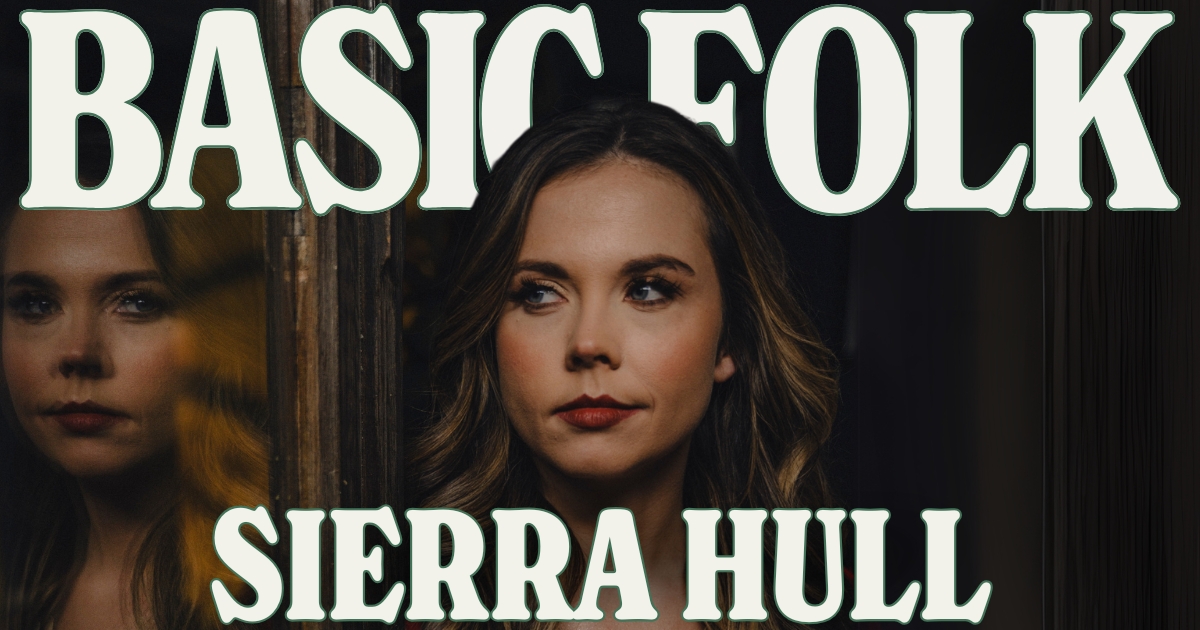
(Editor’s Note: The entire BGS team would like to congratulate Basic Folk on 300 amazing episodes of the podcast! Celebrate #300, featuring GRAMMY nominee Sierra Hull as our guest, with us below.)
When mandolinist Sierra Hull was little, her dad told her she was really good “for a 10-year-old.” The older Hull knew Sierra had a fiery passion for the instrument and he knew exactly how to motivate his daughter. He went on to say that if she wanted to go to jams and porch-play for the rest of her life, she’d learned enough. He gave her realistic advice, saying if she wanted to dedicate her life to music, she would have to work really hard. Because “that 10-year-old cute thing is gonna wear off.” Sierra, who would draw pictures of herself playing at the Grand Ole Opry with Alison Krauss and doodle album covers with the Rounder Records logo, took his advice to heart and got to work.
Since then, Hull has shared the stage with more heroes than one could count. She’s inspired a new generation of younger players, she’s released five albums, and she’s considered a master of the mandolin. Her new album, A Tip Toe High Wire, is set for release March 7. In our Basic Folk conversation Sierra reflects on how growing up in the small town of Byrdstown, Tennessee, shaped her musical identity alongside bluegrass, gospel, and family traditions. She shares memories of family gatherings filled with music featuring Aunt Betty and Uncle Junior, the profound influence of church hymns, and how these experiences continue to resonate in her playing and songwriting.
Sierra also discusses the significance of A Tip Toe High Wire, her first independent release, highlighting the freedom and growth that come with that independence. She emphasizes the importance of authenticity in her music, allowing herself to explore new sounds while remaining grounded in her bluegrass roots. Elsewhere in the episode, she opens up about her personal growth, the pressures of being labeled a child prodigy, and her journey toward embracing imperfection in her art. We also dive into what we’ll call her “Stevie Nicks Era” with the amazing cover art on the new record. Sierra enjoys playing with elaborate styles in her album artwork and red carpet looks (helloooo CMA Awards). With a candid perspective on the challenges of the music industry, she encourages listeners to find joy in the process while appreciating the beauty of vulnerability.
This website uses cookies to improve your experience. We'll assume you're ok with this, but you can opt-out if you wish.AcceptRejectRead More
Privacy & Cookies Policy
Privacy Overview
This website uses cookies to improve your experience while you navigate through the website. Out of these, the cookies that are categorized as necessary are stored on your browser as they are essential for the working of basic functionalities of the website. We also use third-party cookies that help us analyze and understand how you use this website. These cookies will be stored in your browser only with your consent. You also have the option to opt-out of these cookies. But opting out of some of these cookies may affect your browsing experience.
Necessary cookies are absolutely essential for the website to function properly. This category only includes cookies that ensures basic functionalities and security features of the website. These cookies do not store any personal information.
Any cookies that may not be particularly necessary for the website to function and is used specifically to collect user personal data via analytics, ads, other embedded contents are termed as non-necessary cookies. It is mandatory to procure user consent prior to running these cookies on your website.