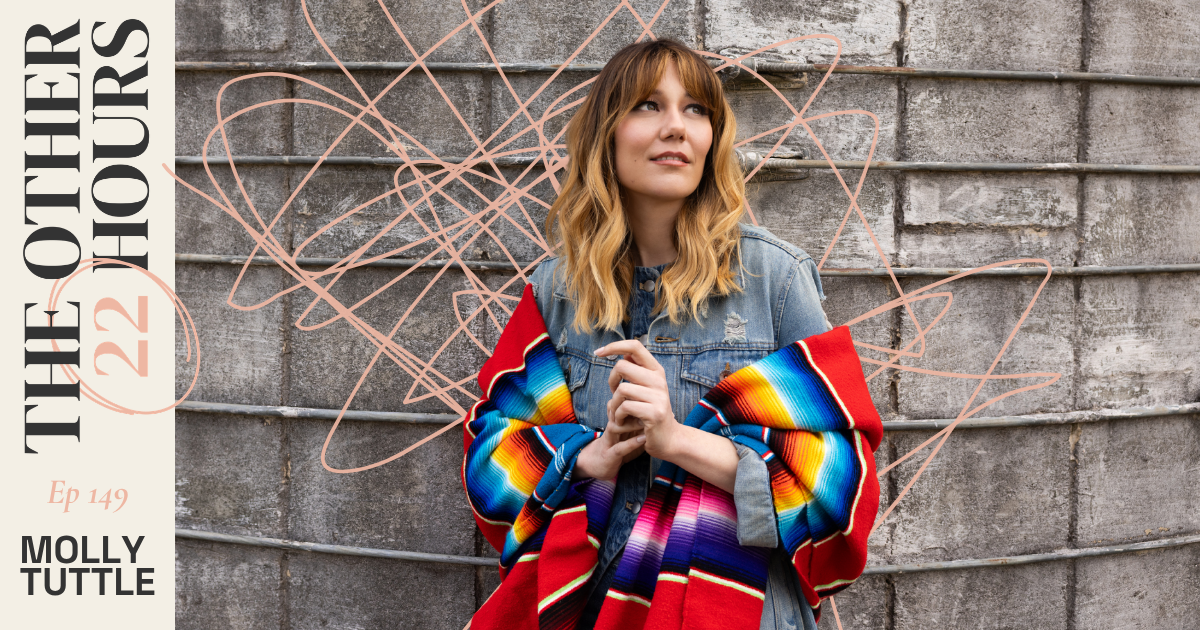
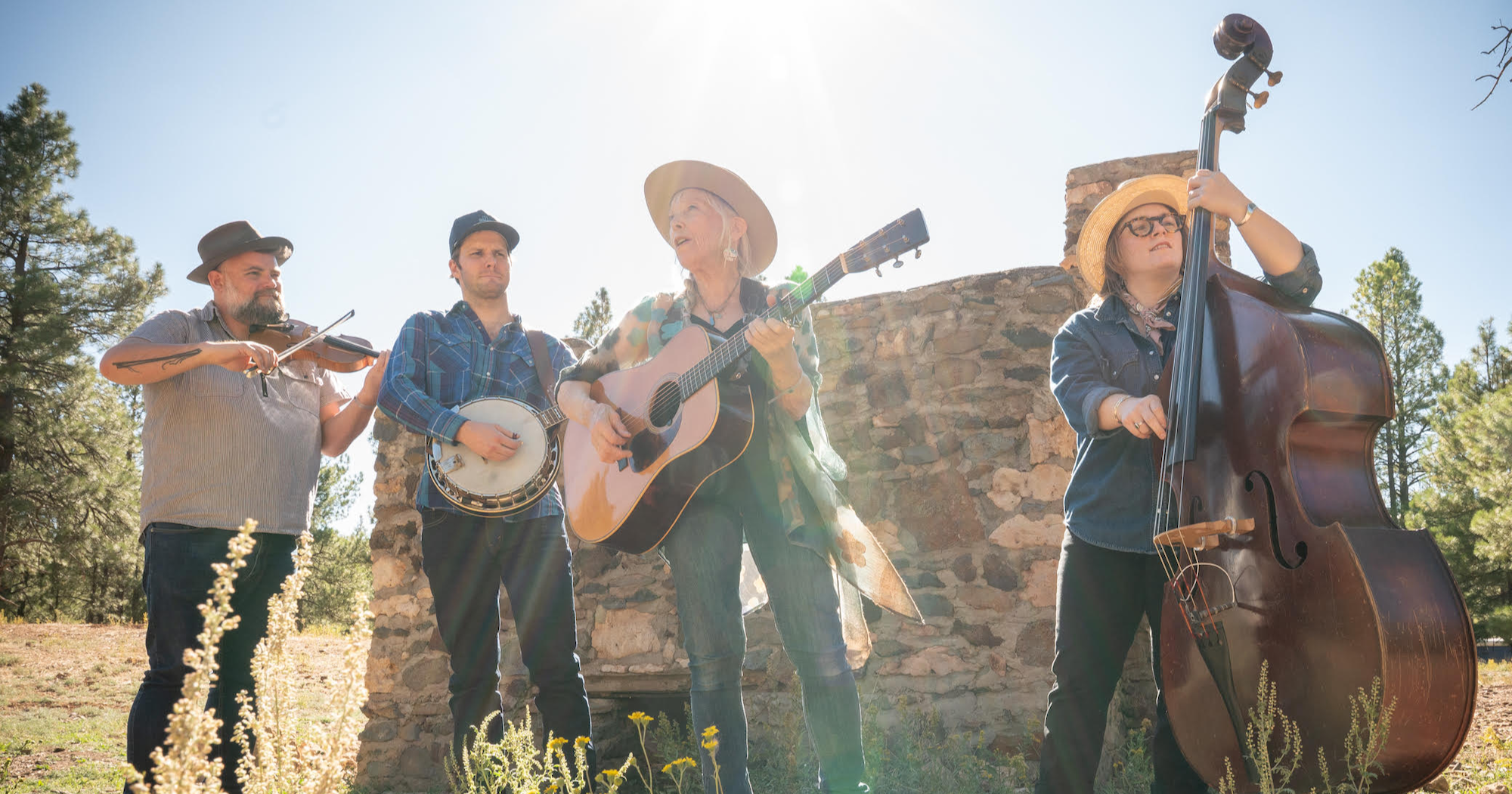
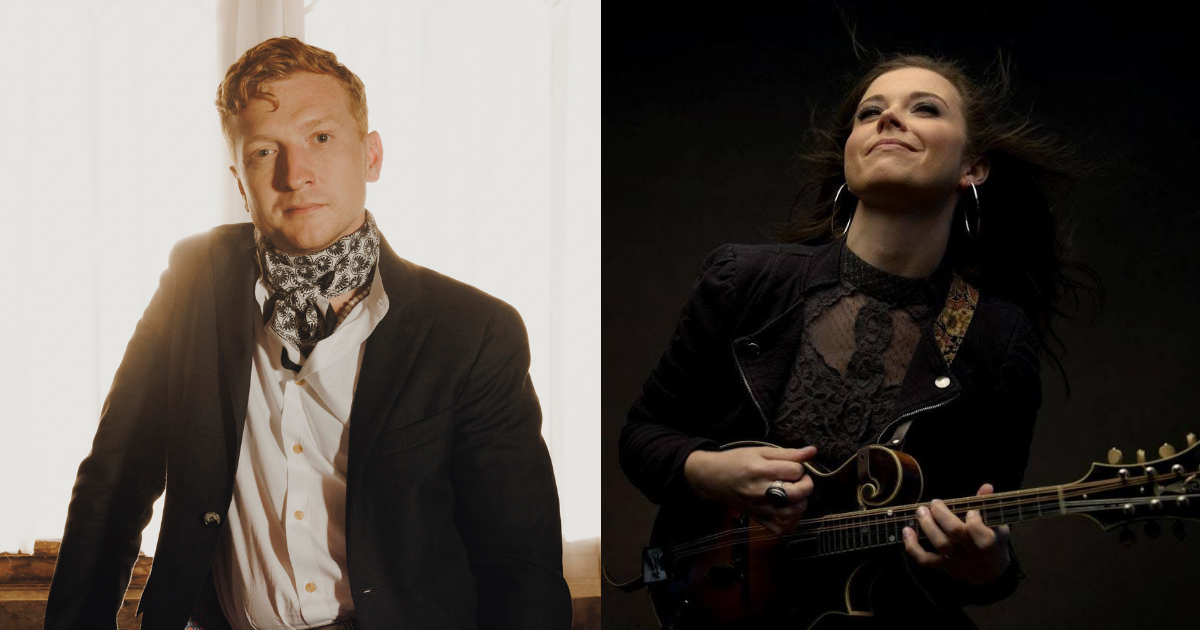
Molly Tuttle has shared stages and recorded with Ringo Starr and Billy Strings, yet she still grapples with the unpredictable “ups and downs” of a musician’s schedule and the inherent instability of the road. We talk with the GRAMMY-winning artist – who was also the first woman to win IBMA Guitarist of the Year – about the “baggage” of turning a passion into a profession. We explore the necessity of trusting one’s gut over industry expectations, how she navigates the transition from bluegrass traditionalism to rock-leaning solo projects, and the quiet power of having a partner who understands the nuance of tour routing.
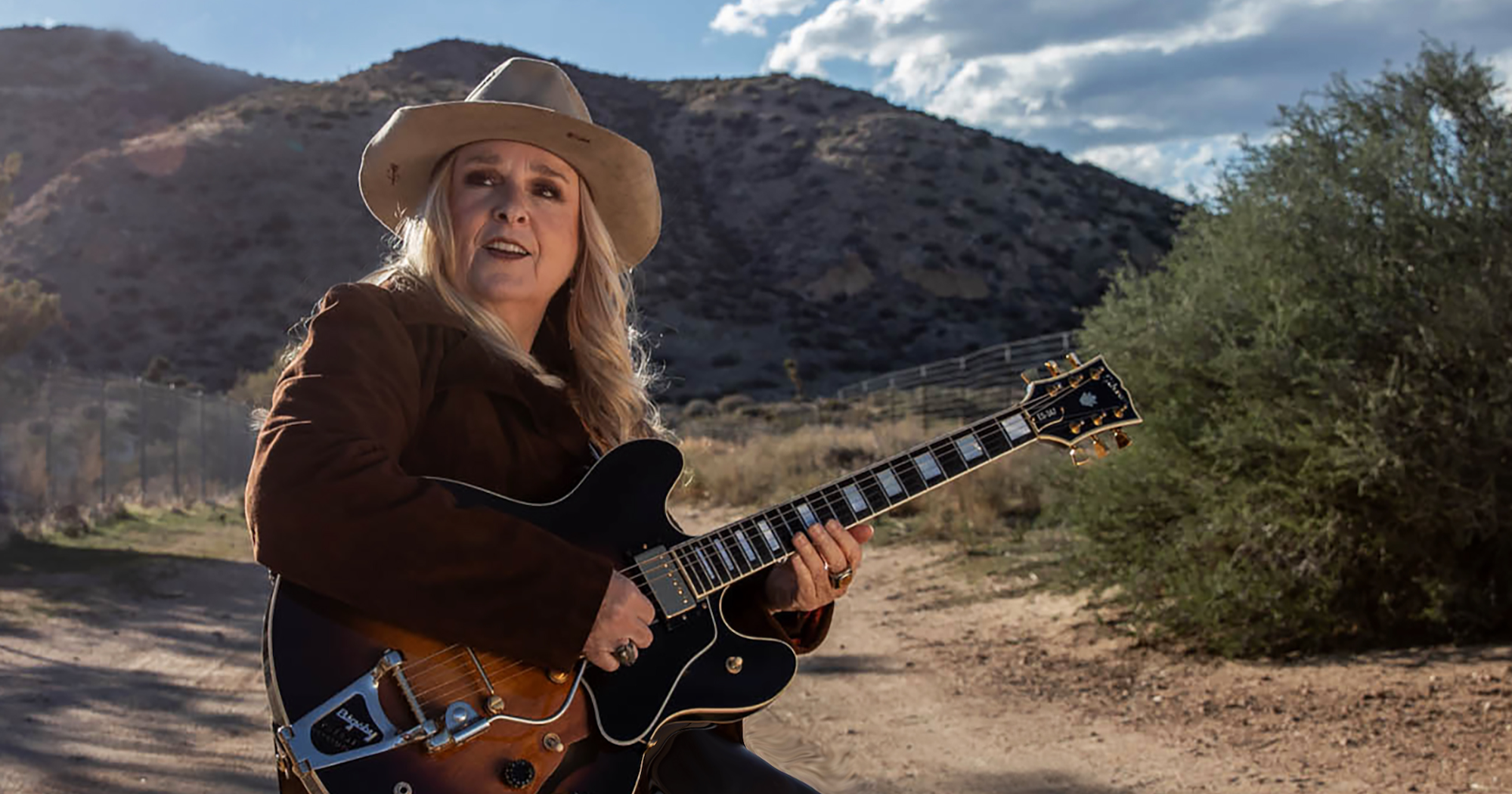
Few people have experienced the highs and lows of the music business to the degree that Melissa Etheridge has. Since releasing her self-titled debut in 1988, she has won two GRAMMYs (and been nominated for many others); been hailed as the second coming of Janis Joplin; won the Gibson Award for Best Female Rock Guitarist; become a mom several times over; been a social activist both for the LGBTQ+ community and for people addicted to opioids; written a memoir; and performed a one woman show on Broadway. Not bad for a kid from Leavenworth, Kansas.
That said, Etheridge has also suffered more than her share of setbacks. She has weathered a couple of high-profile divorces, battled breast cancer – who can forget her duet with Joss Stone at the 2005 GRAMMYs when she took the stage bald after undergoing chemotherapy – and, in 2020, lost her son Beckett to addiction.
The one constant throughout all these ups and downs has been her music, a brand of heartland rock that manages to be personal and universal at the same time. Etheridge is nearly as popular with blue-collar men as she is with lesbians, owing to her raspy vocals, formidable guitar chops, and unpretentious persona. And she’s racked up an impressive list of hits over the years including “Come To My Window,” “If I Wanted To,” “Ain’t It Heavy,” “Similar Features,” “I Want To Come Over,” “Bring Me Some Water,” and “I’m the Only One.”
2026 is shaping up to be a big year for Etheridge. She returned on March 27 with Rise, her first studio album in five years. On the eve of its release, she and her band kicked off a six-week tour in Detroit. And for the first time, Etheridge was nominated for induction into the Rock & Roll Hall of Fame this year.
Rise was recorded in Los Angeles with co-producer Shooter Jennings and includes 11 songs. While they’re diverse musically, the album as a whole feels like a complete statement. It’s a testimony to resilience, to sticking with life through all its ups and downs.
The title track and “Bein’ Alive” (which opens the disc) are both life-affirming rockers. “The Other Side of Blue” is a contemplative duet with Chris Stapleton. The playful “If You Ever Leave Me” puts an Americana spin on Mental As Anything’s ‘80s hit, “If You Leave Me (Can I Come Too).”
The shuffling, midtempo “Matches” was inspired by Johnny Cash’s 1970 concert at the U.S. penitentiary in Etheridge’s hometown. But the two final songs on Rise are also its most personal and poignant. “Call You” is a moving tribute to her son Beckett, while “More Love” was written for her daughter Bailey when she got engaged.
BGS recently had the pleasure of catching up with Melissa Etheridge for a Cover Story interview.
Let’s start with Rise. This is your first new album in five years, which is a significant amount of time. But you’ve been very busy in the last five years; I read your book and saw your show on Broadway. So it’s not like you’ve been sitting around! What do you get out of recording an album that you might not get from doing theater or writing a book?
Melissa Etheridge: Even though I haven’t had an album out in five years, the [last] album I put out, One Way Out, was a previous recording that I’d done seven years before that. So it’s really nine years since I’ve written. And I’ve lived so much of life – from loss to the pandemic to just growth. That’s the part about making a record. I knew that I could create a collection of songs that would make an album.
I love the art form of an album. You know, 45 minutes to be with the listener and take them through an emotional journey. That’s my favorite part; the real crafting of it was the writing. And it was about a year’s worth of pulling things together and then writing [in] December of ’24 and January and February. Then going in the studio [last] March. Going in, it’s so much fun with the road band that I have. It’s like putting on a favorite pair of jeans. Then getting Shooter Jennings to produce it! His studio, Sunset Sound, is so amazing. So it was a pleasure recording there.
It really does flow as an album, but it touches on a lot of different moods. Listening to it as one piece, I felt a sense of renewal and also resilience.
Yeah, that’s something I wanted to get across. There’s so much I experienced through the loss of my son five years ago. That’s about the most devastating thing you can go through. Having gone through that loss, [I] decided that I wasn’t going to drown myself in guilt and shame, I wasn’t going to die – that I was going to experience this, heal with my family, keep loving ourselves, knowing that everyone makes their own choices. I could not save him, he had to make the choices for that. And then making art from that – you know, loving yourself enough to be able to say, “God, I love being alive.”
Writing those songs – especially in this day and age when I find such negativity – if you start believing that, then that’s what you’re gonna see. So I wanted to put [out] positivity without being patronizing or [using] platitudes. You know, lifting people up. Going, “Yeah, you’re gonna fall sometimes. You’re gonna taste the dirt. You’re gonna rise.”
[“Rise”] came after the LA fires. That was something I went through with my family. We had to evacuate. It came right up to our neighborhood. I gotta tell you, LA firefighters are heroes. Every single one of ‘em. They were able to keep it from our neighborhood. But there was a moment, when we were watching the fire reports, where it was like, “Okay. There’s a good possibility that we might lose everything.” I was in a hotel with people who were losing everything. To experience that and then say, “They’re just things. We’ve got our health, our family, our pets.” You know, you’re gonna still rise. There are gonna be these things that knock you down, but man! You’re gonna be stronger and better for it. It’s hard to hear but it’s so true.
I was gonna ask you why “Rise” was the title track but you kind of just told me!
The second to last song on the album is “Call You,” which is really moving and I know you wrote about your son. I don’t have children, but two months ago I lost two of my best friends, one to suicide and one to early onset Alzheimer’s. So I’ve been struggling the last couple of months with a lot of existential stuff and wanting to call my friend Mark – and I can’t. So that song really resonated with me. I guess I wanted to share that with you.
Yeah. Life is full of loss. It really is. You’re not living if you don’t have some loss. And the older you get, the more you’re gonna see it. That’s when the existential stuff [comes in]. I am more than just my body, I am a separate soul here experiencing it. The greater part of me is that non-physical place that I’m connected to – that source that everyone is [connected to].
In “Call You,” I tried to simplify that. Because to me, the times when I miss him the most are the times when it’s like, “I wanna call you!” Even my father who died 30 years ago, you know? When I was nominated for the Rock Hall, I was like “Oh, I just wanna call my dad!”
[“Call You”] was actually the first song I wrote for the album. I knew I had to get that emotional experience down. I had to write that song first.
I also wanted to ask you about “Matches.” When I spoke to you last, you told me about Johnny Cash playing in Kansas when you were just a kid and how one of your thoughts was, “Prisons must be the place where you find entertainers.”
[Melissa laughs]
Tell me more about that and maybe your thoughts about The Man in Black.
Well, growing up in a small town, Leavenworth, we have no places for big artists. Kansas City is 45 minutes away. But our town, in the ‘60s, that just wasn’t a thing. All of a sudden, in 1969, he came to the prison. He came to our town! “Oh my god!” Someone who I’d only seen on his television show or [heard] on the radio and was such a cultural icon – he’s in the same space as me! That really kind of said to me, “Whoa. Maybe I could do that.” It felt close to me. [Cash] always made a big impression on me. I always loved his music, his individuality.
“Matches” was supposed to be a scratch pad song for me. I had just come from the I’m Not Broken [docuseries]. I did a concert in 2023 at the Kansas Women’s Penitentiary. So I was still sort of playing off of that and singing. Scratch songs for me are songs [where] I’m writing for fun and it starts the juices flowing. I kept writing these verses and I played a little bit for my wife, [Linda]. And she said, “You have to put that on! What do you mean that’s a scratch song?”
Can you tell me some wonderful things about Linda?
[Laughs] Yes, I can! That’s easy. For 12 years we’ve been married. We were together four years before that. And before that, we were best friends for 10 years! I married my best friend.
She is… everything I needed or wanted or dreamt about. The only way you really get someone like that in your life is to understand your needs and wants. And to have the love for yourself that you are looking for in other people. The minute I really got in contact with myself and understood what I wanted and loved, I was able to see the best kind of love for me. And she was it.
There’s just a constant partnership that is astounding – a love and desire that never goes away. And it’s because I’m not looking for her to fix me or make everything great. I’m looking for her to be by my side as we both make our choices and walk through this world together.
Tell me a little about “The Other Side of Blue” and what it was like duetting with Chris Stapleton.
Ah! Chris Stapleton is just a national treasure. His soul and his talent and his mind and his heart are so beautiful and so rare. He’s such a unique talent and an incredible man.
I really didn’t know him at all, I just was a big fan. And I didn’t really want to do a duet on this album. But I remember telling my manager, “If I ever did do a duet, I would love it to be with Chris Stapleton. Maybe ask him if he wants to write a song together.” So my manager sent out the request. He said yeah, and that made me so happy. I went down and we wrote the song.
We were writing in RCA Studio A in Nashville, which is where Chet Atkins [recorded]. A massive, huge, historic studio! I just walked in and, “Hello, hello.” We sat down and had guitars in hand. We were just talking and five minutes go by and he asked me about my kids. I said, “Well, I had four but I lost one.” He said, “Oh, I’m sorry.” And I said, “No, no. He was my greatest teacher.” He looked at me and he goes, “You talk in song.”
That was the first line: “Sometimes, I listen when she talks in song.” We were writing within 15 minutes of showing up. It just appeared – every line. It took us maybe an hour and a half to write that song.
You mentioned being nominated for the Rock Hall. Tell me how that feels after all this time.
Well, I was eligible for about 12 years. [Laughs] I was like, “Don’t think about it! It’s not a comment on your music.” I didn’t make my music so that I would be in the Rock & Roll Hall of Fame, that’s not what it’s about. It is lovely and feels really good to be recognized by your peers – by a group of people in the music business who say, “Your contribution to rock and roll has meant something.”
I’ve been on the voting body for exactly 10 years now. Obviously, certain things are subjective, but I thought this year there were a lot of good nominees. More diverse than last year’s group.
Yeah, I love Sade. I love Pink. Lauryn Hill I think is a good one. And then Iron Maiden, come on! It’s time, guys!
I always like to ask you about one older song. My favorite, which I’ve already asked you about, is “Ain’t It Heavy.” Is it okay to ask you about one of the really popular ones? I try not to ask the same things everyone asks. But I am curious about “Bring Me Some Water.”
Oh, that’s good! At least it wasn’t “Come To My Window.” No, “Bring Me Some Water” – that’s fun, that’s an older song.
I’d been playing women’s bars in Los Angeles for five years and a lot of record companies came and turned me down. But Chris Blackwell [finally] comes in and signs me right on the spot, for Island Records. Bam! I’d never made a record and I had no idea [what to do]. So my manager gets this producer, Jim Gaines, from San Francisco. This is 1986. It’s the middle of the ‘80s sound – that sort of Steve Miller, Journey [thing]. We made this record and I play it for Chris Blackwell and he hates it! Because it doesn’t sound like the girl he saw at the bar. It sounds overblown – lots and lots of keyboards and my voice way at the top. He hates it and I’m like, “Oh my God, he hates my album.”
I convinced him to give me four days to try it again in the studio. But in between the time that I finished the first album and went into record again – which became the debut – I wrote “Bring Me Some Water” about this relationship I had with a lovely woman named Kathleen. We lived together and we had this open relationship – which is just a mindfuck! [Laughs] I wouldn’t advise anyone to do that.
This is her being gone and me sitting at home in the middle of September, in Los Angeles. I’m living on Melrose and it’s hot. It’s so hot! So I sit down and I’m like, “Okay. I gotta get back to traditional blues stuff.” I’m just playing [the riff], it’s old Muddy Waters but it’s speeded up. I’m singing about, you know, the foul air. I’m just hot and uncomfortable and I’m mad. So, I wrote this song and Chris Blackwell loved it.
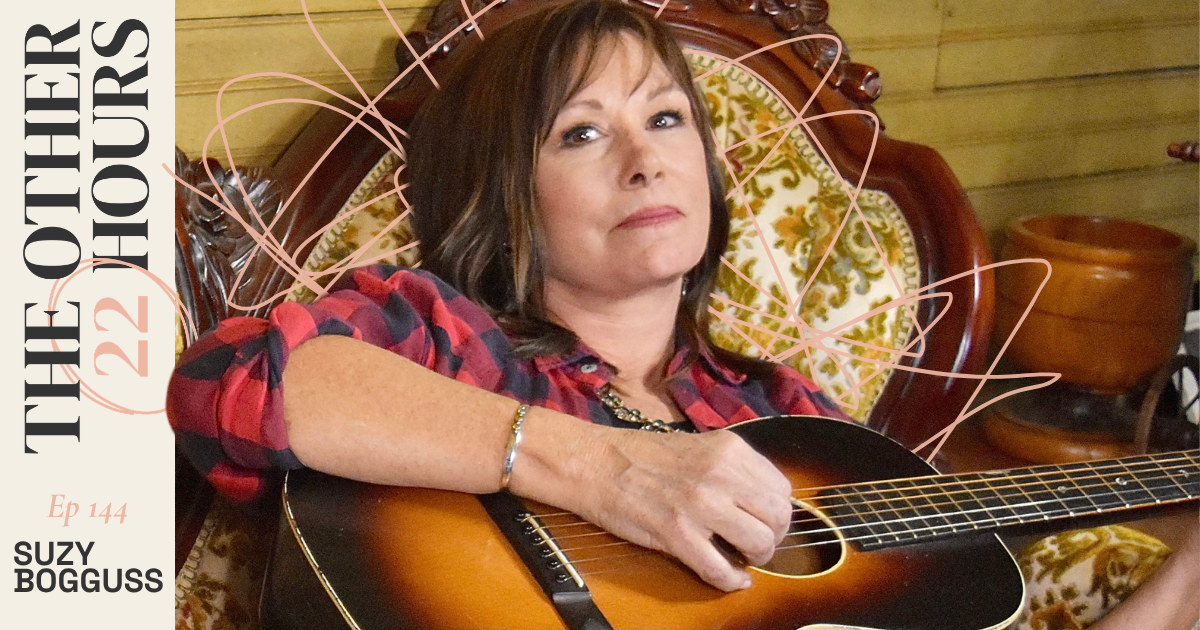
How does an artist outlast the industry machine to build a career entirely on her own terms? We sit down with GRAMMY-winner, 1989 ACM Top New Female Vocalist, and 1992 CMA Horizon Award recipient SuzyBogguss to explore the evolution of her 40-year career, which includes platinum records and her 2026 induction as a member of the Grand Ole Opry. Our conversation is an invitation to reconsider what we all value, moving away from the noise of major label machines and toward a philosophy of quality over quantity, independence, and deep community.
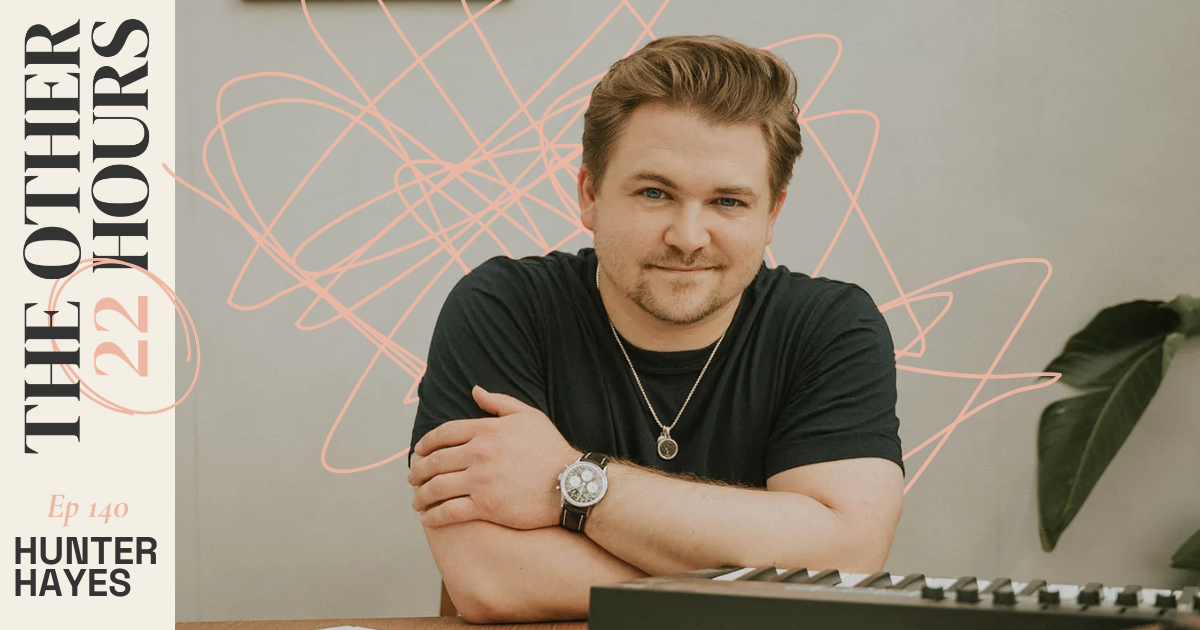
Five-time GRAMMY nominee HunterHayes has spent his entire life on the national stage, from performing at the White House at age seven to sharing stadium spotlights with the likes of Stevie Wonder and Taylor Swift. Yet, behind the multi-platinum accolades was a realization that his professional development had far outpaced his personal life. In this episode of the Other 22 Hours, we explore the vulnerability of “growing up” in the public eye, the paralyzing fear of not being busy, and how a strict routine can actually provide the ultimate freedom to play. And, we chat about how starting from a place of love is the only viable way to build an artistic career that lasts.
It’s noon in the Bay Area, and singer-songwriter/multi-instrumentalist/producer Laurie Lewis is sitting in her backyard on what she describes as “a beautiful sunny day.” She spent her morning pulling up oxalis, and now she’s painting a railing she purchased at Urban Ore.
“It’s a good handrail for our front steps and along the walkway for my partner, Tom,” she says, “so I’ve been sanding it, wiping it down, and painting it.” Later during this interview, she’ll continue pulling up weeds, noting, “It’s very liberating for me, getting my hands in the dirt. It feels really good.”
The reason for today’s call is Lewis’s new album, O California! Like its predecessors, it’s an emotional palette of songs – five originals, five traditionals, and a cover of close friend Alice Gerrard’s “Sweet South Anna River” – that blend the many genres influencing her work, from bluegrass to country, jazz, and even a hint of rock. O California! features the stellar musicianship and vocals that define Laurie Lewis and her band, The Right Hands: Brandon Godman (fiddle), Hasee Ciaccio (bass), and George Guthrie (banjo, guitar).
A two-time IBMA Female Vocalist of the Year and a two-time GRAMMY nominee, Lewis is no stranger to BGS readers, as she’s been featured many times. Dedicated fans are also deeply familiar with her longtime partner, mandolinist Tom Rozum, and his Parkinson’s disease diagnosis. “He’s doing pretty well,” Lewis says. “He had spine surgery in November and he’s recovering very well from that. He had been living with intense sciatica pain for a year and a half, and the pain is gone, so that’s great.”
What would you like readers to know about O California!?
Laurie Lewis: Let’s see… all kinds of things. I wrote five of the songs on the album and they’re all over the map, so they’ll say, “She’s got a lot of different musical influences.” We’ve also drawn from the folk tradition and some great traditional songs and thrown that in the mix. It’s all done with the same four people and same four voices on beautiful acoustic instruments. Sonically, it’s really nice. You really hear the personalities of these particular four people working together. It’s what made me want to make the album.
This is album number 25 in your catalog. Artists often speak of albums as chapters in their lives. Which chapter is O California!?
This chapter is this band at this moment in time, these particular four people. I wanted to celebrate our working relationships together. It’s something that wouldn’t have happened at another time in my career, because I wasn’t working with these particular people for as long as I have been on this album. They are all on the previous album, but that was me calling all the shots. This is me settling in, listening to everybody, and trying to make a whole out of the four parts.
How did this approach make the creative process different?
Usually I come into a recording situation with more of an idea of what I want a song to sound like. This one, I came in with snippets and vague ideas for [the band] to have their way with it. We collaborated on arrangements and we listened to every idea. It’s not that I don’t listen to other people’s ideas at other times, but generally there might be more input than just three other people if I’m doing that.
I’m a collaborative artist. One of the reasons I play music is because it’s my best way of communicating in the world. And that is, for me, to an audience. But it’s also true for me to my bandmates and other musicians. It was fun to say, “We’re making a band album. This is what it’s going to be. We’re going to let people toss out songs.” “How does this sound?” “Oh yeah, great. Let’s do that.” It was, “How shall we do it?” “I’ve got an idea.” “How about if we do this?” It’s a very free and open feeling.
[The band are] all very open-eared and open-minded about the music. It doesn’t have to be the way Earl Scruggs did it, or the way Bill Monroe did it, or anything. It doesn’t have to fit into a neat bluegrass category. I’ve played with musicians in the past who have been more or less open, and all it takes is one more closed-off person to direct the band in a particular direction.
You’ve stated in the past, paraphrasing here, that writing is sometimes specific and sometimes spontaneous, sometimes it’s almost random, sometimes it’s unfinished. What was it this time, or was it some of each?
I’d say it was some of each. With the song “O California,” I was writing lyrics in the studio. I did a scratch vocal and changed the lyrics three times before I came home and overdubbed an actual vocal. That’s unusual for me, that it was in such an unformed state when I got into the studio, but it’s when we had the time and I knew the bones of it were good. Some vocal lines, some lyrics, just were not right yet, but I knew what it was about.
When did the songs start coming together as an obvious collection? Was there an intention in mind, a theme, when you all got together?
We started this project in a different way than I have other projects. We had little tours booked, so we would get together a day early before every tour, because we all live in different parts of the country. They would fly out here, we’d rehearse a song, get what we wanted down, figure it out, and then go on our tour and play it every night. We’d have a studio day booked on the day we got back from the tour, so we’d go in and record whatever we had worked out the week before and played on the tour. It was a fun way to approach a project and it spaced it out over a long period of time. It took close to a year.
When it’s spaced apart that way, how do you make it feel like a collection, rather than recording individual pieces of music?
Because it’s all us. It’s like an old friend – you can pick up the conversation right where it was. You haven’t changed your tone or your relationship with each other so drastically that it doesn’t fit together. It would be different if I were doing something like that over a year and just getting together with whoever I thought was the right person to play on a particular song. Then, the only thing that would hold it together would be my production values.
Do you still write ideas on notes, or have you tech-ed your way up to phone apps?
Oh, no. I write. I like to write with a good pen or a pencil on a piece of paper. I will make notes sometimes on voice memos, but mostly that’s it. I’m old-fashioned. I feel like there’s something that happens, the tactile feel of a writing utensil on the paper, that is easier for me to get a thought out than to sit at a keyboard. I’ve been known to still write letters, in fact.
We live in a world of texts, emojis, phone scrolling, and what’s being called “an epidemic of isolation.” Bluegrass is associated with festivals, musicians getting together and jamming, and community. Is this still true?
Oh, definitely. In fact, here in the Bay Area it’s having a real resurgence of community jamming culture. That’s always been at the basis of bluegrass. It’s what everybody wants to do – get together and let their instruments do the talking, let the songs do the talking. It’s a wonderful thing. I love it so much.
You mentor and teach at workshops and music camps, where you connect with younger and up-and-coming musicians. What do they want to know? What do they need to know?
One of the things that I try and impart to people is the importance of finding your own voice, because many young musicians have heroes they want to emulate. That’s how you learn, but at some point you have to find what you want to say with your voice and your instrument. That’s one of the things I try to emphasize and help people feel confident that they have something to say and their own way of saying it.
There is intergenerational connection at these camps and workshops, contrary to the ageism on both sides, that society seems to push: “What do those kids know?” or “What do those old people know?” What is your perspective?
There’s still a lot of that, but luckily there are enough people, young and old, paying attention and willing to listen to each other. It’s especially helpful when there are youth music camps and stuff like that, because then the kids have each other, but they also have their mentors there. They’re there because they want to learn, and it’s usually the older people who are teaching them, but then they get to be with their cohorts, their age group, and that helps a lot.
I certainly learned a lot from teaching at kids’ camps. When I first was asked to teach at a youth-oriented fiddle camp, I thought, “I can’t do that. I don’t know how to talk to kids. I don’t know anything about that stuff.” I said yes because I tend to say yes to things, and I found it to be so enlightening and so important in my life. It’s very enriching.
On a 2021 FolkWorks podcast, you talked about The Good Ol’ Persons playing a trade show luncheon years ago in front of a room full of drunk men. You described it as being “thrown to the wolves.” Many years later, how are we doing?
In terms of women musicians out in the world, there are so many more, and it is so great to see. And the technical abilities – you can’t fault it. You can put Molly Tuttle up against any guy. It’s been some huge steps forward in the time I have been in the music business, but it’s still very male-dominated from the top. It takes generations to change things like this, these ways of thinking, and now there’s a real cultural backlash happening and I don’t know how that’s going to play out. Women have made huge strides and maybe that’s just going to be taken away. Every generation has to fight the same fights, apparently.
Overall, how is bluegrass doing, to your eyes and ears?
That’s a really hard question for me to answer. Honestly, there’s a part of it that has gotten very entrenched in staying within a particular genre. I hear a lot of songs by people singing in a bluegrass style about bluegrass music, or their cabin home and I think it’s in danger of becoming a trope instead of a living, breathing art form.
Luckily, there are enough people out there creating in the art form and doing great stuff. There’s so much of everything happening all the time now that it’s going in all different directions at once. There’s good stuff and bad stuff, and it all depends on your point of view.
Who is making an important contribution, in your opinion?
I hear a few things now and again that I respond to and like a lot. I’m not very impressed with a lot of technical brilliance. I want to be made to laugh and cry, and if it doesn’t do one or the other or both, I’m not all that interested in it.
In terms of bands, Mighty Poplar can do it, and the duo Paper Wings, two young women, Emily Mann and Wila Frank, who I actually met at a fiddle camp when they were teenagers. They’re pretty wonderful. And I always like hearing what my old friends are coming up with in terms of songs and writing. I love hearing whatever 92-year-old Alice Gerrard is coming up with. She has a way of putting her finger on the pulse of what’s happening in the world and is pretty great.
In 1998, you recorded a song called “The Refugee.” Twenty-eight years later, here we are …
Oh, I know. I find it unfortunate that [that] song is still so incredibly relevant – or more relevant. I find it very unfortunate that song has not outlived its message. It’s terrible. I wrote it when Guatemala was in such bad shape, people were fleeing, and there was all this backlash. It’s an empathetic song. These days, empathy – there’s a whole movement, “empathy’s a bad thing.” It’s so crazy.
In a 2020 interview with BGS you said, “Music has a real way of being able to soothe and heal grief.” Could you talk about that healing power, not only as a songwriter, but also as a lover of music, a listener?
Oh, yeah, it’s true. I stand by that. There’s nothing like it. It’s such a direct conduit to the heart. A song can sneak in and express something for you that you had no words for. It can help you, as a songwriter, to figure out a way to express what you might be going through in a way that makes it universal. You put it out there in the world, everybody can feel it and relate to it, and it makes you feel a part of something greater than just your little dark cell that you might be stuck in, or your own personal grief.
It has helped me deal with things, with grief in my life, to be able to learn a song that makes me cry. Every time I hear it, I learn it, and it becomes part of me. It becomes part of my way of being able to express myself, or to write a song that every time I start trying to sing it, I’m in tears or something. You learn to work through your grief by embracing it musically. It’s an incremental way of dealing with things, and it’s really healing.
It’s a sense of support through the company of songs that speak to us.
Yeah. You are not alone. Especially with all the internet stuff, people spend a lot more time not with actual other humans, having conversations or whatever. To hear something, to listen and understand that other people are going through the same alienation or grief or loss, or whatever it is that you are experiencing, makes it easier to bear.
The French author Jean Giono, who wrote The Man Who Planted Trees – I wish I could find this quote – said in an essay that an artist’s duty is to express yourself for all the people who don’t have the words or the art to express themselves. It’s your duty in society, your job, to put it out there for everybody who can’t.
The 2026 GRAMMY Awards were handed out on February 1, 2026, by the Recording Academy at the Crypto.com Arena in Los Angeles, California. Broadcast live on CBS, the primetime awards show is now viewable on demand on Paramount+. Earlier in the afternoon, the GRAMMY Premiere Ceremony, which was streamed via the GRAMMYs website and on YouTube, was held at the Peacock Theater, handing out dozens and dozens of additional awards across fields and categories.
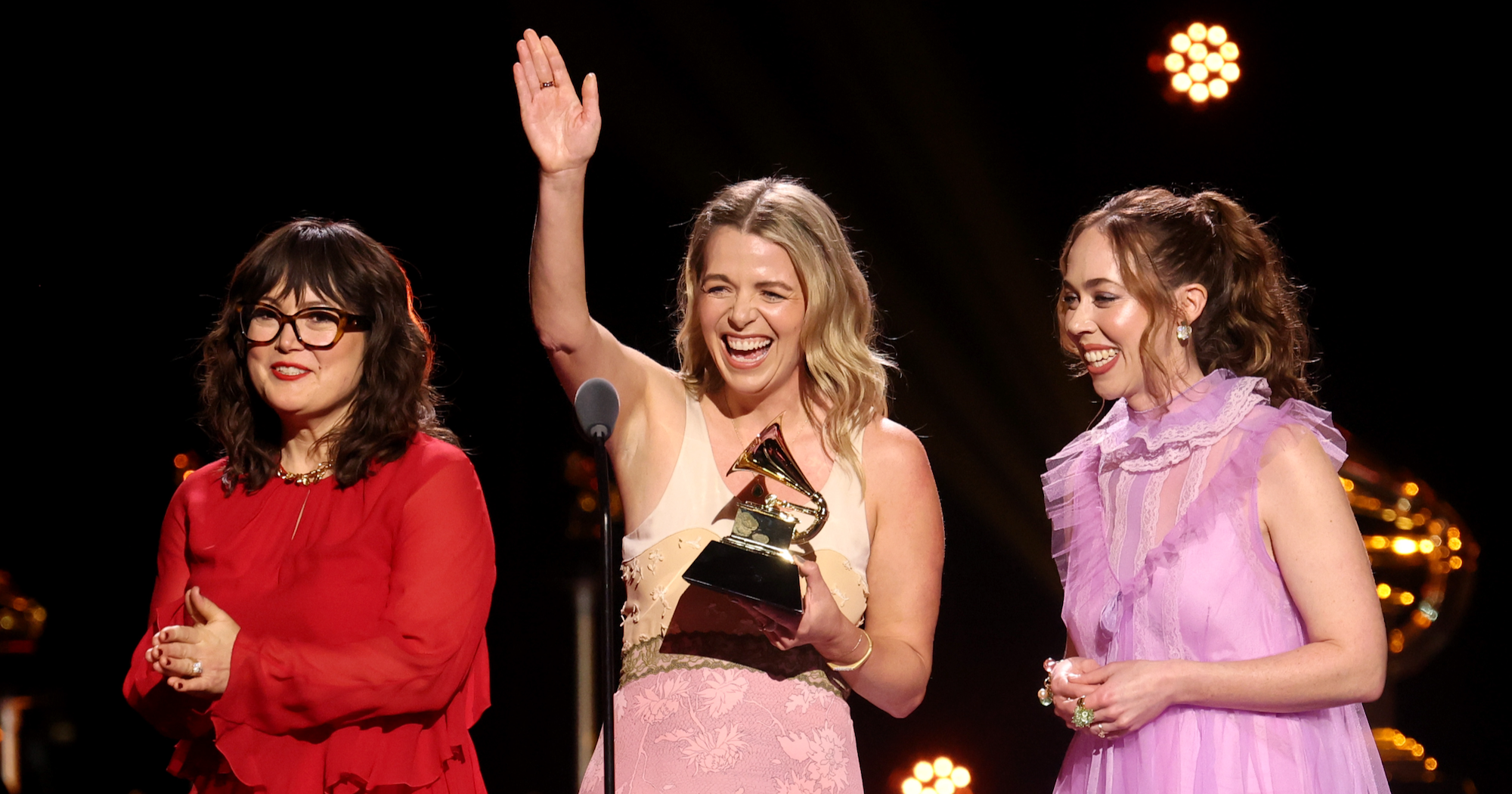
Best Bluegrass Album was announced during the Premiere Ceremony. This year, nominees included Michael Cleveland & Jason Carter (Carter & Cleveland), Sierra Hull (A Tip Toe High Wire), Alison Krauss & Union Station (Arcadia), the SteelDrivers (Outrun), and Billy Strings (Highway Prayers). Strings took home the award, racking up his third gramophone in the category. While Hull, who was nominated in four categories, including Best Bluegrass Album, did not take home any GRAMMY Awards yesterday, she was featured during the Premiere Ceremony as a presenter and she made an appearance on the red carpet for the primetime awards show. Roots/bluegrass/folk supergroup I’m With Her – featuring Sarah Jarosz, Aoife O’Donovan, and Sara Watkins – were nominated and won twice, taking home the Best Folk Album trophy for Wild and Clear and Blue and the award for Best American Roots Song for “Ancient Light.”
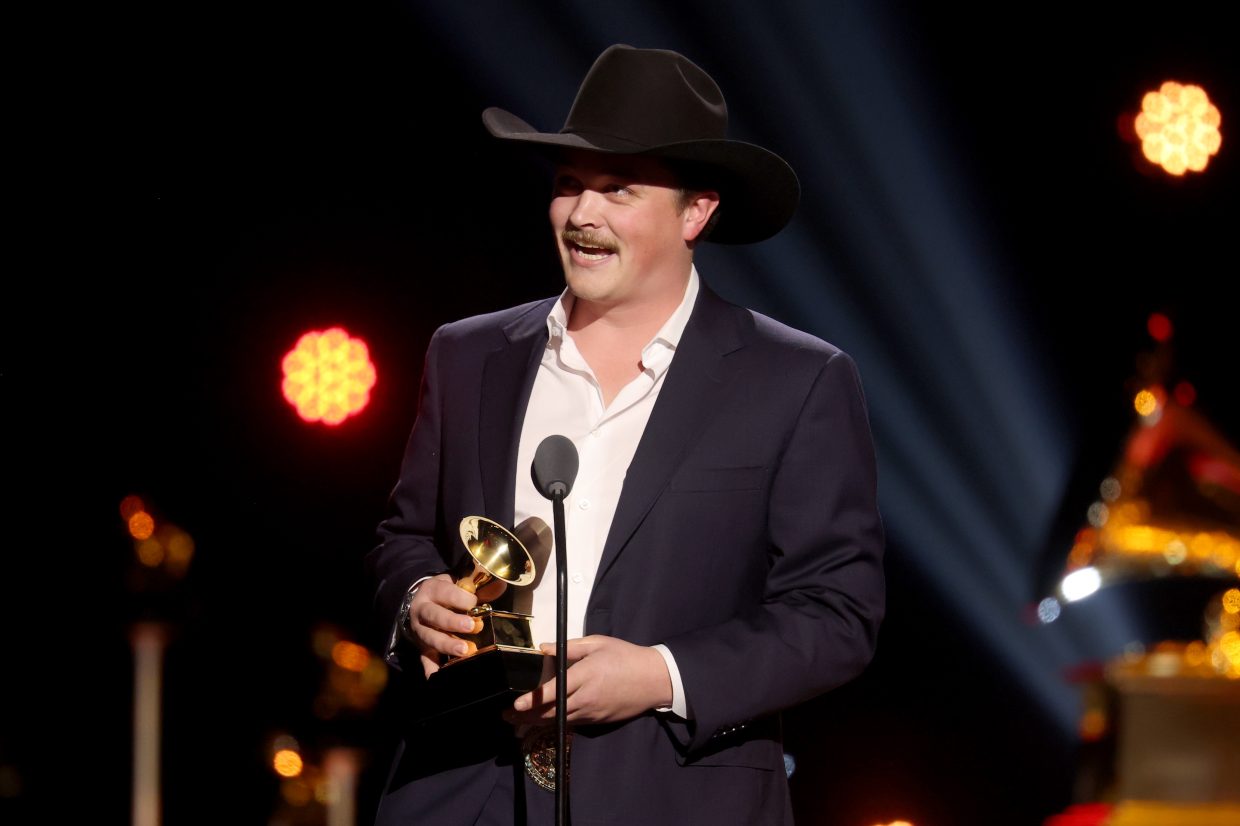
Tyler Childers, who was nominated in four categories this year, received his first-ever GRAMMY Award for Best Country Song for “Bitin’ List,” a viral sensation from his critically acclaimed 2025 album, Snipe Hunter. The LP had been nominated for Best Contemporary Country Album – in one of the much buzzed-about split categories of Best Contemporary Country Album and Best Traditional Country Album – but the trophy went to Jelly Roll’s Beautifully Broken instead. In the other split category, upstart fan favorite Zach Top took home the Traditional Country honor for his sophomore release, Ain’t In It For My Health. It marks Top’s first GRAMMY Award.
Of course, beyond the Country & American Roots Music field, folk and roots music were represented in peak form across the many genres and categories of the 68th Annual GRAMMY Awards. Album of the Year was awarded to Bad Bunny’s DeBÍ TiRAR MáS FOToS, one of the best roots projects of last year as selected by the BGS Class of 2025. From the Premiere Ceremony and Best Bluegrass Album to the primetime broadcast and Album of the Year, roots music is and always has been a keystone of the biggest night in music.
Below, find the complete list of winners (in bold) from the Country & American Roots Music field, plus select categories featuring roots musicians, artists, and projects from across the various other GRAMMY fields and categories.
Country & American Roots Music
Best Country Solo Performance
“Nose On The Grindstone” – Tyler Childers “Good News” – Shaboozey “Bad As I Used To Be” – Chris Stapleton “I Never Lie” – Zach Top “Somewhere Over Laredo” – Lainey Wilson
Best Country Duo/Group Performance
“A Song To Sing” – Miranda Lambert, Chris Stapleton “Trailblazer” – Reba McEntire, Miranda Lambert, Lainey Wilson “Love Me Like You Used To Do” – Margo Price, Tyler Childers “Amen” – Shaboozey, Jelly Roll “Honky Tonk Hall Of Fame” – George Strait, Chris Stapleton
Best Country Song
“Bitin’ List” – Tyler Childers, songwriter. (Tyler Childers) “Good News” – Michael Ross Pollack, Sam Elliot Roman, Jacob Torrey, songwriters. (Shaboozey) “I Never Lie” – Carson Chamberlain, Tim Nichols, Zach Top, songwriters. (Zach Top) “Somewhere Over Laredo” – Andy Albert, Trannie Anderson, Dallas Wilson, Lainey Wilson, songwriters. (Lainey Wilson) “A Song To Sing” – Jenee Fleenor, Jesse Frasure, Miranda Lambert, Chris Stapleton, songwriters. (Miranda Lambert, Chris Stapleton)
Best Traditional Country Album
Dollar A Day – Charley Crockett American Romance – Lukas Nelson Oh What A Beautiful World – Willie Nelson Hard Headed Woman – Margo Price Ain’t In It For My Health – Zach Top
Zach Top accepts the Best Traditional Country Album award for ‘Ain’t In It For My Health’ during the 68th GRAMMY Awards Premiere Ceremony. (Photo by Matt Winkelmeyer/Getty Images for The Recording Academy.)
Best Contemporary Country Album
Patterns – Kelsea Ballerini Snipe Hunter – Tyler Childers Evangeline Vs. The Machine – Eric Church Beautifully Broken – Jelly Roll Postcards From Texas – Miranda Lambert
Best American Roots Performance
“LONELY AVENUE” – Jon Batiste, Featuring Randy Newman “Ancient Light” – I’m With Her “Crimson And Clay” – Jason Isbell “Richmond On The James” – Alison Krauss & Union Station “Beautiful Strangers” – Mavis Staples
Best Americana Performance
“Boom” – Sierra Hull “Poison In My Well” – Maggie Rose, Grace Potter “Godspeed” – Mavis Staples “That’s Gonna Leave A Mark” – Molly Tuttle “Horses” – Jesse Welles
Best American Roots Song
“Ancient Light” – Sarah Jarosz, Aoife O’Donovan, Sara Watkins, songwriters. (I’m With Her) “BIG MONEY” – Jon Batiste, Mike Elizondo, Steve McEwan, songwriters. (Jon Batiste) “Foxes In The Snow” – Jason Isbell, songwriter. (Jason Isbell) “Middle” – Jesse Welles, songwriter. (Jesse Welles) “Spitfire” – Sierra Hull, songwriter. (Sierra Hull)
Best Americana Album
BIG MONEY – Jon Batiste Bloom – Larkin Poe Last Leaf On The Tree – Willie Nelson So Long Little Miss Sunshine – Molly Tuttle Middle – Jesse Welles
Best Bluegrass Album
Carter & Cleveland – Michael Cleveland & Jason Carter A Tip Toe High Wire – Sierra Hull Arcadia – Alison Krauss & Union Station Outrun – The SteelDrivers Highway Prayers – Billy Strings
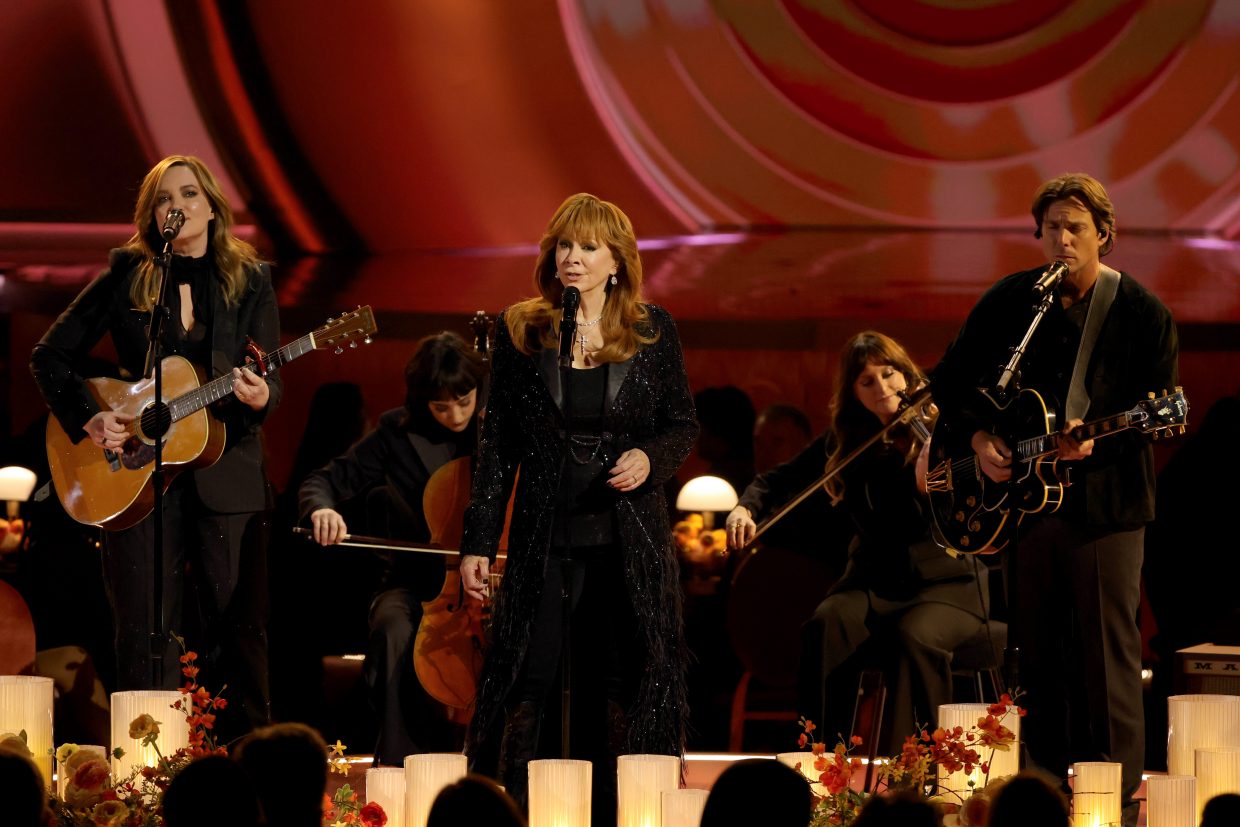
(L-R) Brandy Clark, Reba McEntire, and Lukas Nelson perform onstage during the 68th GRAMMY Awards. (Photo by Kevin Winter/Getty Images for The Recording Academy.)
Best Traditional Blues Album
Ain’t Done With The Blues – Buddy Guy Room On The Porch – Taj Mahal & Keb’ Mo’ One Hour Mama: The Blues Of Victoria Spivey – Maria Muldaur Look Out Highway – Charlie Musselwhite Young Fashioned Ways – Kenny Wayne Shepherd & Bobby Rush
Best Contemporary Blues Album
Breakthrough – Joe Bonamassa Paper Doll – Samantha Fish A Tribute To LJK – Eric Gales Preacher Kids – Robert Randolph Family – Southern Avenue
Best Folk Album
What Did The Blackbird Say To The Crow – Rhiannon Giddens & Justin Robinson Crown Of Roses – Patty Griffin Wild And Clear And Blue – I’m With Her Foxes In The Snow – Jason Isbell Under The Powerlines (April 24 – September 24) – Jesse Welles
Best Regional Roots Music Album
Live At Vaughan’s – Corey Henry & The Treme Funktet For Fat Man – Preservation Brass & Preservation Hall Jazz Band Church Of New Orleans – Kyle Roussel Second Line Sunday – Trombone Shorty And New Breed Brass Band A Tribute To The King Of Zydeco – Various Artists
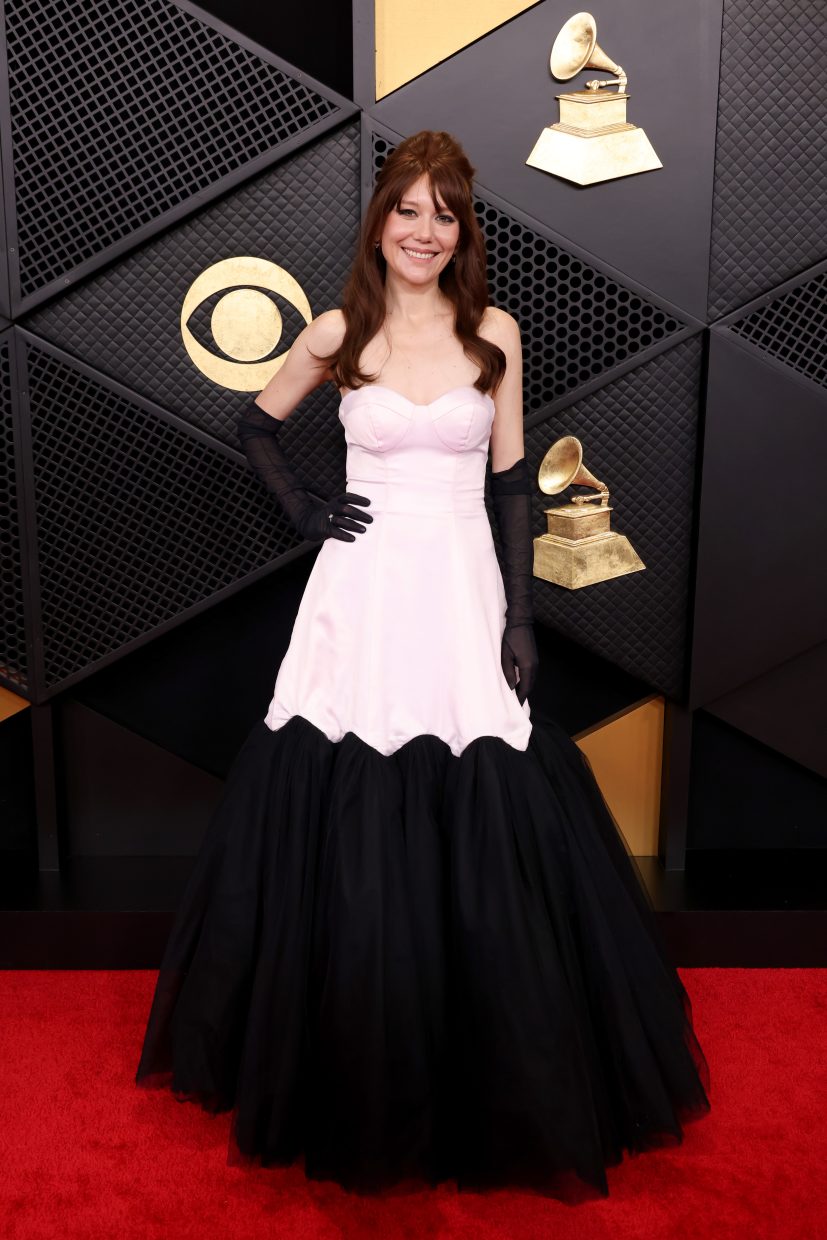
Molly Tuttle walks the red carpet at the 68th GRAMMY Awards. (Photo by John Shearer/Getty Images for The Recording Academy.)
General Field
Producer of the Year (Non-Classical)
Dan Auerbach Cirkut Dijon Blake Mills Sounwave
Jazz, Traditional Pop, Contemporary Instrumental & Musical Theater
Best Jazz Performance
“Noble Rise” – Lakecia Benjamin, Featuring Immanuel Wilkins & Mark Whitfield “Windows – Live” – Chick Corea, Christian McBride & Brian Blade “Peace Of Mind / Dreams Come True” – Samara Joy “Four” – Michael Mayo “All Stars Lead To You – Live” – Nicole Zuraitis, Dan Pugach, Tom Scott, Idan Morim, Keyon Harrold & Rachel Eckroth
Best Jazz Instrumental Album
Trilogy 3 (Live) – Chick Corea, Christian McBride & Brian Blade Southern Nights – Sullivan Fortner, Featuring Peter Washington & Marcus Gilmore Belonging – Branford Marsalis Quartet Spirit Fall – John Patitucci, Featuring Chris Potter & Brian Blade Fasten Up – Yellowjackets
Best Alternative Jazz Album
honey from a winter stone – Ambrose Akinmusire Keys To The CityVolume One – Robert Glasper Ride into the Sun – Brad Mehldau LIVE-ACTION – Nate Smith Blues Blood – Immanuel Wilkins
Best Traditional Pop Vocal Album
Wintersongs – Laila Biali The Gift Of Love – Jennifer Hudson Who Believes In Angels? – Elton John & Brandi Carlile Harlequin – Lady Gaga A Matter Of Time – Laufey The Secret Of Life: Partners, Volume 2 – Barbra Streisand
Best Contemporary Instrumental Album
Brightside – ARKAI Ones & Twos – Gerald Clayton BEATrio – Béla Fleck, Edmar Castañeda, Antonio Sánchez Just Us – Bob James & Dave Koz Shayan – Charu Suri
Sierra Hull speaks on stage during the 68th GRAMMY Awards Premiere Ceremony. (Photo by Matt Winkelmeyer/Getty Images for The Recording Academy.)
Gospel & Contemporary Christian Music
Best Roots Gospel Album
I Will Not Be Moved (Live) – The Brooklyn Tabernacle Choir Then Came The Morning – Gaither Vocal Band Praise & Worship: More Than A Hollow Hallelujah – The Isaacs Good Answers – Karen Peck & New River Back To My Roots – Candi Staton
Latin, Global, Reggae & New Age, Ambient, or Chant
Best Música Mexicana Album (Including Tejano)
MALA MÍA – Fuerza Regida, Grupo Frontera Y Lo Que Viene – Grupo Frontera Sin Rodeos – Paola Jara Palabra De To’s (Seca) – Carín León Bobby Pulido & Friends Una Tuya Y Una Mía – Por La Puerta Grande(En Vivo) – Bobby Pulido
Best Global Music Performance
“EoO” – Bad Bunny “Cantando en el Camino” – Ciro Hurtado “JERUSALEMA” – Angélique Kidjo “Inmigrante Y Que?” – Yeisy Rojas “Shrini’s Dream (Live)” – Shakti “Daybreak” – Anoushka Shankar, Featuring Alam Khan, Sarathy Korwar
Children’s, Comedy, Audio Books, Visual Media & Music Video/Film
Best Song Written For Visual Media
“As Alive As You Need Me To Be” [From TRON: Ares] – Trent Reznor & Atticus Ross, songwriters. (Nine Inch Nails) “Golden” [From KPop Demon Hunters] – EJAE & Mark Sonnenblick, songwriters. (HUNTR/X: EJAE, Audrey Nuna, REI AMI) “I Lied to You” [From Sinners] – Ludwig Göransson & Raphael Saadiq, songwriters. (Miles Caton) “Never Too Late” [From Elton John: Never Too Late] – Brandi Carlile, Elton John, Bernie Taupin & Andrew Watt, songwriters. (Elton John, Brandi Carlile) “Pale, Pale Moon” [From Sinners] – Ludwig Göransson & Brittany Howard, songwriters. (Jayme Lawson) “Sinners” [From Sinners] – Leonard Denisenko, Rodarius Green, Travis Harrington, Tarkan Kozluklu, Kyris Mingo & Darius Povilinus, songwriters. (Rod Wave)
“First Snow” – Remy Le Boeuf, composer. (Nordkraft Big Band, Remy Le Boeuf & Danielle Wertz) “Live Life This Day: Movement I” – Miho Hazama, composer. (Miho Hazama, Danish Radio Big Band & Danish National Symphony Orchestra) “Lord, That’s A Long Way” – Sierra Hull, composer. (Sierra Hull) “Opening” – Zain Effendi, composer. (Zain Effendi) “Train To Emerald City” – John Powell & Stephen Schwartz, composers (John Powell & Stephen Schwartz) “Why You Here / Before The Sun Went Down” – Ludwig Göransson, composer. (Ludwig Göransson, Featuring Miles Caton)
Photo Credit: All photos by Getty Images for the Recording Academy, courtesy of the Recording Academy. Photographer credits as marked.
Lead and Alternate Images: I’m With Her, (L to R) Sara Watkins, Aoife O’Donovan, and Sarah Jarosz, accept the GRAMMY for Best Folk Album. Shot by Matt Winkelmeyer/Getty Images for the Recording Academy.
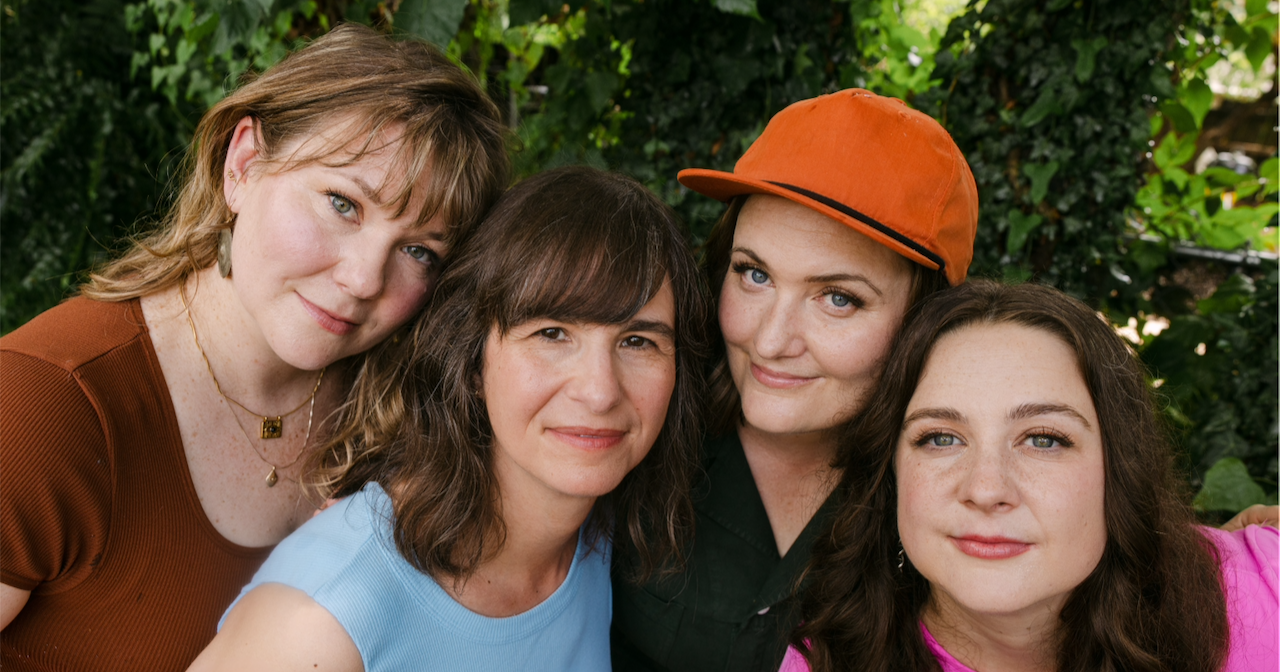
Fifteen years ago, bluegrass band Della Mae’s vocalist Celia Woodsmith wrote her future self a letter. She was 25 years old, burned out on trying to make it in Boston’s rock scene, and reeling from the loss of her father.
“If you can just die, why would you be doing something that you didn’t love to do?” she asked.
Her answer – and her hopes for her future self, which Woodsmith wrote into that letter – inspired the title track and underlying message of the band’s new album, Magic Accident, which marvels at the improbability of existence. As Woodsmith sings on “Magic Accident”:
We all start with something No one comes from nothing It took a millennia to get you here You’re a magic accident, the way that fate bent With a little carbon and gravity Carbon and gravity
“Our life is just a series of these little accidents – my parents meeting, their parents meeting. And it’s a beautiful and magical thing that we’re all here right now. It’s a beautiful and magical thing that Della Mae is here,” Woodsmith says. “That’s the basis behind that song, and it’s the basis behind how I think about a lot of my life. It’s just a beautiful accident that I’m here at all. So I might as well enjoy it and do the best thing, the best that I can, while I can.”
Magic Accident, as an album, a song, a concept, and a band ethos, celebrates following one’s own path. All four members of Della Mae – Woodsmith, founder and fiddler Kimber Ludiker, guitarist Avril Smith, and bassist Vickie Vaughn – lost their fathers prematurely, which bonds them as a band and altered how each woman sees the world. And making it as one of the few all-women bluegrass bands inherently required the Dellas to push boundaries and carve out space for their lives and stories.
“If I could talk to the little girl inside of me/ I’d let her know the world ain’t what it seems/ And if she would listen/ Could I keep her safe from making my mistakes?” the band wonders on “My Own Highway,” the album’s second track. Later, they remind the next generation of the same sentiment in “Out Run ‘Em,” written by Smith (co-written with Caroline Spence) for her pre-teen daughter, advising, “If you go with the crowd, you can’t out run ‘em.”
Indeed, all of Magic Accident listens like a set of love and advice letters to the band’s younger and current selves.
“I don’t think we could have written this album as young women. This is an older, wiser woman sort of thing,” Woodsmith says.
Elsewhere on Magic Accident, the band appreciates life’s small, sweet, desperately important moments. “Nothing at All,” which Woodsmith wrote with Spence, is a gentle appreciation of love that’s aged comfortably, while “Little Bird,” which the pair also wrote, relishes slow days and simple life joys.
“What do they say? One of the biggest forms of revolution is having joy in spite of what’s going on around you,” says Vaughn, about including these kinds of emotional interludes on the album. “And sometimes, the little things are all we have right now, whenever all this bullshit is happening.”
These songs would not be confused with light subject fare, though. The weight and wisdom of lived experience grounds Magic Accident in conviction and clarity, even when it may appear uncomfortable. “Family Tree,” a furious track driven by producer Alison Brown’s banjo picking and Ludiker’s fiddle, explores what it takes to break harmful generational cycles. “What You’re Looking For” ends a relationship that no longer serves the narrator. On the album’s only cover, Bruce Robison’s “Lifeline,” Vaughn on vocals (with Mary Bragg on harmony), reaches a hand down to anyone struggling to find their footing in the buffeting of life.
“The weight has become unbearable,” Woodsmith says. “We speak our minds and we fight for the things that we think are right; we all feel strongly about a lot of the same things, like women’s rights. But that can be a heavy load to bear and to sing constantly night after night.
“Sometimes we choose not to sing some of these songs that we believe so strongly, just because it’s become hard to bear that weight. I think this album lets us see the light a little bit.”
Though it’s full of interpersonal songs, on the final track of Magic Accident Della Mae zooms out to consider the state of the world. Sonically bluegrass and lyrically a protest, “Takes All Kinds” – co-written by Vaughn and singer/songwriter Melody Walker – asks the world to consider its future, as well:
Oh, the politicians who write the laws (Oh, lord it takes all kinds) They say they stand for the underdog (Oh, lord it takes all kinds)
But then they take my rights away (Oh, lord it takes all kinds) For a greenback dollar at the end of the day (Oh, lord it takes all kinds)
Ludiker started Della Mae in part out of frustration with how few women she saw on concert bills and in bluegrass bands. “After talking with a lot of people, it was pretty clear that maybe those bands also wouldn’t hire women for various reasons; I eventually got the idea to start my own band,” she says.
“My brain just wouldn’t accept the fact that [otherwise] maybe I wouldn’t have some of the [same] opportunities that I would have if I was a boy.”
To that end, Della Mae has been part of building a more inclusive, supportive community in bluegrass. Indeed, Woodsmith joined the band soon after writing herself the letter that inspired “Magic Accident.” At the time, she planned to quit music and join the Peace Corps. Instead, 15 years on, Della Mae has produced six studio albums (including their GRAMMY-nominated This World Oft Can Be on Rounder Records) and toured over 30 countries with the U.S. State Department music diplomacy program.
Della Mae is, by their own estimation, the longest-touring all-woman bluegrass band. Which would prove, as they put it on their website, “once and for all, that a band of all women is not, nor has ever been, a mere novelty.”
“Hopefully we can inspire other little magic accidents,” Woodsmith says. “Like other women or other young people who want to play, who see us at the right time in their lives to push them forward to playing music, and to step outside of their comfort zones and do something they thought might be impossible.”
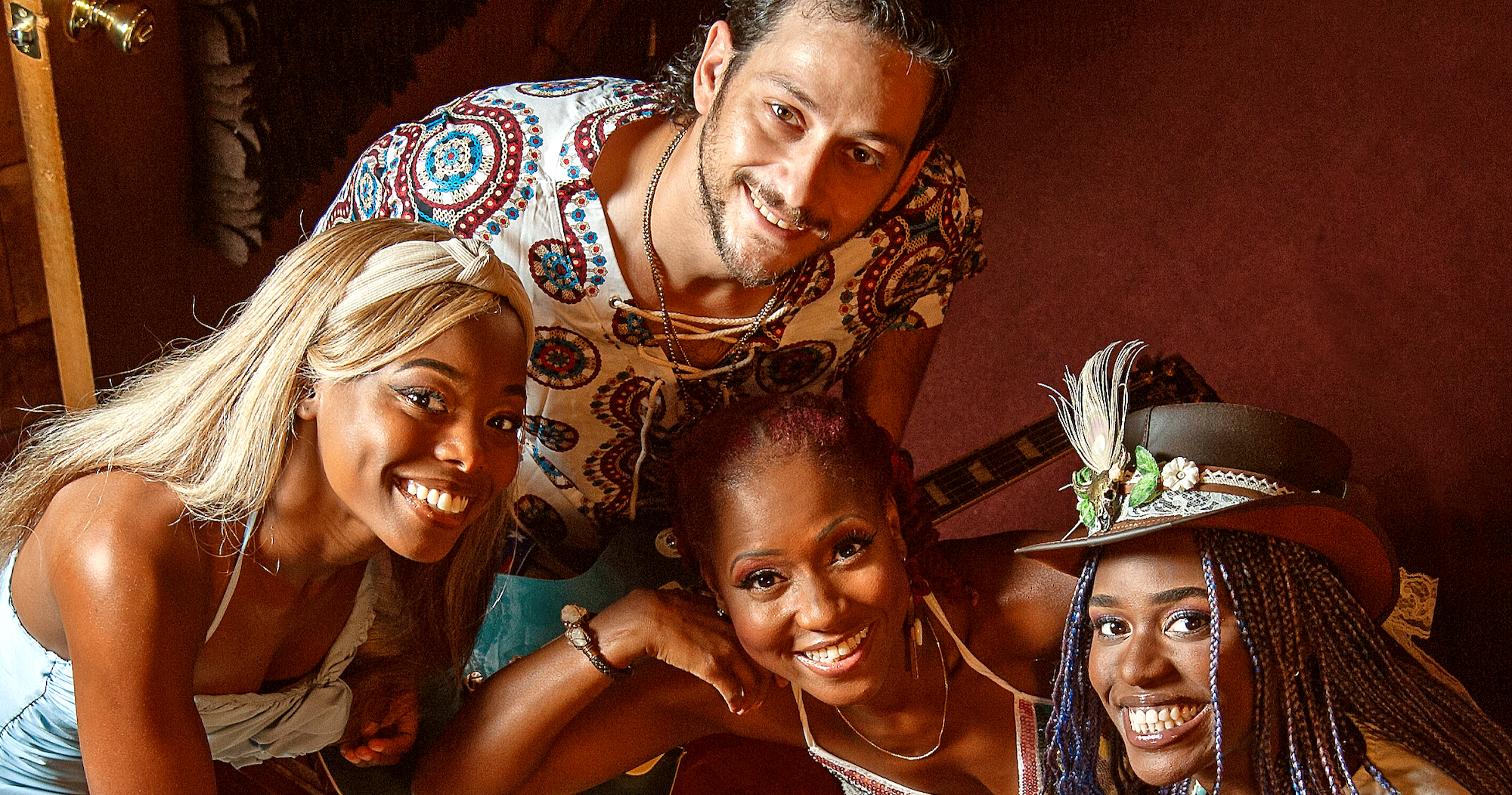
Through joy and sorrow – and they’ve known both in their ten years as a band – Southern Avenue do what they do best: make music. Lead vocalist/songwriter Tierinii Jackson, her husband, guitarist/songwriter Ori Naftaly, and her sisters, drummer/vocalist/songwriter Tikyra “T.K.” Jackson and percussionist/violinist/vocalist Ava Jackson, all reach into their spiritual and emotional wells to tell their stories through song.
It’s there on Family (released in April on Alligator Records), their latest and fourth album. True to its title, it’s a musical journey tracing the band’s personal and professional history. Family was recorded at Royal Studios in Southern Avenue’s home city, Memphis. GRAMMY winners John Burk and Boo Mitchell produced and mixed, respectively.
Southern Avenue write, record, and play with one goal in mind: “We’ve always been a band that speaks about peace and empowerment,” says Tierinii Jackson. “Our music is a place where we can leave the ails of the world outside. We can come together, be equal, and heal.” It’s a noble mission that comes from lived experience and presents in a unique blend of blues, funk, soul, gospel, country, and a healthy serving of guitars.
The rhythmic foundation upon which Southern Avenue is built stems in part from the guitar-and-drums pocket that Naftaly and Tykira Jackson create. “With Ori coming up with really juicy stuff and playing slide, it’s super easy for me to be inspired,” says Jackson. “I feel like what’s actually happening is we all allow ourselves to be creative and truthful to our stories, and we are connected to our ancestors, to our roots, to something much bigger than us. Within that, you get the pocket, because we are locked in.”
Naftaly seconds: “At the end of the day, nothing replaces two people that want to do right by the music, no matter what, and have almost a decade of doing it.”
First interviewed on BGS for Good Country in May 2025, the musicians reunited with BGS just weeks after learning of Family’s GRAMMY nomination for Best Contemporary Blues Album. As requested in their GC 5+5, there were no questions about “how [they] met and how the band started.” You can learn more about that here.
Congratulations on your second GRAMMY nomination. What does this mean to you, musically and personally?
Ori Naftaly: We’re very proud of ourselves, for sure. We felt that this album was special when we were writing and recording it, not just because it’s good music, [but also] because it’s coming from who we are as people. This is the most transparent we ever were. We felt that it is going to resonate. The circumstances for the album are special, and the story behind it. The [nomination] makes us proud because we’ve been so true to ourselves. It confirms our belief that you can create real music, without gimmicks, and it gets appreciated.
Tikyra Jackson: The first time we were nominated [for second album Keep On in 2019], just finding out, in that moment it does something to you that you wouldn’t expect, especially growing up watching the GRAMMYs every year. Five years later, to be nominated a second time, it feels like the first time all over again, because we work so hard.
A lot of times, when you’re the artist, you don’t take time to look at the work you’ve done. You just keep going. With this project being so personal to us, and representative also of our culture and those that came before us, it represents a lot. The GRAMMYs recognizing us also recognizes Memphis in a lot of ways. It gives us hope for the future, that we are becoming the world we live in and not just participants in it; that the world looks like us.
Tierinii Jackson: It makes me feel great. The first time we were nominated, I felt like we had something to prove. We were putting our best foot forward, trying to make everybody happy. But with this project in particular, we really wanted to embrace our roots. It had nothing to do with what people expected of us. It had nothing to do with trying to prove ourselves. It was our time to embrace our lineage, to embrace each other. This nomination is special because it came at a time where we finally found our identity in our journey of self-love. We’re being rewarded for something that’s very, very close to us. We proved we could do it while staying true to ourselves.
Ava Jackson: The previous GRAMMY nomination, I wasn’t [as] involved in the band. I would come in and record background vocals. So the nomination hit, but not as much as it does now. When we found out, my hands were shaking. I had way more involvement in this album as far as contributing to the harmonies, percussion, and fiddle. Having so much of myself involved and getting rewarded with a nomination is something I’m very grateful for. The album is so layered in who we are as individuals and as a family. It’s a triumphant thing to be rewarded and know that you did it wholeheartedly, you put yourself out there, it was authentic. There was so much effort put in even before we stepped into the studio. It’s such a privilege to get a nomination. I’m very appreciative of the process and how everyone has been receiving the album.
In an interview with Rolling Stone, you referred to yourselves as “the spirit of Memphis.” Memphis has a rich musical history … and also a “history.” In those contexts, what is “the spirit of Memphis”?
Tierinii Jackson: The music of Memphis has always reflected the story of Memphis – the struggles, the conflicts, the triumph of being resilient, all the challenges. That’s what we are as a group. We face challenges not only in Memphis, but also in the music business. As young Black women, and for Ori, as a foreigner, we face these challenges, but we turn it into something beautiful.
Our music is uplifting. Our music is positive. No matter what you hear about Memphis and the struggles the city goes through, when you walk into a store, somebody’s smiling at you. You still get that Southern hospitality. It still feels good here. That’s who we are. We are the spirit of Memphis. It doesn’t matter what we’re facing. We come through with this glorious, triumphant spirit. You dance and shout through all those troubles. We have fun. Our crowds – we make sure they’re clapping their hands, and we make it our intention to lift the spirits around us. That’s how you survive in Memphis – by being intentional with your words and how you communicate with your community. That’s how we reflect the spirit of Memphis.
The word “organic” is dreadfully overused, but it’s a bit inevitable with this album. Could you give us some insight into what happens when you create together? Maybe select one track and walk us through the process?
Tierinii Jackson: I would like to start with “Found A Friend In You.” We ladies were raised in church and that was all we knew for years. My father is from Senatobia, Mississippi, and he’s a guitar player. At some point, I wanted to know what the music was like where my father’s from, because I was looking to understand our identity in the blues genre. When I realized that the grooves we grew up playing in church was the sound of North Mississippi blues, we decided to dive in, because that came most natural to us.
“Found A Friend In You” is a Hill Country Blues groove, but it’s also a gospel groove, because blues and gospel are one and the same. That’s what we grew up playing in the church. So, foot-stomping, hand-clapping. It was the easiest to write. The lyrics flowed. The stops you hear right before the choruses – that’s organic. That’s second nature to us. When you hear that “dreadful” word “organic,” [all laugh] it means that when we’re our happiest, that’s the sound you hear, because that’s what comes from inside. That was put in us through generations of rhythms. It’s in our blood.
Tikyra Jackson: Getting into the studio, [there] came organic ideas and things. The tambourines on that song, you’ve got me playing on my hip, and Ava playing as well, and this energy of us being in a setting and worshiping in a way. We’re celebrating. You pull from your environment, and in the environment we grew up in, it was always extra instruments laying around. You just picked up something. In the studio, we came prepared, but a lot was inspired in the moment. When we talk about “organic,” we are so true to the sound and the music that we didn’t have the answers all the time throughout this process, and we trusted that we would find them along the way.
Ava Jackson: We recorded just about everything live and together. We did separate takes of our vocals with separate mics, takes with all three of us on one mic in a booth, and then we doubled all of that. It gives a very dense presence with the harmony. With this song, and in church, we’re hitting tambourines and it’s coming from the Holy Ghost, the spirit, and so you’re hitting it passionately.
What provides the drive in the song is us continuously playing that tambourine rhythm all the way throughout. Sometimes you add rhythmic ad-libs. With the harmonies, it’s like in church – you break out in song and everybody falls into place. I’ll be in the higher range, Tierinii in the mid-range, and TK in the lower range. We break out into that and it continues throughout the song, that reiteration of togetherness and the reflection of how we organically express what we’re singing.
The word “organic”– this style of music is innate for us. You weren’t taught how to do it. You were born into it. The fiddle adds another layer to the harmony and it also feels jovial. So towards the end it’s like you find your way. You’re triumphant. “Found A Friend In You” is like a foot-stomping, hand-clapping, praise type of song, and people receive it that way as well.
Ori, could you address the question from the perspective of guitars within Southern Avenue’s music?
Ori Naftaly: “Found A Friend In You” tells the story of me, Tierinii, and TK meeting and how it felt when we started playing together and finding peace. Past albums were different attempts at “What is the Southern Avenue sound?” When Ava joined full-time, I realized, “We have three singers. This is a family. This isn’t fabricated. This is who we are.” That’s the “organic” we talked about.
We doubled down on what makes us special and that also meant doubling down on guitars. I’ve been listening to Memphis music since I was 6 and I’ve been playing the blues since I can remember. The spirit of Memphis that we talked about earlier also comes from God putting me with Tony Pearson, a Black guitar player from Birmingham, Alabama, for a decade [in Israel], teaching me what it means to play the blues. Many blues purists will tell me that I am not a “blues guitar player,” but the blues is in everything I do; I can’t get away from it. It’s a feeling, not a formula. We play the blues all the time, but we don’t play traditional blues. We play original new music that ends up being blues. So the guitars are a reflection of my existence within the group.
Tierinii Jackson: For years, Ori was the blues guy and me and TK were trying to push the band to be more funk and contemporary. What we’re embracing today, Ori saw years ago. It took us a journey to get to this point where we said, “It’s time for us to embrace our roots and this sound.” We grew up very sheltered, so we were in our rebellious era. We wanted to be rock stars, funk stars, pop stars. We didn’t know who we were. We didn’t know what was special about us. Our fans saw us before we saw ourselves. When we harmonized, they heard the soul, the church, the blues. It took us a while to grow up and ask ourselves, “Who are we?”
When the pandemic set us down and we didn’t have the stage, the crew, the co-writes, and the producers, it was, “Who are we to our core and what can we do?” This is what we came up with. All the tours and festivals that we’ve been through, we haven’t heard anybody do the three-part harmony over the Hill Country grooves. Ori has always been the blues guy. He’s always been trying to get us to see what was special about ourselves. But he also respects us enough to allow us to have this journey.
Given your origin stories, the state of the world, and what you are trying to accomplish – in addition to the stressors of touring, the industry, parenthood, and life in general – how does music help protect your mental health?
Tierinii Jackson: It’s the only tool I’ve had since I was young. I grew up with six siblings. My house was chaos, and I never developed a relationship with my mother where I could talk to her about things and she could give me guiding advice. Music has always been my peace within the chaos. It was always my closest companion. Growing up, I had “friends” at school, but I never had close relationships where I could speak about things. So music has always been my only safe space. When I need to express myself, it’s music that I express myself into. When I need to be hugged, it’s music that will show up in the universe and hit me in the heart. It’s like God’s sign, letting me know I’m not alone. Music is my gift. It’s everything to do with my mental health. It’s the only thing that’s holding me.
Ori Naftaly: All of our albums, we write for our mental health. But there’s two aspects: keeping yourself sane [and] growing spiritually. We do both. We grow spiritually, and we use music as a barrier. We all used music as a gateway when we were kids and as we grew up. We do the same here. We choose to have lyrics that uplift people. If we wrote songs that don’t have messages in them, maybe we wouldn’t touch people the same way.
Ava Jackson: Being raised around music and church, it’s always been a communal thing. There’s always been people jamming and the enjoyment of making music. I think that does provide a certain amount of healing. Music provides release or relief. You hear a song, or you’re singing a song, you’re singing from your heart and soul, and what comes from the heart reaches the heart. Music is where people find true healing and where they can express whatever they’ve been holding in. Music enables you to release all of those emotions or tears. Mentally, I feel a lot better when I’m playing music. If I don’t practice my violin, or if I don’t play for a long time, I start to feel more of a depressive state. But when I do play, I feel that dopamine. I feel the rise in energy and I feel a lot more sharp. To have that at your fingertips is a privilege, and that’s something I know I’ll have forever.
Tikyra Jackson: For me, growing up, music was like drinking water. It was always there. I didn’t know how valuable it was. It was just something I could do. It was music and cinema. We watched so many movies growing up that showed me what the world could look like outside of going to church every day, because that’s really all we did. But in going to church, what did I love about it? The music. Our family was the musicians of the church. My mom was the organist. My dad was a guitar player. My big brother and me — drummers. Then you have the choir. All the girls are in the choir.
Today, music has given me experiences that let me know that as people, it doesn’t matter where you are. We’re all the same. We all want to be understood, we all want to be heard, and we all want to be loved. Music allows me to understand people without having, necessarily, a literal conversation, but a spiritual conversation. Each time you open yourself up in this manner, you evolve, you grow, you expand. Every time you play music, you create new neurological pathways. Within that, I agree with Ava. I have to do this. Music can reach you and touch you in ways that the natural world cannot. It reminds you of what’s important.
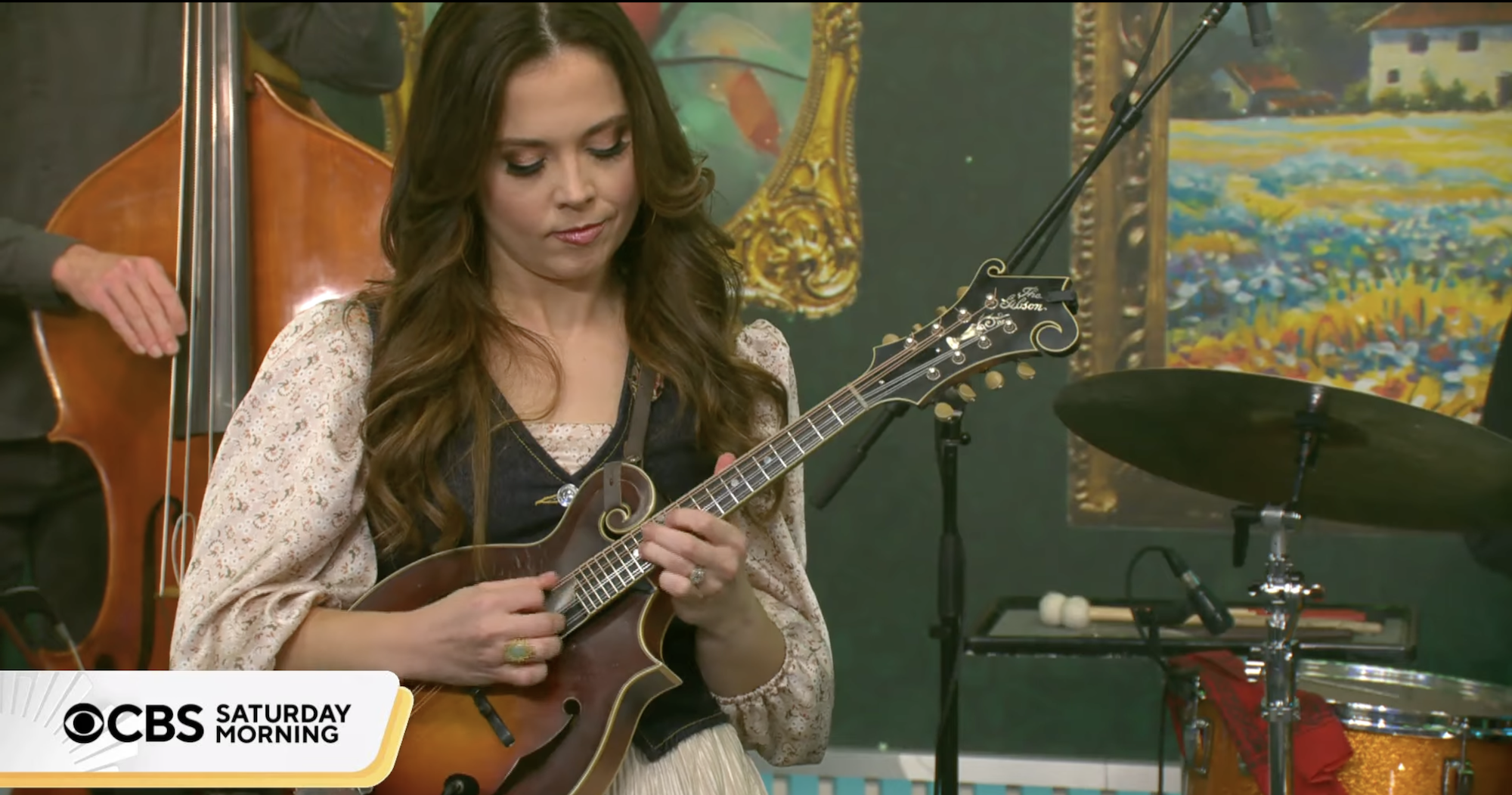
On Saturday, December 13, mandolinist and singer-songwriter Sierra Hull brought music from her latest GRAMMY-nominated album, A Tip Toe High Wire, to CBS Saturday Morning for a three-song Saturday Session. With Erik Coveney (bass), Avery Merritt (fiddle), Mark Raudabaguh (drums), and Shaun Richardson (guitar), Hull performed three tunes: “Lord, That’s a Long Way” from A Tip Toe High Wire, which is nominated for Best Instrumental Composition, as well as “Stomping Grounds,” a tune by Béla Fleck and Victor Wooten, and “Movement 3,” a Hull original from an upcoming release. Watch all three numbers right here, on BGS.
Announcing the appearance on social media, Hull pointed out the serendipitous rarity of performing three instrumentals for her Saturday Sessions. “We were originally scheduled to play all three of our GRAMMY-nominated songs – ‘Boom,’ ‘Spitfire,’ & ‘Lord, That’s A Long Way,'” Hull explained on Instagram. “However, by this past Saturday morning, my voice was gone. The worst laryngitis I’ve ever had despite feeling great otherwise! Doctor’s orders was vocal rest and no singing for a few days (which I honestly couldn’t have even had I tried). I was super bummed thinking we’d have to cancel, but my publicist spoke with the show producers and in a very rare exception we are told, they let us come play 3 instrumentals on the show!”
Of course Hull could pull off three engaging and exciting instrumentals. Though of her two prior planned songs, “Boom” is nominated for a GRAMMY for Best Americana Performance and “Spitfire” for Best American Roots Song, the three tunes the group did perform still show the immense depth and breadth of Hull and band’s technical prowess and dynamic range. Plus, each of the selections showcase various creative inputs and outputs for Hull; “Stomping Grounds” isn’t just pulled from the catalog of Hull producer, mentor, and collaborator Fleck, but also from the set lists of her frequent touring colleague Cory Wong. “Movement 3” is a delightful harbinger of musical eras yet to come, a discursive and flowing composition that pulls as much from the Chris Thile school of mandolin as jamgrass, newgrass, and more crunchy roots music climes. “Lord, That’s a Long Way” is one of the tentpoles of the new album, a staple of her live shows over the past year and into the future, surely.
Hull’s appearance on CBS is just the latest in an impressive outlay of accomplishments and accolades in 2025. Not only is she nominated for four awards at the 2026 GRAMMYs – including for Best Bluegrass Album for A Tip Toe High Wire – Hull also appeared with her band on NPR’s Tiny Desk, made our own 2025 Good Country year-end list, announced two of her own signature model Gibson Mandolins, and is currently wrapping up a holiday tour appearing with Béla Fleck & the Flecktones. We’re sure 2026 will hold even more impressive musical moments for Sierra Hull, but in the meantime enjoy these CBS Saturday Morning performances by one of the most talented groups in bluegrass, Americana, and roots music today.
Check out our feature interview on A Tip Toe High Wire from earlier this year here.
The nominees for the 2026 GRAMMY Awards have been announced by the Recording Academy, looking ahead to “Music’s Biggest Night” on Sunday, February 1, 2026 at the Crypto.com Arena in Los Angeles, California. The primetime show will be broadcast live on CBS and will stream live and on demand on Paramount+.
Legends, icons, familiar names, and first-time nominees can all be found across the 95 GRAMMY categories that have been unveiled. In the Country & American Roots Music field, standouts include Tyler Childers (4 nominations), Lainey Wilson (3 nominations), Sierra Hull (4 nominations, including Best Instrumental Composition), Jesse Welles (4 nominations), and I’m With Her (3 nominations). Alison Krauss & Union Station, who released their first album in 14 years, Arcadia, earlier this year, have been nominated twice for 2026, bringing Krauss’ total number of nominations across her career to 46. Krauss is one of the most-nominated and most-awarded artists in GRAMMY history.
Unsurprisingly, one of those nominations for Krauss & Union Station finds Arcadia in the running for Best Bluegrass Album. The LP will compete with Carter & Cleveland by Jason Carter & Michael Cleveland, A Tip Toe High Wire by Sierra Hull, Outrun by the SteelDrivers, and Highway Prayers by Billy Strings for the Best Bluegrass Album gramophone. (This year, Best Bluegrass Album is Strings’ sole nomination.)
In country, for the first time Best Country Album has been split into two constituent categories, Best Contemporary Country Album and Best Traditional Country Album. Kelsea Ballerini, Tyler Childers, Eric Church, Jelly Roll, and Miranda Lambert will vie for Best Contemporary Country Album this year, while Charley Crockett, Margo Price, and Zach Top find themselves nominated for Best Traditional Country Album – with father-and-son Willie and Lukas Nelson nominated as well, pitted against each other for the very first time.
Outside of the Country & American Roots Music field, roots musicians are represented far and wide. Béla Fleck, Edmar Castañeda, and Antonio Sánchez’s BEATrio self-titled record is nominated for Best Contemporary Instrumental Album. Dan Auerbach is up for Producer of the Year (Non-Classical). Elton John and Brandi Carlile are nominated for Best Traditional Pop Vocal Album and Best Song Written For Visual Media. Plus, Sinners, the phenomenal and horrifying Ryan Coogler film steeped in various roots music traditions, has racked up five nominations across categories and fields.
It’s certainly an exciting roster of nominees for the 2026 GRAMMY Awards! Below, find the complete list of nominations from the Country & American Roots Music field, plus select categories featuring roots musicians, artists, and projects from across the various other GRAMMY fields and categories.
The 68th Annual GRAMMY Awards will take place on Sunday, February 1, 2026.
Country & American Roots Music
Best Country Solo Performance
“Nose On The Grindstone” – Tyler Childers “Good News” – Shaboozey “Bad As I Used To Be” – Chris Stapleton “I Never Lie” – Zach Top “Somewhere Over Laredo” – Lainey Wilson
Best Country Duo/Group Performance
“A Song To Sing” – Miranda Lambert, Chris Stapleton “Trailblazer” – Reba McEntire, Miranda Lambert, Lainey Wilson “Love Me Like You Used To Do” – Margo Price, Tyler Childers “Amen” – Shaboozey, Jelly Roll “Honky Tonk Hall Of Fame” – George Strait, Chris Stapleton
Best Country Song
“Bitin’ List” – Tyler Childers, songwriter. (Tyler Childers) “Good News” – Michael Ross Pollack, Sam Elliot Roman, Jacob Torrey, songwriters. (Shaboozey) “I Never Lie” – Carson Chamberlain, Tim Nichols, Zach Top, songwriters. (Zach Top) “Somewhere Over Laredo” – Andy Albert, Trannie Anderson, Dallas Wilson, Lainey Wilson, songwriters. (Lainey Wilson) “A Song To Sing” – Jenee Fleenor, Jesse Frasure, Miranda Lambert, Chris Stapleton, songwriters. (Miranda Lambert, Chris Stapleton)
Best Traditional Country Album
Dollar A Day – Charley Crockett American Romance – Lukas Nelson Oh What A Beautiful World – Willie Nelson Hard Headed Woman – Margo Price Ain’t In It For My Health – Zach Top
Best Contemporary Country Album
Patterns – Kelsea Ballerini Snipe Hunter – Tyler Childers Evangeline Vs. The Machine – Eric Church Beautifully Broken – Jelly Roll Postcards From Texas – Miranda Lambert
Best American Roots Performance
“LONELY AVENUE” – Jon Batiste, Featuring Randy Newman “Ancient Light” – I’m With Her “Crimson And Clay” – Jason Isbell “Richmond On The James” – Alison Krauss & Union Station “Beautiful Strangers” – Mavis Staples
Best Americana Performance
“Boom” – Sierra Hull “Poison In My Well” – Maggie Rose, Grace Potter “Godspeed” – Mavis Staples “That’s Gonna Leave A Mark” – Molly Tuttle “Horses” – Jesse Welles
Best American Roots Song
“Ancient Light” – Sarah Jarosz, Aoife O’Donovan, Sara Watkins, songwriters. (I’m With Her) “BIG MONEY” – Jon Batiste, Mike Elizondo, Steve McEwan, songwriters. (Jon Batiste) “Foxes In The Snow” – Jason Isbell, songwriter. (Jason Isbell) “Middle” – Jesse Welles, songwriter. (Jesse Welles) “Spitfire” – Sierra Hull, songwriter. (Sierra Hull)
Best Americana Album
BIG MONEY – Jon Batiste Bloom – Larkin Poe Last Leaf On The Tree – Willie Nelson So Long Little Miss Sunshine – Molly Tuttle Middle – Jesse Welles
Best Bluegrass Album
Carter & Cleveland – Michael Cleveland & Jason Carter A Tip Toe High Wire – Sierra Hull Arcadia – Alison Krauss & Union Station Outrun – The SteelDrivers Highway Prayers – Billy Strings
Best Traditional Blues Album
Ain’t Done With The Blues – Buddy Guy Room On The Porch – Taj Mahal & Keb’ Mo’ One Hour Mama: The Blues Of Victoria Spivey – Maria Muldaur Look Out Highway – Charlie Musselwhite Young Fashioned Ways – Kenny Wayne Shepherd & Bobby Rush
Best Contemporary Blues Album
Breakthrough – Joe Bonamassa Paper Doll – Samantha Fish A Tribute To LJK – Eric Gales Preacher Kids – Robert Randolph Family – Southern Avenue
Best Folk Album
What Did The Blackbird Say To The Crow – Rhiannon Giddens & Justin Robinson Crown Of Roses – Patty Griffin Wild And Clear And Blue – I’m With Her Foxes In The Snow – Jason Isbell Under The Powerlines (April 24 – September 24) – Jesse Welles
Best Regional Roots Music Album
Live At Vaughan’s – Corey Henry & The Treme Funktet For Fat Man – Preservation Brass & Preservation Hall Jazz Band Church Of New Orleans – Kyle Roussel Second Line Sunday – Trombone Shorty And New Breed Brass Band A Tribute To The King Of Zydeco – Various Artists
General Field
Producer of the Year (Non-Classical)
Dan Auerbach Cirkut Dijon Blake Mills Sounwave
Jazz, Traditional Pop, Contemporary Instrumental & Musical Theater
Best Jazz Performance
“Noble Rise” – Lakecia Benjamin, Featuring Immanuel Wilkins & Mark Whitfield “Windows – Live” – Chick Corea, Christian McBride & Brian Blade “Peace Of Mind / Dreams Come True” – Samara Joy “Four” – Michael Mayo “All Stars Lead To You – Live” – Nicole Zuraitis, Dan Pugach, Tom Scott, Idan Morim, Keyon Harrold & Rachel Eckroth
Best Jazz Instrumental Album
Trilogy 3 (Live) – Chick Corea, Christian McBride & Brian Blade Southern Nights – Sullivan Fortner, Featuring Peter Washington & Marcus Gilmore Belonging – Branford Marsalis Quartet Spirit Fall – John Patitucci, Featuring Chris Potter & Brian Blade Fasten Up – Yellowjackets
Best Alternative Jazz Album
honey from a winter stone – Ambrose Akinmusire Keys To The CityVolume One – Robert Glasper Ride into the Sun – Brad Mehldau LIVE-ACTION – Nate Smith Blues Blood – Immanuel Wilkins
Best Traditional Pop Vocal Album
Wintersongs – Laila Biali The Gift Of Love – Jennifer Hudson Who Believes In Angels? – Elton John & Brandi Carlile Harlequin – Lady Gaga A Matter Of Time – Laufey The Secret Of Life: Partners, Volume 2 – Barbra Streisand
Best Contemporary Instrumental Album
Brightside – ARKAI Ones & Twos – Gerald Clayton BEATrio – Béla Fleck, Edmar Castañeda, Antonio Sánchez Just Us – Bob James & Dave Koz Shayan – Charu Suri
Gospel & Contemporary Christian Music
Best Roots Gospel Album
I Will Not Be Moved (Live) – The Brooklyn Tabernacle Choir Then Came The Morning – Gaither Vocal Band Praise & Worship: More Than A Hollow Hallelujah – The Isaacs Good Answers – Karen Peck & New River Back To My Roots – Candi Staton
Latin, Global, Reggae & New Age, Ambient, or Chant
Best Música Mexicana Album (Including Tejano)
MALA MÍA – Fuerza Regida, Grupo Frontera Y Lo Que Viene – Grupo Frontera Sin Rodeos – Paola Jara Palabra De To’s (Seca) – Carín León Bobby Pulido & Friends Una Tuya Y Una Mía – Por La Puerta Grande(En Vivo) – Bobby Pulido
Best Global Music Performance
“EoO” – Bad Bunny “Cantando en el Camino” – Ciro Hurtado “JERUSALEMA” – Angélique Kidjo “Inmigrante Y Que?” – Yeisy Rojas “Shrini’s Dream (Live)” – Shakti “Daybreak” – Anoushka Shankar, Featuring Alam Khan, Sarathy Korwar
Children’s, Comedy, Audio Books, Visual Media & Music Video/Film
Best Song Written For Visual Media
“As Alive As You Need Me To Be” [From TRON: Ares] – Trent Reznor & Atticus Ross, songwriters. (Nine Inch Nails) “Golden” [From KPop Demon Hunters] – EJAE & Mark Sonnenblick, songwriters. (HUNTR/X: EJAE, Audrey Nuna, REI AMI) “I Lied to You” [From Sinners] – Ludwig Göransson & Raphael Saadiq, songwriters. (Miles Caton) “Never Too Late” [From Elton John: Never Too Late] – Brandi Carlile, Elton John, Bernie Taupin & Andrew Watt, songwriters. (Elton John, Brandi Carlile) “Pale, Pale Moon” [From Sinners] – Ludwig Göransson & Brittany Howard, songwriters. (Jayme Lawson) “Sinners” [From Sinners] – Leonard Denisenko, Rodarius Green, Travis Harrington, Tarkan Kozluklu, Kyris Mingo & Darius Povilinus, songwriters. (Rod Wave)
“First Snow” – Remy Le Boeuf, composer. (Nordkraft Big Band, Remy Le Boeuf & Danielle Wertz) “Live Life This Day: Movement I” – Miho Hazama, composer. (Miho Hazama, Danish Radio Big Band & Danish National Symphony Orchestra) “Lord, That’s A Long Way” – Sierra Hull, composer. (Sierra Hull) “Opening” – Zain Effendi, composer. (Zain Effendi) “Train To Emerald City” – John Powell & Stephen Schwartz, composers (John Powell & Stephen Schwartz) “Why You Here / Before The Sun Went Down” – Ludwig Göransson, composer. (Ludwig Göransson, Featuring Miles Caton)
Photo Credit: Tyler Childers by Sam Waxman; Sierra Hull courtesy of the artist.
This website uses cookies to improve your experience. We'll assume you're ok with this, but you can opt-out if you wish.AcceptRejectRead More
Privacy & Cookies Policy
Privacy Overview
This website uses cookies to improve your experience while you navigate through the website. Out of these, the cookies that are categorized as necessary are stored on your browser as they are essential for the working of basic functionalities of the website. We also use third-party cookies that help us analyze and understand how you use this website. These cookies will be stored in your browser only with your consent. You also have the option to opt-out of these cookies. But opting out of some of these cookies may affect your browsing experience.
Necessary cookies are absolutely essential for the website to function properly. This category only includes cookies that ensures basic functionalities and security features of the website. These cookies do not store any personal information.
Any cookies that may not be particularly necessary for the website to function and is used specifically to collect user personal data via analytics, ads, other embedded contents are termed as non-necessary cookies. It is mandatory to procure user consent prior to running these cookies on your website.