You Gotta Hear This: New Music From Tenille Townes, Mac Cornish, and More

It’s Friday and it’s new music time! We’ve got a few things on the slate that you simply gotta hear.

Starting us off, quickly rising bluegrass up-and-comer 16-year-old Asher Brinson gives us a sneak preview of his upcoming single, “Midnight Hurricane,” the title track for an album the young songwriter and picker has set for release in early April. “Midnight Hurricane” features Sierra Hull on mandolin and Lindsay Lou on vocals – and Brinson more than holds his own among the talented roster on the track.

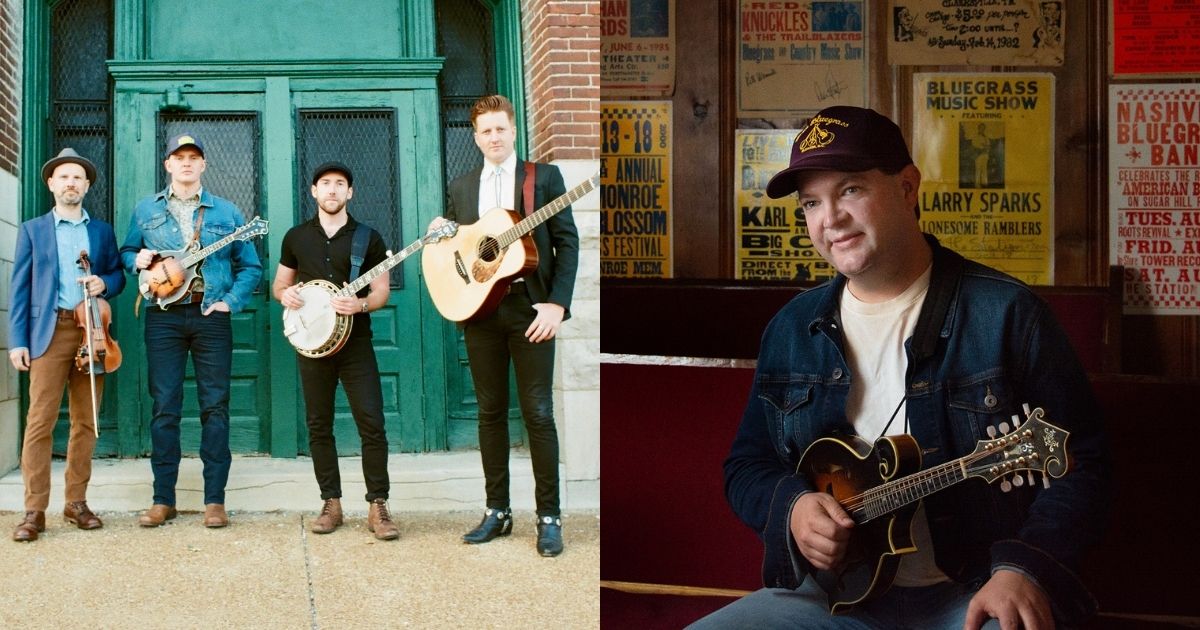
Also in bluegrass sounds, Jesse Smathers turns the clock and calendar back to the primordial musical ooze before bluegrass with his rendition of “Take A Drink On Me.” The track was inspired by Charlie Poole and the North Carolina Ramblers, with whom Smathers shares a hometown. As the artist and mandolinist puts it, “This tune is a prime example of early popular dance music” – the kinda stuff that inspired the earliest bluegrass artists like Bill Monroe, Earl Scruggs, and many others. In the hands of Smathers and his band, it’s a bluegrass song fit for any era.

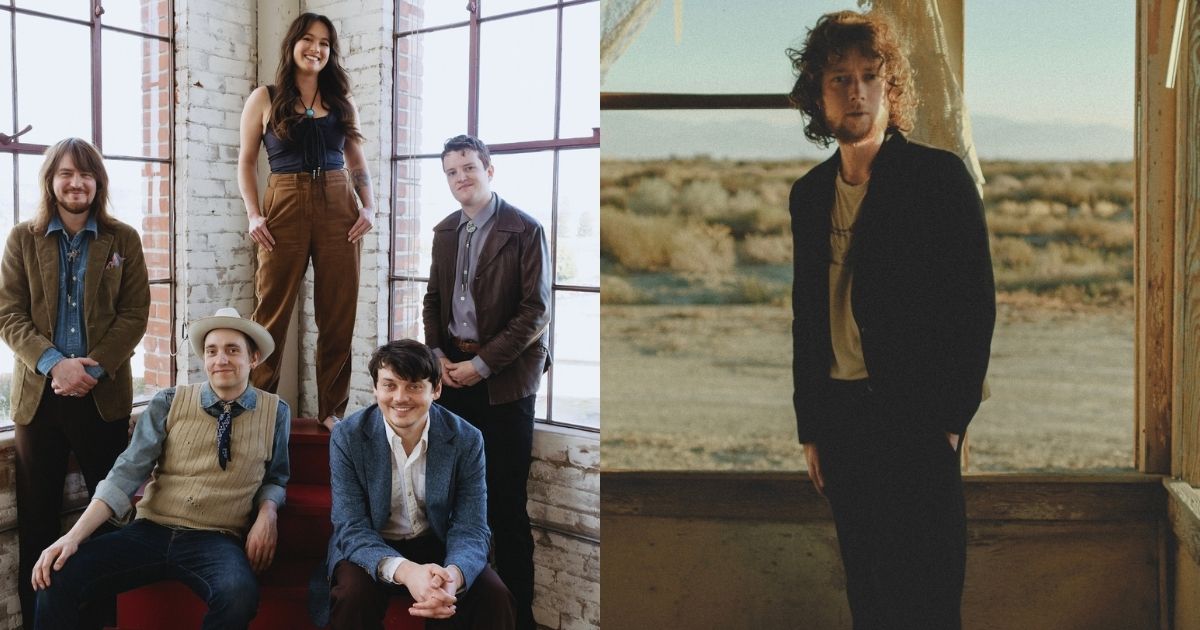
There’s Good Country to enjoy below, as well. Mac Cornish unveils a new track, her cover of Ian & Sylvia’s “Trucker’s Cafe.” You can almost catch the glint of bright sunshine off a chromed truck stop diner listening to the tune, lush with pedal steel and honky-tonkin’ guitar. The boot scootin’ track was recorded in Nashville and produced by Andrija Tokic.

To round us out, Tenille Townes returns to the site with “The Acrobat,” a contemplative and resonant song featuring another of our favs, Lori McKenna. “When you’re barely hanging on it’s easy to let go,” Townes sings, her voice rich with emotion and conviction. The song is the title track for Townes’ upcoming album, set for release in April, and is a fitting nexus point for the LP. “After losing my way for a while,” Townes shares with BGS, “this song felt like such an important anchor for this album.” You can watch the brand new music video for “The Acrobat” below.

Take a scroll and enjoy your listen – You Gotta Hear This!

Asher Brinson, “Midnight Hurricane”

Artist: Asher Brinson
Hometown: Newport, North Carolina
Song: “Midnight Hurricane”
Album: Midnight Hurricane
Release Date: March 6, 2026 (single); April 3, 2026 (album)

In Their Words: “When Chris Henry and I got together to write, I told him I was having an ‘off’ day and he said to let it flow – say whatever was on my mind. Those thoughts became the first line of ‘Midnight Hurricane.’ Growing up on the North Carolina coast, hurricanes have always just been a part of my life. And it seemed like they always hit at night! Midnight is quiet, but your thoughts aren’t, and hurricanes are like that — all of your feelings hitting at once. It’s a love story wrapped in chaos and after the storm, there’s a calm that makes you appreciate what’s steady and real. With Sierra Hull on mandolin and Lindsay Lou on vocals, this song instantly became one of my favorites. I feel like they both added just the right touch. While hurricanes unfortunately bring destruction, they also have a way of bringing people and communities together… to uplift each other, support, and rebuild.” – Asher Brinson

Track Credits:
Asher Brinson – Guitar, lead vocal
Cory Walker – Banjo
Jason Carter – Fiddle
Christopher Henry – Bass, baritone vocal
Sierra Hull – Mandolin
Lindsay Lou – Tenor vocal


Mac Cornish, “Trucker’s Cafe”

Artist: Mac Cornish
Hometown: Currently Nashville, Tennessee, but grew up in the Bay Area, California
Song: “Trucker’s Cafe”
Release Date: February 27, 2026

In Their Words: “This single is a cover of the Ian & Sylvia song, ‘Trucker’s Cafe.’ The song is from their 1969 record, Great Speckled Bird, which they also used as the name of their newly formed band, including the likes of Buddy Cage and David Briggs. Ian and Sylvia are a huge influence on me because of their blending of folk, rock ‘n’ roll, and country – especially on this album and this song. The song is a subversive take on the trucking country fad of the 1960s and ’70s, taking the perspective of a heartbroken truck stop diner waitress. The vocals are distinctly folk with their vibrato and falsetto, but the instrumentation is all rockin’ country goodness with walking bass and ripping pedal steel. I’ve always said that the best year in music was 1969. This is one of the many songs I absolutely love from that year in music and it only felt right to record a cover and honor my influences. My cover was recorded in October of 2025 at the Bomb Shelter in Nashville, TN and was produced by Andrija Tokic.” – Mac Cornish

Track Credits:
Mac Cornish – Vocals, acoustic guitar
Charlie Fuerstch – Electric guitar
Jeff Taylor – Piano
Cooper Dickerson – Pedal steel
Jack Lawrence – Bass
Dave Racine – Drums


Jesse Smathers, “Take A Drink On Me”

Artist: Jesse Smathers
Hometown: Floyd, Virginia
Song: “Take A Drink On Me”
Release Date: February 27, 2026
Label: Mountain Home Music Company

In Their Words: “Though my familial roots are deeply planted in Western North Carolina, I was raised in Eden, NC – the home of Charlie Poole. I spent my youth picking and competing at the Charlie Poole Festival there. The festival was held at Morehead Park, on the same grounds where the cotton mill Poole used to work at once stood. I heard the music of Charlie Poole and the North Carolina Ramblers ringing throughout my childhood. He, along with his bandmates, were some of the most prominent precursors to bluegrass stylings that came nearly 20 years later. Tales of Poole, Posey Rorer, and Norman Woodlief are still being told today, as you would expect, with larger-than-life personalities and musicians.

“I often imagine this scene: walking down Morgan Road in Spray (one of three small communities that made up Eden) in 1926 as a bystander and hearing the centric bounce of Piedmont Mill music in the distance. As I approach, I witness the North Carolina Ramblers sitting on a stoop sharing tunes and a jug of the best white liquor that the area along the NC/VA line is so notorious for. That sight is exactly what came to mind when recording this tune and what comes to mind when I hear it back. This tune is a prime example of early popular dance music. Hunter Berry on fiddle masterfully captured the necessary musical essences all while integrating his own spontaneous and playful liveliness. The same can be said of Corbin Hayslett who mixed in popping Charlie Poole banjo techniques. Whether it’s a Coke, glass of tea, a beer, or a jar of Shooting Creek’s finest, all you rounders get ready to party and ‘Take A Drink On Me’!” – Jesse Smathers

Track Credits:
Jesse Smathers – Guitar, lead vocal
Hunter Berry – Fiddle
Corbin Hayslett – Banjo
Nick Goad – Mandolin, harmony vocal
Joe Hannabach – Upright bass
Patrick Robertson – Harmony vocal


Tenille Townes, “The Acrobat” featuring Lori McKenna

Artist: Tenille Townes
Hometown: Grande Prairie, Alberta, Canada
Song: “The Acrobat” featuring Lori McKenna
Album: The Acrobat
Release Date: February 27, 2026 (single); April 10, 2026 (album)

In Their Words: “There’s an underlying whisper in this song saying you don’t have to make yourself smaller anymore, and it is my greatest hope that someone hearing this could believe it’s true. I have been navigating a return to self season in my life and reclaiming the belief that I don’t have to contort myself to fit what anyone else needs. After losing my way for a while, this song felt like such an important anchor for this album. Writing this song through the lens of a character helped me to hold enough distance from myself to be able to write the truth, and name the quiet damage that comes from performing, instead of just being.

“Lori McKenna has been a compass influence for me and it’s an honor to have her singing on this song we wrote together. I love how she enters the recording on the line about the fortune teller with all her knowledge, because Lori has been that voice of wisdom for me for years through her songs. The honesty in her lyrics and the way her voice holds emotional tension has given me permission to explore that kind of vulnerability in my own writing. I’m grateful for our friendship, and for the opportunity to share a love for the craft of a song with someone I am still so inspired by.” – Tenille Townes


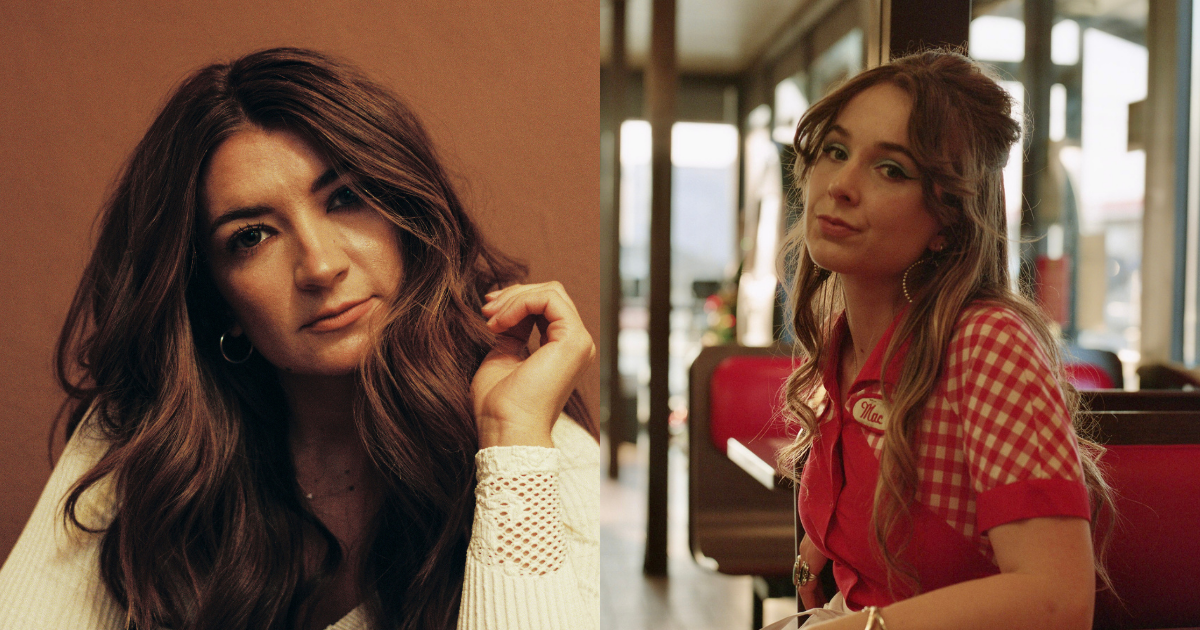
Photo Credit: Tenille Townes by Madison Rensing; Mac Cornish by Mandi Fountain.
The Glittering Golden Grass of The Brothers Comatose

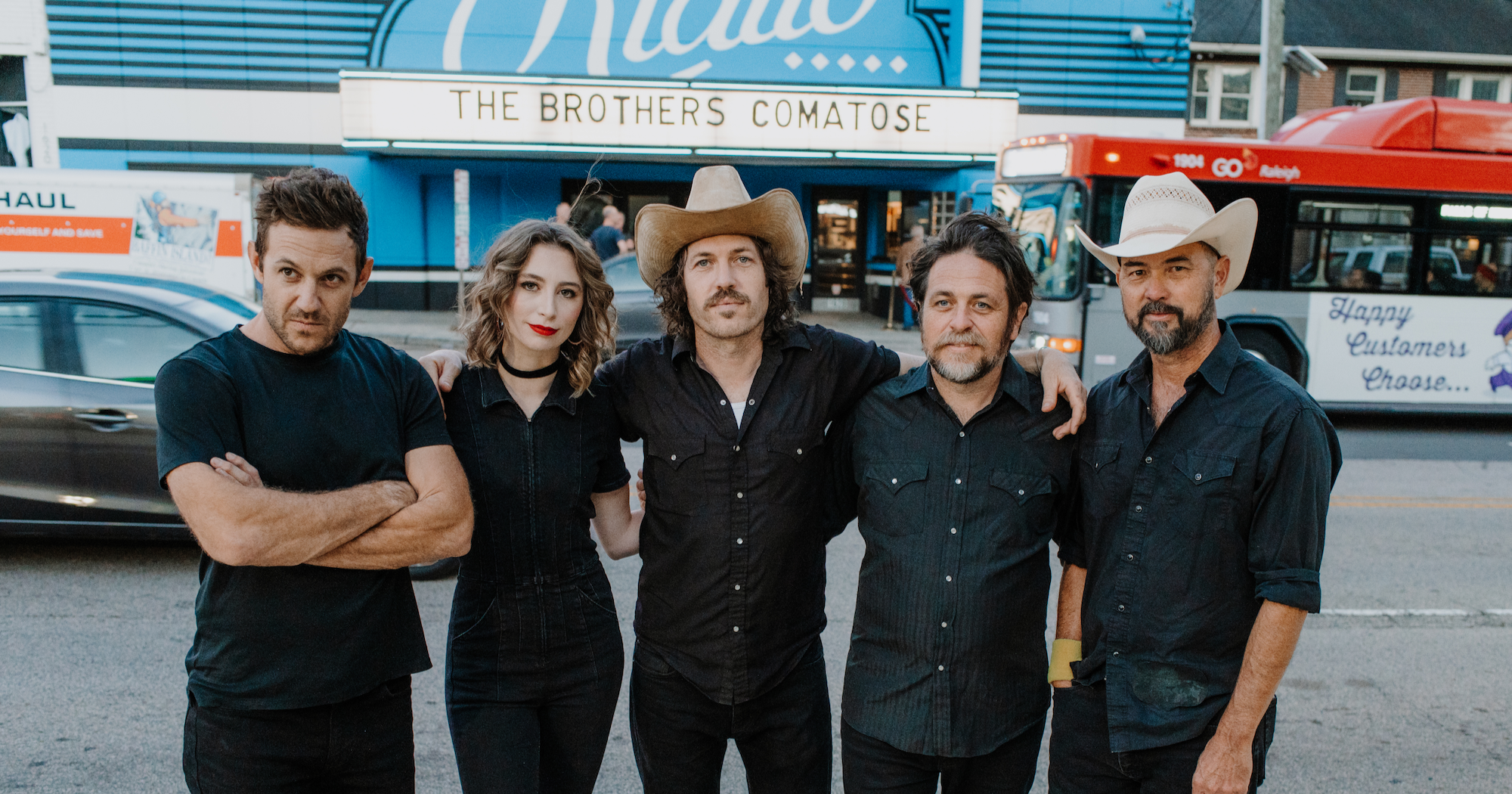
Bay Area five-piece The Brothers Comatose were actually founded by the brothers Morrison: that would be Ben on guitar and lead vocals and his brother Alex on banjo. The Morrisons came from a musical family and were influenced as much by classic rock as they were by country and bluegrass – their first album, Songs from the Stoop (2010), even contains a cover of The Rolling Stones’ “Dead Flowers.” Initially, the band’s lineup included bassist Steve Height, fiddler Phil Brezina, and mandolin player Greg Fleischut.

In the 15 years since, they have stayed busy both in the studio and on the road. As anyone who has seen the band’s concerts can attest, The Brothers Comatose are anything but… comatose. Their live performances are known to be high energy and often include audience participation. They have supported everyone from Gillian Welch & David Rawlings to Yonder Mountain String Band to Trampled By Turtles. In addition, the group has played festivals like Hardly Strictly Bluegrass and Outside Lands.

The Brothers Comatose returned at the end of July with their fifth studio outing, Golden Grass. The title track, which also opens the album, came from an unlikely source. “A fan started calling our sound ‘golden grass,’” explains Ben Morrison. “And the phrase just felt right.”

Golden Grass arrives three years after the band’s prior album and continues their mix of traditional bluegrass and rock. But behind the scenes, there have been some changes. The Brothers recorded Golden Grass in two separate installments with two different producers, Greg Holden and Tim Bluhm. While they were making the disc, mandolin player Greg Fleischut decided to leave the group. His replacement, Addie Levy, is the first woman in the band and, at just 23, significantly younger than her fellow members. “We always thought it would be cool to have a female voice to hit those high harmonies,” says Morrison. “Addie’s such an incredible mandolin and fiddle player, but she’s also a great singer and songwriter in her own right.”

Golden Grass is probably a bit more diverse than the band’s previous albums. Beyond being their first release to include a woman singer and mandolin player, it’s more collaborative in general. Ben wrote several songs, of course, but other tracks were penned by Levy, Brezina, and Alex Morrison. Still, Golden Grass maintains a pretty consistent sound over its 10 songs. The title track sounds like a lost Allman Brothers tune from back in the day and other highlights include lovely ballads like “Home Again” (featuring Lindsay Lou on guest vocals) and “My Friend” as well as the funny, rollicking “The IPA Song.”

I recently had the pleasure of catching up with Ben Morrison and Addie Levy for BGS.

To start with, tell me a little about the making of Golden Grass. I understand there were some changes between your last album and this one. Addie obviously is the new addition. And I guess Greg was the guy who left?

Ben Morrison: Yeah, Greg was in the band before. He left like halfway through the album. We recorded it in chunks. So we recorded half the album, we were working through the rest of the songs, and in that process, he left the band. Addie joined and recorded the second half of the album with us. But it’s funny. There are four mandolin players on [Golden Grass]. We had a couple of guest mandolin players on the album before Addie joined. Ronnie McCoury’s on there. It’s a good variety, I guess. [Laughs]

Tell me about the title track, which is also the first song on the album.

BM: That’s a good question. It started out with us trying to identify ourselves – that age-old question when you ask a musician what kind of music they play. “Well, it’s kind of hard to define. We’re jazz and pop and metal and boy band!” [Laughs] You know, it’s definitely pulling a lot from the bluegrass world. But also from a bunch of other influences.

We kept posting these things on Facebook and there’s this guy, Cyrus Clark, I believe his name is. He kept commenting about a lot of music coming from California – string band music specifically – going back to Old & In the Way. He kept saying, “Golden Grass! Brothers Comatose, Molly Tuttle, and AJ Lee.” We thought that was really cool.

I think I had just written it down in a notebook one day. And we did a cowrite – myself, our fiddle player Phil, and the guy that produced the second half of the record, Tim Bluhm. I was like, “What if we called it Golden Grass?” We started name-dropping different bands in the lyrics and kind of giving them a little shout out. We had fun with that and went with it.

“Home Again” – reading the press release, I know what inspired it. But just listening to the lyrics, I [probably] would have known anyway. For those of us on the East Coast, tell me a bit more about what [the wildfires] were like and how it affected the song.

BM: That wasn’t a personal story; it was about good friends of ours who lost their house in the Santa Cruz Mountains fires a few years back. For those of you not in California, there’s a fire season [here] where fires can just rip through and destroy communities. It’s pretty messed up and now it’s literally close to home. Some good friends of ours – all their property and their house got destroyed. I think it was during the pandemic and it hit me pretty hard. I was just really feeling for them and that song kinda came pretty quickly.

We had the song and thought about getting somebody to help sing it with us. Lindsay Lou’s been a friend for a long, long time and she’s such a great singer. We sent it to her and she was on it. It’s about a couple losing their house and building back together. So it made more sense to me as a duet.

I like the ballads on the album. Addie, I think you were the one who wrote “Blue Mountain?”

Addie Levy: I am.

Tell me a bit about the inspiration for that song.

AL: I’m from the Blue Ridge Mountains of Virginia. I grew up in Appalachia my whole life. [The mountains] have always been a very big inspiration for my writing and who I am as a person.

I was driving to work one day and was listening to the Infamous Stringdusters’ [version of the Cure’s] “Just Like Heaven” and got really inspired by having a keen lick throughout the whole song. I was like, “I need to write a song like that.” It all came to me within the drive to work. I showed it to my mom when I got home and she kind of looked at me with concern. She was like “Are you and your boyfriend okay?” I was like, “What does that have to do with the song I just played you?” I accidentally wrote the entire thing about him – which is bad ‘cause he cheats on me in the song! But he doesn’t in real life! [Laughs]

There were all these little pieces. Like, I pass his exit to work every day. He knows my Starbucks order. I painted the walls blue in his bedroom in one of our first months of dating. I pulled all these little things I didn’t mean to. Then I had to show it to him. I was like, “I am so sorry I wrote this song about you!” But when you’re in a nice, healthy relationship – I don’t have that much stuff to complain about so I can’t really write about it!

“The IPA Song” is a fun track. Anything either of you want to share with me about that?

BM: When we play shows, we like to get people onstage to help us out – you know, for sing-alongs or whatever it might be. I think we’ve had more children onstage for “The IPA Song” than any other song, which is ridiculous. But they make signs and stuff – like the IPA circled with a line through it. We had a 15-year-old last night playing mandolin with us for that song! I mean, the lyrics are goofy, but I guess it’s a catchy one. It’s been a fun song to play live.

Going back to the Bay Area music scene. In the late ‘60s, it was known for bands like The Grateful Dead, Jefferson Airplane, and the whole psychedelic thing. And in the late ‘70s, there was something of a punk scene. Even in the ‘90s, there were bands like Counting Crows that recorded in San Francisco.

What is the scene like now? And with all these different musical sounds that have come from the city, how did you settle on more of an Americana/bluegrass sound?

BM: The band got its start in 2008 in San Francisco. My brother and I were living in a house on Haight Street – right in the thick of it. Phil lived a few blocks down, so he would come over. We continued to live in the city for a long time and there was a bustling scene. With bluegrass too – like this [past] weekend was the Hardly Strictly Bluegrass Festival. I kind of credit that festival with my direct interest with this kind of music. It’s massive, three-quarters of a million people throughout the weekend. It’s all free. Huge headliners. It’s not all bluegrass but it definitely leans in that direction.

It was so cool being exposed to different kinds of music that I hadn’t really listened to before. What was also cool was watching artists play – Del McCoury, John Prine, Emmylou Harris – all these players that were older. It seemed like the older you get, the more respect you get in this world. [That] was interesting, because I felt like in the rock world there was sort of a shelf life. Like “Oh, you’re in your late 20s in a rock band? Give it up, kid.” That kind of thing. But in this world, when you’re 70, you’re doing it! That was always so cool to me.

So San Francisco does have a pretty cool scene. Probably 10 years ago, a lot of people started moving out because tech started moving in [and it became] more expensive. But I’ve heard that it’s getting cool again. I don’t hang out there as much anymore ‘cause we’re on the road a lot and I’ve got two kids. I mean, Addie probably hangs out there more than I do.

AL: Anytime I’m in town, I try to find a bluegrass gang. There’s a couple of bars [where] I’ve made some good friends. Sometimes there are jams, sometimes they’re just drinking. But there are some really cool musicians in town.

Ben, I know your brother is also in the band. Tell me what Alex brings to The Brothers Comatose that is unique.

BM: Alex has swagger beyond belief. [Laughs] Is that what you would call it?

AL: Yeah. [He’s] the most photogenic, most in the vibe of every situation.

BM: And the way he plays, too. To me, he plays banjo like Keith Richards plays guitar. You know, he’s not trying to be the Yngwie Malmsteen of the banjo or anything. He’s just trying to make it groovy, stanky, in the pocket. It’s just got such good feel to it. And also, he’s a great songwriter and singer. But a lot of his influences come from [bands like] The Rolling Stones, Led Zeppelin. We used to listen to a lot of classic rock when we were kids.

Addie, I guess I wanted to ask you what it’s like so far as the new member of the band and also the first woman. Crashing the boys’ club, as it were.

AL: My very first show with them was in Idaho. I had never met any of them, I had one phone call with them and I had never been west of Nashville! You know, I grew up traveling up and down the East Coast and never really left. I remember touching down in Sun Valley and the realization hit that I knew two people there and they were leaving the next day. And I was like, “I’m gonna get murdered. I am gonna die out here!” [Laughs] I never heard of the festival, it was in the mountains somewhere… I was like, “This is the end.”

[I was] super anxious to start. I mean, our first show was a headlining slot that Sunday. That was terrifying. But [the Brothers Comatose are] just the greatest people. They’re so welcoming. And I’m an only child. So they’re really the siblings [I never had]… They’re the best.


Photo Credits: Lead image courtesy of Burning House Management. Alternate image by Jessie McCall.

25 Years of Greensky Bluegrass Connecting the Dots

On a recent afternoon, Paul Hoffman is standing in a parking lot in Harrisburg, Pennsylvania. Lead singer/mandolinist for Greensky Bluegrass, Hoffman is pacing around the backstage lot before the gig at XL Live that evening deep in reflection about questions posed over the phone – the core of which focus on the upcoming 25th anniversary of the groundbreaking jamgrass outfit. A while back, in the depths of rural New Hampshire, I interviewed Hoffman for another project and I asked him just what the original intent was behind Greensky Bluegrass.

“To play heavy metal music on acoustic instruments,” he replied, a sly grin emerging across his face.

Now, 25 years since its inception, Greensky Bluegrass has adhered directly to Hoffman’s sentiments. These days, the group has become a marquee live act, one which uses its string instruments to transcend all genres of music, whether bluegrass or blues, rock or country, funk or soul – or even heavy metal.

Case-in-point, the ensemble’s latest album, XXV, is not only an ode to a quarter-century of passion, purpose, and performance, but also a mile marker by which Greensky Bluegrass can measure their own road to the “here and now” – this realm where the passage of time doesn’t necessarily matter, only fleeting moments onstage with the ones you love do.

XXV brings together many of those dear friends and collaborators of Greensky – Sam Bush, Billy Strings, Lindsay Lou, Nathaniel Rateliff, Aoife O’Donovan, Holly Bowling, Ivan Neville, Natalie Cressman, and Jennifer Hartswick. Each of these special guests represent chapters of the band’s continued journey to something – somewhere, anywhere – that kind and curious folks congregate in the name of fellowship, compassion, and sonic joy.

With the starting line of Greensky Bluegrass being an impromptu Halloween gig in 2000 in Kalamazoo, Michigan, other pivotal dots pop up quickly along the way. Like the inevitable camaraderie between the group and other Michigan artists like Strings and Lou, who came up in the same scene and have supported each other ever since. Or, like Sam Bush himself – Bluegrass Hall of Famer and the symbolic face of the Telluride Bluegrass Festival – being featured on the project, reminding how the Telluride stage brought Greensky Bluegrass into the national spotlight when they won its famed band contest in 2006.

For Greensky, the friendships made along the way brought endless opportunities to play alongside one another at a show, a festival, or late-night jam. Opportunities that would always be too good to pass up – don’t forget, fun is the original point, and should remain so.

XXV is also a fresh snapshot of Greensky Bluegrass. The songs are pulled from across the entire timeline of the outfit, from their early days in Kalamazoo to the mountains of Colorado. From the bright lights of Nashville to the backroads of Southern Appalachia. From the blue skies of Anytown, U.S.A., to the sandy beaches of some international destination.

After 25 years, what remains is a band of genuine souls where gratitude is only matched by hunger and curiosity for what resides just around the next corner. Greensky Bluegrass, decades later, remain ready to surprise the listener and to carry on the pure intent that emerged those many years ago.

Now that this album’s coming out, whether consciously or subconsciously, the celebration of 25 years is currently underway. What’s been kind of rolling through your mind?

Hoffman: Primarily gratitude. I’d be remiss to not be grateful that we’ve been able to [do this for 25 years]. It’s a celebration, truly. It feels so cool. We’re doing [the anniversary shows] in our hometown and playing the [Wings Event Center in Kalamazoo] for the first time, which we’ve talked about since we were a very young band. And, you know, something interesting I’ve learned is how excited people are about this retrospective project. In true Greensky fashion, it’s this unique, hybrid idea. Like, “What if we did this? What if it took this turn? What if we recorded this and revamped this?”

We didn’t just make a new record, we stopped to reflect and commemorate in a way that was meaningful to us. And it seems like it’s translating. It’s not even out yet. It’s a unique perspective on gratitude that maybe I didn’t expect. [For XXV], I don’t want to say that it was easy or something. Because we did it pretty quickly and we didn’t have to write any material and we didn’t have to make huge choices about how to present it, because there already is an arrangement and an idea. But, in some cases, we did things differently because we could and we were not beholden to some authority on how it needs to go.

[The recording process] was so casual and creative in this really innocent way – “Let’s just record this and see what happens.” And we just kept recording stuff. We didn’t even know what we were going to do next. Every moment is monumental in some way or another, but 25 years is nothing to scoff at. And this all was birthed from, “What could we do?” With making new music and new albums, there’s a pressure to create something better than we’ve ever done. Or genuine to the brand we’ve created and to ourselves, but also exploratory enough [and] a departure from the norm enough that it’s new and exciting. It feels like such a relief to do [XXV], to approach creating new material from a different perspective.

How did you decide on the guests?

I wanted to find guests that celebrate our story, that are close to us and collaborators and such, but also elevated the material in some meaningful way. And there were real pleasant surprises along the way there.

What did it mean to have Billy and Lindsay on the record, seeing as all of you emerged from the same scene in Kalamazoo and have always supported each other?

I mean, to say that it was sort of obvious and natural is probably an understatement. We joked about why we chose “Reverend,” because Billy plays it [live]. But, I also feel it’s an important song. And for me as a writer, it’s kind of a landmark in my journey as a creative. But again, even though I knew [Billy] would crush it on the guitar solo, some of the phrasing choices he makes are subtly different than mine – I love it. And, man, I can’t stress enough, what a gift [“Reverend” is]. I wrote that song almost 20 years ago. It means something different to me now, and it has throughout my life singing that song.

You’ve always been a very sonically elusive band. Was that by design or just how things evolved?

I think that we just have a spirit to not be limited. So, if we want to emulate all the things we love – and we’d love a diverse amount of things, musical things – we honor the acoustic nature of our heritage as a band, but we want so much more. We want [things] to keep us interested and engaged. We’ve allowed ourselves that creative freedom to try anything. And we think we’ve jumped the shark many times. [Laughs]

With getting older, you also start having different perspectives on what you were creating and how you want to present it.

Yeah. You know, art is timeless in some ways, because you can change your opinion about it or the way you relate to it as you mature.

When you had mentioned that you guys “jumped the shark many times,” I think that’s one of the things I appreciate about Greensky – you’re not afraid to just take a leap.

It’s one of my favorite things about musicians I admire, too, are the ones that I watch struggle to either challenge themselves, push themselves, push their boundaries, or convey a message with emotion that’s challenging, you know? If you’re willing to make a mistake, if you’re willing to truly find the line of your capacity, you have to be willing to cross it to know where it is. I’ve always said – in my later maturity – that I wonder if I’ve crossed it too many times, and in sort of a noble quest with noble intentions. [Laughs]

That’s something I love about Billy’s playing a lot. Despite being one of the greatest guitar players I’ve ever seen, I’ve watched him up there grasping for things and struggling. Struggle doesn’t always have to have a negative [connotation]. To not struggle would be complicit and boring.

The upcoming Halloween shows in Kalamazoo are the official 25th anniversary of when the stars aligned, when you, Mike [Bont], and Dave [Bruzza] played together as Greensky for the first time.

When you started asking the question, my brain went to right about now, [25 years ago]. We met [a few] weeks before Halloween. I was a college freshman and I went to this bar called the Blue Dolphin, where there was a bluegrass open mic. I saw Dave and Bont play and approached them after the thing and was like, “Hey, I just bought a mandolin,” that I’d gotten in late August before moving to college. So, I’d only had it for four or five weeks.

I didn’t know what the hell I was doing at all or what bluegrass even was. I bought the mandolin because of David Grisman, who’s so bluegrass-adjacent that I didn’t know who Bill Monroe was. I knew “Shady Grove.” [All of] which is still just a remarkable thing for me to think about. Like, what hell would my life have been had I not made that choice [to play mandolin]? What a bizarre twist of fate and then here we are 25 years later.

So, you guys met and you said, “Let’s jam”?

Yeah. A couple days later, I showed up at Bont’s house for a rehearsal. Him and Dave would just get together and pick. They were both learning bluegrass. Everything was so casual and just for fun. They would have band practices where we would get together and learn songs and stuff. And I just showed up for the next one and then didn’t go away.

What was the name of that [open mic] band?

Greensky Bluegrass. They were already playing as Greensky Bluegrass, which was named by a friend of Dave’s that played mandolin with him a little bit for fun. It was a joke in jest, “Wouldn’t it be funny to have a bluegrass band named Greensky Bluegrass?”

I don’t think I ever knew that you guys were called Greensky before the official [2000] Halloween show.

Well, I mean, what is “official” is interesting to think about. They were already [Greensky]. It wasn’t their first open mic, either. So, the first time the three of us [“officially”] played was the Halloween show. But, I think I joined them at open mics for a week or two or something [before Halloween]. And Halloween was a party. There was a poster made for fun or something. We were on the bill. Dave was in another band called Seeds & Stems. It was a house party in a house that Dave lived in. [Laughs] A pretty wild party, if I may say so.

So, it was billed as Greensky Bluegrass?

“Billed” is still kind of generous. But, yeah, we played a set in the basement and in the living room. I think the living room upstairs was just acoustic and then the jam band played downstairs in the basement, like colleges do, you know? A couple days later, we played a show at a venue in town, Club Soda in Kalamazoo, that was kind of a legendary rock club through the ‘90s and stuff. It was small, but we played there on a triple bill November 5 or something, [just] days later. And that one, I [still] have the poster. I think that was our first paid show.

Were you doing covers or did [Dave and Mike] have originals, too?

They were playing just bluegrass standards for the most part. It’s funny, that [first] night [I met] Dave, he gave me CDs – Seldom Scene, Live at The Cellar Door, a Rounder Records bluegrass compilation, and a Bill Monroe live show. And [he] was like, “Listen to these. See you on Tuesday at Bont’s house.”

In hindsight, man, to be 18 and have that kind of freedom, you know what I mean? I’ve been recently jamming on electric guitar at my house by myself for fun. And I’ve been thinking, “I wonder if I could find some dads around to start a band with for just fun.” And that experience is so foreign to me now, because I’m so immersed in this thing that’s become my life.

Looking back on it, you kind of jumped into the deep end pretty quickly.

I didn’t take a mandolin lesson until COVID. [Laughs] I was self-taught, because I already knew how to play the guitar – “knew how to,” I use that a little loosely, too. Took some [music theory] classes in high school and college and I’m sort of classically trained. But, I was able to teach myself my own instrument for a really long time. I should have sooner harnessed the strength of learning from another, because when I took a lesson during COVID from a friend, I was like, “I should’ve done this a lot sooner.” [Laughs]

You know, so much of what I was learning in those early days was how to express myself as a writer and find my voice. That stuff always superseded my need for technical prowess. I think we all kind of share that sentiment, all five of us – how to present this passion piece is more important than how to do it. We took on this every-other-week gig and stuff like that [in Kalamazoo]. And the commitment to go play shows for the same crowd every other week inspired us to grow, because we needed to. We had that jam band sensibility of satiating the fans. What can we do next week that’ll keep people excited? What can we do that’s new? How can we make this better?

When you look back, you can see where the dots connect. But, when it’s happening in real time, you don’t realize what the domino effect is, where all of a sudden you’ve found yourself in this band that you’re still in 25 years later.

Yeah. I was 18 [when we started the band]. I’ve lived with Dave and Bont for 25 years of my life. I didn’t even live with my parents that long. [Laughs] I’ve spent 200+ days of [every] year of my life with those two guys for 25 years, and the other ones for many years, as well. It’s kind of wild. It’s so cool that we created this project, [which has become] just a celebration of our relationship and that’s so much more important than what it has become. We care about each other and we genuinely have a lot of aligned goals, artistically and personally. We’re still grinding for it, and I’m grateful for what we have.

I think we’ve been very successful. I feel less “grinding” now and more, “Let’s just go and have some fun and play some shows.” Play where people want us to play and not measure our success by how many tickets we sell. And I’m starting to learn that more now. It took 25 years for me to figure out that what we have is great. We’ve got something cool, let’s just keep doing it.

And that’s got to be a nice place to get to, because you don’t get to 25 years by accident. The fact the original three members are still there is amazing, because that story is not that common in the grand scheme of things in this industry.

Even in our culture. It’s not even [common] in business partnerships, families, friendships. And the reality of that – that I’m learning with age – is that relationships change and everything shouldn’t be measured by the testament of time. I want to find value in a moment that is for the sake of “now” and not some transactional [thing]. Like, if I’m nice to you “now,” then we’ll have this friendship that serves us both and we’ll be there for each other. All that kind of stuff is great, but I want to live in the moment.

I think what’s remarkable is that we’ve stayed together, because we’ve all grown and changed in similar ways and our journeys have aligned the whole time, or for the most of the time. We’ve veered away from each other and back to each other many times. But, when one of us has wanted something different, we’ve all kind of shared that desire. In a way, we’ve been able to all be very sincere to ourselves and grow and change together.

I don’t mean to speculate what other bands are like or anything like that, but I don’t have a lot of relationships in my life that have lasted this long. And not just people, but to things like food or activities I enjoy. The only thing maybe is the way I’ve worn my hair for 30 years. [Laughs] When we grow, our tastes change for all things. But, my [creative, intrinsic] tastes for these four other men have not changed.


Continue to explore our Artist of the Month content on Greensky Bluegrass here.

Photo Credit: Dylan Langille

Artist of the Month:
Greensky Bluegrass

Michigan music isn’t just Motown or the MC5, Bob Seger or (ugh) Kid Rock. While it’s seldom mentioned as a modern bluegrass hotbed, the Wolverine State has become an unlikely 21st century hub of the latter-day bluegrass offshoot jamgrass. And at the center of this upland strain of music is where you’ll find Greensky Bluegrass, a quintet that is our Artist of the Month for October.

The roots of jamgrass go back to the 1970s, when New Grass Revival took inspiration from the bluegrass adjacency of the Grateful Dead and other proto-Americana rock acts, injecting rock and roll overtones into their music. It was also during this period that Dead guitarist Jerry Garcia went back to his original folkie roots with 1975’s Old & In the Way, a super-session album that would stand as the top-selling bluegrass LP of all time until O Brother, Where Art Thou? a quarter-century later.

Fast-forward to the 1980s, when New Grass Revival banjo maestro Béla Fleck went in some truly idiosyncratic and worldly directions with his new group The Flecktones. Then came the 1990s-vintage H.O.R.D.E. Festival and a generation of bands like String Cheese Incident, Leftover Salmon, and Phish that further obliterated whatever boundary remained between bluegrass and rock.

That set the stage for Greensky Bluegrass, whose emergence in 2000 cued up another chapter of combining traditional bluegrass with rock-band theatrics (to the point of even including a bitchin’ onstage light show). Greensky originally formed as a trio of mandolinist/frontman Paul Hoffman, guitarist Dave Bruzza and banjo player Michael Arlen Bont, convening in the fall of 2000 after meeting at an open-mic show in Kalamazoo, Michigan.

Greensky had plenty of traditionalist bona fides, covering classic bluegrass pantheon cuts by the likes of Stanley Brothers, Charlie Poole, and Bill Monroe. But they’d cover the likes of Pink Floyd, Bruce Springsteen, Prince, Talking Heads, and (yes) the Grateful Dead, too. That has continued over the years as their lineup expanded to a quintet with the addition of resonator guitarist Anders Beck and bassist Michael Devol. As an indicator of their eclectic tendencies, one of the studio producers Greensky has worked with is Steve Berlin (who handled 2016’s Shouted, Written Down & Quoted), best-known as saxophonist of the acclaimed Latino rock band Los Lobos.

One big milestone of Greensky’s first decade came at Telluride, the storied annual bluegrass festival in Colorado, where they won the band contest in 2006. They’ve steadily built themselves up as a live draw playing bigger venues, becoming a major presence at Red Rocks, the Colorado amphitheater that is the high church of jamgrass. This September, Greensky played the 20th headlining show of their career at Red Rocks.

As they progressed, Greensky provided an inspirational example for younger acts following in their wake, most notably a young guitarist from their home state of Michigan. Born William Apostol in 1992 in the college town of Lansing, he adopted the stage name Billy Strings as a teenager. Greensky was well-established by then and served as Strings’ mentors, collaborating frequently and giving him a choice opening-act slot on a 2018 tour. Strings has gone on to become a worldwide arena-level star, something like the jamgrass genre’s Nirvana equivalent to Greensky’s Sonic Youth.

Fittingly, Strings is one of the cameo guests appearing on the new Greensky album, XXV, which marks the group’s 25-year anniversary with all kinds of star power. Nine of the album’s 13 tracks feature guest appearances from some of the top names in the field.

Sam Bush, a co-founder of the previously mentioned jamgrass pioneers New Grass Revival, opens the first track “Can’t Stop Now” with one of his trademark lightning-speed mandolin runs. Americana stars Nathaniel Rateliff and Aoife O’Donovan turn up to provide lead vocals on a couple of songs. Other tracks feature String Cheese Incident drummer Jason Hann, New Orleans scion Ivan Neville and, from Trey Anastasio Band’s horn section, trumpeter Jennifer Hartswick and trombonist Natalie Cressman. Among the guests with Michigan ties are Phil Lesh & Friends pianist Holly Bowling and, from the Great Lakes State supergroup Sweet Water Warblers, vocalist Lindsay Lou.

Greensky has always been more than willing to expand tunes out to epic, near-galactic dimensions, and XXV has more than enough sprawling solos to satisfy the pickiest of jamgrass fans. Most notable is the 14-plus minutes of “Last Winter in the Copper Country,” on which Bowling’s rippling piano takes center-stage. Bowling also stars on “Windshield,” a longtime Greensky favorite that appeared on the band’s 2014 album If Sorrows Swim in an arrangement of just her piano and Hoffman’s powerful bellow – the closest thing to operatic bluegrass this side of The Hillbenders’ bluegrass take on The Who’s Tommy. That’s only one of the songs from throughout the Greensky discography that they reprise in (sometimes drastically) rearranged form for XXV.

In anticipation of the new album’s release date, which is set for Halloween, check out our Essential Greensky Bluegrass playlist below. Plenty of further Greensky content is also on the way, including a feature interview with the group and plenty of excellent picks from the archives, as well. Follow along all month here on BGS and on our social media pages as we celebrate Greensky Bluegrass as our Artist of the Month.


Photo Credit: Dylan Langille

You Gotta Hear This: New Music From JigJam, Ashby Frank, and More

A long weekend requires great music on the speakers, doesn’t it? Here are a handful of brand new tunes to add to your playlists for the festivities – You Gotta Hear This! This week, our roundup includes bluegrass from the Carolinas and from across the pond, too.

Below you’ll find fun-filled Irish bluegrass and string band JigJam enlisting Lindsay Lou for their new track, which releases tomorrow, called “Running Back to You.” It’s a delightful, traditionally-crafted song of love, longing, and life on the road.

From the foothills in upstate South Carolina, husband-and-wife duo Benson – Kristin Scott Benson (the Grascals) and Wayne Benson (IIIrd Tyme Out) – are joined by their friend from just up the mountains, Woody Platt, on a song written by Grant Williams. “Lover of the Road” continues in a similar vein to JigJam’s new number, lamenting the haunting and nagging feelings of being gone from the people you love while off traveling.

Rounding out our collection this week is Ashby Frank, Nashville-based North Carolinian mandolinist, singer, and songwriter, who’s assembled quite the band for his latest, “Everybody’s Got Their Nine Pound Hammer.” Frank found the song through Tim Stafford, one of the track’s co-writers, and was immediately drawn to the universality of its central sentiment.

It’s a mighty trifecta of bluegrass sampled from across this genre’s spectrum of sound – and geography. And you know what we think… You Gotta Hear This!

Benson, “Lover of the Road”

Artist: Benson
Hometown: Boiling Springs, South Carolina
Song: “Lover of the Road”
Release Date: July 4, 2025
Label: Mountain Home Music Company

In Their Words: “I’m really happy with how ‘Lover of the Road’ turned out. It was written by my best friend from college and we were so lucky to get Woody Platt to sing it. I’ve enjoyed the heck out of getting to play some shows with Woody and he sang this song perfectly. His vocal embodies the haunting, nagging feeling any of us can experience when trying to maintain relationships while traveling.” – Kristin Scott Benson

“Here’s a song by Grant Williams, who also wrote ‘Sleeping with the Reaper’ for the Grascals. The first time I ever heard Grant’s material was when he recorded a demo at our house, 20 or 25 years ago. He’s an eclectic writer and it’s been fun to watch him take an interest in bluegrass and see how appropriately he writes for us. We’re always trying to wisely pair songs with vocalists and Woody Platt did a great job delivering this one. Woody is well-known for good reason and we were really happy when he agreed to sing it.” – Wayne Benson

“I’ve long admired Kristin and Wayne Benson for their individual brilliance and their powerful partnership in shaping bluegrass music. Their influence on the genre and the industry is truly remarkable. It was an absolute honor to record ‘Lover of the Road’ with them!” – Woody Platt

“There’s something in me that loves being out on the road, but more than that, I love being at home with the people I love, my dog, and my bed. This song was what I imagined it would be like if those two loves traded places in priority in my heart.” – Grant Williams, songwriter

Track Credits:
Wayne Benson – Mandolin
Kristin Scott Benson – Banjo
Woody Platt – Lead vocal
Cody Kilby – Acoustic, harmony vocal
Kevin McKinnon – Bass
Mickey Harris – Harmony vocal


Ashby Frank, “Everybody’s Got Their Nine Pound Hammer”

Artist: Ashby Frank
Hometown: Nashville, Tennessee
Song: “Everybody’s Got Their Nine Pound Hammer”
Release Date: July 4, 2025
Label: Mountain Home Music Company

In Their Words: “I was immediately drawn to ‘Everybody’s Got Their Nine Pound Hammer’ when my good friend Tim Stafford shared a work tape with me. He co-wrote it with Eric Gibson and Greg Cornett. I loved the way it focuses on the everyday struggles we all face and it really has that traditional bluegrass feel. To bring this song to life, I brought in some incredibly talented musicians, including Matt Menefee on banjo, Seth Taylor on guitar, Jim VanCleve on fiddle, Tony Creasman on percussion, and Travis Anderson on bass. I was also honored to have Tim and my friend Kelsey Crews add those high and lonesome harmonies. They truly made the tune come alive and gave it a timeless quality. I’m really excited for everyone to hear it!” – Ashby Frank

Track Credits:
Ashby Frank – Mandolin, lead vocal
Seth Taylor – Acoustic guitar
Travis Anderson – Bass
Matt Menefee – Banjo
Jim VanCleve – Fiddle
Kelsey Crews – Harmony vocal
Tim Stafford – Harmony vocal


JigJam, “Running Back to You” (Featuring Lindsay Lou)

Artist: JigJam
Hometown: County Offaly, Ireland
Song: “Running Back To You” (Featuring Lindsay Lou)
Release Date: July 5, 2025 (single)

In Their Words: “I wrote this song on the road last year. Constantly being on the move going from hotel to hotel after shows isn’t easy when you’re away from a loved one. Having that someone to go home to after a tour can keep you going when the going gets tough and that’s where ‘Running Back to You’ comes from. Knowing there’s someone waiting for you at the end of a tour makes it a lot easier and worthwhile. The recurring fiddle tune part came to me first one day as I was on the I-55 from Chicago to St. Louis and the song was pretty much built around that tune. We thought Lindsay Lou would be a great fit for this song. We’re big fans of Lindsay’s music and her vocals have really complemented the track in both lead and harmony roles throughout. It’s a lively number and one we really enjoy playing at live shows!” – Jamie McKeogh


Photo Credit: JigJam courtesy of the artist; Ashby Frank by Melissa DuPuy.

You Gotta Hear This: New Music From AJ Lee & Blue Summit, Jack Van Cleaf, and More

Our second round-up of new music and premieres for the month of May is here already!

Starting us off, California bluegrass outfit AJ Lee & Blue Summit have dropped a new track, their excellent cover of a Gillian Welch classic, “Tear My Stillhouse Down,” with Lindsay Lou joining in on harmonies. Kyle Ray takes us to the beautiful, contemplative riverbanks in Kentucky with an early listen to his ripping bluegrass-y track, “River Song,” which will arrive right in time for wading season.

For a bit of old-time, the Lonesome Ace Stringband have a delightfully quirky tune, “Carpet Beetle,” with a funky visualizer video to match. Danceable, poppy, and soulful, it’s old-time that’s modern and timeless, both. Plus, you can catch a music video for “Hikikomori,” a song about emotions and isolation from country/neo-folk phenomenon Jack Van Cleaf’s new album, JVC, which is out today.

It’s all right here on BGS! You know what you gotta do? You Gotta Hear This.

AJ Lee & Blue Summit, “Tear My Stillhouse Down”

Artist: AJ Lee & Blue Summit
Hometown: Santa Cruz, California
Song: “Tear My Stillhouse Down”
Release Date: May 9, 2025
Label: Signature Sounds

In Their Words: “My mom showed this song to me when I was really young and I’ve loved it ever since. I’m a lifelong fan of Gillian Welch and this has always been one of my favorite songs of hers. We’ve covered this song for years in the band and have found that audiences from coast to coast love it when we play it live. It’s a popular jam song in the campgrounds at our favorite festivals. I think of this song as Appalachian rock and roll!” – AJ Lee

“Gillian adds to the best of authentic stories from history with this song. Country music, traditional American music, bluegrass, folk – it all pulls from and sings about every real aspect of life. Death, addiction, love, poverty, fun, murder. This song is about falling prey to a cycle of creation, consumption, and distribution of a potent poison that you know only really has one way of ending. Popcorn Sutton would love this one, without a doubt.”  – Scott Gates

Track Credits:
AJ Lee – Mandolin, vocals
Lindsay Lou – vocals
Scott Gates – Guitar, vocals
Jan Purat – Fiddle, vocals
Sully Tuttle – Guitar, vocals
Sean Newman – Bass, vocals


The Lonesome Ace Stringband, “Carpet Beetle”

Artist: The Lonesome Ace Stringband
Hometown: Toronto, Ontario, Canada
Song: “Carpet Beetle”
Release Date: May 9, 2025

In Their Words: “John and I wrote this tune last year. I showed up with a two-part tune that was sort of like the A/B of ‘Carpet Beetle,’ but was way more note-y and pretty. Once we started playing it, it felt too ‘precious,’ at least for the mood we were in that day. We deconstructed the melody significantly, removing about half the notes in the A part, and added a bit of ugly drama. We did the same with the B part, but left the ‘prettiness’ of the melody intact. Then, we came up with a really evil chord progression for the C part. Soon, we were in paradise. Someone told us that the A part makes you feel icky, the B part makes you want to dance, and the C part makes you want to break things – I tried to reflect that in the video. We were thrilled to have Alan Mackie (bass) on this session and you can see real footage of us all recording the track live in the studio at the end of the video. The title comes from a household pest that John and I were both struggling with at the time of the composition, but that we now have under control.” – Chris Coole

Track Credits:
Chris Coole – Banjo
John Showman – Fiddle
Alan Mackie – Bass

Video Credit: Editing by Chris Coole


Kyle Ray, “River Song”

Artist: Kyle Ray
Hometown: Barren County, Kentucky
Song:River Song
Release Date: May 16, 2025

In Their Words: “‘River Song’ came to me in a quiet moment of reflection – looking back on my life, looking ahead, and doing my best to find peace in the present. Anyone who grew up in the South knows there’s always that one place you go to think. For me, it was the river. I tried to capture those thoughts and emotions in this song – what it felt like to sit by the water, surrounded by silence, and make peace with everything in my life. Just me, that river, and the Lord.” – Kyle Ray

Track Credits:
Kyle Ray – Lead vocals, songwriter
Alan Hester – Background vocals, producer
Malcolm Lyon – Banjo
Simon Holden-Schrock – Mandolin


Jack Van Cleaf, “Hikikomori”

Artist: Jack Van Cleaf
Hometown: Encinitas, California
Song: “Hikikomori”
Album: JVC
Release Date: May 9, 2025
Label: Dualtone Records

In Their Words: “I first came across the word ‘Hikikomori’ on a visit to my mom’s house.  She had something called ‘The Box of Emotions,’ a deck of cards featuring colorful, abstract images alongside definitions of obscure emotional states.  ‘Hikikomori,’ written on a black card, described a particular kind of social isolation that felt consistent with the depressive slump I had fallen into after graduating from college, which is what a lot of the record was born out of.” – Jack Van Cleaf

Track Credits:
Jack Van Cleaf – Lead vocals, songwriter
Aaron Krak – Drums
Shaker Hunt Pennington – Bass
Ethan Fortenberry – Acoustic guitar, baritone guitars, electric guitar
Austin Burns – Electric guitar
Annika Bennett – Background vocals

Video Credit: Directed by Joey Brodnax.


Photo Credit: AJ Lee & Blue Summit by Trinity Maxon; Jack Van Cleaf by Joseph Wasilewski.

With Each and Every Album, Extraordinary Mandolinist Sierra Hull Finds Herself

The traditional path of a musician’s career would say that gaining a record label’s approval reflects a certain level of accomplishment and stature. That’s a good thing, right? It can be, but what makes for the right fit to a musician’s career – whether with a label or as an independent artist – largely depends on how a person wants to navigate the ebbs and flows that come with making music for a living.

Enter Sierra Hull.

Just over five years removed from her fourth full-length album, 25 Trips, the aforementioned fork in the road is exactly the juncture at which Hull recently found herself. Now bearing her fifth full-length album, A Tip Toe High Wire, the Nashville-based mandolinist and songwriter decided that the extra work of an independent release didn’t scare her.

In fact, Hull is someone who keeps busy – “I’m not good with time off,” she says – and A Tip Toe High Wire may turn out to be her most true-to-form album to date. From her collaborators – Béla Fleck, Tim O’Brien, Aoife O’Donovan, Lindsay Lou, Ronnie Bowman, Justin Moses, Ethan Jodziewicz, Geoff Saunders and more – to her co-writers, to production, arrangements, and underlying theme, every aspect of the record evokes Hull’s concentrated instincts as a musician, composer, and experienced public artist.

These songs let the rest of us know just a little more about the “who,” “how,” and “why” behind the music and how it fits into Hull’s life and of the lives of those she holds dear. It’s a multifaceted expression of individualism and independence while also being nowhere near a display of isolated work – truly a balancing act of coexisting contrasts.

BGS spoke with Sierra Hull by phone ahead of a packed tour, about the significance of going independent, embracing new ways of songwriting, how her perspective of making music has changed, and more.

How would you describe where you were creatively, between the release of 25 Trips and leading into this new independent recording?

Sierra Hull: Part of it is that I didn’t really have the opportunity to go out and tour 25 Trips. When things were starting to open up [after the pandemic shutdown], I put together this band that I’m touring with and was able to think about what I wanted the music to feel like on the heels of [COVID]. I tried to think about songs that would would feel fun to stand on a stage and perform, you know? And I think some of the context of moving into [A Tip Toe High Wire] was thinking about that.

[25 Trips] was also my last record as part of my Rounder Records contract. A Tip Toe High Wire just felt like this new chapter. And having fresh songs that I had started to write, having been inspired by the time off the road to write music, I kind of leaned into that. I was loving playing with this band and I felt like I had the freedom to not necessarily have outside chatter in my ear about what the next thing needed to be. It felt like an opportunity to just make music that I felt excited by and capture it. At first I wasn’t sure if it was going to become a record, or a single, or what it might be. But the further we got into it, I would just continue to book sessions that we could get in the studio and record in between all the touring.

I feel like [being independent] gives me more of an opportunity to have a direct offering and connection to my fans in a way that maybe I couldn’t have in another scenario, and it feels really important for me to have that in this moment.

How has your perspective of the music and album making process changed? What kind of goals did you set for yourself in this new career chapter?

I don’t know if my goals felt different, because the goal for me has never been to try to chase a particular thing or to please a certain kind of entity. But at the same time, when you’re independent, you get to call all the shots, you know? You decide when you’re recording, how you’re recording, when the music gets released, how it gets released, all that kind of stuff. It’s kind of like a difference of me deciding what’s on the puzzle pieces and then figuring out how to put the puzzle together, rather than just somebody handing you a puzzle and the picture is there already.

I often say, “If I was only making music for me, I could do that anytime I want.” I can sit at home in a room by myself and enjoy music that way. But I think that we as artists and performers, we create and we make stuff because we want to be able to share with people. We want to be able to share a common emotional experience with people. It’s the struggle between trusting yourself, and being vulnerable enough to receive the good things and knowledge that other people around me have to offer.

In deciding, “I’m going to do what I want to do,” it almost prompts the question, “Wouldn’t she have that figured out already?” It’s a nice reminder that there’s no timeline to connecting with self-discovery.

It’s funny, because I feel like it’s one of those things with every album I’ve made. [People say,] “She’s finally coming into her own” – it’s like that every chapter! But the truth is, that’s the human story at any level. You can be coming into your own your entire life. you know? It looks different at 16, and it looks different at 20, it looks different at 25, and it looks different now in my 30s.

There is a certain amount of weird calm that I feel about more things in my life and I think part of that is when you work hard throughout your 20s and there’s such a grind taking place. For me, I love the grind. I live for the work part of all this. Like I said, I’m not really good at just sitting around doing nothing so I’d rather be working than not. But at the same time, I need to not clench my hands too tightly around the thing that is my art and my career. So much of this is out of my control. People will like it or they they won’t and it’s about trying to find some peace and asking myself, “Do I feel like I’ve done my best?” And how much that really matters, instead of being as validated by the praise one receives. We all long for that – I’d be lying if I said I didn’t, too. But I think there’s just a little bit less worry about that. It kind of feels like age gives you that.

What about your songwriting approach did you change for A Tip Toe High Wire?

I think songwriting is always such a journey. This was the first record that has been primarily made up of my touring band. Some of the songs were written and then performed live before we even recorded them in the studio – not all of them – but a good chunk of them have been road-tested, which is an interesting way of [developing a song]. “Lord, That’s a Long Way,” I wrote that tune because I literally was imagining in my mind the way it would feel to play this live with this band. It’s a different kind of approach when you’re thinking that way. I imagine one instrument kicking it off and then another one joining in on that same riff and kind of building the opening. In this way, sometimes you can almost hear it and feel it in a live experience before you’re even finished writing a song.

“Muddy Water” is a beautiful song with an equally beautiful sentiment about staying true to oneself. How does this mentality applies to your experience as an artist?

I think part of it is about trying to not become jaded by [the life of a musician]. If you’re doing something over and over and it kind of becomes your world, it’s easy to get burned out. I’m always trying to make sure that I don’t get burned out and am finding ways to be inspired. So much of that is about keeping a positive mindset and trying to keep an open mindset to the inspiration around us. The other thing that I’ll say is, I’ve gotten to do so much collaborating over the last few years. That’s been a big part of my musical world and I feel like it’s been really broad-reaching too, in ways that I’m inspired.

Stepping out on tour with Cory Wong – that’s a fun time. It’s way different than what I do, but it’s a fun time. Going to make music with Béla Fleck – that’s about really getting in the weeds and rehearsing and working hard on incredibly complex instrumental music. Getting to go join Sturgill Simpson on something, it’s about not over-rehearsing the songs and making sure there’s something about the freshness of maybe one or two takes in the recording studio. That’s why I love collaboration. Being part of something that’s not yours, but you’re kind of part of it so you’re getting to learn and grow and experience and have that excitement rub off on you.

Several of the songs on A Tip Toe High Wire – “Red Bird,” “Haven Hill,” “Spitfire,” “Lord, That’s a Long Way” – nod to the matriarchs of your family. How would you describe where and how music fit into their lives and shaped each of their relationships with you and how you remember them?

Music was part of everyday life. My whole family is very much rooted in the backwoods of Appalachia, the boonies of Tennessee, as far back as I know. Not a lot of money, no college degrees, but such smart, strong characters and people with a wealth of knowledge and grit and toughness and all that. I think music was a way that they were able to cope and have it be part of their way to pass the time. More a way of life than trying to dream of being a performer.

I remember my Granny singing when I was a kid, hearing her sing in church, and I know [my husband Justin Moses’s] family background was much the same. So certainly a different kind of musical experience. But music has always been a big part of both my family story and Justin’s family story. And I was lucky enough to get to know all of his grandparents – he’s since lost three of them – but I was lucky to get to know them and my grandparents too. Not everybody gets that. So I feel super lucky. And yeah, I think inevitably those stories kind of wind up weaving their way into my songwriting.

How do you balance so many different but interconnected objectives – especially finding space to let out parts of yourself through your music?

I’ve been able to say yes to a lot of things, because [I’ve chosen] to say no to some other things and that feels rewarding because normally I’d be stressing out. So trying to think ahead and find the balance as a human, asking, “How can I be focused in the moment, not stack too many things on top of each other, and instead carve out the balance where I do have time to write, I do have time to record, and I do have time to tour?” Because I love all those things. In a perfect world, you make them exist in a cohesive way and that can inform what the art becomes on the other side of it, because I’ve given myself space to enjoy all these things in their own way, instead of just the constant chaos of trying to do five things at once.


Photo Credit: Bethany Brook Showalter & Spencer Showalter

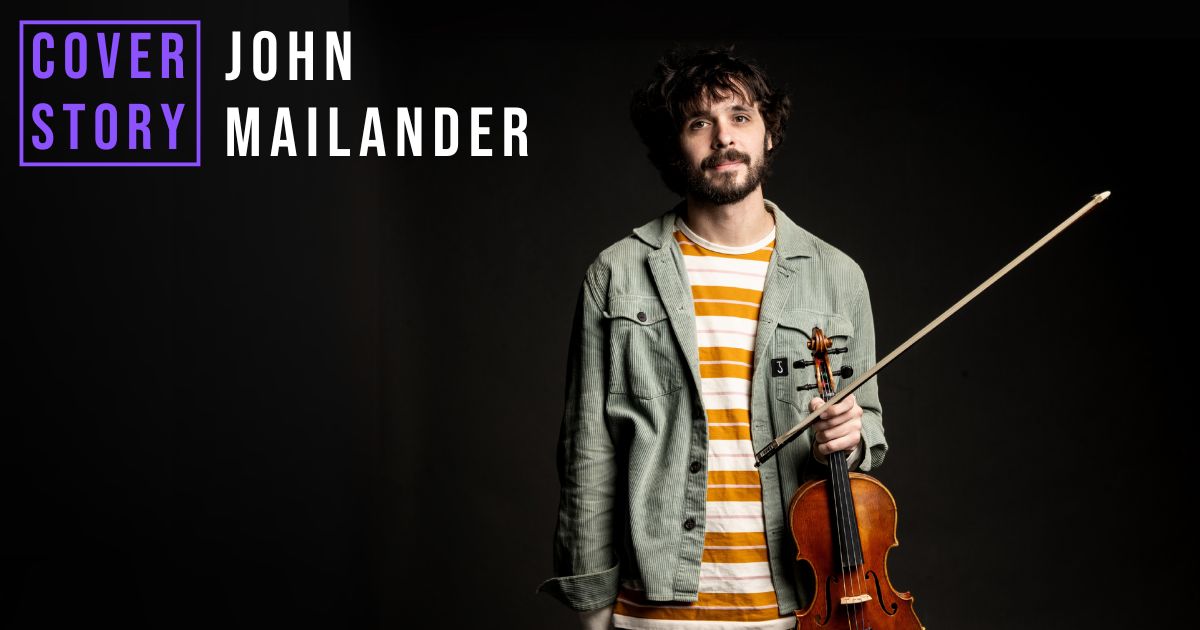
John Mailander’s Improvisational Forecast Says ‘Let The World In’

Whether or not you know it, you’ve likely heard John Mailander music. Chances are he’s even worked with one (or some) of your favorite artists, from Bruce Hornsby to Billy Strings, Noah Kahan, Joy Williams, Lucy Dacus, Molly Tuttle, and many more.

No disrespect to his work with the Noisemakers (who he’s toured with since 2018), or Strings’ GRAMMY-winning album Home, or any other projects, but it’s Mailander’s original works where his musical wizardry glows brightest. On his latest effort, Let the World In, his abilities are stronger than ever as he combines the influences from everyone he’s worked with into an adventure of orchestral bliss guided by trance-like, open-ended jazzy jams.

Helping Mailander to paint these soundscapes across nine tracks and 35 total minutes of run-time are his longtime band members in Forecast – Ethan Jodziewicz, Chris Lippincott, Mark Raudabaugh, Jake Stargel, David Williford – who he first started playing with during a Nashville residency at Dee’s Country Cocktail Lounge in 2019 to celebrate the release of his debut album of the same name. Through eight instrumental tracks (and a cover of Nick Drake’s “Road”) they send listeners on an introspective journey throughout Let the World In that brings the jazz leaning work of Hornsby and jam-fueled tendencies of Phish together, showing just how far he and Forecast have grown and evolved since first coming together.

“The first record was a blueprint, the second was settling into and discovering who we are, and this record is the most confident statement of who we are,” Mailander tells BGS. “Harmonies, colors, melodic themes, it can all be tied back to the first record in some way.”

Mailander spoke to us ahead of the album’s release about how all of his prior collaborative experiences set the stage for Let the World In to shine, writing on the piano, reality checks from recording, song sequencing, and more.

From your work with Billy Strings and Bruce Hornsby to your own music, you’ve always had a very collaborative way about you and this new record is no exception. What are your thoughts on the significance that played in the process of bringing this album to life?

John Mailander: Collaboration and improvisation are some of the most beautiful parts of being a musician. I love working with the widest variety of artists that I can. It’s a great way to become closer on a human level with the people you’re working with.

Initially, when I was starting this Forecast project, I envisioned it as more of a collective of musicians where we could all bring our own original tunes to the table and improvise freely. However, over time it’s formed into a more regular lineup with the six of us, allowing for the group to grow together as a unit.

Is the album title, Let the World In, meant to be a nod to that collaborative nature and outside influences that loom so large on the project?

Absolutely. The title has a lot of different angles to it. I hesitate to say everything it means to me because I don’t want to put it into too much of a box – I want to leave room for the listener to imagine what it means for them as well. It’s a follow-up to the last record [Look Closer] that we made in isolation during the pandemic.

While that record was very introspective, this new one is much more expansive, because of the world opening up more now and having this constant flood of information coming at us from all directions. It’s an overwhelming time to be alive, so this album feels like a companion piece to the last one, almost like the other side of the coin.

The title track also features the “Let the World In Sound Freedom Expressionists” – Hannah Delynn, Maya de Vitry, Gibb Droll, Ella Korth, Lindsay Lou, and Royal Masat. What was your intention with recruiting them for that one track, and what do you feel they brought to it that it may not have had otherwise?

They are a collection of very dear friends in Nashville who have been there for me in my personal life through a lot. It felt really important to me to credit these friends on the record in some way. That manifested into this collection of sound bites from each of them including poetry, sound effects, singing, and field recordings, which I put together into the sound collage you hear in the track. I love knowing that all of their voices are in there. I hope with each listen you can tune into different elements of it and hear new things.

In terms of outside influences on the record, I know Bruce Hornsby played a big role. What tricks and lessons from him did you implement into these songs?

Bruce is one of my greatest teachers. He’s been really encouraging over the past few years to pursue this project, grow into a band leader, and becoming more confident on the piano. I’m very rudimentary, but I’ve become obsessed with learning the piano recently, in large part thanks to Bruce and watching him play it so much. Everything on this record – except for the cover, “Road,” and the improvisational tracks – were ones I wrote on the piano, which was a huge change in direction for me.

I’ve also tried to incorporate elements of how he leads a band, like having dueling conversational solos rather than individual ones or weaving in and out of and finishing each other’s lines, into what we do with the Forecast as well.

Process-wise, how did the construction of these songs on the piano differ from when you’re composing on fiddle?

Going back to the title of this record, the piano gave it a wider scope compositionally for me, because I was thinking a lot more about bass lines and counter melodies and other things that as a fiddle player aren’t as prevalent. With the fiddle I think much more melodically – it’s kind of the top voice – which makes it harder for me to compose that way because even though it’s my primary instrument it’s hard to get a full picture with it. On the piano it felt more like writing for an entire ensemble rather than just writing a melody in chords.

You ended up knocking out the recording for this album during four consecutive days last year. What was it like doing it all rapid-fire like that compared to the more conventional, slow and steady approach?

It was intense, and we even recorded more than just what made it on the record. A lot of the work in post [production], for me, has been crafting everything we recorded into something that tells a story, which would’ve been tough to do across multiple sessions with the band over time, given that they’re all touring musicians as well. It felt good getting together with everyone from basically 10 to 6 every day and working our butts off as much as we could. It was the most concentrated and focused time we’ve ever had together as a band, as well as a reality check about things in the band we needed to work on.

It’s like putting a microscope on everything because we’ve been playing live at Dee’s every month for a few years, but now we’re in this hyper-focused environment where we can hear and analyze every minor detail. It opened up a lot of rabbit holes that I ended up going down later, but I think we really grew as a band through the process of making it this way.

You mentioned the time being a reality check for what you needed to work on as a band. What were some of those things?

It was like putting a microscope on how the particular instrumentation and individual voices on our instruments really blend and work together, revealing sonic and dynamic things that worked or not. It revealed some habits we’d gotten into through playing live that we discovered didn’t always translate to a record. The sessions were an awesome and intensive way to grow as a unit.

You’ve produced all of the Forecast records thus far. Is that something you plan to continue doing in the future?

Actually, the next record we do I’d like to have another producer. I love producing, but I’m realizing that for my own music I’d like to get another perspective in the room next time we do it. It’s really tough taking on both of those roles, but I’m really proud of what we did and grateful for producing it again this time around.

One of my favorite elements of the record is how well the songs flow from one into another – if listened through in order it presents almost as one long, 35-minute track. Tell me about sequencing this record and the importance for listeners to digest the full project from start to finish?

I’ve always been a nerd about sequencing records. I think it’s a really important part of the experience of listening to music. With this one I put a lot more attention into connecting the tracks. Some of them blend into one another, which is something that my mastering engineer Wayne Pooley – who I know through the Bruce Hornsby world – and I spent countless time laboring over the microseconds between every track to make sure each one hits you in a very intentional way.

Only one track on the album has lyrics – your cover of Nick Drake’s “Road.” Why’d you choose it, and what do you feel it contributes to the overall narrative you’re striving to present on the record?

[Nick’s] been a huge inspiration for years. Even as more of an instrumentalist I’ve always been drawn to his writing. But in terms of that song, I’ve known it for a while and love the entire record it’s on, Pink Man. About a year and a half ago – just before work on Let the World In began – I brought the song to the band. Nick Drake’s version is around two minutes long, but I thought it would be cool to use the song as a tool with our band to improvise and jam like we do at our live shows. We did just that by stretching it out to over nine minutes long. Lyrically it fits with the themes on the rest of the record, but it’s not heavy-handed either. It’s still open to interpretation, which is what I really value in it.

Initially I thought about having a guest vocalist on it, because on our last record we had a couple guest singers. But as we got closer and closer to the studio sessions I realized that it was important for me to sing this one myself, and I’m really proud with how it turned out.

If you could collaborate or have a jam session with any musician past or present, who would it be?

My hero, Trey Anastasio. It would be a dream to play or collaborate with him someday.

What has music, specifically when it comes to the creation process for Let the World In, taught you about yourself?

It’s allowed me to connect with my bandmates on a deeper level than I know how to do any other way. Through that I’m able to tap into those energies that exist between us as people, which is a type of connection I practice and strive to achieve every day.


Photo Credit: Michael Weintrob

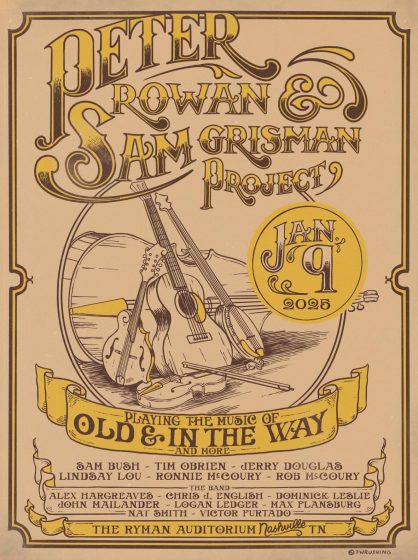
Peter Rowan and Sam Grisman Project Will Bring Old & In the Way to the Ryman

On January 9, 2025, there will be a special performance – more so a once-in-a-lifetime celebration – of the groundbreaking music of Old & In the Way at Nashville’s famed Ryman Auditorium.

Led by the “Bluegrass Buddha” himself, Peter Rowan, the legendary singer-songwriter and founding member of the group will be backed by the Sam Grisman Project. The gathering will also feature a murderers’ row of talent: Sam Bush, Tim O’Brien, Lindsay Lou, Ronnie & Rob McCoury, and more.

“In bluegrass, you just do the beautiful grace of presenting the music, being good neighbors and all that stuff,” Rowan told BGS in an exclusive 2022 interview. “But you could hear us in the band going, ‘go, man, go.’ Go for it, that’s where we came from. That’s what Old & In the Way was – the ‘go for it’ signal to everybody.”

To preface, Old & In the Way started as impromptu pickin’-n-grinnin’ sessions in the early 1970s between Rowan, his longtime friend, mandolin guru David Grisman, and Jerry Garcia, iconic guitarist for the Grateful Dead, who reached for his trusty banjo during the gatherings at Garcia’s home in Stinson Beach, California.

“We started picking every night after supper [at Jerry’s],” Rowan remembers. “We went through old song books and learned a bunch of material.”

At the time, Garcia was searching for new avenues of creative exploration, seeing as the Dead were in the midst of taking a much-needed hiatus after years of relentless touring and recording. He was also, perhaps subconsciously, trying to tap back into his roots before the Dead, this landscape of the late 1950s/early 1960s where Garcia was heavily involved in the San Francisco Bay Area folk scene.

“And you realized that Jerry was an intergalactic traveler, just dropping in on the Earth scene for a little while, but he was totally at home,” Rowan says of Garcia’s restless penchant and lifelong thirst for acoustic music.

When Old & In the Way formed in 1973, the trio recruited bassist John Kahn, as well as a revolving cast of fiddlers (Richard Greene, John Hartford, Vassar Clements). Sporadic gigs were booked around the Bay Area, with the vibe of the whole affair casual in nature – the ethos one of camaraderie and collaboration, but without expectations or boundaries.

“I remember singing the ending of ‘Land of the Navajo’ at the first rehearsal and I looked over at Jerry,” Rowan recalls. “He kept nodding his head like, ‘go.’ It was like Jack Kerouac at Allen Ginsberg’s poetry reading at City Lights Bookstore – ‘go, man, go.’ Encouragement, encouragement.”

By 1974, Old & In the Way simply vanished into the cosmic ether, but not before capturing a handful of live performances that have become melodic sacred texts of a crucial crossroads for acoustic music. To note, Old & In the Way’s 1975 self-titled debut album went on to become the bestselling bluegrass album of all-time – until it was dethroned by the O Brother, Where Art Thou? soundtrack released in 2000.

As it stands today, Rowan, now 82 years old, is the only remaining member of Old & In the Way still actively performing. Garcia, Clements, Kahn, and Hartford have all sadly passed on, with the elder Grisman and Greene retired from touring. Grisman’s son, standup bassist Sam Grisman, is now carrying his father’s bright torch.

And although the tenure of the Old & In the Way was short-lived, the ripple effects of the band’s ongoing influence and enduring legacy remains as vibrant and vital as it was those many years ago, when a handful of shaggy music freaks kicked off a jam that will perpetuate for eternity.

In preparation for the upcoming Old & In the Way showcase at the Ryman on January 9, BGS recently spoke with Sam Grisman, who talked at-length not only about his continued work with Peter Rowan and the intricacies of Jerry Garcia, but also why a band Grisman’s father started over a half-century ago still captivates the hearts and minds of music lovers the world over.

You were five years old when Jerry Garcia passed away. You were really young, but do you remember anything that you hold onto?

Sam Grisman: Yeah, I have a very vivid memory of what our house felt like, smelled like, and just what the energy was like when Jerry was around. And I remember that sort of ease, just the way that he made people feel. It seemed like my parents were at ease when he was around.

And he probably felt at ease being around them. It was probably a safe haven at that house.

Definitely. And, you know, my parents smoked weed in the house. But, my mom was pretty strict about cigarettes. [She] wouldn’t let anybody smoke cigarettes in the house. But, when Jerry was around, he smoked cigarettes in the house. So, part of this smell in my blurry five-year-old memory is the smell of cigarettes. And Jerry would sometimes wear a leather jacket, maybe the smell of leather.

I remember the sound of his laugh. I remember all that music, and some of it I remember so vividly that I just know that part of that memory is reinforced by being there as a little toddler when they were working up [music]. Because they would often work on tunes upstairs in the living room and then take them down to the studio, put them on the mics and pull them.

You just wanted to be around it all and soak it all in.

I was a really curious kid.

With the Ryman show coming up, there’s been a lot of celebration of Old & In the Way as of late, especially with you touring with Peter Rowan and the current Jerry Garcia exhibit at the Bluegrass Hall of Fame & Museum. You’ve been around those songs your whole life. But, when you think about the context of Old & In the Way, and what you’re doing at the Ryman, what really sticks out with why that was such a special time in not only bluegrass, but in the lives of those people?

I mean, what a lightning-in-the-bottle chapter of all those people’s lives, you know? I think 1973, ’73/’74, was a particularly fertile time for Jerry. He was playing a full schedule with the Dead. He had Jerry Garcia Band stuff. He was playing in Old & In the Way. He was playing pedal steel with the New Riders of the Purple Sage. It seemed like he really had an itch to go back to where his roots were, especially when you look at [the Grateful Dead album] Workingman’s Dead [that was released a] couple years prior.

For all of us, who are looking back on it 50 years in the future, it seems like this momentous, heady time that was just meant to be. But, for those guys in the moment, it was just total serendipity. And the quintessence of just going with the flow – Stinson Beach, California, vibes. They just kind of stumbled into this reality.

“Y’all wanna play?” “Sure, why not.”

Yeah, where it would just be really fun to have this bluegrass band that they didn’t take super seriously, which I think really comes across in the recordings, you know? Because there’s all this joy in that music that might not necessarily have been there if those guys were taking it super seriously or if they needed it to pay their bills. It was a very interesting circumstance.

And for them to call their hero Vassar Clements into the mix, on a sort of whim because Peter found his number on a card in his wallet. It was sort of like a fantasy camp for these guys. Like a bunch of hippies sitting around on the beach, smoking a joint, thinking: “Wouldn’t it be great if we had the world’s greatest fiddle player just show up?” “I bet you we could book a gig.” “Hey Jerry, you got these legions of people following you around, you could probably get us a gig, right?”

And that’s kind of how it happened. Those gigs were so magical, because they happened mostly for all of these Deadheads in Marin [County, California], for like 16 months or something.

So, if you really had your finger on the pulse of it and you were going to the Keystone [music club in Berkeley, California], to see [the Jerry Garcia Band] and you loved what the Dead were doing, you knew that they were going to take this time off, but you just saw Jerry the week before and he never took his guitar off. He just finished the [Jerry Garcia Band] set and walked backstage with his guitar on and was smoking a cigarette, and then you saw him 30 minutes later talking to somebody off the side of stage, still had his guitar on — you’re thinking, “Gee, this guy’s not going to stop playing music this year, so I better keep my eyes peeled for what’s next.” And they played all these little gigs mostly around the Bay Area — they kind of captured some lightning in a bottle.

With playing these Old & In the Way melodies not only throughout your life, but also extensively nowadays with Peter Rowan, what’s been your biggest takeaway on what makes those songs and the ethos/history behind them so special to you? What about in terms of musicality, technique, and approach?

It’s hard to articulate how special it is to be exploring these beloved songs that mean so much to so many folks, myself included, with Peter and a cast of some of my best friends and favorite musicians. It’s a catalog that’s got a lot of depth.

Old & In the Way would play anything from songs by bluegrass heroes like Bill Monroe, The Stanley Brothers, Reno & Smiley, and Jim & Jesse to Vassar [Clements], Jerry [Garcia], and my pop’s instrumentals, to the tunes that Peter was writing at the time, which are some of my absolute favorite songs ever written.

Songs like “Midnight Moonlight,” “High Lonesome Sound,” and “Panama Red.” Playing these tunes with Uncle Peter makes me feel connected to the times he spent with David and Jerry in Stinson Beach in the early ’70s.

I grew up in Mill Valley and loved going to Stinson Beach with my friends, so I have a pretty vivid image in my mind’s eye. They played tunes, hung out, relaxed, took in the sea breeze, smoked a bunch of great weed, and developed a highly individuated “West Coast” approach to playing and singing this bluegrass music that they all loved and respected so much.

And then, they called one of my bass heroes, John Kahn, and their fiddle hero, the inimitable Vassar Clements and gave the world about one glorious year – I think around 50 shows – of a rare and lovable breed of bluegrass.

So much of everyone’s personality comes through in the music, and you can hear their camaraderie in the recordings. I guess my biggest take away from getting to play this music with Peter is how important it is to bring your own approach to these timeless songs that we love, while still honoring what it is that makes us love them in the first place.

You’ve known Peter Rowan since you were born. But, what has this latest endeavor together meant to you, to play the Old & In the Way catalog to not only lifelong fans, but also a whole new generation of acoustic music fans and bluegrass freaks?

It means the world to me to get to spend some time out on the road sharing space and time in service of this music with Uncle Peter. Getting to meet all of these folks who care so much about this music and feeling their appreciation and gratitude for Pete has been truly special.

There are so many people from so many different ages and different walks of life for whom this music has been the soundtrack to many fond memories, and I’m honored to be one of them. It’s also been a joy to see fresh faces in the audience and some folks taking in this music with a new perspective.

In your honest opinion, what is the legacy of Old & In the Way when you place it through the prism of the history of bluegrass and the road to the here and now, especially this current juncture where the torchbearers are selling out arenas and creating this high-water mark for acoustic, traditional and bluegrass music?

For many folks who know and love the music of Jerry Garcia and the Grateful Dead, Old & In the Way has been their first exposure to bluegrass. So many people over the years have told me how listening to Old & In the Way led them to further explore bluegrass music and its roots and branches. And others have told me how it inspired them to become pickers and start bands of their own.

I think Old & In the Way has been pivotal in bringing a wider audience with a more adventurous musical palette into the bluegrass universe. The legacy of Old & In the Way is one of exploration and preservation, and they certainly paved the way for many of us to walk a similar path — honoring the music that we love, while exploring its boundaries and finding our own voices and approaches.

It’s wonderful to see my friend Billy Strings out there playing for so many folks on such a big scale simply being himself, playing his own songs with a great group of friends, and also honoring the material that made him the musician that he is — maybe that’s a part of the legacy of Old & In the Way.


Photo Credit: Elliot Siff
Poster Credit: Taylor Rushing

Artist of the Month: Dead in December

(Editor’s Note: This December, we continue our annual series – see also: Dolly in December, Dawg in December, Dylan in December, and Del in December – by celebrating the iconic, trailblazing jam band, the Grateful Dead, all month long! We’ll be featuring the Grateful Dead as our Artist of the Month, celebrating their enormous impact on bluegrass and roots music over the next few weeks.

To kick off our coverage, BGS contributor Garret Woodward pens a heartfelt and personal AOTM reveal. Plus, don’t miss our exhaustive Essential Grateful Dead Playlist below.)

The single most profound moment within my 39 years of existence (thus far) is the first time I heard the Grateful Dead. Not far behind that life-altering experience were my initial encounter with LSD (in high school) and finally cracking open Jack Kerouac’s seminal 1957 novel, On the Road (in college).

Summer 1994. I was nine years old and living a simple, yet happily mischievous childhood in the small North Country community of Rouses Point, New York. One mile from the Canadian Border. One mile from the state line of Vermont. Solitude. Desolation. Rural America. Mornings spent building tree forts and wandering vast cornfields surrounding my childhood home. Afternoons jumping off the dock into nearby Lake Champlain.

Even at that time, I was a bona fide music freak. Whether it was Top 40 radio (Gin Blossoms, Melissa Etheridge, Collective Soul, Sheryl Crow) blasting out of the small boom box in my bedroom or whatever my parents shoved into the cassette deck in the family minivan (Willie Nelson, Beatles, Rolling Stones, Nat King Cole, George Jones), I was in search of “the sound.”

But, everything in my existence changed one evening that summer at a family cookout at our camp on the lake. Sitting at the picnic table — chowing down on some burgers, beans and potato salad — I noticed a hat my aunt’s boyfriend was wearing. The logo on the front was of a dancing bear, with the back featuring a skull with a lightning bolt. I inquired.

“It’s the Grateful Dead,” he replied with a Cheshire Cat grin emerging from a bushy beard. “Have you ever listened to the Dead, man?” No, I replied. After dinner, he walked me over to his early 1990s Volkswagen Jetta. He hopped in, rolled the windows down and turned on the stereo. Again, with a grin, as if he knew what was going to happen once he pressed play and cranked the volume.

It was the Skeletons from the Closet album. The opening tune, “The Golden Road (To Unlimited Devotion),” hit me like an undulating series of waves in some endless ocean of melodic tones and lyrical truths. It was just like when Dorothy Gale entered the world of color in The Wizard of Oz.

Nothing really was ever the same after that moment. It was not only the first music I’d discovered on my own – without the radio or my parents’ influence – the Dead, for some unexplained reason at the time, immediately became “my band.” Something clicked deeply inside of me. I awoke. And I had arrived.

Soon, a seismic shift occurred in my adolescent life. I wore Dead shirts to my Catholic elementary school to the dismay of the nuns. Tacked up Jerry Garcia posters on my bedroom wall. The swirling sensation of “Sugar Magnolia” or “St. Stephen” echoing from the boom-box. Incense burning on the windowsill overlooking the cornfields and unknown horizon of my intent. I even had a small shrine to Jerry on my bookshelf for several years after he died. I was all-in.

Musically, the Dead were a bunch of incredibly talented bluegrass, folk, and jazz freaks, who were inspired by the onslaught of the Beatles to plug in and go electric. The band itself was this massive sponge, one which soaked in any and all influences it crossed paths with — either onstage or merely wandering down the road of life. That authentic sense of curiosity and discovery is key to the Dead’s magic throughout its decades of improvisational splendor.

At its core, the Dead’s message resonated within my often-bullied and ignored self as a kid. If you like the Dead, you’ll always find a friend out there in the universe to connect with. The band’s symbols are beacons of love, compassion, and acceptance once you walk out the front door. In essence, I’d found my tribe, this wild-‘n’-wondrous ensemble of loving oddballs, eccentric weirdos, and all-around jovial folk. My kind of people, who remain so to this day.

The Dead is about personal freedom. To not only be yourself, but to also seek out the intrinsic beauty of people, places and things in this big ol’ world of ours. Have adventures. Pursue wisdom. Radiate love. Be kind. Damnit, be kind. All of these things offered from the music and its followers were placed in my emotional and spiritual toolbox as I began to wander the planet on my own following high school, college and impending adulthood.

And here I stand. Age 39. That nine-year-old discovering the Dead is still inside of me somewhere, still burning incense and blasting “St. Stephen.” That youngster’s excitement for all things music (especially live), endless curiosity for what lies just around the corner, and running with a reckless abandon towards the unknowns of tomorrow are as strong and vibrant as ever — especially through this ongoing catalyst that is my career in the written word.

Case in point, I recently headed to the Bluegrass Music Hall of Fame & Museum in Owensboro, Kentucky, for another celebratory weekend for its current exhibit: “Jerry Garcia: A Bluegrass Journey,” on assignment and on the ground covering the festivities. An incredibly curated collection of rare Garcia artifacts and wisdom, the showcase will run onsite until next spring.

Before the inception of the Grateful Dead, Garcia was completely immersed in the bluegrass and folk scenes in the San Francisco Bay area in the late 1950s and early 1960s. He was part of numerous acoustic acts and ensembles throughout the bountiful period — the culmination of that vast knowledge and in-depth experience being poured into the Dead’s formation in 1965.

To note, there’s a lot to be said about Garcia’s talents on the banjo being applied to what would become his signature tone on the electric guitar. And to that notion, add in the sheer lyrical aptitude of Robert Hunter, who not only penned many of the Dead’s iconic melodies, but was also on a parallel journey to Garcia’s early on and throughout the band’s 30-year trajectory.

And there I was in Owensboro, some 400 miles from my current home in Western North Carolina. Traveling for hours just to arrive on the mighty Ohio River – the state line of Kentucky and Indiana, this crossroads of the Southeast and Midwest. And for what? To push further and farther down the cosmic rabbit hole that is Jerry Garcia, the Grateful Dead, and those who follow.

The next 48 hours were a whirlwind of sound and scope. Seemingly endless tribute sets to Garcia and the Dead at the Woodward Theater inside the museum from the Kitchen Dwellers, Lindsay Lou, Fireside Collective, and members of the Infamous Stringdusters to late-night jam sessions in hotel rooms next door.

The Grateful Dead are arguably the only musical entity to exist that – regardless of who or what genre is being represented – once one of their tunes is placed into a performance, folks either show up in droves or are already present with ears perked up to what’s radiating out from the stage. It’s a fact that no matter what style of music you play, if it involves the Dead in some form or fashion, Deadheads are game to check it out. You could be a polka group and we’ll be right there, standing front row, the second you roll into “Althea” or “Shakedown Street.” The music provides, always and forever.

Before I left Owensboro and the Garcia celebration at the museum, I found myself on a bourbon distillery tour on Saturday afternoon. I walked into the enormous facility and checked in with the host. All by myself and waiting for the tour to start, the host tapped me on the shoulder.

“You like the Dead?” his face lit up, pointing to the Dead stealie tattoo on the back of my right leg. “Sure do, my brother,” I shot back with a smile of solidarity. We talked about our favorite live Dead recordings and where we’ve caught Dead & Company in concert recently, kindred spirits now eternally connected by this band of roving musical pirates. It’s a genuine interaction that happens often to Deadheads and something I don’t ever take for granted.

Even as we stand in this uncertain time in American history – where nothing is the same, everything is the same – the Grateful Dead remain this portal to escape, to purposely choose compassion, camaraderie, and community. It’s about cultivation of one’s self and of the sheer magnitude and gratitude of daily life, so long as you stroll this earth with the pure and honest intent to connect, to listen, and to understand.

“I will get by, I will survive.”